







 Chat with AI

Deck 18: Plants
Full screen (f)

Question

Question
Question
Question
Question
Question
Question
Question
Question
Question
Question
Question
Question
Question
Question
Question
Question
Question
Question
Question
Question
Question
Question
Question
Question
Question
Question
Question
Question
Question
Question
Question
Question
Question
Question
Question
Question
Question
Question
Question
Question
Question
Question
Question
Question
Question
Question
Question
Question
figure 18.18 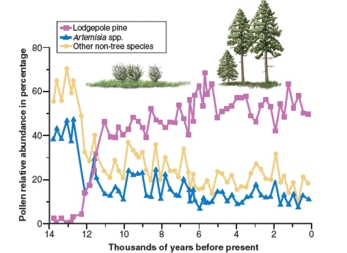
Of the three plants measured in figure 18.18,which requires water to allow sperm to swim to the egg?
A)Herbs (grasses)
B)Mosses
C)Shrubs
Of the three plants measured in figure 18.18,which requires water to allow sperm to swim to the egg?
A)Herbs (grasses)
B)Mosses
C)Shrubs
Question
Question
Question
figure 18.18
In suggesting alternative hypotheses to explain figure 18.18,your lab partner states that perhaps mosses didn't evolve until recently,which is why they increase after herbs and shrubs.Which of the following would be the best response to your lab partner?
A)Mosses were actually the first land plants to appear
B)Mosses are better adapted to dry climates
C)All land plants appeared at roughly the same time
D)If you look carefully at the graph, there were a few mosses present 300,000 years ago, so they probably arose then
E)Mammoths probably ate the mosses, so they did not appear until after the mammoths went extinct
In suggesting alternative hypotheses to explain figure 18.18,your lab partner states that perhaps mosses didn't evolve until recently,which is why they increase after herbs and shrubs.Which of the following would be the best response to your lab partner?
A)Mosses were actually the first land plants to appear
B)Mosses are better adapted to dry climates
C)All land plants appeared at roughly the same time
D)If you look carefully at the graph, there were a few mosses present 300,000 years ago, so they probably arose then
E)Mammoths probably ate the mosses, so they did not appear until after the mammoths went extinct
Question
Question
Question
Question
Question
Question
figure 18.18
In figure 18.18,the decrease of herbs (grasses)and increase in mosses would suggest that the climate in Siberia has become __________ in the past 10,000 years.
A)Dryer
B)Hotter
C)Colder
D)Wetter
In figure 18.18,the decrease of herbs (grasses)and increase in mosses would suggest that the climate in Siberia has become __________ in the past 10,000 years.
A)Dryer
B)Hotter
C)Colder
D)Wetter
Question
Question

Unlock Deck
Sign up to unlock the cards in this deck!
Unlock Deck
Unlock Deck
1/60

Play

Full screen (f)
Deck 18: Plants
1
The part of the plant that is a waxy coating that minimizes water loss from leaves is the:
A)Stomata
B)Root
C)Xylem
D)Phloem
E)Cuticle
A)Stomata
B)Root
C)Xylem
D)Phloem
E)Cuticle
E
2
The part of the plant that absorbs water and nutrients is the:
A)Stomata
B)Root
C)Xylem
D)Phloem
E)Cuticle
A)Stomata
B)Root
C)Xylem
D)Phloem
E)Cuticle
B
3
In flowering plants:
A)The gametophyte is larger than the sporophyte
B)The gametophyte can grow independently of the sporophyte
C)The gametophyte is both smaller than the sporophyte and can grow independently
D)The gametophyte is smaller than the sporophyte
E)The gametophyte is both larger than the sporophyte and can grow independently
A)The gametophyte is larger than the sporophyte
B)The gametophyte can grow independently of the sporophyte
C)The gametophyte is both smaller than the sporophyte and can grow independently
D)The gametophyte is smaller than the sporophyte
E)The gametophyte is both larger than the sporophyte and can grow independently
D
4
The part of the plant that conducts water and dissolved minerals from the roots to the leaves is the:
A)Xylem
B)Stomata
C)Root
D)Phloem
E)Cuticle
A)Xylem
B)Stomata
C)Root
D)Phloem
E)Cuticle
Unlock Deck
Unlock for access to all 60 flashcards in this deck.
Unlock Deck
k this deck
5
A plant embryo (young sporophyte)packaged with a food supply in a tough outer coat is a:
A)Gemmae
B)Pollen grain
C)Seed
D)Sperm
E)Fruit
A)Gemmae
B)Pollen grain
C)Seed
D)Sperm
E)Fruit
Unlock Deck
Unlock for access to all 60 flashcards in this deck.
Unlock Deck
k this deck
6
The longest wavelength of visible sunlight is:
A)Blue
B)Violet
C)Red
D)Yellow
A)Blue
B)Violet
C)Red
D)Yellow
Unlock Deck
Unlock for access to all 60 flashcards in this deck.
Unlock Deck
k this deck
7
The substance that strengthens and supports cell walls allowing plants to grow tall and upright is:
A)Algin
B)Agar
C)Chlorophyll
D)The carotenoids
E)Lignin
A)Algin
B)Agar
C)Chlorophyll
D)The carotenoids
E)Lignin
Unlock Deck
Unlock for access to all 60 flashcards in this deck.
Unlock Deck
k this deck
8
The part of the plant that transports sugars produced by photosynthesis to the non-green parts of the plant is the:
A)Stomata
B)Root
C)Phloem
D)Xylem
E)Cuticle
A)Stomata
B)Root
C)Phloem
D)Xylem
E)Cuticle
Unlock Deck
Unlock for access to all 60 flashcards in this deck.
Unlock Deck
k this deck
9
The organelle that contains chlorophyll a and carries out photosynthesis in plants is the:
A)Mitochondria
B)Chloroplast
C)Central vacuole
D)Cell membrane
E)Golgi body
A)Mitochondria
B)Chloroplast
C)Central vacuole
D)Cell membrane
E)Golgi body
Unlock Deck
Unlock for access to all 60 flashcards in this deck.
Unlock Deck
k this deck
10
In dry weather plants reduce water loss by closing their:
A)Stomata
B)Cuticle
C)Cell membranes
D)Vascular tissues
E)None of the above are correct
A)Stomata
B)Cuticle
C)Cell membranes
D)Vascular tissues
E)None of the above are correct
Unlock Deck
Unlock for access to all 60 flashcards in this deck.
Unlock Deck
k this deck
11
In plants:
A)The diploid zygote develops into the sporophyte
B)The haploid zygote develops into the sporophyte
C)The haploid gametophyte develops into the sporophyte
D)The diploid zygote develops into the gametophyte
E)The haploid gametophyte produces gametes by meiosis
A)The diploid zygote develops into the sporophyte
B)The haploid zygote develops into the sporophyte
C)The haploid gametophyte develops into the sporophyte
D)The diploid zygote develops into the gametophyte
E)The haploid gametophyte produces gametes by meiosis
Unlock Deck
Unlock for access to all 60 flashcards in this deck.
Unlock Deck
k this deck
12
Most plants appear green because:
A)Chlorophyll is a pigment that reflects green wavelengths of light
B)Carotenoids are pigments that reflect green wavelengths of light
C)Carotenoids are pigments that absorb green wavelengths of light
D)Chlorophyll is a pigment that absorbs green wavelengths of light
A)Chlorophyll is a pigment that reflects green wavelengths of light
B)Carotenoids are pigments that reflect green wavelengths of light
C)Carotenoids are pigments that absorb green wavelengths of light
D)Chlorophyll is a pigment that absorbs green wavelengths of light
Unlock Deck
Unlock for access to all 60 flashcards in this deck.
Unlock Deck
k this deck
13
Which of the following is not a member of the gymnosperms?
A)Conifers
B)Ferns
C)Gnetophytes
D)Cycads
E)Ginkgos
A)Conifers
B)Ferns
C)Gnetophytes
D)Cycads
E)Ginkgos
Unlock Deck
Unlock for access to all 60 flashcards in this deck.
Unlock Deck
k this deck
14
Cycads are:
A)Trees that produce flowers
B)Bryophytes
C)Trees that produce large cones
D)Algae
E)Ferns
A)Trees that produce flowers
B)Bryophytes
C)Trees that produce large cones
D)Algae
E)Ferns
Unlock Deck
Unlock for access to all 60 flashcards in this deck.
Unlock Deck
k this deck
15
The four phyla of the gymnosperms are:
A)Monocotyledons, dicotyledons, conifers, and cycads
B)Horsetails, true ferns, whisk ferns, and club mosses
C)Conifers, monocotyledons, dicotyledons, and cycads
D)Mosses, liverworts, club mosses, and hornworts
E)Conifers, cycads, ginkgos, and gnetophytes
A)Monocotyledons, dicotyledons, conifers, and cycads
B)Horsetails, true ferns, whisk ferns, and club mosses
C)Conifers, monocotyledons, dicotyledons, and cycads
D)Mosses, liverworts, club mosses, and hornworts
E)Conifers, cycads, ginkgos, and gnetophytes
Unlock Deck
Unlock for access to all 60 flashcards in this deck.
Unlock Deck
k this deck
16
The two types of vascular tissue in most plants are:
A)Lignin and xylem
B)Xylem and phloem
C)Lignin and phloem
D)Xylem and stomata
E)Stomata and lignin
A)Lignin and xylem
B)Xylem and phloem
C)Lignin and phloem
D)Xylem and stomata
E)Stomata and lignin
Unlock Deck
Unlock for access to all 60 flashcards in this deck.
Unlock Deck
k this deck
17
Conifers produce:
A)Both seeds and pollen in cones
B)Only seeds in cones
C)Only pollen in cones
D)Only flowers
E)Pollen in flowers and seeds in cones
A)Both seeds and pollen in cones
B)Only seeds in cones
C)Only pollen in cones
D)Only flowers
E)Pollen in flowers and seeds in cones
Unlock Deck
Unlock for access to all 60 flashcards in this deck.
Unlock Deck
k this deck
18
Which of the following is not a characteristic of all plants?
A)They are multicellular organisms
B)They are autotrophs
C)They are eukaryotes
D)They are heterotrophs
E)They carry out photosynthesis
A)They are multicellular organisms
B)They are autotrophs
C)They are eukaryotes
D)They are heterotrophs
E)They carry out photosynthesis
Unlock Deck
Unlock for access to all 60 flashcards in this deck.
Unlock Deck
k this deck
19
The term gymnosperm literally means:
A)Clothed ovule
B)Naked seed
C)Naked ovule
D)Clothed seed
E)Clothed sperm
A)Clothed ovule
B)Naked seed
C)Naked ovule
D)Clothed seed
E)Clothed sperm
Unlock Deck
Unlock for access to all 60 flashcards in this deck.
Unlock Deck
k this deck
20
The part of the plant that allows for the exchange of carbon dioxide and oxygen is the:
A)Root
B)Stomata
C)Xylem
D)Phloem
E)Cuticle
A)Root
B)Stomata
C)Xylem
D)Phloem
E)Cuticle
Unlock Deck
Unlock for access to all 60 flashcards in this deck.
Unlock Deck
k this deck
21
A gaseous hormone produced by plants that helps control fruit ripening is:
A)Dextrose
B)Carbon dioxide
C)Chlorophyll
D)Carotene
E)Ethylene
A)Dextrose
B)Carbon dioxide
C)Chlorophyll
D)Carotene
E)Ethylene
Unlock Deck
Unlock for access to all 60 flashcards in this deck.
Unlock Deck
k this deck
22
Plants and algae most recently shared a common ancestor 480 million years ago,and plants colonized land shortly after that.Light,water,minerals,and dissolved gases surround the whole body of a submerged green alga,and the buoyancy of water provides physical support.What adaptation did plants have to make in taking up gasses without drying out when they moved to dry land?
A)Production of pollen
B)Development of stomata
C)Development of vascular tissue
D)Production of a cuticle
E)Production of lignin
A)Production of pollen
B)Development of stomata
C)Development of vascular tissue
D)Production of a cuticle
E)Production of lignin
Unlock Deck
Unlock for access to all 60 flashcards in this deck.
Unlock Deck
k this deck
23
The first land plants were bryophytes,which then branched into ferns,gymnosperms,and finally angiosperms.What advantage did gymnosperms have over ferns?
A)Gymnosperms produce pollen and do not require water to reproduce
B)Gymnosperms go through alternation of generations
C)Gymnosperms have a vascular system, which allowed them to grow taller
D)The gymnosperms can grow larger gametophytes
E)Gymnosperms can produce flowers and fruits to aid in seed dispersal
A)Gymnosperms produce pollen and do not require water to reproduce
B)Gymnosperms go through alternation of generations
C)Gymnosperms have a vascular system, which allowed them to grow taller
D)The gymnosperms can grow larger gametophytes
E)Gymnosperms can produce flowers and fruits to aid in seed dispersal
Unlock Deck
Unlock for access to all 60 flashcards in this deck.
Unlock Deck
k this deck
24
Some evidence that algae are the closest relative to plants is that they both:
A)Have chloroplasts
B)Contain chlorophyll a
C)Have cellulose rich cell walls
D)Use starch as a nutrient reserve
E)All are correct
A)Have chloroplasts
B)Contain chlorophyll a
C)Have cellulose rich cell walls
D)Use starch as a nutrient reserve
E)All are correct
Unlock Deck
Unlock for access to all 60 flashcards in this deck.
Unlock Deck
k this deck
25
The fruits of plants primarily function in:
A)Providing food for animals
B)Seed protection
C)Both protecting and dispersing seeds
D)Seed dispersal
E)Both feeding animals and protecting seeds
A)Providing food for animals
B)Seed protection
C)Both protecting and dispersing seeds
D)Seed dispersal
E)Both feeding animals and protecting seeds
Unlock Deck
Unlock for access to all 60 flashcards in this deck.
Unlock Deck
k this deck
26
The structure of the angiosperm that supplies nutrients to the germinating seedling is the:
A)Endosperm
B)Fruit
C)Seed coat
D)Spore coat
E)Pollen grain
A)Endosperm
B)Fruit
C)Seed coat
D)Spore coat
E)Pollen grain
Unlock Deck
Unlock for access to all 60 flashcards in this deck.
Unlock Deck
k this deck
27
Flowers:
A)Are structures of plants that are only ornamental and have no reproductive value in plants
B)Produce both pollen and egg cells
C)Produce pollen only
D)Produce egg cells only
E)Are produced by both gymnosperms and angiosperms
A)Are structures of plants that are only ornamental and have no reproductive value in plants
B)Produce both pollen and egg cells
C)Produce pollen only
D)Produce egg cells only
E)Are produced by both gymnosperms and angiosperms
Unlock Deck
Unlock for access to all 60 flashcards in this deck.
Unlock Deck
k this deck
28
Fossil evidence places the origin of angiosperms in the early Cretaceous period,at least 130 million years ago.By 100 million years ago,all of today's major lineages of angiosperms were in place.Angiosperms make up 95% of all modern plant species.Which of the following may help explain the rapid success of angiosperms?
A)Competition with animals helped spread pollen and seeds
B)Animals eating the plants helped to disperse both pollen and seeds
C)Animals died off, allowing more plants to survive
D)Animals became carnivores, allowing plants to survive
E)Coevolution with animals helped spread pollen and seeds
A)Competition with animals helped spread pollen and seeds
B)Animals eating the plants helped to disperse both pollen and seeds
C)Animals died off, allowing more plants to survive
D)Animals became carnivores, allowing plants to survive
E)Coevolution with animals helped spread pollen and seeds
Unlock Deck
Unlock for access to all 60 flashcards in this deck.
Unlock Deck
k this deck
29
Plants and algae most recently shared a common ancestor 480 million years ago,and plants colonized land shortly after that.Light,water,minerals,and dissolved gases surround the whole body of a submerged green alga,and the buoyancy of water provides physical support.What adaptation did plants have to make in taking up water and minerals when they moved to dry land?
A)Development of stomata
B)Production of pollen
C)Development of vascular tissue
D)Production of a cuticle
E)Production of lignin
A)Development of stomata
B)Production of pollen
C)Development of vascular tissue
D)Production of a cuticle
E)Production of lignin
Unlock Deck
Unlock for access to all 60 flashcards in this deck.
Unlock Deck
k this deck
30
Fossil evidence places the origin of angiosperms in the early Cretaceous period,at least 130 million years ago.By 100 million years ago,all of today's major lineages of angiosperms were in place.Angiosperms make up 95% of all modern plant species.Which of the following may help explain the rapid success of angiosperms?
A)Use of the wind to disperse pollen and seeds
B)Flowers and fruits help protect and disperse both pollen and seeds
C)Use of the wind to disperse spores
D)Use of water to disperse pollen and seeds
E)Animals eating the plants helped to disperse both pollen and seeds
A)Use of the wind to disperse pollen and seeds
B)Flowers and fruits help protect and disperse both pollen and seeds
C)Use of the wind to disperse spores
D)Use of water to disperse pollen and seeds
E)Animals eating the plants helped to disperse both pollen and seeds
Unlock Deck
Unlock for access to all 60 flashcards in this deck.
Unlock Deck
k this deck
31
Plants and algae most recently shared a common ancestor 480 million years ago,and plants colonized land shortly after that.In sexual reproduction,an alga simply releases gametes into the water,and the current carries the sex cells to another individual.What adaptation did plants have to make in reproduction when they moved to dry land?
A)Development of stomata
B)Development of vascular tissue
C)Production of a cuticle
D)Production of pollen
E)Production of lignin
A)Development of stomata
B)Development of vascular tissue
C)Production of a cuticle
D)Production of pollen
E)Production of lignin
Unlock Deck
Unlock for access to all 60 flashcards in this deck.
Unlock Deck
k this deck
32
The first land plants were bryophytes,which then branched into ferns,gymnosperms,and finally angiosperms.What advantage did ferns have over bryophytes?
A)The ferns were able to do photosynthesis
B)The ferns were also heterotrophs
C)Ferns have a vascular system, this allowed them to grow taller
D)Ferns do not require water to reproduce
E)Ferns go through alternation of generations
A)The ferns were able to do photosynthesis
B)The ferns were also heterotrophs
C)Ferns have a vascular system, this allowed them to grow taller
D)Ferns do not require water to reproduce
E)Ferns go through alternation of generations
Unlock Deck
Unlock for access to all 60 flashcards in this deck.
Unlock Deck
k this deck
33
A cotyledon is:
A)The first leaf structure to arise in the embryo of an angiosperm
B)A spore-like structure used for reproduction in plants
C)The fruit produced by flowers of angiosperms
D)A tissue fragment of tissue used for reproduction in bryophytes
E)The zygote formed in ferns from the union of two gametes
A)The first leaf structure to arise in the embryo of an angiosperm
B)A spore-like structure used for reproduction in plants
C)The fruit produced by flowers of angiosperms
D)A tissue fragment of tissue used for reproduction in bryophytes
E)The zygote formed in ferns from the union of two gametes
Unlock Deck
Unlock for access to all 60 flashcards in this deck.
Unlock Deck
k this deck
34
In alternation of generations,a haploid gametophyte goes through mitosis to form a ____ gamete.
A)Haploid
B)Diploid
C)Tetraploid
A)Haploid
B)Diploid
C)Tetraploid
Unlock Deck
Unlock for access to all 60 flashcards in this deck.
Unlock Deck
k this deck
35
The two classes that make up the angiosperms are:
A)Mosses and club mosses
B)Ginkgos and cycads
C)Monocotyledons and dicotyledons
D)Horsetails and ferns
E)Conifers and gnetophytes
A)Mosses and club mosses
B)Ginkgos and cycads
C)Monocotyledons and dicotyledons
D)Horsetails and ferns
E)Conifers and gnetophytes
Unlock Deck
Unlock for access to all 60 flashcards in this deck.
Unlock Deck
k this deck
36
The first land plants were bryophytes,which then branched into ferns,gymnosperms,and finally angiosperms.What advantage did angiosperms have over gymnosperms?
A)Angiosperms can produce flowers and fruits to aid in seed dispersal
B)Angiosperms produce pollen and do not require water to reproduce
C)Angiosperms go through alternation of generations
D)Angiosperms have a vascular system, this allowed them to grow taller
E)The angiosperms can produce spores which are more stable than seeds from gymnosperms
A)Angiosperms can produce flowers and fruits to aid in seed dispersal
B)Angiosperms produce pollen and do not require water to reproduce
C)Angiosperms go through alternation of generations
D)Angiosperms have a vascular system, this allowed them to grow taller
E)The angiosperms can produce spores which are more stable than seeds from gymnosperms
Unlock Deck
Unlock for access to all 60 flashcards in this deck.
Unlock Deck
k this deck
37
Flowers and fruits are unique to:
A)Angiosperms
B)Bryophytes
C)Gymnosperms
D)Conifers
E)Cycads
A)Angiosperms
B)Bryophytes
C)Gymnosperms
D)Conifers
E)Cycads
Unlock Deck
Unlock for access to all 60 flashcards in this deck.
Unlock Deck
k this deck
38
In alternation of generations,a diploid sporophyte goes through meiosis to form ____ spores.
A)Diploid
B)Tetraploid
C)Haploid
A)Diploid
B)Tetraploid
C)Haploid
Unlock Deck
Unlock for access to all 60 flashcards in this deck.
Unlock Deck
k this deck
39
In alternation of generations,two haploid gametes fuse in fertilization to form a ____ zygote.
A)Haploid
B)Diploid
C)Tetraploid
A)Haploid
B)Diploid
C)Tetraploid
Unlock Deck
Unlock for access to all 60 flashcards in this deck.
Unlock Deck
k this deck
40
The adaptations that are most responsible for gymnosperms and angiosperms being able to live and reproduce in much drier habitats than bryophytes and plants such as club mosses are:
A)The production of spores and gemmae
B)The production of seeds, spores, and fronds
C)The production of vascular tissue, spores, fronds, and gemmae
D)The production of pollen grains and seeds
E)All of these are correct
A)The production of spores and gemmae
B)The production of seeds, spores, and fronds
C)The production of vascular tissue, spores, fronds, and gemmae
D)The production of pollen grains and seeds
E)All of these are correct
Unlock Deck
Unlock for access to all 60 flashcards in this deck.
Unlock Deck
k this deck
41
Why did the authors choose to look for the rubisco gene in their core samples?
A)Because plant cells do not have mitochondria
B)Because plant cells do not have a nucleus
C)Because it is used in respiration by all plants
D)Because it is used in photosynthesis by all plants
E)Because it is only present in angiosperms (flowering plants)
A)Because plant cells do not have mitochondria
B)Because plant cells do not have a nucleus
C)Because it is used in respiration by all plants
D)Because it is used in photosynthesis by all plants
E)Because it is only present in angiosperms (flowering plants)
Unlock Deck
Unlock for access to all 60 flashcards in this deck.
Unlock Deck
k this deck
42
Arabidopsis thaliana is a small angiosperm related to mustard.It is commonly used in plant research experiments.In one such experiment,an antifreeze protein from a species of bacteria was inserted into the genome of Arabidopsis thaliana,and the plants exposed to freezing temperatures.Plants without the antifreeze protein had 90% mortality,while those with the antifreeze protein only had 20% mortality.What was the dependent variable in this experiment?
A)The percent of the plants surviving
B)The temperature
C)The presence or absence of the antifreeze proteins
D)Arabidopsis thaliana
E)The bacteria
A)The percent of the plants surviving
B)The temperature
C)The presence or absence of the antifreeze proteins
D)Arabidopsis thaliana
E)The bacteria
Unlock Deck
Unlock for access to all 60 flashcards in this deck.
Unlock Deck
k this deck
43
What was the advantage of looking for DNA samples in permafrost?
A)Most plants and animals evolved in Siberia
B)It is easier to take solid core samples
C)The enzymes that make DNA are still active in the cells
D)The freezing temperatures preserves the DNA
E)Areas with permafrost are older than other parts of the world, allowing scientists to collect samples back 1.5 to 2 million years
A)Most plants and animals evolved in Siberia
B)It is easier to take solid core samples
C)The enzymes that make DNA are still active in the cells
D)The freezing temperatures preserves the DNA
E)Areas with permafrost are older than other parts of the world, allowing scientists to collect samples back 1.5 to 2 million years
Unlock Deck
Unlock for access to all 60 flashcards in this deck.
Unlock Deck
k this deck
44
In angiosperms,pollen must go through mitosis to produce gametes.Therefore pollen is which of the following?
A)A sporophyte
B)A spore
C)A seed
D)Sperm
E)A gametophyte
A)A sporophyte
B)A spore
C)A seed
D)Sperm
E)A gametophyte
Unlock Deck
Unlock for access to all 60 flashcards in this deck.
Unlock Deck
k this deck
45
Why did the authors choose to look specifically for vertebrate mitochondrial genes in their core samples?
A)Because only vertebrates eat plants
B)Because plants also have mitochondria
C)Because animal cells do not have chloroplasts
D)Because animal cells do not have a nucleus
E)Because animals would have been present in Beringia before plants
A)Because only vertebrates eat plants
B)Because plants also have mitochondria
C)Because animal cells do not have chloroplasts
D)Because animal cells do not have a nucleus
E)Because animals would have been present in Beringia before plants
Unlock Deck
Unlock for access to all 60 flashcards in this deck.
Unlock Deck
k this deck
46
Arabidopsis thaliana is a small angiosperm related to mustard.It is commonly used in plant research experiments.In one such experiment,an antifreeze protein from a species of bacteria was inserted into the genome of Arabidopsis thaliana,and the plants exposed to freezing temperatures.Plants without the antifreeze protein had 90% mortality,while those with the antifreeze protein only had 20% mortality.Arabidopsis thaliana is not a crop plant,why would scientists perform this experiment in this plant?
A)Because crop plants are not killed by freezing
B)Because scientists hope to establish it as a crop plant
C)Because they cannot grow any other plants in the lab
D)Because other plants cannot express bacterial genes
E)Because it is an easy to grow model organism
A)Because crop plants are not killed by freezing
B)Because scientists hope to establish it as a crop plant
C)Because they cannot grow any other plants in the lab
D)Because other plants cannot express bacterial genes
E)Because it is an easy to grow model organism
Unlock Deck
Unlock for access to all 60 flashcards in this deck.
Unlock Deck
k this deck
47
Which of the following was the last to appear in the fossil record?
A)Angiosperms (flowering plants)
B)Pines and other gymnosperms
C)Ferns and other seedless vascular plants
D)Mosses and other bryophytes
A)Angiosperms (flowering plants)
B)Pines and other gymnosperms
C)Ferns and other seedless vascular plants
D)Mosses and other bryophytes
Unlock Deck
Unlock for access to all 60 flashcards in this deck.
Unlock Deck
k this deck
48
Arabidopsis thaliana is a small angiosperm related to mustard.The fact that it has 139 genes that correspond to disease-causing genes in humans suggests which of the following?
A)Arabidopsis thaliana can cause diseases in humans
B)Arabidopsis thaliana and humans can swap genes through transduction
C)Humans and Arabidopsis thaliana share a common ancestor
D)Human and Arabidopsis thaliana cells have the same organelles
E)Arabidopsis thaliana evolved from humans
A)Arabidopsis thaliana can cause diseases in humans
B)Arabidopsis thaliana and humans can swap genes through transduction
C)Humans and Arabidopsis thaliana share a common ancestor
D)Human and Arabidopsis thaliana cells have the same organelles
E)Arabidopsis thaliana evolved from humans
Unlock Deck
Unlock for access to all 60 flashcards in this deck.
Unlock Deck
k this deck
49
figure 18.18
Of the three plants measured in figure 18.18,which requires water to allow sperm to swim to the egg?
A)Herbs (grasses)
B)Mosses
C)Shrubs
Of the three plants measured in figure 18.18,which requires water to allow sperm to swim to the egg?
A)Herbs (grasses)
B)Mosses
C)Shrubs
Unlock Deck
Unlock for access to all 60 flashcards in this deck.
Unlock Deck
k this deck
50
Molecular evidence suggests that plants and green algae do not descend from a common ancestor.
Unlock Deck
Unlock for access to all 60 flashcards in this deck.
Unlock Deck
k this deck
51
Arabidopsis thaliana is a small angiosperm related to mustard.It is commonly used in plant research experiments.In one such experiment,an antifreeze protein from a species of bacteria was inserted into the genome of Arabidopsis thaliana,and the plants exposed to freezing temperatures.Plants without the antifreeze protein had 90% mortality,while those with the antifreeze protein only had 20% mortality.If the bacterial protein functions in Arabidopsis thaliana which conclusion is supported?
A)The bacteria can infect plants
B)Both organisms have a nucleus
C)All plants are tolerant of freezing
D)Bacteria and plants could interbreed
E)Arabidopsis thaliana and the bacteria have similar genetic material
A)The bacteria can infect plants
B)Both organisms have a nucleus
C)All plants are tolerant of freezing
D)Bacteria and plants could interbreed
E)Arabidopsis thaliana and the bacteria have similar genetic material
Unlock Deck
Unlock for access to all 60 flashcards in this deck.
Unlock Deck
k this deck
52
figure 18.18
In suggesting alternative hypotheses to explain figure 18.18,your lab partner states that perhaps mosses didn't evolve until recently,which is why they increase after herbs and shrubs.Which of the following would be the best response to your lab partner?
A)Mosses were actually the first land plants to appear
B)Mosses are better adapted to dry climates
C)All land plants appeared at roughly the same time
D)If you look carefully at the graph, there were a few mosses present 300,000 years ago, so they probably arose then
E)Mammoths probably ate the mosses, so they did not appear until after the mammoths went extinct
In suggesting alternative hypotheses to explain figure 18.18,your lab partner states that perhaps mosses didn't evolve until recently,which is why they increase after herbs and shrubs.Which of the following would be the best response to your lab partner?
A)Mosses were actually the first land plants to appear
B)Mosses are better adapted to dry climates
C)All land plants appeared at roughly the same time
D)If you look carefully at the graph, there were a few mosses present 300,000 years ago, so they probably arose then
E)Mammoths probably ate the mosses, so they did not appear until after the mammoths went extinct
Unlock Deck
Unlock for access to all 60 flashcards in this deck.
Unlock Deck
k this deck
53
In bryophytes the sporophyte is conspicuous or dominant.
Unlock Deck
Unlock for access to all 60 flashcards in this deck.
Unlock Deck
k this deck
54
Stomata allow plants to exchange carbon dioxide and oxygen with the atmosphere.
Unlock Deck
Unlock for access to all 60 flashcards in this deck.
Unlock Deck
k this deck
55
Grasses being replaced with shrubs over time is an example of which of the following?
A)Commensalism
B)Parasitism
C)Directional selection
D)Evolution
E)Succession
A)Commensalism
B)Parasitism
C)Directional selection
D)Evolution
E)Succession
Unlock Deck
Unlock for access to all 60 flashcards in this deck.
Unlock Deck
k this deck
56
Many fern gametophytes are hermaphrodytes,meaning they can produce both sperm and egg.Why is this necessary for a fern,but not for an angiosperm?
A)If a seed colonized a new habitat alone, it could still reproduce
B)The gametophyte could produce multiple types of spores
C)The gametophyte could produce multiple types of seeds
D)If a spore colonized a new habitat alone, it could still reproduce
E)Angiosperm gametes are already diploid
A)If a seed colonized a new habitat alone, it could still reproduce
B)The gametophyte could produce multiple types of spores
C)The gametophyte could produce multiple types of seeds
D)If a spore colonized a new habitat alone, it could still reproduce
E)Angiosperm gametes are already diploid
Unlock Deck
Unlock for access to all 60 flashcards in this deck.
Unlock Deck
k this deck
57
What is the advantage of producing a seed over a spore?
A)Seeds are diploid, and can grow directly into a sporophyte
B)Seeds are haploid, and can grow directly into a sporophyte
C)Seeds are diploid, and can grow directly into a gametophyte
D)Seeds are haploid, and can grow directly into a gametophyte
A)Seeds are diploid, and can grow directly into a sporophyte
B)Seeds are haploid, and can grow directly into a sporophyte
C)Seeds are diploid, and can grow directly into a gametophyte
D)Seeds are haploid, and can grow directly into a gametophyte
Unlock Deck
Unlock for access to all 60 flashcards in this deck.
Unlock Deck
k this deck
58
figure 18.18
In figure 18.18,the decrease of herbs (grasses)and increase in mosses would suggest that the climate in Siberia has become __________ in the past 10,000 years.
A)Dryer
B)Hotter
C)Colder
D)Wetter
In figure 18.18,the decrease of herbs (grasses)and increase in mosses would suggest that the climate in Siberia has become __________ in the past 10,000 years.
A)Dryer
B)Hotter
C)Colder
D)Wetter
Unlock Deck
Unlock for access to all 60 flashcards in this deck.
Unlock Deck
k this deck
59
Mosses are an example of which of the following?
A)Autotrophs
B)Primary consumers
C)Detritovores
D)Decomposers
E)Heterotrophs
A)Autotrophs
B)Primary consumers
C)Detritovores
D)Decomposers
E)Heterotrophs
Unlock Deck
Unlock for access to all 60 flashcards in this deck.
Unlock Deck
k this deck
60
Given the abundance of herbs and grasses and lack of vertebrate mitochondrial DNA in samples from Siberia 300-400,000 years ago,which of the following groups of animals was most likely to be present?
A)Mammals
B)Arthropods (insects)
C)Birds
D)Amphibians
E)Reptiles
A)Mammals
B)Arthropods (insects)
C)Birds
D)Amphibians
E)Reptiles
Unlock Deck
Unlock for access to all 60 flashcards in this deck.
Unlock Deck
k this deck
Unlock Deck
Unlock for access to all 60 flashcards in this deck.






