







 Chat with AI

Deck 8: Body Cavities, mesenteries, and Diaphragm
Full screen (f)

Question

Question
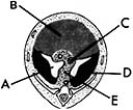 ________ Future pleural cavity
A)A
B)B
C)C
D)D
E)E
Question
Question
Question
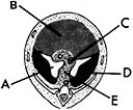 ________ Pleuroperitoneal membrane
A)A
B)B
C)C
D)D
E)E
Question
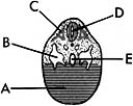 ________ Primordium of the esophagus
A)A
B)B
C)C
D)D
E)E
Question
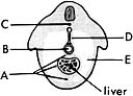 ________ Dorsal mesogastrium
A)A
B)B
C)C
D)D
E)E
Question
Question
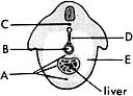 ________ Caudal part of the foregut
A)A
B)B
C)C
D)D
E)E
Question
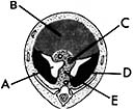 ________ Gives rise to the central tendon of the diaphragm
A)A
B)B
C)C
D)D
E)E
Question
Question
Question
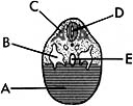 ________ Future pleural cavity
A)A
B)B
C)C
D)D
E)E
Question
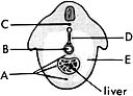 ________ Ventral mesentery of the stomach
A)A
B)B
C)C
D)D
E)E
Question
Question
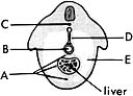 ________ Derived from intraembryonic coelom
A)A
B)B
C)C
D)D
E)E
Question
Question
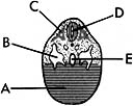 ________ Gives rise to central tendon
A)A
B)B
C)C
D)D
E)E
Question
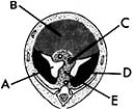 ________ Derived from the foregut
A)A
B)B
C)C
D)D
E)E
Question
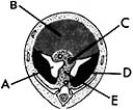 ________ Esophageal mesentery
A)A
B)B
C)C
D)D
E)E

Unlock Deck
Sign up to unlock the cards in this deck!
Unlock Deck
Unlock Deck
1/20

Play

Full screen (f)
Deck 8: Body Cavities, mesenteries, and Diaphragm
1
________ Connects the pericardial and peritoneal cavities
A)Costodiaphragmatic recess
B)Cervical myotomes
C)Congenital hiatal hernia
D)Pleuroperitoneal membrane
E)Pericardioperitoneal canal
A)Costodiaphragmatic recess
B)Cervical myotomes
C)Congenital hiatal hernia
D)Pleuroperitoneal membrane
E)Pericardioperitoneal canal
E
The pericardioperitoneal canals become the adult pleural cavities.Membranes develop at the cranial and caudal ends of these canals that separate the pleural cavities from the pericardial cavity and the peritoneal cavity,respectively.The developing lungs invaginate the medial walls of the pericardioperitoneal cavities.The inner (visceral)and outer (parietal)walls of these canals eventually come close together as the layers of pleura.
The pericardioperitoneal canals become the adult pleural cavities.Membranes develop at the cranial and caudal ends of these canals that separate the pleural cavities from the pericardial cavity and the peritoneal cavity,respectively.The developing lungs invaginate the medial walls of the pericardioperitoneal cavities.The inner (visceral)and outer (parietal)walls of these canals eventually come close together as the layers of pleura.
2
________ Future pleural cavityA)A
B)B
C)C
D)D
E)E
A
The pericardioperitoneal canals become the pleural cavities.The bronchial buds grow laterally during the fifth week and evaginate the medial walls of the canals.The inner walls of the canals become the visceral pleura and the outer walls become the parietal pleura.
The pericardioperitoneal canals become the pleural cavities.The bronchial buds grow laterally during the fifth week and evaginate the medial walls of the canals.The inner walls of the canals become the visceral pleura and the outer walls become the parietal pleura.
3
________ Posterolateral diaphragmatic defect
A)Costodiaphragmatic recess
B)Cervical myotomes
C)Congenital hiatal hernia
D)Pleuroperitoneal membrane
E)Pericardioperitoneal canal
A)Costodiaphragmatic recess
B)Cervical myotomes
C)Congenital hiatal hernia
D)Pleuroperitoneal membrane
E)Pericardioperitoneal canal
D
If the pleuroperitoneal membrane fails to develop or to fuse with other parts of the diaphragm,a posterolateral defect develops,usually on the left side.Associated with this defect is herniation of abdominal viscera into the thorax and compression of the lungs.This type of CDH often results in a medical-surgical emergency because of difficulty in fetal breathing.
If the pleuroperitoneal membrane fails to develop or to fuse with other parts of the diaphragm,a posterolateral defect develops,usually on the left side.Associated with this defect is herniation of abdominal viscera into the thorax and compression of the lungs.This type of CDH often results in a medical-surgical emergency because of difficulty in fetal breathing.
4
________ Herniation of the abdominal viscera
A)Costodiaphragmatic recess
B)Cervical myotomes
C)Congenital hiatal hernia
D)Pleuroperitoneal membrane
E)Pericardioperitoneal canal
A)Costodiaphragmatic recess
B)Cervical myotomes
C)Congenital hiatal hernia
D)Pleuroperitoneal membrane
E)Pericardioperitoneal canal
Unlock Deck
Unlock for access to all 20 flashcards in this deck.
Unlock Deck
k this deck
5
________ Pleuroperitoneal membraneA)A
B)B
C)C
D)D
E)E
Unlock Deck
Unlock for access to all 20 flashcards in this deck.
Unlock Deck
k this deck
6
________ Primordium of the esophagusA)A
B)B
C)C
D)D
E)E
Unlock Deck
Unlock for access to all 20 flashcards in this deck.
Unlock Deck
k this deck
7
________ Dorsal mesogastriumA)A
B)B
C)C
D)D
E)E
Unlock Deck
Unlock for access to all 20 flashcards in this deck.
Unlock Deck
k this deck
8
________ Muscular origins of the diaphragm
A)Esophageal mesentery
B)Pleuropericardial membrane
C)Phrenic nerves
D)Crura of the diaphragm
E)Embryonic mediastinum
A)Esophageal mesentery
B)Pleuropericardial membrane
C)Phrenic nerves
D)Crura of the diaphragm
E)Embryonic mediastinum
Unlock Deck
Unlock for access to all 20 flashcards in this deck.
Unlock Deck
k this deck
9
________ Caudal part of the foregutA)A
B)B
C)C
D)D
E)E
Unlock Deck
Unlock for access to all 20 flashcards in this deck.
Unlock Deck
k this deck
10
________ Gives rise to the central tendon of the diaphragmA)A
B)B
C)C
D)D
E)E
Unlock Deck
Unlock for access to all 20 flashcards in this deck.
Unlock Deck
k this deck
11
________ Derived from the third to fifth cervical spinal cord segments
A)Esophageal mesentery
B)Pleuropericardial membrane
C)Phrenic nerves
D)Crura of the diaphragm
E)Embryonic mediastinum
A)Esophageal mesentery
B)Pleuropericardial membrane
C)Phrenic nerves
D)Crura of the diaphragm
E)Embryonic mediastinum
Unlock Deck
Unlock for access to all 20 flashcards in this deck.
Unlock Deck
k this deck
12
________ Large esophageal opening
A)Costodiaphragmatic recess
B)Cervical myotomes
C)Congenital hiatal hernia
D)Pleuroperitoneal membrane
E)Pericardioperitoneal canal
A)Costodiaphragmatic recess
B)Cervical myotomes
C)Congenital hiatal hernia
D)Pleuroperitoneal membrane
E)Pericardioperitoneal canal
Unlock Deck
Unlock for access to all 20 flashcards in this deck.
Unlock Deck
k this deck
13
________ Future pleural cavityA)A
B)B
C)C
D)D
E)E
Unlock Deck
Unlock for access to all 20 flashcards in this deck.
Unlock Deck
k this deck
14
________ Ventral mesentery of the stomachA)A
B)B
C)C
D)D
E)E
Unlock Deck
Unlock for access to all 20 flashcards in this deck.
Unlock Deck
k this deck
15
________ Diaphragmatic muscles
A)Costodiaphragmatic recess
B)Cervical myotomes
C)Congenital hiatal hernia
D)Pleuroperitoneal membrane
E)Pericardioperitoneal canal
A)Costodiaphragmatic recess
B)Cervical myotomes
C)Congenital hiatal hernia
D)Pleuroperitoneal membrane
E)Pericardioperitoneal canal
Unlock Deck
Unlock for access to all 20 flashcards in this deck.
Unlock Deck
k this deck
16
________ Derived from intraembryonic coelomA)A
B)B
C)C
D)D
E)E
Unlock Deck
Unlock for access to all 20 flashcards in this deck.
Unlock Deck
k this deck
17
________ Forms median part of the diaphragm
A)Esophageal mesentery
B)Pleuropericardial membrane
C)Phrenic nerves
D)Crura of the diaphragm
E)Embryonic mediastinum
A)Esophageal mesentery
B)Pleuropericardial membrane
C)Phrenic nerves
D)Crura of the diaphragm
E)Embryonic mediastinum
Unlock Deck
Unlock for access to all 20 flashcards in this deck.
Unlock Deck
k this deck
18
________ Gives rise to central tendonA)A
B)B
C)C
D)D
E)E
Unlock Deck
Unlock for access to all 20 flashcards in this deck.
Unlock Deck
k this deck
19
________ Derived from the foregutA)A
B)B
C)C
D)D
E)E
Unlock Deck
Unlock for access to all 20 flashcards in this deck.
Unlock Deck
k this deck
20
________ Esophageal mesenteryA)A
B)B
C)C
D)D
E)E
Unlock Deck
Unlock for access to all 20 flashcards in this deck.
Unlock Deck
k this deck
Unlock Deck
Unlock for access to all 20 flashcards in this deck.






