







 Chat with AI

Deck 16: Eye and Ear
Full screen (f)

Question

Question
Question
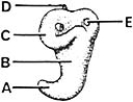 ________ Gives rise to the spiral organ
A)A
B)B
C)C
D)D
E)E
Question
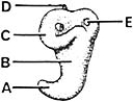 ________ Primordium of the cochlea
A)A
B)B
C)C
D)D
E)E
Question
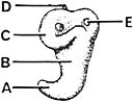 ________ Saccular part of the otic vesicle
A)A
B)B
C)C
D)D
E)E
Question
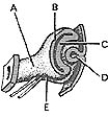 ________ Becomes specialized for sensitivity to light
A)A
B)B
C)C
D)D
E)E
Question
Question
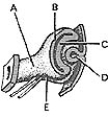 ________ Future optic nerve
A)A
B)B
C)C
D)D
E)E
Question
Question
Question
Question
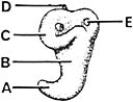 ________ Absorption focus
A)A
B)B
C)C
D)D
E)E
Question
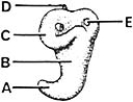 ________ Endolymphatic duct
A)A
B)B
C)C
D)D
E)E
Question
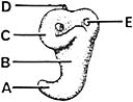 ________ Gives rise to a semicircular duct
A)A
B)B
C)C
D)D
E)E
Question
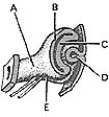 ________ Differentiates into the nonpigmented portion of the ciliary epithelium
A)A
B)B
C)C
D)D
E)E
Question
Question
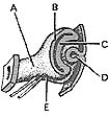 ________ Retinal fissure
A)A
B)B
C)C
D)D
E)E
Question
Question
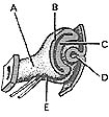 ________ Gives rise to the lens
A)A
B)B
C)C
D)D
E)E
Question
 ________ Becomes the pigmented layer of the retina
A)A
B)B
C)C
D)D
E)E
Question
Question
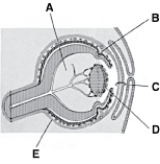 ________ Ciliary body
A)A
B)B
C)C
D)D
E)E
Question
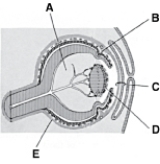 ________ Develops from mesenchyme
A)A
B)B
C)C
D)D
E)E
Question
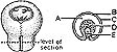 ________ Hyaloid vessels
A)A
B)B
C)C
D)D
E)E
Question
Question
Question
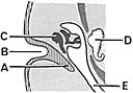 ________ Derived from the first pharyngeal arch cartilage
A)A
B)B
C)C
D)D
E)E
Question
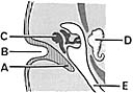 ________ External acoustic meatus
A)A
B)B
C)C
D)D
E)E
Question
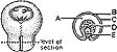 ________ Contains axons of ganglion cells
A)A
B)B
C)C
D)D
E)E
Question
 ________ Gives rise to the utricle
A)A
B)B
C)C
D)D
E)E
Question
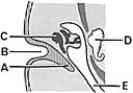 ________ Derived from the tubotympanic recess
A)A
B)B
C)C
D)D
E)E
Question
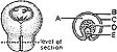 ________ Continuous with the pigmented epithelium of the retina
A)A
B)B
C)C
D)D
E)E
Question
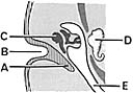 ________ Membranous labyrinth
A)A
B)B
C)C
D)D
E)E
Question
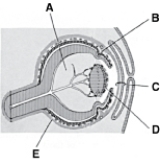 ________ Only derived from surface ectoderm
A)A
B)B
C)C
D)D
E)E
Question
Question
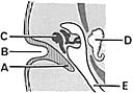 ________ Meatal plug
A)A
B)B
C)C
D)D
E)E
Question
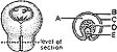 ________ Continuous with the cranial meninges
A)A
B)B
C)C
D)D
E)E
Question
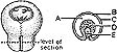 ________ Gradually obliterates
A)A
B)B
C)C
D)D
E)E
Question
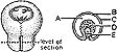 ________ Continuous with the neural layer of the retina
A)A
B)B
C)C
D)D
E)E
Question
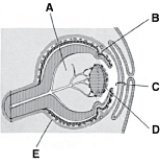 ________ Composed of vitreous humor
A)A
B)B
C)C
D)D
E)E
Question
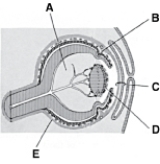 ________ Cornea
A)A
B)B
C)C
D)D
E)E

Unlock Deck
Sign up to unlock the cards in this deck!
Unlock Deck
Unlock Deck
1/41

Play

Full screen (f)
Deck 16: Eye and Ear
1
________ External acoustic meatus
A)Conjunctival epithelium
B)Neuroectoderm
C)First pharyngeal pouch
D)First pharyngeal groove
E)Mesenchyme
A)Conjunctival epithelium
B)Neuroectoderm
C)First pharyngeal pouch
D)First pharyngeal groove
E)Mesenchyme
D
The external acoustic meatus is the adult derivative of the dorsal part of the first pharyngeal groove.It grows inward as a funnel-shaped tube until it reaches the endodermal tubotympanic recess,primordium of the tympanic cavity,tympanic antrum,pharyngotympanic (auditory)tube,and mastoid cells.
The external acoustic meatus is the adult derivative of the dorsal part of the first pharyngeal groove.It grows inward as a funnel-shaped tube until it reaches the endodermal tubotympanic recess,primordium of the tympanic cavity,tympanic antrum,pharyngotympanic (auditory)tube,and mastoid cells.
2
________ Congenital glaucoma
A)Scleral venous sinus
B)Optic nerve
C)Corneal epithelium
D)Central artery of retina
E)Pupillary membrane
A)Scleral venous sinus
B)Optic nerve
C)Corneal epithelium
D)Central artery of retina
E)Pupillary membrane
A
Absence or incomplete development of the scleral venous sinus results in congenital glaucoma or buphthalmos.This abnormality usually is caused by recessive mutant genes,but sometimes it results from a maternal rubella infection during early pregnancy.The embryological basis of blockage or incomplete development of the scleral venous sinus is abnormal persistence of mesenchymal tissue in the angle of the anterior chamber.As a result of inadequate drainage of the aqueous humor through the canal,intraocular tension rises,the eye gradually enlarges,and the cornea becomes hazy.Retinal damage causes visual impairment.
Absence or incomplete development of the scleral venous sinus results in congenital glaucoma or buphthalmos.This abnormality usually is caused by recessive mutant genes,but sometimes it results from a maternal rubella infection during early pregnancy.The embryological basis of blockage or incomplete development of the scleral venous sinus is abnormal persistence of mesenchymal tissue in the angle of the anterior chamber.As a result of inadequate drainage of the aqueous humor through the canal,intraocular tension rises,the eye gradually enlarges,and the cornea becomes hazy.Retinal damage causes visual impairment.
3
________ Gives rise to the spiral organA)A
B)B
C)C
D)D
E)E
A
The spiral organ (of Corti)differentiates from cells in the wall of the cochlear duct.Ganglion cells of the eighth cranial nerve migrate along the coils of the cochlea and form the cochlear ganglion.Nerve processes grow from this ganglion to the spiral organ.
The spiral organ (of Corti)differentiates from cells in the wall of the cochlear duct.Ganglion cells of the eighth cranial nerve migrate along the coils of the cochlea and form the cochlear ganglion.Nerve processes grow from this ganglion to the spiral organ.
4
________ Primordium of the cochleaA)A
B)B
C)C
D)D
E)E
Unlock Deck
Unlock for access to all 41 flashcards in this deck.
Unlock Deck
k this deck
5
________ Saccular part of the otic vesicleA)A
B)B
C)C
D)D
E)E
Unlock Deck
Unlock for access to all 41 flashcards in this deck.
Unlock Deck
k this deck
6
________ Becomes specialized for sensitivity to lightA)A
B)B
C)C
D)D
E)E
Unlock Deck
Unlock for access to all 41 flashcards in this deck.
Unlock Deck
k this deck
7
________ Neuroectoderm
A)Scleral venous sinus
B)Optic nerve
C)Corneal epithelium
D)Central artery of retina
E)Pupillary membrane
A)Scleral venous sinus
B)Optic nerve
C)Corneal epithelium
D)Central artery of retina
E)Pupillary membrane
Unlock Deck
Unlock for access to all 41 flashcards in this deck.
Unlock Deck
k this deck
8
________ Future optic nerveA)A
B)B
C)C
D)D
E)E
Unlock Deck
Unlock for access to all 41 flashcards in this deck.
Unlock Deck
k this deck
9
________ Sclera and choroid
A)Conjunctival epithelium
B)Neuroectoderm
C)First pharyngeal pouch
D)First pharyngeal groove
E)Mesenchyme
A)Conjunctival epithelium
B)Neuroectoderm
C)First pharyngeal pouch
D)First pharyngeal groove
E)Mesenchyme
Unlock Deck
Unlock for access to all 41 flashcards in this deck.
Unlock Deck
k this deck
10
________ Ganglion cells of retina
A)Scleral venous sinus
B)Optic nerve
C)Corneal epithelium
D)Central artery of retina
E)Pupillary membrane
A)Scleral venous sinus
B)Optic nerve
C)Corneal epithelium
D)Central artery of retina
E)Pupillary membrane
Unlock Deck
Unlock for access to all 41 flashcards in this deck.
Unlock Deck
k this deck
11
________ Hyaloid artery
A)Scleral venous sinus
B)Optic nerve
C)Corneal epithelium
D)Central artery of retina
E)Pupillary membrane
A)Scleral venous sinus
B)Optic nerve
C)Corneal epithelium
D)Central artery of retina
E)Pupillary membrane
Unlock Deck
Unlock for access to all 41 flashcards in this deck.
Unlock Deck
k this deck
12
________ Absorption focusA)A
B)B
C)C
D)D
E)E
Unlock Deck
Unlock for access to all 41 flashcards in this deck.
Unlock Deck
k this deck
13
________ Endolymphatic ductA)A
B)B
C)C
D)D
E)E
Unlock Deck
Unlock for access to all 41 flashcards in this deck.
Unlock Deck
k this deck
14
________ Gives rise to a semicircular ductA)A
B)B
C)C
D)D
E)E
Unlock Deck
Unlock for access to all 41 flashcards in this deck.
Unlock Deck
k this deck
15
________ Differentiates into the nonpigmented portion of the ciliary epitheliumA)A
B)B
C)C
D)D
E)E
Unlock Deck
Unlock for access to all 41 flashcards in this deck.
Unlock Deck
k this deck
16
________ Tunica vasculosa lentis
A)Scleral venous sinus
B)Optic nerve
C)Corneal epithelium
D)Central artery of retina
E)Pupillary membrane
A)Scleral venous sinus
B)Optic nerve
C)Corneal epithelium
D)Central artery of retina
E)Pupillary membrane
Unlock Deck
Unlock for access to all 41 flashcards in this deck.
Unlock Deck
k this deck
17
________ Retinal fissureA)A
B)B
C)C
D)D
E)E
Unlock Deck
Unlock for access to all 41 flashcards in this deck.
Unlock Deck
k this deck
18
________ Surface ectoderm
A)Scleral venous sinus
B)Optic nerve
C)Corneal epithelium
D)Central artery of retina
E)Pupillary membrane
A)Scleral venous sinus
B)Optic nerve
C)Corneal epithelium
D)Central artery of retina
E)Pupillary membrane
Unlock Deck
Unlock for access to all 41 flashcards in this deck.
Unlock Deck
k this deck
19
________ Gives rise to the lensA)A
B)B
C)C
D)D
E)E
Unlock Deck
Unlock for access to all 41 flashcards in this deck.
Unlock Deck
k this deck
20
________ Becomes the pigmented layer of the retinaA)A
B)B
C)C
D)D
E)E
Unlock Deck
Unlock for access to all 41 flashcards in this deck.
Unlock Deck
k this deck
21
________ Tympanic cavity
A)Conjunctival epithelium
B)Neuroectoderm
C)First pharyngeal pouch
D)First pharyngeal groove
E)Mesenchyme
A)Conjunctival epithelium
B)Neuroectoderm
C)First pharyngeal pouch
D)First pharyngeal groove
E)Mesenchyme
Unlock Deck
Unlock for access to all 41 flashcards in this deck.
Unlock Deck
k this deck
22
________ Ciliary bodyA)A
B)B
C)C
D)D
E)E
Unlock Deck
Unlock for access to all 41 flashcards in this deck.
Unlock Deck
k this deck
23
________ Develops from mesenchymeA)A
B)B
C)C
D)D
E)E
Unlock Deck
Unlock for access to all 41 flashcards in this deck.
Unlock Deck
k this deck
24
________ Hyaloid vesselsA)A
B)B
C)C
D)D
E)E
Unlock Deck
Unlock for access to all 41 flashcards in this deck.
Unlock Deck
k this deck
25
________ Mastoid cells
A)Conjunctival epithelium
B)Neuroectoderm
C)First pharyngeal pouch
D)First pharyngeal groove
E)Mesenchyme
A)Conjunctival epithelium
B)Neuroectoderm
C)First pharyngeal pouch
D)First pharyngeal groove
E)Mesenchyme
Unlock Deck
Unlock for access to all 41 flashcards in this deck.
Unlock Deck
k this deck
26
________ Bipolar cells of the retina
A)Conjunctival epithelium
B)Neuroectoderm
C)First pharyngeal pouch
D)First pharyngeal groove
E)Mesenchyme
A)Conjunctival epithelium
B)Neuroectoderm
C)First pharyngeal pouch
D)First pharyngeal groove
E)Mesenchyme
Unlock Deck
Unlock for access to all 41 flashcards in this deck.
Unlock Deck
k this deck
27
________ Derived from the first pharyngeal arch cartilageA)A
B)B
C)C
D)D
E)E
Unlock Deck
Unlock for access to all 41 flashcards in this deck.
Unlock Deck
k this deck
28
________ External acoustic meatusA)A
B)B
C)C
D)D
E)E
Unlock Deck
Unlock for access to all 41 flashcards in this deck.
Unlock Deck
k this deck
29
________ Contains axons of ganglion cellsA)A
B)B
C)C
D)D
E)E
Unlock Deck
Unlock for access to all 41 flashcards in this deck.
Unlock Deck
k this deck
30
________ Gives rise to the utricleA)A
B)B
C)C
D)D
E)E
Unlock Deck
Unlock for access to all 41 flashcards in this deck.
Unlock Deck
k this deck
31
________ Derived from the tubotympanic recessA)A
B)B
C)C
D)D
E)E
Unlock Deck
Unlock for access to all 41 flashcards in this deck.
Unlock Deck
k this deck
32
________ Continuous with the pigmented epithelium of the retinaA)A
B)B
C)C
D)D
E)E
Unlock Deck
Unlock for access to all 41 flashcards in this deck.
Unlock Deck
k this deck
33
________ Membranous labyrinthA)A
B)B
C)C
D)D
E)E
Unlock Deck
Unlock for access to all 41 flashcards in this deck.
Unlock Deck
k this deck
34
________ Only derived from surface ectodermA)A
B)B
C)C
D)D
E)E
Unlock Deck
Unlock for access to all 41 flashcards in this deck.
Unlock Deck
k this deck
35
________ Has same origin as the cornea
A)Conjunctival epithelium
B)Neuroectoderm
C)First pharyngeal pouch
D)First pharyngeal groove
E)Mesenchyme
A)Conjunctival epithelium
B)Neuroectoderm
C)First pharyngeal pouch
D)First pharyngeal groove
E)Mesenchyme
Unlock Deck
Unlock for access to all 41 flashcards in this deck.
Unlock Deck
k this deck
36
________ Meatal plugA)A
B)B
C)C
D)D
E)E
Unlock Deck
Unlock for access to all 41 flashcards in this deck.
Unlock Deck
k this deck
37
________ Continuous with the cranial meningesA)A
B)B
C)C
D)D
E)E
Unlock Deck
Unlock for access to all 41 flashcards in this deck.
Unlock Deck
k this deck
38
________ Gradually obliteratesA)A
B)B
C)C
D)D
E)E
Unlock Deck
Unlock for access to all 41 flashcards in this deck.
Unlock Deck
k this deck
39
________ Continuous with the neural layer of the retinaA)A
B)B
C)C
D)D
E)E
Unlock Deck
Unlock for access to all 41 flashcards in this deck.
Unlock Deck
k this deck
40
________ Composed of vitreous humorA)A
B)B
C)C
D)D
E)E
Unlock Deck
Unlock for access to all 41 flashcards in this deck.
Unlock Deck
k this deck
41
________ CorneaA)A
B)B
C)C
D)D
E)E
Unlock Deck
Unlock for access to all 41 flashcards in this deck.
Unlock Deck
k this deck
Unlock Deck
Unlock for access to all 41 flashcards in this deck.






