







 Chat with AI

Deck 9: Shares
Full screen (f)

Question

Question
Question
Question
Question
Question
Question
Question
Question
Question
Question
Question
Question
Question
Question
Question
Question
Question
Question
Question
Question
Question
Question
Question
Question
Question
Question
Question
Question
Question
Question
Question
Question
Question
Question
Question
Question
Question
Question
Question
Question
Question
Question
Question
Question
Question
Question
Question
Question
Question
Question
Question
Question
Question
Question
Question
Question
Question
Question
Question
Question
Question
Question
Question
Question
Question
Question
Question
Question
Question
Question
Question
Question
Question
Question
Question
Question
Question
Question
Question
Complete the following table: 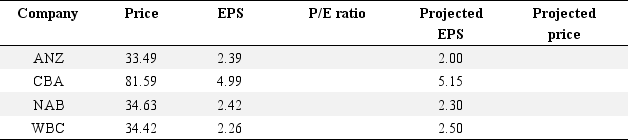

Unlock Deck
Sign up to unlock the cards in this deck!
Unlock Deck
Unlock Deck
1/96

Play

Full screen (f)
Deck 9: Shares
1
Investors in the venture capital market may exit their investment when the firm is listed on the stock exchange.
True
2
'Non-participating' means the preference shareholder is unable to vote for directors or on other matters at general meetings.
False
3
Fund managers that invest in emerging unlisted firms are known as 'business angels'.
False
4
The expected returns in the venture capital market are very high because of the high risk of loss.
Unlock Deck
Unlock for access to all 96 flashcards in this deck.
Unlock Deck
k this deck
5
A high P/E ratio results when the market believes the firm's earnings are risky.
Unlock Deck
Unlock for access to all 96 flashcards in this deck.
Unlock Deck
k this deck
6
P/E ratios are used in combination with expected earnings to provide estimates of share price changes.
Unlock Deck
Unlock for access to all 96 flashcards in this deck.
Unlock Deck
k this deck
7
An advantage of shares compared to debt securities is their greater potential for capital gains.
Unlock Deck
Unlock for access to all 96 flashcards in this deck.
Unlock Deck
k this deck
8
As shares have no maturity date, their price can be estimated as the present value of the perpetuity formed by their expected dividend payments.
Unlock Deck
Unlock for access to all 96 flashcards in this deck.
Unlock Deck
k this deck
9
Preference shares can have various features, whereas ordinary shares usually have voting rights and an entitlement to share in the firm's earnings.
Unlock Deck
Unlock for access to all 96 flashcards in this deck.
Unlock Deck
k this deck
10
Settlement prices for share trades are determined using a dividend growth model and the market yield.
Unlock Deck
Unlock for access to all 96 flashcards in this deck.
Unlock Deck
k this deck
11
The GFC triggered a wave of de-leveraging by businesses and households.
Unlock Deck
Unlock for access to all 96 flashcards in this deck.
Unlock Deck
k this deck
12
Most preference shares are participating, cumulative, non-converting and redeemable.
Unlock Deck
Unlock for access to all 96 flashcards in this deck.
Unlock Deck
k this deck
13
Preference shares are considered more risky than ordinary shares.
Unlock Deck
Unlock for access to all 96 flashcards in this deck.
Unlock Deck
k this deck
14
The financing decision is a firm's decision about which assets or projects it will invest in.
Unlock Deck
Unlock for access to all 96 flashcards in this deck.
Unlock Deck
k this deck
15
Institutional investors have become important suppliers of capital to the venture capital market.
Unlock Deck
Unlock for access to all 96 flashcards in this deck.
Unlock Deck
k this deck
16
The venture capital market is a set of arrangements that bring together suppliers of equity and the owners of growth-seeking firms requiring equity capital.
Unlock Deck
Unlock for access to all 96 flashcards in this deck.
Unlock Deck
k this deck
17
Venture capital is debt financing invested in new emerging businesses.
Unlock Deck
Unlock for access to all 96 flashcards in this deck.
Unlock Deck
k this deck
18
The basic principle of fundamental analysis is that the true value of shares is the present value of their expected dividends.
Unlock Deck
Unlock for access to all 96 flashcards in this deck.
Unlock Deck
k this deck
19
'Top-down' and 'bottom-up' refer to different approaches that can be taken as part of fundamental analysis.
Unlock Deck
Unlock for access to all 96 flashcards in this deck.
Unlock Deck
k this deck
20
The net tangible assets (NTA)can be effectively viewed as a cap on the price of a stock.
Unlock Deck
Unlock for access to all 96 flashcards in this deck.
Unlock Deck
k this deck
21
A large IPO can be considered one that markets a substantial quantity of the shares to institutional investors.
Unlock Deck
Unlock for access to all 96 flashcards in this deck.
Unlock Deck
k this deck
22
Rights issues are exposed to the risk that share prices may fall prior to the subscription date, such that the rights will not result in the sale of new shares in the company.
Unlock Deck
Unlock for access to all 96 flashcards in this deck.
Unlock Deck
k this deck
23
The dilution of control of a firm can be a disadvantage of an IPO.
Unlock Deck
Unlock for access to all 96 flashcards in this deck.
Unlock Deck
k this deck
24
In Gordon's dividend growth model, the growth rate (g)is negatively related to the estimated share value.
Unlock Deck
Unlock for access to all 96 flashcards in this deck.
Unlock Deck
k this deck
25
IPOs always raise large sums to finance the firm's growth.
Unlock Deck
Unlock for access to all 96 flashcards in this deck.
Unlock Deck
k this deck
26
Institutional investors in effect determine the issue price in large IPOs.
Unlock Deck
Unlock for access to all 96 flashcards in this deck.
Unlock Deck
k this deck
27
Rights issues allow shareholders to increase their wealth because they can buy shares at a discount.
Unlock Deck
Unlock for access to all 96 flashcards in this deck.
Unlock Deck
k this deck
28
IPOs, rights issue and private placements can be described as 'seasoned offerings'.
Unlock Deck
Unlock for access to all 96 flashcards in this deck.
Unlock Deck
k this deck
29
Investors can rely on the expert advice of the financial analysts who work for investment banks.
Unlock Deck
Unlock for access to all 96 flashcards in this deck.
Unlock Deck
k this deck
30
Given the choice, most companies would prefer to conduct their IPO during a bull market.
Unlock Deck
Unlock for access to all 96 flashcards in this deck.
Unlock Deck
k this deck
31
Most Australian IPOs have been large government-owned enterprises, such as Telstra.
Unlock Deck
Unlock for access to all 96 flashcards in this deck.
Unlock Deck
k this deck
32
Even if all the parameters used to estimate a share's value using the Gordon model are unchanged, its price would still rise and fall in a saw-tooth pattern over time.
Unlock Deck
Unlock for access to all 96 flashcards in this deck.
Unlock Deck
k this deck
33
Retained earnings are a source of additional equity for a company.
Unlock Deck
Unlock for access to all 96 flashcards in this deck.
Unlock Deck
k this deck
34
'Initial public offering' (IPO)is defined as the issue of new shares to the public.
Unlock Deck
Unlock for access to all 96 flashcards in this deck.
Unlock Deck
k this deck
35
The market risk premium is the difference between the return on the market and the risk-free rate.
Unlock Deck
Unlock for access to all 96 flashcards in this deck.
Unlock Deck
k this deck
36
Beta is a measure of a security's unsystematic risk.
Unlock Deck
Unlock for access to all 96 flashcards in this deck.
Unlock Deck
k this deck
37
A 'roadshow' and 'bookbuild' are commonly used when marketing an IPO to retail investors.
Unlock Deck
Unlock for access to all 96 flashcards in this deck.
Unlock Deck
k this deck
38
Most rights issues are non-renounceable.
Unlock Deck
Unlock for access to all 96 flashcards in this deck.
Unlock Deck
k this deck
39
An IPO requires the preparation of a prospectus that serves as the marketing brochure for the shares.
Unlock Deck
Unlock for access to all 96 flashcards in this deck.
Unlock Deck
k this deck
40
The issue price for shares in IPOs is generally higher than the price at the close of the first day's trading in the stock.
Unlock Deck
Unlock for access to all 96 flashcards in this deck.
Unlock Deck
k this deck
41
An emerging firm can be described as 'investment ready' when it:
A)is a substantial size
B)has an effective management structure
C)is capable of preparing regular financial reports
D)has a track record of profitable operations.
E)All of these.
A)is a substantial size
B)has an effective management structure
C)is capable of preparing regular financial reports
D)has a track record of profitable operations.
E)All of these.
Unlock Deck
Unlock for access to all 96 flashcards in this deck.
Unlock Deck
k this deck
42
Venture capital is best defined as:
A)debt capital supplied to new emerging businesses
B)equity capital supplied to established businesses
C)debt capital supplied to established businesses
D)equity capital supplied to new listed businesses
E)equity capital supplied to new emerging businesses.
A)debt capital supplied to new emerging businesses
B)equity capital supplied to established businesses
C)debt capital supplied to established businesses
D)equity capital supplied to new listed businesses
E)equity capital supplied to new emerging businesses.
Unlock Deck
Unlock for access to all 96 flashcards in this deck.
Unlock Deck
k this deck
43
A difference between ordinary and preference shares is:
A)preference dividends are payable only after ordinary dividends have been paid
B)preference dividends are tax deductible
C)preference dividends are a fixed amount
D)ordinary shares are less risky
E)preference shares have greater potential for capital gains.
A)preference dividends are payable only after ordinary dividends have been paid
B)preference dividends are tax deductible
C)preference dividends are a fixed amount
D)ordinary shares are less risky
E)preference shares have greater potential for capital gains.
Unlock Deck
Unlock for access to all 96 flashcards in this deck.
Unlock Deck
k this deck
44
The process of attempting to calculate the true value of a company's shares from their expected future dividends is best described as:
A)technical analysis
B)fundamental analysis
C)behavioural finance
D)top-down approach
E)bottom-up approach.
A)technical analysis
B)fundamental analysis
C)behavioural finance
D)top-down approach
E)bottom-up approach.
Unlock Deck
Unlock for access to all 96 flashcards in this deck.
Unlock Deck
k this deck
45
In reference to preference shares, 'non-participating' means that a holder of such shares:
A)is not able to vote at the annual general meeting
B)does not participate in profits
C)does not participate in bonuses such as special dividends or bonus shares
D)will not subsequently receive any missed dividend payments
E)cannot convert them into ordinary shares.
A)is not able to vote at the annual general meeting
B)does not participate in profits
C)does not participate in bonuses such as special dividends or bonus shares
D)will not subsequently receive any missed dividend payments
E)cannot convert them into ordinary shares.
Unlock Deck
Unlock for access to all 96 flashcards in this deck.
Unlock Deck
k this deck
46
Ordinary shares:
A)are perpetual and transferable
B)have limited liability
C)entitle owners to vote in elections for the company's board of directors
D)entitle owners to participate in the profits of the company.
E)All of these are correct.
A)are perpetual and transferable
B)have limited liability
C)entitle owners to vote in elections for the company's board of directors
D)entitle owners to participate in the profits of the company.
E)All of these are correct.
Unlock Deck
Unlock for access to all 96 flashcards in this deck.
Unlock Deck
k this deck
47
Dividend reinvestment schemes increase a company's retained earnings.
Unlock Deck
Unlock for access to all 96 flashcards in this deck.
Unlock Deck
k this deck
48
The maximum loss possible on an investment in shares can exceed 100% when the shares are:
A)ordinary
B)preference
C)redeemable
D)partly paid
E)convertible.
A)ordinary
B)preference
C)redeemable
D)partly paid
E)convertible.
Unlock Deck
Unlock for access to all 96 flashcards in this deck.
Unlock Deck
k this deck
49
According to the capital asset pricing model (CAPM), which of the following is NOT relevant to the required return for a firm's equity?
A)The standard deviation of returns for the firm's equity.
B)The risk-free rate.
C)The market return on a diversified equity portfolio.
D)The beta of the share.
E)All of these are relevant.
A)The standard deviation of returns for the firm's equity.
B)The risk-free rate.
C)The market return on a diversified equity portfolio.
D)The beta of the share.
E)All of these are relevant.
Unlock Deck
Unlock for access to all 96 flashcards in this deck.
Unlock Deck
k this deck
50
Say that for a number of years a company's share price was around $24 and its earnings per share approximately $2.You determine that its earnings are likely to increase to $2.50 per share this period for various reasons.Which statement is correct?
A)The company has a P/E ratio of 12.
B)Your P/E analysis suggests the share price will move to $30.
C)You would make a buy recommendation.
D)You assume that the P/E ratio will remain stable.
E)If the change in earnings is permanent, all of these are correct.
A)The company has a P/E ratio of 12.
B)Your P/E analysis suggests the share price will move to $30.
C)You would make a buy recommendation.
D)You assume that the P/E ratio will remain stable.
E)If the change in earnings is permanent, all of these are correct.
Unlock Deck
Unlock for access to all 96 flashcards in this deck.
Unlock Deck
k this deck
51
A 'business angel':
A)can be described as a 'patient' investor
B)is a source of funds to small listed companies
C)will usually just provide funding
D)is also known as a venture capital fund manager.
E)None of these.
A)can be described as a 'patient' investor
B)is a source of funds to small listed companies
C)will usually just provide funding
D)is also known as a venture capital fund manager.
E)None of these.
Unlock Deck
Unlock for access to all 96 flashcards in this deck.
Unlock Deck
k this deck
52
In Gordon's dividend growth model, the estimated share value is:
A)positively related to the current annual dividend
B)positively related to the required return on the share
C)negatively related to the dividend growth rate
D)positively related to the share's beta.
E)None of these.
A)positively related to the current annual dividend
B)positively related to the required return on the share
C)negatively related to the dividend growth rate
D)positively related to the share's beta.
E)None of these.
Unlock Deck
Unlock for access to all 96 flashcards in this deck.
Unlock Deck
k this deck
53
Listed companies can make private placements of shares, as an alternative to small rights issues.
Unlock Deck
Unlock for access to all 96 flashcards in this deck.
Unlock Deck
k this deck
54
Payments to suppliers of equity:
A)have the highest payment priority
B)are a tax deductible expense for the firm
C)are a binding commitment to pay a specified amount
D)represent a lower cost of funds than debt
E)are more risky than payments to debt holders.
A)have the highest payment priority
B)are a tax deductible expense for the firm
C)are a binding commitment to pay a specified amount
D)represent a lower cost of funds than debt
E)are more risky than payments to debt holders.
Unlock Deck
Unlock for access to all 96 flashcards in this deck.
Unlock Deck
k this deck
55
Rights issues are used when a company requires a substantial amount of new equity capital.
Unlock Deck
Unlock for access to all 96 flashcards in this deck.
Unlock Deck
k this deck
56
A P/E ratio for a firm that is higher than the industry average may indicate:
A)the firm's growth prospects are seen as being below its competitors
B)the share is probably underpriced and so you would give a 'buy' recommendation
C)the share is probably underpriced so you would give a 'sell' recommendation
D)the share is relatively expensive
E)None of these.
A)the firm's growth prospects are seen as being below its competitors
B)the share is probably underpriced and so you would give a 'buy' recommendation
C)the share is probably underpriced so you would give a 'sell' recommendation
D)the share is relatively expensive
E)None of these.
Unlock Deck
Unlock for access to all 96 flashcards in this deck.
Unlock Deck
k this deck
57
Where rights are renounceable, their price moves in response to movements in the share's (ex-rights)price.
Unlock Deck
Unlock for access to all 96 flashcards in this deck.
Unlock Deck
k this deck
58
An initial public offering:
A)does not always raise additional equity funds for the business
B)is the initial sale of shares to the public
C)is also known as a 'float'
D)is the process by which shares become listed on the ASX
E)All of these.
A)does not always raise additional equity funds for the business
B)is the initial sale of shares to the public
C)is also known as a 'float'
D)is the process by which shares become listed on the ASX
E)All of these.
Unlock Deck
Unlock for access to all 96 flashcards in this deck.
Unlock Deck
k this deck
59
An accelerated rights issue has two parts, an accelerated issue to retail investors and a non-accelerated offer to institutional investors.
Unlock Deck
Unlock for access to all 96 flashcards in this deck.
Unlock Deck
k this deck
60
Gordon's dividend growth model requires a number of variables to be estimated.The variable about which there is the greatest uncertainty is:
A)rr
B)D0
C)g
D)β
E)rrisk-free
A)rr
B)D0
C)g
D)β
E)rrisk-free
Unlock Deck
Unlock for access to all 96 flashcards in this deck.
Unlock Deck
k this deck
61
A listed company can raise additional capital through all of the following means EXCEPT:
A)an IPO
B)retained earnings
C)private placement
D)dividend reinvestment schemes
E)rights issues.
A)an IPO
B)retained earnings
C)private placement
D)dividend reinvestment schemes
E)rights issues.
Unlock Deck
Unlock for access to all 96 flashcards in this deck.
Unlock Deck
k this deck
62
Which of the following statements is true about a renounceable rights issue?
A)Rights cannot be traded after the ex-rights date.
B)The price of shares will rise after the subscription date.
C)Shares trade ex-rights before the ex-rights date.
D)Rights have no value if the share price is above the subscription price on the subscription date.
E)The share price will fall on the ex-rights date.
A)Rights cannot be traded after the ex-rights date.
B)The price of shares will rise after the subscription date.
C)Shares trade ex-rights before the ex-rights date.
D)Rights have no value if the share price is above the subscription price on the subscription date.
E)The share price will fall on the ex-rights date.
Unlock Deck
Unlock for access to all 96 flashcards in this deck.
Unlock Deck
k this deck
63
R.U.Ready Ltd wishes to raise $20 million.If the subscription price is $5, the current share price is $7.50, and there are 8 million shares outstanding, what is the value of a right?
A)$0.63
B)$1.25
C)$1.67
D)$1.88
E)None of these.
A)$0.63
B)$1.25
C)$1.67
D)$1.88
E)None of these.
Unlock Deck
Unlock for access to all 96 flashcards in this deck.
Unlock Deck
k this deck
64
The marketing process of a large IPO would NOT normally include:
A)pre-marketing to prepare investors for the issue
B)the commissioning of independent and unbiased analyst's reports
C)a road show
D)a bookbuild
E)the pricing and allocation of shares to investors.
A)pre-marketing to prepare investors for the issue
B)the commissioning of independent and unbiased analyst's reports
C)a road show
D)a bookbuild
E)the pricing and allocation of shares to investors.
Unlock Deck
Unlock for access to all 96 flashcards in this deck.
Unlock Deck
k this deck
65
R.U.Ready Ltd wishes to raise $20 million.If the subscription price is $5, the current share price is $7.50, and there are 8 million shares outstanding, what is the theoretical ex-rights price?
A)$5.63
B)$6.25
C)$6.67
D)$6.88
E)None of these.
A)$5.63
B)$6.25
C)$6.67
D)$6.88
E)None of these.
Unlock Deck
Unlock for access to all 96 flashcards in this deck.
Unlock Deck
k this deck
66
A disadvantage of a private placement as a source of additional equity is:
A)it is slow relative to a rights issue
B)it dilutes the proportionate claims of existing shareholders
C)the price per share is usually less than the subscription price in a rights issue
D)the placement can be made to an investor who supports the current management
E)tt is more expensive than a rights issue.
A)it is slow relative to a rights issue
B)it dilutes the proportionate claims of existing shareholders
C)the price per share is usually less than the subscription price in a rights issue
D)the placement can be made to an investor who supports the current management
E)tt is more expensive than a rights issue.
Unlock Deck
Unlock for access to all 96 flashcards in this deck.
Unlock Deck
k this deck
67
Calculate the growth rate in Wesfarmers Ltd dividends given its annual dividend has increased from $0.73 in 2000 to $1.80 in 2013.Assuming this growth rate continues and that investors require a return of 12%, estimate the company's share price just after the 2013 dividend was paid.
Unlock Deck
Unlock for access to all 96 flashcards in this deck.
Unlock Deck
k this deck
68
Describe the processes involved in both a 'top-down' and also a 'bottom-up' approach to security analysis.
Unlock Deck
Unlock for access to all 96 flashcards in this deck.
Unlock Deck
k this deck
69
Woolworths Ltd shares are trading at $37.53, it has 1.25 billion ordinary shares issued and annual earnings available to ordinary shareholders of $2.35 billion.What is Woolworths P/E ratio?
Unlock Deck
Unlock for access to all 96 flashcards in this deck.
Unlock Deck
k this deck
70
Explain Gordon's dividend growth model.How is the required return for a share estimated?
Unlock Deck
Unlock for access to all 96 flashcards in this deck.
Unlock Deck
k this deck
71
When is a business ready to be listed on a stock exchange?
Unlock Deck
Unlock for access to all 96 flashcards in this deck.
Unlock Deck
k this deck
72
R.U.Ready Ltd wishes to raise $20 million.If the subscription price is $5, the current share price is $7.50, and there are 8 million shares outstanding, what will be the terms of the rights issue?
A)A 1-for-1 issue
B)A 1-for-2 issue
C)A 1-for-4 issue
D)A 1-for-5 issue
E)None of these.
A)A 1-for-1 issue
B)A 1-for-2 issue
C)A 1-for-4 issue
D)A 1-for-5 issue
E)None of these.
Unlock Deck
Unlock for access to all 96 flashcards in this deck.
Unlock Deck
k this deck
73
Compare the general characteristics of ordinary and preference shares and describe the other conditions or features that can be attached to preference shares.
Unlock Deck
Unlock for access to all 96 flashcards in this deck.
Unlock Deck
k this deck
74
A listed firm currently has 40 million shares selling for $12 a share.It wants to raise $100 million via a renounceable rights issue.The subscription price is $10 a share.The theoretical ex-rights price, and the value of a right is:
A)Pex-rights = $10.40, R = $0.40
B)Pex-rights = $11.00, R = $1.00
C)Pex-rights = $11.33, R = $1.33
D)Pex-rights = $11.60, R = $1.60
E)None of these.
A)Pex-rights = $10.40, R = $0.40
B)Pex-rights = $11.00, R = $1.00
C)Pex-rights = $11.33, R = $1.33
D)Pex-rights = $11.60, R = $1.60
E)None of these.
Unlock Deck
Unlock for access to all 96 flashcards in this deck.
Unlock Deck
k this deck
75
Which of the following is NOT an explanation advanced for the phenomenon of underpricing of an IPO?
A)Providing the initial buyers with a capital gain in an effort to create goodwill.
B)The desire of the seller in the primary market to achieve a successful float.
C)The wish to raise smaller amounts of capital.
D)Compensation for the risk accepted by buyers in IPOs, given that underpricing is not guaranteed.
E)The superior negotiating power of the investment bank over the seller.
A)Providing the initial buyers with a capital gain in an effort to create goodwill.
B)The desire of the seller in the primary market to achieve a successful float.
C)The wish to raise smaller amounts of capital.
D)Compensation for the risk accepted by buyers in IPOs, given that underpricing is not guaranteed.
E)The superior negotiating power of the investment bank over the seller.
Unlock Deck
Unlock for access to all 96 flashcards in this deck.
Unlock Deck
k this deck
76
A listed company:
A)can generally raise as much new equity as it wishes through a private placement
B)can expect its share price to rise if it conducts a rights issue
C)will successfully conduct a rights issue if the subscription price is set above the current share price
D)can rapidly increase its equity capital through dividend reinvestment schemes.
E)None of these are correct.
A)can generally raise as much new equity as it wishes through a private placement
B)can expect its share price to rise if it conducts a rights issue
C)will successfully conduct a rights issue if the subscription price is set above the current share price
D)can rapidly increase its equity capital through dividend reinvestment schemes.
E)None of these are correct.
Unlock Deck
Unlock for access to all 96 flashcards in this deck.
Unlock Deck
k this deck
77
What is venture capital? Who are its main suppliers and its main users?
Unlock Deck
Unlock for access to all 96 flashcards in this deck.
Unlock Deck
k this deck
78
IPOs have a number of disadvantages.These do NOT include:
A)the expense of conducting the IPO
B)the dilution of ownership for continuing owners
C)a greater capacity to remunerate management and employees
D)the risk of incurring agency costs associated with the separation of ownership and control
E)a short-term bias to management decision making.
A)the expense of conducting the IPO
B)the dilution of ownership for continuing owners
C)a greater capacity to remunerate management and employees
D)the risk of incurring agency costs associated with the separation of ownership and control
E)a short-term bias to management decision making.
Unlock Deck
Unlock for access to all 96 flashcards in this deck.
Unlock Deck
k this deck
79
The process of conducting an IPO:
A)is typically handled by an investment bank or stockbroking firm engaged by the firm
B)requires completion of a due-diligence process
C)requires the firm satisfy the requirements of the ASX and ASIC
D)requires a prospectus that is meant to overcome the problem of information asymmetry.
E)All of these.
A)is typically handled by an investment bank or stockbroking firm engaged by the firm
B)requires completion of a due-diligence process
C)requires the firm satisfy the requirements of the ASX and ASIC
D)requires a prospectus that is meant to overcome the problem of information asymmetry.
E)All of these.
Unlock Deck
Unlock for access to all 96 flashcards in this deck.
Unlock Deck
k this deck
80
Complete the following table:
Unlock Deck
Unlock for access to all 96 flashcards in this deck.
Unlock Deck
k this deck
Unlock Deck
Unlock for access to all 96 flashcards in this deck.






