







 Chat with AI

Deck 20: Childbirth at Risk: Prelabor and Intrapartum Complications
Full screen (f)

Question

Question
Question
Question
Question
Question
Question
Question
Question
Question
Question
Question
Question
Question
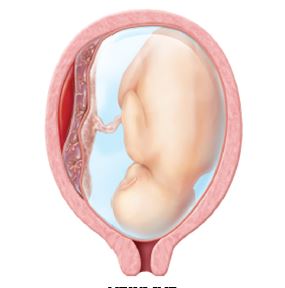
The nurse selects the following diagram to instruct a pregnant client with placenta previa. What should the nurse specifically teach the client about this health problem?Shape_
Question
Question
Question
Question
Question
Question

Unlock Deck
Sign up to unlock the cards in this deck!
Unlock Deck
Unlock Deck
1/20

Play

Full screen (f)
Deck 20: Childbirth at Risk: Prelabor and Intrapartum Complications
1
A client at 30 weeks' gestation is experiencing painless late vaginal bleeding. What should the nurse expect in the management of this client?
1) Assessing blood pressure every 2 hours
2) Evaluating the fetal heart rate with an internal monitor
3) Limiting vaginal examinations to only one per 24-hour period
4) Monitoring for blood loss, pain, and uterine contractibility
1) Assessing blood pressure every 2 hours
2) Evaluating the fetal heart rate with an internal monitor
3) Limiting vaginal examinations to only one per 24-hour period
4) Monitoring for blood loss, pain, and uterine contractibility
4
2
The nurse has received end of shift report in the high-risk maternity unit. Which client should the nurse see first?
1) 35 weeks' gestation with grade 1 abruptio placentae in labor who has a strong urge to push
2) 30 weeks' gestation with placenta previa whose fetal monitor strip shows late decelerations
3) 26 weeks' gestation with placenta previa experiencing blood on toilet tissue after a bowel movement
4) 37 weeks' gestation with pregnancy-induced hypertension whose membranes ruptured spontaneously
1) 35 weeks' gestation with grade 1 abruptio placentae in labor who has a strong urge to push
2) 30 weeks' gestation with placenta previa whose fetal monitor strip shows late decelerations
3) 26 weeks' gestation with placenta previa experiencing blood on toilet tissue after a bowel movement
4) 37 weeks' gestation with pregnancy-induced hypertension whose membranes ruptured spontaneously
3
3
A client pregnant with twins asks if the pregnancy will be uncomplicated. How should the nurse respond to this client?
1) "The perinatal mortality rate for monoamniotic siblings is 50%."
2) "Twins are less likely to have complications than are singleton births."
3) "Spontaneously conceived twins are less likely to develop complications."
4) "Primiparous women pregnant with twins are less likely to develop complications."
1) "The perinatal mortality rate for monoamniotic siblings is 50%."
2) "Twins are less likely to have complications than are singleton births."
3) "Spontaneously conceived twins are less likely to develop complications."
4) "Primiparous women pregnant with twins are less likely to develop complications."
3
4
When caring for a client with oligohydramnios, on what should the nurse focus? Select all that apply.
1) Induction is typically scheduled.
2) Early decelerations are more likely.
3) Fetal pulmonary hypoplasia can develop.
4) There is an increased risk of cord compression.
5) Labor progress is often more rapid than average.
1) Induction is typically scheduled.
2) Early decelerations are more likely.
3) Fetal pulmonary hypoplasia can develop.
4) There is an increased risk of cord compression.
5) Labor progress is often more rapid than average.
Unlock Deck
Unlock for access to all 20 flashcards in this deck.
Unlock Deck
k this deck
5
A pregnant client diagnosed with hydramnios asks for more information about this health problem. What should the nurse include in this teaching? Select all that apply.
1) The exact cause is unknown.
2) It can cause shortness of breath and edema.
3) It can be associated with maternal diabetes.
4) It occurs in large-for-gestational-age infants.
5) It is associated with renal malformation or dysfunction.
1) The exact cause is unknown.
2) It can cause shortness of breath and edema.
3) It can be associated with maternal diabetes.
4) It occurs in large-for-gestational-age infants.
5) It is associated with renal malformation or dysfunction.
Unlock Deck
Unlock for access to all 20 flashcards in this deck.
Unlock Deck
k this deck
6
A pregnant client is scheduled for a transabdominal cerclage. What teaching information should the nurse prepare for this client? Select all that apply.
1) Cesarean section birth
2) Preoperative laparotomy
3) Potential for hydramnios
4) Risk for abruptio placentae
5) Premature rupture of membranes
1) Cesarean section birth
2) Preoperative laparotomy
3) Potential for hydramnios
4) Risk for abruptio placentae
5) Premature rupture of membranes
Unlock Deck
Unlock for access to all 20 flashcards in this deck.
Unlock Deck
k this deck
7
The home health nurse is visiting the home of a client who is 18 weeks pregnant with twins. Which nursing action is most important?
1) Assess the client's blood pressure in the upper right arm.
2) Collect a cervicovaginal fetal fibronectin (fFN) specimen.
3) Teach the client about foods that are good sources of protein.
4) Determine whether the pregnancy is a result of infertility treatment.
1) Assess the client's blood pressure in the upper right arm.
2) Collect a cervicovaginal fetal fibronectin (fFN) specimen.
3) Teach the client about foods that are good sources of protein.
4) Determine whether the pregnancy is a result of infertility treatment.
Unlock Deck
Unlock for access to all 20 flashcards in this deck.
Unlock Deck
k this deck
8
The nurse is planning an educational program about disseminated intravascular coagulation (DIC) in pregnancy. What risk factors should the nurse include about this health problem? Select all that apply.
1) Multiparity
2) Preterm labor
3) Diabetes mellitus
4) Abruptio placentae
5) Prolonged retention of a fetus after demise
1) Multiparity
2) Preterm labor
3) Diabetes mellitus
4) Abruptio placentae
5) Prolonged retention of a fetus after demise
Unlock Deck
Unlock for access to all 20 flashcards in this deck.
Unlock Deck
k this deck
9
A client who weighed 60 kg before becoming pregnant with twins is having a routine prenatal examination at gestational week
24) What should be this client's weight in kilograms at this time? (Round to the nearest whole number.)
24) What should be this client's weight in kilograms at this time? (Round to the nearest whole number.)
Unlock Deck
Unlock for access to all 20 flashcards in this deck.
Unlock Deck
k this deck
10
A client with premature rupture of membranes received 4 g of magnesium sulfate at 1600 hours, followed by 2 g/hr beginning at 1700 hours. Birth occurred at 0130 hours. How many grams of magnesium sulfate did this client receive? Calculate to the nearest whole number.
Unlock Deck
Unlock for access to all 20 flashcards in this deck.
Unlock Deck
k this deck
11
The nurse is caring for a client at 30 weeks' gestation who is experiencing preterm premature rupture of membranes (PPROM). Which statement indicates that the client needs additional teaching?
1) "If I have bleeding in the third trimester of my next pregnancy, I might rupture membranes again."
2) "If I want to become pregnant again, I will have to plan on being on bed rest for the whole pregnancy."
3) "If I develop a urinary tract infection in my next pregnancy, I might rupture membranes early again."
4) "If I were having a singleton pregnancy instead of twins, my membranes would probably not have ruptured."
1) "If I have bleeding in the third trimester of my next pregnancy, I might rupture membranes again."
2) "If I want to become pregnant again, I will have to plan on being on bed rest for the whole pregnancy."
3) "If I develop a urinary tract infection in my next pregnancy, I might rupture membranes early again."
4) "If I were having a singleton pregnancy instead of twins, my membranes would probably not have ruptured."
Unlock Deck
Unlock for access to all 20 flashcards in this deck.
Unlock Deck
k this deck
12
A multigravida client with suspected abruptio placentae is admitted in active labor. Which nursing diagnoses should the nurse identify as appropriate for this client? Select all that apply.
1) Anxiety related to concern for own safety
2) Ineffective Coping related to premature birth
3) Fluid Volume, Risk for Deficit, related to hypovolemia
4) Tissue Perfusion, Risk for Altered, related to blood loss
5) Knowledge Deficit related to lack of information about inherited genetic defects
1) Anxiety related to concern for own safety
2) Ineffective Coping related to premature birth
3) Fluid Volume, Risk for Deficit, related to hypovolemia
4) Tissue Perfusion, Risk for Altered, related to blood loss
5) Knowledge Deficit related to lack of information about inherited genetic defects
Unlock Deck
Unlock for access to all 20 flashcards in this deck.
Unlock Deck
k this deck
13
The nurse is caring for the newborn of a client who received magnesium sulfate for preterm labor. Which fetal effects should the nurse attribute to the client's medication treatment? Select all that apply.
1) Flushing
2) Lethargy
3) Hypotonia
4) Poor sucking reflex
5) Respiratory depression
1) Flushing
2) Lethargy
3) Hypotonia
4) Poor sucking reflex
5) Respiratory depression
Unlock Deck
Unlock for access to all 20 flashcards in this deck.
Unlock Deck
k this deck
14
The nurse selects the following diagram to instruct a pregnant client with placenta previa. What should the nurse specifically teach the client about this health problem?Shape_
Unlock Deck
Unlock for access to all 20 flashcards in this deck.
Unlock Deck
k this deck
15
A pregnant client is diagnosed with cervical insufficiency. How should the nurse expect this client to explain symptoms of this condition?
1) "I've been having contractions every 4 hours."
2) "I'm not having any pain and I do not feel any contractions."
3) "My cervical pain has gotten much worse over the past 2 days."
4) "I'm not having any pain, but my contractions are getting stronger."
1) "I've been having contractions every 4 hours."
2) "I'm not having any pain and I do not feel any contractions."
3) "My cervical pain has gotten much worse over the past 2 days."
4) "I'm not having any pain, but my contractions are getting stronger."
Unlock Deck
Unlock for access to all 20 flashcards in this deck.
Unlock Deck
k this deck
16
A client at 38 weeks' gestation is diagnosed with oligohydramnios. Which statement indicates that teaching has been effective?
1) "When I go into labor, I should come to the hospital right away."
2) "My gestational diabetes may have caused this problem to develop."
3) "Women with this condition usually go into labor after their due date."
4) "This problem is common and will likely occur with my next pregnancy."
1) "When I go into labor, I should come to the hospital right away."
2) "My gestational diabetes may have caused this problem to develop."
3) "Women with this condition usually go into labor after their due date."
4) "This problem is common and will likely occur with my next pregnancy."
Unlock Deck
Unlock for access to all 20 flashcards in this deck.
Unlock Deck
k this deck
17
The clinical instructor reviews postoperative care of cerclage with a group of nursing students. Which student statement indicates the need for further information?
1) "Sometimes cerclage can be performed on an outclient basis."
2) "If cerclage is performed emergently, the client will usually be hospitalized for at least 5 days."
3) "After 37 weeks' gestation, the client's cerclage may be cut in order to allow for vaginal delivery."
4) "If the client's amniotic sac is bulging, the cerclage is contraindicated and the procedure cannot be performed."
1) "Sometimes cerclage can be performed on an outclient basis."
2) "If cerclage is performed emergently, the client will usually be hospitalized for at least 5 days."
3) "After 37 weeks' gestation, the client's cerclage may be cut in order to allow for vaginal delivery."
4) "If the client's amniotic sac is bulging, the cerclage is contraindicated and the procedure cannot be performed."
Unlock Deck
Unlock for access to all 20 flashcards in this deck.
Unlock Deck
k this deck
18
For which reason should the nurse suspect hydramnios in a pregnant client?
1) The client is pregnant with twins.
2) The quadruple screen comes back positive.
3) There is less amniotic fluid than normal for gestation.
4) The fundal height increases disproportionately to the gestation.
1) The client is pregnant with twins.
2) The quadruple screen comes back positive.
3) There is less amniotic fluid than normal for gestation.
4) The fundal height increases disproportionately to the gestation.
Unlock Deck
Unlock for access to all 20 flashcards in this deck.
Unlock Deck
k this deck
19
A pregnant client is diagnosed with central abruptio placentae. What can the nurse infer about the client's condition?
1) The slight separation of the client's placenta from the uterine wall will not produce any bleeding.
2) The total separation of the client's placenta from the uterine wall will lead to massive hemorrhage.
3) Blood is trapped between the client's placenta and the uterine wall, and there may be concealed bleeding.
4) Blood is passing between the fetal membranes and the client's uterine wall, which will lead to some vaginal bleeding.
1) The slight separation of the client's placenta from the uterine wall will not produce any bleeding.
2) The total separation of the client's placenta from the uterine wall will lead to massive hemorrhage.
3) Blood is trapped between the client's placenta and the uterine wall, and there may be concealed bleeding.
4) Blood is passing between the fetal membranes and the client's uterine wall, which will lead to some vaginal bleeding.
Unlock Deck
Unlock for access to all 20 flashcards in this deck.
Unlock Deck
k this deck
20
The nurse is counseling a newly pregnant gravida 1 at 8 weeks' gestation with twins about the need for increased caloric intake. What should the nurse emphasize as being the minimum recommended intake?
1) 2500 kcal and 120 g protein
2) 3000 kcal and 150 g protein
3) 3500 kcal and 175 g protein
4) 4000 kcal and 190 g protein
1) 2500 kcal and 120 g protein
2) 3000 kcal and 150 g protein
3) 3500 kcal and 175 g protein
4) 4000 kcal and 190 g protein
Unlock Deck
Unlock for access to all 20 flashcards in this deck.
Unlock Deck
k this deck
Unlock Deck
Unlock for access to all 20 flashcards in this deck.






