







 Chat with AI

Deck 17: The Capital Market
Full screen (f)

Question
The figure given below shows the demand curves [D1 and D2] and the supply curve [S1] of capital.Figure 17.1
![<strong>The figure given below shows the demand curves [D<sub>1</sub> and D<sub>2</sub>] and the supply curve [S<sub>1</sub>] of capital.Figure 17.1 What is the main difference between common and preferred stocks?</strong> A)Common stocks pay interest whereas preferred stocks pay dividends. B)Preferred stocks carry voting rights whereas common stocks do not carry voting rights. C)Preferred stocks pay a guaranteed dividend, while common stocks may or may not pay dividends. D)In case of bankruptcy, preferred stockholders have a right to the company's asset, whereas common stockholders do not have such rights. E)Common stocks can be converted into preferred stocks while preferred stocks cannot be converted into common stocks. <div style=padding-top: 35px>](https://d2lvgg3v3hfg70.cloudfront.net/TB1748/11ea8882_6256_4c4d_8903_87d4e8eb62a5_TB1748_00_TB1748_00_TB1748_00_TB1748_00_TB1748_00_TB1748_00_TB1748_00_TB1748_00_TB1748_00_TB1748_00_TB1748_00_TB1748_00_TB1748_00_TB1748_00_TB1748_00_TB1748_00_TB1748_00_TB1748_00_TB1748_00_TB1748_00_TB1748_00_TB1748_00_TB1748_00_TB1748_00_TB1748_00_TB1748_00_TB1748_00_TB1748_00_TB1748_00_TB1748_00_TB1748_00_TB1748_00_TB1748_00_TB1748_00_TB1748_00_TB1748_00_TB1748_00_TB1748_00_TB1748_00_TB1748_00_TB1748_00_TB1748_00.jpg)
What is the main difference between common and preferred stocks?
A)Common stocks pay interest whereas preferred stocks pay dividends.
B)Preferred stocks carry voting rights whereas common stocks do not carry voting rights.
C)Preferred stocks pay a guaranteed dividend, while common stocks may or may not pay dividends.
D)In case of bankruptcy, preferred stockholders have a right to the company's asset, whereas common stockholders do not have such rights.
E)Common stocks can be converted into preferred stocks while preferred stocks cannot be converted into common stocks.
What is the main difference between common and preferred stocks?
A)Common stocks pay interest whereas preferred stocks pay dividends.
B)Preferred stocks carry voting rights whereas common stocks do not carry voting rights.
C)Preferred stocks pay a guaranteed dividend, while common stocks may or may not pay dividends.
D)In case of bankruptcy, preferred stockholders have a right to the company's asset, whereas common stockholders do not have such rights.
E)Common stocks can be converted into preferred stocks while preferred stocks cannot be converted into common stocks.

Question
The figure given below shows the demand curves [D1 and D2] and the supply curve [S1] of capital.Figure 17.1
In Figure 17.1, if the initial demand curve is D1, the equilibrium quantity of capital demanded is:
A)Q1.
B)Q3.
C)0.
D)Q4.
E)Q2.
In Figure 17.1, if the initial demand curve is D1, the equilibrium quantity of capital demanded is:
A)Q1.
B)Q3.
C)0.
D)Q4.
E)Q2.
Question
The figure given below shows the demand curves [D1 and D2] and the supply curve [S1] of capital.Figure 17.1
Stocks that offer a guaranteed fixed periodic payment or dividend are known as:
A)common stock.
B)restricted stock.
C)close-ended stock.
D)preferred stock.
E)open-ended stock.
Stocks that offer a guaranteed fixed periodic payment or dividend are known as:
A)common stock.
B)restricted stock.
C)close-ended stock.
D)preferred stock.
E)open-ended stock.
Question
The following figures show the demand (D) and supply (S) curves of micro and macro economists.Figure 16.6
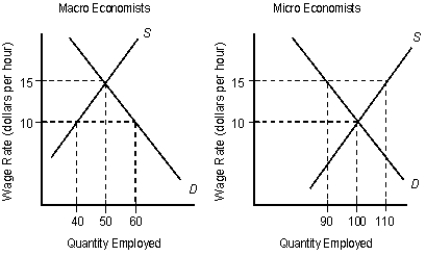
Which of the following will shift the demand curve for capital leftward?
A)Introduction of supercomputers in the resource market
B)A fall in the market interest rates
C)An increase in the price of capital
D)Business expectations of increased regulations
E)A rise in the equilibrium wage of labor
Which of the following will shift the demand curve for capital leftward?
A)Introduction of supercomputers in the resource market
B)A fall in the market interest rates
C)An increase in the price of capital
D)Business expectations of increased regulations
E)A rise in the equilibrium wage of labor
Question
The figure given below shows the demand curves [D1 and D2] and the supply curve [S1] of capital.Figure 17.1
Dividend yield is:
A)the annual dividend payment per share.
B)the annual dividend per share divided by the price of each share.
C)the current stock price divided by the dividend per share.
D)the year-on-year change in the annual dividend payment.
E)the dollar value change in the stock price from the previous day's closing price.
Dividend yield is:
A)the annual dividend payment per share.
B)the annual dividend per share divided by the price of each share.
C)the current stock price divided by the dividend per share.
D)the year-on-year change in the annual dividend payment.
E)the dollar value change in the stock price from the previous day's closing price.
Question
The figure given below shows the demand curves [D1 and D2] and the supply curve [S1] of capital.Figure 17.1
In Figure 17.1, if the demand curve for capital shifts to D2, the equilibrium price and quantity of capital are:
A)P1 and Q1.
B)P2 and Q2.
C)P5 and Q1.
D)P3 and Q3.
E)P4 and Q4.
In Figure 17.1, if the demand curve for capital shifts to D2, the equilibrium price and quantity of capital are:
A)P1 and Q1.
B)P2 and Q2.
C)P5 and Q1.
D)P3 and Q3.
E)P4 and Q4.
Question
The following figures show the demand (D) and supply (S) curves of micro and macro economists.Figure 16.6
When the rate of interest rises, the resulting change in the demand for capital is shown graphically by:
A)a movement down along the demand curve.
B)a rightward shift of the demand curve.
C)a leftward shift of the demand curve.
D)a movement up along the demand curve.
E)an outward rotation of the demand curve.
When the rate of interest rises, the resulting change in the demand for capital is shown graphically by:
A)a movement down along the demand curve.
B)a rightward shift of the demand curve.
C)a leftward shift of the demand curve.
D)a movement up along the demand curve.
E)an outward rotation of the demand curve.
Question
The figure given below shows the demand curves [D1 and D2] and the supply curve [S1] of capital.Figure 17.1
In Figure 17.1, if the initial demand curve is D1, the equilibrium price of capital is:
A)P2.
B)P4.
C)P1.
D)P5.
E)P3.
In Figure 17.1, if the initial demand curve is D1, the equilibrium price of capital is:
A)P2.
B)P4.
C)P1.
D)P5.
E)P3.
Question
The figure given below shows the demand curves [D1 and D2] and the supply curve [S1] of capital.Figure 17.1
The largest stock exchange in the world is:
A)the Munich Stock Exchange.
B)the London Stock Exchange.
C)the New York Stock Exchange.
D)the Tokyo Stock Exchange.
E)the Shanghai Stock Exchange.
The largest stock exchange in the world is:
A)the Munich Stock Exchange.
B)the London Stock Exchange.
C)the New York Stock Exchange.
D)the Tokyo Stock Exchange.
E)the Shanghai Stock Exchange.
Question
The following figures show the demand (D) and supply (S) curves of micro and macro economists.Figure 16.6
The demand curve for capital:
A)shows the positive relation between capital usage and the quantity of capital demanded.
B)shows the positive relation between aggregate output and the quantity of capital demanded.
C)shows the negative relation between rate of inflation and the quantity of capital demanded.
D)shows the positive relation between technological change and the quantity of capital demanded.
E)shows the negative relation between price of capital and the quantity of capital demanded.
The demand curve for capital:
A)shows the positive relation between capital usage and the quantity of capital demanded.
B)shows the positive relation between aggregate output and the quantity of capital demanded.
C)shows the negative relation between rate of inflation and the quantity of capital demanded.
D)shows the positive relation between technological change and the quantity of capital demanded.
E)shows the negative relation between price of capital and the quantity of capital demanded.
Question
The figure given below shows the demand curves [D1 and D2] and the supply curve [S1] of capital.Figure 17.1
In Figure 17.1, if the initial demand curve is D1, the capital market is in equilibrium at:
A) point a.
B) point b.
C) point c.
D) point d.
E) point f.
In Figure 17.1, if the initial demand curve is D1, the capital market is in equilibrium at:
A) point a.
B) point b.
C) point c.
D) point d.
E) point f.
Question
The following figures show the demand (D) and supply (S) curves of micro and macro economists.Figure 16.6
When a new generation of computers, which are faster and more powerful than the previous generation, is introduced into the resource market:
A)many firms do not change their demand for capital.
B)many firms increase their demand for capital.
C)many firms decrease their demand for capital.
D)the quantity demanded of capital declines.
E)the quantity demanded of capital increases.
When a new generation of computers, which are faster and more powerful than the previous generation, is introduced into the resource market:
A)many firms do not change their demand for capital.
B)many firms increase their demand for capital.
C)many firms decrease their demand for capital.
D)the quantity demanded of capital declines.
E)the quantity demanded of capital increases.
Question
The following figures show the demand (D) and supply (S) curves of micro and macro economists.Figure 16.6
If the price of capital falls, _____.
A)the supply of capital increases
B)the quantity supplied of capital decreases
C)the quantity supplied of capital increases
D)the quantity supplied of capital remains unchanged
E)the supply of capital decreases
If the price of capital falls, _____.
A)the supply of capital increases
B)the quantity supplied of capital decreases
C)the quantity supplied of capital increases
D)the quantity supplied of capital remains unchanged
E)the supply of capital decreases
Question
The figure given below shows the demand curves [D1 and D2] and the supply curve [S1] of capital.Figure 17.1
Which of the following is true of American Depository Receipts (ADRs)?
A)ADRs cannot be sold "over the counter."
B)Each ADR is backed by a specific number of the issuer's local shares.
C)An ADR is a stock that trades in foreign countries but represents a specified number of shares in a U.S. corporation.
D)For foreign companies, ADRs are an easy way to purchase raw material from U.S. producers.
E)ADRs are issued or sponsored in the United States by the federal government.
Which of the following is true of American Depository Receipts (ADRs)?
A)ADRs cannot be sold "over the counter."
B)Each ADR is backed by a specific number of the issuer's local shares.
C)An ADR is a stock that trades in foreign countries but represents a specified number of shares in a U.S. corporation.
D)For foreign companies, ADRs are an easy way to purchase raw material from U.S. producers.
E)ADRs are issued or sponsored in the United States by the federal government.
Question
The following figures show the demand (D) and supply (S) curves of micro and macro economists.Figure 16.6
All of the following will shift the demand curve for capital, except:
A)future expectations about the demand for the good produced by a firm.
B)technological changes.
C)the price of capital.
D)the entry of new firms into the market.
E)the change in the interest rate.
All of the following will shift the demand curve for capital, except:
A)future expectations about the demand for the good produced by a firm.
B)technological changes.
C)the price of capital.
D)the entry of new firms into the market.
E)the change in the interest rate.
Question
The figure given below shows the demand curves [D1 and D2] and the supply curve [S1] of capital.Figure 17.1
The unique alphabetic name that identifies a listed stock is known as the:
A)stock's nickname.
B)stock's alpha sign.
C)ticker symbol.
D)alternative name.
E)fixed call number.
The unique alphabetic name that identifies a listed stock is known as the:
A)stock's nickname.
B)stock's alpha sign.
C)ticker symbol.
D)alternative name.
E)fixed call number.
Question
The figure given below shows the demand curves [D1 and D2] and the supply curve [S1] of capital.Figure 17.1
In Figure 17.1, if the price set in the market is P3 when the demand curve is D1, then:
A)the market will be in equilibrium.
B)there will be an excess demand for capital of the amount Q4 - Q1.
C)there will be a shortage of capital in the market by the amount Q4 - Q2.
D)there will be a surplus of capital in the market by the amount Q3 - Q1.
E)there will be a surplus of capital in the market by the amount Q3 - Q2.
In Figure 17.1, if the price set in the market is P3 when the demand curve is D1, then:
A)the market will be in equilibrium.
B)there will be an excess demand for capital of the amount Q4 - Q1.
C)there will be a shortage of capital in the market by the amount Q4 - Q2.
D)there will be a surplus of capital in the market by the amount Q3 - Q1.
E)there will be a surplus of capital in the market by the amount Q3 - Q2.
Question
The following figures show the demand (D) and supply (S) curves of micro and macro economists.Figure 16.6
A firm decides to hire more equipment if:
A)the average revenue it earns by selling its output is equal to its average cost.
B)its total revenue is greater than the total cost of hiring the equipment.
C)the marginal revenue product of the additional unit of equipment is greater than the marginal factor cost.
D)its average revenue is greater than the average cost of hiring equipment.
E)the price of its product is greater than the average cost of production.
A firm decides to hire more equipment if:
A)the average revenue it earns by selling its output is equal to its average cost.
B)its total revenue is greater than the total cost of hiring the equipment.
C)the marginal revenue product of the additional unit of equipment is greater than the marginal factor cost.
D)its average revenue is greater than the average cost of hiring equipment.
E)the price of its product is greater than the average cost of production.
Question
The figure given below shows the demand curves [D1 and D2] and the supply curve [S1] of capital.Figure 17.1
If the P/E ratio is equal to 50, it implies that investors in the stock are willing to pay:
A)$25 for every $2 of the earnings that the company generates during a period.
B)$100 for every $1 of the earnings that the company generates during a period.
C)$500 for every $1 of the earnings that the company generates during a period.
D)$50 for every $1 of the earnings that the company generates during a period.
E)$5 for every $1 of the earnings that the company generates during a period.
If the P/E ratio is equal to 50, it implies that investors in the stock are willing to pay:
A)$25 for every $2 of the earnings that the company generates during a period.
B)$100 for every $1 of the earnings that the company generates during a period.
C)$500 for every $1 of the earnings that the company generates during a period.
D)$50 for every $1 of the earnings that the company generates during a period.
E)$5 for every $1 of the earnings that the company generates during a period.
Question
The figure given below shows the demand curves [D1 and D2] and the supply curve [S1] of capital.Figure 17.1
The financial capital of a firm includes the:
A)service provided by its accountants.
B)credit cards provided to its top executives.
C)equity and bonds issued by it.
D)loans accepted from banks.
E)computers purchased for its office staff.
The financial capital of a firm includes the:
A)service provided by its accountants.
B)credit cards provided to its top executives.
C)equity and bonds issued by it.
D)loans accepted from banks.
E)computers purchased for its office staff.
Question
The figure given below shows the demand curves [D1 and D2] and the supply curve [S1] of capital.Figure 17.1
If you invest $2,500 in a mutual fund with a 5 percent front-end load, _____.
A)$50 will be used to pay for the sales charge and $2,000 will be invested in the fund
B)there will be no sales charge and the entire $2,500 will be invested in the fund
C)the fees for the fund manager will be paid only after a period of 20 years
D)$125 will be paid to the fund manager and $2,375 will be invested in the fund
E)a fixed amount of $250 will be paid to the fund manager every year
If you invest $2,500 in a mutual fund with a 5 percent front-end load, _____.
A)$50 will be used to pay for the sales charge and $2,000 will be invested in the fund
B)there will be no sales charge and the entire $2,500 will be invested in the fund
C)the fees for the fund manager will be paid only after a period of 20 years
D)$125 will be paid to the fund manager and $2,375 will be invested in the fund
E)a fixed amount of $250 will be paid to the fund manager every year
Question
The figure given below shows the demand curves [D1 and D2] and the supply curve [S1] of capital.Figure 17.1
Compute the actual investment in a mutual fund carrying a front-end load of 10 percent on a sum of $10,000 invested by an individual.
A)$1,000
B)$10,000
C)$11,000
D)$9,000
E)$12,000
Compute the actual investment in a mutual fund carrying a front-end load of 10 percent on a sum of $10,000 invested by an individual.
A)$1,000
B)$10,000
C)$11,000
D)$9,000
E)$12,000
Question
The figure given below shows the demand curves [D1 and D2] and the supply curve [S1] of capital.Figure 17.1
A stock index measures the:
A)change in dividend payments of a group of stocks.
B)fluctuation in the price-to-earnings ratio of each share.
C)change in the trading volume in the stock exchange.
D)price movements of a group of stocks.
E)change in the number of enlisted companies.
A stock index measures the:
A)change in dividend payments of a group of stocks.
B)fluctuation in the price-to-earnings ratio of each share.
C)change in the trading volume in the stock exchange.
D)price movements of a group of stocks.
E)change in the number of enlisted companies.
Question
The figure given below shows the demand curves [D1 and D2] and the supply curve [S1] of capital.Figure 17.1
Consider a mutual fund with a 6 percent back-end load that decreases to 0 percent in the seventh year. How much of the load will an investor have to bear if she sells it off in the seventh year?
A)1 percent of the load
B)0 percent of the load
C)2 percent of the load
D)6 percent of the load
E)4 percent of the load
Consider a mutual fund with a 6 percent back-end load that decreases to 0 percent in the seventh year. How much of the load will an investor have to bear if she sells it off in the seventh year?
A)1 percent of the load
B)0 percent of the load
C)2 percent of the load
D)6 percent of the load
E)4 percent of the load
Question
The figure given below shows the demand curves [D1 and D2] and the supply curve [S1] of capital.Figure 17.1
The fees paid to a mutual fund manager is called:
A)fund fee.
B)service fee.
C)load.
D)dividend.
E)agency fee.
The fees paid to a mutual fund manager is called:
A)fund fee.
B)service fee.
C)load.
D)dividend.
E)agency fee.
Question
The figure given below shows the demand curves [D1 and D2] and the supply curve [S1] of capital.Figure 17.1
If a company's market cap is $5,000,000 and the value of all stocks in the index is $100,000,000, then that company has a weight of _____ of the index.
A)1 percent
B)20 percent
C)5 percent
D)0.5 percent
E)2 percent
If a company's market cap is $5,000,000 and the value of all stocks in the index is $100,000,000, then that company has a weight of _____ of the index.
A)1 percent
B)20 percent
C)5 percent
D)0.5 percent
E)2 percent
Question
The figure given below shows the demand curves [D1 and D2] and the supply curve [S1] of capital.Figure 17.1
The acronym NAVPS in the mutual fund table denotes:
A)the percentage change in the asset value of the mutual fund from the close of the previous day's trading.
B)the highest and lowest values that the mutual fund has experienced over the last one year.
C)the highest asset value at which the fund was sold during the past week.
D)the percentage change in the asset value of the mutual fund from the previous week.
E)the value of the mutual fund divided by the number of shares of the fund.
The acronym NAVPS in the mutual fund table denotes:
A)the percentage change in the asset value of the mutual fund from the close of the previous day's trading.
B)the highest and lowest values that the mutual fund has experienced over the last one year.
C)the highest asset value at which the fund was sold during the past week.
D)the percentage change in the asset value of the mutual fund from the previous week.
E)the value of the mutual fund divided by the number of shares of the fund.
Question
The figure given below shows the demand curves [D1 and D2] and the supply curve [S1] of capital.Figure 17.1
Consider a mutual fund with a 6 percent back-end load that decreases to 0 percent in the seventh year. How much of the load will an investor have to bear if she sells it off in the second year?
A)4 percent of the load
B)3 percent of the load
C)6 percent of the load
D)5 percent of the load
E)2 percent of the load
Consider a mutual fund with a 6 percent back-end load that decreases to 0 percent in the seventh year. How much of the load will an investor have to bear if she sells it off in the second year?
A)4 percent of the load
B)3 percent of the load
C)6 percent of the load
D)5 percent of the load
E)2 percent of the load
Question
The figure given below shows the demand curves [D1 and D2] and the supply curve [S1] of capital.Figure 17.1
Mutual funds that invest only in companies that meet certain criteria and usually exclude companies that produce tobacco, weapons, or alcoholic beverages are known as:
A)socially responsible funds.
B)global funds.
C)equity funds.
D)fixed-income funds.
E)money market funds.
Mutual funds that invest only in companies that meet certain criteria and usually exclude companies that produce tobacco, weapons, or alcoholic beverages are known as:
A)socially responsible funds.
B)global funds.
C)equity funds.
D)fixed-income funds.
E)money market funds.
Question
The figure given below shows the demand curves [D1 and D2] and the supply curve [S1] of capital.Figure 17.1
Mutual funds that attempt to mimic the performance of a broad market index, such as the Dow Jones Industrial Average, are known as:
A)socially responsible funds.
B)index funds.
C)equity funds.
D)fixed-income funds.
E)money market funds.
Mutual funds that attempt to mimic the performance of a broad market index, such as the Dow Jones Industrial Average, are known as:
A)socially responsible funds.
B)index funds.
C)equity funds.
D)fixed-income funds.
E)money market funds.
Question
The figure given below shows the demand curves [D1 and D2] and the supply curve [S1] of capital.Figure 17.1
The product of the stock price and the total outstanding shares of that stock is referred to as:
A)market capitalization.
B)floating capital.
C)book value.
D)financial value.
E)face value.
The product of the stock price and the total outstanding shares of that stock is referred to as:
A)market capitalization.
B)floating capital.
C)book value.
D)financial value.
E)face value.
Question
The figure given below shows the demand curves [D1 and D2] and the supply curve [S1] of capital.Figure 17.1
Which of the following indexes includes the stocks of 500 companies that are widely owned and that represent all sectors of the U.S. economy?
A)Standard & Poor's 500
B)Dow Jones Industrial Average
C)BSE Sensex
D)Mid-Cap-50
E)NSE 20 Share Index
Which of the following indexes includes the stocks of 500 companies that are widely owned and that represent all sectors of the U.S. economy?
A)Standard & Poor's 500
B)Dow Jones Industrial Average
C)BSE Sensex
D)Mid-Cap-50
E)NSE 20 Share Index
Question
The figure given below shows the demand curves [D1 and D2] and the supply curve [S1] of capital.Figure 17.1
Most stock indexes use which of the following measures to weight the companies that participate in the index?
A)The company's sales volume
B)The company's book value
C)The current profits
D)The available cash
E)The market capitalization
Most stock indexes use which of the following measures to weight the companies that participate in the index?
A)The company's sales volume
B)The company's book value
C)The current profits
D)The available cash
E)The market capitalization
Question
The figure given below shows the demand curves [D1 and D2] and the supply curve [S1] of capital.Figure 17.1
A mutual fund for which a fee is paid at the time of purchase is a:
A)no-load fund.
B)face-end load fund.
C)back-end load fund.
D)fixed-end fund.
E)front-end load fund.
A mutual fund for which a fee is paid at the time of purchase is a:
A)no-load fund.
B)face-end load fund.
C)back-end load fund.
D)fixed-end fund.
E)front-end load fund.
Question
The figure given below shows the demand curves [D1 and D2] and the supply curve [S1] of capital.Figure 17.1
Mutual funds that are composed of corporate and government bonds are known as:
A)risk-adjusted funds.
B)global funds.
C)equity funds.
D)fixed-income funds.
E)money market funds.
Mutual funds that are composed of corporate and government bonds are known as:
A)risk-adjusted funds.
B)global funds.
C)equity funds.
D)fixed-income funds.
E)money market funds.
Question
The figure given below shows the demand curves [D1 and D2] and the supply curve [S1] of capital.Figure 17.1
Which of the following measures the performance of smaller stocks in the United States?
A)S&P 500
B)NASDAQ Composite
C)Wilshire 5000
D)Russell 2000
E)Goldman Sachs Indices
Which of the following measures the performance of smaller stocks in the United States?
A)S&P 500
B)NASDAQ Composite
C)Wilshire 5000
D)Russell 2000
E)Goldman Sachs Indices
Question
The figure given below shows the demand curves [D1 and D2] and the supply curve [S1] of capital.Figure 17.1
The possible returns to a shareholder are:
A)rent and wages.
B)fixed interest and dividend.
C)fixed interest and a depreciation in the price of the stock.
D)rent and fixed interest.
E)dividend and an appreciation in the price of the stock.
The possible returns to a shareholder are:
A)rent and wages.
B)fixed interest and dividend.
C)fixed interest and a depreciation in the price of the stock.
D)rent and fixed interest.
E)dividend and an appreciation in the price of the stock.
Question
The figure given below shows the demand curves [D1 and D2] and the supply curve [S1] of capital.Figure 17.1
Which of the following is true of the NASDAQ Composite Index?
A)It includes the stocks of 500 companies that are widely owned by U.S. citizens.
B)It represents all major areas of the U.S. economy.
C)It mostly includes the stocks of technology and Internet-related companies.
D)It contains more than 6,500 stocks that are traded in the United States.
E)It includes all the stocks which are on the New York Stock Exchange.
Which of the following is true of the NASDAQ Composite Index?
A)It includes the stocks of 500 companies that are widely owned by U.S. citizens.
B)It represents all major areas of the U.S. economy.
C)It mostly includes the stocks of technology and Internet-related companies.
D)It contains more than 6,500 stocks that are traded in the United States.
E)It includes all the stocks which are on the New York Stock Exchange.
Question
The figure given below shows the demand curves [D1 and D2] and the supply curve [S1] of capital.Figure 17.1
If people expect the price of a stock to rise in future, the demand curve for the stock:
A)becomes positively sloped.
B)shifts to the right.
C)becomes horizontal.
D)becomes vertical.
E)shifts to the left.
If people expect the price of a stock to rise in future, the demand curve for the stock:
A)becomes positively sloped.
B)shifts to the right.
C)becomes horizontal.
D)becomes vertical.
E)shifts to the left.
Question
The figure given below shows the demand curves [D1 and D2] and the supply curve [S1] of capital.Figure 17.1
A group of stocks of individual firms that are placed into one investment pool by an investment company is commonly known as a:
A)pooled stock venue.
B)stock clump.
C)stock agreement.
D)mutual fund.
E)maximal diversified investment (MDI).
A group of stocks of individual firms that are placed into one investment pool by an investment company is commonly known as a:
A)pooled stock venue.
B)stock clump.
C)stock agreement.
D)mutual fund.
E)maximal diversified investment (MDI).
Question
The figure given below shows the demand [D and D'] and supply [S and S'] curves of shares of stock.Figure 17.2
![<strong>The figure given below shows the demand [D and D'] and supply [S and S'] curves of shares of stock.Figure 17.2 Buying a newly issued bond implies:</strong> A)borrowing money from a private bank. B)taking over the ownership of the issuing firm. C)lending money to the issuing firm. D)paying the price for a service rendered by the issuing firm. E)borrowing funds from international organizations. <div style=padding-top: 35px>](https://d2lvgg3v3hfg70.cloudfront.net/TB1748/11ea8882_6257_abde_8903_c563ff971d3a_TB1748_00_TB1748_00_TB1748_00_TB1748_00_TB1748_00_TB1748_00_TB1748_00_TB1748_00_TB1748_00_TB1748_00_TB1748_00_TB1748_00_TB1748_00_TB1748_00_TB1748_00_TB1748_00_TB1748_00_TB1748_00_TB1748_00_TB1748_00_TB1748_00_TB1748_00_TB1748_00_TB1748_00_TB1748_00_TB1748_00_TB1748_00_TB1748_00_TB1748_00_TB1748_00_TB1748_00_TB1748_00_TB1748_00_TB1748_00_TB1748_00_TB1748_00_TB1748_00_TB1748_00_TB1748_00_TB1748_00_TB1748_00_TB1748_00_TB1748_00_TB1748_00_TB1748_00_TB1748_00_TB1748_00_TB1748_00_TB1748_00_TB1748_00_TB1748_00_TB1748_00_TB1748_00_TB1748_00_TB1748_00_TB1748_00_TB1748_00_TB1748_00_TB1748_00_TB1748_00_TB1748_00_TB1748_00_TB1748_00_TB1748_00_TB1748_00_TB1748_00_TB1748_00_TB1748_00_TB1748_00_TB1748_00_TB1748_00_TB1748_00_TB1748_00_TB1748_00.jpg)
Buying a newly issued bond implies:
A)borrowing money from a private bank.
B)taking over the ownership of the issuing firm.
C)lending money to the issuing firm.
D)paying the price for a service rendered by the issuing firm.
E)borrowing funds from international organizations.
Buying a newly issued bond implies:
A)borrowing money from a private bank.
B)taking over the ownership of the issuing firm.
C)lending money to the issuing firm.
D)paying the price for a service rendered by the issuing firm.
E)borrowing funds from international organizations.
Question
The figure given below shows the demand curves [D1 and D2] and the supply curve [S1] of capital.Figure 17.1
A pervasive tradeoff in financial markets relates risk to expected returns. Which of the following statements reflects this relationship?
A)The higher the risk of an asset, the lower the expected return on the asset.
B)There is usually no relationship between risk and return.
C)The higher the risk of an asset, the higher the expected return on the asset.
D)The return on an asset is normally positively related to the risk of comparable assets.
E)The return on a risky asset cannot be compared with the return on a risk free asset.
A pervasive tradeoff in financial markets relates risk to expected returns. Which of the following statements reflects this relationship?
A)The higher the risk of an asset, the lower the expected return on the asset.
B)There is usually no relationship between risk and return.
C)The higher the risk of an asset, the higher the expected return on the asset.
D)The return on an asset is normally positively related to the risk of comparable assets.
E)The return on a risky asset cannot be compared with the return on a risk free asset.
Question
The figure given below shows the demand curves [D1 and D2] and the supply curve [S1] of capital.Figure 17.1
If the earnings report of a firm indicates higher earnings than was expected by the investors:
A)the stock prices of the firm will decline.
B)the price of the product produced by this firm will decline.
C)the price of the product produced by this firm will rise.
D)the firm will spend more on advertising.
E)the stock prices of this firm will increase.
If the earnings report of a firm indicates higher earnings than was expected by the investors:
A)the stock prices of the firm will decline.
B)the price of the product produced by this firm will decline.
C)the price of the product produced by this firm will rise.
D)the firm will spend more on advertising.
E)the stock prices of this firm will increase.
Question
The figure given below shows the demand [D and D'] and supply [S and S'] curves of shares of stock.Figure 17.2
The maturity date of a bond is:
A)the date on which the lender receives the coupon from the borrower.
B)the date on which the borrower takes the loan.
C)the date on which the bond is bought by an individual from the firm.
D)the specified time at which the borrower repays the loan.
E)the specified time at which the borrower sells the bond held by him to someone else.
The maturity date of a bond is:
A)the date on which the lender receives the coupon from the borrower.
B)the date on which the borrower takes the loan.
C)the date on which the bond is bought by an individual from the firm.
D)the specified time at which the borrower repays the loan.
E)the specified time at which the borrower sells the bond held by him to someone else.
Question
The figure given below shows the demand curves [D1 and D2] and the supply curve [S1] of capital.Figure 17.1
An investment that has the same features, such as risk and ease of selling, as the investment being considered by buyers and sellers is referred to as a(n):
A)equivalent investment.
B)comparable investment.
C)twin investment.
D)dual investment.
E)duplication investment.
An investment that has the same features, such as risk and ease of selling, as the investment being considered by buyers and sellers is referred to as a(n):
A)equivalent investment.
B)comparable investment.
C)twin investment.
D)dual investment.
E)duplication investment.
Question
The figure given below shows the demand [D and D'] and supply [S and S'] curves of shares of stock.Figure 17.2
According to Figure 17.2, what will be a necessary result of a simultaneous increase in the supply of stocks from S to S' and decrease in the demand from D to D'?
A)A decrease in the price of the shares
B)An increase in the price of the shares
C)An increase in the amount of shares offered for sale
D)An increase in the volatility of the share
E)A decrease in the profits earned by the firms
According to Figure 17.2, what will be a necessary result of a simultaneous increase in the supply of stocks from S to S' and decrease in the demand from D to D'?
A)A decrease in the price of the shares
B)An increase in the price of the shares
C)An increase in the amount of shares offered for sale
D)An increase in the volatility of the share
E)A decrease in the profits earned by the firms
Question
The figure given below shows the demand [D and D'] and supply [S and S'] curves of shares of stock.Figure 17.2
The face value of a bond is:
A)the amount of the coupon that is paid at equal intervals.
B)the amount repaid to the lender on maturity.
C)the percentage of company profits that is paid to the borrower.
D)equivalent to the capital gain.
E)equivalent to economic profit.
The face value of a bond is:
A)the amount of the coupon that is paid at equal intervals.
B)the amount repaid to the lender on maturity.
C)the percentage of company profits that is paid to the borrower.
D)equivalent to the capital gain.
E)equivalent to economic profit.
Question
The figure given below shows the demand [D and D'] and supply [S and S'] curves of shares of stock.Figure 17.2
A bubble or panic generally occurs in the stock market because of:
A)upswings in the business cycle.
B)expansionary monetary policies undertaken by the government.
C)irrational, or abnormal forecasts, or market valuations.
D)an increase in the profitability of the firms.
E)deliberate government actions to control inflation.
A bubble or panic generally occurs in the stock market because of:
A)upswings in the business cycle.
B)expansionary monetary policies undertaken by the government.
C)irrational, or abnormal forecasts, or market valuations.
D)an increase in the profitability of the firms.
E)deliberate government actions to control inflation.
Question
The figure given below shows the demand curves [D1 and D2] and the supply curve [S1] of capital.Figure 17.1
The financial amount that a risk averse person requires to take on risk is called:
A)risk arbitrage.
B)risk bonus.
C)risk premium.
D)risk capital.
E)risk rate.
The financial amount that a risk averse person requires to take on risk is called:
A)risk arbitrage.
B)risk bonus.
C)risk premium.
D)risk capital.
E)risk rate.
Question
The figure given below shows the demand [D and D'] and supply [S and S'] curves of shares of stock.Figure 17.2
The fixed amount that the issuer of a bond agrees to pay the bondholder each year until the bond matures is called:
A)rent.
B)coupon.
C)interest.
D)load.
E)dividend.
The fixed amount that the issuer of a bond agrees to pay the bondholder each year until the bond matures is called:
A)rent.
B)coupon.
C)interest.
D)load.
E)dividend.
Question
The figure given below shows the demand curves [D1 and D2] and the supply curve [S1] of capital.Figure 17.1
Which of the following factors affects the quantity demanded of a company's stock?
A)The prices of other companies' stocks
B)The price of the company's stock
C)The returns on other possible investments
D)Expectations regarding stock price movements
E)Income of the investors
Which of the following factors affects the quantity demanded of a company's stock?
A)The prices of other companies' stocks
B)The price of the company's stock
C)The returns on other possible investments
D)Expectations regarding stock price movements
E)Income of the investors
Question
The figure given below shows the demand [D and D'] and supply [S and S'] curves of shares of stock.Figure 17.2
Why is it unlikely for even a very successful investor to continuously outperform the market?
A)Different investors have different risk appetites.
B)Individual investors have independent strategies.
C)The stock market is not subject to sufficient government regulations.
D)Investors often mimic the strategies of the successful investor.
E)The market is always inefficient.
Why is it unlikely for even a very successful investor to continuously outperform the market?
A)Different investors have different risk appetites.
B)Individual investors have independent strategies.
C)The stock market is not subject to sufficient government regulations.
D)Investors often mimic the strategies of the successful investor.
E)The market is always inefficient.
Question
The figure given below shows the demand [D and D'] and supply [S and S'] curves of shares of stock.Figure 17.2
The price of the Amazon.com stock was very high in the 1990s although the company never earned an economic profit. This demonstrates that:
A)investors' expectations of future profits alone influence the stock prices.
B)the performance of a firm has no bearing on stock prices.
C)stock markets are highly inefficient because investors vary in their risk appetites.
D)speculation based on wishful thinking by investors have a bearing on the stock prices.
E)investor expectations are generally rational.
The price of the Amazon.com stock was very high in the 1990s although the company never earned an economic profit. This demonstrates that:
A)investors' expectations of future profits alone influence the stock prices.
B)the performance of a firm has no bearing on stock prices.
C)stock markets are highly inefficient because investors vary in their risk appetites.
D)speculation based on wishful thinking by investors have a bearing on the stock prices.
E)investor expectations are generally rational.
Question
The figure given below shows the demand curves [D1 and D2] and the supply curve [S1] of capital.Figure 17.1
Shane holds wealth worth $10,000. He considers investing it equally in two gambles one of which has a probability of 0.6 to yield a return of 10% and the other has a probability of 0.4 to yield a return of 20%. What will be Shane's total expected return from the two gambles?
A)$1,000
B)$700
C)$500
D)$900
E)$1,100
Shane holds wealth worth $10,000. He considers investing it equally in two gambles one of which has a probability of 0.6 to yield a return of 10% and the other has a probability of 0.4 to yield a return of 20%. What will be Shane's total expected return from the two gambles?
A)$1,000
B)$700
C)$500
D)$900
E)$1,100
Question
The figure given below shows the demand [D and D'] and supply [S and S'] curves of shares of stock.Figure 17.2
Which of the following is sometimes used as a synonym to describe a bond?
A)Stock
B)Fixed-income security
C)Capital asset
D)Retained earning
E)Depreciation
Which of the following is sometimes used as a synonym to describe a bond?
A)Stock
B)Fixed-income security
C)Capital asset
D)Retained earning
E)Depreciation
Question
The figure given below shows the demand [D and D'] and supply [S and S'] curves of shares of stock.Figure 17.2
A bond with a par value of $1,000 is traded at $1,500. The coupon rate offered on the bond is 10 percent.The bond matures after a period of 5 years . The coupon paid to the bond holder after the end of the first year is:
A)$150.
B)$100.
C)$200.
D)$50.
E)$250
A bond with a par value of $1,000 is traded at $1,500. The coupon rate offered on the bond is 10 percent.The bond matures after a period of 5 years . The coupon paid to the bond holder after the end of the first year is:
A)$150.
B)$100.
C)$200.
D)$50.
E)$250
Question
The figure given below shows the demand curves [D1 and D2] and the supply curve [S1] of capital.Figure 17.1
The price of stock is determined by:
A)the demand for the good produced by the firm.
B)the number of shares of a firm's stock that is available.
C)the performance of the stock market.
D)the performance of the Federal Reserve.
E)the demand for and supply of a company's shares.
The price of stock is determined by:
A)the demand for the good produced by the firm.
B)the number of shares of a firm's stock that is available.
C)the performance of the stock market.
D)the performance of the Federal Reserve.
E)the demand for and supply of a company's shares.
Question
The figure given below shows the demand [D and D'] and supply [S and S'] curves of shares of stock.Figure 17.2
According to Figure 17.2, what sort of change in the market environment would increase the supply of stocks from S to S' and decrease the demand from D to D'?
A)A perceived increase in the firms' expected future profits
B)A new perception that the economy is about to enter a period of expansion
C)News revealing that stocks prices will increase in the future
D)News that the economy is likely go into a recession soon
E)A perceived improvement in the firms' performance compared to the previous year
According to Figure 17.2, what sort of change in the market environment would increase the supply of stocks from S to S' and decrease the demand from D to D'?
A)A perceived increase in the firms' expected future profits
B)A new perception that the economy is about to enter a period of expansion
C)News revealing that stocks prices will increase in the future
D)News that the economy is likely go into a recession soon
E)A perceived improvement in the firms' performance compared to the previous year
Question
The figure given below shows the demand curves [D1 and D2] and the supply curve [S1] of capital.Figure 17.1
If the current shareholders begin to believe that the prices of the stocks are likely to rise in the future, the supply curve of shares will:
A)shift to the right.
B)become perfectly elastic.
C)slope downward.
D)shift to the left.
E)become perfectly inelastic.
If the current shareholders begin to believe that the prices of the stocks are likely to rise in the future, the supply curve of shares will:
A)shift to the right.
B)become perfectly elastic.
C)slope downward.
D)shift to the left.
E)become perfectly inelastic.
Question
The figure given below shows the demand curves [D1 and D2] and the supply curve [S1] of capital.Figure 17.1
Risk is typically measured:
A)by comparing the size of a firm to other firms operating in the market.
B)by looking at the economic profit that a firm has earned in the past few years.
C)by determining whether the bonds issued by a firm are of high or low value.
D)by comparing how much the stock price fluctuates compared with an average firm.
E)by comparing how much the price of the bond falls whenever the price of a firm's product rises.
Risk is typically measured:
A)by comparing the size of a firm to other firms operating in the market.
B)by looking at the economic profit that a firm has earned in the past few years.
C)by determining whether the bonds issued by a firm are of high or low value.
D)by comparing how much the stock price fluctuates compared with an average firm.
E)by comparing how much the price of the bond falls whenever the price of a firm's product rises.
Question
The figure given below shows the demand [D and D'] and supply [S and S'] curves of shares of stock.Figure 17.2
Which of the following factors led to the housing bubble in the U.S. in 2006?
A)Increased amount of lending to subprime borrowers
B)Decreased money supply by Federal Reserve
C)Future expectation about downward movement of prices of the houses
D)Federal Reserve raised the market rate of interest
E)Increase in the supply of houses
Which of the following factors led to the housing bubble in the U.S. in 2006?
A)Increased amount of lending to subprime borrowers
B)Decreased money supply by Federal Reserve
C)Future expectation about downward movement of prices of the houses
D)Federal Reserve raised the market rate of interest
E)Increase in the supply of houses
Question
The figure given below shows the demand [D and D'] and supply [S and S'] curves of shares of stock.Figure 17.2
If $30 is paid for a share of stock and the earning per share is $3, how long will it take for the firm's earnings to add up to the purchase price?
A)30 years
B)3 years
C)27 years
D)10 years
E)90 years
If $30 is paid for a share of stock and the earning per share is $3, how long will it take for the firm's earnings to add up to the purchase price?
A)30 years
B)3 years
C)27 years
D)10 years
E)90 years
Question
The figure given below shows the demand [D and D'] and supply [S and S'] curves of shares of stock.Figure 17.2
If the coupon-rate of a particular bond increases:
A)the supply of the bond increases.
B)the price of the bond declines.
C)the demand for the bond declines.
D)the supply of the bond decreases.
E)the demand for the bond increases.
If the coupon-rate of a particular bond increases:
A)the supply of the bond increases.
B)the price of the bond declines.
C)the demand for the bond declines.
D)the supply of the bond decreases.
E)the demand for the bond increases.
Question
The figure given below shows the demand [D and D'] and supply [S and S'] curves of shares of stock.Figure 17.2
Which of the following describes the relationship between bond prices and bond yields?
A)There is a positive relationship between the yield and the price.
B)Every 1% increase in the bond price results in a 2% increase in the yield.
C)When the bond price is greater than the annual interest, yield is greater than one.
D)Bond price divided by the bid price is equal to the yield.
E)There is an inverse relationship between the yield and the price.
Which of the following describes the relationship between bond prices and bond yields?
A)There is a positive relationship between the yield and the price.
B)Every 1% increase in the bond price results in a 2% increase in the yield.
C)When the bond price is greater than the annual interest, yield is greater than one.
D)Bond price divided by the bid price is equal to the yield.
E)There is an inverse relationship between the yield and the price.
Question
The figure given below shows the demand [D and D'] and supply [S and S'] curves of shares of stock.Figure 17.2
Why are bonds less risky than stocks?
A)The dividend given on shares is usually less than the coupon-rate on bonds.
B)Bonds can be issued only by the government whereas shares are issued by private firms.
C)Bondholders have a claim on the assets of the firm whereas the shareholders do not.
D)Shareholders are entitled to a share of the company's earnings.
E)The higher the profit of the firm, the greater the share of the bondholders.
Why are bonds less risky than stocks?
A)The dividend given on shares is usually less than the coupon-rate on bonds.
B)Bonds can be issued only by the government whereas shares are issued by private firms.
C)Bondholders have a claim on the assets of the firm whereas the shareholders do not.
D)Shareholders are entitled to a share of the company's earnings.
E)The higher the profit of the firm, the greater the share of the bondholders.
Question
The figure given below shows the demand [D and D'] and supply [S and S'] curves of shares of stock.Figure 17.2
A bond that provides no interest payments but instead is issued at a value that is lower than its face value is called:
A)a no-interest bond.
B)a load-free bond.
C)a no-load bond.
D)a zero-coupon bond.
E)a coupon bond.
A bond that provides no interest payments but instead is issued at a value that is lower than its face value is called:
A)a no-interest bond.
B)a load-free bond.
C)a no-load bond.
D)a zero-coupon bond.
E)a coupon bond.
Question
The figure given below shows the demand [D and D'] and supply [S and S'] curves of shares of stock.Figure 17.2
Notes are debt securities which have a maturity period of:
A)0-5 years.
B)10-15 years.
C)0-1 year.
D)10-20 years.
E)1-10 years.
Notes are debt securities which have a maturity period of:
A)0-5 years.
B)10-15 years.
C)0-1 year.
D)10-20 years.
E)1-10 years.
Question
The figure given below shows the demand [D and D'] and supply [S and S'] curves of shares of stock.Figure 17.2
When the price of a stock rises significantly higher than what can be justified by the dividends the firm can be expected to pay in the future, a(n) _____ is said to have occurred.
A)stock market crash
B)arbitrage
C)stock market bubble
D)bull run
E)short sale
When the price of a stock rises significantly higher than what can be justified by the dividends the firm can be expected to pay in the future, a(n) _____ is said to have occurred.
A)stock market crash
B)arbitrage
C)stock market bubble
D)bull run
E)short sale
Question
The figure given below shows the demand [D and D'] and supply [S and S'] curves of shares of stock.Figure 17.2
Yield on a bond refers to:
A)the coupon-rate of the bond.
B)the money earned by selling a bond.
C)the return from a bond after its maturity.
D)the difference between the face value of a bond and the bond price.
E)the annual return until the bond matures.
Yield on a bond refers to:
A)the coupon-rate of the bond.
B)the money earned by selling a bond.
C)the return from a bond after its maturity.
D)the difference between the face value of a bond and the bond price.
E)the annual return until the bond matures.
Question
The figure given below shows the demand [D and D'] and supply [S and S'] curves of shares of stock.Figure 17.2
The quantity of capital demanded changes when one of the nonprice determinants of demand change.
The quantity of capital demanded changes when one of the nonprice determinants of demand change.
Question
The figure given below shows the demand [D and D'] and supply [S and S'] curves of shares of stock.Figure 17.2
Which of the following names is given to the corporate bonds that carry the maximum risk?
A)Risky-time bonds
B)Failure bonds
C)Revelation bonds
D)Blue-chip bonds
E)Junk bonds
Which of the following names is given to the corporate bonds that carry the maximum risk?
A)Risky-time bonds
B)Failure bonds
C)Revelation bonds
D)Blue-chip bonds
E)Junk bonds
Question
The figure given below shows the demand [D and D'] and supply [S and S'] curves of shares of stock.Figure 17.2
Which of the following factors leads to a drastic rise in the price of assets?
A)Increased supply of assets
B)Increase in the market rate of interest
C)Reduced demand for money
D)Increased liquidity in the economy
E)Contractionary monetary and fiscal policies being undertaken by the government
Which of the following factors leads to a drastic rise in the price of assets?
A)Increased supply of assets
B)Increase in the market rate of interest
C)Reduced demand for money
D)Increased liquidity in the economy
E)Contractionary monetary and fiscal policies being undertaken by the government
Question
The figure given below shows the demand [D and D'] and supply [S and S'] curves of shares of stock.Figure 17.2
The Dot-Com bubble in the U.S. occurred due to:
A)a rapid fall in the stock prices of manufacturing companies.
B)a rise in housing prices relative to the rental cost of housing.
C)a dramatic rise in the shares of stock in the South Sea Company.
D)an unforeseen rise in the price of tulip bulbs which were the major exports of the U.S at that time.
E)the exceptionally high price-to-earnings ratios of high-tech companies in the U.S.
The Dot-Com bubble in the U.S. occurred due to:
A)a rapid fall in the stock prices of manufacturing companies.
B)a rise in housing prices relative to the rental cost of housing.
C)a dramatic rise in the shares of stock in the South Sea Company.
D)an unforeseen rise in the price of tulip bulbs which were the major exports of the U.S at that time.
E)the exceptionally high price-to-earnings ratios of high-tech companies in the U.S.
Question
The figure given below shows the demand [D and D'] and supply [S and S'] curves of shares of stock.Figure 17.2
During a stock market bubble, the price/earnings [P/E] ratio:
A)hits high levels.
B)falls to zero.
C)becomes negative.
D)remains constant.
E)declines to a very low level.
During a stock market bubble, the price/earnings [P/E] ratio:
A)hits high levels.
B)falls to zero.
C)becomes negative.
D)remains constant.
E)declines to a very low level.
Question
The figure given below shows the demand [D and D'] and supply [S and S'] curves of shares of stock.Figure 17.2
If bonds and stocks are considered to be substitute goods, and the investors expect stock prices to drop in the near future, _____.
A)the price of bonds will also decline
B)the supply of bonds will increase
C)the interest rate on bonds will decline
D)the demand for stocks will increase
E)the demand for bonds will decline
If bonds and stocks are considered to be substitute goods, and the investors expect stock prices to drop in the near future, _____.
A)the price of bonds will also decline
B)the supply of bonds will increase
C)the interest rate on bonds will decline
D)the demand for stocks will increase
E)the demand for bonds will decline
Question
The figure given below shows the demand [D and D'] and supply [S and S'] curves of shares of stock.Figure 17.2
A bond with a par value of $1,000 is traded at $2,000. The interest rate offered on the bond is 10 percent per annum. The bond matures after a period of 5 years. The yield from the bond is:
A)5 percent.
B)10 percent.
C)20 percent.
D)15 percent.
E)2.5 percent.
A bond with a par value of $1,000 is traded at $2,000. The interest rate offered on the bond is 10 percent per annum. The bond matures after a period of 5 years. The yield from the bond is:
A)5 percent.
B)10 percent.
C)20 percent.
D)15 percent.
E)2.5 percent.
Question
The figure given below shows the demand [D and D'] and supply [S and S'] curves of shares of stock.Figure 17.2
The U.S. government bonds are likely to be less risky because:
A)the government always runs a balanced budget.
B)the government bonds are backed by gold.
C)the government can raise taxes to redeem the bonds at maturity.
D)the government has limited liability to repay.
E)the government always has an excess reserve of foreign exchange.
The U.S. government bonds are likely to be less risky because:
A)the government always runs a balanced budget.
B)the government bonds are backed by gold.
C)the government can raise taxes to redeem the bonds at maturity.
D)the government has limited liability to repay.
E)the government always has an excess reserve of foreign exchange.
Question
The figure given below shows the demand [D and D'] and supply [S and S'] curves of shares of stock.Figure 17.2
If the par value of a bond is $200, and the bid price of the bond is $90, it implies that:
A)the bond is sold at $110.
B)the bond was bought at $110.
C)the bond is trading at a discount of 10 percent of its par value.
D)the bond is trading at 45 percent of its par value.
E)the bond is trading at a premium of 15 percent.
If the par value of a bond is $200, and the bid price of the bond is $90, it implies that:
A)the bond is sold at $110.
B)the bond was bought at $110.
C)the bond is trading at a discount of 10 percent of its par value.
D)the bond is trading at 45 percent of its par value.
E)the bond is trading at a premium of 15 percent.
Question
The figure given below shows the demand [D and D'] and supply [S and S'] curves of shares of stock.Figure 17.2
According to the ratings given by Standard and Poor's, a bond rating of _____ implies that the issuer of bonds is in default.
A)A
B)B
C)C
D)D
E)BB
According to the ratings given by Standard and Poor's, a bond rating of _____ implies that the issuer of bonds is in default.
A)A
B)B
C)C
D)D
E)BB
Question
The figure given below shows the demand [D and D'] and supply [S and S'] curves of shares of stock.Figure 17.2
According to the ratings given by Moody's and Standard and Poor's, _____ bonds are corporate bonds that carry the lowest risk and offer a lower yield.
A)A+
B)white collar
C)AA
D)blue chip
E)AA+
According to the ratings given by Moody's and Standard and Poor's, _____ bonds are corporate bonds that carry the lowest risk and offer a lower yield.
A)A+
B)white collar
C)AA
D)blue chip
E)AA+

Unlock Deck
Sign up to unlock the cards in this deck!
Unlock Deck
Unlock Deck
1/110

Play

Full screen (f)
Deck 17: The Capital Market
1
The figure given below shows the demand curves [D1 and D2] and the supply curve [S1] of capital.Figure 17.1
What is the main difference between common and preferred stocks?
A)Common stocks pay interest whereas preferred stocks pay dividends.
B)Preferred stocks carry voting rights whereas common stocks do not carry voting rights.
C)Preferred stocks pay a guaranteed dividend, while common stocks may or may not pay dividends.
D)In case of bankruptcy, preferred stockholders have a right to the company's asset, whereas common stockholders do not have such rights.
E)Common stocks can be converted into preferred stocks while preferred stocks cannot be converted into common stocks.
What is the main difference between common and preferred stocks?
A)Common stocks pay interest whereas preferred stocks pay dividends.
B)Preferred stocks carry voting rights whereas common stocks do not carry voting rights.
C)Preferred stocks pay a guaranteed dividend, while common stocks may or may not pay dividends.
D)In case of bankruptcy, preferred stockholders have a right to the company's asset, whereas common stockholders do not have such rights.
E)Common stocks can be converted into preferred stocks while preferred stocks cannot be converted into common stocks.
Preferred stocks pay a guaranteed dividend, while common stocks may or may not pay dividends.
2
The figure given below shows the demand curves [D1 and D2] and the supply curve [S1] of capital.Figure 17.1
In Figure 17.1, if the initial demand curve is D1, the equilibrium quantity of capital demanded is:
A)Q1.
B)Q3.
C)0.
D)Q4.
E)Q2.
In Figure 17.1, if the initial demand curve is D1, the equilibrium quantity of capital demanded is:
A)Q1.
B)Q3.
C)0.
D)Q4.
E)Q2.
Q2.
3
The figure given below shows the demand curves [D1 and D2] and the supply curve [S1] of capital.Figure 17.1
Stocks that offer a guaranteed fixed periodic payment or dividend are known as:
A)common stock.
B)restricted stock.
C)close-ended stock.
D)preferred stock.
E)open-ended stock.
Stocks that offer a guaranteed fixed periodic payment or dividend are known as:
A)common stock.
B)restricted stock.
C)close-ended stock.
D)preferred stock.
E)open-ended stock.
preferred stock.
4
The following figures show the demand (D) and supply (S) curves of micro and macro economists.Figure 16.6
Which of the following will shift the demand curve for capital leftward?
A)Introduction of supercomputers in the resource market
B)A fall in the market interest rates
C)An increase in the price of capital
D)Business expectations of increased regulations
E)A rise in the equilibrium wage of labor
Which of the following will shift the demand curve for capital leftward?
A)Introduction of supercomputers in the resource market
B)A fall in the market interest rates
C)An increase in the price of capital
D)Business expectations of increased regulations
E)A rise in the equilibrium wage of labor
Unlock Deck
Unlock for access to all 110 flashcards in this deck.
Unlock Deck
k this deck
5
The figure given below shows the demand curves [D1 and D2] and the supply curve [S1] of capital.Figure 17.1
Dividend yield is:
A)the annual dividend payment per share.
B)the annual dividend per share divided by the price of each share.
C)the current stock price divided by the dividend per share.
D)the year-on-year change in the annual dividend payment.
E)the dollar value change in the stock price from the previous day's closing price.
Dividend yield is:
A)the annual dividend payment per share.
B)the annual dividend per share divided by the price of each share.
C)the current stock price divided by the dividend per share.
D)the year-on-year change in the annual dividend payment.
E)the dollar value change in the stock price from the previous day's closing price.
Unlock Deck
Unlock for access to all 110 flashcards in this deck.
Unlock Deck
k this deck
6
The figure given below shows the demand curves [D1 and D2] and the supply curve [S1] of capital.Figure 17.1
In Figure 17.1, if the demand curve for capital shifts to D2, the equilibrium price and quantity of capital are:
A)P1 and Q1.
B)P2 and Q2.
C)P5 and Q1.
D)P3 and Q3.
E)P4 and Q4.
In Figure 17.1, if the demand curve for capital shifts to D2, the equilibrium price and quantity of capital are:
A)P1 and Q1.
B)P2 and Q2.
C)P5 and Q1.
D)P3 and Q3.
E)P4 and Q4.
Unlock Deck
Unlock for access to all 110 flashcards in this deck.
Unlock Deck
k this deck
7
The following figures show the demand (D) and supply (S) curves of micro and macro economists.Figure 16.6
When the rate of interest rises, the resulting change in the demand for capital is shown graphically by:
A)a movement down along the demand curve.
B)a rightward shift of the demand curve.
C)a leftward shift of the demand curve.
D)a movement up along the demand curve.
E)an outward rotation of the demand curve.
When the rate of interest rises, the resulting change in the demand for capital is shown graphically by:
A)a movement down along the demand curve.
B)a rightward shift of the demand curve.
C)a leftward shift of the demand curve.
D)a movement up along the demand curve.
E)an outward rotation of the demand curve.
Unlock Deck
Unlock for access to all 110 flashcards in this deck.
Unlock Deck
k this deck
8
The figure given below shows the demand curves [D1 and D2] and the supply curve [S1] of capital.Figure 17.1
In Figure 17.1, if the initial demand curve is D1, the equilibrium price of capital is:
A)P2.
B)P4.
C)P1.
D)P5.
E)P3.
In Figure 17.1, if the initial demand curve is D1, the equilibrium price of capital is:
A)P2.
B)P4.
C)P1.
D)P5.
E)P3.
Unlock Deck
Unlock for access to all 110 flashcards in this deck.
Unlock Deck
k this deck
9
The figure given below shows the demand curves [D1 and D2] and the supply curve [S1] of capital.Figure 17.1
The largest stock exchange in the world is:
A)the Munich Stock Exchange.
B)the London Stock Exchange.
C)the New York Stock Exchange.
D)the Tokyo Stock Exchange.
E)the Shanghai Stock Exchange.
The largest stock exchange in the world is:
A)the Munich Stock Exchange.
B)the London Stock Exchange.
C)the New York Stock Exchange.
D)the Tokyo Stock Exchange.
E)the Shanghai Stock Exchange.
Unlock Deck
Unlock for access to all 110 flashcards in this deck.
Unlock Deck
k this deck
10
The following figures show the demand (D) and supply (S) curves of micro and macro economists.Figure 16.6
The demand curve for capital:
A)shows the positive relation between capital usage and the quantity of capital demanded.
B)shows the positive relation between aggregate output and the quantity of capital demanded.
C)shows the negative relation between rate of inflation and the quantity of capital demanded.
D)shows the positive relation between technological change and the quantity of capital demanded.
E)shows the negative relation between price of capital and the quantity of capital demanded.
The demand curve for capital:
A)shows the positive relation between capital usage and the quantity of capital demanded.
B)shows the positive relation between aggregate output and the quantity of capital demanded.
C)shows the negative relation between rate of inflation and the quantity of capital demanded.
D)shows the positive relation between technological change and the quantity of capital demanded.
E)shows the negative relation between price of capital and the quantity of capital demanded.
Unlock Deck
Unlock for access to all 110 flashcards in this deck.
Unlock Deck
k this deck
11
The figure given below shows the demand curves [D1 and D2] and the supply curve [S1] of capital.Figure 17.1
In Figure 17.1, if the initial demand curve is D1, the capital market is in equilibrium at:
A) point a.
B) point b.
C) point c.
D) point d.
E) point f.
In Figure 17.1, if the initial demand curve is D1, the capital market is in equilibrium at:
A) point a.
B) point b.
C) point c.
D) point d.
E) point f.
Unlock Deck
Unlock for access to all 110 flashcards in this deck.
Unlock Deck
k this deck
12
The following figures show the demand (D) and supply (S) curves of micro and macro economists.Figure 16.6
When a new generation of computers, which are faster and more powerful than the previous generation, is introduced into the resource market:
A)many firms do not change their demand for capital.
B)many firms increase their demand for capital.
C)many firms decrease their demand for capital.
D)the quantity demanded of capital declines.
E)the quantity demanded of capital increases.
When a new generation of computers, which are faster and more powerful than the previous generation, is introduced into the resource market:
A)many firms do not change their demand for capital.
B)many firms increase their demand for capital.
C)many firms decrease their demand for capital.
D)the quantity demanded of capital declines.
E)the quantity demanded of capital increases.
Unlock Deck
Unlock for access to all 110 flashcards in this deck.
Unlock Deck
k this deck
13
The following figures show the demand (D) and supply (S) curves of micro and macro economists.Figure 16.6
If the price of capital falls, _____.
A)the supply of capital increases
B)the quantity supplied of capital decreases
C)the quantity supplied of capital increases
D)the quantity supplied of capital remains unchanged
E)the supply of capital decreases
If the price of capital falls, _____.
A)the supply of capital increases
B)the quantity supplied of capital decreases
C)the quantity supplied of capital increases
D)the quantity supplied of capital remains unchanged
E)the supply of capital decreases
Unlock Deck
Unlock for access to all 110 flashcards in this deck.
Unlock Deck
k this deck
14
The figure given below shows the demand curves [D1 and D2] and the supply curve [S1] of capital.Figure 17.1
Which of the following is true of American Depository Receipts (ADRs)?
A)ADRs cannot be sold "over the counter."
B)Each ADR is backed by a specific number of the issuer's local shares.
C)An ADR is a stock that trades in foreign countries but represents a specified number of shares in a U.S. corporation.
D)For foreign companies, ADRs are an easy way to purchase raw material from U.S. producers.
E)ADRs are issued or sponsored in the United States by the federal government.
Which of the following is true of American Depository Receipts (ADRs)?
A)ADRs cannot be sold "over the counter."
B)Each ADR is backed by a specific number of the issuer's local shares.
C)An ADR is a stock that trades in foreign countries but represents a specified number of shares in a U.S. corporation.
D)For foreign companies, ADRs are an easy way to purchase raw material from U.S. producers.
E)ADRs are issued or sponsored in the United States by the federal government.
Unlock Deck
Unlock for access to all 110 flashcards in this deck.
Unlock Deck
k this deck
15
The following figures show the demand (D) and supply (S) curves of micro and macro economists.Figure 16.6
All of the following will shift the demand curve for capital, except:
A)future expectations about the demand for the good produced by a firm.
B)technological changes.
C)the price of capital.
D)the entry of new firms into the market.
E)the change in the interest rate.
All of the following will shift the demand curve for capital, except:
A)future expectations about the demand for the good produced by a firm.
B)technological changes.
C)the price of capital.
D)the entry of new firms into the market.
E)the change in the interest rate.
Unlock Deck
Unlock for access to all 110 flashcards in this deck.
Unlock Deck
k this deck
16
The figure given below shows the demand curves [D1 and D2] and the supply curve [S1] of capital.Figure 17.1
The unique alphabetic name that identifies a listed stock is known as the:
A)stock's nickname.
B)stock's alpha sign.
C)ticker symbol.
D)alternative name.
E)fixed call number.
The unique alphabetic name that identifies a listed stock is known as the:
A)stock's nickname.
B)stock's alpha sign.
C)ticker symbol.
D)alternative name.
E)fixed call number.
Unlock Deck
Unlock for access to all 110 flashcards in this deck.
Unlock Deck
k this deck
17
The figure given below shows the demand curves [D1 and D2] and the supply curve [S1] of capital.Figure 17.1
In Figure 17.1, if the price set in the market is P3 when the demand curve is D1, then:
A)the market will be in equilibrium.
B)there will be an excess demand for capital of the amount Q4 - Q1.
C)there will be a shortage of capital in the market by the amount Q4 - Q2.
D)there will be a surplus of capital in the market by the amount Q3 - Q1.
E)there will be a surplus of capital in the market by the amount Q3 - Q2.
In Figure 17.1, if the price set in the market is P3 when the demand curve is D1, then:
A)the market will be in equilibrium.
B)there will be an excess demand for capital of the amount Q4 - Q1.
C)there will be a shortage of capital in the market by the amount Q4 - Q2.
D)there will be a surplus of capital in the market by the amount Q3 - Q1.
E)there will be a surplus of capital in the market by the amount Q3 - Q2.
Unlock Deck
Unlock for access to all 110 flashcards in this deck.
Unlock Deck
k this deck
18
The following figures show the demand (D) and supply (S) curves of micro and macro economists.Figure 16.6
A firm decides to hire more equipment if:
A)the average revenue it earns by selling its output is equal to its average cost.
B)its total revenue is greater than the total cost of hiring the equipment.
C)the marginal revenue product of the additional unit of equipment is greater than the marginal factor cost.
D)its average revenue is greater than the average cost of hiring equipment.
E)the price of its product is greater than the average cost of production.
A firm decides to hire more equipment if:
A)the average revenue it earns by selling its output is equal to its average cost.
B)its total revenue is greater than the total cost of hiring the equipment.
C)the marginal revenue product of the additional unit of equipment is greater than the marginal factor cost.
D)its average revenue is greater than the average cost of hiring equipment.
E)the price of its product is greater than the average cost of production.
Unlock Deck
Unlock for access to all 110 flashcards in this deck.
Unlock Deck
k this deck
19
The figure given below shows the demand curves [D1 and D2] and the supply curve [S1] of capital.Figure 17.1
If the P/E ratio is equal to 50, it implies that investors in the stock are willing to pay:
A)$25 for every $2 of the earnings that the company generates during a period.
B)$100 for every $1 of the earnings that the company generates during a period.
C)$500 for every $1 of the earnings that the company generates during a period.
D)$50 for every $1 of the earnings that the company generates during a period.
E)$5 for every $1 of the earnings that the company generates during a period.
If the P/E ratio is equal to 50, it implies that investors in the stock are willing to pay:
A)$25 for every $2 of the earnings that the company generates during a period.
B)$100 for every $1 of the earnings that the company generates during a period.
C)$500 for every $1 of the earnings that the company generates during a period.
D)$50 for every $1 of the earnings that the company generates during a period.
E)$5 for every $1 of the earnings that the company generates during a period.
Unlock Deck
Unlock for access to all 110 flashcards in this deck.
Unlock Deck
k this deck
20
The figure given below shows the demand curves [D1 and D2] and the supply curve [S1] of capital.Figure 17.1
The financial capital of a firm includes the:
A)service provided by its accountants.
B)credit cards provided to its top executives.
C)equity and bonds issued by it.
D)loans accepted from banks.
E)computers purchased for its office staff.
The financial capital of a firm includes the:
A)service provided by its accountants.
B)credit cards provided to its top executives.
C)equity and bonds issued by it.
D)loans accepted from banks.
E)computers purchased for its office staff.
Unlock Deck
Unlock for access to all 110 flashcards in this deck.
Unlock Deck
k this deck
21
The figure given below shows the demand curves [D1 and D2] and the supply curve [S1] of capital.Figure 17.1
If you invest $2,500 in a mutual fund with a 5 percent front-end load, _____.
A)$50 will be used to pay for the sales charge and $2,000 will be invested in the fund
B)there will be no sales charge and the entire $2,500 will be invested in the fund
C)the fees for the fund manager will be paid only after a period of 20 years
D)$125 will be paid to the fund manager and $2,375 will be invested in the fund
E)a fixed amount of $250 will be paid to the fund manager every year
If you invest $2,500 in a mutual fund with a 5 percent front-end load, _____.
A)$50 will be used to pay for the sales charge and $2,000 will be invested in the fund
B)there will be no sales charge and the entire $2,500 will be invested in the fund
C)the fees for the fund manager will be paid only after a period of 20 years
D)$125 will be paid to the fund manager and $2,375 will be invested in the fund
E)a fixed amount of $250 will be paid to the fund manager every year
Unlock Deck
Unlock for access to all 110 flashcards in this deck.
Unlock Deck
k this deck
22
The figure given below shows the demand curves [D1 and D2] and the supply curve [S1] of capital.Figure 17.1
Compute the actual investment in a mutual fund carrying a front-end load of 10 percent on a sum of $10,000 invested by an individual.
A)$1,000
B)$10,000
C)$11,000
D)$9,000
E)$12,000
Compute the actual investment in a mutual fund carrying a front-end load of 10 percent on a sum of $10,000 invested by an individual.
A)$1,000
B)$10,000
C)$11,000
D)$9,000
E)$12,000
Unlock Deck
Unlock for access to all 110 flashcards in this deck.
Unlock Deck
k this deck
23
The figure given below shows the demand curves [D1 and D2] and the supply curve [S1] of capital.Figure 17.1
A stock index measures the:
A)change in dividend payments of a group of stocks.
B)fluctuation in the price-to-earnings ratio of each share.
C)change in the trading volume in the stock exchange.
D)price movements of a group of stocks.
E)change in the number of enlisted companies.
A stock index measures the:
A)change in dividend payments of a group of stocks.
B)fluctuation in the price-to-earnings ratio of each share.
C)change in the trading volume in the stock exchange.
D)price movements of a group of stocks.
E)change in the number of enlisted companies.
Unlock Deck
Unlock for access to all 110 flashcards in this deck.
Unlock Deck
k this deck
24
The figure given below shows the demand curves [D1 and D2] and the supply curve [S1] of capital.Figure 17.1
Consider a mutual fund with a 6 percent back-end load that decreases to 0 percent in the seventh year. How much of the load will an investor have to bear if she sells it off in the seventh year?
A)1 percent of the load
B)0 percent of the load
C)2 percent of the load
D)6 percent of the load
E)4 percent of the load
Consider a mutual fund with a 6 percent back-end load that decreases to 0 percent in the seventh year. How much of the load will an investor have to bear if she sells it off in the seventh year?
A)1 percent of the load
B)0 percent of the load
C)2 percent of the load
D)6 percent of the load
E)4 percent of the load
Unlock Deck
Unlock for access to all 110 flashcards in this deck.
Unlock Deck
k this deck
25
The figure given below shows the demand curves [D1 and D2] and the supply curve [S1] of capital.Figure 17.1
The fees paid to a mutual fund manager is called:
A)fund fee.
B)service fee.
C)load.
D)dividend.
E)agency fee.
The fees paid to a mutual fund manager is called:
A)fund fee.
B)service fee.
C)load.
D)dividend.
E)agency fee.
Unlock Deck
Unlock for access to all 110 flashcards in this deck.
Unlock Deck
k this deck
26
The figure given below shows the demand curves [D1 and D2] and the supply curve [S1] of capital.Figure 17.1
If a company's market cap is $5,000,000 and the value of all stocks in the index is $100,000,000, then that company has a weight of _____ of the index.
A)1 percent
B)20 percent
C)5 percent
D)0.5 percent
E)2 percent
If a company's market cap is $5,000,000 and the value of all stocks in the index is $100,000,000, then that company has a weight of _____ of the index.
A)1 percent
B)20 percent
C)5 percent
D)0.5 percent
E)2 percent
Unlock Deck
Unlock for access to all 110 flashcards in this deck.
Unlock Deck
k this deck
27
The figure given below shows the demand curves [D1 and D2] and the supply curve [S1] of capital.Figure 17.1
The acronym NAVPS in the mutual fund table denotes:
A)the percentage change in the asset value of the mutual fund from the close of the previous day's trading.
B)the highest and lowest values that the mutual fund has experienced over the last one year.
C)the highest asset value at which the fund was sold during the past week.
D)the percentage change in the asset value of the mutual fund from the previous week.
E)the value of the mutual fund divided by the number of shares of the fund.
The acronym NAVPS in the mutual fund table denotes:
A)the percentage change in the asset value of the mutual fund from the close of the previous day's trading.
B)the highest and lowest values that the mutual fund has experienced over the last one year.
C)the highest asset value at which the fund was sold during the past week.
D)the percentage change in the asset value of the mutual fund from the previous week.
E)the value of the mutual fund divided by the number of shares of the fund.
Unlock Deck
Unlock for access to all 110 flashcards in this deck.
Unlock Deck
k this deck
28
The figure given below shows the demand curves [D1 and D2] and the supply curve [S1] of capital.Figure 17.1
Consider a mutual fund with a 6 percent back-end load that decreases to 0 percent in the seventh year. How much of the load will an investor have to bear if she sells it off in the second year?
A)4 percent of the load
B)3 percent of the load
C)6 percent of the load
D)5 percent of the load
E)2 percent of the load
Consider a mutual fund with a 6 percent back-end load that decreases to 0 percent in the seventh year. How much of the load will an investor have to bear if she sells it off in the second year?
A)4 percent of the load
B)3 percent of the load
C)6 percent of the load
D)5 percent of the load
E)2 percent of the load
Unlock Deck
Unlock for access to all 110 flashcards in this deck.
Unlock Deck
k this deck
29
The figure given below shows the demand curves [D1 and D2] and the supply curve [S1] of capital.Figure 17.1
Mutual funds that invest only in companies that meet certain criteria and usually exclude companies that produce tobacco, weapons, or alcoholic beverages are known as:
A)socially responsible funds.
B)global funds.
C)equity funds.
D)fixed-income funds.
E)money market funds.
Mutual funds that invest only in companies that meet certain criteria and usually exclude companies that produce tobacco, weapons, or alcoholic beverages are known as:
A)socially responsible funds.
B)global funds.
C)equity funds.
D)fixed-income funds.
E)money market funds.
Unlock Deck
Unlock for access to all 110 flashcards in this deck.
Unlock Deck
k this deck
30
The figure given below shows the demand curves [D1 and D2] and the supply curve [S1] of capital.Figure 17.1
Mutual funds that attempt to mimic the performance of a broad market index, such as the Dow Jones Industrial Average, are known as:
A)socially responsible funds.
B)index funds.
C)equity funds.
D)fixed-income funds.
E)money market funds.
Mutual funds that attempt to mimic the performance of a broad market index, such as the Dow Jones Industrial Average, are known as:
A)socially responsible funds.
B)index funds.
C)equity funds.
D)fixed-income funds.
E)money market funds.
Unlock Deck
Unlock for access to all 110 flashcards in this deck.
Unlock Deck
k this deck
31
The figure given below shows the demand curves [D1 and D2] and the supply curve [S1] of capital.Figure 17.1
The product of the stock price and the total outstanding shares of that stock is referred to as:
A)market capitalization.
B)floating capital.
C)book value.
D)financial value.
E)face value.
The product of the stock price and the total outstanding shares of that stock is referred to as:
A)market capitalization.
B)floating capital.
C)book value.
D)financial value.
E)face value.
Unlock Deck
Unlock for access to all 110 flashcards in this deck.
Unlock Deck
k this deck
32
The figure given below shows the demand curves [D1 and D2] and the supply curve [S1] of capital.Figure 17.1
Which of the following indexes includes the stocks of 500 companies that are widely owned and that represent all sectors of the U.S. economy?
A)Standard & Poor's 500
B)Dow Jones Industrial Average
C)BSE Sensex
D)Mid-Cap-50
E)NSE 20 Share Index
Which of the following indexes includes the stocks of 500 companies that are widely owned and that represent all sectors of the U.S. economy?
A)Standard & Poor's 500
B)Dow Jones Industrial Average
C)BSE Sensex
D)Mid-Cap-50
E)NSE 20 Share Index
Unlock Deck
Unlock for access to all 110 flashcards in this deck.
Unlock Deck
k this deck
33
The figure given below shows the demand curves [D1 and D2] and the supply curve [S1] of capital.Figure 17.1
Most stock indexes use which of the following measures to weight the companies that participate in the index?
A)The company's sales volume
B)The company's book value
C)The current profits
D)The available cash
E)The market capitalization
Most stock indexes use which of the following measures to weight the companies that participate in the index?
A)The company's sales volume
B)The company's book value
C)The current profits
D)The available cash
E)The market capitalization
Unlock Deck
Unlock for access to all 110 flashcards in this deck.
Unlock Deck
k this deck
34
The figure given below shows the demand curves [D1 and D2] and the supply curve [S1] of capital.Figure 17.1
A mutual fund for which a fee is paid at the time of purchase is a:
A)no-load fund.
B)face-end load fund.
C)back-end load fund.
D)fixed-end fund.
E)front-end load fund.
A mutual fund for which a fee is paid at the time of purchase is a:
A)no-load fund.
B)face-end load fund.
C)back-end load fund.
D)fixed-end fund.
E)front-end load fund.
Unlock Deck
Unlock for access to all 110 flashcards in this deck.
Unlock Deck
k this deck
35
The figure given below shows the demand curves [D1 and D2] and the supply curve [S1] of capital.Figure 17.1
Mutual funds that are composed of corporate and government bonds are known as:
A)risk-adjusted funds.
B)global funds.
C)equity funds.
D)fixed-income funds.
E)money market funds.
Mutual funds that are composed of corporate and government bonds are known as:
A)risk-adjusted funds.
B)global funds.
C)equity funds.
D)fixed-income funds.
E)money market funds.
Unlock Deck
Unlock for access to all 110 flashcards in this deck.
Unlock Deck
k this deck
36
The figure given below shows the demand curves [D1 and D2] and the supply curve [S1] of capital.Figure 17.1
Which of the following measures the performance of smaller stocks in the United States?
A)S&P 500
B)NASDAQ Composite
C)Wilshire 5000
D)Russell 2000
E)Goldman Sachs Indices
Which of the following measures the performance of smaller stocks in the United States?
A)S&P 500
B)NASDAQ Composite
C)Wilshire 5000
D)Russell 2000
E)Goldman Sachs Indices
Unlock Deck
Unlock for access to all 110 flashcards in this deck.
Unlock Deck
k this deck
37
The figure given below shows the demand curves [D1 and D2] and the supply curve [S1] of capital.Figure 17.1
The possible returns to a shareholder are:
A)rent and wages.
B)fixed interest and dividend.
C)fixed interest and a depreciation in the price of the stock.
D)rent and fixed interest.
E)dividend and an appreciation in the price of the stock.
The possible returns to a shareholder are:
A)rent and wages.
B)fixed interest and dividend.
C)fixed interest and a depreciation in the price of the stock.
D)rent and fixed interest.
E)dividend and an appreciation in the price of the stock.
Unlock Deck
Unlock for access to all 110 flashcards in this deck.
Unlock Deck
k this deck
38
The figure given below shows the demand curves [D1 and D2] and the supply curve [S1] of capital.Figure 17.1
Which of the following is true of the NASDAQ Composite Index?
A)It includes the stocks of 500 companies that are widely owned by U.S. citizens.
B)It represents all major areas of the U.S. economy.
C)It mostly includes the stocks of technology and Internet-related companies.
D)It contains more than 6,500 stocks that are traded in the United States.
E)It includes all the stocks which are on the New York Stock Exchange.
Which of the following is true of the NASDAQ Composite Index?
A)It includes the stocks of 500 companies that are widely owned by U.S. citizens.
B)It represents all major areas of the U.S. economy.
C)It mostly includes the stocks of technology and Internet-related companies.
D)It contains more than 6,500 stocks that are traded in the United States.
E)It includes all the stocks which are on the New York Stock Exchange.
Unlock Deck
Unlock for access to all 110 flashcards in this deck.
Unlock Deck
k this deck
39
The figure given below shows the demand curves [D1 and D2] and the supply curve [S1] of capital.Figure 17.1
If people expect the price of a stock to rise in future, the demand curve for the stock:
A)becomes positively sloped.
B)shifts to the right.
C)becomes horizontal.
D)becomes vertical.
E)shifts to the left.
If people expect the price of a stock to rise in future, the demand curve for the stock:
A)becomes positively sloped.
B)shifts to the right.
C)becomes horizontal.
D)becomes vertical.
E)shifts to the left.
Unlock Deck
Unlock for access to all 110 flashcards in this deck.
Unlock Deck
k this deck
40
The figure given below shows the demand curves [D1 and D2] and the supply curve [S1] of capital.Figure 17.1
A group of stocks of individual firms that are placed into one investment pool by an investment company is commonly known as a:
A)pooled stock venue.
B)stock clump.
C)stock agreement.
D)mutual fund.
E)maximal diversified investment (MDI).
A group of stocks of individual firms that are placed into one investment pool by an investment company is commonly known as a:
A)pooled stock venue.
B)stock clump.
C)stock agreement.
D)mutual fund.
E)maximal diversified investment (MDI).
Unlock Deck
Unlock for access to all 110 flashcards in this deck.
Unlock Deck
k this deck
41
The figure given below shows the demand [D and D'] and supply [S and S'] curves of shares of stock.Figure 17.2
Buying a newly issued bond implies:
A)borrowing money from a private bank.
B)taking over the ownership of the issuing firm.
C)lending money to the issuing firm.
D)paying the price for a service rendered by the issuing firm.
E)borrowing funds from international organizations.
Buying a newly issued bond implies:
A)borrowing money from a private bank.
B)taking over the ownership of the issuing firm.
C)lending money to the issuing firm.
D)paying the price for a service rendered by the issuing firm.
E)borrowing funds from international organizations.
Unlock Deck
Unlock for access to all 110 flashcards in this deck.
Unlock Deck
k this deck
42
The figure given below shows the demand curves [D1 and D2] and the supply curve [S1] of capital.Figure 17.1
A pervasive tradeoff in financial markets relates risk to expected returns. Which of the following statements reflects this relationship?
A)The higher the risk of an asset, the lower the expected return on the asset.
B)There is usually no relationship between risk and return.
C)The higher the risk of an asset, the higher the expected return on the asset.
D)The return on an asset is normally positively related to the risk of comparable assets.
E)The return on a risky asset cannot be compared with the return on a risk free asset.
A pervasive tradeoff in financial markets relates risk to expected returns. Which of the following statements reflects this relationship?
A)The higher the risk of an asset, the lower the expected return on the asset.
B)There is usually no relationship between risk and return.
C)The higher the risk of an asset, the higher the expected return on the asset.
D)The return on an asset is normally positively related to the risk of comparable assets.
E)The return on a risky asset cannot be compared with the return on a risk free asset.
Unlock Deck
Unlock for access to all 110 flashcards in this deck.
Unlock Deck
k this deck
43
The figure given below shows the demand curves [D1 and D2] and the supply curve [S1] of capital.Figure 17.1
If the earnings report of a firm indicates higher earnings than was expected by the investors:
A)the stock prices of the firm will decline.
B)the price of the product produced by this firm will decline.
C)the price of the product produced by this firm will rise.
D)the firm will spend more on advertising.
E)the stock prices of this firm will increase.
If the earnings report of a firm indicates higher earnings than was expected by the investors:
A)the stock prices of the firm will decline.
B)the price of the product produced by this firm will decline.
C)the price of the product produced by this firm will rise.
D)the firm will spend more on advertising.
E)the stock prices of this firm will increase.
Unlock Deck
Unlock for access to all 110 flashcards in this deck.
Unlock Deck
k this deck
44
The figure given below shows the demand [D and D'] and supply [S and S'] curves of shares of stock.Figure 17.2
The maturity date of a bond is:
A)the date on which the lender receives the coupon from the borrower.
B)the date on which the borrower takes the loan.
C)the date on which the bond is bought by an individual from the firm.
D)the specified time at which the borrower repays the loan.
E)the specified time at which the borrower sells the bond held by him to someone else.
The maturity date of a bond is:
A)the date on which the lender receives the coupon from the borrower.
B)the date on which the borrower takes the loan.
C)the date on which the bond is bought by an individual from the firm.
D)the specified time at which the borrower repays the loan.
E)the specified time at which the borrower sells the bond held by him to someone else.
Unlock Deck
Unlock for access to all 110 flashcards in this deck.
Unlock Deck
k this deck
45
The figure given below shows the demand curves [D1 and D2] and the supply curve [S1] of capital.Figure 17.1
An investment that has the same features, such as risk and ease of selling, as the investment being considered by buyers and sellers is referred to as a(n):
A)equivalent investment.
B)comparable investment.
C)twin investment.
D)dual investment.
E)duplication investment.
An investment that has the same features, such as risk and ease of selling, as the investment being considered by buyers and sellers is referred to as a(n):
A)equivalent investment.
B)comparable investment.
C)twin investment.
D)dual investment.
E)duplication investment.
Unlock Deck
Unlock for access to all 110 flashcards in this deck.
Unlock Deck
k this deck
46
The figure given below shows the demand [D and D'] and supply [S and S'] curves of shares of stock.Figure 17.2
According to Figure 17.2, what will be a necessary result of a simultaneous increase in the supply of stocks from S to S' and decrease in the demand from D to D'?
A)A decrease in the price of the shares
B)An increase in the price of the shares
C)An increase in the amount of shares offered for sale
D)An increase in the volatility of the share
E)A decrease in the profits earned by the firms
According to Figure 17.2, what will be a necessary result of a simultaneous increase in the supply of stocks from S to S' and decrease in the demand from D to D'?
A)A decrease in the price of the shares
B)An increase in the price of the shares
C)An increase in the amount of shares offered for sale
D)An increase in the volatility of the share
E)A decrease in the profits earned by the firms
Unlock Deck
Unlock for access to all 110 flashcards in this deck.
Unlock Deck
k this deck
47
The figure given below shows the demand [D and D'] and supply [S and S'] curves of shares of stock.Figure 17.2
The face value of a bond is:
A)the amount of the coupon that is paid at equal intervals.
B)the amount repaid to the lender on maturity.
C)the percentage of company profits that is paid to the borrower.
D)equivalent to the capital gain.
E)equivalent to economic profit.
The face value of a bond is:
A)the amount of the coupon that is paid at equal intervals.
B)the amount repaid to the lender on maturity.
C)the percentage of company profits that is paid to the borrower.
D)equivalent to the capital gain.
E)equivalent to economic profit.
Unlock Deck
Unlock for access to all 110 flashcards in this deck.
Unlock Deck
k this deck
48
The figure given below shows the demand [D and D'] and supply [S and S'] curves of shares of stock.Figure 17.2
A bubble or panic generally occurs in the stock market because of:
A)upswings in the business cycle.
B)expansionary monetary policies undertaken by the government.
C)irrational, or abnormal forecasts, or market valuations.
D)an increase in the profitability of the firms.
E)deliberate government actions to control inflation.
A bubble or panic generally occurs in the stock market because of:
A)upswings in the business cycle.
B)expansionary monetary policies undertaken by the government.
C)irrational, or abnormal forecasts, or market valuations.
D)an increase in the profitability of the firms.
E)deliberate government actions to control inflation.
Unlock Deck
Unlock for access to all 110 flashcards in this deck.
Unlock Deck
k this deck
49
The figure given below shows the demand curves [D1 and D2] and the supply curve [S1] of capital.Figure 17.1
The financial amount that a risk averse person requires to take on risk is called:
A)risk arbitrage.
B)risk bonus.
C)risk premium.
D)risk capital.
E)risk rate.
The financial amount that a risk averse person requires to take on risk is called:
A)risk arbitrage.
B)risk bonus.
C)risk premium.
D)risk capital.
E)risk rate.
Unlock Deck
Unlock for access to all 110 flashcards in this deck.
Unlock Deck
k this deck
50
The figure given below shows the demand [D and D'] and supply [S and S'] curves of shares of stock.Figure 17.2
The fixed amount that the issuer of a bond agrees to pay the bondholder each year until the bond matures is called:
A)rent.
B)coupon.
C)interest.
D)load.
E)dividend.
The fixed amount that the issuer of a bond agrees to pay the bondholder each year until the bond matures is called:
A)rent.
B)coupon.
C)interest.
D)load.
E)dividend.
Unlock Deck
Unlock for access to all 110 flashcards in this deck.
Unlock Deck
k this deck
51
The figure given below shows the demand curves [D1 and D2] and the supply curve [S1] of capital.Figure 17.1
Which of the following factors affects the quantity demanded of a company's stock?
A)The prices of other companies' stocks
B)The price of the company's stock
C)The returns on other possible investments
D)Expectations regarding stock price movements
E)Income of the investors
Which of the following factors affects the quantity demanded of a company's stock?
A)The prices of other companies' stocks
B)The price of the company's stock
C)The returns on other possible investments
D)Expectations regarding stock price movements
E)Income of the investors
Unlock Deck
Unlock for access to all 110 flashcards in this deck.
Unlock Deck
k this deck
52
The figure given below shows the demand [D and D'] and supply [S and S'] curves of shares of stock.Figure 17.2
Why is it unlikely for even a very successful investor to continuously outperform the market?
A)Different investors have different risk appetites.
B)Individual investors have independent strategies.
C)The stock market is not subject to sufficient government regulations.
D)Investors often mimic the strategies of the successful investor.
E)The market is always inefficient.
Why is it unlikely for even a very successful investor to continuously outperform the market?
A)Different investors have different risk appetites.
B)Individual investors have independent strategies.
C)The stock market is not subject to sufficient government regulations.
D)Investors often mimic the strategies of the successful investor.
E)The market is always inefficient.
Unlock Deck
Unlock for access to all 110 flashcards in this deck.
Unlock Deck
k this deck
53
The figure given below shows the demand [D and D'] and supply [S and S'] curves of shares of stock.Figure 17.2
The price of the Amazon.com stock was very high in the 1990s although the company never earned an economic profit. This demonstrates that:
A)investors' expectations of future profits alone influence the stock prices.
B)the performance of a firm has no bearing on stock prices.
C)stock markets are highly inefficient because investors vary in their risk appetites.
D)speculation based on wishful thinking by investors have a bearing on the stock prices.
E)investor expectations are generally rational.
The price of the Amazon.com stock was very high in the 1990s although the company never earned an economic profit. This demonstrates that:
A)investors' expectations of future profits alone influence the stock prices.
B)the performance of a firm has no bearing on stock prices.
C)stock markets are highly inefficient because investors vary in their risk appetites.
D)speculation based on wishful thinking by investors have a bearing on the stock prices.
E)investor expectations are generally rational.
Unlock Deck
Unlock for access to all 110 flashcards in this deck.
Unlock Deck
k this deck
54
The figure given below shows the demand curves [D1 and D2] and the supply curve [S1] of capital.Figure 17.1
Shane holds wealth worth $10,000. He considers investing it equally in two gambles one of which has a probability of 0.6 to yield a return of 10% and the other has a probability of 0.4 to yield a return of 20%. What will be Shane's total expected return from the two gambles?
A)$1,000
B)$700
C)$500
D)$900
E)$1,100
Shane holds wealth worth $10,000. He considers investing it equally in two gambles one of which has a probability of 0.6 to yield a return of 10% and the other has a probability of 0.4 to yield a return of 20%. What will be Shane's total expected return from the two gambles?
A)$1,000
B)$700
C)$500
D)$900
E)$1,100
Unlock Deck
Unlock for access to all 110 flashcards in this deck.
Unlock Deck
k this deck
55
The figure given below shows the demand [D and D'] and supply [S and S'] curves of shares of stock.Figure 17.2
Which of the following is sometimes used as a synonym to describe a bond?
A)Stock
B)Fixed-income security
C)Capital asset
D)Retained earning
E)Depreciation
Which of the following is sometimes used as a synonym to describe a bond?
A)Stock
B)Fixed-income security
C)Capital asset
D)Retained earning
E)Depreciation
Unlock Deck
Unlock for access to all 110 flashcards in this deck.
Unlock Deck
k this deck
56
The figure given below shows the demand [D and D'] and supply [S and S'] curves of shares of stock.Figure 17.2
A bond with a par value of $1,000 is traded at $1,500. The coupon rate offered on the bond is 10 percent.The bond matures after a period of 5 years . The coupon paid to the bond holder after the end of the first year is:
A)$150.
B)$100.
C)$200.
D)$50.
E)$250
A bond with a par value of $1,000 is traded at $1,500. The coupon rate offered on the bond is 10 percent.The bond matures after a period of 5 years . The coupon paid to the bond holder after the end of the first year is:
A)$150.
B)$100.
C)$200.
D)$50.
E)$250
Unlock Deck
Unlock for access to all 110 flashcards in this deck.
Unlock Deck
k this deck
57
The figure given below shows the demand curves [D1 and D2] and the supply curve [S1] of capital.Figure 17.1
The price of stock is determined by:
A)the demand for the good produced by the firm.
B)the number of shares of a firm's stock that is available.
C)the performance of the stock market.
D)the performance of the Federal Reserve.
E)the demand for and supply of a company's shares.
The price of stock is determined by:
A)the demand for the good produced by the firm.
B)the number of shares of a firm's stock that is available.
C)the performance of the stock market.
D)the performance of the Federal Reserve.
E)the demand for and supply of a company's shares.
Unlock Deck
Unlock for access to all 110 flashcards in this deck.
Unlock Deck
k this deck
58
The figure given below shows the demand [D and D'] and supply [S and S'] curves of shares of stock.Figure 17.2
According to Figure 17.2, what sort of change in the market environment would increase the supply of stocks from S to S' and decrease the demand from D to D'?
A)A perceived increase in the firms' expected future profits
B)A new perception that the economy is about to enter a period of expansion
C)News revealing that stocks prices will increase in the future
D)News that the economy is likely go into a recession soon
E)A perceived improvement in the firms' performance compared to the previous year
According to Figure 17.2, what sort of change in the market environment would increase the supply of stocks from S to S' and decrease the demand from D to D'?
A)A perceived increase in the firms' expected future profits
B)A new perception that the economy is about to enter a period of expansion
C)News revealing that stocks prices will increase in the future
D)News that the economy is likely go into a recession soon
E)A perceived improvement in the firms' performance compared to the previous year
Unlock Deck
Unlock for access to all 110 flashcards in this deck.
Unlock Deck
k this deck
59
The figure given below shows the demand curves [D1 and D2] and the supply curve [S1] of capital.Figure 17.1
If the current shareholders begin to believe that the prices of the stocks are likely to rise in the future, the supply curve of shares will:
A)shift to the right.
B)become perfectly elastic.
C)slope downward.
D)shift to the left.
E)become perfectly inelastic.
If the current shareholders begin to believe that the prices of the stocks are likely to rise in the future, the supply curve of shares will:
A)shift to the right.
B)become perfectly elastic.
C)slope downward.
D)shift to the left.
E)become perfectly inelastic.
Unlock Deck
Unlock for access to all 110 flashcards in this deck.
Unlock Deck
k this deck
60
The figure given below shows the demand curves [D1 and D2] and the supply curve [S1] of capital.Figure 17.1
Risk is typically measured:
A)by comparing the size of a firm to other firms operating in the market.
B)by looking at the economic profit that a firm has earned in the past few years.
C)by determining whether the bonds issued by a firm are of high or low value.
D)by comparing how much the stock price fluctuates compared with an average firm.
E)by comparing how much the price of the bond falls whenever the price of a firm's product rises.
Risk is typically measured:
A)by comparing the size of a firm to other firms operating in the market.
B)by looking at the economic profit that a firm has earned in the past few years.
C)by determining whether the bonds issued by a firm are of high or low value.
D)by comparing how much the stock price fluctuates compared with an average firm.
E)by comparing how much the price of the bond falls whenever the price of a firm's product rises.
Unlock Deck
Unlock for access to all 110 flashcards in this deck.
Unlock Deck
k this deck
61
The figure given below shows the demand [D and D'] and supply [S and S'] curves of shares of stock.Figure 17.2
Which of the following factors led to the housing bubble in the U.S. in 2006?
A)Increased amount of lending to subprime borrowers
B)Decreased money supply by Federal Reserve
C)Future expectation about downward movement of prices of the houses
D)Federal Reserve raised the market rate of interest
E)Increase in the supply of houses
Which of the following factors led to the housing bubble in the U.S. in 2006?
A)Increased amount of lending to subprime borrowers
B)Decreased money supply by Federal Reserve
C)Future expectation about downward movement of prices of the houses
D)Federal Reserve raised the market rate of interest
E)Increase in the supply of houses
Unlock Deck
Unlock for access to all 110 flashcards in this deck.
Unlock Deck
k this deck
62
The figure given below shows the demand [D and D'] and supply [S and S'] curves of shares of stock.Figure 17.2
If $30 is paid for a share of stock and the earning per share is $3, how long will it take for the firm's earnings to add up to the purchase price?
A)30 years
B)3 years
C)27 years
D)10 years
E)90 years
If $30 is paid for a share of stock and the earning per share is $3, how long will it take for the firm's earnings to add up to the purchase price?
A)30 years
B)3 years
C)27 years
D)10 years
E)90 years
Unlock Deck
Unlock for access to all 110 flashcards in this deck.
Unlock Deck
k this deck
63
The figure given below shows the demand [D and D'] and supply [S and S'] curves of shares of stock.Figure 17.2
If the coupon-rate of a particular bond increases:
A)the supply of the bond increases.
B)the price of the bond declines.
C)the demand for the bond declines.
D)the supply of the bond decreases.
E)the demand for the bond increases.
If the coupon-rate of a particular bond increases:
A)the supply of the bond increases.
B)the price of the bond declines.
C)the demand for the bond declines.
D)the supply of the bond decreases.
E)the demand for the bond increases.
Unlock Deck
Unlock for access to all 110 flashcards in this deck.
Unlock Deck
k this deck
64
The figure given below shows the demand [D and D'] and supply [S and S'] curves of shares of stock.Figure 17.2
Which of the following describes the relationship between bond prices and bond yields?
A)There is a positive relationship between the yield and the price.
B)Every 1% increase in the bond price results in a 2% increase in the yield.
C)When the bond price is greater than the annual interest, yield is greater than one.
D)Bond price divided by the bid price is equal to the yield.
E)There is an inverse relationship between the yield and the price.
Which of the following describes the relationship between bond prices and bond yields?
A)There is a positive relationship between the yield and the price.
B)Every 1% increase in the bond price results in a 2% increase in the yield.
C)When the bond price is greater than the annual interest, yield is greater than one.
D)Bond price divided by the bid price is equal to the yield.
E)There is an inverse relationship between the yield and the price.
Unlock Deck
Unlock for access to all 110 flashcards in this deck.
Unlock Deck
k this deck
65
The figure given below shows the demand [D and D'] and supply [S and S'] curves of shares of stock.Figure 17.2
Why are bonds less risky than stocks?
A)The dividend given on shares is usually less than the coupon-rate on bonds.
B)Bonds can be issued only by the government whereas shares are issued by private firms.
C)Bondholders have a claim on the assets of the firm whereas the shareholders do not.
D)Shareholders are entitled to a share of the company's earnings.
E)The higher the profit of the firm, the greater the share of the bondholders.
Why are bonds less risky than stocks?
A)The dividend given on shares is usually less than the coupon-rate on bonds.
B)Bonds can be issued only by the government whereas shares are issued by private firms.
C)Bondholders have a claim on the assets of the firm whereas the shareholders do not.
D)Shareholders are entitled to a share of the company's earnings.
E)The higher the profit of the firm, the greater the share of the bondholders.
Unlock Deck
Unlock for access to all 110 flashcards in this deck.
Unlock Deck
k this deck
66
The figure given below shows the demand [D and D'] and supply [S and S'] curves of shares of stock.Figure 17.2
A bond that provides no interest payments but instead is issued at a value that is lower than its face value is called:
A)a no-interest bond.
B)a load-free bond.
C)a no-load bond.
D)a zero-coupon bond.
E)a coupon bond.
A bond that provides no interest payments but instead is issued at a value that is lower than its face value is called:
A)a no-interest bond.
B)a load-free bond.
C)a no-load bond.
D)a zero-coupon bond.
E)a coupon bond.
Unlock Deck
Unlock for access to all 110 flashcards in this deck.
Unlock Deck
k this deck
67
The figure given below shows the demand [D and D'] and supply [S and S'] curves of shares of stock.Figure 17.2
Notes are debt securities which have a maturity period of:
A)0-5 years.
B)10-15 years.
C)0-1 year.
D)10-20 years.
E)1-10 years.
Notes are debt securities which have a maturity period of:
A)0-5 years.
B)10-15 years.
C)0-1 year.
D)10-20 years.
E)1-10 years.
Unlock Deck
Unlock for access to all 110 flashcards in this deck.
Unlock Deck
k this deck
68
The figure given below shows the demand [D and D'] and supply [S and S'] curves of shares of stock.Figure 17.2
When the price of a stock rises significantly higher than what can be justified by the dividends the firm can be expected to pay in the future, a(n) _____ is said to have occurred.
A)stock market crash
B)arbitrage
C)stock market bubble
D)bull run
E)short sale
When the price of a stock rises significantly higher than what can be justified by the dividends the firm can be expected to pay in the future, a(n) _____ is said to have occurred.
A)stock market crash
B)arbitrage
C)stock market bubble
D)bull run
E)short sale
Unlock Deck
Unlock for access to all 110 flashcards in this deck.
Unlock Deck
k this deck
69
The figure given below shows the demand [D and D'] and supply [S and S'] curves of shares of stock.Figure 17.2
Yield on a bond refers to:
A)the coupon-rate of the bond.
B)the money earned by selling a bond.
C)the return from a bond after its maturity.
D)the difference between the face value of a bond and the bond price.
E)the annual return until the bond matures.
Yield on a bond refers to:
A)the coupon-rate of the bond.
B)the money earned by selling a bond.
C)the return from a bond after its maturity.
D)the difference between the face value of a bond and the bond price.
E)the annual return until the bond matures.
Unlock Deck
Unlock for access to all 110 flashcards in this deck.
Unlock Deck
k this deck
70
The figure given below shows the demand [D and D'] and supply [S and S'] curves of shares of stock.Figure 17.2
The quantity of capital demanded changes when one of the nonprice determinants of demand change.
The quantity of capital demanded changes when one of the nonprice determinants of demand change.
Unlock Deck
Unlock for access to all 110 flashcards in this deck.
Unlock Deck
k this deck
71
The figure given below shows the demand [D and D'] and supply [S and S'] curves of shares of stock.Figure 17.2
Which of the following names is given to the corporate bonds that carry the maximum risk?
A)Risky-time bonds
B)Failure bonds
C)Revelation bonds
D)Blue-chip bonds
E)Junk bonds
Which of the following names is given to the corporate bonds that carry the maximum risk?
A)Risky-time bonds
B)Failure bonds
C)Revelation bonds
D)Blue-chip bonds
E)Junk bonds
Unlock Deck
Unlock for access to all 110 flashcards in this deck.
Unlock Deck
k this deck
72
The figure given below shows the demand [D and D'] and supply [S and S'] curves of shares of stock.Figure 17.2
Which of the following factors leads to a drastic rise in the price of assets?
A)Increased supply of assets
B)Increase in the market rate of interest
C)Reduced demand for money
D)Increased liquidity in the economy
E)Contractionary monetary and fiscal policies being undertaken by the government
Which of the following factors leads to a drastic rise in the price of assets?
A)Increased supply of assets
B)Increase in the market rate of interest
C)Reduced demand for money
D)Increased liquidity in the economy
E)Contractionary monetary and fiscal policies being undertaken by the government
Unlock Deck
Unlock for access to all 110 flashcards in this deck.
Unlock Deck
k this deck
73
The figure given below shows the demand [D and D'] and supply [S and S'] curves of shares of stock.Figure 17.2
The Dot-Com bubble in the U.S. occurred due to:
A)a rapid fall in the stock prices of manufacturing companies.
B)a rise in housing prices relative to the rental cost of housing.
C)a dramatic rise in the shares of stock in the South Sea Company.
D)an unforeseen rise in the price of tulip bulbs which were the major exports of the U.S at that time.
E)the exceptionally high price-to-earnings ratios of high-tech companies in the U.S.
The Dot-Com bubble in the U.S. occurred due to:
A)a rapid fall in the stock prices of manufacturing companies.
B)a rise in housing prices relative to the rental cost of housing.
C)a dramatic rise in the shares of stock in the South Sea Company.
D)an unforeseen rise in the price of tulip bulbs which were the major exports of the U.S at that time.
E)the exceptionally high price-to-earnings ratios of high-tech companies in the U.S.
Unlock Deck
Unlock for access to all 110 flashcards in this deck.
Unlock Deck
k this deck
74
The figure given below shows the demand [D and D'] and supply [S and S'] curves of shares of stock.Figure 17.2
During a stock market bubble, the price/earnings [P/E] ratio:
A)hits high levels.
B)falls to zero.
C)becomes negative.
D)remains constant.
E)declines to a very low level.
During a stock market bubble, the price/earnings [P/E] ratio:
A)hits high levels.
B)falls to zero.
C)becomes negative.
D)remains constant.
E)declines to a very low level.
Unlock Deck
Unlock for access to all 110 flashcards in this deck.
Unlock Deck
k this deck
75
The figure given below shows the demand [D and D'] and supply [S and S'] curves of shares of stock.Figure 17.2
If bonds and stocks are considered to be substitute goods, and the investors expect stock prices to drop in the near future, _____.
A)the price of bonds will also decline
B)the supply of bonds will increase
C)the interest rate on bonds will decline
D)the demand for stocks will increase
E)the demand for bonds will decline
If bonds and stocks are considered to be substitute goods, and the investors expect stock prices to drop in the near future, _____.
A)the price of bonds will also decline
B)the supply of bonds will increase
C)the interest rate on bonds will decline
D)the demand for stocks will increase
E)the demand for bonds will decline
Unlock Deck
Unlock for access to all 110 flashcards in this deck.
Unlock Deck
k this deck
76
The figure given below shows the demand [D and D'] and supply [S and S'] curves of shares of stock.Figure 17.2
A bond with a par value of $1,000 is traded at $2,000. The interest rate offered on the bond is 10 percent per annum. The bond matures after a period of 5 years. The yield from the bond is:
A)5 percent.
B)10 percent.
C)20 percent.
D)15 percent.
E)2.5 percent.
A bond with a par value of $1,000 is traded at $2,000. The interest rate offered on the bond is 10 percent per annum. The bond matures after a period of 5 years. The yield from the bond is:
A)5 percent.
B)10 percent.
C)20 percent.
D)15 percent.
E)2.5 percent.
Unlock Deck
Unlock for access to all 110 flashcards in this deck.
Unlock Deck
k this deck
77
The figure given below shows the demand [D and D'] and supply [S and S'] curves of shares of stock.Figure 17.2
The U.S. government bonds are likely to be less risky because:
A)the government always runs a balanced budget.
B)the government bonds are backed by gold.
C)the government can raise taxes to redeem the bonds at maturity.
D)the government has limited liability to repay.
E)the government always has an excess reserve of foreign exchange.
The U.S. government bonds are likely to be less risky because:
A)the government always runs a balanced budget.
B)the government bonds are backed by gold.
C)the government can raise taxes to redeem the bonds at maturity.
D)the government has limited liability to repay.
E)the government always has an excess reserve of foreign exchange.
Unlock Deck
Unlock for access to all 110 flashcards in this deck.
Unlock Deck
k this deck
78
The figure given below shows the demand [D and D'] and supply [S and S'] curves of shares of stock.Figure 17.2
If the par value of a bond is $200, and the bid price of the bond is $90, it implies that:
A)the bond is sold at $110.
B)the bond was bought at $110.
C)the bond is trading at a discount of 10 percent of its par value.
D)the bond is trading at 45 percent of its par value.
E)the bond is trading at a premium of 15 percent.
If the par value of a bond is $200, and the bid price of the bond is $90, it implies that:
A)the bond is sold at $110.
B)the bond was bought at $110.
C)the bond is trading at a discount of 10 percent of its par value.
D)the bond is trading at 45 percent of its par value.
E)the bond is trading at a premium of 15 percent.
Unlock Deck
Unlock for access to all 110 flashcards in this deck.
Unlock Deck
k this deck
79
The figure given below shows the demand [D and D'] and supply [S and S'] curves of shares of stock.Figure 17.2
According to the ratings given by Standard and Poor's, a bond rating of _____ implies that the issuer of bonds is in default.
A)A
B)B
C)C
D)D
E)BB
According to the ratings given by Standard and Poor's, a bond rating of _____ implies that the issuer of bonds is in default.
A)A
B)B
C)C
D)D
E)BB
Unlock Deck
Unlock for access to all 110 flashcards in this deck.
Unlock Deck
k this deck
80
The figure given below shows the demand [D and D'] and supply [S and S'] curves of shares of stock.Figure 17.2
According to the ratings given by Moody's and Standard and Poor's, _____ bonds are corporate bonds that carry the lowest risk and offer a lower yield.
A)A+
B)white collar
C)AA
D)blue chip
E)AA+
According to the ratings given by Moody's and Standard and Poor's, _____ bonds are corporate bonds that carry the lowest risk and offer a lower yield.
A)A+
B)white collar
C)AA
D)blue chip
E)AA+
Unlock Deck
Unlock for access to all 110 flashcards in this deck.
Unlock Deck
k this deck
Unlock Deck
Unlock for access to all 110 flashcards in this deck.






