







 Chat with AI

Deck 15: managing Solid Waste a Plastic Surf
Full screen (f)

Question

Question
Question
Question
Question
Question
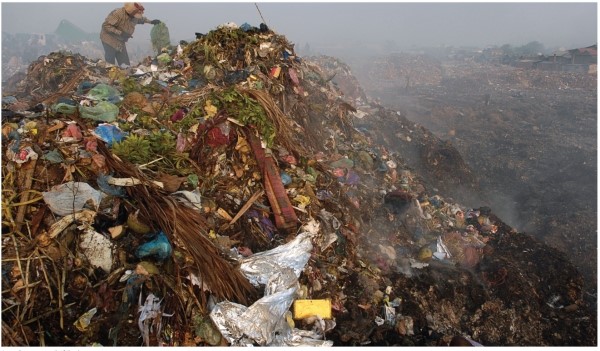
This picture shows people scavenging Cambodia's municipal garbage dump.What does their presence there imply about what has been thrown away?
Question
Question
Question
Question
Question
Question
Question
Question
Question
Question
Question
Question
Question
Question
Question
Question
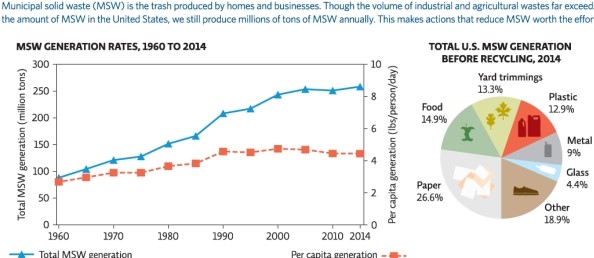
Refer to Infographic 2.The pie chart shows components of U.S.municipal solid waste.For each component,describe what can be done to avoid disposal at a sanitary landfill.
Question
Question
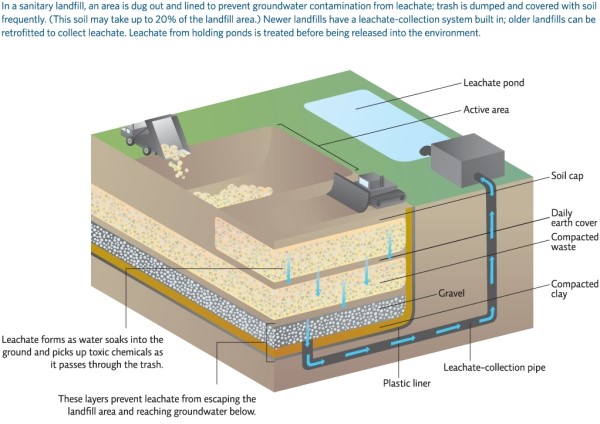
Refer to Infographic 4.From the diagram of a sanitary landfill,describe potential environmental issues associated with landfills and what steps are taken to protect the environment.
Question
Question
Refer to Infographic 2 below.In 2014,what made up the highest percentage of total U.S.MSW before recycling? 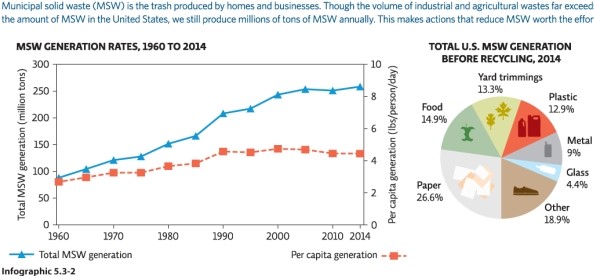
A)yard trimmings
B)food
C)plastic
D)paper
E)metal
A)yard trimmings
B)food
C)plastic
D)paper
E)metal
Question
Question
Question
Question
Question
Question
Question
Question
Question
Question
Question
Question
Question
Question
Question
Question
Question
Question
Question
Question
Question
Question
Question
Question
Question
Question
Question
Question
Question
Question
Question
Question
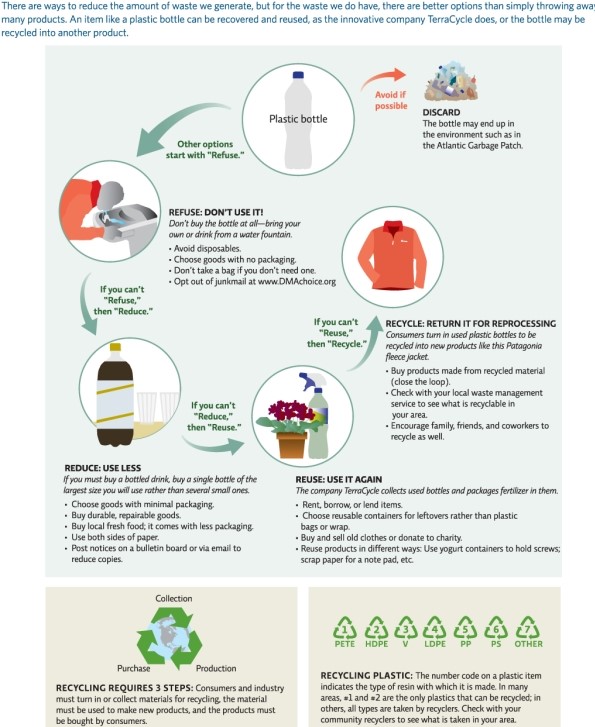
Refer to Infographic 9.What options do consumers have for disposing of their waste,and which options are the most environmentally friendly?
Question
Question
Question
Question
Question
Science Literacy Use the following graphs to answer the next questions. 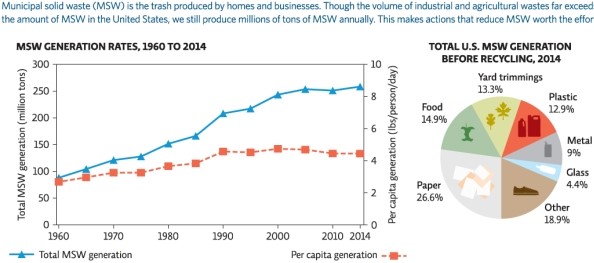
Which action could have the greatest impact in reducing total U.S.MSW generation?
A)reusing glass bottles
B)composting leftover food
C)composting yard trimmings
D)recycling paper
E)recycling plastic bottles
Which action could have the greatest impact in reducing total U.S.MSW generation?
A)reusing glass bottles
B)composting leftover food
C)composting yard trimmings
D)recycling paper
E)recycling plastic bottles
Question
Science Literacy Use the following graphs to answer the next questions.
In what year was per capita generation of municipal solid waste the greatest?
A)2014
B)1995
C)1960
D)1990
E)2000
In what year was per capita generation of municipal solid waste the greatest?
A)2014
B)1995
C)1960
D)1990
E)2000
Question
Question
Question
Question
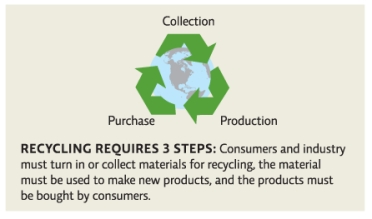
Refer to Infographic 9.What are the three required steps of recycling? Which step drives the entire process and is therefore most important?
Question
Question
Science Literacy Use the following graphs to answer the next questions.
From 1960 to 2014,total municipal solid waste generation increased by ___ million tons.
A)254.06
B)170.4
C)346.6
D)258.5
E)1.76
From 1960 to 2014,total municipal solid waste generation increased by ___ million tons.
A)254.06
B)170.4
C)346.6
D)258.5
E)1.76
Question
Question
Science Literacy Use the following graphs to answer the next questions.
What was the per capita generation of MSW generation in 1970 (lbs/person/day)?
A)121.1
B)3.83
C)2.96
D)3.25
E)104.4
What was the per capita generation of MSW generation in 1970 (lbs/person/day)?
A)121.1
B)3.83
C)2.96
D)3.25
E)104.4
Question
Question
Question
Match each term in the left-hand column to the statement that it best exemplifies.


Unlock Deck
Sign up to unlock the cards in this deck!
Unlock Deck
Unlock Deck
1/75

Play

Full screen (f)
Deck 15: managing Solid Waste a Plastic Surf
1
Waste is _____________.
A)anything that humans do not deem valuable to survival
B)a human term used to describe things we throw away
C)any discarded item that can be naturally degraded in the environment
D)common in natural ecosystems
E)All of these answer choices are correct.
A)anything that humans do not deem valuable to survival
B)a human term used to describe things we throw away
C)any discarded item that can be naturally degraded in the environment
D)common in natural ecosystems
E)All of these answer choices are correct.
a human term used to describe things we throw away
2
Which of the following statements about waste is TRUE?
A)Waste is found in natural ecosystems.
B)Synthetic molecules such as DDT and CFCs are easily biodegradable.
C)Most plastic waste degrades quickly in any environment.
D)Humans use matter in a linear manner.
E)The best way to keep garbage out of the ocean is to throw it away somewhere else.
A)Waste is found in natural ecosystems.
B)Synthetic molecules such as DDT and CFCs are easily biodegradable.
C)Most plastic waste degrades quickly in any environment.
D)Humans use matter in a linear manner.
E)The best way to keep garbage out of the ocean is to throw it away somewhere else.
Humans use matter in a linear manner.
3
In 2014 alone,each American produced about _____ of solid waste per day.
A)0.5 pound
B)2.5 pounds
C)3.2 pounds
D)4.44 pounds
E)10 pounds
A)0.5 pound
B)2.5 pounds
C)3.2 pounds
D)4.44 pounds
E)10 pounds
4.44 pounds
4
Disassembling equipment,machinery,and appliances into components which can be salvaged or reused is an example of ___________.
A)refusing
B)reducing
C)negative feedback
D)limited growth
E)demanufacturing
A)refusing
B)reducing
C)negative feedback
D)limited growth
E)demanufacturing
Unlock Deck
Unlock for access to all 75 flashcards in this deck.
Unlock Deck
k this deck
5
Even though a banana peel is biodegradable and is typically broken down at rapid rates,if you bury the peel deep within a landfill,it takes much longer to degrade.Why is this?
Unlock Deck
Unlock for access to all 75 flashcards in this deck.
Unlock Deck
k this deck
6
This picture shows people scavenging Cambodia's municipal garbage dump.What does their presence there imply about what has been thrown away?
Unlock Deck
Unlock for access to all 75 flashcards in this deck.
Unlock Deck
k this deck
7
Matter can be neither created nor destroyed; it only changes form.This is the law of _________.
A)conservation of energy
B)waste management
C)conservation of matter
D)no returns
E)sustainability
A)conservation of energy
B)waste management
C)conservation of matter
D)no returns
E)sustainability
Unlock Deck
Unlock for access to all 75 flashcards in this deck.
Unlock Deck
k this deck
8
Everyday garbage or trash (solid waste)produced by individuals or small businesses is known as ____________.
A)municipal solid waste
B)industrial solid waste
C)hazardous waste
D)biodegradable
E)sanitary
A)municipal solid waste
B)industrial solid waste
C)hazardous waste
D)biodegradable
E)sanitary
Unlock Deck
Unlock for access to all 75 flashcards in this deck.
Unlock Deck
k this deck
9
Why can't we permanently get rid of the waste we generate?
A)It is illegal to dump waste in the oceans.
B)Most states prohibit the burning of waste.
C)It would violate the law of conservation of matter.
D)Disposal costs are prohibitive.
E)None of the choices above fit the description.
A)It is illegal to dump waste in the oceans.
B)Most states prohibit the burning of waste.
C)It would violate the law of conservation of matter.
D)Disposal costs are prohibitive.
E)None of the choices above fit the description.
Unlock Deck
Unlock for access to all 75 flashcards in this deck.
Unlock Deck
k this deck
10
Why are take-back laws important for waste management?
A)They encourage companies to design products which can be reused.
B)They encourage companies to produce fewer products.
C)They discourage consumers from buying products.
D)They require companies to create products using all biodegradable materials.
E)They outlaw using nondegradable materials in products.
A)They encourage companies to design products which can be reused.
B)They encourage companies to produce fewer products.
C)They discourage consumers from buying products.
D)They require companies to create products using all biodegradable materials.
E)They outlaw using nondegradable materials in products.
Unlock Deck
Unlock for access to all 75 flashcards in this deck.
Unlock Deck
k this deck
11
A manufacturer of potato chips claims that its packaging can be broken down by living organisms.This packaging is considered _____________.
A)industrial waste
B)nondegradable
C)biodegradable
D)All of these choices fit the description.
E)None of these choices fit the description.
A)industrial waste
B)nondegradable
C)biodegradable
D)All of these choices fit the description.
E)None of these choices fit the description.
Unlock Deck
Unlock for access to all 75 flashcards in this deck.
Unlock Deck
k this deck
12
Many states in the United States have take-back laws which require manufacturers to take back some of their products (such as computers)after consumers have finished with them.How does this encourage companies to rethink their product design?
Unlock Deck
Unlock for access to all 75 flashcards in this deck.
Unlock Deck
k this deck
13
Why is there no such thing as waste in natural,nonhuman ecosystems?
A)There is not enough consumption to produce waste.
B)The discarded matter of one organism becomes the resources for another.
C)All organisms reuse their own discarded matter.
D)There is one niche in every ecosystem that consumes all waste from the other members of the ecosystem.
E)Waste does exist in natural ecosystems; we just can't see it.
A)There is not enough consumption to produce waste.
B)The discarded matter of one organism becomes the resources for another.
C)All organisms reuse their own discarded matter.
D)There is one niche in every ecosystem that consumes all waste from the other members of the ecosystem.
E)Waste does exist in natural ecosystems; we just can't see it.
Unlock Deck
Unlock for access to all 75 flashcards in this deck.
Unlock Deck
k this deck
14
In the United States,91% to 97% of all garbage is categorized as ___________ waste.
A)recycled paper
B)mining
C)municipal paper
D)agricultural,mining,and industrial
E)municipal metal
A)recycled paper
B)mining
C)municipal paper
D)agricultural,mining,and industrial
E)municipal metal
Unlock Deck
Unlock for access to all 75 flashcards in this deck.
Unlock Deck
k this deck
15
What is the Great Atlantic Garbage Patch?
A)an area where garbage gets dumped into the Atlantic Ocean
B)an area with high densities of plastic in the Atlantic Ocean
C)a giant plastic island in the Atlantic Ocean
D)an island of waste that will be taken to the Atlantic Ocean
E)an area where waste can be biodegraded by the Atlantic Ocean
A)an area where garbage gets dumped into the Atlantic Ocean
B)an area with high densities of plastic in the Atlantic Ocean
C)a giant plastic island in the Atlantic Ocean
D)an island of waste that will be taken to the Atlantic Ocean
E)an area where waste can be biodegraded by the Atlantic Ocean
Unlock Deck
Unlock for access to all 75 flashcards in this deck.
Unlock Deck
k this deck
16
_________ require(s)manufacturers to take back some of their products after consumers are finished with them.
A)Cradle-to-cradle laws
B)Take-back laws
C)Demanufacturing
D)Reuse laws
E)Reduction laws
A)Cradle-to-cradle laws
B)Take-back laws
C)Demanufacturing
D)Reuse laws
E)Reduction laws
Unlock Deck
Unlock for access to all 75 flashcards in this deck.
Unlock Deck
k this deck
17
What is the difference between degradable and biodegradable waste?
Unlock Deck
Unlock for access to all 75 flashcards in this deck.
Unlock Deck
k this deck
18
Americans produce _______ amount of solid waste produced by most less-developed countries.
A)half the
B)the same
C)twice the
D)10 times the
E)100 times the
A)half the
B)the same
C)twice the
D)10 times the
E)100 times the
Unlock Deck
Unlock for access to all 75 flashcards in this deck.
Unlock Deck
k this deck
19
What are the characteristics of something that is nondegradable?
A)It does not degrade in normal atmospheric conditions.
B)It is mostly synthetic molecules.
C)It is chemically stable.
D)It cannot be broken down by naturally occurring enzymes.
E)All of these choices are characteristics.
A)It does not degrade in normal atmospheric conditions.
B)It is mostly synthetic molecules.
C)It is chemically stable.
D)It cannot be broken down by naturally occurring enzymes.
E)All of these choices are characteristics.
Unlock Deck
Unlock for access to all 75 flashcards in this deck.
Unlock Deck
k this deck
20
Tiny bits of plastic gather in specific areas of the world's oceans where strong currents circle around areas with very weak,or even no,currents.These regions are called __________.
A)Bermuda triangles
B)gyres
C)pods
D)waterfills
E)neuston layers
A)Bermuda triangles
B)gyres
C)pods
D)waterfills
E)neuston layers
Unlock Deck
Unlock for access to all 75 flashcards in this deck.
Unlock Deck
k this deck
21
Incineration of waste reduces its volume by 80% to 90%,which is good.What are problems associated with this practice?
A.the creation of air pollution
B.the creation of water pollution
C.the production of toxic solid waste
D.the cost of incinerators
A.the creation of air pollution
B.the creation of water pollution
C.the production of toxic solid waste
D.the cost of incinerators
Unlock Deck
Unlock for access to all 75 flashcards in this deck.
Unlock Deck
k this deck
22
Refer to Infographic 2.The pie chart shows components of U.S.municipal solid waste.For each component,describe what can be done to avoid disposal at a sanitary landfill.
Unlock Deck
Unlock for access to all 75 flashcards in this deck.
Unlock Deck
k this deck
23
The amount of solid waste produced each year by urban dwellers is expected to _______ by 2025.
A)stay the same
B)decrease
C)double
D)triple
E)quadruple
A)stay the same
B)decrease
C)double
D)triple
E)quadruple
Unlock Deck
Unlock for access to all 75 flashcards in this deck.
Unlock Deck
k this deck
24
Refer to Infographic 4.From the diagram of a sanitary landfill,describe potential environmental issues associated with landfills and what steps are taken to protect the environment.
Unlock Deck
Unlock for access to all 75 flashcards in this deck.
Unlock Deck
k this deck
25
Ecological concerns regarding plastics in oceans include which of the following?
A)Sea mammals can get tangled in discarded plastic items,such as fishing nets and six-pack rings.
B)Seabirds eat plastic,mistaking it for food,and may end up choking on the plastic.
C)Plastic absorbs fat-soluble pollutants such as PCBs and DDT; these are toxins known to bioaccumulate in the tissues of marine organisms and biomagnify up food chains.
D)Floating bits of plastic can serve as attachment points for fish eggs,barnacles,and many types of larval and juvenile organisms,and thus they could potentially transport harmful,invasive species to new locales.
E)All of the above are concerns regarding plastics in oceans.
A)Sea mammals can get tangled in discarded plastic items,such as fishing nets and six-pack rings.
B)Seabirds eat plastic,mistaking it for food,and may end up choking on the plastic.
C)Plastic absorbs fat-soluble pollutants such as PCBs and DDT; these are toxins known to bioaccumulate in the tissues of marine organisms and biomagnify up food chains.
D)Floating bits of plastic can serve as attachment points for fish eggs,barnacles,and many types of larval and juvenile organisms,and thus they could potentially transport harmful,invasive species to new locales.
E)All of the above are concerns regarding plastics in oceans.
Unlock Deck
Unlock for access to all 75 flashcards in this deck.
Unlock Deck
k this deck
26
Refer to Infographic 2 below.In 2014,what made up the highest percentage of total U.S.MSW before recycling?
A)yard trimmings
B)food
C)plastic
D)paper
E)metal
A)yard trimmings
B)food
C)plastic
D)paper
E)metal
Unlock Deck
Unlock for access to all 75 flashcards in this deck.
Unlock Deck
k this deck
27
It has been shown that a bottle deposit,a center for returning and recycling bottles and cans,significantly reduces the amount of plastic or glass bottles and aluminum cans that end up in a landfill.Not all states have a bottle deposit.What would be the benefits of having a bottle deposit in all states?
Unlock Deck
Unlock for access to all 75 flashcards in this deck.
Unlock Deck
k this deck
28
Hazardous and nonhazardous wastes in developing countries often end up in open dumps.Which of the following is FALSE regarding open dumps?
A)Open dumps attract pests such as flies and rats.
B)Leachate from open dumps can contaminate groundwater.
C)Sanitary landfills and open dumps are essentially the same thing.
D)Open dumps are one of the cheapest ways to get rid of human trash.
E)All of these answer choices are correct.
A)Open dumps attract pests such as flies and rats.
B)Leachate from open dumps can contaminate groundwater.
C)Sanitary landfills and open dumps are essentially the same thing.
D)Open dumps are one of the cheapest ways to get rid of human trash.
E)All of these answer choices are correct.
Unlock Deck
Unlock for access to all 75 flashcards in this deck.
Unlock Deck
k this deck
29
Sanitary landfills are commonly used in the United States to manage solid waste.Since decomposition in sanitary landfills relies upon anaerobic bacteria (those that live in oxygen-poor environments),a large amount of the greenhouse gas ______ is produced.
A)methane
B)carbon dioxide
C)oxygen
D)nitrogen
E)sulfur
A)methane
B)carbon dioxide
C)oxygen
D)nitrogen
E)sulfur
Unlock Deck
Unlock for access to all 75 flashcards in this deck.
Unlock Deck
k this deck
30
One of the cheapest and most common methods of handling solid wastes in developing countries is _________.
A)sanitary landfills
B)incinerators
C)recycling
D)open dumps
E)composting
A)sanitary landfills
B)incinerators
C)recycling
D)open dumps
E)composting
Unlock Deck
Unlock for access to all 75 flashcards in this deck.
Unlock Deck
k this deck
31
Hazardous waste is __________.
A)any material that humans deem to be unwanted
B)everyday garbage or trash produced by individuals or small businesses
C)waste that is capable of being broken down by living organisms
D)waste that is incapable of being broken down under normal conditions
E)waste that is toxic,flammable,corrosive,explosive,or radioactive
A)any material that humans deem to be unwanted
B)everyday garbage or trash produced by individuals or small businesses
C)waste that is capable of being broken down by living organisms
D)waste that is incapable of being broken down under normal conditions
E)waste that is toxic,flammable,corrosive,explosive,or radioactive
Unlock Deck
Unlock for access to all 75 flashcards in this deck.
Unlock Deck
k this deck
32
Aquatic ecosystems are considered particularly vulnerable to plastic waste.Describe four ways that plastic waste can affect aquatic species and ecosystems.
Unlock Deck
Unlock for access to all 75 flashcards in this deck.
Unlock Deck
k this deck
33
Waste that is not disposed of correctly may end up in the oceans.How can we reduce the amount of waste that ends up in the oceans?
Unlock Deck
Unlock for access to all 75 flashcards in this deck.
Unlock Deck
k this deck
34
What are the potential environmental consequences of disposing of waste via landfilling and incineration? What systems exist in each disposal method to try and prevent these potential problems?
Unlock Deck
Unlock for access to all 75 flashcards in this deck.
Unlock Deck
k this deck
35
Which of the following is NOT considered hazardous waste?
A)pesticides
B)automotive oil
C)plastic bottles
D)e-waste
E)compact fluorescent light bulbs
A)pesticides
B)automotive oil
C)plastic bottles
D)e-waste
E)compact fluorescent light bulbs
Unlock Deck
Unlock for access to all 75 flashcards in this deck.
Unlock Deck
k this deck
36
Which of the following waste and waste management techniques are best matched up so as to cause the least harm to ecosystems?
A)aluminum cans - incinerating
B)pesticides - dumping in waterways
C)paper waste - open dumps
D)yard waste - composting
E)e-waste - landfilling
A)aluminum cans - incinerating
B)pesticides - dumping in waterways
C)paper waste - open dumps
D)yard waste - composting
E)e-waste - landfilling
Unlock Deck
Unlock for access to all 75 flashcards in this deck.
Unlock Deck
k this deck
37
Incinerators reduce the volume of solid waste by about ______________.
A)10% to 20%
B)30% to 40%
C)50% to 60%
D)70% to 80%
E)80% to 90%
A)10% to 20%
B)30% to 40%
C)50% to 60%
D)70% to 80%
E)80% to 90%
Unlock Deck
Unlock for access to all 75 flashcards in this deck.
Unlock Deck
k this deck
38
Match the waste management method to its potential harm to ecosystems.
A)landfills - ground water contamination from leachate
B)incineration - production of methane,a greenhouse gas
C)ocean dumping - toxic ash as waste breaks down under sunlight
D)composting - thermal (heat)pollution in local waterways
E)recycling - release of hazardous waste due to combustion of recyclable material
A)landfills - ground water contamination from leachate
B)incineration - production of methane,a greenhouse gas
C)ocean dumping - toxic ash as waste breaks down under sunlight
D)composting - thermal (heat)pollution in local waterways
E)recycling - release of hazardous waste due to combustion of recyclable material
Unlock Deck
Unlock for access to all 75 flashcards in this deck.
Unlock Deck
k this deck
39
The majority of municipal solid waste produced in the United States ends up being __________.
A)recycled
B)composted
C)incinerated
D)landfilled
E)reused
A)recycled
B)composted
C)incinerated
D)landfilled
E)reused
Unlock Deck
Unlock for access to all 75 flashcards in this deck.
Unlock Deck
k this deck
40
Currently,53% of our waste is put into landfills.According to the EPA,which of the following shows available waste management techniques in order of most preferred to least preferred?
A)recycling/compost,incineration with energy capture,source reduction/reuse,landfilling
B)source reduction/reuse,recycling/composting,incineration with energy capture,landfilling
C)landfilling,recycling/composting,incineration with energy capture,source reduction/reuse
D)source reduction/reuse,incineration with energy capture,recycling/composting,incineration without energy capture
E)recycling/composting,source reduction/reuse,landfilling
A)recycling/compost,incineration with energy capture,source reduction/reuse,landfilling
B)source reduction/reuse,recycling/composting,incineration with energy capture,landfilling
C)landfilling,recycling/composting,incineration with energy capture,source reduction/reuse
D)source reduction/reuse,incineration with energy capture,recycling/composting,incineration without energy capture
E)recycling/composting,source reduction/reuse,landfilling
Unlock Deck
Unlock for access to all 75 flashcards in this deck.
Unlock Deck
k this deck
41
Composting kitchen and yard waste is an example of ____________.
A)refusing
B)reducing
C)reusing
D)recycling
E)demanufacturing
A)refusing
B)reducing
C)reusing
D)recycling
E)demanufacturing
Unlock Deck
Unlock for access to all 75 flashcards in this deck.
Unlock Deck
k this deck
42
__________ is harmful to humans; it is toxic,flammable,corrosive,explosive,and/or radioactive.
A)biodegradable waste
B)sanitary landfill waste
C)municipal waste
D)hazardous waste
E)industrial waste
A)biodegradable waste
B)sanitary landfill waste
C)municipal waste
D)hazardous waste
E)industrial waste
Unlock Deck
Unlock for access to all 75 flashcards in this deck.
Unlock Deck
k this deck
43
Choosing to buy goods with minimal packaging is an example of ____.
A)refusing
B)reducing
C)reusing
D)recycling
E)demanufacturing
A)refusing
B)reducing
C)reusing
D)recycling
E)demanufacturing
Unlock Deck
Unlock for access to all 75 flashcards in this deck.
Unlock Deck
k this deck
44
What is the process of allowing waste to biologically decompose in the presence of oxygen and water?
A)bioaccumulation
B)composting
C)recycling
D)eutrophication
E)hypoxia
A)bioaccumulation
B)composting
C)recycling
D)eutrophication
E)hypoxia
Unlock Deck
Unlock for access to all 75 flashcards in this deck.
Unlock Deck
k this deck
45
What is e-waste? Explain why recycling e-waste is a better idea than simply burying it in a hazardous waste landfill.What are the concerns with such recycling efforts?
Unlock Deck
Unlock for access to all 75 flashcards in this deck.
Unlock Deck
k this deck
46
Which of the following materials should NOT be added to a compost pile?
A)pet waste
B)livestock manure
C)paper
D)dead leaves
E)All of these answer choices could be added to a compost pile.
A)pet waste
B)livestock manure
C)paper
D)dead leaves
E)All of these answer choices could be added to a compost pile.
Unlock Deck
Unlock for access to all 75 flashcards in this deck.
Unlock Deck
k this deck
47
What is the MOST appropriate way to handle hazardous waste?
A)incinerate it,as burning eliminates all toxic waste
B)landfill it,as leachate contains the hazardous waste and prevents it from contaminating ground water
C)dump it in the ocean,as the volume of water dilutes the waste,essentially making it nonhazardous
D)send it to developing countries in Africa,as they have developed methods of extracting the valuable components of such waste without causing harm to the workers
E)None of these answer choices is an appropriate way to handle hazardous waste.
A)incinerate it,as burning eliminates all toxic waste
B)landfill it,as leachate contains the hazardous waste and prevents it from contaminating ground water
C)dump it in the ocean,as the volume of water dilutes the waste,essentially making it nonhazardous
D)send it to developing countries in Africa,as they have developed methods of extracting the valuable components of such waste without causing harm to the workers
E)None of these answer choices is an appropriate way to handle hazardous waste.
Unlock Deck
Unlock for access to all 75 flashcards in this deck.
Unlock Deck
k this deck
48
Declining to take a plastic bag for a few items purchased at a store is an example of ________.
A)refusing
B)reducing
C)reusing
D)recycling
E)demanufacturing
A)refusing
B)reducing
C)reusing
D)recycling
E)demanufacturing
Unlock Deck
Unlock for access to all 75 flashcards in this deck.
Unlock Deck
k this deck
49
What is hazardous waste,and why is it considered to be problematic? Discuss two ways the average person can reduce their contribution to the potential problems caused by hazardous waste.
Unlock Deck
Unlock for access to all 75 flashcards in this deck.
Unlock Deck
k this deck
50
The four Rs to help an individual limit waste production are _______________.
A)reclaim,rename,retake,and recycle
B)recycle,recycle,recycle,and recycle
C)ratify,rectify,remedy,and reframe
D)refuse,reduce,reuse,and recycle
E)revamp,retrofit,reduce,and regulation
A)reclaim,rename,retake,and recycle
B)recycle,recycle,recycle,and recycle
C)ratify,rectify,remedy,and reframe
D)refuse,reduce,reuse,and recycle
E)revamp,retrofit,reduce,and regulation
Unlock Deck
Unlock for access to all 75 flashcards in this deck.
Unlock Deck
k this deck
51
Consumers can decrease the amount of landfilled solid waste by ___________.
A)refusing to purchase products that contribute to solid waste generation
B)purchasing goods with minimal packaging
C)finding ways to reuse materials instead of purchasing new ones
D)actively recycling materials
E)All of these choices will decrease the amount of landfilled solid waste.
A)refusing to purchase products that contribute to solid waste generation
B)purchasing goods with minimal packaging
C)finding ways to reuse materials instead of purchasing new ones
D)actively recycling materials
E)All of these choices will decrease the amount of landfilled solid waste.
Unlock Deck
Unlock for access to all 75 flashcards in this deck.
Unlock Deck
k this deck
52
What everyday changes can you make to reduce the amount of waste you produce?
Unlock Deck
Unlock for access to all 75 flashcards in this deck.
Unlock Deck
k this deck
53
Which of the following can be composted?
A)paper
B)old cell phones
C)plastic
D)batteries
E)fluorescent light bulbs
A)paper
B)old cell phones
C)plastic
D)batteries
E)fluorescent light bulbs
Unlock Deck
Unlock for access to all 75 flashcards in this deck.
Unlock Deck
k this deck
54
A soup company wants to reduce the waste associated with its soup packaging.Which option would help it to accomplish this goal?
A)make the soup out of organically grown vegetables
B)encourage consumers to burn the soup cans as a source of heat
C)package the soup in reusable glass containers
D)encourage the location of landfills in communities near the factory so that the surplus soup ingredients and packaging materials can be landfilled locally
E)package the soup in smaller cans
A)make the soup out of organically grown vegetables
B)encourage consumers to burn the soup cans as a source of heat
C)package the soup in reusable glass containers
D)encourage the location of landfills in communities near the factory so that the surplus soup ingredients and packaging materials can be landfilled locally
E)package the soup in smaller cans
Unlock Deck
Unlock for access to all 75 flashcards in this deck.
Unlock Deck
k this deck
55
When e-waste is improperly recycled,toxic metals can be released; this can include _________.
A)lead
B)mercury
C)chromium
D)lead,mercury,and chromium
E)only lead and mercury
A)lead
B)mercury
C)chromium
D)lead,mercury,and chromium
E)only lead and mercury
Unlock Deck
Unlock for access to all 75 flashcards in this deck.
Unlock Deck
k this deck
56
Hazardous waste affects not only humans but also other living organisms in a variety of ecosystems when disposed of improperly.Explain how hazardous waste can affect different organisms and why it is important to reduce human use of these products.
Unlock Deck
Unlock for access to all 75 flashcards in this deck.
Unlock Deck
k this deck
57
Which of the following is NOT a way to personally reduce your solid waste production?
A)filling a canteen instead of using plastic water bottles
B)buying goods with minimal packaging
C)composting kitchen and yard wastes
D)buying organic foods from developing countries
E)reusing plastic shopping bags for household chores
A)filling a canteen instead of using plastic water bottles
B)buying goods with minimal packaging
C)composting kitchen and yard wastes
D)buying organic foods from developing countries
E)reusing plastic shopping bags for household chores
Unlock Deck
Unlock for access to all 75 flashcards in this deck.
Unlock Deck
k this deck
58
Refer to Infographic 9.What options do consumers have for disposing of their waste,and which options are the most environmentally friendly?
Unlock Deck
Unlock for access to all 75 flashcards in this deck.
Unlock Deck
k this deck
59
Often,humans use hazardous materials without even knowing that the products they are using are harmful.What are some products that qualify as household hazardous waste? What efforts do you think should be made to make people more aware of the products they are using and how they should be properly disposed of?
Unlock Deck
Unlock for access to all 75 flashcards in this deck.
Unlock Deck
k this deck
60
Which of the following is TRUE of composting?
A)It works on biodegradable and nondegradable trash.
B)It can be done only on a small scale at present.
C)It can turn some trash into soil-like mulch.
D)It is an unnatural way to deal with trash.
E)It uses industrial chemicals which can be hazardous.
A)It works on biodegradable and nondegradable trash.
B)It can be done only on a small scale at present.
C)It can turn some trash into soil-like mulch.
D)It is an unnatural way to deal with trash.
E)It uses industrial chemicals which can be hazardous.
Unlock Deck
Unlock for access to all 75 flashcards in this deck.
Unlock Deck
k this deck
61
The university bookstore does begin a textbook rental program.Students now rent textbooks at the bookstore and return them for future students to use the following semester instead of ordering and buying new textbooks each semester.This is an example of ___________.
A)reusing a product again
B)refusing to use a product
C)using less of a product
D)returning a product to be broken down and reprocessed
A)reusing a product again
B)refusing to use a product
C)using less of a product
D)returning a product to be broken down and reprocessed
Unlock Deck
Unlock for access to all 75 flashcards in this deck.
Unlock Deck
k this deck
62
The first of the four Rs of waste reduction is refuse,choosing not to use or buy a product you don't need.Which of the following best fits this R?
A)a student putting her plastic water bottle into a recycling bin
B)students using the bikes to get across campus instead of driving
C)renting a textbook and returning it at the end of the semester
D)buying products with minimal packaging
A)a student putting her plastic water bottle into a recycling bin
B)students using the bikes to get across campus instead of driving
C)renting a textbook and returning it at the end of the semester
D)buying products with minimal packaging
Unlock Deck
Unlock for access to all 75 flashcards in this deck.
Unlock Deck
k this deck
63
Science Literacy Use the following graphs to answer the next questions.
Which action could have the greatest impact in reducing total U.S.MSW generation?
A)reusing glass bottles
B)composting leftover food
C)composting yard trimmings
D)recycling paper
E)recycling plastic bottles
Which action could have the greatest impact in reducing total U.S.MSW generation?
A)reusing glass bottles
B)composting leftover food
C)composting yard trimmings
D)recycling paper
E)recycling plastic bottles
Unlock Deck
Unlock for access to all 75 flashcards in this deck.
Unlock Deck
k this deck
64
Science Literacy Use the following graphs to answer the next questions.
In what year was per capita generation of municipal solid waste the greatest?
A)2014
B)1995
C)1960
D)1990
E)2000
In what year was per capita generation of municipal solid waste the greatest?
A)2014
B)1995
C)1960
D)1990
E)2000
Unlock Deck
Unlock for access to all 75 flashcards in this deck.
Unlock Deck
k this deck
65
To examine if microplastics (less than 5 millimeters in diameter)are harmful to small marine organisms,scientists exposed marine copepods to either their normal diet of algae or a diet of algae with plastic microbeads added.What would be the dependent variable in this study?
A)species of marine copepod
B)algae in the diet
C)size of the microbeads
D)presence of plastic microbeads in the diet
E)number of marine copepods used
A)species of marine copepod
B)algae in the diet
C)size of the microbeads
D)presence of plastic microbeads in the diet
E)number of marine copepods used
Unlock Deck
Unlock for access to all 75 flashcards in this deck.
Unlock Deck
k this deck
66
Scientists want to determine if toxic chemicals in plastic are accumulating up the food chain.They catch 24 small fish in the area and 24 large fish in the area and test both types of fish for chemicals that could have come from plastic.What type of study would this be?
A)experimental
B)observational
A)experimental
B)observational
Unlock Deck
Unlock for access to all 75 flashcards in this deck.
Unlock Deck
k this deck
67
Collecting and counting the pieces of plastic pulled up in the nets to measure the number of plastic bits found in one square kilometer would be considered which type of study?
A)experimental
B)observational
A)experimental
B)observational
Unlock Deck
Unlock for access to all 75 flashcards in this deck.
Unlock Deck
k this deck
68
Refer to Infographic 9.What are the three required steps of recycling? Which step drives the entire process and is therefore most important?
Unlock Deck
Unlock for access to all 75 flashcards in this deck.
Unlock Deck
k this deck
69
In the experiment exposing marine copepods to either their normal diet of algae or to a diet of algae with plastic microbeads added,which would be the control group?
A)group of marine copepods fed the diet of normal algae
B)group of marine copepods fed the diet of normal algae with plastic microbeads added
C)neither group of marine copepods; there was no control
A)group of marine copepods fed the diet of normal algae
B)group of marine copepods fed the diet of normal algae with plastic microbeads added
C)neither group of marine copepods; there was no control
Unlock Deck
Unlock for access to all 75 flashcards in this deck.
Unlock Deck
k this deck
70
Science Literacy Use the following graphs to answer the next questions.
From 1960 to 2014,total municipal solid waste generation increased by ___ million tons.
A)254.06
B)170.4
C)346.6
D)258.5
E)1.76
From 1960 to 2014,total municipal solid waste generation increased by ___ million tons.
A)254.06
B)170.4
C)346.6
D)258.5
E)1.76
Unlock Deck
Unlock for access to all 75 flashcards in this deck.
Unlock Deck
k this deck
71
Which of the four Rs suggested by the Green Society would relate to the fourth R,returning items for reprocessing into new products?
A)bike-sharing station
B)textbook rental program
C)refillable water bottle station
D)recycling bins
A)bike-sharing station
B)textbook rental program
C)refillable water bottle station
D)recycling bins
Unlock Deck
Unlock for access to all 75 flashcards in this deck.
Unlock Deck
k this deck
72
Science Literacy Use the following graphs to answer the next questions.
What was the per capita generation of MSW generation in 1970 (lbs/person/day)?
A)121.1
B)3.83
C)2.96
D)3.25
E)104.4
What was the per capita generation of MSW generation in 1970 (lbs/person/day)?
A)121.1
B)3.83
C)2.96
D)3.25
E)104.4
Unlock Deck
Unlock for access to all 75 flashcards in this deck.
Unlock Deck
k this deck
73
We can reduce our ecological footprint by using less of a resource or purchasing goods that will last.Which of the following is the best example of minimizing your ecological footprint in this way?
A)buying disposable bottles of water but recycling them when you are finished drinking
B)reusing your shopping bags at the grocery store instead of using plastic bags
C)buying a refillable water bottle and using the water stations around campus
D)buying a notebook made from recycled paper
A)buying disposable bottles of water but recycling them when you are finished drinking
B)reusing your shopping bags at the grocery store instead of using plastic bags
C)buying a refillable water bottle and using the water stations around campus
D)buying a notebook made from recycled paper
Unlock Deck
Unlock for access to all 75 flashcards in this deck.
Unlock Deck
k this deck
74
At the grocery store,you are faced with a dilemma.Which container of milk is the most eco-friendly (plastic,paperboard,or glass)? Discuss impacts and trade-offs for each type.
Unlock Deck
Unlock for access to all 75 flashcards in this deck.
Unlock Deck
k this deck
75
Match each term in the left-hand column to the statement that it best exemplifies.
Unlock Deck
Unlock for access to all 75 flashcards in this deck.
Unlock Deck
k this deck
Unlock Deck
Unlock for access to all 75 flashcards in this deck.






