







 Chat with AI

Deck 21: Amino Acid Metabolism
Full screen (f)

Question

Question
Question
Question
Question
Question
Question
Question
Question
Question
Question
Question
Question
Question
Question
Question
Question
Question
Question
Question
Question
Question
Question
Question
Question
The pictured compound,glutamate-5-semialdehyde,is an intermediate in the biosynthesis of which of the following amino acids?
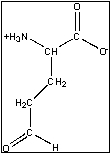
A)histidine
B)arginine
C)methionine
D)threonine
E)More than one of the above is made from this intermediate.
A)histidine
B)arginine
C)methionine
D)threonine
E)More than one of the above is made from this intermediate.
Question
Question
Question
Question
Question
Question
Question
Question
Question
Question
Question
Question
Question
Question
Question
Question
Question
Question
Question
Question
Question
Question
Question
Question
Question

Unlock Deck
Sign up to unlock the cards in this deck!
Unlock Deck
Unlock Deck
1/50

Play

Full screen (f)
Deck 21: Amino Acid Metabolism
1
Which of the following glycolytic intermediates is the common precursor to serine,cysteine,and glycine?
A)fructose-6-phosphate
B)glyceraldehyde-3-phosphate
C)dihydroxyacetone phosphate
D)3-phosphoglycerate
E)pyruvate
A)fructose-6-phosphate
B)glyceraldehyde-3-phosphate
C)dihydroxyacetone phosphate
D)3-phosphoglycerate
E)pyruvate
3-phosphoglycerate
2
The lifetime of a protein in cells actively involved in metabolism
A)is longer in eukaryotes than in prokaryotes.
B)ranges from months to years.
C)is independent of the function and activity of the protein.
D)can change in response to changes in metabolic hormone levels.
E)none of the above
A)is longer in eukaryotes than in prokaryotes.
B)ranges from months to years.
C)is independent of the function and activity of the protein.
D)can change in response to changes in metabolic hormone levels.
E)none of the above
can change in response to changes in metabolic hormone levels.
3
The neurotransmitters,dopamine,epinephrine,and norepinephrine are synthesized from the amino acid
A)tryptophan
B)tyrosine
C)glutamate
D)aspartate
E)lysine
A)tryptophan
B)tyrosine
C)glutamate
D)aspartate
E)lysine
tyrosine
4
The aminotransferase reaction,in which an enzyme-PLP Schiff base forms,
(I)is ATP dependent.
(II)results in formation of a hydroxylaldehyde.
(III)results in formation of an -ketoacid.
(IV)requires an active site lysine.
A)I,III,IV
B)I,IV
C)II,III
D)I,II,III
E)II,III,IV
(I)is ATP dependent.
(II)results in formation of a hydroxylaldehyde.
(III)results in formation of an -ketoacid.
(IV)requires an active site lysine.
A)I,III,IV
B)I,IV
C)II,III
D)I,II,III
E)II,III,IV
Unlock Deck
Unlock for access to all 50 flashcards in this deck.
Unlock Deck
k this deck
5
Matching
Choose the correct answer from the list.Not all the answers will be used.
A phenomenon in which intermediates are directly transferred from one active site to another is ______.
A) ribosomes
B) jaundice
C) channeling
D) 26S proteasome
E) glutamine synthetase
F) alanine
G) glutamate
H) vitamin B6
I) anammox
J) glutamine transferase
K) THF
L) autotroph
M) vitamin D
N) lysosomes
O) diazotrophs
Choose the correct answer from the list.Not all the answers will be used.
A phenomenon in which intermediates are directly transferred from one active site to another is ______.
A) ribosomes
B) jaundice
C) channeling
D) 26S proteasome
E) glutamine synthetase
F) alanine
G) glutamate
H) vitamin B6
I) anammox
J) glutamine transferase
K) THF
L) autotroph
M) vitamin D
N) lysosomes
O) diazotrophs
Unlock Deck
Unlock for access to all 50 flashcards in this deck.
Unlock Deck
k this deck
6
The majority of amino acids are deaminated by a ______ reaction.
A)transaminmation
B)reduction
C)condensation
D)transacetylation
E)oxidation
A)transaminmation
B)reduction
C)condensation
D)transacetylation
E)oxidation
Unlock Deck
Unlock for access to all 50 flashcards in this deck.
Unlock Deck
k this deck
7
Which of the following describes the steps required prior to ATP-dependent degradation of proteins?
(I)Ubiquitin is transferred to cysteine on a ubiquitin-conjugating enzyme.
(II)The protein is linked to at least four tandemly linked ubiquitin units.
(III)Activated ubiquitin is transferred to a lysine of the previously bound protein.
(IV)Ubiquitin is attached via a thioester to a unbiquitin-activiating enzyme.
A)I,II,III,IV
B)IV,I,III,II
C)II,I,III,IV
D)IV,II,I,III
E)IV,II,III,I
(I)Ubiquitin is transferred to cysteine on a ubiquitin-conjugating enzyme.
(II)The protein is linked to at least four tandemly linked ubiquitin units.
(III)Activated ubiquitin is transferred to a lysine of the previously bound protein.
(IV)Ubiquitin is attached via a thioester to a unbiquitin-activiating enzyme.
A)I,II,III,IV
B)IV,I,III,II
C)II,I,III,IV
D)IV,II,I,III
E)IV,II,III,I
Unlock Deck
Unlock for access to all 50 flashcards in this deck.
Unlock Deck
k this deck
8
Nitrogenase
(I)can be found in most bacteria and a few invertebrate animals.
(II)contains unique redox centers that contain both Fe and Mo.
(III)changes in conformation as a result of ATP hydrolysis.
(IV)carries out a reaction that reduces nitrogen to NO.
A)I,II,III,IV
B)II,III,IV
C)II,III
D)III,IV
E)IV only
(I)can be found in most bacteria and a few invertebrate animals.
(II)contains unique redox centers that contain both Fe and Mo.
(III)changes in conformation as a result of ATP hydrolysis.
(IV)carries out a reaction that reduces nitrogen to NO.
A)I,II,III,IV
B)II,III,IV
C)II,III
D)III,IV
E)IV only
Unlock Deck
Unlock for access to all 50 flashcards in this deck.
Unlock Deck
k this deck
9
Matching
Choose the correct answer from the list.Not all the answers will be used.
Infants who cannot properly degrade bilirubin develop ______.
A) ribosomes
B) jaundice
C) channeling
D) 26S proteasome
E) glutamine synthetase
F) alanine
G) glutamate
H) vitamin B6
I) anammox
J) glutamine transferase
K) THF
L) autotroph
M) vitamin D
N) lysosomes
O) diazotrophs
Choose the correct answer from the list.Not all the answers will be used.
Infants who cannot properly degrade bilirubin develop ______.
A) ribosomes
B) jaundice
C) channeling
D) 26S proteasome
E) glutamine synthetase
F) alanine
G) glutamate
H) vitamin B6
I) anammox
J) glutamine transferase
K) THF
L) autotroph
M) vitamin D
N) lysosomes
O) diazotrophs
Unlock Deck
Unlock for access to all 50 flashcards in this deck.
Unlock Deck
k this deck
10
Matching
Choose the correct answer from the list.Not all the answers will be used.
The cofactor ______ is used to transfer C1 units such as methyl,formyl,and methenyl groups.
A) ribosomes
B) jaundice
C) channeling
D) 26S proteasome
E) glutamine synthetase
F) alanine
G) glutamate
H) vitamin B6
I) anammox
J) glutamine transferase
K) THF
L) autotroph
M) vitamin D
N) lysosomes
O) diazotrophs
Choose the correct answer from the list.Not all the answers will be used.
The cofactor ______ is used to transfer C1 units such as methyl,formyl,and methenyl groups.
A) ribosomes
B) jaundice
C) channeling
D) 26S proteasome
E) glutamine synthetase
F) alanine
G) glutamate
H) vitamin B6
I) anammox
J) glutamine transferase
K) THF
L) autotroph
M) vitamin D
N) lysosomes
O) diazotrophs
Unlock Deck
Unlock for access to all 50 flashcards in this deck.
Unlock Deck
k this deck
11
The total cost of nitrogen reduction is ____ and ___ transferred electrons.
A)8 ATP;4
B)12 ATP;8
C)12 ATP;6
D)16 ATP;8
E)16 ATP;6
A)8 ATP;4
B)12 ATP;8
C)12 ATP;6
D)16 ATP;8
E)16 ATP;6
Unlock Deck
Unlock for access to all 50 flashcards in this deck.
Unlock Deck
k this deck
12
Matching
Choose the correct answer from the list.Not all the answers will be used.
Aminotransferases utilize a coenzyme synthesized from ______.
A) ribosomes
B) jaundice
C) channeling
D) 26S proteasome
E) glutamine synthetase
F) alanine
G) glutamate
H) vitamin B6
I) anammox
J) glutamine transferase
K) THF
L) autotroph
M) vitamin D
N) lysosomes
O) diazotrophs
Choose the correct answer from the list.Not all the answers will be used.
Aminotransferases utilize a coenzyme synthesized from ______.
A) ribosomes
B) jaundice
C) channeling
D) 26S proteasome
E) glutamine synthetase
F) alanine
G) glutamate
H) vitamin B6
I) anammox
J) glutamine transferase
K) THF
L) autotroph
M) vitamin D
N) lysosomes
O) diazotrophs
Unlock Deck
Unlock for access to all 50 flashcards in this deck.
Unlock Deck
k this deck
13
Which of the following reaction sequences could result in glucose synthesis?
A)fumarate arginine urea
B)fumarate malate oxaloacetate
C)citrulline urea aspartate
D)urea arginine ornithine
E)none of the above
A)fumarate arginine urea
B)fumarate malate oxaloacetate
C)citrulline urea aspartate
D)urea arginine ornithine
E)none of the above
Unlock Deck
Unlock for access to all 50 flashcards in this deck.
Unlock Deck
k this deck
14
Matching
Choose the correct answer from the list.Not all the answers will be used.
ATP-dependent degradation of ubiquitinated proteins is mediated by ______.
A) ribosomes
B) jaundice
C) channeling
D) 26S proteasome
E) glutamine synthetase
F) alanine
G) glutamate
H) vitamin B6
I) anammox
J) glutamine transferase
K) THF
L) autotroph
M) vitamin D
N) lysosomes
O) diazotrophs
Choose the correct answer from the list.Not all the answers will be used.
ATP-dependent degradation of ubiquitinated proteins is mediated by ______.
A) ribosomes
B) jaundice
C) channeling
D) 26S proteasome
E) glutamine synthetase
F) alanine
G) glutamate
H) vitamin B6
I) anammox
J) glutamine transferase
K) THF
L) autotroph
M) vitamin D
N) lysosomes
O) diazotrophs
Unlock Deck
Unlock for access to all 50 flashcards in this deck.
Unlock Deck
k this deck
15
Matching
Choose the correct answer from the list.Not all the answers will be used.
_____ are involved in the nonselective degradation of proteins in well nourished cells.
A) ribosomes
B) jaundice
C) channeling
D) 26S proteasome
E) glutamine synthetase
F) alanine
G) glutamate
H) vitamin B6
I) anammox
J) glutamine transferase
K) THF
L) autotroph
M) vitamin D
N) lysosomes
O) diazotrophs
Choose the correct answer from the list.Not all the answers will be used.
_____ are involved in the nonselective degradation of proteins in well nourished cells.
A) ribosomes
B) jaundice
C) channeling
D) 26S proteasome
E) glutamine synthetase
F) alanine
G) glutamate
H) vitamin B6
I) anammox
J) glutamine transferase
K) THF
L) autotroph
M) vitamin D
N) lysosomes
O) diazotrophs
Unlock Deck
Unlock for access to all 50 flashcards in this deck.
Unlock Deck
k this deck
16
Ketogenic amino acids can be converted to
(I)glucose
(II)fatty acids
(III)ketone bodies
(IV)pyruvate
A)I,III
B)II,IV
C)I,II
D)I,II,III
E)I,IV
(I)glucose
(II)fatty acids
(III)ketone bodies
(IV)pyruvate
A)I,III
B)II,IV
C)I,II
D)I,II,III
E)I,IV
Unlock Deck
Unlock for access to all 50 flashcards in this deck.
Unlock Deck
k this deck
17
The amino acids Ala,Cys,Gly,Ser,and Thr are all degraded to the metabolic intermediate ___ and are considered ____.
A)acetyl-CoA;glucogenic
B)acetyl-CoA;ketogenic
C)pyruvate;glucogenic
D)pyruvate;ketogenic
E)acetoacetate;ketogenic
A)acetyl-CoA;glucogenic
B)acetyl-CoA;ketogenic
C)pyruvate;glucogenic
D)pyruvate;ketogenic
E)acetoacetate;ketogenic
Unlock Deck
Unlock for access to all 50 flashcards in this deck.
Unlock Deck
k this deck
18
Matching
Choose the correct answer from the list.Not all the answers will be used.
The enzyme ______ is critical to regulating nitrogen metabolism.
A) ribosomes
B) jaundice
C) channeling
D) 26S proteasome
E) glutamine synthetase
F) alanine
G) glutamate
H) vitamin B6
I) anammox
J) glutamine transferase
K) THF
L) autotroph
M) vitamin D
N) lysosomes
O) diazotrophs
Choose the correct answer from the list.Not all the answers will be used.
The enzyme ______ is critical to regulating nitrogen metabolism.
A) ribosomes
B) jaundice
C) channeling
D) 26S proteasome
E) glutamine synthetase
F) alanine
G) glutamate
H) vitamin B6
I) anammox
J) glutamine transferase
K) THF
L) autotroph
M) vitamin D
N) lysosomes
O) diazotrophs
Unlock Deck
Unlock for access to all 50 flashcards in this deck.
Unlock Deck
k this deck
19
Matching
Choose the correct answer from the list.Not all the answers will be used.
Organisms known as _____ can fix nitrogen into metabolically useful molecules.
A) ribosomes
B) jaundice
C) channeling
D) 26S proteasome
E) glutamine synthetase
F) alanine
G) glutamate
H) vitamin B6
I) anammox
J) glutamine transferase
K) THF
L) autotroph
M) vitamin D
N) lysosomes
O) diazotrophs
Choose the correct answer from the list.Not all the answers will be used.
Organisms known as _____ can fix nitrogen into metabolically useful molecules.
A) ribosomes
B) jaundice
C) channeling
D) 26S proteasome
E) glutamine synthetase
F) alanine
G) glutamate
H) vitamin B6
I) anammox
J) glutamine transferase
K) THF
L) autotroph
M) vitamin D
N) lysosomes
O) diazotrophs
Unlock Deck
Unlock for access to all 50 flashcards in this deck.
Unlock Deck
k this deck
20
Matching
Choose the correct answer from the list.Not all the answers will be used.
The amino acid ______ has been thought to act as a transfer system for NH3,safely allowing the toxic molecule to be transported from the liver to the kidneys.
A) ribosomes
B) jaundice
C) channeling
D) 26S proteasome
E) glutamine synthetase
F) alanine
G) glutamate
H) vitamin B6
I) anammox
J) glutamine transferase
K) THF
L) autotroph
M) vitamin D
N) lysosomes
O) diazotrophs
Choose the correct answer from the list.Not all the answers will be used.
The amino acid ______ has been thought to act as a transfer system for NH3,safely allowing the toxic molecule to be transported from the liver to the kidneys.
A) ribosomes
B) jaundice
C) channeling
D) 26S proteasome
E) glutamine synthetase
F) alanine
G) glutamate
H) vitamin B6
I) anammox
J) glutamine transferase
K) THF
L) autotroph
M) vitamin D
N) lysosomes
O) diazotrophs
Unlock Deck
Unlock for access to all 50 flashcards in this deck.
Unlock Deck
k this deck
21
Which of the following amino acids is NOT synthesized from aspartate?
A)threonine
B)methionine
C)lysine
D)cysteine
E)All of the above are synthesized from aspartic acid.
A)threonine
B)methionine
C)lysine
D)cysteine
E)All of the above are synthesized from aspartic acid.
Unlock Deck
Unlock for access to all 50 flashcards in this deck.
Unlock Deck
k this deck
22
In which cellular location listed below does the following reaction take place?
Ornithine + carbamoyl-phosphate → citrulline
A)cytosol
B)mitochondrial matrix
C)lysosome
D)A or B
E)none of the above
Ornithine + carbamoyl-phosphate → citrulline
A)cytosol
B)mitochondrial matrix
C)lysosome
D)A or B
E)none of the above
Unlock Deck
Unlock for access to all 50 flashcards in this deck.
Unlock Deck
k this deck
23
What species are combined to produce carbamoyl phosphate?
A)NH3 ,PO43−,HCO3−
B)NH4+,PO43−,Ac-CoA,releasing CoA-SH
C)glycine & inorganic phosphate,releasing CO2
D)acetate & NH4+,releasing CO2
E)alanine & inorganic phosphate,releasing acetate
A)NH3 ,PO43−,HCO3−
B)NH4+,PO43−,Ac-CoA,releasing CoA-SH
C)glycine & inorganic phosphate,releasing CO2
D)acetate & NH4+,releasing CO2
E)alanine & inorganic phosphate,releasing acetate
Unlock Deck
Unlock for access to all 50 flashcards in this deck.
Unlock Deck
k this deck
24
Which of the following statements about phenylalanine is(are)TRUE?
A)The enzymatic degradation of phenylalanine requires the biopterin cofactor.
B)Individuals with defects in phenylalanine catabolism require tyrosine in their diet.
C)An inability to hydroxylate phenylalanine results in increased blood levels of phenylalanine,causing mental retardation.
D)A and C
E)A,B,and C
A)The enzymatic degradation of phenylalanine requires the biopterin cofactor.
B)Individuals with defects in phenylalanine catabolism require tyrosine in their diet.
C)An inability to hydroxylate phenylalanine results in increased blood levels of phenylalanine,causing mental retardation.
D)A and C
E)A,B,and C
Unlock Deck
Unlock for access to all 50 flashcards in this deck.
Unlock Deck
k this deck
25
The pictured compound,glutamate-5-semialdehyde,is an intermediate in the biosynthesis of which of the following amino acids?
A)histidine
B)arginine
C)methionine
D)threonine
E)More than one of the above is made from this intermediate.
A)histidine
B)arginine
C)methionine
D)threonine
E)More than one of the above is made from this intermediate.
Unlock Deck
Unlock for access to all 50 flashcards in this deck.
Unlock Deck
k this deck
26
In which cellular location listed below does the following reaction take place?
Arginine → urea + ornithine
A)cytosol
B)mitochondrial matrix
C)lysosome
D)A or B
E)none of the above
Arginine → urea + ornithine
A)cytosol
B)mitochondrial matrix
C)lysosome
D)A or B
E)none of the above
Unlock Deck
Unlock for access to all 50 flashcards in this deck.
Unlock Deck
k this deck
27
Proteins targeted for destruction via the ubiquitin pathway include
(I)proteins with a destabilizing N-end rule component.
(II)proteins with a PEST sequence.
(III)proteins that contain the RING finger E3 component named E3a.
(IV)protein with polyubiquitin proteins.
A)I only
B)II only
C)I,II,III
D)I,II,IV
E)II,IV
(I)proteins with a destabilizing N-end rule component.
(II)proteins with a PEST sequence.
(III)proteins that contain the RING finger E3 component named E3a.
(IV)protein with polyubiquitin proteins.
A)I only
B)II only
C)I,II,III
D)I,II,IV
E)II,IV
Unlock Deck
Unlock for access to all 50 flashcards in this deck.
Unlock Deck
k this deck
28
Which of the following is(are)advantages to the constant degradation and reformation of proteins?
A)Nutrients can be stored as proteins,which can be used during periods of metabolic need.
B)Damaged proteins are eliminated so they do not accumulate.
C)Metabolism can be efficiently regulated by the synthesis and degradation of enzymes.
D)All of the above are advantages.
E)None of the above is an advantage.
A)Nutrients can be stored as proteins,which can be used during periods of metabolic need.
B)Damaged proteins are eliminated so they do not accumulate.
C)Metabolism can be efficiently regulated by the synthesis and degradation of enzymes.
D)All of the above are advantages.
E)None of the above is an advantage.
Unlock Deck
Unlock for access to all 50 flashcards in this deck.
Unlock Deck
k this deck
29
_____ catalyzes the synthesis of ____,a molecule that signals vasodilation,from the precursor _____
A)NOS;nitric oxide (NO);arginine
B)Nitrous oxidase;nitrous oxide;arginine
C)Arginate;nitric oxide (NO);citrulline
D)Citrulline dehydrogenase;nitrous oxide;citrulline
E)none of the above
A)NOS;nitric oxide (NO);arginine
B)Nitrous oxidase;nitrous oxide;arginine
C)Arginate;nitric oxide (NO);citrulline
D)Citrulline dehydrogenase;nitrous oxide;citrulline
E)none of the above
Unlock Deck
Unlock for access to all 50 flashcards in this deck.
Unlock Deck
k this deck
30
The metabolite chorismate
A)allosterically enhances production of aromatic amino acids.
B)is an important intermediate in the production of Trp,Tyr,and Phe.
C)is a derivative of glucose.
D)A and B
E)B and C
A)allosterically enhances production of aromatic amino acids.
B)is an important intermediate in the production of Trp,Tyr,and Phe.
C)is a derivative of glucose.
D)A and B
E)B and C
Unlock Deck
Unlock for access to all 50 flashcards in this deck.
Unlock Deck
k this deck
31
Oxidative deamination of glutamate
(I)generates NAD(P)H and -ketoglutarate.
(II)is inhibited by glutamate.
(III)is activated by GTP.
(IV)eliminates the keto group from -ketoacids.
A)I only
B)I,II
C)I,III
D)II,IV
E)III,IV
(I)generates NAD(P)H and -ketoglutarate.
(II)is inhibited by glutamate.
(III)is activated by GTP.
(IV)eliminates the keto group from -ketoacids.
A)I only
B)I,II
C)I,III
D)II,IV
E)III,IV
Unlock Deck
Unlock for access to all 50 flashcards in this deck.
Unlock Deck
k this deck
32
What are KFERQ proteins?
(I)Proteins that contain the KFERQ pentapeptide sequence (or a similar sequence).
(II)Proteins that are selectively degraded in tissues that atrophy after a prolonged fast (starvation).
(III)A special set of enzymes that are activated in response to starvation.
A)I,II
B)I,II,III
C)II,III
D)I,III
E)I only
(I)Proteins that contain the KFERQ pentapeptide sequence (or a similar sequence).
(II)Proteins that are selectively degraded in tissues that atrophy after a prolonged fast (starvation).
(III)A special set of enzymes that are activated in response to starvation.
A)I,II
B)I,II,III
C)II,III
D)I,III
E)I only
Unlock Deck
Unlock for access to all 50 flashcards in this deck.
Unlock Deck
k this deck
33
Which of the following statements about maple syrup urine disease is FALSE?
(I)It is caused by a genetic deficiency in the enzyme BCKDH.
(II)The disease is fatal unless promptly treated.
(III)There is a buildup of the branched-chain -keto acids.
(IV)Patients with the disease excrete urine that smells like maple syrup.
A)I only
B)II only
C)I,III
D)III,IV
E)All of the statements are true.
(I)It is caused by a genetic deficiency in the enzyme BCKDH.
(II)The disease is fatal unless promptly treated.
(III)There is a buildup of the branched-chain -keto acids.
(IV)Patients with the disease excrete urine that smells like maple syrup.
A)I only
B)II only
C)I,III
D)III,IV
E)All of the statements are true.
Unlock Deck
Unlock for access to all 50 flashcards in this deck.
Unlock Deck
k this deck
34
Which enzyme catalyses a reaction via an enzyme-bound adenylated intermediate?
A)glutamine synthetase
B)argininosuccinate synthetase
C)carbamoyl phosphate synthetase I
D)Ac-CoA decarboxylase
E)arginase
A)glutamine synthetase
B)argininosuccinate synthetase
C)carbamoyl phosphate synthetase I
D)Ac-CoA decarboxylase
E)arginase
Unlock Deck
Unlock for access to all 50 flashcards in this deck.
Unlock Deck
k this deck
35
Which of the following statements about tryptophan synthase is FALSE?
A)Indole can pass between active sites via a channel in the enzyme.
B)Tryptophan synthase catalyzes two distinct reaction steps to form tryptophan.
C)The enzyme is a tetramer of four identical subunits.
D)The enzyme has two states,an "open" and "closed",to ensure that bound indole is not lost to solvent.
E)The indole group is produced following release of glyceraldehyde-3-phosphate from the indole-glycerol-3-phosphate.
A)Indole can pass between active sites via a channel in the enzyme.
B)Tryptophan synthase catalyzes two distinct reaction steps to form tryptophan.
C)The enzyme is a tetramer of four identical subunits.
D)The enzyme has two states,an "open" and "closed",to ensure that bound indole is not lost to solvent.
E)The indole group is produced following release of glyceraldehyde-3-phosphate from the indole-glycerol-3-phosphate.
Unlock Deck
Unlock for access to all 50 flashcards in this deck.
Unlock Deck
k this deck
36
A number of compounds,including neurotransmitters,are synthesized from amino acids via decarboxylations.The enzymes catalyzing these steps usually use _______ as a cofactor.
A)pyridoxal-5ꞌ-phosphate
B)thiamine pyrophosphate
C)biotin
D)cobalt containing compounds [vitamin B12]
E)tetrahydrofolate
A)pyridoxal-5ꞌ-phosphate
B)thiamine pyrophosphate
C)biotin
D)cobalt containing compounds [vitamin B12]
E)tetrahydrofolate
Unlock Deck
Unlock for access to all 50 flashcards in this deck.
Unlock Deck
k this deck
37
The activity of bacterial glutamine synthetase is
(I)inhibited allosterically by tryptophan.
(II)inhibited allosterically by glucosamine-6-phosphate.
(III)activated by nine allosteric feedback inhibitors.
(IV)altered by covalent modification.
A)I,III
B)III,IV
C)I,II
D)I,IV
E)I,II,III,IV
(I)inhibited allosterically by tryptophan.
(II)inhibited allosterically by glucosamine-6-phosphate.
(III)activated by nine allosteric feedback inhibitors.
(IV)altered by covalent modification.
A)I,III
B)III,IV
C)I,II
D)I,IV
E)I,II,III,IV
Unlock Deck
Unlock for access to all 50 flashcards in this deck.
Unlock Deck
k this deck
38
Heme biosynthesis
A)requires that synthesis of the protoporphryin ring occur in the mitochondria due to difficulties in transporting large molecule.
B)is inhibited in lead poisoning.
C)can be completed using enzymes from the cytosol.
D)A and B
E)A,B,and C
A)requires that synthesis of the protoporphryin ring occur in the mitochondria due to difficulties in transporting large molecule.
B)is inhibited in lead poisoning.
C)can be completed using enzymes from the cytosol.
D)A and B
E)A,B,and C
Unlock Deck
Unlock for access to all 50 flashcards in this deck.
Unlock Deck
k this deck
39
The presence of SGOT and SGPT in the serum indicate potential
A)starvation and brain tissue damage.
B)inflammation.
C)heart attack or liver damage.
D)lung or breast cancer.
E)none of the above
A)starvation and brain tissue damage.
B)inflammation.
C)heart attack or liver damage.
D)lung or breast cancer.
E)none of the above
Unlock Deck
Unlock for access to all 50 flashcards in this deck.
Unlock Deck
k this deck
40
Which of the following is TRUE regarding catabolism of leucine?
A)The pathway begins with aspartate.
B)The pathway requires -ketoglutarate.
C)The pathway requires TPP.
D)The pathway generates HMG-CoA.
E)none of the above
A)The pathway begins with aspartate.
B)The pathway requires -ketoglutarate.
C)The pathway requires TPP.
D)The pathway generates HMG-CoA.
E)none of the above
Unlock Deck
Unlock for access to all 50 flashcards in this deck.
Unlock Deck
k this deck
41
Which of the following require a cyclic carbohydrate precursor for synthesis?
(I)histidine
(II)alanine
(III)arginine
(IV)tyrosine
A)I,II
B)II only
C)I,III
D)I ,IV
E)II,IV
(I)histidine
(II)alanine
(III)arginine
(IV)tyrosine
A)I,II
B)II only
C)I,III
D)I ,IV
E)II,IV
Unlock Deck
Unlock for access to all 50 flashcards in this deck.
Unlock Deck
k this deck
42
A mutation in GDH of patients with HI/HA (hypoglycemia/hyperammonemia)results in a decrease in allosteric control of GDH via GTP.Which of the following will be observed in the patients?
A)an increase in ammonia
B)an increase in glutamate
C)an increase in NADH
D)A and B
E)A and C
A)an increase in ammonia
B)an increase in glutamate
C)an increase in NADH
D)A and B
E)A and C
Unlock Deck
Unlock for access to all 50 flashcards in this deck.
Unlock Deck
k this deck
43
Which of the following are essential amino acids for adult humans?
A)Arg,His,Gly,Try
B)Met,Lys,His,Val
C)His,Leu,Tyr,Ala
D)Met,Gly,Thr,Ser
E)Ala,Arg,Cys,Ser
A)Arg,His,Gly,Try
B)Met,Lys,His,Val
C)His,Leu,Tyr,Ala
D)Met,Gly,Thr,Ser
E)Ala,Arg,Cys,Ser
Unlock Deck
Unlock for access to all 50 flashcards in this deck.
Unlock Deck
k this deck
44
The synthesis of which of the following uses an aminotransferase in the first step of the synthesis?
A)glutamine
B)proline
C)serine
D)valine
E)all of the above
A)glutamine
B)proline
C)serine
D)valine
E)all of the above
Unlock Deck
Unlock for access to all 50 flashcards in this deck.
Unlock Deck
k this deck
45
Enzyme A is involved in the metabolism of metabolite C to metabolite D.Enzyme A is part of a linear pathway involving ten enzymes ultimately converting B F.High levels of F directly alter the activity of enzyme A and result in control over the overall pathway.Enzyme A
A)likely has high rates of degradation and synthesis.
B)is likely a nonessential enzyme.
C)likely has low rates of degradation and synthesis.
D)is likely involved in a nonessential pathway.
E)none of the above
A)likely has high rates of degradation and synthesis.
B)is likely a nonessential enzyme.
C)likely has low rates of degradation and synthesis.
D)is likely involved in a nonessential pathway.
E)none of the above
Unlock Deck
Unlock for access to all 50 flashcards in this deck.
Unlock Deck
k this deck
46
Individuals with an alanine to valine mutation in N5,N10 - methylenetetrahydrofolate reductase (MTHFR)
(I)typically have higher levels of homocysteine.
(II)have increased risk for cardiovascular disease.
(III)typically have increased incidence of oxidative damage to the walls of blood vessels.
(IV)are at increased risk,if female,of giving birth to a child with a neural tube defect.
A)I,II
B)II,III
C)I only
D)IV only
E)I,II,III,IV
(I)typically have higher levels of homocysteine.
(II)have increased risk for cardiovascular disease.
(III)typically have increased incidence of oxidative damage to the walls of blood vessels.
(IV)are at increased risk,if female,of giving birth to a child with a neural tube defect.
A)I,II
B)II,III
C)I only
D)IV only
E)I,II,III,IV
Unlock Deck
Unlock for access to all 50 flashcards in this deck.
Unlock Deck
k this deck
47
Which of the following amino acid breakdown reactions would be catalyzed by an aminotransferase?
A)Threonine Acetyl CoA
B)Alanine Pyruvate
C)Asparagine Aspartate
D)Homocysteine Methionone
E)HMG-CoA Acetoacetate
A)Threonine Acetyl CoA
B)Alanine Pyruvate
C)Asparagine Aspartate
D)Homocysteine Methionone
E)HMG-CoA Acetoacetate
Unlock Deck
Unlock for access to all 50 flashcards in this deck.
Unlock Deck
k this deck
48
Which of the following control the urea cycle?
(I)substrate concentration of the cycle enzymes
(II)allosteric activation of carbamoyl phosphate synthetase I
(III)concentration of glutamate
(IV)availability of glucose
A)I,III
B)II,III
C)II,IV
D)I,II,III
E)I,IV
(I)substrate concentration of the cycle enzymes
(II)allosteric activation of carbamoyl phosphate synthetase I
(III)concentration of glutamate
(IV)availability of glucose
A)I,III
B)II,III
C)II,IV
D)I,II,III
E)I,IV
Unlock Deck
Unlock for access to all 50 flashcards in this deck.
Unlock Deck
k this deck
49
Which of the following is required for synthesis of tryptophan?
A)serine
B)phosphoenolpyruvate
C)erythrose-4-phosphate
D)all of the above
E)none of the above
A)serine
B)phosphoenolpyruvate
C)erythrose-4-phosphate
D)all of the above
E)none of the above
Unlock Deck
Unlock for access to all 50 flashcards in this deck.
Unlock Deck
k this deck
50
Which of the following is TRUE about glutamine?
(I)It is formed from -ketoglutarate.
(II)It donates an amino group to aspartate to form asparagine.
(III)It is directly required for ornithine synthesis.
(IV)It is a precursor to homoserine.
A)I,II
B)I,II,III
C)II,III,IV
D)II,IV
E)I,III
(I)It is formed from -ketoglutarate.
(II)It donates an amino group to aspartate to form asparagine.
(III)It is directly required for ornithine synthesis.
(IV)It is a precursor to homoserine.
A)I,II
B)I,II,III
C)II,III,IV
D)II,IV
E)I,III
Unlock Deck
Unlock for access to all 50 flashcards in this deck.
Unlock Deck
k this deck
Unlock Deck
Unlock for access to all 50 flashcards in this deck.






