







 Chat with AI

Deck 18: Sustainability Management
Full screen (f)

Question

Question
Question
Question
Question
Question
Question
Question
Question
Question
Question
Question
Question
Question
Question
Question
Question
Question
Question
Question
Question
Question
Question
Question
Question
Question
Question
Question
Question
Question
Question
Question
Question
Question
Question
Question
Question
Question
Question
Question
Question
Question
Question
Question
Question
Question
Question
Question
Question
Question
Question
Question
Question
Question
Question
Question
Question
Question
Question
Question
Question
Question
Question
Many citizens of Collingwood Township travel each work day between Collingwood and a nearby city, Stayner. To reduce the need for building more lanes on the freeway and to comply with local sustainability policies, the township has decided to establish an express bus service that uses environmentally friendly fuel. Collingwood plans to charge $0.95 for a one-way fare. Township managers want to purchase either a 40 or 60 passenger bus. Following are data for the buses.
 During the four hours of "rush hour" traffic each day, all buses would be in service and expected to operate at full capacity (township regulations prohibit bus passengers from standing). The buses would make six round trips during these periods. For the other 16 hours of operation, about 500 passengers are expected to ride the buses, and five buses would cover the route. Part-time drivers would be used for the extra time during rush hours. A bus traveling the route all day would go 600 miles, and one traveling only during rush hours would go 150 miles per day during the 260 work days each year.
a)Prepare a schedule for the estimated annual revenues for each alternative.
b)Prepare a schedule for the estimated annual drivers' wages for each alternative.
c)Prepare a schedule for the annual cost of fuel for each alternative.
d)Assuming that Collingwood requires a minimum rate of return of 8%, calculate the net present value of each bus option. Ignore inflation and taxes.
e)List two business risks that could affect this decision.
During the four hours of "rush hour" traffic each day, all buses would be in service and expected to operate at full capacity (township regulations prohibit bus passengers from standing). The buses would make six round trips during these periods. For the other 16 hours of operation, about 500 passengers are expected to ride the buses, and five buses would cover the route. Part-time drivers would be used for the extra time during rush hours. A bus traveling the route all day would go 600 miles, and one traveling only during rush hours would go 150 miles per day during the 260 work days each year. a)Prepare a schedule for the estimated annual revenues for each alternative.
b)Prepare a schedule for the estimated annual drivers' wages for each alternative.
c)Prepare a schedule for the annual cost of fuel for each alternative.
d)Assuming that Collingwood requires a minimum rate of return of 8%, calculate the net present value of each bus option. Ignore inflation and taxes.
e)List two business risks that could affect this decision.
Question
Question
Question
Question
Question
Question
Question
Royal Dutch Shell XXX. The company published a report showing comparisons of sustainability indicators for 2009 and 2008. For each of the sustainability indicators, explain whether the change from 2007 to 2008 suggests an improvement (I)or deterioration (D)in Royal Dutch Shell's sustainable management

Question
The Journey Company operates under a process cost system using the weighted average method. All direct materials are added at the beginning of production in the department, and conversion costs are incurred evenly throughout production. Inspection occurs when production is 100% completed.
Following are data for January. All unfinished work at the end of January is 30% completed. The beginning inventory is 80% completed.
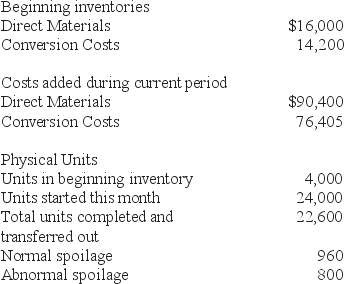
a)Following a material flow analysis, the company's accountant estimates that 10% of the direct materials and 75% of conversion costs are classified as "waste and emissions." Assume these percentages apply to both beginning inventories and current period costs.
Prepare a material flow cost report using the Weighted Average method.
b)Provide a possible explanation for the higher proportion of waste in conversion costs compared to direct materials.
c)Should the managers of Rally Company establish a goal of eliminating all waste and emissions?
Explain your reasoning.
d)Suppose the managers are interested in presenting Rally as a company that is concerned about the environment. What are the pros and cons of publicly reporting data about the amount of waste in the company's manufacturing operations?
Following are data for January. All unfinished work at the end of January is 30% completed. The beginning inventory is 80% completed.
a)Following a material flow analysis, the company's accountant estimates that 10% of the direct materials and 75% of conversion costs are classified as "waste and emissions." Assume these percentages apply to both beginning inventories and current period costs.
Prepare a material flow cost report using the Weighted Average method.
b)Provide a possible explanation for the higher proportion of waste in conversion costs compared to direct materials.
c)Should the managers of Rally Company establish a goal of eliminating all waste and emissions?
Explain your reasoning.
d)Suppose the managers are interested in presenting Rally as a company that is concerned about the environment. What are the pros and cons of publicly reporting data about the amount of waste in the company's manufacturing operations?
Question
Question
Question
Match between columns

Unlock Deck
Sign up to unlock the cards in this deck!
Unlock Deck
Unlock Deck
1/74

Play

Full screen (f)
Deck 18: Sustainability Management
1
Most companies are motivated to issue sustainability reports by ethical considerations.
True
2
Tracking and tracing sustainability costs, and identifying cost pools and related cost drivers, are crucial for sustainability management accounting purposes.
True
3
External impacts are costs and benefits that are recognized in the entity's accounting system, but the information for the values are generated outside the organization.
False
4
In recent times, all companies have organizational strategies for communicating information about sustainability efforts and performance, called sustainability reporting.
Unlock Deck
Unlock for access to all 74 flashcards in this deck.
Unlock Deck
k this deck
5
In Canada, most aspects of sustainability reporting are voluntary and unregulated.
Unlock Deck
Unlock for access to all 74 flashcards in this deck.
Unlock Deck
k this deck
6
The triple bottom line includes economic, environmental, and social considerations.
Unlock Deck
Unlock for access to all 74 flashcards in this deck.
Unlock Deck
k this deck
7
The triple bottom line refers to the effect in which a company's profit increases by three-fold when they begin to consider environmental and social aspects.
Unlock Deck
Unlock for access to all 74 flashcards in this deck.
Unlock Deck
k this deck
8
"Sustainable management" is the ability to direct the course of an enterprise in ways that reduce all forms of capital (human, natural, manufactured, and financial).
Unlock Deck
Unlock for access to all 74 flashcards in this deck.
Unlock Deck
k this deck
9
International Organization for Standardization (ISO)is the world's largest developer of international standards.
Unlock Deck
Unlock for access to all 74 flashcards in this deck.
Unlock Deck
k this deck
10
Internal impacts are costs and benefits inside the organization that are recognized in the entity's conventional accounting system.
Unlock Deck
Unlock for access to all 74 flashcards in this deck.
Unlock Deck
k this deck
11
There has been no authoritative definition or agreement on sustainable reporting practices.
Unlock Deck
Unlock for access to all 74 flashcards in this deck.
Unlock Deck
k this deck
12
Costs and benefits arising from prior years operations are irrelevant for current period decisions.
Unlock Deck
Unlock for access to all 74 flashcards in this deck.
Unlock Deck
k this deck
13
Fines, lawsuits and clean up costs are an example of hidden costs.
Unlock Deck
Unlock for access to all 74 flashcards in this deck.
Unlock Deck
k this deck
14
Sustainability accounting is the systematic recording, reporting, and analysis of quantitative and qualitative information about sustainable management practices and performance.
Unlock Deck
Unlock for access to all 74 flashcards in this deck.
Unlock Deck
k this deck
15
The feedback loop is only intended to involve an organization's managers.
Unlock Deck
Unlock for access to all 74 flashcards in this deck.
Unlock Deck
k this deck
16
Sustainable development is development that meets the needs of current generations without comprising the ability of future generations.
Unlock Deck
Unlock for access to all 74 flashcards in this deck.
Unlock Deck
k this deck
17
Management accountants contribute to sustainability efforts by establishing internal and external measurement and reporting processes.
Unlock Deck
Unlock for access to all 74 flashcards in this deck.
Unlock Deck
k this deck
18
The cost and availability of raw materials are external impacts for a manufacturer.
Unlock Deck
Unlock for access to all 74 flashcards in this deck.
Unlock Deck
k this deck
19
Strategies are plans that managers develop to take advantage of core competencies while working toward the organization's vision.
Unlock Deck
Unlock for access to all 74 flashcards in this deck.
Unlock Deck
k this deck
20
Small companies are increasingly starting to issue sustainability reports due to green initiatives and due to customer demands.
Unlock Deck
Unlock for access to all 74 flashcards in this deck.
Unlock Deck
k this deck
21
Strategies for sustainable management are unlikely to be developed unless managers:
A)Have identified specific operating plans.
B)Have established performance measurement for sustainable initiatives.
C)Have identified sustainability as part of the organizational vision and core competencies.
D)Have detailed operative plans with respect to sustainable management.
A)Have identified specific operating plans.
B)Have established performance measurement for sustainable initiatives.
C)Have identified sustainability as part of the organizational vision and core competencies.
D)Have detailed operative plans with respect to sustainable management.
Unlock Deck
Unlock for access to all 74 flashcards in this deck.
Unlock Deck
k this deck
22
The triple bottom line refers to which of the following three value systems:
A)Economic, environmental, and social.
B)Economic, organic, and social
C)Economic, environmental, and ecological
D)Economic, environmental, and sustainable
A)Economic, environmental, and social.
B)Economic, organic, and social
C)Economic, environmental, and ecological
D)Economic, environmental, and sustainable
Unlock Deck
Unlock for access to all 74 flashcards in this deck.
Unlock Deck
k this deck
23
Internal Sustainability Reporting includes
I) Sustainability reports for shareholders
II) Support for Operating Plans
III) Support for Strategic Plans
A)I and II only
B)II and III only
C)I and III only
D)I, II, and III
I) Sustainability reports for shareholders
II) Support for Operating Plans
III) Support for Strategic Plans
A)I and II only
B)II and III only
C)I and III only
D)I, II, and III
Unlock Deck
Unlock for access to all 74 flashcards in this deck.
Unlock Deck
k this deck
24
What is Global Reporting Initiative (GRI)?
A)A network organization that developed a free framework for disclosure of economic, environmental and social performance
B)An organization that monitors economic, environmental and social performance
C)An organization that developed regulations for economic, environmental and social performance
D)A network organization that enables companies to communicate about economic, environmental and social initiatives
A)A network organization that developed a free framework for disclosure of economic, environmental and social performance
B)An organization that monitors economic, environmental and social performance
C)An organization that developed regulations for economic, environmental and social performance
D)A network organization that enables companies to communicate about economic, environmental and social initiatives
Unlock Deck
Unlock for access to all 74 flashcards in this deck.
Unlock Deck
k this deck
25
Sustainability accounting includes:
I) Financial accounting value systems
II) Environmental value systems
III) Social value systems
A)I and II only
B)II and III only
C)I and III only
D)I, II, and III
I) Financial accounting value systems
II) Environmental value systems
III) Social value systems
A)I and II only
B)II and III only
C)I and III only
D)I, II, and III
Unlock Deck
Unlock for access to all 74 flashcards in this deck.
Unlock Deck
k this deck
26
Greenwashing is
A)Using environmentally safe cleaning products
B)Publicizing environmental friendly policies without making substantive changes in their environmental impact
C)Ensuring that produce is washed and does not contain e-coli
D)When carwashes reuse the water, rather than using new water for each car washed.
A)Using environmentally safe cleaning products
B)Publicizing environmental friendly policies without making substantive changes in their environmental impact
C)Ensuring that produce is washed and does not contain e-coli
D)When carwashes reuse the water, rather than using new water for each car washed.
Unlock Deck
Unlock for access to all 74 flashcards in this deck.
Unlock Deck
k this deck
27
Material flow accounting assumes that total inputs must equal total outputs.
Unlock Deck
Unlock for access to all 74 flashcards in this deck.
Unlock Deck
k this deck
28
Which of the following is a synonym for sustainability?
A)Double bottom line
B)Corporate Social Responsibility
C)Human capital
D)Economic impact
A)Double bottom line
B)Corporate Social Responsibility
C)Human capital
D)Economic impact
Unlock Deck
Unlock for access to all 74 flashcards in this deck.
Unlock Deck
k this deck
29
Why were the GRI core indicators designed?
I) To provide information to stakeholders
II) To improve profitability
III) To encourage improved sustainability
A)I and II only
B)II and III only
C)I and III only
D)I, II, and III
I) To provide information to stakeholders
II) To improve profitability
III) To encourage improved sustainability
A)I and II only
B)II and III only
C)I and III only
D)I, II, and III
Unlock Deck
Unlock for access to all 74 flashcards in this deck.
Unlock Deck
k this deck
30
Externalities are costs that an entity imposes on others as a result of its operations, but which the entity typically ignores
Unlock Deck
Unlock for access to all 74 flashcards in this deck.
Unlock Deck
k this deck
31
If an organization has a strategy to use only recycled inputs, then their budgets and plans likely include:
I) Increased costs to obtain materials
II) Plans to source the materials
III) Milestone dates by which achievements should occur
A)I and II only
B)II and III only
C)I and III only
D)I, II, and III
I) Increased costs to obtain materials
II) Plans to source the materials
III) Milestone dates by which achievements should occur
A)I and II only
B)II and III only
C)I and III only
D)I, II, and III
Unlock Deck
Unlock for access to all 74 flashcards in this deck.
Unlock Deck
k this deck
32
Products with higher environmental and social costs may appear to be more profitable when these costs are allocated to products using traditional allocation methods.
Unlock Deck
Unlock for access to all 74 flashcards in this deck.
Unlock Deck
k this deck
33
Sustainability accounting is:
A)Recording and analysis of quantitative and qualitative information about sustainable practices and performance
B)Quantifying the costs of sustainable practices
C)Reporting to external stakeholders about sustainability
D)Reporting qualitative information about an organizations sustainable practices and performance.
A)Recording and analysis of quantitative and qualitative information about sustainable practices and performance
B)Quantifying the costs of sustainable practices
C)Reporting to external stakeholders about sustainability
D)Reporting qualitative information about an organizations sustainable practices and performance.
Unlock Deck
Unlock for access to all 74 flashcards in this deck.
Unlock Deck
k this deck
34
To reduce the suspicion that a company is engaged in "impression management", a company's sustainability information can:
I) Follow GRI standards
II) Include lots of visuals suggesting environmental friendliness
III) Be transparent
A)I and II only
B)II and III only
C)I and III only
D)I, II, and III
I) Follow GRI standards
II) Include lots of visuals suggesting environmental friendliness
III) Be transparent
A)I and II only
B)II and III only
C)I and III only
D)I, II, and III
Unlock Deck
Unlock for access to all 74 flashcards in this deck.
Unlock Deck
k this deck
35
Material flow accounting differs from material flow cost accounting because material flow accounting is only concerned with inputs and outputs for a manufacturing process, whereas material flow cost accounting is concerned with inputs and outputs for all processes.
Unlock Deck
Unlock for access to all 74 flashcards in this deck.
Unlock Deck
k this deck
36
In 2008, the top two motivations to explain sustainability reporting were:
A)Ethical considerations and economic considerations
B)Reputation or brand and innovation & learning
C)Employee motivation and risk management
D)Strengthened supplier relationships and access to capital
A)Ethical considerations and economic considerations
B)Reputation or brand and innovation & learning
C)Employee motivation and risk management
D)Strengthened supplier relationships and access to capital
Unlock Deck
Unlock for access to all 74 flashcards in this deck.
Unlock Deck
k this deck
37
Internal impacts are also called:
A)Direct impacts
B)Private impacts
C)None of the above
D)Both
A)Direct impacts
B)Private impacts
C)None of the above
D)Both
Unlock Deck
Unlock for access to all 74 flashcards in this deck.
Unlock Deck
k this deck
38
Sustainability management accounting includes:
I) Budgeting and forecasting
II) Assurance services
III) Implementing and monitoring internal controls
A)I and II only
B)II and III only
C)I and III only
D)I, II, and III
I) Budgeting and forecasting
II) Assurance services
III) Implementing and monitoring internal controls
A)I and II only
B)II and III only
C)I and III only
D)I, II, and III
Unlock Deck
Unlock for access to all 74 flashcards in this deck.
Unlock Deck
k this deck
39
In sustainability management accounting, life cycle costing involves summing the costs of the activities involved in the design, development, production, sale, transportation, and disposal of a product or service throughout internal and external value chains.
Unlock Deck
Unlock for access to all 74 flashcards in this deck.
Unlock Deck
k this deck
40
Communicating information about sustainability efforts and performance
A)Is required by GAAP
B)Is consistent across all organizations
C)Is required by regulation
D)Varies widely across organizations
A)Is required by GAAP
B)Is consistent across all organizations
C)Is required by regulation
D)Varies widely across organizations
Unlock Deck
Unlock for access to all 74 flashcards in this deck.
Unlock Deck
k this deck
41
Which of the following statements regarding material flow accounting is false?
A)It is also called input-output analysis
B)It is the process of analyzing the movement of all physical materials through an organization's operations
C)It assumes that total inputs exceed total outputs
D)It can be used to demonstrate compliance with laws and regulations
A)It is also called input-output analysis
B)It is the process of analyzing the movement of all physical materials through an organization's operations
C)It assumes that total inputs exceed total outputs
D)It can be used to demonstrate compliance with laws and regulations
Unlock Deck
Unlock for access to all 74 flashcards in this deck.
Unlock Deck
k this deck
42
Which of the following internal costs is the easiest to measure?
A)Contingent costs
B)Image and relationship costs
C)Hidden costs
D)Conventional costs
A)Contingent costs
B)Image and relationship costs
C)Hidden costs
D)Conventional costs
Unlock Deck
Unlock for access to all 74 flashcards in this deck.
Unlock Deck
k this deck
43
In "Material flow cost accounting", final product that is produced and transferred out is often referred to as:
A)Completed units
B)Positive product
C)Negative product
D)Outputs
A)Completed units
B)Positive product
C)Negative product
D)Outputs
Unlock Deck
Unlock for access to all 74 flashcards in this deck.
Unlock Deck
k this deck
44
Which of the following systems monitors planned versus actual sustainability performance to maintain control over preset goals?
A)Boundary systems
B)Interactive control systems
C)Belief systems
D)Diagnostic control systems
A)Boundary systems
B)Interactive control systems
C)Belief systems
D)Diagnostic control systems
Unlock Deck
Unlock for access to all 74 flashcards in this deck.
Unlock Deck
k this deck
45
All of the following are recommended strategies for incorporating sustainability into a balanced scorecard except:
A)Scaling the measures in the financial perspective by the cost of externalities.
B)An additional "sustainability" perspective can be added to the scorecard
C)Quantitative separate sustainability balanced scorecard can be developed
D)Environmental and social strategic objectives can be integrated within the traditional four perspectives.
A)Scaling the measures in the financial perspective by the cost of externalities.
B)An additional "sustainability" perspective can be added to the scorecard
C)Quantitative separate sustainability balanced scorecard can be developed
D)Environmental and social strategic objectives can be integrated within the traditional four perspectives.
Unlock Deck
Unlock for access to all 74 flashcards in this deck.
Unlock Deck
k this deck
46
Which of the following is not a strategic objective from the perspective of an internal business process?
A)Improve processes for admission, treatment and discharge
B)Optimize staff scheduling
C)Support employee professional development
D)Reduce negative environmental impact
A)Improve processes for admission, treatment and discharge
B)Optimize staff scheduling
C)Support employee professional development
D)Reduce negative environmental impact
Unlock Deck
Unlock for access to all 74 flashcards in this deck.
Unlock Deck
k this deck
47
Firms that report GRI core indicators are more likely to:
I) Improve sustainability
II) Establish programs to reach targets for metrics reported
III) Conform with laws
A)I and II only
B)II and III only
C)I and III only
D)I, II, and III
I) Improve sustainability
II) Establish programs to reach targets for metrics reported
III) Conform with laws
A)I and II only
B)II and III only
C)I and III only
D)I, II, and III
Unlock Deck
Unlock for access to all 74 flashcards in this deck.
Unlock Deck
k this deck
48
Traditional management accounting practices tend to overlook potentially significant costs and benefits within relevant cost decision making because:
A)Accounting recognition is delayed when costs are contingent on future events
B)Relevant revenues and costs are not isolated in the accounting system
C)Opportunity costs are not measured
D)All of the above.
A)Accounting recognition is delayed when costs are contingent on future events
B)Relevant revenues and costs are not isolated in the accounting system
C)Opportunity costs are not measured
D)All of the above.
Unlock Deck
Unlock for access to all 74 flashcards in this deck.
Unlock Deck
k this deck
49
Life cycle assessment refers to:
I) Evaluating all the activities involved in the design, development, production, sale, transportation, and disposal of a product or service
II) Is often referred to as cradle to grave
III) Involves summing the costs of the activities throughout both internal and external value chains
A)I and II only
B)II and III only
C)I and III only
D)I, II, and III
I) Evaluating all the activities involved in the design, development, production, sale, transportation, and disposal of a product or service
II) Is often referred to as cradle to grave
III) Involves summing the costs of the activities throughout both internal and external value chains
A)I and II only
B)II and III only
C)I and III only
D)I, II, and III
Unlock Deck
Unlock for access to all 74 flashcards in this deck.
Unlock Deck
k this deck
50
Up-front environmental and social costs, such as search costs, design costs and regulatory costs are included in which category of costs?
A)Hidden costs
B)Conventional costs
C)Contingent costs
D)Image and relationship costs
A)Hidden costs
B)Conventional costs
C)Contingent costs
D)Image and relationship costs
Unlock Deck
Unlock for access to all 74 flashcards in this deck.
Unlock Deck
k this deck
51
Which of the following systems motivates managers to prioritize and coordinate financial, environmental and social value systems?
A)Belief systems
B)Interactive control systems
C)Diagnostic control systems
D)Boundary systems
A)Belief systems
B)Interactive control systems
C)Diagnostic control systems
D)Boundary systems
Unlock Deck
Unlock for access to all 74 flashcards in this deck.
Unlock Deck
k this deck
52
Economic value distributed includes all of the following except:
A)Operating costs
B)Employee wages and benefits
C)Community investments
D)Owner investments
A)Operating costs
B)Employee wages and benefits
C)Community investments
D)Owner investments
Unlock Deck
Unlock for access to all 74 flashcards in this deck.
Unlock Deck
k this deck
53
Direct raw materials, utilities and labour costs are included in which category of costs?
A)Image and relationship costs
B)Conventional costs
C)Contingent costs
D)Hidden costs
A)Image and relationship costs
B)Conventional costs
C)Contingent costs
D)Hidden costs
Unlock Deck
Unlock for access to all 74 flashcards in this deck.
Unlock Deck
k this deck
54
Under material flow accounting, outputs are divided into all of the following categories except?
A)Products
B)Waste
C)Emissions
D)Direct manufacturing materials
A)Products
B)Waste
C)Emissions
D)Direct manufacturing materials
Unlock Deck
Unlock for access to all 74 flashcards in this deck.
Unlock Deck
k this deck
55
Which of the following is not one of the three methods used to evaluate organizational sustainability performance?
A)Internal measurement for specific goals
B)Benchmarking against the activities of other organizations
C)Internal budgeting
D)Feedback from stakeholders
A)Internal measurement for specific goals
B)Benchmarking against the activities of other organizations
C)Internal budgeting
D)Feedback from stakeholders
Unlock Deck
Unlock for access to all 74 flashcards in this deck.
Unlock Deck
k this deck
56
Which of the following internal costs is the most difficult to measure?
A)Image and relationship costs
B)Conventional costs
C)Contingent costs
D)Hidden costs
A)Image and relationship costs
B)Conventional costs
C)Contingent costs
D)Hidden costs
Unlock Deck
Unlock for access to all 74 flashcards in this deck.
Unlock Deck
k this deck
57
Material flow accounting divides outputs into three major categories:
A)Good units, scrap, and waste
B)Products, emissions, and byproducts
C)Products, waste, and emissions
D)Good units, bad units, and waste
A)Good units, scrap, and waste
B)Products, emissions, and byproducts
C)Products, waste, and emissions
D)Good units, bad units, and waste
Unlock Deck
Unlock for access to all 74 flashcards in this deck.
Unlock Deck
k this deck
58
Which of the following systems engages in organizational learning by investigating strategic opportunities and threats revealed by differences between planned and actual sustainability performance?
A)Diagnostic control systems
B)Interactive control systems
C)Boundary systems
D)Belief systems
A)Diagnostic control systems
B)Interactive control systems
C)Boundary systems
D)Belief systems
Unlock Deck
Unlock for access to all 74 flashcards in this deck.
Unlock Deck
k this deck
59
GRI core indicators include:
I) Economic indicators
II) Environmental indicators
III) Labor practices indicators
A)I and II only
B)II and III only
C)I and III only
D)I, II, and III
I) Economic indicators
II) Environmental indicators
III) Labor practices indicators
A)I and II only
B)II and III only
C)I and III only
D)I, II, and III
Unlock Deck
Unlock for access to all 74 flashcards in this deck.
Unlock Deck
k this deck
60
Which of the following systems establishes codes of conduct for financial, environmental and social practices?
A)Belief systems
B)Interactive control systems
C)Boundary systems
D)Diagnostic control systems
A)Belief systems
B)Interactive control systems
C)Boundary systems
D)Diagnostic control systems
Unlock Deck
Unlock for access to all 74 flashcards in this deck.
Unlock Deck
k this deck
61
Describe greenwashing.
Unlock Deck
Unlock for access to all 74 flashcards in this deck.
Unlock Deck
k this deck
62
Why do traditional management accounting practices tend to overlook potentially significant sustainability costs and benefits within non-routine decisions?
Unlock Deck
Unlock for access to all 74 flashcards in this deck.
Unlock Deck
k this deck
63
Many citizens of Collingwood Township travel each work day between Collingwood and a nearby city, Stayner. To reduce the need for building more lanes on the freeway and to comply with local sustainability policies, the township has decided to establish an express bus service that uses environmentally friendly fuel. Collingwood plans to charge $0.95 for a one-way fare. Township managers want to purchase either a 40 or 60 passenger bus. Following are data for the buses.
During the four hours of "rush hour" traffic each day, all buses would be in service and expected to operate at full capacity (township regulations prohibit bus passengers from standing). The buses would make six round trips during these periods. For the other 16 hours of operation, about 500 passengers are expected to ride the buses, and five buses would cover the route. Part-time drivers would be used for the extra time during rush hours. A bus traveling the route all day would go 600 miles, and one traveling only during rush hours would go 150 miles per day during the 260 work days each year.
a)Prepare a schedule for the estimated annual revenues for each alternative.
b)Prepare a schedule for the estimated annual drivers' wages for each alternative.
c)Prepare a schedule for the annual cost of fuel for each alternative.
d)Assuming that Collingwood requires a minimum rate of return of 8%, calculate the net present value of each bus option. Ignore inflation and taxes.
e)List two business risks that could affect this decision.
During the four hours of "rush hour" traffic each day, all buses would be in service and expected to operate at full capacity (township regulations prohibit bus passengers from standing). The buses would make six round trips during these periods. For the other 16 hours of operation, about 500 passengers are expected to ride the buses, and five buses would cover the route. Part-time drivers would be used for the extra time during rush hours. A bus traveling the route all day would go 600 miles, and one traveling only during rush hours would go 150 miles per day during the 260 work days each year. a)Prepare a schedule for the estimated annual revenues for each alternative.
b)Prepare a schedule for the estimated annual drivers' wages for each alternative.
c)Prepare a schedule for the annual cost of fuel for each alternative.
d)Assuming that Collingwood requires a minimum rate of return of 8%, calculate the net present value of each bus option. Ignore inflation and taxes.
e)List two business risks that could affect this decision.
Unlock Deck
Unlock for access to all 74 flashcards in this deck.
Unlock Deck
k this deck
64
Differentiate between internal impacts and external impacts.
Unlock Deck
Unlock for access to all 74 flashcards in this deck.
Unlock Deck
k this deck
65
Basil Corporation is planning to buy solar panels that will reduce the amount of electricity bought from the grid. The company's required rate of return for equipment is 8%. The solar panels cost $250,000 and should save about $22,500 per year in electricity costs. The vendor stated that the panels should last 25 years. Ignore taxes and inflation.
a)What is the NPV for this project?
b)Based on the NPV, should Basil make the purchase?
c)What is the payback period?
d)What qualitative factors, including strategic risks, might affect this decision?
a)What is the NPV for this project?
b)Based on the NPV, should Basil make the purchase?
c)What is the payback period?
d)What qualitative factors, including strategic risks, might affect this decision?
Unlock Deck
Unlock for access to all 74 flashcards in this deck.
Unlock Deck
k this deck
66
Describe how the role of environmental and social issues in business has changed over the last decade.
Unlock Deck
Unlock for access to all 74 flashcards in this deck.
Unlock Deck
k this deck
67
Several categories for sustainability costs are listed below. Indicate which measures are Internal (I)and which are external (E)
____ 1. Hidden Costs
____ 2. Contingent Costs
____ 3. Externalities
____ 4. Image and Relationship Costs
____ 5. Conventional Costs
____ 1. Hidden Costs
____ 2. Contingent Costs
____ 3. Externalities
____ 4. Image and Relationship Costs
____ 5. Conventional Costs
Unlock Deck
Unlock for access to all 74 flashcards in this deck.
Unlock Deck
k this deck
68
How do firms generally evaluate organizational sustainability performance?
Unlock Deck
Unlock for access to all 74 flashcards in this deck.
Unlock Deck
k this deck
69
How can companies reduce accusations of greenwashing?
Unlock Deck
Unlock for access to all 74 flashcards in this deck.
Unlock Deck
k this deck
70
Royal Dutch Shell XXX. The company published a report showing comparisons of sustainability indicators for 2009 and 2008. For each of the sustainability indicators, explain whether the change from 2007 to 2008 suggests an improvement (I)or deterioration (D)in Royal Dutch Shell's sustainable management
Unlock Deck
Unlock for access to all 74 flashcards in this deck.
Unlock Deck
k this deck
71
The Journey Company operates under a process cost system using the weighted average method. All direct materials are added at the beginning of production in the department, and conversion costs are incurred evenly throughout production. Inspection occurs when production is 100% completed.
Following are data for January. All unfinished work at the end of January is 30% completed. The beginning inventory is 80% completed.
a)Following a material flow analysis, the company's accountant estimates that 10% of the direct materials and 75% of conversion costs are classified as "waste and emissions." Assume these percentages apply to both beginning inventories and current period costs.
Prepare a material flow cost report using the Weighted Average method.
b)Provide a possible explanation for the higher proportion of waste in conversion costs compared to direct materials.
c)Should the managers of Rally Company establish a goal of eliminating all waste and emissions?
Explain your reasoning.
d)Suppose the managers are interested in presenting Rally as a company that is concerned about the environment. What are the pros and cons of publicly reporting data about the amount of waste in the company's manufacturing operations?
Following are data for January. All unfinished work at the end of January is 30% completed. The beginning inventory is 80% completed.
a)Following a material flow analysis, the company's accountant estimates that 10% of the direct materials and 75% of conversion costs are classified as "waste and emissions." Assume these percentages apply to both beginning inventories and current period costs.
Prepare a material flow cost report using the Weighted Average method.
b)Provide a possible explanation for the higher proportion of waste in conversion costs compared to direct materials.
c)Should the managers of Rally Company establish a goal of eliminating all waste and emissions?
Explain your reasoning.
d)Suppose the managers are interested in presenting Rally as a company that is concerned about the environment. What are the pros and cons of publicly reporting data about the amount of waste in the company's manufacturing operations?
Unlock Deck
Unlock for access to all 74 flashcards in this deck.
Unlock Deck
k this deck
72
Describe what is meant by "building a business case" for sustainable management.
Unlock Deck
Unlock for access to all 74 flashcards in this deck.
Unlock Deck
k this deck
73
Describe how management accountants contribute to the efforts to measure, monitor and motivate improved social and environmental performance.
Unlock Deck
Unlock for access to all 74 flashcards in this deck.
Unlock Deck
k this deck
74
Match between columns
Unlock Deck
Unlock for access to all 74 flashcards in this deck.
Unlock Deck
k this deck
Unlock Deck
Unlock for access to all 74 flashcards in this deck.






