







 Chat with AI

Deck 3: Health and Health Disorders
Full screen (f)

Question

Question
Question
Question
Question
Question
Question
Question
Question
Question
Question
Question
Question
Question
Question
Question
Question
Given the data from the accompanying "chronic conditions" chart, and the illness and disability information from your text, it is quite possible for Alberta, an African-American 64 year old retired teacher, and her retired friends to have one or more chronic conditions without experiencing significant disability. For Alberta and her friends, like most adults, the crucial issue is not whether they have a chronic condition but _____________________. 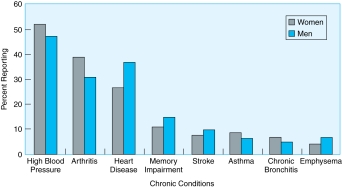
A) whether they can have relief from pain
B) whether that condition has an impact on their daily lives
C) if they will live a long and happy life
D) if they can afford medical care
A) whether they can have relief from pain
B) whether that condition has an impact on their daily lives
C) if they will live a long and happy life
D) if they can afford medical care
Question
Question
Question
Question
Question
Question
Question
Question
Question
Question
Question
Question
Question
Question
Question
Question
Question
Question
Question
Question
Question
Question
Question
Question
Question
Question
Question
Question
Question
Question
Question
Question
Question
Question
Question
Question
Question
Question
Question
Question
Question
Question
Question
Question
Question
Question
Question
Question

Unlock Deck
Sign up to unlock the cards in this deck!
Unlock Deck
Unlock Deck
1/65

Play

Full screen (f)
Deck 3: Health and Health Disorders
1
The last few decades have seen advances in identifying genes associated with Alzheimer's disease. Twin studies indicate that genetic factors have a _______ influence on incidence.
A) nonexistent
B) strong
C) mild
D) moderate
A) nonexistent
B) strong
C) mild
D) moderate
D
2
Across the adult years, the month prevalence of most mental disorders increases from young adulthood to middle adulthood and then declines, with the lowest rates being ________________(Kessler, Berglund, Demler, et al., 2005).
A) for teenagers who are between 17-19 years old
B) for young adults who are 20-27 years old
C) for middle age adults who are 45-55 years old
D) for adults who are 60 years of age and older
A) for teenagers who are between 17-19 years old
B) for young adults who are 20-27 years old
C) for middle age adults who are 45-55 years old
D) for adults who are 60 years of age and older
D
3
The results from older adults' self-reports (surveys) of their health suggest _______.
A) a strong positive correlation between the self-ratings and objective measures of health
B) that almost 75 percent of adults over 65 rate their health as good to excellent
C) that young adults more frequently rate their health as excellent
D) all of the above
A) a strong positive correlation between the self-ratings and objective measures of health
B) that almost 75 percent of adults over 65 rate their health as good to excellent
C) that young adults more frequently rate their health as excellent
D) all of the above
D
4
It is estimated that 20 percent of the elderly have pathological levels of anxiety. Which of the following is NOT an anxiety disorder?
A) phobias
B) agoraphobia
C) dysthymic disorder
D) PTSD
A) phobias
B) agoraphobia
C) dysthymic disorder
D) PTSD
Unlock Deck
Unlock for access to all 65 flashcards in this deck.
Unlock Deck
k this deck
5
The probability of dying in any given year is called the _________ rate; the probability of contracting an illness is called the _________ rate.
A) morbidity; mortality
B) prevalence; incidence
C) mortality; morbidity
D) mortality, incidence
A) morbidity; mortality
B) prevalence; incidence
C) mortality; morbidity
D) mortality, incidence
Unlock Deck
Unlock for access to all 65 flashcards in this deck.
Unlock Deck
k this deck
6
Bee and Bjorkland report that the adage "to be old is to be sick" is no longer true due to _______.
A) increases in health practices
B) decreases in many diseases
C) increases in sedentary lifestyles
D) both a and b
A) increases in health practices
B) decreases in many diseases
C) increases in sedentary lifestyles
D) both a and b
Unlock Deck
Unlock for access to all 65 flashcards in this deck.
Unlock Deck
k this deck
7
The probability of dying in any given year in the United States is best described as _______.
A) increasing with age, and increasing for females more quickly than males
B) less than 20 percent for males and females over the age of 85
C) 1 percent for adult males aged 15-24
D) greater for females across all age groupings
A) increasing with age, and increasing for females more quickly than males
B) less than 20 percent for males and females over the age of 85
C) 1 percent for adult males aged 15-24
D) greater for females across all age groupings
Unlock Deck
Unlock for access to all 65 flashcards in this deck.
Unlock Deck
k this deck
8
After examining the evidence regarding cardiovascular disease and gender, Bee and Bjorklund conclude that _______.
A) men are twice as likely to die as women in the year following their first heart attack
B) women have a 25 percent chance of dying from breast cancer, compared to a 50 percent chance of dying from heart disease
C) men are twice as apt as females to die of heart disease
D) None of the above statements are conclusions reached by Bee and Bjorklund.
A) men are twice as likely to die as women in the year following their first heart attack
B) women have a 25 percent chance of dying from breast cancer, compared to a 50 percent chance of dying from heart disease
C) men are twice as apt as females to die of heart disease
D) None of the above statements are conclusions reached by Bee and Bjorklund.
Unlock Deck
Unlock for access to all 65 flashcards in this deck.
Unlock Deck
k this deck
9
Which of the following is the most accurate description of the relationship of atherosclerosis to aging?
A) It is an inevitable part of aging. All adults show some atherosclerotic change, and these changes are irreversible.
B) It is an inevitable part of aging, but early changes are reversible by improvement in health habits.
C) It is a disease occurring only in some adults; all changes due to the disease are curable or reversible.
D) It is a disease occurring only in some adults, but some disease processes are reversible by improvement in health habits.
A) It is an inevitable part of aging. All adults show some atherosclerotic change, and these changes are irreversible.
B) It is an inevitable part of aging, but early changes are reversible by improvement in health habits.
C) It is a disease occurring only in some adults; all changes due to the disease are curable or reversible.
D) It is a disease occurring only in some adults, but some disease processes are reversible by improvement in health habits.
Unlock Deck
Unlock for access to all 65 flashcards in this deck.
Unlock Deck
k this deck
10
Which of the following would keep a person over 60 from seeking help for a disorder?
A) false stereotypes of aging
B) self-sufficiency
C) a desire to keep problems to him- or herself
D) all of the above
A) false stereotypes of aging
B) self-sufficiency
C) a desire to keep problems to him- or herself
D) all of the above
Unlock Deck
Unlock for access to all 65 flashcards in this deck.
Unlock Deck
k this deck
11
Which of the following diseases is the leading cause of death in late adulthood in the United States and other developed countries?
A) cancer
B) accidents
C) heart disease
D) pneumonia
A) cancer
B) accidents
C) heart disease
D) pneumonia
Unlock Deck
Unlock for access to all 65 flashcards in this deck.
Unlock Deck
k this deck
12
Which group of adults shows a pattern of short life expectancy and high rates of chronic illness throughout adulthood?
A) men
B) women
C) the poor
D) the middle class
A) men
B) women
C) the poor
D) the middle class
Unlock Deck
Unlock for access to all 65 flashcards in this deck.
Unlock Deck
k this deck
13
Which of the following is the most common cause of death in adults between ages 24 and 44 in the U.S.?
A) AIDS
B) cancer
C) accidents
D) heart disease
A) AIDS
B) cancer
C) accidents
D) heart disease
Unlock Deck
Unlock for access to all 65 flashcards in this deck.
Unlock Deck
k this deck
14
Women, when compared to men, _______.
A) contract fatal diseases (such as cancer or heart disease) at about the same average ages as men, but survive longer with such diseases
B) remain in good health much longer, without significant disability or disease
C) have a higher incidence of disabilities, but contract fatal diseases later in life
D) contract fatal diseases at later average ages and have decreased incidences of depression and anxiety
A) contract fatal diseases (such as cancer or heart disease) at about the same average ages as men, but survive longer with such diseases
B) remain in good health much longer, without significant disability or disease
C) have a higher incidence of disabilities, but contract fatal diseases later in life
D) contract fatal diseases at later average ages and have decreased incidences of depression and anxiety
Unlock Deck
Unlock for access to all 65 flashcards in this deck.
Unlock Deck
k this deck
15
The probability of dying in any given year is called the _________ rate; the probability of contracting an illness is called the _________ rate.
A) morbidity; mortality
B) prevalence; incidence
C) mortality; morbidity
D) mortality, incidence
A) morbidity; mortality
B) prevalence; incidence
C) mortality; morbidity
D) mortality, incidence
Unlock Deck
Unlock for access to all 65 flashcards in this deck.
Unlock Deck
k this deck
16
Although cancer remains the second leading cause of death for adults in the United States, the type of terminal cancer changes based on age and gender. For example, a 50-year-old female is most likely to die from _____ cancer, a 6year-old male from _____ cancer.
A) lung; breast
B) breast; colon
C) breast; lung
D) colon; lung
A) lung; breast
B) breast; colon
C) breast; lung
D) colon; lung
Unlock Deck
Unlock for access to all 65 flashcards in this deck.
Unlock Deck
k this deck
17
Given the data from the accompanying "chronic conditions" chart, and the illness and disability information from your text, it is quite possible for Alberta, an African-American 64 year old retired teacher, and her retired friends to have one or more chronic conditions without experiencing significant disability. For Alberta and her friends, like most adults, the crucial issue is not whether they have a chronic condition but _____________________.
A) whether they can have relief from pain
B) whether that condition has an impact on their daily lives
C) if they will live a long and happy life
D) if they can afford medical care
A) whether they can have relief from pain
B) whether that condition has an impact on their daily lives
C) if they will live a long and happy life
D) if they can afford medical care
Unlock Deck
Unlock for access to all 65 flashcards in this deck.
Unlock Deck
k this deck
18
Which of the following is the most common cause of death in adults between ages 24 and 44 in the U.S.?
A) AIDS
B) cancer
C) accidents
D) heart disease
A) AIDS
B) cancer
C) accidents
D) heart disease
Unlock Deck
Unlock for access to all 65 flashcards in this deck.
Unlock Deck
k this deck
19
The term used to describe any significant global deterioration in intellectual abilities in older adults is _______.
A) Alzheimer's disease
B) dementia
C) depression
D) Parkinson's disease
A) Alzheimer's disease
B) dementia
C) depression
D) Parkinson's disease
Unlock Deck
Unlock for access to all 65 flashcards in this deck.
Unlock Deck
k this deck
20
Which of the following are the 2 leading causes of death among adults in their 40s and 50s in the U.S.?
A) cancer and AIDS
B) accidents and heart disease
C) heart disease and cancer
D) AIDS and accidents
A) cancer and AIDS
B) accidents and heart disease
C) heart disease and cancer
D) AIDS and accidents
Unlock Deck
Unlock for access to all 65 flashcards in this deck.
Unlock Deck
k this deck
21
The term used to describe a disease of the arteries in which there is a gradual build-up of calcified, fibrous, and fatty tissue is _______.
A) high blood pressure
B) atherosclerosis
C) cholesterol
D) heart attack
A) high blood pressure
B) atherosclerosis
C) cholesterol
D) heart attack
Unlock Deck
Unlock for access to all 65 flashcards in this deck.
Unlock Deck
k this deck
22
Which of the following is NOT a risk factor for heart disease, according to the results of longitudinal studies like the Torpy study?
A) sexually transmitted diseases
B) high blood pressure
C) high cholesterol
D) smoking
A) sexually transmitted diseases
B) high blood pressure
C) high cholesterol
D) smoking
Unlock Deck
Unlock for access to all 65 flashcards in this deck.
Unlock Deck
k this deck
23
Dressing yourself, bathing, walking a short distance, using a toilet, and eating without assistance are all examples of what gerontologists call _______.
A) self-help skills
B) activities of daily living
C) grooming skills
D) daily behaviors
A) self-help skills
B) activities of daily living
C) grooming skills
D) daily behaviors
Unlock Deck
Unlock for access to all 65 flashcards in this deck.
Unlock Deck
k this deck
24
Research suggests that women are more likely to spend their later years in nursing homes for what significant reason?
A) dementia
B) having few or no children
C) they outlive their spouses
D) physical disability
A) dementia
B) having few or no children
C) they outlive their spouses
D) physical disability
Unlock Deck
Unlock for access to all 65 flashcards in this deck.
Unlock Deck
k this deck
25
Which of the following is NOT a well-established risk factor for one or more types of cancer?
A) smoking
B) high blood pressure
C) a family history of cancer
D) being overweight
A) smoking
B) high blood pressure
C) a family history of cancer
D) being overweight
Unlock Deck
Unlock for access to all 65 flashcards in this deck.
Unlock Deck
k this deck
26
Which of the following poor health habits increases a person's risk of both heart disease and cancer?
A) low-fiber diet
B) smoking
C) insufficient sleep
D) skipping breakfast
A) low-fiber diet
B) smoking
C) insufficient sleep
D) skipping breakfast
Unlock Deck
Unlock for access to all 65 flashcards in this deck.
Unlock Deck
k this deck
27
When researchers ask young, middle-aged, and older adults to rate their own health, what age pattern do they find?
A) The percentage who describe their health as excellent or very good declines rapidly with age; by age 65, only a very small number choose such a description.
B) The percentage who describe their health as excellent declines with age, but 2/3 of those over 75 still rate their health as at least good.
C) There is little change with age in the percentage who describe their health as excellent, but a substantial rise among those over 65 who describe their health as poor.
D) Self-rated health remains essentially constant over age, because older adults adjust their standards of "excellent" or "good."
A) The percentage who describe their health as excellent or very good declines rapidly with age; by age 65, only a very small number choose such a description.
B) The percentage who describe their health as excellent declines with age, but 2/3 of those over 75 still rate their health as at least good.
C) There is little change with age in the percentage who describe their health as excellent, but a substantial rise among those over 65 who describe their health as poor.
D) Self-rated health remains essentially constant over age, because older adults adjust their standards of "excellent" or "good."
Unlock Deck
Unlock for access to all 65 flashcards in this deck.
Unlock Deck
k this deck
28
What is the age-related pattern of acute and chronic diseases over adulthood?
A) Acute illness declines with age, while chronic illness increases.
B) Chronic illness declines with age, while acute illness increases.
C) Both chronic and acute illness increase with age.
D) Both chronic and acute illness decline with age.
A) Acute illness declines with age, while chronic illness increases.
B) Chronic illness declines with age, while acute illness increases.
C) Both chronic and acute illness increase with age.
D) Both chronic and acute illness decline with age.
Unlock Deck
Unlock for access to all 65 flashcards in this deck.
Unlock Deck
k this deck
29
Which form of mental health disorder shows the highest prevalence in adulthood?
A) mood disorders
B) anxiety disorders
C) impulse control disorders
D) substance abuse disorders
A) mood disorders
B) anxiety disorders
C) impulse control disorders
D) substance abuse disorders
Unlock Deck
Unlock for access to all 65 flashcards in this deck.
Unlock Deck
k this deck
30
At what median age do adults in the United States show the onset of mood disorders?
A) 10 years of age
B) 15 years of age
C) 20 years of age
D) 30 years of age
A) 10 years of age
B) 15 years of age
C) 20 years of age
D) 30 years of age
Unlock Deck
Unlock for access to all 65 flashcards in this deck.
Unlock Deck
k this deck
31
Women, when compared to men, _______.
A) contract fatal diseases (such as cancer or heart disease) at about the same average ages as men, but survive longer with such diseases
B) remain in good health much longer, without significant disability or disease
C) have a higher incidence of disabilities, but contract fatal diseases later in life
D) contract fatal diseases at later average ages and have decreased incidences of depression and anxiety
A) contract fatal diseases (such as cancer or heart disease) at about the same average ages as men, but survive longer with such diseases
B) remain in good health much longer, without significant disability or disease
C) have a higher incidence of disabilities, but contract fatal diseases later in life
D) contract fatal diseases at later average ages and have decreased incidences of depression and anxiety
Unlock Deck
Unlock for access to all 65 flashcards in this deck.
Unlock Deck
k this deck
32
The term used to describe any significant global deterioration in intellectual abilities in older adults is _______.
A) Alzheimer's disease
B) dementia
C) depression
D) Parkinson's disease
A) Alzheimer's disease
B) dementia
C) depression
D) Parkinson's disease
Unlock Deck
Unlock for access to all 65 flashcards in this deck.
Unlock Deck
k this deck
33
Which of the following is the most accurate description of the relationship of atherosclerosis to aging?
A) It is an inevitable part of aging. All adults show some atherosclerotic change, and these changes are irreversible.
B) It is an inevitable part of aging, but early changes are reversible by improvement in health habits.
C) It is a disease occurring only in some adults; all changes due to the disease are curable or reversible.
D) It is a disease occurring only in some adults, but some disease processes are reversible by improvement in health habits.
A) It is an inevitable part of aging. All adults show some atherosclerotic change, and these changes are irreversible.
B) It is an inevitable part of aging, but early changes are reversible by improvement in health habits.
C) It is a disease occurring only in some adults; all changes due to the disease are curable or reversible.
D) It is a disease occurring only in some adults, but some disease processes are reversible by improvement in health habits.
Unlock Deck
Unlock for access to all 65 flashcards in this deck.
Unlock Deck
k this deck
34
At what median age do adults in the United States show the onset of substance abuse?
A) 20 years of age
B) 30 years of age
C) 40 years of age
D) 50 years of age
A) 20 years of age
B) 30 years of age
C) 40 years of age
D) 50 years of age
Unlock Deck
Unlock for access to all 65 flashcards in this deck.
Unlock Deck
k this deck
35
Alzheimer's disease is one form of _______.
A) dementia
B) depression
C) coronary heart disease
D) immune system breakdown
A) dementia
B) depression
C) coronary heart disease
D) immune system breakdown
Unlock Deck
Unlock for access to all 65 flashcards in this deck.
Unlock Deck
k this deck
36
Epidemiological studies suggest that roughly what percentage of adults over age 65 suffer from significant dementia, including Alzheimer's disease?
A) 10 percent
B) 30 percent
C) 40 percent
D) 50 percent
A) 10 percent
B) 30 percent
C) 40 percent
D) 50 percent
Unlock Deck
Unlock for access to all 65 flashcards in this deck.
Unlock Deck
k this deck
37
Which of the following is the best description of the relationship between older adults and depressive symptoms?
A) genetic predisposition
B) side-effects of numerous medications
C) financial stress
D) the result of the health problems, bereavement, and loss of social contacts that occur more often at that stage of life
A) genetic predisposition
B) side-effects of numerous medications
C) financial stress
D) the result of the health problems, bereavement, and loss of social contacts that occur more often at that stage of life
Unlock Deck
Unlock for access to all 65 flashcards in this deck.
Unlock Deck
k this deck
38
One major sex difference in health experiences over adulthood is that _______.
A) women have higher rates of nearly all chronic diseases
B) men have higher rates of nearly all chronic diseases
C) when women contract a fatal disease, they die more quickly
D) men report higher rates of daily health problems at all ages
A) women have higher rates of nearly all chronic diseases
B) men have higher rates of nearly all chronic diseases
C) when women contract a fatal disease, they die more quickly
D) men report higher rates of daily health problems at all ages
Unlock Deck
Unlock for access to all 65 flashcards in this deck.
Unlock Deck
k this deck
39
Among adults, which ethnic group in the U.S. seems to have the best health?
A) Caucasians
B) African Americans
C) Asian Americans
D) Hispanics
A) Caucasians
B) African Americans
C) Asian Americans
D) Hispanics
Unlock Deck
Unlock for access to all 65 flashcards in this deck.
Unlock Deck
k this deck
40
Older adults are two to three times more likely to suffer from certain disorders than adults in their 20s and 30s. As such, incidence of several types of illnesses/causes of death rises geometrically (rather than arithmetically) throughout adulthood. Which of these diseases follows such a pattern?
A) heart disease, arthritis, and/or high blood pressure
B) cancer, diabetes, or HIV
C) diabetes, flu and home accidents
D) pneumonia, diabetes, or car accidents
A) heart disease, arthritis, and/or high blood pressure
B) cancer, diabetes, or HIV
C) diabetes, flu and home accidents
D) pneumonia, diabetes, or car accidents
Unlock Deck
Unlock for access to all 65 flashcards in this deck.
Unlock Deck
k this deck
41
What explanations can you offer for the higher rate of suicide among older white men in the U.S.? What kind of research might be helpful to check on the validity of these alternative explanations?
Unlock Deck
Unlock for access to all 65 flashcards in this deck.
Unlock Deck
k this deck
42
Do health practices play more of a role in predicting rate of death than age, gender, or race? If so, discuss how. Use relevant research to back up your claims.
Unlock Deck
Unlock for access to all 65 flashcards in this deck.
Unlock Deck
k this deck
43
Briefly describe why you think there are such marked differences between socio-economic classes in the aging process.
Unlock Deck
Unlock for access to all 65 flashcards in this deck.
Unlock Deck
k this deck
44
Briefly describe the differences between chronic diseases and disabilities.
Unlock Deck
Unlock for access to all 65 flashcards in this deck.
Unlock Deck
k this deck
45
What poor health habit is more common among the poor than among the middle class-a factor that therefore contributes to higher disease rates and shorter life expectancies among the poor?
A) smoking
B) high fat diets
C) insufficient sleep
D) skipping meals
A) smoking
B) high fat diets
C) insufficient sleep
D) skipping meals
Unlock Deck
Unlock for access to all 65 flashcards in this deck.
Unlock Deck
k this deck
46
A 70-year-old is about _____ times more likely to have cancer than a 1year-old.
A) 100
B) 75
C) 50
D) 20
A) 100
B) 75
C) 50
D) 20
Unlock Deck
Unlock for access to all 65 flashcards in this deck.
Unlock Deck
k this deck
47
Describe our current information about the relationship between depression and age in adulthood. List and describe what factors make it difficult to draw clear conclusions about this relationship.
Unlock Deck
Unlock for access to all 65 flashcards in this deck.
Unlock Deck
k this deck
48
Which group of adults shows a pattern of short life expectancy and high rates of chronic illness throughout adulthood?
A) men
B) women
C) the poor
D) the middle class
A) men
B) women
C) the poor
D) the middle class
Unlock Deck
Unlock for access to all 65 flashcards in this deck.
Unlock Deck
k this deck
49
Which of the following is NOT one of the good health habits identified as preventive for health disorders and diseases?
A) regular exercise
B) not smoking
C) not drinking
D) regular checkups
A) regular exercise
B) not smoking
C) not drinking
D) regular checkups
Unlock Deck
Unlock for access to all 65 flashcards in this deck.
Unlock Deck
k this deck
50
Briefly list and describe the variety of housing options available to the elderly. Be sure to include the pros and cons of each.
Unlock Deck
Unlock for access to all 65 flashcards in this deck.
Unlock Deck
k this deck
51
We have discussed several problems with using self-report data in experimental design. Describe how self-ratings may influence results in the area of mental health. Include relevant research where applicable.
Unlock Deck
Unlock for access to all 65 flashcards in this deck.
Unlock Deck
k this deck
52
Briefly list the major sex/gender differences in physical and mental health among adults of various ages. What are some possible explanations for these differences?
Unlock Deck
Unlock for access to all 65 flashcards in this deck.
Unlock Deck
k this deck
53
When we say depression does not change much with age, we are talking about _______.
A) only clinical depression
B) only sub-clinical depression
C) all kinds of depression
D) only bipolar depression
A) only clinical depression
B) only sub-clinical depression
C) all kinds of depression
D) only bipolar depression
Unlock Deck
Unlock for access to all 65 flashcards in this deck.
Unlock Deck
k this deck
54
The DSM-IV defines ten criteria for an individual to be diagnosed with "depression". List five of these criteria.
Unlock Deck
Unlock for access to all 65 flashcards in this deck.
Unlock Deck
k this deck
55
It is estimated that 20 percent of the elderly have pathological levels of anxiety. Which of the following is NOT an anxiety disorder?
A) phobias
B) agoraphobia
C) dysthymic disorder
D) PTSD
A) phobias
B) agoraphobia
C) dysthymic disorder
D) PTSD
Unlock Deck
Unlock for access to all 65 flashcards in this deck.
Unlock Deck
k this deck
56
In the Chapter3, Health and Illness Over the Years, during which age span are most people "aging in place," with death rates increasing and chronic conditions present, but most individuals report having no chronic conditions
A) 20-39
B) 40-64
C) 65-74
D) 75+
A) 20-39
B) 40-64
C) 65-74
D) 75+
Unlock Deck
Unlock for access to all 65 flashcards in this deck.
Unlock Deck
k this deck
57
Picture yourself growing older, and-acknowledging that you will most likely be affected by some sort of age-related disease-choose one from the list of possible suspects. Describe the disease and how it will affect you, and end by describing possible preventative measures you can take to prevent or ward off this disease.
Unlock Deck
Unlock for access to all 65 flashcards in this deck.
Unlock Deck
k this deck
58
Which of the following forms of emotionally disturbed behavior is NOT more common in adult women than adult men?
A) mood disorders
B) anxiety disorders
C) substance abuse
D) schizophrenia
A) mood disorders
B) anxiety disorders
C) substance abuse
D) schizophrenia
Unlock Deck
Unlock for access to all 65 flashcards in this deck.
Unlock Deck
k this deck
59
Describe how someone could score "depressed" on one measure and not on another.
Unlock Deck
Unlock for access to all 65 flashcards in this deck.
Unlock Deck
k this deck
60
Which of the following diseases or health problems is more common among African Americans than among Caucasians?
A) osteoporosis
B) anorexia
C) AIDS
D) high blood pressure
A) osteoporosis
B) anorexia
C) AIDS
D) high blood pressure
Unlock Deck
Unlock for access to all 65 flashcards in this deck.
Unlock Deck
k this deck
61
Imagine that you are a psychriatric social worker at a local mental health facility. You will be trying to interpret recent research on depression to a multi-generational family that is living under one roof, and that you are meeting for the first time. The question of whether older adults more than younger adults suffer from depression seems like an easy one, but it is not. Choose at least one causal factor in depression that is different as it manifests in young versus older adults. Sketch out different everyday scenarios so the family may have a better understanding.
Unlock Deck
Unlock for access to all 65 flashcards in this deck.
Unlock Deck
k this deck
62
Picture yourself growing older, and recall the types of mental disorders which can frequently occur in during aging. Now imagine that you are afflicted with one mental disorder. Of those described in our text, choose one and provide a full explanation of how it could affect your daily functioning. End by describing possible measures you can take to avert this mental disorder.
Unlock Deck
Unlock for access to all 65 flashcards in this deck.
Unlock Deck
k this deck
63
You have been asked to be a motivational speaker for a 5000k American Heart Association walk in your town. And there is a lot to cheer on your neighbors. Identify at least three reasons that the rate of cardiovascular disease is declining in the United States, and illustrate your points with generic examples or personal narratives.
Unlock Deck
Unlock for access to all 65 flashcards in this deck.
Unlock Deck
k this deck
64
Compare and contrast two real-life or fictitious adults at age sixty-five in terms of their physical and mental health. In your comparison, what factors account for the differences you portray in your example?
Unlock Deck
Unlock for access to all 65 flashcards in this deck.
Unlock Deck
k this deck
65
Two risk factors appear for cancer, diabetes, cardiovascular disease, and Alzheimer's diseases: sedentary lifestyle and obesity. When Bjorklund discussed Individual Differences in Health, she covered age-linked patterns for various physical diseases and mental health conditions. Within these age patterns are a variety of individual differences. Select one of the individual differences factors (i.e., gender, socioeconomic, racial, and ethnic differences; personality differences; and even genetic variation) and describe how sedentary lifestyle and obesity figure in each group.
Unlock Deck
Unlock for access to all 65 flashcards in this deck.
Unlock Deck
k this deck
Unlock Deck
Unlock for access to all 65 flashcards in this deck.






