







 Chat with AI

Deck 26: Assessing the Renal System
Full screen (f)

Question

Question
Question
Question
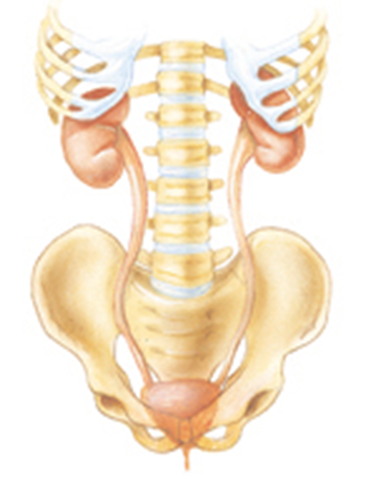
A nurse is teaching a patient who has a diagnosis of a kidney stone in the left ureter. The nurse knows the patient understands teaching when the patient identifies the left ureter on the graphic.
Question
Question
Question
Question
Question
Question
Question
Question
Question
Question
Question
Question
Question
Question
Question
Question
Question
Question
Question
Question
Question
Question
Question
Question
Question
Question
Question
Question
Question
Question
Question
Question
Question
Question
Question
Question
Question
Question
Question
Question
Question
Question
Question
Question

Unlock Deck
Sign up to unlock the cards in this deck!
Unlock Deck
Unlock Deck
1/48

Play

Full screen (f)
Deck 26: Assessing the Renal System
1
A nurse working in a postoperative unit is caring for a patient who states, "I voided a small amount of urine, but I feel as if I need to void more and am unable to do so." The patient receives a prescription for a post-voiding residual urine test. The nurse correctly prepares to perform the procedure by gathering supplies that include which of the following?
A)a urine collecting device and a straight urinary catheter
B)a urine collecting device and a voiding diary
C)an indwelling urinary catheter and an insertion kit
D)a peripheral IV insertion kit and a urine collecting device
A)a urine collecting device and a straight urinary catheter
B)a urine collecting device and a voiding diary
C)an indwelling urinary catheter and an insertion kit
D)a peripheral IV insertion kit and a urine collecting device
a urine collecting device and a straight urinary catheter
2
When preparing a patient for an intravenous pyelogram (IVP), the nurse reviews diagnostic data, noting all of the following. Which of these findings requires notification of the physician before proceeding with the test?
A)blood urea nitrogen (BUN) 55 mg/dLdl
B)serum creatinine 1.3 mg/dL
C)urine culture <10,000 organisms/mL
D)residual urine of 80 mL
A)blood urea nitrogen (BUN) 55 mg/dLdl
B)serum creatinine 1.3 mg/dL
C)urine culture <10,000 organisms/mL
D)residual urine of 80 mL
blood urea nitrogen (BUN) 55 mg/dLdl
3
A nurse is teaching a patient about a voiding cystogram procedure. Which of these statements, if made by the patient, would indicate that the patient has the correct understanding of the instruction? Select all that apply.
A)"A urinary catheter will be placed in my bladder."
B)"My bladder will be filled with fluid"
C)"I will describe when my bladder feels full."
D)"A peripheral IV will be inserted in my arm."
E)"I will be sedated for the procedure."
A)"A urinary catheter will be placed in my bladder."
B)"My bladder will be filled with fluid"
C)"I will describe when my bladder feels full."
D)"A peripheral IV will be inserted in my arm."
E)"I will be sedated for the procedure."
"A urinary catheter will be placed in my bladder."
"My bladder will be filled with fluid"
"I will describe when my bladder feels full."
"My bladder will be filled with fluid"
"I will describe when my bladder feels full."
4
A nurse is teaching a patient who has a diagnosis of a kidney stone in the left ureter. The nurse knows the patient understands teaching when the patient identifies the left ureter on the graphic.
Unlock Deck
Unlock for access to all 48 flashcards in this deck.
Unlock Deck
k this deck
5
A nurse is teaching a nursing student about the effects of a sustained drop in systemic blood pressure on the juxtaglomerular cells of the distal tubules in the kidneys. The nurse knows teaching has been effective when the student states, "This juxtaglomerular cell response to low blood pressure is utilized with the medication
A)captopril (Capoten)."
B)digoxin (Lanoxin)."
C)furosemide (Lasix)."
D)adenosine (Adenocard)."
A)captopril (Capoten)."
B)digoxin (Lanoxin)."
C)furosemide (Lasix)."
D)adenosine (Adenocard)."
Unlock Deck
Unlock for access to all 48 flashcards in this deck.
Unlock Deck
k this deck
6
The nurse working on a nephrology unit is providing telephone triage to a patient who states, "I am worried that my child may be genetically at risk for kidney problems in adulthood." The nurse should recognize that which of these comments by the patient best indicates that the patient's child may be at future risk for manifesting a genetic kidney disorder?
A)"My mother had lots of cysts on her kidneys."
B)"I have a bladder infection at least once a year."
C)"The child's father has Parkinson's disease."
D)"My father had kidney cancer."
A)"My mother had lots of cysts on her kidneys."
B)"I have a bladder infection at least once a year."
C)"The child's father has Parkinson's disease."
D)"My father had kidney cancer."
Unlock Deck
Unlock for access to all 48 flashcards in this deck.
Unlock Deck
k this deck
7
The nurse assesses a patient admitted to the medical-surgical unit who has a diagnosis of type I diabetes mellitus. The nurse notes that the patient's urine is cloudy and foul-smelling. Which of the following diagnostic tests does the nurse anticipate will be ordered based on this finding?
A)urine culture and sensitivity (C&S)
B)blood urea nitrogen (BUN)
C)creatinine clearance
D)residual urine
A)urine culture and sensitivity (C&S)
B)blood urea nitrogen (BUN)
C)creatinine clearance
D)residual urine
Unlock Deck
Unlock for access to all 48 flashcards in this deck.
Unlock Deck
k this deck
8
Because of normal changes due to aging, the nurse anticipates that a 75-year-old patient's serum creatinine level might be which of the following?
A)0.3 mg/dL
B)2.4 mg/dL
C)4.8 mg/dL
D)6.4 mg/dL
A)0.3 mg/dL
B)2.4 mg/dL
C)4.8 mg/dL
D)6.4 mg/dL
Unlock Deck
Unlock for access to all 48 flashcards in this deck.
Unlock Deck
k this deck
9
The nurse is reviewing the serum creatinine laboratory results for a group of patients. The nurse identifies which of the following patients as being at risk for having falsely elevated serum creatinine levels: A patient with a diagnosis of which of the following? Select all that apply.
A)rhinovirus taking 10,000 mg of vitamin C daily
B)Parkinson's disease and a prescription for methyldopa
C)bipolar disorder and a prescription for lithium carbonate
D)acne vulgaris and a prescription for tetracycline
E)insomnia taking over-the-counter melatonin
A)rhinovirus taking 10,000 mg of vitamin C daily
B)Parkinson's disease and a prescription for methyldopa
C)bipolar disorder and a prescription for lithium carbonate
D)acne vulgaris and a prescription for tetracycline
E)insomnia taking over-the-counter melatonin
Unlock Deck
Unlock for access to all 48 flashcards in this deck.
Unlock Deck
k this deck
10
A nurse is caring for a patient who has a diagnosis of peritonitis related to a ruptured appendix. The patient states, "I hope I don't get a kidney infection from this with my kidneys being so close to my appendix. I had a kidney infection before and I felt terrible." Which explanation would be most appropriate for the nurse to give the patient?
A)"Your kidneys are located outside the peritoneum, the sack that encloses the appendix."
B)"Good thinking.Infections in the abdomen can spread to other organs."
C)"You need to speak with your primary healthcare provider about your concern."
D)"We can check your urine daily to assure the infection is not spreading."
A)"Your kidneys are located outside the peritoneum, the sack that encloses the appendix."
B)"Good thinking.Infections in the abdomen can spread to other organs."
C)"You need to speak with your primary healthcare provider about your concern."
D)"We can check your urine daily to assure the infection is not spreading."
Unlock Deck
Unlock for access to all 48 flashcards in this deck.
Unlock Deck
k this deck
11
When assessing a patient who is scheduled to have a CT scan of the kidneys, which of these findings would prompt the nurse to notify the primary healthcare provider?
A)allergy to iodine and seafood
B).urinary output of 1,200 mL in 24 hours
C)last bowel movement one day ago
D)height 5'8" and weight 160 pounds
A)allergy to iodine and seafood
B).urinary output of 1,200 mL in 24 hours
C)last bowel movement one day ago
D)height 5'8" and weight 160 pounds
Unlock Deck
Unlock for access to all 48 flashcards in this deck.
Unlock Deck
k this deck
12
A nursing student is assessing a patient who is reporting constant dull pain over the lower abdomen. The student inspects, palpates, and auscultates the patient's abdomen. After leaving the patient's room the nurse tells the student, "Your assessment findings may not be accurate because you
A)palpated prior to auscultating."
B)inspected prior to palpating."
C)inspected prior to auscultating."
D)auscultated after inspecting."
A)palpated prior to auscultating."
B)inspected prior to palpating."
C)inspected prior to auscultating."
D)auscultated after inspecting."
Unlock Deck
Unlock for access to all 48 flashcards in this deck.
Unlock Deck
k this deck
13
A nurse is reviewing laboratory data for a patient who had a voiding cystogram that revealed an urge to void at 100 mL. Which of these nursing diagnoses should receive priority for this patient?
A)Risk for Urge Urinary Incontinence
B)Risk for Impaired Skin Integrity
C)Self-Care Deficit
D)Risk for Urinary Retention
A)Risk for Urge Urinary Incontinence
B)Risk for Impaired Skin Integrity
C)Self-Care Deficit
D)Risk for Urinary Retention
Unlock Deck
Unlock for access to all 48 flashcards in this deck.
Unlock Deck
k this deck
14
A nurse is teaching a nursing student about kidney function. The nurse states, "In healthy kidneys, almost all organic nutrients such as glucose and amino acids are reabsorbed." The nurse knows the student understands teaching when the student states, "Your comment means that
A)the nutrients move from blood to filtrate to blood, then back to the blood."
B)the nutrients move from filtrate to blood, then back to the filtrate."
C)the nutrients remain in the kidneys at all times."
D)the nutrients are large molecules and remain in the blood at all times."
A)the nutrients move from blood to filtrate to blood, then back to the blood."
B)the nutrients move from filtrate to blood, then back to the filtrate."
C)the nutrients remain in the kidneys at all times."
D)the nutrients are large molecules and remain in the blood at all times."
Unlock Deck
Unlock for access to all 48 flashcards in this deck.
Unlock Deck
k this deck
15
A nurse is assessing a 68-year-old female patient who states, "I am having episodes of urinary incontinence." The nurse should recognize this statement as indicating which of the following?
A)an abnormal finding requiring further testing
B)an indication of the presence of a urinary infection
C)a normal outcome of the aging process
D)the result of having several children
A)an abnormal finding requiring further testing
B)an indication of the presence of a urinary infection
C)a normal outcome of the aging process
D)the result of having several children
Unlock Deck
Unlock for access to all 48 flashcards in this deck.
Unlock Deck
k this deck
16
The nurse is caring for a patient who sustained a fall with a fractured femur and was unable to summon help or receive healthcare treatment for 48 hours. On arrival at the emergency department, the patient's blood urea nitrogen level is 50 mg/dL. The serum creatinine level is 1.0 mg/dL. These findings would help substantiate a nursing diagnosis of which of the following?
A)Deficient Fluid Volume
B)Anxiety related to crisis
C)Acute Pain
D)Impaired Nutrition
A)Deficient Fluid Volume
B)Anxiety related to crisis
C)Acute Pain
D)Impaired Nutrition
Unlock Deck
Unlock for access to all 48 flashcards in this deck.
Unlock Deck
k this deck
17
The nurse is caring for patient who has been diagnosed with an altered mycogenic mechanism of the renal blood vessels. The patient asks, "Why is it so important that I treat my hypertension and keep my blood pressure within normal limits?" The nurse's best response is which of the following?
A)"Your kidneys may have difficulty protecting themselves from high blood pressure."
B)"Your blood pressure medication is toxic to your kidneys in high doses."
C)"If not controlled, the condition will require an indwelling urinary catheter."
D)"High blood pressure increases your risk for kidney stones."
A)"Your kidneys may have difficulty protecting themselves from high blood pressure."
B)"Your blood pressure medication is toxic to your kidneys in high doses."
C)"If not controlled, the condition will require an indwelling urinary catheter."
D)"High blood pressure increases your risk for kidney stones."
Unlock Deck
Unlock for access to all 48 flashcards in this deck.
Unlock Deck
k this deck
18
The nurse is caring for a patient who states, "I need to micturate." The nurse's best response is which of the following?
A)"There is a restroom at the end of the hallway."
B)"Have you been taking your medication on a daily basis?"
C)"Do you have a supply of sterile catheters?"
D)"Do you have someone who can drive you home?"
A)"There is a restroom at the end of the hallway."
B)"Have you been taking your medication on a daily basis?"
C)"Do you have a supply of sterile catheters?"
D)"Do you have someone who can drive you home?"
Unlock Deck
Unlock for access to all 48 flashcards in this deck.
Unlock Deck
k this deck
19
A nurse is assessing a patient. Which of the following patient statements best alerts the nurse to the likelihood of the patient having a distended bladder?
A)"I am in pain and it is worse when I press on my abdomen."
B)"My back is killing me."
C)"It feels like someone is stabbing me in the abdomen with a knife."
D)"It hurt constantly with spasms once in a while."
A)"I am in pain and it is worse when I press on my abdomen."
B)"My back is killing me."
C)"It feels like someone is stabbing me in the abdomen with a knife."
D)"It hurt constantly with spasms once in a while."
Unlock Deck
Unlock for access to all 48 flashcards in this deck.
Unlock Deck
k this deck
20
A nurse is caring for a patient who asks the nurse why females are more likely than males to contract bladder infections. The nurse knows teaching has been effective when the patient identifies which of the following as a female risk factor for bladder infections?
A)The urinary meatus is closer to the bladder than in most males.
B)The urinary meatus is farther from the anus than most males.
C)The pH of the female urethra is more conducive to infection.
D)Females urinate more frequently than males, increasing risk.
A)The urinary meatus is closer to the bladder than in most males.
B)The urinary meatus is farther from the anus than most males.
C)The pH of the female urethra is more conducive to infection.
D)Females urinate more frequently than males, increasing risk.
Unlock Deck
Unlock for access to all 48 flashcards in this deck.
Unlock Deck
k this deck
21
A public health nurse is performing teaching for a patient who will be obtaining a sample of urine for a urinalysis at home. Which of these patient comments will cause the nurse to provide clarifying information?
A)"I will get the specimen as soon as I get home this evening."
B)"I won't touch the inside of the cup or lid."
C)"I will refrigerate the specimen until I bring it to the laboratory tomorrow."
D)"I will give the laboratory a list of the medications I am taking."
A)"I will get the specimen as soon as I get home this evening."
B)"I won't touch the inside of the cup or lid."
C)"I will refrigerate the specimen until I bring it to the laboratory tomorrow."
D)"I will give the laboratory a list of the medications I am taking."
Unlock Deck
Unlock for access to all 48 flashcards in this deck.
Unlock Deck
k this deck
22
When assessing a patient who is scheduled for a cystogram and at risk for complications directly related to the procedure, a nurse should alert the primary healthcare provider if the patient has which of these clinical manifestations? Select all that apply. Select all that apply.
A)cystitis
B)prostatitis
C)neuroleptic malignant syndrome
D)right-sided hemiplegia
E)chronic pain
A)cystitis
B)prostatitis
C)neuroleptic malignant syndrome
D)right-sided hemiplegia
E)chronic pain
Unlock Deck
Unlock for access to all 48 flashcards in this deck.
Unlock Deck
k this deck
23
A nurse is advising a nursing student who is preparing a teaching presentation for fellow students regarding urinalysis. Which of these teaching points, if made by the student, requires intervention by the nurse?
A)Males patients should retract the foreskin and cleanse the glans with three cotton sponges saturated with cleansing solution, using a circular motion.
B)Female patients should separate the labia with one hand and clean the labia with the other, using sterile cotton swabs saturated with a cleansing solution, wiping back to front.
C)After cleansing, patients should start voiding and then begin to collect the specimen.
D)Patients should start taking prescribed antibiotics only after the specimen is collected.
A)Males patients should retract the foreskin and cleanse the glans with three cotton sponges saturated with cleansing solution, using a circular motion.
B)Female patients should separate the labia with one hand and clean the labia with the other, using sterile cotton swabs saturated with a cleansing solution, wiping back to front.
C)After cleansing, patients should start voiding and then begin to collect the specimen.
D)Patients should start taking prescribed antibiotics only after the specimen is collected.
Unlock Deck
Unlock for access to all 48 flashcards in this deck.
Unlock Deck
k this deck
24
The nurse is reviewing the laboratory results for a patient who has a prescription for an estimated glomerular filtration rate (EGFR). The nurse knows that which of the following factors may be utilized to determine the estimated glomerular filtration rate? Select all that apply.
A)serum creatinine
B)patient's age
C)patient's gender
D)patient's racial origin
E)serum blood urea nitrogen
A)serum creatinine
B)patient's age
C)patient's gender
D)patient's racial origin
E)serum blood urea nitrogen
Unlock Deck
Unlock for access to all 48 flashcards in this deck.
Unlock Deck
k this deck
25
A nurse is advising a nursing student who is preparing a teaching presentation for fellow students regarding urinalysis. Which of these teaching points, if made by the student, requires intervention by the nurse?
A)Urine culture 150,000 organisms/mL.Female patients should separate the labia with one hand and clean the labia with the other, using sterile cotton swabs saturated with a cleansing solution, wiping back to front.
B)serum creatinine 1.20 mg/dL.
C)urine osmolality 400 mOsm/kg H2O.
D)blood urea nitrogen (BUN) 30 mg/dL.
A)Urine culture 150,000 organisms/mL.Female patients should separate the labia with one hand and clean the labia with the other, using sterile cotton swabs saturated with a cleansing solution, wiping back to front.
B)serum creatinine 1.20 mg/dL.
C)urine osmolality 400 mOsm/kg H2O.
D)blood urea nitrogen (BUN) 30 mg/dL.
Unlock Deck
Unlock for access to all 48 flashcards in this deck.
Unlock Deck
k this deck
26
A patient who has prescriptions for both an intravenous pyelogram and a barium enema tells the nurse, "I will schedule the intravenous pyelogram to be done before the barium enema." Which of these responses by the nurse is most appropriate?
A)"Please make your appointments, as you have indicated."
B)"Please clarify with your primary healthcare provider which should be completed first."
C)"Please reverse the order of your planned appointments."
D)"The order of the tests is irrelevant.You may change the order to meet your needs."
A)"Please make your appointments, as you have indicated."
B)"Please clarify with your primary healthcare provider which should be completed first."
C)"Please reverse the order of your planned appointments."
D)"The order of the tests is irrelevant.You may change the order to meet your needs."
Unlock Deck
Unlock for access to all 48 flashcards in this deck.
Unlock Deck
k this deck
27
The nurse is providing preoperative teaching for a patient scheduled for a cystogram. The nurse knows follow-up is needed when the patient states, "After the procedure, I need to contact my primary healthcare provider if I experience
A)bloody urine."
B)low urine output."
C)abdominal pain."
D)chills or fever."
A)bloody urine."
B)low urine output."
C)abdominal pain."
D)chills or fever."
Unlock Deck
Unlock for access to all 48 flashcards in this deck.
Unlock Deck
k this deck
28
A 12-year-old patient who is scheduled to have a renal angiogram asks why the nurse has touched the patient's feet and marked an "X" on the top of both feet. Which of these responses would be most appropriate for the nurse to make?
A)"I feel your pulses there.I can check that the blood is flowing properly to your legs and feet."
B)"Are you afraid? Why do you ask?"
C)"It is a nursing thing.What is that game you are playing?"
D)"A needle is inserted in your femoral artery so the circulation to your extremity could be compromised during this test."
A)"I feel your pulses there.I can check that the blood is flowing properly to your legs and feet."
B)"Are you afraid? Why do you ask?"
C)"It is a nursing thing.What is that game you are playing?"
D)"A needle is inserted in your femoral artery so the circulation to your extremity could be compromised during this test."
Unlock Deck
Unlock for access to all 48 flashcards in this deck.
Unlock Deck
k this deck
29
Which of these outcomes would be most appropriate for a nurse to establish with a patient who has just voided and who is scheduled to have a portable ultrasonic bladder scan immediatly? The scan will indicate which of the following?
A)less than 100 mL of urine in the bladder
B)between 100 and 150 mL of urine in the bladder
C)between 150 and 200 mL of urine in the bladder
D)more than 200 mL of urine in the bladder
A)less than 100 mL of urine in the bladder
B)between 100 and 150 mL of urine in the bladder
C)between 150 and 200 mL of urine in the bladder
D)more than 200 mL of urine in the bladder
Unlock Deck
Unlock for access to all 48 flashcards in this deck.
Unlock Deck
k this deck
30
A nurse observes a colleague including all of these measures when providing care to a patient who recently had a percutaneous renal biopsy. Which would require the nurse to intervene? Select all that apply. Select all that apply.
A)monitors vital signs every 15 minutes
B)applies pressure to site for 15 minutes after procedure
C)teaches patient to use aspirin for minor post procedure pain
D)teaches patient to increase oral fluid intake
E)teaches patient to report decreased urination
A)monitors vital signs every 15 minutes
B)applies pressure to site for 15 minutes after procedure
C)teaches patient to use aspirin for minor post procedure pain
D)teaches patient to increase oral fluid intake
E)teaches patient to report decreased urination
Unlock Deck
Unlock for access to all 48 flashcards in this deck.
Unlock Deck
k this deck
31
Which of these explanations would be most appropriate for a nurse to give to a patient who is scheduled to have a portable ultrasonic bladder scan to measure residual urine? "
A)"You will have more than one reading taken."
B)"You will have an intermittent urinary catheter inserted and removed."
C)"You will have to delay the urge to void as long as possible."
D)"You will have the scan one hour after voiding in the toilet."
A)"You will have more than one reading taken."
B)"You will have an intermittent urinary catheter inserted and removed."
C)"You will have to delay the urge to void as long as possible."
D)"You will have the scan one hour after voiding in the toilet."
Unlock Deck
Unlock for access to all 48 flashcards in this deck.
Unlock Deck
k this deck
32
The nurse is reviewing teaching with a patient who has a prescription for an intravenous pyelogram. The nurse recognizes that further teaching is needed when the patient states, "I will
A)not drink any fluids for at least 12 hours before the procedure."
B)start the bowel prep with a suppository the night before the procedure"
C)take the prescribed laxative the morning of the procedure."
D)not eat solid food for at least 8 hours before the procedure."
A)not drink any fluids for at least 12 hours before the procedure."
B)start the bowel prep with a suppository the night before the procedure"
C)take the prescribed laxative the morning of the procedure."
D)not eat solid food for at least 8 hours before the procedure."
Unlock Deck
Unlock for access to all 48 flashcards in this deck.
Unlock Deck
k this deck
33
A nurse on the postoperative unit should assign which of these staff members to perform a follow-up assessment for a patient who has returned home after having an intravenous pyelogram 24 hours ago?
A)RN floating from the immunology unit
B)LPN floating from the nephrology unit
C)LPN floating from the pulmonology unit
D)RN floating from the orthopedic unit
A)RN floating from the immunology unit
B)LPN floating from the nephrology unit
C)LPN floating from the pulmonology unit
D)RN floating from the orthopedic unit
Unlock Deck
Unlock for access to all 48 flashcards in this deck.
Unlock Deck
k this deck
34
Which of these findings, if identified in an adult patient who is scheduled for an intravenous pyelogram, should a nurse report to the primary healthcare provider immediately?
A)serum osmolality of 1500 mOsm/kg/H2O
B)serum creatinine of 1.30 mg/dL
C)blood urea nitrogen of 20 mg/dL
D)hourly urine output of 45 mL/hour
A)serum osmolality of 1500 mOsm/kg/H2O
B)serum creatinine of 1.30 mg/dL
C)blood urea nitrogen of 20 mg/dL
D)hourly urine output of 45 mL/hour
Unlock Deck
Unlock for access to all 48 flashcards in this deck.
Unlock Deck
k this deck
35
A nurse is performing discharge teaching with a patient who had a cystogram. The nurse should instruct the patient to use which of the following techniques to promote comfort? Select all that apply. Select all that apply.
A)Take a sitz bath.
B)Increase oral fluid intake.
C)Take acetaminophen for minor pain.
D)Apply heat to the lower back.
E)Drink one ounce of brandy or rum with warm water.
A)Take a sitz bath.
B)Increase oral fluid intake.
C)Take acetaminophen for minor pain.
D)Apply heat to the lower back.
E)Drink one ounce of brandy or rum with warm water.
Unlock Deck
Unlock for access to all 48 flashcards in this deck.
Unlock Deck
k this deck
36
A patient with an allergy to iodine is scheduled to have the following diagnostic tests. Which requires immediate nursing intervention?
A)renal angiogram
B)renal scan
C)voiding cystogram
D)portable ultrasonic bladder scan
A)renal angiogram
B)renal scan
C)voiding cystogram
D)portable ultrasonic bladder scan
Unlock Deck
Unlock for access to all 48 flashcards in this deck.
Unlock Deck
k this deck
37
A nursing student asks all of the following questions when assessing a patient who is scheduled to have an MRI of the kidneys. Which of these questions would require the nurse to intervene?
A)"When did you last have anything to eat or drink?"
B)"Have you ever been treated for chest pain?"
C)"Do you have any tattoos?"
D)"Is there any possibility you could be pregnant?"
A)"When did you last have anything to eat or drink?"
B)"Have you ever been treated for chest pain?"
C)"Do you have any tattoos?"
D)"Is there any possibility you could be pregnant?"
Unlock Deck
Unlock for access to all 48 flashcards in this deck.
Unlock Deck
k this deck
38
A patient who is scheduled to have a renal ultrasound tells a nurse, "I am afraid I will not be able to stand the pain of this test." Which of these outcomes would be most appropriate for the nurse to establish with this patient? The patient will
A)explain the typical experience of a patient having a renal ultrasound.
B)discuss feelings associated with painful experiences.
C)explain pain medications available during this procedure.
D)discuss the typical experience of a patient using conscious sedation.
A)explain the typical experience of a patient having a renal ultrasound.
B)discuss feelings associated with painful experiences.
C)explain pain medications available during this procedure.
D)discuss the typical experience of a patient using conscious sedation.
Unlock Deck
Unlock for access to all 48 flashcards in this deck.
Unlock Deck
k this deck
39
Which of these laboratory results would be most important for a nurse to monitor for a patient who has lower abdominal pain and urinary urgency?
A)serum creatinine 1.20 mg/dL
B)urine Osmolality 400 mOsm/kg H2O
C)BUN 30 mg/dL
D)urine culture 150,000 organisms/mL
A)serum creatinine 1.20 mg/dL
B)urine Osmolality 400 mOsm/kg H2O
C)BUN 30 mg/dL
D)urine culture 150,000 organisms/mL
Unlock Deck
Unlock for access to all 48 flashcards in this deck.
Unlock Deck
k this deck
40
In formulating the teaching plan for a patient who is taking metformin (Glucophage), the nurse should include which of these priority instructions? Notify your healthcare provider if
A)you need a diagnostic test that uses iodinated contrast.
B)your urine becomes orange or red-tinted.
C)your urine becomes more concentrated.
D)you need an intermittent or indwelling urinary catheterization.
A)you need a diagnostic test that uses iodinated contrast.
B)your urine becomes orange or red-tinted.
C)your urine becomes more concentrated.
D)you need an intermittent or indwelling urinary catheterization.
Unlock Deck
Unlock for access to all 48 flashcards in this deck.
Unlock Deck
k this deck
41
A nurse is reviewing the diagnostic results of renal testing for an 80-year-old patient and notes that the patient's findings include a decreased size of the renal cortex, atherosclerosis of the renal arteries, and hypoosmolality of urine. Which of these explanations would be most appropriate for the nurse to give the patient?
A)These are typical changes associated with aging.
B)These are signs of chronic renal failure.
C)These are signs of acute renal failure.
D)These are signs of a genetic renal disorder.
A)These are typical changes associated with aging.
B)These are signs of chronic renal failure.
C)These are signs of acute renal failure.
D)These are signs of a genetic renal disorder.
Unlock Deck
Unlock for access to all 48 flashcards in this deck.
Unlock Deck
k this deck
42
All of the following diagnostic tests are ordered for a patient with renal disease. The nurse understands that which one of the following will be used in the evaluation of the patient's glomerular filtration rate (GFR)?
A)creatinine clearance
B)blood urea nitrogen (BUN)
C)intravenous pyelogram (IVP)
D)renal ultrasound
A)creatinine clearance
B)blood urea nitrogen (BUN)
C)intravenous pyelogram (IVP)
D)renal ultrasound
Unlock Deck
Unlock for access to all 48 flashcards in this deck.
Unlock Deck
k this deck
43
Which of these assessments of an 86-year-old patient requires immediate nursing intervention?
A)reports of urinary incontinence
B)reports of urinary frequency
C)reports of urinary urgency
D)reports of nocturia
A)reports of urinary incontinence
B)reports of urinary frequency
C)reports of urinary urgency
D)reports of nocturia
Unlock Deck
Unlock for access to all 48 flashcards in this deck.
Unlock Deck
k this deck
44
A nurse is developing a postoperative plan of care for a patient who is scheduled to have a cystogram. Which of these outcomes should receive priority in the plan? The patient will be free from signs and symptoms of which of the following?
A)hemorrhage
B)bladder perforation
C)urinary retention
D)postprocedure pain
A)hemorrhage
B)bladder perforation
C)urinary retention
D)postprocedure pain
Unlock Deck
Unlock for access to all 48 flashcards in this deck.
Unlock Deck
k this deck
45
A patient states, "I have a family history of both type 1 and type 2 diabetes mellitus. Before I decide to have children, I am going to speak with a healthcare professional who specializes in working with people with health problems that are passed from parent to child." Which of these statements would be the most appropriate for the nurse to record in the patient's medical record? "The patient has a future plan to discuss concerns about familial tendency for diabetes with
A)a genetic counselor."
B)a home health nurse."
C)an obstetrician."
D)a physical therapist."
A)a genetic counselor."
B)a home health nurse."
C)an obstetrician."
D)a physical therapist."
Unlock Deck
Unlock for access to all 48 flashcards in this deck.
Unlock Deck
k this deck
46
According to evidence-based practice for patients undergoing stem cell transplants, which NANDA nursing diagnoses would be appropriate? Select all that apply.
A)Ineffective Coping
B)Fatigue
C)Interrupted Family Processes
D)Risk for Infection
E)Excess Fluid Imbalance
A)Ineffective Coping
B)Fatigue
C)Interrupted Family Processes
D)Risk for Infection
E)Excess Fluid Imbalance
Unlock Deck
Unlock for access to all 48 flashcards in this deck.
Unlock Deck
k this deck
47
The nurse is caring for a patient who states, "My urine has a red-tinged appearance." Which of these questions would be the most important for the nurse to ask this patient?
A)"What medications do you take?"
B)"Are you allergic to any food or drugs?"
C)"Do you wake up at night to void?"
D)"How many times a day do you usually void?"
A)"What medications do you take?"
B)"Are you allergic to any food or drugs?"
C)"Do you wake up at night to void?"
D)"How many times a day do you usually void?"
Unlock Deck
Unlock for access to all 48 flashcards in this deck.
Unlock Deck
k this deck
48
A patient has been given instruction about adult polycystic kidney disease (APKD). Which of these statements, if made by the patient, would indicate that the patient needs further instruction? Select all that apply.
A)"This disorder can be cured if I take my medication carefully."
B)"APKD is inherited from parent to child."
C)"The problem that causes this disease is in the cell chromosomes."
D)"Many fluid-filled sacks are found in the kidneys."
E)"This disorder can cause my kidneys to work poorly."
A)"This disorder can be cured if I take my medication carefully."
B)"APKD is inherited from parent to child."
C)"The problem that causes this disease is in the cell chromosomes."
D)"Many fluid-filled sacks are found in the kidneys."
E)"This disorder can cause my kidneys to work poorly."
Unlock Deck
Unlock for access to all 48 flashcards in this deck.
Unlock Deck
k this deck
Unlock Deck
Unlock for access to all 48 flashcards in this deck.






