







 Chat with AI

Deck 22: Nursing Care of Patients with Nutritional Disorders
Full screen (f)

Question

Question
Question
Question
Question
Question
Question
Question
Question
Question
Question
Question
Question
Question
Question
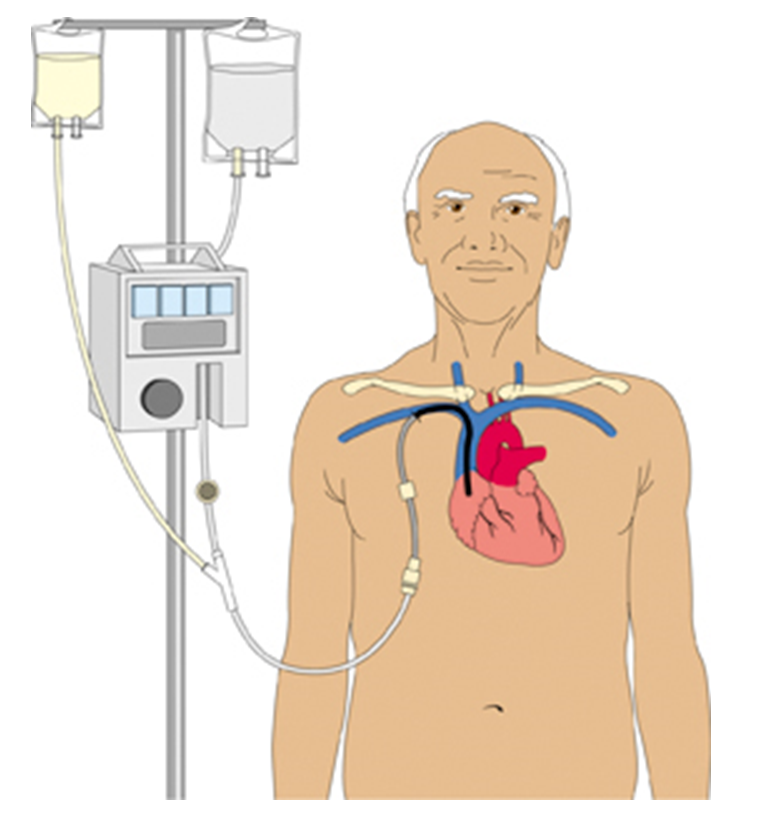
In the following diagram, please identify where the end of the parenteral catheter should be placed to correctly administer hyperalimentation through a central subclavian line.
Question
Question
Question
Question
Question
Question
Question
Question
Question
Question
Question
Question
Question
Question
Question
Question
Question
Question
Question
Question
Question
Question
Question
Question
Question
Question
Question
Question
Question
Question

Unlock Deck
Sign up to unlock the cards in this deck!
Unlock Deck
Unlock Deck
1/45

Play

Full screen (f)
Deck 22: Nursing Care of Patients with Nutritional Disorders
1
You are caring for a 57-year-old female patient who feels she is slightly overweight and wants assistance to develop a plan to reduce her weight. In order to assist her, you must first calculate her body mass index (BMI). The patient weighs 130 pounds (59.09 kg) and is 5 feet 2 inches tall (1.57 meters). Round to nearest whole number.________
24
Rationale : Formula: [weight in kg] divided by [height in meters] × [height in meters].
59. 09 divided by 1.57 ×1.57 = 23.972574 [1 inch equals 0.0254 meters]
Rationale : Formula: [weight in kg] divided by [height in meters] × [height in meters].
59. 09 divided by 1.57 ×1.57 = 23.972574 [1 inch equals 0.0254 meters]
2
The nurse, planning an educational program for young African American women regarding nutrition, should include which of the following concepts related to body image?
A)The culture has traditionally valued curvaceous women.
B)A thin physique for women is embraced by this culture.
C)Activity is frequently integrated into most lifestyles.
D)There are few differences between the African American-held images of attractiveness and those held by Caucasians.
A)The culture has traditionally valued curvaceous women.
B)A thin physique for women is embraced by this culture.
C)Activity is frequently integrated into most lifestyles.
D)There are few differences between the African American-held images of attractiveness and those held by Caucasians.
The culture has traditionally valued curvaceous women.
3
With which of the following should the nurse respond to a patient with a body mass index of 33 kg/m2 who states that she feels fine and questions the need to lose weight?
A)"Making changes now will help you to maintain your health."
B)"That is a wonderful attitude to have."
C)"Let me know if you change your mind."
D)"You weigh more than is recommended."
A)"Making changes now will help you to maintain your health."
B)"That is a wonderful attitude to have."
C)"Let me know if you change your mind."
D)"You weigh more than is recommended."
"Making changes now will help you to maintain your health."
4
A patient, planning to begin a weight loss diet, asks the nurse for suggestions as to how to balance her eating. What information should the nurse provide to the patient?
A)The diet should reduce calories to 1,000-1,500 per day, with less than 15% of the total calories coming from fat.
B)The diet should be between 750 and 1,000 calories per day, with less than 15% of the total calories coming from fat.
C)The diet should simply cut 500 calories per day from the normal intake.
D)The best diet will be between 1,250 and 1,500 calories per day, with 15% of the calories being sources of protein.
A)The diet should reduce calories to 1,000-1,500 per day, with less than 15% of the total calories coming from fat.
B)The diet should be between 750 and 1,000 calories per day, with less than 15% of the total calories coming from fat.
C)The diet should simply cut 500 calories per day from the normal intake.
D)The best diet will be between 1,250 and 1,500 calories per day, with 15% of the calories being sources of protein.
Unlock Deck
Unlock for access to all 45 flashcards in this deck.
Unlock Deck
k this deck
5
A patient asks if she is obese since she is 5 feet 5 inches tall and weighs 144 lbs. With which of the following statements should the nurse respond to this patient?
A)"You are normal for your height and weight."
B)"Yes, you are slightly obese for your height and weight."
C)"You are slightly overweight."
D)"You are moderately obese."
A)"You are normal for your height and weight."
B)"Yes, you are slightly obese for your height and weight."
C)"You are slightly overweight."
D)"You are moderately obese."
Unlock Deck
Unlock for access to all 45 flashcards in this deck.
Unlock Deck
k this deck
6
When developing the plan of care for a patient diagnosed with anorexia nervosa, which of the following nursing diagnoses has the highest priority?
A)Imbalanced Nutrition: Less than Body Requirements
B)Chronic Low Self-Esteem
C)Powerlessness
D)Disturbed Body Image
A)Imbalanced Nutrition: Less than Body Requirements
B)Chronic Low Self-Esteem
C)Powerlessness
D)Disturbed Body Image
Unlock Deck
Unlock for access to all 45 flashcards in this deck.
Unlock Deck
k this deck
7
Anorexia nervosa is characterized by which of the following? Select all that apply.
A)distorted body image
B)loss of control over food intake
C)purging
D)binge eating
E)normal or above average body weight
A)distorted body image
B)loss of control over food intake
C)purging
D)binge eating
E)normal or above average body weight
Unlock Deck
Unlock for access to all 45 flashcards in this deck.
Unlock Deck
k this deck
8
Obesity is a significant risk factor in the development of which of the following disorders? Select all that apply.
A)cardiovascular diseases
B)obstructive sleep apnea
C)diabetes mellitus type 2
D)hypotension
E)renal insufficiency
A)cardiovascular diseases
B)obstructive sleep apnea
C)diabetes mellitus type 2
D)hypotension
E)renal insufficiency
Unlock Deck
Unlock for access to all 45 flashcards in this deck.
Unlock Deck
k this deck
9
In patients suspected of having protein calorie malnutrition (PCM) with a body mass index of less than 18-20, the nurse should ensure that which of the following laboratory tests are ordered? Select all that apply.
A)serum albumin
B)lymphocyte count
C)serum electrolytes
D)complete blood count (CBC)
E)Urinalysis
A)serum albumin
B)lymphocyte count
C)serum electrolytes
D)complete blood count (CBC)
E)Urinalysis
Unlock Deck
Unlock for access to all 45 flashcards in this deck.
Unlock Deck
k this deck
10
After providing education to a patient regarding the use of orlistat (Xenical), which of the following statements by the patient indicates the need for additional teaching?
A)"I should take this medication 30 minutes before eating."
B)"This medication will reduce the amount of fat my body absorbs."
C)"I will need to take supplements of vitamins A, D, E, and K daily."
D)"A low-calorie diet will need to be followed."
A)"I should take this medication 30 minutes before eating."
B)"This medication will reduce the amount of fat my body absorbs."
C)"I will need to take supplements of vitamins A, D, E, and K daily."
D)"A low-calorie diet will need to be followed."
Unlock Deck
Unlock for access to all 45 flashcards in this deck.
Unlock Deck
k this deck
11
The mother of a teen is concerned that her daughter's nutritional status is compromised since the daughter has an increased interest in losing weight, weighs herself several times each day, and at times ingests large amounts of food. The daughter has not lost or gained much weight but wonders if her daughter has anorexia nervosa. With which of the following statements should the nurse respond to this mother?
A)These are behaviors consistent with bulimia nervosa.
B)These are behaviors consistent with early-onset anorexia nervosa.
C)These are behaviors consistent with binge-eating disorder.
D)These are behaviors consistent with a metabolic disorder.
A)These are behaviors consistent with bulimia nervosa.
B)These are behaviors consistent with early-onset anorexia nervosa.
C)These are behaviors consistent with binge-eating disorder.
D)These are behaviors consistent with a metabolic disorder.
Unlock Deck
Unlock for access to all 45 flashcards in this deck.
Unlock Deck
k this deck
12
After following a structured diet, a patient diagnosed with diabetes mellitus is surprised to learn that his blood glucose levels have decreased and oral medications are no longer required. Which of the following should the nurse explain to the patient regarding the impact of diet on diabetes management?
A)Less body mass means less insulin is needed to maintain constant glucose levels.
B)Body mass reduces cellular resistance to insulin.
C)Reduced dietary intake of carbohydrates is responsible for the weight loss.
D)Reduced dietary intake results in a reduced need for insulin.
A)Less body mass means less insulin is needed to maintain constant glucose levels.
B)Body mass reduces cellular resistance to insulin.
C)Reduced dietary intake of carbohydrates is responsible for the weight loss.
D)Reduced dietary intake results in a reduced need for insulin.
Unlock Deck
Unlock for access to all 45 flashcards in this deck.
Unlock Deck
k this deck
13
While completing the health history, the nurse learns that a patient often eats excessive amounts of food when alone, not hungry, and has intense feelings of self-disgust afterwards. The patient denies purging after these episodes. The nurse realizes that which of the following is a potential complication of this behavior?
A)type 2 diabetes mellitus
B)type 1 diabetes mellitus
C)dehydration
D)electrolyte imbalances
A)type 2 diabetes mellitus
B)type 1 diabetes mellitus
C)dehydration
D)electrolyte imbalances
Unlock Deck
Unlock for access to all 45 flashcards in this deck.
Unlock Deck
k this deck
14
Which of the following suggestions might assist a patient adhere to strategies to aid in weight reduction?
A)Set aside small nonfood rewards when you meet a goal.
B)Eat alone to reduce outside distractions.
C)Drink water or a diet beverage after eating to promote feelings of fullness.
D)Allow at least 45 minutes to 1 hour to promote full enjoyment of a meal.
A)Set aside small nonfood rewards when you meet a goal.
B)Eat alone to reduce outside distractions.
C)Drink water or a diet beverage after eating to promote feelings of fullness.
D)Allow at least 45 minutes to 1 hour to promote full enjoyment of a meal.
Unlock Deck
Unlock for access to all 45 flashcards in this deck.
Unlock Deck
k this deck
15
In the following diagram, please identify where the end of the parenteral catheter should be placed to correctly administer hyperalimentation through a central subclavian line.
Unlock Deck
Unlock for access to all 45 flashcards in this deck.
Unlock Deck
k this deck
16
Enteral nutrition or tube feedings may be used to meet calorie and protein needs in patients who are unable to consume adequate solid food by mouth. When getting ready to do a tube feeding what actions should the nurse take? Rank the actions in order. Click and drag the options below to move them up or down.
A)Check the doctor's order for correct solution and volume to be administered.
B)Attach the tubing for the feeding pump.
C)Mix the prescribed tube feeding with appropriate amounts of water.
D)Check tube placement by aspirating contents and checking the pH.
E)Set alarms on the feeding pump, start pump.
F)Elevate the head of bed 30 degrees during the feeding.
A)Check the doctor's order for correct solution and volume to be administered.
B)Attach the tubing for the feeding pump.
C)Mix the prescribed tube feeding with appropriate amounts of water.
D)Check tube placement by aspirating contents and checking the pH.
E)Set alarms on the feeding pump, start pump.
F)Elevate the head of bed 30 degrees during the feeding.
Unlock Deck
Unlock for access to all 45 flashcards in this deck.
Unlock Deck
k this deck
17
When planning care for a teen diagnosed with anorexia nervosa, which of the following should the nurse include?
A)Provide a variety of cold or room-temperature foods.
B)Serve the patient three balanced meals per day.
C)Discuss weight-gain needs with the patient.
D)Observe the patient's activities for 15 minutes after eating.
A)Provide a variety of cold or room-temperature foods.
B)Serve the patient three balanced meals per day.
C)Discuss weight-gain needs with the patient.
D)Observe the patient's activities for 15 minutes after eating.
Unlock Deck
Unlock for access to all 45 flashcards in this deck.
Unlock Deck
k this deck
18
A patient scheduled for bariatric surgery is discussing postoperative care with the nurse. Which of the following statements indicates the patient understands the plan of care?
A)"I will initially take in only liquids, but will avoid sugary beverages and fruit juices."
B)"I will need to take daily vitamin and mineral supplements."
C)"The foods I am allowed to eat gradually will be increased."
D)"Maintaining protein intake will be a priority in my recovery diet."
A)"I will initially take in only liquids, but will avoid sugary beverages and fruit juices."
B)"I will need to take daily vitamin and mineral supplements."
C)"The foods I am allowed to eat gradually will be increased."
D)"Maintaining protein intake will be a priority in my recovery diet."
Unlock Deck
Unlock for access to all 45 flashcards in this deck.
Unlock Deck
k this deck
19
An obese patient is interested in using the appetite suppressant phentermine to assist with a weight loss program. Which of the following factors in the patient's health history might restrict the patient's ability to take the medication?
A)frequent use of alcohol
B)history of insomnia
C)a family history of thrombophlebitis
D)a body mass index of 31 kg/m2
A)frequent use of alcohol
B)history of insomnia
C)a family history of thrombophlebitis
D)a body mass index of 31 kg/m2
Unlock Deck
Unlock for access to all 45 flashcards in this deck.
Unlock Deck
k this deck
20
A patient, desiring to begin a very-low-calorie diet (VLCD) for rapid weight reduction, is concerned about the safety of the diet. What information should the nurse provide to the patient?
A)VLCDs are relatively safe diet plans.
B)VLCDs result in significant losses of muscle mass in response to the protein restriction.
C)VLCDs are considered safe and acceptable alternatives for patients who have a lower body mass index and need to lose a small amount of weight rapidly.
D)VLCDs are safest for middle-aged and senior patients.
A)VLCDs are relatively safe diet plans.
B)VLCDs result in significant losses of muscle mass in response to the protein restriction.
C)VLCDs are considered safe and acceptable alternatives for patients who have a lower body mass index and need to lose a small amount of weight rapidly.
D)VLCDs are safest for middle-aged and senior patients.
Unlock Deck
Unlock for access to all 45 flashcards in this deck.
Unlock Deck
k this deck
21
The nurse is reviewing the lipid panel of a patient with a body mass index (BMI) of 31. Which of the following would be expected in this patient?
A)low high-density lipoprotein (HDL)
B)elevated HDL
C)normal thyroid hormone (TH) level
D)low-density lipoprotein (LDL)
A)low high-density lipoprotein (HDL)
B)elevated HDL
C)normal thyroid hormone (TH) level
D)low-density lipoprotein (LDL)
Unlock Deck
Unlock for access to all 45 flashcards in this deck.
Unlock Deck
k this deck
22
An elderly patient who uses a walker tells the nurse, "I'm so alone now that my family is gone." The nurse realizes that this patient might be at risk for developing which of the following?
A)malnutrition
B)obesity
C)psychosis
D)immobility
A)malnutrition
B)obesity
C)psychosis
D)immobility
Unlock Deck
Unlock for access to all 45 flashcards in this deck.
Unlock Deck
k this deck
23
A 45-year-old patient says, "I'm gaining weight but I'm not eating any differently than I did years ago." The nurse realizes that this patient is which of the following?
A)demonstrating a change in metabolism with aging
B)probably not being truthful
C)justifying the weight gain
D)looking for the nurse to approve the weight gain
A)demonstrating a change in metabolism with aging
B)probably not being truthful
C)justifying the weight gain
D)looking for the nurse to approve the weight gain
Unlock Deck
Unlock for access to all 45 flashcards in this deck.
Unlock Deck
k this deck
24
A patient has a waist-to-hip ratio of 0.
A)This patient is not at risk.
B)hyperinsulinemia
C)heart disease
D)hyperlipidemia
E)The nurse realizes that this patient is at risk for developing which of the following?
A)This patient is not at risk.
B)hyperinsulinemia
C)heart disease
D)hyperlipidemia
E)The nurse realizes that this patient is at risk for developing which of the following?
Unlock Deck
Unlock for access to all 45 flashcards in this deck.
Unlock Deck
k this deck
25
The nurse hears a parent say to a child, "If you behave, we'll stop and get you an ice cream cone when we're done here." The nurse realizes that this parent is which of the following?
A)using food as a reward
B)frustrated with the child's behavior
C)anxious
D)hungry
A)using food as a reward
B)frustrated with the child's behavior
C)anxious
D)hungry
Unlock Deck
Unlock for access to all 45 flashcards in this deck.
Unlock Deck
k this deck
26
A patient is being assessed for malnutrition. The nurse realizes laboratory test findings that indicate malnutrition include which of the following? Select all that apply.
A)Low serum potassium
B)low white blood cell count
C)elevated serum albumin
D)elevated red blood cell count
E)low serum sodium
A)Low serum potassium
B)low white blood cell count
C)elevated serum albumin
D)elevated red blood cell count
E)low serum sodium
Unlock Deck
Unlock for access to all 45 flashcards in this deck.
Unlock Deck
k this deck
27
Many patients are choosing to take weight loss drugs in order to lose the excess weight. The two main classifications of weight loss drugs are which of the following? Select all that apply.
A)lipase inhibitor
B)appetite suppressants
C)anticholinergics
D)adrenergics
A)lipase inhibitor
B)appetite suppressants
C)anticholinergics
D)adrenergics
Unlock Deck
Unlock for access to all 45 flashcards in this deck.
Unlock Deck
k this deck
28
A patient regained 15 pounds that had been lost the previous year. Which of the following could the nurse suggest to this patient?
A)Return to the diet, exercise, and behavior change techniques that worked before.
B)Switch to a new diet in which the weight could be lost again in two weeks.
C)Maybe the patient's body wants to have the extra 15 lbs.
D)The increased weight does not make the patient obese.
A)Return to the diet, exercise, and behavior change techniques that worked before.
B)Switch to a new diet in which the weight could be lost again in two weeks.
C)Maybe the patient's body wants to have the extra 15 lbs.
D)The increased weight does not make the patient obese.
Unlock Deck
Unlock for access to all 45 flashcards in this deck.
Unlock Deck
k this deck
29
Proper exercise is an important aspect in the care of obese patients seeking to lose weight. Patients should be taught to use their target heart rate or perceived exertion to measure the vigor of activities. Calculate the target heart rate for a 57-year-old female patient to achieve weight loss. ___________
Unlock Deck
Unlock for access to all 45 flashcards in this deck.
Unlock Deck
k this deck
30
A patient has a body mass index (BMI) of 27. Which of the following would be an appropriate documentation by the nurse?
A)normal weight
B)overweight
C)obese
D)metabolic syndrome
A)normal weight
B)overweight
C)obese
D)metabolic syndrome
Unlock Deck
Unlock for access to all 45 flashcards in this deck.
Unlock Deck
k this deck
31
An overweight patient tells the nurse, "Every Monday at work we have bagels. I can't stop myself! Sometimes I eat two!" The nurse realizes that this patient is describing which of the following?
A)appetite stimulation by external cues
B)extreme hunger
C)carbohydrate addiction
D)metabolic syndrome
A)appetite stimulation by external cues
B)extreme hunger
C)carbohydrate addiction
D)metabolic syndrome
Unlock Deck
Unlock for access to all 45 flashcards in this deck.
Unlock Deck
k this deck
32
When preparing to give total parenteral nutrition intravenously to a patient suffering from malnutrition, the nurse must ensure that the solution is correctly mixed. Which of the fat soluble vitamins cannot be given intravenously in this solution?
A)vitamin K
B)vitamin A
C)vitamin D
D)vitamin E
A)vitamin K
B)vitamin A
C)vitamin D
D)vitamin E
Unlock Deck
Unlock for access to all 45 flashcards in this deck.
Unlock Deck
k this deck
33
A patient with a BMI of 29 says, "I cut out all my sweet snacks last week and I still can't lose any weight." Which of the following would be appropriate for the nurse to do or say in response?
A)"Let's calculate how many calories you are not eating each day."
B)Refer the patient to a dietician.
C)Document that the patient states he is no longer eating sweet snacks.
D)"You didn't gain the weight overnight."
A)"Let's calculate how many calories you are not eating each day."
B)Refer the patient to a dietician.
C)Document that the patient states he is no longer eating sweet snacks.
D)"You didn't gain the weight overnight."
Unlock Deck
Unlock for access to all 45 flashcards in this deck.
Unlock Deck
k this deck
34
In patients whose diets are deficient in vitamin C you would expect which manifestations to occur? Select all that apply.
A)delayed wound healing
B)swollen bleeding gums
C)depression
D)night blindness
E)muscle wasting
A)delayed wound healing
B)swollen bleeding gums
C)depression
D)night blindness
E)muscle wasting
Unlock Deck
Unlock for access to all 45 flashcards in this deck.
Unlock Deck
k this deck
35
You are caring for a 28-year-old female patient who weighs 200 pounds (90.91 kg) and is 5 feet 6 inches tall (1.68 meters). Calculate her body mass index (BMI). Round to nearest whole number. ________
Unlock Deck
Unlock for access to all 45 flashcards in this deck.
Unlock Deck
k this deck
36
During a physical assessment, the nurse suspects that the patient might be experiencing metabolic syndrome. Which of the following assessment findings would provide evidence for this nurse's assumption?
A)blood pressure 150/96
B)difficulty ambulating
C)low waist-to-hip ratio
D)heart rate 72 and regular
A)blood pressure 150/96
B)difficulty ambulating
C)low waist-to-hip ratio
D)heart rate 72 and regular
Unlock Deck
Unlock for access to all 45 flashcards in this deck.
Unlock Deck
k this deck
37
A malnourished patient is demonstrating ongoing diarrhea that occurs after every meal. The nurse realizes that this patient could be experiencing which of the following?
A)malabsorption
B)a food allergy
C)carbohydrate intolerance
D)pending cardiovascular overload
A)malabsorption
B)a food allergy
C)carbohydrate intolerance
D)pending cardiovascular overload
Unlock Deck
Unlock for access to all 45 flashcards in this deck.
Unlock Deck
k this deck
38
An overweight patient states, "I'm trying to stick to my diet and exercise plan but my spouse tells me that I'm fine the way I am." An appropriate nursing diagnosis for this patient would be which of the following?
A)Ineffective Therapeutic Regimen Management
B)Imbalanced Nutrition: More than Body Requirements
C)Activity Intolerance
D)Chronic Low Self-Esteem
A)Ineffective Therapeutic Regimen Management
B)Imbalanced Nutrition: More than Body Requirements
C)Activity Intolerance
D)Chronic Low Self-Esteem
Unlock Deck
Unlock for access to all 45 flashcards in this deck.
Unlock Deck
k this deck
39
A patient who lives alone has a BMI of 34. Which of the following strategies could the nurse suggest to help this patient reduce overeating?
A)Prepare a meal and eat it in the dining room.
B)Eat out more often to control portion size.
C)Read a book while eating to distract himself.
D)Cook once a week and store the leftovers to reduce the need to cook again.
A)Prepare a meal and eat it in the dining room.
B)Eat out more often to control portion size.
C)Read a book while eating to distract himself.
D)Cook once a week and store the leftovers to reduce the need to cook again.
Unlock Deck
Unlock for access to all 45 flashcards in this deck.
Unlock Deck
k this deck
40
The goal of bulimia treatment is to reduce or eliminate binge eating and purging behavior. This is accomplished through a combination of which treatments? Select all that apply.
A)nutritional counseling
B)cognitive-behavioral therapy
C)antidepressants
D)vitamin therapy
E)hospitalization
A)nutritional counseling
B)cognitive-behavioral therapy
C)antidepressants
D)vitamin therapy
E)hospitalization
Unlock Deck
Unlock for access to all 45 flashcards in this deck.
Unlock Deck
k this deck
41
A 19-year-old patient is being assessed for bulimia. The parent asks what diagnostic tests can be done to determine the presence of bulimia. What is the nurse's best response?
A)"There is no specific test that can determine bulimia."
B)"You should ask the doctor about this."
C)"Your child will need a psychiatric evaluation to determine the diagnosis."
D)"Bulimia is rarely diagnosed correctly."
A)"There is no specific test that can determine bulimia."
B)"You should ask the doctor about this."
C)"Your child will need a psychiatric evaluation to determine the diagnosis."
D)"Bulimia is rarely diagnosed correctly."
Unlock Deck
Unlock for access to all 45 flashcards in this deck.
Unlock Deck
k this deck
42
A patient is prescribed a hypertonic solution with vitamins and minerals to be administered through a peripheral intravenous access line. The nurse realizes that this patient is prescribed which of the following?
A)partial parenteral nutrition
B)total parenteral nutrition
C)enteral nutrition
D)short-term total parenteral nutrition
A)partial parenteral nutrition
B)total parenteral nutrition
C)enteral nutrition
D)short-term total parenteral nutrition
Unlock Deck
Unlock for access to all 45 flashcards in this deck.
Unlock Deck
k this deck
43
The parent of a12-year-old states, "My child saw an older adolescent who was extremely overweight. Ever since that time my child won't eat." The nurse realizes that the child might be experiencing which of the following?
A)an irrational fear of gaining weight
B)defiance
C)normal preadolescent behavior
D)a power struggle with the parent
A)an irrational fear of gaining weight
B)defiance
C)normal preadolescent behavior
D)a power struggle with the parent
Unlock Deck
Unlock for access to all 45 flashcards in this deck.
Unlock Deck
k this deck
44
A patient is admitted for treatment of malnutrition. Which of the following assessment findings would suggest to the nurse the patient is experiencing a vitamin C deficiency?
A)bleeding gums
B)smooth tongue
C)muscle cramps
D)ataxia
A)bleeding gums
B)smooth tongue
C)muscle cramps
D)ataxia
Unlock Deck
Unlock for access to all 45 flashcards in this deck.
Unlock Deck
k this deck
45
A 33-year-old patient states, "I eat anything I want and just have a laxative for dessert!" The nurse realizes that this patient is exhibiting which of the following?
A)bulimia
B)anorexia
C)an effective way to ensure a normal weight
D)distorted body image
A)bulimia
B)anorexia
C)an effective way to ensure a normal weight
D)distorted body image
Unlock Deck
Unlock for access to all 45 flashcards in this deck.
Unlock Deck
k this deck
Unlock Deck
Unlock for access to all 45 flashcards in this deck.






