







 Chat with AI

Deck 10: Nursing Care of Patients with Altered Fluid, Electrolyte, & Acid-Base Balance
Full screen (f)

Question

Question
Question
Question
Question
Question
Question
Question
Question
Question
Question
Question
Question
Question
Question
Question
Question
Question
Question
Question
Question
Question
Question
Question
Question
Question
Question
Question
Question
Question
Question
Question
Question
Question
Question
Question
Question
Question
Question
Question
Question
Question
Question
Question
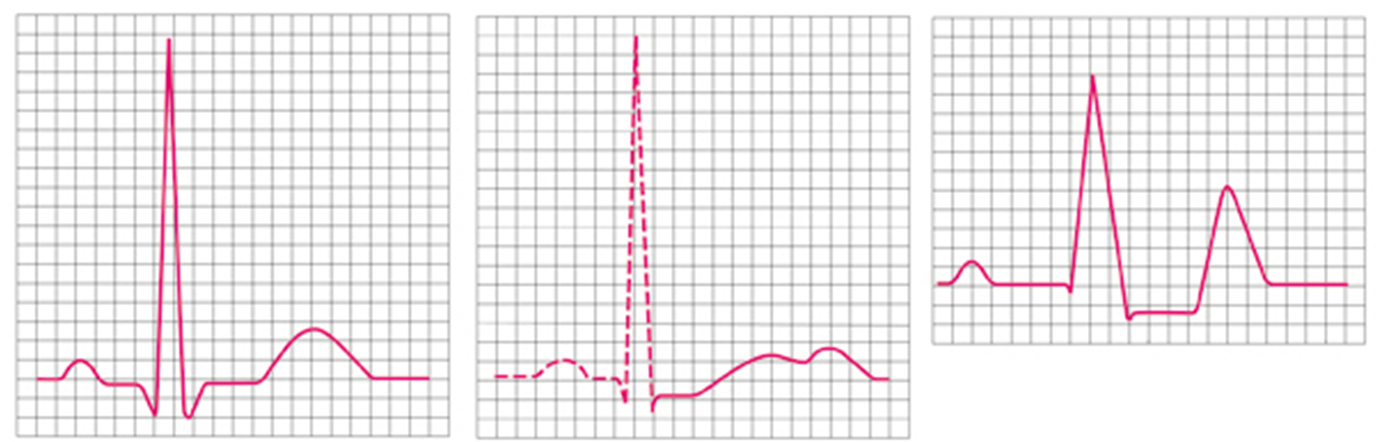
Place an "X" on the ECG tracing that is most likely to represent the electrical activity in the heart of a patient who has a serum potassium of 5.9.
Question
Question
Question
Question

Unlock Deck
Sign up to unlock the cards in this deck!
Unlock Deck
Unlock Deck
1/48

Play

Full screen (f)
Deck 10: Nursing Care of Patients with Altered Fluid, Electrolyte, & Acid-Base Balance
1
A patient prescribed spironolactone is demonstrating ECG changes and complaining of muscle weakness. The nurse realizes this patient is exhibiting signs of which of the following?
A)hyperkalemia
B)hypokalemia
C)hypercalcemia
D)hypocalcemia
A)hyperkalemia
B)hypokalemia
C)hypercalcemia
D)hypocalcemia
hyperkalemia
2
When caring for a patient diagnosed with hypocalcemia, which of the following should the nurse additionally assess in the patient?
A)other electrolyte disturbances
B)hypertension
C)visual disturbances
D)drug toxicity
A)other electrolyte disturbances
B)hypertension
C)visual disturbances
D)drug toxicity
other electrolyte disturbances
3
A patient is diagnosed with hypokalemia. After reviewing the patient's current medications, which of the following might have contributed to the patient's health problem?
A)corticosteroid
B)thiazide diuretic
C)narcotic
D)muscle relaxer
A)corticosteroid
B)thiazide diuretic
C)narcotic
D)muscle relaxer
corticosteroid
4
The nurse is caring for a patient diagnosed with renal failure. Which of the following does the nurse recognize as compensation for the acid-base disturbance found in patients with renal failure?
A)The patient breathes rapidly to eliminate carbon dioxide.
B)The patient will retain bicarbonate in excess of normal.
C)The pH will decrease from the present value.
D)The patient's oxygen saturation level will improve.
A)The patient breathes rapidly to eliminate carbon dioxide.
B)The patient will retain bicarbonate in excess of normal.
C)The pH will decrease from the present value.
D)The patient's oxygen saturation level will improve.
Unlock Deck
Unlock for access to all 48 flashcards in this deck.
Unlock Deck
k this deck
5
When caring for a group of patients, the nurse realizes that which of the following health problems increases the risk for metabolic alkalosis?
A)bulimia
B)dialysis
C)venous stasis ulcer
D)COPD
A)bulimia
B)dialysis
C)venous stasis ulcer
D)COPD
Unlock Deck
Unlock for access to all 48 flashcards in this deck.
Unlock Deck
k this deck
6
An elderly patient who is being medicated for pain had an episode of incontinence. The nurse realizes that this patient is at risk for developing
A)dehydration.
B)over-hydration.
C)fecal incontinence.
D)a stroke.
A)dehydration.
B)over-hydration.
C)fecal incontinence.
D)a stroke.
Unlock Deck
Unlock for access to all 48 flashcards in this deck.
Unlock Deck
k this deck
7
An elderly patient does not complain of thirst. What should the nurse do to assess that this patient is not dehydrated?
A)Ask the physician for an order to begin intravenous fluid replacement.
B)Ask the physician to order a chest x-ray.
C)Assess the urine for osmolality.
D)Ask the physician for an order for a brain scan.
A)Ask the physician for an order to begin intravenous fluid replacement.
B)Ask the physician to order a chest x-ray.
C)Assess the urine for osmolality.
D)Ask the physician for an order for a brain scan.
Unlock Deck
Unlock for access to all 48 flashcards in this deck.
Unlock Deck
k this deck
8
The nurse is planning care for a patient with severe burns. Which of the following is this patient at risk for developing?
A)intracellular fluid deficit
B)intracellular fluid overload
C)extracellular fluid deficit
D)interstitial fluid deficit
A)intracellular fluid deficit
B)intracellular fluid overload
C)extracellular fluid deficit
D)interstitial fluid deficit
Unlock Deck
Unlock for access to all 48 flashcards in this deck.
Unlock Deck
k this deck
9
When analyzing an arterial blood gas report of a patient with COPD and respiratory acidosis, the nurse anticipates that compensation will develop through which of the following mechanisms?
A)The kidneys retain bicarbonate.
B)The kidneys excrete bicarbonate.
C)The lungs will retain carbon dioxide.
D)The lungs will excrete carbon dioxide.
A)The kidneys retain bicarbonate.
B)The kidneys excrete bicarbonate.
C)The lungs will retain carbon dioxide.
D)The lungs will excrete carbon dioxide.
Unlock Deck
Unlock for access to all 48 flashcards in this deck.
Unlock Deck
k this deck
10
The nurse is planning care for a patient with fluid volume overload and hyponatremia. Which of the following should be included in this patient's plan of care?
A)Restrict fluids.
B)Administer intravenous fluids.
C)Provide Kayexalate.
D)Administer intravenous normal saline with furosemide.
A)Restrict fluids.
B)Administer intravenous fluids.
C)Provide Kayexalate.
D)Administer intravenous normal saline with furosemide.
Unlock Deck
Unlock for access to all 48 flashcards in this deck.
Unlock Deck
k this deck
11
A patient, experiencing multisystem fluid volume deficit, has the symptoms of tachycardia, pale, cool skin, and decreased urine output. The nurse realizes these findings are most likely a direct result of which of the following?
A)the body's natural compensatory mechanisms
B)pharmacological effects of a diuretic
C)effects of rapidly infused intravenous fluids
D)cardiac failure
A)the body's natural compensatory mechanisms
B)pharmacological effects of a diuretic
C)effects of rapidly infused intravenous fluids
D)cardiac failure
Unlock Deck
Unlock for access to all 48 flashcards in this deck.
Unlock Deck
k this deck
12
A patient is prescribed 20 mEq of potassium chloride. The nurse realizes that the reason the patient is receiving this replacement is
A)to sustain respiratory function.
B)to help regulate acid-base balance.
C)to keep a vein open.
D)to encourage urine output.
A)to sustain respiratory function.
B)to help regulate acid-base balance.
C)to keep a vein open.
D)to encourage urine output.
Unlock Deck
Unlock for access to all 48 flashcards in this deck.
Unlock Deck
k this deck
13
A patient with a history of stomach ulcers is diagnosed with hypophosphatemia. Which of the following interventions should the nurse include in this patient's plan of care?
A)Request a dietitian consult for selecting foods high in phosphorous.
B)Provide aluminum hydroxide antacids as prescribed.
C)Instruct patient to avoid poultry, peanuts, and seeds.
D)Instruct to avoid the intake of sodium phosphate.
A)Request a dietitian consult for selecting foods high in phosphorous.
B)Provide aluminum hydroxide antacids as prescribed.
C)Instruct patient to avoid poultry, peanuts, and seeds.
D)Instruct to avoid the intake of sodium phosphate.
Unlock Deck
Unlock for access to all 48 flashcards in this deck.
Unlock Deck
k this deck
14
What is the nurse's primary concern regarding fluid and electrolytes when caring for an elderly patient who is intermittently confused?
A)risk of dehydration
B)risk of kidney damage
C)risk of stroke
D)risk of bleeding
A)risk of dehydration
B)risk of kidney damage
C)risk of stroke
D)risk of bleeding
Unlock Deck
Unlock for access to all 48 flashcards in this deck.
Unlock Deck
k this deck
15
The nurse assesses a patient's weight loss as being 22 lbs. How many liters of fluid did this patient lose?
Unlock Deck
Unlock for access to all 48 flashcards in this deck.
Unlock Deck
k this deck
16
The nurse is caring for a patient who is anxious and dizzy following a traumatic experience. The arterial blood gas findings include: pH 7.48, PaO2 110, PaCO2 25, and HCO3 24. The nurse would anticipate which initial intervention to correct this problem?
A)Encourage the patient to breathe in and out slowly into a paper bag.
B)Immediately administer oxygen via a mask and monitor oxygen saturation.
C)Prepare to start an intravenous fluid bolus using isotonic fluids.
D)Anticipate the administration of intravenous sodium bicarbonate.
A)Encourage the patient to breathe in and out slowly into a paper bag.
B)Immediately administer oxygen via a mask and monitor oxygen saturation.
C)Prepare to start an intravenous fluid bolus using isotonic fluids.
D)Anticipate the administration of intravenous sodium bicarbonate.
Unlock Deck
Unlock for access to all 48 flashcards in this deck.
Unlock Deck
k this deck
17
A pregnant patient is admitted with excessive thirst, increased urination, and has a medical diagnosis of diabetes insipidus. The nurse chooses which of the following nursing diagnoses as most appropriate?
A)Risk for Imbalanced Fluid Volume
B)Excess Fluid Volume
C)Imbalanced Nutrition
D)Ineffective Tissue Perfusion
A)Risk for Imbalanced Fluid Volume
B)Excess Fluid Volume
C)Imbalanced Nutrition
D)Ineffective Tissue Perfusion
Unlock Deck
Unlock for access to all 48 flashcards in this deck.
Unlock Deck
k this deck
18
A patient recovering from surgery has an indwelling urinary catheter. The nurse would contact the patient's primary healthcare provider with which of the following 24-hour urine output volumes?
A)600 milliliters
B)750 milliliters
C)1000 milliliters
D)1200 milliliters
A)600 milliliters
B)750 milliliters
C)1000 milliliters
D)1200 milliliters
Unlock Deck
Unlock for access to all 48 flashcards in this deck.
Unlock Deck
k this deck
19
A patient is diagnosed with severe hyponatremia. The nurse realizes this patient will mostly likely need which of the following precautions implemented?
A)seizure
B)infection
C)neutropenic
D)high-risk fall
A)seizure
B)infection
C)neutropenic
D)high-risk fall
Unlock Deck
Unlock for access to all 48 flashcards in this deck.
Unlock Deck
k this deck
20
A patient is receiving intravenous fluids postoperatively following cardiac surgery. Nursing assessments should focus on which postoperative complication?
A)fluid volume excess
B)fluid volume deficit
C)seizure activity
D)liver failure
A)fluid volume excess
B)fluid volume deficit
C)seizure activity
D)liver failure
Unlock Deck
Unlock for access to all 48 flashcards in this deck.
Unlock Deck
k this deck
21
A patient is prescribed 40 mEq potassium as a replacement. The nurse realizes that this replacement should be administered
A)directly into the venous access line.
B)mixed in the prescribed intravenous fluid.
C)via a rectal suppository.
D)via intramuscular injection.
A)directly into the venous access line.
B)mixed in the prescribed intravenous fluid.
C)via a rectal suppository.
D)via intramuscular injection.
Unlock Deck
Unlock for access to all 48 flashcards in this deck.
Unlock Deck
k this deck
22
A patient's blood gases show a pH greater of 7.53 and bicarbonate level of 36 mEq/L. The nurse realizes that the acid-base disorder this patient is demonstrating is which of the following?
A)respiratory acidosis
B)metabolic acidosis
C)respiratory alkalosis
D)metabolic alkalosis
A)respiratory acidosis
B)metabolic acidosis
C)respiratory alkalosis
D)metabolic alkalosis
Unlock Deck
Unlock for access to all 48 flashcards in this deck.
Unlock Deck
k this deck
23
A patient is admitted for treatment of hypercalcemia. The nurse realizes that this patient's intravenous fluids will most likely be which of the following?
A)dextrose 5% and water
B)dextrose 5% and ? normal saline
C)dextrose 5% and normal saline
D)normal saline
A)dextrose 5% and water
B)dextrose 5% and ? normal saline
C)dextrose 5% and normal saline
D)normal saline
Unlock Deck
Unlock for access to all 48 flashcards in this deck.
Unlock Deck
k this deck
24
An elderly patient comes into the clinic with the complaint of watery diarrhea for several days with abdominal and muscle cramping. The nurse realizes that this patient is demonstrating which of the following?
A)hypernatremia
B)hyponatremia
C)fluid volume excess
D)hyperkalemia
A)hypernatremia
B)hyponatremia
C)fluid volume excess
D)hyperkalemia
Unlock Deck
Unlock for access to all 48 flashcards in this deck.
Unlock Deck
k this deck
25
A patient is admitted with burns over 50% of his body. The nurse realizes that this patient is at risk for which of the following electrolyte imbalances?
A)hypercalcemia
B)hypophosphatemia
C)hypernatremia
D)hypermagnesemia
A)hypercalcemia
B)hypophosphatemia
C)hypernatremia
D)hypermagnesemia
Unlock Deck
Unlock for access to all 48 flashcards in this deck.
Unlock Deck
k this deck
26
A patient with fluid retention related to renal problems is admitted to the hospital. The nurse realizes that this patient could possibly have which of the following electrolyte imbalances?
A)hypokalemia
B)hypernatremia
C)carbon dioxide
D)magnesium
A)hypokalemia
B)hypernatremia
C)carbon dioxide
D)magnesium
Unlock Deck
Unlock for access to all 48 flashcards in this deck.
Unlock Deck
k this deck
27
A patient who is taking digoxin (Lanoxin) is admitted with possible hypokalemia. Which of the following does the nurse realize might occur with this patient?
A)Digoxin toxicity may occur.
B)A higher dose of digoxin (Lanoxin) may be needed.
C)A diuretic may be needed.
D)Fluid volume deficit may occur.
A)Digoxin toxicity may occur.
B)A higher dose of digoxin (Lanoxin) may be needed.
C)A diuretic may be needed.
D)Fluid volume deficit may occur.
Unlock Deck
Unlock for access to all 48 flashcards in this deck.
Unlock Deck
k this deck
28
A 35-year-old female patient comes into the clinic postoperative parathyroidectomy. Which of the following should the nurse instruct this patient?
A)Drink one glass of red wine per day.
B)Avoid the sun.
C)Milk and milk-based products will ensure an adequate calcium intake.
D)Red meat is the protein source of choice.
A)Drink one glass of red wine per day.
B)Avoid the sun.
C)Milk and milk-based products will ensure an adequate calcium intake.
D)Red meat is the protein source of choice.
Unlock Deck
Unlock for access to all 48 flashcards in this deck.
Unlock Deck
k this deck
29
The nurse observes a patient's respirations and notes that the rate is 30 per minute and the respirations are very deep. The metabolic disorder this patient might be demonstrating is which of the following?
A)hypernatremia
B)increasing carbon dioxide in the blood
C)hypertension
D)pain
A)hypernatremia
B)increasing carbon dioxide in the blood
C)hypertension
D)pain
Unlock Deck
Unlock for access to all 48 flashcards in this deck.
Unlock Deck
k this deck
30
A postoperative patient is diagnosed with fluid volume overload. Which of the following should the nurse assess in this patient?
A)poor skin turgor
B)decreased urine output
C)distended neck veins
D)concentrated hemoglobin and hematocrit levels
A)poor skin turgor
B)decreased urine output
C)distended neck veins
D)concentrated hemoglobin and hematocrit levels
Unlock Deck
Unlock for access to all 48 flashcards in this deck.
Unlock Deck
k this deck
31
The nurse is admitting a patient who was diagnosed with acute renal failure. Which of the following electrolytes will be most affected with this disorder?
A)calcium
B)magnesium
C)phosphorous
D)potassium
A)calcium
B)magnesium
C)phosphorous
D)potassium
Unlock Deck
Unlock for access to all 48 flashcards in this deck.
Unlock Deck
k this deck
32
A patient is admitted with hypernatremia caused by being stranded on a boat in the Atlantic Ocean for five days without a fresh water source. Which of the following is this patient at risk for developing?
A)pulmonary edema
B)atrial dysrhythmias
C)cerebral bleeding
D)stress fractures
A)pulmonary edema
B)atrial dysrhythmias
C)cerebral bleeding
D)stress fractures
Unlock Deck
Unlock for access to all 48 flashcards in this deck.
Unlock Deck
k this deck
33
An elderly patient with a history of sodium retention arrives to the clinic with the complaints of "heart skipping beats" and leg tremors. Which of the following should the nurse ask this patient regarding these symptoms?
A)"Have you stopped taking your digoxin medication?"
B)"When was the last time you had a bowel movement?"
C)"Were you doing any unusual physical activity?"
D)"Are you using a salt substitute?"
A)"Have you stopped taking your digoxin medication?"
B)"When was the last time you had a bowel movement?"
C)"Were you doing any unusual physical activity?"
D)"Are you using a salt substitute?"
Unlock Deck
Unlock for access to all 48 flashcards in this deck.
Unlock Deck
k this deck
34
The blood gases of a patient with an acid-base disorder show a blood pH outside of normal limits. The nurse realizes that this patient is
A)fully compensated.
B)demonstrating anaerobic metabolism.
C)partially compensated.
D)in need of intravenous fluids.
A)fully compensated.
B)demonstrating anaerobic metabolism.
C)partially compensated.
D)in need of intravenous fluids.
Unlock Deck
Unlock for access to all 48 flashcards in this deck.
Unlock Deck
k this deck
35
An elderly patient with peripheral neuropathy has been taking magnesium supplements. The nurse realizes that which of the following symptoms can indicate hypomagnesaemia?
A)hypotension, warmth, and sweating
B)nausea and vomiting
C)hyperreflexia
D)excessive urination
A)hypotension, warmth, and sweating
B)nausea and vomiting
C)hyperreflexia
D)excessive urination
Unlock Deck
Unlock for access to all 48 flashcards in this deck.
Unlock Deck
k this deck
36
A postoperative patient with a fluid volume deficit is prescribed progressive ambulation yet is weak from an inadequate fluid status. What can the nurse do to help this patient?
A)Assist the patient to maintain a standing position for several minutes.
B)This patient should be on bed rest.
C)Assist the patient to move into different positions in stages.
D)Contact physical therapy to provide a walker.
A)Assist the patient to maintain a standing position for several minutes.
B)This patient should be on bed rest.
C)Assist the patient to move into different positions in stages.
D)Contact physical therapy to provide a walker.
Unlock Deck
Unlock for access to all 48 flashcards in this deck.
Unlock Deck
k this deck
37
A 28-year-old male patient is admitted with diabetic ketoacidosis. The nurse realizes that this patient will have a need for which of the following electrolytes?
A)sodium
B)potassium
C)calcium
D)magnesium
A)sodium
B)potassium
C)calcium
D)magnesium
Unlock Deck
Unlock for access to all 48 flashcards in this deck.
Unlock Deck
k this deck
38
An elderly patient is at home after being diagnosed with fluid volume overload. Which of the following should the home care nurse instruct this patient to do?
A)Wear support hose.
B)Keep legs in a dependent position.
C)Avoid wearing shoes while in the home.
D)Try to sleep without extra pillows.
A)Wear support hose.
B)Keep legs in a dependent position.
C)Avoid wearing shoes while in the home.
D)Try to sleep without extra pillows.
Unlock Deck
Unlock for access to all 48 flashcards in this deck.
Unlock Deck
k this deck
39
The nurse is reviewing a patient's blood pH level. Which of the systems in the body regulate blood pH? Select all that apply.
A)renal
B)cardiac
C)buffers
D)respiratory
A)renal
B)cardiac
C)buffers
D)respiratory
Unlock Deck
Unlock for access to all 48 flashcards in this deck.
Unlock Deck
k this deck
40
A patient is diagnosed with hyperphosphatemia. The nurse realizes that this patient might also have an imbalance of which of the following electrolytes?
A)calcium
B)sodium
C)potassium
D)chloride
A)calcium
B)sodium
C)potassium
D)chloride
Unlock Deck
Unlock for access to all 48 flashcards in this deck.
Unlock Deck
k this deck
41
The patient is receiving intravenous potassium (KCL). Which nursing actions are required? Select all that apply.
A)Administer the dose IV push over 3 minutes.
B)Monitor the injection site for redness.
C)Add the ordered dose to the IV hanging.
D)Use an infusion controller for the IV.
E)Monitor fluid intake and output.
A)Administer the dose IV push over 3 minutes.
B)Monitor the injection site for redness.
C)Add the ordered dose to the IV hanging.
D)Use an infusion controller for the IV.
E)Monitor fluid intake and output.
Unlock Deck
Unlock for access to all 48 flashcards in this deck.
Unlock Deck
k this deck
42
The patient, newly diagnosed with diabetes mellitus, is admitted to the emergency department with nausea, vomiting, and abdominal pain. ABG results reveal a pH of 7.2 and a bicarbonate level of 20 mEq/L. Which other assessment findings would the nurse anticipate in this patient? Select all that apply.
A)tachycardia
B)weakness
C)dysrhythmias
D)Kussmaul's respirations
E)cold, clammy skin
A)tachycardia
B)weakness
C)dysrhythmias
D)Kussmaul's respirations
E)cold, clammy skin
Unlock Deck
Unlock for access to all 48 flashcards in this deck.
Unlock Deck
k this deck
43
The patient has been placed on a 1200 mL daily fluid restriction. The patient's IV is infusing at a keep open rate of 10 mL/hr. The patient has no additional IV medications. How much fluid should the patient be allowed from 0700 until 1500 daily?
Unlock Deck
Unlock for access to all 48 flashcards in this deck.
Unlock Deck
k this deck
44
Place an "X" on the ECG tracing that is most likely to represent the electrical activity in the heart of a patient who has a serum potassium of 5.9.
Unlock Deck
Unlock for access to all 48 flashcards in this deck.
Unlock Deck
k this deck
45
The patient has a serum phosphate level of 4.7 mg/dL. Which interdisciplinary treatments would the nurse expect for this patient? Select all that apply.
A)IV normal saline
B)calcium containing antacids
C)IV potassium phosphate
D)encouraging milk intake
E)increasing vitamin D intake
A)IV normal saline
B)calcium containing antacids
C)IV potassium phosphate
D)encouraging milk intake
E)increasing vitamin D intake
Unlock Deck
Unlock for access to all 48 flashcards in this deck.
Unlock Deck
k this deck
46
An elderly postoperative patient is demonstrating lethargy, confusion, and a respiratory rate of 8 per minute. The nurse sees that the last dose of pain medication administered via a patient controlled anesthesia (PCA) pump was within 30 minutes. Which of the following acid-base disorders might this patient be experiencing?
A)respiratory acidosis
B)metabolic acidosis
C)respiratory alkalosis
D)metabolic alkalosis
A)respiratory acidosis
B)metabolic acidosis
C)respiratory alkalosis
D)metabolic alkalosis
Unlock Deck
Unlock for access to all 48 flashcards in this deck.
Unlock Deck
k this deck
47
Which patients are at risk for the development of hypercalcemia? Select all that apply.
A)the patient with a malignancy
B)the patient taking lithium
C)the patient who uses sunscreen to excess
D)the patient with hyperparathyroidism
E)the patient who overuses antacids
A)the patient with a malignancy
B)the patient taking lithium
C)the patient who uses sunscreen to excess
D)the patient with hyperparathyroidism
E)the patient who overuses antacids
Unlock Deck
Unlock for access to all 48 flashcards in this deck.
Unlock Deck
k this deck
48
The patient who has a serum magnesium level of 1.4 mg/dL is being treated with dietary modification. Which foods should the nurse suggest for this patient? Select all that apply.
A)bananas
B)seafood
C)white rice
D)lean red meat
E)chocolate
A)bananas
B)seafood
C)white rice
D)lean red meat
E)chocolate
Unlock Deck
Unlock for access to all 48 flashcards in this deck.
Unlock Deck
k this deck
Unlock Deck
Unlock for access to all 48 flashcards in this deck.






