







 Chat with AI

Deck 17: Nursing Care of Patients With Burns
Full screen (f)

Question

Question
Question
Question
Question
Question
Question
Question
Question
Question
Question
Question
Question
Question
Question
Question
Question
Question
Question
Question
Question
Question
Question
Question
Question
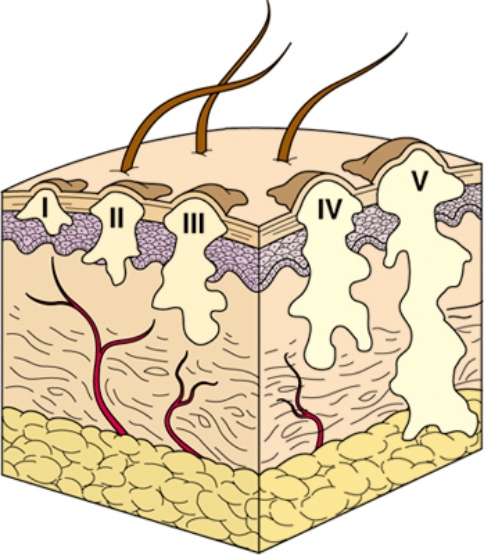
The nurse is caring for a patient with a superficial partial-thickness burn. Place an "X" over the section of the diagram that represents the depth of this injury.
Question
Question
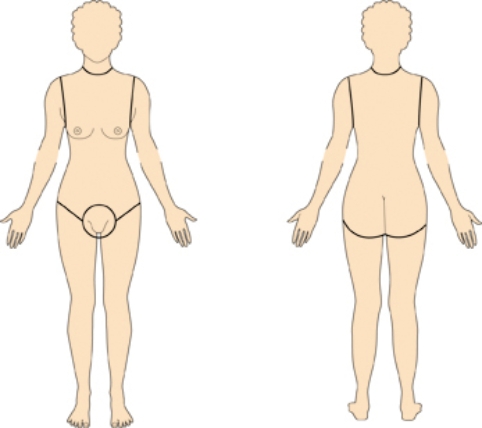
Using the rule of nines, the nurse has estimated that the patient has sustained burns over 99% of the total body surface area (TBSA). Place an "X" on the portion of the body that is most likely unburned in this patient.
Question
A burn patient has developed abdominal pain, hematemesis, and melena. The nurse is concerned about the possible development of an ulcer. Place an "X" on the portion of the gastrointestinal tract where Curling ulcer develops.

Question
Question
Question
Question
Question
Question
Question
Question
Question
To stabilize the respiratory system of a patient injured in an explosion, the emergency department team must differentiate between upper airway thermal injury and lower airway toxic gas injury. Place an "X" on the structure that divides these two injury zones.

Question
Question
Question
Question
Question
Question
Question
Question

Unlock Deck
Sign up to unlock the cards in this deck!
Unlock Deck
Unlock Deck
1/45

Play

Full screen (f)
Deck 17: Nursing Care of Patients With Burns
1
A patient is being discharged after treatment for a scald burn that caused a superficial burn over one hand and a superficial partial-thickness burn on several fingers. What should be included in this patient's discharge instructions?
A) Report any fever to the health care provider.
B) Report any purulent drainage to the health care provider.
C) Use only sterile dressings on the fingers.
D) Cleanse the areas every hour with alcohol to prevent infection.
E) Apply a topical antimicrobial agent as instructed.
A) Report any fever to the health care provider.
B) Report any purulent drainage to the health care provider.
C) Use only sterile dressings on the fingers.
D) Cleanse the areas every hour with alcohol to prevent infection.
E) Apply a topical antimicrobial agent as instructed.
Report any fever to the health care provider.
Report any purulent drainage to the health care provider.
Use only sterile dressings on the fingers.
Apply a topical antimicrobial agent as instructed.
Report any purulent drainage to the health care provider.
Use only sterile dressings on the fingers.
Apply a topical antimicrobial agent as instructed.
2
A patient is being evaluated for severe burns to the torso and upper extremities, with edema around the burned areas. How should the nurse describe the underlying cause for this assessment finding?
A) inability of the damaged capillaries to maintain fluids in the cell walls
B) reduced vascular permeability in the burned area
C) decreased osmotic pressure in the burned tissue
D) increased fluids in the extracellular compartment
A) inability of the damaged capillaries to maintain fluids in the cell walls
B) reduced vascular permeability in the burned area
C) decreased osmotic pressure in the burned tissue
D) increased fluids in the extracellular compartment
inability of the damaged capillaries to maintain fluids in the cell walls
3
A patient recovering from a major burn injury is complaining of pain. Which medication should the nurse expect to be prescribed for this patient?
A) morphine 4 mg IV every 5 minutes
B) morphine 10 mg IM ever 3-4 hours
C) meperidine 75 mg IM every 3-4 hours
D) meperidine 50 mg PO every 3-4 hours
A) morphine 4 mg IV every 5 minutes
B) morphine 10 mg IM ever 3-4 hours
C) meperidine 75 mg IM every 3-4 hours
D) meperidine 50 mg PO every 3-4 hours
morphine 4 mg IV every 5 minutes
4
The nurse is evaluating laboratory values for a patient with a burn injury. What results should the nurse expect for this patient?
A) decreased hemoglobin and elevated hematocrit levels
B) elevated hemoglobin and elevated hematocrit levels
C) elevated hemoglobin and decreased hematocrit levels
D) decreased hemoglobin and decreased hematocrit levels
A) decreased hemoglobin and elevated hematocrit levels
B) elevated hemoglobin and elevated hematocrit levels
C) elevated hemoglobin and decreased hematocrit levels
D) decreased hemoglobin and decreased hematocrit levels
Unlock Deck
Unlock for access to all 45 flashcards in this deck.
Unlock Deck
k this deck
5
The nurse is reviewing the results of laboratory tests to assess the renal status of a patient who experienced a major burn event on 45% of the body 24 hours ago. Which results should the nurse expect for this patient?
A) glomerular filtration rate (GFR) reduced
B) specific gravity elevated
C) creatinine clearance reduced
D) BUN reduced
E) uric acid decreased
A) glomerular filtration rate (GFR) reduced
B) specific gravity elevated
C) creatinine clearance reduced
D) BUN reduced
E) uric acid decreased
Unlock Deck
Unlock for access to all 45 flashcards in this deck.
Unlock Deck
k this deck
6
The nurse is teaching a class of older adults at a senior center about household cleaning agents that may cause burns. Which agents should be included in this discussion?
A) drain cleaners
B) household ammonia
C) oven cleaner
D) toiler bowl cleaner
E) lemon oil furniture polish
A) drain cleaners
B) household ammonia
C) oven cleaner
D) toiler bowl cleaner
E) lemon oil furniture polish
Unlock Deck
Unlock for access to all 45 flashcards in this deck.
Unlock Deck
k this deck
7
A 70-year-old patient is sunburned over much of the body. What self-care technique is MOST important to emphasize to an older adult to deal with the effects of sunburn?
A) increasing fluid intake
B) applying mild lotions
C) taking mild analgesics
D) maintaining warmth
A) increasing fluid intake
B) applying mild lotions
C) taking mild analgesics
D) maintaining warmth
Unlock Deck
Unlock for access to all 45 flashcards in this deck.
Unlock Deck
k this deck
8
A patient is scheduled for surgery to graft a burn injury on the arm. Which statement should the nurse include when instructing the patient about the procedure?
A) "You will begin to perform exercises to promote flexibility and reduce contractures after 5 days."
B) "You will need to report any itching, as it might signal infection."
C) "Performing the procedure near the end of the hospitalization will reduce the incidence of infection and improve the chances of success."
D) "The procedure will be performed in your room."
A) "You will begin to perform exercises to promote flexibility and reduce contractures after 5 days."
B) "You will need to report any itching, as it might signal infection."
C) "Performing the procedure near the end of the hospitalization will reduce the incidence of infection and improve the chances of success."
D) "The procedure will be performed in your room."
Unlock Deck
Unlock for access to all 45 flashcards in this deck.
Unlock Deck
k this deck
9
A patient comes into the emergency department with a chemical burn from contact with lye. Which facts about this type of burn should guide the nurse when assessing and planning care for this patient?
A) This is an alkali burn.
B) This type of burn tends to be deeper.
C) This is an acid burn.
D) This type of burn is easier to neutralize.
E) This type of burn tends to be more superficial.
A) This is an alkali burn.
B) This type of burn tends to be deeper.
C) This is an acid burn.
D) This type of burn is easier to neutralize.
E) This type of burn tends to be more superficial.
Unlock Deck
Unlock for access to all 45 flashcards in this deck.
Unlock Deck
k this deck
10
A patient is brought to the emergency department with the following burn injuries: a blistered and reddened anterior trunk, reddened lower back, and pale, waxy anterior right arm. Calculate the extent of the burn injury (TBSA) using the rule of nines. _____ %
Unlock Deck
Unlock for access to all 45 flashcards in this deck.
Unlock Deck
k this deck
11
When monitoring the vital signs of a patient who has sustained a major burn injury, the nurse assesses a heart rate of 11
A) This heart rate is normal for the patient's post-burn injury condition.
B) The patient is demonstrating manifestations consistent with the onset of an infection.
C) What should the nurse determine about this finding?
D) The patient is demonstrating manifestations consistent with an electrolyte imbalance.
E) The patient is demonstrating manifestations consistent with renal failure.
A) This heart rate is normal for the patient's post-burn injury condition.
B) The patient is demonstrating manifestations consistent with the onset of an infection.
C) What should the nurse determine about this finding?
D) The patient is demonstrating manifestations consistent with an electrolyte imbalance.
E) The patient is demonstrating manifestations consistent with renal failure.
Unlock Deck
Unlock for access to all 45 flashcards in this deck.
Unlock Deck
k this deck
12
A patient has a scald burn on the arm that is bright red, moist, and has several blisters. The nurse would classify this burn as which type?
A) a superficial partial-thickness burn
B) a thermal burn
C) a superficial burn
D) a deep partial-thickness burn
E) a full-thickness burn
A) a superficial partial-thickness burn
B) a thermal burn
C) a superficial burn
D) a deep partial-thickness burn
E) a full-thickness burn
Unlock Deck
Unlock for access to all 45 flashcards in this deck.
Unlock Deck
k this deck
13
A patient with a burn that is pale, waxy, and with large flat blisters asks the nurse about the severity of the burn and how long it will take to heal. How should the nurse respond?
A) The wound is a deep partial-thickness burn and will take more than 3 weeks to heal.
B) The wound is a superficial partial-thickness burn and could take up to 2 weeks to heal.
C) The wound is a superficial burn and will take up to 3 weeks to heal.
D) The wound is a full-thickness burn and will take 1 to 2 weeks to heal.
A) The wound is a deep partial-thickness burn and will take more than 3 weeks to heal.
B) The wound is a superficial partial-thickness burn and could take up to 2 weeks to heal.
C) The wound is a superficial burn and will take up to 3 weeks to heal.
D) The wound is a full-thickness burn and will take 1 to 2 weeks to heal.
Unlock Deck
Unlock for access to all 45 flashcards in this deck.
Unlock Deck
k this deck
14
A nurse sees a patient get struck by lightning during a thunderstorm on a golf course. What is the first action the nurse should perform?
A) Check breathing and circulation.
B) Look for entrance and exit wounds.
C) Cover the victim to prevent heat loss.
D) Move the victim indoors to a dry place.
A) Check breathing and circulation.
B) Look for entrance and exit wounds.
C) Cover the victim to prevent heat loss.
D) Move the victim indoors to a dry place.
Unlock Deck
Unlock for access to all 45 flashcards in this deck.
Unlock Deck
k this deck
15
A patient receiving treatment for severe burns over more than half the body has an indwelling urinary catheter. When evaluating the patient's intake and output, what should the nurse take into consideration?
A) Urine output will be reduced in the first 24-48 hours and will then increase.
B) Urine output will be greatest in the first 24 hours after the burn injury.
C) Urine output will be reduced during the first 8 hours and will then increase as diuresis begins.
D) Urine output will be elevated due to the amount of intravenous fluids administered during the initial phases of treatment.
A) Urine output will be reduced in the first 24-48 hours and will then increase.
B) Urine output will be greatest in the first 24 hours after the burn injury.
C) Urine output will be reduced during the first 8 hours and will then increase as diuresis begins.
D) Urine output will be elevated due to the amount of intravenous fluids administered during the initial phases of treatment.
Unlock Deck
Unlock for access to all 45 flashcards in this deck.
Unlock Deck
k this deck
16
A patient has sustained a partial-thickness burn of 28% of total body surface area (TBSA) and full-thickness burn of 30% or greater of TBSA. How should the nurse classify this burn injury?
A) major
B) moderate
C) minor
D) superficial
A) major
B) moderate
C) minor
D) superficial
Unlock Deck
Unlock for access to all 45 flashcards in this deck.
Unlock Deck
k this deck
17
The nurse is classifying a patient's burn injuries. What information should the nurse assess to ensure this classification is correct?
A) depth of the burn
B) extent of burns on the body
C) causative agent and duration of exposure
D) location of burns on the body
E) time that the burns occurred
A) depth of the burn
B) extent of burns on the body
C) causative agent and duration of exposure
D) location of burns on the body
E) time that the burns occurred
Unlock Deck
Unlock for access to all 45 flashcards in this deck.
Unlock Deck
k this deck
18
A patient arrives at the emergency department with an electrical burn. What assessment questions should the nurse ask when determining the possible severity of the burn injury?
A) What type of current was involved?
B) How long was the patient in contact with the current?
C) How much voltage was involved?
D) Where was the patient when the burn occurred?
E) What was the point of contact with the current?
A) What type of current was involved?
B) How long was the patient in contact with the current?
C) How much voltage was involved?
D) Where was the patient when the burn occurred?
E) What was the point of contact with the current?
Unlock Deck
Unlock for access to all 45 flashcards in this deck.
Unlock Deck
k this deck
19
A patient has sustained a burn injury. Which nursing intervention is of the highest priority at this time?
A) determination of the type of burn injury
B) determination of the types of home remedies attempted prior to the patient's coming to the hospital
C) assessment of past medical history
D) determination of body weight
A) determination of the type of burn injury
B) determination of the types of home remedies attempted prior to the patient's coming to the hospital
C) assessment of past medical history
D) determination of body weight
Unlock Deck
Unlock for access to all 45 flashcards in this deck.
Unlock Deck
k this deck
20
A 25-year-old patient is admitted with partial-thickness burns on both lower legs, over 20% of the total body surface area. How should the nurse classify this burn?
A) moderate burn injury
B) minor burn injury
C) major burn injury
D) severe burn injury
A) moderate burn injury
B) minor burn injury
C) major burn injury
D) severe burn injury
Unlock Deck
Unlock for access to all 45 flashcards in this deck.
Unlock Deck
k this deck
21
The nurse is providing care to a patient with a third-degree burn on the left thigh and left forearm. During wound care, the nurse applies Elase to the burned areas. Which type of wound debridement is this nurse using?
A) enzymatic
B) mechanical
C) surgical
D) topical
A) enzymatic
B) mechanical
C) surgical
D) topical
Unlock Deck
Unlock for access to all 45 flashcards in this deck.
Unlock Deck
k this deck
22
A patient with third-degree burns is being treated with high-volume intravenous fluids and has a urine output of 40 mL per hour. What does the nurse realize about this urine output?
A) It is normal for this patient.
B) It is evidence that the patient is dehydrated.
C) It is evidence that the patient is overhydrated.
D) It is indicative of pending renal failure.
A) It is normal for this patient.
B) It is evidence that the patient is dehydrated.
C) It is evidence that the patient is overhydrated.
D) It is indicative of pending renal failure.
Unlock Deck
Unlock for access to all 45 flashcards in this deck.
Unlock Deck
k this deck
23
A patient with third-degree burns is prescribed gastrointestinal medication. How should the nurse explain the primary action of this medication?
A) It prevents the formation of a Curling ulcer.
B) It treats a preexisting duodenal ulcer.
C) It ensures adequate peristalsis.
D) It has antiemetic properties.
A) It prevents the formation of a Curling ulcer.
B) It treats a preexisting duodenal ulcer.
C) It ensures adequate peristalsis.
D) It has antiemetic properties.
Unlock Deck
Unlock for access to all 45 flashcards in this deck.
Unlock Deck
k this deck
24
Following surgical debridement, a patient with third-degree burns does not bleed. What does the nurse understand about this situation?
A) The procedure will need to be repeated.
B) The patient will no longer need this procedure.
C) The patient will need to be premedicated prior to the next procedure.
D) The patient should have an escharotomy instead.
A) The procedure will need to be repeated.
B) The patient will no longer need this procedure.
C) The patient will need to be premedicated prior to the next procedure.
D) The patient should have an escharotomy instead.
Unlock Deck
Unlock for access to all 45 flashcards in this deck.
Unlock Deck
k this deck
25
The nurse is caring for a patient with a superficial partial-thickness burn. Place an "X" over the section of the diagram that represents the depth of this injury.
Unlock Deck
Unlock for access to all 45 flashcards in this deck.
Unlock Deck
k this deck
26
A patient with third-degree burns on the right arm is scheduled for passive range of motion to the extremity every 2 hours. What should the nurse do prior to this exercise session?
A) Medicate the patient for pain.
B) Empty the patient's indwelling catheter collection bag.
C) Change the patient's bed linens.
D) Change the dressing on the burn.
A) Medicate the patient for pain.
B) Empty the patient's indwelling catheter collection bag.
C) Change the patient's bed linens.
D) Change the dressing on the burn.
Unlock Deck
Unlock for access to all 45 flashcards in this deck.
Unlock Deck
k this deck
27
Using the rule of nines, the nurse has estimated that the patient has sustained burns over 99% of the total body surface area (TBSA). Place an "X" on the portion of the body that is most likely unburned in this patient.
Unlock Deck
Unlock for access to all 45 flashcards in this deck.
Unlock Deck
k this deck
28
A burn patient has developed abdominal pain, hematemesis, and melena. The nurse is concerned about the possible development of an ulcer. Place an "X" on the portion of the gastrointestinal tract where Curling ulcer develops.
Unlock Deck
Unlock for access to all 45 flashcards in this deck.
Unlock Deck
k this deck
29
A patient is beginning the acute phase of burn treatment. What priorities for care should the nurse anticipate for this patient?
A) wound care
B) nutritional therapy
C) infection control
D) graft procedures
E) home maintenance management
A) wound care
B) nutritional therapy
C) infection control
D) graft procedures
E) home maintenance management
Unlock Deck
Unlock for access to all 45 flashcards in this deck.
Unlock Deck
k this deck
30
A patient comes to the clinic to be seen for a burn that appears moist with blisters. The nurse realizes that this patient most likely has sustained which type of burn?
A) superficial
B) superficial partial-thickness
C) deep partial-thickness
D) full thickness
A) superficial
B) superficial partial-thickness
C) deep partial-thickness
D) full thickness
Unlock Deck
Unlock for access to all 45 flashcards in this deck.
Unlock Deck
k this deck
31
The nurse is evaluating the adequacy of a burn-injured patient's nutritional intake. Which laboratory value indicates the need to adjust the patient's nutritional program?
A) glycosuria
B) creatine phosphokinase (CPK)
C) BUN levels
D) hemoglobin
A) glycosuria
B) creatine phosphokinase (CPK)
C) BUN levels
D) hemoglobin
Unlock Deck
Unlock for access to all 45 flashcards in this deck.
Unlock Deck
k this deck
32
A patient with a burn injury is prescribed silver nitrate. Which nursing interventions should be included in the care for this patient?
A) Monitor daily weight.
B) Monitor serum sodium levels.
C) Prepare to change the dressings every 2 hours.
D) Report black skin discolorations.
E) Saturate the dressings every 2 hours with a 0.5% aqueous solution of silver nitrate.
A) Monitor daily weight.
B) Monitor serum sodium levels.
C) Prepare to change the dressings every 2 hours.
D) Report black skin discolorations.
E) Saturate the dressings every 2 hours with a 0.5% aqueous solution of silver nitrate.
Unlock Deck
Unlock for access to all 45 flashcards in this deck.
Unlock Deck
k this deck
33
The family of a patient with third-degree burns wants to know why "the scabs are being cut off" the patient's leg. What is the most appropriate response by the nurse?
A) "The scabs are really old burned tissue and need to be removed to promote healing."
B) "I'll ask the doctor to come and talk with you about the treatment plan."
C) "The patient asked for the scabs to be removed."
D) "The scabs are removed to check for blood flow to the burned area."
A) "The scabs are really old burned tissue and need to be removed to promote healing."
B) "I'll ask the doctor to come and talk with you about the treatment plan."
C) "The patient asked for the scabs to be removed."
D) "The scabs are removed to check for blood flow to the burned area."
Unlock Deck
Unlock for access to all 45 flashcards in this deck.
Unlock Deck
k this deck
34
A patient comes to the clinic complaining of nausea and vomiting after spending the weekend at a seaside resort. What should be the most important assessment for the nurse?
A) whether the patient is resting and sleeping normally
B) whether the patient is following a typical meal pattern
C) whether the patient had to change time zones when traveling to the resort
D) whether the patient has been sunburned
A) whether the patient is resting and sleeping normally
B) whether the patient is following a typical meal pattern
C) whether the patient had to change time zones when traveling to the resort
D) whether the patient has been sunburned
Unlock Deck
Unlock for access to all 45 flashcards in this deck.
Unlock Deck
k this deck
35
Using the Consensus formula, calculate the amount of intravenous solution that will be administered in the first 8 hours for a burn patient with 40% TBSA, weight of 52 kg, and prescribed 2 mL/kg. _____ mL
Unlock Deck
Unlock for access to all 45 flashcards in this deck.
Unlock Deck
k this deck
36
The nurse is caring for a patient with third-degree burns and notes a reduction in the serum potassium level. The nurse recognizes that this finding is consistent with which event?
A) the resolution of burn shock
B) the onset of burn shock
C) the onset of renal failure
D) the onset of liver failure
A) the resolution of burn shock
B) the onset of burn shock
C) the onset of renal failure
D) the onset of liver failure
Unlock Deck
Unlock for access to all 45 flashcards in this deck.
Unlock Deck
k this deck
37
To stabilize the respiratory system of a patient injured in an explosion, the emergency department team must differentiate between upper airway thermal injury and lower airway toxic gas injury. Place an "X" on the structure that divides these two injury zones.
Unlock Deck
Unlock for access to all 45 flashcards in this deck.
Unlock Deck
k this deck
38
A patient with third-degree burns to the face has just learned that there will be extensive scarring once the burn heals. For which patient problem should the nurse plan interventions?
A) Powerlessness
B) Infection
C) Lack of body fluids
D) Changes in airway maintenance
A) Powerlessness
B) Infection
C) Lack of body fluids
D) Changes in airway maintenance
Unlock Deck
Unlock for access to all 45 flashcards in this deck.
Unlock Deck
k this deck
39
A patient who is being treated with topical mafenide acetate for third-degree burns is demonstrating facial and neck edema. What does the nurse realize is the most likely reason?
A) The patient is developing hypersensitivity to the medication.
B) The patient is reacting positively to the medication.
C) The patient needs an increase in dosage of the medication.
D) The patient is not responding to the medication.
A) The patient is developing hypersensitivity to the medication.
B) The patient is reacting positively to the medication.
C) The patient needs an increase in dosage of the medication.
D) The patient is not responding to the medication.
Unlock Deck
Unlock for access to all 45 flashcards in this deck.
Unlock Deck
k this deck
40
A patient is admitted to the emergency department with deep partial-thickness burns over 35 % of the body. What IV solution will be started initially?
A) warmed lactated Ringer's solution
B) dextrose 5% with saline solution
C) dextrose 5% with water
D) normal saline solution
A) warmed lactated Ringer's solution
B) dextrose 5% with saline solution
C) dextrose 5% with water
D) normal saline solution
Unlock Deck
Unlock for access to all 45 flashcards in this deck.
Unlock Deck
k this deck
41
A patient recovering from a 30% TBSA full-thickness burn has swelling and inflammation of the intact skin around the burn area. What interventions should the nurse implement to reduce this patient's risk of developing further infections?
A) Report results of blood cultures.
B) Analyze daily leukocyte counts.
C) Follow strict isolation techniques.
D) Request placement of an indwelling catheter.
E) Request a dietary consult to ensure adequate nutritional intake.
A) Report results of blood cultures.
B) Analyze daily leukocyte counts.
C) Follow strict isolation techniques.
D) Request placement of an indwelling catheter.
E) Request a dietary consult to ensure adequate nutritional intake.
Unlock Deck
Unlock for access to all 45 flashcards in this deck.
Unlock Deck
k this deck
42
During an assessment of a patient's arm burn, the nurse notes an area of stasis. What changes should the nurse expect to assess in this area over the next week?
A)The area becomes pale.
B) The area develops necrosis.
C) The area blanches on pressure.
D) The area appears like other skin surfaces.
E) The area appears leathery and coagulated.
A)The area becomes pale.
B) The area develops necrosis.
C) The area blanches on pressure.
D) The area appears like other skin surfaces.
E) The area appears leathery and coagulated.
Unlock Deck
Unlock for access to all 45 flashcards in this deck.
Unlock Deck
k this deck
43
The nurse is concerned that an older patient is at risk for a burn injury in the home. What should the nurse instruct the patient to do to reduce this risk?
A) Check routinely for the odor of gas.
B) Suggest that no one smoke in the home.
C) Wear loose-fitting clothing when cooking.
D) Check the smoke detector battery annually.
E) Keep the hot water heater temperature at 120°F.
A) Check routinely for the odor of gas.
B) Suggest that no one smoke in the home.
C) Wear loose-fitting clothing when cooking.
D) Check the smoke detector battery annually.
E) Keep the hot water heater temperature at 120°F.
Unlock Deck
Unlock for access to all 45 flashcards in this deck.
Unlock Deck
k this deck
44
A patient comes to the physician's office after sustaining chemical burns to the left side of the face and right wrist. Where does this patient need to be treated?
A) in the outpatient ambulatory clinic
B) in the emergency department
C) in a burn center
D) in the doctor's office, and then at home
A) in the outpatient ambulatory clinic
B) in the emergency department
C) in a burn center
D) in the doctor's office, and then at home
Unlock Deck
Unlock for access to all 45 flashcards in this deck.
Unlock Deck
k this deck
45
A victim of a fire in a clothing shop is complaining of headache and dizziness and has a potentially dangerous heart rhythm. What actions should the nurse expect to be performed for this patient?
A) treatment with prednisone
B) treatment with vancomycin
C) treatment with hydroxocobalamin
D) hyperbaric oxygen therapy
E) pacemaker insertion
A) treatment with prednisone
B) treatment with vancomycin
C) treatment with hydroxocobalamin
D) hyperbaric oxygen therapy
E) pacemaker insertion
Unlock Deck
Unlock for access to all 45 flashcards in this deck.
Unlock Deck
k this deck
Unlock Deck
Unlock for access to all 45 flashcards in this deck.






