







 Chat with AI

Deck 13: Nursing Care of Patients With Altered Immunity
Full screen (f)

Question

Question
Question
Question
Question
Question
Question
Question
Question
Question
Question
Question
Question
Question
Question
Question
Question
Question
Question
Question
Question
Question
Question
Question
Question
Question
Question
Question
Question
Question
Question
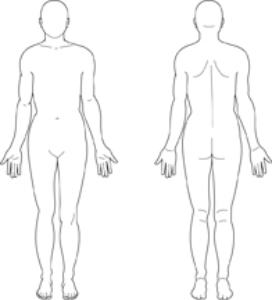
A patient is scheduled for allergy testing. Place an "X" over the area of the body best suited for prick or intradermal testing.
Question
Question
Question
Question
Question
Question
Question
Question
Question
Question
Question
Question
Question
Question
Question
Question
Question
Question
Question

Unlock Deck
Sign up to unlock the cards in this deck!
Unlock Deck
Unlock Deck
1/50

Play

Full screen (f)
Deck 13: Nursing Care of Patients With Altered Immunity
1
A patient is diagnosed with a type IV delayed hypersensitivity reaction. What is an example of this type of reaction?
A) latex allergy
B) reaction to a wasp sting
C) serum sickness
D) autoimmune hemolytic anemia
A) latex allergy
B) reaction to a wasp sting
C) serum sickness
D) autoimmune hemolytic anemia
latex allergy
2
A patient tells the nurse that she used to get the "common cold" at least three times a year but now can't remember the last time she had one. What should the nurse realize this patient is describing?
A) healthy B cell functioning
B) healthy helper T cell functioning
C) T cell secretion of antibodies
D) healthy regulator T cell functioning
A) healthy B cell functioning
B) healthy helper T cell functioning
C) T cell secretion of antibodies
D) healthy regulator T cell functioning
healthy B cell functioning
3
A patient is suspected of having a hypersensitivity reaction. Which laboratory test result supports this suspicion?
A) patch test with a 1-inch area of erythema
B) eosinophils 2% of the total WBC
C) Coombs indirect showing no agglutination
D) elevated hematocrit level
A) patch test with a 1-inch area of erythema
B) eosinophils 2% of the total WBC
C) Coombs indirect showing no agglutination
D) elevated hematocrit level
patch test with a 1-inch area of erythema
4
A patient had skin taken from the upper thigh and placed over a burn area on the shoulder. The nurse expects which likely outcome for this patient?
A) The graft will be successful.
B) The graft will immediately become cyanotic.
C) The graft will become swollen and edematous within 3 to 4 months.
D) The graft will lift away from the body over several years.
A) The graft will be successful.
B) The graft will immediately become cyanotic.
C) The graft will become swollen and edematous within 3 to 4 months.
D) The graft will lift away from the body over several years.
Unlock Deck
Unlock for access to all 50 flashcards in this deck.
Unlock Deck
k this deck
5
A patient is prescribed an immunosuppressive agent. Which statement indicates the patient needs additional instruction from the nurse about this drug?
A) "I should drink a lot of fruit juices, such as grapefruit juice."
B) "I know to call the physician if I start experiencing a lot of bruising."
C) "I should drink plenty of water to keep from getting dehydrated."
D) "If I experience any joint pain, I should take ibuprofen for the pain as needed every 4 hours."
A) "I should drink a lot of fruit juices, such as grapefruit juice."
B) "I know to call the physician if I start experiencing a lot of bruising."
C) "I should drink plenty of water to keep from getting dehydrated."
D) "If I experience any joint pain, I should take ibuprofen for the pain as needed every 4 hours."
Unlock Deck
Unlock for access to all 50 flashcards in this deck.
Unlock Deck
k this deck
6
A patient diagnosed with rheumatoid arthritis is not responding to NSAID therapy. The nurse anticipates that which medications and therapies will be considered for this patient's treatment?
A) gold salt
B) plasmapheresis
C) methotrexate (Rheumatrex)
D) infliximab (Remicade)
E) corticosteroids
A) gold salt
B) plasmapheresis
C) methotrexate (Rheumatrex)
D) infliximab (Remicade)
E) corticosteroids
Unlock Deck
Unlock for access to all 50 flashcards in this deck.
Unlock Deck
k this deck
7
A patient has a history of severe responses to skin testing done for allergies. What should be used in place of skin testing for this patient?
A) radioallergosorbent test
B) white blood cells count and differential
C) blood type and crossmatch
D) immune complex assay
A) radioallergosorbent test
B) white blood cells count and differential
C) blood type and crossmatch
D) immune complex assay
Unlock Deck
Unlock for access to all 50 flashcards in this deck.
Unlock Deck
k this deck
8
A patient is experiencing symptoms of exposure to environmental ragweed. The nurse should instruct the patient on the use of which medication?
A) antihistamines
B) antibiotics
C) antiviral medications
D) antifungal medications
A) antihistamines
B) antibiotics
C) antiviral medications
D) antifungal medications
Unlock Deck
Unlock for access to all 50 flashcards in this deck.
Unlock Deck
k this deck
9
The intradermal skin test conducted on a patient is positive. What did the nurse most likely assess in this patient?
A) a wheal larger than 5 cm from the control and erythema
B) localized, itchy wheal
C) papules
D) ulceration
A) a wheal larger than 5 cm from the control and erythema
B) localized, itchy wheal
C) papules
D) ulceration
Unlock Deck
Unlock for access to all 50 flashcards in this deck.
Unlock Deck
k this deck
10
A patient tells the nurse that she hopes she does not develop rheumatoid arthritis because her mother suffers so much pain with the disorder. What should the nurse respond?
A) "Autoimmune disorders are genetically linked."
B) "The only way you will develop this disorder is if you become highly stressed."
C) "The amount of estrogen you have in your body will prevent the onset of the disorder."
D) "Limit your physical activity to prevent the onset of the disorder."
A) "Autoimmune disorders are genetically linked."
B) "The only way you will develop this disorder is if you become highly stressed."
C) "The amount of estrogen you have in your body will prevent the onset of the disorder."
D) "Limit your physical activity to prevent the onset of the disorder."
Unlock Deck
Unlock for access to all 50 flashcards in this deck.
Unlock Deck
k this deck
11
A patient develops hemolytic anemia after receiving a dose of penicillin. What action should the nurse realize is indicated for this patient?
A) Administer no further doses of penicillin.
B) Administer a blood transfusion.
C) Provide oxygen.
D) Increase fluids.
A) Administer no further doses of penicillin.
B) Administer a blood transfusion.
C) Provide oxygen.
D) Increase fluids.
Unlock Deck
Unlock for access to all 50 flashcards in this deck.
Unlock Deck
k this deck
12
A patient is admitted to receive a kidney transplant from a live sibling. The nurse realizes that what must have occurred for this surgery to be planned?
A) The human leukocyte antigens between the patient and sibling must be very similar.
B) The human leukocyte antigens between the patient and sibling must be very different.
C) The patient has an overactive immune system.
D) The donor has an overactive immune system.
A) The human leukocyte antigens between the patient and sibling must be very similar.
B) The human leukocyte antigens between the patient and sibling must be very different.
C) The patient has an overactive immune system.
D) The donor has an overactive immune system.
Unlock Deck
Unlock for access to all 50 flashcards in this deck.
Unlock Deck
k this deck
13
An older patient tells the nurse that he develops pneumonia easily; however, his wife of the same age rarely "gets sick." How should the nurse respond?
A) "Not everyone's immune system is the same, regardless of their age."
B) "Your wife must be doing something that you're not doing."
C) "Maybe your wife just doesn't tell you when she's sick."
D) "It's just a matter of time. Your wife will have the same illnesses you do."
A) "Not everyone's immune system is the same, regardless of their age."
B) "Your wife must be doing something that you're not doing."
C) "Maybe your wife just doesn't tell you when she's sick."
D) "It's just a matter of time. Your wife will have the same illnesses you do."
Unlock Deck
Unlock for access to all 50 flashcards in this deck.
Unlock Deck
k this deck
14
A patient is diagnosed with valvular heart disease after experiencing rheumatic heart fever. The nurse understands this disorder is caused by what action?
A) molecular mimicry
B) release of hidden antigens into the circulation
C) biologic changes that cause self-antigens to produce autoantibodies
D) autoimmune response by slow-growing mycobacteria
A) molecular mimicry
B) release of hidden antigens into the circulation
C) biologic changes that cause self-antigens to produce autoantibodies
D) autoimmune response by slow-growing mycobacteria
Unlock Deck
Unlock for access to all 50 flashcards in this deck.
Unlock Deck
k this deck
15
A patient who is immunosuppressed asks the nurse why he is experiencing so many illnesses. How should the nurse respond?
A) "You are unable to develop immunity to common bacteria, so you experience more illnesses."
B) "Your body takes longer to develop an immune response."
C) "Your body thinks everything is foreign matter and responds with an illness."
D) "You are under severe stress, which is causing the illnesses."
A) "You are unable to develop immunity to common bacteria, so you experience more illnesses."
B) "Your body takes longer to develop an immune response."
C) "Your body thinks everything is foreign matter and responds with an illness."
D) "You are under severe stress, which is causing the illnesses."
Unlock Deck
Unlock for access to all 50 flashcards in this deck.
Unlock Deck
k this deck
16
A patient in isolation for an incompetent immune system asks the nurse what "disease" he has that requires placement in isolation. How should the nurse respond?
A) "Because your immune system is weak, you can develop a disease. The isolation is to protect you."
B) "I will have to find out from your doctor."
C) "It's not a bad disease. The isolation is just to make sure it doesn't spread."
D) "I am sure that once your medications start to work, you won't have to remain in isolation."
A) "Because your immune system is weak, you can develop a disease. The isolation is to protect you."
B) "I will have to find out from your doctor."
C) "It's not a bad disease. The isolation is just to make sure it doesn't spread."
D) "I am sure that once your medications start to work, you won't have to remain in isolation."
Unlock Deck
Unlock for access to all 50 flashcards in this deck.
Unlock Deck
k this deck
17
A patient develops a fever, rash, joint and muscle pain, and swollen lymph nodes after receiving a sulfonamide. What should these symptoms suggest to the nurse?
A) serum sickness
B) exacerbation of a disease process
C) acute influenza
D) subacute rheumatoid arthritis
A) serum sickness
B) exacerbation of a disease process
C) acute influenza
D) subacute rheumatoid arthritis
Unlock Deck
Unlock for access to all 50 flashcards in this deck.
Unlock Deck
k this deck
18
A patient who has received a bone marrow transplant develops a maculopapular rash on the palms of both hands and the soles of the feet. The patient complains of severe abdominal pain with bloody diarrhea. What should the nurse suspect this patient is experiencing?
A) graft-versus-host disease
B) chronic tissue rejection
C) acute tissue rejection
D) hyperacute tissue rejection
A) graft-versus-host disease
B) chronic tissue rejection
C) acute tissue rejection
D) hyperacute tissue rejection
Unlock Deck
Unlock for access to all 50 flashcards in this deck.
Unlock Deck
k this deck
19
A patient is following an elimination diet to help identify food allergies. After 1 week, the patient's symptoms resolve. What should be planned for this patient?
A) reintroducing the eliminated foods one at a time to determine the allergy
B) resuming the regular pre-elimination diet
C) taking an antihistamine before eating a food that causes a food allergy
D) consuming foods identified as causing allergies for the full week following the elimination diet
A) reintroducing the eliminated foods one at a time to determine the allergy
B) resuming the regular pre-elimination diet
C) taking an antihistamine before eating a food that causes a food allergy
D) consuming foods identified as causing allergies for the full week following the elimination diet
Unlock Deck
Unlock for access to all 50 flashcards in this deck.
Unlock Deck
k this deck
20
A patient comes into the emergency department with itching, swelling, and slight shortness of breath after being stung by a bee. The nurse realizes this patient is experiencing which type of hypersensitivity reaction?
A) type I IgE-mediated hypersensitivity
B) type II cytotoxic hypersensitivity
C) type III immune complex-mediated hypersensitivity
D) type IV delayed hypersensitivity
A) type I IgE-mediated hypersensitivity
B) type II cytotoxic hypersensitivity
C) type III immune complex-mediated hypersensitivity
D) type IV delayed hypersensitivity
Unlock Deck
Unlock for access to all 50 flashcards in this deck.
Unlock Deck
k this deck
21
An adolescent patient asks the nurse about sexual practices that help avoid contracting HIV. What should the nurse instruct this patient?
A) Always use a condom.
B) Be sure to be tested for HIV every 6 months.
C) There is no such thing as safe sex.
D) The only safe sex is no sex.
A) Always use a condom.
B) Be sure to be tested for HIV every 6 months.
C) There is no such thing as safe sex.
D) The only safe sex is no sex.
Unlock Deck
Unlock for access to all 50 flashcards in this deck.
Unlock Deck
k this deck
22
The nurse on the transplant unit is reviewing assessment data for a group of patients. Which patients should the nurse realize are at greatest risk for graft-versus-host disease?
A) Patients A and C
B) Patient A only
C) Patient B only
D) Patient D only
A) Patients A and C
B) Patient A only
C) Patient B only
D) Patient D only
Unlock Deck
Unlock for access to all 50 flashcards in this deck.
Unlock Deck
k this deck
23
A patient receiving cyclosporine after an organ transplant is experiencing an acute onset of hypertension and headaches. What should these assessment findings suggest to the nurse?
A) These are signs of toxicity.
B) This is a normal reaction to the medication.
C) These are signs of impending transplanted organ failure.
D) The transplanted organ is beginning to function.
A) These are signs of toxicity.
B) This is a normal reaction to the medication.
C) These are signs of impending transplanted organ failure.
D) The transplanted organ is beginning to function.
Unlock Deck
Unlock for access to all 50 flashcards in this deck.
Unlock Deck
k this deck
24
The nurse is instructing a patient diagnosed with AIDS regarding foods that will increase caloric intake. Which meal choice indicates that the patient understands which types of foods to consume?
A) spaghetti and meat sauce, raisin salad, whole grain roll with butter, vanilla milkshake (with Ensure), and a piece of pecan pie
B) baked chicken (thigh), cabbage, small green salad, slice of white bread, dried prunes, and a soda
C) red beans and rice, slaw, tomato, crackers, chocolate pudding, and iced tea
D) vegetable soup, small piece of cornbread, banana pudding, and water
A) spaghetti and meat sauce, raisin salad, whole grain roll with butter, vanilla milkshake (with Ensure), and a piece of pecan pie
B) baked chicken (thigh), cabbage, small green salad, slice of white bread, dried prunes, and a soda
C) red beans and rice, slaw, tomato, crackers, chocolate pudding, and iced tea
D) vegetable soup, small piece of cornbread, banana pudding, and water
Unlock Deck
Unlock for access to all 50 flashcards in this deck.
Unlock Deck
k this deck
25
A patient diagnosed with AIDS complains of nausea, fever, severe diarrhea, and anorexia. Which medication would be the most effective to relieve the anorexia, as well as to stimulate the patient's appetite?
A) megestrol (Megace)
B) ciprofloxacin (Cipro)
C) zidovudine (Retrovir, AZT)
D) abacavir (Ziagen)
A) megestrol (Megace)
B) ciprofloxacin (Cipro)
C) zidovudine (Retrovir, AZT)
D) abacavir (Ziagen)
Unlock Deck
Unlock for access to all 50 flashcards in this deck.
Unlock Deck
k this deck
26
A patient with HIV is complaining of increased pain in the feet and legs. What should the nurse realize this patient is demonstrating?
A) a reaction to the medication
B) an opportunistic infection
C) a secondary cancer
D) a nervous system manifestation of the disease
A) a reaction to the medication
B) an opportunistic infection
C) a secondary cancer
D) a nervous system manifestation of the disease
Unlock Deck
Unlock for access to all 50 flashcards in this deck.
Unlock Deck
k this deck
27
The nurse is determining which assigned patients might be experiencing an immunodeficiency. Which patient or patients should the nurse identify as having this health problem?
A) Patient A only
B) Patient D only
C) All patients
D) Patient B and C
A) Patient A only
B) Patient D only
C) All patients
D) Patient B and C
Unlock Deck
Unlock for access to all 50 flashcards in this deck.
Unlock Deck
k this deck
28
The nurse is preparing to instruct a class of young adults about ways to perform safe sex. What should be included in the nurse's presentation?
A) Avoid spermicidal agents.
B) Get tested for HIV if entering into a new monogamous relationship.
C) Use oral birth control pills.
D) Use only oil-based lubricants with condoms.
E) Avoid sharing intravenous drug paraphernalia.
A) Avoid spermicidal agents.
B) Get tested for HIV if entering into a new monogamous relationship.
C) Use oral birth control pills.
D) Use only oil-based lubricants with condoms.
E) Avoid sharing intravenous drug paraphernalia.
Unlock Deck
Unlock for access to all 50 flashcards in this deck.
Unlock Deck
k this deck
29
A patient diagnosed with HIV has an HIV viral load test of 9,000 copies/mL. What should this test result suggest to the nurse?
A) The current prescribed medication therapy is not effective.
B) The current prescribed medication therapy is effective.
C) The dose of prescribed medication can be reduced.
D) A less toxic medication needs to be prescribed.
A) The current prescribed medication therapy is not effective.
B) The current prescribed medication therapy is effective.
C) The dose of prescribed medication can be reduced.
D) A less toxic medication needs to be prescribed.
Unlock Deck
Unlock for access to all 50 flashcards in this deck.
Unlock Deck
k this deck
30
The nurse is reviewing assessment data for several patients who are suspected of exposure to HIV. Which patients demonstrate findings consistent with HIV exposure?
A) Patients A and C
B) Patient A only
C) Patients B and D
D) Patient C only
A) Patients A and C
B) Patient A only
C) Patients B and D
D) Patient C only
Unlock Deck
Unlock for access to all 50 flashcards in this deck.
Unlock Deck
k this deck
31
A patient is scheduled for allergy testing. Place an "X" over the area of the body best suited for prick or intradermal testing.
Unlock Deck
Unlock for access to all 50 flashcards in this deck.
Unlock Deck
k this deck
32
The nurse is teaching a patient newly diagnosed with HIV. Which patient statement indicates the need for additional teaching?
A) "I know to use an oil-based lubricant to prevent giving the disease to my partner."
B) "I know I have to practice safe sex with my partner."
C) "I will not share my toothbrush or razor with my partner."
D) "I know I can't donate blood anymore because I have HIV."
A) "I know to use an oil-based lubricant to prevent giving the disease to my partner."
B) "I know I have to practice safe sex with my partner."
C) "I will not share my toothbrush or razor with my partner."
D) "I know I can't donate blood anymore because I have HIV."
Unlock Deck
Unlock for access to all 50 flashcards in this deck.
Unlock Deck
k this deck
33
The nurse is reviewing assessment data for a group of patients. Which patient's findings are consistent with a Type II cytotoxic hypersensitivity reaction?
A) Patient A
B) Patient B
C) Patient C
D) Patient D
A) Patient A
B) Patient B
C) Patient C
D) Patient D
Unlock Deck
Unlock for access to all 50 flashcards in this deck.
Unlock Deck
k this deck
34
A patient tells the nurse, "I had this arthritis pain under control, but then I learned I might lose my job." How should the nurse respond?
A) "Well, we'd better do everything to help you before you lose your health benefits."
B) "I'm sure you'll find another job."
C) "Stress can exacerbate arthritis."
D) "Have you considered going on disability?"
A) "Well, we'd better do everything to help you before you lose your health benefits."
B) "I'm sure you'll find another job."
C) "Stress can exacerbate arthritis."
D) "Have you considered going on disability?"
Unlock Deck
Unlock for access to all 50 flashcards in this deck.
Unlock Deck
k this deck
35
A patient with an autoimmune disorder tells the nurse, "My family keeps telling me I don't look sick." Which problem should the nurse use to guide this patient's care?
A) lack of family comprehension about the disease process
B) alteration in body functions
C) inability of the patient to cope with the health problem
D) inability of the patient to tolerate activity
A) lack of family comprehension about the disease process
B) alteration in body functions
C) inability of the patient to cope with the health problem
D) inability of the patient to tolerate activity
Unlock Deck
Unlock for access to all 50 flashcards in this deck.
Unlock Deck
k this deck
36
A patient is demonstrating signs of anaphylactic shock. What should the nurse do first to assist this patient?
A) Administer subcutaneous epinephrine.
B) Maintain an airway.
C) Provide calm reassurance.
D) Place the patient on a cardiac monitor.
A) Administer subcutaneous epinephrine.
B) Maintain an airway.
C) Provide calm reassurance.
D) Place the patient on a cardiac monitor.
Unlock Deck
Unlock for access to all 50 flashcards in this deck.
Unlock Deck
k this deck
37
A patient with HIV is not adhering to the prescribed medication therapy. Which nursing action will best improve patient compliance and the long-term treatment of the disease process?
A) Confront the patient about the noncompliant behavior.
B) Talk with the patient about not adhering to the medication schedule.
C) Suggest that the patient take the medication at bedtime to prevent nausea.
D) Refer the patient to a social worker so that lower-cost medications can be obtained.
A) Confront the patient about the noncompliant behavior.
B) Talk with the patient about not adhering to the medication schedule.
C) Suggest that the patient take the medication at bedtime to prevent nausea.
D) Refer the patient to a social worker so that lower-cost medications can be obtained.
Unlock Deck
Unlock for access to all 50 flashcards in this deck.
Unlock Deck
k this deck
38
A young female patient with HIV does not want to see the gynecologist because, she says, "I'm going to die anyway." How should the nurse respond?
A) "Having a PAP smear will help detect the onset of cervical cancer."
B) "Why do you think you are going to die?"
C) "The gynecologist will help diagnose any Hodgkin disease."
D) "But you still should be on birth control."
A) "Having a PAP smear will help detect the onset of cervical cancer."
B) "Why do you think you are going to die?"
C) "The gynecologist will help diagnose any Hodgkin disease."
D) "But you still should be on birth control."
Unlock Deck
Unlock for access to all 50 flashcards in this deck.
Unlock Deck
k this deck
39
A patient is prescribed a monoclonal antibody after an allograft on the left thigh. What does the use of this medication suggest to the nurse?
A) The patient will have a shorter recovery time.
B) This medication has fewer adverse effects.
C) There is a risk for steroid-resistant rejection of the graft.
D) The patient is at risk for developing a graft infection.
A) The patient will have a shorter recovery time.
B) This medication has fewer adverse effects.
C) There is a risk for steroid-resistant rejection of the graft.
D) The patient is at risk for developing a graft infection.
Unlock Deck
Unlock for access to all 50 flashcards in this deck.
Unlock Deck
k this deck
40
A patient is diagnosed with a type I hypersensitivity reaction. The nurse recognizes that which chemical mediators caused the patient's symptoms?
A) histamine
B) complement
C) autoantibodies
D) erythrocytes
E) kinins
A) histamine
B) complement
C) autoantibodies
D) erythrocytes
E) kinins
Unlock Deck
Unlock for access to all 50 flashcards in this deck.
Unlock Deck
k this deck
41
A patient who engages in high-risk sexual behavior is urged to have total knee replacement surgery. What actions should the patient consider prior to scheduling this surgery?
A) Delay the surgery for 1 year
B) Schedule the surgery immediately
C) Begin medication therapy for HIV
D) Consider autologous transfusions for the surgery
E) Have testing for HIV in 6 months
A) Delay the surgery for 1 year
B) Schedule the surgery immediately
C) Begin medication therapy for HIV
D) Consider autologous transfusions for the surgery
E) Have testing for HIV in 6 months
Unlock Deck
Unlock for access to all 50 flashcards in this deck.
Unlock Deck
k this deck
42
The nurse is preparing to instruct a patient with hypersensitivity reactions to bee stings. What should the nurse include in this teaching?
A) Wear a Medic-alert bracelet identifying the allergy at all times.
B) Carry an epinephrine pen at all times.
C) Wear long-sleeved clothing while outdoors.
D) Minimize exposure by staying indoors.
E) Take an antihistamine prior to going outdoors.
A) Wear a Medic-alert bracelet identifying the allergy at all times.
B) Carry an epinephrine pen at all times.
C) Wear long-sleeved clothing while outdoors.
D) Minimize exposure by staying indoors.
E) Take an antihistamine prior to going outdoors.
Unlock Deck
Unlock for access to all 50 flashcards in this deck.
Unlock Deck
k this deck
43
A patient is prescribed to receive lymphocyte immune globulin (Atgam) to prevent an immediate transplant reaction. What actions should the nurse take when administering this medication?
A) Measure hourly urine output
B) Keep epinephrine at the bedside
C) Premedicate with acetaminophen
D) Plan to infuse the medication over 2 hours
E) Measure vital signs every hour during the infusion
A) Measure hourly urine output
B) Keep epinephrine at the bedside
C) Premedicate with acetaminophen
D) Plan to infuse the medication over 2 hours
E) Measure vital signs every hour during the infusion
Unlock Deck
Unlock for access to all 50 flashcards in this deck.
Unlock Deck
k this deck
44
When considering guidelines for safer sex teaching, how should the nurse rank the risk for HIV transmission from highest to lowest?
A) heterosexual intercourse between partners using latex condoms
B) abstinence
C) monogamous sex between partners who are both ELISA and Western Blot negative
D) anal intercourse between partners using latex condoms
E) non of the above.
A) heterosexual intercourse between partners using latex condoms
B) abstinence
C) monogamous sex between partners who are both ELISA and Western Blot negative
D) anal intercourse between partners using latex condoms
E) non of the above.
Unlock Deck
Unlock for access to all 50 flashcards in this deck.
Unlock Deck
k this deck
45
The nurse is preparing to see patients who are HIV positive in the clinic. Which patients should the nurse realize are at greatest risk for developing AIDS-associated secondary cancers?
A) men who have sex with men
B) heterosexual couples who are monogamous
C) women with cervical dysplasia
D) HIV-positive patients with Mycobacterium avium complex
E) HIV patients who have recently seroconverted
A) men who have sex with men
B) heterosexual couples who are monogamous
C) women with cervical dysplasia
D) HIV-positive patients with Mycobacterium avium complex
E) HIV patients who have recently seroconverted
Unlock Deck
Unlock for access to all 50 flashcards in this deck.
Unlock Deck
k this deck
46
The nurse is conducting a physical assessment on a patient experiencing a hypersensitivity reaction. On which areas should the nurse focus this assessment?
A) skin condition
B) mucous membranes
C) peripheral pulses
D) respiratory rate and lung sounds
E) cranial nerve function
A) skin condition
B) mucous membranes
C) peripheral pulses
D) respiratory rate and lung sounds
E) cranial nerve function
Unlock Deck
Unlock for access to all 50 flashcards in this deck.
Unlock Deck
k this deck
47
The nurse is reviewing a patient's laboratory results and learns that the patient's rheumatoid factor titer is 1:30. Which health problems might the patient be experiencing?
A) Leukemia
B) Renal disease
C) Liver cirrhosis
D) Rheumatoid arthritis
E) Systemic lupus erythematosus
A) Leukemia
B) Renal disease
C) Liver cirrhosis
D) Rheumatoid arthritis
E) Systemic lupus erythematosus
Unlock Deck
Unlock for access to all 50 flashcards in this deck.
Unlock Deck
k this deck
48
A patient is being treated for an acute hypersensitivity reaction. Which assessment findings indicate that the patient is developing an alteration in cardiac output?
A) Lethargy
B) Itchy skin
C) Urine output 15 mL/hr
D) Prolonged capillary refill
E) Blood pressure 98/50 mmHg
A) Lethargy
B) Itchy skin
C) Urine output 15 mL/hr
D) Prolonged capillary refill
E) Blood pressure 98/50 mmHg
Unlock Deck
Unlock for access to all 50 flashcards in this deck.
Unlock Deck
k this deck
49
The nurse is planning care for an older patient. Which factors does the nurse realize are affecting this patient's immune status?
A) environmental pollution
B) a chronic illness
C) presence of autoantibodies
D) nutritional status
E) quality of sleep and rest
A) environmental pollution
B) a chronic illness
C) presence of autoantibodies
D) nutritional status
E) quality of sleep and rest
Unlock Deck
Unlock for access to all 50 flashcards in this deck.
Unlock Deck
k this deck
50
A patient with HIV is being treated with the protease inhibitor atazanavir (Reyataz). Which effects should the nurse expect the patient to experience while taking this medication?
A) Abdominal obesity
B) Reduction in viral load
C) Skeletal muscle wasting
D) Minimal adverse effects
E) Improved serum lipid levels
A) Abdominal obesity
B) Reduction in viral load
C) Skeletal muscle wasting
D) Minimal adverse effects
E) Improved serum lipid levels
Unlock Deck
Unlock for access to all 50 flashcards in this deck.
Unlock Deck
k this deck
Unlock Deck
Unlock for access to all 50 flashcards in this deck.






