







 Chat with AI

Deck 44: Nursing Care of Patients With Neurologic Disorders
Full screen (f)

Question

Question
Question
Question
Question
Question
Question
Question
Question
Question
Question
Question
Question
Question
Question
Question
Question
Question
Question
Question
Question
Question
Question
Question
Question
Question
Question
Question
Question
Question
Question
Question
Question
Question
Question
Question
Question
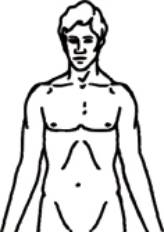
A patient is being admitted for treatment of trigeminal neuralgia. Place an X on the body part on which the nurse should focus the assessment for this health problem.
Question
Question

Unlock Deck
Sign up to unlock the cards in this deck!
Unlock Deck
Unlock Deck
1/39

Play

Full screen (f)
Deck 44: Nursing Care of Patients With Neurologic Disorders
1
The nurse is caring for a patient with amyotrophic lateral sclerosis (ALS). The nurse should realize that the prognosis for this patient is:
A) poor; the disease rapidly progresses and is fatal.
B) good; the disease will progress over many years but the quality of life will be good.
C) good; the disease progresses rapidly but can be halted by drug therapy.
D) excellent; the disease will progress slowly and can be controlled by medication.
A) poor; the disease rapidly progresses and is fatal.
B) good; the disease will progress over many years but the quality of life will be good.
C) good; the disease progresses rapidly but can be halted by drug therapy.
D) excellent; the disease will progress slowly and can be controlled by medication.
poor; the disease rapidly progresses and is fatal.
2
The nurse notes that a patient with Parkinson disease is experiencing tremors and muscle rigidity. Which medication should the nurse expect to be prescribed for these manifestations?
A) propranolol (Inderal)
B) acetaminophen (Tylenol)
C) meperidine (Demerol)
D) nitroglycerin (Nitro-bid)
A) propranolol (Inderal)
B) acetaminophen (Tylenol)
C) meperidine (Demerol)
D) nitroglycerin (Nitro-bid)
propranolol (Inderal)
3
A patient with Parkinson disease is demonstrating bradykinesia. The nurse will likely observe which action in this patient?
A) slowed or delayed movements
B) increased spontaneous movements
C) active exercise and high energy
D) very slow talk
A) slowed or delayed movements
B) increased spontaneous movements
C) active exercise and high energy
D) very slow talk
slowed or delayed movements
4
A test that is used to diagnose myasthenia gravis (MG) is ordered by the physician. Because the test involves an injection of a drug that makes muscle strength improve for about five minutes, the nurse realizes that this test most likely is:
A) the Tensilon test.
B) a computed tomography (CT) scan of the legs.
C) a nerve stimulation study.
D) analysis of antiacetylcholine receptor antibodies.
A) the Tensilon test.
B) a computed tomography (CT) scan of the legs.
C) a nerve stimulation study.
D) analysis of antiacetylcholine receptor antibodies.
Unlock Deck
Unlock for access to all 39 flashcards in this deck.
Unlock Deck
k this deck
5
The nurse is reviewing medication orders for a patient with multiple sclerosis (MS). What medication should the nurse expect to be prescribed for this patient?
A) adrenocorticotropic hormone (ACTH)
B) meperidine (Demerol)
C) monoamine oxidase (MAO) inhibitors
D) rivastigmine tartrate (Exelon)
A) adrenocorticotropic hormone (ACTH)
B) meperidine (Demerol)
C) monoamine oxidase (MAO) inhibitors
D) rivastigmine tartrate (Exelon)
Unlock Deck
Unlock for access to all 39 flashcards in this deck.
Unlock Deck
k this deck
6
The nurse is assessing a patient with Guillain-Barré syndrome. What should the nurse expect to assess in this patient?
A) increased muscular weakness
B) increased lower extremity edema
C) increased confusion
D) increased intolerance to light
E) decreased deep tendon reflexes
A) increased muscular weakness
B) increased lower extremity edema
C) increased confusion
D) increased intolerance to light
E) decreased deep tendon reflexes
Unlock Deck
Unlock for access to all 39 flashcards in this deck.
Unlock Deck
k this deck
7
A home health nurse visits a stage 4 Alzheimer disease patient who lives at home with a spouse. In order to meet the needs of the spouse, what should the nurse suggest?
A) finding respite care to come into the home several days a week
B) making arrangements for the patient to visit the local senior citizens' center in the afternoon
C) providing the patient a list of daily activities to complete
D) finding placement in a long-term care facility
A) finding respite care to come into the home several days a week
B) making arrangements for the patient to visit the local senior citizens' center in the afternoon
C) providing the patient a list of daily activities to complete
D) finding placement in a long-term care facility
Unlock Deck
Unlock for access to all 39 flashcards in this deck.
Unlock Deck
k this deck
8
The nurse is reviewing medication orders for a patient with Alzheimer disease. Which medication should the nurse expect to be prescribed for this patient?
A) rivastigmine tartrate (Exelon)
B) adrenocorticotropic hormone (ACTH)
C) meperidine (Demerol)
D) acetaminophen (Tylenol)
A) rivastigmine tartrate (Exelon)
B) adrenocorticotropic hormone (ACTH)
C) meperidine (Demerol)
D) acetaminophen (Tylenol)
Unlock Deck
Unlock for access to all 39 flashcards in this deck.
Unlock Deck
k this deck
9
A 30-year-old nurse who works on a busy medical-surgical unit has been diagnosed with multiple sclerosis (MS). What should the nurse identify as a priority for self-care?
A) Apply for nursing positions that are less stressful and demanding.
B) Work as hard as possible now because it may not be possible later.
C) Continue to work as scheduled without making changes.
D) Leave employment as a nurse due to the need for complete bed rest.
A) Apply for nursing positions that are less stressful and demanding.
B) Work as hard as possible now because it may not be possible later.
C) Continue to work as scheduled without making changes.
D) Leave employment as a nurse due to the need for complete bed rest.
Unlock Deck
Unlock for access to all 39 flashcards in this deck.
Unlock Deck
k this deck
10
A patient complains of periods of confusion and forgetfulness at times, and reports clear thought process at most times of the day. The symptoms have been gradually worsening. What should the nurse say in response to this patient?
A) "Have you started any new medications since the symptoms began?"
B) "You probably have nothing to worry about; it's most likely stress-related."
C) "Everybody has a few problems with memory as they get older."
D) "You should probably have an MRI of your brain."
A) "Have you started any new medications since the symptoms began?"
B) "You probably have nothing to worry about; it's most likely stress-related."
C) "Everybody has a few problems with memory as they get older."
D) "You should probably have an MRI of your brain."
Unlock Deck
Unlock for access to all 39 flashcards in this deck.
Unlock Deck
k this deck
11
A patient comes to the clinic with complaints of blurred vision and muscle spasms that come and go, which have been occurring over the past several months. The patient is scheduled for an MRI and lumbar puncture with examination of the CSF. Which important patient history information is important for the nurse to note?
A) The patient is a 22-year-old woman from Canada.
B) The patient is Caucasian and lives in the United States.
C) The patient has a family history of epilepsy.
D) The patient has been depressed.
E) The patient's father had Parkinson disease.
A) The patient is a 22-year-old woman from Canada.
B) The patient is Caucasian and lives in the United States.
C) The patient has a family history of epilepsy.
D) The patient has been depressed.
E) The patient's father had Parkinson disease.
Unlock Deck
Unlock for access to all 39 flashcards in this deck.
Unlock Deck
k this deck
12
The nurse is assessing a patient with myasthenia gravis. Which are characteristics of this disease?
A) Routine exercise provides an improvement in muscle strength.
B) Visual problems may be an early symptom.
C) There may be difficulty swallowing.
D) Great improvement occurs in muscle strength with physical therapy.
E) There may be poor articulation in speaking.
A) Routine exercise provides an improvement in muscle strength.
B) Visual problems may be an early symptom.
C) There may be difficulty swallowing.
D) Great improvement occurs in muscle strength with physical therapy.
E) There may be poor articulation in speaking.
Unlock Deck
Unlock for access to all 39 flashcards in this deck.
Unlock Deck
k this deck
13
An adult patient with Bell palsy asks if the facial paralysis and distortion will go away. How should the nurse response to this patient?
A) "Most people recover completely within a few weeks to a few months."
B) "Everyone recovers from Bell palsy in three to five weeks."
C) "Most people have permanent facial paralysis on both sides of the face."
D) "Most people have permanent facial paralysis on one side of the face."
A) "Most people recover completely within a few weeks to a few months."
B) "Everyone recovers from Bell palsy in three to five weeks."
C) "Most people have permanent facial paralysis on both sides of the face."
D) "Most people have permanent facial paralysis on one side of the face."
Unlock Deck
Unlock for access to all 39 flashcards in this deck.
Unlock Deck
k this deck
14
A patient's spouse states, "I've noticed that my spouse doesn't sleep well anymore and sometimes can't find the right words." What is the most appropriate response by the nurse?
A) "How long have you noticed these changes?"
B) "Does anyone in your family have Alzheimer disease?"
C) "These are common changes associated with age."
D) "Do you think your spouse is depressed?"
A) "How long have you noticed these changes?"
B) "Does anyone in your family have Alzheimer disease?"
C) "These are common changes associated with age."
D) "Do you think your spouse is depressed?"
Unlock Deck
Unlock for access to all 39 flashcards in this deck.
Unlock Deck
k this deck
15
A patient who is newly diagnosed with Huntington disease asks the nurse whether this disorder can be passed on to future children. What should the nurse say in answer to this patient?
A) "There may be genetic concerns that should be discussed with the physician."
B) "Children will not be affected by the disease."
C) "The disease is passed on genetically in 75% of offspring."
D) "Each child will have a 50% chance of inheriting the gene."
E) "Genetic testing is can determine who has the disease.
A) "There may be genetic concerns that should be discussed with the physician."
B) "Children will not be affected by the disease."
C) "The disease is passed on genetically in 75% of offspring."
D) "Each child will have a 50% chance of inheriting the gene."
E) "Genetic testing is can determine who has the disease.
Unlock Deck
Unlock for access to all 39 flashcards in this deck.
Unlock Deck
k this deck
16
The nurse is having a conversation with an older adult with Parkinson disease. What speech patterns would this patient most likely exhibit during conversation with the nurse?
A) a low-pitched monotone voice
B) bubbly, spirited discussion
C) jumbled words that do not make sense
D) angry, loud talk
E) slurring and poor articulation of words
A) a low-pitched monotone voice
B) bubbly, spirited discussion
C) jumbled words that do not make sense
D) angry, loud talk
E) slurring and poor articulation of words
Unlock Deck
Unlock for access to all 39 flashcards in this deck.
Unlock Deck
k this deck
17
A patient with Parkinson disease asks the nurse what an "on-off" problem means with medications. What should the nurse explain to the patient?
A) "The 'on' times will be when your symptoms are under control; the 'off' times are when you will have increased problems with symptom management."
B) "There will be times when you are depressed (off) and when you are happy (on)."
C) "You will have to take breaks from this medicine by stopping (off) and starting it (on) again, so you don't build up a tolerance to it."
D) "I'm not a pharmacist, so I shouldn't be answering this question."
A) "The 'on' times will be when your symptoms are under control; the 'off' times are when you will have increased problems with symptom management."
B) "There will be times when you are depressed (off) and when you are happy (on)."
C) "You will have to take breaks from this medicine by stopping (off) and starting it (on) again, so you don't build up a tolerance to it."
D) "I'm not a pharmacist, so I shouldn't be answering this question."
Unlock Deck
Unlock for access to all 39 flashcards in this deck.
Unlock Deck
k this deck
18
A patient comes to the clinic complaining of excruciating pain on one side of the face. What should the nurse suspect is occurring with this patient?
A) trigeminal neuralgia
B) Parkinson disease
C) Bell palsy
D) myasthenia gravis
A) trigeminal neuralgia
B) Parkinson disease
C) Bell palsy
D) myasthenia gravis
Unlock Deck
Unlock for access to all 39 flashcards in this deck.
Unlock Deck
k this deck
19
The nurse is preparing to care for a patient with Alzheimer disease. What should the nurse identify as common signs of this disorder?
A) poor or decreased judgment
B) declining job skills
C) inability to be comfortable in social situations
D) obsession with organization
E) focused on abstract thoughts
A) poor or decreased judgment
B) declining job skills
C) inability to be comfortable in social situations
D) obsession with organization
E) focused on abstract thoughts
Unlock Deck
Unlock for access to all 39 flashcards in this deck.
Unlock Deck
k this deck
20
A patient is diagnosed with amyotrophic lateral sclerosis (ALS). What should the nurse identify as being the priority nursing activity for this patient?
A) Support the patient and family to meet physical and psychosocial needs.
B) Monitor for infection.
C) Assist the patient to avoid complications.
D) Assist the patient to adapt to the disease.
A) Support the patient and family to meet physical and psychosocial needs.
B) Monitor for infection.
C) Assist the patient to avoid complications.
D) Assist the patient to adapt to the disease.
Unlock Deck
Unlock for access to all 39 flashcards in this deck.
Unlock Deck
k this deck
21
The nurse is concerned that a patient recovering from a thymectomy is developing a pneumothorax. What did the nurse assess to cause this concern?
A) shortness of breath
B) decreased breath sounds
C) sudden onset of chest pain
D) coughing pink-tinged mucous
E) pain level 5 on a scale from 0 to 10
A) shortness of breath
B) decreased breath sounds
C) sudden onset of chest pain
D) coughing pink-tinged mucous
E) pain level 5 on a scale from 0 to 10
Unlock Deck
Unlock for access to all 39 flashcards in this deck.
Unlock Deck
k this deck
22
The nurse is caring for a patient with amyotrophic lateral sclerosis (ALS). What should the nurse identify as being the primary focus of care for this patient?
A) respiratory support as the muscles of breathing fail, and managing secretions due to the inability to swallow and communication
B) providing gastrostomy feedings as soon as possible so as to build up muscle mass when motor functions return
C) pain management and active range-of-motion (ROM) exercises
D) giving immunosuppressants
A) respiratory support as the muscles of breathing fail, and managing secretions due to the inability to swallow and communication
B) providing gastrostomy feedings as soon as possible so as to build up muscle mass when motor functions return
C) pain management and active range-of-motion (ROM) exercises
D) giving immunosuppressants
Unlock Deck
Unlock for access to all 39 flashcards in this deck.
Unlock Deck
k this deck
23
The husband of a patient with Alzheimer disease (AD) asks the nurse to explain sundowning. How should the nurse respond to this question?
A) "Your wife can become more agitated, disoriented to time, and wander during the afternoon or early evening."
B) "Your wife's eyes will appear more downcast and the lids will droop."
C) "Repetition of words or phrases occurs more frequently."
D) "The ability to perform simple tasks is lost."
A) "Your wife can become more agitated, disoriented to time, and wander during the afternoon or early evening."
B) "Your wife's eyes will appear more downcast and the lids will droop."
C) "Repetition of words or phrases occurs more frequently."
D) "The ability to perform simple tasks is lost."
Unlock Deck
Unlock for access to all 39 flashcards in this deck.
Unlock Deck
k this deck
24
A patient is prescribed tetrabenazine (Xenazine) for treatment of chorea caused by Huntington disease. What should the nurse emphasize when teaching the patient and family about this medication?
A) Do not take with levodopa.
B) Avoid overexposure to heat.
C) Report any suicidal thoughts.
D) Be alert for signs of depression.
E) Have routine liver function tests completed.
A) Do not take with levodopa.
B) Avoid overexposure to heat.
C) Report any suicidal thoughts.
D) Be alert for signs of depression.
E) Have routine liver function tests completed.
Unlock Deck
Unlock for access to all 39 flashcards in this deck.
Unlock Deck
k this deck
25
A patient with stage 2 Alzheimer disease becomes very agitated in the evenings. What would be an appropriate nursing intervention for the nurse to use for this patient?
A) playing soft music in the patient's room
B) use of anti-anxiety medications or tranquilizers
C) moving the patient to an area of activity to provide distraction
D) recommending the patient be moved to a more secure environment
A) playing soft music in the patient's room
B) use of anti-anxiety medications or tranquilizers
C) moving the patient to an area of activity to provide distraction
D) recommending the patient be moved to a more secure environment
Unlock Deck
Unlock for access to all 39 flashcards in this deck.
Unlock Deck
k this deck
26
A patient with myasthenia gravis is prescribed pyridostigmine (Mestinon). When teaching about this medication, what should the nurse teach the patient to immediately report?
A) increased weakness
B) problems with increased drooling
C) orthostatic hypotension
D) headache
E) increased difficulty swallowing
A) increased weakness
B) problems with increased drooling
C) orthostatic hypotension
D) headache
E) increased difficulty swallowing
Unlock Deck
Unlock for access to all 39 flashcards in this deck.
Unlock Deck
k this deck
27
The nurse is caring for a patient recovering from a percutaneous rhizotomy for trigeminal neuralgia. What techniques should the nurse use to assess this patient for adverse effects from the procedure?
A) clench the teeth
B) touch the cornea with a cotton wisp
C) stick out the tongue
D) place sugar on the front of the patient's tongue
E) move the eyes through the cardinal positions of vision
A) clench the teeth
B) touch the cornea with a cotton wisp
C) stick out the tongue
D) place sugar on the front of the patient's tongue
E) move the eyes through the cardinal positions of vision
Unlock Deck
Unlock for access to all 39 flashcards in this deck.
Unlock Deck
k this deck
28
The nurse is reviewing the medical record of a patient with Alzheimer disease. Which stage should the nurse realize this patient is experiencing?
A) stage 1
B) stage 3
C) stage 4
D) stage 5
A) stage 1
B) stage 3
C) stage 4
D) stage 5
Unlock Deck
Unlock for access to all 39 flashcards in this deck.
Unlock Deck
k this deck
29
The nurse is reviewing laboratory reports for a patient. What health problem should the nurse realize this patient is experiencing?
A) myasthenia gravis
B) Parkinson disease
C) amyotrophic lateral sclerosis (ALS)
D) Guillain-Barré syndrome (GBS)
A) myasthenia gravis
B) Parkinson disease
C) amyotrophic lateral sclerosis (ALS)
D) Guillain-Barré syndrome (GBS)
Unlock Deck
Unlock for access to all 39 flashcards in this deck.
Unlock Deck
k this deck
30
The nurse is completing discharge teaching to a patient with a new diagnosis of multiple sclerosis (MS). What does the nurse recommend about diet?
A) Focus on maintaining a weight as close as possible to what is recommended for the patient's height and weight.
B) Increase fats and lower carbohydrates.
C) Include foods that are easy to swallow since dysphagia is a problem seen in the early stages of the disease.
D) Basically remain the same, as there are no nutritional changes in the MS patient.
A) Focus on maintaining a weight as close as possible to what is recommended for the patient's height and weight.
B) Increase fats and lower carbohydrates.
C) Include foods that are easy to swallow since dysphagia is a problem seen in the early stages of the disease.
D) Basically remain the same, as there are no nutritional changes in the MS patient.
Unlock Deck
Unlock for access to all 39 flashcards in this deck.
Unlock Deck
k this deck
31
The nurse is caring for a patient with Guillain-Barré syndrome. Which medication should the nurse expect to provide to this patient?
A) antibiotics for urinary tract or respiratory infections
B) morphine for muscle pain
C) anticoagulants to prevent DVTs and pulmonary emboli
D) anticonvulsants to prevent seizures
E) anticholinesterase inhibitors to improve muscle strength
A) antibiotics for urinary tract or respiratory infections
B) morphine for muscle pain
C) anticoagulants to prevent DVTs and pulmonary emboli
D) anticonvulsants to prevent seizures
E) anticholinesterase inhibitors to improve muscle strength
Unlock Deck
Unlock for access to all 39 flashcards in this deck.
Unlock Deck
k this deck
32
The nurse is assessing cranial nerve function in the patient recovering from percutaneous rhizotomy of the facial nerve. What technique should the nurse use when making this assessment?
A) Ask the patient to blow out the cheeks, wrinkle the forehead, frown, wink, and close both eyes tightly.
B) Have the patient touch the index finger to the nose with eyes open, and then repeat the movement with eyes closed.
C) Ask the patient to shrug the shoulders, and then repeat the movement when resistance is applied.
D) Have the patient turn the head to the left, then the right, and touch the ear to the shoulder on the left and right sides.
A) Ask the patient to blow out the cheeks, wrinkle the forehead, frown, wink, and close both eyes tightly.
B) Have the patient touch the index finger to the nose with eyes open, and then repeat the movement with eyes closed.
C) Ask the patient to shrug the shoulders, and then repeat the movement when resistance is applied.
D) Have the patient turn the head to the left, then the right, and touch the ear to the shoulder on the left and right sides.
Unlock Deck
Unlock for access to all 39 flashcards in this deck.
Unlock Deck
k this deck
33
During an assessment the nurse becomes concerned that a patient is demonstrating early manifestations of amyotrophic lateral sclerosis. What findings did the nurse use to make this clinical determination?
A) foot drop
B) slurred speech
C) weak hip flexor muscles
D) bilateral weak hand grasps
E) fine muscle fasciculations of the hands
A) foot drop
B) slurred speech
C) weak hip flexor muscles
D) bilateral weak hand grasps
E) fine muscle fasciculations of the hands
Unlock Deck
Unlock for access to all 39 flashcards in this deck.
Unlock Deck
k this deck
34
The nurse is preparing a patient for plasmapheresis. In which order should the nurse complete the following actions? Standard Text: Click and drag the options below to move them up or down.
A) Check with physician about holding medications.
B) Assess vital signs and weight.
C) Verify blood type and crossmatch for replacement blood products.
D) Assess for dizziness or hypotension.
E) Assess intravenous port for bruising.
F) Reevaluate laboratory data, especially CBC, platelet count, and clotting times.
G) none of the above
A) Check with physician about holding medications.
B) Assess vital signs and weight.
C) Verify blood type and crossmatch for replacement blood products.
D) Assess for dizziness or hypotension.
E) Assess intravenous port for bruising.
F) Reevaluate laboratory data, especially CBC, platelet count, and clotting times.
G) none of the above
Unlock Deck
Unlock for access to all 39 flashcards in this deck.
Unlock Deck
k this deck
35
The nurse is completing teaching to a patient with a new diagnosis of Bell palsy. What should be a priority focus of this teaching?
A) eye care
B) promoting effective swallowing
C) pain management
D) improving muscle strength in the upper extremity
A) eye care
B) promoting effective swallowing
C) pain management
D) improving muscle strength in the upper extremity
Unlock Deck
Unlock for access to all 39 flashcards in this deck.
Unlock Deck
k this deck
36
After returning from a plasmapheresis treatment, the nurse suspects that a patient with myasthenia gravis is demonstrating signs of electrolyte imbalances. What did the patient demonstrate to confirm the nurse's suspicion?
A) sluggish bowel sounds
B) heart rate 92 and irregular
C) onset of circumoral tingling
D) blood pressure 148/90 mmHg
E) bilateral calf cramping
A) sluggish bowel sounds
B) heart rate 92 and irregular
C) onset of circumoral tingling
D) blood pressure 148/90 mmHg
E) bilateral calf cramping
Unlock Deck
Unlock for access to all 39 flashcards in this deck.
Unlock Deck
k this deck
37
A patient is being admitted for treatment of trigeminal neuralgia. Place an X on the body part on which the nurse should focus the assessment for this health problem.
Unlock Deck
Unlock for access to all 39 flashcards in this deck.
Unlock Deck
k this deck
38
The nurse suspects that a patient has Parkinson disease. What did the nurse assess as early signs of this neurologic disease?
A) fatigue
B) cogwheel rigidity
C) being "frozen"
D) bilateral involvement
E) a slight a rhythmic hand tremor
A) fatigue
B) cogwheel rigidity
C) being "frozen"
D) bilateral involvement
E) a slight a rhythmic hand tremor
Unlock Deck
Unlock for access to all 39 flashcards in this deck.
Unlock Deck
k this deck
39
The nurse is caring for a patient with trigeminal neuralgia. What should the nurse expect the treatment focus to be for this health problem?
A) drugs such as tricyclic anticonvulsants or surgically severing the nerve root (rhizotomy)
B) antiviral drugs such as acyclovir and physical therapy
C) respiratory support and NSAIDs
D) physical therapy and warm, moist packs to the affected area
A) drugs such as tricyclic anticonvulsants or surgically severing the nerve root (rhizotomy)
B) antiviral drugs such as acyclovir and physical therapy
C) respiratory support and NSAIDs
D) physical therapy and warm, moist packs to the affected area
Unlock Deck
Unlock for access to all 39 flashcards in this deck.
Unlock Deck
k this deck
Unlock Deck
Unlock for access to all 39 flashcards in this deck.






