







 Chat with AI

Deck 1: The Nature of Economics
Full screen (f)

Question
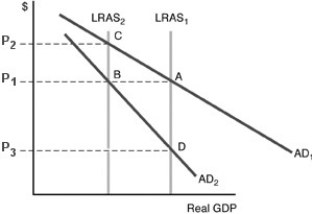
Economics is best defined as the
A) study of how people make choices to satisfy their wants.
B) study of individual self-interests.
C) study of why people do not react to incentives.
D) process by which goods are sold in free markets.

Question
A fundamental aspect of economics is to
A) ensure that every firm makes a profit.
B) analyze how choices are made.
C) satisfy all our wants.
D) make sure that we always have sufficient resources.
Question
In economics, items that are used to produce goods and services are known as
A) wants.
B) needs.
C) outputs.
D) resources.
Question
Economics is the study of
A) nonhuman phenomena.
B) the determinants of preferences.
C) scarce resources and unlimited wants.
D) the physical sciences.
Question
Economics is a social science that involves the study of how individuals
A) develop their tastes and preferences.
B) develop their goals and objectives in life.
C) pursue happiness.
D) choose among alternatives to satisfy their unlimited wants.
Question
Economic resources are
A) all the items that people would purchase if they had limited wants.
B) all the unlimited items that people would purchase with limited income.
C) items of value that are used to make other things that satisfy people's wants.
D) the total planned expenditures throughout the nation.
Question
Economics can be described as the study of how people use ________ resources to satisfy ________ wants.
A) unlimited; unlimited
B) unlimited; limited
C) limited; unlimited
D) limited; limited
Question
Economics is the study of how
A) people become selfish.
B) preferences are determined.
C) psychology influences preferences.
D) people make choices.
Question
Economics is the study of
A) how to get rich.
B) how people allocate their limited resources to satisfy their unlimited wants.
C) how people spend their income.
D) why people want certain goods and services rather than other goods and services.
Question
Economics is a part of the
A) social sciences.
B) natural sciences.
C) biological sciences.
D) organizational sciences.
Question
The economic way of thinking will help you
A) make decisions in financing your home.
B) analyze solutions to economic problems.
C) make better decisions concerning your education.
D) all of the above
Question
In economic analysis, people's resources are
A) limited and their wants are unlimited.
B) unlimited and their wants are also unlimited.
C) limited and their wants are also limited.
D) unlimited and their wants are limited.
Question
Economics is the study of
A) how to own as many resources as possible.
B) ceteris paribus.
C) the way people think rather than the way they act.
D) how people allocate their limited resources to satisfy their unlimited wants.
Question
Economic analysis is a tool that
A) aids all decision making.
B) helps us understand why people make mistakes.
C) helps us forgive selfish people.
D) makes everyone rich.
Question
Economics deals with choices
A) that involve the wants of individuals.
B) that involve what people only need to survive.
C) that people make without self-motivated interest.
D) that people normally do not make.
Question
Economics deals with
A) how to profit from the stock market.
B) how to satisfy limited human wants.
C) how society allocates unlimited resources.
D) how individuals allocate scarce resources to satisfy unlimited human wants.
Question
Which statement most accurately describes economics?
A) Economics is the study of how people make money.
B) Economics is the study of how people make choices to satisfy their wants.
C) Economics is the study of social values a society should choose.
D) Economics is the study of how to eliminate scarcity.
Question
In economics, ________ are limited but ________ are unlimited.
A) wants; resources
B) resources; wants
C) money; ideas
D) ideas; money
Question
In economics, all the items that people would consume if they had unlimited income are known as
A) wants.
B) aggregates.
C) outputs.
D) needs.
Question
Economic analysis is used
A) only by instructors and students in economics to understand the world.
B) only by business people to raise profits.
C) only by policy makers to make policy decisions.
D) in all decision making.
Question
________ are the things that are used to produce items that satisfy people's wants.
A) Concepts
B) Production possibilities curves
C) Resources
D) Costs
Question
Economics is the study of how people make
A) subjective judgments.
B) life easy.
C) money.
D) choices.
Question
Macroeconomics is the study of
A) aggregate economic variables.
B) output in particular industries.
C) prices in particular industries.
D) all of the above.
Question
Wants are
A) another term for needs.
B) the things people would consume if they had unlimited incomes.
C) the things people consume with their income.
D) all the things people really need in order to live comfortably.
Question
In economics
A) both resources and wants are limited.
B) both resources and wants are unlimited.
C) resources are limited but wants are unlimited.
D) resources are unlimited but wants are limited.
Question
Economics is most precisely defined as
A) a study of what people need to survive.
B) a study of how culture evolves in different geographic areas.
C) the same as the study of finance and management.
D) the study of how people make choices.
Question
Which of the following is a characteristic of economics?
A) allocation of limited resources in an effort to satisfy potentially unlimited wants
B) the focus on how people behave not in their own self-interest
C) the way society deals with people's needs
D) all of the above
Question
Economics is a
A) hard science.
B) physical science.
C) natural science.
D) social science.
Question
The primary objective of economics is
A) to learn how to create more resources.
B) to study how people make choices with limited resources.
C) to learn how to make the most profits with a given amount of resources.
D) to study why some people are never happy with the resources they have.
Question
Microeconomics is defined as that part of economic analysis that
A) studies the behavior of the economy as a whole.
B) includes the problems of inflation and unemployment.
C) studies individual decision making by households and firms.
D) concerns aggregate production and consumption.
Question
The basic economic problem is a situation of
A) limited resources and unlimited wants.
B) both limited resources and limited wants.
C) limited incomes and unlimited choices.
D) unlimited incomes and limited choices.
Question
Because resources are scarce relative to wants, the study of economics concerns
A) how money is important to people.
B) how individuals, businesses, and governments make choices.
C) how money is used to buy what people want.
D) None of the above are correct.
Question
Which of the following is NOT a focus of the study of economics?
A) how individual preferences are formed
B) unemployment
C) inflation
D) prices in particular markets
Question
Economics is the study of
A) the allocation of scarce resources to satisfy unlimited wants.
B) why some people want certain goods and services.
C) earning the most income.
D) ways to use fewer resources.
Question
Economics is a study of
A) how to make money in the stock market.
B) how to run a business successfully.
C) the allocation of scarce resources.
D) personal finance.
Question
Economics
A) is a social science.
B) is concerned with limited resources.
C) is concerned with unlimited wants.
D) All of the above are correct.
Question
Resources are
A) unlimited.
B) able to be replicated in large quantities.
C) what people would buy if their income was unlimited.
D) used to produce goods and services to satisfy people's wants.
Question
The primary purpose of economics is to understand how people make
A) money.
B) goods and services.
C) choices.
D) a comfortable living.
Question
Microeconomics is the study of
A) the behavior of the economy as a whole.
B) a nation from the perspective of the whole world.
C) how individuals and firms make decisions.
D) the effect that money has in the economic system.
Question
Macroeconomics is best defined by which of the following statements?
A) Macroeconomics is the study of how firms attempt to maximize profits.
B) Macroeconomics is the study of the behavior of the economy as a whole.
C) Macroeconomics is the study of individual households.
D) Macroeconomics is the study of how the prices of individual goods are determined.
Question
Macroeconomics would be concerned with
A) implications of changes in unemployment and inflation.
B) the effects on individual consumers of changes in the price of gasoline for a business.
C) the effects of a tax on beer.
D) the effects of wage increases on steel manufacturers.
Question
A macroeconomist would most likely study
A) the effects of changing grape prices on the market for oranges.
B) the effects of an increase in wage rates on a woman's decision to enter the labor force.
C) the effects of a lower income tax rates on the nation's total production of goods and services.
D) the effect of increased union wages on the cost of producing automobiles.
Question
The impact of higher taxes would be examined by
A) a microeconomist.
B) a macroeconomist.
C) both a macroeconomist and a microeconomist.
D) neither a macroeconomist nor a microeconomist.
Question
Microeconomics is concerned with studying which of the following?
A) the determinants of national unemployment
B) the effects of monetary policy
C) the study of a nation's workforce
D) none of the above
Question
Macroeconomics often relies on microeconomic analysis because
A) microeconomics is older than macroeconomics.
B) microeconomic theory can be tested and macroeconomic theory cannot be tested.
C) all aggregates are made up of individuals and firms.
D) the effects of macroeconomic subjects such as inflation and unemployment are independent of individual consumers and firms.
Question
Macroeconomics is concerned with
A) individual business firms.
B) specific markets.
C) individual consumers.
D) a nation's economy.
Question
Which of the following would most likely NOT be taught in a microeconomics course?
A) changes in prices of automobiles
B) the effects of a gas tax on gas purchases
C) the effect of an increase in wheat prices on farmers' behavior
D) changes in unemployment across the nation
Question
Which of the following would most likely NOT be taught in a macroeconomics course?
A) price changes in the world's oil markets
B) factors leading to different economic growth rates among countries
C) government actions in response to a slowdown in the economy
D) the relationship between the inflation rate and the unemployment rate
Question
Macroeconomics deals with ________ while microeconomics deals with ________.
A) choices important to people; choices not important to people
B) economywide choices; choices of individuals
C) choices that involve money; choices that does not involve money
D) choices of rich people; choices of poor people
Question
One topic of study for a microeconomist would be the
A) causes of inflation.
B) causes of a nation's unemployment level.
C) effects of a gasoline price increase on consumer behavior.
D) effects of an increase in government spending on overall economic activity.
Question
A friend wants to learn how a nation's unemployment rate is calculated and how it changes over time. He asks you which economics course to take and you advise him to enroll in
A) macroeconomics.
B) microeconomics.
C) either micro- or macroeconomics. They both concentrate equally on those issues.
D) political science because economics doesn't address those topics in its courses.
Question
A macroeconomist would study
A) the price changes of smart phones.
B) the cost problems at several airlines.
C) the economy's unemployment level.
D) none of the above.
Question
Macroeconomics is concerned with
A) individual consumers.
B) government decision making concerning farm price supports.
C) aggregates.
D) the effects on a corporation of a strike by the United Auto Workers.
Question
Macroeconomics is concerned with studying the
A) behavior of individual decision makers.
B) performance of the economy as a whole.
C) prices of specific companies' stocks.
D) wants of individual consumers.
Question
A microeconomist would study all of the following issues EXCEPT
A) the impact of a change in consumer income on the sales of corn.
B) the impact of a snowstorm on the sales of snow shovels.
C) the most efficient means for General Motors to produce an automobile.
D) the effect of a change in income taxes on the nation's rate of unemployment.
Question
Microeconomics focuses on
A) individual decision makers.
B) decisions only on small expenses.
C) small changes in an economy.
D) satisfying the specific needs of a community.
Question
Macroeconomics deals with
A) aggregates within the economy.
B) specific sectors within the economy.
C) the retail industry only.
D) decisions made by firms.
Question
Microeconomics is concerned with the study of
A) the effects of inflation.
B) the effects of government spending.
C) the effects on individual producers of higher wages paid to workers.
D) aggregates.
Question
Microeconomics examines the
A) total household expenditures.
B) behavior of the economy as a whole.
C) aggregate business spending.
D) decision making undertaken by individual households.
Question
Which of the following would likely be studied in a macroeconomics course?
A) the unemployment rate
B) total output in an economy
C) the inflation rate
D) all of the above
Question
Question
Question
The study of an individual's choice about what type of computer to buy is a subject of
A) macroeconomics.
B) microeconomics.
C) an aggregate concept.
D) not a concern for economic analysis.
Question
The study of the aggregate economic variables is
A) macroeconomics.
B) microeconomics.
C) positive economics.
D) normative economics.
Question
Question
Question
The distinction between microeconomics and macroeconomics is
A) clearly drawn, and there is no overlap between them.
B) determined by economists in a clear and concise manner.
C) narrowly drawn, and microeconomic analysis often relies on macroeconomic tools.
D) often blurred because aggregates are made up of individuals and firms.
Question
Question
Question
All of the following are examples of macroeconomic problems EXCEPT
A) inflationary pressures caused by an increase in the cost of petroleum.
B) unemployment caused by a fall off in the level of residential construction.
C) a decline in the rate of overall economic growth.
D) consumers deciding to buy more fish and less beef because of concerns about a healthier diet.
Question
Macroeconomics is concerned primarily with
A) large firms or multinational corporations.
B) production and prices in particular markets.
C) aggregate economic variables.
D) normative issues.
Question
Question
In economics, the word "aggregate" refers to
A) the government.
B) how individual households differ from each other.
C) the public sector itself.
D) an economy as a whole.
Question
Question
Question
Which of the following is NOT studied in microeconomics?
A) the effect of an increase in gasoline taxes on the purchase of gasoline
B) the impact of government spending on the unemployment rate
C) the impact of firms' hiring choices on their employees' wages
D) the impact of higher fuel prices on the cost of airline tickets
Question
Question
Question
Question
Modern economists are increasingly using microeconomic analysis in macroeconomics because
A) microeconomic theory is more scientific.
B) aggregate outcomes stem from decisions made by individuals, business firms and government.
C) macroeconomic subjects such as inflation affect all individuals.
D) macroeconomics is older and more outdated.

Unlock Deck
Sign up to unlock the cards in this deck!
Unlock Deck
Unlock Deck
1/348

Play

Full screen (f)
Deck 1: The Nature of Economics
1
Economics is best defined as the
A) study of how people make choices to satisfy their wants.
B) study of individual self-interests.
C) study of why people do not react to incentives.
D) process by which goods are sold in free markets.
A
2
A fundamental aspect of economics is to
A) ensure that every firm makes a profit.
B) analyze how choices are made.
C) satisfy all our wants.
D) make sure that we always have sufficient resources.
B
3
In economics, items that are used to produce goods and services are known as
A) wants.
B) needs.
C) outputs.
D) resources.
D
4
Economics is the study of
A) nonhuman phenomena.
B) the determinants of preferences.
C) scarce resources and unlimited wants.
D) the physical sciences.
Unlock Deck
Unlock for access to all 348 flashcards in this deck.
Unlock Deck
k this deck
5
Economics is a social science that involves the study of how individuals
A) develop their tastes and preferences.
B) develop their goals and objectives in life.
C) pursue happiness.
D) choose among alternatives to satisfy their unlimited wants.
Unlock Deck
Unlock for access to all 348 flashcards in this deck.
Unlock Deck
k this deck
6
Economic resources are
A) all the items that people would purchase if they had limited wants.
B) all the unlimited items that people would purchase with limited income.
C) items of value that are used to make other things that satisfy people's wants.
D) the total planned expenditures throughout the nation.
Unlock Deck
Unlock for access to all 348 flashcards in this deck.
Unlock Deck
k this deck
7
Economics can be described as the study of how people use ________ resources to satisfy ________ wants.
A) unlimited; unlimited
B) unlimited; limited
C) limited; unlimited
D) limited; limited
Unlock Deck
Unlock for access to all 348 flashcards in this deck.
Unlock Deck
k this deck
8
Economics is the study of how
A) people become selfish.
B) preferences are determined.
C) psychology influences preferences.
D) people make choices.
Unlock Deck
Unlock for access to all 348 flashcards in this deck.
Unlock Deck
k this deck
9
Economics is the study of
A) how to get rich.
B) how people allocate their limited resources to satisfy their unlimited wants.
C) how people spend their income.
D) why people want certain goods and services rather than other goods and services.
Unlock Deck
Unlock for access to all 348 flashcards in this deck.
Unlock Deck
k this deck
10
Economics is a part of the
A) social sciences.
B) natural sciences.
C) biological sciences.
D) organizational sciences.
Unlock Deck
Unlock for access to all 348 flashcards in this deck.
Unlock Deck
k this deck
11
The economic way of thinking will help you
A) make decisions in financing your home.
B) analyze solutions to economic problems.
C) make better decisions concerning your education.
D) all of the above
Unlock Deck
Unlock for access to all 348 flashcards in this deck.
Unlock Deck
k this deck
12
In economic analysis, people's resources are
A) limited and their wants are unlimited.
B) unlimited and their wants are also unlimited.
C) limited and their wants are also limited.
D) unlimited and their wants are limited.
Unlock Deck
Unlock for access to all 348 flashcards in this deck.
Unlock Deck
k this deck
13
Economics is the study of
A) how to own as many resources as possible.
B) ceteris paribus.
C) the way people think rather than the way they act.
D) how people allocate their limited resources to satisfy their unlimited wants.
Unlock Deck
Unlock for access to all 348 flashcards in this deck.
Unlock Deck
k this deck
14
Economic analysis is a tool that
A) aids all decision making.
B) helps us understand why people make mistakes.
C) helps us forgive selfish people.
D) makes everyone rich.
Unlock Deck
Unlock for access to all 348 flashcards in this deck.
Unlock Deck
k this deck
15
Economics deals with choices
A) that involve the wants of individuals.
B) that involve what people only need to survive.
C) that people make without self-motivated interest.
D) that people normally do not make.
Unlock Deck
Unlock for access to all 348 flashcards in this deck.
Unlock Deck
k this deck
16
Economics deals with
A) how to profit from the stock market.
B) how to satisfy limited human wants.
C) how society allocates unlimited resources.
D) how individuals allocate scarce resources to satisfy unlimited human wants.
Unlock Deck
Unlock for access to all 348 flashcards in this deck.
Unlock Deck
k this deck
17
Which statement most accurately describes economics?
A) Economics is the study of how people make money.
B) Economics is the study of how people make choices to satisfy their wants.
C) Economics is the study of social values a society should choose.
D) Economics is the study of how to eliminate scarcity.
Unlock Deck
Unlock for access to all 348 flashcards in this deck.
Unlock Deck
k this deck
18
In economics, ________ are limited but ________ are unlimited.
A) wants; resources
B) resources; wants
C) money; ideas
D) ideas; money
Unlock Deck
Unlock for access to all 348 flashcards in this deck.
Unlock Deck
k this deck
19
In economics, all the items that people would consume if they had unlimited income are known as
A) wants.
B) aggregates.
C) outputs.
D) needs.
Unlock Deck
Unlock for access to all 348 flashcards in this deck.
Unlock Deck
k this deck
20
Economic analysis is used
A) only by instructors and students in economics to understand the world.
B) only by business people to raise profits.
C) only by policy makers to make policy decisions.
D) in all decision making.
Unlock Deck
Unlock for access to all 348 flashcards in this deck.
Unlock Deck
k this deck
21
________ are the things that are used to produce items that satisfy people's wants.
A) Concepts
B) Production possibilities curves
C) Resources
D) Costs
Unlock Deck
Unlock for access to all 348 flashcards in this deck.
Unlock Deck
k this deck
22
Economics is the study of how people make
A) subjective judgments.
B) life easy.
C) money.
D) choices.
Unlock Deck
Unlock for access to all 348 flashcards in this deck.
Unlock Deck
k this deck
23
Macroeconomics is the study of
A) aggregate economic variables.
B) output in particular industries.
C) prices in particular industries.
D) all of the above.
Unlock Deck
Unlock for access to all 348 flashcards in this deck.
Unlock Deck
k this deck
24
Wants are
A) another term for needs.
B) the things people would consume if they had unlimited incomes.
C) the things people consume with their income.
D) all the things people really need in order to live comfortably.
Unlock Deck
Unlock for access to all 348 flashcards in this deck.
Unlock Deck
k this deck
25
In economics
A) both resources and wants are limited.
B) both resources and wants are unlimited.
C) resources are limited but wants are unlimited.
D) resources are unlimited but wants are limited.
Unlock Deck
Unlock for access to all 348 flashcards in this deck.
Unlock Deck
k this deck
26
Economics is most precisely defined as
A) a study of what people need to survive.
B) a study of how culture evolves in different geographic areas.
C) the same as the study of finance and management.
D) the study of how people make choices.
Unlock Deck
Unlock for access to all 348 flashcards in this deck.
Unlock Deck
k this deck
27
Which of the following is a characteristic of economics?
A) allocation of limited resources in an effort to satisfy potentially unlimited wants
B) the focus on how people behave not in their own self-interest
C) the way society deals with people's needs
D) all of the above
Unlock Deck
Unlock for access to all 348 flashcards in this deck.
Unlock Deck
k this deck
28
Economics is a
A) hard science.
B) physical science.
C) natural science.
D) social science.
Unlock Deck
Unlock for access to all 348 flashcards in this deck.
Unlock Deck
k this deck
29
The primary objective of economics is
A) to learn how to create more resources.
B) to study how people make choices with limited resources.
C) to learn how to make the most profits with a given amount of resources.
D) to study why some people are never happy with the resources they have.
Unlock Deck
Unlock for access to all 348 flashcards in this deck.
Unlock Deck
k this deck
30
Microeconomics is defined as that part of economic analysis that
A) studies the behavior of the economy as a whole.
B) includes the problems of inflation and unemployment.
C) studies individual decision making by households and firms.
D) concerns aggregate production and consumption.
Unlock Deck
Unlock for access to all 348 flashcards in this deck.
Unlock Deck
k this deck
31
The basic economic problem is a situation of
A) limited resources and unlimited wants.
B) both limited resources and limited wants.
C) limited incomes and unlimited choices.
D) unlimited incomes and limited choices.
Unlock Deck
Unlock for access to all 348 flashcards in this deck.
Unlock Deck
k this deck
32
Because resources are scarce relative to wants, the study of economics concerns
A) how money is important to people.
B) how individuals, businesses, and governments make choices.
C) how money is used to buy what people want.
D) None of the above are correct.
Unlock Deck
Unlock for access to all 348 flashcards in this deck.
Unlock Deck
k this deck
33
Which of the following is NOT a focus of the study of economics?
A) how individual preferences are formed
B) unemployment
C) inflation
D) prices in particular markets
Unlock Deck
Unlock for access to all 348 flashcards in this deck.
Unlock Deck
k this deck
34
Economics is the study of
A) the allocation of scarce resources to satisfy unlimited wants.
B) why some people want certain goods and services.
C) earning the most income.
D) ways to use fewer resources.
Unlock Deck
Unlock for access to all 348 flashcards in this deck.
Unlock Deck
k this deck
35
Economics is a study of
A) how to make money in the stock market.
B) how to run a business successfully.
C) the allocation of scarce resources.
D) personal finance.
Unlock Deck
Unlock for access to all 348 flashcards in this deck.
Unlock Deck
k this deck
36
Economics
A) is a social science.
B) is concerned with limited resources.
C) is concerned with unlimited wants.
D) All of the above are correct.
Unlock Deck
Unlock for access to all 348 flashcards in this deck.
Unlock Deck
k this deck
37
Resources are
A) unlimited.
B) able to be replicated in large quantities.
C) what people would buy if their income was unlimited.
D) used to produce goods and services to satisfy people's wants.
Unlock Deck
Unlock for access to all 348 flashcards in this deck.
Unlock Deck
k this deck
38
The primary purpose of economics is to understand how people make
A) money.
B) goods and services.
C) choices.
D) a comfortable living.
Unlock Deck
Unlock for access to all 348 flashcards in this deck.
Unlock Deck
k this deck
39
Microeconomics is the study of
A) the behavior of the economy as a whole.
B) a nation from the perspective of the whole world.
C) how individuals and firms make decisions.
D) the effect that money has in the economic system.
Unlock Deck
Unlock for access to all 348 flashcards in this deck.
Unlock Deck
k this deck
40
Macroeconomics is best defined by which of the following statements?
A) Macroeconomics is the study of how firms attempt to maximize profits.
B) Macroeconomics is the study of the behavior of the economy as a whole.
C) Macroeconomics is the study of individual households.
D) Macroeconomics is the study of how the prices of individual goods are determined.
Unlock Deck
Unlock for access to all 348 flashcards in this deck.
Unlock Deck
k this deck
41
Macroeconomics would be concerned with
A) implications of changes in unemployment and inflation.
B) the effects on individual consumers of changes in the price of gasoline for a business.
C) the effects of a tax on beer.
D) the effects of wage increases on steel manufacturers.
Unlock Deck
Unlock for access to all 348 flashcards in this deck.
Unlock Deck
k this deck
42
A macroeconomist would most likely study
A) the effects of changing grape prices on the market for oranges.
B) the effects of an increase in wage rates on a woman's decision to enter the labor force.
C) the effects of a lower income tax rates on the nation's total production of goods and services.
D) the effect of increased union wages on the cost of producing automobiles.
Unlock Deck
Unlock for access to all 348 flashcards in this deck.
Unlock Deck
k this deck
43
The impact of higher taxes would be examined by
A) a microeconomist.
B) a macroeconomist.
C) both a macroeconomist and a microeconomist.
D) neither a macroeconomist nor a microeconomist.
Unlock Deck
Unlock for access to all 348 flashcards in this deck.
Unlock Deck
k this deck
44
Microeconomics is concerned with studying which of the following?
A) the determinants of national unemployment
B) the effects of monetary policy
C) the study of a nation's workforce
D) none of the above
Unlock Deck
Unlock for access to all 348 flashcards in this deck.
Unlock Deck
k this deck
45
Macroeconomics often relies on microeconomic analysis because
A) microeconomics is older than macroeconomics.
B) microeconomic theory can be tested and macroeconomic theory cannot be tested.
C) all aggregates are made up of individuals and firms.
D) the effects of macroeconomic subjects such as inflation and unemployment are independent of individual consumers and firms.
Unlock Deck
Unlock for access to all 348 flashcards in this deck.
Unlock Deck
k this deck
46
Macroeconomics is concerned with
A) individual business firms.
B) specific markets.
C) individual consumers.
D) a nation's economy.
Unlock Deck
Unlock for access to all 348 flashcards in this deck.
Unlock Deck
k this deck
47
Which of the following would most likely NOT be taught in a microeconomics course?
A) changes in prices of automobiles
B) the effects of a gas tax on gas purchases
C) the effect of an increase in wheat prices on farmers' behavior
D) changes in unemployment across the nation
Unlock Deck
Unlock for access to all 348 flashcards in this deck.
Unlock Deck
k this deck
48
Which of the following would most likely NOT be taught in a macroeconomics course?
A) price changes in the world's oil markets
B) factors leading to different economic growth rates among countries
C) government actions in response to a slowdown in the economy
D) the relationship between the inflation rate and the unemployment rate
Unlock Deck
Unlock for access to all 348 flashcards in this deck.
Unlock Deck
k this deck
49
Macroeconomics deals with ________ while microeconomics deals with ________.
A) choices important to people; choices not important to people
B) economywide choices; choices of individuals
C) choices that involve money; choices that does not involve money
D) choices of rich people; choices of poor people
Unlock Deck
Unlock for access to all 348 flashcards in this deck.
Unlock Deck
k this deck
50
One topic of study for a microeconomist would be the
A) causes of inflation.
B) causes of a nation's unemployment level.
C) effects of a gasoline price increase on consumer behavior.
D) effects of an increase in government spending on overall economic activity.
Unlock Deck
Unlock for access to all 348 flashcards in this deck.
Unlock Deck
k this deck
51
A friend wants to learn how a nation's unemployment rate is calculated and how it changes over time. He asks you which economics course to take and you advise him to enroll in
A) macroeconomics.
B) microeconomics.
C) either micro- or macroeconomics. They both concentrate equally on those issues.
D) political science because economics doesn't address those topics in its courses.
Unlock Deck
Unlock for access to all 348 flashcards in this deck.
Unlock Deck
k this deck
52
A macroeconomist would study
A) the price changes of smart phones.
B) the cost problems at several airlines.
C) the economy's unemployment level.
D) none of the above.
Unlock Deck
Unlock for access to all 348 flashcards in this deck.
Unlock Deck
k this deck
53
Macroeconomics is concerned with
A) individual consumers.
B) government decision making concerning farm price supports.
C) aggregates.
D) the effects on a corporation of a strike by the United Auto Workers.
Unlock Deck
Unlock for access to all 348 flashcards in this deck.
Unlock Deck
k this deck
54
Macroeconomics is concerned with studying the
A) behavior of individual decision makers.
B) performance of the economy as a whole.
C) prices of specific companies' stocks.
D) wants of individual consumers.
Unlock Deck
Unlock for access to all 348 flashcards in this deck.
Unlock Deck
k this deck
55
A microeconomist would study all of the following issues EXCEPT
A) the impact of a change in consumer income on the sales of corn.
B) the impact of a snowstorm on the sales of snow shovels.
C) the most efficient means for General Motors to produce an automobile.
D) the effect of a change in income taxes on the nation's rate of unemployment.
Unlock Deck
Unlock for access to all 348 flashcards in this deck.
Unlock Deck
k this deck
56
Microeconomics focuses on
A) individual decision makers.
B) decisions only on small expenses.
C) small changes in an economy.
D) satisfying the specific needs of a community.
Unlock Deck
Unlock for access to all 348 flashcards in this deck.
Unlock Deck
k this deck
57
Macroeconomics deals with
A) aggregates within the economy.
B) specific sectors within the economy.
C) the retail industry only.
D) decisions made by firms.
Unlock Deck
Unlock for access to all 348 flashcards in this deck.
Unlock Deck
k this deck
58
Microeconomics is concerned with the study of
A) the effects of inflation.
B) the effects of government spending.
C) the effects on individual producers of higher wages paid to workers.
D) aggregates.
Unlock Deck
Unlock for access to all 348 flashcards in this deck.
Unlock Deck
k this deck
59
Microeconomics examines the
A) total household expenditures.
B) behavior of the economy as a whole.
C) aggregate business spending.
D) decision making undertaken by individual households.
Unlock Deck
Unlock for access to all 348 flashcards in this deck.
Unlock Deck
k this deck
60
Which of the following would likely be studied in a macroeconomics course?
A) the unemployment rate
B) total output in an economy
C) the inflation rate
D) all of the above
Unlock Deck
Unlock for access to all 348 flashcards in this deck.
Unlock Deck
k this deck
61
Microeconomics studies
A) decisions made by individual consumers and firms.
B) the changes in economic theory brought about by changes in the nationwide economy.
C) how changes in the nation's birth rate affect its labor force.
D) how changes in the money supply affect how much households consume.
A) decisions made by individual consumers and firms.
B) the changes in economic theory brought about by changes in the nationwide economy.
C) how changes in the nation's birth rate affect its labor force.
D) how changes in the money supply affect how much households consume.
Unlock Deck
Unlock for access to all 348 flashcards in this deck.
Unlock Deck
k this deck
62
Macroeconomics might study which of the following?
A) the causes of domestic unemployment
B) decision making undertaken by firms
C) decision making undertaken by households
D) determinants of the prices of rare goods (e.g., diamonds)
A) the causes of domestic unemployment
B) decision making undertaken by firms
C) decision making undertaken by households
D) determinants of the prices of rare goods (e.g., diamonds)
Unlock Deck
Unlock for access to all 348 flashcards in this deck.
Unlock Deck
k this deck
63
The study of an individual's choice about what type of computer to buy is a subject of
A) macroeconomics.
B) microeconomics.
C) an aggregate concept.
D) not a concern for economic analysis.
Unlock Deck
Unlock for access to all 348 flashcards in this deck.
Unlock Deck
k this deck
64
The study of the aggregate economic variables is
A) macroeconomics.
B) microeconomics.
C) positive economics.
D) normative economics.
Unlock Deck
Unlock for access to all 348 flashcards in this deck.
Unlock Deck
k this deck
65
Which of the following topics is a macroeconomic subject?
A) a proposed merger between two companies
B) the level of sales at a particular department store
C) increases in the overall price level of a nation
D) the pricing decision of a firm
A) a proposed merger between two companies
B) the level of sales at a particular department store
C) increases in the overall price level of a nation
D) the pricing decision of a firm
Unlock Deck
Unlock for access to all 348 flashcards in this deck.
Unlock Deck
k this deck
66
Which of the following is a microeconomic concern?
A) the rate of economic growth in a small nation of Cuba
B) the current unemployment rate in the United Kingdom
C) consumer behavior in the smartphone market
D) national output of Canada
A) the rate of economic growth in a small nation of Cuba
B) the current unemployment rate in the United Kingdom
C) consumer behavior in the smartphone market
D) national output of Canada
Unlock Deck
Unlock for access to all 348 flashcards in this deck.
Unlock Deck
k this deck
67
The distinction between microeconomics and macroeconomics is
A) clearly drawn, and there is no overlap between them.
B) determined by economists in a clear and concise manner.
C) narrowly drawn, and microeconomic analysis often relies on macroeconomic tools.
D) often blurred because aggregates are made up of individuals and firms.
Unlock Deck
Unlock for access to all 348 flashcards in this deck.
Unlock Deck
k this deck
68
Which of the following terms identifies something that macroeconomists would study but that microeconomists would NOT?
A) incentives
B) resources
C) rationality
D) aggregates
A) incentives
B) resources
C) rationality
D) aggregates
Unlock Deck
Unlock for access to all 348 flashcards in this deck.
Unlock Deck
k this deck
69
Which of the following would likely be considered as a topic of microeconomics?
A) a nation's unemployment rate
B) Gross Domestic Product
C) the price of apples
D) the effects of fiscal policy on the economy
A) a nation's unemployment rate
B) Gross Domestic Product
C) the price of apples
D) the effects of fiscal policy on the economy
Unlock Deck
Unlock for access to all 348 flashcards in this deck.
Unlock Deck
k this deck
70
All of the following are examples of macroeconomic problems EXCEPT
A) inflationary pressures caused by an increase in the cost of petroleum.
B) unemployment caused by a fall off in the level of residential construction.
C) a decline in the rate of overall economic growth.
D) consumers deciding to buy more fish and less beef because of concerns about a healthier diet.
Unlock Deck
Unlock for access to all 348 flashcards in this deck.
Unlock Deck
k this deck
71
Macroeconomics is concerned primarily with
A) large firms or multinational corporations.
B) production and prices in particular markets.
C) aggregate economic variables.
D) normative issues.
Unlock Deck
Unlock for access to all 348 flashcards in this deck.
Unlock Deck
k this deck
72
Which of the following is a macroeconomic concern?
A) the unemployment rate in a specific industry
B) the national output of the United States
C) wage levels in specific industries
D) the operation of an individual firm
A) the unemployment rate in a specific industry
B) the national output of the United States
C) wage levels in specific industries
D) the operation of an individual firm
Unlock Deck
Unlock for access to all 348 flashcards in this deck.
Unlock Deck
k this deck
73
In economics, the word "aggregate" refers to
A) the government.
B) how individual households differ from each other.
C) the public sector itself.
D) an economy as a whole.
Unlock Deck
Unlock for access to all 348 flashcards in this deck.
Unlock Deck
k this deck
74
Which of the following is an aggregate?
A) the number of shoes in one man's closet
B) the bushels of apples one farmer sells
C) the price of a particular textbook
D) the total production of all goods and services
A) the number of shoes in one man's closet
B) the bushels of apples one farmer sells
C) the price of a particular textbook
D) the total production of all goods and services
Unlock Deck
Unlock for access to all 348 flashcards in this deck.
Unlock Deck
k this deck
75
The study of how a particular firm might choose to maximize its profits would fall into what type of analysis?
A) macroeconomics
B) microeconomics
C) political economics
D) aggregate economics
A) macroeconomics
B) microeconomics
C) political economics
D) aggregate economics
Unlock Deck
Unlock for access to all 348 flashcards in this deck.
Unlock Deck
k this deck
76
Which of the following is NOT studied in microeconomics?
A) the effect of an increase in gasoline taxes on the purchase of gasoline
B) the impact of government spending on the unemployment rate
C) the impact of firms' hiring choices on their employees' wages
D) the impact of higher fuel prices on the cost of airline tickets
Unlock Deck
Unlock for access to all 348 flashcards in this deck.
Unlock Deck
k this deck
77
What type of economics would most typically deal with aggregates?
A) macroeconomics
B) microeconomics
C) normative economics
D) financial economics
A) macroeconomics
B) microeconomics
C) normative economics
D) financial economics
Unlock Deck
Unlock for access to all 348 flashcards in this deck.
Unlock Deck
k this deck
78
Which of the following is a microeconomic topic?
A) the increase in the amount of imports from China to the United States
B) the rate at which the cost of living has increased in Canada
C) the marketing strategy of the Apple Computer company
D) the increase in the employment level of the United States in the past year
A) the increase in the amount of imports from China to the United States
B) the rate at which the cost of living has increased in Canada
C) the marketing strategy of the Apple Computer company
D) the increase in the employment level of the United States in the past year
Unlock Deck
Unlock for access to all 348 flashcards in this deck.
Unlock Deck
k this deck
79
Which of the following is NOT a characteristic or focus of microeconomics?
A) individual consumers.
B) analysis of aggregate economic variables
C) firm behavior
D) individual markets
A) individual consumers.
B) analysis of aggregate economic variables
C) firm behavior
D) individual markets
Unlock Deck
Unlock for access to all 348 flashcards in this deck.
Unlock Deck
k this deck
80
Modern economists are increasingly using microeconomic analysis in macroeconomics because
A) microeconomic theory is more scientific.
B) aggregate outcomes stem from decisions made by individuals, business firms and government.
C) macroeconomic subjects such as inflation affect all individuals.
D) macroeconomics is older and more outdated.
Unlock Deck
Unlock for access to all 348 flashcards in this deck.
Unlock Deck
k this deck
Unlock Deck
Unlock for access to all 348 flashcards in this deck.






