







 Chat with AI

Deck 15: Absolutism and Constitutionalism CA 1589-1725
Full screen (f)

Question

Question
Question
Question
Question
Question
Question
Question
Question
Question
Question
Question
Question
Question
Question
Question
Question
Question
Question
Question
Question
Question
Question
Question
Question
Question
Question
Question
Question
Question
Question
Question
Question
Question
Question
Question
Question
Question
Question
Question
Question
Question
Question
Question
Question
On Map 15.3: The Growth of Austria and Brandenburg-Prussia to 1748, what territories did Austria acquire after the decisive victory over the Ottoman Empire (1718)? 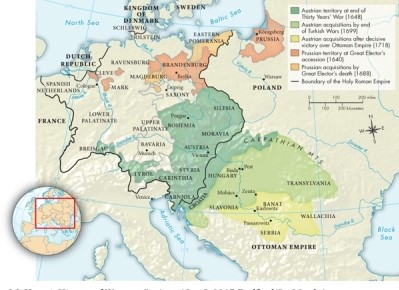
A)Slavonia, Transylvania, and Hungary
B)Croatia, Slavonia, and Carniola
C)Carinthia, Styria, and Carniola
D)Banat, Serbia, and Wallachia
A)Slavonia, Transylvania, and Hungary
B)Croatia, Slavonia, and Carniola
C)Carinthia, Styria, and Carniola
D)Banat, Serbia, and Wallachia
Question
Question
Which lands shown on Map 15.1: Europe After the Thirty Years' War belonged to the Spanish Habsburgs? 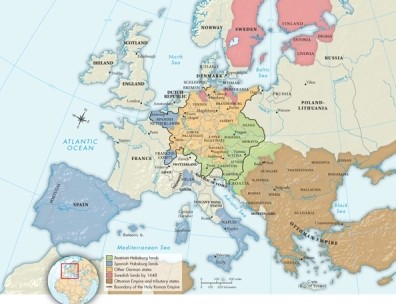
A)Spain, Portugal, the Spanish Netherlands, the United Provinces, Franche-Comté, and Milan
B)France, the Spanish Netherlands, the United Provinces, Franche-Comté, Milan, and Naples
C)Spain, Naples, the Papal States, Tuscany, Milan, and the Republic of Venice
D)Spain, Portugal, the Spanish Netherlands, Franche-Comté, Milan, and Naples
A)Spain, Portugal, the Spanish Netherlands, the United Provinces, Franche-Comté, and Milan
B)France, the Spanish Netherlands, the United Provinces, Franche-Comté, Milan, and Naples
C)Spain, Naples, the Papal States, Tuscany, Milan, and the Republic of Venice
D)Spain, Portugal, the Spanish Netherlands, Franche-Comté, Milan, and Naples
Question
Question
Question
Question
Question
On Map 15.3: The Growth of Austria and Brandenburg-Prussia to 1748, what territories did Prussia acquire between 1640 and 1688? 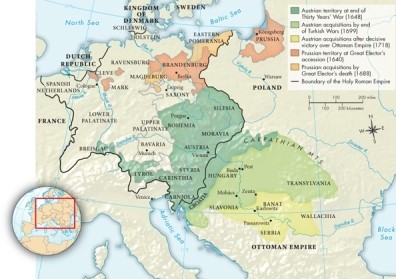
A)Magdeburg and Mark
B)Cleve and Mark
C)Brandenburg and Prussia
D)Eastern Pomerania and Magdeburg
A)Magdeburg and Mark
B)Cleve and Mark
C)Brandenburg and Prussia
D)Eastern Pomerania and Magdeburg
Question
Question
Question
Question
Question
Question
Compare Map 15.1: Europe After the Thirty Years' War to Map 15.2: Europe After the Peace of Utrecht, 1715. Which state changed hands between 1648 and 1715? 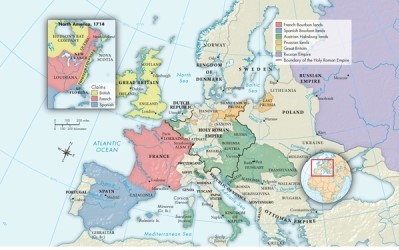
A)Sardinia
B)Bohemia
C)Croatia
D)Silesia
A)Sardinia
B)Bohemia
C)Croatia
D)Silesia
Question
Question
Question
Question
Question
Question
Question
Question
Question
Question
Question
Question
Question
Question
Question
Question
Question
Question
Question
Question
Question
Question

Unlock Deck
Sign up to unlock the cards in this deck!
Unlock Deck
Unlock Deck
1/81

Play

Full screen (f)
Deck 15: Absolutism and Constitutionalism CA 1589-1725
1
In eastern Europe between 1500 and 1650, the growth of commercial agriculture was accompanied by the
A)growth of a class of small landowners.
B)consolidation of serfdom.
C)establishment of an independent peasantry.
D)establishment of many privileged towns as market centers.
A)growth of a class of small landowners.
B)consolidation of serfdom.
C)establishment of an independent peasantry.
D)establishment of many privileged towns as market centers.
consolidation of serfdom.
2
How did the Peace of Utrecht resolve the problem of succession to the Spanish throne?
A)The leader of the Spanish House of Alva was placed on the throne by the nobility on offering guarantees that he would protect noble rights.
B)The monarchy was abolished and Spain declared a republic.
C)The German Habsburg Duke of Austria was placed on the throne after the death of his cousin, the Spanish Habsburg Charles II.
D)Louis XIV of France's grandson, Philip, was placed on the French throne with the agreement that the French and Spanish thrones would never be united.
A)The leader of the Spanish House of Alva was placed on the throne by the nobility on offering guarantees that he would protect noble rights.
B)The monarchy was abolished and Spain declared a republic.
C)The German Habsburg Duke of Austria was placed on the throne after the death of his cousin, the Spanish Habsburg Charles II.
D)Louis XIV of France's grandson, Philip, was placed on the French throne with the agreement that the French and Spanish thrones would never be united.
Louis XIV of France's grandson, Philip, was placed on the French throne with the agreement that the French and Spanish thrones would never be united.
3
How did the princes of Moscow seek to legitimize their authority as rulers of an independent state?
A)They adopted French coronation rituals.
B)They modeled their rule on the Mongol khans.
C)They eliminated all taxes.
D)They claimed to be both political and religious leaders.
A)They adopted French coronation rituals.
B)They modeled their rule on the Mongol khans.
C)They eliminated all taxes.
D)They claimed to be both political and religious leaders.
They modeled their rule on the Mongol khans.
4
How did Frederick William of Prussia, the Great Elector, persuade the Junker nobility to accept taxation without consent in order to fund the army?
A)He confirmed the Junkers' privileges, including their authority over the serfs.
B)He permitted the Junkers to seize church lands as compensation.
C)He threatened the Junkers with military attack.
D)He offered the Junkers the exclusive right to sit in the royal councils.
A)He confirmed the Junkers' privileges, including their authority over the serfs.
B)He permitted the Junkers to seize church lands as compensation.
C)He threatened the Junkers with military attack.
D)He offered the Junkers the exclusive right to sit in the royal councils.
Unlock Deck
Unlock for access to all 81 flashcards in this deck.
Unlock Deck
k this deck
5
What mistaken belief did the Count-Duke of Olivares hold that brought disaster to Spain?
A)Spain must ally with England in order to establish naval domination of the Atlantic and secure access to trade routes.
B)Spain must return to the imperial tradition of the sixteenth century in order to solve its economic and political difficulties.
C)Spain must secure peace with all of its neighbors in order to reduce the expenses borne by the royal treasury.
D)Spain must require all Jews and Muslims to leave Spain in order to purify the kingdom and earn God's favor.
A)Spain must ally with England in order to establish naval domination of the Atlantic and secure access to trade routes.
B)Spain must return to the imperial tradition of the sixteenth century in order to solve its economic and political difficulties.
C)Spain must secure peace with all of its neighbors in order to reduce the expenses borne by the royal treasury.
D)Spain must require all Jews and Muslims to leave Spain in order to purify the kingdom and earn God's favor.
Unlock Deck
Unlock for access to all 81 flashcards in this deck.
Unlock Deck
k this deck
6
When speaking of "moral economy," historians are referring to
A)a vision of the world in which community needs predominate over competition and profit.
B)the right of the church to regulate economic activity in order to promote virtue and righteousness.
C)the goal of the state to compel all able-bodied men and women into productive activity that will bring wealth to the community.
D)a set of laws that forbid "sinful" activity such as prostitution and drinking alcoholic beverages.
A)a vision of the world in which community needs predominate over competition and profit.
B)the right of the church to regulate economic activity in order to promote virtue and righteousness.
C)the goal of the state to compel all able-bodied men and women into productive activity that will bring wealth to the community.
D)a set of laws that forbid "sinful" activity such as prostitution and drinking alcoholic beverages.
Unlock Deck
Unlock for access to all 81 flashcards in this deck.
Unlock Deck
k this deck
7
Louis XIV selected councilors from
A)the newly ennobled or upper middle class.
B)military commanders.
C)university professors.
D)senior clergy.
A)the newly ennobled or upper middle class.
B)military commanders.
C)university professors.
D)senior clergy.
Unlock Deck
Unlock for access to all 81 flashcards in this deck.
Unlock Deck
k this deck
8
How did the Peace of Westphalia mark a turning point in European history?
A)German lands were finally unified under the German emperor.
B)Religious toleration was adopted throughout the Holy Roman Empire.
C)Central Europe emerged as an economic powerhouse.
D)Large-scale armed conflicts over religious faith came to an end.
A)German lands were finally unified under the German emperor.
B)Religious toleration was adopted throughout the Holy Roman Empire.
C)Central Europe emerged as an economic powerhouse.
D)Large-scale armed conflicts over religious faith came to an end.
Unlock Deck
Unlock for access to all 81 flashcards in this deck.
Unlock Deck
k this deck
9
Political power in the Dutch Republic was
A)held by the central government.
B)controlled by an oligarchy of wealthy businessmen.
C)held by the stadholder and his royal courtiers.
D)exercised by a democratically elected States-General.
A)held by the central government.
B)controlled by an oligarchy of wealthy businessmen.
C)held by the stadholder and his royal courtiers.
D)exercised by a democratically elected States-General.
Unlock Deck
Unlock for access to all 81 flashcards in this deck.
Unlock Deck
k this deck
10
In the seventeenth century, why did rulers hesitate to crush rebellions?
A)Local rebels rarely caused much damage.
B)City and regional officials might side with the rebels.
C)Local rebels easily hid when troops arrived.
D)Armies were expensive to deploy, and rulers feared creating martyrs.
A)Local rebels rarely caused much damage.
B)City and regional officials might side with the rebels.
C)Local rebels easily hid when troops arrived.
D)Armies were expensive to deploy, and rulers feared creating martyrs.
Unlock Deck
Unlock for access to all 81 flashcards in this deck.
Unlock Deck
k this deck
11
What was the consequence of Prince Francis Rákóczy's rebellion for Habsburg rule?
A)Hungary was never fully integrated into a centralized, absolute Habsburg state.
B)The German nobility established itself as dominant within the Habsburg lands.
C)The Bohemian nobility was crushed and replaced with new nobles loyal to the Habsburgs.
D)The Habsburgs lost control over most of their lands in northern Italy.
A)Hungary was never fully integrated into a centralized, absolute Habsburg state.
B)The German nobility established itself as dominant within the Habsburg lands.
C)The Bohemian nobility was crushed and replaced with new nobles loyal to the Habsburgs.
D)The Habsburgs lost control over most of their lands in northern Italy.
Unlock Deck
Unlock for access to all 81 flashcards in this deck.
Unlock Deck
k this deck
12
Mercantilist theory postulated that
A)government should not interfere in the economy.
B)imports and exports should be equally balanced.
C)economic activity should be regulated by and for the state.
D)free trade would maximize the wealth of all nations.
A)government should not interfere in the economy.
B)imports and exports should be equally balanced.
C)economic activity should be regulated by and for the state.
D)free trade would maximize the wealth of all nations.
Unlock Deck
Unlock for access to all 81 flashcards in this deck.
Unlock Deck
k this deck
13
The guiding force behind Cardinal Richelieu's domestic policies was
A)reform of the church.
B)a belief in decentralization.
C)the subordination of all institutions to the monarchy.
D)the sovereignty of the people.
A)reform of the church.
B)a belief in decentralization.
C)the subordination of all institutions to the monarchy.
D)the sovereignty of the people.
Unlock Deck
Unlock for access to all 81 flashcards in this deck.
Unlock Deck
k this deck
14
How did famines affect the European population in the seventeenth century?
A)The population continued to grow despite widespread malnutrition.
B)Large segments of the population immigrated to the American colonies.
C)The population remained relatively stable as the little food available was distributed evenly to all social classes at a "just price."
D)Malnutrition made people susceptible to deadly diseases, which reduced the population significantly.
A)The population continued to grow despite widespread malnutrition.
B)Large segments of the population immigrated to the American colonies.
C)The population remained relatively stable as the little food available was distributed evenly to all social classes at a "just price."
D)Malnutrition made people susceptible to deadly diseases, which reduced the population significantly.
Unlock Deck
Unlock for access to all 81 flashcards in this deck.
Unlock Deck
k this deck
15
The Baroque style flourished in the context of the
A)Commercial Revolution.
B)Scientific Revolution.
C)Protestant Reformation.
D)Catholic Reformation.
A)Commercial Revolution.
B)Scientific Revolution.
C)Protestant Reformation.
D)Catholic Reformation.
Unlock Deck
Unlock for access to all 81 flashcards in this deck.
Unlock Deck
k this deck
16
How did the nature of armed forces change in the latter half of the seventeenth century?
A)Gunpowder technologies were used for the first time in field operations.
B)Improvements in artillery made the use of cavalry obsolete.
C)Army officers became obedient to monarchs instead of serving their own interests.
D)The size of armies decreased as they professionalized and became more efficient.
A)Gunpowder technologies were used for the first time in field operations.
B)Improvements in artillery made the use of cavalry obsolete.
C)Army officers became obedient to monarchs instead of serving their own interests.
D)The size of armies decreased as they professionalized and became more efficient.
Unlock Deck
Unlock for access to all 81 flashcards in this deck.
Unlock Deck
k this deck
17
How did Frederick William I, king of Prussia, sustain agricultural production while dramatically expanding the size of his army?
A)He required women to work in the fields when their husbands served in the military.
B)He purchased African slaves to sustain agricultural production while Prussian men trained for the military.
C)He ordered all Prussian men to undergo military training, after which they could return home and serve as army reservists.
D)He required monks, priests, and other clerics to perform agricultural work when needed by local nobles.
A)He required women to work in the fields when their husbands served in the military.
B)He purchased African slaves to sustain agricultural production while Prussian men trained for the military.
C)He ordered all Prussian men to undergo military training, after which they could return home and serve as army reservists.
D)He required monks, priests, and other clerics to perform agricultural work when needed by local nobles.
Unlock Deck
Unlock for access to all 81 flashcards in this deck.
Unlock Deck
k this deck
18
How did Cardinal Richelieu increase the power of the centralized French state?
A)He reorganized the French economy according to mercantilist policies.
B)He encouraged Louis XIII to establish an elaborate palace and ground at Versailles.
C)He extended the use of intendants, commissioners for each of France's thirty-two districts.
D)He concentrated on repairing and expanding the country's infrastructure, building new roads and canals.
A)He reorganized the French economy according to mercantilist policies.
B)He encouraged Louis XIII to establish an elaborate palace and ground at Versailles.
C)He extended the use of intendants, commissioners for each of France's thirty-two districts.
D)He concentrated on repairing and expanding the country's infrastructure, building new roads and canals.
Unlock Deck
Unlock for access to all 81 flashcards in this deck.
Unlock Deck
k this deck
19
The English political philosopher Thomas Hobbes held that
A)kings ruled by divine right.
B)a constitutional monarchy was possible only in England.
C)mankind is inherently good and requires no formal government.
D)the power of the ruler was absolute and prevented civil war.
A)kings ruled by divine right.
B)a constitutional monarchy was possible only in England.
C)mankind is inherently good and requires no formal government.
D)the power of the ruler was absolute and prevented civil war.
Unlock Deck
Unlock for access to all 81 flashcards in this deck.
Unlock Deck
k this deck
20
The primary cause of the English Glorious Revolution was
A)conflict between Charles II and Parliament over taxation.
B)a fear of the establishment of Catholic absolutism by James II.
C)defeat suffered in the War of the Spanish Succession.
D)the 1640 uprising in Ireland.
A)conflict between Charles II and Parliament over taxation.
B)a fear of the establishment of Catholic absolutism by James II.
C)defeat suffered in the War of the Spanish Succession.
D)the 1640 uprising in Ireland.
Unlock Deck
Unlock for access to all 81 flashcards in this deck.
Unlock Deck
k this deck
21
Cardinal Jules Mazarin's struggle to increase royal revenues to meet the cost of war led to the uprisings of 1648-1653, known as the
A)Jacquerie.
B)Vendée.
C)Fronde.
D)Levée en Masse.
A)Jacquerie.
B)Vendée.
C)Fronde.
D)Levée en Masse.
Unlock Deck
Unlock for access to all 81 flashcards in this deck.
Unlock Deck
k this deck
22
In the Netherlands, tensions were always present between supporters of the staunchly republican Estates and supporters of
A)the Stuarts.
B)the Hohenzollerns.
C)the House of Orange.
D)the Bourbons.
A)the Stuarts.
B)the Hohenzollerns.
C)the House of Orange.
D)the Bourbons.
Unlock Deck
Unlock for access to all 81 flashcards in this deck.
Unlock Deck
k this deck
23
The Ottomans divided their subjects into religious communities or
A)Cossacks.
B)Estates.
C)millets.
D)Moriscos.
A)Cossacks.
B)Estates.
C)millets.
D)Moriscos.
Unlock Deck
Unlock for access to all 81 flashcards in this deck.
Unlock Deck
k this deck
24
France's strong economy was created by the mercantilist policies of
A)the Duke of Saint-Simon.
B)Cardinal Mazarin.
C)Count-Duke of Olivares.
D)Jean-Baptiste Colbert.
A)the Duke of Saint-Simon.
B)Cardinal Mazarin.
C)Count-Duke of Olivares.
D)Jean-Baptiste Colbert.
Unlock Deck
Unlock for access to all 81 flashcards in this deck.
Unlock Deck
k this deck
25
Oliver Cromwell's Protectorate was ultimately a
A)popular democracy.
B)parliamentary government.
C)constitutional monarchy.
D)military dictatorship.
A)popular democracy.
B)parliamentary government.
C)constitutional monarchy.
D)military dictatorship.
Unlock Deck
Unlock for access to all 81 flashcards in this deck.
Unlock Deck
k this deck
26
In return for financial support, what did Charles II of England secretly promise Louis XIV of France?
A)England would lift trade restrictions against French products.
B)England would provide troops to France in the event of war with Austria.
C)English laws would be strengthened to protect the property of French nobles in England.
D)English laws against Catholics would be eased and England gradually re-Catholicized.
A)England would lift trade restrictions against French products.
B)England would provide troops to France in the event of war with Austria.
C)English laws would be strengthened to protect the property of French nobles in England.
D)English laws against Catholics would be eased and England gradually re-Catholicized.
Unlock Deck
Unlock for access to all 81 flashcards in this deck.
Unlock Deck
k this deck
27
The final collapse of Spain as a great military power was symbolized by the defeat at the Battle of Rocroi and the resulting Treaty of
A)Utrecht.
B)the White Mountain.
C)the Pyrenees.
D)Westphalia.
A)Utrecht.
B)the White Mountain.
C)the Pyrenees.
D)Westphalia.
Unlock Deck
Unlock for access to all 81 flashcards in this deck.
Unlock Deck
k this deck
28
One of the largest rebellions in seventeenth-century Russia was that led by
A)Michael Romanov.
B)Ivan the Terrible.
C)Stenka Razin.
D)Peter the Great.
A)Michael Romanov.
B)Ivan the Terrible.
C)Stenka Razin.
D)Peter the Great.
Unlock Deck
Unlock for access to all 81 flashcards in this deck.
Unlock Deck
k this deck
29
What was one of the social consequences of Peter the Great's bureaucratic system?
A)Clergy were allowed to hold bureaucratic offices.
B)Only ethnic Russians were permitted to serve in the bureaucracy.
C)Women were allowed to serve in a few judicial positions.
D)People of non-noble origin were able to rise to high positions.
A)Clergy were allowed to hold bureaucratic offices.
B)Only ethnic Russians were permitted to serve in the bureaucracy.
C)Women were allowed to serve in a few judicial positions.
D)People of non-noble origin were able to rise to high positions.
Unlock Deck
Unlock for access to all 81 flashcards in this deck.
Unlock Deck
k this deck
30
The Junkers were
A)Dutch merchants who made up the oligarchy that controlled the government of the Netherlands.
B)Prussian nobles who reluctantly worked with Frederick William to consolidate the Prussian state.
C)Members of the janissary corps who filled the posts of the Ottoman bureaucracy and military.
D)Russian administrators who accepted the westernization policies of Peter the Great.
A)Dutch merchants who made up the oligarchy that controlled the government of the Netherlands.
B)Prussian nobles who reluctantly worked with Frederick William to consolidate the Prussian state.
C)Members of the janissary corps who filled the posts of the Ottoman bureaucracy and military.
D)Russian administrators who accepted the westernization policies of Peter the Great.
Unlock Deck
Unlock for access to all 81 flashcards in this deck.
Unlock Deck
k this deck
31
After his victory in 1709 at Poltava, Peter the Great built a new, Western-style city on the Baltic called
A)Narva.
B)Moscow.
C)Leningrad.
D)St. Petersburg.
A)Narva.
B)Moscow.
C)Leningrad.
D)St. Petersburg.
Unlock Deck
Unlock for access to all 81 flashcards in this deck.
Unlock Deck
k this deck
32
Which of the following characterizes the English Revolution of 1688?
A)The revolution restored the monarchy after the disastrous era of Oliver Cromwell's Protectorate.
B)The revolution secured equal rights for all Christians, including Catholics.
C)The revolution did not constitute a democratic revolution since sovereignty was placed in the Parliament, which only represented the upper classes.
D)The revolution marked the emergence of democratic politics, with the establishment of natural rights and the defense of private property.
A)The revolution restored the monarchy after the disastrous era of Oliver Cromwell's Protectorate.
B)The revolution secured equal rights for all Christians, including Catholics.
C)The revolution did not constitute a democratic revolution since sovereignty was placed in the Parliament, which only represented the upper classes.
D)The revolution marked the emergence of democratic politics, with the establishment of natural rights and the defense of private property.
Unlock Deck
Unlock for access to all 81 flashcards in this deck.
Unlock Deck
k this deck
33
The Glorious Revolution and the concept of representative government found their best defense in the Second Treatise of Civil Government by
A)Thomas Hobbes.
B)John Locke.
C)Peter Paul Rubens.
D)Jean Racine
A)Thomas Hobbes.
B)John Locke.
C)Peter Paul Rubens.
D)Jean Racine
Unlock Deck
Unlock for access to all 81 flashcards in this deck.
Unlock Deck
k this deck
34
Why did the English government arrive at a crisis situation by 1640?
A)Charles I imposed unwelcome laws and reforms on the country.
B)Charles I married a Presbyterian princess.
C)James I frequently lectured the House of Commons about his divine authority.
D)Charles I sought to impose the Scottish religion on England.
A)Charles I imposed unwelcome laws and reforms on the country.
B)Charles I married a Presbyterian princess.
C)James I frequently lectured the House of Commons about his divine authority.
D)Charles I sought to impose the Scottish religion on England.
Unlock Deck
Unlock for access to all 81 flashcards in this deck.
Unlock Deck
k this deck
35
Within the Ottoman government, who staffed the top levels of the bureaucracy?
A)The royal family
B)The sultan's slave corps
C)Islamic religious officials
D)Military commanders
A)The royal family
B)The sultan's slave corps
C)Islamic religious officials
D)Military commanders
Unlock Deck
Unlock for access to all 81 flashcards in this deck.
Unlock Deck
k this deck
36
How did William Laud, the archbishop of Canterbury, create conflict in Britain in the 1630s?
A)He launched a purge against the remaining Catholics in England, seeking to force them to flee to Ireland.
B)He sought to impose a new prayer book modeled on the Anglican Book of Common Prayer on Presbyterian Scotland.
C)He imposed new church taxes in order to secretly funnel money to the monarchy.
D)He implemented Puritan reforms into the Anglican Church.
A)He launched a purge against the remaining Catholics in England, seeking to force them to flee to Ireland.
B)He sought to impose a new prayer book modeled on the Anglican Book of Common Prayer on Presbyterian Scotland.
C)He imposed new church taxes in order to secretly funnel money to the monarchy.
D)He implemented Puritan reforms into the Anglican Church.
Unlock Deck
Unlock for access to all 81 flashcards in this deck.
Unlock Deck
k this deck
37
In music, the baroque style reached its culmination in the work of
A)Wolfgang Amadeus Mozart.
B)Johann Sebastian Bach.
C)Frédéric Chopin.
D)Peter Paul Rubens
A)Wolfgang Amadeus Mozart.
B)Johann Sebastian Bach.
C)Frédéric Chopin.
D)Peter Paul Rubens
Unlock Deck
Unlock for access to all 81 flashcards in this deck.
Unlock Deck
k this deck
38
What was the outcome of the heightened central control established by absolutist and constitutional governments?
A)Reduced taxation
B)Growth in armed forces
C)Smaller and less expensive bureaucracies
D)The abolition of the nobility
A)Reduced taxation
B)Growth in armed forces
C)Smaller and less expensive bureaucracies
D)The abolition of the nobility
Unlock Deck
Unlock for access to all 81 flashcards in this deck.
Unlock Deck
k this deck
39
French foreign policy under Cardinal Richelieu focused primarily on the
A)prevention of the Habsburgs from unifying the territories surrounding France.
B)destruction of English naval power.
C)destruction of the economic power of the Low Countries.
D)protection of Protestants in neighboring territories.
A)prevention of the Habsburgs from unifying the territories surrounding France.
B)destruction of English naval power.
C)destruction of the economic power of the Low Countries.
D)protection of Protestants in neighboring territories.
Unlock Deck
Unlock for access to all 81 flashcards in this deck.
Unlock Deck
k this deck
40
Typically, French classicism
A)challenged existing concepts concerning art.
B)presented subject matter associated with classical antiquity.
C)had little support from the royal government.
D)emphasized individualistic renderings of society.
A)challenged existing concepts concerning art.
B)presented subject matter associated with classical antiquity.
C)had little support from the royal government.
D)emphasized individualistic renderings of society.
Unlock Deck
Unlock for access to all 81 flashcards in this deck.
Unlock Deck
k this deck
41
The following is an excerpt from John Locke's Two Treatises of Government (Evaluating the Evidence 15.3): "'Tis true, governments cannot be supported without great charge, and 'tis fit every one who enjoys his share of the protection, should pay, out of this estate, his proportion for the maintenance of it. But still it must be with his own consent, i.e., the consent of the majority, giving it either by themselves, or their representatives chosen by them; for if any one shall claim a power to lay and levy taxes on the people, by his own authority, and without such consent of the people, he thereby invades the fundamental law of property, and subverts the end of government. For what property have I in that which another may be right to take when he pleases to himself."
Based on this passage, which of the following did Locke see as legitimate?
A)Taxes that were not unduly burdensome
B)Taxes levied by the king
C)Taxes consented to by the majority of the people
D)Taxes that were paid to support armies in time of war
Based on this passage, which of the following did Locke see as legitimate?
A)Taxes that were not unduly burdensome
B)Taxes levied by the king
C)Taxes consented to by the majority of the people
D)Taxes that were paid to support armies in time of war
Unlock Deck
Unlock for access to all 81 flashcards in this deck.
Unlock Deck
k this deck
42
The following is an excerpt from Jacques-Bénigne Bossuet's Politics Drawn from the Very Words of Holy Scripture (Thinking Like a Historian): "The service of God and the respect for kings are bound together. St. Peter unites these two duties when he says, 'Fear God. Honour the king.' . . . But kings, although their power comes from on high, as has been said, should not regard themselves as masters of that power to use it at their pleasure; . . . they must employ it with fear and self-restraint, as a thing coming from God and of which God will demand an account."
Based on this passage, the historian can conclude that, in Bossuet's view,
A)kings are accountable to God.
B)kings are accountable to their people.
C)secular and spiritual authority should be kept separate.
D)kingship is the result of a social contract.
Based on this passage, the historian can conclude that, in Bossuet's view,
A)kings are accountable to God.
B)kings are accountable to their people.
C)secular and spiritual authority should be kept separate.
D)kingship is the result of a social contract.
Unlock Deck
Unlock for access to all 81 flashcards in this deck.
Unlock Deck
k this deck
43
Describe the basic features of Ottoman society and government.
Unlock Deck
Unlock for access to all 81 flashcards in this deck.
Unlock Deck
k this deck
44
In the Thirty Years' War, how did leaders struggle with political and religious motivations?
Unlock Deck
Unlock for access to all 81 flashcards in this deck.
Unlock Deck
k this deck
45
On Map 15.3: The Growth of Austria and Brandenburg-Prussia to 1748, what territories did Austria acquire after the decisive victory over the Ottoman Empire (1718)?
A)Slavonia, Transylvania, and Hungary
B)Croatia, Slavonia, and Carniola
C)Carinthia, Styria, and Carniola
D)Banat, Serbia, and Wallachia
A)Slavonia, Transylvania, and Hungary
B)Croatia, Slavonia, and Carniola
C)Carinthia, Styria, and Carniola
D)Banat, Serbia, and Wallachia
Unlock Deck
Unlock for access to all 81 flashcards in this deck.
Unlock Deck
k this deck
46
What was the outcome of the events of 1688 and 1689, the Glorious Revolution?
Unlock Deck
Unlock for access to all 81 flashcards in this deck.
Unlock Deck
k this deck
47
Which lands shown on Map 15.1: Europe After the Thirty Years' War belonged to the Spanish Habsburgs?
A)Spain, Portugal, the Spanish Netherlands, the United Provinces, Franche-Comté, and Milan
B)France, the Spanish Netherlands, the United Provinces, Franche-Comté, Milan, and Naples
C)Spain, Naples, the Papal States, Tuscany, Milan, and the Republic of Venice
D)Spain, Portugal, the Spanish Netherlands, Franche-Comté, Milan, and Naples
A)Spain, Portugal, the Spanish Netherlands, the United Provinces, Franche-Comté, and Milan
B)France, the Spanish Netherlands, the United Provinces, Franche-Comté, Milan, and Naples
C)Spain, Naples, the Papal States, Tuscany, Milan, and the Republic of Venice
D)Spain, Portugal, the Spanish Netherlands, Franche-Comté, Milan, and Naples
Unlock Deck
Unlock for access to all 81 flashcards in this deck.
Unlock Deck
k this deck
48
The following is an excerpt from a letter written by the king's representative in Burgundy, the prince of Condé, to Jean-Baptiste Colbert, Louis XIV's controller general (Thinking Like a Historian). In it, the prince reports on his efforts to compel the leaders of the province to pay taxes levied by the royal government: "Since then the Estates have deliberated every day, persuaded that the extreme misery in this province-caused by the great levies it has suffered, the sterility [of the land] in recent years, and the disorders that have recently occurred-would induce the king to give them some relief. That is why they offered only 500,000 for the free gift. Then, after I had protested this in the appropriate manner, they raised it to 600,000, then 800,000, and finally 900,000 livres. Until then I had stood firm at 1.5 million, but when I saw that they were on the verge of deciding not to give any more . . . I finally came down to the 1.2 million livres contained in my instructions and invited them to deliberate again."
Based on this passage, one can conclude that
A)Louis XIV's power was absolute in all areas of French life.
B)Louis XIV had to negotiate with local elites to achieve his desired objectives.
C)Louis XIV had little if any real power in the provinces.
D)Louis XIV achieved his domestic goals through force of arms.
Based on this passage, one can conclude that
A)Louis XIV's power was absolute in all areas of French life.
B)Louis XIV had to negotiate with local elites to achieve his desired objectives.
C)Louis XIV had little if any real power in the provinces.
D)Louis XIV achieved his domestic goals through force of arms.
Unlock Deck
Unlock for access to all 81 flashcards in this deck.
Unlock Deck
k this deck
49
In Thomas Hobbes's view, why was government necessary? What kind of government did he endorse?
Unlock Deck
Unlock for access to all 81 flashcards in this deck.
Unlock Deck
k this deck
50
The following is an excerpt from Jacques-Bénigne Bossuet's Politics Drawn from the Very Words of Holy Scripture (Thinking Like a Historian): "It appears from all this that the person of the king is sacred, and that to attack him in any way is sacrilege. God has the kings anointed by his prophets with the holy unction in like manner as he has bishops and altars anointed. But even without the external application in thus being anointed, they are by their very office the representatives of the divine majesty deputed by Providence for the execution of his purposes."
Based on this passage, with which of the following statements would Bossuet most likely agree?
A)Kings derive their power from the people.
B)Kings and bishops have equal authority.
C)Kings derive their power from the church.
D)Kings are God's representatives on earth.
Based on this passage, with which of the following statements would Bossuet most likely agree?
A)Kings derive their power from the people.
B)Kings and bishops have equal authority.
C)Kings derive their power from the church.
D)Kings are God's representatives on earth.
Unlock Deck
Unlock for access to all 81 flashcards in this deck.
Unlock Deck
k this deck
51
The following is an excerpt from the Louis XIV's Memoir for the Instruction of the Dauphin (Thinking Like a Historian). In it, he offers advice to his son about kingship: "For however it be held as a maxim that in every thing a Prince should employ the most mild measures and first, and that it is more to his advantage to govern his subjects by persuasive than coercive means, it is nevertheless certain that whenever he meets with impediments or rebellion, the interest of his crown and the welfare of his people demand that he should cause himself to be indispensably obeyed; for it must be acknowledged there is nothing can so securely establish the happiness and tranquility of a country as the perfect combination of all authority in the single person of the Sovereign."
Based on this passage, what did Louis XIV see as the ultimate goal of the absolute monarch?
A)To secure the necessary resources to wage war
B)To add to his own personal wealth and power
C)To make his nation the most powerful on earth
D)To bring peace and happiness to his nation
Based on this passage, what did Louis XIV see as the ultimate goal of the absolute monarch?
A)To secure the necessary resources to wage war
B)To add to his own personal wealth and power
C)To make his nation the most powerful on earth
D)To bring peace and happiness to his nation
Unlock Deck
Unlock for access to all 81 flashcards in this deck.
Unlock Deck
k this deck
52
On Map 15.3: The Growth of Austria and Brandenburg-Prussia to 1748, what territories did Prussia acquire between 1640 and 1688?
A)Magdeburg and Mark
B)Cleve and Mark
C)Brandenburg and Prussia
D)Eastern Pomerania and Magdeburg
A)Magdeburg and Mark
B)Cleve and Mark
C)Brandenburg and Prussia
D)Eastern Pomerania and Magdeburg
Unlock Deck
Unlock for access to all 81 flashcards in this deck.
Unlock Deck
k this deck
53
How did Frederick William I, king of Prussia, complete the work of his grandfather in establishing Prussian absolutism?
Unlock Deck
Unlock for access to all 81 flashcards in this deck.
Unlock Deck
k this deck
54
What role did Oliver Cromwell play in the English Civil War and in the Protectorate that followed?
Unlock Deck
Unlock for access to all 81 flashcards in this deck.
Unlock Deck
k this deck
55
After a defeat at Narva, Peter the Great constructed a new army and eventually beat the Swedish in 1709 at
A)St. Petersburg.
B)Naseby.
C)Poltava.
D)Novgorod.
A)St. Petersburg.
B)Naseby.
C)Poltava.
D)Novgorod.
Unlock Deck
Unlock for access to all 81 flashcards in this deck.
Unlock Deck
k this deck
56
How did Peter the Great reorganize Russia so that it was able to defeat Sweden and become a major European power in the early eighteenth century?
Unlock Deck
Unlock for access to all 81 flashcards in this deck.
Unlock Deck
k this deck
57
Why was the Netherlands "an island of plenty in a sea of want"?
Unlock Deck
Unlock for access to all 81 flashcards in this deck.
Unlock Deck
k this deck
58
Compare Map 15.1: Europe After the Thirty Years' War to Map 15.2: Europe After the Peace of Utrecht, 1715. Which state changed hands between 1648 and 1715?
A)Sardinia
B)Bohemia
C)Croatia
D)Silesia
A)Sardinia
B)Bohemia
C)Croatia
D)Silesia
Unlock Deck
Unlock for access to all 81 flashcards in this deck.
Unlock Deck
k this deck
59
How did Bohemia and Hungary obtain differing status in the Austrian Empire?
Unlock Deck
Unlock for access to all 81 flashcards in this deck.
Unlock Deck
k this deck
60
How did the millet system function in the Ottoman Empire?
Unlock Deck
Unlock for access to all 81 flashcards in this deck.
Unlock Deck
k this deck
61
Explain what is meant by the term mercantilism and provide historical examples of mercantilist policies based on this chapter.
Unlock Deck
Unlock for access to all 81 flashcards in this deck.
Unlock Deck
k this deck
62
Answer the following questions:
Test Act
A)A form of government in which there is no monarch and power rests in the hands of the people as exercised through elected representatives.
B)A system used by the Ottomans whereby subjects were divided into religious communities with each nation enjoying autonomous self-government under its religious leaders.
C)A series of violent uprisings during the early reign of Louis XIV triggered by growing royal control and oppressive taxation.
D)The nobility of Brandenburg and Prussia; they were reluctant allies of Frederick William in his consolidation of the Prussian state.
E)A system of economic regulations aimed at increasing the state's power; it was based on the belief that a nation's wealth, specifically its supply of gold and silver, determined its international power.
F)The English military dictatorship (1653-58) established by Oliver Cromwell following the execution of Charles I.
G)The executive officer in each of the United Provinces of the Netherlands, a position often held by the princes of Orange.
H)A series of treaties, from 1713 to 1715, that ended the War of the Spanish Succession, ended French expansion in Europe, and marked the rise of the British Empire.
I)Free groups and outlaw armies originally comprising runaway peasants living on the borders of Russian territory from the fourteenth century onward. By the end of the sixteenth century they had formed an alliance with the Russian state.
J)A form of government in which power is limited by law and balanced between the authority and power of the government on the one hand and the rights and liberties of the subject or citizen on the other; could include constitutional monarchies or republics.
K)The core of the sultan's army, composed of slave conscripts from non-Muslim parts of the empire; after 1683 it became a volunteer force.
L)Members of a sixteenth- and seventeenth-century reform movement within the Church of England that advocated purifying it of Roman Catholic elements, such as bishops, elaborate ceremonials, and wedding rings.
M)The highest-ranking members of the Russian nobility.
N)The ruler of the Ottoman Empire; he owned all the agricultural land of the empire and was served by an army and bureaucracy composed of highly trained slaves.
O)The name of a series of treaties that concluded the Thirty Years' War in 1648 and marked the end of large-scale religious violence in Europe.
P)Legislation, passed by the English Parliament in 1673, to secure the position of the Anglican Church by stripping Puritans, Catholics, and other dissenters of the right to vote, preach, assemble, hold public office, and teach at or attend universities.
Test Act
A)A form of government in which there is no monarch and power rests in the hands of the people as exercised through elected representatives.
B)A system used by the Ottomans whereby subjects were divided into religious communities with each nation enjoying autonomous self-government under its religious leaders.
C)A series of violent uprisings during the early reign of Louis XIV triggered by growing royal control and oppressive taxation.
D)The nobility of Brandenburg and Prussia; they were reluctant allies of Frederick William in his consolidation of the Prussian state.
E)A system of economic regulations aimed at increasing the state's power; it was based on the belief that a nation's wealth, specifically its supply of gold and silver, determined its international power.
F)The English military dictatorship (1653-58) established by Oliver Cromwell following the execution of Charles I.
G)The executive officer in each of the United Provinces of the Netherlands, a position often held by the princes of Orange.
H)A series of treaties, from 1713 to 1715, that ended the War of the Spanish Succession, ended French expansion in Europe, and marked the rise of the British Empire.
I)Free groups and outlaw armies originally comprising runaway peasants living on the borders of Russian territory from the fourteenth century onward. By the end of the sixteenth century they had formed an alliance with the Russian state.
J)A form of government in which power is limited by law and balanced between the authority and power of the government on the one hand and the rights and liberties of the subject or citizen on the other; could include constitutional monarchies or republics.
K)The core of the sultan's army, composed of slave conscripts from non-Muslim parts of the empire; after 1683 it became a volunteer force.
L)Members of a sixteenth- and seventeenth-century reform movement within the Church of England that advocated purifying it of Roman Catholic elements, such as bishops, elaborate ceremonials, and wedding rings.
M)The highest-ranking members of the Russian nobility.
N)The ruler of the Ottoman Empire; he owned all the agricultural land of the empire and was served by an army and bureaucracy composed of highly trained slaves.
O)The name of a series of treaties that concluded the Thirty Years' War in 1648 and marked the end of large-scale religious violence in Europe.
P)Legislation, passed by the English Parliament in 1673, to secure the position of the Anglican Church by stripping Puritans, Catholics, and other dissenters of the right to vote, preach, assemble, hold public office, and teach at or attend universities.
Unlock Deck
Unlock for access to all 81 flashcards in this deck.
Unlock Deck
k this deck
63
Answer the following questions:
mercantilism
A)A form of government in which there is no monarch and power rests in the hands of the people as exercised through elected representatives.
B)A system used by the Ottomans whereby subjects were divided into religious communities with each nation enjoying autonomous self-government under its religious leaders.
C)A series of violent uprisings during the early reign of Louis XIV triggered by growing royal control and oppressive taxation.
D)The nobility of Brandenburg and Prussia; they were reluctant allies of Frederick William in his consolidation of the Prussian state.
E)A system of economic regulations aimed at increasing the state's power; it was based on the belief that a nation's wealth, specifically its supply of gold and silver, determined its international power.
F)The English military dictatorship (1653-58) established by Oliver Cromwell following the execution of Charles I.
G)The executive officer in each of the United Provinces of the Netherlands, a position often held by the princes of Orange.
H)A series of treaties, from 1713 to 1715, that ended the War of the Spanish Succession, ended French expansion in Europe, and marked the rise of the British Empire.
I)Free groups and outlaw armies originally comprising runaway peasants living on the borders of Russian territory from the fourteenth century onward. By the end of the sixteenth century they had formed an alliance with the Russian state.
J)A form of government in which power is limited by law and balanced between the authority and power of the government on the one hand and the rights and liberties of the subject or citizen on the other; could include constitutional monarchies or republics.
K)The core of the sultan's army, composed of slave conscripts from non-Muslim parts of the empire; after 1683 it became a volunteer force.
L)Members of a sixteenth- and seventeenth-century reform movement within the Church of England that advocated purifying it of Roman Catholic elements, such as bishops, elaborate ceremonials, and wedding rings.
M)The highest-ranking members of the Russian nobility.
N)The ruler of the Ottoman Empire; he owned all the agricultural land of the empire and was served by an army and bureaucracy composed of highly trained slaves.
O)The name of a series of treaties that concluded the Thirty Years' War in 1648 and marked the end of large-scale religious violence in Europe.
P)Legislation, passed by the English Parliament in 1673, to secure the position of the Anglican Church by stripping Puritans, Catholics, and other dissenters of the right to vote, preach, assemble, hold public office, and teach at or attend universities.
mercantilism
A)A form of government in which there is no monarch and power rests in the hands of the people as exercised through elected representatives.
B)A system used by the Ottomans whereby subjects were divided into religious communities with each nation enjoying autonomous self-government under its religious leaders.
C)A series of violent uprisings during the early reign of Louis XIV triggered by growing royal control and oppressive taxation.
D)The nobility of Brandenburg and Prussia; they were reluctant allies of Frederick William in his consolidation of the Prussian state.
E)A system of economic regulations aimed at increasing the state's power; it was based on the belief that a nation's wealth, specifically its supply of gold and silver, determined its international power.
F)The English military dictatorship (1653-58) established by Oliver Cromwell following the execution of Charles I.
G)The executive officer in each of the United Provinces of the Netherlands, a position often held by the princes of Orange.
H)A series of treaties, from 1713 to 1715, that ended the War of the Spanish Succession, ended French expansion in Europe, and marked the rise of the British Empire.
I)Free groups and outlaw armies originally comprising runaway peasants living on the borders of Russian territory from the fourteenth century onward. By the end of the sixteenth century they had formed an alliance with the Russian state.
J)A form of government in which power is limited by law and balanced between the authority and power of the government on the one hand and the rights and liberties of the subject or citizen on the other; could include constitutional monarchies or republics.
K)The core of the sultan's army, composed of slave conscripts from non-Muslim parts of the empire; after 1683 it became a volunteer force.
L)Members of a sixteenth- and seventeenth-century reform movement within the Church of England that advocated purifying it of Roman Catholic elements, such as bishops, elaborate ceremonials, and wedding rings.
M)The highest-ranking members of the Russian nobility.
N)The ruler of the Ottoman Empire; he owned all the agricultural land of the empire and was served by an army and bureaucracy composed of highly trained slaves.
O)The name of a series of treaties that concluded the Thirty Years' War in 1648 and marked the end of large-scale religious violence in Europe.
P)Legislation, passed by the English Parliament in 1673, to secure the position of the Anglican Church by stripping Puritans, Catholics, and other dissenters of the right to vote, preach, assemble, hold public office, and teach at or attend universities.
Unlock Deck
Unlock for access to all 81 flashcards in this deck.
Unlock Deck
k this deck
64
Seventeenth-century France has been called the model of royal absolutism. How did the French crown create an absolutist state out of the anarchy of the civil and religious wars of the last half of the sixteenth century? How absolutist was the French monarchy?
Unlock Deck
Unlock for access to all 81 flashcards in this deck.
Unlock Deck
k this deck
65
Answer the following questions:
Peace of Utrecht
A)A form of government in which there is no monarch and power rests in the hands of the people as exercised through elected representatives.
B)A system used by the Ottomans whereby subjects were divided into religious communities with each nation enjoying autonomous self-government under its religious leaders.
C)A series of violent uprisings during the early reign of Louis XIV triggered by growing royal control and oppressive taxation.
D)The nobility of Brandenburg and Prussia; they were reluctant allies of Frederick William in his consolidation of the Prussian state.
E)A system of economic regulations aimed at increasing the state's power; it was based on the belief that a nation's wealth, specifically its supply of gold and silver, determined its international power.
F)The English military dictatorship (1653-58) established by Oliver Cromwell following the execution of Charles I.
G)The executive officer in each of the United Provinces of the Netherlands, a position often held by the princes of Orange.
H)A series of treaties, from 1713 to 1715, that ended the War of the Spanish Succession, ended French expansion in Europe, and marked the rise of the British Empire.
I)Free groups and outlaw armies originally comprising runaway peasants living on the borders of Russian territory from the fourteenth century onward. By the end of the sixteenth century they had formed an alliance with the Russian state.
J)A form of government in which power is limited by law and balanced between the authority and power of the government on the one hand and the rights and liberties of the subject or citizen on the other; could include constitutional monarchies or republics.
K)The core of the sultan's army, composed of slave conscripts from non-Muslim parts of the empire; after 1683 it became a volunteer force.
L)Members of a sixteenth- and seventeenth-century reform movement within the Church of England that advocated purifying it of Roman Catholic elements, such as bishops, elaborate ceremonials, and wedding rings.
M)The highest-ranking members of the Russian nobility.
N)The ruler of the Ottoman Empire; he owned all the agricultural land of the empire and was served by an army and bureaucracy composed of highly trained slaves.
O)The name of a series of treaties that concluded the Thirty Years' War in 1648 and marked the end of large-scale religious violence in Europe.
P)Legislation, passed by the English Parliament in 1673, to secure the position of the Anglican Church by stripping Puritans, Catholics, and other dissenters of the right to vote, preach, assemble, hold public office, and teach at or attend universities.
Peace of Utrecht
A)A form of government in which there is no monarch and power rests in the hands of the people as exercised through elected representatives.
B)A system used by the Ottomans whereby subjects were divided into religious communities with each nation enjoying autonomous self-government under its religious leaders.
C)A series of violent uprisings during the early reign of Louis XIV triggered by growing royal control and oppressive taxation.
D)The nobility of Brandenburg and Prussia; they were reluctant allies of Frederick William in his consolidation of the Prussian state.
E)A system of economic regulations aimed at increasing the state's power; it was based on the belief that a nation's wealth, specifically its supply of gold and silver, determined its international power.
F)The English military dictatorship (1653-58) established by Oliver Cromwell following the execution of Charles I.
G)The executive officer in each of the United Provinces of the Netherlands, a position often held by the princes of Orange.
H)A series of treaties, from 1713 to 1715, that ended the War of the Spanish Succession, ended French expansion in Europe, and marked the rise of the British Empire.
I)Free groups and outlaw armies originally comprising runaway peasants living on the borders of Russian territory from the fourteenth century onward. By the end of the sixteenth century they had formed an alliance with the Russian state.
J)A form of government in which power is limited by law and balanced between the authority and power of the government on the one hand and the rights and liberties of the subject or citizen on the other; could include constitutional monarchies or republics.
K)The core of the sultan's army, composed of slave conscripts from non-Muslim parts of the empire; after 1683 it became a volunteer force.
L)Members of a sixteenth- and seventeenth-century reform movement within the Church of England that advocated purifying it of Roman Catholic elements, such as bishops, elaborate ceremonials, and wedding rings.
M)The highest-ranking members of the Russian nobility.
N)The ruler of the Ottoman Empire; he owned all the agricultural land of the empire and was served by an army and bureaucracy composed of highly trained slaves.
O)The name of a series of treaties that concluded the Thirty Years' War in 1648 and marked the end of large-scale religious violence in Europe.
P)Legislation, passed by the English Parliament in 1673, to secure the position of the Anglican Church by stripping Puritans, Catholics, and other dissenters of the right to vote, preach, assemble, hold public office, and teach at or attend universities.
Unlock Deck
Unlock for access to all 81 flashcards in this deck.
Unlock Deck
k this deck
66
Answer the following questions:
republicanism
A)A form of government in which there is no monarch and power rests in the hands of the people as exercised through elected representatives.
B)A system used by the Ottomans whereby subjects were divided into religious communities with each nation enjoying autonomous self-government under its religious leaders.
C)A series of violent uprisings during the early reign of Louis XIV triggered by growing royal control and oppressive taxation.
D)The nobility of Brandenburg and Prussia; they were reluctant allies of Frederick William in his consolidation of the Prussian state.
E)A system of economic regulations aimed at increasing the state's power; it was based on the belief that a nation's wealth, specifically its supply of gold and silver, determined its international power.
F)The English military dictatorship (1653-58) established by Oliver Cromwell following the execution of Charles I.
G)The executive officer in each of the United Provinces of the Netherlands, a position often held by the princes of Orange.
H)A series of treaties, from 1713 to 1715, that ended the War of the Spanish Succession, ended French expansion in Europe, and marked the rise of the British Empire.
I)Free groups and outlaw armies originally comprising runaway peasants living on the borders of Russian territory from the fourteenth century onward. By the end of the sixteenth century they had formed an alliance with the Russian state.
J)A form of government in which power is limited by law and balanced between the authority and power of the government on the one hand and the rights and liberties of the subject or citizen on the other; could include constitutional monarchies or republics.
K)The core of the sultan's army, composed of slave conscripts from non-Muslim parts of the empire; after 1683 it became a volunteer force.
L)Members of a sixteenth- and seventeenth-century reform movement within the Church of England that advocated purifying it of Roman Catholic elements, such as bishops, elaborate ceremonials, and wedding rings.
M)The highest-ranking members of the Russian nobility.
N)The ruler of the Ottoman Empire; he owned all the agricultural land of the empire and was served by an army and bureaucracy composed of highly trained slaves.
O)The name of a series of treaties that concluded the Thirty Years' War in 1648 and marked the end of large-scale religious violence in Europe.
P)Legislation, passed by the English Parliament in 1673, to secure the position of the Anglican Church by stripping Puritans, Catholics, and other dissenters of the right to vote, preach, assemble, hold public office, and teach at or attend universities.
republicanism
A)A form of government in which there is no monarch and power rests in the hands of the people as exercised through elected representatives.
B)A system used by the Ottomans whereby subjects were divided into religious communities with each nation enjoying autonomous self-government under its religious leaders.
C)A series of violent uprisings during the early reign of Louis XIV triggered by growing royal control and oppressive taxation.
D)The nobility of Brandenburg and Prussia; they were reluctant allies of Frederick William in his consolidation of the Prussian state.
E)A system of economic regulations aimed at increasing the state's power; it was based on the belief that a nation's wealth, specifically its supply of gold and silver, determined its international power.
F)The English military dictatorship (1653-58) established by Oliver Cromwell following the execution of Charles I.
G)The executive officer in each of the United Provinces of the Netherlands, a position often held by the princes of Orange.
H)A series of treaties, from 1713 to 1715, that ended the War of the Spanish Succession, ended French expansion in Europe, and marked the rise of the British Empire.
I)Free groups and outlaw armies originally comprising runaway peasants living on the borders of Russian territory from the fourteenth century onward. By the end of the sixteenth century they had formed an alliance with the Russian state.
J)A form of government in which power is limited by law and balanced between the authority and power of the government on the one hand and the rights and liberties of the subject or citizen on the other; could include constitutional monarchies or republics.
K)The core of the sultan's army, composed of slave conscripts from non-Muslim parts of the empire; after 1683 it became a volunteer force.
L)Members of a sixteenth- and seventeenth-century reform movement within the Church of England that advocated purifying it of Roman Catholic elements, such as bishops, elaborate ceremonials, and wedding rings.
M)The highest-ranking members of the Russian nobility.
N)The ruler of the Ottoman Empire; he owned all the agricultural land of the empire and was served by an army and bureaucracy composed of highly trained slaves.
O)The name of a series of treaties that concluded the Thirty Years' War in 1648 and marked the end of large-scale religious violence in Europe.
P)Legislation, passed by the English Parliament in 1673, to secure the position of the Anglican Church by stripping Puritans, Catholics, and other dissenters of the right to vote, preach, assemble, hold public office, and teach at or attend universities.
Unlock Deck
Unlock for access to all 81 flashcards in this deck.
Unlock Deck
k this deck
67
Answer the following questions:
sultan
A)A form of government in which there is no monarch and power rests in the hands of the people as exercised through elected representatives.
B)A system used by the Ottomans whereby subjects were divided into religious communities with each nation enjoying autonomous self-government under its religious leaders.
C)A series of violent uprisings during the early reign of Louis XIV triggered by growing royal control and oppressive taxation.
D)The nobility of Brandenburg and Prussia; they were reluctant allies of Frederick William in his consolidation of the Prussian state.
E)A system of economic regulations aimed at increasing the state's power; it was based on the belief that a nation's wealth, specifically its supply of gold and silver, determined its international power.
F)The English military dictatorship (1653-58) established by Oliver Cromwell following the execution of Charles I.
G)The executive officer in each of the United Provinces of the Netherlands, a position often held by the princes of Orange.
H)A series of treaties, from 1713 to 1715, that ended the War of the Spanish Succession, ended French expansion in Europe, and marked the rise of the British Empire.
I)Free groups and outlaw armies originally comprising runaway peasants living on the borders of Russian territory from the fourteenth century onward. By the end of the sixteenth century they had formed an alliance with the Russian state.
J)A form of government in which power is limited by law and balanced between the authority and power of the government on the one hand and the rights and liberties of the subject or citizen on the other; could include constitutional monarchies or republics.
K)The core of the sultan's army, composed of slave conscripts from non-Muslim parts of the empire; after 1683 it became a volunteer force.
L)Members of a sixteenth- and seventeenth-century reform movement within the Church of England that advocated purifying it of Roman Catholic elements, such as bishops, elaborate ceremonials, and wedding rings.
M)The highest-ranking members of the Russian nobility.
N)The ruler of the Ottoman Empire; he owned all the agricultural land of the empire and was served by an army and bureaucracy composed of highly trained slaves.
O)The name of a series of treaties that concluded the Thirty Years' War in 1648 and marked the end of large-scale religious violence in Europe.
P)Legislation, passed by the English Parliament in 1673, to secure the position of the Anglican Church by stripping Puritans, Catholics, and other dissenters of the right to vote, preach, assemble, hold public office, and teach at or attend universities.
sultan
A)A form of government in which there is no monarch and power rests in the hands of the people as exercised through elected representatives.
B)A system used by the Ottomans whereby subjects were divided into religious communities with each nation enjoying autonomous self-government under its religious leaders.
C)A series of violent uprisings during the early reign of Louis XIV triggered by growing royal control and oppressive taxation.
D)The nobility of Brandenburg and Prussia; they were reluctant allies of Frederick William in his consolidation of the Prussian state.
E)A system of economic regulations aimed at increasing the state's power; it was based on the belief that a nation's wealth, specifically its supply of gold and silver, determined its international power.
F)The English military dictatorship (1653-58) established by Oliver Cromwell following the execution of Charles I.
G)The executive officer in each of the United Provinces of the Netherlands, a position often held by the princes of Orange.
H)A series of treaties, from 1713 to 1715, that ended the War of the Spanish Succession, ended French expansion in Europe, and marked the rise of the British Empire.
I)Free groups and outlaw armies originally comprising runaway peasants living on the borders of Russian territory from the fourteenth century onward. By the end of the sixteenth century they had formed an alliance with the Russian state.
J)A form of government in which power is limited by law and balanced between the authority and power of the government on the one hand and the rights and liberties of the subject or citizen on the other; could include constitutional monarchies or republics.
K)The core of the sultan's army, composed of slave conscripts from non-Muslim parts of the empire; after 1683 it became a volunteer force.
L)Members of a sixteenth- and seventeenth-century reform movement within the Church of England that advocated purifying it of Roman Catholic elements, such as bishops, elaborate ceremonials, and wedding rings.
M)The highest-ranking members of the Russian nobility.
N)The ruler of the Ottoman Empire; he owned all the agricultural land of the empire and was served by an army and bureaucracy composed of highly trained slaves.
O)The name of a series of treaties that concluded the Thirty Years' War in 1648 and marked the end of large-scale religious violence in Europe.
P)Legislation, passed by the English Parliament in 1673, to secure the position of the Anglican Church by stripping Puritans, Catholics, and other dissenters of the right to vote, preach, assemble, hold public office, and teach at or attend universities.
Unlock Deck
Unlock for access to all 81 flashcards in this deck.
Unlock Deck
k this deck
68
Answer the following questions:
Cossacks
A)A form of government in which there is no monarch and power rests in the hands of the people as exercised through elected representatives.
B)A system used by the Ottomans whereby subjects were divided into religious communities with each nation enjoying autonomous self-government under its religious leaders.
C)A series of violent uprisings during the early reign of Louis XIV triggered by growing royal control and oppressive taxation.
D)The nobility of Brandenburg and Prussia; they were reluctant allies of Frederick William in his consolidation of the Prussian state.
E)A system of economic regulations aimed at increasing the state's power; it was based on the belief that a nation's wealth, specifically its supply of gold and silver, determined its international power.
F)The English military dictatorship (1653-58) established by Oliver Cromwell following the execution of Charles I.
G)The executive officer in each of the United Provinces of the Netherlands, a position often held by the princes of Orange.
H)A series of treaties, from 1713 to 1715, that ended the War of the Spanish Succession, ended French expansion in Europe, and marked the rise of the British Empire.
I)Free groups and outlaw armies originally comprising runaway peasants living on the borders of Russian territory from the fourteenth century onward. By the end of the sixteenth century they had formed an alliance with the Russian state.
J)A form of government in which power is limited by law and balanced between the authority and power of the government on the one hand and the rights and liberties of the subject or citizen on the other; could include constitutional monarchies or republics.
K)The core of the sultan's army, composed of slave conscripts from non-Muslim parts of the empire; after 1683 it became a volunteer force.
L)Members of a sixteenth- and seventeenth-century reform movement within the Church of England that advocated purifying it of Roman Catholic elements, such as bishops, elaborate ceremonials, and wedding rings.
M)The highest-ranking members of the Russian nobility.
N)The ruler of the Ottoman Empire; he owned all the agricultural land of the empire and was served by an army and bureaucracy composed of highly trained slaves.
O)The name of a series of treaties that concluded the Thirty Years' War in 1648 and marked the end of large-scale religious violence in Europe.
P)Legislation, passed by the English Parliament in 1673, to secure the position of the Anglican Church by stripping Puritans, Catholics, and other dissenters of the right to vote, preach, assemble, hold public office, and teach at or attend universities.
Cossacks
A)A form of government in which there is no monarch and power rests in the hands of the people as exercised through elected representatives.
B)A system used by the Ottomans whereby subjects were divided into religious communities with each nation enjoying autonomous self-government under its religious leaders.
C)A series of violent uprisings during the early reign of Louis XIV triggered by growing royal control and oppressive taxation.
D)The nobility of Brandenburg and Prussia; they were reluctant allies of Frederick William in his consolidation of the Prussian state.
E)A system of economic regulations aimed at increasing the state's power; it was based on the belief that a nation's wealth, specifically its supply of gold and silver, determined its international power.
F)The English military dictatorship (1653-58) established by Oliver Cromwell following the execution of Charles I.
G)The executive officer in each of the United Provinces of the Netherlands, a position often held by the princes of Orange.
H)A series of treaties, from 1713 to 1715, that ended the War of the Spanish Succession, ended French expansion in Europe, and marked the rise of the British Empire.
I)Free groups and outlaw armies originally comprising runaway peasants living on the borders of Russian territory from the fourteenth century onward. By the end of the sixteenth century they had formed an alliance with the Russian state.
J)A form of government in which power is limited by law and balanced between the authority and power of the government on the one hand and the rights and liberties of the subject or citizen on the other; could include constitutional monarchies or republics.
K)The core of the sultan's army, composed of slave conscripts from non-Muslim parts of the empire; after 1683 it became a volunteer force.
L)Members of a sixteenth- and seventeenth-century reform movement within the Church of England that advocated purifying it of Roman Catholic elements, such as bishops, elaborate ceremonials, and wedding rings.
M)The highest-ranking members of the Russian nobility.
N)The ruler of the Ottoman Empire; he owned all the agricultural land of the empire and was served by an army and bureaucracy composed of highly trained slaves.
O)The name of a series of treaties that concluded the Thirty Years' War in 1648 and marked the end of large-scale religious violence in Europe.
P)Legislation, passed by the English Parliament in 1673, to secure the position of the Anglican Church by stripping Puritans, Catholics, and other dissenters of the right to vote, preach, assemble, hold public office, and teach at or attend universities.
Unlock Deck
Unlock for access to all 81 flashcards in this deck.
Unlock Deck
k this deck
69
Answer the following questions:
Junkers
A)A form of government in which there is no monarch and power rests in the hands of the people as exercised through elected representatives.
B)A system used by the Ottomans whereby subjects were divided into religious communities with each nation enjoying autonomous self-government under its religious leaders.
C)A series of violent uprisings during the early reign of Louis XIV triggered by growing royal control and oppressive taxation.
D)The nobility of Brandenburg and Prussia; they were reluctant allies of Frederick William in his consolidation of the Prussian state.
E)A system of economic regulations aimed at increasing the state's power; it was based on the belief that a nation's wealth, specifically its supply of gold and silver, determined its international power.
F)The English military dictatorship (1653-58) established by Oliver Cromwell following the execution of Charles I.
G)The executive officer in each of the United Provinces of the Netherlands, a position often held by the princes of Orange.
H)A series of treaties, from 1713 to 1715, that ended the War of the Spanish Succession, ended French expansion in Europe, and marked the rise of the British Empire.
I)Free groups and outlaw armies originally comprising runaway peasants living on the borders of Russian territory from the fourteenth century onward. By the end of the sixteenth century they had formed an alliance with the Russian state.
J)A form of government in which power is limited by law and balanced between the authority and power of the government on the one hand and the rights and liberties of the subject or citizen on the other; could include constitutional monarchies or republics.
K)The core of the sultan's army, composed of slave conscripts from non-Muslim parts of the empire; after 1683 it became a volunteer force.
L)Members of a sixteenth- and seventeenth-century reform movement within the Church of England that advocated purifying it of Roman Catholic elements, such as bishops, elaborate ceremonials, and wedding rings.
M)The highest-ranking members of the Russian nobility.
N)The ruler of the Ottoman Empire; he owned all the agricultural land of the empire and was served by an army and bureaucracy composed of highly trained slaves.
O)The name of a series of treaties that concluded the Thirty Years' War in 1648 and marked the end of large-scale religious violence in Europe.
P)Legislation, passed by the English Parliament in 1673, to secure the position of the Anglican Church by stripping Puritans, Catholics, and other dissenters of the right to vote, preach, assemble, hold public office, and teach at or attend universities.
Junkers
A)A form of government in which there is no monarch and power rests in the hands of the people as exercised through elected representatives.
B)A system used by the Ottomans whereby subjects were divided into religious communities with each nation enjoying autonomous self-government under its religious leaders.
C)A series of violent uprisings during the early reign of Louis XIV triggered by growing royal control and oppressive taxation.
D)The nobility of Brandenburg and Prussia; they were reluctant allies of Frederick William in his consolidation of the Prussian state.
E)A system of economic regulations aimed at increasing the state's power; it was based on the belief that a nation's wealth, specifically its supply of gold and silver, determined its international power.
F)The English military dictatorship (1653-58) established by Oliver Cromwell following the execution of Charles I.
G)The executive officer in each of the United Provinces of the Netherlands, a position often held by the princes of Orange.
H)A series of treaties, from 1713 to 1715, that ended the War of the Spanish Succession, ended French expansion in Europe, and marked the rise of the British Empire.
I)Free groups and outlaw armies originally comprising runaway peasants living on the borders of Russian territory from the fourteenth century onward. By the end of the sixteenth century they had formed an alliance with the Russian state.
J)A form of government in which power is limited by law and balanced between the authority and power of the government on the one hand and the rights and liberties of the subject or citizen on the other; could include constitutional monarchies or republics.
K)The core of the sultan's army, composed of slave conscripts from non-Muslim parts of the empire; after 1683 it became a volunteer force.
L)Members of a sixteenth- and seventeenth-century reform movement within the Church of England that advocated purifying it of Roman Catholic elements, such as bishops, elaborate ceremonials, and wedding rings.
M)The highest-ranking members of the Russian nobility.
N)The ruler of the Ottoman Empire; he owned all the agricultural land of the empire and was served by an army and bureaucracy composed of highly trained slaves.
O)The name of a series of treaties that concluded the Thirty Years' War in 1648 and marked the end of large-scale religious violence in Europe.
P)Legislation, passed by the English Parliament in 1673, to secure the position of the Anglican Church by stripping Puritans, Catholics, and other dissenters of the right to vote, preach, assemble, hold public office, and teach at or attend universities.
Unlock Deck
Unlock for access to all 81 flashcards in this deck.
Unlock Deck
k this deck
70
Answer the following questions:
millet system
A)A form of government in which there is no monarch and power rests in the hands of the people as exercised through elected representatives.
B)A system used by the Ottomans whereby subjects were divided into religious communities with each nation enjoying autonomous self-government under its religious leaders.
C)A series of violent uprisings during the early reign of Louis XIV triggered by growing royal control and oppressive taxation.
D)The nobility of Brandenburg and Prussia; they were reluctant allies of Frederick William in his consolidation of the Prussian state.
E)A system of economic regulations aimed at increasing the state's power; it was based on the belief that a nation's wealth, specifically its supply of gold and silver, determined its international power.
F)The English military dictatorship (1653-58) established by Oliver Cromwell following the execution of Charles I.
G)The executive officer in each of the United Provinces of the Netherlands, a position often held by the princes of Orange.
H)A series of treaties, from 1713 to 1715, that ended the War of the Spanish Succession, ended French expansion in Europe, and marked the rise of the British Empire.
I)Free groups and outlaw armies originally comprising runaway peasants living on the borders of Russian territory from the fourteenth century onward. By the end of the sixteenth century they had formed an alliance with the Russian state.
J)A form of government in which power is limited by law and balanced between the authority and power of the government on the one hand and the rights and liberties of the subject or citizen on the other; could include constitutional monarchies or republics.
K)The core of the sultan's army, composed of slave conscripts from non-Muslim parts of the empire; after 1683 it became a volunteer force.
L)Members of a sixteenth- and seventeenth-century reform movement within the Church of England that advocated purifying it of Roman Catholic elements, such as bishops, elaborate ceremonials, and wedding rings.
M)The highest-ranking members of the Russian nobility.
N)The ruler of the Ottoman Empire; he owned all the agricultural land of the empire and was served by an army and bureaucracy composed of highly trained slaves.
O)The name of a series of treaties that concluded the Thirty Years' War in 1648 and marked the end of large-scale religious violence in Europe.
P)Legislation, passed by the English Parliament in 1673, to secure the position of the Anglican Church by stripping Puritans, Catholics, and other dissenters of the right to vote, preach, assemble, hold public office, and teach at or attend universities.
millet system
A)A form of government in which there is no monarch and power rests in the hands of the people as exercised through elected representatives.
B)A system used by the Ottomans whereby subjects were divided into religious communities with each nation enjoying autonomous self-government under its religious leaders.
C)A series of violent uprisings during the early reign of Louis XIV triggered by growing royal control and oppressive taxation.
D)The nobility of Brandenburg and Prussia; they were reluctant allies of Frederick William in his consolidation of the Prussian state.
E)A system of economic regulations aimed at increasing the state's power; it was based on the belief that a nation's wealth, specifically its supply of gold and silver, determined its international power.
F)The English military dictatorship (1653-58) established by Oliver Cromwell following the execution of Charles I.
G)The executive officer in each of the United Provinces of the Netherlands, a position often held by the princes of Orange.
H)A series of treaties, from 1713 to 1715, that ended the War of the Spanish Succession, ended French expansion in Europe, and marked the rise of the British Empire.
I)Free groups and outlaw armies originally comprising runaway peasants living on the borders of Russian territory from the fourteenth century onward. By the end of the sixteenth century they had formed an alliance with the Russian state.
J)A form of government in which power is limited by law and balanced between the authority and power of the government on the one hand and the rights and liberties of the subject or citizen on the other; could include constitutional monarchies or republics.
K)The core of the sultan's army, composed of slave conscripts from non-Muslim parts of the empire; after 1683 it became a volunteer force.
L)Members of a sixteenth- and seventeenth-century reform movement within the Church of England that advocated purifying it of Roman Catholic elements, such as bishops, elaborate ceremonials, and wedding rings.
M)The highest-ranking members of the Russian nobility.
N)The ruler of the Ottoman Empire; he owned all the agricultural land of the empire and was served by an army and bureaucracy composed of highly trained slaves.
O)The name of a series of treaties that concluded the Thirty Years' War in 1648 and marked the end of large-scale religious violence in Europe.
P)Legislation, passed by the English Parliament in 1673, to secure the position of the Anglican Church by stripping Puritans, Catholics, and other dissenters of the right to vote, preach, assemble, hold public office, and teach at or attend universities.
Unlock Deck
Unlock for access to all 81 flashcards in this deck.
Unlock Deck
k this deck
71
Answer the following questions:
boyars
A)A form of government in which there is no monarch and power rests in the hands of the people as exercised through elected representatives.
B)A system used by the Ottomans whereby subjects were divided into religious communities with each nation enjoying autonomous self-government under its religious leaders.
C)A series of violent uprisings during the early reign of Louis XIV triggered by growing royal control and oppressive taxation.
D)The nobility of Brandenburg and Prussia; they were reluctant allies of Frederick William in his consolidation of the Prussian state.
E)A system of economic regulations aimed at increasing the state's power; it was based on the belief that a nation's wealth, specifically its supply of gold and silver, determined its international power.
F)The English military dictatorship (1653-58) established by Oliver Cromwell following the execution of Charles I.
G)The executive officer in each of the United Provinces of the Netherlands, a position often held by the princes of Orange.
H)A series of treaties, from 1713 to 1715, that ended the War of the Spanish Succession, ended French expansion in Europe, and marked the rise of the British Empire.
I)Free groups and outlaw armies originally comprising runaway peasants living on the borders of Russian territory from the fourteenth century onward. By the end of the sixteenth century they had formed an alliance with the Russian state.
J)A form of government in which power is limited by law and balanced between the authority and power of the government on the one hand and the rights and liberties of the subject or citizen on the other; could include constitutional monarchies or republics.
K)The core of the sultan's army, composed of slave conscripts from non-Muslim parts of the empire; after 1683 it became a volunteer force.
L)Members of a sixteenth- and seventeenth-century reform movement within the Church of England that advocated purifying it of Roman Catholic elements, such as bishops, elaborate ceremonials, and wedding rings.
M)The highest-ranking members of the Russian nobility.
N)The ruler of the Ottoman Empire; he owned all the agricultural land of the empire and was served by an army and bureaucracy composed of highly trained slaves.
O)The name of a series of treaties that concluded the Thirty Years' War in 1648 and marked the end of large-scale religious violence in Europe.
P)Legislation, passed by the English Parliament in 1673, to secure the position of the Anglican Church by stripping Puritans, Catholics, and other dissenters of the right to vote, preach, assemble, hold public office, and teach at or attend universities.
boyars
A)A form of government in which there is no monarch and power rests in the hands of the people as exercised through elected representatives.
B)A system used by the Ottomans whereby subjects were divided into religious communities with each nation enjoying autonomous self-government under its religious leaders.
C)A series of violent uprisings during the early reign of Louis XIV triggered by growing royal control and oppressive taxation.
D)The nobility of Brandenburg and Prussia; they were reluctant allies of Frederick William in his consolidation of the Prussian state.
E)A system of economic regulations aimed at increasing the state's power; it was based on the belief that a nation's wealth, specifically its supply of gold and silver, determined its international power.
F)The English military dictatorship (1653-58) established by Oliver Cromwell following the execution of Charles I.
G)The executive officer in each of the United Provinces of the Netherlands, a position often held by the princes of Orange.
H)A series of treaties, from 1713 to 1715, that ended the War of the Spanish Succession, ended French expansion in Europe, and marked the rise of the British Empire.
I)Free groups and outlaw armies originally comprising runaway peasants living on the borders of Russian territory from the fourteenth century onward. By the end of the sixteenth century they had formed an alliance with the Russian state.
J)A form of government in which power is limited by law and balanced between the authority and power of the government on the one hand and the rights and liberties of the subject or citizen on the other; could include constitutional monarchies or republics.
K)The core of the sultan's army, composed of slave conscripts from non-Muslim parts of the empire; after 1683 it became a volunteer force.
L)Members of a sixteenth- and seventeenth-century reform movement within the Church of England that advocated purifying it of Roman Catholic elements, such as bishops, elaborate ceremonials, and wedding rings.
M)The highest-ranking members of the Russian nobility.
N)The ruler of the Ottoman Empire; he owned all the agricultural land of the empire and was served by an army and bureaucracy composed of highly trained slaves.
O)The name of a series of treaties that concluded the Thirty Years' War in 1648 and marked the end of large-scale religious violence in Europe.
P)Legislation, passed by the English Parliament in 1673, to secure the position of the Anglican Church by stripping Puritans, Catholics, and other dissenters of the right to vote, preach, assemble, hold public office, and teach at or attend universities.
Unlock Deck
Unlock for access to all 81 flashcards in this deck.
Unlock Deck
k this deck
72
Answer the following questions:
Protectorate
A)A form of government in which there is no monarch and power rests in the hands of the people as exercised through elected representatives.
B)A system used by the Ottomans whereby subjects were divided into religious communities with each nation enjoying autonomous self-government under its religious leaders.
C)A series of violent uprisings during the early reign of Louis XIV triggered by growing royal control and oppressive taxation.
D)The nobility of Brandenburg and Prussia; they were reluctant allies of Frederick William in his consolidation of the Prussian state.
E)A system of economic regulations aimed at increasing the state's power; it was based on the belief that a nation's wealth, specifically its supply of gold and silver, determined its international power.
F)The English military dictatorship (1653-58) established by Oliver Cromwell following the execution of Charles I.
G)The executive officer in each of the United Provinces of the Netherlands, a position often held by the princes of Orange.
H)A series of treaties, from 1713 to 1715, that ended the War of the Spanish Succession, ended French expansion in Europe, and marked the rise of the British Empire.
I)Free groups and outlaw armies originally comprising runaway peasants living on the borders of Russian territory from the fourteenth century onward. By the end of the sixteenth century they had formed an alliance with the Russian state.
J)A form of government in which power is limited by law and balanced between the authority and power of the government on the one hand and the rights and liberties of the subject or citizen on the other; could include constitutional monarchies or republics.
K)The core of the sultan's army, composed of slave conscripts from non-Muslim parts of the empire; after 1683 it became a volunteer force.
L)Members of a sixteenth- and seventeenth-century reform movement within the Church of England that advocated purifying it of Roman Catholic elements, such as bishops, elaborate ceremonials, and wedding rings.
M)The highest-ranking members of the Russian nobility.
N)The ruler of the Ottoman Empire; he owned all the agricultural land of the empire and was served by an army and bureaucracy composed of highly trained slaves.
O)The name of a series of treaties that concluded the Thirty Years' War in 1648 and marked the end of large-scale religious violence in Europe.
P)Legislation, passed by the English Parliament in 1673, to secure the position of the Anglican Church by stripping Puritans, Catholics, and other dissenters of the right to vote, preach, assemble, hold public office, and teach at or attend universities.
Protectorate
A)A form of government in which there is no monarch and power rests in the hands of the people as exercised through elected representatives.
B)A system used by the Ottomans whereby subjects were divided into religious communities with each nation enjoying autonomous self-government under its religious leaders.
C)A series of violent uprisings during the early reign of Louis XIV triggered by growing royal control and oppressive taxation.
D)The nobility of Brandenburg and Prussia; they were reluctant allies of Frederick William in his consolidation of the Prussian state.
E)A system of economic regulations aimed at increasing the state's power; it was based on the belief that a nation's wealth, specifically its supply of gold and silver, determined its international power.
F)The English military dictatorship (1653-58) established by Oliver Cromwell following the execution of Charles I.
G)The executive officer in each of the United Provinces of the Netherlands, a position often held by the princes of Orange.
H)A series of treaties, from 1713 to 1715, that ended the War of the Spanish Succession, ended French expansion in Europe, and marked the rise of the British Empire.
I)Free groups and outlaw armies originally comprising runaway peasants living on the borders of Russian territory from the fourteenth century onward. By the end of the sixteenth century they had formed an alliance with the Russian state.
J)A form of government in which power is limited by law and balanced between the authority and power of the government on the one hand and the rights and liberties of the subject or citizen on the other; could include constitutional monarchies or republics.
K)The core of the sultan's army, composed of slave conscripts from non-Muslim parts of the empire; after 1683 it became a volunteer force.
L)Members of a sixteenth- and seventeenth-century reform movement within the Church of England that advocated purifying it of Roman Catholic elements, such as bishops, elaborate ceremonials, and wedding rings.
M)The highest-ranking members of the Russian nobility.
N)The ruler of the Ottoman Empire; he owned all the agricultural land of the empire and was served by an army and bureaucracy composed of highly trained slaves.
O)The name of a series of treaties that concluded the Thirty Years' War in 1648 and marked the end of large-scale religious violence in Europe.
P)Legislation, passed by the English Parliament in 1673, to secure the position of the Anglican Church by stripping Puritans, Catholics, and other dissenters of the right to vote, preach, assemble, hold public office, and teach at or attend universities.
Unlock Deck
Unlock for access to all 81 flashcards in this deck.
Unlock Deck
k this deck
73
Answer the following questions:
constitutionalism
A)A form of government in which there is no monarch and power rests in the hands of the people as exercised through elected representatives.
B)A system used by the Ottomans whereby subjects were divided into religious communities with each nation enjoying autonomous self-government under its religious leaders.
C)A series of violent uprisings during the early reign of Louis XIV triggered by growing royal control and oppressive taxation.
D)The nobility of Brandenburg and Prussia; they were reluctant allies of Frederick William in his consolidation of the Prussian state.
E)A system of economic regulations aimed at increasing the state's power; it was based on the belief that a nation's wealth, specifically its supply of gold and silver, determined its international power.
F)The English military dictatorship (1653-58) established by Oliver Cromwell following the execution of Charles I.
G)The executive officer in each of the United Provinces of the Netherlands, a position often held by the princes of Orange.
H)A series of treaties, from 1713 to 1715, that ended the War of the Spanish Succession, ended French expansion in Europe, and marked the rise of the British Empire.
I)Free groups and outlaw armies originally comprising runaway peasants living on the borders of Russian territory from the fourteenth century onward. By the end of the sixteenth century they had formed an alliance with the Russian state.
J)A form of government in which power is limited by law and balanced between the authority and power of the government on the one hand and the rights and liberties of the subject or citizen on the other; could include constitutional monarchies or republics.
K)The core of the sultan's army, composed of slave conscripts from non-Muslim parts of the empire; after 1683 it became a volunteer force.
L)Members of a sixteenth- and seventeenth-century reform movement within the Church of England that advocated purifying it of Roman Catholic elements, such as bishops, elaborate ceremonials, and wedding rings.
M)The highest-ranking members of the Russian nobility.
N)The ruler of the Ottoman Empire; he owned all the agricultural land of the empire and was served by an army and bureaucracy composed of highly trained slaves.
O)The name of a series of treaties that concluded the Thirty Years' War in 1648 and marked the end of large-scale religious violence in Europe.
P)Legislation, passed by the English Parliament in 1673, to secure the position of the Anglican Church by stripping Puritans, Catholics, and other dissenters of the right to vote, preach, assemble, hold public office, and teach at or attend universities.
constitutionalism
A)A form of government in which there is no monarch and power rests in the hands of the people as exercised through elected representatives.
B)A system used by the Ottomans whereby subjects were divided into religious communities with each nation enjoying autonomous self-government under its religious leaders.
C)A series of violent uprisings during the early reign of Louis XIV triggered by growing royal control and oppressive taxation.
D)The nobility of Brandenburg and Prussia; they were reluctant allies of Frederick William in his consolidation of the Prussian state.
E)A system of economic regulations aimed at increasing the state's power; it was based on the belief that a nation's wealth, specifically its supply of gold and silver, determined its international power.
F)The English military dictatorship (1653-58) established by Oliver Cromwell following the execution of Charles I.
G)The executive officer in each of the United Provinces of the Netherlands, a position often held by the princes of Orange.
H)A series of treaties, from 1713 to 1715, that ended the War of the Spanish Succession, ended French expansion in Europe, and marked the rise of the British Empire.
I)Free groups and outlaw armies originally comprising runaway peasants living on the borders of Russian territory from the fourteenth century onward. By the end of the sixteenth century they had formed an alliance with the Russian state.
J)A form of government in which power is limited by law and balanced between the authority and power of the government on the one hand and the rights and liberties of the subject or citizen on the other; could include constitutional monarchies or republics.
K)The core of the sultan's army, composed of slave conscripts from non-Muslim parts of the empire; after 1683 it became a volunteer force.
L)Members of a sixteenth- and seventeenth-century reform movement within the Church of England that advocated purifying it of Roman Catholic elements, such as bishops, elaborate ceremonials, and wedding rings.
M)The highest-ranking members of the Russian nobility.
N)The ruler of the Ottoman Empire; he owned all the agricultural land of the empire and was served by an army and bureaucracy composed of highly trained slaves.
O)The name of a series of treaties that concluded the Thirty Years' War in 1648 and marked the end of large-scale religious violence in Europe.
P)Legislation, passed by the English Parliament in 1673, to secure the position of the Anglican Church by stripping Puritans, Catholics, and other dissenters of the right to vote, preach, assemble, hold public office, and teach at or attend universities.
Unlock Deck
Unlock for access to all 81 flashcards in this deck.
Unlock Deck
k this deck
74
In the seventeenth century, England displayed little political stability, yet by the end of the century, it had laid the foundations for constitutional monarchy. What were the political, social, economic, and religious factors and events that ultimately led to the Glorious Revolution?
Unlock Deck
Unlock for access to all 81 flashcards in this deck.
Unlock Deck
k this deck
75
In the seventeenth century, the Spanish monarchy crumbled. Why?
Unlock Deck
Unlock for access to all 81 flashcards in this deck.
Unlock Deck
k this deck
76
Answer the following questions:
Peace of Westphalia
A)A form of government in which there is no monarch and power rests in the hands of the people as exercised through elected representatives.
B)A system used by the Ottomans whereby subjects were divided into religious communities with each nation enjoying autonomous self-government under its religious leaders.
C)A series of violent uprisings during the early reign of Louis XIV triggered by growing royal control and oppressive taxation.
D)The nobility of Brandenburg and Prussia; they were reluctant allies of Frederick William in his consolidation of the Prussian state.
E)A system of economic regulations aimed at increasing the state's power; it was based on the belief that a nation's wealth, specifically its supply of gold and silver, determined its international power.
F)The English military dictatorship (1653-58) established by Oliver Cromwell following the execution of Charles I.
G)The executive officer in each of the United Provinces of the Netherlands, a position often held by the princes of Orange.
H)A series of treaties, from 1713 to 1715, that ended the War of the Spanish Succession, ended French expansion in Europe, and marked the rise of the British Empire.
I)Free groups and outlaw armies originally comprising runaway peasants living on the borders of Russian territory from the fourteenth century onward. By the end of the sixteenth century they had formed an alliance with the Russian state.
J)A form of government in which power is limited by law and balanced between the authority and power of the government on the one hand and the rights and liberties of the subject or citizen on the other; could include constitutional monarchies or republics.
K)The core of the sultan's army, composed of slave conscripts from non-Muslim parts of the empire; after 1683 it became a volunteer force.
L)Members of a sixteenth- and seventeenth-century reform movement within the Church of England that advocated purifying it of Roman Catholic elements, such as bishops, elaborate ceremonials, and wedding rings.
M)The highest-ranking members of the Russian nobility.
N)The ruler of the Ottoman Empire; he owned all the agricultural land of the empire and was served by an army and bureaucracy composed of highly trained slaves.
O)The name of a series of treaties that concluded the Thirty Years' War in 1648 and marked the end of large-scale religious violence in Europe.
P)Legislation, passed by the English Parliament in 1673, to secure the position of the Anglican Church by stripping Puritans, Catholics, and other dissenters of the right to vote, preach, assemble, hold public office, and teach at or attend universities.
Peace of Westphalia
A)A form of government in which there is no monarch and power rests in the hands of the people as exercised through elected representatives.
B)A system used by the Ottomans whereby subjects were divided into religious communities with each nation enjoying autonomous self-government under its religious leaders.
C)A series of violent uprisings during the early reign of Louis XIV triggered by growing royal control and oppressive taxation.
D)The nobility of Brandenburg and Prussia; they were reluctant allies of Frederick William in his consolidation of the Prussian state.
E)A system of economic regulations aimed at increasing the state's power; it was based on the belief that a nation's wealth, specifically its supply of gold and silver, determined its international power.
F)The English military dictatorship (1653-58) established by Oliver Cromwell following the execution of Charles I.
G)The executive officer in each of the United Provinces of the Netherlands, a position often held by the princes of Orange.
H)A series of treaties, from 1713 to 1715, that ended the War of the Spanish Succession, ended French expansion in Europe, and marked the rise of the British Empire.
I)Free groups and outlaw armies originally comprising runaway peasants living on the borders of Russian territory from the fourteenth century onward. By the end of the sixteenth century they had formed an alliance with the Russian state.
J)A form of government in which power is limited by law and balanced between the authority and power of the government on the one hand and the rights and liberties of the subject or citizen on the other; could include constitutional monarchies or republics.
K)The core of the sultan's army, composed of slave conscripts from non-Muslim parts of the empire; after 1683 it became a volunteer force.
L)Members of a sixteenth- and seventeenth-century reform movement within the Church of England that advocated purifying it of Roman Catholic elements, such as bishops, elaborate ceremonials, and wedding rings.
M)The highest-ranking members of the Russian nobility.
N)The ruler of the Ottoman Empire; he owned all the agricultural land of the empire and was served by an army and bureaucracy composed of highly trained slaves.
O)The name of a series of treaties that concluded the Thirty Years' War in 1648 and marked the end of large-scale religious violence in Europe.
P)Legislation, passed by the English Parliament in 1673, to secure the position of the Anglican Church by stripping Puritans, Catholics, and other dissenters of the right to vote, preach, assemble, hold public office, and teach at or attend universities.
Unlock Deck
Unlock for access to all 81 flashcards in this deck.
Unlock Deck
k this deck
77
Answer the following questions:
Puritans
A)A form of government in which there is no monarch and power rests in the hands of the people as exercised through elected representatives.
B)A system used by the Ottomans whereby subjects were divided into religious communities with each nation enjoying autonomous self-government under its religious leaders.
C)A series of violent uprisings during the early reign of Louis XIV triggered by growing royal control and oppressive taxation.
D)The nobility of Brandenburg and Prussia; they were reluctant allies of Frederick William in his consolidation of the Prussian state.
E)A system of economic regulations aimed at increasing the state's power; it was based on the belief that a nation's wealth, specifically its supply of gold and silver, determined its international power.
F)The English military dictatorship (1653-58) established by Oliver Cromwell following the execution of Charles I.
G)The executive officer in each of the United Provinces of the Netherlands, a position often held by the princes of Orange.
H)A series of treaties, from 1713 to 1715, that ended the War of the Spanish Succession, ended French expansion in Europe, and marked the rise of the British Empire.
I)Free groups and outlaw armies originally comprising runaway peasants living on the borders of Russian territory from the fourteenth century onward. By the end of the sixteenth century they had formed an alliance with the Russian state.
J)A form of government in which power is limited by law and balanced between the authority and power of the government on the one hand and the rights and liberties of the subject or citizen on the other; could include constitutional monarchies or republics.
K)The core of the sultan's army, composed of slave conscripts from non-Muslim parts of the empire; after 1683 it became a volunteer force.
L)Members of a sixteenth- and seventeenth-century reform movement within the Church of England that advocated purifying it of Roman Catholic elements, such as bishops, elaborate ceremonials, and wedding rings.
M)The highest-ranking members of the Russian nobility.
N)The ruler of the Ottoman Empire; he owned all the agricultural land of the empire and was served by an army and bureaucracy composed of highly trained slaves.
O)The name of a series of treaties that concluded the Thirty Years' War in 1648 and marked the end of large-scale religious violence in Europe.
P)Legislation, passed by the English Parliament in 1673, to secure the position of the Anglican Church by stripping Puritans, Catholics, and other dissenters of the right to vote, preach, assemble, hold public office, and teach at or attend universities.
Puritans
A)A form of government in which there is no monarch and power rests in the hands of the people as exercised through elected representatives.
B)A system used by the Ottomans whereby subjects were divided into religious communities with each nation enjoying autonomous self-government under its religious leaders.
C)A series of violent uprisings during the early reign of Louis XIV triggered by growing royal control and oppressive taxation.
D)The nobility of Brandenburg and Prussia; they were reluctant allies of Frederick William in his consolidation of the Prussian state.
E)A system of economic regulations aimed at increasing the state's power; it was based on the belief that a nation's wealth, specifically its supply of gold and silver, determined its international power.
F)The English military dictatorship (1653-58) established by Oliver Cromwell following the execution of Charles I.
G)The executive officer in each of the United Provinces of the Netherlands, a position often held by the princes of Orange.
H)A series of treaties, from 1713 to 1715, that ended the War of the Spanish Succession, ended French expansion in Europe, and marked the rise of the British Empire.
I)Free groups and outlaw armies originally comprising runaway peasants living on the borders of Russian territory from the fourteenth century onward. By the end of the sixteenth century they had formed an alliance with the Russian state.
J)A form of government in which power is limited by law and balanced between the authority and power of the government on the one hand and the rights and liberties of the subject or citizen on the other; could include constitutional monarchies or republics.
K)The core of the sultan's army, composed of slave conscripts from non-Muslim parts of the empire; after 1683 it became a volunteer force.
L)Members of a sixteenth- and seventeenth-century reform movement within the Church of England that advocated purifying it of Roman Catholic elements, such as bishops, elaborate ceremonials, and wedding rings.
M)The highest-ranking members of the Russian nobility.
N)The ruler of the Ottoman Empire; he owned all the agricultural land of the empire and was served by an army and bureaucracy composed of highly trained slaves.
O)The name of a series of treaties that concluded the Thirty Years' War in 1648 and marked the end of large-scale religious violence in Europe.
P)Legislation, passed by the English Parliament in 1673, to secure the position of the Anglican Church by stripping Puritans, Catholics, and other dissenters of the right to vote, preach, assemble, hold public office, and teach at or attend universities.
Unlock Deck
Unlock for access to all 81 flashcards in this deck.
Unlock Deck
k this deck
78
Answer the following questions:
janissary corps
A)A form of government in which there is no monarch and power rests in the hands of the people as exercised through elected representatives.
B)A system used by the Ottomans whereby subjects were divided into religious communities with each nation enjoying autonomous self-government under its religious leaders.
C)A series of violent uprisings during the early reign of Louis XIV triggered by growing royal control and oppressive taxation.
D)The nobility of Brandenburg and Prussia; they were reluctant allies of Frederick William in his consolidation of the Prussian state.
E)A system of economic regulations aimed at increasing the state's power; it was based on the belief that a nation's wealth, specifically its supply of gold and silver, determined its international power.
F)The English military dictatorship (1653-58) established by Oliver Cromwell following the execution of Charles I.
G)The executive officer in each of the United Provinces of the Netherlands, a position often held by the princes of Orange.
H)A series of treaties, from 1713 to 1715, that ended the War of the Spanish Succession, ended French expansion in Europe, and marked the rise of the British Empire.
I)Free groups and outlaw armies originally comprising runaway peasants living on the borders of Russian territory from the fourteenth century onward. By the end of the sixteenth century they had formed an alliance with the Russian state.
J)A form of government in which power is limited by law and balanced between the authority and power of the government on the one hand and the rights and liberties of the subject or citizen on the other; could include constitutional monarchies or republics.
K)The core of the sultan's army, composed of slave conscripts from non-Muslim parts of the empire; after 1683 it became a volunteer force.
L)Members of a sixteenth- and seventeenth-century reform movement within the Church of England that advocated purifying it of Roman Catholic elements, such as bishops, elaborate ceremonials, and wedding rings.
M)The highest-ranking members of the Russian nobility.
N)The ruler of the Ottoman Empire; he owned all the agricultural land of the empire and was served by an army and bureaucracy composed of highly trained slaves.
O)The name of a series of treaties that concluded the Thirty Years' War in 1648 and marked the end of large-scale religious violence in Europe.
P)Legislation, passed by the English Parliament in 1673, to secure the position of the Anglican Church by stripping Puritans, Catholics, and other dissenters of the right to vote, preach, assemble, hold public office, and teach at or attend universities.
janissary corps
A)A form of government in which there is no monarch and power rests in the hands of the people as exercised through elected representatives.
B)A system used by the Ottomans whereby subjects were divided into religious communities with each nation enjoying autonomous self-government under its religious leaders.
C)A series of violent uprisings during the early reign of Louis XIV triggered by growing royal control and oppressive taxation.
D)The nobility of Brandenburg and Prussia; they were reluctant allies of Frederick William in his consolidation of the Prussian state.
E)A system of economic regulations aimed at increasing the state's power; it was based on the belief that a nation's wealth, specifically its supply of gold and silver, determined its international power.
F)The English military dictatorship (1653-58) established by Oliver Cromwell following the execution of Charles I.
G)The executive officer in each of the United Provinces of the Netherlands, a position often held by the princes of Orange.
H)A series of treaties, from 1713 to 1715, that ended the War of the Spanish Succession, ended French expansion in Europe, and marked the rise of the British Empire.
I)Free groups and outlaw armies originally comprising runaway peasants living on the borders of Russian territory from the fourteenth century onward. By the end of the sixteenth century they had formed an alliance with the Russian state.
J)A form of government in which power is limited by law and balanced between the authority and power of the government on the one hand and the rights and liberties of the subject or citizen on the other; could include constitutional monarchies or republics.
K)The core of the sultan's army, composed of slave conscripts from non-Muslim parts of the empire; after 1683 it became a volunteer force.
L)Members of a sixteenth- and seventeenth-century reform movement within the Church of England that advocated purifying it of Roman Catholic elements, such as bishops, elaborate ceremonials, and wedding rings.
M)The highest-ranking members of the Russian nobility.
N)The ruler of the Ottoman Empire; he owned all the agricultural land of the empire and was served by an army and bureaucracy composed of highly trained slaves.
O)The name of a series of treaties that concluded the Thirty Years' War in 1648 and marked the end of large-scale religious violence in Europe.
P)Legislation, passed by the English Parliament in 1673, to secure the position of the Anglican Church by stripping Puritans, Catholics, and other dissenters of the right to vote, preach, assemble, hold public office, and teach at or attend universities.
Unlock Deck
Unlock for access to all 81 flashcards in this deck.
Unlock Deck
k this deck
79
Despite the evolution of a strong, centralized, monarchical system of government, France experienced periods of civil unrest and war. Describe these periods. How can these discrete occurrences be explained? Is there an overarching reason why France continued to experience civil unrest?
Unlock Deck
Unlock for access to all 81 flashcards in this deck.
Unlock Deck
k this deck
80
Answer the following questions:
Fronde
A)A form of government in which there is no monarch and power rests in the hands of the people as exercised through elected representatives.
B)A system used by the Ottomans whereby subjects were divided into religious communities with each nation enjoying autonomous self-government under its religious leaders.
C)A series of violent uprisings during the early reign of Louis XIV triggered by growing royal control and oppressive taxation.
D)The nobility of Brandenburg and Prussia; they were reluctant allies of Frederick William in his consolidation of the Prussian state.
E)A system of economic regulations aimed at increasing the state's power; it was based on the belief that a nation's wealth, specifically its supply of gold and silver, determined its international power.
F)The English military dictatorship (1653-58) established by Oliver Cromwell following the execution of Charles I.
G)The executive officer in each of the United Provinces of the Netherlands, a position often held by the princes of Orange.
H)A series of treaties, from 1713 to 1715, that ended the War of the Spanish Succession, ended French expansion in Europe, and marked the rise of the British Empire.
I)Free groups and outlaw armies originally comprising runaway peasants living on the borders of Russian territory from the fourteenth century onward. By the end of the sixteenth century they had formed an alliance with the Russian state.
J)A form of government in which power is limited by law and balanced between the authority and power of the government on the one hand and the rights and liberties of the subject or citizen on the other; could include constitutional monarchies or republics.
K)The core of the sultan's army, composed of slave conscripts from non-Muslim parts of the empire; after 1683 it became a volunteer force.
L)Members of a sixteenth- and seventeenth-century reform movement within the Church of England that advocated purifying it of Roman Catholic elements, such as bishops, elaborate ceremonials, and wedding rings.
M)The highest-ranking members of the Russian nobility.
N)The ruler of the Ottoman Empire; he owned all the agricultural land of the empire and was served by an army and bureaucracy composed of highly trained slaves.
O)The name of a series of treaties that concluded the Thirty Years' War in 1648 and marked the end of large-scale religious violence in Europe.
P)Legislation, passed by the English Parliament in 1673, to secure the position of the Anglican Church by stripping Puritans, Catholics, and other dissenters of the right to vote, preach, assemble, hold public office, and teach at or attend universities.
Fronde
A)A form of government in which there is no monarch and power rests in the hands of the people as exercised through elected representatives.
B)A system used by the Ottomans whereby subjects were divided into religious communities with each nation enjoying autonomous self-government under its religious leaders.
C)A series of violent uprisings during the early reign of Louis XIV triggered by growing royal control and oppressive taxation.
D)The nobility of Brandenburg and Prussia; they were reluctant allies of Frederick William in his consolidation of the Prussian state.
E)A system of economic regulations aimed at increasing the state's power; it was based on the belief that a nation's wealth, specifically its supply of gold and silver, determined its international power.
F)The English military dictatorship (1653-58) established by Oliver Cromwell following the execution of Charles I.
G)The executive officer in each of the United Provinces of the Netherlands, a position often held by the princes of Orange.
H)A series of treaties, from 1713 to 1715, that ended the War of the Spanish Succession, ended French expansion in Europe, and marked the rise of the British Empire.
I)Free groups and outlaw armies originally comprising runaway peasants living on the borders of Russian territory from the fourteenth century onward. By the end of the sixteenth century they had formed an alliance with the Russian state.
J)A form of government in which power is limited by law and balanced between the authority and power of the government on the one hand and the rights and liberties of the subject or citizen on the other; could include constitutional monarchies or republics.
K)The core of the sultan's army, composed of slave conscripts from non-Muslim parts of the empire; after 1683 it became a volunteer force.
L)Members of a sixteenth- and seventeenth-century reform movement within the Church of England that advocated purifying it of Roman Catholic elements, such as bishops, elaborate ceremonials, and wedding rings.
M)The highest-ranking members of the Russian nobility.
N)The ruler of the Ottoman Empire; he owned all the agricultural land of the empire and was served by an army and bureaucracy composed of highly trained slaves.
O)The name of a series of treaties that concluded the Thirty Years' War in 1648 and marked the end of large-scale religious violence in Europe.
P)Legislation, passed by the English Parliament in 1673, to secure the position of the Anglican Church by stripping Puritans, Catholics, and other dissenters of the right to vote, preach, assemble, hold public office, and teach at or attend universities.
Unlock Deck
Unlock for access to all 81 flashcards in this deck.
Unlock Deck
k this deck
Unlock Deck
Unlock for access to all 81 flashcards in this deck.






