







 Chat with AI

Deck 8: The Terrestrial Planets and Earths Moon
Full screen (f)

Question

Question
Question
Question
Question
Question
Question
Question
Question
Question
Question
Question
Question
Question
Question
Question
Question
Question
Question
Question
Question
Question
Question
Question
Question
Question
Question
Question
Question
Question
Question
Question
Question
Question
Question
Question
Question
Question
Question
Question
Question
Question
Question
Question
Question
Question
Question
Question
Question
Question
Question
Question
Question
Question
Question
Question
Question
Question
Question
Question
Question
Question
Question
Question
Question
Question
Question
Question
Question
Question
Question
Question
Question
Question
List the main process that shaped the planetary surface features illustrated in each of the four pictures shown below.
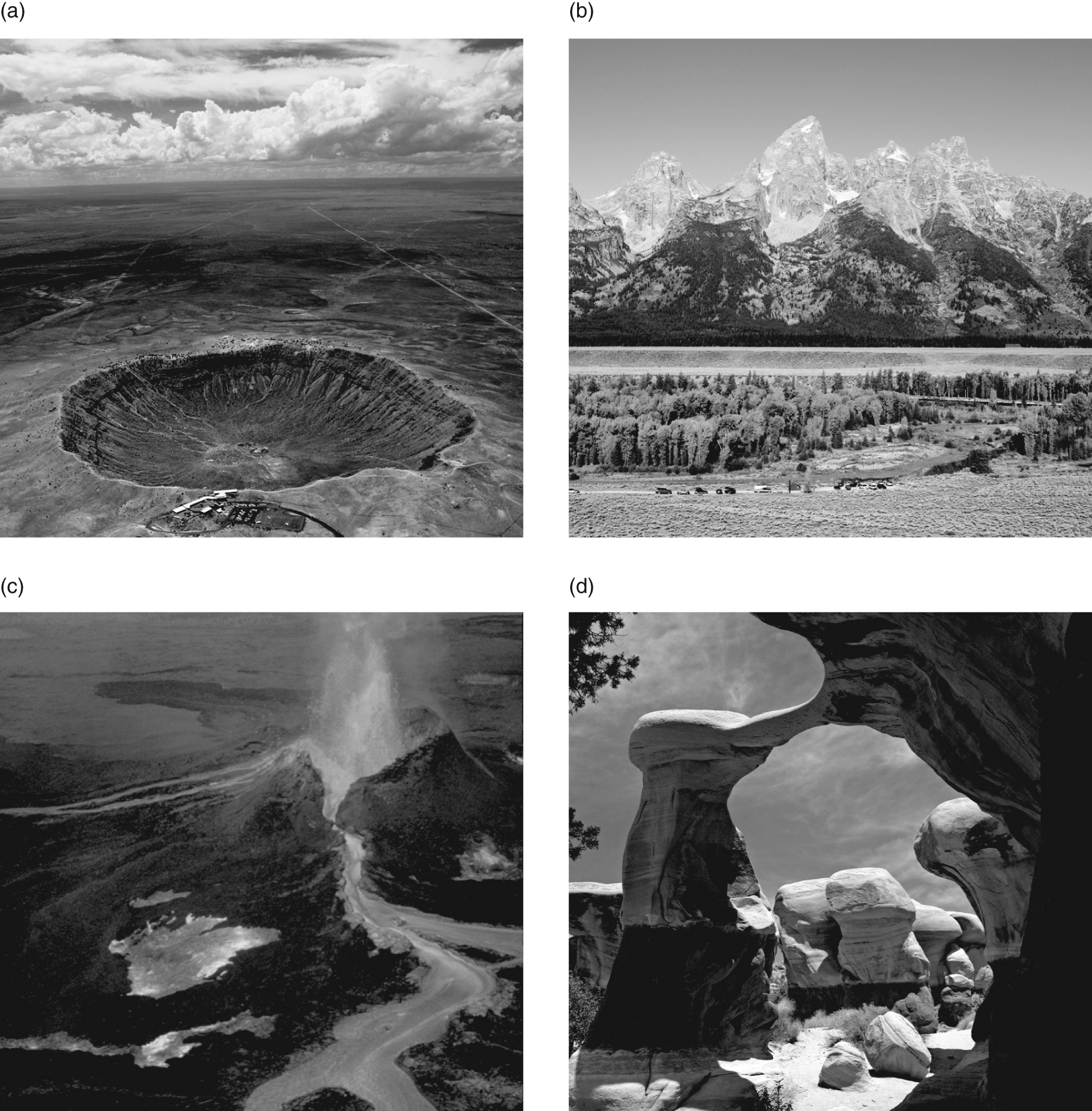
Question
Question
Question
Question
Question
Question

Unlock Deck
Sign up to unlock the cards in this deck!
Unlock Deck
Unlock Deck
1/82

Play

Full screen (f)
Deck 8: The Terrestrial Planets and Earths Moon
1
The lithosphere of a planet is:
A)the molten layer under the crust
B)the layer of the atmosphere in which clouds form
C)the upper layer of its atmosphere
D)its solid surface
E)its frozen surface
A)the molten layer under the crust
B)the layer of the atmosphere in which clouds form
C)the upper layer of its atmosphere
D)its solid surface
E)its frozen surface
its solid surface
2
There are two main forces that shape a planet's surface: impacts and plate tectonics.
False
3
Volcanoes on Earth typically occur in the middle of oceans where two tectonic plates are spreading apart.
False
4
The interior of the Earth is differentiated because it cooled very quickly.
Unlock Deck
Unlock for access to all 82 flashcards in this deck.
Unlock Deck
k this deck
5
Which object would have the LARGEST impact if it were to strike the Earth?
A)a 1-m diameter asteroid moving at 100 m/s
B)a 1-m diameter comet moving at 100 m/s
C)a 10-m diameter comet moving at 10 m/s
D)a 10-m diameter asteroid moving at 10 m/s
E)a 1-m diameter comet moving at 50 m/s
A)a 1-m diameter asteroid moving at 100 m/s
B)a 1-m diameter comet moving at 100 m/s
C)a 10-m diameter comet moving at 10 m/s
D)a 10-m diameter asteroid moving at 10 m/s
E)a 1-m diameter comet moving at 50 m/s
Unlock Deck
Unlock for access to all 82 flashcards in this deck.
Unlock Deck
k this deck
6
Mars has many large shield volcanoes because it does not have plate tectonics.
Unlock Deck
Unlock for access to all 82 flashcards in this deck.
Unlock Deck
k this deck
7
The Mars rovers named Spirit and Opportunity found evidence in the chemical makeup of the rocks that proves Mars had liquid water on its surface in the past.
Unlock Deck
Unlock for access to all 82 flashcards in this deck.
Unlock Deck
k this deck
8
The center of Earth has approximately the same temperature as the surface of the Sun.
Unlock Deck
Unlock for access to all 82 flashcards in this deck.
Unlock Deck
k this deck
9
An asteroid or comet impact near the Yucatan Peninsula approximately 20,000 years ago resulted in the extinction of more than 50 percent of all living species,including the dinosaurs.
Unlock Deck
Unlock for access to all 82 flashcards in this deck.
Unlock Deck
k this deck
10
Which object would have the LOWEST impact on our planet if it were to strike Earth?
A)a 1-kg asteroid traveling at 30 km/s
B)a 5-kg asteroid traveling at 10 km/s
C)a 100-kg comet traveling at 10 km/s
D)a 1,000-kg Mini Cooper car traveling at 100 miles/hr,which is 0.05 km/s
E)a 3,000-kg truck traveling at 35 miles/hr,which is 0.02 km/s
A)a 1-kg asteroid traveling at 30 km/s
B)a 5-kg asteroid traveling at 10 km/s
C)a 100-kg comet traveling at 10 km/s
D)a 1,000-kg Mini Cooper car traveling at 100 miles/hr,which is 0.05 km/s
E)a 3,000-kg truck traveling at 35 miles/hr,which is 0.02 km/s
Unlock Deck
Unlock for access to all 82 flashcards in this deck.
Unlock Deck
k this deck
11
Convection cannot take place in the Earth's mantle because it is not molten.
Unlock Deck
Unlock for access to all 82 flashcards in this deck.
Unlock Deck
k this deck
12
All the terrestrial planets show evidence of disruptions due to tectonics occurring now or in the past.
Unlock Deck
Unlock for access to all 82 flashcards in this deck.
Unlock Deck
k this deck
13
The maria,the dark regions of the Moon's surface,are approximately 1 billion years younger than the rest of its surface.
Unlock Deck
Unlock for access to all 82 flashcards in this deck.
Unlock Deck
k this deck
14
The oldest rocks on the Earth are approximately 4 billion years old.
Unlock Deck
Unlock for access to all 82 flashcards in this deck.
Unlock Deck
k this deck
15
Permanent magnetism in the Earth's solid iron core is the source of Earth's magnetic field.
Unlock Deck
Unlock for access to all 82 flashcards in this deck.
Unlock Deck
k this deck
16
The interior of the Earth is hot mainly because of the pressure induced by the weight of the material above it.
Unlock Deck
Unlock for access to all 82 flashcards in this deck.
Unlock Deck
k this deck
17
Earth's magnetic axis and its spin axis are not aligned.
Unlock Deck
Unlock for access to all 82 flashcards in this deck.
Unlock Deck
k this deck
18
Primary waves are seismic longitudinal waves whose paths are deflected when they travel through the Earth's liquid core.
Unlock Deck
Unlock for access to all 82 flashcards in this deck.
Unlock Deck
k this deck
19
On Mars,water ice is present primarily at its polar ice caps.
Unlock Deck
Unlock for access to all 82 flashcards in this deck.
Unlock Deck
k this deck
20
The smoother,less cratered surfaces of the Moon resulted from those areas being protected by the Moon's proximity to Earth.
Unlock Deck
Unlock for access to all 82 flashcards in this deck.
Unlock Deck
k this deck
21
If a radioactive element has a half-life of 10,000 years,what fraction of it is left in a rock after 40,000 years?
A)1⁄2
B)1⁄4
C)1⁄8
D)1⁄16
E)1⁄32
A)1⁄2
B)1⁄4
C)1⁄8
D)1⁄16
E)1⁄32
Unlock Deck
Unlock for access to all 82 flashcards in this deck.
Unlock Deck
k this deck
22
Flows of material surrounding Martian craters suggest:
A)volcanism in its interior
B)the presence of water in surface rocks
C)active plate tectonics at the time of impact
D)a very thin crust
E)the presence of ice
A)volcanism in its interior
B)the presence of water in surface rocks
C)active plate tectonics at the time of impact
D)a very thin crust
E)the presence of ice
Unlock Deck
Unlock for access to all 82 flashcards in this deck.
Unlock Deck
k this deck
23
To survive passage through the Earth's atmosphere without burning or breaking up before it hits the ground,an asteroid must be:
A)at least 1 meter in size
B)at least 10 meters in size
C)at least 100 meters in size
D)at least 1 kilometer in size
E)at least 1,000 kilometers in size
A)at least 1 meter in size
B)at least 10 meters in size
C)at least 100 meters in size
D)at least 1 kilometer in size
E)at least 1,000 kilometers in size
Unlock Deck
Unlock for access to all 82 flashcards in this deck.
Unlock Deck
k this deck
24
Of the following methods,the age of the Solar System can be determined most accurately by:
A)measuring the number of craters per square meter on Mercury
B)radioactive dating of rocks retrieved from the Moon
C)carbon dating of rocks from mountains on the Earth
D)measurement of the magnetic field variations in rocks under the Earth's oceans
E)measuring the rate of energy production in the Sun
A)measuring the number of craters per square meter on Mercury
B)radioactive dating of rocks retrieved from the Moon
C)carbon dating of rocks from mountains on the Earth
D)measurement of the magnetic field variations in rocks under the Earth's oceans
E)measuring the rate of energy production in the Sun
Unlock Deck
Unlock for access to all 82 flashcards in this deck.
Unlock Deck
k this deck
25
According to studies of impact cratering,which of these terrestrial objects has,on average,the oldest surface?
A)Mercury
B)Venus
C)Earth
D)Mars
E)the Moon
A)Mercury
B)Venus
C)Earth
D)Mars
E)the Moon
Unlock Deck
Unlock for access to all 82 flashcards in this deck.
Unlock Deck
k this deck
26
The smallest number of craters per square meter are found on the surface of:
A)Mercury
B)Mars
C)Venus
D)Earth
A)Mercury
B)Mars
C)Venus
D)Earth
Unlock Deck
Unlock for access to all 82 flashcards in this deck.
Unlock Deck
k this deck
27
Which of the following is NOT a factor that helps explain Earth's lack of craters compared to the Moon?
A)wind erosion
B)larger atmosphere
C)higher density interior
D)liquid water on surface
E)active tectonics and volcanism
A)wind erosion
B)larger atmosphere
C)higher density interior
D)liquid water on surface
E)active tectonics and volcanism
Unlock Deck
Unlock for access to all 82 flashcards in this deck.
Unlock Deck
k this deck
28
Mars,Venus,and Earth are much less heavily cratered than Mercury and the Moon.This is explained by the fact that:
A)the rate of cratering in the early Solar System was strongly dependent on location
B)Mars,Venus,and Earth have thicker atmospheres
C)Earth and Venus were shielded from impacts by the Moon,and Mars was protected by the asteroid belt
D)Mars,Venus,and Earth were geologically active for a longer period of time than Mercury and the Moon
E)Mars,Venus,and Earth are much larger in size than Mercury and the Moon
A)the rate of cratering in the early Solar System was strongly dependent on location
B)Mars,Venus,and Earth have thicker atmospheres
C)Earth and Venus were shielded from impacts by the Moon,and Mars was protected by the asteroid belt
D)Mars,Venus,and Earth were geologically active for a longer period of time than Mercury and the Moon
E)Mars,Venus,and Earth are much larger in size than Mercury and the Moon
Unlock Deck
Unlock for access to all 82 flashcards in this deck.
Unlock Deck
k this deck
29
Compared to the dark-colored regions of the surface of the Moon,the light-colored regions are approximately:
A)1 billion years older
B)1 billion years younger
C)1 million years older
D)1 million years younger
E)a few thousand years younger
A)1 billion years older
B)1 billion years younger
C)1 million years older
D)1 million years younger
E)a few thousand years younger
Unlock Deck
Unlock for access to all 82 flashcards in this deck.
Unlock Deck
k this deck
30
The fact that Earth's interior is differentiated suggests that:
A)it formed first from denser material and then afterward accreted lighter material
B)it has both a liquid and solid core
C)it was entirely liquid at some point in the past
D)only the crust is solid;the rest of Earth's interior is liquid
E)it formed first from lighter material,then afterward accreted heavier material
A)it formed first from denser material and then afterward accreted lighter material
B)it has both a liquid and solid core
C)it was entirely liquid at some point in the past
D)only the crust is solid;the rest of Earth's interior is liquid
E)it formed first from lighter material,then afterward accreted heavier material
Unlock Deck
Unlock for access to all 82 flashcards in this deck.
Unlock Deck
k this deck
31
Studies of the amount of cratering at different locations on the Moon indicate that:
A)the rate of cratering in the Solar System has changed dramatically over time
B)the younger lunar surfaces are hundreds of billions of years younger than the oldest surfaces
C)the Moon has never been geologically active at any point in its history
D)most of the heavy cratering in the Solar System occurred before Earth formed
E)that cratering is no longer occurring in the Solar System
A)the rate of cratering in the Solar System has changed dramatically over time
B)the younger lunar surfaces are hundreds of billions of years younger than the oldest surfaces
C)the Moon has never been geologically active at any point in its history
D)most of the heavy cratering in the Solar System occurred before Earth formed
E)that cratering is no longer occurring in the Solar System
Unlock Deck
Unlock for access to all 82 flashcards in this deck.
Unlock Deck
k this deck
32
Differentiation refers to materials that are separate based on their:
A)weight
B)mass
C)volume
D)density
E)heat capacity
A)weight
B)mass
C)volume
D)density
E)heat capacity
Unlock Deck
Unlock for access to all 82 flashcards in this deck.
Unlock Deck
k this deck
33
Based on the age of the light- and dark-colored regions of the Moon and the number of craters observed in these regions,we know that impacts in the inner Solar System:
A)rapidly decreased approximately 1 billion years ago
B)rapidly decreased approximately 3 billion years ago
C)were very rare in the last 4.6 billion years
D)occurred at approximately a constant rate throughout most of the age of the Solar System
E)never occur anymore
A)rapidly decreased approximately 1 billion years ago
B)rapidly decreased approximately 3 billion years ago
C)were very rare in the last 4.6 billion years
D)occurred at approximately a constant rate throughout most of the age of the Solar System
E)never occur anymore
Unlock Deck
Unlock for access to all 82 flashcards in this deck.
Unlock Deck
k this deck
34
If you obtained a sample of rock from Venus and determined the abundances of uranium (238U)and lead (207Pb)in it,and found that for every one uranium atom there were three lead atoms,then what would the age of this rock be? Note that this form of uranium decays to this form of lead with a half-life of 700 million years.For simplicity,you can assume that there was no lead in the rock when it originally formed.
A)1.4 billion years
B)2.8 billion years
C)4.0 million years
D)10.5 billion years
E)3.6 billion years
A)1.4 billion years
B)2.8 billion years
C)4.0 million years
D)10.5 billion years
E)3.6 billion years
Unlock Deck
Unlock for access to all 82 flashcards in this deck.
Unlock Deck
k this deck
35
Suppose an earthquake occurs on an imaginary planet.Scientists on the other side of the planet detect primary waves but not secondary waves after the quake occurs.This suggests that:
A)part of the planet's interior is liquid
B)all of the planet's interior is solid
C)the planet has an iron core
D)the planet's interior consists entirely of rocky materials
E)The planet's mantle is liquid
A)part of the planet's interior is liquid
B)all of the planet's interior is solid
C)the planet has an iron core
D)the planet's interior consists entirely of rocky materials
E)The planet's mantle is liquid
Unlock Deck
Unlock for access to all 82 flashcards in this deck.
Unlock Deck
k this deck
36
The observation that the Moon's average density is similar to the density of the Earth's _________ supports the collision theory of the Moon's origin.
A)oceans
B)average density
C)core
D)atmosphere
E)mantle
A)oceans
B)average density
C)core
D)atmosphere
E)mantle
Unlock Deck
Unlock for access to all 82 flashcards in this deck.
Unlock Deck
k this deck
37
In the Earth's crust,lower density igneous rock such as _________ make up the continents,and higher density volcanic rock such as _________ make up the ocean floor.
A)limestone;granite
B)granite;iron-rich silicates
C)granite;basalt
D)limestone;sandstone
E)marble;basalt
A)limestone;granite
B)granite;iron-rich silicates
C)granite;basalt
D)limestone;sandstone
E)marble;basalt
Unlock Deck
Unlock for access to all 82 flashcards in this deck.
Unlock Deck
k this deck
38
Which of the following statements is FALSE?
A)The surface of Venus has very few craters primarily because asteroids burn up in its thick atmosphere.
B)Geological features and the chemical composition of some rocks on Mars suggest liquid water flowed on the surface in the past,but not at the present time.
C)Darker regions of the Moon's surface have less craters and are approximately 1 billion years younger than the lighter regions.
D)Volcanoes on Mars are larger,on average,than the Earth's volcanoes because Mars does not have moving continental plates.
E)Impact craters on the Earth are erased over time because of erosion due to water and the recycling of its crust.
A)The surface of Venus has very few craters primarily because asteroids burn up in its thick atmosphere.
B)Geological features and the chemical composition of some rocks on Mars suggest liquid water flowed on the surface in the past,but not at the present time.
C)Darker regions of the Moon's surface have less craters and are approximately 1 billion years younger than the lighter regions.
D)Volcanoes on Mars are larger,on average,than the Earth's volcanoes because Mars does not have moving continental plates.
E)Impact craters on the Earth are erased over time because of erosion due to water and the recycling of its crust.
Unlock Deck
Unlock for access to all 82 flashcards in this deck.
Unlock Deck
k this deck
39
If you obtained a sample of a meteorite and determined the abundances of uranium (238U)and lead (207Pb)in it,and found that for every 1 uranium atom there were 15 lead atoms,then what would the age of this rock be? Note that this form of uranium decays to this form of lead with a half-life of 700 million years.For simplicity,you can assume that there was no lead in the rock when it originally formed.
A)1.4 billion years
B)2.8 billion years
C)4.0 billion years
D)10.5 billion years
E)3.6 billion years
A)1.4 billion years
B)2.8 billion years
C)4.0 billion years
D)10.5 billion years
E)3.6 billion years
Unlock Deck
Unlock for access to all 82 flashcards in this deck.
Unlock Deck
k this deck
40
Based on the number of impact craters observed per square meter on their surface,place these terrestrial planets in order of youngest to oldest surface:
A)Earth,Venus,Mercury
B)Venus,Earth,Mercury
C)Mercury,Venus,Earth
D)Earth,Mercury,Venus
E)Venus,Mercury,Earth
A)Earth,Venus,Mercury
B)Venus,Earth,Mercury
C)Mercury,Venus,Earth
D)Earth,Mercury,Venus
E)Venus,Mercury,Earth
Unlock Deck
Unlock for access to all 82 flashcards in this deck.
Unlock Deck
k this deck
41
If the Himalaya mountain range is presently 8,000 meters in height and is rising at a rate of 0.5 meters per century because of the convergence of two continental plates,how long did it take to create this mountain range?
A)1,600 years
B)160,000 years
C)1.6 million years
D)160 million years
E)1.6 billion years
A)1,600 years
B)160,000 years
C)1.6 million years
D)160 million years
E)1.6 billion years
Unlock Deck
Unlock for access to all 82 flashcards in this deck.
Unlock Deck
k this deck
42
Continental drift occurs at a typical rate of a few:
A)mm/year
B)cm/year
C)m/year
D)km/year
E)nm/year
A)mm/year
B)cm/year
C)m/year
D)km/year
E)nm/year
Unlock Deck
Unlock for access to all 82 flashcards in this deck.
Unlock Deck
k this deck
43
The dynamo theory says that a planet will have a strong magnetic field if it has:
A)fast rotation and a solid core
B)slow rotation and a liquid core
C)fast rotation and a liquid core
D)slow rotation and a solid core
E)fast rotation and a gaseous core
A)fast rotation and a solid core
B)slow rotation and a liquid core
C)fast rotation and a liquid core
D)slow rotation and a solid core
E)fast rotation and a gaseous core
Unlock Deck
Unlock for access to all 82 flashcards in this deck.
Unlock Deck
k this deck
44
Which is NOT a reason for the large size of volcanoes on Mars as compared to Earth's smaller volcanoes?
A)absence of plate tectonics
B)lack of atmosphere;therefore no erosion
C)less gravity than other terrestrial planets
D)many repeated eruptions
E)All of these are reasons.
A)absence of plate tectonics
B)lack of atmosphere;therefore no erosion
C)less gravity than other terrestrial planets
D)many repeated eruptions
E)All of these are reasons.
Unlock Deck
Unlock for access to all 82 flashcards in this deck.
Unlock Deck
k this deck
45
The Moon has a diameter that is approximately one-fourth that of Earth.If these objects' interiors are heated by radioactive decays,and the total amount of energy in decays is proportional to the object's volume,then how does the amount of heat the Moon has compare to that of Earth?
A)The Moon has 0.016 times that of Earth's.
B)The Moon's heating rate is 8 times that of the Earth's.
C)The Moon's heating rate is 0.5 times that of Earth's.
D)The Moon's heating rate is 4 times that of the Earth's.
E)The heating rates are about the same.
A)The Moon has 0.016 times that of Earth's.
B)The Moon's heating rate is 8 times that of the Earth's.
C)The Moon's heating rate is 0.5 times that of Earth's.
D)The Moon's heating rate is 4 times that of the Earth's.
E)The heating rates are about the same.
Unlock Deck
Unlock for access to all 82 flashcards in this deck.
Unlock Deck
k this deck
46
What will eventually happen to the Earth when radioactive decays in its interior cease?
A)The Earth's core will solidify.
B)Continental drift will cease.
C)Earthquakes will cease.
D)The strength of the Earth's magnetic field will decrease.
E)All of the above will happen.
A)The Earth's core will solidify.
B)Continental drift will cease.
C)Earthquakes will cease.
D)The strength of the Earth's magnetic field will decrease.
E)All of the above will happen.
Unlock Deck
Unlock for access to all 82 flashcards in this deck.
Unlock Deck
k this deck
47
Which of the following statements is FALSE?
A)Approximately 65 million years ago,a 10-km wide asteroid struck Earth and wiped out more than 50 percent of all living species.
B)The Moon probably was formed by a collision between a Mars-sized body and the Earth.
C)During summer in the northern hemisphere of Mars,the polar ice cap melts and liquid water flows outward from it in rivers.
D)The surface of Venus is relatively young with an estimated age of less than 1 billion years.
E)Mercury has many fractures and faults on its surface that probably arose when it cooled very rapidly and shrank.
A)Approximately 65 million years ago,a 10-km wide asteroid struck Earth and wiped out more than 50 percent of all living species.
B)The Moon probably was formed by a collision between a Mars-sized body and the Earth.
C)During summer in the northern hemisphere of Mars,the polar ice cap melts and liquid water flows outward from it in rivers.
D)The surface of Venus is relatively young with an estimated age of less than 1 billion years.
E)Mercury has many fractures and faults on its surface that probably arose when it cooled very rapidly and shrank.
Unlock Deck
Unlock for access to all 82 flashcards in this deck.
Unlock Deck
k this deck
48
Which of the following is NOT a requirement for a planetary magnetic dynamo?
A)rapid rotation
B)solid iron core
C)convective motions
D)charged particles in the interior
E)liquid interior
A)rapid rotation
B)solid iron core
C)convective motions
D)charged particles in the interior
E)liquid interior
Unlock Deck
Unlock for access to all 82 flashcards in this deck.
Unlock Deck
k this deck
49
Which terrestrial object shows the least evidence of recent volcanic activity?
A)Mercury
B)Venus
C)Earth
D)Mars
E)the Moon
A)Mercury
B)Venus
C)Earth
D)Mars
E)the Moon
Unlock Deck
Unlock for access to all 82 flashcards in this deck.
Unlock Deck
k this deck
50
The largest volcanic mountains in the Solar System are found on
A)Mercury
B)Venus
C)Earth
D)Mars
E)the Moon
A)Mercury
B)Venus
C)Earth
D)Mars
E)the Moon
Unlock Deck
Unlock for access to all 82 flashcards in this deck.
Unlock Deck
k this deck
51
What would you study in order to determine the timescale on which the Earth's magnetic field reverses direction?
A)a spreading center on the sea floor
B)a volcano in the middle of a continental plate
C)a fault at the border between two plates
D)a subduction zone on the sea floor
E)the rate of motion of tectonic plates
A)a spreading center on the sea floor
B)a volcano in the middle of a continental plate
C)a fault at the border between two plates
D)a subduction zone on the sea floor
E)the rate of motion of tectonic plates
Unlock Deck
Unlock for access to all 82 flashcards in this deck.
Unlock Deck
k this deck
52
Mars has a diameter that is approximately half that of Earth's.If the interiors of these planets are heated by radioactive decays,how does the heating rate of Mars' interior compare to that of Earth's?
A)Mars's heating rate is 0.125 times that of Earth's.
B)Mars's heating rate is 8 times that of the Earth's.
C)Mars's heating rate is 0.5 times that of Earth's.
D)Mars's heating rate is 4 times that of the Earth's.
E)The heating rates are about the same.
A)Mars's heating rate is 0.125 times that of Earth's.
B)Mars's heating rate is 8 times that of the Earth's.
C)Mars's heating rate is 0.5 times that of Earth's.
D)Mars's heating rate is 4 times that of the Earth's.
E)The heating rates are about the same.
Unlock Deck
Unlock for access to all 82 flashcards in this deck.
Unlock Deck
k this deck
53
Which of the following will NOT be a consequence of Earth's consumption of the bulk of its radioactive "fuel" in the future?
A)Earth will spin more slowly on its axis.
B)The interior of the planet will solidify.
C)Volcanic activity will cease.
D)Continental drift will no longer occur.
E)Earth's mass will decrease.
A)Earth will spin more slowly on its axis.
B)The interior of the planet will solidify.
C)Volcanic activity will cease.
D)Continental drift will no longer occur.
E)Earth's mass will decrease.
Unlock Deck
Unlock for access to all 82 flashcards in this deck.
Unlock Deck
k this deck
54
Which of the following are NOT sites of frequent volcanic and earthquake activity on Earth?
A)local hot spots
B)spreading centers
C)subduction zones
D)transform faults
E)inactive faults
A)local hot spots
B)spreading centers
C)subduction zones
D)transform faults
E)inactive faults
Unlock Deck
Unlock for access to all 82 flashcards in this deck.
Unlock Deck
k this deck
55
The North American plate and the Pacific plate are sliding past one another at a rate of approximately 3 cm/year.San Francisco,which is located on the edge of the North American plate,is sliding southward toward Los Angles,which is located on the Pacific Plate.If they are currently separated by a distance of 600 km,how many years will it take for the two cities to meet?
A)3 million years
B)300,000 years
C)20 million years
D)20,000 years
E)600 years
A)3 million years
B)300,000 years
C)20 million years
D)20,000 years
E)600 years
Unlock Deck
Unlock for access to all 82 flashcards in this deck.
Unlock Deck
k this deck
56
Earth's innermost core is solid,not liquid,because:
A)the core temperature is too low to melt iron
B)differentiation caused all of the heavy,solid material to sink to the bottom while Earth was forming
C)all the liquid has moved up into the mantle via convection
D)the pressure is too high for the material to be in a liquid state
E)Iron does not melt
A)the core temperature is too low to melt iron
B)differentiation caused all of the heavy,solid material to sink to the bottom while Earth was forming
C)all the liquid has moved up into the mantle via convection
D)the pressure is too high for the material to be in a liquid state
E)Iron does not melt
Unlock Deck
Unlock for access to all 82 flashcards in this deck.
Unlock Deck
k this deck
57
What is the main reason that the Earth's interior is liquid today?
A)tidal force of the Moon on the Earth
B)seismic waves that travel through Earth's interior
C)decay of radioactive elements
D)convective motions in the mantle
E)pressure on the core from Earth's outer layers.
A)tidal force of the Moon on the Earth
B)seismic waves that travel through Earth's interior
C)decay of radioactive elements
D)convective motions in the mantle
E)pressure on the core from Earth's outer layers.
Unlock Deck
Unlock for access to all 82 flashcards in this deck.
Unlock Deck
k this deck
58
Consider an external solar system in which there are three terrestrial planets.All are located far from other objects so tidal forces aren't significant.If planet A has a radius of 1 Earth radius,and planet B has a radius of 2 Earth radii,and planet C has a radius of 3 Earth radii,which planet has the highest chance of having at least a partially liquid core and a detectable magnetic field?
A)Planet A
B)Planet B
C)Planet C
D)They all have the same likelihood of having a liquid core.
E)None of these planets should have a liquid core,because they all should have completely solidified.
A)Planet A
B)Planet B
C)Planet C
D)They all have the same likelihood of having a liquid core.
E)None of these planets should have a liquid core,because they all should have completely solidified.
Unlock Deck
Unlock for access to all 82 flashcards in this deck.
Unlock Deck
k this deck
59
Plate tectonics is NOT responsible for:
A)mountain ranges
B)canyons
C)volcanoes
D)ocean trenches
E)continental drift
A)mountain ranges
B)canyons
C)volcanoes
D)ocean trenches
E)continental drift
Unlock Deck
Unlock for access to all 82 flashcards in this deck.
Unlock Deck
k this deck
60
Based on the assumption that a liquid,conducting core and rapid rotation are both required for a magnetic dynamo to operate,which terrestrial planets would you expect to have magnetic fields?
A)only Earth
B)only Earth,Venus,and Mars
C)only Earth and Mars
D)only Earth and Mercury
E)Earth,Venus,Mars,and Mercury
A)only Earth
B)only Earth,Venus,and Mars
C)only Earth and Mars
D)only Earth and Mercury
E)Earth,Venus,Mars,and Mercury
Unlock Deck
Unlock for access to all 82 flashcards in this deck.
Unlock Deck
k this deck
61
Give a specific example of a historical impact of an asteroid or comet that hit the Earth.Why are impact craters rare on the surface of Earth but plentiful on the Moon?
Unlock Deck
Unlock for access to all 82 flashcards in this deck.
Unlock Deck
k this deck
62
Three different things can happen when two continental plates meet.What is the name given to each,and briefly explain what happens in each.
Unlock Deck
Unlock for access to all 82 flashcards in this deck.
Unlock Deck
k this deck
63
How do we know that Earth's magnetic field has flipped its polarity many times in the past?
Unlock Deck
Unlock for access to all 82 flashcards in this deck.
Unlock Deck
k this deck
64
Which is denser-the mantle or crust of the Earth? Explain why.
Unlock Deck
Unlock for access to all 82 flashcards in this deck.
Unlock Deck
k this deck
65
Describe the difference between seismic primary and secondary waves and why this difference makes them useful in probing the structure of the Earth's interior.
Unlock Deck
Unlock for access to all 82 flashcards in this deck.
Unlock Deck
k this deck
66
The American and African/European continents are now separated by the Atlantic Ocean,which is approximately 4,000 km wide.Assuming a continental drift rate of 2 cm/year,how long has it been since they were one land mass?
Unlock Deck
Unlock for access to all 82 flashcards in this deck.
Unlock Deck
k this deck
67
Which planet would you expect to have a larger molten core,a planet of Earth's size or a planet that had half the radius of Earth? Explain why.
Unlock Deck
Unlock for access to all 82 flashcards in this deck.
Unlock Deck
k this deck
68
The rovers named Spirit and Opportunity that recently explored the surface of Mars discovered:
A)tiny streams of flowing water too small to be detected by orbiting satellites
B)minerals that must have formed in an environment rich in liquid water
C)dust storms that rapidly erode the surfaces of most geological formations
D)the northern polar ice cap is made primarily of frozen water ice
E)the presence of methane that arises from biological life
A)tiny streams of flowing water too small to be detected by orbiting satellites
B)minerals that must have formed in an environment rich in liquid water
C)dust storms that rapidly erode the surfaces of most geological formations
D)the northern polar ice cap is made primarily of frozen water ice
E)the presence of methane that arises from biological life
Unlock Deck
Unlock for access to all 82 flashcards in this deck.
Unlock Deck
k this deck
69
Suppose that two planets of the same size formed from the same material.If planet A had differentiated and planet B had not,how would samples of their surface rock differ? Explain why.
Unlock Deck
Unlock for access to all 82 flashcards in this deck.
Unlock Deck
k this deck
70
Describe one example of tectonic disruption on Mercury,Venus,and Mars,respectively,and explain how they formed.
Unlock Deck
Unlock for access to all 82 flashcards in this deck.
Unlock Deck
k this deck
71
Present-day erosion on the surface of the Moon is primarily caused by:
A)flowing water
B)wind
C)solar radiation
D)dust storms
E)tectonic shifts
A)flowing water
B)wind
C)solar radiation
D)dust storms
E)tectonic shifts
Unlock Deck
Unlock for access to all 82 flashcards in this deck.
Unlock Deck
k this deck
72
If you obtained a sample of Martian rock,determined the abundances of 230U and 207Pb in it,and found that for every one uranium atom there were seven lead atoms,then what would the age of this rock be? Note that 230U decays to 207Pb with a half-life of 700 million years.Assume that there was no 207Pb in the rock when it originally formed.
Unlock Deck
Unlock for access to all 82 flashcards in this deck.
Unlock Deck
k this deck
73
What are the four main processes that shape the surfaces of the terrestrial planets?
Unlock Deck
Unlock for access to all 82 flashcards in this deck.
Unlock Deck
k this deck
74
List the main process that shaped the planetary surface features illustrated in each of the four pictures shown below.
Unlock Deck
Unlock for access to all 82 flashcards in this deck.
Unlock Deck
k this deck
75
Describe two reasons why we know that the Earth's magnetic field cannot be a result of permanent magnetism in a solid iron core.
Unlock Deck
Unlock for access to all 82 flashcards in this deck.
Unlock Deck
k this deck
76
Which is NOT a reason that we suspect that the extinction of the dinosaurs was caused by a large impact by a large object?
A)Many dinosaur fossils are found below the K-T boundary,but none above it.
B)The material in the K-T boundary is rich in iridium.
C)Soot is found in the material in the K-T boundary,which probably came from fires caused by the impact.
D)An impact crater has been found near Mexico's Yucatan Peninsula.
E)The remaining meteorite has been identified on the bottom of the Gulf of Mexico.
A)Many dinosaur fossils are found below the K-T boundary,but none above it.
B)The material in the K-T boundary is rich in iridium.
C)Soot is found in the material in the K-T boundary,which probably came from fires caused by the impact.
D)An impact crater has been found near Mexico's Yucatan Peninsula.
E)The remaining meteorite has been identified on the bottom of the Gulf of Mexico.
Unlock Deck
Unlock for access to all 82 flashcards in this deck.
Unlock Deck
k this deck
77
Which is NOT a reason that we suspect Mars once had liquid water on its surface?
A)Mapping satellites have detected dry river beds.
B)Rovers have detected minerals that must have formed in the presence of liquid water.
C)Mapping satellites have detected outflow channels coming from impact craters.
D)The observed presence of water ice in Mars's polar icecaps.
E)All of the above are reasons.
A)Mapping satellites have detected dry river beds.
B)Rovers have detected minerals that must have formed in the presence of liquid water.
C)Mapping satellites have detected outflow channels coming from impact craters.
D)The observed presence of water ice in Mars's polar icecaps.
E)All of the above are reasons.
Unlock Deck
Unlock for access to all 82 flashcards in this deck.
Unlock Deck
k this deck
78
How did the radioactive heating of Earth vary from when it was first formed 4.6 billion years ago until today?
Unlock Deck
Unlock for access to all 82 flashcards in this deck.
Unlock Deck
k this deck
79
Name the terrestrial planets in order of increasing distance from the Sun.What are the terrestrial planets in order of increasing geologic age of their surface?
Unlock Deck
Unlock for access to all 82 flashcards in this deck.
Unlock Deck
k this deck
80
We have direct evidence for the current existence of water on the surface of which terrestrial object?
A)Mercury
B)Venus
C)Mars
D)Ganymede
E)Callisto
A)Mercury
B)Venus
C)Mars
D)Ganymede
E)Callisto
Unlock Deck
Unlock for access to all 82 flashcards in this deck.
Unlock Deck
k this deck
Unlock Deck
Unlock for access to all 82 flashcards in this deck.






