







 Chat with AI

Deck 11: Imperial Ambitions, 1820-1848
Full screen (f)

Question
For this question,refer to John Gast's 1872 painting,American Progress. 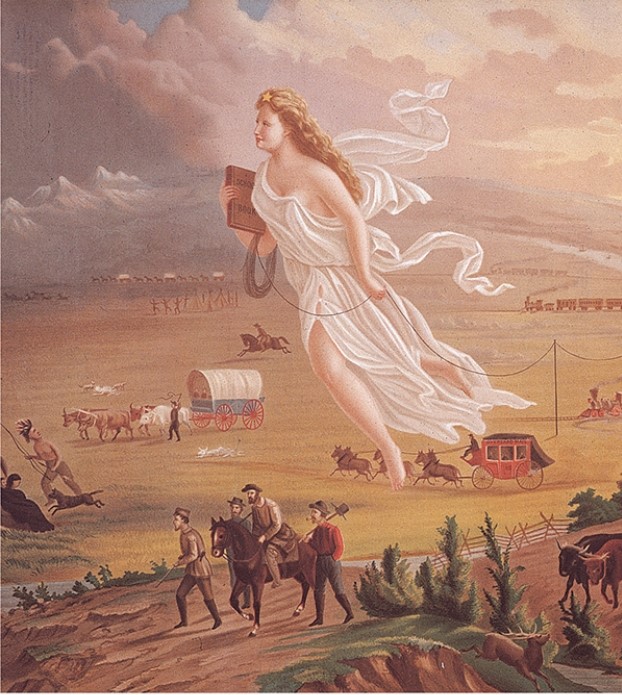 The sentiments expressed in the painting led most directly to
A) an increase in the internal slave trade.
B) the emergence of the Republican Party in the North and Midwest.
C) environmental transformation of the western region.
D) questions about the status and legal rights of Hispanics and American Indians.
The sentiments expressed in the painting led most directly toA) an increase in the internal slave trade.
B) the emergence of the Republican Party in the North and Midwest.
C) environmental transformation of the western region.
D) questions about the status and legal rights of Hispanics and American Indians.

Question
Question
Question
Question
Question
Question
Question
Question
Question
Question
Question
Question
Question
Question
Question
Question
Question
Question
For this question,refer to John Gast's 1872 painting,American Progress. 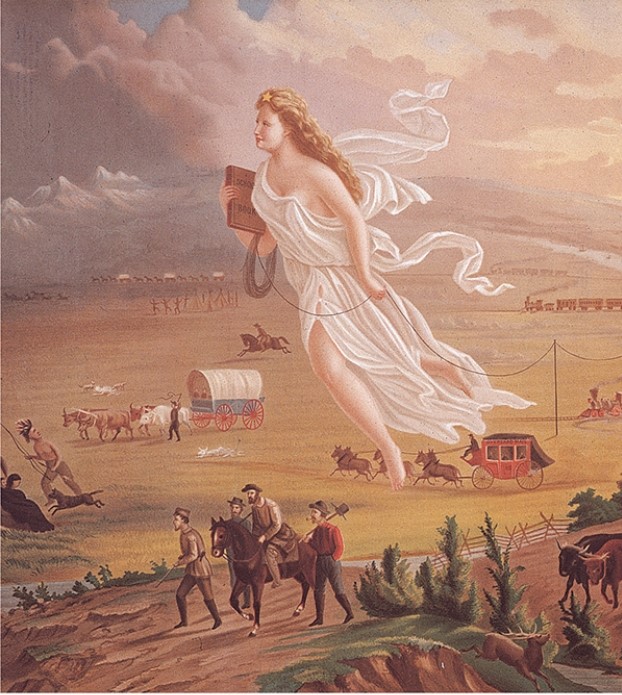 The ideas expressed in the painting above most directly reflect which of the following continuities in U.S.history?
A) A sense of unique national mission and a superior cultural identity
B) The challenges faced by migration to and within the United States
C) Debates about the extension of public control over natural resources
D) The opening of new markets through technological innovations
The ideas expressed in the painting above most directly reflect which of the following continuities in U.S.history?A) A sense of unique national mission and a superior cultural identity
B) The challenges faced by migration to and within the United States
C) Debates about the extension of public control over natural resources
D) The opening of new markets through technological innovations
Question
Question
Question
Question
Question
Question
Question
Question
Question
Question
Question
Question
Question
Question
Question
Question
Question
Question
Question
Question
Question
Question
Question
Question
Question
Question
Question
Question
Question
Question
Question
Question
Question
Question
Question
Question
Question
Question
Question
Question
Question
Question
Question
Question
Question
Question
Question
Question
Question
Question
Question
Question
Question
Question
Question
Question
Question
Question
Question

Unlock Deck
Sign up to unlock the cards in this deck!
Unlock Deck
Unlock Deck
1/78

Play

Full screen (f)
Deck 11: Imperial Ambitions, 1820-1848
1
For this question,refer to John Gast's 1872 painting,American Progress. The sentiments expressed in the painting led most directly to
A) an increase in the internal slave trade.
B) the emergence of the Republican Party in the North and Midwest.
C) environmental transformation of the western region.
D) questions about the status and legal rights of Hispanics and American Indians.
The sentiments expressed in the painting led most directly toA) an increase in the internal slave trade.
B) the emergence of the Republican Party in the North and Midwest.
C) environmental transformation of the western region.
D) questions about the status and legal rights of Hispanics and American Indians.
environmental transformation of the western region.
2
Smallholding planters in the nineteenth-century South owned about how many slaves,on average?
A) None
B) One to five
C) Eight to ten
D) Fifteen to twenty
A) None
B) One to five
C) Eight to ten
D) Fifteen to twenty
One to five
3
What prevented planter elites from exercising complete political dominance over the Cotton South in the 1830s and 1840s?
A) They lived in a republican society with democratic institutions that elicited input from all white men.
B) The Cotton Revolution increased resentment on the part of poor whites toward planters' power and position.
C) Plantation management required so much of their time that many planters had to refrain from political service.
D) The emergence of a new class of wealthy industrial elites in the South checked their power.
A) They lived in a republican society with democratic institutions that elicited input from all white men.
B) The Cotton Revolution increased resentment on the part of poor whites toward planters' power and position.
C) Plantation management required so much of their time that many planters had to refrain from political service.
D) The emergence of a new class of wealthy industrial elites in the South checked their power.
They lived in a republican society with democratic institutions that elicited input from all white men.
4
Which of these factors contributed to the development of an increasingly homogeneous African American culture in the rural South in the nineteenth century?
A) Marriage patterns
B) Kinship relations
C) The domestic slave trade
D) The development of the Gullah dialect
A) Marriage patterns
B) Kinship relations
C) The domestic slave trade
D) The development of the Gullah dialect
Unlock Deck
Unlock for access to all 78 flashcards in this deck.
Unlock Deck
k this deck
5
Which of these factors created a major economic obstacle for small,family farmers aiming to improve their lot in the mid-nineteenth-century South?
A) Competition from immigrant labor
B) Export taxes on their products
C) The Cotton Revolution
D) Poor distribution networks
A) Competition from immigrant labor
B) Export taxes on their products
C) The Cotton Revolution
D) Poor distribution networks
Unlock Deck
Unlock for access to all 78 flashcards in this deck.
Unlock Deck
k this deck
6
What prevented white southerners from working to diversify their economy in the nineteenth century?
A) Southerners did not want to exploit white workers economically.
B) Wealthy southern investors believed agricultural labor was more virtuous than industrial labor.
C) Southerners resisted railroad construction because they believed it would divide large landholdings.
D) Wealthy planters believed that the plantation economy would continue to produce wealth indefinitely.
A) Southerners did not want to exploit white workers economically.
B) Wealthy southern investors believed agricultural labor was more virtuous than industrial labor.
C) Southerners resisted railroad construction because they believed it would divide large landholdings.
D) Wealthy planters believed that the plantation economy would continue to produce wealth indefinitely.
Unlock Deck
Unlock for access to all 78 flashcards in this deck.
Unlock Deck
k this deck
7
Which of the following attributes of American society did the planter aristocracy in the South value highly in the mid-nineteenth century?
A) Inequality
B) Egalitarian society
C) Professional politicians
D) Universal suffrage
A) Inequality
B) Egalitarian society
C) Professional politicians
D) Universal suffrage
Unlock Deck
Unlock for access to all 78 flashcards in this deck.
Unlock Deck
k this deck
8
Which of the following examples embodied the synthesis of African and American culture that existed in the South in the 1850s?
A) Black evangelical Christianity
B) The success of slave resistance
C) Black and white children playing together
D) Sexual relations between slave women and their masters
A) Black evangelical Christianity
B) The success of slave resistance
C) Black and white children playing together
D) Sexual relations between slave women and their masters
Unlock Deck
Unlock for access to all 78 flashcards in this deck.
Unlock Deck
k this deck
9
Children born in slave communities in the nineteenth-century South often shared which of these characteristics?
A) They were named after family members.
B) Children were removed from their families at age three.
C) They were raised by their grandmothers.
D) Children had few sources of support.
A) They were named after family members.
B) Children were removed from their families at age three.
C) They were raised by their grandmothers.
D) Children had few sources of support.
Unlock Deck
Unlock for access to all 78 flashcards in this deck.
Unlock Deck
k this deck
10
Which of the following statements describes the institution of slavery in the nineteenth-century South?
A) The percentage of white slave-owning families continually increased between 1800 and 1860.
B) Throughout the nineteenth century,most white southerners owned some slaves.
C) Slave gangs proved to be less efficient than those who worked more independently.
D) About 5 percent of southern whites owned 50 percent of the South's slave population.
A) The percentage of white slave-owning families continually increased between 1800 and 1860.
B) Throughout the nineteenth century,most white southerners owned some slaves.
C) Slave gangs proved to be less efficient than those who worked more independently.
D) About 5 percent of southern whites owned 50 percent of the South's slave population.
Unlock Deck
Unlock for access to all 78 flashcards in this deck.
Unlock Deck
k this deck
11
Which of the following were core institutions for African American society in the mid-nineteenth-century South?
A) Marriage and resistance movements
B) Church and family
C) The American Anti-Slavery Society and Christianity
D) Friendships and kinship
A) Marriage and resistance movements
B) Church and family
C) The American Anti-Slavery Society and Christianity
D) Friendships and kinship
Unlock Deck
Unlock for access to all 78 flashcards in this deck.
Unlock Deck
k this deck
12
Which of the following statements describes the relationship between the economies of the North and the South in the mid-nineteenth century?
A) Both the South and the North had equally strong economies in 1860.
B) The wealth of the industrializing Northeast was increasing more quickly than that of the South.
C) Southerners' wealth in slaves made the South's economy ten times stronger than the North's.
D) The economy of the North was stronger and more prosperous than that of the South.
A) Both the South and the North had equally strong economies in 1860.
B) The wealth of the industrializing Northeast was increasing more quickly than that of the South.
C) Southerners' wealth in slaves made the South's economy ten times stronger than the North's.
D) The economy of the North was stronger and more prosperous than that of the South.
Unlock Deck
Unlock for access to all 78 flashcards in this deck.
Unlock Deck
k this deck
13
Which of these groups accounted for the largest percentage of the white population in the mid-nineteenth-century Cotton South?
A) Plantation owners
B) Middling planters
C) Yeoman farmers
D) Tenant farmers and day laborers
A) Plantation owners
B) Middling planters
C) Yeoman farmers
D) Tenant farmers and day laborers
Unlock Deck
Unlock for access to all 78 flashcards in this deck.
Unlock Deck
k this deck
14
Many African American slaves who converted to Christianity compared themselves to which of the following groups?
A) Native Americans
B) Mormons
C) Jews
D) The Irish
A) Native Americans
B) Mormons
C) Jews
D) The Irish
Unlock Deck
Unlock for access to all 78 flashcards in this deck.
Unlock Deck
k this deck
15
Why did the United States decline to annex Texas in 1837?
A) President Van Buren feared that annexation would spark an American civil war over the issue of slavery.
B) Texans refused to legalize slavery,which was the only condition on which southern politicians would accept Texan statehood.
C) President Van Buren could not convince the Whig-dominated Senate to accept the treaty.
D) The U.S.Congress refused annexation because it did not want to assume Texas's large Mexican population.
A) President Van Buren feared that annexation would spark an American civil war over the issue of slavery.
B) Texans refused to legalize slavery,which was the only condition on which southern politicians would accept Texan statehood.
C) President Van Buren could not convince the Whig-dominated Senate to accept the treaty.
D) The U.S.Congress refused annexation because it did not want to assume Texas's large Mexican population.
Unlock Deck
Unlock for access to all 78 flashcards in this deck.
Unlock Deck
k this deck
16
Which of the following statements describes the class of propertyless whites living in the South in the mid-nineteenth century?
A) Propertyless whites directly benefitted from the institution of slavery.
B) They worked hard physical jobs as day laborers and enjoyed little respect from other whites.
C) Planters courted their loyalty by providing gifts and small favors to their families.
D) Propertyless whites were free but lived in conditions worse than those of many slaves.
A) Propertyless whites directly benefitted from the institution of slavery.
B) They worked hard physical jobs as day laborers and enjoyed little respect from other whites.
C) Planters courted their loyalty by providing gifts and small favors to their families.
D) Propertyless whites were free but lived in conditions worse than those of many slaves.
Unlock Deck
Unlock for access to all 78 flashcards in this deck.
Unlock Deck
k this deck
17
Which of these concepts became a central tenet of slave Christianity in the South in the nineteenth century?
A) Predestination
B) Original sin
C) Obedience to authority
D) All people as children of God
A) Predestination
B) Original sin
C) Obedience to authority
D) All people as children of God
Unlock Deck
Unlock for access to all 78 flashcards in this deck.
Unlock Deck
k this deck
18
The Alabama Constitution of 1819 did which of the following?
A) Gave all taxpaying white men the right to vote
B) Eliminated the use of the secret ballot
C) Apportioned state legislative seats on the basis of a county's wealth
D) Made county supervisors and sheriffs elected positions
A) Gave all taxpaying white men the right to vote
B) Eliminated the use of the secret ballot
C) Apportioned state legislative seats on the basis of a county's wealth
D) Made county supervisors and sheriffs elected positions
Unlock Deck
Unlock for access to all 78 flashcards in this deck.
Unlock Deck
k this deck
19
For this question,refer to John Gast's 1872 painting,American Progress. The ideas expressed in the painting above most directly reflect which of the following continuities in U.S.history?
A) A sense of unique national mission and a superior cultural identity
B) The challenges faced by migration to and within the United States
C) Debates about the extension of public control over natural resources
D) The opening of new markets through technological innovations
The ideas expressed in the painting above most directly reflect which of the following continuities in U.S.history?A) A sense of unique national mission and a superior cultural identity
B) The challenges faced by migration to and within the United States
C) Debates about the extension of public control over natural resources
D) The opening of new markets through technological innovations
Unlock Deck
Unlock for access to all 78 flashcards in this deck.
Unlock Deck
k this deck
20
Which of the following statements characterizes African American marriage customs in the slave South?
A) Marriage between cousins was very common among plantation slaves.
B) African American marriage customs imitated those of white Christians.
C) Many slaves married and moved into their own cabins without their white owners' permission.
D) Slave couples often followed the African custom of "jumping the broom" to signify their union.
A) Marriage between cousins was very common among plantation slaves.
B) African American marriage customs imitated those of white Christians.
C) Many slaves married and moved into their own cabins without their white owners' permission.
D) Slave couples often followed the African custom of "jumping the broom" to signify their union.
Unlock Deck
Unlock for access to all 78 flashcards in this deck.
Unlock Deck
k this deck
21
What feature of the Lakota Sioux society protected it from the epidemics that decimated other Native American groups in the nineteenth century?
A) A knowledge of herbal medicines
B) A protein-rich diet of buffalo meat
C) Its small groups and nomadic lifestyle
D) Ritual bathing practices
A) A knowledge of herbal medicines
B) A protein-rich diet of buffalo meat
C) Its small groups and nomadic lifestyle
D) Ritual bathing practices
Unlock Deck
Unlock for access to all 78 flashcards in this deck.
Unlock Deck
k this deck
22
Which of these factors made enslaved African Americans reluctant to attempt to escape to the North?
A) Slaves internalized their inferiority and felt incapable of successful flight.
B) They hesitated to leave their families and communities behind.
C) Slaves' embrace of the Golden Rule led them to treat their masters well.
D) They knew that the civil war and abolitionism would come sooner rather than later.
A) Slaves internalized their inferiority and felt incapable of successful flight.
B) They hesitated to leave their families and communities behind.
C) Slaves' embrace of the Golden Rule led them to treat their masters well.
D) They knew that the civil war and abolitionism would come sooner rather than later.
Unlock Deck
Unlock for access to all 78 flashcards in this deck.
Unlock Deck
k this deck
23
Americans who migrated to the Oregon Territory in the 1840s settled in which of these regions?
A) Puget Sound
B) Columbia River Valley
C) Willamette Valley
D) The city of Independence
A) Puget Sound
B) Columbia River Valley
C) Willamette Valley
D) The city of Independence
Unlock Deck
Unlock for access to all 78 flashcards in this deck.
Unlock Deck
k this deck
24
How did pro-annexation Democrats engineer the annexation of Texas in 1845?
A) They bribed several major figures in the Mexican government to support annexation.
B) The Democrats promised Whig congressmen that they would fund internal improvements in exchange for Whig votes.
C) They arranged for the measure to come to a vote in the Senate when several anti-annexation senators were absent.
D) The party approved it through a joint resolution,which required only a majority vote in both houses of Congress.
A) They bribed several major figures in the Mexican government to support annexation.
B) The Democrats promised Whig congressmen that they would fund internal improvements in exchange for Whig votes.
C) They arranged for the measure to come to a vote in the Senate when several anti-annexation senators were absent.
D) The party approved it through a joint resolution,which required only a majority vote in both houses of Congress.
Unlock Deck
Unlock for access to all 78 flashcards in this deck.
Unlock Deck
k this deck
25
Which of the following made the Oregon Territory so appealing to Americans in the mid-1800s?
A) Its proximity to California
B) Its mild climate and rich soil
C) The absence of Native Americans in the area
D) The transcontinental railroad terminus there
A) Its proximity to California
B) Its mild climate and rich soil
C) The absence of Native Americans in the area
D) The transcontinental railroad terminus there
Unlock Deck
Unlock for access to all 78 flashcards in this deck.
Unlock Deck
k this deck
26
Slaves' practice of "taking root" involved which of the following?
A) Cultivating their own food crops in small yards after their workday
B) Adopting American culture and rejecting African influences
C) Forming fictive kinship relationships for social support
D) Building the best possible lives for themselves as slaves
A) Cultivating their own food crops in small yards after their workday
B) Adopting American culture and rejecting African influences
C) Forming fictive kinship relationships for social support
D) Building the best possible lives for themselves as slaves
Unlock Deck
Unlock for access to all 78 flashcards in this deck.
Unlock Deck
k this deck
27
Which of these factors prompted many plantation masters to reduce reliance on violence and adopt positive incentives to motivate slaves in the 1830s and 1840s?
A) Christian values
B) Domestic ideology
C) Abolitionist scrutiny
D) Frequent mass uprisings
A) Christian values
B) Domestic ideology
C) Abolitionist scrutiny
D) Frequent mass uprisings
Unlock Deck
Unlock for access to all 78 flashcards in this deck.
Unlock Deck
k this deck
28
Which of the following describes the changes in slaves' living conditions in the early nineteenth century?
A) Sexual abuse of black women increased because white males on the southwestern frontier knew the law would not punish them.
B) Blacks lost the few work privileges they had gained in the eighteenth century,especially in the lowlands of South Carolina.
C) Mutilations of black men increased as whites sought to deter runaways and slave revolts.
D) As blacks formed stronger social,family,and cultural ties,they resisted the breakup of families through sale by their owners.
A) Sexual abuse of black women increased because white males on the southwestern frontier knew the law would not punish them.
B) Blacks lost the few work privileges they had gained in the eighteenth century,especially in the lowlands of South Carolina.
C) Mutilations of black men increased as whites sought to deter runaways and slave revolts.
D) As blacks formed stronger social,family,and cultural ties,they resisted the breakup of families through sale by their owners.
Unlock Deck
Unlock for access to all 78 flashcards in this deck.
Unlock Deck
k this deck
29
How did Oregon fever affect national politics in the United States in 1844?
A) Enthusiasm for settlement in Oregon nearly led to war with England.
B) The idea of expansion into Oregon split both the Whig and the Democratic Parties.
C) Talk of expansion led to talk of the spread of slavery,which Congress prevented with a gag rule.
D) The possibility of expansion into Texas became a major issue in the presidential election.
A) Enthusiasm for settlement in Oregon nearly led to war with England.
B) The idea of expansion into Oregon split both the Whig and the Democratic Parties.
C) Talk of expansion led to talk of the spread of slavery,which Congress prevented with a gag rule.
D) The possibility of expansion into Texas became a major issue in the presidential election.
Unlock Deck
Unlock for access to all 78 flashcards in this deck.
Unlock Deck
k this deck
30
Which man who sought the presidency in 1844 is matched with the correct description?
A) James Birney-proslavery Whig president who unsuccessfully tried to win the Democratic Party's nomination
B) Henry Clay-former Democratic president who unsuccessfully tried to win his party's nomination
C) James Polk-expansionist,dark-horse candidate of the Democratic Party who won the election
D) John Tyler-Whig candidate who eventually supported the annexation of Texas and narrowly lost the election
A) James Birney-proslavery Whig president who unsuccessfully tried to win the Democratic Party's nomination
B) Henry Clay-former Democratic president who unsuccessfully tried to win his party's nomination
C) James Polk-expansionist,dark-horse candidate of the Democratic Party who won the election
D) John Tyler-Whig candidate who eventually supported the annexation of Texas and narrowly lost the election
Unlock Deck
Unlock for access to all 78 flashcards in this deck.
Unlock Deck
k this deck
31
Which of the following statements characterizes blacks' resistance to slavery by the 1820s?
A) Most slaves still clung to the hope of returning to Africa.
B) In their situation,most blacks had no choice but to build the best possible lives for themselves.
C) The frequency of escape to Spanish Florida and the frontier increased.
D) Many slaves planned or participated in revolts,knowing that some would be successful.
A) Most slaves still clung to the hope of returning to Africa.
B) In their situation,most blacks had no choice but to build the best possible lives for themselves.
C) The frequency of escape to Spanish Florida and the frontier increased.
D) Many slaves planned or participated in revolts,knowing that some would be successful.
Unlock Deck
Unlock for access to all 78 flashcards in this deck.
Unlock Deck
k this deck
32
For this question,refer to the following two excerpts. Texas is now ours....The independence of Texas was complete and absolute.It was an independence,not only in fact,but of right....What then can be more preposterous than all this clamor by Mexico and the Mexican interest,against Annexation,as a violation of any rights of hers...?
Nor is there any just foundation for the charge that Annexation is a great pro-slavery measure-calculated to increase and perpetuate that institution.Slavery had nothing to do with it....That it will tend to facilitate and hasten the disappearance of Slavery from all the northern tier of the present Slave States,cannot surely admit of serious question.The greater value in Texas of the slave labor now employed in those States,must soon produce the effect of draining off that labor southwardly....
California will,probably,next fall away....Already the advance guard of the irresistible army of Anglo-Saxon emigration has begun to pour down upon it,armed with the plough and the rifle,and marking its trail with schools and colleges,courts and representative halls,mills and meeting-houses.A population will soon be in actual occupation of California....And they will have a right to independence-to self-government ...a better and a truer right than the artificial title of sovereignty in Mexico,a thousand miles distant,inheriting from Spain a title good only against those who have none better.
John L.O'Sullivan,Editor,"Manifest Destiny," from United States Magazine and Democratic Review,July 1845
If we regard Texas as a province of Mexico,its boundaries must be sought in the geography of that republic.If we regard it as an independent State,they must be determined by the extent of jurisdiction which the State was able to maintain.Now it seems clear that the river Nueces was always recognized by Mexico as the western boundary;and it is undisputed that the State of Texas,since its Declaration of Independence,never exercised any jurisdiction beyond the Nueces....
In the month of January,1846,the President of the United States directed the troops under General Taylor,called the Army of Occupation,to take possession of this region [west of the Nueces River].Here was an act of aggression.As might have been expected,it produced collision.The Mexicans,aroused in self-defence,sought to repel the invaders....
Here the question occurs,What was the duty of Congress in this emergency? Clearly to withhold all sanction to unjust war,-to aggression upon a neighboring Republic....The American forces should have been directed to retreat,not from any human force,but from wrongdoing;and this would have been a true victory.
Alas! This was not the mood of Congress.With wicked speed a bill was introduced,furnishing large and unusual supplies of men and money....This was adopted by a vote of 123 to 67;and the bill then leaped forth,fully armed,as a measure of open and active hostility against Mexico.
Charles Sumner,Conscience Whig and future Republican Senator from Massachusetts,Letter to Robert Winthrop,a Whig Congressman from Massachusetts,October 25,1846
The two excerpts above are best understood in the context of the
A) end of the Second Party System and the emergence of sectional parties.
B) new economic opportunities sought by Asian,African American,and white peoples in the West.
C) failure of repeated attempts made at compromise to calm tensions over slavery.
D) assertion of U.S.power and expansionism in the Western Hemisphere.
Nor is there any just foundation for the charge that Annexation is a great pro-slavery measure-calculated to increase and perpetuate that institution.Slavery had nothing to do with it....That it will tend to facilitate and hasten the disappearance of Slavery from all the northern tier of the present Slave States,cannot surely admit of serious question.The greater value in Texas of the slave labor now employed in those States,must soon produce the effect of draining off that labor southwardly....
California will,probably,next fall away....Already the advance guard of the irresistible army of Anglo-Saxon emigration has begun to pour down upon it,armed with the plough and the rifle,and marking its trail with schools and colleges,courts and representative halls,mills and meeting-houses.A population will soon be in actual occupation of California....And they will have a right to independence-to self-government ...a better and a truer right than the artificial title of sovereignty in Mexico,a thousand miles distant,inheriting from Spain a title good only against those who have none better.
John L.O'Sullivan,Editor,"Manifest Destiny," from United States Magazine and Democratic Review,July 1845
If we regard Texas as a province of Mexico,its boundaries must be sought in the geography of that republic.If we regard it as an independent State,they must be determined by the extent of jurisdiction which the State was able to maintain.Now it seems clear that the river Nueces was always recognized by Mexico as the western boundary;and it is undisputed that the State of Texas,since its Declaration of Independence,never exercised any jurisdiction beyond the Nueces....
In the month of January,1846,the President of the United States directed the troops under General Taylor,called the Army of Occupation,to take possession of this region [west of the Nueces River].Here was an act of aggression.As might have been expected,it produced collision.The Mexicans,aroused in self-defence,sought to repel the invaders....
Here the question occurs,What was the duty of Congress in this emergency? Clearly to withhold all sanction to unjust war,-to aggression upon a neighboring Republic....The American forces should have been directed to retreat,not from any human force,but from wrongdoing;and this would have been a true victory.
Alas! This was not the mood of Congress.With wicked speed a bill was introduced,furnishing large and unusual supplies of men and money....This was adopted by a vote of 123 to 67;and the bill then leaped forth,fully armed,as a measure of open and active hostility against Mexico.
Charles Sumner,Conscience Whig and future Republican Senator from Massachusetts,Letter to Robert Winthrop,a Whig Congressman from Massachusetts,October 25,1846
The two excerpts above are best understood in the context of the
A) end of the Second Party System and the emergence of sectional parties.
B) new economic opportunities sought by Asian,African American,and white peoples in the West.
C) failure of repeated attempts made at compromise to calm tensions over slavery.
D) assertion of U.S.power and expansionism in the Western Hemisphere.
Unlock Deck
Unlock for access to all 78 flashcards in this deck.
Unlock Deck
k this deck
33
Under the task system,slaves were required to
A) complete a precisely defined job each day.
B) perform the same repetitive tasks every day.
C) train their children to take over their tasks when they grew up.
D) punish their fellow slaves who did not perform adequately.
A) complete a precisely defined job each day.
B) perform the same repetitive tasks every day.
C) train their children to take over their tasks when they grew up.
D) punish their fellow slaves who did not perform adequately.
Unlock Deck
Unlock for access to all 78 flashcards in this deck.
Unlock Deck
k this deck
34
Which of the following statements characterizes American settlement in California before the mid-1840s?
A) American settlement in California was fairly sparse in this period.
B) Most Americans who went to California settled near the San Francisco Bay.
C) Most Americans who went to California in the 1840s were prospecting for gold.
D) Americans who settled in California often adopted mestizo culture.
A) American settlement in California was fairly sparse in this period.
B) Most Americans who went to California settled near the San Francisco Bay.
C) Most Americans who went to California in the 1840s were prospecting for gold.
D) Americans who settled in California often adopted mestizo culture.
Unlock Deck
Unlock for access to all 78 flashcards in this deck.
Unlock Deck
k this deck
35
The popular 1844 phrase "Fifty-four forty or fight!" served as
A) a push for American control of the entire Oregon territory.
B) the battle cry for the Mexican War.
C) the charge of people involved in the gold rush.
D) a political slogan for Martin Van Buren.
A) a push for American control of the entire Oregon territory.
B) the battle cry for the Mexican War.
C) the charge of people involved in the gold rush.
D) a political slogan for Martin Van Buren.
Unlock Deck
Unlock for access to all 78 flashcards in this deck.
Unlock Deck
k this deck
36
What did nineteenth-century American expansionists mean by the term Manifest Destiny?
A) Americans were culturally equal to the Native and Hispanic populations to the west.
B) The western boundaries of the United States should stop at the Rocky Mountains.
C) Protestantism and the American form of government should be established in Mexico.
D) The citizens of the United States had a God-given right to conquer the land to the Pacific Ocean.
A) Americans were culturally equal to the Native and Hispanic populations to the west.
B) The western boundaries of the United States should stop at the Rocky Mountains.
C) Protestantism and the American form of government should be established in Mexico.
D) The citizens of the United States had a God-given right to conquer the land to the Pacific Ocean.
Unlock Deck
Unlock for access to all 78 flashcards in this deck.
Unlock Deck
k this deck
37
Which of the following methods was a highly uncommon form of slave resistance in the slave South?
A) Feigning illness
B) Large-scale uprisings
C) Running away
D) Individual acts of violence
A) Feigning illness
B) Large-scale uprisings
C) Running away
D) Individual acts of violence
Unlock Deck
Unlock for access to all 78 flashcards in this deck.
Unlock Deck
k this deck
38
From 1818 until the early 1840s,the Oregon Territory was administered under which of the following arrangements?
A) The Oregon Territory was a British protectorate.
B) It was a no man's land not formally claimed by any government.
C) Russia controlled the territory as part of its Alaska claim.
D) Great Britain and the United States controlled it jointly.
A) The Oregon Territory was a British protectorate.
B) It was a no man's land not formally claimed by any government.
C) Russia controlled the territory as part of its Alaska claim.
D) Great Britain and the United States controlled it jointly.
Unlock Deck
Unlock for access to all 78 flashcards in this deck.
Unlock Deck
k this deck
39
Which statement characterizes the typical relationship between slaves and their masters in the 1850s?
A) Slaves were investments and therefore were generally provided with clothes,shelter,and enough food to keep them healthy.
B) White women felt so guilty about their husbands' transgressions with female slaves that they treated those slave women with extra kindness.
C) Accounts of sexual contact between masters and their slaves were greatly exaggerated and rarely occurred.
D) Tobacco planters in Virginia usually treated their slaves more harshly than Mississippi cotton planters.
A) Slaves were investments and therefore were generally provided with clothes,shelter,and enough food to keep them healthy.
B) White women felt so guilty about their husbands' transgressions with female slaves that they treated those slave women with extra kindness.
C) Accounts of sexual contact between masters and their slaves were greatly exaggerated and rarely occurred.
D) Tobacco planters in Virginia usually treated their slaves more harshly than Mississippi cotton planters.
Unlock Deck
Unlock for access to all 78 flashcards in this deck.
Unlock Deck
k this deck
40
By the 1830s,which of the following was the dominant Indian tribe on the central and northern plains?
A) Apaches
B) Arapahos
C) Lakota
D) Kiowas
A) Apaches
B) Arapahos
C) Lakota
D) Kiowas
Unlock Deck
Unlock for access to all 78 flashcards in this deck.
Unlock Deck
k this deck
41
James K.Polk's declaration that American blood had been shed "upon American soil" was his call for
A) war with Mexico.
B) revolution in California.
C) war for Oregon.
D) an end to the fighting in Kansas.
A) war with Mexico.
B) revolution in California.
C) war for Oregon.
D) an end to the fighting in Kansas.
Unlock Deck
Unlock for access to all 78 flashcards in this deck.
Unlock Deck
k this deck
42
Which action did President Polk take in 1845 as part of his California strategy?
A) He arranged a secret treaty with Britain to divide California in return for British naval support against Mexico.
B) Polk sent orders to the U.S.Navy in the Pacific to seize San Francisco Bay and other California ports in the event of war with Mexico.
C) President Polk sent troops under Zachary Taylor into northern California as armed "explorers."
D) He informed the U.S.consul in Monterey that the United States would not welcome California's declaration of independence.
A) He arranged a secret treaty with Britain to divide California in return for British naval support against Mexico.
B) Polk sent orders to the U.S.Navy in the Pacific to seize San Francisco Bay and other California ports in the event of war with Mexico.
C) President Polk sent troops under Zachary Taylor into northern California as armed "explorers."
D) He informed the U.S.consul in Monterey that the United States would not welcome California's declaration of independence.
Unlock Deck
Unlock for access to all 78 flashcards in this deck.
Unlock Deck
k this deck
43
Answer the following questions :
black Protestantism
A)The Old South gentry that built impressive mansions,adopted the manners and values of the English landed gentry,and feared federal government interference with their slave property.
B)A society in which the institution of slavery affects all aspects of life.
C)A term coined by Major Stephen H.Long in 1820 to describe the grasslands of the southern plains from the 100th meridian west to the Rocky Mountains,which he believed was "almost wholly unfit for cultivation."
D)The 1836 defeat by the Mexican army of the Texan garrison defending the this fort in San Antonio.Newspapers urged Americans to remember this fort in a famous slogan,and American adventurers,lured by offers of land grants,flocked to Texas to join the rebel forces.
E)Form of voting that allows the voter to enter a choice in privacy without having to submit a recognizable ballot or to voice the choice out loud to others.
F)A form of Protestantism that was devised by Christian slaves in the Chesapeake and spread to the Cotton South as a result of the domestic slave trade.It emphasized the evangelical message of emotional conversion,ritual baptism,communal spirituality,and the idea that blacks were "children of God" and should be treated accordingly.
G)A creole language that combined words from English and a variety of African languages in an African grammatical structure.Though it remained widespread in the South Carolina and Georgia lowcountry throughout the nineteenth century and is still spoken in a modified form today,Gullah did not take root in the Cotton South,where lowcountry slaves were greatly outnumbered.
H)A system of labor common in the rice-growing regions of South Carolina in which a slave was assigned a daily task to complete and allowed to do as he wished upon its completion.
I)A term coined by John L.O'Sullivan in 1845 to express the idea that Euro-Americans were fated by God to settle the North American continent from the Atlantic to the Pacific Ocean.
J)An emigrant route that originally led from Independence,Missouri,to the Willamette Valley in Oregon,a distance of some 2,000 miles.Alternate routes included the California Trail,the Mormon Trail,and the Bozeman Trail.Together they conveyed several hundred thousand migrants to the Far West in the 1840s,1850s,and 1860s.
K)The elite Mexican ranchers in the province of California.
L)Democratic candidate Governor James K.Polk's slogan in the election of 1844 calling for American sovereignty over the entire Oregon Country,stretching from California to Russian-occupied Alaska and shared with Great Britain.
M)A short-lived republic created in California by American emigrants to sponsor a rebellion against Mexican authority in 1846.The army of this Republic was quickly absorbed into the California Battalion of the U.S.Army under the command of John C.Frémont.
black Protestantism
A)The Old South gentry that built impressive mansions,adopted the manners and values of the English landed gentry,and feared federal government interference with their slave property.
B)A society in which the institution of slavery affects all aspects of life.
C)A term coined by Major Stephen H.Long in 1820 to describe the grasslands of the southern plains from the 100th meridian west to the Rocky Mountains,which he believed was "almost wholly unfit for cultivation."
D)The 1836 defeat by the Mexican army of the Texan garrison defending the this fort in San Antonio.Newspapers urged Americans to remember this fort in a famous slogan,and American adventurers,lured by offers of land grants,flocked to Texas to join the rebel forces.
E)Form of voting that allows the voter to enter a choice in privacy without having to submit a recognizable ballot or to voice the choice out loud to others.
F)A form of Protestantism that was devised by Christian slaves in the Chesapeake and spread to the Cotton South as a result of the domestic slave trade.It emphasized the evangelical message of emotional conversion,ritual baptism,communal spirituality,and the idea that blacks were "children of God" and should be treated accordingly.
G)A creole language that combined words from English and a variety of African languages in an African grammatical structure.Though it remained widespread in the South Carolina and Georgia lowcountry throughout the nineteenth century and is still spoken in a modified form today,Gullah did not take root in the Cotton South,where lowcountry slaves were greatly outnumbered.
H)A system of labor common in the rice-growing regions of South Carolina in which a slave was assigned a daily task to complete and allowed to do as he wished upon its completion.
I)A term coined by John L.O'Sullivan in 1845 to express the idea that Euro-Americans were fated by God to settle the North American continent from the Atlantic to the Pacific Ocean.
J)An emigrant route that originally led from Independence,Missouri,to the Willamette Valley in Oregon,a distance of some 2,000 miles.Alternate routes included the California Trail,the Mormon Trail,and the Bozeman Trail.Together they conveyed several hundred thousand migrants to the Far West in the 1840s,1850s,and 1860s.
K)The elite Mexican ranchers in the province of California.
L)Democratic candidate Governor James K.Polk's slogan in the election of 1844 calling for American sovereignty over the entire Oregon Country,stretching from California to Russian-occupied Alaska and shared with Great Britain.
M)A short-lived republic created in California by American emigrants to sponsor a rebellion against Mexican authority in 1846.The army of this Republic was quickly absorbed into the California Battalion of the U.S.Army under the command of John C.Frémont.
Unlock Deck
Unlock for access to all 78 flashcards in this deck.
Unlock Deck
k this deck
44
In 1845,Texans claimed that their boundary extended
A) as far north as Oregon.
B) to the Nueces River on the south and west.
C) to the Rio Grande on the south and west.
D) as far west as the Pacific Ocean.
A) as far north as Oregon.
B) to the Nueces River on the south and west.
C) to the Rio Grande on the south and west.
D) as far west as the Pacific Ocean.
Unlock Deck
Unlock for access to all 78 flashcards in this deck.
Unlock Deck
k this deck
45
Answer the following questions :
task system
A)The Old South gentry that built impressive mansions,adopted the manners and values of the English landed gentry,and feared federal government interference with their slave property.
B)A society in which the institution of slavery affects all aspects of life.
C)A term coined by Major Stephen H.Long in 1820 to describe the grasslands of the southern plains from the 100th meridian west to the Rocky Mountains,which he believed was "almost wholly unfit for cultivation."
D)The 1836 defeat by the Mexican army of the Texan garrison defending the this fort in San Antonio.Newspapers urged Americans to remember this fort in a famous slogan,and American adventurers,lured by offers of land grants,flocked to Texas to join the rebel forces.
E)Form of voting that allows the voter to enter a choice in privacy without having to submit a recognizable ballot or to voice the choice out loud to others.
F)A form of Protestantism that was devised by Christian slaves in the Chesapeake and spread to the Cotton South as a result of the domestic slave trade.It emphasized the evangelical message of emotional conversion,ritual baptism,communal spirituality,and the idea that blacks were "children of God" and should be treated accordingly.
G)A creole language that combined words from English and a variety of African languages in an African grammatical structure.Though it remained widespread in the South Carolina and Georgia lowcountry throughout the nineteenth century and is still spoken in a modified form today,Gullah did not take root in the Cotton South,where lowcountry slaves were greatly outnumbered.
H)A system of labor common in the rice-growing regions of South Carolina in which a slave was assigned a daily task to complete and allowed to do as he wished upon its completion.
I)A term coined by John L.O'Sullivan in 1845 to express the idea that Euro-Americans were fated by God to settle the North American continent from the Atlantic to the Pacific Ocean.
J)An emigrant route that originally led from Independence,Missouri,to the Willamette Valley in Oregon,a distance of some 2,000 miles.Alternate routes included the California Trail,the Mormon Trail,and the Bozeman Trail.Together they conveyed several hundred thousand migrants to the Far West in the 1840s,1850s,and 1860s.
K)The elite Mexican ranchers in the province of California.
L)Democratic candidate Governor James K.Polk's slogan in the election of 1844 calling for American sovereignty over the entire Oregon Country,stretching from California to Russian-occupied Alaska and shared with Great Britain.
M)A short-lived republic created in California by American emigrants to sponsor a rebellion against Mexican authority in 1846.The army of this Republic was quickly absorbed into the California Battalion of the U.S.Army under the command of John C.Frémont.
task system
A)The Old South gentry that built impressive mansions,adopted the manners and values of the English landed gentry,and feared federal government interference with their slave property.
B)A society in which the institution of slavery affects all aspects of life.
C)A term coined by Major Stephen H.Long in 1820 to describe the grasslands of the southern plains from the 100th meridian west to the Rocky Mountains,which he believed was "almost wholly unfit for cultivation."
D)The 1836 defeat by the Mexican army of the Texan garrison defending the this fort in San Antonio.Newspapers urged Americans to remember this fort in a famous slogan,and American adventurers,lured by offers of land grants,flocked to Texas to join the rebel forces.
E)Form of voting that allows the voter to enter a choice in privacy without having to submit a recognizable ballot or to voice the choice out loud to others.
F)A form of Protestantism that was devised by Christian slaves in the Chesapeake and spread to the Cotton South as a result of the domestic slave trade.It emphasized the evangelical message of emotional conversion,ritual baptism,communal spirituality,and the idea that blacks were "children of God" and should be treated accordingly.
G)A creole language that combined words from English and a variety of African languages in an African grammatical structure.Though it remained widespread in the South Carolina and Georgia lowcountry throughout the nineteenth century and is still spoken in a modified form today,Gullah did not take root in the Cotton South,where lowcountry slaves were greatly outnumbered.
H)A system of labor common in the rice-growing regions of South Carolina in which a slave was assigned a daily task to complete and allowed to do as he wished upon its completion.
I)A term coined by John L.O'Sullivan in 1845 to express the idea that Euro-Americans were fated by God to settle the North American continent from the Atlantic to the Pacific Ocean.
J)An emigrant route that originally led from Independence,Missouri,to the Willamette Valley in Oregon,a distance of some 2,000 miles.Alternate routes included the California Trail,the Mormon Trail,and the Bozeman Trail.Together they conveyed several hundred thousand migrants to the Far West in the 1840s,1850s,and 1860s.
K)The elite Mexican ranchers in the province of California.
L)Democratic candidate Governor James K.Polk's slogan in the election of 1844 calling for American sovereignty over the entire Oregon Country,stretching from California to Russian-occupied Alaska and shared with Great Britain.
M)A short-lived republic created in California by American emigrants to sponsor a rebellion against Mexican authority in 1846.The army of this Republic was quickly absorbed into the California Battalion of the U.S.Army under the command of John C.Frémont.
Unlock Deck
Unlock for access to all 78 flashcards in this deck.
Unlock Deck
k this deck
46
Answer the following questions :
Great American Desert
A)The Old South gentry that built impressive mansions,adopted the manners and values of the English landed gentry,and feared federal government interference with their slave property.
B)A society in which the institution of slavery affects all aspects of life.
C)A term coined by Major Stephen H.Long in 1820 to describe the grasslands of the southern plains from the 100th meridian west to the Rocky Mountains,which he believed was "almost wholly unfit for cultivation."
D)The 1836 defeat by the Mexican army of the Texan garrison defending the this fort in San Antonio.Newspapers urged Americans to remember this fort in a famous slogan,and American adventurers,lured by offers of land grants,flocked to Texas to join the rebel forces.
E)Form of voting that allows the voter to enter a choice in privacy without having to submit a recognizable ballot or to voice the choice out loud to others.
F)A form of Protestantism that was devised by Christian slaves in the Chesapeake and spread to the Cotton South as a result of the domestic slave trade.It emphasized the evangelical message of emotional conversion,ritual baptism,communal spirituality,and the idea that blacks were "children of God" and should be treated accordingly.
G)A creole language that combined words from English and a variety of African languages in an African grammatical structure.Though it remained widespread in the South Carolina and Georgia lowcountry throughout the nineteenth century and is still spoken in a modified form today,Gullah did not take root in the Cotton South,where lowcountry slaves were greatly outnumbered.
H)A system of labor common in the rice-growing regions of South Carolina in which a slave was assigned a daily task to complete and allowed to do as he wished upon its completion.
I)A term coined by John L.O'Sullivan in 1845 to express the idea that Euro-Americans were fated by God to settle the North American continent from the Atlantic to the Pacific Ocean.
J)An emigrant route that originally led from Independence,Missouri,to the Willamette Valley in Oregon,a distance of some 2,000 miles.Alternate routes included the California Trail,the Mormon Trail,and the Bozeman Trail.Together they conveyed several hundred thousand migrants to the Far West in the 1840s,1850s,and 1860s.
K)The elite Mexican ranchers in the province of California.
L)Democratic candidate Governor James K.Polk's slogan in the election of 1844 calling for American sovereignty over the entire Oregon Country,stretching from California to Russian-occupied Alaska and shared with Great Britain.
M)A short-lived republic created in California by American emigrants to sponsor a rebellion against Mexican authority in 1846.The army of this Republic was quickly absorbed into the California Battalion of the U.S.Army under the command of John C.Frémont.
Great American Desert
A)The Old South gentry that built impressive mansions,adopted the manners and values of the English landed gentry,and feared federal government interference with their slave property.
B)A society in which the institution of slavery affects all aspects of life.
C)A term coined by Major Stephen H.Long in 1820 to describe the grasslands of the southern plains from the 100th meridian west to the Rocky Mountains,which he believed was "almost wholly unfit for cultivation."
D)The 1836 defeat by the Mexican army of the Texan garrison defending the this fort in San Antonio.Newspapers urged Americans to remember this fort in a famous slogan,and American adventurers,lured by offers of land grants,flocked to Texas to join the rebel forces.
E)Form of voting that allows the voter to enter a choice in privacy without having to submit a recognizable ballot or to voice the choice out loud to others.
F)A form of Protestantism that was devised by Christian slaves in the Chesapeake and spread to the Cotton South as a result of the domestic slave trade.It emphasized the evangelical message of emotional conversion,ritual baptism,communal spirituality,and the idea that blacks were "children of God" and should be treated accordingly.
G)A creole language that combined words from English and a variety of African languages in an African grammatical structure.Though it remained widespread in the South Carolina and Georgia lowcountry throughout the nineteenth century and is still spoken in a modified form today,Gullah did not take root in the Cotton South,where lowcountry slaves were greatly outnumbered.
H)A system of labor common in the rice-growing regions of South Carolina in which a slave was assigned a daily task to complete and allowed to do as he wished upon its completion.
I)A term coined by John L.O'Sullivan in 1845 to express the idea that Euro-Americans were fated by God to settle the North American continent from the Atlantic to the Pacific Ocean.
J)An emigrant route that originally led from Independence,Missouri,to the Willamette Valley in Oregon,a distance of some 2,000 miles.Alternate routes included the California Trail,the Mormon Trail,and the Bozeman Trail.Together they conveyed several hundred thousand migrants to the Far West in the 1840s,1850s,and 1860s.
K)The elite Mexican ranchers in the province of California.
L)Democratic candidate Governor James K.Polk's slogan in the election of 1844 calling for American sovereignty over the entire Oregon Country,stretching from California to Russian-occupied Alaska and shared with Great Britain.
M)A short-lived republic created in California by American emigrants to sponsor a rebellion against Mexican authority in 1846.The army of this Republic was quickly absorbed into the California Battalion of the U.S.Army under the command of John C.Frémont.
Unlock Deck
Unlock for access to all 78 flashcards in this deck.
Unlock Deck
k this deck
47
For this question,refer to the following two excerpts. Texas is now ours....The independence of Texas was complete and absolute.It was an independence,not only in fact,but of right....What then can be more preposterous than all this clamor by Mexico and the Mexican interest,against Annexation,as a violation of any rights of hers...?
Nor is there any just foundation for the charge that Annexation is a great pro-slavery measure-calculated to increase and perpetuate that institution.Slavery had nothing to do with it....That it will tend to facilitate and hasten the disappearance of Slavery from all the northern tier of the present Slave States,cannot surely admit of serious question.The greater value in Texas of the slave labor now employed in those States,must soon produce the effect of draining off that labor southwardly....
California will,probably,next fall away....Already the advance guard of the irresistible army of Anglo-Saxon emigration has begun to pour down upon it,armed with the plough and the rifle,and marking its trail with schools and colleges,courts and representative halls,mills and meeting-houses.A population will soon be in actual occupation of California....And they will have a right to independence-to self-government ...a better and a truer right than the artificial title of sovereignty in Mexico,a thousand miles distant,inheriting from Spain a title good only against those who have none better.
John L.O'Sullivan,Editor,"Manifest Destiny," from United States Magazine and Democratic Review,July 1845
If we regard Texas as a province of Mexico,its boundaries must be sought in the geography of that republic.If we regard it as an independent State,they must be determined by the extent of jurisdiction which the State was able to maintain.Now it seems clear that the river Nueces was always recognized by Mexico as the western boundary;and it is undisputed that the State of Texas,since its Declaration of Independence,never exercised any jurisdiction beyond the Nueces....
In the month of January,1846,the President of the United States directed the troops under General Taylor,called the Army of Occupation,to take possession of this region [west of the Nueces River].Here was an act of aggression.As might have been expected,it produced collision.The Mexicans,aroused in self-defence,sought to repel the invaders....
Here the question occurs,What was the duty of Congress in this emergency? Clearly to withhold all sanction to unjust war,-to aggression upon a neighboring Republic....The American forces should have been directed to retreat,not from any human force,but from wrongdoing;and this would have been a true victory.
Alas! This was not the mood of Congress.With wicked speed a bill was introduced,furnishing large and unusual supplies of men and money....This was adopted by a vote of 123 to 67;and the bill then leaped forth,fully armed,as a measure of open and active hostility against Mexico.
Charles Sumner,Conscience Whig and future Republican Senator from Massachusetts,Letter to Robert Winthrop,a Whig Congressman from Massachusetts,October 25,1846
The two excerpts quoted above would be most useful to historians analyzing
A) the attempts of the U.S.federal government to assert authority over the states.
B) U.S.government interaction and conflict with Hispanics.
C) the heated controversy generated by the acquisition of new territory in the West.
D) the variety of proposals made to resolve the issue of slavery in the territories.
Nor is there any just foundation for the charge that Annexation is a great pro-slavery measure-calculated to increase and perpetuate that institution.Slavery had nothing to do with it....That it will tend to facilitate and hasten the disappearance of Slavery from all the northern tier of the present Slave States,cannot surely admit of serious question.The greater value in Texas of the slave labor now employed in those States,must soon produce the effect of draining off that labor southwardly....
California will,probably,next fall away....Already the advance guard of the irresistible army of Anglo-Saxon emigration has begun to pour down upon it,armed with the plough and the rifle,and marking its trail with schools and colleges,courts and representative halls,mills and meeting-houses.A population will soon be in actual occupation of California....And they will have a right to independence-to self-government ...a better and a truer right than the artificial title of sovereignty in Mexico,a thousand miles distant,inheriting from Spain a title good only against those who have none better.
John L.O'Sullivan,Editor,"Manifest Destiny," from United States Magazine and Democratic Review,July 1845
If we regard Texas as a province of Mexico,its boundaries must be sought in the geography of that republic.If we regard it as an independent State,they must be determined by the extent of jurisdiction which the State was able to maintain.Now it seems clear that the river Nueces was always recognized by Mexico as the western boundary;and it is undisputed that the State of Texas,since its Declaration of Independence,never exercised any jurisdiction beyond the Nueces....
In the month of January,1846,the President of the United States directed the troops under General Taylor,called the Army of Occupation,to take possession of this region [west of the Nueces River].Here was an act of aggression.As might have been expected,it produced collision.The Mexicans,aroused in self-defence,sought to repel the invaders....
Here the question occurs,What was the duty of Congress in this emergency? Clearly to withhold all sanction to unjust war,-to aggression upon a neighboring Republic....The American forces should have been directed to retreat,not from any human force,but from wrongdoing;and this would have been a true victory.
Alas! This was not the mood of Congress.With wicked speed a bill was introduced,furnishing large and unusual supplies of men and money....This was adopted by a vote of 123 to 67;and the bill then leaped forth,fully armed,as a measure of open and active hostility against Mexico.
Charles Sumner,Conscience Whig and future Republican Senator from Massachusetts,Letter to Robert Winthrop,a Whig Congressman from Massachusetts,October 25,1846
The two excerpts quoted above would be most useful to historians analyzing
A) the attempts of the U.S.federal government to assert authority over the states.
B) U.S.government interaction and conflict with Hispanics.
C) the heated controversy generated by the acquisition of new territory in the West.
D) the variety of proposals made to resolve the issue of slavery in the territories.
Unlock Deck
Unlock for access to all 78 flashcards in this deck.
Unlock Deck
k this deck
48
The 1845 annexation of Texas provoked
A) Polk's electoral victory.
B) the U.S.-Mexico War.
C) President Van Buren's resignation.
D) rebellion in the former Lone Star Republic.
A) Polk's electoral victory.
B) the U.S.-Mexico War.
C) President Van Buren's resignation.
D) rebellion in the former Lone Star Republic.
Unlock Deck
Unlock for access to all 78 flashcards in this deck.
Unlock Deck
k this deck
49
Which of the following statements describes the Slidell mission to Mexico in December 1845?
A) It was a success,resulting in Mexico's acknowledgment of the U.S.annexation of Texas.
B) It failed because Mexico had suspended diplomatic relations with the United States and refused to even see Slidell.
C) The mission prompted Mexico to offer to sell New Mexico and California for $30 million.
D) The mission failed because Slidell was assassinated in Veracruz before he could reach the Mexican capital.
A) It was a success,resulting in Mexico's acknowledgment of the U.S.annexation of Texas.
B) It failed because Mexico had suspended diplomatic relations with the United States and refused to even see Slidell.
C) The mission prompted Mexico to offer to sell New Mexico and California for $30 million.
D) The mission failed because Slidell was assassinated in Veracruz before he could reach the Mexican capital.
Unlock Deck
Unlock for access to all 78 flashcards in this deck.
Unlock Deck
k this deck
50
Which of the following was the critical issue facing political parties in the late 1840s?
A) Expansion of slavery
B) Fate of Native Americans in the West
C) Acquisition of Oregon
D) Annexation of Texas
A) Expansion of slavery
B) Fate of Native Americans in the West
C) Acquisition of Oregon
D) Annexation of Texas
Unlock Deck
Unlock for access to all 78 flashcards in this deck.
Unlock Deck
k this deck
51
Answer the following questions :
Manifest Destiny
A)The Old South gentry that built impressive mansions,adopted the manners and values of the English landed gentry,and feared federal government interference with their slave property.
B)A society in which the institution of slavery affects all aspects of life.
C)A term coined by Major Stephen H.Long in 1820 to describe the grasslands of the southern plains from the 100th meridian west to the Rocky Mountains,which he believed was "almost wholly unfit for cultivation."
D)The 1836 defeat by the Mexican army of the Texan garrison defending the this fort in San Antonio.Newspapers urged Americans to remember this fort in a famous slogan,and American adventurers,lured by offers of land grants,flocked to Texas to join the rebel forces.
E)Form of voting that allows the voter to enter a choice in privacy without having to submit a recognizable ballot or to voice the choice out loud to others.
F)A form of Protestantism that was devised by Christian slaves in the Chesapeake and spread to the Cotton South as a result of the domestic slave trade.It emphasized the evangelical message of emotional conversion,ritual baptism,communal spirituality,and the idea that blacks were "children of God" and should be treated accordingly.
G)A creole language that combined words from English and a variety of African languages in an African grammatical structure.Though it remained widespread in the South Carolina and Georgia lowcountry throughout the nineteenth century and is still spoken in a modified form today,Gullah did not take root in the Cotton South,where lowcountry slaves were greatly outnumbered.
H)A system of labor common in the rice-growing regions of South Carolina in which a slave was assigned a daily task to complete and allowed to do as he wished upon its completion.
I)A term coined by John L.O'Sullivan in 1845 to express the idea that Euro-Americans were fated by God to settle the North American continent from the Atlantic to the Pacific Ocean.
J)An emigrant route that originally led from Independence,Missouri,to the Willamette Valley in Oregon,a distance of some 2,000 miles.Alternate routes included the California Trail,the Mormon Trail,and the Bozeman Trail.Together they conveyed several hundred thousand migrants to the Far West in the 1840s,1850s,and 1860s.
K)The elite Mexican ranchers in the province of California.
L)Democratic candidate Governor James K.Polk's slogan in the election of 1844 calling for American sovereignty over the entire Oregon Country,stretching from California to Russian-occupied Alaska and shared with Great Britain.
M)A short-lived republic created in California by American emigrants to sponsor a rebellion against Mexican authority in 1846.The army of this Republic was quickly absorbed into the California Battalion of the U.S.Army under the command of John C.Frémont.
Manifest Destiny
A)The Old South gentry that built impressive mansions,adopted the manners and values of the English landed gentry,and feared federal government interference with their slave property.
B)A society in which the institution of slavery affects all aspects of life.
C)A term coined by Major Stephen H.Long in 1820 to describe the grasslands of the southern plains from the 100th meridian west to the Rocky Mountains,which he believed was "almost wholly unfit for cultivation."
D)The 1836 defeat by the Mexican army of the Texan garrison defending the this fort in San Antonio.Newspapers urged Americans to remember this fort in a famous slogan,and American adventurers,lured by offers of land grants,flocked to Texas to join the rebel forces.
E)Form of voting that allows the voter to enter a choice in privacy without having to submit a recognizable ballot or to voice the choice out loud to others.
F)A form of Protestantism that was devised by Christian slaves in the Chesapeake and spread to the Cotton South as a result of the domestic slave trade.It emphasized the evangelical message of emotional conversion,ritual baptism,communal spirituality,and the idea that blacks were "children of God" and should be treated accordingly.
G)A creole language that combined words from English and a variety of African languages in an African grammatical structure.Though it remained widespread in the South Carolina and Georgia lowcountry throughout the nineteenth century and is still spoken in a modified form today,Gullah did not take root in the Cotton South,where lowcountry slaves were greatly outnumbered.
H)A system of labor common in the rice-growing regions of South Carolina in which a slave was assigned a daily task to complete and allowed to do as he wished upon its completion.
I)A term coined by John L.O'Sullivan in 1845 to express the idea that Euro-Americans were fated by God to settle the North American continent from the Atlantic to the Pacific Ocean.
J)An emigrant route that originally led from Independence,Missouri,to the Willamette Valley in Oregon,a distance of some 2,000 miles.Alternate routes included the California Trail,the Mormon Trail,and the Bozeman Trail.Together they conveyed several hundred thousand migrants to the Far West in the 1840s,1850s,and 1860s.
K)The elite Mexican ranchers in the province of California.
L)Democratic candidate Governor James K.Polk's slogan in the election of 1844 calling for American sovereignty over the entire Oregon Country,stretching from California to Russian-occupied Alaska and shared with Great Britain.
M)A short-lived republic created in California by American emigrants to sponsor a rebellion against Mexican authority in 1846.The army of this Republic was quickly absorbed into the California Battalion of the U.S.Army under the command of John C.Frémont.
Unlock Deck
Unlock for access to all 78 flashcards in this deck.
Unlock Deck
k this deck
52
Answer the following questions :
Oregon Trail
A)The Old South gentry that built impressive mansions,adopted the manners and values of the English landed gentry,and feared federal government interference with their slave property.
B)A society in which the institution of slavery affects all aspects of life.
C)A term coined by Major Stephen H.Long in 1820 to describe the grasslands of the southern plains from the 100th meridian west to the Rocky Mountains,which he believed was "almost wholly unfit for cultivation."
D)The 1836 defeat by the Mexican army of the Texan garrison defending the this fort in San Antonio.Newspapers urged Americans to remember this fort in a famous slogan,and American adventurers,lured by offers of land grants,flocked to Texas to join the rebel forces.
E)Form of voting that allows the voter to enter a choice in privacy without having to submit a recognizable ballot or to voice the choice out loud to others.
F)A form of Protestantism that was devised by Christian slaves in the Chesapeake and spread to the Cotton South as a result of the domestic slave trade.It emphasized the evangelical message of emotional conversion,ritual baptism,communal spirituality,and the idea that blacks were "children of God" and should be treated accordingly.
G)A creole language that combined words from English and a variety of African languages in an African grammatical structure.Though it remained widespread in the South Carolina and Georgia lowcountry throughout the nineteenth century and is still spoken in a modified form today,Gullah did not take root in the Cotton South,where lowcountry slaves were greatly outnumbered.
H)A system of labor common in the rice-growing regions of South Carolina in which a slave was assigned a daily task to complete and allowed to do as he wished upon its completion.
I)A term coined by John L.O'Sullivan in 1845 to express the idea that Euro-Americans were fated by God to settle the North American continent from the Atlantic to the Pacific Ocean.
J)An emigrant route that originally led from Independence,Missouri,to the Willamette Valley in Oregon,a distance of some 2,000 miles.Alternate routes included the California Trail,the Mormon Trail,and the Bozeman Trail.Together they conveyed several hundred thousand migrants to the Far West in the 1840s,1850s,and 1860s.
K)The elite Mexican ranchers in the province of California.
L)Democratic candidate Governor James K.Polk's slogan in the election of 1844 calling for American sovereignty over the entire Oregon Country,stretching from California to Russian-occupied Alaska and shared with Great Britain.
M)A short-lived republic created in California by American emigrants to sponsor a rebellion against Mexican authority in 1846.The army of this Republic was quickly absorbed into the California Battalion of the U.S.Army under the command of John C.Frémont.
Oregon Trail
A)The Old South gentry that built impressive mansions,adopted the manners and values of the English landed gentry,and feared federal government interference with their slave property.
B)A society in which the institution of slavery affects all aspects of life.
C)A term coined by Major Stephen H.Long in 1820 to describe the grasslands of the southern plains from the 100th meridian west to the Rocky Mountains,which he believed was "almost wholly unfit for cultivation."
D)The 1836 defeat by the Mexican army of the Texan garrison defending the this fort in San Antonio.Newspapers urged Americans to remember this fort in a famous slogan,and American adventurers,lured by offers of land grants,flocked to Texas to join the rebel forces.
E)Form of voting that allows the voter to enter a choice in privacy without having to submit a recognizable ballot or to voice the choice out loud to others.
F)A form of Protestantism that was devised by Christian slaves in the Chesapeake and spread to the Cotton South as a result of the domestic slave trade.It emphasized the evangelical message of emotional conversion,ritual baptism,communal spirituality,and the idea that blacks were "children of God" and should be treated accordingly.
G)A creole language that combined words from English and a variety of African languages in an African grammatical structure.Though it remained widespread in the South Carolina and Georgia lowcountry throughout the nineteenth century and is still spoken in a modified form today,Gullah did not take root in the Cotton South,where lowcountry slaves were greatly outnumbered.
H)A system of labor common in the rice-growing regions of South Carolina in which a slave was assigned a daily task to complete and allowed to do as he wished upon its completion.
I)A term coined by John L.O'Sullivan in 1845 to express the idea that Euro-Americans were fated by God to settle the North American continent from the Atlantic to the Pacific Ocean.
J)An emigrant route that originally led from Independence,Missouri,to the Willamette Valley in Oregon,a distance of some 2,000 miles.Alternate routes included the California Trail,the Mormon Trail,and the Bozeman Trail.Together they conveyed several hundred thousand migrants to the Far West in the 1840s,1850s,and 1860s.
K)The elite Mexican ranchers in the province of California.
L)Democratic candidate Governor James K.Polk's slogan in the election of 1844 calling for American sovereignty over the entire Oregon Country,stretching from California to Russian-occupied Alaska and shared with Great Britain.
M)A short-lived republic created in California by American emigrants to sponsor a rebellion against Mexican authority in 1846.The army of this Republic was quickly absorbed into the California Battalion of the U.S.Army under the command of John C.Frémont.
Unlock Deck
Unlock for access to all 78 flashcards in this deck.
Unlock Deck
k this deck
53
Answer the following questions :
"Fifty-four forty or fight!"
A)The Old South gentry that built impressive mansions,adopted the manners and values of the English landed gentry,and feared federal government interference with their slave property.
B)A society in which the institution of slavery affects all aspects of life.
C)A term coined by Major Stephen H.Long in 1820 to describe the grasslands of the southern plains from the 100th meridian west to the Rocky Mountains,which he believed was "almost wholly unfit for cultivation."
D)The 1836 defeat by the Mexican army of the Texan garrison defending the this fort in San Antonio.Newspapers urged Americans to remember this fort in a famous slogan,and American adventurers,lured by offers of land grants,flocked to Texas to join the rebel forces.
E)Form of voting that allows the voter to enter a choice in privacy without having to submit a recognizable ballot or to voice the choice out loud to others.
F)A form of Protestantism that was devised by Christian slaves in the Chesapeake and spread to the Cotton South as a result of the domestic slave trade.It emphasized the evangelical message of emotional conversion,ritual baptism,communal spirituality,and the idea that blacks were "children of God" and should be treated accordingly.
G)A creole language that combined words from English and a variety of African languages in an African grammatical structure.Though it remained widespread in the South Carolina and Georgia lowcountry throughout the nineteenth century and is still spoken in a modified form today,Gullah did not take root in the Cotton South,where lowcountry slaves were greatly outnumbered.
H)A system of labor common in the rice-growing regions of South Carolina in which a slave was assigned a daily task to complete and allowed to do as he wished upon its completion.
I)A term coined by John L.O'Sullivan in 1845 to express the idea that Euro-Americans were fated by God to settle the North American continent from the Atlantic to the Pacific Ocean.
J)An emigrant route that originally led from Independence,Missouri,to the Willamette Valley in Oregon,a distance of some 2,000 miles.Alternate routes included the California Trail,the Mormon Trail,and the Bozeman Trail.Together they conveyed several hundred thousand migrants to the Far West in the 1840s,1850s,and 1860s.
K)The elite Mexican ranchers in the province of California.
L)Democratic candidate Governor James K.Polk's slogan in the election of 1844 calling for American sovereignty over the entire Oregon Country,stretching from California to Russian-occupied Alaska and shared with Great Britain.
M)A short-lived republic created in California by American emigrants to sponsor a rebellion against Mexican authority in 1846.The army of this Republic was quickly absorbed into the California Battalion of the U.S.Army under the command of John C.Frémont.
"Fifty-four forty or fight!"
A)The Old South gentry that built impressive mansions,adopted the manners and values of the English landed gentry,and feared federal government interference with their slave property.
B)A society in which the institution of slavery affects all aspects of life.
C)A term coined by Major Stephen H.Long in 1820 to describe the grasslands of the southern plains from the 100th meridian west to the Rocky Mountains,which he believed was "almost wholly unfit for cultivation."
D)The 1836 defeat by the Mexican army of the Texan garrison defending the this fort in San Antonio.Newspapers urged Americans to remember this fort in a famous slogan,and American adventurers,lured by offers of land grants,flocked to Texas to join the rebel forces.
E)Form of voting that allows the voter to enter a choice in privacy without having to submit a recognizable ballot or to voice the choice out loud to others.
F)A form of Protestantism that was devised by Christian slaves in the Chesapeake and spread to the Cotton South as a result of the domestic slave trade.It emphasized the evangelical message of emotional conversion,ritual baptism,communal spirituality,and the idea that blacks were "children of God" and should be treated accordingly.
G)A creole language that combined words from English and a variety of African languages in an African grammatical structure.Though it remained widespread in the South Carolina and Georgia lowcountry throughout the nineteenth century and is still spoken in a modified form today,Gullah did not take root in the Cotton South,where lowcountry slaves were greatly outnumbered.
H)A system of labor common in the rice-growing regions of South Carolina in which a slave was assigned a daily task to complete and allowed to do as he wished upon its completion.
I)A term coined by John L.O'Sullivan in 1845 to express the idea that Euro-Americans were fated by God to settle the North American continent from the Atlantic to the Pacific Ocean.
J)An emigrant route that originally led from Independence,Missouri,to the Willamette Valley in Oregon,a distance of some 2,000 miles.Alternate routes included the California Trail,the Mormon Trail,and the Bozeman Trail.Together they conveyed several hundred thousand migrants to the Far West in the 1840s,1850s,and 1860s.
K)The elite Mexican ranchers in the province of California.
L)Democratic candidate Governor James K.Polk's slogan in the election of 1844 calling for American sovereignty over the entire Oregon Country,stretching from California to Russian-occupied Alaska and shared with Great Britain.
M)A short-lived republic created in California by American emigrants to sponsor a rebellion against Mexican authority in 1846.The army of this Republic was quickly absorbed into the California Battalion of the U.S.Army under the command of John C.Frémont.
Unlock Deck
Unlock for access to all 78 flashcards in this deck.
Unlock Deck
k this deck
54
Answer the following questions :
Bear Flag Republic
A)The Old South gentry that built impressive mansions,adopted the manners and values of the English landed gentry,and feared federal government interference with their slave property.
B)A society in which the institution of slavery affects all aspects of life.
C)A term coined by Major Stephen H.Long in 1820 to describe the grasslands of the southern plains from the 100th meridian west to the Rocky Mountains,which he believed was "almost wholly unfit for cultivation."
D)The 1836 defeat by the Mexican army of the Texan garrison defending the this fort in San Antonio.Newspapers urged Americans to remember this fort in a famous slogan,and American adventurers,lured by offers of land grants,flocked to Texas to join the rebel forces.
E)Form of voting that allows the voter to enter a choice in privacy without having to submit a recognizable ballot or to voice the choice out loud to others.
F)A form of Protestantism that was devised by Christian slaves in the Chesapeake and spread to the Cotton South as a result of the domestic slave trade.It emphasized the evangelical message of emotional conversion,ritual baptism,communal spirituality,and the idea that blacks were "children of God" and should be treated accordingly.
G)A creole language that combined words from English and a variety of African languages in an African grammatical structure.Though it remained widespread in the South Carolina and Georgia lowcountry throughout the nineteenth century and is still spoken in a modified form today,Gullah did not take root in the Cotton South,where lowcountry slaves were greatly outnumbered.
H)A system of labor common in the rice-growing regions of South Carolina in which a slave was assigned a daily task to complete and allowed to do as he wished upon its completion.
I)A term coined by John L.O'Sullivan in 1845 to express the idea that Euro-Americans were fated by God to settle the North American continent from the Atlantic to the Pacific Ocean.
J)An emigrant route that originally led from Independence,Missouri,to the Willamette Valley in Oregon,a distance of some 2,000 miles.Alternate routes included the California Trail,the Mormon Trail,and the Bozeman Trail.Together they conveyed several hundred thousand migrants to the Far West in the 1840s,1850s,and 1860s.
K)The elite Mexican ranchers in the province of California.
L)Democratic candidate Governor James K.Polk's slogan in the election of 1844 calling for American sovereignty over the entire Oregon Country,stretching from California to Russian-occupied Alaska and shared with Great Britain.
M)A short-lived republic created in California by American emigrants to sponsor a rebellion against Mexican authority in 1846.The army of this Republic was quickly absorbed into the California Battalion of the U.S.Army under the command of John C.Frémont.
Bear Flag Republic
A)The Old South gentry that built impressive mansions,adopted the manners and values of the English landed gentry,and feared federal government interference with their slave property.
B)A society in which the institution of slavery affects all aspects of life.
C)A term coined by Major Stephen H.Long in 1820 to describe the grasslands of the southern plains from the 100th meridian west to the Rocky Mountains,which he believed was "almost wholly unfit for cultivation."
D)The 1836 defeat by the Mexican army of the Texan garrison defending the this fort in San Antonio.Newspapers urged Americans to remember this fort in a famous slogan,and American adventurers,lured by offers of land grants,flocked to Texas to join the rebel forces.
E)Form of voting that allows the voter to enter a choice in privacy without having to submit a recognizable ballot or to voice the choice out loud to others.
F)A form of Protestantism that was devised by Christian slaves in the Chesapeake and spread to the Cotton South as a result of the domestic slave trade.It emphasized the evangelical message of emotional conversion,ritual baptism,communal spirituality,and the idea that blacks were "children of God" and should be treated accordingly.
G)A creole language that combined words from English and a variety of African languages in an African grammatical structure.Though it remained widespread in the South Carolina and Georgia lowcountry throughout the nineteenth century and is still spoken in a modified form today,Gullah did not take root in the Cotton South,where lowcountry slaves were greatly outnumbered.
H)A system of labor common in the rice-growing regions of South Carolina in which a slave was assigned a daily task to complete and allowed to do as he wished upon its completion.
I)A term coined by John L.O'Sullivan in 1845 to express the idea that Euro-Americans were fated by God to settle the North American continent from the Atlantic to the Pacific Ocean.
J)An emigrant route that originally led from Independence,Missouri,to the Willamette Valley in Oregon,a distance of some 2,000 miles.Alternate routes included the California Trail,the Mormon Trail,and the Bozeman Trail.Together they conveyed several hundred thousand migrants to the Far West in the 1840s,1850s,and 1860s.
K)The elite Mexican ranchers in the province of California.
L)Democratic candidate Governor James K.Polk's slogan in the election of 1844 calling for American sovereignty over the entire Oregon Country,stretching from California to Russian-occupied Alaska and shared with Great Britain.
M)A short-lived republic created in California by American emigrants to sponsor a rebellion against Mexican authority in 1846.The army of this Republic was quickly absorbed into the California Battalion of the U.S.Army under the command of John C.Frémont.
Unlock Deck
Unlock for access to all 78 flashcards in this deck.
Unlock Deck
k this deck
55
Answer the following questions :
republican aristocracy
A)The Old South gentry that built impressive mansions,adopted the manners and values of the English landed gentry,and feared federal government interference with their slave property.
B)A society in which the institution of slavery affects all aspects of life.
C)A term coined by Major Stephen H.Long in 1820 to describe the grasslands of the southern plains from the 100th meridian west to the Rocky Mountains,which he believed was "almost wholly unfit for cultivation."
D)The 1836 defeat by the Mexican army of the Texan garrison defending the this fort in San Antonio.Newspapers urged Americans to remember this fort in a famous slogan,and American adventurers,lured by offers of land grants,flocked to Texas to join the rebel forces.
E)Form of voting that allows the voter to enter a choice in privacy without having to submit a recognizable ballot or to voice the choice out loud to others.
F)A form of Protestantism that was devised by Christian slaves in the Chesapeake and spread to the Cotton South as a result of the domestic slave trade.It emphasized the evangelical message of emotional conversion,ritual baptism,communal spirituality,and the idea that blacks were "children of God" and should be treated accordingly.
G)A creole language that combined words from English and a variety of African languages in an African grammatical structure.Though it remained widespread in the South Carolina and Georgia lowcountry throughout the nineteenth century and is still spoken in a modified form today,Gullah did not take root in the Cotton South,where lowcountry slaves were greatly outnumbered.
H)A system of labor common in the rice-growing regions of South Carolina in which a slave was assigned a daily task to complete and allowed to do as he wished upon its completion.
I)A term coined by John L.O'Sullivan in 1845 to express the idea that Euro-Americans were fated by God to settle the North American continent from the Atlantic to the Pacific Ocean.
J)An emigrant route that originally led from Independence,Missouri,to the Willamette Valley in Oregon,a distance of some 2,000 miles.Alternate routes included the California Trail,the Mormon Trail,and the Bozeman Trail.Together they conveyed several hundred thousand migrants to the Far West in the 1840s,1850s,and 1860s.
K)The elite Mexican ranchers in the province of California.
L)Democratic candidate Governor James K.Polk's slogan in the election of 1844 calling for American sovereignty over the entire Oregon Country,stretching from California to Russian-occupied Alaska and shared with Great Britain.
M)A short-lived republic created in California by American emigrants to sponsor a rebellion against Mexican authority in 1846.The army of this Republic was quickly absorbed into the California Battalion of the U.S.Army under the command of John C.Frémont.
republican aristocracy
A)The Old South gentry that built impressive mansions,adopted the manners and values of the English landed gentry,and feared federal government interference with their slave property.
B)A society in which the institution of slavery affects all aspects of life.
C)A term coined by Major Stephen H.Long in 1820 to describe the grasslands of the southern plains from the 100th meridian west to the Rocky Mountains,which he believed was "almost wholly unfit for cultivation."
D)The 1836 defeat by the Mexican army of the Texan garrison defending the this fort in San Antonio.Newspapers urged Americans to remember this fort in a famous slogan,and American adventurers,lured by offers of land grants,flocked to Texas to join the rebel forces.
E)Form of voting that allows the voter to enter a choice in privacy without having to submit a recognizable ballot or to voice the choice out loud to others.
F)A form of Protestantism that was devised by Christian slaves in the Chesapeake and spread to the Cotton South as a result of the domestic slave trade.It emphasized the evangelical message of emotional conversion,ritual baptism,communal spirituality,and the idea that blacks were "children of God" and should be treated accordingly.
G)A creole language that combined words from English and a variety of African languages in an African grammatical structure.Though it remained widespread in the South Carolina and Georgia lowcountry throughout the nineteenth century and is still spoken in a modified form today,Gullah did not take root in the Cotton South,where lowcountry slaves were greatly outnumbered.
H)A system of labor common in the rice-growing regions of South Carolina in which a slave was assigned a daily task to complete and allowed to do as he wished upon its completion.
I)A term coined by John L.O'Sullivan in 1845 to express the idea that Euro-Americans were fated by God to settle the North American continent from the Atlantic to the Pacific Ocean.
J)An emigrant route that originally led from Independence,Missouri,to the Willamette Valley in Oregon,a distance of some 2,000 miles.Alternate routes included the California Trail,the Mormon Trail,and the Bozeman Trail.Together they conveyed several hundred thousand migrants to the Far West in the 1840s,1850s,and 1860s.
K)The elite Mexican ranchers in the province of California.
L)Democratic candidate Governor James K.Polk's slogan in the election of 1844 calling for American sovereignty over the entire Oregon Country,stretching from California to Russian-occupied Alaska and shared with Great Britain.
M)A short-lived republic created in California by American emigrants to sponsor a rebellion against Mexican authority in 1846.The army of this Republic was quickly absorbed into the California Battalion of the U.S.Army under the command of John C.Frémont.
Unlock Deck
Unlock for access to all 78 flashcards in this deck.
Unlock Deck
k this deck
56
Which of the following statements describes the American invasion of Mexico in 1846?
A) American forces quickly conquered most of central and northern Mexico.
B) The Americans captured Matamoros,Monterrey,Tampico,and most of northeastern Mexico.
C) Mexican troops routed the Americans at the Battle of Monterrey and forced their retreat.
D) Mexico held the line against American land forces,but U.S.naval forces had quick success.
A) American forces quickly conquered most of central and northern Mexico.
B) The Americans captured Matamoros,Monterrey,Tampico,and most of northeastern Mexico.
C) Mexican troops routed the Americans at the Battle of Monterrey and forced their retreat.
D) Mexico held the line against American land forces,but U.S.naval forces had quick success.
Unlock Deck
Unlock for access to all 78 flashcards in this deck.
Unlock Deck
k this deck
57
Answer the following questions :
Gullah dialect
A)The Old South gentry that built impressive mansions,adopted the manners and values of the English landed gentry,and feared federal government interference with their slave property.
B)A society in which the institution of slavery affects all aspects of life.
C)A term coined by Major Stephen H.Long in 1820 to describe the grasslands of the southern plains from the 100th meridian west to the Rocky Mountains,which he believed was "almost wholly unfit for cultivation."
D)The 1836 defeat by the Mexican army of the Texan garrison defending the this fort in San Antonio.Newspapers urged Americans to remember this fort in a famous slogan,and American adventurers,lured by offers of land grants,flocked to Texas to join the rebel forces.
E)Form of voting that allows the voter to enter a choice in privacy without having to submit a recognizable ballot or to voice the choice out loud to others.
F)A form of Protestantism that was devised by Christian slaves in the Chesapeake and spread to the Cotton South as a result of the domestic slave trade.It emphasized the evangelical message of emotional conversion,ritual baptism,communal spirituality,and the idea that blacks were "children of God" and should be treated accordingly.
G)A creole language that combined words from English and a variety of African languages in an African grammatical structure.Though it remained widespread in the South Carolina and Georgia lowcountry throughout the nineteenth century and is still spoken in a modified form today,Gullah did not take root in the Cotton South,where lowcountry slaves were greatly outnumbered.
H)A system of labor common in the rice-growing regions of South Carolina in which a slave was assigned a daily task to complete and allowed to do as he wished upon its completion.
I)A term coined by John L.O'Sullivan in 1845 to express the idea that Euro-Americans were fated by God to settle the North American continent from the Atlantic to the Pacific Ocean.
J)An emigrant route that originally led from Independence,Missouri,to the Willamette Valley in Oregon,a distance of some 2,000 miles.Alternate routes included the California Trail,the Mormon Trail,and the Bozeman Trail.Together they conveyed several hundred thousand migrants to the Far West in the 1840s,1850s,and 1860s.
K)The elite Mexican ranchers in the province of California.
L)Democratic candidate Governor James K.Polk's slogan in the election of 1844 calling for American sovereignty over the entire Oregon Country,stretching from California to Russian-occupied Alaska and shared with Great Britain.
M)A short-lived republic created in California by American emigrants to sponsor a rebellion against Mexican authority in 1846.The army of this Republic was quickly absorbed into the California Battalion of the U.S.Army under the command of John C.Frémont.
Gullah dialect
A)The Old South gentry that built impressive mansions,adopted the manners and values of the English landed gentry,and feared federal government interference with their slave property.
B)A society in which the institution of slavery affects all aspects of life.
C)A term coined by Major Stephen H.Long in 1820 to describe the grasslands of the southern plains from the 100th meridian west to the Rocky Mountains,which he believed was "almost wholly unfit for cultivation."
D)The 1836 defeat by the Mexican army of the Texan garrison defending the this fort in San Antonio.Newspapers urged Americans to remember this fort in a famous slogan,and American adventurers,lured by offers of land grants,flocked to Texas to join the rebel forces.
E)Form of voting that allows the voter to enter a choice in privacy without having to submit a recognizable ballot or to voice the choice out loud to others.
F)A form of Protestantism that was devised by Christian slaves in the Chesapeake and spread to the Cotton South as a result of the domestic slave trade.It emphasized the evangelical message of emotional conversion,ritual baptism,communal spirituality,and the idea that blacks were "children of God" and should be treated accordingly.
G)A creole language that combined words from English and a variety of African languages in an African grammatical structure.Though it remained widespread in the South Carolina and Georgia lowcountry throughout the nineteenth century and is still spoken in a modified form today,Gullah did not take root in the Cotton South,where lowcountry slaves were greatly outnumbered.
H)A system of labor common in the rice-growing regions of South Carolina in which a slave was assigned a daily task to complete and allowed to do as he wished upon its completion.
I)A term coined by John L.O'Sullivan in 1845 to express the idea that Euro-Americans were fated by God to settle the North American continent from the Atlantic to the Pacific Ocean.
J)An emigrant route that originally led from Independence,Missouri,to the Willamette Valley in Oregon,a distance of some 2,000 miles.Alternate routes included the California Trail,the Mormon Trail,and the Bozeman Trail.Together they conveyed several hundred thousand migrants to the Far West in the 1840s,1850s,and 1860s.
K)The elite Mexican ranchers in the province of California.
L)Democratic candidate Governor James K.Polk's slogan in the election of 1844 calling for American sovereignty over the entire Oregon Country,stretching from California to Russian-occupied Alaska and shared with Great Britain.
M)A short-lived republic created in California by American emigrants to sponsor a rebellion against Mexican authority in 1846.The army of this Republic was quickly absorbed into the California Battalion of the U.S.Army under the command of John C.Frémont.
Unlock Deck
Unlock for access to all 78 flashcards in this deck.
Unlock Deck
k this deck
58
Answer the following questions :
secret ballot
A)The Old South gentry that built impressive mansions,adopted the manners and values of the English landed gentry,and feared federal government interference with their slave property.
B)A society in which the institution of slavery affects all aspects of life.
C)A term coined by Major Stephen H.Long in 1820 to describe the grasslands of the southern plains from the 100th meridian west to the Rocky Mountains,which he believed was "almost wholly unfit for cultivation."
D)The 1836 defeat by the Mexican army of the Texan garrison defending the this fort in San Antonio.Newspapers urged Americans to remember this fort in a famous slogan,and American adventurers,lured by offers of land grants,flocked to Texas to join the rebel forces.
E)Form of voting that allows the voter to enter a choice in privacy without having to submit a recognizable ballot or to voice the choice out loud to others.
F)A form of Protestantism that was devised by Christian slaves in the Chesapeake and spread to the Cotton South as a result of the domestic slave trade.It emphasized the evangelical message of emotional conversion,ritual baptism,communal spirituality,and the idea that blacks were "children of God" and should be treated accordingly.
G)A creole language that combined words from English and a variety of African languages in an African grammatical structure.Though it remained widespread in the South Carolina and Georgia lowcountry throughout the nineteenth century and is still spoken in a modified form today,Gullah did not take root in the Cotton South,where lowcountry slaves were greatly outnumbered.
H)A system of labor common in the rice-growing regions of South Carolina in which a slave was assigned a daily task to complete and allowed to do as he wished upon its completion.
I)A term coined by John L.O'Sullivan in 1845 to express the idea that Euro-Americans were fated by God to settle the North American continent from the Atlantic to the Pacific Ocean.
J)An emigrant route that originally led from Independence,Missouri,to the Willamette Valley in Oregon,a distance of some 2,000 miles.Alternate routes included the California Trail,the Mormon Trail,and the Bozeman Trail.Together they conveyed several hundred thousand migrants to the Far West in the 1840s,1850s,and 1860s.
K)The elite Mexican ranchers in the province of California.
L)Democratic candidate Governor James K.Polk's slogan in the election of 1844 calling for American sovereignty over the entire Oregon Country,stretching from California to Russian-occupied Alaska and shared with Great Britain.
M)A short-lived republic created in California by American emigrants to sponsor a rebellion against Mexican authority in 1846.The army of this Republic was quickly absorbed into the California Battalion of the U.S.Army under the command of John C.Frémont.
secret ballot
A)The Old South gentry that built impressive mansions,adopted the manners and values of the English landed gentry,and feared federal government interference with their slave property.
B)A society in which the institution of slavery affects all aspects of life.
C)A term coined by Major Stephen H.Long in 1820 to describe the grasslands of the southern plains from the 100th meridian west to the Rocky Mountains,which he believed was "almost wholly unfit for cultivation."
D)The 1836 defeat by the Mexican army of the Texan garrison defending the this fort in San Antonio.Newspapers urged Americans to remember this fort in a famous slogan,and American adventurers,lured by offers of land grants,flocked to Texas to join the rebel forces.
E)Form of voting that allows the voter to enter a choice in privacy without having to submit a recognizable ballot or to voice the choice out loud to others.
F)A form of Protestantism that was devised by Christian slaves in the Chesapeake and spread to the Cotton South as a result of the domestic slave trade.It emphasized the evangelical message of emotional conversion,ritual baptism,communal spirituality,and the idea that blacks were "children of God" and should be treated accordingly.
G)A creole language that combined words from English and a variety of African languages in an African grammatical structure.Though it remained widespread in the South Carolina and Georgia lowcountry throughout the nineteenth century and is still spoken in a modified form today,Gullah did not take root in the Cotton South,where lowcountry slaves were greatly outnumbered.
H)A system of labor common in the rice-growing regions of South Carolina in which a slave was assigned a daily task to complete and allowed to do as he wished upon its completion.
I)A term coined by John L.O'Sullivan in 1845 to express the idea that Euro-Americans were fated by God to settle the North American continent from the Atlantic to the Pacific Ocean.
J)An emigrant route that originally led from Independence,Missouri,to the Willamette Valley in Oregon,a distance of some 2,000 miles.Alternate routes included the California Trail,the Mormon Trail,and the Bozeman Trail.Together they conveyed several hundred thousand migrants to the Far West in the 1840s,1850s,and 1860s.
K)The elite Mexican ranchers in the province of California.
L)Democratic candidate Governor James K.Polk's slogan in the election of 1844 calling for American sovereignty over the entire Oregon Country,stretching from California to Russian-occupied Alaska and shared with Great Britain.
M)A short-lived republic created in California by American emigrants to sponsor a rebellion against Mexican authority in 1846.The army of this Republic was quickly absorbed into the California Battalion of the U.S.Army under the command of John C.Frémont.
Unlock Deck
Unlock for access to all 78 flashcards in this deck.
Unlock Deck
k this deck
59
For this question,refer to the following two excerpts. Texas is now ours....The independence of Texas was complete and absolute.It was an independence,not only in fact,but of right....What then can be more preposterous than all this clamor by Mexico and the Mexican interest,against Annexation,as a violation of any rights of hers...?
Nor is there any just foundation for the charge that Annexation is a great pro-slavery measure-calculated to increase and perpetuate that institution.Slavery had nothing to do with it....That it will tend to facilitate and hasten the disappearance of Slavery from all the northern tier of the present Slave States,cannot surely admit of serious question.The greater value in Texas of the slave labor now employed in those States,must soon produce the effect of draining off that labor southwardly....
California will,probably,next fall away....Already the advance guard of the irresistible army of Anglo-Saxon emigration has begun to pour down upon it,armed with the plough and the rifle,and marking its trail with schools and colleges,courts and representative halls,mills and meeting-houses.A population will soon be in actual occupation of California....And they will have a right to independence-to self-government ...a better and a truer right than the artificial title of sovereignty in Mexico,a thousand miles distant,inheriting from Spain a title good only against those who have none better.
John L.O'Sullivan,Editor,"Manifest Destiny," from United States Magazine and Democratic Review,July 1845
If we regard Texas as a province of Mexico,its boundaries must be sought in the geography of that republic.If we regard it as an independent State,they must be determined by the extent of jurisdiction which the State was able to maintain.Now it seems clear that the river Nueces was always recognized by Mexico as the western boundary;and it is undisputed that the State of Texas,since its Declaration of Independence,never exercised any jurisdiction beyond the Nueces....
In the month of January,1846,the President of the United States directed the troops under General Taylor,called the Army of Occupation,to take possession of this region [west of the Nueces River].Here was an act of aggression.As might have been expected,it produced collision.The Mexicans,aroused in self-defence,sought to repel the invaders....
Here the question occurs,What was the duty of Congress in this emergency? Clearly to withhold all sanction to unjust war,-to aggression upon a neighboring Republic....The American forces should have been directed to retreat,not from any human force,but from wrongdoing;and this would have been a true victory.
Alas! This was not the mood of Congress.With wicked speed a bill was introduced,furnishing large and unusual supplies of men and money....This was adopted by a vote of 123 to 67;and the bill then leaped forth,fully armed,as a measure of open and active hostility against Mexico.
Charles Sumner,Conscience Whig and future Republican Senator from Massachusetts,Letter to Robert Winthrop,a Whig Congressman from Massachusetts,October 25,1846
Which of the following ideas and debates from the nineteenth and/or twentieth centuries compares most closely with those described in the two excerpts?
A) Corruption in government energizing the public to demand increased reform of governments and the capitalist system in the 1900s and 1910s
B) Arguments between interventionists and isolationists in the 1930s
C) The debates over policies and methods designed to root out communists within the United States in the 1950s and 1960s
D) Debates between imperialists and anti-imperialists in the 1890s and 1900s
Nor is there any just foundation for the charge that Annexation is a great pro-slavery measure-calculated to increase and perpetuate that institution.Slavery had nothing to do with it....That it will tend to facilitate and hasten the disappearance of Slavery from all the northern tier of the present Slave States,cannot surely admit of serious question.The greater value in Texas of the slave labor now employed in those States,must soon produce the effect of draining off that labor southwardly....
California will,probably,next fall away....Already the advance guard of the irresistible army of Anglo-Saxon emigration has begun to pour down upon it,armed with the plough and the rifle,and marking its trail with schools and colleges,courts and representative halls,mills and meeting-houses.A population will soon be in actual occupation of California....And they will have a right to independence-to self-government ...a better and a truer right than the artificial title of sovereignty in Mexico,a thousand miles distant,inheriting from Spain a title good only against those who have none better.
John L.O'Sullivan,Editor,"Manifest Destiny," from United States Magazine and Democratic Review,July 1845
If we regard Texas as a province of Mexico,its boundaries must be sought in the geography of that republic.If we regard it as an independent State,they must be determined by the extent of jurisdiction which the State was able to maintain.Now it seems clear that the river Nueces was always recognized by Mexico as the western boundary;and it is undisputed that the State of Texas,since its Declaration of Independence,never exercised any jurisdiction beyond the Nueces....
In the month of January,1846,the President of the United States directed the troops under General Taylor,called the Army of Occupation,to take possession of this region [west of the Nueces River].Here was an act of aggression.As might have been expected,it produced collision.The Mexicans,aroused in self-defence,sought to repel the invaders....
Here the question occurs,What was the duty of Congress in this emergency? Clearly to withhold all sanction to unjust war,-to aggression upon a neighboring Republic....The American forces should have been directed to retreat,not from any human force,but from wrongdoing;and this would have been a true victory.
Alas! This was not the mood of Congress.With wicked speed a bill was introduced,furnishing large and unusual supplies of men and money....This was adopted by a vote of 123 to 67;and the bill then leaped forth,fully armed,as a measure of open and active hostility against Mexico.
Charles Sumner,Conscience Whig and future Republican Senator from Massachusetts,Letter to Robert Winthrop,a Whig Congressman from Massachusetts,October 25,1846
Which of the following ideas and debates from the nineteenth and/or twentieth centuries compares most closely with those described in the two excerpts?
A) Corruption in government energizing the public to demand increased reform of governments and the capitalist system in the 1900s and 1910s
B) Arguments between interventionists and isolationists in the 1930s
C) The debates over policies and methods designed to root out communists within the United States in the 1950s and 1960s
D) Debates between imperialists and anti-imperialists in the 1890s and 1900s
Unlock Deck
Unlock for access to all 78 flashcards in this deck.
Unlock Deck
k this deck
60
Despite stiff Mexican resistance,American forces also secured control of which future state in 1847?
A) California
B) Oregon
C) South Dakota
D) Idaho
A) California
B) Oregon
C) South Dakota
D) Idaho
Unlock Deck
Unlock for access to all 78 flashcards in this deck.
Unlock Deck
k this deck
61
Why did President Polk go to war with Mexico? Why did the war become so divisive in Congress?
Unlock Deck
Unlock for access to all 78 flashcards in this deck.
Unlock Deck
k this deck
62
Narrate how,starting about 1800,the Oregon Territory (the present-day states of Washington and Oregon)came to be integrated into the United States by 1850.
Unlock Deck
Unlock for access to all 78 flashcards in this deck.
Unlock Deck
k this deck
63
Answer the following questions :
Alamo
A)The Old South gentry that built impressive mansions,adopted the manners and values of the English landed gentry,and feared federal government interference with their slave property.
B)A society in which the institution of slavery affects all aspects of life.
C)A term coined by Major Stephen H.Long in 1820 to describe the grasslands of the southern plains from the 100th meridian west to the Rocky Mountains,which he believed was "almost wholly unfit for cultivation."
D)The 1836 defeat by the Mexican army of the Texan garrison defending the this fort in San Antonio.Newspapers urged Americans to remember this fort in a famous slogan,and American adventurers,lured by offers of land grants,flocked to Texas to join the rebel forces.
E)Form of voting that allows the voter to enter a choice in privacy without having to submit a recognizable ballot or to voice the choice out loud to others.
F)A form of Protestantism that was devised by Christian slaves in the Chesapeake and spread to the Cotton South as a result of the domestic slave trade.It emphasized the evangelical message of emotional conversion,ritual baptism,communal spirituality,and the idea that blacks were "children of God" and should be treated accordingly.
G)A creole language that combined words from English and a variety of African languages in an African grammatical structure.Though it remained widespread in the South Carolina and Georgia lowcountry throughout the nineteenth century and is still spoken in a modified form today,Gullah did not take root in the Cotton South,where lowcountry slaves were greatly outnumbered.
H)A system of labor common in the rice-growing regions of South Carolina in which a slave was assigned a daily task to complete and allowed to do as he wished upon its completion.
I)A term coined by John L.O'Sullivan in 1845 to express the idea that Euro-Americans were fated by God to settle the North American continent from the Atlantic to the Pacific Ocean.
J)An emigrant route that originally led from Independence,Missouri,to the Willamette Valley in Oregon,a distance of some 2,000 miles.Alternate routes included the California Trail,the Mormon Trail,and the Bozeman Trail.Together they conveyed several hundred thousand migrants to the Far West in the 1840s,1850s,and 1860s.
K)The elite Mexican ranchers in the province of California.
L)Democratic candidate Governor James K.Polk's slogan in the election of 1844 calling for American sovereignty over the entire Oregon Country,stretching from California to Russian-occupied Alaska and shared with Great Britain.
M)A short-lived republic created in California by American emigrants to sponsor a rebellion against Mexican authority in 1846.The army of this Republic was quickly absorbed into the California Battalion of the U.S.Army under the command of John C.Frémont.
Alamo
A)The Old South gentry that built impressive mansions,adopted the manners and values of the English landed gentry,and feared federal government interference with their slave property.
B)A society in which the institution of slavery affects all aspects of life.
C)A term coined by Major Stephen H.Long in 1820 to describe the grasslands of the southern plains from the 100th meridian west to the Rocky Mountains,which he believed was "almost wholly unfit for cultivation."
D)The 1836 defeat by the Mexican army of the Texan garrison defending the this fort in San Antonio.Newspapers urged Americans to remember this fort in a famous slogan,and American adventurers,lured by offers of land grants,flocked to Texas to join the rebel forces.
E)Form of voting that allows the voter to enter a choice in privacy without having to submit a recognizable ballot or to voice the choice out loud to others.
F)A form of Protestantism that was devised by Christian slaves in the Chesapeake and spread to the Cotton South as a result of the domestic slave trade.It emphasized the evangelical message of emotional conversion,ritual baptism,communal spirituality,and the idea that blacks were "children of God" and should be treated accordingly.
G)A creole language that combined words from English and a variety of African languages in an African grammatical structure.Though it remained widespread in the South Carolina and Georgia lowcountry throughout the nineteenth century and is still spoken in a modified form today,Gullah did not take root in the Cotton South,where lowcountry slaves were greatly outnumbered.
H)A system of labor common in the rice-growing regions of South Carolina in which a slave was assigned a daily task to complete and allowed to do as he wished upon its completion.
I)A term coined by John L.O'Sullivan in 1845 to express the idea that Euro-Americans were fated by God to settle the North American continent from the Atlantic to the Pacific Ocean.
J)An emigrant route that originally led from Independence,Missouri,to the Willamette Valley in Oregon,a distance of some 2,000 miles.Alternate routes included the California Trail,the Mormon Trail,and the Bozeman Trail.Together they conveyed several hundred thousand migrants to the Far West in the 1840s,1850s,and 1860s.
K)The elite Mexican ranchers in the province of California.
L)Democratic candidate Governor James K.Polk's slogan in the election of 1844 calling for American sovereignty over the entire Oregon Country,stretching from California to Russian-occupied Alaska and shared with Great Britain.
M)A short-lived republic created in California by American emigrants to sponsor a rebellion against Mexican authority in 1846.The army of this Republic was quickly absorbed into the California Battalion of the U.S.Army under the command of John C.Frémont.
Unlock Deck
Unlock for access to all 78 flashcards in this deck.
Unlock Deck
k this deck
64
The presidential election of 1844 was one of the most important in U.S.history.What was the background to this election? Who were the candidates and what issues did they support? Finally,what effects did the election's outcome have before the end of the following administration?
Unlock Deck
Unlock for access to all 78 flashcards in this deck.
Unlock Deck
k this deck
65
How did slaves resist their circumstances and attempt to negotiate a better situation for themselves in the nineteenth-century South?
Unlock Deck
Unlock for access to all 78 flashcards in this deck.
Unlock Deck
k this deck
66
By the 1830s and 1840s,it became clear that African Americans in the South and Native peoples on the Great Plains (mostly those displaced by President Jackson's removal policies)had adapted European ideas and technologies to survive.In what specific ways did these two groups do so? What traditional ideas and technologies did each group maintain? Which group,in your estimation,was most successful in maintaining a distinct culture?
Unlock Deck
Unlock for access to all 78 flashcards in this deck.
Unlock Deck
k this deck
67
What happened at the Alamo in Texas in 1836?
Unlock Deck
Unlock for access to all 78 flashcards in this deck.
Unlock Deck
k this deck
68
Which groups made up the South's increasingly complex white society in the early to mid-nineteenth century? How did these groups interact in the political arena?
Unlock Deck
Unlock for access to all 78 flashcards in this deck.
Unlock Deck
k this deck
69
Explain the paradox of southern prosperity,which emerged as a significant phenomenon between 1820 and 1860.
Unlock Deck
Unlock for access to all 78 flashcards in this deck.
Unlock Deck
k this deck
70
Answer the following questions :
Californios
A)The Old South gentry that built impressive mansions,adopted the manners and values of the English landed gentry,and feared federal government interference with their slave property.
B)A society in which the institution of slavery affects all aspects of life.
C)A term coined by Major Stephen H.Long in 1820 to describe the grasslands of the southern plains from the 100th meridian west to the Rocky Mountains,which he believed was "almost wholly unfit for cultivation."
D)The 1836 defeat by the Mexican army of the Texan garrison defending the this fort in San Antonio.Newspapers urged Americans to remember this fort in a famous slogan,and American adventurers,lured by offers of land grants,flocked to Texas to join the rebel forces.
E)Form of voting that allows the voter to enter a choice in privacy without having to submit a recognizable ballot or to voice the choice out loud to others.
F)A form of Protestantism that was devised by Christian slaves in the Chesapeake and spread to the Cotton South as a result of the domestic slave trade.It emphasized the evangelical message of emotional conversion,ritual baptism,communal spirituality,and the idea that blacks were "children of God" and should be treated accordingly.
G)A creole language that combined words from English and a variety of African languages in an African grammatical structure.Though it remained widespread in the South Carolina and Georgia lowcountry throughout the nineteenth century and is still spoken in a modified form today,Gullah did not take root in the Cotton South,where lowcountry slaves were greatly outnumbered.
H)A system of labor common in the rice-growing regions of South Carolina in which a slave was assigned a daily task to complete and allowed to do as he wished upon its completion.
I)A term coined by John L.O'Sullivan in 1845 to express the idea that Euro-Americans were fated by God to settle the North American continent from the Atlantic to the Pacific Ocean.
J)An emigrant route that originally led from Independence,Missouri,to the Willamette Valley in Oregon,a distance of some 2,000 miles.Alternate routes included the California Trail,the Mormon Trail,and the Bozeman Trail.Together they conveyed several hundred thousand migrants to the Far West in the 1840s,1850s,and 1860s.
K)The elite Mexican ranchers in the province of California.
L)Democratic candidate Governor James K.Polk's slogan in the election of 1844 calling for American sovereignty over the entire Oregon Country,stretching from California to Russian-occupied Alaska and shared with Great Britain.
M)A short-lived republic created in California by American emigrants to sponsor a rebellion against Mexican authority in 1846.The army of this Republic was quickly absorbed into the California Battalion of the U.S.Army under the command of John C.Frémont.
Californios
A)The Old South gentry that built impressive mansions,adopted the manners and values of the English landed gentry,and feared federal government interference with their slave property.
B)A society in which the institution of slavery affects all aspects of life.
C)A term coined by Major Stephen H.Long in 1820 to describe the grasslands of the southern plains from the 100th meridian west to the Rocky Mountains,which he believed was "almost wholly unfit for cultivation."
D)The 1836 defeat by the Mexican army of the Texan garrison defending the this fort in San Antonio.Newspapers urged Americans to remember this fort in a famous slogan,and American adventurers,lured by offers of land grants,flocked to Texas to join the rebel forces.
E)Form of voting that allows the voter to enter a choice in privacy without having to submit a recognizable ballot or to voice the choice out loud to others.
F)A form of Protestantism that was devised by Christian slaves in the Chesapeake and spread to the Cotton South as a result of the domestic slave trade.It emphasized the evangelical message of emotional conversion,ritual baptism,communal spirituality,and the idea that blacks were "children of God" and should be treated accordingly.
G)A creole language that combined words from English and a variety of African languages in an African grammatical structure.Though it remained widespread in the South Carolina and Georgia lowcountry throughout the nineteenth century and is still spoken in a modified form today,Gullah did not take root in the Cotton South,where lowcountry slaves were greatly outnumbered.
H)A system of labor common in the rice-growing regions of South Carolina in which a slave was assigned a daily task to complete and allowed to do as he wished upon its completion.
I)A term coined by John L.O'Sullivan in 1845 to express the idea that Euro-Americans were fated by God to settle the North American continent from the Atlantic to the Pacific Ocean.
J)An emigrant route that originally led from Independence,Missouri,to the Willamette Valley in Oregon,a distance of some 2,000 miles.Alternate routes included the California Trail,the Mormon Trail,and the Bozeman Trail.Together they conveyed several hundred thousand migrants to the Far West in the 1840s,1850s,and 1860s.
K)The elite Mexican ranchers in the province of California.
L)Democratic candidate Governor James K.Polk's slogan in the election of 1844 calling for American sovereignty over the entire Oregon Country,stretching from California to Russian-occupied Alaska and shared with Great Britain.
M)A short-lived republic created in California by American emigrants to sponsor a rebellion against Mexican authority in 1846.The army of this Republic was quickly absorbed into the California Battalion of the U.S.Army under the command of John C.Frémont.
Unlock Deck
Unlock for access to all 78 flashcards in this deck.
Unlock Deck
k this deck
71
How did African slaves create a homogeneous African American identity and culture in the nineteenth century?
Unlock Deck
Unlock for access to all 78 flashcards in this deck.
Unlock Deck
k this deck
72
How did western expansion become linked with the sectional conflict between the North and the South? Why,after two decades of hesitation,did politicians support territorial expansion in the 1840s?
Answer Key
Answer Key
Unlock Deck
Unlock for access to all 78 flashcards in this deck.
Unlock Deck
k this deck
73
How did the South's status as a "slave society" affect the lives of white southerners who did not own slaves?
Unlock Deck
Unlock for access to all 78 flashcards in this deck.
Unlock Deck
k this deck
74
Why did the South remain committed to the institution of slavery and its expansion in 1860,even as the North was becoming an increasingly urban and industrial society?
Unlock Deck
Unlock for access to all 78 flashcards in this deck.
Unlock Deck
k this deck
75
How do you explain the persistence in America of certain African practices (the ring shout and incest taboos,for example)and the gradual disappearance of others (among them,ritual scarring)?
Unlock Deck
Unlock for access to all 78 flashcards in this deck.
Unlock Deck
k this deck
76
Briefly describe the military activities of the three American commanders in the U.S.-Mexico War: Zachary Taylor,John C.Frémont,and Winfield Scott.Of these three,which was most important in winning the war in your estimation?
Unlock Deck
Unlock for access to all 78 flashcards in this deck.
Unlock Deck
k this deck
77
Both elected officials and private individuals shaped America's western policy.Which group was more important? Why?
Unlock Deck
Unlock for access to all 78 flashcards in this deck.
Unlock Deck
k this deck
78
Answer the following questions :
slave society
A)The Old South gentry that built impressive mansions,adopted the manners and values of the English landed gentry,and feared federal government interference with their slave property.
B)A society in which the institution of slavery affects all aspects of life.
C)A term coined by Major Stephen H.Long in 1820 to describe the grasslands of the southern plains from the 100th meridian west to the Rocky Mountains,which he believed was "almost wholly unfit for cultivation."
D)The 1836 defeat by the Mexican army of the Texan garrison defending the this fort in San Antonio.Newspapers urged Americans to remember this fort in a famous slogan,and American adventurers,lured by offers of land grants,flocked to Texas to join the rebel forces.
E)Form of voting that allows the voter to enter a choice in privacy without having to submit a recognizable ballot or to voice the choice out loud to others.
F)A form of Protestantism that was devised by Christian slaves in the Chesapeake and spread to the Cotton South as a result of the domestic slave trade.It emphasized the evangelical message of emotional conversion,ritual baptism,communal spirituality,and the idea that blacks were "children of God" and should be treated accordingly.
G)A creole language that combined words from English and a variety of African languages in an African grammatical structure.Though it remained widespread in the South Carolina and Georgia lowcountry throughout the nineteenth century and is still spoken in a modified form today,Gullah did not take root in the Cotton South,where lowcountry slaves were greatly outnumbered.
H)A system of labor common in the rice-growing regions of South Carolina in which a slave was assigned a daily task to complete and allowed to do as he wished upon its completion.
I)A term coined by John L.O'Sullivan in 1845 to express the idea that Euro-Americans were fated by God to settle the North American continent from the Atlantic to the Pacific Ocean.
J)An emigrant route that originally led from Independence,Missouri,to the Willamette Valley in Oregon,a distance of some 2,000 miles.Alternate routes included the California Trail,the Mormon Trail,and the Bozeman Trail.Together they conveyed several hundred thousand migrants to the Far West in the 1840s,1850s,and 1860s.
K)The elite Mexican ranchers in the province of California.
L)Democratic candidate Governor James K.Polk's slogan in the election of 1844 calling for American sovereignty over the entire Oregon Country,stretching from California to Russian-occupied Alaska and shared with Great Britain.
M)A short-lived republic created in California by American emigrants to sponsor a rebellion against Mexican authority in 1846.The army of this Republic was quickly absorbed into the California Battalion of the U.S.Army under the command of John C.Frémont.
slave society
A)The Old South gentry that built impressive mansions,adopted the manners and values of the English landed gentry,and feared federal government interference with their slave property.
B)A society in which the institution of slavery affects all aspects of life.
C)A term coined by Major Stephen H.Long in 1820 to describe the grasslands of the southern plains from the 100th meridian west to the Rocky Mountains,which he believed was "almost wholly unfit for cultivation."
D)The 1836 defeat by the Mexican army of the Texan garrison defending the this fort in San Antonio.Newspapers urged Americans to remember this fort in a famous slogan,and American adventurers,lured by offers of land grants,flocked to Texas to join the rebel forces.
E)Form of voting that allows the voter to enter a choice in privacy without having to submit a recognizable ballot or to voice the choice out loud to others.
F)A form of Protestantism that was devised by Christian slaves in the Chesapeake and spread to the Cotton South as a result of the domestic slave trade.It emphasized the evangelical message of emotional conversion,ritual baptism,communal spirituality,and the idea that blacks were "children of God" and should be treated accordingly.
G)A creole language that combined words from English and a variety of African languages in an African grammatical structure.Though it remained widespread in the South Carolina and Georgia lowcountry throughout the nineteenth century and is still spoken in a modified form today,Gullah did not take root in the Cotton South,where lowcountry slaves were greatly outnumbered.
H)A system of labor common in the rice-growing regions of South Carolina in which a slave was assigned a daily task to complete and allowed to do as he wished upon its completion.
I)A term coined by John L.O'Sullivan in 1845 to express the idea that Euro-Americans were fated by God to settle the North American continent from the Atlantic to the Pacific Ocean.
J)An emigrant route that originally led from Independence,Missouri,to the Willamette Valley in Oregon,a distance of some 2,000 miles.Alternate routes included the California Trail,the Mormon Trail,and the Bozeman Trail.Together they conveyed several hundred thousand migrants to the Far West in the 1840s,1850s,and 1860s.
K)The elite Mexican ranchers in the province of California.
L)Democratic candidate Governor James K.Polk's slogan in the election of 1844 calling for American sovereignty over the entire Oregon Country,stretching from California to Russian-occupied Alaska and shared with Great Britain.
M)A short-lived republic created in California by American emigrants to sponsor a rebellion against Mexican authority in 1846.The army of this Republic was quickly absorbed into the California Battalion of the U.S.Army under the command of John C.Frémont.
Unlock Deck
Unlock for access to all 78 flashcards in this deck.
Unlock Deck
k this deck
Unlock Deck
Unlock for access to all 78 flashcards in this deck.






