







 Chat with AI

Deck 9: A Democratic Revolution, 1800-1848
Full screen (f)

Question

Question
Question
Question
Question
Question
Question
Question
Question
Question
Question
Question
Question
Question
Question
Question
Question
Question
Question
Question
Question
For this question,refer to the following image. 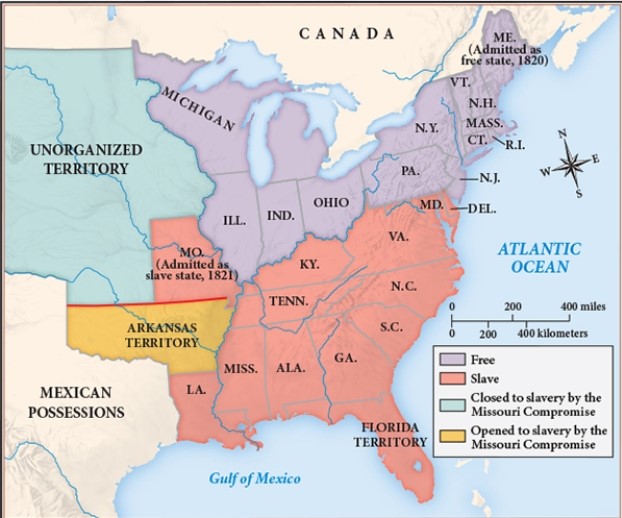 The issues highlighted in the map above led most directly to
A) a truce over the issue of slavery.
B) a sequence of wars to control American Indian populations.
C) a debate about whether to expand into new territories.
D) U.S.interest in increasing foreign trade.
The issues highlighted in the map above led most directly toA) a truce over the issue of slavery.
B) a sequence of wars to control American Indian populations.
C) a debate about whether to expand into new territories.
D) U.S.interest in increasing foreign trade.
Question
Question
Question
Question
Question
Question
Question
Question
Question
For this question,refer to the following image. 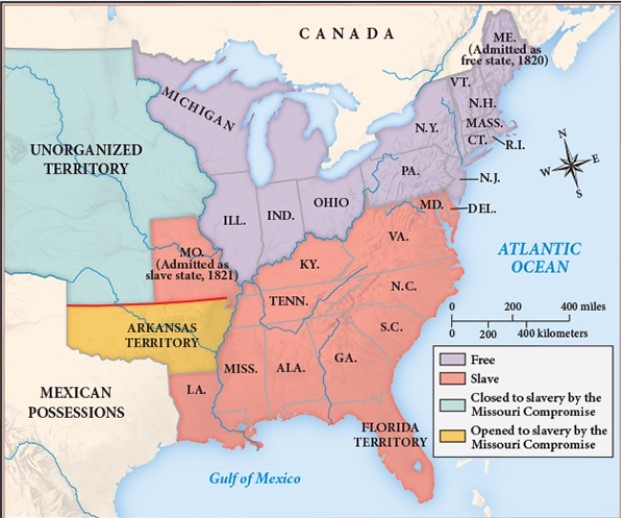 Which of the following actions or events from the middle of the nineteenth century compares most closely to the events that this map describes?
A) The Dred Scott decision
B) The Kansas-Nebraska Act
C) The U.S.victory in the U.S.-Mexico War
D) The regional economic specialization that fueled the internal slave trade
Which of the following actions or events from the middle of the nineteenth century compares most closely to the events that this map describes?A) The Dred Scott decision
B) The Kansas-Nebraska Act
C) The U.S.victory in the U.S.-Mexico War
D) The regional economic specialization that fueled the internal slave trade
Question
Question
Question
Question
Question
Question
Question
Question
Question
Question
Question
Question
Question
Question
Question
Question
Question
Question
Question
Question
Question
Question
Question
Question
Question
Question
Question
Question
Question
Question
Question
Question
Question
Question
Question
Question
Question
Question
Question
Question
Question
Question
Question
Question
Question
Question
Question
Question
Question
Question

Unlock Deck
Sign up to unlock the cards in this deck!
Unlock Deck
Unlock Deck
1/84

Play

Full screen (f)
Deck 9: A Democratic Revolution, 1800-1848
1
Which of the following were the three key elements of Clay's American System?
A) Protective tariffs,subsidized internal improvements,and the national bank
B) Subsidized internal improvements,the national bank,and patronage
C) Slavery,patronage,and subsidized internal improvements
D) Protective tariffs,patronage,and subsidized internal improvements
A) Protective tariffs,subsidized internal improvements,and the national bank
B) Subsidized internal improvements,the national bank,and patronage
C) Slavery,patronage,and subsidized internal improvements
D) Protective tariffs,patronage,and subsidized internal improvements
Protective tariffs,subsidized internal improvements,and the national bank
2
What aspect of early nineteenth-century American government had the founders condemned as contrary to republican ideals?
A) The committee system in Congress
B) Political parties
C) The two-term presidency
D) The Supreme Court's judicial review
A) The committee system in Congress
B) Political parties
C) The two-term presidency
D) The Supreme Court's judicial review
Political parties
3
Who is considered the first real politician,partly because he created the first statewide political machine?
A) Alexander Hamilton
B) John Quincy Adams
C) Martin Van Buren
D) Andrew Jackson
A) Alexander Hamilton
B) John Quincy Adams
C) Martin Van Buren
D) Andrew Jackson
Martin Van Buren
4
The power of elected officials to grant government jobs to party members in return for their loyalty is known as which of the following systems?
A) Nepotism
B) Patronage
C) Caucusing
D) The Whig System
A) Nepotism
B) Patronage
C) Caucusing
D) The Whig System
Unlock Deck
Unlock for access to all 84 flashcards in this deck.
Unlock Deck
k this deck
5
Which of the following statements characterizes the American political system directly after the American Revolution?
A) It was highly democratic and open to almost all white males.
B) Notables managed local elections through their personal connections.
C) Political parties were well established and regulated in most states.
D) Pressure to make politics more democratic spread westward from New England.
A) It was highly democratic and open to almost all white males.
B) Notables managed local elections through their personal connections.
C) Political parties were well established and regulated in most states.
D) Pressure to make politics more democratic spread westward from New England.
Unlock Deck
Unlock for access to all 84 flashcards in this deck.
Unlock Deck
k this deck
6
Politicians from modest backgrounds tended to support which of the following reforms in the 1810s?
A) Tax increases for the rich
B) Restrictions on imprisonment for debt
C) Mandatory military service for young men
D) Limited suffrage for women
A) Tax increases for the rich
B) Restrictions on imprisonment for debt
C) Mandatory military service for young men
D) Limited suffrage for women
Unlock Deck
Unlock for access to all 84 flashcards in this deck.
Unlock Deck
k this deck
7
In 1835,Alexis de Tocqueville wrote that "the most able men in the United States are rarely placed at the head of affairs." To what did he attribute this phenomenon?
A) Whig Party policies
B) Democracy
C) Industrialization
D) More money could be made in business than in politics
A) Whig Party policies
B) Democracy
C) Industrialization
D) More money could be made in business than in politics
Unlock Deck
Unlock for access to all 84 flashcards in this deck.
Unlock Deck
k this deck
8
Why did a group of prominent citizens found the American Colonization Society in 1817?
A) They aimed to encourage southern planters to emancipate their slaves for resettlement in Africa.
B) Their goal was to establish colonies of freed blacks in the American West,far from white settlements.
C) The organizers sought to promote white American settlement on the Pacific coast to forestall European encroachment.
D) The group promoted the development of American colonies in Latin America that could eventually become states.
A) They aimed to encourage southern planters to emancipate their slaves for resettlement in Africa.
B) Their goal was to establish colonies of freed blacks in the American West,far from white settlements.
C) The organizers sought to promote white American settlement on the Pacific coast to forestall European encroachment.
D) The group promoted the development of American colonies in Latin America that could eventually become states.
Unlock Deck
Unlock for access to all 84 flashcards in this deck.
Unlock Deck
k this deck
9
In the early republic,Benjamin Rush and other leaders argued that women should be educated so they could do which of the following?
A) Vote and participate actively in American public life
B) Focus on their individual needs and develop economic independence
C) Oversee the instruction of their sons in the principles of liberty and government
D) Perform a more active role in advising and assisting their husbands' economic activities
A) Vote and participate actively in American public life
B) Focus on their individual needs and develop economic independence
C) Oversee the instruction of their sons in the principles of liberty and government
D) Perform a more active role in advising and assisting their husbands' economic activities
Unlock Deck
Unlock for access to all 84 flashcards in this deck.
Unlock Deck
k this deck
10
American ministers such as Thomas Bernard argued in the early nineteenth century that women should exercise their power in society through
A) voting,jury service,and running for political office.
B) their influence on the male citizens of the coming generations.
C) the tactics proposed by Mary Wollstonecraft's Vindication of the Rights of Woman.
D) a commitment to engage in sexual activities only for the purpose of reproduction.
A) voting,jury service,and running for political office.
B) their influence on the male citizens of the coming generations.
C) the tactics proposed by Mary Wollstonecraft's Vindication of the Rights of Woman.
D) a commitment to engage in sexual activities only for the purpose of reproduction.
Unlock Deck
Unlock for access to all 84 flashcards in this deck.
Unlock Deck
k this deck
11
The Missouri Compromise prohibited slavery in which of the following regions of the Louisiana Purchase?
A) All the lands north of latitude 36°30¢ except for the state of Missouri
B) All the lands south of latitude 36°30¢ except for the state of Missouri
C) Only in Missouri
D) All of Louisiana
A) All the lands north of latitude 36°30¢ except for the state of Missouri
B) All the lands south of latitude 36°30¢ except for the state of Missouri
C) Only in Missouri
D) All of Louisiana
Unlock Deck
Unlock for access to all 84 flashcards in this deck.
Unlock Deck
k this deck
12
Which of the following statements describes the extent to which parents exercised control over their children's marriages in the United States in 1800?
A) Because landholdings shrank,parents lost leverage over their children's choices of marital partners.
B) Most parents encouraged marriage for love,believing that it offered the best chance for long-term economic security.
C) American parents typically still arranged their children's marriages in order to safeguard the families' economic welfare.
D) Most parents disinherited their children if they married for sentimental rather than practical reasons.
A) Because landholdings shrank,parents lost leverage over their children's choices of marital partners.
B) Most parents encouraged marriage for love,believing that it offered the best chance for long-term economic security.
C) American parents typically still arranged their children's marriages in order to safeguard the families' economic welfare.
D) Most parents disinherited their children if they married for sentimental rather than practical reasons.
Unlock Deck
Unlock for access to all 84 flashcards in this deck.
Unlock Deck
k this deck
13
What did bankers,land speculators,and entrepreneurs in the 1820s to the 1840s have in common?
A) Most of them were Whigs.
B) They tended to be Democrats.
C) Most rejected the ideas of the Second Great Awakening.
D) They demanded government assistance for their business enterprises.
A) Most of them were Whigs.
B) They tended to be Democrats.
C) Most rejected the ideas of the Second Great Awakening.
D) They demanded government assistance for their business enterprises.
Unlock Deck
Unlock for access to all 84 flashcards in this deck.
Unlock Deck
k this deck
14
Society's notion of women as republican wives and mothers was based on which of the following ideas about women?
A) Women learned through doing and did not need formal education.
B) Their virtue would civilize the business world.
C) They were uniquely qualified to educate and nurture the spirit.
D) Women were fundamentally tainted by the sins of Eve.
A) Women learned through doing and did not need formal education.
B) Their virtue would civilize the business world.
C) They were uniquely qualified to educate and nurture the spirit.
D) Women were fundamentally tainted by the sins of Eve.
Unlock Deck
Unlock for access to all 84 flashcards in this deck.
Unlock Deck
k this deck
15
Which of these statesmen played a critical role in creating and passing the 1820 Missouri Compromise?
A) Thomas Jefferson
B) Henry Clay
C) James Tallmadge
D) Thomas W.Cobb
A) Thomas Jefferson
B) Henry Clay
C) James Tallmadge
D) Thomas W.Cobb
Unlock Deck
Unlock for access to all 84 flashcards in this deck.
Unlock Deck
k this deck
16
The proposed 1819 Tallmadge Amendment articulated which of the following plans?
A) The gradual emancipation of slaves in Missouri
B) The right of each new state in the Union to decide on its own slavery laws
C) A prohibition on the entry of new slave states into the Union
D) Louisiana Territory slaves' recolonization in Africa
A) The gradual emancipation of slaves in Missouri
B) The right of each new state in the Union to decide on its own slavery laws
C) A prohibition on the entry of new slave states into the Union
D) Louisiana Territory slaves' recolonization in Africa
Unlock Deck
Unlock for access to all 84 flashcards in this deck.
Unlock Deck
k this deck
17
Which of the following factors contributed to the sharp decline in the American birthrate from 1790 to 1820?
A) Pioneer families' migration into the trans-Appalachian West
B) The growing acceptance and availability of contraception in American society
C) Fathers' desire for fewer children in order to ensure the adequacy of their inheritances
D) The ideology of republican motherhood,which directed mothers to produce virtuous male citizens
A) Pioneer families' migration into the trans-Appalachian West
B) The growing acceptance and availability of contraception in American society
C) Fathers' desire for fewer children in order to ensure the adequacy of their inheritances
D) The ideology of republican motherhood,which directed mothers to produce virtuous male citizens
Unlock Deck
Unlock for access to all 84 flashcards in this deck.
Unlock Deck
k this deck
18
Which of the following describes the political developments taking place in America during the first two decades of the nineteenth century?
A) Ordinary white men's rising political status was accompanied by a decline in the political rights of women and free blacks.
B) Most newly organized free states granted the right to vote to adult black men who owned specified amounts of freehold property.
C) Ohio,Pennsylvania,and New York expanded suffrage to all free adult black males.
D) After they requested it,several Middle Atlantic states granted women voting rights in local elections.
A) Ordinary white men's rising political status was accompanied by a decline in the political rights of women and free blacks.
B) Most newly organized free states granted the right to vote to adult black men who owned specified amounts of freehold property.
C) Ohio,Pennsylvania,and New York expanded suffrage to all free adult black males.
D) After they requested it,several Middle Atlantic states granted women voting rights in local elections.
Unlock Deck
Unlock for access to all 84 flashcards in this deck.
Unlock Deck
k this deck
19
In the early 1800s,which group would have endorsed Thomas Jefferson's and Benjamin Rush's proposals for comprehensive public education?
A) Planter aristocrats
B) Wealthy New England merchants
C) Yeoman farmers
D) Laborers
A) Planter aristocrats
B) Wealthy New England merchants
C) Yeoman farmers
D) Laborers
Unlock Deck
Unlock for access to all 84 flashcards in this deck.
Unlock Deck
k this deck
20
The South's political clout,which ensured that the national government would continue to protect slavery,rested on which of the following?
A) Its rapidly rising profits from manufacturing
B) The North's indifference to the matter of slavery
C) Its domination of the presidency and Senate
D) A treaty with Great Britain ensuring that the slave trade would continue
A) Its rapidly rising profits from manufacturing
B) The North's indifference to the matter of slavery
C) Its domination of the presidency and Senate
D) A treaty with Great Britain ensuring that the slave trade would continue
Unlock Deck
Unlock for access to all 84 flashcards in this deck.
Unlock Deck
k this deck
21
For this question,refer to the following image. The issues highlighted in the map above led most directly to
A) a truce over the issue of slavery.
B) a sequence of wars to control American Indian populations.
C) a debate about whether to expand into new territories.
D) U.S.interest in increasing foreign trade.
The issues highlighted in the map above led most directly toA) a truce over the issue of slavery.
B) a sequence of wars to control American Indian populations.
C) a debate about whether to expand into new territories.
D) U.S.interest in increasing foreign trade.
Unlock Deck
Unlock for access to all 84 flashcards in this deck.
Unlock Deck
k this deck
22
Which of the following was the primary function of the Second Bank of the United States?
A) To make a profit for the federal government through judicious loans to the country's most promising entrepreneurs
B) To keep the economy in equilibrium by raising or lowering interest rates in response to changes in the capitalist business cycle
C) To stabilize the nation's money supply by forcing state banks to convert their paper money periodically into gold and silver coin
D) To serve as a clearinghouse for foreign investments and currency in order to raise the country's international economic standing
A) To make a profit for the federal government through judicious loans to the country's most promising entrepreneurs
B) To keep the economy in equilibrium by raising or lowering interest rates in response to changes in the capitalist business cycle
C) To stabilize the nation's money supply by forcing state banks to convert their paper money periodically into gold and silver coin
D) To serve as a clearinghouse for foreign investments and currency in order to raise the country's international economic standing
Unlock Deck
Unlock for access to all 84 flashcards in this deck.
Unlock Deck
k this deck
23
In the landmark case of Charles River Bridge Co.v.Warren Bridge Co.(1837),Chief Justice Roger B.Taney and the U.S.Supreme Court did which of the following?
A) Reaffirmed John Marshall's interpretation of the contract clause in the U.S.Constitution
B) Upheld the protected legal position of existing state-chartered monopolies
C) Encouraged competitive enterprise,opening the way for legislatures to charter railroad companies
D) Ruled that the city of New York could use its "police power" to inspect new immigrants' health
A) Reaffirmed John Marshall's interpretation of the contract clause in the U.S.Constitution
B) Upheld the protected legal position of existing state-chartered monopolies
C) Encouraged competitive enterprise,opening the way for legislatures to charter railroad companies
D) Ruled that the city of New York could use its "police power" to inspect new immigrants' health
Unlock Deck
Unlock for access to all 84 flashcards in this deck.
Unlock Deck
k this deck
24
Which of the following statements describes events surrounding the election of 1824?
A) John Quincy Adams became president even though Andrew Jackson had more popular votes.
B) It was the first time a presidential election was decided by the House of Representatives.
C) The Republican candidate William Crawford died from a stroke in the midst of the campaign.
D) The disputed outcome led to extended rioting in several large southern cities.
A) John Quincy Adams became president even though Andrew Jackson had more popular votes.
B) It was the first time a presidential election was decided by the House of Representatives.
C) The Republican candidate William Crawford died from a stroke in the midst of the campaign.
D) The disputed outcome led to extended rioting in several large southern cities.
Unlock Deck
Unlock for access to all 84 flashcards in this deck.
Unlock Deck
k this deck
25
The Trail of Tears was the direct consequence of which of the following government actions?
A) The Louisiana Purchase
B) Worcester v.Georgia
C) Indian Removal Act of 1830
D) The Bad Axe Massacre
A) The Louisiana Purchase
B) Worcester v.Georgia
C) Indian Removal Act of 1830
D) The Bad Axe Massacre
Unlock Deck
Unlock for access to all 84 flashcards in this deck.
Unlock Deck
k this deck
26
Why did Andrew Jackson veto the bill to recharter the Second Bank of the United States in 1832?
A) His opponents in Congress,most of whom supported the Second Bank,had tried to embarrass him politically.
B) He thought it interfered with the rights of states and the liberties of the people.
C) French aristocrats had invested heavily in the bank and he objected to their influence.
D) One of his major congressional opponents,Daniel Webster,directed the Boston branch of the bank.
A) His opponents in Congress,most of whom supported the Second Bank,had tried to embarrass him politically.
B) He thought it interfered with the rights of states and the liberties of the people.
C) French aristocrats had invested heavily in the bank and he objected to their influence.
D) One of his major congressional opponents,Daniel Webster,directed the Boston branch of the bank.
Unlock Deck
Unlock for access to all 84 flashcards in this deck.
Unlock Deck
k this deck
27
The South Carolina Exposition and Protest,written by John C.Calhoun,bore a similarity to the argument made by which of the following people?
A) Thomas Paine in Common Sense
B) Jefferson and Madison in the Kentucky and Virginia Resolutions
C) John Marshall in Marbury v.Madison
D) George Washington in his farewell address
A) Thomas Paine in Common Sense
B) Jefferson and Madison in the Kentucky and Virginia Resolutions
C) John Marshall in Marbury v.Madison
D) George Washington in his farewell address
Unlock Deck
Unlock for access to all 84 flashcards in this deck.
Unlock Deck
k this deck
28
How did Andrew Jackson respond to South Carolina's claimed right of nullification in 1832?
A) Jackson asked Congress to raise the tariff rates even higher if South Carolina did not stop its threats.
B) He asked Congress for a Force Bill authorizing him to use the military to suppress any act of nullification.
C) He pulled federal troops and navy ships out of forts and ports in South Carolina where they might have provoked an attack by the South Carolina militia.
D) Jackson asked Congress to prepare a bill to expel South Carolina from the Union if it did not stop its threats.
A) Jackson asked Congress to raise the tariff rates even higher if South Carolina did not stop its threats.
B) He asked Congress for a Force Bill authorizing him to use the military to suppress any act of nullification.
C) He pulled federal troops and navy ships out of forts and ports in South Carolina where they might have provoked an attack by the South Carolina militia.
D) Jackson asked Congress to prepare a bill to expel South Carolina from the Union if it did not stop its threats.
Unlock Deck
Unlock for access to all 84 flashcards in this deck.
Unlock Deck
k this deck
29
Andrew Jackson and his supporters won the election in 1828 in part by
A) repudiating the growing authority of political powers.
B) promising to expand and extend Clay's American System.
C) calling themselves Democrats to portray a more egalitarian image.
D) branding his opponent as "Old Hickory" to emphasize his old-fashioned political style.
A) repudiating the growing authority of political powers.
B) promising to expand and extend Clay's American System.
C) calling themselves Democrats to portray a more egalitarian image.
D) branding his opponent as "Old Hickory" to emphasize his old-fashioned political style.
Unlock Deck
Unlock for access to all 84 flashcards in this deck.
Unlock Deck
k this deck
30
For this question,refer to the following image. Which of the following actions or events from the middle of the nineteenth century compares most closely to the events that this map describes?
A) The Dred Scott decision
B) The Kansas-Nebraska Act
C) The U.S.victory in the U.S.-Mexico War
D) The regional economic specialization that fueled the internal slave trade
Which of the following actions or events from the middle of the nineteenth century compares most closely to the events that this map describes?A) The Dred Scott decision
B) The Kansas-Nebraska Act
C) The U.S.victory in the U.S.-Mexico War
D) The regional economic specialization that fueled the internal slave trade
Unlock Deck
Unlock for access to all 84 flashcards in this deck.
Unlock Deck
k this deck
31
How did President Andrew Jackson change the federal system of office holding?
A) He created a civil service system that awarded federal positions on the basis of merit.
B) Jackson introduced the principle of rotation in office to discourage long tenure.
C) He established a formula for bipartisan staffing of federal offices and the cabinet.
D) Jackson wrested the power of appointment from state legislatures and Congress.
A) He created a civil service system that awarded federal positions on the basis of merit.
B) Jackson introduced the principle of rotation in office to discourage long tenure.
C) He established a formula for bipartisan staffing of federal offices and the cabinet.
D) Jackson wrested the power of appointment from state legislatures and Congress.
Unlock Deck
Unlock for access to all 84 flashcards in this deck.
Unlock Deck
k this deck
32
What did the Twelfth Amendment to the Constitution specify should be done in an election like the election of 1824,in which no presidential candidate received a majority of the electoral votes?
A) The Supreme Court intervenes to determine the winner.
B) The candidate with the most electoral votes wins.
C) The House of Representatives decides the outcome.
D) Congress appoints a special bipartisan commission.
A) The Supreme Court intervenes to determine the winner.
B) The candidate with the most electoral votes wins.
C) The House of Representatives decides the outcome.
D) Congress appoints a special bipartisan commission.
Unlock Deck
Unlock for access to all 84 flashcards in this deck.
Unlock Deck
k this deck
33
In 1832,a South Carolina state convention committed which of the following actions?
A) Declared the tariffs of 1828 and 1832 null and void within the state
B) Ordered the state militia to arrest customs officials and to impound their collections
C) Declared that the state had decided to secede from the Union
D) Threatened to impeach Jackson for his unconstitutional actions
A) Declared the tariffs of 1828 and 1832 null and void within the state
B) Ordered the state militia to arrest customs officials and to impound their collections
C) Declared that the state had decided to secede from the Union
D) Threatened to impeach Jackson for his unconstitutional actions
Unlock Deck
Unlock for access to all 84 flashcards in this deck.
Unlock Deck
k this deck
34
As president,John Quincy Adams supported which of the following policies?
A) A national bank to promote a uniform currency and to control credit
B) Strict limits on the powers of the federal government
C) A suspension of "internal improvements" by the federal government
D) The implementation of lower tariffs on imported products
A) A national bank to promote a uniform currency and to control credit
B) Strict limits on the powers of the federal government
C) A suspension of "internal improvements" by the federal government
D) The implementation of lower tariffs on imported products
Unlock Deck
Unlock for access to all 84 flashcards in this deck.
Unlock Deck
k this deck
35
Which of the following statements characterizes Andrew Jackson's intentions toward Native Americans during his presidency?
A) He planned to encourage missionaries to convert the tribes east of the Mississippi River to Christianity and white culture.
B) Jackson intended to force Native Americans to comply with federal treaties,even when they ran counter to the national interest.
C) He sought better relations with the "civilized" Indians of the Old Southwest,encouraging them to continue their adaptation to white ways.
D) Jackson meant to remove all Native Americans east of the Mississippi,even those who had adapted to white society.
A) He planned to encourage missionaries to convert the tribes east of the Mississippi River to Christianity and white culture.
B) Jackson intended to force Native Americans to comply with federal treaties,even when they ran counter to the national interest.
C) He sought better relations with the "civilized" Indians of the Old Southwest,encouraging them to continue their adaptation to white ways.
D) Jackson meant to remove all Native Americans east of the Mississippi,even those who had adapted to white society.
Unlock Deck
Unlock for access to all 84 flashcards in this deck.
Unlock Deck
k this deck
36
On whom did President Jackson rely for political advice?
A) Several key western senators,including Henry Clay
B) His official cabinet officers
C) An informal group called the Kitchen Cabinet
D) Chief Justice John Marshall
A) Several key western senators,including Henry Clay
B) His official cabinet officers
C) An informal group called the Kitchen Cabinet
D) Chief Justice John Marshall
Unlock Deck
Unlock for access to all 84 flashcards in this deck.
Unlock Deck
k this deck
37
In the U.S.Supreme Court case of Worcester v.Georgia (1832),John Marshall and the Court majority issued a decision that
A) upheld Georgia's rights to Cherokee lands.
B) sanctioned the stationing of federal troops on tribal lands.
C) declared the 1830 Indian Removal Act unconstitutional.
D) upheld Indian nations' political authority in their communities.
A) upheld Georgia's rights to Cherokee lands.
B) sanctioned the stationing of federal troops on tribal lands.
C) declared the 1830 Indian Removal Act unconstitutional.
D) upheld Indian nations' political authority in their communities.
Unlock Deck
Unlock for access to all 84 flashcards in this deck.
Unlock Deck
k this deck
38
On which issue was the Whig philosophy of the 1830s critically different from that of the Federalists in the 1790s?
A) National bank
B) Industrialization
C) Role of the federal government
D) Rule by an elite based on talent
A) National bank
B) Industrialization
C) Role of the federal government
D) Rule by an elite based on talent
Unlock Deck
Unlock for access to all 84 flashcards in this deck.
Unlock Deck
k this deck
39
Which of the following statements describes the impact of the Jacksonian-era constitutional revolution on the states?
A) Between 1830 and 1860,twenty states revised their constitutions and enhanced democracy.
B) States began to pass their own tariff laws and print their own currency.
C) The "commonwealth" philosophy of economic development was strengthened.
D) The power of state governments to regulate business was enhanced.
A) Between 1830 and 1860,twenty states revised their constitutions and enhanced democracy.
B) States began to pass their own tariff laws and print their own currency.
C) The "commonwealth" philosophy of economic development was strengthened.
D) The power of state governments to regulate business was enhanced.
Unlock Deck
Unlock for access to all 84 flashcards in this deck.
Unlock Deck
k this deck
40
In which of the following ways was Chief Justice Roger Taney different from his predecessor,John Marshall?
A) Marshall was a Democrat while Taney was a Whig.
B) Marshall was nationally oriented while Taney favored states' rights.
C) Taney was a more avid believer in the sanctity of contracts.
D) Unlike Marshall,Taney had a nationalistic interpretation of the commerce clause.
A) Marshall was a Democrat while Taney was a Whig.
B) Marshall was nationally oriented while Taney favored states' rights.
C) Taney was a more avid believer in the sanctity of contracts.
D) Unlike Marshall,Taney had a nationalistic interpretation of the commerce clause.
Unlock Deck
Unlock for access to all 84 flashcards in this deck.
Unlock Deck
k this deck
41
Answer the following questions :
ethnocultural politics
A)The right to vote.Between 1820 and 1860,most states revised their constitutions to extend the vote to all adult white males.Black adult men gained the right to vote with the passage of the Fourteenth Amendment (1868).The Nineteenth Amendment (1920)granted adult women the right to vote.
B)Northern landlords,slave-owning planters,and seaport merchants who dominated the political system of the early nineteenth century.
C)A highly organized group of insiders that directs a political party.As the power of notables waned in the 1820s,disciplined political parties usually run by professional politicians appeared in a number of states.
D)The widespread award of public jobs to political supporters after an electoral victory.In 1829,Andrew Jackson instituted the system on the national level,arguing that the rotation of officeholders was preferable to a permanent group of bureaucrats.
E)A meeting held by a political party to choose candidates,make policies,and enforce party discipline.
F)The mercantilist system of national economic development advocated by Henry Clay and adopted by John Quincy Adams,with a national bank to manage the nation's financial system;protective tariffs to provide revenue and encourage industry;and a nationally funded network of roads,canals,and railroads.
G)Public works such as roads and canals.
H)A term used by Andrew Jackson's supporters for the appointment by President John Quincy Adams of Henry Clay as his secretary of state,the traditional stepping-stone to the presidency.Clay had used his influence as Speaker of the House to elect Adams rather than Jackson in the election in 1824.
I)A term meaning a powerful and potentially oppressive national government.
J)A tariff enacted in 1828 that raised duties significantly on raw materials,textiles,and iron goods.New York Senator Van Buren hoped to win the support of farmers in New York,Ohio,and Kentucky with the tariff,but it enraged the South,which had no industries that needed tariff protection and resented the higher cost of imported dutied goods.
K)The constitutional argument advanced by John C.Calhoun that a state legislature or convention could void a law passed by Congress.
L)An interpretation of the Constitution that exalts the sovereignty of the states and circumscribes the authority of the national government.
M)National bank with multiple branches chartered in 1816 for twenty years.Intended to help regulate the economy,the bank became a major issue in Andrew Jackson's reelection campaign in 1832.
N)Act that directed the mandatory relocation of eastern tribes to territory west of the Mississippi.Jackson insisted that his goal was to save the Indians and their culture.Indians resisted the controversial act,but in the end most were forced to comply.
O)Forced westward journey of Cherokees from their lands in Georgia to present-day Oklahoma in 1838.Nearly a quarter of the Cherokees died en route.
P)The principle that the less government does,the better,particularly in reference to the economy.
Q)This second national party arose in 1834 when a group of congressmen contested Andrew Jackson's policies and conduct.The party identified itself with the pre-Revolutionary American and British parties of the same name that had opposed the arbitrary actions of British monarchs.
R)Triggered by a sharp reduction in English capital and credit flowing into the United States,the cash shortage caused a panic while the collapse of credit led to a depression-the second major economic crisis of the United States-that lasted from 1837 to 1843.
S)An executive order in 1836 that required the Treasury Department to accept only gold and silver in payment for lands in the national domain.
T)Refers to the fact that the political allegiance of many American voters was determined less by party policy than by their membership in a specific ethnic or religious group.
ethnocultural politics
A)The right to vote.Between 1820 and 1860,most states revised their constitutions to extend the vote to all adult white males.Black adult men gained the right to vote with the passage of the Fourteenth Amendment (1868).The Nineteenth Amendment (1920)granted adult women the right to vote.
B)Northern landlords,slave-owning planters,and seaport merchants who dominated the political system of the early nineteenth century.
C)A highly organized group of insiders that directs a political party.As the power of notables waned in the 1820s,disciplined political parties usually run by professional politicians appeared in a number of states.
D)The widespread award of public jobs to political supporters after an electoral victory.In 1829,Andrew Jackson instituted the system on the national level,arguing that the rotation of officeholders was preferable to a permanent group of bureaucrats.
E)A meeting held by a political party to choose candidates,make policies,and enforce party discipline.
F)The mercantilist system of national economic development advocated by Henry Clay and adopted by John Quincy Adams,with a national bank to manage the nation's financial system;protective tariffs to provide revenue and encourage industry;and a nationally funded network of roads,canals,and railroads.
G)Public works such as roads and canals.
H)A term used by Andrew Jackson's supporters for the appointment by President John Quincy Adams of Henry Clay as his secretary of state,the traditional stepping-stone to the presidency.Clay had used his influence as Speaker of the House to elect Adams rather than Jackson in the election in 1824.
I)A term meaning a powerful and potentially oppressive national government.
J)A tariff enacted in 1828 that raised duties significantly on raw materials,textiles,and iron goods.New York Senator Van Buren hoped to win the support of farmers in New York,Ohio,and Kentucky with the tariff,but it enraged the South,which had no industries that needed tariff protection and resented the higher cost of imported dutied goods.
K)The constitutional argument advanced by John C.Calhoun that a state legislature or convention could void a law passed by Congress.
L)An interpretation of the Constitution that exalts the sovereignty of the states and circumscribes the authority of the national government.
M)National bank with multiple branches chartered in 1816 for twenty years.Intended to help regulate the economy,the bank became a major issue in Andrew Jackson's reelection campaign in 1832.
N)Act that directed the mandatory relocation of eastern tribes to territory west of the Mississippi.Jackson insisted that his goal was to save the Indians and their culture.Indians resisted the controversial act,but in the end most were forced to comply.
O)Forced westward journey of Cherokees from their lands in Georgia to present-day Oklahoma in 1838.Nearly a quarter of the Cherokees died en route.
P)The principle that the less government does,the better,particularly in reference to the economy.
Q)This second national party arose in 1834 when a group of congressmen contested Andrew Jackson's policies and conduct.The party identified itself with the pre-Revolutionary American and British parties of the same name that had opposed the arbitrary actions of British monarchs.
R)Triggered by a sharp reduction in English capital and credit flowing into the United States,the cash shortage caused a panic while the collapse of credit led to a depression-the second major economic crisis of the United States-that lasted from 1837 to 1843.
S)An executive order in 1836 that required the Treasury Department to accept only gold and silver in payment for lands in the national domain.
T)Refers to the fact that the political allegiance of many American voters was determined less by party policy than by their membership in a specific ethnic or religious group.
Unlock Deck
Unlock for access to all 84 flashcards in this deck.
Unlock Deck
k this deck
42
Which of the following laws required the Treasury Department to accept only gold and silver in payment for purchases of federal land?
A) The Independent Treasury Act of 1840
B) The Specie Circular
C) The National Road Bill
D) The Commercial Credit Act
A) The Independent Treasury Act of 1840
B) The Specie Circular
C) The National Road Bill
D) The Commercial Credit Act
Unlock Deck
Unlock for access to all 84 flashcards in this deck.
Unlock Deck
k this deck
43
President Martin Van Buren responded to the Panic of 1837 by
A) revoking Andrew Jackson's Specie Circular of 1836.
B) adopting a hands-off,limited-government stance.
C) instituting an extensive public works program.
D) depositing government gold and silver in private banks.
A) revoking Andrew Jackson's Specie Circular of 1836.
B) adopting a hands-off,limited-government stance.
C) instituting an extensive public works program.
D) depositing government gold and silver in private banks.
Unlock Deck
Unlock for access to all 84 flashcards in this deck.
Unlock Deck
k this deck
44
Working Men's Parties of the late 1820s and 1830s called for which of the following reforms?
A) The abolition of the factory system
B) Nationalization of factories and their management by workers
C) The abolition of debtors' prisons
D) The abolition of slavery
A) The abolition of the factory system
B) Nationalization of factories and their management by workers
C) The abolition of debtors' prisons
D) The abolition of slavery
Unlock Deck
Unlock for access to all 84 flashcards in this deck.
Unlock Deck
k this deck
45
Answer the following questions :
internal improvements
A)The right to vote.Between 1820 and 1860,most states revised their constitutions to extend the vote to all adult white males.Black adult men gained the right to vote with the passage of the Fourteenth Amendment (1868).The Nineteenth Amendment (1920)granted adult women the right to vote.
B)Northern landlords,slave-owning planters,and seaport merchants who dominated the political system of the early nineteenth century.
C)A highly organized group of insiders that directs a political party.As the power of notables waned in the 1820s,disciplined political parties usually run by professional politicians appeared in a number of states.
D)The widespread award of public jobs to political supporters after an electoral victory.In 1829,Andrew Jackson instituted the system on the national level,arguing that the rotation of officeholders was preferable to a permanent group of bureaucrats.
E)A meeting held by a political party to choose candidates,make policies,and enforce party discipline.
F)The mercantilist system of national economic development advocated by Henry Clay and adopted by John Quincy Adams,with a national bank to manage the nation's financial system;protective tariffs to provide revenue and encourage industry;and a nationally funded network of roads,canals,and railroads.
G)Public works such as roads and canals.
H)A term used by Andrew Jackson's supporters for the appointment by President John Quincy Adams of Henry Clay as his secretary of state,the traditional stepping-stone to the presidency.Clay had used his influence as Speaker of the House to elect Adams rather than Jackson in the election in 1824.
I)A term meaning a powerful and potentially oppressive national government.
J)A tariff enacted in 1828 that raised duties significantly on raw materials,textiles,and iron goods.New York Senator Van Buren hoped to win the support of farmers in New York,Ohio,and Kentucky with the tariff,but it enraged the South,which had no industries that needed tariff protection and resented the higher cost of imported dutied goods.
K)The constitutional argument advanced by John C.Calhoun that a state legislature or convention could void a law passed by Congress.
L)An interpretation of the Constitution that exalts the sovereignty of the states and circumscribes the authority of the national government.
M)National bank with multiple branches chartered in 1816 for twenty years.Intended to help regulate the economy,the bank became a major issue in Andrew Jackson's reelection campaign in 1832.
N)Act that directed the mandatory relocation of eastern tribes to territory west of the Mississippi.Jackson insisted that his goal was to save the Indians and their culture.Indians resisted the controversial act,but in the end most were forced to comply.
O)Forced westward journey of Cherokees from their lands in Georgia to present-day Oklahoma in 1838.Nearly a quarter of the Cherokees died en route.
P)The principle that the less government does,the better,particularly in reference to the economy.
Q)This second national party arose in 1834 when a group of congressmen contested Andrew Jackson's policies and conduct.The party identified itself with the pre-Revolutionary American and British parties of the same name that had opposed the arbitrary actions of British monarchs.
R)Triggered by a sharp reduction in English capital and credit flowing into the United States,the cash shortage caused a panic while the collapse of credit led to a depression-the second major economic crisis of the United States-that lasted from 1837 to 1843.
S)An executive order in 1836 that required the Treasury Department to accept only gold and silver in payment for lands in the national domain.
T)Refers to the fact that the political allegiance of many American voters was determined less by party policy than by their membership in a specific ethnic or religious group.
internal improvements
A)The right to vote.Between 1820 and 1860,most states revised their constitutions to extend the vote to all adult white males.Black adult men gained the right to vote with the passage of the Fourteenth Amendment (1868).The Nineteenth Amendment (1920)granted adult women the right to vote.
B)Northern landlords,slave-owning planters,and seaport merchants who dominated the political system of the early nineteenth century.
C)A highly organized group of insiders that directs a political party.As the power of notables waned in the 1820s,disciplined political parties usually run by professional politicians appeared in a number of states.
D)The widespread award of public jobs to political supporters after an electoral victory.In 1829,Andrew Jackson instituted the system on the national level,arguing that the rotation of officeholders was preferable to a permanent group of bureaucrats.
E)A meeting held by a political party to choose candidates,make policies,and enforce party discipline.
F)The mercantilist system of national economic development advocated by Henry Clay and adopted by John Quincy Adams,with a national bank to manage the nation's financial system;protective tariffs to provide revenue and encourage industry;and a nationally funded network of roads,canals,and railroads.
G)Public works such as roads and canals.
H)A term used by Andrew Jackson's supporters for the appointment by President John Quincy Adams of Henry Clay as his secretary of state,the traditional stepping-stone to the presidency.Clay had used his influence as Speaker of the House to elect Adams rather than Jackson in the election in 1824.
I)A term meaning a powerful and potentially oppressive national government.
J)A tariff enacted in 1828 that raised duties significantly on raw materials,textiles,and iron goods.New York Senator Van Buren hoped to win the support of farmers in New York,Ohio,and Kentucky with the tariff,but it enraged the South,which had no industries that needed tariff protection and resented the higher cost of imported dutied goods.
K)The constitutional argument advanced by John C.Calhoun that a state legislature or convention could void a law passed by Congress.
L)An interpretation of the Constitution that exalts the sovereignty of the states and circumscribes the authority of the national government.
M)National bank with multiple branches chartered in 1816 for twenty years.Intended to help regulate the economy,the bank became a major issue in Andrew Jackson's reelection campaign in 1832.
N)Act that directed the mandatory relocation of eastern tribes to territory west of the Mississippi.Jackson insisted that his goal was to save the Indians and their culture.Indians resisted the controversial act,but in the end most were forced to comply.
O)Forced westward journey of Cherokees from their lands in Georgia to present-day Oklahoma in 1838.Nearly a quarter of the Cherokees died en route.
P)The principle that the less government does,the better,particularly in reference to the economy.
Q)This second national party arose in 1834 when a group of congressmen contested Andrew Jackson's policies and conduct.The party identified itself with the pre-Revolutionary American and British parties of the same name that had opposed the arbitrary actions of British monarchs.
R)Triggered by a sharp reduction in English capital and credit flowing into the United States,the cash shortage caused a panic while the collapse of credit led to a depression-the second major economic crisis of the United States-that lasted from 1837 to 1843.
S)An executive order in 1836 that required the Treasury Department to accept only gold and silver in payment for lands in the national domain.
T)Refers to the fact that the political allegiance of many American voters was determined less by party policy than by their membership in a specific ethnic or religious group.
Unlock Deck
Unlock for access to all 84 flashcards in this deck.
Unlock Deck
k this deck
46
Answer the following questions :
American System
A)The right to vote.Between 1820 and 1860,most states revised their constitutions to extend the vote to all adult white males.Black adult men gained the right to vote with the passage of the Fourteenth Amendment (1868).The Nineteenth Amendment (1920)granted adult women the right to vote.
B)Northern landlords,slave-owning planters,and seaport merchants who dominated the political system of the early nineteenth century.
C)A highly organized group of insiders that directs a political party.As the power of notables waned in the 1820s,disciplined political parties usually run by professional politicians appeared in a number of states.
D)The widespread award of public jobs to political supporters after an electoral victory.In 1829,Andrew Jackson instituted the system on the national level,arguing that the rotation of officeholders was preferable to a permanent group of bureaucrats.
E)A meeting held by a political party to choose candidates,make policies,and enforce party discipline.
F)The mercantilist system of national economic development advocated by Henry Clay and adopted by John Quincy Adams,with a national bank to manage the nation's financial system;protective tariffs to provide revenue and encourage industry;and a nationally funded network of roads,canals,and railroads.
G)Public works such as roads and canals.
H)A term used by Andrew Jackson's supporters for the appointment by President John Quincy Adams of Henry Clay as his secretary of state,the traditional stepping-stone to the presidency.Clay had used his influence as Speaker of the House to elect Adams rather than Jackson in the election in 1824.
I)A term meaning a powerful and potentially oppressive national government.
J)A tariff enacted in 1828 that raised duties significantly on raw materials,textiles,and iron goods.New York Senator Van Buren hoped to win the support of farmers in New York,Ohio,and Kentucky with the tariff,but it enraged the South,which had no industries that needed tariff protection and resented the higher cost of imported dutied goods.
K)The constitutional argument advanced by John C.Calhoun that a state legislature or convention could void a law passed by Congress.
L)An interpretation of the Constitution that exalts the sovereignty of the states and circumscribes the authority of the national government.
M)National bank with multiple branches chartered in 1816 for twenty years.Intended to help regulate the economy,the bank became a major issue in Andrew Jackson's reelection campaign in 1832.
N)Act that directed the mandatory relocation of eastern tribes to territory west of the Mississippi.Jackson insisted that his goal was to save the Indians and their culture.Indians resisted the controversial act,but in the end most were forced to comply.
O)Forced westward journey of Cherokees from their lands in Georgia to present-day Oklahoma in 1838.Nearly a quarter of the Cherokees died en route.
P)The principle that the less government does,the better,particularly in reference to the economy.
Q)This second national party arose in 1834 when a group of congressmen contested Andrew Jackson's policies and conduct.The party identified itself with the pre-Revolutionary American and British parties of the same name that had opposed the arbitrary actions of British monarchs.
R)Triggered by a sharp reduction in English capital and credit flowing into the United States,the cash shortage caused a panic while the collapse of credit led to a depression-the second major economic crisis of the United States-that lasted from 1837 to 1843.
S)An executive order in 1836 that required the Treasury Department to accept only gold and silver in payment for lands in the national domain.
T)Refers to the fact that the political allegiance of many American voters was determined less by party policy than by their membership in a specific ethnic or religious group.
American System
A)The right to vote.Between 1820 and 1860,most states revised their constitutions to extend the vote to all adult white males.Black adult men gained the right to vote with the passage of the Fourteenth Amendment (1868).The Nineteenth Amendment (1920)granted adult women the right to vote.
B)Northern landlords,slave-owning planters,and seaport merchants who dominated the political system of the early nineteenth century.
C)A highly organized group of insiders that directs a political party.As the power of notables waned in the 1820s,disciplined political parties usually run by professional politicians appeared in a number of states.
D)The widespread award of public jobs to political supporters after an electoral victory.In 1829,Andrew Jackson instituted the system on the national level,arguing that the rotation of officeholders was preferable to a permanent group of bureaucrats.
E)A meeting held by a political party to choose candidates,make policies,and enforce party discipline.
F)The mercantilist system of national economic development advocated by Henry Clay and adopted by John Quincy Adams,with a national bank to manage the nation's financial system;protective tariffs to provide revenue and encourage industry;and a nationally funded network of roads,canals,and railroads.
G)Public works such as roads and canals.
H)A term used by Andrew Jackson's supporters for the appointment by President John Quincy Adams of Henry Clay as his secretary of state,the traditional stepping-stone to the presidency.Clay had used his influence as Speaker of the House to elect Adams rather than Jackson in the election in 1824.
I)A term meaning a powerful and potentially oppressive national government.
J)A tariff enacted in 1828 that raised duties significantly on raw materials,textiles,and iron goods.New York Senator Van Buren hoped to win the support of farmers in New York,Ohio,and Kentucky with the tariff,but it enraged the South,which had no industries that needed tariff protection and resented the higher cost of imported dutied goods.
K)The constitutional argument advanced by John C.Calhoun that a state legislature or convention could void a law passed by Congress.
L)An interpretation of the Constitution that exalts the sovereignty of the states and circumscribes the authority of the national government.
M)National bank with multiple branches chartered in 1816 for twenty years.Intended to help regulate the economy,the bank became a major issue in Andrew Jackson's reelection campaign in 1832.
N)Act that directed the mandatory relocation of eastern tribes to territory west of the Mississippi.Jackson insisted that his goal was to save the Indians and their culture.Indians resisted the controversial act,but in the end most were forced to comply.
O)Forced westward journey of Cherokees from their lands in Georgia to present-day Oklahoma in 1838.Nearly a quarter of the Cherokees died en route.
P)The principle that the less government does,the better,particularly in reference to the economy.
Q)This second national party arose in 1834 when a group of congressmen contested Andrew Jackson's policies and conduct.The party identified itself with the pre-Revolutionary American and British parties of the same name that had opposed the arbitrary actions of British monarchs.
R)Triggered by a sharp reduction in English capital and credit flowing into the United States,the cash shortage caused a panic while the collapse of credit led to a depression-the second major economic crisis of the United States-that lasted from 1837 to 1843.
S)An executive order in 1836 that required the Treasury Department to accept only gold and silver in payment for lands in the national domain.
T)Refers to the fact that the political allegiance of many American voters was determined less by party policy than by their membership in a specific ethnic or religious group.
Unlock Deck
Unlock for access to all 84 flashcards in this deck.
Unlock Deck
k this deck
47
Answer the following questions :
states' rights
A)The right to vote.Between 1820 and 1860,most states revised their constitutions to extend the vote to all adult white males.Black adult men gained the right to vote with the passage of the Fourteenth Amendment (1868).The Nineteenth Amendment (1920)granted adult women the right to vote.
B)Northern landlords,slave-owning planters,and seaport merchants who dominated the political system of the early nineteenth century.
C)A highly organized group of insiders that directs a political party.As the power of notables waned in the 1820s,disciplined political parties usually run by professional politicians appeared in a number of states.
D)The widespread award of public jobs to political supporters after an electoral victory.In 1829,Andrew Jackson instituted the system on the national level,arguing that the rotation of officeholders was preferable to a permanent group of bureaucrats.
E)A meeting held by a political party to choose candidates,make policies,and enforce party discipline.
F)The mercantilist system of national economic development advocated by Henry Clay and adopted by John Quincy Adams,with a national bank to manage the nation's financial system;protective tariffs to provide revenue and encourage industry;and a nationally funded network of roads,canals,and railroads.
G)Public works such as roads and canals.
H)A term used by Andrew Jackson's supporters for the appointment by President John Quincy Adams of Henry Clay as his secretary of state,the traditional stepping-stone to the presidency.Clay had used his influence as Speaker of the House to elect Adams rather than Jackson in the election in 1824.
I)A term meaning a powerful and potentially oppressive national government.
J)A tariff enacted in 1828 that raised duties significantly on raw materials,textiles,and iron goods.New York Senator Van Buren hoped to win the support of farmers in New York,Ohio,and Kentucky with the tariff,but it enraged the South,which had no industries that needed tariff protection and resented the higher cost of imported dutied goods.
K)The constitutional argument advanced by John C.Calhoun that a state legislature or convention could void a law passed by Congress.
L)An interpretation of the Constitution that exalts the sovereignty of the states and circumscribes the authority of the national government.
M)National bank with multiple branches chartered in 1816 for twenty years.Intended to help regulate the economy,the bank became a major issue in Andrew Jackson's reelection campaign in 1832.
N)Act that directed the mandatory relocation of eastern tribes to territory west of the Mississippi.Jackson insisted that his goal was to save the Indians and their culture.Indians resisted the controversial act,but in the end most were forced to comply.
O)Forced westward journey of Cherokees from their lands in Georgia to present-day Oklahoma in 1838.Nearly a quarter of the Cherokees died en route.
P)The principle that the less government does,the better,particularly in reference to the economy.
Q)This second national party arose in 1834 when a group of congressmen contested Andrew Jackson's policies and conduct.The party identified itself with the pre-Revolutionary American and British parties of the same name that had opposed the arbitrary actions of British monarchs.
R)Triggered by a sharp reduction in English capital and credit flowing into the United States,the cash shortage caused a panic while the collapse of credit led to a depression-the second major economic crisis of the United States-that lasted from 1837 to 1843.
S)An executive order in 1836 that required the Treasury Department to accept only gold and silver in payment for lands in the national domain.
T)Refers to the fact that the political allegiance of many American voters was determined less by party policy than by their membership in a specific ethnic or religious group.
states' rights
A)The right to vote.Between 1820 and 1860,most states revised their constitutions to extend the vote to all adult white males.Black adult men gained the right to vote with the passage of the Fourteenth Amendment (1868).The Nineteenth Amendment (1920)granted adult women the right to vote.
B)Northern landlords,slave-owning planters,and seaport merchants who dominated the political system of the early nineteenth century.
C)A highly organized group of insiders that directs a political party.As the power of notables waned in the 1820s,disciplined political parties usually run by professional politicians appeared in a number of states.
D)The widespread award of public jobs to political supporters after an electoral victory.In 1829,Andrew Jackson instituted the system on the national level,arguing that the rotation of officeholders was preferable to a permanent group of bureaucrats.
E)A meeting held by a political party to choose candidates,make policies,and enforce party discipline.
F)The mercantilist system of national economic development advocated by Henry Clay and adopted by John Quincy Adams,with a national bank to manage the nation's financial system;protective tariffs to provide revenue and encourage industry;and a nationally funded network of roads,canals,and railroads.
G)Public works such as roads and canals.
H)A term used by Andrew Jackson's supporters for the appointment by President John Quincy Adams of Henry Clay as his secretary of state,the traditional stepping-stone to the presidency.Clay had used his influence as Speaker of the House to elect Adams rather than Jackson in the election in 1824.
I)A term meaning a powerful and potentially oppressive national government.
J)A tariff enacted in 1828 that raised duties significantly on raw materials,textiles,and iron goods.New York Senator Van Buren hoped to win the support of farmers in New York,Ohio,and Kentucky with the tariff,but it enraged the South,which had no industries that needed tariff protection and resented the higher cost of imported dutied goods.
K)The constitutional argument advanced by John C.Calhoun that a state legislature or convention could void a law passed by Congress.
L)An interpretation of the Constitution that exalts the sovereignty of the states and circumscribes the authority of the national government.
M)National bank with multiple branches chartered in 1816 for twenty years.Intended to help regulate the economy,the bank became a major issue in Andrew Jackson's reelection campaign in 1832.
N)Act that directed the mandatory relocation of eastern tribes to territory west of the Mississippi.Jackson insisted that his goal was to save the Indians and their culture.Indians resisted the controversial act,but in the end most were forced to comply.
O)Forced westward journey of Cherokees from their lands in Georgia to present-day Oklahoma in 1838.Nearly a quarter of the Cherokees died en route.
P)The principle that the less government does,the better,particularly in reference to the economy.
Q)This second national party arose in 1834 when a group of congressmen contested Andrew Jackson's policies and conduct.The party identified itself with the pre-Revolutionary American and British parties of the same name that had opposed the arbitrary actions of British monarchs.
R)Triggered by a sharp reduction in English capital and credit flowing into the United States,the cash shortage caused a panic while the collapse of credit led to a depression-the second major economic crisis of the United States-that lasted from 1837 to 1843.
S)An executive order in 1836 that required the Treasury Department to accept only gold and silver in payment for lands in the national domain.
T)Refers to the fact that the political allegiance of many American voters was determined less by party policy than by their membership in a specific ethnic or religious group.
Unlock Deck
Unlock for access to all 84 flashcards in this deck.
Unlock Deck
k this deck
48
John C.Calhoun challenged the northern Whig economic ideology by arguing
A) that northern factory owners and southern slave owners had nothing in common.
B) that advanced civilizations always had antagonism between workers and capitalists.
C) that American society was essentially a classless one.
D) for federal supremacy over the states and a strong tariff.
A) that northern factory owners and southern slave owners had nothing in common.
B) that advanced civilizations always had antagonism between workers and capitalists.
C) that American society was essentially a classless one.
D) for federal supremacy over the states and a strong tariff.
Unlock Deck
Unlock for access to all 84 flashcards in this deck.
Unlock Deck
k this deck
49
Answer the following questions :
"consolidated government"
A)The right to vote.Between 1820 and 1860,most states revised their constitutions to extend the vote to all adult white males.Black adult men gained the right to vote with the passage of the Fourteenth Amendment (1868).The Nineteenth Amendment (1920)granted adult women the right to vote.
B)Northern landlords,slave-owning planters,and seaport merchants who dominated the political system of the early nineteenth century.
C)A highly organized group of insiders that directs a political party.As the power of notables waned in the 1820s,disciplined political parties usually run by professional politicians appeared in a number of states.
D)The widespread award of public jobs to political supporters after an electoral victory.In 1829,Andrew Jackson instituted the system on the national level,arguing that the rotation of officeholders was preferable to a permanent group of bureaucrats.
E)A meeting held by a political party to choose candidates,make policies,and enforce party discipline.
F)The mercantilist system of national economic development advocated by Henry Clay and adopted by John Quincy Adams,with a national bank to manage the nation's financial system;protective tariffs to provide revenue and encourage industry;and a nationally funded network of roads,canals,and railroads.
G)Public works such as roads and canals.
H)A term used by Andrew Jackson's supporters for the appointment by President John Quincy Adams of Henry Clay as his secretary of state,the traditional stepping-stone to the presidency.Clay had used his influence as Speaker of the House to elect Adams rather than Jackson in the election in 1824.
I)A term meaning a powerful and potentially oppressive national government.
J)A tariff enacted in 1828 that raised duties significantly on raw materials,textiles,and iron goods.New York Senator Van Buren hoped to win the support of farmers in New York,Ohio,and Kentucky with the tariff,but it enraged the South,which had no industries that needed tariff protection and resented the higher cost of imported dutied goods.
K)The constitutional argument advanced by John C.Calhoun that a state legislature or convention could void a law passed by Congress.
L)An interpretation of the Constitution that exalts the sovereignty of the states and circumscribes the authority of the national government.
M)National bank with multiple branches chartered in 1816 for twenty years.Intended to help regulate the economy,the bank became a major issue in Andrew Jackson's reelection campaign in 1832.
N)Act that directed the mandatory relocation of eastern tribes to territory west of the Mississippi.Jackson insisted that his goal was to save the Indians and their culture.Indians resisted the controversial act,but in the end most were forced to comply.
O)Forced westward journey of Cherokees from their lands in Georgia to present-day Oklahoma in 1838.Nearly a quarter of the Cherokees died en route.
P)The principle that the less government does,the better,particularly in reference to the economy.
Q)This second national party arose in 1834 when a group of congressmen contested Andrew Jackson's policies and conduct.The party identified itself with the pre-Revolutionary American and British parties of the same name that had opposed the arbitrary actions of British monarchs.
R)Triggered by a sharp reduction in English capital and credit flowing into the United States,the cash shortage caused a panic while the collapse of credit led to a depression-the second major economic crisis of the United States-that lasted from 1837 to 1843.
S)An executive order in 1836 that required the Treasury Department to accept only gold and silver in payment for lands in the national domain.
T)Refers to the fact that the political allegiance of many American voters was determined less by party policy than by their membership in a specific ethnic or religious group.
"consolidated government"
A)The right to vote.Between 1820 and 1860,most states revised their constitutions to extend the vote to all adult white males.Black adult men gained the right to vote with the passage of the Fourteenth Amendment (1868).The Nineteenth Amendment (1920)granted adult women the right to vote.
B)Northern landlords,slave-owning planters,and seaport merchants who dominated the political system of the early nineteenth century.
C)A highly organized group of insiders that directs a political party.As the power of notables waned in the 1820s,disciplined political parties usually run by professional politicians appeared in a number of states.
D)The widespread award of public jobs to political supporters after an electoral victory.In 1829,Andrew Jackson instituted the system on the national level,arguing that the rotation of officeholders was preferable to a permanent group of bureaucrats.
E)A meeting held by a political party to choose candidates,make policies,and enforce party discipline.
F)The mercantilist system of national economic development advocated by Henry Clay and adopted by John Quincy Adams,with a national bank to manage the nation's financial system;protective tariffs to provide revenue and encourage industry;and a nationally funded network of roads,canals,and railroads.
G)Public works such as roads and canals.
H)A term used by Andrew Jackson's supporters for the appointment by President John Quincy Adams of Henry Clay as his secretary of state,the traditional stepping-stone to the presidency.Clay had used his influence as Speaker of the House to elect Adams rather than Jackson in the election in 1824.
I)A term meaning a powerful and potentially oppressive national government.
J)A tariff enacted in 1828 that raised duties significantly on raw materials,textiles,and iron goods.New York Senator Van Buren hoped to win the support of farmers in New York,Ohio,and Kentucky with the tariff,but it enraged the South,which had no industries that needed tariff protection and resented the higher cost of imported dutied goods.
K)The constitutional argument advanced by John C.Calhoun that a state legislature or convention could void a law passed by Congress.
L)An interpretation of the Constitution that exalts the sovereignty of the states and circumscribes the authority of the national government.
M)National bank with multiple branches chartered in 1816 for twenty years.Intended to help regulate the economy,the bank became a major issue in Andrew Jackson's reelection campaign in 1832.
N)Act that directed the mandatory relocation of eastern tribes to territory west of the Mississippi.Jackson insisted that his goal was to save the Indians and their culture.Indians resisted the controversial act,but in the end most were forced to comply.
O)Forced westward journey of Cherokees from their lands in Georgia to present-day Oklahoma in 1838.Nearly a quarter of the Cherokees died en route.
P)The principle that the less government does,the better,particularly in reference to the economy.
Q)This second national party arose in 1834 when a group of congressmen contested Andrew Jackson's policies and conduct.The party identified itself with the pre-Revolutionary American and British parties of the same name that had opposed the arbitrary actions of British monarchs.
R)Triggered by a sharp reduction in English capital and credit flowing into the United States,the cash shortage caused a panic while the collapse of credit led to a depression-the second major economic crisis of the United States-that lasted from 1837 to 1843.
S)An executive order in 1836 that required the Treasury Department to accept only gold and silver in payment for lands in the national domain.
T)Refers to the fact that the political allegiance of many American voters was determined less by party policy than by their membership in a specific ethnic or religious group.
Unlock Deck
Unlock for access to all 84 flashcards in this deck.
Unlock Deck
k this deck
50
Answer the following questions :
political machine
A)The right to vote.Between 1820 and 1860,most states revised their constitutions to extend the vote to all adult white males.Black adult men gained the right to vote with the passage of the Fourteenth Amendment (1868).The Nineteenth Amendment (1920)granted adult women the right to vote.
B)Northern landlords,slave-owning planters,and seaport merchants who dominated the political system of the early nineteenth century.
C)A highly organized group of insiders that directs a political party.As the power of notables waned in the 1820s,disciplined political parties usually run by professional politicians appeared in a number of states.
D)The widespread award of public jobs to political supporters after an electoral victory.In 1829,Andrew Jackson instituted the system on the national level,arguing that the rotation of officeholders was preferable to a permanent group of bureaucrats.
E)A meeting held by a political party to choose candidates,make policies,and enforce party discipline.
F)The mercantilist system of national economic development advocated by Henry Clay and adopted by John Quincy Adams,with a national bank to manage the nation's financial system;protective tariffs to provide revenue and encourage industry;and a nationally funded network of roads,canals,and railroads.
G)Public works such as roads and canals.
H)A term used by Andrew Jackson's supporters for the appointment by President John Quincy Adams of Henry Clay as his secretary of state,the traditional stepping-stone to the presidency.Clay had used his influence as Speaker of the House to elect Adams rather than Jackson in the election in 1824.
I)A term meaning a powerful and potentially oppressive national government.
J)A tariff enacted in 1828 that raised duties significantly on raw materials,textiles,and iron goods.New York Senator Van Buren hoped to win the support of farmers in New York,Ohio,and Kentucky with the tariff,but it enraged the South,which had no industries that needed tariff protection and resented the higher cost of imported dutied goods.
K)The constitutional argument advanced by John C.Calhoun that a state legislature or convention could void a law passed by Congress.
L)An interpretation of the Constitution that exalts the sovereignty of the states and circumscribes the authority of the national government.
M)National bank with multiple branches chartered in 1816 for twenty years.Intended to help regulate the economy,the bank became a major issue in Andrew Jackson's reelection campaign in 1832.
N)Act that directed the mandatory relocation of eastern tribes to territory west of the Mississippi.Jackson insisted that his goal was to save the Indians and their culture.Indians resisted the controversial act,but in the end most were forced to comply.
O)Forced westward journey of Cherokees from their lands in Georgia to present-day Oklahoma in 1838.Nearly a quarter of the Cherokees died en route.
P)The principle that the less government does,the better,particularly in reference to the economy.
Q)This second national party arose in 1834 when a group of congressmen contested Andrew Jackson's policies and conduct.The party identified itself with the pre-Revolutionary American and British parties of the same name that had opposed the arbitrary actions of British monarchs.
R)Triggered by a sharp reduction in English capital and credit flowing into the United States,the cash shortage caused a panic while the collapse of credit led to a depression-the second major economic crisis of the United States-that lasted from 1837 to 1843.
S)An executive order in 1836 that required the Treasury Department to accept only gold and silver in payment for lands in the national domain.
T)Refers to the fact that the political allegiance of many American voters was determined less by party policy than by their membership in a specific ethnic or religious group.
political machine
A)The right to vote.Between 1820 and 1860,most states revised their constitutions to extend the vote to all adult white males.Black adult men gained the right to vote with the passage of the Fourteenth Amendment (1868).The Nineteenth Amendment (1920)granted adult women the right to vote.
B)Northern landlords,slave-owning planters,and seaport merchants who dominated the political system of the early nineteenth century.
C)A highly organized group of insiders that directs a political party.As the power of notables waned in the 1820s,disciplined political parties usually run by professional politicians appeared in a number of states.
D)The widespread award of public jobs to political supporters after an electoral victory.In 1829,Andrew Jackson instituted the system on the national level,arguing that the rotation of officeholders was preferable to a permanent group of bureaucrats.
E)A meeting held by a political party to choose candidates,make policies,and enforce party discipline.
F)The mercantilist system of national economic development advocated by Henry Clay and adopted by John Quincy Adams,with a national bank to manage the nation's financial system;protective tariffs to provide revenue and encourage industry;and a nationally funded network of roads,canals,and railroads.
G)Public works such as roads and canals.
H)A term used by Andrew Jackson's supporters for the appointment by President John Quincy Adams of Henry Clay as his secretary of state,the traditional stepping-stone to the presidency.Clay had used his influence as Speaker of the House to elect Adams rather than Jackson in the election in 1824.
I)A term meaning a powerful and potentially oppressive national government.
J)A tariff enacted in 1828 that raised duties significantly on raw materials,textiles,and iron goods.New York Senator Van Buren hoped to win the support of farmers in New York,Ohio,and Kentucky with the tariff,but it enraged the South,which had no industries that needed tariff protection and resented the higher cost of imported dutied goods.
K)The constitutional argument advanced by John C.Calhoun that a state legislature or convention could void a law passed by Congress.
L)An interpretation of the Constitution that exalts the sovereignty of the states and circumscribes the authority of the national government.
M)National bank with multiple branches chartered in 1816 for twenty years.Intended to help regulate the economy,the bank became a major issue in Andrew Jackson's reelection campaign in 1832.
N)Act that directed the mandatory relocation of eastern tribes to territory west of the Mississippi.Jackson insisted that his goal was to save the Indians and their culture.Indians resisted the controversial act,but in the end most were forced to comply.
O)Forced westward journey of Cherokees from their lands in Georgia to present-day Oklahoma in 1838.Nearly a quarter of the Cherokees died en route.
P)The principle that the less government does,the better,particularly in reference to the economy.
Q)This second national party arose in 1834 when a group of congressmen contested Andrew Jackson's policies and conduct.The party identified itself with the pre-Revolutionary American and British parties of the same name that had opposed the arbitrary actions of British monarchs.
R)Triggered by a sharp reduction in English capital and credit flowing into the United States,the cash shortage caused a panic while the collapse of credit led to a depression-the second major economic crisis of the United States-that lasted from 1837 to 1843.
S)An executive order in 1836 that required the Treasury Department to accept only gold and silver in payment for lands in the national domain.
T)Refers to the fact that the political allegiance of many American voters was determined less by party policy than by their membership in a specific ethnic or religious group.
Unlock Deck
Unlock for access to all 84 flashcards in this deck.
Unlock Deck
k this deck
51
Answer the following questions :
caucus
A)The right to vote.Between 1820 and 1860,most states revised their constitutions to extend the vote to all adult white males.Black adult men gained the right to vote with the passage of the Fourteenth Amendment (1868).The Nineteenth Amendment (1920)granted adult women the right to vote.
B)Northern landlords,slave-owning planters,and seaport merchants who dominated the political system of the early nineteenth century.
C)A highly organized group of insiders that directs a political party.As the power of notables waned in the 1820s,disciplined political parties usually run by professional politicians appeared in a number of states.
D)The widespread award of public jobs to political supporters after an electoral victory.In 1829,Andrew Jackson instituted the system on the national level,arguing that the rotation of officeholders was preferable to a permanent group of bureaucrats.
E)A meeting held by a political party to choose candidates,make policies,and enforce party discipline.
F)The mercantilist system of national economic development advocated by Henry Clay and adopted by John Quincy Adams,with a national bank to manage the nation's financial system;protective tariffs to provide revenue and encourage industry;and a nationally funded network of roads,canals,and railroads.
G)Public works such as roads and canals.
H)A term used by Andrew Jackson's supporters for the appointment by President John Quincy Adams of Henry Clay as his secretary of state,the traditional stepping-stone to the presidency.Clay had used his influence as Speaker of the House to elect Adams rather than Jackson in the election in 1824.
I)A term meaning a powerful and potentially oppressive national government.
J)A tariff enacted in 1828 that raised duties significantly on raw materials,textiles,and iron goods.New York Senator Van Buren hoped to win the support of farmers in New York,Ohio,and Kentucky with the tariff,but it enraged the South,which had no industries that needed tariff protection and resented the higher cost of imported dutied goods.
K)The constitutional argument advanced by John C.Calhoun that a state legislature or convention could void a law passed by Congress.
L)An interpretation of the Constitution that exalts the sovereignty of the states and circumscribes the authority of the national government.
M)National bank with multiple branches chartered in 1816 for twenty years.Intended to help regulate the economy,the bank became a major issue in Andrew Jackson's reelection campaign in 1832.
N)Act that directed the mandatory relocation of eastern tribes to territory west of the Mississippi.Jackson insisted that his goal was to save the Indians and their culture.Indians resisted the controversial act,but in the end most were forced to comply.
O)Forced westward journey of Cherokees from their lands in Georgia to present-day Oklahoma in 1838.Nearly a quarter of the Cherokees died en route.
P)The principle that the less government does,the better,particularly in reference to the economy.
Q)This second national party arose in 1834 when a group of congressmen contested Andrew Jackson's policies and conduct.The party identified itself with the pre-Revolutionary American and British parties of the same name that had opposed the arbitrary actions of British monarchs.
R)Triggered by a sharp reduction in English capital and credit flowing into the United States,the cash shortage caused a panic while the collapse of credit led to a depression-the second major economic crisis of the United States-that lasted from 1837 to 1843.
S)An executive order in 1836 that required the Treasury Department to accept only gold and silver in payment for lands in the national domain.
T)Refers to the fact that the political allegiance of many American voters was determined less by party policy than by their membership in a specific ethnic or religious group.
caucus
A)The right to vote.Between 1820 and 1860,most states revised their constitutions to extend the vote to all adult white males.Black adult men gained the right to vote with the passage of the Fourteenth Amendment (1868).The Nineteenth Amendment (1920)granted adult women the right to vote.
B)Northern landlords,slave-owning planters,and seaport merchants who dominated the political system of the early nineteenth century.
C)A highly organized group of insiders that directs a political party.As the power of notables waned in the 1820s,disciplined political parties usually run by professional politicians appeared in a number of states.
D)The widespread award of public jobs to political supporters after an electoral victory.In 1829,Andrew Jackson instituted the system on the national level,arguing that the rotation of officeholders was preferable to a permanent group of bureaucrats.
E)A meeting held by a political party to choose candidates,make policies,and enforce party discipline.
F)The mercantilist system of national economic development advocated by Henry Clay and adopted by John Quincy Adams,with a national bank to manage the nation's financial system;protective tariffs to provide revenue and encourage industry;and a nationally funded network of roads,canals,and railroads.
G)Public works such as roads and canals.
H)A term used by Andrew Jackson's supporters for the appointment by President John Quincy Adams of Henry Clay as his secretary of state,the traditional stepping-stone to the presidency.Clay had used his influence as Speaker of the House to elect Adams rather than Jackson in the election in 1824.
I)A term meaning a powerful and potentially oppressive national government.
J)A tariff enacted in 1828 that raised duties significantly on raw materials,textiles,and iron goods.New York Senator Van Buren hoped to win the support of farmers in New York,Ohio,and Kentucky with the tariff,but it enraged the South,which had no industries that needed tariff protection and resented the higher cost of imported dutied goods.
K)The constitutional argument advanced by John C.Calhoun that a state legislature or convention could void a law passed by Congress.
L)An interpretation of the Constitution that exalts the sovereignty of the states and circumscribes the authority of the national government.
M)National bank with multiple branches chartered in 1816 for twenty years.Intended to help regulate the economy,the bank became a major issue in Andrew Jackson's reelection campaign in 1832.
N)Act that directed the mandatory relocation of eastern tribes to territory west of the Mississippi.Jackson insisted that his goal was to save the Indians and their culture.Indians resisted the controversial act,but in the end most were forced to comply.
O)Forced westward journey of Cherokees from their lands in Georgia to present-day Oklahoma in 1838.Nearly a quarter of the Cherokees died en route.
P)The principle that the less government does,the better,particularly in reference to the economy.
Q)This second national party arose in 1834 when a group of congressmen contested Andrew Jackson's policies and conduct.The party identified itself with the pre-Revolutionary American and British parties of the same name that had opposed the arbitrary actions of British monarchs.
R)Triggered by a sharp reduction in English capital and credit flowing into the United States,the cash shortage caused a panic while the collapse of credit led to a depression-the second major economic crisis of the United States-that lasted from 1837 to 1843.
S)An executive order in 1836 that required the Treasury Department to accept only gold and silver in payment for lands in the national domain.
T)Refers to the fact that the political allegiance of many American voters was determined less by party policy than by their membership in a specific ethnic or religious group.
Unlock Deck
Unlock for access to all 84 flashcards in this deck.
Unlock Deck
k this deck
52
For this question,refer to the following excerpt. We are in the midst of a revolution,hitherto bloodless,but rapidly tending toward a total change of the pure republican character of the government,and to the concentration of all power in the hands of one man.The powers of Congress are paralyzed,except when exerted in conformity with his will,by frequent and an extraordinary exercise of the executive veto,not anticipated by the founders of our Constitution,and not practiced by any of the predecessors of the present chief magistrate....
The judiciary has not been exempt from the prevailing rage for innovation.Decisions of the tribunals,deliberately pronounced,have been contemptuously disregarded....Our Indian relations,coeval with the existence of the government,and recognized and established by numerous laws and treaties,have been subverted....The system of protection of improvement lies crushed beneath the veto.The system of protection of American industry [will soon meet a similar fate]....In a term of eight years,a little more than equal to that which was required to establish our liberties [as an independent republic between 1776 and 1783],the government will have been transformed into an elective monarchy-the worst of all forms of government.
Henry Clay,Introducing a Senate Resolution Censuring Jackson,December 26,1833
The passage above best serves as evidence of
A) the primacy of the judiciary in determining the meaning of the Constitution.
B) debates over the authority of different branches of the federal government.
C) the Constitution's failure to define precisely the relationship between American Indian tribes and the national government.
D) how regional interests continued to trump national concerns for many political leaders of the period.
The judiciary has not been exempt from the prevailing rage for innovation.Decisions of the tribunals,deliberately pronounced,have been contemptuously disregarded....Our Indian relations,coeval with the existence of the government,and recognized and established by numerous laws and treaties,have been subverted....The system of protection of improvement lies crushed beneath the veto.The system of protection of American industry [will soon meet a similar fate]....In a term of eight years,a little more than equal to that which was required to establish our liberties [as an independent republic between 1776 and 1783],the government will have been transformed into an elective monarchy-the worst of all forms of government.
Henry Clay,Introducing a Senate Resolution Censuring Jackson,December 26,1833
The passage above best serves as evidence of
A) the primacy of the judiciary in determining the meaning of the Constitution.
B) debates over the authority of different branches of the federal government.
C) the Constitution's failure to define precisely the relationship between American Indian tribes and the national government.
D) how regional interests continued to trump national concerns for many political leaders of the period.
Unlock Deck
Unlock for access to all 84 flashcards in this deck.
Unlock Deck
k this deck
53
Answer the following questions :
notables
A)The right to vote.Between 1820 and 1860,most states revised their constitutions to extend the vote to all adult white males.Black adult men gained the right to vote with the passage of the Fourteenth Amendment (1868).The Nineteenth Amendment (1920)granted adult women the right to vote.
B)Northern landlords,slave-owning planters,and seaport merchants who dominated the political system of the early nineteenth century.
C)A highly organized group of insiders that directs a political party.As the power of notables waned in the 1820s,disciplined political parties usually run by professional politicians appeared in a number of states.
D)The widespread award of public jobs to political supporters after an electoral victory.In 1829,Andrew Jackson instituted the system on the national level,arguing that the rotation of officeholders was preferable to a permanent group of bureaucrats.
E)A meeting held by a political party to choose candidates,make policies,and enforce party discipline.
F)The mercantilist system of national economic development advocated by Henry Clay and adopted by John Quincy Adams,with a national bank to manage the nation's financial system;protective tariffs to provide revenue and encourage industry;and a nationally funded network of roads,canals,and railroads.
G)Public works such as roads and canals.
H)A term used by Andrew Jackson's supporters for the appointment by President John Quincy Adams of Henry Clay as his secretary of state,the traditional stepping-stone to the presidency.Clay had used his influence as Speaker of the House to elect Adams rather than Jackson in the election in 1824.
I)A term meaning a powerful and potentially oppressive national government.
J)A tariff enacted in 1828 that raised duties significantly on raw materials,textiles,and iron goods.New York Senator Van Buren hoped to win the support of farmers in New York,Ohio,and Kentucky with the tariff,but it enraged the South,which had no industries that needed tariff protection and resented the higher cost of imported dutied goods.
K)The constitutional argument advanced by John C.Calhoun that a state legislature or convention could void a law passed by Congress.
L)An interpretation of the Constitution that exalts the sovereignty of the states and circumscribes the authority of the national government.
M)National bank with multiple branches chartered in 1816 for twenty years.Intended to help regulate the economy,the bank became a major issue in Andrew Jackson's reelection campaign in 1832.
N)Act that directed the mandatory relocation of eastern tribes to territory west of the Mississippi.Jackson insisted that his goal was to save the Indians and their culture.Indians resisted the controversial act,but in the end most were forced to comply.
O)Forced westward journey of Cherokees from their lands in Georgia to present-day Oklahoma in 1838.Nearly a quarter of the Cherokees died en route.
P)The principle that the less government does,the better,particularly in reference to the economy.
Q)This second national party arose in 1834 when a group of congressmen contested Andrew Jackson's policies and conduct.The party identified itself with the pre-Revolutionary American and British parties of the same name that had opposed the arbitrary actions of British monarchs.
R)Triggered by a sharp reduction in English capital and credit flowing into the United States,the cash shortage caused a panic while the collapse of credit led to a depression-the second major economic crisis of the United States-that lasted from 1837 to 1843.
S)An executive order in 1836 that required the Treasury Department to accept only gold and silver in payment for lands in the national domain.
T)Refers to the fact that the political allegiance of many American voters was determined less by party policy than by their membership in a specific ethnic or religious group.
notables
A)The right to vote.Between 1820 and 1860,most states revised their constitutions to extend the vote to all adult white males.Black adult men gained the right to vote with the passage of the Fourteenth Amendment (1868).The Nineteenth Amendment (1920)granted adult women the right to vote.
B)Northern landlords,slave-owning planters,and seaport merchants who dominated the political system of the early nineteenth century.
C)A highly organized group of insiders that directs a political party.As the power of notables waned in the 1820s,disciplined political parties usually run by professional politicians appeared in a number of states.
D)The widespread award of public jobs to political supporters after an electoral victory.In 1829,Andrew Jackson instituted the system on the national level,arguing that the rotation of officeholders was preferable to a permanent group of bureaucrats.
E)A meeting held by a political party to choose candidates,make policies,and enforce party discipline.
F)The mercantilist system of national economic development advocated by Henry Clay and adopted by John Quincy Adams,with a national bank to manage the nation's financial system;protective tariffs to provide revenue and encourage industry;and a nationally funded network of roads,canals,and railroads.
G)Public works such as roads and canals.
H)A term used by Andrew Jackson's supporters for the appointment by President John Quincy Adams of Henry Clay as his secretary of state,the traditional stepping-stone to the presidency.Clay had used his influence as Speaker of the House to elect Adams rather than Jackson in the election in 1824.
I)A term meaning a powerful and potentially oppressive national government.
J)A tariff enacted in 1828 that raised duties significantly on raw materials,textiles,and iron goods.New York Senator Van Buren hoped to win the support of farmers in New York,Ohio,and Kentucky with the tariff,but it enraged the South,which had no industries that needed tariff protection and resented the higher cost of imported dutied goods.
K)The constitutional argument advanced by John C.Calhoun that a state legislature or convention could void a law passed by Congress.
L)An interpretation of the Constitution that exalts the sovereignty of the states and circumscribes the authority of the national government.
M)National bank with multiple branches chartered in 1816 for twenty years.Intended to help regulate the economy,the bank became a major issue in Andrew Jackson's reelection campaign in 1832.
N)Act that directed the mandatory relocation of eastern tribes to territory west of the Mississippi.Jackson insisted that his goal was to save the Indians and their culture.Indians resisted the controversial act,but in the end most were forced to comply.
O)Forced westward journey of Cherokees from their lands in Georgia to present-day Oklahoma in 1838.Nearly a quarter of the Cherokees died en route.
P)The principle that the less government does,the better,particularly in reference to the economy.
Q)This second national party arose in 1834 when a group of congressmen contested Andrew Jackson's policies and conduct.The party identified itself with the pre-Revolutionary American and British parties of the same name that had opposed the arbitrary actions of British monarchs.
R)Triggered by a sharp reduction in English capital and credit flowing into the United States,the cash shortage caused a panic while the collapse of credit led to a depression-the second major economic crisis of the United States-that lasted from 1837 to 1843.
S)An executive order in 1836 that required the Treasury Department to accept only gold and silver in payment for lands in the national domain.
T)Refers to the fact that the political allegiance of many American voters was determined less by party policy than by their membership in a specific ethnic or religious group.
Unlock Deck
Unlock for access to all 84 flashcards in this deck.
Unlock Deck
k this deck
54
Answer the following questions :
Trail of Tears
A)The right to vote.Between 1820 and 1860,most states revised their constitutions to extend the vote to all adult white males.Black adult men gained the right to vote with the passage of the Fourteenth Amendment (1868).The Nineteenth Amendment (1920)granted adult women the right to vote.
B)Northern landlords,slave-owning planters,and seaport merchants who dominated the political system of the early nineteenth century.
C)A highly organized group of insiders that directs a political party.As the power of notables waned in the 1820s,disciplined political parties usually run by professional politicians appeared in a number of states.
D)The widespread award of public jobs to political supporters after an electoral victory.In 1829,Andrew Jackson instituted the system on the national level,arguing that the rotation of officeholders was preferable to a permanent group of bureaucrats.
E)A meeting held by a political party to choose candidates,make policies,and enforce party discipline.
F)The mercantilist system of national economic development advocated by Henry Clay and adopted by John Quincy Adams,with a national bank to manage the nation's financial system;protective tariffs to provide revenue and encourage industry;and a nationally funded network of roads,canals,and railroads.
G)Public works such as roads and canals.
H)A term used by Andrew Jackson's supporters for the appointment by President John Quincy Adams of Henry Clay as his secretary of state,the traditional stepping-stone to the presidency.Clay had used his influence as Speaker of the House to elect Adams rather than Jackson in the election in 1824.
I)A term meaning a powerful and potentially oppressive national government.
J)A tariff enacted in 1828 that raised duties significantly on raw materials,textiles,and iron goods.New York Senator Van Buren hoped to win the support of farmers in New York,Ohio,and Kentucky with the tariff,but it enraged the South,which had no industries that needed tariff protection and resented the higher cost of imported dutied goods.
K)The constitutional argument advanced by John C.Calhoun that a state legislature or convention could void a law passed by Congress.
L)An interpretation of the Constitution that exalts the sovereignty of the states and circumscribes the authority of the national government.
M)National bank with multiple branches chartered in 1816 for twenty years.Intended to help regulate the economy,the bank became a major issue in Andrew Jackson's reelection campaign in 1832.
N)Act that directed the mandatory relocation of eastern tribes to territory west of the Mississippi.Jackson insisted that his goal was to save the Indians and their culture.Indians resisted the controversial act,but in the end most were forced to comply.
O)Forced westward journey of Cherokees from their lands in Georgia to present-day Oklahoma in 1838.Nearly a quarter of the Cherokees died en route.
P)The principle that the less government does,the better,particularly in reference to the economy.
Q)This second national party arose in 1834 when a group of congressmen contested Andrew Jackson's policies and conduct.The party identified itself with the pre-Revolutionary American and British parties of the same name that had opposed the arbitrary actions of British monarchs.
R)Triggered by a sharp reduction in English capital and credit flowing into the United States,the cash shortage caused a panic while the collapse of credit led to a depression-the second major economic crisis of the United States-that lasted from 1837 to 1843.
S)An executive order in 1836 that required the Treasury Department to accept only gold and silver in payment for lands in the national domain.
T)Refers to the fact that the political allegiance of many American voters was determined less by party policy than by their membership in a specific ethnic or religious group.
Trail of Tears
A)The right to vote.Between 1820 and 1860,most states revised their constitutions to extend the vote to all adult white males.Black adult men gained the right to vote with the passage of the Fourteenth Amendment (1868).The Nineteenth Amendment (1920)granted adult women the right to vote.
B)Northern landlords,slave-owning planters,and seaport merchants who dominated the political system of the early nineteenth century.
C)A highly organized group of insiders that directs a political party.As the power of notables waned in the 1820s,disciplined political parties usually run by professional politicians appeared in a number of states.
D)The widespread award of public jobs to political supporters after an electoral victory.In 1829,Andrew Jackson instituted the system on the national level,arguing that the rotation of officeholders was preferable to a permanent group of bureaucrats.
E)A meeting held by a political party to choose candidates,make policies,and enforce party discipline.
F)The mercantilist system of national economic development advocated by Henry Clay and adopted by John Quincy Adams,with a national bank to manage the nation's financial system;protective tariffs to provide revenue and encourage industry;and a nationally funded network of roads,canals,and railroads.
G)Public works such as roads and canals.
H)A term used by Andrew Jackson's supporters for the appointment by President John Quincy Adams of Henry Clay as his secretary of state,the traditional stepping-stone to the presidency.Clay had used his influence as Speaker of the House to elect Adams rather than Jackson in the election in 1824.
I)A term meaning a powerful and potentially oppressive national government.
J)A tariff enacted in 1828 that raised duties significantly on raw materials,textiles,and iron goods.New York Senator Van Buren hoped to win the support of farmers in New York,Ohio,and Kentucky with the tariff,but it enraged the South,which had no industries that needed tariff protection and resented the higher cost of imported dutied goods.
K)The constitutional argument advanced by John C.Calhoun that a state legislature or convention could void a law passed by Congress.
L)An interpretation of the Constitution that exalts the sovereignty of the states and circumscribes the authority of the national government.
M)National bank with multiple branches chartered in 1816 for twenty years.Intended to help regulate the economy,the bank became a major issue in Andrew Jackson's reelection campaign in 1832.
N)Act that directed the mandatory relocation of eastern tribes to territory west of the Mississippi.Jackson insisted that his goal was to save the Indians and their culture.Indians resisted the controversial act,but in the end most were forced to comply.
O)Forced westward journey of Cherokees from their lands in Georgia to present-day Oklahoma in 1838.Nearly a quarter of the Cherokees died en route.
P)The principle that the less government does,the better,particularly in reference to the economy.
Q)This second national party arose in 1834 when a group of congressmen contested Andrew Jackson's policies and conduct.The party identified itself with the pre-Revolutionary American and British parties of the same name that had opposed the arbitrary actions of British monarchs.
R)Triggered by a sharp reduction in English capital and credit flowing into the United States,the cash shortage caused a panic while the collapse of credit led to a depression-the second major economic crisis of the United States-that lasted from 1837 to 1843.
S)An executive order in 1836 that required the Treasury Department to accept only gold and silver in payment for lands in the national domain.
T)Refers to the fact that the political allegiance of many American voters was determined less by party policy than by their membership in a specific ethnic or religious group.
Unlock Deck
Unlock for access to all 84 flashcards in this deck.
Unlock Deck
k this deck
55
Which of the following describes John Tyler and his presidency?
A) He had become famous as a hero during the War of 1812.
B) Tyler was a longtime supporter of the American System.
C) He so angered Whigs that he was kicked out of the party while president.
D) Tyler's presidency faithfully upheld Harrison's priorities.
A) He had become famous as a hero during the War of 1812.
B) Tyler was a longtime supporter of the American System.
C) He so angered Whigs that he was kicked out of the party while president.
D) Tyler's presidency faithfully upheld Harrison's priorities.
Unlock Deck
Unlock for access to all 84 flashcards in this deck.
Unlock Deck
k this deck
56
Answer the following questions :
spoils system
A)The right to vote.Between 1820 and 1860,most states revised their constitutions to extend the vote to all adult white males.Black adult men gained the right to vote with the passage of the Fourteenth Amendment (1868).The Nineteenth Amendment (1920)granted adult women the right to vote.
B)Northern landlords,slave-owning planters,and seaport merchants who dominated the political system of the early nineteenth century.
C)A highly organized group of insiders that directs a political party.As the power of notables waned in the 1820s,disciplined political parties usually run by professional politicians appeared in a number of states.
D)The widespread award of public jobs to political supporters after an electoral victory.In 1829,Andrew Jackson instituted the system on the national level,arguing that the rotation of officeholders was preferable to a permanent group of bureaucrats.
E)A meeting held by a political party to choose candidates,make policies,and enforce party discipline.
F)The mercantilist system of national economic development advocated by Henry Clay and adopted by John Quincy Adams,with a national bank to manage the nation's financial system;protective tariffs to provide revenue and encourage industry;and a nationally funded network of roads,canals,and railroads.
G)Public works such as roads and canals.
H)A term used by Andrew Jackson's supporters for the appointment by President John Quincy Adams of Henry Clay as his secretary of state,the traditional stepping-stone to the presidency.Clay had used his influence as Speaker of the House to elect Adams rather than Jackson in the election in 1824.
I)A term meaning a powerful and potentially oppressive national government.
J)A tariff enacted in 1828 that raised duties significantly on raw materials,textiles,and iron goods.New York Senator Van Buren hoped to win the support of farmers in New York,Ohio,and Kentucky with the tariff,but it enraged the South,which had no industries that needed tariff protection and resented the higher cost of imported dutied goods.
K)The constitutional argument advanced by John C.Calhoun that a state legislature or convention could void a law passed by Congress.
L)An interpretation of the Constitution that exalts the sovereignty of the states and circumscribes the authority of the national government.
M)National bank with multiple branches chartered in 1816 for twenty years.Intended to help regulate the economy,the bank became a major issue in Andrew Jackson's reelection campaign in 1832.
N)Act that directed the mandatory relocation of eastern tribes to territory west of the Mississippi.Jackson insisted that his goal was to save the Indians and their culture.Indians resisted the controversial act,but in the end most were forced to comply.
O)Forced westward journey of Cherokees from their lands in Georgia to present-day Oklahoma in 1838.Nearly a quarter of the Cherokees died en route.
P)The principle that the less government does,the better,particularly in reference to the economy.
Q)This second national party arose in 1834 when a group of congressmen contested Andrew Jackson's policies and conduct.The party identified itself with the pre-Revolutionary American and British parties of the same name that had opposed the arbitrary actions of British monarchs.
R)Triggered by a sharp reduction in English capital and credit flowing into the United States,the cash shortage caused a panic while the collapse of credit led to a depression-the second major economic crisis of the United States-that lasted from 1837 to 1843.
S)An executive order in 1836 that required the Treasury Department to accept only gold and silver in payment for lands in the national domain.
T)Refers to the fact that the political allegiance of many American voters was determined less by party policy than by their membership in a specific ethnic or religious group.
spoils system
A)The right to vote.Between 1820 and 1860,most states revised their constitutions to extend the vote to all adult white males.Black adult men gained the right to vote with the passage of the Fourteenth Amendment (1868).The Nineteenth Amendment (1920)granted adult women the right to vote.
B)Northern landlords,slave-owning planters,and seaport merchants who dominated the political system of the early nineteenth century.
C)A highly organized group of insiders that directs a political party.As the power of notables waned in the 1820s,disciplined political parties usually run by professional politicians appeared in a number of states.
D)The widespread award of public jobs to political supporters after an electoral victory.In 1829,Andrew Jackson instituted the system on the national level,arguing that the rotation of officeholders was preferable to a permanent group of bureaucrats.
E)A meeting held by a political party to choose candidates,make policies,and enforce party discipline.
F)The mercantilist system of national economic development advocated by Henry Clay and adopted by John Quincy Adams,with a national bank to manage the nation's financial system;protective tariffs to provide revenue and encourage industry;and a nationally funded network of roads,canals,and railroads.
G)Public works such as roads and canals.
H)A term used by Andrew Jackson's supporters for the appointment by President John Quincy Adams of Henry Clay as his secretary of state,the traditional stepping-stone to the presidency.Clay had used his influence as Speaker of the House to elect Adams rather than Jackson in the election in 1824.
I)A term meaning a powerful and potentially oppressive national government.
J)A tariff enacted in 1828 that raised duties significantly on raw materials,textiles,and iron goods.New York Senator Van Buren hoped to win the support of farmers in New York,Ohio,and Kentucky with the tariff,but it enraged the South,which had no industries that needed tariff protection and resented the higher cost of imported dutied goods.
K)The constitutional argument advanced by John C.Calhoun that a state legislature or convention could void a law passed by Congress.
L)An interpretation of the Constitution that exalts the sovereignty of the states and circumscribes the authority of the national government.
M)National bank with multiple branches chartered in 1816 for twenty years.Intended to help regulate the economy,the bank became a major issue in Andrew Jackson's reelection campaign in 1832.
N)Act that directed the mandatory relocation of eastern tribes to territory west of the Mississippi.Jackson insisted that his goal was to save the Indians and their culture.Indians resisted the controversial act,but in the end most were forced to comply.
O)Forced westward journey of Cherokees from their lands in Georgia to present-day Oklahoma in 1838.Nearly a quarter of the Cherokees died en route.
P)The principle that the less government does,the better,particularly in reference to the economy.
Q)This second national party arose in 1834 when a group of congressmen contested Andrew Jackson's policies and conduct.The party identified itself with the pre-Revolutionary American and British parties of the same name that had opposed the arbitrary actions of British monarchs.
R)Triggered by a sharp reduction in English capital and credit flowing into the United States,the cash shortage caused a panic while the collapse of credit led to a depression-the second major economic crisis of the United States-that lasted from 1837 to 1843.
S)An executive order in 1836 that required the Treasury Department to accept only gold and silver in payment for lands in the national domain.
T)Refers to the fact that the political allegiance of many American voters was determined less by party policy than by their membership in a specific ethnic or religious group.
Unlock Deck
Unlock for access to all 84 flashcards in this deck.
Unlock Deck
k this deck
57
Which of the following statements characterizes the American party system by the early 1840s?
A) As the 1840 election demonstrated,the Whigs clearly held the edge in party discipline and mass loyalty.
B) The two parties offered nearly the same social and economic platform but employed differing campaign styles to attract voters.
C) The practice of Americans voting for a particular party along ethnic and religious lines began to emerge.
D) The Democrats had a major advantage in their wealth and the cohesiveness of their leadership and support.
A) As the 1840 election demonstrated,the Whigs clearly held the edge in party discipline and mass loyalty.
B) The two parties offered nearly the same social and economic platform but employed differing campaign styles to attract voters.
C) The practice of Americans voting for a particular party along ethnic and religious lines began to emerge.
D) The Democrats had a major advantage in their wealth and the cohesiveness of their leadership and support.
Unlock Deck
Unlock for access to all 84 flashcards in this deck.
Unlock Deck
k this deck
58
Which of the following statements characterizes the presidential campaign of 1840?
A) Whig organizers pinned their hopes on clear explanations of the American System and on the voters' desire for national moral purification.
B) The Whigs' campaign was a carnival of speeches,parades,and mass meetings to demonstrate the man-of-the-people qualities of their presidential candidate.
C) The Democrats outdid the Whigs by presenting Martin Van Buren as the true man of the people,in the tradition of Andrew Jackson.
D) Big businesses and labor unions contributed large sums of money to the candidates for the first time in American history.
A) Whig organizers pinned their hopes on clear explanations of the American System and on the voters' desire for national moral purification.
B) The Whigs' campaign was a carnival of speeches,parades,and mass meetings to demonstrate the man-of-the-people qualities of their presidential candidate.
C) The Democrats outdid the Whigs by presenting Martin Van Buren as the true man of the people,in the tradition of Andrew Jackson.
D) Big businesses and labor unions contributed large sums of money to the candidates for the first time in American history.
Unlock Deck
Unlock for access to all 84 flashcards in this deck.
Unlock Deck
k this deck
59
Which of the following developments spurred the Panic of 1837?
A) Cotton prices dropped to an all-time low.
B) The stock market crashed,causing widespread bankruptcy.
C) The Bank of England curtailed British money flow to the United States.
D) State governments throughout the country defaulted on their debts.
A) Cotton prices dropped to an all-time low.
B) The stock market crashed,causing widespread bankruptcy.
C) The Bank of England curtailed British money flow to the United States.
D) State governments throughout the country defaulted on their debts.
Unlock Deck
Unlock for access to all 84 flashcards in this deck.
Unlock Deck
k this deck
60
For this question,refer to the following excerpt. We are in the midst of a revolution,hitherto bloodless,but rapidly tending toward a total change of the pure republican character of the government,and to the concentration of all power in the hands of one man.The powers of Congress are paralyzed,except when exerted in conformity with his will,by frequent and an extraordinary exercise of the executive veto,not anticipated by the founders of our Constitution,and not practiced by any of the predecessors of the present chief magistrate....
The judiciary has not been exempt from the prevailing rage for innovation.Decisions of the tribunals,deliberately pronounced,have been contemptuously disregarded....Our Indian relations,coeval with the existence of the government,and recognized and established by numerous laws and treaties,have been subverted....The system of protection of improvement lies crushed beneath the veto.The system of protection of American industry [will soon meet a similar fate]....In a term of eight years,a little more than equal to that which was required to establish our liberties [as an independent republic between 1776 and 1783],the government will have been transformed into an elective monarchy-the worst of all forms of government.
Henry Clay,Introducing a Senate Resolution Censuring Jackson,December 26,1833
The central context for the opinion expressed in this passage is
A) the Market Revolution.
B) westward expansion.
C) the call for the abolition of slavery.
D) the transformation to a more participatory democracy.
The judiciary has not been exempt from the prevailing rage for innovation.Decisions of the tribunals,deliberately pronounced,have been contemptuously disregarded....Our Indian relations,coeval with the existence of the government,and recognized and established by numerous laws and treaties,have been subverted....The system of protection of improvement lies crushed beneath the veto.The system of protection of American industry [will soon meet a similar fate]....In a term of eight years,a little more than equal to that which was required to establish our liberties [as an independent republic between 1776 and 1783],the government will have been transformed into an elective monarchy-the worst of all forms of government.
Henry Clay,Introducing a Senate Resolution Censuring Jackson,December 26,1833
The central context for the opinion expressed in this passage is
A) the Market Revolution.
B) westward expansion.
C) the call for the abolition of slavery.
D) the transformation to a more participatory democracy.
Unlock Deck
Unlock for access to all 84 flashcards in this deck.
Unlock Deck
k this deck
61
Why did the Democrats win the election of 1836 but lose the election of 1840?
Unlock Deck
Unlock for access to all 84 flashcards in this deck.
Unlock Deck
k this deck
62
Explain the rise of the Second Party System.How would you characterize American politics in the early 1840s?
Unlock Deck
Unlock for access to all 84 flashcards in this deck.
Unlock Deck
k this deck
63
How did the constitutional interpretations of the Taney Court differ from those of the Marshall Court? What changed as a result of the Taney Court's decisions?
Unlock Deck
Unlock for access to all 84 flashcards in this deck.
Unlock Deck
k this deck
64
Answer the following questions :
Specie Circular
A)The right to vote.Between 1820 and 1860,most states revised their constitutions to extend the vote to all adult white males.Black adult men gained the right to vote with the passage of the Fourteenth Amendment (1868).The Nineteenth Amendment (1920)granted adult women the right to vote.
B)Northern landlords,slave-owning planters,and seaport merchants who dominated the political system of the early nineteenth century.
C)A highly organized group of insiders that directs a political party.As the power of notables waned in the 1820s,disciplined political parties usually run by professional politicians appeared in a number of states.
D)The widespread award of public jobs to political supporters after an electoral victory.In 1829,Andrew Jackson instituted the system on the national level,arguing that the rotation of officeholders was preferable to a permanent group of bureaucrats.
E)A meeting held by a political party to choose candidates,make policies,and enforce party discipline.
F)The mercantilist system of national economic development advocated by Henry Clay and adopted by John Quincy Adams,with a national bank to manage the nation's financial system;protective tariffs to provide revenue and encourage industry;and a nationally funded network of roads,canals,and railroads.
G)Public works such as roads and canals.
H)A term used by Andrew Jackson's supporters for the appointment by President John Quincy Adams of Henry Clay as his secretary of state,the traditional stepping-stone to the presidency.Clay had used his influence as Speaker of the House to elect Adams rather than Jackson in the election in 1824.
I)A term meaning a powerful and potentially oppressive national government.
J)A tariff enacted in 1828 that raised duties significantly on raw materials,textiles,and iron goods.New York Senator Van Buren hoped to win the support of farmers in New York,Ohio,and Kentucky with the tariff,but it enraged the South,which had no industries that needed tariff protection and resented the higher cost of imported dutied goods.
K)The constitutional argument advanced by John C.Calhoun that a state legislature or convention could void a law passed by Congress.
L)An interpretation of the Constitution that exalts the sovereignty of the states and circumscribes the authority of the national government.
M)National bank with multiple branches chartered in 1816 for twenty years.Intended to help regulate the economy,the bank became a major issue in Andrew Jackson's reelection campaign in 1832.
N)Act that directed the mandatory relocation of eastern tribes to territory west of the Mississippi.Jackson insisted that his goal was to save the Indians and their culture.Indians resisted the controversial act,but in the end most were forced to comply.
O)Forced westward journey of Cherokees from their lands in Georgia to present-day Oklahoma in 1838.Nearly a quarter of the Cherokees died en route.
P)The principle that the less government does,the better,particularly in reference to the economy.
Q)This second national party arose in 1834 when a group of congressmen contested Andrew Jackson's policies and conduct.The party identified itself with the pre-Revolutionary American and British parties of the same name that had opposed the arbitrary actions of British monarchs.
R)Triggered by a sharp reduction in English capital and credit flowing into the United States,the cash shortage caused a panic while the collapse of credit led to a depression-the second major economic crisis of the United States-that lasted from 1837 to 1843.
S)An executive order in 1836 that required the Treasury Department to accept only gold and silver in payment for lands in the national domain.
T)Refers to the fact that the political allegiance of many American voters was determined less by party policy than by their membership in a specific ethnic or religious group.
Specie Circular
A)The right to vote.Between 1820 and 1860,most states revised their constitutions to extend the vote to all adult white males.Black adult men gained the right to vote with the passage of the Fourteenth Amendment (1868).The Nineteenth Amendment (1920)granted adult women the right to vote.
B)Northern landlords,slave-owning planters,and seaport merchants who dominated the political system of the early nineteenth century.
C)A highly organized group of insiders that directs a political party.As the power of notables waned in the 1820s,disciplined political parties usually run by professional politicians appeared in a number of states.
D)The widespread award of public jobs to political supporters after an electoral victory.In 1829,Andrew Jackson instituted the system on the national level,arguing that the rotation of officeholders was preferable to a permanent group of bureaucrats.
E)A meeting held by a political party to choose candidates,make policies,and enforce party discipline.
F)The mercantilist system of national economic development advocated by Henry Clay and adopted by John Quincy Adams,with a national bank to manage the nation's financial system;protective tariffs to provide revenue and encourage industry;and a nationally funded network of roads,canals,and railroads.
G)Public works such as roads and canals.
H)A term used by Andrew Jackson's supporters for the appointment by President John Quincy Adams of Henry Clay as his secretary of state,the traditional stepping-stone to the presidency.Clay had used his influence as Speaker of the House to elect Adams rather than Jackson in the election in 1824.
I)A term meaning a powerful and potentially oppressive national government.
J)A tariff enacted in 1828 that raised duties significantly on raw materials,textiles,and iron goods.New York Senator Van Buren hoped to win the support of farmers in New York,Ohio,and Kentucky with the tariff,but it enraged the South,which had no industries that needed tariff protection and resented the higher cost of imported dutied goods.
K)The constitutional argument advanced by John C.Calhoun that a state legislature or convention could void a law passed by Congress.
L)An interpretation of the Constitution that exalts the sovereignty of the states and circumscribes the authority of the national government.
M)National bank with multiple branches chartered in 1816 for twenty years.Intended to help regulate the economy,the bank became a major issue in Andrew Jackson's reelection campaign in 1832.
N)Act that directed the mandatory relocation of eastern tribes to territory west of the Mississippi.Jackson insisted that his goal was to save the Indians and their culture.Indians resisted the controversial act,but in the end most were forced to comply.
O)Forced westward journey of Cherokees from their lands in Georgia to present-day Oklahoma in 1838.Nearly a quarter of the Cherokees died en route.
P)The principle that the less government does,the better,particularly in reference to the economy.
Q)This second national party arose in 1834 when a group of congressmen contested Andrew Jackson's policies and conduct.The party identified itself with the pre-Revolutionary American and British parties of the same name that had opposed the arbitrary actions of British monarchs.
R)Triggered by a sharp reduction in English capital and credit flowing into the United States,the cash shortage caused a panic while the collapse of credit led to a depression-the second major economic crisis of the United States-that lasted from 1837 to 1843.
S)An executive order in 1836 that required the Treasury Department to accept only gold and silver in payment for lands in the national domain.
T)Refers to the fact that the political allegiance of many American voters was determined less by party policy than by their membership in a specific ethnic or religious group.
Unlock Deck
Unlock for access to all 84 flashcards in this deck.
Unlock Deck
k this deck
65
On what basis did Americans decide to become Democrats or Whigs in the 1830s and 1840s?
Unlock Deck
Unlock for access to all 84 flashcards in this deck.
Unlock Deck
k this deck
66
What were Andrew Jackson's policies on banking and tariffs? How did they evolve? Do you think those policies helped or hurt the American economy? Why?
Unlock Deck
Unlock for access to all 84 flashcards in this deck.
Unlock Deck
k this deck
67
What compromises over slavery did the members of Congress make to settle the Missouri crisis? How did the compromises over slavery in 1820-1821 compare with those made by the delegates to the Constitutional Convention in 1787?
Unlock Deck
Unlock for access to all 84 flashcards in this deck.
Unlock Deck
k this deck
68
Why did John C.Calhoun believe that "constitutional government and the government of a majority are utterly incompatible"? How did the politics of his day reinforce his belief?
Unlock Deck
Unlock for access to all 84 flashcards in this deck.
Unlock Deck
k this deck
69
Discuss the relationship between the growth of democracy and the emergence of disciplined political parties in the period between 1810 and the 1840s.Were the two developments necessarily linked? Or did they just happen at the same time? Explain your answer.
Unlock Deck
Unlock for access to all 84 flashcards in this deck.
Unlock Deck
k this deck
70
Answer the following questions :
Second Bank of the United States
A)The right to vote.Between 1820 and 1860,most states revised their constitutions to extend the vote to all adult white males.Black adult men gained the right to vote with the passage of the Fourteenth Amendment (1868).The Nineteenth Amendment (1920)granted adult women the right to vote.
B)Northern landlords,slave-owning planters,and seaport merchants who dominated the political system of the early nineteenth century.
C)A highly organized group of insiders that directs a political party.As the power of notables waned in the 1820s,disciplined political parties usually run by professional politicians appeared in a number of states.
D)The widespread award of public jobs to political supporters after an electoral victory.In 1829,Andrew Jackson instituted the system on the national level,arguing that the rotation of officeholders was preferable to a permanent group of bureaucrats.
E)A meeting held by a political party to choose candidates,make policies,and enforce party discipline.
F)The mercantilist system of national economic development advocated by Henry Clay and adopted by John Quincy Adams,with a national bank to manage the nation's financial system;protective tariffs to provide revenue and encourage industry;and a nationally funded network of roads,canals,and railroads.
G)Public works such as roads and canals.
H)A term used by Andrew Jackson's supporters for the appointment by President John Quincy Adams of Henry Clay as his secretary of state,the traditional stepping-stone to the presidency.Clay had used his influence as Speaker of the House to elect Adams rather than Jackson in the election in 1824.
I)A term meaning a powerful and potentially oppressive national government.
J)A tariff enacted in 1828 that raised duties significantly on raw materials,textiles,and iron goods.New York Senator Van Buren hoped to win the support of farmers in New York,Ohio,and Kentucky with the tariff,but it enraged the South,which had no industries that needed tariff protection and resented the higher cost of imported dutied goods.
K)The constitutional argument advanced by John C.Calhoun that a state legislature or convention could void a law passed by Congress.
L)An interpretation of the Constitution that exalts the sovereignty of the states and circumscribes the authority of the national government.
M)National bank with multiple branches chartered in 1816 for twenty years.Intended to help regulate the economy,the bank became a major issue in Andrew Jackson's reelection campaign in 1832.
N)Act that directed the mandatory relocation of eastern tribes to territory west of the Mississippi.Jackson insisted that his goal was to save the Indians and their culture.Indians resisted the controversial act,but in the end most were forced to comply.
O)Forced westward journey of Cherokees from their lands in Georgia to present-day Oklahoma in 1838.Nearly a quarter of the Cherokees died en route.
P)The principle that the less government does,the better,particularly in reference to the economy.
Q)This second national party arose in 1834 when a group of congressmen contested Andrew Jackson's policies and conduct.The party identified itself with the pre-Revolutionary American and British parties of the same name that had opposed the arbitrary actions of British monarchs.
R)Triggered by a sharp reduction in English capital and credit flowing into the United States,the cash shortage caused a panic while the collapse of credit led to a depression-the second major economic crisis of the United States-that lasted from 1837 to 1843.
S)An executive order in 1836 that required the Treasury Department to accept only gold and silver in payment for lands in the national domain.
T)Refers to the fact that the political allegiance of many American voters was determined less by party policy than by their membership in a specific ethnic or religious group.
Second Bank of the United States
A)The right to vote.Between 1820 and 1860,most states revised their constitutions to extend the vote to all adult white males.Black adult men gained the right to vote with the passage of the Fourteenth Amendment (1868).The Nineteenth Amendment (1920)granted adult women the right to vote.
B)Northern landlords,slave-owning planters,and seaport merchants who dominated the political system of the early nineteenth century.
C)A highly organized group of insiders that directs a political party.As the power of notables waned in the 1820s,disciplined political parties usually run by professional politicians appeared in a number of states.
D)The widespread award of public jobs to political supporters after an electoral victory.In 1829,Andrew Jackson instituted the system on the national level,arguing that the rotation of officeholders was preferable to a permanent group of bureaucrats.
E)A meeting held by a political party to choose candidates,make policies,and enforce party discipline.
F)The mercantilist system of national economic development advocated by Henry Clay and adopted by John Quincy Adams,with a national bank to manage the nation's financial system;protective tariffs to provide revenue and encourage industry;and a nationally funded network of roads,canals,and railroads.
G)Public works such as roads and canals.
H)A term used by Andrew Jackson's supporters for the appointment by President John Quincy Adams of Henry Clay as his secretary of state,the traditional stepping-stone to the presidency.Clay had used his influence as Speaker of the House to elect Adams rather than Jackson in the election in 1824.
I)A term meaning a powerful and potentially oppressive national government.
J)A tariff enacted in 1828 that raised duties significantly on raw materials,textiles,and iron goods.New York Senator Van Buren hoped to win the support of farmers in New York,Ohio,and Kentucky with the tariff,but it enraged the South,which had no industries that needed tariff protection and resented the higher cost of imported dutied goods.
K)The constitutional argument advanced by John C.Calhoun that a state legislature or convention could void a law passed by Congress.
L)An interpretation of the Constitution that exalts the sovereignty of the states and circumscribes the authority of the national government.
M)National bank with multiple branches chartered in 1816 for twenty years.Intended to help regulate the economy,the bank became a major issue in Andrew Jackson's reelection campaign in 1832.
N)Act that directed the mandatory relocation of eastern tribes to territory west of the Mississippi.Jackson insisted that his goal was to save the Indians and their culture.Indians resisted the controversial act,but in the end most were forced to comply.
O)Forced westward journey of Cherokees from their lands in Georgia to present-day Oklahoma in 1838.Nearly a quarter of the Cherokees died en route.
P)The principle that the less government does,the better,particularly in reference to the economy.
Q)This second national party arose in 1834 when a group of congressmen contested Andrew Jackson's policies and conduct.The party identified itself with the pre-Revolutionary American and British parties of the same name that had opposed the arbitrary actions of British monarchs.
R)Triggered by a sharp reduction in English capital and credit flowing into the United States,the cash shortage caused a panic while the collapse of credit led to a depression-the second major economic crisis of the United States-that lasted from 1837 to 1843.
S)An executive order in 1836 that required the Treasury Department to accept only gold and silver in payment for lands in the national domain.
T)Refers to the fact that the political allegiance of many American voters was determined less by party policy than by their membership in a specific ethnic or religious group.
Unlock Deck
Unlock for access to all 84 flashcards in this deck.
Unlock Deck
k this deck
71
Answer the following questions :
nullification
A)The right to vote.Between 1820 and 1860,most states revised their constitutions to extend the vote to all adult white males.Black adult men gained the right to vote with the passage of the Fourteenth Amendment (1868).The Nineteenth Amendment (1920)granted adult women the right to vote.
B)Northern landlords,slave-owning planters,and seaport merchants who dominated the political system of the early nineteenth century.
C)A highly organized group of insiders that directs a political party.As the power of notables waned in the 1820s,disciplined political parties usually run by professional politicians appeared in a number of states.
D)The widespread award of public jobs to political supporters after an electoral victory.In 1829,Andrew Jackson instituted the system on the national level,arguing that the rotation of officeholders was preferable to a permanent group of bureaucrats.
E)A meeting held by a political party to choose candidates,make policies,and enforce party discipline.
F)The mercantilist system of national economic development advocated by Henry Clay and adopted by John Quincy Adams,with a national bank to manage the nation's financial system;protective tariffs to provide revenue and encourage industry;and a nationally funded network of roads,canals,and railroads.
G)Public works such as roads and canals.
H)A term used by Andrew Jackson's supporters for the appointment by President John Quincy Adams of Henry Clay as his secretary of state,the traditional stepping-stone to the presidency.Clay had used his influence as Speaker of the House to elect Adams rather than Jackson in the election in 1824.
I)A term meaning a powerful and potentially oppressive national government.
J)A tariff enacted in 1828 that raised duties significantly on raw materials,textiles,and iron goods.New York Senator Van Buren hoped to win the support of farmers in New York,Ohio,and Kentucky with the tariff,but it enraged the South,which had no industries that needed tariff protection and resented the higher cost of imported dutied goods.
K)The constitutional argument advanced by John C.Calhoun that a state legislature or convention could void a law passed by Congress.
L)An interpretation of the Constitution that exalts the sovereignty of the states and circumscribes the authority of the national government.
M)National bank with multiple branches chartered in 1816 for twenty years.Intended to help regulate the economy,the bank became a major issue in Andrew Jackson's reelection campaign in 1832.
N)Act that directed the mandatory relocation of eastern tribes to territory west of the Mississippi.Jackson insisted that his goal was to save the Indians and their culture.Indians resisted the controversial act,but in the end most were forced to comply.
O)Forced westward journey of Cherokees from their lands in Georgia to present-day Oklahoma in 1838.Nearly a quarter of the Cherokees died en route.
P)The principle that the less government does,the better,particularly in reference to the economy.
Q)This second national party arose in 1834 when a group of congressmen contested Andrew Jackson's policies and conduct.The party identified itself with the pre-Revolutionary American and British parties of the same name that had opposed the arbitrary actions of British monarchs.
R)Triggered by a sharp reduction in English capital and credit flowing into the United States,the cash shortage caused a panic while the collapse of credit led to a depression-the second major economic crisis of the United States-that lasted from 1837 to 1843.
S)An executive order in 1836 that required the Treasury Department to accept only gold and silver in payment for lands in the national domain.
T)Refers to the fact that the political allegiance of many American voters was determined less by party policy than by their membership in a specific ethnic or religious group.
nullification
A)The right to vote.Between 1820 and 1860,most states revised their constitutions to extend the vote to all adult white males.Black adult men gained the right to vote with the passage of the Fourteenth Amendment (1868).The Nineteenth Amendment (1920)granted adult women the right to vote.
B)Northern landlords,slave-owning planters,and seaport merchants who dominated the political system of the early nineteenth century.
C)A highly organized group of insiders that directs a political party.As the power of notables waned in the 1820s,disciplined political parties usually run by professional politicians appeared in a number of states.
D)The widespread award of public jobs to political supporters after an electoral victory.In 1829,Andrew Jackson instituted the system on the national level,arguing that the rotation of officeholders was preferable to a permanent group of bureaucrats.
E)A meeting held by a political party to choose candidates,make policies,and enforce party discipline.
F)The mercantilist system of national economic development advocated by Henry Clay and adopted by John Quincy Adams,with a national bank to manage the nation's financial system;protective tariffs to provide revenue and encourage industry;and a nationally funded network of roads,canals,and railroads.
G)Public works such as roads and canals.
H)A term used by Andrew Jackson's supporters for the appointment by President John Quincy Adams of Henry Clay as his secretary of state,the traditional stepping-stone to the presidency.Clay had used his influence as Speaker of the House to elect Adams rather than Jackson in the election in 1824.
I)A term meaning a powerful and potentially oppressive national government.
J)A tariff enacted in 1828 that raised duties significantly on raw materials,textiles,and iron goods.New York Senator Van Buren hoped to win the support of farmers in New York,Ohio,and Kentucky with the tariff,but it enraged the South,which had no industries that needed tariff protection and resented the higher cost of imported dutied goods.
K)The constitutional argument advanced by John C.Calhoun that a state legislature or convention could void a law passed by Congress.
L)An interpretation of the Constitution that exalts the sovereignty of the states and circumscribes the authority of the national government.
M)National bank with multiple branches chartered in 1816 for twenty years.Intended to help regulate the economy,the bank became a major issue in Andrew Jackson's reelection campaign in 1832.
N)Act that directed the mandatory relocation of eastern tribes to territory west of the Mississippi.Jackson insisted that his goal was to save the Indians and their culture.Indians resisted the controversial act,but in the end most were forced to comply.
O)Forced westward journey of Cherokees from their lands in Georgia to present-day Oklahoma in 1838.Nearly a quarter of the Cherokees died en route.
P)The principle that the less government does,the better,particularly in reference to the economy.
Q)This second national party arose in 1834 when a group of congressmen contested Andrew Jackson's policies and conduct.The party identified itself with the pre-Revolutionary American and British parties of the same name that had opposed the arbitrary actions of British monarchs.
R)Triggered by a sharp reduction in English capital and credit flowing into the United States,the cash shortage caused a panic while the collapse of credit led to a depression-the second major economic crisis of the United States-that lasted from 1837 to 1843.
S)An executive order in 1836 that required the Treasury Department to accept only gold and silver in payment for lands in the national domain.
T)Refers to the fact that the political allegiance of many American voters was determined less by party policy than by their membership in a specific ethnic or religious group.
Unlock Deck
Unlock for access to all 84 flashcards in this deck.
Unlock Deck
k this deck
72
Answer the following questions :
corrupt bargain
A)The right to vote.Between 1820 and 1860,most states revised their constitutions to extend the vote to all adult white males.Black adult men gained the right to vote with the passage of the Fourteenth Amendment (1868).The Nineteenth Amendment (1920)granted adult women the right to vote.
B)Northern landlords,slave-owning planters,and seaport merchants who dominated the political system of the early nineteenth century.
C)A highly organized group of insiders that directs a political party.As the power of notables waned in the 1820s,disciplined political parties usually run by professional politicians appeared in a number of states.
D)The widespread award of public jobs to political supporters after an electoral victory.In 1829,Andrew Jackson instituted the system on the national level,arguing that the rotation of officeholders was preferable to a permanent group of bureaucrats.
E)A meeting held by a political party to choose candidates,make policies,and enforce party discipline.
F)The mercantilist system of national economic development advocated by Henry Clay and adopted by John Quincy Adams,with a national bank to manage the nation's financial system;protective tariffs to provide revenue and encourage industry;and a nationally funded network of roads,canals,and railroads.
G)Public works such as roads and canals.
H)A term used by Andrew Jackson's supporters for the appointment by President John Quincy Adams of Henry Clay as his secretary of state,the traditional stepping-stone to the presidency.Clay had used his influence as Speaker of the House to elect Adams rather than Jackson in the election in 1824.
I)A term meaning a powerful and potentially oppressive national government.
J)A tariff enacted in 1828 that raised duties significantly on raw materials,textiles,and iron goods.New York Senator Van Buren hoped to win the support of farmers in New York,Ohio,and Kentucky with the tariff,but it enraged the South,which had no industries that needed tariff protection and resented the higher cost of imported dutied goods.
K)The constitutional argument advanced by John C.Calhoun that a state legislature or convention could void a law passed by Congress.
L)An interpretation of the Constitution that exalts the sovereignty of the states and circumscribes the authority of the national government.
M)National bank with multiple branches chartered in 1816 for twenty years.Intended to help regulate the economy,the bank became a major issue in Andrew Jackson's reelection campaign in 1832.
N)Act that directed the mandatory relocation of eastern tribes to territory west of the Mississippi.Jackson insisted that his goal was to save the Indians and their culture.Indians resisted the controversial act,but in the end most were forced to comply.
O)Forced westward journey of Cherokees from their lands in Georgia to present-day Oklahoma in 1838.Nearly a quarter of the Cherokees died en route.
P)The principle that the less government does,the better,particularly in reference to the economy.
Q)This second national party arose in 1834 when a group of congressmen contested Andrew Jackson's policies and conduct.The party identified itself with the pre-Revolutionary American and British parties of the same name that had opposed the arbitrary actions of British monarchs.
R)Triggered by a sharp reduction in English capital and credit flowing into the United States,the cash shortage caused a panic while the collapse of credit led to a depression-the second major economic crisis of the United States-that lasted from 1837 to 1843.
S)An executive order in 1836 that required the Treasury Department to accept only gold and silver in payment for lands in the national domain.
T)Refers to the fact that the political allegiance of many American voters was determined less by party policy than by their membership in a specific ethnic or religious group.
corrupt bargain
A)The right to vote.Between 1820 and 1860,most states revised their constitutions to extend the vote to all adult white males.Black adult men gained the right to vote with the passage of the Fourteenth Amendment (1868).The Nineteenth Amendment (1920)granted adult women the right to vote.
B)Northern landlords,slave-owning planters,and seaport merchants who dominated the political system of the early nineteenth century.
C)A highly organized group of insiders that directs a political party.As the power of notables waned in the 1820s,disciplined political parties usually run by professional politicians appeared in a number of states.
D)The widespread award of public jobs to political supporters after an electoral victory.In 1829,Andrew Jackson instituted the system on the national level,arguing that the rotation of officeholders was preferable to a permanent group of bureaucrats.
E)A meeting held by a political party to choose candidates,make policies,and enforce party discipline.
F)The mercantilist system of national economic development advocated by Henry Clay and adopted by John Quincy Adams,with a national bank to manage the nation's financial system;protective tariffs to provide revenue and encourage industry;and a nationally funded network of roads,canals,and railroads.
G)Public works such as roads and canals.
H)A term used by Andrew Jackson's supporters for the appointment by President John Quincy Adams of Henry Clay as his secretary of state,the traditional stepping-stone to the presidency.Clay had used his influence as Speaker of the House to elect Adams rather than Jackson in the election in 1824.
I)A term meaning a powerful and potentially oppressive national government.
J)A tariff enacted in 1828 that raised duties significantly on raw materials,textiles,and iron goods.New York Senator Van Buren hoped to win the support of farmers in New York,Ohio,and Kentucky with the tariff,but it enraged the South,which had no industries that needed tariff protection and resented the higher cost of imported dutied goods.
K)The constitutional argument advanced by John C.Calhoun that a state legislature or convention could void a law passed by Congress.
L)An interpretation of the Constitution that exalts the sovereignty of the states and circumscribes the authority of the national government.
M)National bank with multiple branches chartered in 1816 for twenty years.Intended to help regulate the economy,the bank became a major issue in Andrew Jackson's reelection campaign in 1832.
N)Act that directed the mandatory relocation of eastern tribes to territory west of the Mississippi.Jackson insisted that his goal was to save the Indians and their culture.Indians resisted the controversial act,but in the end most were forced to comply.
O)Forced westward journey of Cherokees from their lands in Georgia to present-day Oklahoma in 1838.Nearly a quarter of the Cherokees died en route.
P)The principle that the less government does,the better,particularly in reference to the economy.
Q)This second national party arose in 1834 when a group of congressmen contested Andrew Jackson's policies and conduct.The party identified itself with the pre-Revolutionary American and British parties of the same name that had opposed the arbitrary actions of British monarchs.
R)Triggered by a sharp reduction in English capital and credit flowing into the United States,the cash shortage caused a panic while the collapse of credit led to a depression-the second major economic crisis of the United States-that lasted from 1837 to 1843.
S)An executive order in 1836 that required the Treasury Department to accept only gold and silver in payment for lands in the national domain.
T)Refers to the fact that the political allegiance of many American voters was determined less by party policy than by their membership in a specific ethnic or religious group.
Unlock Deck
Unlock for access to all 84 flashcards in this deck.
Unlock Deck
k this deck
73
How did the ideology of the Whigs differ from that of the Working Men's Party? How did it differ from that of the Jacksonian Democrats?
Unlock Deck
Unlock for access to all 84 flashcards in this deck.
Unlock Deck
k this deck
74
Answer the following questions :
Whigs
A)The right to vote.Between 1820 and 1860,most states revised their constitutions to extend the vote to all adult white males.Black adult men gained the right to vote with the passage of the Fourteenth Amendment (1868).The Nineteenth Amendment (1920)granted adult women the right to vote.
B)Northern landlords,slave-owning planters,and seaport merchants who dominated the political system of the early nineteenth century.
C)A highly organized group of insiders that directs a political party.As the power of notables waned in the 1820s,disciplined political parties usually run by professional politicians appeared in a number of states.
D)The widespread award of public jobs to political supporters after an electoral victory.In 1829,Andrew Jackson instituted the system on the national level,arguing that the rotation of officeholders was preferable to a permanent group of bureaucrats.
E)A meeting held by a political party to choose candidates,make policies,and enforce party discipline.
F)The mercantilist system of national economic development advocated by Henry Clay and adopted by John Quincy Adams,with a national bank to manage the nation's financial system;protective tariffs to provide revenue and encourage industry;and a nationally funded network of roads,canals,and railroads.
G)Public works such as roads and canals.
H)A term used by Andrew Jackson's supporters for the appointment by President John Quincy Adams of Henry Clay as his secretary of state,the traditional stepping-stone to the presidency.Clay had used his influence as Speaker of the House to elect Adams rather than Jackson in the election in 1824.
I)A term meaning a powerful and potentially oppressive national government.
J)A tariff enacted in 1828 that raised duties significantly on raw materials,textiles,and iron goods.New York Senator Van Buren hoped to win the support of farmers in New York,Ohio,and Kentucky with the tariff,but it enraged the South,which had no industries that needed tariff protection and resented the higher cost of imported dutied goods.
K)The constitutional argument advanced by John C.Calhoun that a state legislature or convention could void a law passed by Congress.
L)An interpretation of the Constitution that exalts the sovereignty of the states and circumscribes the authority of the national government.
M)National bank with multiple branches chartered in 1816 for twenty years.Intended to help regulate the economy,the bank became a major issue in Andrew Jackson's reelection campaign in 1832.
N)Act that directed the mandatory relocation of eastern tribes to territory west of the Mississippi.Jackson insisted that his goal was to save the Indians and their culture.Indians resisted the controversial act,but in the end most were forced to comply.
O)Forced westward journey of Cherokees from their lands in Georgia to present-day Oklahoma in 1838.Nearly a quarter of the Cherokees died en route.
P)The principle that the less government does,the better,particularly in reference to the economy.
Q)This second national party arose in 1834 when a group of congressmen contested Andrew Jackson's policies and conduct.The party identified itself with the pre-Revolutionary American and British parties of the same name that had opposed the arbitrary actions of British monarchs.
R)Triggered by a sharp reduction in English capital and credit flowing into the United States,the cash shortage caused a panic while the collapse of credit led to a depression-the second major economic crisis of the United States-that lasted from 1837 to 1843.
S)An executive order in 1836 that required the Treasury Department to accept only gold and silver in payment for lands in the national domain.
T)Refers to the fact that the political allegiance of many American voters was determined less by party policy than by their membership in a specific ethnic or religious group.
Whigs
A)The right to vote.Between 1820 and 1860,most states revised their constitutions to extend the vote to all adult white males.Black adult men gained the right to vote with the passage of the Fourteenth Amendment (1868).The Nineteenth Amendment (1920)granted adult women the right to vote.
B)Northern landlords,slave-owning planters,and seaport merchants who dominated the political system of the early nineteenth century.
C)A highly organized group of insiders that directs a political party.As the power of notables waned in the 1820s,disciplined political parties usually run by professional politicians appeared in a number of states.
D)The widespread award of public jobs to political supporters after an electoral victory.In 1829,Andrew Jackson instituted the system on the national level,arguing that the rotation of officeholders was preferable to a permanent group of bureaucrats.
E)A meeting held by a political party to choose candidates,make policies,and enforce party discipline.
F)The mercantilist system of national economic development advocated by Henry Clay and adopted by John Quincy Adams,with a national bank to manage the nation's financial system;protective tariffs to provide revenue and encourage industry;and a nationally funded network of roads,canals,and railroads.
G)Public works such as roads and canals.
H)A term used by Andrew Jackson's supporters for the appointment by President John Quincy Adams of Henry Clay as his secretary of state,the traditional stepping-stone to the presidency.Clay had used his influence as Speaker of the House to elect Adams rather than Jackson in the election in 1824.
I)A term meaning a powerful and potentially oppressive national government.
J)A tariff enacted in 1828 that raised duties significantly on raw materials,textiles,and iron goods.New York Senator Van Buren hoped to win the support of farmers in New York,Ohio,and Kentucky with the tariff,but it enraged the South,which had no industries that needed tariff protection and resented the higher cost of imported dutied goods.
K)The constitutional argument advanced by John C.Calhoun that a state legislature or convention could void a law passed by Congress.
L)An interpretation of the Constitution that exalts the sovereignty of the states and circumscribes the authority of the national government.
M)National bank with multiple branches chartered in 1816 for twenty years.Intended to help regulate the economy,the bank became a major issue in Andrew Jackson's reelection campaign in 1832.
N)Act that directed the mandatory relocation of eastern tribes to territory west of the Mississippi.Jackson insisted that his goal was to save the Indians and their culture.Indians resisted the controversial act,but in the end most were forced to comply.
O)Forced westward journey of Cherokees from their lands in Georgia to present-day Oklahoma in 1838.Nearly a quarter of the Cherokees died en route.
P)The principle that the less government does,the better,particularly in reference to the economy.
Q)This second national party arose in 1834 when a group of congressmen contested Andrew Jackson's policies and conduct.The party identified itself with the pre-Revolutionary American and British parties of the same name that had opposed the arbitrary actions of British monarchs.
R)Triggered by a sharp reduction in English capital and credit flowing into the United States,the cash shortage caused a panic while the collapse of credit led to a depression-the second major economic crisis of the United States-that lasted from 1837 to 1843.
S)An executive order in 1836 that required the Treasury Department to accept only gold and silver in payment for lands in the national domain.
T)Refers to the fact that the political allegiance of many American voters was determined less by party policy than by their membership in a specific ethnic or religious group.
Unlock Deck
Unlock for access to all 84 flashcards in this deck.
Unlock Deck
k this deck
75
Answer the following questions :
Indian Removal Act of 1830
A)The right to vote.Between 1820 and 1860,most states revised their constitutions to extend the vote to all adult white males.Black adult men gained the right to vote with the passage of the Fourteenth Amendment (1868).The Nineteenth Amendment (1920)granted adult women the right to vote.
B)Northern landlords,slave-owning planters,and seaport merchants who dominated the political system of the early nineteenth century.
C)A highly organized group of insiders that directs a political party.As the power of notables waned in the 1820s,disciplined political parties usually run by professional politicians appeared in a number of states.
D)The widespread award of public jobs to political supporters after an electoral victory.In 1829,Andrew Jackson instituted the system on the national level,arguing that the rotation of officeholders was preferable to a permanent group of bureaucrats.
E)A meeting held by a political party to choose candidates,make policies,and enforce party discipline.
F)The mercantilist system of national economic development advocated by Henry Clay and adopted by John Quincy Adams,with a national bank to manage the nation's financial system;protective tariffs to provide revenue and encourage industry;and a nationally funded network of roads,canals,and railroads.
G)Public works such as roads and canals.
H)A term used by Andrew Jackson's supporters for the appointment by President John Quincy Adams of Henry Clay as his secretary of state,the traditional stepping-stone to the presidency.Clay had used his influence as Speaker of the House to elect Adams rather than Jackson in the election in 1824.
I)A term meaning a powerful and potentially oppressive national government.
J)A tariff enacted in 1828 that raised duties significantly on raw materials,textiles,and iron goods.New York Senator Van Buren hoped to win the support of farmers in New York,Ohio,and Kentucky with the tariff,but it enraged the South,which had no industries that needed tariff protection and resented the higher cost of imported dutied goods.
K)The constitutional argument advanced by John C.Calhoun that a state legislature or convention could void a law passed by Congress.
L)An interpretation of the Constitution that exalts the sovereignty of the states and circumscribes the authority of the national government.
M)National bank with multiple branches chartered in 1816 for twenty years.Intended to help regulate the economy,the bank became a major issue in Andrew Jackson's reelection campaign in 1832.
N)Act that directed the mandatory relocation of eastern tribes to territory west of the Mississippi.Jackson insisted that his goal was to save the Indians and their culture.Indians resisted the controversial act,but in the end most were forced to comply.
O)Forced westward journey of Cherokees from their lands in Georgia to present-day Oklahoma in 1838.Nearly a quarter of the Cherokees died en route.
P)The principle that the less government does,the better,particularly in reference to the economy.
Q)This second national party arose in 1834 when a group of congressmen contested Andrew Jackson's policies and conduct.The party identified itself with the pre-Revolutionary American and British parties of the same name that had opposed the arbitrary actions of British monarchs.
R)Triggered by a sharp reduction in English capital and credit flowing into the United States,the cash shortage caused a panic while the collapse of credit led to a depression-the second major economic crisis of the United States-that lasted from 1837 to 1843.
S)An executive order in 1836 that required the Treasury Department to accept only gold and silver in payment for lands in the national domain.
T)Refers to the fact that the political allegiance of many American voters was determined less by party policy than by their membership in a specific ethnic or religious group.
Indian Removal Act of 1830
A)The right to vote.Between 1820 and 1860,most states revised their constitutions to extend the vote to all adult white males.Black adult men gained the right to vote with the passage of the Fourteenth Amendment (1868).The Nineteenth Amendment (1920)granted adult women the right to vote.
B)Northern landlords,slave-owning planters,and seaport merchants who dominated the political system of the early nineteenth century.
C)A highly organized group of insiders that directs a political party.As the power of notables waned in the 1820s,disciplined political parties usually run by professional politicians appeared in a number of states.
D)The widespread award of public jobs to political supporters after an electoral victory.In 1829,Andrew Jackson instituted the system on the national level,arguing that the rotation of officeholders was preferable to a permanent group of bureaucrats.
E)A meeting held by a political party to choose candidates,make policies,and enforce party discipline.
F)The mercantilist system of national economic development advocated by Henry Clay and adopted by John Quincy Adams,with a national bank to manage the nation's financial system;protective tariffs to provide revenue and encourage industry;and a nationally funded network of roads,canals,and railroads.
G)Public works such as roads and canals.
H)A term used by Andrew Jackson's supporters for the appointment by President John Quincy Adams of Henry Clay as his secretary of state,the traditional stepping-stone to the presidency.Clay had used his influence as Speaker of the House to elect Adams rather than Jackson in the election in 1824.
I)A term meaning a powerful and potentially oppressive national government.
J)A tariff enacted in 1828 that raised duties significantly on raw materials,textiles,and iron goods.New York Senator Van Buren hoped to win the support of farmers in New York,Ohio,and Kentucky with the tariff,but it enraged the South,which had no industries that needed tariff protection and resented the higher cost of imported dutied goods.
K)The constitutional argument advanced by John C.Calhoun that a state legislature or convention could void a law passed by Congress.
L)An interpretation of the Constitution that exalts the sovereignty of the states and circumscribes the authority of the national government.
M)National bank with multiple branches chartered in 1816 for twenty years.Intended to help regulate the economy,the bank became a major issue in Andrew Jackson's reelection campaign in 1832.
N)Act that directed the mandatory relocation of eastern tribes to territory west of the Mississippi.Jackson insisted that his goal was to save the Indians and their culture.Indians resisted the controversial act,but in the end most were forced to comply.
O)Forced westward journey of Cherokees from their lands in Georgia to present-day Oklahoma in 1838.Nearly a quarter of the Cherokees died en route.
P)The principle that the less government does,the better,particularly in reference to the economy.
Q)This second national party arose in 1834 when a group of congressmen contested Andrew Jackson's policies and conduct.The party identified itself with the pre-Revolutionary American and British parties of the same name that had opposed the arbitrary actions of British monarchs.
R)Triggered by a sharp reduction in English capital and credit flowing into the United States,the cash shortage caused a panic while the collapse of credit led to a depression-the second major economic crisis of the United States-that lasted from 1837 to 1843.
S)An executive order in 1836 that required the Treasury Department to accept only gold and silver in payment for lands in the national domain.
T)Refers to the fact that the political allegiance of many American voters was determined less by party policy than by their membership in a specific ethnic or religious group.
Unlock Deck
Unlock for access to all 84 flashcards in this deck.
Unlock Deck
k this deck
76
Why was Andrew Jackson so popular?
Unlock Deck
Unlock for access to all 84 flashcards in this deck.
Unlock Deck
k this deck
77
Answer the following questions :
Panic of 1837
A)The right to vote.Between 1820 and 1860,most states revised their constitutions to extend the vote to all adult white males.Black adult men gained the right to vote with the passage of the Fourteenth Amendment (1868).The Nineteenth Amendment (1920)granted adult women the right to vote.
B)Northern landlords,slave-owning planters,and seaport merchants who dominated the political system of the early nineteenth century.
C)A highly organized group of insiders that directs a political party.As the power of notables waned in the 1820s,disciplined political parties usually run by professional politicians appeared in a number of states.
D)The widespread award of public jobs to political supporters after an electoral victory.In 1829,Andrew Jackson instituted the system on the national level,arguing that the rotation of officeholders was preferable to a permanent group of bureaucrats.
E)A meeting held by a political party to choose candidates,make policies,and enforce party discipline.
F)The mercantilist system of national economic development advocated by Henry Clay and adopted by John Quincy Adams,with a national bank to manage the nation's financial system;protective tariffs to provide revenue and encourage industry;and a nationally funded network of roads,canals,and railroads.
G)Public works such as roads and canals.
H)A term used by Andrew Jackson's supporters for the appointment by President John Quincy Adams of Henry Clay as his secretary of state,the traditional stepping-stone to the presidency.Clay had used his influence as Speaker of the House to elect Adams rather than Jackson in the election in 1824.
I)A term meaning a powerful and potentially oppressive national government.
J)A tariff enacted in 1828 that raised duties significantly on raw materials,textiles,and iron goods.New York Senator Van Buren hoped to win the support of farmers in New York,Ohio,and Kentucky with the tariff,but it enraged the South,which had no industries that needed tariff protection and resented the higher cost of imported dutied goods.
K)The constitutional argument advanced by John C.Calhoun that a state legislature or convention could void a law passed by Congress.
L)An interpretation of the Constitution that exalts the sovereignty of the states and circumscribes the authority of the national government.
M)National bank with multiple branches chartered in 1816 for twenty years.Intended to help regulate the economy,the bank became a major issue in Andrew Jackson's reelection campaign in 1832.
N)Act that directed the mandatory relocation of eastern tribes to territory west of the Mississippi.Jackson insisted that his goal was to save the Indians and their culture.Indians resisted the controversial act,but in the end most were forced to comply.
O)Forced westward journey of Cherokees from their lands in Georgia to present-day Oklahoma in 1838.Nearly a quarter of the Cherokees died en route.
P)The principle that the less government does,the better,particularly in reference to the economy.
Q)This second national party arose in 1834 when a group of congressmen contested Andrew Jackson's policies and conduct.The party identified itself with the pre-Revolutionary American and British parties of the same name that had opposed the arbitrary actions of British monarchs.
R)Triggered by a sharp reduction in English capital and credit flowing into the United States,the cash shortage caused a panic while the collapse of credit led to a depression-the second major economic crisis of the United States-that lasted from 1837 to 1843.
S)An executive order in 1836 that required the Treasury Department to accept only gold and silver in payment for lands in the national domain.
T)Refers to the fact that the political allegiance of many American voters was determined less by party policy than by their membership in a specific ethnic or religious group.
Panic of 1837
A)The right to vote.Between 1820 and 1860,most states revised their constitutions to extend the vote to all adult white males.Black adult men gained the right to vote with the passage of the Fourteenth Amendment (1868).The Nineteenth Amendment (1920)granted adult women the right to vote.
B)Northern landlords,slave-owning planters,and seaport merchants who dominated the political system of the early nineteenth century.
C)A highly organized group of insiders that directs a political party.As the power of notables waned in the 1820s,disciplined political parties usually run by professional politicians appeared in a number of states.
D)The widespread award of public jobs to political supporters after an electoral victory.In 1829,Andrew Jackson instituted the system on the national level,arguing that the rotation of officeholders was preferable to a permanent group of bureaucrats.
E)A meeting held by a political party to choose candidates,make policies,and enforce party discipline.
F)The mercantilist system of national economic development advocated by Henry Clay and adopted by John Quincy Adams,with a national bank to manage the nation's financial system;protective tariffs to provide revenue and encourage industry;and a nationally funded network of roads,canals,and railroads.
G)Public works such as roads and canals.
H)A term used by Andrew Jackson's supporters for the appointment by President John Quincy Adams of Henry Clay as his secretary of state,the traditional stepping-stone to the presidency.Clay had used his influence as Speaker of the House to elect Adams rather than Jackson in the election in 1824.
I)A term meaning a powerful and potentially oppressive national government.
J)A tariff enacted in 1828 that raised duties significantly on raw materials,textiles,and iron goods.New York Senator Van Buren hoped to win the support of farmers in New York,Ohio,and Kentucky with the tariff,but it enraged the South,which had no industries that needed tariff protection and resented the higher cost of imported dutied goods.
K)The constitutional argument advanced by John C.Calhoun that a state legislature or convention could void a law passed by Congress.
L)An interpretation of the Constitution that exalts the sovereignty of the states and circumscribes the authority of the national government.
M)National bank with multiple branches chartered in 1816 for twenty years.Intended to help regulate the economy,the bank became a major issue in Andrew Jackson's reelection campaign in 1832.
N)Act that directed the mandatory relocation of eastern tribes to territory west of the Mississippi.Jackson insisted that his goal was to save the Indians and their culture.Indians resisted the controversial act,but in the end most were forced to comply.
O)Forced westward journey of Cherokees from their lands in Georgia to present-day Oklahoma in 1838.Nearly a quarter of the Cherokees died en route.
P)The principle that the less government does,the better,particularly in reference to the economy.
Q)This second national party arose in 1834 when a group of congressmen contested Andrew Jackson's policies and conduct.The party identified itself with the pre-Revolutionary American and British parties of the same name that had opposed the arbitrary actions of British monarchs.
R)Triggered by a sharp reduction in English capital and credit flowing into the United States,the cash shortage caused a panic while the collapse of credit led to a depression-the second major economic crisis of the United States-that lasted from 1837 to 1843.
S)An executive order in 1836 that required the Treasury Department to accept only gold and silver in payment for lands in the national domain.
T)Refers to the fact that the political allegiance of many American voters was determined less by party policy than by their membership in a specific ethnic or religious group.
Unlock Deck
Unlock for access to all 84 flashcards in this deck.
Unlock Deck
k this deck
78
Answer the following questions :
Tariff of Abominations
A)The right to vote.Between 1820 and 1860,most states revised their constitutions to extend the vote to all adult white males.Black adult men gained the right to vote with the passage of the Fourteenth Amendment (1868).The Nineteenth Amendment (1920)granted adult women the right to vote.
B)Northern landlords,slave-owning planters,and seaport merchants who dominated the political system of the early nineteenth century.
C)A highly organized group of insiders that directs a political party.As the power of notables waned in the 1820s,disciplined political parties usually run by professional politicians appeared in a number of states.
D)The widespread award of public jobs to political supporters after an electoral victory.In 1829,Andrew Jackson instituted the system on the national level,arguing that the rotation of officeholders was preferable to a permanent group of bureaucrats.
E)A meeting held by a political party to choose candidates,make policies,and enforce party discipline.
F)The mercantilist system of national economic development advocated by Henry Clay and adopted by John Quincy Adams,with a national bank to manage the nation's financial system;protective tariffs to provide revenue and encourage industry;and a nationally funded network of roads,canals,and railroads.
G)Public works such as roads and canals.
H)A term used by Andrew Jackson's supporters for the appointment by President John Quincy Adams of Henry Clay as his secretary of state,the traditional stepping-stone to the presidency.Clay had used his influence as Speaker of the House to elect Adams rather than Jackson in the election in 1824.
I)A term meaning a powerful and potentially oppressive national government.
J)A tariff enacted in 1828 that raised duties significantly on raw materials,textiles,and iron goods.New York Senator Van Buren hoped to win the support of farmers in New York,Ohio,and Kentucky with the tariff,but it enraged the South,which had no industries that needed tariff protection and resented the higher cost of imported dutied goods.
K)The constitutional argument advanced by John C.Calhoun that a state legislature or convention could void a law passed by Congress.
L)An interpretation of the Constitution that exalts the sovereignty of the states and circumscribes the authority of the national government.
M)National bank with multiple branches chartered in 1816 for twenty years.Intended to help regulate the economy,the bank became a major issue in Andrew Jackson's reelection campaign in 1832.
N)Act that directed the mandatory relocation of eastern tribes to territory west of the Mississippi.Jackson insisted that his goal was to save the Indians and their culture.Indians resisted the controversial act,but in the end most were forced to comply.
O)Forced westward journey of Cherokees from their lands in Georgia to present-day Oklahoma in 1838.Nearly a quarter of the Cherokees died en route.
P)The principle that the less government does,the better,particularly in reference to the economy.
Q)This second national party arose in 1834 when a group of congressmen contested Andrew Jackson's policies and conduct.The party identified itself with the pre-Revolutionary American and British parties of the same name that had opposed the arbitrary actions of British monarchs.
R)Triggered by a sharp reduction in English capital and credit flowing into the United States,the cash shortage caused a panic while the collapse of credit led to a depression-the second major economic crisis of the United States-that lasted from 1837 to 1843.
S)An executive order in 1836 that required the Treasury Department to accept only gold and silver in payment for lands in the national domain.
T)Refers to the fact that the political allegiance of many American voters was determined less by party policy than by their membership in a specific ethnic or religious group.
Tariff of Abominations
A)The right to vote.Between 1820 and 1860,most states revised their constitutions to extend the vote to all adult white males.Black adult men gained the right to vote with the passage of the Fourteenth Amendment (1868).The Nineteenth Amendment (1920)granted adult women the right to vote.
B)Northern landlords,slave-owning planters,and seaport merchants who dominated the political system of the early nineteenth century.
C)A highly organized group of insiders that directs a political party.As the power of notables waned in the 1820s,disciplined political parties usually run by professional politicians appeared in a number of states.
D)The widespread award of public jobs to political supporters after an electoral victory.In 1829,Andrew Jackson instituted the system on the national level,arguing that the rotation of officeholders was preferable to a permanent group of bureaucrats.
E)A meeting held by a political party to choose candidates,make policies,and enforce party discipline.
F)The mercantilist system of national economic development advocated by Henry Clay and adopted by John Quincy Adams,with a national bank to manage the nation's financial system;protective tariffs to provide revenue and encourage industry;and a nationally funded network of roads,canals,and railroads.
G)Public works such as roads and canals.
H)A term used by Andrew Jackson's supporters for the appointment by President John Quincy Adams of Henry Clay as his secretary of state,the traditional stepping-stone to the presidency.Clay had used his influence as Speaker of the House to elect Adams rather than Jackson in the election in 1824.
I)A term meaning a powerful and potentially oppressive national government.
J)A tariff enacted in 1828 that raised duties significantly on raw materials,textiles,and iron goods.New York Senator Van Buren hoped to win the support of farmers in New York,Ohio,and Kentucky with the tariff,but it enraged the South,which had no industries that needed tariff protection and resented the higher cost of imported dutied goods.
K)The constitutional argument advanced by John C.Calhoun that a state legislature or convention could void a law passed by Congress.
L)An interpretation of the Constitution that exalts the sovereignty of the states and circumscribes the authority of the national government.
M)National bank with multiple branches chartered in 1816 for twenty years.Intended to help regulate the economy,the bank became a major issue in Andrew Jackson's reelection campaign in 1832.
N)Act that directed the mandatory relocation of eastern tribes to territory west of the Mississippi.Jackson insisted that his goal was to save the Indians and their culture.Indians resisted the controversial act,but in the end most were forced to comply.
O)Forced westward journey of Cherokees from their lands in Georgia to present-day Oklahoma in 1838.Nearly a quarter of the Cherokees died en route.
P)The principle that the less government does,the better,particularly in reference to the economy.
Q)This second national party arose in 1834 when a group of congressmen contested Andrew Jackson's policies and conduct.The party identified itself with the pre-Revolutionary American and British parties of the same name that had opposed the arbitrary actions of British monarchs.
R)Triggered by a sharp reduction in English capital and credit flowing into the United States,the cash shortage caused a panic while the collapse of credit led to a depression-the second major economic crisis of the United States-that lasted from 1837 to 1843.
S)An executive order in 1836 that required the Treasury Department to accept only gold and silver in payment for lands in the national domain.
T)Refers to the fact that the political allegiance of many American voters was determined less by party policy than by their membership in a specific ethnic or religious group.
Unlock Deck
Unlock for access to all 84 flashcards in this deck.
Unlock Deck
k this deck
79
Answer the following questions :
franchise
A)The right to vote.Between 1820 and 1860,most states revised their constitutions to extend the vote to all adult white males.Black adult men gained the right to vote with the passage of the Fourteenth Amendment (1868).The Nineteenth Amendment (1920)granted adult women the right to vote.
B)Northern landlords,slave-owning planters,and seaport merchants who dominated the political system of the early nineteenth century.
C)A highly organized group of insiders that directs a political party.As the power of notables waned in the 1820s,disciplined political parties usually run by professional politicians appeared in a number of states.
D)The widespread award of public jobs to political supporters after an electoral victory.In 1829,Andrew Jackson instituted the system on the national level,arguing that the rotation of officeholders was preferable to a permanent group of bureaucrats.
E)A meeting held by a political party to choose candidates,make policies,and enforce party discipline.
F)The mercantilist system of national economic development advocated by Henry Clay and adopted by John Quincy Adams,with a national bank to manage the nation's financial system;protective tariffs to provide revenue and encourage industry;and a nationally funded network of roads,canals,and railroads.
G)Public works such as roads and canals.
H)A term used by Andrew Jackson's supporters for the appointment by President John Quincy Adams of Henry Clay as his secretary of state,the traditional stepping-stone to the presidency.Clay had used his influence as Speaker of the House to elect Adams rather than Jackson in the election in 1824.
I)A term meaning a powerful and potentially oppressive national government.
J)A tariff enacted in 1828 that raised duties significantly on raw materials,textiles,and iron goods.New York Senator Van Buren hoped to win the support of farmers in New York,Ohio,and Kentucky with the tariff,but it enraged the South,which had no industries that needed tariff protection and resented the higher cost of imported dutied goods.
K)The constitutional argument advanced by John C.Calhoun that a state legislature or convention could void a law passed by Congress.
L)An interpretation of the Constitution that exalts the sovereignty of the states and circumscribes the authority of the national government.
M)National bank with multiple branches chartered in 1816 for twenty years.Intended to help regulate the economy,the bank became a major issue in Andrew Jackson's reelection campaign in 1832.
N)Act that directed the mandatory relocation of eastern tribes to territory west of the Mississippi.Jackson insisted that his goal was to save the Indians and their culture.Indians resisted the controversial act,but in the end most were forced to comply.
O)Forced westward journey of Cherokees from their lands in Georgia to present-day Oklahoma in 1838.Nearly a quarter of the Cherokees died en route.
P)The principle that the less government does,the better,particularly in reference to the economy.
Q)This second national party arose in 1834 when a group of congressmen contested Andrew Jackson's policies and conduct.The party identified itself with the pre-Revolutionary American and British parties of the same name that had opposed the arbitrary actions of British monarchs.
R)Triggered by a sharp reduction in English capital and credit flowing into the United States,the cash shortage caused a panic while the collapse of credit led to a depression-the second major economic crisis of the United States-that lasted from 1837 to 1843.
S)An executive order in 1836 that required the Treasury Department to accept only gold and silver in payment for lands in the national domain.
T)Refers to the fact that the political allegiance of many American voters was determined less by party policy than by their membership in a specific ethnic or religious group.
franchise
A)The right to vote.Between 1820 and 1860,most states revised their constitutions to extend the vote to all adult white males.Black adult men gained the right to vote with the passage of the Fourteenth Amendment (1868).The Nineteenth Amendment (1920)granted adult women the right to vote.
B)Northern landlords,slave-owning planters,and seaport merchants who dominated the political system of the early nineteenth century.
C)A highly organized group of insiders that directs a political party.As the power of notables waned in the 1820s,disciplined political parties usually run by professional politicians appeared in a number of states.
D)The widespread award of public jobs to political supporters after an electoral victory.In 1829,Andrew Jackson instituted the system on the national level,arguing that the rotation of officeholders was preferable to a permanent group of bureaucrats.
E)A meeting held by a political party to choose candidates,make policies,and enforce party discipline.
F)The mercantilist system of national economic development advocated by Henry Clay and adopted by John Quincy Adams,with a national bank to manage the nation's financial system;protective tariffs to provide revenue and encourage industry;and a nationally funded network of roads,canals,and railroads.
G)Public works such as roads and canals.
H)A term used by Andrew Jackson's supporters for the appointment by President John Quincy Adams of Henry Clay as his secretary of state,the traditional stepping-stone to the presidency.Clay had used his influence as Speaker of the House to elect Adams rather than Jackson in the election in 1824.
I)A term meaning a powerful and potentially oppressive national government.
J)A tariff enacted in 1828 that raised duties significantly on raw materials,textiles,and iron goods.New York Senator Van Buren hoped to win the support of farmers in New York,Ohio,and Kentucky with the tariff,but it enraged the South,which had no industries that needed tariff protection and resented the higher cost of imported dutied goods.
K)The constitutional argument advanced by John C.Calhoun that a state legislature or convention could void a law passed by Congress.
L)An interpretation of the Constitution that exalts the sovereignty of the states and circumscribes the authority of the national government.
M)National bank with multiple branches chartered in 1816 for twenty years.Intended to help regulate the economy,the bank became a major issue in Andrew Jackson's reelection campaign in 1832.
N)Act that directed the mandatory relocation of eastern tribes to territory west of the Mississippi.Jackson insisted that his goal was to save the Indians and their culture.Indians resisted the controversial act,but in the end most were forced to comply.
O)Forced westward journey of Cherokees from their lands in Georgia to present-day Oklahoma in 1838.Nearly a quarter of the Cherokees died en route.
P)The principle that the less government does,the better,particularly in reference to the economy.
Q)This second national party arose in 1834 when a group of congressmen contested Andrew Jackson's policies and conduct.The party identified itself with the pre-Revolutionary American and British parties of the same name that had opposed the arbitrary actions of British monarchs.
R)Triggered by a sharp reduction in English capital and credit flowing into the United States,the cash shortage caused a panic while the collapse of credit led to a depression-the second major economic crisis of the United States-that lasted from 1837 to 1843.
S)An executive order in 1836 that required the Treasury Department to accept only gold and silver in payment for lands in the national domain.
T)Refers to the fact that the political allegiance of many American voters was determined less by party policy than by their membership in a specific ethnic or religious group.
Unlock Deck
Unlock for access to all 84 flashcards in this deck.
Unlock Deck
k this deck
80
Answer the following questions :
classical liberalism,or laissez-faire
A)The right to vote.Between 1820 and 1860,most states revised their constitutions to extend the vote to all adult white males.Black adult men gained the right to vote with the passage of the Fourteenth Amendment (1868).The Nineteenth Amendment (1920)granted adult women the right to vote.
B)Northern landlords,slave-owning planters,and seaport merchants who dominated the political system of the early nineteenth century.
C)A highly organized group of insiders that directs a political party.As the power of notables waned in the 1820s,disciplined political parties usually run by professional politicians appeared in a number of states.
D)The widespread award of public jobs to political supporters after an electoral victory.In 1829,Andrew Jackson instituted the system on the national level,arguing that the rotation of officeholders was preferable to a permanent group of bureaucrats.
E)A meeting held by a political party to choose candidates,make policies,and enforce party discipline.
F)The mercantilist system of national economic development advocated by Henry Clay and adopted by John Quincy Adams,with a national bank to manage the nation's financial system;protective tariffs to provide revenue and encourage industry;and a nationally funded network of roads,canals,and railroads.
G)Public works such as roads and canals.
H)A term used by Andrew Jackson's supporters for the appointment by President John Quincy Adams of Henry Clay as his secretary of state,the traditional stepping-stone to the presidency.Clay had used his influence as Speaker of the House to elect Adams rather than Jackson in the election in 1824.
I)A term meaning a powerful and potentially oppressive national government.
J)A tariff enacted in 1828 that raised duties significantly on raw materials,textiles,and iron goods.New York Senator Van Buren hoped to win the support of farmers in New York,Ohio,and Kentucky with the tariff,but it enraged the South,which had no industries that needed tariff protection and resented the higher cost of imported dutied goods.
K)The constitutional argument advanced by John C.Calhoun that a state legislature or convention could void a law passed by Congress.
L)An interpretation of the Constitution that exalts the sovereignty of the states and circumscribes the authority of the national government.
M)National bank with multiple branches chartered in 1816 for twenty years.Intended to help regulate the economy,the bank became a major issue in Andrew Jackson's reelection campaign in 1832.
N)Act that directed the mandatory relocation of eastern tribes to territory west of the Mississippi.Jackson insisted that his goal was to save the Indians and their culture.Indians resisted the controversial act,but in the end most were forced to comply.
O)Forced westward journey of Cherokees from their lands in Georgia to present-day Oklahoma in 1838.Nearly a quarter of the Cherokees died en route.
P)The principle that the less government does,the better,particularly in reference to the economy.
Q)This second national party arose in 1834 when a group of congressmen contested Andrew Jackson's policies and conduct.The party identified itself with the pre-Revolutionary American and British parties of the same name that had opposed the arbitrary actions of British monarchs.
R)Triggered by a sharp reduction in English capital and credit flowing into the United States,the cash shortage caused a panic while the collapse of credit led to a depression-the second major economic crisis of the United States-that lasted from 1837 to 1843.
S)An executive order in 1836 that required the Treasury Department to accept only gold and silver in payment for lands in the national domain.
T)Refers to the fact that the political allegiance of many American voters was determined less by party policy than by their membership in a specific ethnic or religious group.
classical liberalism,or laissez-faire
A)The right to vote.Between 1820 and 1860,most states revised their constitutions to extend the vote to all adult white males.Black adult men gained the right to vote with the passage of the Fourteenth Amendment (1868).The Nineteenth Amendment (1920)granted adult women the right to vote.
B)Northern landlords,slave-owning planters,and seaport merchants who dominated the political system of the early nineteenth century.
C)A highly organized group of insiders that directs a political party.As the power of notables waned in the 1820s,disciplined political parties usually run by professional politicians appeared in a number of states.
D)The widespread award of public jobs to political supporters after an electoral victory.In 1829,Andrew Jackson instituted the system on the national level,arguing that the rotation of officeholders was preferable to a permanent group of bureaucrats.
E)A meeting held by a political party to choose candidates,make policies,and enforce party discipline.
F)The mercantilist system of national economic development advocated by Henry Clay and adopted by John Quincy Adams,with a national bank to manage the nation's financial system;protective tariffs to provide revenue and encourage industry;and a nationally funded network of roads,canals,and railroads.
G)Public works such as roads and canals.
H)A term used by Andrew Jackson's supporters for the appointment by President John Quincy Adams of Henry Clay as his secretary of state,the traditional stepping-stone to the presidency.Clay had used his influence as Speaker of the House to elect Adams rather than Jackson in the election in 1824.
I)A term meaning a powerful and potentially oppressive national government.
J)A tariff enacted in 1828 that raised duties significantly on raw materials,textiles,and iron goods.New York Senator Van Buren hoped to win the support of farmers in New York,Ohio,and Kentucky with the tariff,but it enraged the South,which had no industries that needed tariff protection and resented the higher cost of imported dutied goods.
K)The constitutional argument advanced by John C.Calhoun that a state legislature or convention could void a law passed by Congress.
L)An interpretation of the Constitution that exalts the sovereignty of the states and circumscribes the authority of the national government.
M)National bank with multiple branches chartered in 1816 for twenty years.Intended to help regulate the economy,the bank became a major issue in Andrew Jackson's reelection campaign in 1832.
N)Act that directed the mandatory relocation of eastern tribes to territory west of the Mississippi.Jackson insisted that his goal was to save the Indians and their culture.Indians resisted the controversial act,but in the end most were forced to comply.
O)Forced westward journey of Cherokees from their lands in Georgia to present-day Oklahoma in 1838.Nearly a quarter of the Cherokees died en route.
P)The principle that the less government does,the better,particularly in reference to the economy.
Q)This second national party arose in 1834 when a group of congressmen contested Andrew Jackson's policies and conduct.The party identified itself with the pre-Revolutionary American and British parties of the same name that had opposed the arbitrary actions of British monarchs.
R)Triggered by a sharp reduction in English capital and credit flowing into the United States,the cash shortage caused a panic while the collapse of credit led to a depression-the second major economic crisis of the United States-that lasted from 1837 to 1843.
S)An executive order in 1836 that required the Treasury Department to accept only gold and silver in payment for lands in the national domain.
T)Refers to the fact that the political allegiance of many American voters was determined less by party policy than by their membership in a specific ethnic or religious group.
Unlock Deck
Unlock for access to all 84 flashcards in this deck.
Unlock Deck
k this deck
Unlock Deck
Unlock for access to all 84 flashcards in this deck.






