







 Chat with AI

Deck 18: Civilizations Inferno: the Rise and Reform of Industrial Cities, 1880-1917
Full screen (f)

Question

Question
Question
Question
Question
Question
Question
Question
Question
Question
Question
Question
Question
Question
Question
Question
Question
Question
Question
Question
Question
For the following question,refer to the following map,"The Lower East Side,New York City,1900." 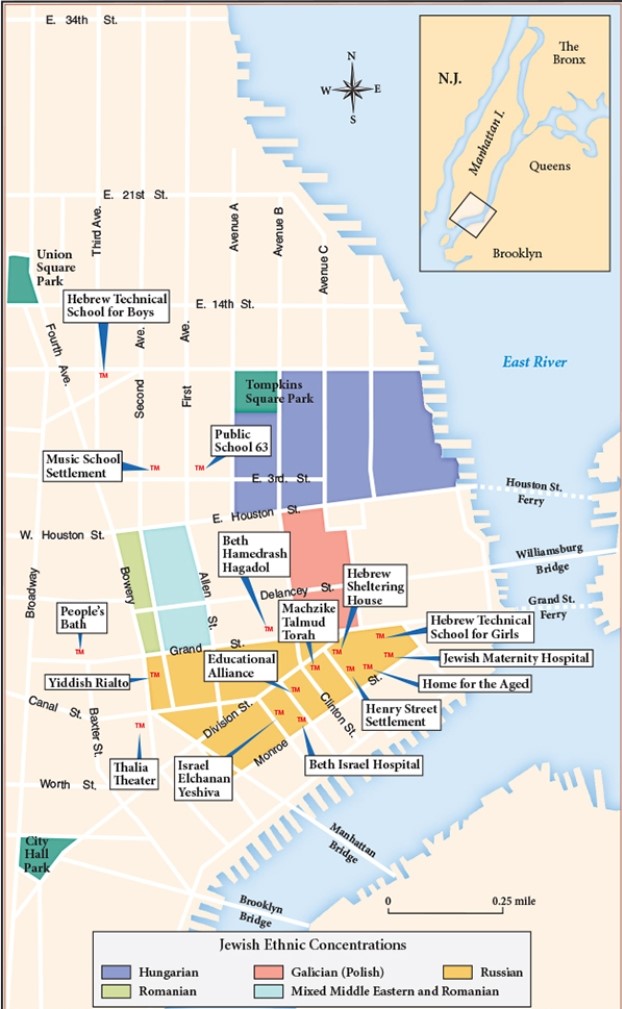 This map would be most useful to historians analyzing
A) Gilded Age politics.
B) the intellectual and cultural movements that challenged the social order of the Gilded Age.
C) the role of settlement houses.
D) the growing power of labor unions.
This map would be most useful to historians analyzingA) Gilded Age politics.
B) the intellectual and cultural movements that challenged the social order of the Gilded Age.
C) the role of settlement houses.
D) the growing power of labor unions.
Question
Question
Question
Question
Question
Question
Question
Question
Question
Question
Question
Question
Question
Question
Question
Question
Question
For the following question,refer to the following map,"The Lower East Side,New York City,1900." 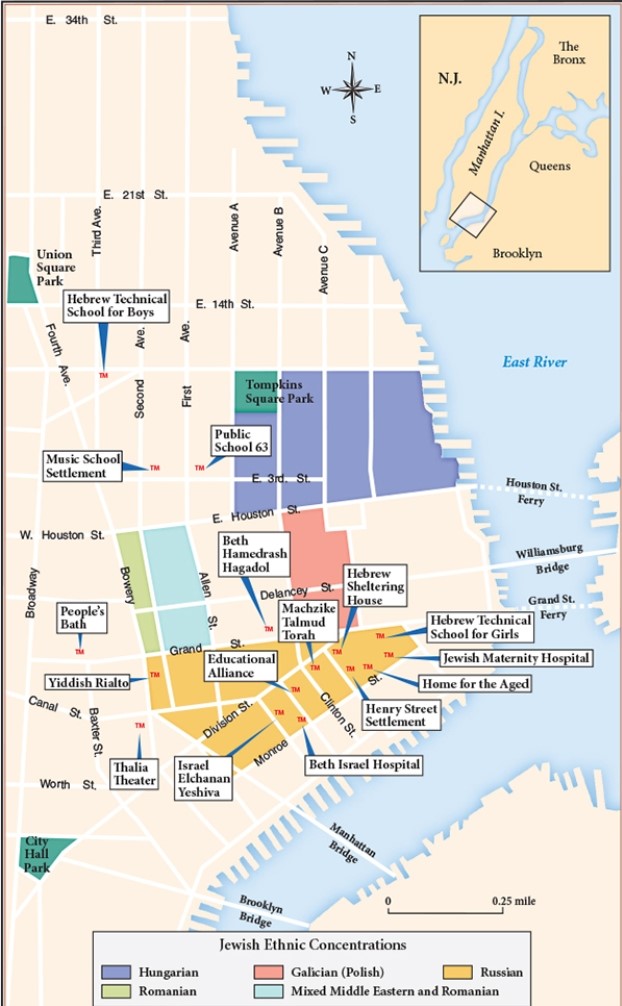 Which of the following developments or events from the end of the twentieth and beginning of the twenty-first centuries compares most closely to the processes depicted on this map?
A) A surge in new migration from Latin America and Asia to the South and West
B) Migration as the focus of political,cultural,and economic debates
C) Increasing economic inequality after 1980
D) The passage of new immigration laws in 1965
Which of the following developments or events from the end of the twentieth and beginning of the twenty-first centuries compares most closely to the processes depicted on this map?A) A surge in new migration from Latin America and Asia to the South and West
B) Migration as the focus of political,cultural,and economic debates
C) Increasing economic inequality after 1980
D) The passage of new immigration laws in 1965
Question
Question
Question
Question
Question
Question
Question
Question
Question
Question
Question
Question
Question
Question
Question
Question
Question
Question
Question
Question
Question
Question
Question
Question
Question
Question
Question
Question
Question
Question
Question
Question
Question
Question
Question
Question
Question
Question
Question
Question
Question
Question

Unlock Deck
Sign up to unlock the cards in this deck!
Unlock Deck
Unlock Deck
1/84

Play

Full screen (f)
Deck 18: Civilizations Inferno: the Rise and Reform of Industrial Cities, 1880-1917
1
Which of the following describes metropolitan newspapers in the period after the Civil War?
A) They expanded to include human-interest stories and society and sports sections.
B) Newspapers lost urban readership as the influx of poor immigrants led to declining literacy rates.
C) Influenced by the increasing efficiency of communication,they covered more national and international news than local events.
D) Building a reputation for factual,objective news coverage,newspapers ignored national scandals.
A) They expanded to include human-interest stories and society and sports sections.
B) Newspapers lost urban readership as the influx of poor immigrants led to declining literacy rates.
C) Influenced by the increasing efficiency of communication,they covered more national and international news than local events.
D) Building a reputation for factual,objective news coverage,newspapers ignored national scandals.
They expanded to include human-interest stories and society and sports sections.
2
Which of the following statements most characterizes residential patterns in the typical American city around 1900?
A) Members of various ethnic groups mingled throughout the city.
B) Immigrants from a particular region of a country tended to settle by ethnic group.
C) Most immigrants had to settle far from the factories where they worked.
D) Most immigrants were required by zoning laws to live in downtown ghettos.
A) Members of various ethnic groups mingled throughout the city.
B) Immigrants from a particular region of a country tended to settle by ethnic group.
C) Most immigrants had to settle far from the factories where they worked.
D) Most immigrants were required by zoning laws to live in downtown ghettos.
Immigrants from a particular region of a country tended to settle by ethnic group.
3
Where did almost 90 percent of African Americans live in 1900?
A) The South
B) The western states
C) Mississippi and Alabama
D) Northern cities
A) The South
B) The western states
C) Mississippi and Alabama
D) Northern cities
The South
4
Which of these statements describes the newly rising American middle class around 1900?
A) They preferred to live in luxurious high-rise apartments in the city.
B) Many preferred to live in the suburbs because of the safety and space it afforded them.
C) They imitated the rich by constructing scaled-down villas in the country.
D) They remained near the ethnic neighborhoods where they had grown up.
A) They preferred to live in luxurious high-rise apartments in the city.
B) Many preferred to live in the suburbs because of the safety and space it afforded them.
C) They imitated the rich by constructing scaled-down villas in the country.
D) They remained near the ethnic neighborhoods where they had grown up.
Unlock Deck
Unlock for access to all 84 flashcards in this deck.
Unlock Deck
k this deck
5
What accounted for the relocation of manufacturing operations into urban areas after the Civil War?
A) Railroad expansion
B) Tax incentives
C) Steam power
D) Electricity
A) Railroad expansion
B) Tax incentives
C) Steam power
D) Electricity
Unlock Deck
Unlock for access to all 84 flashcards in this deck.
Unlock Deck
k this deck
6
Which of the following statements characterizes gay culture in early-twentieth-century New York?
A) Due to high levels of stigma and discrimination,there were too few gay people to form a culture.
B) New York's gay underground was dangerous due to the frequency of police raids and arrests.
C) New York's gay subculture was quiet,invisible,and careful not to challenge Victorian ideals.
D) The city's exuberant gay subculture provoked harassment but officials tolerated its existence.
A) Due to high levels of stigma and discrimination,there were too few gay people to form a culture.
B) New York's gay underground was dangerous due to the frequency of police raids and arrests.
C) New York's gay subculture was quiet,invisible,and careful not to challenge Victorian ideals.
D) The city's exuberant gay subculture provoked harassment but officials tolerated its existence.
Unlock Deck
Unlock for access to all 84 flashcards in this deck.
Unlock Deck
k this deck
7
What made young women vulnerable in the new system of dating and "treating" that emerged in early-twentieth-century cities?
A) Their low marriage prospects
B) Sexualized dancing and music
C) Women's low wages
D) A high percentage of bachelors
A) Their low marriage prospects
B) Sexualized dancing and music
C) Women's low wages
D) A high percentage of bachelors
Unlock Deck
Unlock for access to all 84 flashcards in this deck.
Unlock Deck
k this deck
8
Which of the following statements describes the anti-black race riots that occurred in cities in the early twentieth century?
A) Black on white crimes were the primary trigger of race riots.
B) Race riots occurred almost exclusively in the South.
C) Race riots foreshadowed a worsening of urban racial tensions.
D) The violent events often caused much damage but few,if any,deaths.
A) Black on white crimes were the primary trigger of race riots.
B) Race riots occurred almost exclusively in the South.
C) Race riots foreshadowed a worsening of urban racial tensions.
D) The violent events often caused much damage but few,if any,deaths.
Unlock Deck
Unlock for access to all 84 flashcards in this deck.
Unlock Deck
k this deck
9
Which of the following statements describes immigrants' accommodation to city life in the United States around 1900?
A) They discarded their ethnic customs and traditional holidays as quickly as possible to blend in with native-born Americans.
B) Each family looked out solely for its own interests,abandoning older community-oriented patterns.
C) Irish and German immigrants frequently joined temperance societies to become sober American workers.
D) Many relied on native-language newspapers,the conviviality of saloons,and the assistance of mutual aid societies.
A) They discarded their ethnic customs and traditional holidays as quickly as possible to blend in with native-born Americans.
B) Each family looked out solely for its own interests,abandoning older community-oriented patterns.
C) Irish and German immigrants frequently joined temperance societies to become sober American workers.
D) Many relied on native-language newspapers,the conviviality of saloons,and the assistance of mutual aid societies.
Unlock Deck
Unlock for access to all 84 flashcards in this deck.
Unlock Deck
k this deck
10
Which of the following phenomena emerged as an important new influence on urban entertainment in the early twentieth century?
A) Middle-class reformers' priorities
B) Black music
C) Opera houses
D) Saloons
A) Middle-class reformers' priorities
B) Black music
C) Opera houses
D) Saloons
Unlock Deck
Unlock for access to all 84 flashcards in this deck.
Unlock Deck
k this deck
11
Who was Joseph Pulitzer and what made him significant?
A) An investigative reporter who exposed the unhealthy conditions of the meat-packing industry
B) A circus showman who claimed that "He who is without a newspaper is cut off from his species"
C) The artist whose comic strip,"The Yellow Kid," gave its name to yellow journalism
D) A St.Louis newspaper publisher who built his sales base with sensational investigations
A) An investigative reporter who exposed the unhealthy conditions of the meat-packing industry
B) A circus showman who claimed that "He who is without a newspaper is cut off from his species"
C) The artist whose comic strip,"The Yellow Kid," gave its name to yellow journalism
D) A St.Louis newspaper publisher who built his sales base with sensational investigations
Unlock Deck
Unlock for access to all 84 flashcards in this deck.
Unlock Deck
k this deck
12
Which of the following describes the tenements that were typical of many urban areas in the early twentieth century?
A) Government-subsidized housing for the poor
B) Modern and sleek no-frills apartments that housed poor families
C) Buildings that housed many families in cramped,airless apartments
D) Light-manufacturing factories prevalent in many urban warehouse districts
A) Government-subsidized housing for the poor
B) Modern and sleek no-frills apartments that housed poor families
C) Buildings that housed many families in cramped,airless apartments
D) Light-manufacturing factories prevalent in many urban warehouse districts
Unlock Deck
Unlock for access to all 84 flashcards in this deck.
Unlock Deck
k this deck
13
Before the Civil War,most manufacturing operations sprang up in
A) northeastern cities.
B) countryside locations.
C) seaports.
D) railroad hubs.
A) northeastern cities.
B) countryside locations.
C) seaports.
D) railroad hubs.
Unlock Deck
Unlock for access to all 84 flashcards in this deck.
Unlock Deck
k this deck
14
By 1900,which of the following was the primary means of urban mass transit in the United States?
A) Subway
B) Trolley car
C) Elevated railroad
D) Cable car
A) Subway
B) Trolley car
C) Elevated railroad
D) Cable car
Unlock Deck
Unlock for access to all 84 flashcards in this deck.
Unlock Deck
k this deck
15
Which of the following made the growth of skyscrapers possible?
A) The development of steel girders,plate glass,and elevators
B) Government subsidies to contractors who would build them
C) Architects competing for the Form Follows Function award
D) The newly built system of canals that connected cities to sources for building materials
A) The development of steel girders,plate glass,and elevators
B) Government subsidies to contractors who would build them
C) Architects competing for the Form Follows Function award
D) The newly built system of canals that connected cities to sources for building materials
Unlock Deck
Unlock for access to all 84 flashcards in this deck.
Unlock Deck
k this deck
16
Which of these inventions made residents feel safer in urban areas in the late nineteenth century?
A) Electric light
B) Subway
C) Radio
D) Telegraph
A) Electric light
B) Subway
C) Radio
D) Telegraph
Unlock Deck
Unlock for access to all 84 flashcards in this deck.
Unlock Deck
k this deck
17
Around the turn of the century,African Americans moving to cities in the North experienced which of the following?
A) Substantially less racism than did African Americans in the South
B) More opportunities to become skilled workers than they had two decades earlier
C) More discrimination than even the most downtrodden European immigrants
D) Plentiful job opportunities and access to integrated housing.
A) Substantially less racism than did African Americans in the South
B) More opportunities to become skilled workers than they had two decades earlier
C) More discrimination than even the most downtrodden European immigrants
D) Plentiful job opportunities and access to integrated housing.
Unlock Deck
Unlock for access to all 84 flashcards in this deck.
Unlock Deck
k this deck
18
Which of the following was the greatest benefactor of public libraries in nineteenth-century America,and in 1881 announced that he would build a library in any city that was prepared to maintain it?
A) J.P.Morgan
B) Andrew Carnegie
C) John D.Rockefeller
D) George W.Vanderbilt
A) J.P.Morgan
B) Andrew Carnegie
C) John D.Rockefeller
D) George W.Vanderbilt
Unlock Deck
Unlock for access to all 84 flashcards in this deck.
Unlock Deck
k this deck
19
The rise of nickelodeons,amusement parks,dance halls,vaudeville,and other "cheap amusements" in the late nineteenth-century cities had which of the following effects?
A) Challenging traditional courtship rituals
B) Reinforcing Victorian values
C) Increasing tax revenues so the government could build more libraries and parks
D) Undermining businesses efforts to instill workplace discipline
A) Challenging traditional courtship rituals
B) Reinforcing Victorian values
C) Increasing tax revenues so the government could build more libraries and parks
D) Undermining businesses efforts to instill workplace discipline
Unlock Deck
Unlock for access to all 84 flashcards in this deck.
Unlock Deck
k this deck
20
Which invention transformed urban and suburban communications in the United States after 1876?
A) Elevator
B) Walkie-talkie
C) Telephone
D) Telegraph
A) Elevator
B) Walkie-talkie
C) Telephone
D) Telegraph
Unlock Deck
Unlock for access to all 84 flashcards in this deck.
Unlock Deck
k this deck
21
For the following question,refer to the following map,"The Lower East Side,New York City,1900." This map would be most useful to historians analyzing
A) Gilded Age politics.
B) the intellectual and cultural movements that challenged the social order of the Gilded Age.
C) the role of settlement houses.
D) the growing power of labor unions.
This map would be most useful to historians analyzingA) Gilded Age politics.
B) the intellectual and cultural movements that challenged the social order of the Gilded Age.
C) the role of settlement houses.
D) the growing power of labor unions.
Unlock Deck
Unlock for access to all 84 flashcards in this deck.
Unlock Deck
k this deck
22
During the 1890s,what caused voters to start turning away from urban political machines and start embracing urban political reformers?
A) A decrease in the number of immigrants
B) The economic depression
C) A series of political assassinations
D) The rampant spread of urban organized crime
A) A decrease in the number of immigrants
B) The economic depression
C) A series of political assassinations
D) The rampant spread of urban organized crime
Unlock Deck
Unlock for access to all 84 flashcards in this deck.
Unlock Deck
k this deck
23
Which of the following muckrakers is correctly matched with his or her reform area?
A) Ida Tarbell-the plight of the poor
B) Jacob Riis-the meat-packing industry
C) David Graham Phillips-an exposé of Standard Oil
D) Lincoln Steffens-the corruption of America's urban governments
A) Ida Tarbell-the plight of the poor
B) Jacob Riis-the meat-packing industry
C) David Graham Phillips-an exposé of Standard Oil
D) Lincoln Steffens-the corruption of America's urban governments
Unlock Deck
Unlock for access to all 84 flashcards in this deck.
Unlock Deck
k this deck
24
William Randolph Hearst's and Joseph Pulitzer's sensationalist style of reporting was known as which of the following?
A) Scandal sheet copy
B) Yellow journalism
C) Paparazzi coverage
D) Human-interest writing
A) Scandal sheet copy
B) Yellow journalism
C) Paparazzi coverage
D) Human-interest writing
Unlock Deck
Unlock for access to all 84 flashcards in this deck.
Unlock Deck
k this deck
25
For this question,refer to the following excerpt. The newsboys' strike gathered new strength last night in a monster mass meeting held at New Irving Hall...."Kid" Blink,who has been made Grand Master Workman of the union,led the procession....The unbiased spectator last evening could not fail to be impressed with the resolute,manly fight the little fellows are making....
SPEECH OF "KID" BLINK
Dis is de time when we'se got to stick togedder like glue! But der's one ting I want ter say before I goes any furder.I don't believe in getting' no feller's papers frum him and tearin' 'em up.I know I done it.(Cries of "You bet you did!")But I'm sorry fer it.No! der ain't nuttin in dat.We know wot we wants and we'll git it....Dem 10 cents is as good ter us as to de millionaires-maybe better....We'll strike and restrike till we get it....We'll stick togedder like plaster,won't we,boys?
(The boys answered that they would.... )
Newsboys strike coverage,New York Herald-Tribune,July 25,1899
The ideas expressed in the passage above most clearly show the influence of
A) increased migrations to the United States from Southern and Eastern Europe.
B) immigrants seeking to both "Americanize" and to maintain their unique identities.
C) new cultural movements challenging the social order of the late nineteenth century.
D) theories such as the Social Gospel and Social Darwinism.
SPEECH OF "KID" BLINK
Dis is de time when we'se got to stick togedder like glue! But der's one ting I want ter say before I goes any furder.I don't believe in getting' no feller's papers frum him and tearin' 'em up.I know I done it.(Cries of "You bet you did!")But I'm sorry fer it.No! der ain't nuttin in dat.We know wot we wants and we'll git it....Dem 10 cents is as good ter us as to de millionaires-maybe better....We'll strike and restrike till we get it....We'll stick togedder like plaster,won't we,boys?
(The boys answered that they would.... )
Newsboys strike coverage,New York Herald-Tribune,July 25,1899
The ideas expressed in the passage above most clearly show the influence of
A) increased migrations to the United States from Southern and Eastern Europe.
B) immigrants seeking to both "Americanize" and to maintain their unique identities.
C) new cultural movements challenging the social order of the late nineteenth century.
D) theories such as the Social Gospel and Social Darwinism.
Unlock Deck
Unlock for access to all 84 flashcards in this deck.
Unlock Deck
k this deck
26
To what late nineteenth-century phenomenon does the term "private city" refer?
A) Businesses' role in the creation of urban environments
B) The existence of an underground gay urban subculture
C) The notion that urban family life functioned like a small city
D) The federal government's lack of influence over urban administration
A) Businesses' role in the creation of urban environments
B) The existence of an underground gay urban subculture
C) The notion that urban family life functioned like a small city
D) The federal government's lack of influence over urban administration
Unlock Deck
Unlock for access to all 84 flashcards in this deck.
Unlock Deck
k this deck
27
What spurred many big cities' pursuit of state-of-the-art sewage and drainage systems at the end of the nineteenth century?
A) Cities smelled so bad they were nearly uninhabitable.
B) The federal government offered tax incentives.
C) They sought to improve public health.
D) Urban land became too valuable to use for privies.
A) Cities smelled so bad they were nearly uninhabitable.
B) The federal government offered tax incentives.
C) They sought to improve public health.
D) Urban land became too valuable to use for privies.
Unlock Deck
Unlock for access to all 84 flashcards in this deck.
Unlock Deck
k this deck
28
To what did the Tammany ward boss George Washington Plunkitt refer when he talked about "honest graft"?
A) Paying taxes on briberies
B) Bribing politicians for good purposes
C) Confessing past bribes
D) Profiting from insider status
A) Paying taxes on briberies
B) Bribing politicians for good purposes
C) Confessing past bribes
D) Profiting from insider status
Unlock Deck
Unlock for access to all 84 flashcards in this deck.
Unlock Deck
k this deck
29
The City Beautiful movement is associated with which of the following activities?
A) Efforts to clean up the mud rivers created by spring rains in many cities
B) Attempts to clean up the tremendous air pollution that hung in the air of many cities
C) Attempts to build more and better urban park spaces,including playgrounds and gardens
D) Efforts by municipal commissioners to preserve green space in rapidly expanding industrial cities
A) Efforts to clean up the mud rivers created by spring rains in many cities
B) Attempts to clean up the tremendous air pollution that hung in the air of many cities
C) Attempts to build more and better urban park spaces,including playgrounds and gardens
D) Efforts by municipal commissioners to preserve green space in rapidly expanding industrial cities
Unlock Deck
Unlock for access to all 84 flashcards in this deck.
Unlock Deck
k this deck
30
Why did Galveston,Texas,adopt a commission system in 1900 that later became a nationwide model for efficient government?
A) To end the rampant homelessness and hunger
B) To encourage industrial development in the city
C) To rebuild after a hurricane killed roughly 6,000 people
D) To curb the influence of corporate interests in the government
A) To end the rampant homelessness and hunger
B) To encourage industrial development in the city
C) To rebuild after a hurricane killed roughly 6,000 people
D) To curb the influence of corporate interests in the government
Unlock Deck
Unlock for access to all 84 flashcards in this deck.
Unlock Deck
k this deck
31
In the late nineteenth century,George Washington Plunkitt was
A) a major political boss who operated in the city of Chicago.
B) a humorous character created by a newspaper columnist to satirize ward politics.
C) the Tammany ward boss who courted all ethnic groups to win their support.
D) the first important African American politician elected in the city of Baltimore.
A) a major political boss who operated in the city of Chicago.
B) a humorous character created by a newspaper columnist to satirize ward politics.
C) the Tammany ward boss who courted all ethnic groups to win their support.
D) the first important African American politician elected in the city of Baltimore.
Unlock Deck
Unlock for access to all 84 flashcards in this deck.
Unlock Deck
k this deck
32
Which of the following describes the urban political machines of the late nineteenth century?
A) They mediated between municipal governments and state and federal governments.
B) Machines acted as social service agencies,providing assistance in times of trouble.
C) Political machines were an obstacle to the creation of urban infrastructure.
D) They protected American city dwellers from powerful economic interests.
A) They mediated between municipal governments and state and federal governments.
B) Machines acted as social service agencies,providing assistance in times of trouble.
C) Political machines were an obstacle to the creation of urban infrastructure.
D) They protected American city dwellers from powerful economic interests.
Unlock Deck
Unlock for access to all 84 flashcards in this deck.
Unlock Deck
k this deck
33
Which of the following statements characterizes Theodore Roosevelt's attitude toward the muckrakers?
A) Admiring them,Roosevelt urged the muckrakers on by exclaiming,"Bully!"
B) Appalled,he dismissed them as muckrakers who overemphasized America's negative aspects.
C) Inspired,he declared that their stories "gripped my heart until I felt I must tell of them,or burst,or turn anarchist."
D) Impressed,Roosevelt commended the muckrakers for being good followers of his own progressive principles.
A) Admiring them,Roosevelt urged the muckrakers on by exclaiming,"Bully!"
B) Appalled,he dismissed them as muckrakers who overemphasized America's negative aspects.
C) Inspired,he declared that their stories "gripped my heart until I felt I must tell of them,or burst,or turn anarchist."
D) Impressed,Roosevelt commended the muckrakers for being good followers of his own progressive principles.
Unlock Deck
Unlock for access to all 84 flashcards in this deck.
Unlock Deck
k this deck
34
How did the early-twentieth-century campaign against urban prostitution affect women working as prostitutes at that time?
A) New laws made it easier for prostitutes to find more respectable work.
B) New obstacles to interstate transport limited most prostitutes' mobility.
C) By closing brothels,new laws worsened many prostitutes' working conditions.
D) The campaign reduced the number of men seeking prostitutes' services in cities.
A) New laws made it easier for prostitutes to find more respectable work.
B) New obstacles to interstate transport limited most prostitutes' mobility.
C) By closing brothels,new laws worsened many prostitutes' working conditions.
D) The campaign reduced the number of men seeking prostitutes' services in cities.
Unlock Deck
Unlock for access to all 84 flashcards in this deck.
Unlock Deck
k this deck
35
To what phenomenon did the book title The Shame of the Cities specifically refer?
A) Racial violence in urban slums
B) Conspicuous consumption among the rich
C) Urban political corruption
D) Prostitution in big cities
A) Racial violence in urban slums
B) Conspicuous consumption among the rich
C) Urban political corruption
D) Prostitution in big cities
Unlock Deck
Unlock for access to all 84 flashcards in this deck.
Unlock Deck
k this deck
36
Which level of government generally saw the most corruption in the late 1800s?
A) Rural
B) Federal
C) State
D) Urban
A) Rural
B) Federal
C) State
D) Urban
Unlock Deck
Unlock for access to all 84 flashcards in this deck.
Unlock Deck
k this deck
37
Which of the following statements characterizes urban political reform efforts in the late 1800s and early 1900s?
A) Some reform mayors modeled their reform efforts on cutting-edge European efforts in cities such as Glasgow and Düsseldorf.
B) Many large American cities adopted the professional city manager system in an attempt to run more like a business.
C) Urban reform politicians rejected municipally owned utilities in favor of private sector ownership.
D) The efforts of urban reform politicians could not compete with those sponsored by the political machines they targeted.
A) Some reform mayors modeled their reform efforts on cutting-edge European efforts in cities such as Glasgow and Düsseldorf.
B) Many large American cities adopted the professional city manager system in an attempt to run more like a business.
C) Urban reform politicians rejected municipally owned utilities in favor of private sector ownership.
D) The efforts of urban reform politicians could not compete with those sponsored by the political machines they targeted.
Unlock Deck
Unlock for access to all 84 flashcards in this deck.
Unlock Deck
k this deck
38
For the following question,refer to the following map,"The Lower East Side,New York City,1900." Which of the following developments or events from the end of the twentieth and beginning of the twenty-first centuries compares most closely to the processes depicted on this map?
A) A surge in new migration from Latin America and Asia to the South and West
B) Migration as the focus of political,cultural,and economic debates
C) Increasing economic inequality after 1980
D) The passage of new immigration laws in 1965
Which of the following developments or events from the end of the twentieth and beginning of the twenty-first centuries compares most closely to the processes depicted on this map?A) A surge in new migration from Latin America and Asia to the South and West
B) Migration as the focus of political,cultural,and economic debates
C) Increasing economic inequality after 1980
D) The passage of new immigration laws in 1965
Unlock Deck
Unlock for access to all 84 flashcards in this deck.
Unlock Deck
k this deck
39
Around 1900,if an ordinary American city dweller,whether immigrant or native-born,needed a favor done by a person with authority,he or she would have most likely turned to whom?
A) A newspaper columnist
B) An alderman or ward boss
C) An ombudsman
D) A member of Congress
A) A newspaper columnist
B) An alderman or ward boss
C) An ombudsman
D) A member of Congress
Unlock Deck
Unlock for access to all 84 flashcards in this deck.
Unlock Deck
k this deck
40
For this question,refer to the following excerpt. The newsboys' strike gathered new strength last night in a monster mass meeting held at New Irving Hall...."Kid" Blink,who has been made Grand Master Workman of the union,led the procession....The unbiased spectator last evening could not fail to be impressed with the resolute,manly fight the little fellows are making....
SPEECH OF "KID" BLINK
Dis is de time when we'se got to stick togedder like glue! But der's one ting I want ter say before I goes any furder.I don't believe in getting' no feller's papers frum him and tearin' 'em up.I know I done it.(Cries of "You bet you did!")But I'm sorry fer it.No! der ain't nuttin in dat.We know wot we wants and we'll git it....Dem 10 cents is as good ter us as to de millionaires-maybe better....We'll strike and restrike till we get it....We'll stick togedder like plaster,won't we,boys?
(The boys answered that they would.... )
Newsboys strike coverage,New York Herald-Tribune,July 25,1899
The belief expressed by "Kid" Blink in the excerpt above has the most in common with
A) calls for greater political democracy after the American Revolution.
B) the widening gap between rich and poor created by the Market Revolution in the 1830s and 1840s.
C) the persistence of poverty as a national problem in the post-World War II period.
D) the intensified debates about racial and national identity in the United States after 1980.
SPEECH OF "KID" BLINK
Dis is de time when we'se got to stick togedder like glue! But der's one ting I want ter say before I goes any furder.I don't believe in getting' no feller's papers frum him and tearin' 'em up.I know I done it.(Cries of "You bet you did!")But I'm sorry fer it.No! der ain't nuttin in dat.We know wot we wants and we'll git it....Dem 10 cents is as good ter us as to de millionaires-maybe better....We'll strike and restrike till we get it....We'll stick togedder like plaster,won't we,boys?
(The boys answered that they would.... )
Newsboys strike coverage,New York Herald-Tribune,July 25,1899
The belief expressed by "Kid" Blink in the excerpt above has the most in common with
A) calls for greater political democracy after the American Revolution.
B) the widening gap between rich and poor created by the Market Revolution in the 1830s and 1840s.
C) the persistence of poverty as a national problem in the post-World War II period.
D) the intensified debates about racial and national identity in the United States after 1980.
Unlock Deck
Unlock for access to all 84 flashcards in this deck.
Unlock Deck
k this deck
41
Answer the following questions :
Chicago school
A)A school of architecture dedicated to the design of buildings whose form expressed,rather than masked,their structure and function.
B)An urban philanthropic organization that served members of an ethnic immigrant group,usually those from a particular province or town.The societies functioned as fraternal clubs that collected dues from members in order to pay support in case of death or disability.
C)A term for an attack on African Americans by white mobs,triggered by political conflicts,street altercations,or rumors of crime.In some cases,such events were not spontaneous but planned in advance by a group of leaders seeking to enforce white supremacy.
D)A high-density,cheap,five- or six-story housing unit designed for working-class urban populations.In the late nineteenth and early twentieth centuries,this type of housing became a symbol of urban immigrant poverty.
E)A type of professional stage show popular in the 1880s and 1890s that included singing,dancing,and comedy routines;it created a form of family entertainment for the urban masses that deeply influenced later forms,such as radio shows and television sitcoms.
F)A form of American music that originated in the Deep South,especially from the black workers in the cotton fields of the Mississippi Delta.
G)A form of heterosexual dating in which,given the male partner's higher wage level,he is expected to pay for food and entertainment,and the young woman is expected to provide sexual favors in return.
H)A derogatory term for newspapers that specialize in sensationalistic reporting.This kind of journalism is associated with the inflammatory reporting by the Hearst and Pulitzer newspapers leading up to the War of 1898.
I)A critical term,first applied by Theodore Roosevelt,for investigative journalists who published exposés of political scandals and industrial abuses.
J)A complex,hierarchical party organization such as New York's Tammany Hall,whose candidates remained in office on the strength of their political organization and their personal relationship with voters,especially working-class immigrants who had little alternative access to political power.
K)A political reform organization that advised cities to elect small councils and hire professional city managers who would direct operations like a corporate executive.
L)A loose term for political reformers-especially those from the elite and middle classes-who worked to improve the political system,fight poverty,conserve environmental resources,and increase government involvement in the economy.Such reformers were often prompted to act by fear that mass,radical protests by workers and farmers would spread,as well as by their desire to enhance social welfare and social justice.
M)A turn-of-the-twentieth-century movement that advocated landscape beautification,playgrounds,and more and better urban parks.
N)A community welfare center that investigated the plight of the urban poor,raised funds to address urgent needs,and helped neighborhood residents advocate on their own behalf.These community welfare centers became a nationally recognized reform strategy during the Progressive Era.
O)One of the first and most famous social settlements,founded in 1889 by Jane Addams and her companion Ellen Gates Starr in an impoverished,largely Italian immigrant neighborhood on Chicago's West Side.
P)A 1906 law regulating the conditions in the food and drug industries to ensure a safe supply of food and medicine.
Q)Begun in New York,a national progressive organization that encouraged women,through their shopping decisions,to support fair wages and working conditions for industrial laborers.
R)A labor organization for women founded in New York in 1903 that brought elite,middle-class,and working-class women together as allies.This organization supported union organizing efforts among garment workers.
S)A devastating fire that quickly spread through the Triangle Shirtwaist Company in New York City on March 25,1911,killing 146 people.In the wake of the tragedy,fifty-six state laws were passed dealing with such issues as fire hazards,unsafe machines,and wages and working hours for women and children.The fire also provided a national impetus for industrial reform.
Chicago school
A)A school of architecture dedicated to the design of buildings whose form expressed,rather than masked,their structure and function.
B)An urban philanthropic organization that served members of an ethnic immigrant group,usually those from a particular province or town.The societies functioned as fraternal clubs that collected dues from members in order to pay support in case of death or disability.
C)A term for an attack on African Americans by white mobs,triggered by political conflicts,street altercations,or rumors of crime.In some cases,such events were not spontaneous but planned in advance by a group of leaders seeking to enforce white supremacy.
D)A high-density,cheap,five- or six-story housing unit designed for working-class urban populations.In the late nineteenth and early twentieth centuries,this type of housing became a symbol of urban immigrant poverty.
E)A type of professional stage show popular in the 1880s and 1890s that included singing,dancing,and comedy routines;it created a form of family entertainment for the urban masses that deeply influenced later forms,such as radio shows and television sitcoms.
F)A form of American music that originated in the Deep South,especially from the black workers in the cotton fields of the Mississippi Delta.
G)A form of heterosexual dating in which,given the male partner's higher wage level,he is expected to pay for food and entertainment,and the young woman is expected to provide sexual favors in return.
H)A derogatory term for newspapers that specialize in sensationalistic reporting.This kind of journalism is associated with the inflammatory reporting by the Hearst and Pulitzer newspapers leading up to the War of 1898.
I)A critical term,first applied by Theodore Roosevelt,for investigative journalists who published exposés of political scandals and industrial abuses.
J)A complex,hierarchical party organization such as New York's Tammany Hall,whose candidates remained in office on the strength of their political organization and their personal relationship with voters,especially working-class immigrants who had little alternative access to political power.
K)A political reform organization that advised cities to elect small councils and hire professional city managers who would direct operations like a corporate executive.
L)A loose term for political reformers-especially those from the elite and middle classes-who worked to improve the political system,fight poverty,conserve environmental resources,and increase government involvement in the economy.Such reformers were often prompted to act by fear that mass,radical protests by workers and farmers would spread,as well as by their desire to enhance social welfare and social justice.
M)A turn-of-the-twentieth-century movement that advocated landscape beautification,playgrounds,and more and better urban parks.
N)A community welfare center that investigated the plight of the urban poor,raised funds to address urgent needs,and helped neighborhood residents advocate on their own behalf.These community welfare centers became a nationally recognized reform strategy during the Progressive Era.
O)One of the first and most famous social settlements,founded in 1889 by Jane Addams and her companion Ellen Gates Starr in an impoverished,largely Italian immigrant neighborhood on Chicago's West Side.
P)A 1906 law regulating the conditions in the food and drug industries to ensure a safe supply of food and medicine.
Q)Begun in New York,a national progressive organization that encouraged women,through their shopping decisions,to support fair wages and working conditions for industrial laborers.
R)A labor organization for women founded in New York in 1903 that brought elite,middle-class,and working-class women together as allies.This organization supported union organizing efforts among garment workers.
S)A devastating fire that quickly spread through the Triangle Shirtwaist Company in New York City on March 25,1911,killing 146 people.In the wake of the tragedy,fifty-six state laws were passed dealing with such issues as fire hazards,unsafe machines,and wages and working hours for women and children.The fire also provided a national impetus for industrial reform.
Unlock Deck
Unlock for access to all 84 flashcards in this deck.
Unlock Deck
k this deck
42
Answer the following questions :
tenement
A)A school of architecture dedicated to the design of buildings whose form expressed,rather than masked,their structure and function.
B)An urban philanthropic organization that served members of an ethnic immigrant group,usually those from a particular province or town.The societies functioned as fraternal clubs that collected dues from members in order to pay support in case of death or disability.
C)A term for an attack on African Americans by white mobs,triggered by political conflicts,street altercations,or rumors of crime.In some cases,such events were not spontaneous but planned in advance by a group of leaders seeking to enforce white supremacy.
D)A high-density,cheap,five- or six-story housing unit designed for working-class urban populations.In the late nineteenth and early twentieth centuries,this type of housing became a symbol of urban immigrant poverty.
E)A type of professional stage show popular in the 1880s and 1890s that included singing,dancing,and comedy routines;it created a form of family entertainment for the urban masses that deeply influenced later forms,such as radio shows and television sitcoms.
F)A form of American music that originated in the Deep South,especially from the black workers in the cotton fields of the Mississippi Delta.
G)A form of heterosexual dating in which,given the male partner's higher wage level,he is expected to pay for food and entertainment,and the young woman is expected to provide sexual favors in return.
H)A derogatory term for newspapers that specialize in sensationalistic reporting.This kind of journalism is associated with the inflammatory reporting by the Hearst and Pulitzer newspapers leading up to the War of 1898.
I)A critical term,first applied by Theodore Roosevelt,for investigative journalists who published exposés of political scandals and industrial abuses.
J)A complex,hierarchical party organization such as New York's Tammany Hall,whose candidates remained in office on the strength of their political organization and their personal relationship with voters,especially working-class immigrants who had little alternative access to political power.
K)A political reform organization that advised cities to elect small councils and hire professional city managers who would direct operations like a corporate executive.
L)A loose term for political reformers-especially those from the elite and middle classes-who worked to improve the political system,fight poverty,conserve environmental resources,and increase government involvement in the economy.Such reformers were often prompted to act by fear that mass,radical protests by workers and farmers would spread,as well as by their desire to enhance social welfare and social justice.
M)A turn-of-the-twentieth-century movement that advocated landscape beautification,playgrounds,and more and better urban parks.
N)A community welfare center that investigated the plight of the urban poor,raised funds to address urgent needs,and helped neighborhood residents advocate on their own behalf.These community welfare centers became a nationally recognized reform strategy during the Progressive Era.
O)One of the first and most famous social settlements,founded in 1889 by Jane Addams and her companion Ellen Gates Starr in an impoverished,largely Italian immigrant neighborhood on Chicago's West Side.
P)A 1906 law regulating the conditions in the food and drug industries to ensure a safe supply of food and medicine.
Q)Begun in New York,a national progressive organization that encouraged women,through their shopping decisions,to support fair wages and working conditions for industrial laborers.
R)A labor organization for women founded in New York in 1903 that brought elite,middle-class,and working-class women together as allies.This organization supported union organizing efforts among garment workers.
S)A devastating fire that quickly spread through the Triangle Shirtwaist Company in New York City on March 25,1911,killing 146 people.In the wake of the tragedy,fifty-six state laws were passed dealing with such issues as fire hazards,unsafe machines,and wages and working hours for women and children.The fire also provided a national impetus for industrial reform.
tenement
A)A school of architecture dedicated to the design of buildings whose form expressed,rather than masked,their structure and function.
B)An urban philanthropic organization that served members of an ethnic immigrant group,usually those from a particular province or town.The societies functioned as fraternal clubs that collected dues from members in order to pay support in case of death or disability.
C)A term for an attack on African Americans by white mobs,triggered by political conflicts,street altercations,or rumors of crime.In some cases,such events were not spontaneous but planned in advance by a group of leaders seeking to enforce white supremacy.
D)A high-density,cheap,five- or six-story housing unit designed for working-class urban populations.In the late nineteenth and early twentieth centuries,this type of housing became a symbol of urban immigrant poverty.
E)A type of professional stage show popular in the 1880s and 1890s that included singing,dancing,and comedy routines;it created a form of family entertainment for the urban masses that deeply influenced later forms,such as radio shows and television sitcoms.
F)A form of American music that originated in the Deep South,especially from the black workers in the cotton fields of the Mississippi Delta.
G)A form of heterosexual dating in which,given the male partner's higher wage level,he is expected to pay for food and entertainment,and the young woman is expected to provide sexual favors in return.
H)A derogatory term for newspapers that specialize in sensationalistic reporting.This kind of journalism is associated with the inflammatory reporting by the Hearst and Pulitzer newspapers leading up to the War of 1898.
I)A critical term,first applied by Theodore Roosevelt,for investigative journalists who published exposés of political scandals and industrial abuses.
J)A complex,hierarchical party organization such as New York's Tammany Hall,whose candidates remained in office on the strength of their political organization and their personal relationship with voters,especially working-class immigrants who had little alternative access to political power.
K)A political reform organization that advised cities to elect small councils and hire professional city managers who would direct operations like a corporate executive.
L)A loose term for political reformers-especially those from the elite and middle classes-who worked to improve the political system,fight poverty,conserve environmental resources,and increase government involvement in the economy.Such reformers were often prompted to act by fear that mass,radical protests by workers and farmers would spread,as well as by their desire to enhance social welfare and social justice.
M)A turn-of-the-twentieth-century movement that advocated landscape beautification,playgrounds,and more and better urban parks.
N)A community welfare center that investigated the plight of the urban poor,raised funds to address urgent needs,and helped neighborhood residents advocate on their own behalf.These community welfare centers became a nationally recognized reform strategy during the Progressive Era.
O)One of the first and most famous social settlements,founded in 1889 by Jane Addams and her companion Ellen Gates Starr in an impoverished,largely Italian immigrant neighborhood on Chicago's West Side.
P)A 1906 law regulating the conditions in the food and drug industries to ensure a safe supply of food and medicine.
Q)Begun in New York,a national progressive organization that encouraged women,through their shopping decisions,to support fair wages and working conditions for industrial laborers.
R)A labor organization for women founded in New York in 1903 that brought elite,middle-class,and working-class women together as allies.This organization supported union organizing efforts among garment workers.
S)A devastating fire that quickly spread through the Triangle Shirtwaist Company in New York City on March 25,1911,killing 146 people.In the wake of the tragedy,fifty-six state laws were passed dealing with such issues as fire hazards,unsafe machines,and wages and working hours for women and children.The fire also provided a national impetus for industrial reform.
Unlock Deck
Unlock for access to all 84 flashcards in this deck.
Unlock Deck
k this deck
43
Answer the following questions :
mutual aid society
A)A school of architecture dedicated to the design of buildings whose form expressed,rather than masked,their structure and function.
B)An urban philanthropic organization that served members of an ethnic immigrant group,usually those from a particular province or town.The societies functioned as fraternal clubs that collected dues from members in order to pay support in case of death or disability.
C)A term for an attack on African Americans by white mobs,triggered by political conflicts,street altercations,or rumors of crime.In some cases,such events were not spontaneous but planned in advance by a group of leaders seeking to enforce white supremacy.
D)A high-density,cheap,five- or six-story housing unit designed for working-class urban populations.In the late nineteenth and early twentieth centuries,this type of housing became a symbol of urban immigrant poverty.
E)A type of professional stage show popular in the 1880s and 1890s that included singing,dancing,and comedy routines;it created a form of family entertainment for the urban masses that deeply influenced later forms,such as radio shows and television sitcoms.
F)A form of American music that originated in the Deep South,especially from the black workers in the cotton fields of the Mississippi Delta.
G)A form of heterosexual dating in which,given the male partner's higher wage level,he is expected to pay for food and entertainment,and the young woman is expected to provide sexual favors in return.
H)A derogatory term for newspapers that specialize in sensationalistic reporting.This kind of journalism is associated with the inflammatory reporting by the Hearst and Pulitzer newspapers leading up to the War of 1898.
I)A critical term,first applied by Theodore Roosevelt,for investigative journalists who published exposés of political scandals and industrial abuses.
J)A complex,hierarchical party organization such as New York's Tammany Hall,whose candidates remained in office on the strength of their political organization and their personal relationship with voters,especially working-class immigrants who had little alternative access to political power.
K)A political reform organization that advised cities to elect small councils and hire professional city managers who would direct operations like a corporate executive.
L)A loose term for political reformers-especially those from the elite and middle classes-who worked to improve the political system,fight poverty,conserve environmental resources,and increase government involvement in the economy.Such reformers were often prompted to act by fear that mass,radical protests by workers and farmers would spread,as well as by their desire to enhance social welfare and social justice.
M)A turn-of-the-twentieth-century movement that advocated landscape beautification,playgrounds,and more and better urban parks.
N)A community welfare center that investigated the plight of the urban poor,raised funds to address urgent needs,and helped neighborhood residents advocate on their own behalf.These community welfare centers became a nationally recognized reform strategy during the Progressive Era.
O)One of the first and most famous social settlements,founded in 1889 by Jane Addams and her companion Ellen Gates Starr in an impoverished,largely Italian immigrant neighborhood on Chicago's West Side.
P)A 1906 law regulating the conditions in the food and drug industries to ensure a safe supply of food and medicine.
Q)Begun in New York,a national progressive organization that encouraged women,through their shopping decisions,to support fair wages and working conditions for industrial laborers.
R)A labor organization for women founded in New York in 1903 that brought elite,middle-class,and working-class women together as allies.This organization supported union organizing efforts among garment workers.
S)A devastating fire that quickly spread through the Triangle Shirtwaist Company in New York City on March 25,1911,killing 146 people.In the wake of the tragedy,fifty-six state laws were passed dealing with such issues as fire hazards,unsafe machines,and wages and working hours for women and children.The fire also provided a national impetus for industrial reform.
mutual aid society
A)A school of architecture dedicated to the design of buildings whose form expressed,rather than masked,their structure and function.
B)An urban philanthropic organization that served members of an ethnic immigrant group,usually those from a particular province or town.The societies functioned as fraternal clubs that collected dues from members in order to pay support in case of death or disability.
C)A term for an attack on African Americans by white mobs,triggered by political conflicts,street altercations,or rumors of crime.In some cases,such events were not spontaneous but planned in advance by a group of leaders seeking to enforce white supremacy.
D)A high-density,cheap,five- or six-story housing unit designed for working-class urban populations.In the late nineteenth and early twentieth centuries,this type of housing became a symbol of urban immigrant poverty.
E)A type of professional stage show popular in the 1880s and 1890s that included singing,dancing,and comedy routines;it created a form of family entertainment for the urban masses that deeply influenced later forms,such as radio shows and television sitcoms.
F)A form of American music that originated in the Deep South,especially from the black workers in the cotton fields of the Mississippi Delta.
G)A form of heterosexual dating in which,given the male partner's higher wage level,he is expected to pay for food and entertainment,and the young woman is expected to provide sexual favors in return.
H)A derogatory term for newspapers that specialize in sensationalistic reporting.This kind of journalism is associated with the inflammatory reporting by the Hearst and Pulitzer newspapers leading up to the War of 1898.
I)A critical term,first applied by Theodore Roosevelt,for investigative journalists who published exposés of political scandals and industrial abuses.
J)A complex,hierarchical party organization such as New York's Tammany Hall,whose candidates remained in office on the strength of their political organization and their personal relationship with voters,especially working-class immigrants who had little alternative access to political power.
K)A political reform organization that advised cities to elect small councils and hire professional city managers who would direct operations like a corporate executive.
L)A loose term for political reformers-especially those from the elite and middle classes-who worked to improve the political system,fight poverty,conserve environmental resources,and increase government involvement in the economy.Such reformers were often prompted to act by fear that mass,radical protests by workers and farmers would spread,as well as by their desire to enhance social welfare and social justice.
M)A turn-of-the-twentieth-century movement that advocated landscape beautification,playgrounds,and more and better urban parks.
N)A community welfare center that investigated the plight of the urban poor,raised funds to address urgent needs,and helped neighborhood residents advocate on their own behalf.These community welfare centers became a nationally recognized reform strategy during the Progressive Era.
O)One of the first and most famous social settlements,founded in 1889 by Jane Addams and her companion Ellen Gates Starr in an impoverished,largely Italian immigrant neighborhood on Chicago's West Side.
P)A 1906 law regulating the conditions in the food and drug industries to ensure a safe supply of food and medicine.
Q)Begun in New York,a national progressive organization that encouraged women,through their shopping decisions,to support fair wages and working conditions for industrial laborers.
R)A labor organization for women founded in New York in 1903 that brought elite,middle-class,and working-class women together as allies.This organization supported union organizing efforts among garment workers.
S)A devastating fire that quickly spread through the Triangle Shirtwaist Company in New York City on March 25,1911,killing 146 people.In the wake of the tragedy,fifty-six state laws were passed dealing with such issues as fire hazards,unsafe machines,and wages and working hours for women and children.The fire also provided a national impetus for industrial reform.
Unlock Deck
Unlock for access to all 84 flashcards in this deck.
Unlock Deck
k this deck
44
Answer the following questions :
vaudeville theater
A)A school of architecture dedicated to the design of buildings whose form expressed,rather than masked,their structure and function.
B)An urban philanthropic organization that served members of an ethnic immigrant group,usually those from a particular province or town.The societies functioned as fraternal clubs that collected dues from members in order to pay support in case of death or disability.
C)A term for an attack on African Americans by white mobs,triggered by political conflicts,street altercations,or rumors of crime.In some cases,such events were not spontaneous but planned in advance by a group of leaders seeking to enforce white supremacy.
D)A high-density,cheap,five- or six-story housing unit designed for working-class urban populations.In the late nineteenth and early twentieth centuries,this type of housing became a symbol of urban immigrant poverty.
E)A type of professional stage show popular in the 1880s and 1890s that included singing,dancing,and comedy routines;it created a form of family entertainment for the urban masses that deeply influenced later forms,such as radio shows and television sitcoms.
F)A form of American music that originated in the Deep South,especially from the black workers in the cotton fields of the Mississippi Delta.
G)A form of heterosexual dating in which,given the male partner's higher wage level,he is expected to pay for food and entertainment,and the young woman is expected to provide sexual favors in return.
H)A derogatory term for newspapers that specialize in sensationalistic reporting.This kind of journalism is associated with the inflammatory reporting by the Hearst and Pulitzer newspapers leading up to the War of 1898.
I)A critical term,first applied by Theodore Roosevelt,for investigative journalists who published exposés of political scandals and industrial abuses.
J)A complex,hierarchical party organization such as New York's Tammany Hall,whose candidates remained in office on the strength of their political organization and their personal relationship with voters,especially working-class immigrants who had little alternative access to political power.
K)A political reform organization that advised cities to elect small councils and hire professional city managers who would direct operations like a corporate executive.
L)A loose term for political reformers-especially those from the elite and middle classes-who worked to improve the political system,fight poverty,conserve environmental resources,and increase government involvement in the economy.Such reformers were often prompted to act by fear that mass,radical protests by workers and farmers would spread,as well as by their desire to enhance social welfare and social justice.
M)A turn-of-the-twentieth-century movement that advocated landscape beautification,playgrounds,and more and better urban parks.
N)A community welfare center that investigated the plight of the urban poor,raised funds to address urgent needs,and helped neighborhood residents advocate on their own behalf.These community welfare centers became a nationally recognized reform strategy during the Progressive Era.
O)One of the first and most famous social settlements,founded in 1889 by Jane Addams and her companion Ellen Gates Starr in an impoverished,largely Italian immigrant neighborhood on Chicago's West Side.
P)A 1906 law regulating the conditions in the food and drug industries to ensure a safe supply of food and medicine.
Q)Begun in New York,a national progressive organization that encouraged women,through their shopping decisions,to support fair wages and working conditions for industrial laborers.
R)A labor organization for women founded in New York in 1903 that brought elite,middle-class,and working-class women together as allies.This organization supported union organizing efforts among garment workers.
S)A devastating fire that quickly spread through the Triangle Shirtwaist Company in New York City on March 25,1911,killing 146 people.In the wake of the tragedy,fifty-six state laws were passed dealing with such issues as fire hazards,unsafe machines,and wages and working hours for women and children.The fire also provided a national impetus for industrial reform.
vaudeville theater
A)A school of architecture dedicated to the design of buildings whose form expressed,rather than masked,their structure and function.
B)An urban philanthropic organization that served members of an ethnic immigrant group,usually those from a particular province or town.The societies functioned as fraternal clubs that collected dues from members in order to pay support in case of death or disability.
C)A term for an attack on African Americans by white mobs,triggered by political conflicts,street altercations,or rumors of crime.In some cases,such events were not spontaneous but planned in advance by a group of leaders seeking to enforce white supremacy.
D)A high-density,cheap,five- or six-story housing unit designed for working-class urban populations.In the late nineteenth and early twentieth centuries,this type of housing became a symbol of urban immigrant poverty.
E)A type of professional stage show popular in the 1880s and 1890s that included singing,dancing,and comedy routines;it created a form of family entertainment for the urban masses that deeply influenced later forms,such as radio shows and television sitcoms.
F)A form of American music that originated in the Deep South,especially from the black workers in the cotton fields of the Mississippi Delta.
G)A form of heterosexual dating in which,given the male partner's higher wage level,he is expected to pay for food and entertainment,and the young woman is expected to provide sexual favors in return.
H)A derogatory term for newspapers that specialize in sensationalistic reporting.This kind of journalism is associated with the inflammatory reporting by the Hearst and Pulitzer newspapers leading up to the War of 1898.
I)A critical term,first applied by Theodore Roosevelt,for investigative journalists who published exposés of political scandals and industrial abuses.
J)A complex,hierarchical party organization such as New York's Tammany Hall,whose candidates remained in office on the strength of their political organization and their personal relationship with voters,especially working-class immigrants who had little alternative access to political power.
K)A political reform organization that advised cities to elect small councils and hire professional city managers who would direct operations like a corporate executive.
L)A loose term for political reformers-especially those from the elite and middle classes-who worked to improve the political system,fight poverty,conserve environmental resources,and increase government involvement in the economy.Such reformers were often prompted to act by fear that mass,radical protests by workers and farmers would spread,as well as by their desire to enhance social welfare and social justice.
M)A turn-of-the-twentieth-century movement that advocated landscape beautification,playgrounds,and more and better urban parks.
N)A community welfare center that investigated the plight of the urban poor,raised funds to address urgent needs,and helped neighborhood residents advocate on their own behalf.These community welfare centers became a nationally recognized reform strategy during the Progressive Era.
O)One of the first and most famous social settlements,founded in 1889 by Jane Addams and her companion Ellen Gates Starr in an impoverished,largely Italian immigrant neighborhood on Chicago's West Side.
P)A 1906 law regulating the conditions in the food and drug industries to ensure a safe supply of food and medicine.
Q)Begun in New York,a national progressive organization that encouraged women,through their shopping decisions,to support fair wages and working conditions for industrial laborers.
R)A labor organization for women founded in New York in 1903 that brought elite,middle-class,and working-class women together as allies.This organization supported union organizing efforts among garment workers.
S)A devastating fire that quickly spread through the Triangle Shirtwaist Company in New York City on March 25,1911,killing 146 people.In the wake of the tragedy,fifty-six state laws were passed dealing with such issues as fire hazards,unsafe machines,and wages and working hours for women and children.The fire also provided a national impetus for industrial reform.
Unlock Deck
Unlock for access to all 84 flashcards in this deck.
Unlock Deck
k this deck
45
Which of the following Hull House volunteers became the first American woman to hold a U.S.cabinet post?
A) Jane Addams
B) Florence Kelley
C) Ellen Gates Starr
D) Frances Perkins
A) Jane Addams
B) Florence Kelley
C) Ellen Gates Starr
D) Frances Perkins
Unlock Deck
Unlock for access to all 84 flashcards in this deck.
Unlock Deck
k this deck
46
Answer the following questions :
Pure Food and Drug Act
A)A school of architecture dedicated to the design of buildings whose form expressed,rather than masked,their structure and function.
B)An urban philanthropic organization that served members of an ethnic immigrant group,usually those from a particular province or town.The societies functioned as fraternal clubs that collected dues from members in order to pay support in case of death or disability.
C)A term for an attack on African Americans by white mobs,triggered by political conflicts,street altercations,or rumors of crime.In some cases,such events were not spontaneous but planned in advance by a group of leaders seeking to enforce white supremacy.
D)A high-density,cheap,five- or six-story housing unit designed for working-class urban populations.In the late nineteenth and early twentieth centuries,this type of housing became a symbol of urban immigrant poverty.
E)A type of professional stage show popular in the 1880s and 1890s that included singing,dancing,and comedy routines;it created a form of family entertainment for the urban masses that deeply influenced later forms,such as radio shows and television sitcoms.
F)A form of American music that originated in the Deep South,especially from the black workers in the cotton fields of the Mississippi Delta.
G)A form of heterosexual dating in which,given the male partner's higher wage level,he is expected to pay for food and entertainment,and the young woman is expected to provide sexual favors in return.
H)A derogatory term for newspapers that specialize in sensationalistic reporting.This kind of journalism is associated with the inflammatory reporting by the Hearst and Pulitzer newspapers leading up to the War of 1898.
I)A critical term,first applied by Theodore Roosevelt,for investigative journalists who published exposés of political scandals and industrial abuses.
J)A complex,hierarchical party organization such as New York's Tammany Hall,whose candidates remained in office on the strength of their political organization and their personal relationship with voters,especially working-class immigrants who had little alternative access to political power.
K)A political reform organization that advised cities to elect small councils and hire professional city managers who would direct operations like a corporate executive.
L)A loose term for political reformers-especially those from the elite and middle classes-who worked to improve the political system,fight poverty,conserve environmental resources,and increase government involvement in the economy.Such reformers were often prompted to act by fear that mass,radical protests by workers and farmers would spread,as well as by their desire to enhance social welfare and social justice.
M)A turn-of-the-twentieth-century movement that advocated landscape beautification,playgrounds,and more and better urban parks.
N)A community welfare center that investigated the plight of the urban poor,raised funds to address urgent needs,and helped neighborhood residents advocate on their own behalf.These community welfare centers became a nationally recognized reform strategy during the Progressive Era.
O)One of the first and most famous social settlements,founded in 1889 by Jane Addams and her companion Ellen Gates Starr in an impoverished,largely Italian immigrant neighborhood on Chicago's West Side.
P)A 1906 law regulating the conditions in the food and drug industries to ensure a safe supply of food and medicine.
Q)Begun in New York,a national progressive organization that encouraged women,through their shopping decisions,to support fair wages and working conditions for industrial laborers.
R)A labor organization for women founded in New York in 1903 that brought elite,middle-class,and working-class women together as allies.This organization supported union organizing efforts among garment workers.
S)A devastating fire that quickly spread through the Triangle Shirtwaist Company in New York City on March 25,1911,killing 146 people.In the wake of the tragedy,fifty-six state laws were passed dealing with such issues as fire hazards,unsafe machines,and wages and working hours for women and children.The fire also provided a national impetus for industrial reform.
Pure Food and Drug Act
A)A school of architecture dedicated to the design of buildings whose form expressed,rather than masked,their structure and function.
B)An urban philanthropic organization that served members of an ethnic immigrant group,usually those from a particular province or town.The societies functioned as fraternal clubs that collected dues from members in order to pay support in case of death or disability.
C)A term for an attack on African Americans by white mobs,triggered by political conflicts,street altercations,or rumors of crime.In some cases,such events were not spontaneous but planned in advance by a group of leaders seeking to enforce white supremacy.
D)A high-density,cheap,five- or six-story housing unit designed for working-class urban populations.In the late nineteenth and early twentieth centuries,this type of housing became a symbol of urban immigrant poverty.
E)A type of professional stage show popular in the 1880s and 1890s that included singing,dancing,and comedy routines;it created a form of family entertainment for the urban masses that deeply influenced later forms,such as radio shows and television sitcoms.
F)A form of American music that originated in the Deep South,especially from the black workers in the cotton fields of the Mississippi Delta.
G)A form of heterosexual dating in which,given the male partner's higher wage level,he is expected to pay for food and entertainment,and the young woman is expected to provide sexual favors in return.
H)A derogatory term for newspapers that specialize in sensationalistic reporting.This kind of journalism is associated with the inflammatory reporting by the Hearst and Pulitzer newspapers leading up to the War of 1898.
I)A critical term,first applied by Theodore Roosevelt,for investigative journalists who published exposés of political scandals and industrial abuses.
J)A complex,hierarchical party organization such as New York's Tammany Hall,whose candidates remained in office on the strength of their political organization and their personal relationship with voters,especially working-class immigrants who had little alternative access to political power.
K)A political reform organization that advised cities to elect small councils and hire professional city managers who would direct operations like a corporate executive.
L)A loose term for political reformers-especially those from the elite and middle classes-who worked to improve the political system,fight poverty,conserve environmental resources,and increase government involvement in the economy.Such reformers were often prompted to act by fear that mass,radical protests by workers and farmers would spread,as well as by their desire to enhance social welfare and social justice.
M)A turn-of-the-twentieth-century movement that advocated landscape beautification,playgrounds,and more and better urban parks.
N)A community welfare center that investigated the plight of the urban poor,raised funds to address urgent needs,and helped neighborhood residents advocate on their own behalf.These community welfare centers became a nationally recognized reform strategy during the Progressive Era.
O)One of the first and most famous social settlements,founded in 1889 by Jane Addams and her companion Ellen Gates Starr in an impoverished,largely Italian immigrant neighborhood on Chicago's West Side.
P)A 1906 law regulating the conditions in the food and drug industries to ensure a safe supply of food and medicine.
Q)Begun in New York,a national progressive organization that encouraged women,through their shopping decisions,to support fair wages and working conditions for industrial laborers.
R)A labor organization for women founded in New York in 1903 that brought elite,middle-class,and working-class women together as allies.This organization supported union organizing efforts among garment workers.
S)A devastating fire that quickly spread through the Triangle Shirtwaist Company in New York City on March 25,1911,killing 146 people.In the wake of the tragedy,fifty-six state laws were passed dealing with such issues as fire hazards,unsafe machines,and wages and working hours for women and children.The fire also provided a national impetus for industrial reform.
Unlock Deck
Unlock for access to all 84 flashcards in this deck.
Unlock Deck
k this deck
47
Which of the following describes the emerging profession of social work at the turn of the nineteenth century?
A) Social workers were motivated by their strong religious beliefs.
B) Until the mid-twentieth century,most American social workers were male.
C) Most social workers at this time viewed themselves as advocates of social justice.
D) Social work was one profession women could pursue without a college degree.
A) Social workers were motivated by their strong religious beliefs.
B) Until the mid-twentieth century,most American social workers were male.
C) Most social workers at this time viewed themselves as advocates of social justice.
D) Social work was one profession women could pursue without a college degree.
Unlock Deck
Unlock for access to all 84 flashcards in this deck.
Unlock Deck
k this deck
48
What did women like Jane Addams seek to provide to the working-class people they served through settlement houses in early-twentieth-century cities?
A) The resources and political voice they needed to improve their lives
B) Lessons on American history to help recent immigrants assimilate
C) A stronger sense of "civic enterprise and moral conviction"
D) Art classes and other cultural programs to expand their minds
A) The resources and political voice they needed to improve their lives
B) Lessons on American history to help recent immigrants assimilate
C) A stronger sense of "civic enterprise and moral conviction"
D) Art classes and other cultural programs to expand their minds
Unlock Deck
Unlock for access to all 84 flashcards in this deck.
Unlock Deck
k this deck
49
The settlement houses that emerged in early-twentieth-century cities established which new occupational field?
A) Midwifery
B) Social work
C) Early childhood education
D) Political bureaucrat
A) Midwifery
B) Social work
C) Early childhood education
D) Political bureaucrat
Unlock Deck
Unlock for access to all 84 flashcards in this deck.
Unlock Deck
k this deck
50
Answer the following questions :
muckrakers
A)A school of architecture dedicated to the design of buildings whose form expressed,rather than masked,their structure and function.
B)An urban philanthropic organization that served members of an ethnic immigrant group,usually those from a particular province or town.The societies functioned as fraternal clubs that collected dues from members in order to pay support in case of death or disability.
C)A term for an attack on African Americans by white mobs,triggered by political conflicts,street altercations,or rumors of crime.In some cases,such events were not spontaneous but planned in advance by a group of leaders seeking to enforce white supremacy.
D)A high-density,cheap,five- or six-story housing unit designed for working-class urban populations.In the late nineteenth and early twentieth centuries,this type of housing became a symbol of urban immigrant poverty.
E)A type of professional stage show popular in the 1880s and 1890s that included singing,dancing,and comedy routines;it created a form of family entertainment for the urban masses that deeply influenced later forms,such as radio shows and television sitcoms.
F)A form of American music that originated in the Deep South,especially from the black workers in the cotton fields of the Mississippi Delta.
G)A form of heterosexual dating in which,given the male partner's higher wage level,he is expected to pay for food and entertainment,and the young woman is expected to provide sexual favors in return.
H)A derogatory term for newspapers that specialize in sensationalistic reporting.This kind of journalism is associated with the inflammatory reporting by the Hearst and Pulitzer newspapers leading up to the War of 1898.
I)A critical term,first applied by Theodore Roosevelt,for investigative journalists who published exposés of political scandals and industrial abuses.
J)A complex,hierarchical party organization such as New York's Tammany Hall,whose candidates remained in office on the strength of their political organization and their personal relationship with voters,especially working-class immigrants who had little alternative access to political power.
K)A political reform organization that advised cities to elect small councils and hire professional city managers who would direct operations like a corporate executive.
L)A loose term for political reformers-especially those from the elite and middle classes-who worked to improve the political system,fight poverty,conserve environmental resources,and increase government involvement in the economy.Such reformers were often prompted to act by fear that mass,radical protests by workers and farmers would spread,as well as by their desire to enhance social welfare and social justice.
M)A turn-of-the-twentieth-century movement that advocated landscape beautification,playgrounds,and more and better urban parks.
N)A community welfare center that investigated the plight of the urban poor,raised funds to address urgent needs,and helped neighborhood residents advocate on their own behalf.These community welfare centers became a nationally recognized reform strategy during the Progressive Era.
O)One of the first and most famous social settlements,founded in 1889 by Jane Addams and her companion Ellen Gates Starr in an impoverished,largely Italian immigrant neighborhood on Chicago's West Side.
P)A 1906 law regulating the conditions in the food and drug industries to ensure a safe supply of food and medicine.
Q)Begun in New York,a national progressive organization that encouraged women,through their shopping decisions,to support fair wages and working conditions for industrial laborers.
R)A labor organization for women founded in New York in 1903 that brought elite,middle-class,and working-class women together as allies.This organization supported union organizing efforts among garment workers.
S)A devastating fire that quickly spread through the Triangle Shirtwaist Company in New York City on March 25,1911,killing 146 people.In the wake of the tragedy,fifty-six state laws were passed dealing with such issues as fire hazards,unsafe machines,and wages and working hours for women and children.The fire also provided a national impetus for industrial reform.
muckrakers
A)A school of architecture dedicated to the design of buildings whose form expressed,rather than masked,their structure and function.
B)An urban philanthropic organization that served members of an ethnic immigrant group,usually those from a particular province or town.The societies functioned as fraternal clubs that collected dues from members in order to pay support in case of death or disability.
C)A term for an attack on African Americans by white mobs,triggered by political conflicts,street altercations,or rumors of crime.In some cases,such events were not spontaneous but planned in advance by a group of leaders seeking to enforce white supremacy.
D)A high-density,cheap,five- or six-story housing unit designed for working-class urban populations.In the late nineteenth and early twentieth centuries,this type of housing became a symbol of urban immigrant poverty.
E)A type of professional stage show popular in the 1880s and 1890s that included singing,dancing,and comedy routines;it created a form of family entertainment for the urban masses that deeply influenced later forms,such as radio shows and television sitcoms.
F)A form of American music that originated in the Deep South,especially from the black workers in the cotton fields of the Mississippi Delta.
G)A form of heterosexual dating in which,given the male partner's higher wage level,he is expected to pay for food and entertainment,and the young woman is expected to provide sexual favors in return.
H)A derogatory term for newspapers that specialize in sensationalistic reporting.This kind of journalism is associated with the inflammatory reporting by the Hearst and Pulitzer newspapers leading up to the War of 1898.
I)A critical term,first applied by Theodore Roosevelt,for investigative journalists who published exposés of political scandals and industrial abuses.
J)A complex,hierarchical party organization such as New York's Tammany Hall,whose candidates remained in office on the strength of their political organization and their personal relationship with voters,especially working-class immigrants who had little alternative access to political power.
K)A political reform organization that advised cities to elect small councils and hire professional city managers who would direct operations like a corporate executive.
L)A loose term for political reformers-especially those from the elite and middle classes-who worked to improve the political system,fight poverty,conserve environmental resources,and increase government involvement in the economy.Such reformers were often prompted to act by fear that mass,radical protests by workers and farmers would spread,as well as by their desire to enhance social welfare and social justice.
M)A turn-of-the-twentieth-century movement that advocated landscape beautification,playgrounds,and more and better urban parks.
N)A community welfare center that investigated the plight of the urban poor,raised funds to address urgent needs,and helped neighborhood residents advocate on their own behalf.These community welfare centers became a nationally recognized reform strategy during the Progressive Era.
O)One of the first and most famous social settlements,founded in 1889 by Jane Addams and her companion Ellen Gates Starr in an impoverished,largely Italian immigrant neighborhood on Chicago's West Side.
P)A 1906 law regulating the conditions in the food and drug industries to ensure a safe supply of food and medicine.
Q)Begun in New York,a national progressive organization that encouraged women,through their shopping decisions,to support fair wages and working conditions for industrial laborers.
R)A labor organization for women founded in New York in 1903 that brought elite,middle-class,and working-class women together as allies.This organization supported union organizing efforts among garment workers.
S)A devastating fire that quickly spread through the Triangle Shirtwaist Company in New York City on March 25,1911,killing 146 people.In the wake of the tragedy,fifty-six state laws were passed dealing with such issues as fire hazards,unsafe machines,and wages and working hours for women and children.The fire also provided a national impetus for industrial reform.
Unlock Deck
Unlock for access to all 84 flashcards in this deck.
Unlock Deck
k this deck
51
Answer the following questions :
"treat"
A)A school of architecture dedicated to the design of buildings whose form expressed,rather than masked,their structure and function.
B)An urban philanthropic organization that served members of an ethnic immigrant group,usually those from a particular province or town.The societies functioned as fraternal clubs that collected dues from members in order to pay support in case of death or disability.
C)A term for an attack on African Americans by white mobs,triggered by political conflicts,street altercations,or rumors of crime.In some cases,such events were not spontaneous but planned in advance by a group of leaders seeking to enforce white supremacy.
D)A high-density,cheap,five- or six-story housing unit designed for working-class urban populations.In the late nineteenth and early twentieth centuries,this type of housing became a symbol of urban immigrant poverty.
E)A type of professional stage show popular in the 1880s and 1890s that included singing,dancing,and comedy routines;it created a form of family entertainment for the urban masses that deeply influenced later forms,such as radio shows and television sitcoms.
F)A form of American music that originated in the Deep South,especially from the black workers in the cotton fields of the Mississippi Delta.
G)A form of heterosexual dating in which,given the male partner's higher wage level,he is expected to pay for food and entertainment,and the young woman is expected to provide sexual favors in return.
H)A derogatory term for newspapers that specialize in sensationalistic reporting.This kind of journalism is associated with the inflammatory reporting by the Hearst and Pulitzer newspapers leading up to the War of 1898.
I)A critical term,first applied by Theodore Roosevelt,for investigative journalists who published exposés of political scandals and industrial abuses.
J)A complex,hierarchical party organization such as New York's Tammany Hall,whose candidates remained in office on the strength of their political organization and their personal relationship with voters,especially working-class immigrants who had little alternative access to political power.
K)A political reform organization that advised cities to elect small councils and hire professional city managers who would direct operations like a corporate executive.
L)A loose term for political reformers-especially those from the elite and middle classes-who worked to improve the political system,fight poverty,conserve environmental resources,and increase government involvement in the economy.Such reformers were often prompted to act by fear that mass,radical protests by workers and farmers would spread,as well as by their desire to enhance social welfare and social justice.
M)A turn-of-the-twentieth-century movement that advocated landscape beautification,playgrounds,and more and better urban parks.
N)A community welfare center that investigated the plight of the urban poor,raised funds to address urgent needs,and helped neighborhood residents advocate on their own behalf.These community welfare centers became a nationally recognized reform strategy during the Progressive Era.
O)One of the first and most famous social settlements,founded in 1889 by Jane Addams and her companion Ellen Gates Starr in an impoverished,largely Italian immigrant neighborhood on Chicago's West Side.
P)A 1906 law regulating the conditions in the food and drug industries to ensure a safe supply of food and medicine.
Q)Begun in New York,a national progressive organization that encouraged women,through their shopping decisions,to support fair wages and working conditions for industrial laborers.
R)A labor organization for women founded in New York in 1903 that brought elite,middle-class,and working-class women together as allies.This organization supported union organizing efforts among garment workers.
S)A devastating fire that quickly spread through the Triangle Shirtwaist Company in New York City on March 25,1911,killing 146 people.In the wake of the tragedy,fifty-six state laws were passed dealing with such issues as fire hazards,unsafe machines,and wages and working hours for women and children.The fire also provided a national impetus for industrial reform.
"treat"
A)A school of architecture dedicated to the design of buildings whose form expressed,rather than masked,their structure and function.
B)An urban philanthropic organization that served members of an ethnic immigrant group,usually those from a particular province or town.The societies functioned as fraternal clubs that collected dues from members in order to pay support in case of death or disability.
C)A term for an attack on African Americans by white mobs,triggered by political conflicts,street altercations,or rumors of crime.In some cases,such events were not spontaneous but planned in advance by a group of leaders seeking to enforce white supremacy.
D)A high-density,cheap,five- or six-story housing unit designed for working-class urban populations.In the late nineteenth and early twentieth centuries,this type of housing became a symbol of urban immigrant poverty.
E)A type of professional stage show popular in the 1880s and 1890s that included singing,dancing,and comedy routines;it created a form of family entertainment for the urban masses that deeply influenced later forms,such as radio shows and television sitcoms.
F)A form of American music that originated in the Deep South,especially from the black workers in the cotton fields of the Mississippi Delta.
G)A form of heterosexual dating in which,given the male partner's higher wage level,he is expected to pay for food and entertainment,and the young woman is expected to provide sexual favors in return.
H)A derogatory term for newspapers that specialize in sensationalistic reporting.This kind of journalism is associated with the inflammatory reporting by the Hearst and Pulitzer newspapers leading up to the War of 1898.
I)A critical term,first applied by Theodore Roosevelt,for investigative journalists who published exposés of political scandals and industrial abuses.
J)A complex,hierarchical party organization such as New York's Tammany Hall,whose candidates remained in office on the strength of their political organization and their personal relationship with voters,especially working-class immigrants who had little alternative access to political power.
K)A political reform organization that advised cities to elect small councils and hire professional city managers who would direct operations like a corporate executive.
L)A loose term for political reformers-especially those from the elite and middle classes-who worked to improve the political system,fight poverty,conserve environmental resources,and increase government involvement in the economy.Such reformers were often prompted to act by fear that mass,radical protests by workers and farmers would spread,as well as by their desire to enhance social welfare and social justice.
M)A turn-of-the-twentieth-century movement that advocated landscape beautification,playgrounds,and more and better urban parks.
N)A community welfare center that investigated the plight of the urban poor,raised funds to address urgent needs,and helped neighborhood residents advocate on their own behalf.These community welfare centers became a nationally recognized reform strategy during the Progressive Era.
O)One of the first and most famous social settlements,founded in 1889 by Jane Addams and her companion Ellen Gates Starr in an impoverished,largely Italian immigrant neighborhood on Chicago's West Side.
P)A 1906 law regulating the conditions in the food and drug industries to ensure a safe supply of food and medicine.
Q)Begun in New York,a national progressive organization that encouraged women,through their shopping decisions,to support fair wages and working conditions for industrial laborers.
R)A labor organization for women founded in New York in 1903 that brought elite,middle-class,and working-class women together as allies.This organization supported union organizing efforts among garment workers.
S)A devastating fire that quickly spread through the Triangle Shirtwaist Company in New York City on March 25,1911,killing 146 people.In the wake of the tragedy,fifty-six state laws were passed dealing with such issues as fire hazards,unsafe machines,and wages and working hours for women and children.The fire also provided a national impetus for industrial reform.
Unlock Deck
Unlock for access to all 84 flashcards in this deck.
Unlock Deck
k this deck
52
Answer the following questions :
yellow journalism
A)A school of architecture dedicated to the design of buildings whose form expressed,rather than masked,their structure and function.
B)An urban philanthropic organization that served members of an ethnic immigrant group,usually those from a particular province or town.The societies functioned as fraternal clubs that collected dues from members in order to pay support in case of death or disability.
C)A term for an attack on African Americans by white mobs,triggered by political conflicts,street altercations,or rumors of crime.In some cases,such events were not spontaneous but planned in advance by a group of leaders seeking to enforce white supremacy.
D)A high-density,cheap,five- or six-story housing unit designed for working-class urban populations.In the late nineteenth and early twentieth centuries,this type of housing became a symbol of urban immigrant poverty.
E)A type of professional stage show popular in the 1880s and 1890s that included singing,dancing,and comedy routines;it created a form of family entertainment for the urban masses that deeply influenced later forms,such as radio shows and television sitcoms.
F)A form of American music that originated in the Deep South,especially from the black workers in the cotton fields of the Mississippi Delta.
G)A form of heterosexual dating in which,given the male partner's higher wage level,he is expected to pay for food and entertainment,and the young woman is expected to provide sexual favors in return.
H)A derogatory term for newspapers that specialize in sensationalistic reporting.This kind of journalism is associated with the inflammatory reporting by the Hearst and Pulitzer newspapers leading up to the War of 1898.
I)A critical term,first applied by Theodore Roosevelt,for investigative journalists who published exposés of political scandals and industrial abuses.
J)A complex,hierarchical party organization such as New York's Tammany Hall,whose candidates remained in office on the strength of their political organization and their personal relationship with voters,especially working-class immigrants who had little alternative access to political power.
K)A political reform organization that advised cities to elect small councils and hire professional city managers who would direct operations like a corporate executive.
L)A loose term for political reformers-especially those from the elite and middle classes-who worked to improve the political system,fight poverty,conserve environmental resources,and increase government involvement in the economy.Such reformers were often prompted to act by fear that mass,radical protests by workers and farmers would spread,as well as by their desire to enhance social welfare and social justice.
M)A turn-of-the-twentieth-century movement that advocated landscape beautification,playgrounds,and more and better urban parks.
N)A community welfare center that investigated the plight of the urban poor,raised funds to address urgent needs,and helped neighborhood residents advocate on their own behalf.These community welfare centers became a nationally recognized reform strategy during the Progressive Era.
O)One of the first and most famous social settlements,founded in 1889 by Jane Addams and her companion Ellen Gates Starr in an impoverished,largely Italian immigrant neighborhood on Chicago's West Side.
P)A 1906 law regulating the conditions in the food and drug industries to ensure a safe supply of food and medicine.
Q)Begun in New York,a national progressive organization that encouraged women,through their shopping decisions,to support fair wages and working conditions for industrial laborers.
R)A labor organization for women founded in New York in 1903 that brought elite,middle-class,and working-class women together as allies.This organization supported union organizing efforts among garment workers.
S)A devastating fire that quickly spread through the Triangle Shirtwaist Company in New York City on March 25,1911,killing 146 people.In the wake of the tragedy,fifty-six state laws were passed dealing with such issues as fire hazards,unsafe machines,and wages and working hours for women and children.The fire also provided a national impetus for industrial reform.
yellow journalism
A)A school of architecture dedicated to the design of buildings whose form expressed,rather than masked,their structure and function.
B)An urban philanthropic organization that served members of an ethnic immigrant group,usually those from a particular province or town.The societies functioned as fraternal clubs that collected dues from members in order to pay support in case of death or disability.
C)A term for an attack on African Americans by white mobs,triggered by political conflicts,street altercations,or rumors of crime.In some cases,such events were not spontaneous but planned in advance by a group of leaders seeking to enforce white supremacy.
D)A high-density,cheap,five- or six-story housing unit designed for working-class urban populations.In the late nineteenth and early twentieth centuries,this type of housing became a symbol of urban immigrant poverty.
E)A type of professional stage show popular in the 1880s and 1890s that included singing,dancing,and comedy routines;it created a form of family entertainment for the urban masses that deeply influenced later forms,such as radio shows and television sitcoms.
F)A form of American music that originated in the Deep South,especially from the black workers in the cotton fields of the Mississippi Delta.
G)A form of heterosexual dating in which,given the male partner's higher wage level,he is expected to pay for food and entertainment,and the young woman is expected to provide sexual favors in return.
H)A derogatory term for newspapers that specialize in sensationalistic reporting.This kind of journalism is associated with the inflammatory reporting by the Hearst and Pulitzer newspapers leading up to the War of 1898.
I)A critical term,first applied by Theodore Roosevelt,for investigative journalists who published exposés of political scandals and industrial abuses.
J)A complex,hierarchical party organization such as New York's Tammany Hall,whose candidates remained in office on the strength of their political organization and their personal relationship with voters,especially working-class immigrants who had little alternative access to political power.
K)A political reform organization that advised cities to elect small councils and hire professional city managers who would direct operations like a corporate executive.
L)A loose term for political reformers-especially those from the elite and middle classes-who worked to improve the political system,fight poverty,conserve environmental resources,and increase government involvement in the economy.Such reformers were often prompted to act by fear that mass,radical protests by workers and farmers would spread,as well as by their desire to enhance social welfare and social justice.
M)A turn-of-the-twentieth-century movement that advocated landscape beautification,playgrounds,and more and better urban parks.
N)A community welfare center that investigated the plight of the urban poor,raised funds to address urgent needs,and helped neighborhood residents advocate on their own behalf.These community welfare centers became a nationally recognized reform strategy during the Progressive Era.
O)One of the first and most famous social settlements,founded in 1889 by Jane Addams and her companion Ellen Gates Starr in an impoverished,largely Italian immigrant neighborhood on Chicago's West Side.
P)A 1906 law regulating the conditions in the food and drug industries to ensure a safe supply of food and medicine.
Q)Begun in New York,a national progressive organization that encouraged women,through their shopping decisions,to support fair wages and working conditions for industrial laborers.
R)A labor organization for women founded in New York in 1903 that brought elite,middle-class,and working-class women together as allies.This organization supported union organizing efforts among garment workers.
S)A devastating fire that quickly spread through the Triangle Shirtwaist Company in New York City on March 25,1911,killing 146 people.In the wake of the tragedy,fifty-six state laws were passed dealing with such issues as fire hazards,unsafe machines,and wages and working hours for women and children.The fire also provided a national impetus for industrial reform.
Unlock Deck
Unlock for access to all 84 flashcards in this deck.
Unlock Deck
k this deck
53
What spurred the U.S.Congress to pass the Pure Food and Drug Act in 1906?
A) A horrific yellow fever epidemic in Memphis,Tennessee,that killed 12 percent of its people
B) The publication of Leona Prall Groetzinger's expose titled "The City's Perils"
C) High infant mortality rates that resulted from the widespread problem of adulterated milk
D) A public uproar caused by Upton Sinclair's realist novel The Jungle
A) A horrific yellow fever epidemic in Memphis,Tennessee,that killed 12 percent of its people
B) The publication of Leona Prall Groetzinger's expose titled "The City's Perils"
C) High infant mortality rates that resulted from the widespread problem of adulterated milk
D) A public uproar caused by Upton Sinclair's realist novel The Jungle
Unlock Deck
Unlock for access to all 84 flashcards in this deck.
Unlock Deck
k this deck
54
Why was Margaret Sanger indicted for her newspaper column "What Every Girl Should Know" in the 1910s?
A) The column discussed white slavery and prostitution openly.
B) It suggested that New York's homosexual community was not immoral.
C) Sanger advocated mixed-race marriages.
D) Her discussion of birth control violated obscenity laws.
A) The column discussed white slavery and prostitution openly.
B) It suggested that New York's homosexual community was not immoral.
C) Sanger advocated mixed-race marriages.
D) Her discussion of birth control violated obscenity laws.
Unlock Deck
Unlock for access to all 84 flashcards in this deck.
Unlock Deck
k this deck
55
Answer the following questions :
National Municipal League
A)A school of architecture dedicated to the design of buildings whose form expressed,rather than masked,their structure and function.
B)An urban philanthropic organization that served members of an ethnic immigrant group,usually those from a particular province or town.The societies functioned as fraternal clubs that collected dues from members in order to pay support in case of death or disability.
C)A term for an attack on African Americans by white mobs,triggered by political conflicts,street altercations,or rumors of crime.In some cases,such events were not spontaneous but planned in advance by a group of leaders seeking to enforce white supremacy.
D)A high-density,cheap,five- or six-story housing unit designed for working-class urban populations.In the late nineteenth and early twentieth centuries,this type of housing became a symbol of urban immigrant poverty.
E)A type of professional stage show popular in the 1880s and 1890s that included singing,dancing,and comedy routines;it created a form of family entertainment for the urban masses that deeply influenced later forms,such as radio shows and television sitcoms.
F)A form of American music that originated in the Deep South,especially from the black workers in the cotton fields of the Mississippi Delta.
G)A form of heterosexual dating in which,given the male partner's higher wage level,he is expected to pay for food and entertainment,and the young woman is expected to provide sexual favors in return.
H)A derogatory term for newspapers that specialize in sensationalistic reporting.This kind of journalism is associated with the inflammatory reporting by the Hearst and Pulitzer newspapers leading up to the War of 1898.
I)A critical term,first applied by Theodore Roosevelt,for investigative journalists who published exposés of political scandals and industrial abuses.
J)A complex,hierarchical party organization such as New York's Tammany Hall,whose candidates remained in office on the strength of their political organization and their personal relationship with voters,especially working-class immigrants who had little alternative access to political power.
K)A political reform organization that advised cities to elect small councils and hire professional city managers who would direct operations like a corporate executive.
L)A loose term for political reformers-especially those from the elite and middle classes-who worked to improve the political system,fight poverty,conserve environmental resources,and increase government involvement in the economy.Such reformers were often prompted to act by fear that mass,radical protests by workers and farmers would spread,as well as by their desire to enhance social welfare and social justice.
M)A turn-of-the-twentieth-century movement that advocated landscape beautification,playgrounds,and more and better urban parks.
N)A community welfare center that investigated the plight of the urban poor,raised funds to address urgent needs,and helped neighborhood residents advocate on their own behalf.These community welfare centers became a nationally recognized reform strategy during the Progressive Era.
O)One of the first and most famous social settlements,founded in 1889 by Jane Addams and her companion Ellen Gates Starr in an impoverished,largely Italian immigrant neighborhood on Chicago's West Side.
P)A 1906 law regulating the conditions in the food and drug industries to ensure a safe supply of food and medicine.
Q)Begun in New York,a national progressive organization that encouraged women,through their shopping decisions,to support fair wages and working conditions for industrial laborers.
R)A labor organization for women founded in New York in 1903 that brought elite,middle-class,and working-class women together as allies.This organization supported union organizing efforts among garment workers.
S)A devastating fire that quickly spread through the Triangle Shirtwaist Company in New York City on March 25,1911,killing 146 people.In the wake of the tragedy,fifty-six state laws were passed dealing with such issues as fire hazards,unsafe machines,and wages and working hours for women and children.The fire also provided a national impetus for industrial reform.
National Municipal League
A)A school of architecture dedicated to the design of buildings whose form expressed,rather than masked,their structure and function.
B)An urban philanthropic organization that served members of an ethnic immigrant group,usually those from a particular province or town.The societies functioned as fraternal clubs that collected dues from members in order to pay support in case of death or disability.
C)A term for an attack on African Americans by white mobs,triggered by political conflicts,street altercations,or rumors of crime.In some cases,such events were not spontaneous but planned in advance by a group of leaders seeking to enforce white supremacy.
D)A high-density,cheap,five- or six-story housing unit designed for working-class urban populations.In the late nineteenth and early twentieth centuries,this type of housing became a symbol of urban immigrant poverty.
E)A type of professional stage show popular in the 1880s and 1890s that included singing,dancing,and comedy routines;it created a form of family entertainment for the urban masses that deeply influenced later forms,such as radio shows and television sitcoms.
F)A form of American music that originated in the Deep South,especially from the black workers in the cotton fields of the Mississippi Delta.
G)A form of heterosexual dating in which,given the male partner's higher wage level,he is expected to pay for food and entertainment,and the young woman is expected to provide sexual favors in return.
H)A derogatory term for newspapers that specialize in sensationalistic reporting.This kind of journalism is associated with the inflammatory reporting by the Hearst and Pulitzer newspapers leading up to the War of 1898.
I)A critical term,first applied by Theodore Roosevelt,for investigative journalists who published exposés of political scandals and industrial abuses.
J)A complex,hierarchical party organization such as New York's Tammany Hall,whose candidates remained in office on the strength of their political organization and their personal relationship with voters,especially working-class immigrants who had little alternative access to political power.
K)A political reform organization that advised cities to elect small councils and hire professional city managers who would direct operations like a corporate executive.
L)A loose term for political reformers-especially those from the elite and middle classes-who worked to improve the political system,fight poverty,conserve environmental resources,and increase government involvement in the economy.Such reformers were often prompted to act by fear that mass,radical protests by workers and farmers would spread,as well as by their desire to enhance social welfare and social justice.
M)A turn-of-the-twentieth-century movement that advocated landscape beautification,playgrounds,and more and better urban parks.
N)A community welfare center that investigated the plight of the urban poor,raised funds to address urgent needs,and helped neighborhood residents advocate on their own behalf.These community welfare centers became a nationally recognized reform strategy during the Progressive Era.
O)One of the first and most famous social settlements,founded in 1889 by Jane Addams and her companion Ellen Gates Starr in an impoverished,largely Italian immigrant neighborhood on Chicago's West Side.
P)A 1906 law regulating the conditions in the food and drug industries to ensure a safe supply of food and medicine.
Q)Begun in New York,a national progressive organization that encouraged women,through their shopping decisions,to support fair wages and working conditions for industrial laborers.
R)A labor organization for women founded in New York in 1903 that brought elite,middle-class,and working-class women together as allies.This organization supported union organizing efforts among garment workers.
S)A devastating fire that quickly spread through the Triangle Shirtwaist Company in New York City on March 25,1911,killing 146 people.In the wake of the tragedy,fifty-six state laws were passed dealing with such issues as fire hazards,unsafe machines,and wages and working hours for women and children.The fire also provided a national impetus for industrial reform.
Unlock Deck
Unlock for access to all 84 flashcards in this deck.
Unlock Deck
k this deck
56
Why was the New York legislation dealing with safety in factories and wages-and-hours laws for women and children enacted?
A) Anthracite Coal Strike
B) Danbury Hatters Boycott
C) Niagara Movement
D) Triangle Shirtwaist fire
A) Anthracite Coal Strike
B) Danbury Hatters Boycott
C) Niagara Movement
D) Triangle Shirtwaist fire
Unlock Deck
Unlock for access to all 84 flashcards in this deck.
Unlock Deck
k this deck
57
Florence Kelley became a famous advocate for
A) housewives and professional working women.
B) prostitutes and orphans.
C) female and child laborers.
D) migrant farm workers.
A) housewives and professional working women.
B) prostitutes and orphans.
C) female and child laborers.
D) migrant farm workers.
Unlock Deck
Unlock for access to all 84 flashcards in this deck.
Unlock Deck
k this deck
58
The Triangle Shirtwaist Company fire of 1911 led to which of the following outcomes?
A) A final break between progressive reformers and New York City's Tammany Hall political machine
B) The New York State Factory Commission to blame worker negligence for producing unsafe working conditions
C) New York State's passage of the most advanced labor code in the country at that time
D) The jailing of the company's owner for arson after seeking to collect on his insurance
A) A final break between progressive reformers and New York City's Tammany Hall political machine
B) The New York State Factory Commission to blame worker negligence for producing unsafe working conditions
C) New York State's passage of the most advanced labor code in the country at that time
D) The jailing of the company's owner for arson after seeking to collect on his insurance
Unlock Deck
Unlock for access to all 84 flashcards in this deck.
Unlock Deck
k this deck
59
Answer the following questions :
blues
A)A school of architecture dedicated to the design of buildings whose form expressed,rather than masked,their structure and function.
B)An urban philanthropic organization that served members of an ethnic immigrant group,usually those from a particular province or town.The societies functioned as fraternal clubs that collected dues from members in order to pay support in case of death or disability.
C)A term for an attack on African Americans by white mobs,triggered by political conflicts,street altercations,or rumors of crime.In some cases,such events were not spontaneous but planned in advance by a group of leaders seeking to enforce white supremacy.
D)A high-density,cheap,five- or six-story housing unit designed for working-class urban populations.In the late nineteenth and early twentieth centuries,this type of housing became a symbol of urban immigrant poverty.
E)A type of professional stage show popular in the 1880s and 1890s that included singing,dancing,and comedy routines;it created a form of family entertainment for the urban masses that deeply influenced later forms,such as radio shows and television sitcoms.
F)A form of American music that originated in the Deep South,especially from the black workers in the cotton fields of the Mississippi Delta.
G)A form of heterosexual dating in which,given the male partner's higher wage level,he is expected to pay for food and entertainment,and the young woman is expected to provide sexual favors in return.
H)A derogatory term for newspapers that specialize in sensationalistic reporting.This kind of journalism is associated with the inflammatory reporting by the Hearst and Pulitzer newspapers leading up to the War of 1898.
I)A critical term,first applied by Theodore Roosevelt,for investigative journalists who published exposés of political scandals and industrial abuses.
J)A complex,hierarchical party organization such as New York's Tammany Hall,whose candidates remained in office on the strength of their political organization and their personal relationship with voters,especially working-class immigrants who had little alternative access to political power.
K)A political reform organization that advised cities to elect small councils and hire professional city managers who would direct operations like a corporate executive.
L)A loose term for political reformers-especially those from the elite and middle classes-who worked to improve the political system,fight poverty,conserve environmental resources,and increase government involvement in the economy.Such reformers were often prompted to act by fear that mass,radical protests by workers and farmers would spread,as well as by their desire to enhance social welfare and social justice.
M)A turn-of-the-twentieth-century movement that advocated landscape beautification,playgrounds,and more and better urban parks.
N)A community welfare center that investigated the plight of the urban poor,raised funds to address urgent needs,and helped neighborhood residents advocate on their own behalf.These community welfare centers became a nationally recognized reform strategy during the Progressive Era.
O)One of the first and most famous social settlements,founded in 1889 by Jane Addams and her companion Ellen Gates Starr in an impoverished,largely Italian immigrant neighborhood on Chicago's West Side.
P)A 1906 law regulating the conditions in the food and drug industries to ensure a safe supply of food and medicine.
Q)Begun in New York,a national progressive organization that encouraged women,through their shopping decisions,to support fair wages and working conditions for industrial laborers.
R)A labor organization for women founded in New York in 1903 that brought elite,middle-class,and working-class women together as allies.This organization supported union organizing efforts among garment workers.
S)A devastating fire that quickly spread through the Triangle Shirtwaist Company in New York City on March 25,1911,killing 146 people.In the wake of the tragedy,fifty-six state laws were passed dealing with such issues as fire hazards,unsafe machines,and wages and working hours for women and children.The fire also provided a national impetus for industrial reform.
blues
A)A school of architecture dedicated to the design of buildings whose form expressed,rather than masked,their structure and function.
B)An urban philanthropic organization that served members of an ethnic immigrant group,usually those from a particular province or town.The societies functioned as fraternal clubs that collected dues from members in order to pay support in case of death or disability.
C)A term for an attack on African Americans by white mobs,triggered by political conflicts,street altercations,or rumors of crime.In some cases,such events were not spontaneous but planned in advance by a group of leaders seeking to enforce white supremacy.
D)A high-density,cheap,five- or six-story housing unit designed for working-class urban populations.In the late nineteenth and early twentieth centuries,this type of housing became a symbol of urban immigrant poverty.
E)A type of professional stage show popular in the 1880s and 1890s that included singing,dancing,and comedy routines;it created a form of family entertainment for the urban masses that deeply influenced later forms,such as radio shows and television sitcoms.
F)A form of American music that originated in the Deep South,especially from the black workers in the cotton fields of the Mississippi Delta.
G)A form of heterosexual dating in which,given the male partner's higher wage level,he is expected to pay for food and entertainment,and the young woman is expected to provide sexual favors in return.
H)A derogatory term for newspapers that specialize in sensationalistic reporting.This kind of journalism is associated with the inflammatory reporting by the Hearst and Pulitzer newspapers leading up to the War of 1898.
I)A critical term,first applied by Theodore Roosevelt,for investigative journalists who published exposés of political scandals and industrial abuses.
J)A complex,hierarchical party organization such as New York's Tammany Hall,whose candidates remained in office on the strength of their political organization and their personal relationship with voters,especially working-class immigrants who had little alternative access to political power.
K)A political reform organization that advised cities to elect small councils and hire professional city managers who would direct operations like a corporate executive.
L)A loose term for political reformers-especially those from the elite and middle classes-who worked to improve the political system,fight poverty,conserve environmental resources,and increase government involvement in the economy.Such reformers were often prompted to act by fear that mass,radical protests by workers and farmers would spread,as well as by their desire to enhance social welfare and social justice.
M)A turn-of-the-twentieth-century movement that advocated landscape beautification,playgrounds,and more and better urban parks.
N)A community welfare center that investigated the plight of the urban poor,raised funds to address urgent needs,and helped neighborhood residents advocate on their own behalf.These community welfare centers became a nationally recognized reform strategy during the Progressive Era.
O)One of the first and most famous social settlements,founded in 1889 by Jane Addams and her companion Ellen Gates Starr in an impoverished,largely Italian immigrant neighborhood on Chicago's West Side.
P)A 1906 law regulating the conditions in the food and drug industries to ensure a safe supply of food and medicine.
Q)Begun in New York,a national progressive organization that encouraged women,through their shopping decisions,to support fair wages and working conditions for industrial laborers.
R)A labor organization for women founded in New York in 1903 that brought elite,middle-class,and working-class women together as allies.This organization supported union organizing efforts among garment workers.
S)A devastating fire that quickly spread through the Triangle Shirtwaist Company in New York City on March 25,1911,killing 146 people.In the wake of the tragedy,fifty-six state laws were passed dealing with such issues as fire hazards,unsafe machines,and wages and working hours for women and children.The fire also provided a national impetus for industrial reform.
Unlock Deck
Unlock for access to all 84 flashcards in this deck.
Unlock Deck
k this deck
60
Why was Margaret Sanger's newspaper column "What Every Girl Should Know" significant?
A) The column educated girls and women about the dangers of prostitution.
B) It contributed to launching a national birth control movement.
C) Sanger linked the practice of "treating" with sexually transmitted diseases.
D) It publicized the notion that women as well as men could attend college.
A) The column educated girls and women about the dangers of prostitution.
B) It contributed to launching a national birth control movement.
C) Sanger linked the practice of "treating" with sexually transmitted diseases.
D) It publicized the notion that women as well as men could attend college.
Unlock Deck
Unlock for access to all 84 flashcards in this deck.
Unlock Deck
k this deck
61
What effect did the Triangle Shirtwaist fire have on politics? Why do you think its impact was so wide-ranging?
Unlock Deck
Unlock for access to all 84 flashcards in this deck.
Unlock Deck
k this deck
62
How did industrialization change the physical features of the city in the late nineteenth century?
Unlock Deck
Unlock for access to all 84 flashcards in this deck.
Unlock Deck
k this deck
63
How did working-class practices influence urban culture in the late nineteenth century? How did this constitute a change from the cultural norms of the earlier nineteenth century?
Unlock Deck
Unlock for access to all 84 flashcards in this deck.
Unlock Deck
k this deck
64
Answer the following questions :
"City Beautiful" movement
A)A school of architecture dedicated to the design of buildings whose form expressed,rather than masked,their structure and function.
B)An urban philanthropic organization that served members of an ethnic immigrant group,usually those from a particular province or town.The societies functioned as fraternal clubs that collected dues from members in order to pay support in case of death or disability.
C)A term for an attack on African Americans by white mobs,triggered by political conflicts,street altercations,or rumors of crime.In some cases,such events were not spontaneous but planned in advance by a group of leaders seeking to enforce white supremacy.
D)A high-density,cheap,five- or six-story housing unit designed for working-class urban populations.In the late nineteenth and early twentieth centuries,this type of housing became a symbol of urban immigrant poverty.
E)A type of professional stage show popular in the 1880s and 1890s that included singing,dancing,and comedy routines;it created a form of family entertainment for the urban masses that deeply influenced later forms,such as radio shows and television sitcoms.
F)A form of American music that originated in the Deep South,especially from the black workers in the cotton fields of the Mississippi Delta.
G)A form of heterosexual dating in which,given the male partner's higher wage level,he is expected to pay for food and entertainment,and the young woman is expected to provide sexual favors in return.
H)A derogatory term for newspapers that specialize in sensationalistic reporting.This kind of journalism is associated with the inflammatory reporting by the Hearst and Pulitzer newspapers leading up to the War of 1898.
I)A critical term,first applied by Theodore Roosevelt,for investigative journalists who published exposés of political scandals and industrial abuses.
J)A complex,hierarchical party organization such as New York's Tammany Hall,whose candidates remained in office on the strength of their political organization and their personal relationship with voters,especially working-class immigrants who had little alternative access to political power.
K)A political reform organization that advised cities to elect small councils and hire professional city managers who would direct operations like a corporate executive.
L)A loose term for political reformers-especially those from the elite and middle classes-who worked to improve the political system,fight poverty,conserve environmental resources,and increase government involvement in the economy.Such reformers were often prompted to act by fear that mass,radical protests by workers and farmers would spread,as well as by their desire to enhance social welfare and social justice.
M)A turn-of-the-twentieth-century movement that advocated landscape beautification,playgrounds,and more and better urban parks.
N)A community welfare center that investigated the plight of the urban poor,raised funds to address urgent needs,and helped neighborhood residents advocate on their own behalf.These community welfare centers became a nationally recognized reform strategy during the Progressive Era.
O)One of the first and most famous social settlements,founded in 1889 by Jane Addams and her companion Ellen Gates Starr in an impoverished,largely Italian immigrant neighborhood on Chicago's West Side.
P)A 1906 law regulating the conditions in the food and drug industries to ensure a safe supply of food and medicine.
Q)Begun in New York,a national progressive organization that encouraged women,through their shopping decisions,to support fair wages and working conditions for industrial laborers.
R)A labor organization for women founded in New York in 1903 that brought elite,middle-class,and working-class women together as allies.This organization supported union organizing efforts among garment workers.
S)A devastating fire that quickly spread through the Triangle Shirtwaist Company in New York City on March 25,1911,killing 146 people.In the wake of the tragedy,fifty-six state laws were passed dealing with such issues as fire hazards,unsafe machines,and wages and working hours for women and children.The fire also provided a national impetus for industrial reform.
"City Beautiful" movement
A)A school of architecture dedicated to the design of buildings whose form expressed,rather than masked,their structure and function.
B)An urban philanthropic organization that served members of an ethnic immigrant group,usually those from a particular province or town.The societies functioned as fraternal clubs that collected dues from members in order to pay support in case of death or disability.
C)A term for an attack on African Americans by white mobs,triggered by political conflicts,street altercations,or rumors of crime.In some cases,such events were not spontaneous but planned in advance by a group of leaders seeking to enforce white supremacy.
D)A high-density,cheap,five- or six-story housing unit designed for working-class urban populations.In the late nineteenth and early twentieth centuries,this type of housing became a symbol of urban immigrant poverty.
E)A type of professional stage show popular in the 1880s and 1890s that included singing,dancing,and comedy routines;it created a form of family entertainment for the urban masses that deeply influenced later forms,such as radio shows and television sitcoms.
F)A form of American music that originated in the Deep South,especially from the black workers in the cotton fields of the Mississippi Delta.
G)A form of heterosexual dating in which,given the male partner's higher wage level,he is expected to pay for food and entertainment,and the young woman is expected to provide sexual favors in return.
H)A derogatory term for newspapers that specialize in sensationalistic reporting.This kind of journalism is associated with the inflammatory reporting by the Hearst and Pulitzer newspapers leading up to the War of 1898.
I)A critical term,first applied by Theodore Roosevelt,for investigative journalists who published exposés of political scandals and industrial abuses.
J)A complex,hierarchical party organization such as New York's Tammany Hall,whose candidates remained in office on the strength of their political organization and their personal relationship with voters,especially working-class immigrants who had little alternative access to political power.
K)A political reform organization that advised cities to elect small councils and hire professional city managers who would direct operations like a corporate executive.
L)A loose term for political reformers-especially those from the elite and middle classes-who worked to improve the political system,fight poverty,conserve environmental resources,and increase government involvement in the economy.Such reformers were often prompted to act by fear that mass,radical protests by workers and farmers would spread,as well as by their desire to enhance social welfare and social justice.
M)A turn-of-the-twentieth-century movement that advocated landscape beautification,playgrounds,and more and better urban parks.
N)A community welfare center that investigated the plight of the urban poor,raised funds to address urgent needs,and helped neighborhood residents advocate on their own behalf.These community welfare centers became a nationally recognized reform strategy during the Progressive Era.
O)One of the first and most famous social settlements,founded in 1889 by Jane Addams and her companion Ellen Gates Starr in an impoverished,largely Italian immigrant neighborhood on Chicago's West Side.
P)A 1906 law regulating the conditions in the food and drug industries to ensure a safe supply of food and medicine.
Q)Begun in New York,a national progressive organization that encouraged women,through their shopping decisions,to support fair wages and working conditions for industrial laborers.
R)A labor organization for women founded in New York in 1903 that brought elite,middle-class,and working-class women together as allies.This organization supported union organizing efforts among garment workers.
S)A devastating fire that quickly spread through the Triangle Shirtwaist Company in New York City on March 25,1911,killing 146 people.In the wake of the tragedy,fifty-six state laws were passed dealing with such issues as fire hazards,unsafe machines,and wages and working hours for women and children.The fire also provided a national impetus for industrial reform.
Unlock Deck
Unlock for access to all 84 flashcards in this deck.
Unlock Deck
k this deck
65
If you had lived in a large American city in the post-Civil War decades,might you have joined any of the reform movements working to improve public health,morals,and welfare? If not,why not? If so,which ones would you join,and why?
Unlock Deck
Unlock for access to all 84 flashcards in this deck.
Unlock Deck
k this deck
66
Answer the following questions :
political machines
A)A school of architecture dedicated to the design of buildings whose form expressed,rather than masked,their structure and function.
B)An urban philanthropic organization that served members of an ethnic immigrant group,usually those from a particular province or town.The societies functioned as fraternal clubs that collected dues from members in order to pay support in case of death or disability.
C)A term for an attack on African Americans by white mobs,triggered by political conflicts,street altercations,or rumors of crime.In some cases,such events were not spontaneous but planned in advance by a group of leaders seeking to enforce white supremacy.
D)A high-density,cheap,five- or six-story housing unit designed for working-class urban populations.In the late nineteenth and early twentieth centuries,this type of housing became a symbol of urban immigrant poverty.
E)A type of professional stage show popular in the 1880s and 1890s that included singing,dancing,and comedy routines;it created a form of family entertainment for the urban masses that deeply influenced later forms,such as radio shows and television sitcoms.
F)A form of American music that originated in the Deep South,especially from the black workers in the cotton fields of the Mississippi Delta.
G)A form of heterosexual dating in which,given the male partner's higher wage level,he is expected to pay for food and entertainment,and the young woman is expected to provide sexual favors in return.
H)A derogatory term for newspapers that specialize in sensationalistic reporting.This kind of journalism is associated with the inflammatory reporting by the Hearst and Pulitzer newspapers leading up to the War of 1898.
I)A critical term,first applied by Theodore Roosevelt,for investigative journalists who published exposés of political scandals and industrial abuses.
J)A complex,hierarchical party organization such as New York's Tammany Hall,whose candidates remained in office on the strength of their political organization and their personal relationship with voters,especially working-class immigrants who had little alternative access to political power.
K)A political reform organization that advised cities to elect small councils and hire professional city managers who would direct operations like a corporate executive.
L)A loose term for political reformers-especially those from the elite and middle classes-who worked to improve the political system,fight poverty,conserve environmental resources,and increase government involvement in the economy.Such reformers were often prompted to act by fear that mass,radical protests by workers and farmers would spread,as well as by their desire to enhance social welfare and social justice.
M)A turn-of-the-twentieth-century movement that advocated landscape beautification,playgrounds,and more and better urban parks.
N)A community welfare center that investigated the plight of the urban poor,raised funds to address urgent needs,and helped neighborhood residents advocate on their own behalf.These community welfare centers became a nationally recognized reform strategy during the Progressive Era.
O)One of the first and most famous social settlements,founded in 1889 by Jane Addams and her companion Ellen Gates Starr in an impoverished,largely Italian immigrant neighborhood on Chicago's West Side.
P)A 1906 law regulating the conditions in the food and drug industries to ensure a safe supply of food and medicine.
Q)Begun in New York,a national progressive organization that encouraged women,through their shopping decisions,to support fair wages and working conditions for industrial laborers.
R)A labor organization for women founded in New York in 1903 that brought elite,middle-class,and working-class women together as allies.This organization supported union organizing efforts among garment workers.
S)A devastating fire that quickly spread through the Triangle Shirtwaist Company in New York City on March 25,1911,killing 146 people.In the wake of the tragedy,fifty-six state laws were passed dealing with such issues as fire hazards,unsafe machines,and wages and working hours for women and children.The fire also provided a national impetus for industrial reform.
political machines
A)A school of architecture dedicated to the design of buildings whose form expressed,rather than masked,their structure and function.
B)An urban philanthropic organization that served members of an ethnic immigrant group,usually those from a particular province or town.The societies functioned as fraternal clubs that collected dues from members in order to pay support in case of death or disability.
C)A term for an attack on African Americans by white mobs,triggered by political conflicts,street altercations,or rumors of crime.In some cases,such events were not spontaneous but planned in advance by a group of leaders seeking to enforce white supremacy.
D)A high-density,cheap,five- or six-story housing unit designed for working-class urban populations.In the late nineteenth and early twentieth centuries,this type of housing became a symbol of urban immigrant poverty.
E)A type of professional stage show popular in the 1880s and 1890s that included singing,dancing,and comedy routines;it created a form of family entertainment for the urban masses that deeply influenced later forms,such as radio shows and television sitcoms.
F)A form of American music that originated in the Deep South,especially from the black workers in the cotton fields of the Mississippi Delta.
G)A form of heterosexual dating in which,given the male partner's higher wage level,he is expected to pay for food and entertainment,and the young woman is expected to provide sexual favors in return.
H)A derogatory term for newspapers that specialize in sensationalistic reporting.This kind of journalism is associated with the inflammatory reporting by the Hearst and Pulitzer newspapers leading up to the War of 1898.
I)A critical term,first applied by Theodore Roosevelt,for investigative journalists who published exposés of political scandals and industrial abuses.
J)A complex,hierarchical party organization such as New York's Tammany Hall,whose candidates remained in office on the strength of their political organization and their personal relationship with voters,especially working-class immigrants who had little alternative access to political power.
K)A political reform organization that advised cities to elect small councils and hire professional city managers who would direct operations like a corporate executive.
L)A loose term for political reformers-especially those from the elite and middle classes-who worked to improve the political system,fight poverty,conserve environmental resources,and increase government involvement in the economy.Such reformers were often prompted to act by fear that mass,radical protests by workers and farmers would spread,as well as by their desire to enhance social welfare and social justice.
M)A turn-of-the-twentieth-century movement that advocated landscape beautification,playgrounds,and more and better urban parks.
N)A community welfare center that investigated the plight of the urban poor,raised funds to address urgent needs,and helped neighborhood residents advocate on their own behalf.These community welfare centers became a nationally recognized reform strategy during the Progressive Era.
O)One of the first and most famous social settlements,founded in 1889 by Jane Addams and her companion Ellen Gates Starr in an impoverished,largely Italian immigrant neighborhood on Chicago's West Side.
P)A 1906 law regulating the conditions in the food and drug industries to ensure a safe supply of food and medicine.
Q)Begun in New York,a national progressive organization that encouraged women,through their shopping decisions,to support fair wages and working conditions for industrial laborers.
R)A labor organization for women founded in New York in 1903 that brought elite,middle-class,and working-class women together as allies.This organization supported union organizing efforts among garment workers.
S)A devastating fire that quickly spread through the Triangle Shirtwaist Company in New York City on March 25,1911,killing 146 people.In the wake of the tragedy,fifty-six state laws were passed dealing with such issues as fire hazards,unsafe machines,and wages and working hours for women and children.The fire also provided a national impetus for industrial reform.
Unlock Deck
Unlock for access to all 84 flashcards in this deck.
Unlock Deck
k this deck
67
Answer the following questions :
social settlement
A)A school of architecture dedicated to the design of buildings whose form expressed,rather than masked,their structure and function.
B)An urban philanthropic organization that served members of an ethnic immigrant group,usually those from a particular province or town.The societies functioned as fraternal clubs that collected dues from members in order to pay support in case of death or disability.
C)A term for an attack on African Americans by white mobs,triggered by political conflicts,street altercations,or rumors of crime.In some cases,such events were not spontaneous but planned in advance by a group of leaders seeking to enforce white supremacy.
D)A high-density,cheap,five- or six-story housing unit designed for working-class urban populations.In the late nineteenth and early twentieth centuries,this type of housing became a symbol of urban immigrant poverty.
E)A type of professional stage show popular in the 1880s and 1890s that included singing,dancing,and comedy routines;it created a form of family entertainment for the urban masses that deeply influenced later forms,such as radio shows and television sitcoms.
F)A form of American music that originated in the Deep South,especially from the black workers in the cotton fields of the Mississippi Delta.
G)A form of heterosexual dating in which,given the male partner's higher wage level,he is expected to pay for food and entertainment,and the young woman is expected to provide sexual favors in return.
H)A derogatory term for newspapers that specialize in sensationalistic reporting.This kind of journalism is associated with the inflammatory reporting by the Hearst and Pulitzer newspapers leading up to the War of 1898.
I)A critical term,first applied by Theodore Roosevelt,for investigative journalists who published exposés of political scandals and industrial abuses.
J)A complex,hierarchical party organization such as New York's Tammany Hall,whose candidates remained in office on the strength of their political organization and their personal relationship with voters,especially working-class immigrants who had little alternative access to political power.
K)A political reform organization that advised cities to elect small councils and hire professional city managers who would direct operations like a corporate executive.
L)A loose term for political reformers-especially those from the elite and middle classes-who worked to improve the political system,fight poverty,conserve environmental resources,and increase government involvement in the economy.Such reformers were often prompted to act by fear that mass,radical protests by workers and farmers would spread,as well as by their desire to enhance social welfare and social justice.
M)A turn-of-the-twentieth-century movement that advocated landscape beautification,playgrounds,and more and better urban parks.
N)A community welfare center that investigated the plight of the urban poor,raised funds to address urgent needs,and helped neighborhood residents advocate on their own behalf.These community welfare centers became a nationally recognized reform strategy during the Progressive Era.
O)One of the first and most famous social settlements,founded in 1889 by Jane Addams and her companion Ellen Gates Starr in an impoverished,largely Italian immigrant neighborhood on Chicago's West Side.
P)A 1906 law regulating the conditions in the food and drug industries to ensure a safe supply of food and medicine.
Q)Begun in New York,a national progressive organization that encouraged women,through their shopping decisions,to support fair wages and working conditions for industrial laborers.
R)A labor organization for women founded in New York in 1903 that brought elite,middle-class,and working-class women together as allies.This organization supported union organizing efforts among garment workers.
S)A devastating fire that quickly spread through the Triangle Shirtwaist Company in New York City on March 25,1911,killing 146 people.In the wake of the tragedy,fifty-six state laws were passed dealing with such issues as fire hazards,unsafe machines,and wages and working hours for women and children.The fire also provided a national impetus for industrial reform.
social settlement
A)A school of architecture dedicated to the design of buildings whose form expressed,rather than masked,their structure and function.
B)An urban philanthropic organization that served members of an ethnic immigrant group,usually those from a particular province or town.The societies functioned as fraternal clubs that collected dues from members in order to pay support in case of death or disability.
C)A term for an attack on African Americans by white mobs,triggered by political conflicts,street altercations,or rumors of crime.In some cases,such events were not spontaneous but planned in advance by a group of leaders seeking to enforce white supremacy.
D)A high-density,cheap,five- or six-story housing unit designed for working-class urban populations.In the late nineteenth and early twentieth centuries,this type of housing became a symbol of urban immigrant poverty.
E)A type of professional stage show popular in the 1880s and 1890s that included singing,dancing,and comedy routines;it created a form of family entertainment for the urban masses that deeply influenced later forms,such as radio shows and television sitcoms.
F)A form of American music that originated in the Deep South,especially from the black workers in the cotton fields of the Mississippi Delta.
G)A form of heterosexual dating in which,given the male partner's higher wage level,he is expected to pay for food and entertainment,and the young woman is expected to provide sexual favors in return.
H)A derogatory term for newspapers that specialize in sensationalistic reporting.This kind of journalism is associated with the inflammatory reporting by the Hearst and Pulitzer newspapers leading up to the War of 1898.
I)A critical term,first applied by Theodore Roosevelt,for investigative journalists who published exposés of political scandals and industrial abuses.
J)A complex,hierarchical party organization such as New York's Tammany Hall,whose candidates remained in office on the strength of their political organization and their personal relationship with voters,especially working-class immigrants who had little alternative access to political power.
K)A political reform organization that advised cities to elect small councils and hire professional city managers who would direct operations like a corporate executive.
L)A loose term for political reformers-especially those from the elite and middle classes-who worked to improve the political system,fight poverty,conserve environmental resources,and increase government involvement in the economy.Such reformers were often prompted to act by fear that mass,radical protests by workers and farmers would spread,as well as by their desire to enhance social welfare and social justice.
M)A turn-of-the-twentieth-century movement that advocated landscape beautification,playgrounds,and more and better urban parks.
N)A community welfare center that investigated the plight of the urban poor,raised funds to address urgent needs,and helped neighborhood residents advocate on their own behalf.These community welfare centers became a nationally recognized reform strategy during the Progressive Era.
O)One of the first and most famous social settlements,founded in 1889 by Jane Addams and her companion Ellen Gates Starr in an impoverished,largely Italian immigrant neighborhood on Chicago's West Side.
P)A 1906 law regulating the conditions in the food and drug industries to ensure a safe supply of food and medicine.
Q)Begun in New York,a national progressive organization that encouraged women,through their shopping decisions,to support fair wages and working conditions for industrial laborers.
R)A labor organization for women founded in New York in 1903 that brought elite,middle-class,and working-class women together as allies.This organization supported union organizing efforts among garment workers.
S)A devastating fire that quickly spread through the Triangle Shirtwaist Company in New York City on March 25,1911,killing 146 people.In the wake of the tragedy,fifty-six state laws were passed dealing with such issues as fire hazards,unsafe machines,and wages and working hours for women and children.The fire also provided a national impetus for industrial reform.
Unlock Deck
Unlock for access to all 84 flashcards in this deck.
Unlock Deck
k this deck
68
What were the limitations and the achievements of urban governments that were run by ethnic political machines?
Unlock Deck
Unlock for access to all 84 flashcards in this deck.
Unlock Deck
k this deck
69
What role did political machines play in city government? Do you think they served the goals of representative democracy? Explain your answer.
Unlock Deck
Unlock for access to all 84 flashcards in this deck.
Unlock Deck
k this deck
70
What were the major features of industrial cities that arose in the United States in the late nineteenth and early twentieth centuries? What institutions and innovations helped make urban life distinctive?
Unlock Deck
Unlock for access to all 84 flashcards in this deck.
Unlock Deck
k this deck
71
What conditions of life did immigrants and other newcomers face in cities of this period?
Unlock Deck
Unlock for access to all 84 flashcards in this deck.
Unlock Deck
k this deck
72
Answer the following questions :
National Consumers' League
A)A school of architecture dedicated to the design of buildings whose form expressed,rather than masked,their structure and function.
B)An urban philanthropic organization that served members of an ethnic immigrant group,usually those from a particular province or town.The societies functioned as fraternal clubs that collected dues from members in order to pay support in case of death or disability.
C)A term for an attack on African Americans by white mobs,triggered by political conflicts,street altercations,or rumors of crime.In some cases,such events were not spontaneous but planned in advance by a group of leaders seeking to enforce white supremacy.
D)A high-density,cheap,five- or six-story housing unit designed for working-class urban populations.In the late nineteenth and early twentieth centuries,this type of housing became a symbol of urban immigrant poverty.
E)A type of professional stage show popular in the 1880s and 1890s that included singing,dancing,and comedy routines;it created a form of family entertainment for the urban masses that deeply influenced later forms,such as radio shows and television sitcoms.
F)A form of American music that originated in the Deep South,especially from the black workers in the cotton fields of the Mississippi Delta.
G)A form of heterosexual dating in which,given the male partner's higher wage level,he is expected to pay for food and entertainment,and the young woman is expected to provide sexual favors in return.
H)A derogatory term for newspapers that specialize in sensationalistic reporting.This kind of journalism is associated with the inflammatory reporting by the Hearst and Pulitzer newspapers leading up to the War of 1898.
I)A critical term,first applied by Theodore Roosevelt,for investigative journalists who published exposés of political scandals and industrial abuses.
J)A complex,hierarchical party organization such as New York's Tammany Hall,whose candidates remained in office on the strength of their political organization and their personal relationship with voters,especially working-class immigrants who had little alternative access to political power.
K)A political reform organization that advised cities to elect small councils and hire professional city managers who would direct operations like a corporate executive.
L)A loose term for political reformers-especially those from the elite and middle classes-who worked to improve the political system,fight poverty,conserve environmental resources,and increase government involvement in the economy.Such reformers were often prompted to act by fear that mass,radical protests by workers and farmers would spread,as well as by their desire to enhance social welfare and social justice.
M)A turn-of-the-twentieth-century movement that advocated landscape beautification,playgrounds,and more and better urban parks.
N)A community welfare center that investigated the plight of the urban poor,raised funds to address urgent needs,and helped neighborhood residents advocate on their own behalf.These community welfare centers became a nationally recognized reform strategy during the Progressive Era.
O)One of the first and most famous social settlements,founded in 1889 by Jane Addams and her companion Ellen Gates Starr in an impoverished,largely Italian immigrant neighborhood on Chicago's West Side.
P)A 1906 law regulating the conditions in the food and drug industries to ensure a safe supply of food and medicine.
Q)Begun in New York,a national progressive organization that encouraged women,through their shopping decisions,to support fair wages and working conditions for industrial laborers.
R)A labor organization for women founded in New York in 1903 that brought elite,middle-class,and working-class women together as allies.This organization supported union organizing efforts among garment workers.
S)A devastating fire that quickly spread through the Triangle Shirtwaist Company in New York City on March 25,1911,killing 146 people.In the wake of the tragedy,fifty-six state laws were passed dealing with such issues as fire hazards,unsafe machines,and wages and working hours for women and children.The fire also provided a national impetus for industrial reform.
National Consumers' League
A)A school of architecture dedicated to the design of buildings whose form expressed,rather than masked,their structure and function.
B)An urban philanthropic organization that served members of an ethnic immigrant group,usually those from a particular province or town.The societies functioned as fraternal clubs that collected dues from members in order to pay support in case of death or disability.
C)A term for an attack on African Americans by white mobs,triggered by political conflicts,street altercations,or rumors of crime.In some cases,such events were not spontaneous but planned in advance by a group of leaders seeking to enforce white supremacy.
D)A high-density,cheap,five- or six-story housing unit designed for working-class urban populations.In the late nineteenth and early twentieth centuries,this type of housing became a symbol of urban immigrant poverty.
E)A type of professional stage show popular in the 1880s and 1890s that included singing,dancing,and comedy routines;it created a form of family entertainment for the urban masses that deeply influenced later forms,such as radio shows and television sitcoms.
F)A form of American music that originated in the Deep South,especially from the black workers in the cotton fields of the Mississippi Delta.
G)A form of heterosexual dating in which,given the male partner's higher wage level,he is expected to pay for food and entertainment,and the young woman is expected to provide sexual favors in return.
H)A derogatory term for newspapers that specialize in sensationalistic reporting.This kind of journalism is associated with the inflammatory reporting by the Hearst and Pulitzer newspapers leading up to the War of 1898.
I)A critical term,first applied by Theodore Roosevelt,for investigative journalists who published exposés of political scandals and industrial abuses.
J)A complex,hierarchical party organization such as New York's Tammany Hall,whose candidates remained in office on the strength of their political organization and their personal relationship with voters,especially working-class immigrants who had little alternative access to political power.
K)A political reform organization that advised cities to elect small councils and hire professional city managers who would direct operations like a corporate executive.
L)A loose term for political reformers-especially those from the elite and middle classes-who worked to improve the political system,fight poverty,conserve environmental resources,and increase government involvement in the economy.Such reformers were often prompted to act by fear that mass,radical protests by workers and farmers would spread,as well as by their desire to enhance social welfare and social justice.
M)A turn-of-the-twentieth-century movement that advocated landscape beautification,playgrounds,and more and better urban parks.
N)A community welfare center that investigated the plight of the urban poor,raised funds to address urgent needs,and helped neighborhood residents advocate on their own behalf.These community welfare centers became a nationally recognized reform strategy during the Progressive Era.
O)One of the first and most famous social settlements,founded in 1889 by Jane Addams and her companion Ellen Gates Starr in an impoverished,largely Italian immigrant neighborhood on Chicago's West Side.
P)A 1906 law regulating the conditions in the food and drug industries to ensure a safe supply of food and medicine.
Q)Begun in New York,a national progressive organization that encouraged women,through their shopping decisions,to support fair wages and working conditions for industrial laborers.
R)A labor organization for women founded in New York in 1903 that brought elite,middle-class,and working-class women together as allies.This organization supported union organizing efforts among garment workers.
S)A devastating fire that quickly spread through the Triangle Shirtwaist Company in New York City on March 25,1911,killing 146 people.In the wake of the tragedy,fifty-six state laws were passed dealing with such issues as fire hazards,unsafe machines,and wages and working hours for women and children.The fire also provided a national impetus for industrial reform.
Unlock Deck
Unlock for access to all 84 flashcards in this deck.
Unlock Deck
k this deck
73
Answer the following questions :
Progressivism
A)A school of architecture dedicated to the design of buildings whose form expressed,rather than masked,their structure and function.
B)An urban philanthropic organization that served members of an ethnic immigrant group,usually those from a particular province or town.The societies functioned as fraternal clubs that collected dues from members in order to pay support in case of death or disability.
C)A term for an attack on African Americans by white mobs,triggered by political conflicts,street altercations,or rumors of crime.In some cases,such events were not spontaneous but planned in advance by a group of leaders seeking to enforce white supremacy.
D)A high-density,cheap,five- or six-story housing unit designed for working-class urban populations.In the late nineteenth and early twentieth centuries,this type of housing became a symbol of urban immigrant poverty.
E)A type of professional stage show popular in the 1880s and 1890s that included singing,dancing,and comedy routines;it created a form of family entertainment for the urban masses that deeply influenced later forms,such as radio shows and television sitcoms.
F)A form of American music that originated in the Deep South,especially from the black workers in the cotton fields of the Mississippi Delta.
G)A form of heterosexual dating in which,given the male partner's higher wage level,he is expected to pay for food and entertainment,and the young woman is expected to provide sexual favors in return.
H)A derogatory term for newspapers that specialize in sensationalistic reporting.This kind of journalism is associated with the inflammatory reporting by the Hearst and Pulitzer newspapers leading up to the War of 1898.
I)A critical term,first applied by Theodore Roosevelt,for investigative journalists who published exposés of political scandals and industrial abuses.
J)A complex,hierarchical party organization such as New York's Tammany Hall,whose candidates remained in office on the strength of their political organization and their personal relationship with voters,especially working-class immigrants who had little alternative access to political power.
K)A political reform organization that advised cities to elect small councils and hire professional city managers who would direct operations like a corporate executive.
L)A loose term for political reformers-especially those from the elite and middle classes-who worked to improve the political system,fight poverty,conserve environmental resources,and increase government involvement in the economy.Such reformers were often prompted to act by fear that mass,radical protests by workers and farmers would spread,as well as by their desire to enhance social welfare and social justice.
M)A turn-of-the-twentieth-century movement that advocated landscape beautification,playgrounds,and more and better urban parks.
N)A community welfare center that investigated the plight of the urban poor,raised funds to address urgent needs,and helped neighborhood residents advocate on their own behalf.These community welfare centers became a nationally recognized reform strategy during the Progressive Era.
O)One of the first and most famous social settlements,founded in 1889 by Jane Addams and her companion Ellen Gates Starr in an impoverished,largely Italian immigrant neighborhood on Chicago's West Side.
P)A 1906 law regulating the conditions in the food and drug industries to ensure a safe supply of food and medicine.
Q)Begun in New York,a national progressive organization that encouraged women,through their shopping decisions,to support fair wages and working conditions for industrial laborers.
R)A labor organization for women founded in New York in 1903 that brought elite,middle-class,and working-class women together as allies.This organization supported union organizing efforts among garment workers.
S)A devastating fire that quickly spread through the Triangle Shirtwaist Company in New York City on March 25,1911,killing 146 people.In the wake of the tragedy,fifty-six state laws were passed dealing with such issues as fire hazards,unsafe machines,and wages and working hours for women and children.The fire also provided a national impetus for industrial reform.
Progressivism
A)A school of architecture dedicated to the design of buildings whose form expressed,rather than masked,their structure and function.
B)An urban philanthropic organization that served members of an ethnic immigrant group,usually those from a particular province or town.The societies functioned as fraternal clubs that collected dues from members in order to pay support in case of death or disability.
C)A term for an attack on African Americans by white mobs,triggered by political conflicts,street altercations,or rumors of crime.In some cases,such events were not spontaneous but planned in advance by a group of leaders seeking to enforce white supremacy.
D)A high-density,cheap,five- or six-story housing unit designed for working-class urban populations.In the late nineteenth and early twentieth centuries,this type of housing became a symbol of urban immigrant poverty.
E)A type of professional stage show popular in the 1880s and 1890s that included singing,dancing,and comedy routines;it created a form of family entertainment for the urban masses that deeply influenced later forms,such as radio shows and television sitcoms.
F)A form of American music that originated in the Deep South,especially from the black workers in the cotton fields of the Mississippi Delta.
G)A form of heterosexual dating in which,given the male partner's higher wage level,he is expected to pay for food and entertainment,and the young woman is expected to provide sexual favors in return.
H)A derogatory term for newspapers that specialize in sensationalistic reporting.This kind of journalism is associated with the inflammatory reporting by the Hearst and Pulitzer newspapers leading up to the War of 1898.
I)A critical term,first applied by Theodore Roosevelt,for investigative journalists who published exposés of political scandals and industrial abuses.
J)A complex,hierarchical party organization such as New York's Tammany Hall,whose candidates remained in office on the strength of their political organization and their personal relationship with voters,especially working-class immigrants who had little alternative access to political power.
K)A political reform organization that advised cities to elect small councils and hire professional city managers who would direct operations like a corporate executive.
L)A loose term for political reformers-especially those from the elite and middle classes-who worked to improve the political system,fight poverty,conserve environmental resources,and increase government involvement in the economy.Such reformers were often prompted to act by fear that mass,radical protests by workers and farmers would spread,as well as by their desire to enhance social welfare and social justice.
M)A turn-of-the-twentieth-century movement that advocated landscape beautification,playgrounds,and more and better urban parks.
N)A community welfare center that investigated the plight of the urban poor,raised funds to address urgent needs,and helped neighborhood residents advocate on their own behalf.These community welfare centers became a nationally recognized reform strategy during the Progressive Era.
O)One of the first and most famous social settlements,founded in 1889 by Jane Addams and her companion Ellen Gates Starr in an impoverished,largely Italian immigrant neighborhood on Chicago's West Side.
P)A 1906 law regulating the conditions in the food and drug industries to ensure a safe supply of food and medicine.
Q)Begun in New York,a national progressive organization that encouraged women,through their shopping decisions,to support fair wages and working conditions for industrial laborers.
R)A labor organization for women founded in New York in 1903 that brought elite,middle-class,and working-class women together as allies.This organization supported union organizing efforts among garment workers.
S)A devastating fire that quickly spread through the Triangle Shirtwaist Company in New York City on March 25,1911,killing 146 people.In the wake of the tragedy,fifty-six state laws were passed dealing with such issues as fire hazards,unsafe machines,and wages and working hours for women and children.The fire also provided a national impetus for industrial reform.
Unlock Deck
Unlock for access to all 84 flashcards in this deck.
Unlock Deck
k this deck
74
Answer the following questions :
Women's Trade Union League
A)A school of architecture dedicated to the design of buildings whose form expressed,rather than masked,their structure and function.
B)An urban philanthropic organization that served members of an ethnic immigrant group,usually those from a particular province or town.The societies functioned as fraternal clubs that collected dues from members in order to pay support in case of death or disability.
C)A term for an attack on African Americans by white mobs,triggered by political conflicts,street altercations,or rumors of crime.In some cases,such events were not spontaneous but planned in advance by a group of leaders seeking to enforce white supremacy.
D)A high-density,cheap,five- or six-story housing unit designed for working-class urban populations.In the late nineteenth and early twentieth centuries,this type of housing became a symbol of urban immigrant poverty.
E)A type of professional stage show popular in the 1880s and 1890s that included singing,dancing,and comedy routines;it created a form of family entertainment for the urban masses that deeply influenced later forms,such as radio shows and television sitcoms.
F)A form of American music that originated in the Deep South,especially from the black workers in the cotton fields of the Mississippi Delta.
G)A form of heterosexual dating in which,given the male partner's higher wage level,he is expected to pay for food and entertainment,and the young woman is expected to provide sexual favors in return.
H)A derogatory term for newspapers that specialize in sensationalistic reporting.This kind of journalism is associated with the inflammatory reporting by the Hearst and Pulitzer newspapers leading up to the War of 1898.
I)A critical term,first applied by Theodore Roosevelt,for investigative journalists who published exposés of political scandals and industrial abuses.
J)A complex,hierarchical party organization such as New York's Tammany Hall,whose candidates remained in office on the strength of their political organization and their personal relationship with voters,especially working-class immigrants who had little alternative access to political power.
K)A political reform organization that advised cities to elect small councils and hire professional city managers who would direct operations like a corporate executive.
L)A loose term for political reformers-especially those from the elite and middle classes-who worked to improve the political system,fight poverty,conserve environmental resources,and increase government involvement in the economy.Such reformers were often prompted to act by fear that mass,radical protests by workers and farmers would spread,as well as by their desire to enhance social welfare and social justice.
M)A turn-of-the-twentieth-century movement that advocated landscape beautification,playgrounds,and more and better urban parks.
N)A community welfare center that investigated the plight of the urban poor,raised funds to address urgent needs,and helped neighborhood residents advocate on their own behalf.These community welfare centers became a nationally recognized reform strategy during the Progressive Era.
O)One of the first and most famous social settlements,founded in 1889 by Jane Addams and her companion Ellen Gates Starr in an impoverished,largely Italian immigrant neighborhood on Chicago's West Side.
P)A 1906 law regulating the conditions in the food and drug industries to ensure a safe supply of food and medicine.
Q)Begun in New York,a national progressive organization that encouraged women,through their shopping decisions,to support fair wages and working conditions for industrial laborers.
R)A labor organization for women founded in New York in 1903 that brought elite,middle-class,and working-class women together as allies.This organization supported union organizing efforts among garment workers.
S)A devastating fire that quickly spread through the Triangle Shirtwaist Company in New York City on March 25,1911,killing 146 people.In the wake of the tragedy,fifty-six state laws were passed dealing with such issues as fire hazards,unsafe machines,and wages and working hours for women and children.The fire also provided a national impetus for industrial reform.
Women's Trade Union League
A)A school of architecture dedicated to the design of buildings whose form expressed,rather than masked,their structure and function.
B)An urban philanthropic organization that served members of an ethnic immigrant group,usually those from a particular province or town.The societies functioned as fraternal clubs that collected dues from members in order to pay support in case of death or disability.
C)A term for an attack on African Americans by white mobs,triggered by political conflicts,street altercations,or rumors of crime.In some cases,such events were not spontaneous but planned in advance by a group of leaders seeking to enforce white supremacy.
D)A high-density,cheap,five- or six-story housing unit designed for working-class urban populations.In the late nineteenth and early twentieth centuries,this type of housing became a symbol of urban immigrant poverty.
E)A type of professional stage show popular in the 1880s and 1890s that included singing,dancing,and comedy routines;it created a form of family entertainment for the urban masses that deeply influenced later forms,such as radio shows and television sitcoms.
F)A form of American music that originated in the Deep South,especially from the black workers in the cotton fields of the Mississippi Delta.
G)A form of heterosexual dating in which,given the male partner's higher wage level,he is expected to pay for food and entertainment,and the young woman is expected to provide sexual favors in return.
H)A derogatory term for newspapers that specialize in sensationalistic reporting.This kind of journalism is associated with the inflammatory reporting by the Hearst and Pulitzer newspapers leading up to the War of 1898.
I)A critical term,first applied by Theodore Roosevelt,for investigative journalists who published exposés of political scandals and industrial abuses.
J)A complex,hierarchical party organization such as New York's Tammany Hall,whose candidates remained in office on the strength of their political organization and their personal relationship with voters,especially working-class immigrants who had little alternative access to political power.
K)A political reform organization that advised cities to elect small councils and hire professional city managers who would direct operations like a corporate executive.
L)A loose term for political reformers-especially those from the elite and middle classes-who worked to improve the political system,fight poverty,conserve environmental resources,and increase government involvement in the economy.Such reformers were often prompted to act by fear that mass,radical protests by workers and farmers would spread,as well as by their desire to enhance social welfare and social justice.
M)A turn-of-the-twentieth-century movement that advocated landscape beautification,playgrounds,and more and better urban parks.
N)A community welfare center that investigated the plight of the urban poor,raised funds to address urgent needs,and helped neighborhood residents advocate on their own behalf.These community welfare centers became a nationally recognized reform strategy during the Progressive Era.
O)One of the first and most famous social settlements,founded in 1889 by Jane Addams and her companion Ellen Gates Starr in an impoverished,largely Italian immigrant neighborhood on Chicago's West Side.
P)A 1906 law regulating the conditions in the food and drug industries to ensure a safe supply of food and medicine.
Q)Begun in New York,a national progressive organization that encouraged women,through their shopping decisions,to support fair wages and working conditions for industrial laborers.
R)A labor organization for women founded in New York in 1903 that brought elite,middle-class,and working-class women together as allies.This organization supported union organizing efforts among garment workers.
S)A devastating fire that quickly spread through the Triangle Shirtwaist Company in New York City on March 25,1911,killing 146 people.In the wake of the tragedy,fifty-six state laws were passed dealing with such issues as fire hazards,unsafe machines,and wages and working hours for women and children.The fire also provided a national impetus for industrial reform.
Unlock Deck
Unlock for access to all 84 flashcards in this deck.
Unlock Deck
k this deck
75
What factors limited the effectiveness of political machines in government? How did reformers try to address these limits? To what extent did they succeed?
Unlock Deck
Unlock for access to all 84 flashcards in this deck.
Unlock Deck
k this deck
76
Answer the following questions :
Triangle Fire
A)A school of architecture dedicated to the design of buildings whose form expressed,rather than masked,their structure and function.
B)An urban philanthropic organization that served members of an ethnic immigrant group,usually those from a particular province or town.The societies functioned as fraternal clubs that collected dues from members in order to pay support in case of death or disability.
C)A term for an attack on African Americans by white mobs,triggered by political conflicts,street altercations,or rumors of crime.In some cases,such events were not spontaneous but planned in advance by a group of leaders seeking to enforce white supremacy.
D)A high-density,cheap,five- or six-story housing unit designed for working-class urban populations.In the late nineteenth and early twentieth centuries,this type of housing became a symbol of urban immigrant poverty.
E)A type of professional stage show popular in the 1880s and 1890s that included singing,dancing,and comedy routines;it created a form of family entertainment for the urban masses that deeply influenced later forms,such as radio shows and television sitcoms.
F)A form of American music that originated in the Deep South,especially from the black workers in the cotton fields of the Mississippi Delta.
G)A form of heterosexual dating in which,given the male partner's higher wage level,he is expected to pay for food and entertainment,and the young woman is expected to provide sexual favors in return.
H)A derogatory term for newspapers that specialize in sensationalistic reporting.This kind of journalism is associated with the inflammatory reporting by the Hearst and Pulitzer newspapers leading up to the War of 1898.
I)A critical term,first applied by Theodore Roosevelt,for investigative journalists who published exposés of political scandals and industrial abuses.
J)A complex,hierarchical party organization such as New York's Tammany Hall,whose candidates remained in office on the strength of their political organization and their personal relationship with voters,especially working-class immigrants who had little alternative access to political power.
K)A political reform organization that advised cities to elect small councils and hire professional city managers who would direct operations like a corporate executive.
L)A loose term for political reformers-especially those from the elite and middle classes-who worked to improve the political system,fight poverty,conserve environmental resources,and increase government involvement in the economy.Such reformers were often prompted to act by fear that mass,radical protests by workers and farmers would spread,as well as by their desire to enhance social welfare and social justice.
M)A turn-of-the-twentieth-century movement that advocated landscape beautification,playgrounds,and more and better urban parks.
N)A community welfare center that investigated the plight of the urban poor,raised funds to address urgent needs,and helped neighborhood residents advocate on their own behalf.These community welfare centers became a nationally recognized reform strategy during the Progressive Era.
O)One of the first and most famous social settlements,founded in 1889 by Jane Addams and her companion Ellen Gates Starr in an impoverished,largely Italian immigrant neighborhood on Chicago's West Side.
P)A 1906 law regulating the conditions in the food and drug industries to ensure a safe supply of food and medicine.
Q)Begun in New York,a national progressive organization that encouraged women,through their shopping decisions,to support fair wages and working conditions for industrial laborers.
R)A labor organization for women founded in New York in 1903 that brought elite,middle-class,and working-class women together as allies.This organization supported union organizing efforts among garment workers.
S)A devastating fire that quickly spread through the Triangle Shirtwaist Company in New York City on March 25,1911,killing 146 people.In the wake of the tragedy,fifty-six state laws were passed dealing with such issues as fire hazards,unsafe machines,and wages and working hours for women and children.The fire also provided a national impetus for industrial reform.
Triangle Fire
A)A school of architecture dedicated to the design of buildings whose form expressed,rather than masked,their structure and function.
B)An urban philanthropic organization that served members of an ethnic immigrant group,usually those from a particular province or town.The societies functioned as fraternal clubs that collected dues from members in order to pay support in case of death or disability.
C)A term for an attack on African Americans by white mobs,triggered by political conflicts,street altercations,or rumors of crime.In some cases,such events were not spontaneous but planned in advance by a group of leaders seeking to enforce white supremacy.
D)A high-density,cheap,five- or six-story housing unit designed for working-class urban populations.In the late nineteenth and early twentieth centuries,this type of housing became a symbol of urban immigrant poverty.
E)A type of professional stage show popular in the 1880s and 1890s that included singing,dancing,and comedy routines;it created a form of family entertainment for the urban masses that deeply influenced later forms,such as radio shows and television sitcoms.
F)A form of American music that originated in the Deep South,especially from the black workers in the cotton fields of the Mississippi Delta.
G)A form of heterosexual dating in which,given the male partner's higher wage level,he is expected to pay for food and entertainment,and the young woman is expected to provide sexual favors in return.
H)A derogatory term for newspapers that specialize in sensationalistic reporting.This kind of journalism is associated with the inflammatory reporting by the Hearst and Pulitzer newspapers leading up to the War of 1898.
I)A critical term,first applied by Theodore Roosevelt,for investigative journalists who published exposés of political scandals and industrial abuses.
J)A complex,hierarchical party organization such as New York's Tammany Hall,whose candidates remained in office on the strength of their political organization and their personal relationship with voters,especially working-class immigrants who had little alternative access to political power.
K)A political reform organization that advised cities to elect small councils and hire professional city managers who would direct operations like a corporate executive.
L)A loose term for political reformers-especially those from the elite and middle classes-who worked to improve the political system,fight poverty,conserve environmental resources,and increase government involvement in the economy.Such reformers were often prompted to act by fear that mass,radical protests by workers and farmers would spread,as well as by their desire to enhance social welfare and social justice.
M)A turn-of-the-twentieth-century movement that advocated landscape beautification,playgrounds,and more and better urban parks.
N)A community welfare center that investigated the plight of the urban poor,raised funds to address urgent needs,and helped neighborhood residents advocate on their own behalf.These community welfare centers became a nationally recognized reform strategy during the Progressive Era.
O)One of the first and most famous social settlements,founded in 1889 by Jane Addams and her companion Ellen Gates Starr in an impoverished,largely Italian immigrant neighborhood on Chicago's West Side.
P)A 1906 law regulating the conditions in the food and drug industries to ensure a safe supply of food and medicine.
Q)Begun in New York,a national progressive organization that encouraged women,through their shopping decisions,to support fair wages and working conditions for industrial laborers.
R)A labor organization for women founded in New York in 1903 that brought elite,middle-class,and working-class women together as allies.This organization supported union organizing efforts among garment workers.
S)A devastating fire that quickly spread through the Triangle Shirtwaist Company in New York City on March 25,1911,killing 146 people.In the wake of the tragedy,fifty-six state laws were passed dealing with such issues as fire hazards,unsafe machines,and wages and working hours for women and children.The fire also provided a national impetus for industrial reform.
Unlock Deck
Unlock for access to all 84 flashcards in this deck.
Unlock Deck
k this deck
77
What impact did the muckrakers have on American society?
Unlock Deck
Unlock for access to all 84 flashcards in this deck.
Unlock Deck
k this deck
78
Answer the following questions :
race riot
A)A school of architecture dedicated to the design of buildings whose form expressed,rather than masked,their structure and function.
B)An urban philanthropic organization that served members of an ethnic immigrant group,usually those from a particular province or town.The societies functioned as fraternal clubs that collected dues from members in order to pay support in case of death or disability.
C)A term for an attack on African Americans by white mobs,triggered by political conflicts,street altercations,or rumors of crime.In some cases,such events were not spontaneous but planned in advance by a group of leaders seeking to enforce white supremacy.
D)A high-density,cheap,five- or six-story housing unit designed for working-class urban populations.In the late nineteenth and early twentieth centuries,this type of housing became a symbol of urban immigrant poverty.
E)A type of professional stage show popular in the 1880s and 1890s that included singing,dancing,and comedy routines;it created a form of family entertainment for the urban masses that deeply influenced later forms,such as radio shows and television sitcoms.
F)A form of American music that originated in the Deep South,especially from the black workers in the cotton fields of the Mississippi Delta.
G)A form of heterosexual dating in which,given the male partner's higher wage level,he is expected to pay for food and entertainment,and the young woman is expected to provide sexual favors in return.
H)A derogatory term for newspapers that specialize in sensationalistic reporting.This kind of journalism is associated with the inflammatory reporting by the Hearst and Pulitzer newspapers leading up to the War of 1898.
I)A critical term,first applied by Theodore Roosevelt,for investigative journalists who published exposés of political scandals and industrial abuses.
J)A complex,hierarchical party organization such as New York's Tammany Hall,whose candidates remained in office on the strength of their political organization and their personal relationship with voters,especially working-class immigrants who had little alternative access to political power.
K)A political reform organization that advised cities to elect small councils and hire professional city managers who would direct operations like a corporate executive.
L)A loose term for political reformers-especially those from the elite and middle classes-who worked to improve the political system,fight poverty,conserve environmental resources,and increase government involvement in the economy.Such reformers were often prompted to act by fear that mass,radical protests by workers and farmers would spread,as well as by their desire to enhance social welfare and social justice.
M)A turn-of-the-twentieth-century movement that advocated landscape beautification,playgrounds,and more and better urban parks.
N)A community welfare center that investigated the plight of the urban poor,raised funds to address urgent needs,and helped neighborhood residents advocate on their own behalf.These community welfare centers became a nationally recognized reform strategy during the Progressive Era.
O)One of the first and most famous social settlements,founded in 1889 by Jane Addams and her companion Ellen Gates Starr in an impoverished,largely Italian immigrant neighborhood on Chicago's West Side.
P)A 1906 law regulating the conditions in the food and drug industries to ensure a safe supply of food and medicine.
Q)Begun in New York,a national progressive organization that encouraged women,through their shopping decisions,to support fair wages and working conditions for industrial laborers.
R)A labor organization for women founded in New York in 1903 that brought elite,middle-class,and working-class women together as allies.This organization supported union organizing efforts among garment workers.
S)A devastating fire that quickly spread through the Triangle Shirtwaist Company in New York City on March 25,1911,killing 146 people.In the wake of the tragedy,fifty-six state laws were passed dealing with such issues as fire hazards,unsafe machines,and wages and working hours for women and children.The fire also provided a national impetus for industrial reform.
race riot
A)A school of architecture dedicated to the design of buildings whose form expressed,rather than masked,their structure and function.
B)An urban philanthropic organization that served members of an ethnic immigrant group,usually those from a particular province or town.The societies functioned as fraternal clubs that collected dues from members in order to pay support in case of death or disability.
C)A term for an attack on African Americans by white mobs,triggered by political conflicts,street altercations,or rumors of crime.In some cases,such events were not spontaneous but planned in advance by a group of leaders seeking to enforce white supremacy.
D)A high-density,cheap,five- or six-story housing unit designed for working-class urban populations.In the late nineteenth and early twentieth centuries,this type of housing became a symbol of urban immigrant poverty.
E)A type of professional stage show popular in the 1880s and 1890s that included singing,dancing,and comedy routines;it created a form of family entertainment for the urban masses that deeply influenced later forms,such as radio shows and television sitcoms.
F)A form of American music that originated in the Deep South,especially from the black workers in the cotton fields of the Mississippi Delta.
G)A form of heterosexual dating in which,given the male partner's higher wage level,he is expected to pay for food and entertainment,and the young woman is expected to provide sexual favors in return.
H)A derogatory term for newspapers that specialize in sensationalistic reporting.This kind of journalism is associated with the inflammatory reporting by the Hearst and Pulitzer newspapers leading up to the War of 1898.
I)A critical term,first applied by Theodore Roosevelt,for investigative journalists who published exposés of political scandals and industrial abuses.
J)A complex,hierarchical party organization such as New York's Tammany Hall,whose candidates remained in office on the strength of their political organization and their personal relationship with voters,especially working-class immigrants who had little alternative access to political power.
K)A political reform organization that advised cities to elect small councils and hire professional city managers who would direct operations like a corporate executive.
L)A loose term for political reformers-especially those from the elite and middle classes-who worked to improve the political system,fight poverty,conserve environmental resources,and increase government involvement in the economy.Such reformers were often prompted to act by fear that mass,radical protests by workers and farmers would spread,as well as by their desire to enhance social welfare and social justice.
M)A turn-of-the-twentieth-century movement that advocated landscape beautification,playgrounds,and more and better urban parks.
N)A community welfare center that investigated the plight of the urban poor,raised funds to address urgent needs,and helped neighborhood residents advocate on their own behalf.These community welfare centers became a nationally recognized reform strategy during the Progressive Era.
O)One of the first and most famous social settlements,founded in 1889 by Jane Addams and her companion Ellen Gates Starr in an impoverished,largely Italian immigrant neighborhood on Chicago's West Side.
P)A 1906 law regulating the conditions in the food and drug industries to ensure a safe supply of food and medicine.
Q)Begun in New York,a national progressive organization that encouraged women,through their shopping decisions,to support fair wages and working conditions for industrial laborers.
R)A labor organization for women founded in New York in 1903 that brought elite,middle-class,and working-class women together as allies.This organization supported union organizing efforts among garment workers.
S)A devastating fire that quickly spread through the Triangle Shirtwaist Company in New York City on March 25,1911,killing 146 people.In the wake of the tragedy,fifty-six state laws were passed dealing with such issues as fire hazards,unsafe machines,and wages and working hours for women and children.The fire also provided a national impetus for industrial reform.
Unlock Deck
Unlock for access to all 84 flashcards in this deck.
Unlock Deck
k this deck
79
What were some of the developments that indicated the spread of high culture?
Unlock Deck
Unlock for access to all 84 flashcards in this deck.
Unlock Deck
k this deck
80
Answer the following questions :
Hull House
A)A school of architecture dedicated to the design of buildings whose form expressed,rather than masked,their structure and function.
B)An urban philanthropic organization that served members of an ethnic immigrant group,usually those from a particular province or town.The societies functioned as fraternal clubs that collected dues from members in order to pay support in case of death or disability.
C)A term for an attack on African Americans by white mobs,triggered by political conflicts,street altercations,or rumors of crime.In some cases,such events were not spontaneous but planned in advance by a group of leaders seeking to enforce white supremacy.
D)A high-density,cheap,five- or six-story housing unit designed for working-class urban populations.In the late nineteenth and early twentieth centuries,this type of housing became a symbol of urban immigrant poverty.
E)A type of professional stage show popular in the 1880s and 1890s that included singing,dancing,and comedy routines;it created a form of family entertainment for the urban masses that deeply influenced later forms,such as radio shows and television sitcoms.
F)A form of American music that originated in the Deep South,especially from the black workers in the cotton fields of the Mississippi Delta.
G)A form of heterosexual dating in which,given the male partner's higher wage level,he is expected to pay for food and entertainment,and the young woman is expected to provide sexual favors in return.
H)A derogatory term for newspapers that specialize in sensationalistic reporting.This kind of journalism is associated with the inflammatory reporting by the Hearst and Pulitzer newspapers leading up to the War of 1898.
I)A critical term,first applied by Theodore Roosevelt,for investigative journalists who published exposés of political scandals and industrial abuses.
J)A complex,hierarchical party organization such as New York's Tammany Hall,whose candidates remained in office on the strength of their political organization and their personal relationship with voters,especially working-class immigrants who had little alternative access to political power.
K)A political reform organization that advised cities to elect small councils and hire professional city managers who would direct operations like a corporate executive.
L)A loose term for political reformers-especially those from the elite and middle classes-who worked to improve the political system,fight poverty,conserve environmental resources,and increase government involvement in the economy.Such reformers were often prompted to act by fear that mass,radical protests by workers and farmers would spread,as well as by their desire to enhance social welfare and social justice.
M)A turn-of-the-twentieth-century movement that advocated landscape beautification,playgrounds,and more and better urban parks.
N)A community welfare center that investigated the plight of the urban poor,raised funds to address urgent needs,and helped neighborhood residents advocate on their own behalf.These community welfare centers became a nationally recognized reform strategy during the Progressive Era.
O)One of the first and most famous social settlements,founded in 1889 by Jane Addams and her companion Ellen Gates Starr in an impoverished,largely Italian immigrant neighborhood on Chicago's West Side.
P)A 1906 law regulating the conditions in the food and drug industries to ensure a safe supply of food and medicine.
Q)Begun in New York,a national progressive organization that encouraged women,through their shopping decisions,to support fair wages and working conditions for industrial laborers.
R)A labor organization for women founded in New York in 1903 that brought elite,middle-class,and working-class women together as allies.This organization supported union organizing efforts among garment workers.
S)A devastating fire that quickly spread through the Triangle Shirtwaist Company in New York City on March 25,1911,killing 146 people.In the wake of the tragedy,fifty-six state laws were passed dealing with such issues as fire hazards,unsafe machines,and wages and working hours for women and children.The fire also provided a national impetus for industrial reform.
Hull House
A)A school of architecture dedicated to the design of buildings whose form expressed,rather than masked,their structure and function.
B)An urban philanthropic organization that served members of an ethnic immigrant group,usually those from a particular province or town.The societies functioned as fraternal clubs that collected dues from members in order to pay support in case of death or disability.
C)A term for an attack on African Americans by white mobs,triggered by political conflicts,street altercations,or rumors of crime.In some cases,such events were not spontaneous but planned in advance by a group of leaders seeking to enforce white supremacy.
D)A high-density,cheap,five- or six-story housing unit designed for working-class urban populations.In the late nineteenth and early twentieth centuries,this type of housing became a symbol of urban immigrant poverty.
E)A type of professional stage show popular in the 1880s and 1890s that included singing,dancing,and comedy routines;it created a form of family entertainment for the urban masses that deeply influenced later forms,such as radio shows and television sitcoms.
F)A form of American music that originated in the Deep South,especially from the black workers in the cotton fields of the Mississippi Delta.
G)A form of heterosexual dating in which,given the male partner's higher wage level,he is expected to pay for food and entertainment,and the young woman is expected to provide sexual favors in return.
H)A derogatory term for newspapers that specialize in sensationalistic reporting.This kind of journalism is associated with the inflammatory reporting by the Hearst and Pulitzer newspapers leading up to the War of 1898.
I)A critical term,first applied by Theodore Roosevelt,for investigative journalists who published exposés of political scandals and industrial abuses.
J)A complex,hierarchical party organization such as New York's Tammany Hall,whose candidates remained in office on the strength of their political organization and their personal relationship with voters,especially working-class immigrants who had little alternative access to political power.
K)A political reform organization that advised cities to elect small councils and hire professional city managers who would direct operations like a corporate executive.
L)A loose term for political reformers-especially those from the elite and middle classes-who worked to improve the political system,fight poverty,conserve environmental resources,and increase government involvement in the economy.Such reformers were often prompted to act by fear that mass,radical protests by workers and farmers would spread,as well as by their desire to enhance social welfare and social justice.
M)A turn-of-the-twentieth-century movement that advocated landscape beautification,playgrounds,and more and better urban parks.
N)A community welfare center that investigated the plight of the urban poor,raised funds to address urgent needs,and helped neighborhood residents advocate on their own behalf.These community welfare centers became a nationally recognized reform strategy during the Progressive Era.
O)One of the first and most famous social settlements,founded in 1889 by Jane Addams and her companion Ellen Gates Starr in an impoverished,largely Italian immigrant neighborhood on Chicago's West Side.
P)A 1906 law regulating the conditions in the food and drug industries to ensure a safe supply of food and medicine.
Q)Begun in New York,a national progressive organization that encouraged women,through their shopping decisions,to support fair wages and working conditions for industrial laborers.
R)A labor organization for women founded in New York in 1903 that brought elite,middle-class,and working-class women together as allies.This organization supported union organizing efforts among garment workers.
S)A devastating fire that quickly spread through the Triangle Shirtwaist Company in New York City on March 25,1911,killing 146 people.In the wake of the tragedy,fifty-six state laws were passed dealing with such issues as fire hazards,unsafe machines,and wages and working hours for women and children.The fire also provided a national impetus for industrial reform.
Unlock Deck
Unlock for access to all 84 flashcards in this deck.
Unlock Deck
k this deck
Unlock Deck
Unlock for access to all 84 flashcards in this deck.






