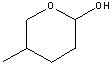
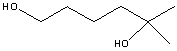
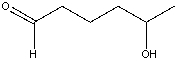
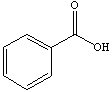
Deck 12: Alcohols From Carbonyl Compounds

Full screen (f)
exit full mode
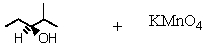
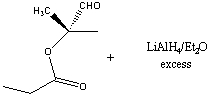
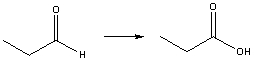
Question
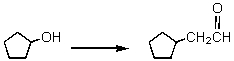
The following transformation would be considered a(n)? <strong>The following transformation would be considered a(n)?  </strong> A)Reduction B)Oxidation C)Addition D)Elimination E)Rearrangement <div style=padding-top: 35px>
A)Reduction
B)Oxidation
C)Addition
D)Elimination
E)Rearrangement
Use Space or
up arrow
down arrow
to flip the card.
Question
The following transformation would be considered a(n)? <strong>The following transformation would be considered a(n)?  </strong> A)Reduction B)Oxidation C)Addition D)Elimination E)Rearrangement <div style=padding-top: 35px>

A)Reduction
B)Oxidation
C)Addition
D)Elimination
E)Rearrangement
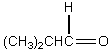
Question
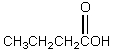
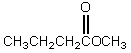
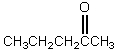
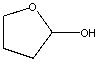
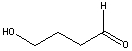
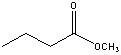
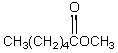
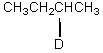
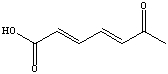
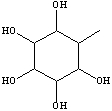
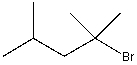
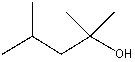
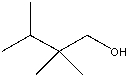
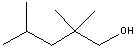
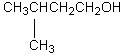
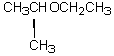
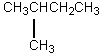
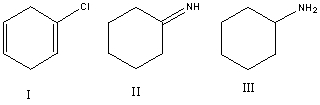
List the following compounds in order of increasing level of oxidation: <strong>List the following compounds in order of increasing level of oxidation:  </strong> A)I,II,III B)III,II,I C)II,I,III D)III,I,II E)I,III,II <div style=padding-top: 35px>

A)I,II,III
B)III,II,I
C)II,I,III
D)III,I,II
E)I,III,II
Question
When nucleophilic addition to a carbonyl group occurs,the carbon attacked undergoes this hybridization change:

A)sp2 \to sp3
B)sp \to sp2
C)sp \to sp3
D)sp3 \to sp2
E)sp2 \to sp
Question
The following transformation would be considered a(n)? <strong>The following transformation would be considered a(n)?  </strong> A)Reduction B)Oxidation C)Addition D)Elimination E)Rearrangement <div style=padding-top: 35px>

A)Reduction
B)Oxidation
C)Addition
D)Elimination
E)Rearrangement
Question
List the following compounds in order of increasing level of oxidation: <strong>List the following compounds in order of increasing level of oxidation:  </strong> A)I,II,III B)I,III,II C)II,I,III D)III,I,II E)III,II,I <div style=padding-top: 35px>

A)I,II,III
B)I,III,II
C)II,I,III
D)III,I,II
E)III,II,I
Question
The following transformation would be considered a(n)? <strong>The following transformation would be considered a(n)?  </strong> A)Reduction B)Oxidation C)Addition D)Elimination E)Rearrangement <div style=padding-top: 35px>

A)Reduction
B)Oxidation
C)Addition
D)Elimination
E)Rearrangement
Question
List the following compounds in order of increasing level of oxidation: <strong>List the following compounds in order of increasing level of oxidation:  </strong> A)I,II,III B)III,II,I C)II,I,III D)III,I,II E)I,III,II <div style=padding-top: 35px>

A)I,II,III
B)III,II,I
C)II,I,III
D)III,I,II
E)I,III,II
Question
Which of these transformations cannot be classified as a reduction?

A)RCH2Cl \to RCH3
B)RCH=CH2 \to RCH2CH3
C)RCOOH \to RCH2OH
D)  <strong>Which of these transformations cannot be classified as a reduction?</strong> A)RCH<sub>2</sub>Cl  \to  RCH<sub>3</sub> B)RCH=CH<sub>2</sub>  \to  RCH<sub>2</sub>CH<sub>3</sub> C)RCOOH  \to  RCH<sub>2</sub>OH D)   E)All of these are reductions. <div style=padding-top: 35px>
E)All of these are reductions.
Question
List the following compounds in order of increasing level of oxidation: <strong>List the following compounds in order of increasing level of oxidation:  </strong> A)I,II,III B)III,II,I C)II,I,III D)III,I,II E)I,III,II <div style=padding-top: 35px>

A)I,II,III
B)III,II,I
C)II,I,III
D)III,I,II
E)I,III,II
Question
Which reaction is an oxidation?

A)RCHO \to RCO2H
B)RCH2OH \to RCHO
C)RCH2OH \to RCO2H
D)None of these choices.
E)All of these choices.
Question
The following transformation would be considered a(n)? <strong>The following transformation would be considered a(n)?  </strong> A)Reduction B)Oxidation C)Addition D)Elimination E)Rearrangement <div style=padding-top: 35px>

A)Reduction
B)Oxidation
C)Addition
D)Elimination
E)Rearrangement
Question
List the following compounds in order of increasing level of oxidation: <strong>List the following compounds in order of increasing level of oxidation:  </strong> A)I,II,III B)III,II,I C)II,I,III D)III,I,II E)I,III,II <div style=padding-top: 35px>

A)I,II,III
B)III,II,I
C)II,I,III
D)III,I,II
E)I,III,II
Question
The following transformation would be considered a(n)? <strong>The following transformation would be considered a(n)?  </strong> A)Reduction B)Oxidation C)Addition D)Elimination E)Rearrangement <div style=padding-top: 35px>

A)Reduction
B)Oxidation
C)Addition
D)Elimination
E)Rearrangement
Question
The following transformation would be considered a(n)? <strong>The following transformation would be considered a(n)?  </strong> A)reduction B)oxidation C)addition D)elimination E)rearrangement <div style=padding-top: 35px>

A)reduction
B)oxidation
C)addition
D)elimination
E)rearrangement
Question
List the following compounds in order of increasing level of oxidation: <strong>List the following compounds in order of increasing level of oxidation:  </strong> A)I,II,III B)I,III,II C)II,I,III D)III,II,I E)III,I,II <div style=padding-top: 35px>

A)I,II,III
B)I,III,II
C)II,I,III
D)III,II,I
E)III,I,II
Question
List the following compounds in order of increasing level of oxidation: <strong>List the following compounds in order of increasing level of oxidation:  </strong> A)I,II,III B)III,II,I C)II,I,III D)III,I,II E)I,III,II <div style=padding-top: 35px>

A)I,II,III
B)III,II,I
C)II,I,III
D)III,I,II
E)I,III,II
Question
List the following compounds in order of increasing level of oxidation: <strong>List the following compounds in order of increasing level of oxidation:  </strong> A)I,II,III B)III,II,I C)II,I,III D)III,I,II E)I,III,II <div style=padding-top: 35px>

A)I,II,III
B)III,II,I
C)II,I,III
D)III,I,II
E)I,III,II
Question
List the following compounds in order of increasing level of oxidation: <strong>List the following compounds in order of increasing level of oxidation:  </strong> A)I,II,III B)III,II,I C)II,I,III D)III,I,II E)I,III,II <div style=padding-top: 35px>

A)I,II,III
B)III,II,I
C)II,I,III
D)III,I,II
E)I,III,II
Question
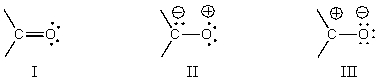
Which of the following resonance structures is not a significant contributor to the hybrid for the carbonyl group? <strong>Which of the following resonance structures is not a significant contributor to the hybrid for the carbonyl group?  </strong> A)I B)II C)III D)Neither II nor III is important. E)All are significant contributors. <div style=padding-top: 35px>

A)I
B)II
C)III
D)Neither II nor III is important.
E)All are significant contributors.
Question
Which of the reagents listed below would efficiently accomplish the transformation of CH3CH2CH=CHCH2CH2CH2OH into CH3CH2CH=CHCH2CH2CHO?

A)KMnO4,OH-
B)CrO3 / H2SO4
C)PCC in CH2Cl2
D)(i)(COCl)2,DMSO,-60 oC,(ii)Et3N
E)Two of these choices.
Question
Which of these compounds will not be reduced by LiAlH4?

A)CH3CH2CH2CH=CH2
B) <strong>Which of these compounds will not be reduced by LiAlH<sub>4</sub>?</strong> A)CH<sub>3</sub>CH<sub>2</sub>CH<sub>2</sub>CH=CH<sub>2</sub> B)   C)   D)   E)   <div style=padding-top: 35px>
C) <strong>Which of these compounds will not be reduced by LiAlH<sub>4</sub>?</strong> A)CH<sub>3</sub>CH<sub>2</sub>CH<sub>2</sub>CH=CH<sub>2</sub> B)   C)   D)   E)   <div style=padding-top: 35px>
D) <strong>Which of these compounds will not be reduced by LiAlH<sub>4</sub>?</strong> A)CH<sub>3</sub>CH<sub>2</sub>CH<sub>2</sub>CH=CH<sub>2</sub> B)   C)   D)   E)   <div style=padding-top: 35px>
E) <strong>Which of these compounds will not be reduced by LiAlH<sub>4</sub>?</strong> A)CH<sub>3</sub>CH<sub>2</sub>CH<sub>2</sub>CH=CH<sub>2</sub> B)   C)   D)   E)   <div style=padding-top: 35px>
Question
List the following alkyl halides in order of increasing ease of Grignard formation: <strong>List the following alkyl halides in order of increasing ease of Grignard formation:  </strong> A)I,II,III,IV B)III,I,II,IV C)IV,II,I,III D)III,I,IV,II E)I,IV,III,II <div style=padding-top: 35px>

A)I,II,III,IV
B)III,I,II,IV
C)IV,II,I,III
D)III,I,IV,II
E)I,IV,III,II
Question
Select the correct reagent(s)for the following reaction: <strong>Select the correct reagent(s)for the following reaction:  </strong> A)LiAlH<sub>4</sub>/ether; then H<sub>3</sub>O<sup>+</sup> B)NaBH<sub>4</sub>; then H<sub>3</sub>O<sup>+</sup> C)H<sub>2</sub> with Pt/C D)Two of these choices. E)All of these choices. <div style=padding-top: 35px>

A)LiAlH4/ether; then H3O+
B)NaBH4; then H3O+
C)H2 with Pt/C
D)Two of these choices.
E)All of these choices.
Question
Select the correct reagent(s)for the following reaction: <strong>Select the correct reagent(s)for the following reaction:  </strong> A)LiAlH<sub>4</sub>/ether; then H<sub>3</sub>O<sup>+</sup> B)NaBH<sub>4</sub>; then H<sub>3</sub>O<sup>+</sup> C)H<sub>2</sub> with Pt/C D)Two of these choices. E)All of these choices. <div style=padding-top: 35px>

A)LiAlH4/ether; then H3O+
B)NaBH4; then H3O+
C)H2 with Pt/C
D)Two of these choices.
E)All of these choices.
Question
Which of the reagents listed below would efficiently accomplish the transformation of CH3CH2CH=CHCH2CH2CHO into CH3CH2CH2CH2CH2CH2CH2OH?

A)KMnO4
B)NaBH4
C)Br2 in CCl4
D)H2,Ni
E)Two of these choices.
Question
Which of the reagents listed below would efficiently accomplish the transformation of 3-methyl-3-cyclopentenone into 3-methyl-3-cyclopentenol? <strong>Which of the reagents listed below would efficiently accomplish the transformation of 3-methyl-3-cyclopentenone into 3-methyl-3-cyclopentenol?  </strong> A)i)LiAlH<sub>4</sub>; ii)H<sub>2</sub>O B)NaBH<sub>4</sub>,H<sub>2</sub>O C)H<sub>2</sub>,Pd D)More than one of these choices. <div style=padding-top: 35px>

A)i)LiAlH4; ii)H2O
B)NaBH4,H2O
C)H2,Pd
D)More than one of these choices.
Question
In the reaction of carbonyl compounds with LiAlH4,the effective reducing species is:

A)Li+
B)Al+3
C)AlH4-
D)AlH3
E)H-
Question
Which reagent(s)would you use to convert CH3(CH2)6CO2H to CH3(CH2)6CH2OH?

A)NaBH4/H2O
B)LiAlH4/ether,then H3O+
C)PCC/CH2Cl2
D)Zn,H3O+
E)H2,Pt
Question
Which product is formed from the following transformation: <strong>Which product is formed from the following transformation:  </strong> A)   B)   C)   D)   E)   <div style=padding-top: 35px>

A)
<strong>Which product is formed from the following transformation:  </strong> A)   B)   C)   D)   E)   <div style=padding-top: 35px>
B)
<strong>Which product is formed from the following transformation:  </strong> A)   B)   C)   D)   E)   <div style=padding-top: 35px>
C)
<strong>Which product is formed from the following transformation:  </strong> A)   B)   C)   D)   E)   <div style=padding-top: 35px>
D)
<strong>Which product is formed from the following transformation:  </strong> A)   B)   C)   D)   E)   <div style=padding-top: 35px>
E)
<strong>Which product is formed from the following transformation:  </strong> A)   B)   C)   D)   E)   <div style=padding-top: 35px>
Question
Which of the reagents listed below would efficiently accomplish the transformation of CH3CH2CH=CHCH2CH2CHO into CH3CH2CH=CHCH2CH2CH2OH?

A)KMnO4
B)NaBH4
C)Br2 in CCl4
D)H2,Ni
E)Two of these choices.
Question
Which of the reagents listed below would efficiently accomplish the transformation of CH3CH2CH=CHCH2CH2CH2OH into CH3CH2CH=CHCH2CH2CHO?

A)KMnO4(aq,alkaline)
B)CrO3 / H2SO4
C)PCC in CH2Cl2
D)Br2,CCl4
E)Two of these choices.
Question
The following transformation would be considered a(n)? <strong>The following transformation would be considered a(n)?  </strong> A)reduction B)oxidation C)addition D)elimination E)rearrangement <div style=padding-top: 35px>

A)reduction
B)oxidation
C)addition
D)elimination
E)rearrangement
Question
Which of these compounds cannot be reduced by sodium borohydride?

A) <strong>Which of these compounds cannot be reduced by sodium borohydride?</strong> A)   B)   C)   D)   E)Two of these choices cannot be reduced. <div style=padding-top: 35px>
B) <strong>Which of these compounds cannot be reduced by sodium borohydride?</strong> A)   B)   C)   D)   E)Two of these choices cannot be reduced. <div style=padding-top: 35px>
C) <strong>Which of these compounds cannot be reduced by sodium borohydride?</strong> A)   B)   C)   D)   E)Two of these choices cannot be reduced. <div style=padding-top: 35px>
D) <strong>Which of these compounds cannot be reduced by sodium borohydride?</strong> A)   B)   C)   D)   E)Two of these choices cannot be reduced. <div style=padding-top: 35px>
E)Two of these choices cannot be reduced.
Question
Which of the reagents listed below would efficiently accomplish the transformation of CH3CH2C≡CCH2CH2CHO into CH3CH2C≡CCH2CH2CH2OH?

A)KMnO4
B)NaBH4
C)Br2 in CCl4
D)H2,Ni
E)Two of these choices.
Question
The following transformation would be considered a(n)? <strong>The following transformation would be considered a(n)?  </strong> A)reduction B)oxidation C)addition D)elimination E)rearrangement <div style=padding-top: 35px>

A)reduction
B)oxidation
C)addition
D)elimination
E)rearrangement
Question
Which reagent(s)is/are capable of reducing the following ester to a primary alcohol? <strong>Which reagent(s)is/are capable of reducing the following ester to a primary alcohol?  </strong> A)LiAlH<sub>4 </sub>/ ether B)NaBH<sub>4 </sub>/ H<sub>2</sub>O C)Na / C<sub>2</sub>H<sub>5</sub>OH D)H<sub>2</sub> / Ni,atmospheric pressure E)All can be used successfully. <div style=padding-top: 35px>

A)LiAlH4 / ether
B)NaBH4 / H2O
C)Na / C2H5OH
D)H2 / Ni,atmospheric pressure
E)All can be used successfully.
Question
Which of the reagents listed below would efficiently accomplish the transformation of CH3CH2CH=CHCH2CH2CH2OH into CH3CH2CH=CHCH2CH2CHO?

A)KMnO4,OH-
B)CrO3 / H2SO4
C)(i)(COCl)2,DMSO,-60 oC,(ii)Et3N
D)Br2,CCl4
E)Two of these choices.
Question
Which of the reagents listed below would efficiently accomplish the transformation of 2-methyl-3-cyclopentenol into 2-methyl-3-cyclopentenone? <strong>Which of the reagents listed below would efficiently accomplish the transformation of 2-methyl-3-cyclopentenol into 2-methyl-3-cyclopentenone?  </strong> A)KMnO<sub>4</sub>(aq,alkaline) B)CrO<sub>3</sub>/H<sub>2</sub>SO<sub>4</sub> C)H<sub>2</sub>,Pt D)Br<sub>2</sub>,CCl<sub>4</sub> E)Two of these choices. <div style=padding-top: 35px>

A)KMnO4(aq,alkaline)
B)CrO3/H2SO4
C)H2,Pt
D)Br2,CCl4
E)Two of these choices.
Question
Which of the reagents listed below would efficiently accomplish the transformation of ethyl-3-pentenoate into 3-penten-1-ol? <strong>Which of the reagents listed below would efficiently accomplish the transformation of ethyl-3-pentenoate into 3-penten-1-ol?  </strong> A)i)LiAlH<sub>4</sub>; ii)H<sub>2</sub>O B)NaBH<sub>4</sub>,H<sub>2</sub>O C)H<sub>2</sub>,Pd D)Two of these choices. E)All of these choices. <div style=padding-top: 35px>

A)i)LiAlH4; ii)H2O
B)NaBH4,H2O
C)H2,Pd
D)Two of these choices.
E)All of these choices.
Question
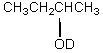
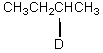
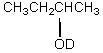
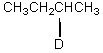
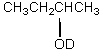
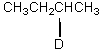
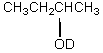
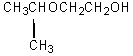
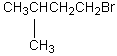
What would be the product,A,of the following reaction sequence? <strong>What would be the product,A,of the following reaction sequence?  </strong> A)CH<sub>3</sub>CH<sub>2</sub>CH<sub>2</sub>CH<sub>3</sub> B)   C)   D)CH<sub>3</sub>CH<sub>2</sub>CH<sub>2</sub>CH<sub>2</sub>OD E)CH<sub>3</sub>CH<sub>2</sub>CH<sub>2</sub>CH<sub>2</sub>D <div style=padding-top: 35px>

A)CH3CH2CH2CH3
B) <strong>What would be the product,A,of the following reaction sequence?  </strong> A)CH<sub>3</sub>CH<sub>2</sub>CH<sub>2</sub>CH<sub>3</sub> B)   C)   D)CH<sub>3</sub>CH<sub>2</sub>CH<sub>2</sub>CH<sub>2</sub>OD E)CH<sub>3</sub>CH<sub>2</sub>CH<sub>2</sub>CH<sub>2</sub>D <div style=padding-top: 35px>
C) <strong>What would be the product,A,of the following reaction sequence?  </strong> A)CH<sub>3</sub>CH<sub>2</sub>CH<sub>2</sub>CH<sub>3</sub> B)   C)   D)CH<sub>3</sub>CH<sub>2</sub>CH<sub>2</sub>CH<sub>2</sub>OD E)CH<sub>3</sub>CH<sub>2</sub>CH<sub>2</sub>CH<sub>2</sub>D <div style=padding-top: 35px>
D)CH3CH2CH2CH2OD
E)CH3CH2CH2CH2D
Question
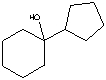
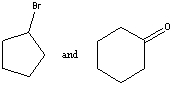
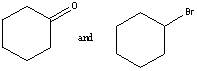
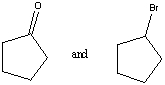
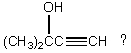
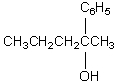
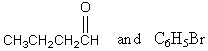
Your task is to synthesize <strong>Your task is to synthesize   through a Grignard synthesis.Which pairs of compounds listed below would you choose as starting materials?</strong> A)   B)   C)   D)   E)None of these choices. <div style=padding-top: 35px> through a Grignard synthesis.Which pairs of compounds listed below would you choose as starting materials?

A) <strong>Your task is to synthesize   through a Grignard synthesis.Which pairs of compounds listed below would you choose as starting materials?</strong> A)   B)   C)   D)   E)None of these choices. <div style=padding-top: 35px>
B) <strong>Your task is to synthesize   through a Grignard synthesis.Which pairs of compounds listed below would you choose as starting materials?</strong> A)   B)   C)   D)   E)None of these choices. <div style=padding-top: 35px>
C) <strong>Your task is to synthesize   through a Grignard synthesis.Which pairs of compounds listed below would you choose as starting materials?</strong> A)   B)   C)   D)   E)None of these choices. <div style=padding-top: 35px>
D) <strong>Your task is to synthesize   through a Grignard synthesis.Which pairs of compounds listed below would you choose as starting materials?</strong> A)   B)   C)   D)   E)None of these choices. <div style=padding-top: 35px>
E)None of these choices.
Question
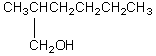
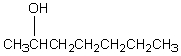
What is the major product from the reaction of 2-hexanol with H2CrO4?

A)CH3CO2H
B)CH3(CH2)3CO2H
C) <strong>What is the major product from the reaction of 2-hexanol with H<sub>2</sub>CrO<sub>4</sub>?</strong> A)CH<sub>3</sub>CO<sub>2</sub>H B)CH<sub>3</sub>(CH<sub>2</sub>)<sub>3</sub>CO<sub>2</sub>H C)   D)CH<sub>3</sub>(CH<sub>2</sub>)<sub>4</sub>CO<sub>2</sub>H E)Two of these choices. <div style=padding-top: 35px>
D)CH3(CH2)4CO2H
E)Two of these choices.
Question
Which method would give <strong>Which method would give  </strong> A)   B)   C)   D)More than one of these choices. E)None of these choices. <div style=padding-top: 35px>

A) <strong>Which method would give  </strong> A)   B)   C)   D)More than one of these choices. E)None of these choices. <div style=padding-top: 35px>
B) <strong>Which method would give  </strong> A)   B)   C)   D)More than one of these choices. E)None of these choices. <div style=padding-top: 35px>
C) <strong>Which method would give  </strong> A)   B)   C)   D)More than one of these choices. E)None of these choices. <div style=padding-top: 35px>
D)More than one of these choices.
E)None of these choices.
Question
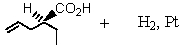
Which reaction leads to an optically active product?

A) <strong>Which reaction leads to an optically active product?</strong> A)   B)   C)   D)   E)   <div style=padding-top: 35px>
B) <strong>Which reaction leads to an optically active product?</strong> A)   B)   C)   D)   E)   <div style=padding-top: 35px>
C) <strong>Which reaction leads to an optically active product?</strong> A)   B)   C)   D)   E)   <div style=padding-top: 35px>
D) <strong>Which reaction leads to an optically active product?</strong> A)   B)   C)   D)   E)   <div style=padding-top: 35px>
E)
<strong>Which reaction leads to an optically active product?</strong> A)   B)   C)   D)   E)   <div style=padding-top: 35px>
Question
Which reagent(s)is/are capable of reducing the following ester to an aldehyde? <strong>Which reagent(s)is/are capable of reducing the following ester to an aldehyde?  </strong> A)LiAlH<sub>4 </sub>/ ether B)NaBH<sub>4 </sub>/ H<sub>2</sub>O C)Na / C<sub>2</sub>H<sub>5</sub>OH D)H<sub>2</sub> / Ni,atmospheric pressure E)None of these choices can be used successfully. <div style=padding-top: 35px>

A)LiAlH4 / ether
B)NaBH4 / H2O
C)Na / C2H5OH
D)H2 / Ni,atmospheric pressure
E)None of these choices can be used successfully.
Question
What would be the product,O,of the following reaction sequence? <strong>What would be the product,O,of the following reaction sequence?  </strong> A)CH<sub>3</sub>CH<sub>2</sub>CH<sub>2</sub>CH<sub>3</sub> B)   C)   D)CH<sub>3</sub>CH<sub>2</sub>CH<sub>2</sub>CH<sub>2</sub>OD E)CH<sub>3</sub>CH<sub>2</sub>CH<sub>2</sub>CH<sub>2</sub>D <div style=padding-top: 35px>

A)CH3CH2CH2CH3
B) <strong>What would be the product,O,of the following reaction sequence?  </strong> A)CH<sub>3</sub>CH<sub>2</sub>CH<sub>2</sub>CH<sub>3</sub> B)   C)   D)CH<sub>3</sub>CH<sub>2</sub>CH<sub>2</sub>CH<sub>2</sub>OD E)CH<sub>3</sub>CH<sub>2</sub>CH<sub>2</sub>CH<sub>2</sub>D <div style=padding-top: 35px>
C) <strong>What would be the product,O,of the following reaction sequence?  </strong> A)CH<sub>3</sub>CH<sub>2</sub>CH<sub>2</sub>CH<sub>3</sub> B)   C)   D)CH<sub>3</sub>CH<sub>2</sub>CH<sub>2</sub>CH<sub>2</sub>OD E)CH<sub>3</sub>CH<sub>2</sub>CH<sub>2</sub>CH<sub>2</sub>D <div style=padding-top: 35px>
D)CH3CH2CH2CH2OD
E)CH3CH2CH2CH2D
Question
Which product is formed from the following transformation: <strong>Which product is formed from the following transformation:  </strong> A)   B)   C)   D)   E)None of these choices. <div style=padding-top: 35px>

A)
<strong>Which product is formed from the following transformation:  </strong> A)   B)   C)   D)   E)None of these choices. <div style=padding-top: 35px>
B)
<strong>Which product is formed from the following transformation:  </strong> A)   B)   C)   D)   E)None of these choices. <div style=padding-top: 35px>
C)
<strong>Which product is formed from the following transformation:  </strong> A)   B)   C)   D)   E)None of these choices. <div style=padding-top: 35px>
D)
<strong>Which product is formed from the following transformation:  </strong> A)   B)   C)   D)   E)None of these choices. <div style=padding-top: 35px>
E)None of these choices.
Question
What is the major product from the reaction of toluene with KMnO4?

A) <strong>What is the major product from the reaction of toluene with KMnO<sub>4</sub>?</strong> A)   B)   C)   D)   E)   <div style=padding-top: 35px>
B) <strong>What is the major product from the reaction of toluene with KMnO<sub>4</sub>?</strong> A)   B)   C)   D)   E)   <div style=padding-top: 35px>
C) <strong>What is the major product from the reaction of toluene with KMnO<sub>4</sub>?</strong> A)   B)   C)   D)   E)   <div style=padding-top: 35px>
D) <strong>What is the major product from the reaction of toluene with KMnO<sub>4</sub>?</strong> A)   B)   C)   D)   E)   <div style=padding-top: 35px>
E) <strong>What is the major product from the reaction of toluene with KMnO<sub>4</sub>?</strong> A)   B)   C)   D)   E)   <div style=padding-top: 35px>
Question
What is the major product from the reaction of 2-hexanol with PCC in CH2Cl2?

A)CH3CO2H
B)CH3(CH2)3CO2H
C) <strong>What is the major product from the reaction of 2-hexanol with PCC in CH<sub>2</sub>Cl<sub>2</sub>?</strong> A)CH<sub>3</sub>CO<sub>2</sub>H B)CH<sub>3</sub>(CH<sub>2</sub>)<sub>3</sub>CO<sub>2</sub>H C)   D)CH<sub>3</sub>(CH<sub>2</sub>)<sub>4</sub>CO<sub>2</sub>H E)Two of these choices. <div style=padding-top: 35px>
D)CH3(CH2)4CO2H
E)Two of these choices.
Question
Which of the following synthetic procedures would be employed most effectively to transform ethanol into ethyl propyl ether?

A)Ethanol + HBr,then Mg/ether,then H3O+,then NaH,then CH3CH2Br
B)Ethanol + HBr,then Mg/ether,then HCHO,then H3O+,then NaH,then CH3CH2Br
C)Ethanol + CH3CH2CH2OH + H2SO4/140 \circ C
D)Ethanol + NaH,then HCHO,then H3O+,then HBr,then Mg/ether,then CH3CH2CH2Br
E)Ethanol + H2SO4/180 °C,then CH3CH2CH2Br
Question
Your task is to synthesize <strong>Your task is to synthesize   through a Grignard synthesis.Which pairs of compounds listed below would you choose as starting materials?</strong> A)   B)   C)   D)More than one of these choices. E)None of these choices. <div style=padding-top: 35px> through a Grignard synthesis.Which pairs of compounds listed below would you choose as starting materials?

A) <strong>Your task is to synthesize   through a Grignard synthesis.Which pairs of compounds listed below would you choose as starting materials?</strong> A)   B)   C)   D)More than one of these choices. E)None of these choices. <div style=padding-top: 35px>
B) <strong>Your task is to synthesize   through a Grignard synthesis.Which pairs of compounds listed below would you choose as starting materials?</strong> A)   B)   C)   D)More than one of these choices. E)None of these choices. <div style=padding-top: 35px>
C) <strong>Your task is to synthesize   through a Grignard synthesis.Which pairs of compounds listed below would you choose as starting materials?</strong> A)   B)   C)   D)More than one of these choices. E)None of these choices. <div style=padding-top: 35px>
D)More than one of these choices.
E)None of these choices.
Question
What would be the product,A,of the following reaction? <strong>What would be the product,A,of the following reaction?  </strong> A)   B)   C)   D)   E)   <div style=padding-top: 35px>

A) <strong>What would be the product,A,of the following reaction?  </strong> A)   B)   C)   D)   E)   <div style=padding-top: 35px>
B) <strong>What would be the product,A,of the following reaction?  </strong> A)   B)   C)   D)   E)   <div style=padding-top: 35px>
C) <strong>What would be the product,A,of the following reaction?  </strong> A)   B)   C)   D)   E)   <div style=padding-top: 35px>
D) <strong>What would be the product,A,of the following reaction?  </strong> A)   B)   C)   D)   E)   <div style=padding-top: 35px>
E) <strong>What would be the product,A,of the following reaction?  </strong> A)   B)   C)   D)   E)   <div style=padding-top: 35px>
Question
How could the following synthesis be accomplished? <strong>How could the following synthesis be accomplished?  </strong> A)(1)SOCl<sub>2</sub>,(2)Mg,ether,(3)   then H<sub>3</sub>O<sup>+</sup> B)(1)SOCl<sub>2</sub>,(2)Li,ether,(3)(CH<sub>3</sub>CH<sub>2</sub>)<sub>2</sub>CuLi,(4)KMnO<sub>4</sub>,OH<sup>-</sup> C)1)PBr<sub>3</sub>,(2)Mg,ether,(3)   then H<sub>3</sub>O<sup>+</sup> (4)PCC,CH<sub>2</sub>Cl<sub>2</sub> D)More than one of these choices. E)None of these choices. <div style=padding-top: 35px>

A)(1)SOCl2,(2)Mg,ether,(3) <strong>How could the following synthesis be accomplished?  </strong> A)(1)SOCl<sub>2</sub>,(2)Mg,ether,(3)   then H<sub>3</sub>O<sup>+</sup> B)(1)SOCl<sub>2</sub>,(2)Li,ether,(3)(CH<sub>3</sub>CH<sub>2</sub>)<sub>2</sub>CuLi,(4)KMnO<sub>4</sub>,OH<sup>-</sup> C)1)PBr<sub>3</sub>,(2)Mg,ether,(3)   then H<sub>3</sub>O<sup>+</sup> (4)PCC,CH<sub>2</sub>Cl<sub>2</sub> D)More than one of these choices. E)None of these choices. <div style=padding-top: 35px> then H3O+
B)(1)SOCl2,(2)Li,ether,(3)(CH3CH2)2CuLi,(4)KMnO4,OH-
C)1)PBr3,(2)Mg,ether,(3) <strong>How could the following synthesis be accomplished?  </strong> A)(1)SOCl<sub>2</sub>,(2)Mg,ether,(3)   then H<sub>3</sub>O<sup>+</sup> B)(1)SOCl<sub>2</sub>,(2)Li,ether,(3)(CH<sub>3</sub>CH<sub>2</sub>)<sub>2</sub>CuLi,(4)KMnO<sub>4</sub>,OH<sup>-</sup> C)1)PBr<sub>3</sub>,(2)Mg,ether,(3)   then H<sub>3</sub>O<sup>+</sup> (4)PCC,CH<sub>2</sub>Cl<sub>2</sub> D)More than one of these choices. E)None of these choices. <div style=padding-top: 35px> then H3O+ (4)PCC,CH2Cl2
D)More than one of these choices.
E)None of these choices.
Question
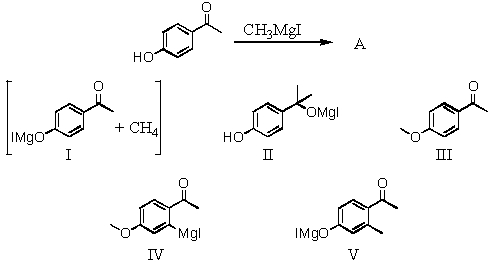
What is the principal product(s)formed when 1 mol of methylmagnesium iodide reacts with 1 mol of p-hydroxyacetophenone? <strong>What is the principal product(s)formed when 1 mol of methylmagnesium iodide reacts with 1 mol of p-hydroxyacetophenone?  </strong> A)I B)II C)III D)IV E)V <div style=padding-top: 35px>

A)I
B)II
C)III
D)IV
E)V
Question
What is the major product from the reaction of 2-hexanol with Na2Cr2O7/H+?

A)CH3CO2H
B)CH3(CH2)3CO2H
C) <strong>What is the major product from the reaction of 2-hexanol with Na<sub>2</sub>Cr<sub>2</sub>O<sub>7</sub>/H<sup>+</sup>?</strong> A)CH<sub>3</sub>CO<sub>2</sub>H B)CH<sub>3</sub>(CH<sub>2</sub>)<sub>3</sub>CO<sub>2</sub>H C)   D)CH<sub>3</sub>(CH<sub>2</sub>)<sub>4</sub>CO<sub>2</sub>H E)Two of these choices. <div style=padding-top: 35px>
D)CH3(CH2)4CO2H
E)Two of these choices.
Question
What compound(s)result(s)from the reaction of CH3CH2CH2MgBr with CH3CH2CH2CH2CO2H (1:1 mole ratio)?

A) <strong>What compound(s)result(s)from the reaction of CH<sub>3</sub>CH<sub>2</sub>CH<sub>2</sub>MgBr with CH<sub>3</sub>CH<sub>2</sub>CH<sub>2</sub>CH<sub>2</sub>CO<sub>2</sub>H (1:1 mole ratio)?</strong> A)   B)   C)   D)CH<sub>3</sub>CH<sub>2</sub>CH<sub>3</sub> + CH<sub>3</sub>CH<sub>2</sub>CH<sub>2</sub>CH<sub>2</sub>CO<sub>2</sub>MgBr E)   <div style=padding-top: 35px>
B) <strong>What compound(s)result(s)from the reaction of CH<sub>3</sub>CH<sub>2</sub>CH<sub>2</sub>MgBr with CH<sub>3</sub>CH<sub>2</sub>CH<sub>2</sub>CH<sub>2</sub>CO<sub>2</sub>H (1:1 mole ratio)?</strong> A)   B)   C)   D)CH<sub>3</sub>CH<sub>2</sub>CH<sub>3</sub> + CH<sub>3</sub>CH<sub>2</sub>CH<sub>2</sub>CH<sub>2</sub>CO<sub>2</sub>MgBr E)   <div style=padding-top: 35px>
C) <strong>What compound(s)result(s)from the reaction of CH<sub>3</sub>CH<sub>2</sub>CH<sub>2</sub>MgBr with CH<sub>3</sub>CH<sub>2</sub>CH<sub>2</sub>CH<sub>2</sub>CO<sub>2</sub>H (1:1 mole ratio)?</strong> A)   B)   C)   D)CH<sub>3</sub>CH<sub>2</sub>CH<sub>3</sub> + CH<sub>3</sub>CH<sub>2</sub>CH<sub>2</sub>CH<sub>2</sub>CO<sub>2</sub>MgBr E)   <div style=padding-top: 35px>
D)CH3CH2CH3 + CH3CH2CH2CH2CO2MgBr
E) <strong>What compound(s)result(s)from the reaction of CH<sub>3</sub>CH<sub>2</sub>CH<sub>2</sub>MgBr with CH<sub>3</sub>CH<sub>2</sub>CH<sub>2</sub>CH<sub>2</sub>CO<sub>2</sub>H (1:1 mole ratio)?</strong> A)   B)   C)   D)CH<sub>3</sub>CH<sub>2</sub>CH<sub>3</sub> + CH<sub>3</sub>CH<sub>2</sub>CH<sub>2</sub>CH<sub>2</sub>CO<sub>2</sub>MgBr E)   <div style=padding-top: 35px>
Question
What is the major product from the reaction of 2-hexanol with KMnO4?

A)CH3CO2H
B)CH3(CH2)3CO2H
C) <strong>What is the major product from the reaction of 2-hexanol with KMnO<sub>4</sub>?</strong> A)CH<sub>3</sub>CO<sub>2</sub>H B)CH<sub>3</sub>(CH<sub>2</sub>)<sub>3</sub>CO<sub>2</sub>H C)   D)CH<sub>3</sub>(CH<sub>2</sub>)<sub>4</sub>CO<sub>2</sub>H E)Two of these choices. <div style=padding-top: 35px>
D)CH3(CH2)4CO2H
E)Two of these choices.
Question
What is the principal product(s)formed when 1 mol of methylmagnesium iodide reacts with 1 mol of p-acetylbenzoic acid? <strong>What is the principal product(s)formed when 1 mol of methylmagnesium iodide reacts with 1 mol of p-acetylbenzoic acid?  </strong> A)I B)II C)III D)IV E)V <div style=padding-top: 35px>

A)I
B)II
C)III
D)IV
E)V
Question
What would be the product,A,of the following reaction sequence? <strong>What would be the product,A,of the following reaction sequence?  </strong> A)CH<sub>3</sub>CH<sub>2</sub>CH<sub>2</sub>CH<sub>3</sub> B)   C)   D)CH<sub>3</sub>CH<sub>2</sub>CH<sub>2</sub>CH<sub>2</sub>OD E)CH<sub>3</sub>CH<sub>2</sub>CH<sub>2</sub>CH<sub>2</sub>D <div style=padding-top: 35px>

A)CH3CH2CH2CH3
B) <strong>What would be the product,A,of the following reaction sequence?  </strong> A)CH<sub>3</sub>CH<sub>2</sub>CH<sub>2</sub>CH<sub>3</sub> B)   C)   D)CH<sub>3</sub>CH<sub>2</sub>CH<sub>2</sub>CH<sub>2</sub>OD E)CH<sub>3</sub>CH<sub>2</sub>CH<sub>2</sub>CH<sub>2</sub>D <div style=padding-top: 35px>
C) <strong>What would be the product,A,of the following reaction sequence?  </strong> A)CH<sub>3</sub>CH<sub>2</sub>CH<sub>2</sub>CH<sub>3</sub> B)   C)   D)CH<sub>3</sub>CH<sub>2</sub>CH<sub>2</sub>CH<sub>2</sub>OD E)CH<sub>3</sub>CH<sub>2</sub>CH<sub>2</sub>CH<sub>2</sub>D <div style=padding-top: 35px>
D)CH3CH2CH2CH2OD
E)CH3CH2CH2CH2D
Question
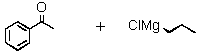
What is the principal product of the following reaction:  <strong>What is the principal product of the following reaction:   + CH<sub>3</sub>CH<sub>2</sub>CH<sub>2</sub>CH<sub>2</sub>MgBr/ether; then H<sub>2</sub>O  \to  ?</strong> A)   B)   C)   D)   E)   <div style=padding-top: 35px>  + CH3CH2CH2CH2MgBr/ether; then H2O \to ?

A)  <strong>What is the principal product of the following reaction:   + CH<sub>3</sub>CH<sub>2</sub>CH<sub>2</sub>CH<sub>2</sub>MgBr/ether; then H<sub>2</sub>O  \to  ?</strong> A)   B)   C)   D)   E)   <div style=padding-top: 35px>
B)  <strong>What is the principal product of the following reaction:   + CH<sub>3</sub>CH<sub>2</sub>CH<sub>2</sub>CH<sub>2</sub>MgBr/ether; then H<sub>2</sub>O  \to  ?</strong> A)   B)   C)   D)   E)   <div style=padding-top: 35px>
C)  <strong>What is the principal product of the following reaction:   + CH<sub>3</sub>CH<sub>2</sub>CH<sub>2</sub>CH<sub>2</sub>MgBr/ether; then H<sub>2</sub>O  \to  ?</strong> A)   B)   C)   D)   E)   <div style=padding-top: 35px>
D)  <strong>What is the principal product of the following reaction:   + CH<sub>3</sub>CH<sub>2</sub>CH<sub>2</sub>CH<sub>2</sub>MgBr/ether; then H<sub>2</sub>O  \to  ?</strong> A)   B)   C)   D)   E)   <div style=padding-top: 35px>
E)  <strong>What is the principal product of the following reaction:   + CH<sub>3</sub>CH<sub>2</sub>CH<sub>2</sub>CH<sub>2</sub>MgBr/ether; then H<sub>2</sub>O  \to  ?</strong> A)   B)   C)   D)   E)   <div style=padding-top: 35px>
Question
What is (are)the principal product(s)formed when 1 mol of ethylmagnesium bromide reacts with 1 mol of 3-(N-methylamino)cyclopentanone? <strong>What is (are)the principal product(s)formed when 1 mol of ethylmagnesium bromide reacts with 1 mol of 3-(N-methylamino)cyclopentanone?  </strong> A)I B)II C)III D)IV E)V <div style=padding-top: 35px>

A)I
B)II
C)III
D)IV
E)V
Question
Predict the product(s)of the following reaction: <strong>Predict the product(s)of the following reaction:  </strong> A)A mixture of I and II B)A mixture of I and III C)A mixture of II and III D)A mixture of II and IV E)A mixture of III and IV <div style=padding-top: 35px>

A)A mixture of I and II
B)A mixture of I and III
C)A mixture of II and III
D)A mixture of II and IV
E)A mixture of III and IV
Question
What is the product,A,that would be obtained from the following reaction sequence? <strong>What is the product,A,that would be obtained from the following reaction sequence?  </strong> A)I B)II C)III D)IV E)V <div style=padding-top: 35px>

A)I
B)II
C)III
D)IV
E)V
Question
What would be the final product,D,in the following reaction sequence? <strong>What would be the final product,D,in the following reaction sequence?  </strong> A)I B)II C)III D)IV E)V <div style=padding-top: 35px>

A)I
B)II
C)III
D)IV
E)V
Question
The final product,D,in the following reaction sequence <strong>The final product,D,in the following reaction sequence   , would be:</strong> A)   B)   C)   D)   E)   <div style=padding-top: 35px> , would be:

A) <strong>The final product,D,in the following reaction sequence   , would be:</strong> A)   B)   C)   D)   E)   <div style=padding-top: 35px>
B) <strong>The final product,D,in the following reaction sequence   , would be:</strong> A)   B)   C)   D)   E)   <div style=padding-top: 35px>
C) <strong>The final product,D,in the following reaction sequence   , would be:</strong> A)   B)   C)   D)   E)   <div style=padding-top: 35px>
D) <strong>The final product,D,in the following reaction sequence   , would be:</strong> A)   B)   C)   D)   E)   <div style=padding-top: 35px>
E) <strong>The final product,D,in the following reaction sequence   , would be:</strong> A)   B)   C)   D)   E)   <div style=padding-top: 35px>
Question
The final product,B,in the following reaction sequence, <strong>The final product,B,in the following reaction sequence,   ,would be?</strong> A)   B)   C)   D)   E)   <div style=padding-top: 35px> ,would be?

A) <strong>The final product,B,in the following reaction sequence,   ,would be?</strong> A)   B)   C)   D)   E)   <div style=padding-top: 35px>
B) <strong>The final product,B,in the following reaction sequence,   ,would be?</strong> A)   B)   C)   D)   E)   <div style=padding-top: 35px>
C) <strong>The final product,B,in the following reaction sequence,   ,would be?</strong> A)   B)   C)   D)   E)   <div style=padding-top: 35px>
D) <strong>The final product,B,in the following reaction sequence,   ,would be?</strong> A)   B)   C)   D)   E)   <div style=padding-top: 35px>
E) <strong>The final product,B,in the following reaction sequence,   ,would be?</strong> A)   B)   C)   D)   E)   <div style=padding-top: 35px>
Question
When 1-pentanol is treated with alkaline potassium permanganate,

A)the color changes from orange to blue.
B)the color changes from purple to colorless.
C)the color changes from blue to red.
D)the color changes from orange to green.
E)the color changes from green to orange.
Question
What would be the final product,D,in the following reaction sequence? <strong>What would be the final product,D,in the following reaction sequence?  </strong> A)I B)II C)III D)IV E)V <div style=padding-top: 35px>

A)I
B)II
C)III
D)IV
E)V
Question
What is the product,A,that would be obtained from the following reaction sequence? <strong>What is the product,A,that would be obtained from the following reaction sequence?    </strong> A)I B)II C)III D)IV E)V <div style=padding-top: 35px> <strong>What is the product,A,that would be obtained from the following reaction sequence?    </strong> A)I B)II C)III D)IV E)V <div style=padding-top: 35px>

A)I
B)II
C)III
D)IV
E)V
Question
What is the product,A,that would be obtained from the following reaction sequence? <strong>What is the product,A,that would be obtained from the following reaction sequence?  </strong> A)I B)II C)III D)IV E)V <div style=padding-top: 35px>

A)I
B)II
C)III
D)IV
E)V
Question
The final product,B,in the following reaction sequence, <strong>The final product,B,in the following reaction sequence,   ,would be?</strong> A)   B)   C)   D)   E)NNone of these choices. <div style=padding-top: 35px> ,would be?

A) <strong>The final product,B,in the following reaction sequence,   ,would be?</strong> A)   B)   C)   D)   E)NNone of these choices. <div style=padding-top: 35px>
B) <strong>The final product,B,in the following reaction sequence,   ,would be?</strong> A)   B)   C)   D)   E)NNone of these choices. <div style=padding-top: 35px>
C) <strong>The final product,B,in the following reaction sequence,   ,would be?</strong> A)   B)   C)   D)   E)NNone of these choices. <div style=padding-top: 35px>
D) <strong>The final product,B,in the following reaction sequence,   ,would be?</strong> A)   B)   C)   D)   E)NNone of these choices. <div style=padding-top: 35px>
E)NNone of these choices.
Question
What would be the product,A,of the following reaction sequence? <strong>What would be the product,A,of the following reaction sequence?  </strong> A)CH<sub>3</sub>CH<sub>2</sub>CH<sub>2</sub>CH<sub>3</sub> B)   C)   D)CH<sub>3</sub>CH<sub>2</sub>CH<sub>2</sub>CH<sub>2</sub>OD E)CH<sub>3</sub>CH<sub>2</sub>CH<sub>2</sub>CH<sub>2</sub>D <div style=padding-top: 35px>

A)CH3CH2CH2CH3
B) <strong>What would be the product,A,of the following reaction sequence?  </strong> A)CH<sub>3</sub>CH<sub>2</sub>CH<sub>2</sub>CH<sub>3</sub> B)   C)   D)CH<sub>3</sub>CH<sub>2</sub>CH<sub>2</sub>CH<sub>2</sub>OD E)CH<sub>3</sub>CH<sub>2</sub>CH<sub>2</sub>CH<sub>2</sub>D <div style=padding-top: 35px>
C) <strong>What would be the product,A,of the following reaction sequence?  </strong> A)CH<sub>3</sub>CH<sub>2</sub>CH<sub>2</sub>CH<sub>3</sub> B)   C)   D)CH<sub>3</sub>CH<sub>2</sub>CH<sub>2</sub>CH<sub>2</sub>OD E)CH<sub>3</sub>CH<sub>2</sub>CH<sub>2</sub>CH<sub>2</sub>D <div style=padding-top: 35px>
D)CH3CH2CH2CH2OD
E)CH3CH2CH2CH2D
Question
Predict the product(s)of the following reaction: <strong>Predict the product(s)of the following reaction:  </strong> A)A mixture of I and II B)A mixture of I and III C)A mixture of II and III D)A mixture of II and IV E)A mixture of III and IV <div style=padding-top: 35px>

A)A mixture of I and II
B)A mixture of I and III
C)A mixture of II and III
D)A mixture of II and IV
E)A mixture of III and IV
Question
What product(s)is/are formed in the following reaction? <strong>What product(s)is/are formed in the following reaction?  </strong> A)CH<sub>3</sub>CH<sub>2</sub>CH<sub>2</sub>CH<sub>2</sub>OD + CH<sub>3</sub>CH<sub>2</sub>OD B)CH<sub>3</sub>CH<sub>2</sub>CH<sub>2</sub>CD<sub>2</sub>OD + CH<sub>3</sub>CH<sub>2</sub>OD C)CH<sub>3</sub>CH<sub>2</sub>CH<sub>2</sub>CD<sub>2</sub>OH + CH<sub>3</sub>CH<sub>2</sub>OH D)CH<sub>3</sub>CH<sub>2</sub>CH<sub>2</sub>CHDOD + CH<sub>3</sub>CH<sub>2</sub>OD E)   <div style=padding-top: 35px>

A)CH3CH2CH2CH2OD + CH3CH2OD
B)CH3CH2CH2CD2OD + CH3CH2OD
C)CH3CH2CH2CD2OH + CH3CH2OH
D)CH3CH2CH2CHDOD + CH3CH2OD
E) <strong>What product(s)is/are formed in the following reaction?  </strong> A)CH<sub>3</sub>CH<sub>2</sub>CH<sub>2</sub>CH<sub>2</sub>OD + CH<sub>3</sub>CH<sub>2</sub>OD B)CH<sub>3</sub>CH<sub>2</sub>CH<sub>2</sub>CD<sub>2</sub>OD + CH<sub>3</sub>CH<sub>2</sub>OD C)CH<sub>3</sub>CH<sub>2</sub>CH<sub>2</sub>CD<sub>2</sub>OH + CH<sub>3</sub>CH<sub>2</sub>OH D)CH<sub>3</sub>CH<sub>2</sub>CH<sub>2</sub>CHDOD + CH<sub>3</sub>CH<sub>2</sub>OD E)   <div style=padding-top: 35px>
Question
What would be the final product,A,in the following reaction sequence? <strong>What would be the final product,A,in the following reaction sequence?  </strong> A)I B)II C)III D)IV E)V <div style=padding-top: 35px>

A)I
B)II
C)III
D)IV
E)V
Question
.Predict the product(s)of the following reaction: <strong>.Predict the product(s)of the following reaction:  </strong> A)I B)II C)III D)IV E)A mixture of two or more of these choices. <div style=padding-top: 35px>

A)I
B)II
C)III
D)IV
E)A mixture of two or more of these choices.
Question
The final product,D,in the following reaction sequence, <strong>The final product,D,in the following reaction sequence,   ,would be?</strong> A)   B)   C)   D)   E)   <div style=padding-top: 35px> ,would be?

A) <strong>The final product,D,in the following reaction sequence,   ,would be?</strong> A)   B)   C)   D)   E)   <div style=padding-top: 35px>
B) <strong>The final product,D,in the following reaction sequence,   ,would be?</strong> A)   B)   C)   D)   E)   <div style=padding-top: 35px>
C) <strong>The final product,D,in the following reaction sequence,   ,would be?</strong> A)   B)   C)   D)   E)   <div style=padding-top: 35px>
D) <strong>The final product,D,in the following reaction sequence,   ,would be?</strong> A)   B)   C)   D)   E)   <div style=padding-top: 35px>
E) <strong>The final product,D,in the following reaction sequence,   ,would be?</strong> A)   B)   C)   D)   E)   <div style=padding-top: 35px>
Question
What would be the final product,A,in the following reaction sequence? <strong>What would be the final product,A,in the following reaction sequence?  </strong> A)I B)II C)III D)IV E)V <div style=padding-top: 35px>

A)I
B)II
C)III
D)IV
E)V
Question
Predict the product(s)of the following reaction: <strong>Predict the product(s)of the following reaction:  </strong> A)A mixture of I and II B)A mixture of I and III C)A mixture of II and III D)A mixture of II and IV E)A mixture of III and IV <div style=padding-top: 35px>

A)A mixture of I and II
B)A mixture of I and III
C)A mixture of II and III
D)A mixture of II and IV
E)A mixture of III and IV
Unlock Deck
Sign up to unlock the cards in this deck!
Unlock Deck
Unlock Deck
1/210
auto play flashcards
Play
simple tutorial
Full screen (f)
exit full mode
Deck 12: Alcohols From Carbonyl Compounds
1
The following transformation would be considered a(n)? <strong>The following transformation would be considered a(n)?  </strong> A)Reduction B)Oxidation C)Addition D)Elimination E)Rearrangement

A)Reduction
B)Oxidation
C)Addition
D)Elimination
E)Rearrangement
Oxidation
2
The following transformation would be considered a(n)? <strong>The following transformation would be considered a(n)?  </strong> A)Reduction B)Oxidation C)Addition D)Elimination E)Rearrangement
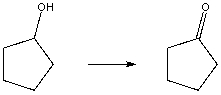
A)Reduction
B)Oxidation
C)Addition
D)Elimination
E)Rearrangement
Oxidation
3
List the following compounds in order of increasing level of oxidation: <strong>List the following compounds in order of increasing level of oxidation:  </strong> A)I,II,III B)III,II,I C)II,I,III D)III,I,II E)I,III,II

A)I,II,III
B)III,II,I
C)II,I,III
D)III,I,II
E)I,III,II
III,I,II
4
When nucleophilic addition to a carbonyl group occurs,the carbon attacked undergoes this hybridization change:

A)sp2 \to sp3
B)sp \to sp2
C)sp \to sp3
D)sp3 \to sp2
E)sp2 \to sp
Unlock Deck
Unlock for access to all 210 flashcards in this deck.
Unlock Deck
k this deck
5
The following transformation would be considered a(n)? <strong>The following transformation would be considered a(n)?  </strong> A)Reduction B)Oxidation C)Addition D)Elimination E)Rearrangement

A)Reduction
B)Oxidation
C)Addition
D)Elimination
E)Rearrangement
Unlock Deck
Unlock for access to all 210 flashcards in this deck.
Unlock Deck
k this deck
6
List the following compounds in order of increasing level of oxidation: <strong>List the following compounds in order of increasing level of oxidation:  </strong> A)I,II,III B)I,III,II C)II,I,III D)III,I,II E)III,II,I
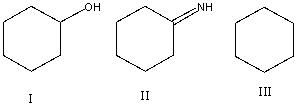
A)I,II,III
B)I,III,II
C)II,I,III
D)III,I,II
E)III,II,I
Unlock Deck
Unlock for access to all 210 flashcards in this deck.
Unlock Deck
k this deck
7
The following transformation would be considered a(n)? <strong>The following transformation would be considered a(n)?  </strong> A)Reduction B)Oxidation C)Addition D)Elimination E)Rearrangement
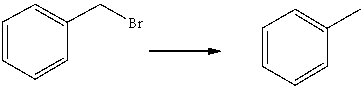
A)Reduction
B)Oxidation
C)Addition
D)Elimination
E)Rearrangement
Unlock Deck
Unlock for access to all 210 flashcards in this deck.
Unlock Deck
k this deck
8
List the following compounds in order of increasing level of oxidation: <strong>List the following compounds in order of increasing level of oxidation:  </strong> A)I,II,III B)III,II,I C)II,I,III D)III,I,II E)I,III,II
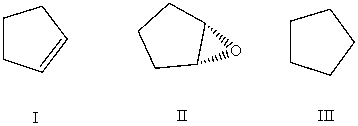
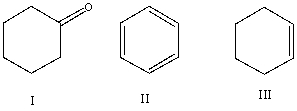
A)I,II,III
B)III,II,I
C)II,I,III
D)III,I,II
E)I,III,II
Unlock Deck
Unlock for access to all 210 flashcards in this deck.
Unlock Deck
k this deck
9
Which of these transformations cannot be classified as a reduction?

A)RCH2Cl \to RCH3
B)RCH=CH2 \to RCH2CH3
C)RCOOH \to RCH2OH
D)  <strong>Which of these transformations cannot be classified as a reduction?</strong> A)RCH<sub>2</sub>Cl  \to  RCH<sub>3</sub> B)RCH=CH<sub>2</sub>  \to  RCH<sub>2</sub>CH<sub>3</sub> C)RCOOH  \to  RCH<sub>2</sub>OH D)   E)All of these are reductions.
E)All of these are reductions.
Unlock Deck
Unlock for access to all 210 flashcards in this deck.
Unlock Deck
k this deck
10
List the following compounds in order of increasing level of oxidation: <strong>List the following compounds in order of increasing level of oxidation:  </strong> A)I,II,III B)III,II,I C)II,I,III D)III,I,II E)I,III,II

A)I,II,III
B)III,II,I
C)II,I,III
D)III,I,II
E)I,III,II
Unlock Deck
Unlock for access to all 210 flashcards in this deck.
Unlock Deck
k this deck
11
Which reaction is an oxidation?

A)RCHO \to RCO2H
B)RCH2OH \to RCHO
C)RCH2OH \to RCO2H
D)None of these choices.
E)All of these choices.
Unlock Deck
Unlock for access to all 210 flashcards in this deck.
Unlock Deck
k this deck
12
The following transformation would be considered a(n)? <strong>The following transformation would be considered a(n)?  </strong> A)Reduction B)Oxidation C)Addition D)Elimination E)Rearrangement
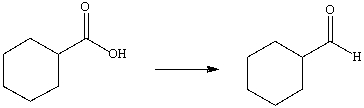
A)Reduction
B)Oxidation
C)Addition
D)Elimination
E)Rearrangement
Unlock Deck
Unlock for access to all 210 flashcards in this deck.
Unlock Deck
k this deck
13
List the following compounds in order of increasing level of oxidation: <strong>List the following compounds in order of increasing level of oxidation:  </strong> A)I,II,III B)III,II,I C)II,I,III D)III,I,II E)I,III,II

A)I,II,III
B)III,II,I
C)II,I,III
D)III,I,II
E)I,III,II
Unlock Deck
Unlock for access to all 210 flashcards in this deck.
Unlock Deck
k this deck
14
The following transformation would be considered a(n)? <strong>The following transformation would be considered a(n)?  </strong> A)Reduction B)Oxidation C)Addition D)Elimination E)Rearrangement
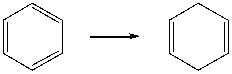

A)Reduction
B)Oxidation
C)Addition
D)Elimination
E)Rearrangement
Unlock Deck
Unlock for access to all 210 flashcards in this deck.
Unlock Deck
k this deck
15
The following transformation would be considered a(n)? <strong>The following transformation would be considered a(n)?  </strong> A)reduction B)oxidation C)addition D)elimination E)rearrangement

A)reduction
B)oxidation
C)addition
D)elimination
E)rearrangement
Unlock Deck
Unlock for access to all 210 flashcards in this deck.
Unlock Deck
k this deck
16
List the following compounds in order of increasing level of oxidation: <strong>List the following compounds in order of increasing level of oxidation:  </strong> A)I,II,III B)I,III,II C)II,I,III D)III,II,I E)III,I,II
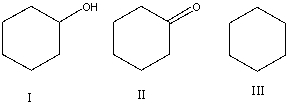
A)I,II,III
B)I,III,II
C)II,I,III
D)III,II,I
E)III,I,II
Unlock Deck
Unlock for access to all 210 flashcards in this deck.
Unlock Deck
k this deck
17
List the following compounds in order of increasing level of oxidation: <strong>List the following compounds in order of increasing level of oxidation:  </strong> A)I,II,III B)III,II,I C)II,I,III D)III,I,II E)I,III,II
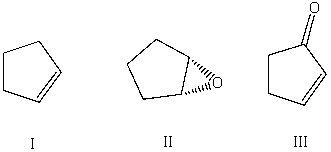
A)I,II,III
B)III,II,I
C)II,I,III
D)III,I,II
E)I,III,II
Unlock Deck
Unlock for access to all 210 flashcards in this deck.
Unlock Deck
k this deck
18
List the following compounds in order of increasing level of oxidation: <strong>List the following compounds in order of increasing level of oxidation:  </strong> A)I,II,III B)III,II,I C)II,I,III D)III,I,II E)I,III,II

A)I,II,III
B)III,II,I
C)II,I,III
D)III,I,II
E)I,III,II
Unlock Deck
Unlock for access to all 210 flashcards in this deck.
Unlock Deck
k this deck
19
List the following compounds in order of increasing level of oxidation: <strong>List the following compounds in order of increasing level of oxidation:  </strong> A)I,II,III B)III,II,I C)II,I,III D)III,I,II E)I,III,II

A)I,II,III
B)III,II,I
C)II,I,III
D)III,I,II
E)I,III,II
Unlock Deck
Unlock for access to all 210 flashcards in this deck.
Unlock Deck
k this deck
20
Which of the following resonance structures is not a significant contributor to the hybrid for the carbonyl group? <strong>Which of the following resonance structures is not a significant contributor to the hybrid for the carbonyl group?  </strong> A)I B)II C)III D)Neither II nor III is important. E)All are significant contributors.
A)I
B)II
C)III
D)Neither II nor III is important.
E)All are significant contributors.
Unlock Deck
Unlock for access to all 210 flashcards in this deck.
Unlock Deck
k this deck
21
Which of the reagents listed below would efficiently accomplish the transformation of CH3CH2CH=CHCH2CH2CH2OH into CH3CH2CH=CHCH2CH2CHO?

A)KMnO4,OH-
B)CrO3 / H2SO4
C)PCC in CH2Cl2
D)(i)(COCl)2,DMSO,-60 oC,(ii)Et3N
E)Two of these choices.
Unlock Deck
Unlock for access to all 210 flashcards in this deck.
Unlock Deck
k this deck
22
Which of these compounds will not be reduced by LiAlH4?

A)CH3CH2CH2CH=CH2
B) <strong>Which of these compounds will not be reduced by LiAlH<sub>4</sub>?</strong> A)CH<sub>3</sub>CH<sub>2</sub>CH<sub>2</sub>CH=CH<sub>2</sub> B)   C)   D)   E)
C) <strong>Which of these compounds will not be reduced by LiAlH<sub>4</sub>?</strong> A)CH<sub>3</sub>CH<sub>2</sub>CH<sub>2</sub>CH=CH<sub>2</sub> B)   C)   D)   E)
D) <strong>Which of these compounds will not be reduced by LiAlH<sub>4</sub>?</strong> A)CH<sub>3</sub>CH<sub>2</sub>CH<sub>2</sub>CH=CH<sub>2</sub> B)   C)   D)   E)
E) <strong>Which of these compounds will not be reduced by LiAlH<sub>4</sub>?</strong> A)CH<sub>3</sub>CH<sub>2</sub>CH<sub>2</sub>CH=CH<sub>2</sub> B)   C)   D)   E)
Unlock Deck
Unlock for access to all 210 flashcards in this deck.
Unlock Deck
k this deck
23
List the following alkyl halides in order of increasing ease of Grignard formation: <strong>List the following alkyl halides in order of increasing ease of Grignard formation:  </strong> A)I,II,III,IV B)III,I,II,IV C)IV,II,I,III D)III,I,IV,II E)I,IV,III,II
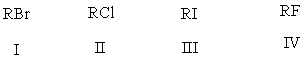
A)I,II,III,IV
B)III,I,II,IV
C)IV,II,I,III
D)III,I,IV,II
E)I,IV,III,II
Unlock Deck
Unlock for access to all 210 flashcards in this deck.
Unlock Deck
k this deck
24
Select the correct reagent(s)for the following reaction: <strong>Select the correct reagent(s)for the following reaction:  </strong> A)LiAlH<sub>4</sub>/ether; then H<sub>3</sub>O<sup>+</sup> B)NaBH<sub>4</sub>; then H<sub>3</sub>O<sup>+</sup> C)H<sub>2</sub> with Pt/C D)Two of these choices. E)All of these choices.


A)LiAlH4/ether; then H3O+
B)NaBH4; then H3O+
C)H2 with Pt/C
D)Two of these choices.
E)All of these choices.
Unlock Deck
Unlock for access to all 210 flashcards in this deck.
Unlock Deck
k this deck
25
Select the correct reagent(s)for the following reaction: <strong>Select the correct reagent(s)for the following reaction:  </strong> A)LiAlH<sub>4</sub>/ether; then H<sub>3</sub>O<sup>+</sup> B)NaBH<sub>4</sub>; then H<sub>3</sub>O<sup>+</sup> C)H<sub>2</sub> with Pt/C D)Two of these choices. E)All of these choices.

A)LiAlH4/ether; then H3O+
B)NaBH4; then H3O+
C)H2 with Pt/C
D)Two of these choices.
E)All of these choices.
Unlock Deck
Unlock for access to all 210 flashcards in this deck.
Unlock Deck
k this deck
26
Which of the reagents listed below would efficiently accomplish the transformation of CH3CH2CH=CHCH2CH2CHO into CH3CH2CH2CH2CH2CH2CH2OH?

A)KMnO4
B)NaBH4
C)Br2 in CCl4
D)H2,Ni
E)Two of these choices.
Unlock Deck
Unlock for access to all 210 flashcards in this deck.
Unlock Deck
k this deck
27
Which of the reagents listed below would efficiently accomplish the transformation of 3-methyl-3-cyclopentenone into 3-methyl-3-cyclopentenol? <strong>Which of the reagents listed below would efficiently accomplish the transformation of 3-methyl-3-cyclopentenone into 3-methyl-3-cyclopentenol?  </strong> A)i)LiAlH<sub>4</sub>; ii)H<sub>2</sub>O B)NaBH<sub>4</sub>,H<sub>2</sub>O C)H<sub>2</sub>,Pd D)More than one of these choices.
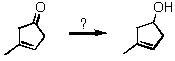
A)i)LiAlH4; ii)H2O
B)NaBH4,H2O
C)H2,Pd
D)More than one of these choices.
Unlock Deck
Unlock for access to all 210 flashcards in this deck.
Unlock Deck
k this deck
28
In the reaction of carbonyl compounds with LiAlH4,the effective reducing species is:

A)Li+
B)Al+3
C)AlH4-
D)AlH3
E)H-
Unlock Deck
Unlock for access to all 210 flashcards in this deck.
Unlock Deck
k this deck
29
Which reagent(s)would you use to convert CH3(CH2)6CO2H to CH3(CH2)6CH2OH?

A)NaBH4/H2O
B)LiAlH4/ether,then H3O+
C)PCC/CH2Cl2
D)Zn,H3O+
E)H2,Pt
Unlock Deck
Unlock for access to all 210 flashcards in this deck.
Unlock Deck
k this deck
30
Which product is formed from the following transformation: <strong>Which product is formed from the following transformation:  </strong> A)   B)   C)   D)   E)
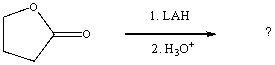
A)
<strong>Which product is formed from the following transformation:  </strong> A)   B)   C)   D)   E)
B)
<strong>Which product is formed from the following transformation:  </strong> A)   B)   C)   D)   E)
C)
<strong>Which product is formed from the following transformation:  </strong> A)   B)   C)   D)   E)
D)
<strong>Which product is formed from the following transformation:  </strong> A)   B)   C)   D)   E)
E)
<strong>Which product is formed from the following transformation:  </strong> A)   B)   C)   D)   E)
Unlock Deck
Unlock for access to all 210 flashcards in this deck.
Unlock Deck
k this deck
31
Which of the reagents listed below would efficiently accomplish the transformation of CH3CH2CH=CHCH2CH2CHO into CH3CH2CH=CHCH2CH2CH2OH?

A)KMnO4
B)NaBH4
C)Br2 in CCl4
D)H2,Ni
E)Two of these choices.
Unlock Deck
Unlock for access to all 210 flashcards in this deck.
Unlock Deck
k this deck
32
Which of the reagents listed below would efficiently accomplish the transformation of CH3CH2CH=CHCH2CH2CH2OH into CH3CH2CH=CHCH2CH2CHO?

A)KMnO4(aq,alkaline)
B)CrO3 / H2SO4
C)PCC in CH2Cl2
D)Br2,CCl4
E)Two of these choices.
Unlock Deck
Unlock for access to all 210 flashcards in this deck.
Unlock Deck
k this deck
33
The following transformation would be considered a(n)? <strong>The following transformation would be considered a(n)?  </strong> A)reduction B)oxidation C)addition D)elimination E)rearrangement
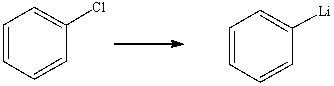
A)reduction
B)oxidation
C)addition
D)elimination
E)rearrangement
Unlock Deck
Unlock for access to all 210 flashcards in this deck.
Unlock Deck
k this deck
34
Which of these compounds cannot be reduced by sodium borohydride?

A) <strong>Which of these compounds cannot be reduced by sodium borohydride?</strong> A)   B)   C)   D)   E)Two of these choices cannot be reduced.
B) <strong>Which of these compounds cannot be reduced by sodium borohydride?</strong> A)   B)   C)   D)   E)Two of these choices cannot be reduced.
C) <strong>Which of these compounds cannot be reduced by sodium borohydride?</strong> A)   B)   C)   D)   E)Two of these choices cannot be reduced.
D) <strong>Which of these compounds cannot be reduced by sodium borohydride?</strong> A)   B)   C)   D)   E)Two of these choices cannot be reduced.
E)Two of these choices cannot be reduced.
Unlock Deck
Unlock for access to all 210 flashcards in this deck.
Unlock Deck
k this deck
35
Which of the reagents listed below would efficiently accomplish the transformation of CH3CH2C≡CCH2CH2CHO into CH3CH2C≡CCH2CH2CH2OH?

A)KMnO4
B)NaBH4
C)Br2 in CCl4
D)H2,Ni
E)Two of these choices.
Unlock Deck
Unlock for access to all 210 flashcards in this deck.
Unlock Deck
k this deck
36
The following transformation would be considered a(n)? <strong>The following transformation would be considered a(n)?  </strong> A)reduction B)oxidation C)addition D)elimination E)rearrangement

A)reduction
B)oxidation
C)addition
D)elimination
E)rearrangement
Unlock Deck
Unlock for access to all 210 flashcards in this deck.
Unlock Deck
k this deck
37
Which reagent(s)is/are capable of reducing the following ester to a primary alcohol? <strong>Which reagent(s)is/are capable of reducing the following ester to a primary alcohol?  </strong> A)LiAlH<sub>4 </sub>/ ether B)NaBH<sub>4 </sub>/ H<sub>2</sub>O C)Na / C<sub>2</sub>H<sub>5</sub>OH D)H<sub>2</sub> / Ni,atmospheric pressure E)All can be used successfully.

A)LiAlH4 / ether
B)NaBH4 / H2O
C)Na / C2H5OH
D)H2 / Ni,atmospheric pressure
E)All can be used successfully.
Unlock Deck
Unlock for access to all 210 flashcards in this deck.
Unlock Deck
k this deck
38
Which of the reagents listed below would efficiently accomplish the transformation of CH3CH2CH=CHCH2CH2CH2OH into CH3CH2CH=CHCH2CH2CHO?

A)KMnO4,OH-
B)CrO3 / H2SO4
C)(i)(COCl)2,DMSO,-60 oC,(ii)Et3N
D)Br2,CCl4
E)Two of these choices.
Unlock Deck
Unlock for access to all 210 flashcards in this deck.
Unlock Deck
k this deck
39
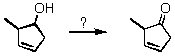
Which of the reagents listed below would efficiently accomplish the transformation of 2-methyl-3-cyclopentenol into 2-methyl-3-cyclopentenone? <strong>Which of the reagents listed below would efficiently accomplish the transformation of 2-methyl-3-cyclopentenol into 2-methyl-3-cyclopentenone?  </strong> A)KMnO<sub>4</sub>(aq,alkaline) B)CrO<sub>3</sub>/H<sub>2</sub>SO<sub>4</sub> C)H<sub>2</sub>,Pt D)Br<sub>2</sub>,CCl<sub>4</sub> E)Two of these choices.
A)KMnO4(aq,alkaline)
B)CrO3/H2SO4
C)H2,Pt
D)Br2,CCl4
E)Two of these choices.
Unlock Deck
Unlock for access to all 210 flashcards in this deck.
Unlock Deck
k this deck
40
Which of the reagents listed below would efficiently accomplish the transformation of ethyl-3-pentenoate into 3-penten-1-ol? <strong>Which of the reagents listed below would efficiently accomplish the transformation of ethyl-3-pentenoate into 3-penten-1-ol?  </strong> A)i)LiAlH<sub>4</sub>; ii)H<sub>2</sub>O B)NaBH<sub>4</sub>,H<sub>2</sub>O C)H<sub>2</sub>,Pd D)Two of these choices. E)All of these choices.

A)i)LiAlH4; ii)H2O
B)NaBH4,H2O
C)H2,Pd
D)Two of these choices.
E)All of these choices.
Unlock Deck
Unlock for access to all 210 flashcards in this deck.
Unlock Deck
k this deck
41
What would be the product,A,of the following reaction sequence? <strong>What would be the product,A,of the following reaction sequence?  </strong> A)CH<sub>3</sub>CH<sub>2</sub>CH<sub>2</sub>CH<sub>3</sub> B)   C)   D)CH<sub>3</sub>CH<sub>2</sub>CH<sub>2</sub>CH<sub>2</sub>OD E)CH<sub>3</sub>CH<sub>2</sub>CH<sub>2</sub>CH<sub>2</sub>D

A)CH3CH2CH2CH3
B) <strong>What would be the product,A,of the following reaction sequence?  </strong> A)CH<sub>3</sub>CH<sub>2</sub>CH<sub>2</sub>CH<sub>3</sub> B)   C)   D)CH<sub>3</sub>CH<sub>2</sub>CH<sub>2</sub>CH<sub>2</sub>OD E)CH<sub>3</sub>CH<sub>2</sub>CH<sub>2</sub>CH<sub>2</sub>D
C) <strong>What would be the product,A,of the following reaction sequence?  </strong> A)CH<sub>3</sub>CH<sub>2</sub>CH<sub>2</sub>CH<sub>3</sub> B)   C)   D)CH<sub>3</sub>CH<sub>2</sub>CH<sub>2</sub>CH<sub>2</sub>OD E)CH<sub>3</sub>CH<sub>2</sub>CH<sub>2</sub>CH<sub>2</sub>D
D)CH3CH2CH2CH2OD
E)CH3CH2CH2CH2D
Unlock Deck
Unlock for access to all 210 flashcards in this deck.
Unlock Deck
k this deck
42
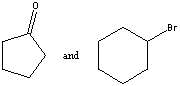
Your task is to synthesize <strong>Your task is to synthesize   through a Grignard synthesis.Which pairs of compounds listed below would you choose as starting materials?</strong> A)   B)   C)   D)   E)None of these choices. through a Grignard synthesis.Which pairs of compounds listed below would you choose as starting materials?

A) <strong>Your task is to synthesize   through a Grignard synthesis.Which pairs of compounds listed below would you choose as starting materials?</strong> A)   B)   C)   D)   E)None of these choices.
B) <strong>Your task is to synthesize   through a Grignard synthesis.Which pairs of compounds listed below would you choose as starting materials?</strong> A)   B)   C)   D)   E)None of these choices.
C) <strong>Your task is to synthesize   through a Grignard synthesis.Which pairs of compounds listed below would you choose as starting materials?</strong> A)   B)   C)   D)   E)None of these choices.
D) <strong>Your task is to synthesize   through a Grignard synthesis.Which pairs of compounds listed below would you choose as starting materials?</strong> A)   B)   C)   D)   E)None of these choices.
E)None of these choices.
Unlock Deck
Unlock for access to all 210 flashcards in this deck.
Unlock Deck
k this deck
43
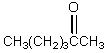
What is the major product from the reaction of 2-hexanol with H2CrO4?

A)CH3CO2H
B)CH3(CH2)3CO2H
C) <strong>What is the major product from the reaction of 2-hexanol with H<sub>2</sub>CrO<sub>4</sub>?</strong> A)CH<sub>3</sub>CO<sub>2</sub>H B)CH<sub>3</sub>(CH<sub>2</sub>)<sub>3</sub>CO<sub>2</sub>H C)   D)CH<sub>3</sub>(CH<sub>2</sub>)<sub>4</sub>CO<sub>2</sub>H E)Two of these choices.
D)CH3(CH2)4CO2H
E)Two of these choices.
Unlock Deck
Unlock for access to all 210 flashcards in this deck.
Unlock Deck
k this deck
44
Which method would give <strong>Which method would give  </strong> A)   B)   C)   D)More than one of these choices. E)None of these choices.

A) <strong>Which method would give  </strong> A)   B)   C)   D)More than one of these choices. E)None of these choices.
B) <strong>Which method would give  </strong> A)   B)   C)   D)More than one of these choices. E)None of these choices.
C) <strong>Which method would give  </strong> A)   B)   C)   D)More than one of these choices. E)None of these choices.
D)More than one of these choices.
E)None of these choices.
Unlock Deck
Unlock for access to all 210 flashcards in this deck.
Unlock Deck
k this deck
45
Which reaction leads to an optically active product?

A) <strong>Which reaction leads to an optically active product?</strong> A)   B)   C)   D)   E)

B) <strong>Which reaction leads to an optically active product?</strong> A)   B)   C)   D)   E)
C) <strong>Which reaction leads to an optically active product?</strong> A)   B)   C)   D)   E)
D) <strong>Which reaction leads to an optically active product?</strong> A)   B)   C)   D)   E)
E)
<strong>Which reaction leads to an optically active product?</strong> A)   B)   C)   D)   E)
Unlock Deck
Unlock for access to all 210 flashcards in this deck.
Unlock Deck
k this deck
46
Which reagent(s)is/are capable of reducing the following ester to an aldehyde? <strong>Which reagent(s)is/are capable of reducing the following ester to an aldehyde?  </strong> A)LiAlH<sub>4 </sub>/ ether B)NaBH<sub>4 </sub>/ H<sub>2</sub>O C)Na / C<sub>2</sub>H<sub>5</sub>OH D)H<sub>2</sub> / Ni,atmospheric pressure E)None of these choices can be used successfully.

A)LiAlH4 / ether
B)NaBH4 / H2O
C)Na / C2H5OH
D)H2 / Ni,atmospheric pressure
E)None of these choices can be used successfully.
Unlock Deck
Unlock for access to all 210 flashcards in this deck.
Unlock Deck
k this deck
47
What would be the product,O,of the following reaction sequence? <strong>What would be the product,O,of the following reaction sequence?  </strong> A)CH<sub>3</sub>CH<sub>2</sub>CH<sub>2</sub>CH<sub>3</sub> B)   C)   D)CH<sub>3</sub>CH<sub>2</sub>CH<sub>2</sub>CH<sub>2</sub>OD E)CH<sub>3</sub>CH<sub>2</sub>CH<sub>2</sub>CH<sub>2</sub>D

A)CH3CH2CH2CH3
B) <strong>What would be the product,O,of the following reaction sequence?  </strong> A)CH<sub>3</sub>CH<sub>2</sub>CH<sub>2</sub>CH<sub>3</sub> B)   C)   D)CH<sub>3</sub>CH<sub>2</sub>CH<sub>2</sub>CH<sub>2</sub>OD E)CH<sub>3</sub>CH<sub>2</sub>CH<sub>2</sub>CH<sub>2</sub>D
C) <strong>What would be the product,O,of the following reaction sequence?  </strong> A)CH<sub>3</sub>CH<sub>2</sub>CH<sub>2</sub>CH<sub>3</sub> B)   C)   D)CH<sub>3</sub>CH<sub>2</sub>CH<sub>2</sub>CH<sub>2</sub>OD E)CH<sub>3</sub>CH<sub>2</sub>CH<sub>2</sub>CH<sub>2</sub>D
D)CH3CH2CH2CH2OD
E)CH3CH2CH2CH2D
Unlock Deck
Unlock for access to all 210 flashcards in this deck.
Unlock Deck
k this deck
48
Which product is formed from the following transformation: <strong>Which product is formed from the following transformation:  </strong> A)   B)   C)   D)   E)None of these choices.
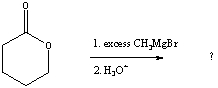
A)
<strong>Which product is formed from the following transformation:  </strong> A)   B)   C)   D)   E)None of these choices.
B)
<strong>Which product is formed from the following transformation:  </strong> A)   B)   C)   D)   E)None of these choices.
C)
<strong>Which product is formed from the following transformation:  </strong> A)   B)   C)   D)   E)None of these choices.
D)
<strong>Which product is formed from the following transformation:  </strong> A)   B)   C)   D)   E)None of these choices.
E)None of these choices.
Unlock Deck
Unlock for access to all 210 flashcards in this deck.
Unlock Deck
k this deck
49
What is the major product from the reaction of toluene with KMnO4?

A) <strong>What is the major product from the reaction of toluene with KMnO<sub>4</sub>?</strong> A)   B)   C)   D)   E)
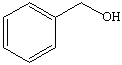
B) <strong>What is the major product from the reaction of toluene with KMnO<sub>4</sub>?</strong> A)   B)   C)   D)   E)
C) <strong>What is the major product from the reaction of toluene with KMnO<sub>4</sub>?</strong> A)   B)   C)   D)   E)
D) <strong>What is the major product from the reaction of toluene with KMnO<sub>4</sub>?</strong> A)   B)   C)   D)   E)
E) <strong>What is the major product from the reaction of toluene with KMnO<sub>4</sub>?</strong> A)   B)   C)   D)   E)
Unlock Deck
Unlock for access to all 210 flashcards in this deck.
Unlock Deck
k this deck
50
What is the major product from the reaction of 2-hexanol with PCC in CH2Cl2?

A)CH3CO2H
B)CH3(CH2)3CO2H
C) <strong>What is the major product from the reaction of 2-hexanol with PCC in CH<sub>2</sub>Cl<sub>2</sub>?</strong> A)CH<sub>3</sub>CO<sub>2</sub>H B)CH<sub>3</sub>(CH<sub>2</sub>)<sub>3</sub>CO<sub>2</sub>H C)   D)CH<sub>3</sub>(CH<sub>2</sub>)<sub>4</sub>CO<sub>2</sub>H E)Two of these choices.
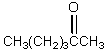
D)CH3(CH2)4CO2H
E)Two of these choices.
Unlock Deck
Unlock for access to all 210 flashcards in this deck.
Unlock Deck
k this deck
51
Which of the following synthetic procedures would be employed most effectively to transform ethanol into ethyl propyl ether?

A)Ethanol + HBr,then Mg/ether,then H3O+,then NaH,then CH3CH2Br
B)Ethanol + HBr,then Mg/ether,then HCHO,then H3O+,then NaH,then CH3CH2Br
C)Ethanol + CH3CH2CH2OH + H2SO4/140 \circ C
D)Ethanol + NaH,then HCHO,then H3O+,then HBr,then Mg/ether,then CH3CH2CH2Br
E)Ethanol + H2SO4/180 °C,then CH3CH2CH2Br
Unlock Deck
Unlock for access to all 210 flashcards in this deck.
Unlock Deck
k this deck
52
Your task is to synthesize <strong>Your task is to synthesize   through a Grignard synthesis.Which pairs of compounds listed below would you choose as starting materials?</strong> A)   B)   C)   D)More than one of these choices. E)None of these choices. through a Grignard synthesis.Which pairs of compounds listed below would you choose as starting materials?

A) <strong>Your task is to synthesize   through a Grignard synthesis.Which pairs of compounds listed below would you choose as starting materials?</strong> A)   B)   C)   D)More than one of these choices. E)None of these choices.
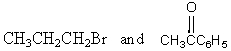
B) <strong>Your task is to synthesize   through a Grignard synthesis.Which pairs of compounds listed below would you choose as starting materials?</strong> A)   B)   C)   D)More than one of these choices. E)None of these choices.
C) <strong>Your task is to synthesize   through a Grignard synthesis.Which pairs of compounds listed below would you choose as starting materials?</strong> A)   B)   C)   D)More than one of these choices. E)None of these choices.
D)More than one of these choices.
E)None of these choices.
Unlock Deck
Unlock for access to all 210 flashcards in this deck.
Unlock Deck
k this deck
53
What would be the product,A,of the following reaction? <strong>What would be the product,A,of the following reaction?  </strong> A)   B)   C)   D)   E)

A) <strong>What would be the product,A,of the following reaction?  </strong> A)   B)   C)   D)   E)
B) <strong>What would be the product,A,of the following reaction?  </strong> A)   B)   C)   D)   E)
C) <strong>What would be the product,A,of the following reaction?  </strong> A)   B)   C)   D)   E)
D) <strong>What would be the product,A,of the following reaction?  </strong> A)   B)   C)   D)   E)
E) <strong>What would be the product,A,of the following reaction?  </strong> A)   B)   C)   D)   E)
Unlock Deck
Unlock for access to all 210 flashcards in this deck.
Unlock Deck
k this deck
54
How could the following synthesis be accomplished? <strong>How could the following synthesis be accomplished?  </strong> A)(1)SOCl<sub>2</sub>,(2)Mg,ether,(3)   then H<sub>3</sub>O<sup>+</sup> B)(1)SOCl<sub>2</sub>,(2)Li,ether,(3)(CH<sub>3</sub>CH<sub>2</sub>)<sub>2</sub>CuLi,(4)KMnO<sub>4</sub>,OH<sup>-</sup> C)1)PBr<sub>3</sub>,(2)Mg,ether,(3)   then H<sub>3</sub>O<sup>+</sup> (4)PCC,CH<sub>2</sub>Cl<sub>2</sub> D)More than one of these choices. E)None of these choices.
A)(1)SOCl2,(2)Mg,ether,(3) <strong>How could the following synthesis be accomplished?  </strong> A)(1)SOCl<sub>2</sub>,(2)Mg,ether,(3)   then H<sub>3</sub>O<sup>+</sup> B)(1)SOCl<sub>2</sub>,(2)Li,ether,(3)(CH<sub>3</sub>CH<sub>2</sub>)<sub>2</sub>CuLi,(4)KMnO<sub>4</sub>,OH<sup>-</sup> C)1)PBr<sub>3</sub>,(2)Mg,ether,(3)   then H<sub>3</sub>O<sup>+</sup> (4)PCC,CH<sub>2</sub>Cl<sub>2</sub> D)More than one of these choices. E)None of these choices. then H3O+
B)(1)SOCl2,(2)Li,ether,(3)(CH3CH2)2CuLi,(4)KMnO4,OH-
C)1)PBr3,(2)Mg,ether,(3) <strong>How could the following synthesis be accomplished?  </strong> A)(1)SOCl<sub>2</sub>,(2)Mg,ether,(3)   then H<sub>3</sub>O<sup>+</sup> B)(1)SOCl<sub>2</sub>,(2)Li,ether,(3)(CH<sub>3</sub>CH<sub>2</sub>)<sub>2</sub>CuLi,(4)KMnO<sub>4</sub>,OH<sup>-</sup> C)1)PBr<sub>3</sub>,(2)Mg,ether,(3)   then H<sub>3</sub>O<sup>+</sup> (4)PCC,CH<sub>2</sub>Cl<sub>2</sub> D)More than one of these choices. E)None of these choices. then H3O+ (4)PCC,CH2Cl2
D)More than one of these choices.
E)None of these choices.
Unlock Deck
Unlock for access to all 210 flashcards in this deck.
Unlock Deck
k this deck
55
What is the principal product(s)formed when 1 mol of methylmagnesium iodide reacts with 1 mol of p-hydroxyacetophenone? <strong>What is the principal product(s)formed when 1 mol of methylmagnesium iodide reacts with 1 mol of p-hydroxyacetophenone?  </strong> A)I B)II C)III D)IV E)V
A)I
B)II
C)III
D)IV
E)V
Unlock Deck
Unlock for access to all 210 flashcards in this deck.
Unlock Deck
k this deck
56
What is the major product from the reaction of 2-hexanol with Na2Cr2O7/H+?

A)CH3CO2H
B)CH3(CH2)3CO2H
C) <strong>What is the major product from the reaction of 2-hexanol with Na<sub>2</sub>Cr<sub>2</sub>O<sub>7</sub>/H<sup>+</sup>?</strong> A)CH<sub>3</sub>CO<sub>2</sub>H B)CH<sub>3</sub>(CH<sub>2</sub>)<sub>3</sub>CO<sub>2</sub>H C)   D)CH<sub>3</sub>(CH<sub>2</sub>)<sub>4</sub>CO<sub>2</sub>H E)Two of these choices.
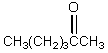
D)CH3(CH2)4CO2H
E)Two of these choices.
Unlock Deck
Unlock for access to all 210 flashcards in this deck.
Unlock Deck
k this deck
57
What compound(s)result(s)from the reaction of CH3CH2CH2MgBr with CH3CH2CH2CH2CO2H (1:1 mole ratio)?

A) <strong>What compound(s)result(s)from the reaction of CH<sub>3</sub>CH<sub>2</sub>CH<sub>2</sub>MgBr with CH<sub>3</sub>CH<sub>2</sub>CH<sub>2</sub>CH<sub>2</sub>CO<sub>2</sub>H (1:1 mole ratio)?</strong> A)   B)   C)   D)CH<sub>3</sub>CH<sub>2</sub>CH<sub>3</sub> + CH<sub>3</sub>CH<sub>2</sub>CH<sub>2</sub>CH<sub>2</sub>CO<sub>2</sub>MgBr E)
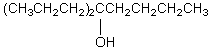
B) <strong>What compound(s)result(s)from the reaction of CH<sub>3</sub>CH<sub>2</sub>CH<sub>2</sub>MgBr with CH<sub>3</sub>CH<sub>2</sub>CH<sub>2</sub>CH<sub>2</sub>CO<sub>2</sub>H (1:1 mole ratio)?</strong> A)   B)   C)   D)CH<sub>3</sub>CH<sub>2</sub>CH<sub>3</sub> + CH<sub>3</sub>CH<sub>2</sub>CH<sub>2</sub>CH<sub>2</sub>CO<sub>2</sub>MgBr E)
C) <strong>What compound(s)result(s)from the reaction of CH<sub>3</sub>CH<sub>2</sub>CH<sub>2</sub>MgBr with CH<sub>3</sub>CH<sub>2</sub>CH<sub>2</sub>CH<sub>2</sub>CO<sub>2</sub>H (1:1 mole ratio)?</strong> A)   B)   C)   D)CH<sub>3</sub>CH<sub>2</sub>CH<sub>3</sub> + CH<sub>3</sub>CH<sub>2</sub>CH<sub>2</sub>CH<sub>2</sub>CO<sub>2</sub>MgBr E)
D)CH3CH2CH3 + CH3CH2CH2CH2CO2MgBr
E) <strong>What compound(s)result(s)from the reaction of CH<sub>3</sub>CH<sub>2</sub>CH<sub>2</sub>MgBr with CH<sub>3</sub>CH<sub>2</sub>CH<sub>2</sub>CH<sub>2</sub>CO<sub>2</sub>H (1:1 mole ratio)?</strong> A)   B)   C)   D)CH<sub>3</sub>CH<sub>2</sub>CH<sub>3</sub> + CH<sub>3</sub>CH<sub>2</sub>CH<sub>2</sub>CH<sub>2</sub>CO<sub>2</sub>MgBr E)
Unlock Deck
Unlock for access to all 210 flashcards in this deck.
Unlock Deck
k this deck
58
What is the major product from the reaction of 2-hexanol with KMnO4?

A)CH3CO2H
B)CH3(CH2)3CO2H
C) <strong>What is the major product from the reaction of 2-hexanol with KMnO<sub>4</sub>?</strong> A)CH<sub>3</sub>CO<sub>2</sub>H B)CH<sub>3</sub>(CH<sub>2</sub>)<sub>3</sub>CO<sub>2</sub>H C)   D)CH<sub>3</sub>(CH<sub>2</sub>)<sub>4</sub>CO<sub>2</sub>H E)Two of these choices.
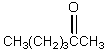
D)CH3(CH2)4CO2H
E)Two of these choices.
Unlock Deck
Unlock for access to all 210 flashcards in this deck.
Unlock Deck
k this deck
59
What is the principal product(s)formed when 1 mol of methylmagnesium iodide reacts with 1 mol of p-acetylbenzoic acid? <strong>What is the principal product(s)formed when 1 mol of methylmagnesium iodide reacts with 1 mol of p-acetylbenzoic acid?  </strong> A)I B)II C)III D)IV E)V
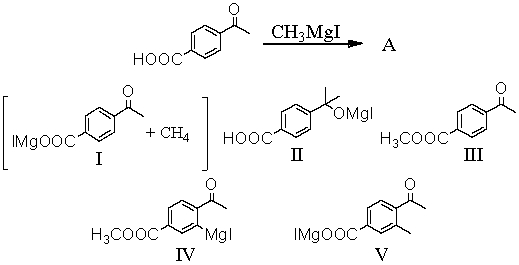
A)I
B)II
C)III
D)IV
E)V
Unlock Deck
Unlock for access to all 210 flashcards in this deck.
Unlock Deck
k this deck
60
What would be the product,A,of the following reaction sequence? <strong>What would be the product,A,of the following reaction sequence?  </strong> A)CH<sub>3</sub>CH<sub>2</sub>CH<sub>2</sub>CH<sub>3</sub> B)   C)   D)CH<sub>3</sub>CH<sub>2</sub>CH<sub>2</sub>CH<sub>2</sub>OD E)CH<sub>3</sub>CH<sub>2</sub>CH<sub>2</sub>CH<sub>2</sub>D

A)CH3CH2CH2CH3
B) <strong>What would be the product,A,of the following reaction sequence?  </strong> A)CH<sub>3</sub>CH<sub>2</sub>CH<sub>2</sub>CH<sub>3</sub> B)   C)   D)CH<sub>3</sub>CH<sub>2</sub>CH<sub>2</sub>CH<sub>2</sub>OD E)CH<sub>3</sub>CH<sub>2</sub>CH<sub>2</sub>CH<sub>2</sub>D
C) <strong>What would be the product,A,of the following reaction sequence?  </strong> A)CH<sub>3</sub>CH<sub>2</sub>CH<sub>2</sub>CH<sub>3</sub> B)   C)   D)CH<sub>3</sub>CH<sub>2</sub>CH<sub>2</sub>CH<sub>2</sub>OD E)CH<sub>3</sub>CH<sub>2</sub>CH<sub>2</sub>CH<sub>2</sub>D
D)CH3CH2CH2CH2OD
E)CH3CH2CH2CH2D
Unlock Deck
Unlock for access to all 210 flashcards in this deck.
Unlock Deck
k this deck
61
What is the principal product of the following reaction:  <strong>What is the principal product of the following reaction:   + CH<sub>3</sub>CH<sub>2</sub>CH<sub>2</sub>CH<sub>2</sub>MgBr/ether; then H<sub>2</sub>O  \to  ?</strong> A)   B)   C)   D)   E)    + CH3CH2CH2CH2MgBr/ether; then H2O \to ?
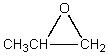
A)  <strong>What is the principal product of the following reaction:   + CH<sub>3</sub>CH<sub>2</sub>CH<sub>2</sub>CH<sub>2</sub>MgBr/ether; then H<sub>2</sub>O  \to  ?</strong> A)   B)   C)   D)   E)
B)  <strong>What is the principal product of the following reaction:   + CH<sub>3</sub>CH<sub>2</sub>CH<sub>2</sub>CH<sub>2</sub>MgBr/ether; then H<sub>2</sub>O  \to  ?</strong> A)   B)   C)   D)   E)
C)  <strong>What is the principal product of the following reaction:   + CH<sub>3</sub>CH<sub>2</sub>CH<sub>2</sub>CH<sub>2</sub>MgBr/ether; then H<sub>2</sub>O  \to  ?</strong> A)   B)   C)   D)   E)
D)  <strong>What is the principal product of the following reaction:   + CH<sub>3</sub>CH<sub>2</sub>CH<sub>2</sub>CH<sub>2</sub>MgBr/ether; then H<sub>2</sub>O  \to  ?</strong> A)   B)   C)   D)   E)
E)  <strong>What is the principal product of the following reaction:   + CH<sub>3</sub>CH<sub>2</sub>CH<sub>2</sub>CH<sub>2</sub>MgBr/ether; then H<sub>2</sub>O  \to  ?</strong> A)   B)   C)   D)   E)
Unlock Deck
Unlock for access to all 210 flashcards in this deck.
Unlock Deck
k this deck
62
What is (are)the principal product(s)formed when 1 mol of ethylmagnesium bromide reacts with 1 mol of 3-(N-methylamino)cyclopentanone? <strong>What is (are)the principal product(s)formed when 1 mol of ethylmagnesium bromide reacts with 1 mol of 3-(N-methylamino)cyclopentanone?  </strong> A)I B)II C)III D)IV E)V
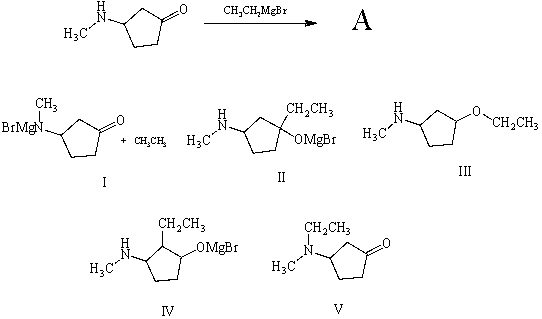
A)I
B)II
C)III
D)IV
E)V
Unlock Deck
Unlock for access to all 210 flashcards in this deck.
Unlock Deck
k this deck
63
Predict the product(s)of the following reaction: <strong>Predict the product(s)of the following reaction:  </strong> A)A mixture of I and II B)A mixture of I and III C)A mixture of II and III D)A mixture of II and IV E)A mixture of III and IV

A)A mixture of I and II
B)A mixture of I and III
C)A mixture of II and III
D)A mixture of II and IV
E)A mixture of III and IV
Unlock Deck
Unlock for access to all 210 flashcards in this deck.
Unlock Deck
k this deck
64
What is the product,A,that would be obtained from the following reaction sequence? <strong>What is the product,A,that would be obtained from the following reaction sequence?  </strong> A)I B)II C)III D)IV E)V
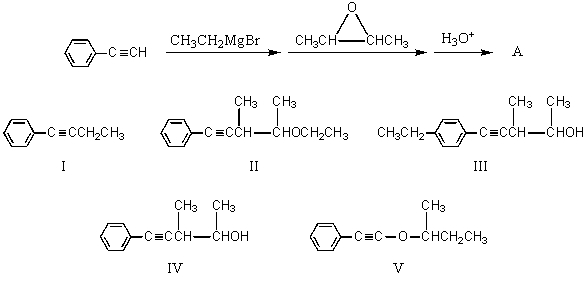
A)I
B)II
C)III
D)IV
E)V
Unlock Deck
Unlock for access to all 210 flashcards in this deck.
Unlock Deck
k this deck
65
What would be the final product,D,in the following reaction sequence? <strong>What would be the final product,D,in the following reaction sequence?  </strong> A)I B)II C)III D)IV E)V
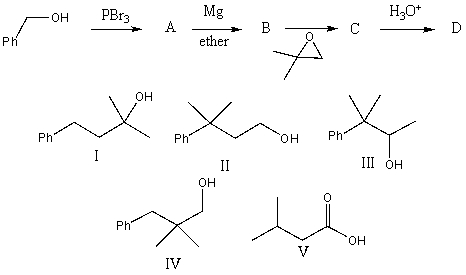
A)I
B)II
C)III
D)IV
E)V
Unlock Deck
Unlock for access to all 210 flashcards in this deck.
Unlock Deck
k this deck
66
The final product,D,in the following reaction sequence <strong>The final product,D,in the following reaction sequence   , would be:</strong> A)   B)   C)   D)   E)   , would be:
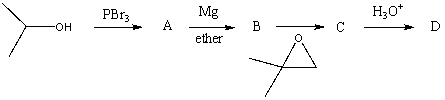
A) <strong>The final product,D,in the following reaction sequence   , would be:</strong> A)   B)   C)   D)   E)
B) <strong>The final product,D,in the following reaction sequence   , would be:</strong> A)   B)   C)   D)   E)
C) <strong>The final product,D,in the following reaction sequence   , would be:</strong> A)   B)   C)   D)   E)
D) <strong>The final product,D,in the following reaction sequence   , would be:</strong> A)   B)   C)   D)   E)
E) <strong>The final product,D,in the following reaction sequence   , would be:</strong> A)   B)   C)   D)   E)
Unlock Deck
Unlock for access to all 210 flashcards in this deck.
Unlock Deck
k this deck
67
The final product,B,in the following reaction sequence, <strong>The final product,B,in the following reaction sequence,   ,would be?</strong> A)   B)   C)   D)   E)   ,would be?
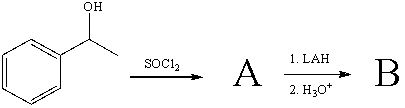
A) <strong>The final product,B,in the following reaction sequence,   ,would be?</strong> A)   B)   C)   D)   E)
B) <strong>The final product,B,in the following reaction sequence,   ,would be?</strong> A)   B)   C)   D)   E)
C) <strong>The final product,B,in the following reaction sequence,   ,would be?</strong> A)   B)   C)   D)   E)
D) <strong>The final product,B,in the following reaction sequence,   ,would be?</strong> A)   B)   C)   D)   E)
E) <strong>The final product,B,in the following reaction sequence,   ,would be?</strong> A)   B)   C)   D)   E)
Unlock Deck
Unlock for access to all 210 flashcards in this deck.
Unlock Deck
k this deck
68
When 1-pentanol is treated with alkaline potassium permanganate,

A)the color changes from orange to blue.
B)the color changes from purple to colorless.
C)the color changes from blue to red.
D)the color changes from orange to green.
E)the color changes from green to orange.
Unlock Deck
Unlock for access to all 210 flashcards in this deck.
Unlock Deck
k this deck
69
What would be the final product,D,in the following reaction sequence? <strong>What would be the final product,D,in the following reaction sequence?  </strong> A)I B)II C)III D)IV E)V
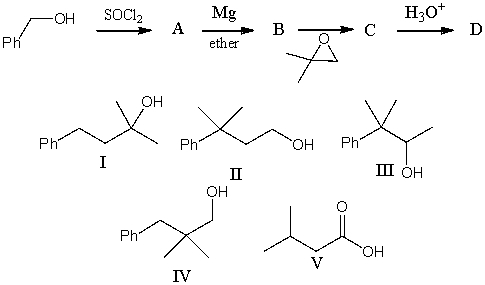
A)I
B)II
C)III
D)IV
E)V
Unlock Deck
Unlock for access to all 210 flashcards in this deck.
Unlock Deck
k this deck
70
What is the product,A,that would be obtained from the following reaction sequence? <strong>What is the product,A,that would be obtained from the following reaction sequence?    </strong> A)I B)II C)III D)IV E)V <strong>What is the product,A,that would be obtained from the following reaction sequence?    </strong> A)I B)II C)III D)IV E)V
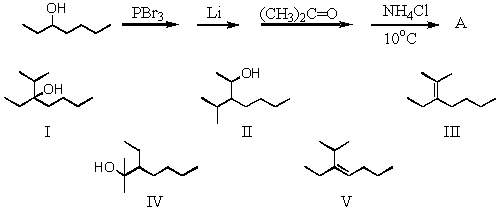
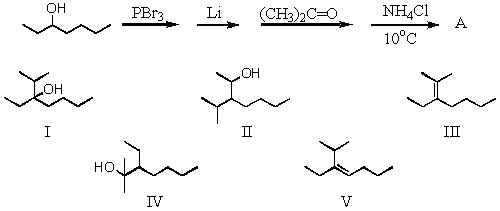
A)I
B)II
C)III
D)IV
E)V
Unlock Deck
Unlock for access to all 210 flashcards in this deck.
Unlock Deck
k this deck
71
What is the product,A,that would be obtained from the following reaction sequence? <strong>What is the product,A,that would be obtained from the following reaction sequence?  </strong> A)I B)II C)III D)IV E)V

A)I
B)II
C)III
D)IV
E)V
Unlock Deck
Unlock for access to all 210 flashcards in this deck.
Unlock Deck
k this deck
72
The final product,B,in the following reaction sequence, <strong>The final product,B,in the following reaction sequence,   ,would be?</strong> A)   B)   C)   D)   E)NNone of these choices. ,would be?

A) <strong>The final product,B,in the following reaction sequence,   ,would be?</strong> A)   B)   C)   D)   E)NNone of these choices.
B) <strong>The final product,B,in the following reaction sequence,   ,would be?</strong> A)   B)   C)   D)   E)NNone of these choices.
C) <strong>The final product,B,in the following reaction sequence,   ,would be?</strong> A)   B)   C)   D)   E)NNone of these choices.
D) <strong>The final product,B,in the following reaction sequence,   ,would be?</strong> A)   B)   C)   D)   E)NNone of these choices.
E)NNone of these choices.
Unlock Deck
Unlock for access to all 210 flashcards in this deck.
Unlock Deck
k this deck
73
What would be the product,A,of the following reaction sequence? <strong>What would be the product,A,of the following reaction sequence?  </strong> A)CH<sub>3</sub>CH<sub>2</sub>CH<sub>2</sub>CH<sub>3</sub> B)   C)   D)CH<sub>3</sub>CH<sub>2</sub>CH<sub>2</sub>CH<sub>2</sub>OD E)CH<sub>3</sub>CH<sub>2</sub>CH<sub>2</sub>CH<sub>2</sub>D

A)CH3CH2CH2CH3
B) <strong>What would be the product,A,of the following reaction sequence?  </strong> A)CH<sub>3</sub>CH<sub>2</sub>CH<sub>2</sub>CH<sub>3</sub> B)   C)   D)CH<sub>3</sub>CH<sub>2</sub>CH<sub>2</sub>CH<sub>2</sub>OD E)CH<sub>3</sub>CH<sub>2</sub>CH<sub>2</sub>CH<sub>2</sub>D
C) <strong>What would be the product,A,of the following reaction sequence?  </strong> A)CH<sub>3</sub>CH<sub>2</sub>CH<sub>2</sub>CH<sub>3</sub> B)   C)   D)CH<sub>3</sub>CH<sub>2</sub>CH<sub>2</sub>CH<sub>2</sub>OD E)CH<sub>3</sub>CH<sub>2</sub>CH<sub>2</sub>CH<sub>2</sub>D
D)CH3CH2CH2CH2OD
E)CH3CH2CH2CH2D
Unlock Deck
Unlock for access to all 210 flashcards in this deck.
Unlock Deck
k this deck
74
Predict the product(s)of the following reaction: <strong>Predict the product(s)of the following reaction:  </strong> A)A mixture of I and II B)A mixture of I and III C)A mixture of II and III D)A mixture of II and IV E)A mixture of III and IV
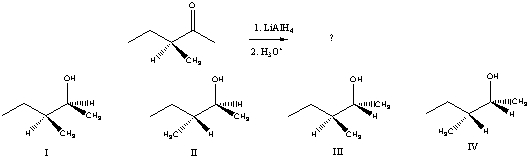
A)A mixture of I and II
B)A mixture of I and III
C)A mixture of II and III
D)A mixture of II and IV
E)A mixture of III and IV
Unlock Deck
Unlock for access to all 210 flashcards in this deck.
Unlock Deck
k this deck
75
What product(s)is/are formed in the following reaction? <strong>What product(s)is/are formed in the following reaction?  </strong> A)CH<sub>3</sub>CH<sub>2</sub>CH<sub>2</sub>CH<sub>2</sub>OD + CH<sub>3</sub>CH<sub>2</sub>OD B)CH<sub>3</sub>CH<sub>2</sub>CH<sub>2</sub>CD<sub>2</sub>OD + CH<sub>3</sub>CH<sub>2</sub>OD C)CH<sub>3</sub>CH<sub>2</sub>CH<sub>2</sub>CD<sub>2</sub>OH + CH<sub>3</sub>CH<sub>2</sub>OH D)CH<sub>3</sub>CH<sub>2</sub>CH<sub>2</sub>CHDOD + CH<sub>3</sub>CH<sub>2</sub>OD E)

A)CH3CH2CH2CH2OD + CH3CH2OD
B)CH3CH2CH2CD2OD + CH3CH2OD
C)CH3CH2CH2CD2OH + CH3CH2OH
D)CH3CH2CH2CHDOD + CH3CH2OD
E) <strong>What product(s)is/are formed in the following reaction?  </strong> A)CH<sub>3</sub>CH<sub>2</sub>CH<sub>2</sub>CH<sub>2</sub>OD + CH<sub>3</sub>CH<sub>2</sub>OD B)CH<sub>3</sub>CH<sub>2</sub>CH<sub>2</sub>CD<sub>2</sub>OD + CH<sub>3</sub>CH<sub>2</sub>OD C)CH<sub>3</sub>CH<sub>2</sub>CH<sub>2</sub>CD<sub>2</sub>OH + CH<sub>3</sub>CH<sub>2</sub>OH D)CH<sub>3</sub>CH<sub>2</sub>CH<sub>2</sub>CHDOD + CH<sub>3</sub>CH<sub>2</sub>OD E)
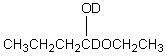
Unlock Deck
Unlock for access to all 210 flashcards in this deck.
Unlock Deck
k this deck
76
What would be the final product,A,in the following reaction sequence? <strong>What would be the final product,A,in the following reaction sequence?  </strong> A)I B)II C)III D)IV E)V
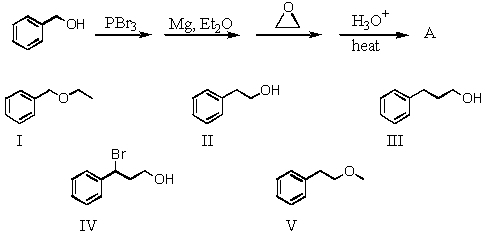
A)I
B)II
C)III
D)IV
E)V
Unlock Deck
Unlock for access to all 210 flashcards in this deck.
Unlock Deck
k this deck
77
.Predict the product(s)of the following reaction: <strong>.Predict the product(s)of the following reaction:  </strong> A)I B)II C)III D)IV E)A mixture of two or more of these choices.
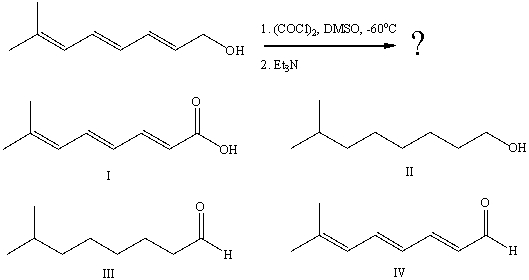
A)I
B)II
C)III
D)IV
E)A mixture of two or more of these choices.
Unlock Deck
Unlock for access to all 210 flashcards in this deck.
Unlock Deck
k this deck
78
The final product,D,in the following reaction sequence, <strong>The final product,D,in the following reaction sequence,   ,would be?</strong> A)   B)   C)   D)   E)   ,would be?

A) <strong>The final product,D,in the following reaction sequence,   ,would be?</strong> A)   B)   C)   D)   E)
B) <strong>The final product,D,in the following reaction sequence,   ,would be?</strong> A)   B)   C)   D)   E)
C) <strong>The final product,D,in the following reaction sequence,   ,would be?</strong> A)   B)   C)   D)   E)
D) <strong>The final product,D,in the following reaction sequence,   ,would be?</strong> A)   B)   C)   D)   E)
E) <strong>The final product,D,in the following reaction sequence,   ,would be?</strong> A)   B)   C)   D)   E)
Unlock Deck
Unlock for access to all 210 flashcards in this deck.
Unlock Deck
k this deck
79
What would be the final product,A,in the following reaction sequence? <strong>What would be the final product,A,in the following reaction sequence?  </strong> A)I B)II C)III D)IV E)V
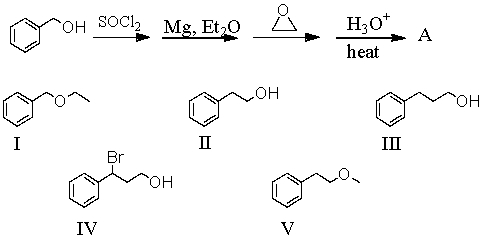
A)I
B)II
C)III
D)IV
E)V
Unlock Deck
Unlock for access to all 210 flashcards in this deck.
Unlock Deck
k this deck
80
Predict the product(s)of the following reaction: <strong>Predict the product(s)of the following reaction:  </strong> A)A mixture of I and II B)A mixture of I and III C)A mixture of II and III D)A mixture of II and IV E)A mixture of III and IV
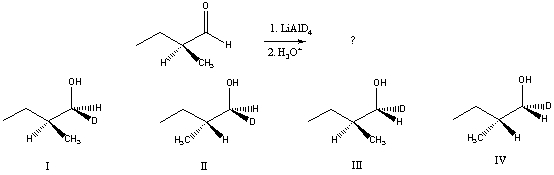
A)A mixture of I and II
B)A mixture of I and III
C)A mixture of II and III
D)A mixture of II and IV
E)A mixture of III and IV
Unlock Deck
Unlock for access to all 210 flashcards in this deck.
Unlock Deck
k this deck
locked card icon
Unlock Deck
Unlock for access to all 210 flashcards in this deck.