







 Chat with AI

Deck 25: Musculoskeletal System
Full screen (f)

Question

Question
Question
Question
Question
Question
Question
Question
Question
Question
Question
Question
Question
Question
Question
The nurse is preparing to assess the posterior spine of a client. Which is the landmark the nurse will use to determine symmetry? 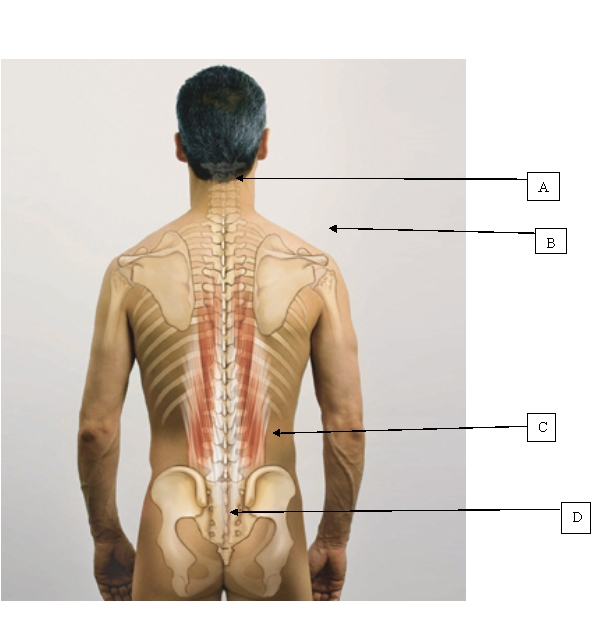
A) A.
B) B.
C) C.
D) D.
A) A.
B) B.
C) C.
D) D.
Question
Question
The school nurse is assessing adolescent females for scoliosis. Which area of the spine does the nurse plan to assess? 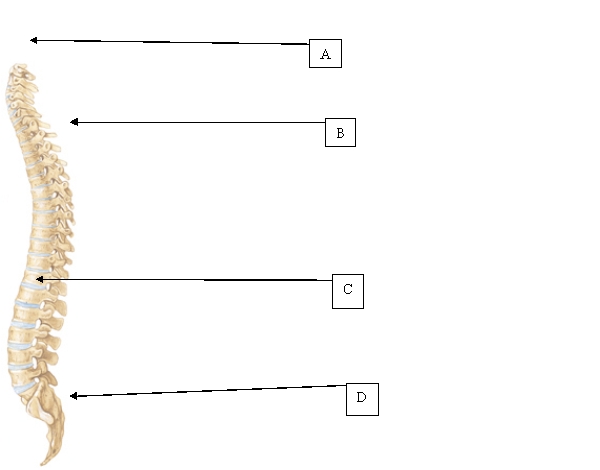
A) A.
B) B.
C) C.
D) D.
A) A.
B) B.
C) C.
D) D.
Question
Question
The nurse is performing the bulge test on a client's left knee. Which area will the nurse assess for bulging during this test? 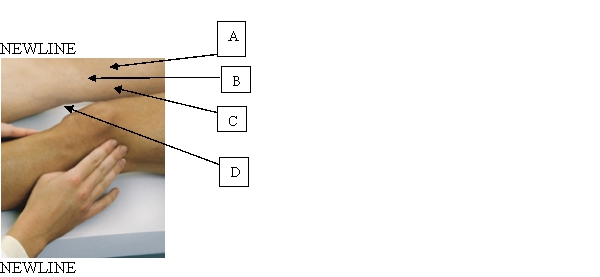
A) A.
B) B.
C) C.
D) D.
A) A.
B) B.
C) C.
D) D.
Question
Question
Question
Question
Question
Question
Question
Question
Question
Question
Question
Question
Question

Unlock Deck
Sign up to unlock the cards in this deck!
Unlock Deck
Unlock Deck
1/32

Play

Full screen (f)
Deck 25: Musculoskeletal System
1
The nurse is assessing the client's lateral flexion. Which commands by the nurse to the client will assess lateral flexion during the physical assessment?
A) "Tilt your head back and look at the ceiling."
B) "Lean your head to the side and attempt to touch your ear to your shoulder."
C) "Bend sideways to the right and to the left while I stabilize your pelvis."
D) "Attempt to raise your shoulders up toward your ears."
E) "Attempt to rotate your head in a circular manner."
A) "Tilt your head back and look at the ceiling."
B) "Lean your head to the side and attempt to touch your ear to your shoulder."
C) "Bend sideways to the right and to the left while I stabilize your pelvis."
D) "Attempt to raise your shoulders up toward your ears."
E) "Attempt to rotate your head in a circular manner."
"Lean your head to the side and attempt to touch your ear to your shoulder."
"Bend sideways to the right and to the left while I stabilize your pelvis."
"Bend sideways to the right and to the left while I stabilize your pelvis."
2
The nurse is assessing a client whose chief complaint is an inability to move the fourth and fifth fingers. The nurse notes severe flexion in both of the affected fingers. Upon palpation, there are no complaints of pain from the client. Based on this data, which diagnosis does the nurse suspect?
A) Dupuytren contracture.
B) Carpal tunnel syndrome.
C) Bursitis.
D) Osteoarthritis.
A) Dupuytren contracture.
B) Carpal tunnel syndrome.
C) Bursitis.
D) Osteoarthritis.
Dupuytren contracture.
3
The nurse assesses a client and finds that a grating sound is present when a joint is bent and straightened. Which term will the nurse use when documenting this finding in the medical record?
A) Subluxation.
B) Grinding.
C) Crepitation.
D) Joint dislocation.
A) Subluxation.
B) Grinding.
C) Crepitation.
D) Joint dislocation.
Crepitation.
4
The nurse is caring for a client with a right femur fracture. Which type of bone does the nurse identify the femur as when discussing the fracture with the client?
A) Short.
B) Long.
C) Flat.
D) Irregular.
A) Short.
B) Long.
C) Flat.
D) Irregular.
Unlock Deck
Unlock for access to all 32 flashcards in this deck.
Unlock Deck
k this deck
5
The nurse is conducting an assessment for a client whose chief complaint is numbness and tingling in the hands. This sensation is exacerbated when bending the wrist downward and pressing the backs of the hands together. Based on this data, which condition does the nurse suspect?
A) Arthritis of the wrists.
B) Carpal tunnel syndrome.
C) Crepitus of the wrists.
D) Dupuytren contracture.
A) Arthritis of the wrists.
B) Carpal tunnel syndrome.
C) Crepitus of the wrists.
D) Dupuytren contracture.
Unlock Deck
Unlock for access to all 32 flashcards in this deck.
Unlock Deck
k this deck
6
The nurse notes an exaggerated lumbar curve while inspecting the spine of a client. Which term will the nurse use when documenting this finding in the medical record?
A) Lordosis.
B) Scoliosis.
C) Kyphosis.
D) Flattened curve.
A) Lordosis.
B) Scoliosis.
C) Kyphosis.
D) Flattened curve.
Unlock Deck
Unlock for access to all 32 flashcards in this deck.
Unlock Deck
k this deck
7
The nurse is preparing to assess a client's spine for abnormalities. Which command to the client during this assessment is most appropriate for the nurse to initiate?
A) Sit down, then stand as the nurse looks from the front of the client.
B) Stand, bend back slowly, then to the right and left while the nurse looks from the back.
C) Bend over, stand tall, and stretch arms over the head.
D) Sit down, then lean forward and dangle the arms at the sides of the body.
A) Sit down, then stand as the nurse looks from the front of the client.
B) Stand, bend back slowly, then to the right and left while the nurse looks from the back.
C) Bend over, stand tall, and stretch arms over the head.
D) Sit down, then lean forward and dangle the arms at the sides of the body.
Unlock Deck
Unlock for access to all 32 flashcards in this deck.
Unlock Deck
k this deck
8
The nurse notes full range of motion against gravity with moderate resistance when assessing muscle strength of the upper extremities in a client. When documenting the client's muscle strength, which term is appropriate?
A) Poor.
B) Normal.
C) Fair.
D) Good.
A) Poor.
B) Normal.
C) Fair.
D) Good.
Unlock Deck
Unlock for access to all 32 flashcards in this deck.
Unlock Deck
k this deck
9
The nurse notes swelling and tenderness of the olecranon process during palpation. The client's chief complaint is pain upon movement of the forearm and wrist. Based on this data, which condition does the nurse suspect?
A) Arthritis.
B) Bursitis.
C) Epicondylitis.
D) Crepitus.
A) Arthritis.
B) Bursitis.
C) Epicondylitis.
D) Crepitus.
Unlock Deck
Unlock for access to all 32 flashcards in this deck.
Unlock Deck
k this deck
10
The client is recovering from orthopedic surgery on a fractured arm. When discussing the effects of the fracture with the client, which skeletal bone functions will the nurse include in the teaching session?
A) Provide a body framework.
B) Provide movement.
C) Maintain posture.
D) Generate heat.
E) Calcium storage.
A) Provide a body framework.
B) Provide movement.
C) Maintain posture.
D) Generate heat.
E) Calcium storage.
Unlock Deck
Unlock for access to all 32 flashcards in this deck.
Unlock Deck
k this deck
11
The nurse is providing care to a client whose chief complaint is pain in the right foot. During the physical assessment, the nurse notes a deviation of the great toe from the midline and crowding of the remaining toes. There is also enlargement and inflammation noted in the area. Based on this data, which condition does the nurse suspect?
A) Flat foot.
B) Gouty arthritis.
C) Hammertoe.
D) Bunion.
A) Flat foot.
B) Gouty arthritis.
C) Hammertoe.
D) Bunion.
Unlock Deck
Unlock for access to all 32 flashcards in this deck.
Unlock Deck
k this deck
12
The nurse assesses a client whose chief complaint is tenderness and stiffness in the wrist and elbow. The client reports the discomfort is worsened with activity. Based on this data, which condition does the nurse suspect?
A) Carpal tunnel syndrome.
B) Osteoarthritis.
C) Crepitus of the wrists.
D) Dupuytren contracture.
A) Carpal tunnel syndrome.
B) Osteoarthritis.
C) Crepitus of the wrists.
D) Dupuytren contracture.
Unlock Deck
Unlock for access to all 32 flashcards in this deck.
Unlock Deck
k this deck
13
The nurse asks the client to pull the toes up towards the nose during an examination of the lower extremities. Which is the nurse assessing based on this description?
A) Inversion.
B) Plantar flexion.
C) Eversion.
D) Dorsiflexion.
A) Inversion.
B) Plantar flexion.
C) Eversion.
D) Dorsiflexion.
Unlock Deck
Unlock for access to all 32 flashcards in this deck.
Unlock Deck
k this deck
14
A client comes to the emergency department (ED) complaining of a painful injury to the right knee received while playing basketball. Which examination techniques will the nurse include during the physical assessment of this client?
A) Inspection.
B) Palpation.
C) Bulge sign testing.
D) Ballottement.
E) Percussion.
A) Inspection.
B) Palpation.
C) Bulge sign testing.
D) Ballottement.
E) Percussion.
Unlock Deck
Unlock for access to all 32 flashcards in this deck.
Unlock Deck
k this deck
15
The nurse is preparing to assess the posterior spine of a client. Which is the landmark the nurse will use to determine symmetry?
A) A.
B) B.
C) C.
D) D.
A) A.
B) B.
C) C.
D) D.
Unlock Deck
Unlock for access to all 32 flashcards in this deck.
Unlock Deck
k this deck
16
A young adult client is seen in the clinic complaining of a lump on the left wrist, but states it is not painful. The nurse notes a round mass on the back of the wrist. Based on this data, which condition does the nurse suspect?
A) Rheumatoid arthritis.
B) Osteoarthritis.
C) Ganglion.
D) Carpal tunnel syndrome.
A) Rheumatoid arthritis.
B) Osteoarthritis.
C) Ganglion.
D) Carpal tunnel syndrome.
Unlock Deck
Unlock for access to all 32 flashcards in this deck.
Unlock Deck
k this deck
17
The school nurse is assessing adolescent females for scoliosis. Which area of the spine does the nurse plan to assess?
A) A.
B) B.
C) C.
D) D.
A) A.
B) B.
C) C.
D) D.
Unlock Deck
Unlock for access to all 32 flashcards in this deck.
Unlock Deck
k this deck
18
The nurse is caring for a client with a knee injury. When documenting this injury in the medical record, the nurse identifies the knee as which type of joint?
A) Saddle.
B) Hinge.
C) Pivot.
D) Plane.
A) Saddle.
B) Hinge.
C) Pivot.
D) Plane.
Unlock Deck
Unlock for access to all 32 flashcards in this deck.
Unlock Deck
k this deck
19
The nurse is performing the bulge test on a client's left knee. Which area will the nurse assess for bulging during this test?
A) A.
B) B.
C) C.
D) D.
A) A.
B) B.
C) C.
D) D.
Unlock Deck
Unlock for access to all 32 flashcards in this deck.
Unlock Deck
k this deck
20
The nurse is caring for a client with an injury to the arm. Which degree of wrist movement is appropriate when assessing extension?
A) 90 degrees.
B) 70 degrees.
C) 30 degrees.
D) 20 degrees.
A) 90 degrees.
B) 70 degrees.
C) 30 degrees.
D) 20 degrees.
Unlock Deck
Unlock for access to all 32 flashcards in this deck.
Unlock Deck
k this deck
21
The nurse notes asymmetry of the iliac crests and gluteal folds while inspecting the spine of a client. The client's spine has a slight curvature to the right, but client denies complaints of pain. Based on this data, which term will the nurse use when documenting this finding in the medical record?
A) Kyphosis.
B) Scoliosis.
C) Spinal list.
D) Lordosis.
A) Kyphosis.
B) Scoliosis.
C) Spinal list.
D) Lordosis.
Unlock Deck
Unlock for access to all 32 flashcards in this deck.
Unlock Deck
k this deck
22
The nurse is caring for an older adult client. Which does the nurse expect based on the client's age?
A) Difficulty with dexterity.
B) Increased bone production.
C) Risk for fractures.
D) Pain when ambulating.
A) Difficulty with dexterity.
B) Increased bone production.
C) Risk for fractures.
D) Pain when ambulating.
Unlock Deck
Unlock for access to all 32 flashcards in this deck.
Unlock Deck
k this deck
23
The clinical nurse educator is teaching a group of nursing students about conducting a focused interview on a client being admitted to the facility with complaints of leg pain. Which statement by the student nurse indicates the need for further education?
A) "The focused interview will be guided by the physical assessment that was completed by the healthcare provider prior to admission."
B) "Subjective information is contained in the focused assessment."
C) "The age, gender, and past medical history of the client are used to guide the questions in the focused assessment."
D) "A focus interview on the musculoskeletal system is individualized for each client."
A) "The focused interview will be guided by the physical assessment that was completed by the healthcare provider prior to admission."
B) "Subjective information is contained in the focused assessment."
C) "The age, gender, and past medical history of the client are used to guide the questions in the focused assessment."
D) "A focus interview on the musculoskeletal system is individualized for each client."
Unlock Deck
Unlock for access to all 32 flashcards in this deck.
Unlock Deck
k this deck
24
The nurse is examining a client with a chief complaint of pain in the right great toe. The nurse notes hardened nodules on the lateral aspect of the toe, as well as redness and swelling. Based on this data, which condition does the nurse suspect?
A) Bunion.
B) Synovitis.
C) Hammertoe.
D) Gout.
A) Bunion.
B) Synovitis.
C) Hammertoe.
D) Gout.
Unlock Deck
Unlock for access to all 32 flashcards in this deck.
Unlock Deck
k this deck
25
The nurse is assessing a client with suspected rheumatoid arthritis (RA). Which musculoskeletal changes would contribute to a positive diagnosis of RA?
A) Ulnar deviation.
B) Bouchard nodes.
C) Heberden nodes.
D) Swan-neck deformity.
E) Symmetrical loss of function in extremities.
A) Ulnar deviation.
B) Bouchard nodes.
C) Heberden nodes.
D) Swan-neck deformity.
E) Symmetrical loss of function in extremities.
Unlock Deck
Unlock for access to all 32 flashcards in this deck.
Unlock Deck
k this deck
26
The nurse is caring for an older adult client. Which does the nurse suspect based on the client's age?
A) No bone changes are associated with aging.
B) Increased osteoblastic activity.
C) Decreased calcium absorption.
D) Increase in bone density.
A) No bone changes are associated with aging.
B) Increased osteoblastic activity.
C) Decreased calcium absorption.
D) Increase in bone density.
Unlock Deck
Unlock for access to all 32 flashcards in this deck.
Unlock Deck
k this deck
27
The nurse notes a child sitting in reverse tailor position during a well-child examination. Which action by the nurse is the most appropriate based on this data?
A) Notify the healthcare provider so that X-rays can be obtained.
B) Explain to the parent that this can cause joint stress.
C) Continue with the examination.
D) Assess the child for back problems.
A) Notify the healthcare provider so that X-rays can be obtained.
B) Explain to the parent that this can cause joint stress.
C) Continue with the examination.
D) Assess the child for back problems.
Unlock Deck
Unlock for access to all 32 flashcards in this deck.
Unlock Deck
k this deck
28
The nurse is admitting a client with a shoulder dislocation. The client tells the nurse that the healthcare provider diagnosed a dislocated shoulder. The client asks the nurse what this diagnosis means. Which response by the nurse is the most appropriate?
A) "I cannot tell you without your healthcare provider's permission."
B) "You have a muscle tear at the shoulder."
C) "Your shoulder bone has come apart from the shoulder joint."
D) "Your shoulder is fractured and separated from the joint."
A) "I cannot tell you without your healthcare provider's permission."
B) "You have a muscle tear at the shoulder."
C) "Your shoulder bone has come apart from the shoulder joint."
D) "Your shoulder is fractured and separated from the joint."
Unlock Deck
Unlock for access to all 32 flashcards in this deck.
Unlock Deck
k this deck
29
The nurse is discharging a client with osteoarthritis. Which points will the nurse include in this client's discharge teaching?
A) Obesity increases the risks of bone, muscle, and joint disorders.
B) Musculoskeletal health is influenced by the diet.
C) Exercise is important in the prevention of osteoarthritis.
D) Smoking and alcohol contribute to the development of osteoarthritis.
E) As the condition progresses the hands may develop contractures that resemble swan necks.
A) Obesity increases the risks of bone, muscle, and joint disorders.
B) Musculoskeletal health is influenced by the diet.
C) Exercise is important in the prevention of osteoarthritis.
D) Smoking and alcohol contribute to the development of osteoarthritis.
E) As the condition progresses the hands may develop contractures that resemble swan necks.
Unlock Deck
Unlock for access to all 32 flashcards in this deck.
Unlock Deck
k this deck
30
A pregnant client at 38 weeks gestation is complaining of lower back pain. The nurse notes a slight lordosis and waddling gait in the client. Based on this data, which action by the nurse is the most appropriate?
A) Suggest the client begin bed rest.
B) Notify the healthcare provider of the findings.
C) Document the findings as normal.
D) Ask the client if she has been lifting.
A) Suggest the client begin bed rest.
B) Notify the healthcare provider of the findings.
C) Document the findings as normal.
D) Ask the client if she has been lifting.
Unlock Deck
Unlock for access to all 32 flashcards in this deck.
Unlock Deck
k this deck
31
The nurse is assessing a client with a suspected femur fracture. Which assessment finding supports this diagnosis?
A) External rotation of the lower leg and foot.
B) Internal rotation of the lower leg and foot.
C) Limited hip internal rotation.
D) Limited hip external rotation.
A) External rotation of the lower leg and foot.
B) Internal rotation of the lower leg and foot.
C) Limited hip internal rotation.
D) Limited hip external rotation.
Unlock Deck
Unlock for access to all 32 flashcards in this deck.
Unlock Deck
k this deck
32
The nurse is planning a program to promote Healthy People 2020 focus areas relating to osteoporosis. Which program would appropriately serve as primary prevention?
A) The development of a program to address available medication therapies for the individual with osteoporosis.
B) Community screening programs to identify individuals who have early onset osteoporosis.
C) Community education programs to discuss methods that can be implemented to reduce the chance of developing osteoporosis.
D) The development of community support programs for individuals who have been diagnosed with osteoporosis.
A) The development of a program to address available medication therapies for the individual with osteoporosis.
B) Community screening programs to identify individuals who have early onset osteoporosis.
C) Community education programs to discuss methods that can be implemented to reduce the chance of developing osteoporosis.
D) The development of community support programs for individuals who have been diagnosed with osteoporosis.
Unlock Deck
Unlock for access to all 32 flashcards in this deck.
Unlock Deck
k this deck
Unlock Deck
Unlock for access to all 32 flashcards in this deck.






