







 Chat with AI

Deck 3: The Chemistry of Organic Molecules
Full screen (f)

Question

Question
Question
Question
What is the molecular formula of these molecules? How do these molecules differ? Are these the same molecule? 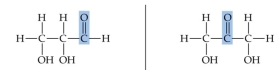
Question
Question
Identify the following molecule: 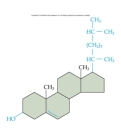
A) amino acid
B) hydrocarbon
C) carbohydrate
D) alcohol
E) cholesterol
A) amino acid
B) hydrocarbon
C) carbohydrate
D) alcohol
E) cholesterol
Question
Question
Question
Question
Question
Question
Question
Question
Question
Question
Question
Question
Identify this molecule: 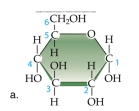
A) amino acid
B) hydrocarbon
C) carbohydrate
D) alcohol
E) lipid
A) amino acid
B) hydrocarbon
C) carbohydrate
D) alcohol
E) lipid
Question
Question
Question
Question
Question
Question
Which Figure is that of an unsaturated fat? 
A) Figure A
B) Figure B Figure A is an unsaturated fat. It has double bonds between the some of the carbon atoms. Figure B is a saturated fat with all single bonds between the carbon atoms.
A) Figure A
B) Figure B Figure A is an unsaturated fat. It has double bonds between the some of the carbon atoms. Figure B is a saturated fat with all single bonds between the carbon atoms.
Question
Question
Question
Construct a portion of cell membrane using the typical phospholipid symbol. Indicate the location of the cytoplasm and outside of the cell. Explain how the chemical characteristics of phospholipids molecules dictate membrane structure and cause it to be fluid in nature. 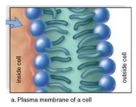
Question
Question
Question
Question
Question
Choose the Figure that depicts polymer synthesis. 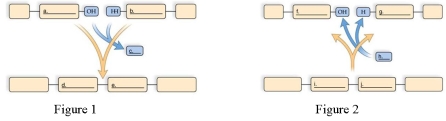
A) Figure 1
B) Figure 2 Figure 2 depicts a polymer being hydrolyzed. In degradation, the monomers in a polymer separate during a hydrolysis reaction. A bond is broken as water is added.
A) Figure 1
B) Figure 2 Figure 2 depicts a polymer being hydrolyzed. In degradation, the monomers in a polymer separate during a hydrolysis reaction. A bond is broken as water is added.
Question
Question
Question
Question
Question
Question
Question
Question
Question
Question
Question
Question
Question
Question
Question
Question
Question
Question
Question
Question
Question
Question
Question

Unlock Deck
Sign up to unlock the cards in this deck!
Unlock Deck
Unlock Deck
1/55

Play

Full screen (f)
Deck 3: The Chemistry of Organic Molecules
1
Which of the following are structural carbohydrate molecules?
A) starch and glycogen
B) starch and cellulose
C) glycogen and cellulose
D) cellulose and chitin
E) glycogen and chitin
A) starch and glycogen
B) starch and cellulose
C) glycogen and cellulose
D) cellulose and chitin
E) glycogen and chitin
D
2
A lipid is a polymer made up of which kind of monomers?
A) glucose or modified glucose molecules
B) amino acids
C) nucleotides
D) alternating sugar and phosphate groups
E) fatty acids and glycerol
A) glucose or modified glucose molecules
B) amino acids
C) nucleotides
D) alternating sugar and phosphate groups
E) fatty acids and glycerol
E
3
The differences between organic and inorganic molecules do not follow simple absolute rules. However, most organic molecules are associated with living organisms. Which of the following statements does NOT correspond to the general distinctions between these types of molecules?
A) Carbon dioxide (CO2) lacks hydrogen atoms found in organic molecules.
B) Formaldehyde (CH2O) is a small molecule compared to most organic molecules.
C) Salt (Na+Cl-) is not an organic molecule but is important to the life of many organisms.
D) Because they are in living organisms, organic carbon atoms are different from the inorganic carbon atoms forming the molecular structure of soot or a diamond.
A) Carbon dioxide (CO2) lacks hydrogen atoms found in organic molecules.
B) Formaldehyde (CH2O) is a small molecule compared to most organic molecules.
C) Salt (Na+Cl-) is not an organic molecule but is important to the life of many organisms.
D) Because they are in living organisms, organic carbon atoms are different from the inorganic carbon atoms forming the molecular structure of soot or a diamond.
D
4
What is the molecular formula of these molecules? How do these molecules differ? Are these the same molecule?
Unlock Deck
Unlock for access to all 55 flashcards in this deck.
Unlock Deck
k this deck
5
A hydrocarbon is hydrophobic
A) at all times.
B) only in the living cell environment.
C) except when it has an attached ionized functional group.
D) in carbohydrates but not in lipids.
A) at all times.
B) only in the living cell environment.
C) except when it has an attached ionized functional group.
D) in carbohydrates but not in lipids.
Unlock Deck
Unlock for access to all 55 flashcards in this deck.
Unlock Deck
k this deck
6
Identify the following molecule:
A) amino acid
B) hydrocarbon
C) carbohydrate
D) alcohol
E) cholesterol
A) amino acid
B) hydrocarbon
C) carbohydrate
D) alcohol
E) cholesterol
Unlock Deck
Unlock for access to all 55 flashcards in this deck.
Unlock Deck
k this deck
7
A dehydration reaction can also be called a (an) _________ reaction since it forms water.
A) condensation
B) hydrolysis
C) isomeric
D) an energy-releasing
E) monomer formation
A) condensation
B) hydrolysis
C) isomeric
D) an energy-releasing
E) monomer formation
Unlock Deck
Unlock for access to all 55 flashcards in this deck.
Unlock Deck
k this deck
8
Which of the following carbohydrates would NOT be a molecule used for energy storage?
A) starch
B) cellulose
C) glycogen
D) All of the above are used for energy storage
A) starch
B) cellulose
C) glycogen
D) All of the above are used for energy storage
Unlock Deck
Unlock for access to all 55 flashcards in this deck.
Unlock Deck
k this deck
9
Glucose (C6H12O6) can exist as both an open-chain form and a closed-ring form. Before 1900, glucose was only thought to occur as an open chain. Now we know that over 99 percent of the time, glucose occurs in the closed-ring form. What possible difference between these forms would give chemists a clue that the open-chain form was not present?
A) Open-chain molecules can form polymers and glucose does not.
B) Only open-chain forms can undergo condensation, which does not occur with glucose.
C) An open chain presents ends with functional groups (in this case aldehyde), and glucose failed to undergo typical aldehyde reactions; a phenomenon that could be explained by having no end functional group in a ring structure.
D) Because glucose is solid at room temperature, it must have saturated hydrocarbon chains.
E) Glucose could not be "denatured" so it must be a tight chain.
A) Open-chain molecules can form polymers and glucose does not.
B) Only open-chain forms can undergo condensation, which does not occur with glucose.
C) An open chain presents ends with functional groups (in this case aldehyde), and glucose failed to undergo typical aldehyde reactions; a phenomenon that could be explained by having no end functional group in a ring structure.
D) Because glucose is solid at room temperature, it must have saturated hydrocarbon chains.
E) Glucose could not be "denatured" so it must be a tight chain.
Unlock Deck
Unlock for access to all 55 flashcards in this deck.
Unlock Deck
k this deck
10
Which functional group will attach to a hydrocarbon chain to form alcohol?
A) hydroxyl
B) carbonyl
C) carboxyl
D) amino
E) phosphate
A) hydroxyl
B) carbonyl
C) carboxyl
D) amino
E) phosphate
Unlock Deck
Unlock for access to all 55 flashcards in this deck.
Unlock Deck
k this deck
11
A polysaccharide is a polymer made up of which kind of monomers?
A) simple sugars
B) amino acids
C) nucleotides
D) alternating sugar and phosphate groups
E) fatty acids and glycerol
A) simple sugars
B) amino acids
C) nucleotides
D) alternating sugar and phosphate groups
E) fatty acids and glycerol
Unlock Deck
Unlock for access to all 55 flashcards in this deck.
Unlock Deck
k this deck
12
What is the molecular formula for 5 glucose molecules?
A) C30H50O25
B) C30H60O30
C) C30H52O26
D) C6H24O12
A) C30H50O25
B) C30H60O30
C) C30H52O26
D) C6H24O12
Unlock Deck
Unlock for access to all 55 flashcards in this deck.
Unlock Deck
k this deck
13
Which carbohydrate is found in the cell walls of plants?
A) starch
B) chitin
C) cellulose
D) glycogen
E) glycerol
A) starch
B) chitin
C) cellulose
D) glycogen
E) glycerol
Unlock Deck
Unlock for access to all 55 flashcards in this deck.
Unlock Deck
k this deck
14
Organic molecules are those that contain at least
A) carbon.
B) carbon and oxygen.
C) carbon and hydrogen.
D) carbon, oxygen, and hydrogen.
A) carbon.
B) carbon and oxygen.
C) carbon and hydrogen.
D) carbon, oxygen, and hydrogen.
Unlock Deck
Unlock for access to all 55 flashcards in this deck.
Unlock Deck
k this deck
15
Which carbohydrate is used in the liver for energy storage?
A) starch
B) chitin
C) cellulose
D) glycogen
E) glycerol
A) starch
B) chitin
C) cellulose
D) glycogen
E) glycerol
Unlock Deck
Unlock for access to all 55 flashcards in this deck.
Unlock Deck
k this deck
16
What term is used for molecules that have identical molecular formulas but the atoms in each molecule are arranged differently?
A) isotope
B) isomer
C) homomolecules
D) organic
E) balanced
A) isotope
B) isomer
C) homomolecules
D) organic
E) balanced
Unlock Deck
Unlock for access to all 55 flashcards in this deck.
Unlock Deck
k this deck
17
Which carbohydrate is found in the exoskeleton of insects and crabs?
A) starch
B) chitin
C) cellulose
D) glycogen
E) glycerol
A) starch
B) chitin
C) cellulose
D) glycogen
E) glycerol
Unlock Deck
Unlock for access to all 55 flashcards in this deck.
Unlock Deck
k this deck
18
Identify this molecule:
A) amino acid
B) hydrocarbon
C) carbohydrate
D) alcohol
E) lipid
A) amino acid
B) hydrocarbon
C) carbohydrate
D) alcohol
E) lipid
Unlock Deck
Unlock for access to all 55 flashcards in this deck.
Unlock Deck
k this deck
19
Saturated fatty acids and unsaturated fatty acids differ in
A) the number of carbon-to-carbon bonds.
B) the consistency at room temperature.
C) the number of hydrogen atoms present.
D) all of the choices are differences between saturated and unsaturated fatty acid.
A) the number of carbon-to-carbon bonds.
B) the consistency at room temperature.
C) the number of hydrogen atoms present.
D) all of the choices are differences between saturated and unsaturated fatty acid.
Unlock Deck
Unlock for access to all 55 flashcards in this deck.
Unlock Deck
k this deck
20
The lipids of the cell membrane and the lipids found in butter and vegetable oil differ in which of the following?
A) the number of fatty acids attached to the glycerol molecule
B) the glycerol molecule
C) the carbon to carbon bonds
D) lipids of the cell membrane do not have hydrophobic sections of the molecule
A) the number of fatty acids attached to the glycerol molecule
B) the glycerol molecule
C) the carbon to carbon bonds
D) lipids of the cell membrane do not have hydrophobic sections of the molecule
Unlock Deck
Unlock for access to all 55 flashcards in this deck.
Unlock Deck
k this deck
21
Which statement is true about RNA?
A) It contains adenine paired to thymine.
B) One of the bases from DNA is replaced by uracil.
C) It contains the sugar deoxyribose.
D) Its nucleotides contain twice as many phosphate groups as DNA's nucleotides.
E) It is a double-stranded molecule.
A) It contains adenine paired to thymine.
B) One of the bases from DNA is replaced by uracil.
C) It contains the sugar deoxyribose.
D) Its nucleotides contain twice as many phosphate groups as DNA's nucleotides.
E) It is a double-stranded molecule.
Unlock Deck
Unlock for access to all 55 flashcards in this deck.
Unlock Deck
k this deck
22
If an animal needed to store energy for long-term use, but not be encumbered with the weight of extra tissue, which is the best molecule for storage?
A) fructose and glucose in the form of honey
B) high-calorie fat molecules
C) complex cellulose molecules
D) starch
E) glycogen with extensive side branches of glucose
A) fructose and glucose in the form of honey
B) high-calorie fat molecules
C) complex cellulose molecules
D) starch
E) glycogen with extensive side branches of glucose
Unlock Deck
Unlock for access to all 55 flashcards in this deck.
Unlock Deck
k this deck
23
A polypeptide has an amino acid sequence of: alanine-leucine-tryptophane-glycien-valine-alanine.
This chain of amino acids is further organized into a helix that in-turn, folds in and around itself to form a globular structure. The primary structure of this polypeptide is
A) globular.
B) pleated-sheet.
C) alpha helix.
D) alanine-leucine-tryptophane-glycien-valine-alanine.
This chain of amino acids is further organized into a helix that in-turn, folds in and around itself to form a globular structure. The primary structure of this polypeptide is
A) globular.
B) pleated-sheet.
C) alpha helix.
D) alanine-leucine-tryptophane-glycien-valine-alanine.
Unlock Deck
Unlock for access to all 55 flashcards in this deck.
Unlock Deck
k this deck
24
Which Figure is that of an unsaturated fat?
A) Figure A
B) Figure B Figure A is an unsaturated fat. It has double bonds between the some of the carbon atoms. Figure B is a saturated fat with all single bonds between the carbon atoms.
A) Figure A
B) Figure B Figure A is an unsaturated fat. It has double bonds between the some of the carbon atoms. Figure B is a saturated fat with all single bonds between the carbon atoms.
Unlock Deck
Unlock for access to all 55 flashcards in this deck.
Unlock Deck
k this deck
25
Which of these statements is NOT true about DNA?
A) It is the genetic material of the cell.
B) It forms a double helix.
C) Adenine pairs with thymine and guanine pairs with cytosine.
D) It contains the sugar ribose.
E) The sugar and phosphate groups form the backbone of the molecule.
A) It is the genetic material of the cell.
B) It forms a double helix.
C) Adenine pairs with thymine and guanine pairs with cytosine.
D) It contains the sugar ribose.
E) The sugar and phosphate groups form the backbone of the molecule.
Unlock Deck
Unlock for access to all 55 flashcards in this deck.
Unlock Deck
k this deck
26
A peptide bond is found in which type of biological molecule?
A) carbohydrate
B) lipid
C) nucleic acid
D) protein
A) carbohydrate
B) lipid
C) nucleic acid
D) protein
Unlock Deck
Unlock for access to all 55 flashcards in this deck.
Unlock Deck
k this deck
27
Construct a portion of cell membrane using the typical phospholipid symbol. Indicate the location of the cytoplasm and outside of the cell. Explain how the chemical characteristics of phospholipids molecules dictate membrane structure and cause it to be fluid in nature.
Unlock Deck
Unlock for access to all 55 flashcards in this deck.
Unlock Deck
k this deck
28
Fish sperm is composed mostly of the male fish's DNA. If we tested a sample chemically, we should find relatively high amounts of
A) nitrogenous bases, sugar, and phosphate groups.
B) phospholipids and steroids.
C) amino acids and unsaturated fats.
D) triglycerides and ATP.
E) globular proteins and stored fats.
A) nitrogenous bases, sugar, and phosphate groups.
B) phospholipids and steroids.
C) amino acids and unsaturated fats.
D) triglycerides and ATP.
E) globular proteins and stored fats.
Unlock Deck
Unlock for access to all 55 flashcards in this deck.
Unlock Deck
k this deck
29
Below freezing and above boiling, cells are unable to function as "liquid machinery." However, most organisms' cells are still limited from functioning throughout this full range of liquid temperatures. At the molecular level in different organisms, cells' ability to vary in their tolerance to temperature, etc., is most closely related to variation in
A) enzyme activity and protein denaturation.
B) ATP efficiency.
C) ability to form glucose polymers.
D) replication of nucleic acids.
E) extent of saturation of fatty acids.
A) enzyme activity and protein denaturation.
B) ATP efficiency.
C) ability to form glucose polymers.
D) replication of nucleic acids.
E) extent of saturation of fatty acids.
Unlock Deck
Unlock for access to all 55 flashcards in this deck.
Unlock Deck
k this deck
30
If a segment of DNA has 20% adenine in its base composition, what percent thymine is there?
A) 20%
B) 80%
C) 60%
D) 30%
A) 20%
B) 80%
C) 60%
D) 30%
Unlock Deck
Unlock for access to all 55 flashcards in this deck.
Unlock Deck
k this deck
31
The reactivity of an organic molecule is primarily dependent upon ____________ of the molecule.
A) the carbon skeleton
B) the attached functional groups such as a hydroxyl group
C) the isomer
D) All of the choices are correct.
A) the carbon skeleton
B) the attached functional groups such as a hydroxyl group
C) the isomer
D) All of the choices are correct.
Unlock Deck
Unlock for access to all 55 flashcards in this deck.
Unlock Deck
k this deck
32
Choose the Figure that depicts polymer synthesis.
A) Figure 1
B) Figure 2 Figure 2 depicts a polymer being hydrolyzed. In degradation, the monomers in a polymer separate during a hydrolysis reaction. A bond is broken as water is added.
A) Figure 1
B) Figure 2 Figure 2 depicts a polymer being hydrolyzed. In degradation, the monomers in a polymer separate during a hydrolysis reaction. A bond is broken as water is added.
Unlock Deck
Unlock for access to all 55 flashcards in this deck.
Unlock Deck
k this deck
33
Do disaccharide isomers exist? If so, describe how they are formed.
Unlock Deck
Unlock for access to all 55 flashcards in this deck.
Unlock Deck
k this deck
34
How many molecules of water are used to degrade this polypeptide, using hydrolysis reactions, into its constituent amino acids: alanine-leucine-tryptophane-glycine-valine-alanine?
A) six
B) five
C) one
D) seven
A) six
B) five
C) one
D) seven
Unlock Deck
Unlock for access to all 55 flashcards in this deck.
Unlock Deck
k this deck
35
The alpha helix and beta sheet are found at which level of protein organization?
A) primary structure
B) secondary structure
C) tertiary structure
D) quaternary structure
A) primary structure
B) secondary structure
C) tertiary structure
D) quaternary structure
Unlock Deck
Unlock for access to all 55 flashcards in this deck.
Unlock Deck
k this deck
36
A strand of DNA has the following base sequence (genetic code): ATTGCGAATGGCA. Construct the complementary strand of DNA.
Unlock Deck
Unlock for access to all 55 flashcards in this deck.
Unlock Deck
k this deck
37
A saturated fat
A) is often solid at room temperature.
B) has fatty acids with no double bonds between the carbon atoms.
C) is of animal origin.
D) All of the choices are correct.
A) is often solid at room temperature.
B) has fatty acids with no double bonds between the carbon atoms.
C) is of animal origin.
D) All of the choices are correct.
Unlock Deck
Unlock for access to all 55 flashcards in this deck.
Unlock Deck
k this deck
38
After eating eggs for breakfast, you return in the evening, dunk the dirty dishes in water, and notice the yellow streaks remain "dried on." However, after soaking awhile, the complex of various egg yolk molecules easily "washes off." What has happened?
A) Heating denatured the egg protein molecules, hydrolysis reactions then formed bonds in the dried egg, and soaking in water eventually resulted in condensation reactions where water broke these bonds.
B) Heating denatured the egg protein molecules, unorganized condensation reactions then formed bonds in the drying egg, and soaking in water eventually resulted in hydrolysis reactions where water broke these bonds.
C) The egg monomers were fused to become one polymer, which was easily dissolved by water back into monomers.
D) The presence or absence of water changes the molecules from hydrophilic to hydrophobic respectively.
E) The addition of water converted organic molecules into inorganic molecules.
A) Heating denatured the egg protein molecules, hydrolysis reactions then formed bonds in the dried egg, and soaking in water eventually resulted in condensation reactions where water broke these bonds.
B) Heating denatured the egg protein molecules, unorganized condensation reactions then formed bonds in the drying egg, and soaking in water eventually resulted in hydrolysis reactions where water broke these bonds.
C) The egg monomers were fused to become one polymer, which was easily dissolved by water back into monomers.
D) The presence or absence of water changes the molecules from hydrophilic to hydrophobic respectively.
E) The addition of water converted organic molecules into inorganic molecules.
Unlock Deck
Unlock for access to all 55 flashcards in this deck.
Unlock Deck
k this deck
39
The feet of penguins and reindeer contain large amounts of unsaturated triglycerides. Why would these animals have these fats in their feet rather than saturated fats?
Unlock Deck
Unlock for access to all 55 flashcards in this deck.
Unlock Deck
k this deck
40
Chitin and cellulose are molecules that do not spontaneously break down but can be digested by bacteria and some other microorganisms. Since carbon is not among the most common elements in the earth's crust, what would happen if all of the chitin-digesting and cellulose-digesting organisms on the earth were destroyed?
Unlock Deck
Unlock for access to all 55 flashcards in this deck.
Unlock Deck
k this deck
41
Carbon can form covalent bonds with as many as four other atoms.
Unlock Deck
Unlock for access to all 55 flashcards in this deck.
Unlock Deck
k this deck
42
Which of the following is a function of a steroid?
A) sex hormone
B) transmission of genetic information
C) long term energy storage
D) insulation against cold
E) protective layer
A) sex hormone
B) transmission of genetic information
C) long term energy storage
D) insulation against cold
E) protective layer
Unlock Deck
Unlock for access to all 55 flashcards in this deck.
Unlock Deck
k this deck
43
Which of the following protein is correctly matched with its function?
A) hemoglobin is found within the red blood cells
B) myosin is found within the ligaments
C) actin is found within the tendons
D) collagen is found within the muscle cells
E) hemoglobin is found within the cell membrane
A) hemoglobin is found within the red blood cells
B) myosin is found within the ligaments
C) actin is found within the tendons
D) collagen is found within the muscle cells
E) hemoglobin is found within the cell membrane
Unlock Deck
Unlock for access to all 55 flashcards in this deck.
Unlock Deck
k this deck
44
Starch is a protein that serves in energy storage in plant cells.
Unlock Deck
Unlock for access to all 55 flashcards in this deck.
Unlock Deck
k this deck
45
ATP is a protein that supplies energy to the cell.
Unlock Deck
Unlock for access to all 55 flashcards in this deck.
Unlock Deck
k this deck
46
Which of the following protein structures is exemplified by globular proteins?
A) tertiary
B) secondary
C) primary
D) quaternary
E) all of the protein structures are exemplified by globular proteins
A) tertiary
B) secondary
C) primary
D) quaternary
E) all of the protein structures are exemplified by globular proteins
Unlock Deck
Unlock for access to all 55 flashcards in this deck.
Unlock Deck
k this deck
47
If a certain segment of DNA has 30% adenine in its base composition, what percentage of guanine will there be? ev: 10_30_2013_QC_37868
Unlock Deck
Unlock for access to all 55 flashcards in this deck.
Unlock Deck
k this deck
48
Due to an increased risk of heart disease many doctors have suggested shifting our diet to include more oils instead of fats. As you cook dinner tonight the recipe calls for 2 tbs of oil. What is the most likely source of the oil you should use in preparing your meal?
A) canola or olives
B) bees wax distilled down to an oil form
C) melted butter
D) lard that was left out at room temperature
E) none of these choices are oils
A) canola or olives
B) bees wax distilled down to an oil form
C) melted butter
D) lard that was left out at room temperature
E) none of these choices are oils
Unlock Deck
Unlock for access to all 55 flashcards in this deck.
Unlock Deck
k this deck
49
What are the basic structures that make up a nucleotide?
A) pentose sugar, phosphate and nitrogen-containing base
B) pentose sugar, nitrate and phosphorus-containing base
C) ribose sugar, phosphate and nitrogen-containing base
D) hydroxide group, phosphate and nitrogen-containing base
E) pentose sugar, sodium and nitrogen-containing base
A) pentose sugar, phosphate and nitrogen-containing base
B) pentose sugar, nitrate and phosphorus-containing base
C) ribose sugar, phosphate and nitrogen-containing base
D) hydroxide group, phosphate and nitrogen-containing base
E) pentose sugar, sodium and nitrogen-containing base
Unlock Deck
Unlock for access to all 55 flashcards in this deck.
Unlock Deck
k this deck
50
Migratory birds store energy as glycogen which is lighter than fat.
Unlock Deck
Unlock for access to all 55 flashcards in this deck.
Unlock Deck
k this deck
51
Which of the following structures is classified as a nucleic acid?
A) adenine
B) RNA
C) thymine
D) guanine
E) cytosine
A) adenine
B) RNA
C) thymine
D) guanine
E) cytosine
Unlock Deck
Unlock for access to all 55 flashcards in this deck.
Unlock Deck
k this deck
52
Waxes consist of a glycerol bonded to three long-chain fatty acids.
Unlock Deck
Unlock for access to all 55 flashcards in this deck.
Unlock Deck
k this deck
53
Which of the following functional groups represents sulfhydryl?
A) SH
B) H-N-H
C) OH
D) 0=C-OH
E) C=O
A) SH
B) H-N-H
C) OH
D) 0=C-OH
E) C=O
Unlock Deck
Unlock for access to all 55 flashcards in this deck.
Unlock Deck
k this deck
54
Which of the following is NOT a protein function?
A) support
B) transportation
C) defense
D) motion
E) insulation
A) support
B) transportation
C) defense
D) motion
E) insulation
Unlock Deck
Unlock for access to all 55 flashcards in this deck.
Unlock Deck
k this deck
55
Which statement below correctly describes why ATP is a high energy structure?
A) ATP contains 2 phosphate bonds that contain high levels of energy.
B) ATP contains hydro-carbon chains that hold energy.
C) ATP is composed of thymine which is a high energy molecule.
D) The last two phosphate bonds are unstable and easily broken.
E) The first phosphate bond is unstable and easily broken.
A) ATP contains 2 phosphate bonds that contain high levels of energy.
B) ATP contains hydro-carbon chains that hold energy.
C) ATP is composed of thymine which is a high energy molecule.
D) The last two phosphate bonds are unstable and easily broken.
E) The first phosphate bond is unstable and easily broken.
Unlock Deck
Unlock for access to all 55 flashcards in this deck.
Unlock Deck
k this deck
Unlock Deck
Unlock for access to all 55 flashcards in this deck.






