







 Chat with AI

Deck 13: Genetic Counseling
Full screen (f)

Question
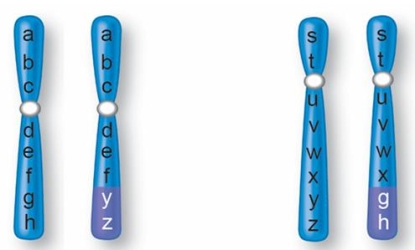
You are a genetic counselor, and a man with the translocation shown in the figure is your client. He and his partner who has a normal karyotype) wish to have children. You explain to him that the probability of having a child with an unbalanced translocation is
A) 0%.
B) 25%.
C) 50%.
D) 75%.
E) 100%.

Question
Question
Question
Question
Question
Question
Question
Question
Question
You are a genetic counselor, and a man with the translocation shown in the figure is your client. He and his partner who has a normal karyotype) wish to have children. You explain to him that the probability of having a child with the same translocation as the father is
A) 0%.
B) 25%.
C) 50%.
D) 75%.
E) 100%.
Question
Question
Question
Question
Question
Question
Question
Question
Question
Question
Question
Question
Question
Question
Question
Question
Question
Question
Question
Question
Question
Question
Question
Question
Question
Question
Question
Question
Question
Question
Question
Question
Question
Question

Unlock Deck
Sign up to unlock the cards in this deck!
Unlock Deck
Unlock Deck
1/44

Play

Full screen (f)
Deck 13: Genetic Counseling
1
You are a genetic counselor, and a man with the translocation shown in the figure is your client. He and his partner who has a normal karyotype) wish to have children. You explain to him that the probability of having a child with an unbalanced translocation is
A) 0%.
B) 25%.
C) 50%.
D) 75%.
E) 100%.
C
Explanation: The probability of the child receiving the abnormal chromosome and the normal chromosome is 1 in 4, or 25%. Similarly, the probability of the child receiving the normal chromosome and the abnormal chromosome is 1 in
Explanation: The probability of the child receiving the abnormal chromosome and the normal chromosome is 1 in 4, or 25%. Similarly, the probability of the child receiving the normal chromosome and the abnormal chromosome is 1 in
2
A genetic profile includes
A) the location of all known genes in the human genome.
B) the entire base sequence of an individual's genome.
C) all of an individual's normal genes.
D) an individual's complete genotype, including mutations.
E) all of an individual's genetic markers.
A) the location of all known genes in the human genome.
B) the entire base sequence of an individual's genome.
C) all of an individual's normal genes.
D) an individual's complete genotype, including mutations.
E) all of an individual's genetic markers.
D
Explanation: An individual's genotype for all known genes, including any mutations the individual possesses, is known as a genetic profile. The genetic profile can be useful in fostering a better lifestyle in order to minimize the risk of disease that the individual may face.
Explanation: An individual's genotype for all known genes, including any mutations the individual possesses, is known as a genetic profile. The genetic profile can be useful in fostering a better lifestyle in order to minimize the risk of disease that the individual may face.
3
When a chromosome carrying an inversion undergoes crossing-over,
A) all four chromatids will contain a duplication or deletion.
B) two chromatids will carry both a duplication and a deletion, one will contain the inversion, and one will be normal.
C) two chromatids will carry both a duplication and a deletion, and the other two will contain the inversion.
D) all four chromatids will be normal.
E) two chromatids will carry the inversion, and the other two will be normal.
A) all four chromatids will contain a duplication or deletion.
B) two chromatids will carry both a duplication and a deletion, one will contain the inversion, and one will be normal.
C) two chromatids will carry both a duplication and a deletion, and the other two will contain the inversion.
D) all four chromatids will be normal.
E) two chromatids will carry the inversion, and the other two will be normal.
B
4
A man carrying a translocation may appear normal, but runs the risk of having children with a syndrome because his children
A) may inherit both abnormal chromosomes from the father and would thus carry a deletion.
B) may inherit one abnormal chromosome with one normal chromosome from the father, and would carry a deletion or duplication.
C) will inherit one abnormal chromosome from both the mother and father.
D) may inherit both normal chromosomes from the father and an abnormal one from the mother.
E) carry the same translocation as the father.
A) may inherit both abnormal chromosomes from the father and would thus carry a deletion.
B) may inherit one abnormal chromosome with one normal chromosome from the father, and would carry a deletion or duplication.
C) will inherit one abnormal chromosome from both the mother and father.
D) may inherit both normal chromosomes from the father and an abnormal one from the mother.
E) carry the same translocation as the father.
Unlock Deck
Unlock for access to all 44 flashcards in this deck.
Unlock Deck
k this deck
5
Chromosome 7 may lose an end piece resulting in Williams syndrome. This is an example of an)
A) inversion.
B) duplication.
C) deletion.
D) translocation.
E) epigenetic inheritance.
A) inversion.
B) duplication.
C) deletion.
D) translocation.
E) epigenetic inheritance.
Unlock Deck
Unlock for access to all 44 flashcards in this deck.
Unlock Deck
k this deck
6
Inversions are chromosomal mutations that
A) always result in a syndrome.
B) neither increase nor decrease the amount of genetic material in the cell.
C) rarely cause deletions or duplications during gamete formation when crossing-over occurs.
D) result from duplication of a portion of a chromosome.
E) never disrupt gene regulation or cause physical abnormalities.
A) always result in a syndrome.
B) neither increase nor decrease the amount of genetic material in the cell.
C) rarely cause deletions or duplications during gamete formation when crossing-over occurs.
D) result from duplication of a portion of a chromosome.
E) never disrupt gene regulation or cause physical abnormalities.
Unlock Deck
Unlock for access to all 44 flashcards in this deck.
Unlock Deck
k this deck
7
A child with bluish-purple skin is found to lack the enzyme diaphorase and is subsequently diagnosed with which genetic disorder?
A) methemoglobinemia
B) Duchenne muscular dystrophy
C) Marfan syndrome
D) sickle-cell disease
E) color blindness
A) methemoglobinemia
B) Duchenne muscular dystrophy
C) Marfan syndrome
D) sickle-cell disease
E) color blindness
Unlock Deck
Unlock for access to all 44 flashcards in this deck.
Unlock Deck
k this deck
8
A parent carries a deletion on one of the two homologous chromosomes carrying the gene. What is the probability of this individual's child carrying the same deletion?
A) 0%
B) 25%
C) 50%
D) 75%
E) 100%
A) 0%
B) 25%
C) 50%
D) 75%
E) 100%
Unlock Deck
Unlock for access to all 44 flashcards in this deck.
Unlock Deck
k this deck
9
A missing piece of chromosome 5 may result in a child whose glottis and larynx do not develop properly, resulting in an abnormal cry. This is called
A) cri du chat syndrome.
B) Huntington syndrome.
C) Klinefelter syndrome.
D) inv dup 15 syndrome.
E) Down syndrome.
A) cri du chat syndrome.
B) Huntington syndrome.
C) Klinefelter syndrome.
D) inv dup 15 syndrome.
E) Down syndrome.
Unlock Deck
Unlock for access to all 44 flashcards in this deck.
Unlock Deck
k this deck
10
You are a genetic counselor, and a man with the translocation shown in the figure is your client. He and his partner who has a normal karyotype) wish to have children. You explain to him that the probability of having a child with the same translocation as the father is
A) 0%.
B) 25%.
C) 50%.
D) 75%.
E) 100%.
Unlock Deck
Unlock for access to all 44 flashcards in this deck.
Unlock Deck
k this deck
11
Amniocentesis may be preferred over chorionic villus sampling CVS) for karyotyping because
A) CVS takes much longer to obtain a karyotype.
B) CVS is a more invasive procedure.
C) amniocentesis has a lower risk of miscarriage than CVS.
D) amniocentesis can be performed more quickly than CVS.
E) a larger amount of tissue may be obtained through amniocentesis.
A) CVS takes much longer to obtain a karyotype.
B) CVS is a more invasive procedure.
C) amniocentesis has a lower risk of miscarriage than CVS.
D) amniocentesis can be performed more quickly than CVS.
E) a larger amount of tissue may be obtained through amniocentesis.
Unlock Deck
Unlock for access to all 44 flashcards in this deck.
Unlock Deck
k this deck
12
A DNA microarray detects
A) uncommon forms of alleles, or mutants, associated with disease.
B) an individual's complete genotype, including all the various mutations.
C) chromosomal abnormalities, such as duplications or deletions.
D) fetal cells in the mother's blood.
E) viral DNA in an individual's cells.
A) uncommon forms of alleles, or mutants, associated with disease.
B) an individual's complete genotype, including all the various mutations.
C) chromosomal abnormalities, such as duplications or deletions.
D) fetal cells in the mother's blood.
E) viral DNA in an individual's cells.
Unlock Deck
Unlock for access to all 44 flashcards in this deck.
Unlock Deck
k this deck
13
A karyotype shows chromosomes arranged by
A) banding patterns, size, and shape.
B) shape, size, and complexity.
C) complexity, radius, and length.
D) length, structure, and color.
E) color, width, and length.
A) banding patterns, size, and shape.
B) shape, size, and complexity.
C) complexity, radius, and length.
D) length, structure, and color.
E) color, width, and length.
Unlock Deck
Unlock for access to all 44 flashcards in this deck.
Unlock Deck
k this deck
14
A person with familial hypercholesterolemia is participating in an ex vivo gene therapy trial. The procedure involves
A) infecting a portion of the person's liver with a retrovirus containing a normal gene for a cholesterol receptor.
B) spraying the normal gene for the cholesterol receptor into the nose.
C) insertion of the cholesterol receptor gene into a virus, then injecting the virus into the person.
D) removing a piece of the person's liver, infecting it with a retrovirus containing the normal cholesterol receptor gene, and replacing the liver cells following treatment.
E) transplanting a normal liver into the individual.
A) infecting a portion of the person's liver with a retrovirus containing a normal gene for a cholesterol receptor.
B) spraying the normal gene for the cholesterol receptor into the nose.
C) insertion of the cholesterol receptor gene into a virus, then injecting the virus into the person.
D) removing a piece of the person's liver, infecting it with a retrovirus containing the normal cholesterol receptor gene, and replacing the liver cells following treatment.
E) transplanting a normal liver into the individual.
Unlock Deck
Unlock for access to all 44 flashcards in this deck.
Unlock Deck
k this deck
15
An embryo produced by in vitro fertilization IVF) may be tested for genetic disorders prior to implantation. How is this accomplished?
A) Fetal cells are recovered from the mother's blood, and the DNA analyzed with a DNA microarray.
B) Amniocentesis or chorionic villus sampling is performed, and a karyotype assembled.
C) A polar body is isolated and its DNA amplified by PCR for analysis by DNA microarray.
D) A single cell is removed from a 6- to 8-celled embryo, and its DNA analyzed with a DNA microarray.
E) Blood is drawn from the embryo for genetic marker analysis.
A) Fetal cells are recovered from the mother's blood, and the DNA analyzed with a DNA microarray.
B) Amniocentesis or chorionic villus sampling is performed, and a karyotype assembled.
C) A polar body is isolated and its DNA amplified by PCR for analysis by DNA microarray.
D) A single cell is removed from a 6- to 8-celled embryo, and its DNA analyzed with a DNA microarray.
E) Blood is drawn from the embryo for genetic marker analysis.
Unlock Deck
Unlock for access to all 44 flashcards in this deck.
Unlock Deck
k this deck
16
Which of the following syndromes is caused by a translocation?
A) Alagille syndrome
B) inv dup 15 syndrome
C) Williams syndrome
D) cri du chat syndrome
E) Turner syndrome
A) Alagille syndrome
B) inv dup 15 syndrome
C) Williams syndrome
D) cri du chat syndrome
E) Turner syndrome
Unlock Deck
Unlock for access to all 44 flashcards in this deck.
Unlock Deck
k this deck
17
What kinds of mutations can be revealed through ultrasound?
A) Some chromosomal abnormalities, such as Down syndrome and Edwards syndrome, and a few other known inherited disorders.
B) The genetic profile, including any mutant gene alleles the fetus may have.
C) All chromosomal mutations, including deletions, duplications, inversions, and translocations.
D) Only larger chromosomal mutations, such as the large deletion seen in individuals with cri du chat syndrome.
E) Only inherited genetic disorders caused by single gene mutations.
A) Some chromosomal abnormalities, such as Down syndrome and Edwards syndrome, and a few other known inherited disorders.
B) The genetic profile, including any mutant gene alleles the fetus may have.
C) All chromosomal mutations, including deletions, duplications, inversions, and translocations.
D) Only larger chromosomal mutations, such as the large deletion seen in individuals with cri du chat syndrome.
E) Only inherited genetic disorders caused by single gene mutations.
Unlock Deck
Unlock for access to all 44 flashcards in this deck.
Unlock Deck
k this deck
18
A known abnormality in a gene's sequence that can be linked to a genetic disease is called an)
A) genetic profile.
B) enzyme.
C) genetic marker.
D) DNA microarray.
E) genomic DNA.
A) genetic profile.
B) enzyme.
C) genetic marker.
D) DNA microarray.
E) genomic DNA.
Unlock Deck
Unlock for access to all 44 flashcards in this deck.
Unlock Deck
k this deck
19
You are a genetic counselor, and a man with the translocation shown in the figure is your client. He and his partner who has a normal karyotype) wish to have children. You explain to him that the probability of having a child with a normal karyotype is
A) 0%.
B) 25%.
C) 50%.
D) 75%.
E) 100%.
A) 0%.
B) 25%.
C) 50%.
D) 75%.
E) 100%.
Unlock Deck
Unlock for access to all 44 flashcards in this deck.
Unlock Deck
k this deck
20
Chromosomes for karyotyping are often obtained from a blood sample. Red blood cells, however, cannot be used for this purpose because
A) they are too small.
B) they lack nuclei.
C) white blood cells are much more common.
D) they have abnormal chromosomes.
E) they are difficult to isolate.
A) they are too small.
B) they lack nuclei.
C) white blood cells are much more common.
D) they have abnormal chromosomes.
E) they are difficult to isolate.
Unlock Deck
Unlock for access to all 44 flashcards in this deck.
Unlock Deck
k this deck
21
Transposons have not been discovered in which of the following species?
A) bacteria
B) plants
C) humans
D) fruit flies
E) fungi
A) bacteria
B) plants
C) humans
D) fruit flies
E) fungi
Unlock Deck
Unlock for access to all 44 flashcards in this deck.
Unlock Deck
k this deck
22
Mutations within genes always result in nonfunctional proteins.
Unlock Deck
Unlock for access to all 44 flashcards in this deck.
Unlock Deck
k this deck
23
Which of the following consequences can arise as the result of a chromosomal inversion?
A) The inverted sequence of alleles can lead to altered gene activity, but only if it disrupts the control of gene expression.
B) The additional nucleotides added to the allele can cause it to produce an additional protein.
C) The nucleotides that have been deleted from the allele will cause the new amino acid chain to be shortened.
D) The multiple copies of the adenine nucleotide that have been added will increase the number of amino acids added to the chain.
E) There are no consequences due to a chromosomal inversion.
A) The inverted sequence of alleles can lead to altered gene activity, but only if it disrupts the control of gene expression.
B) The additional nucleotides added to the allele can cause it to produce an additional protein.
C) The nucleotides that have been deleted from the allele will cause the new amino acid chain to be shortened.
D) The multiple copies of the adenine nucleotide that have been added will increase the number of amino acids added to the chain.
E) There are no consequences due to a chromosomal inversion.
Unlock Deck
Unlock for access to all 44 flashcards in this deck.
Unlock Deck
k this deck
24
In what way do transposons cause mutations to occur?
A) Transposons move within and between chromosomes, disrupting the genes.
B) Transposons cause large sections of the gene to be deleted from the chromosome, making it useless.
C) Transposons cause sections of the chromosome to make multiple copies of the same nucleotide.
D) Transposons produce proteins that conflict with the normal functioning proteins of the cell.
E) Transposons cause nonfunctional genes to be "woken up" and become functional.
A) Transposons move within and between chromosomes, disrupting the genes.
B) Transposons cause large sections of the gene to be deleted from the chromosome, making it useless.
C) Transposons cause sections of the chromosome to make multiple copies of the same nucleotide.
D) Transposons produce proteins that conflict with the normal functioning proteins of the cell.
E) Transposons cause nonfunctional genes to be "woken up" and become functional.
Unlock Deck
Unlock for access to all 44 flashcards in this deck.
Unlock Deck
k this deck
25
Which genetic disorder is due to a deletion on chromosome 7?
A) Williams syndrome
B) cri du chat syndrome
C) Alagille syndrome
D) Down syndrome
E) cancer
A) Williams syndrome
B) cri du chat syndrome
C) Alagille syndrome
D) Down syndrome
E) cancer
Unlock Deck
Unlock for access to all 44 flashcards in this deck.
Unlock Deck
k this deck
26
Which one of the following diseases or disorders has not been treated using gene therapy methods?
A) rheumatoid arthritis
B) familial hypercholesterolemia
C) cri du chat syndrome
D) sickle-cell disease
E) Duchenne muscular dystrophy
A) rheumatoid arthritis
B) familial hypercholesterolemia
C) cri du chat syndrome
D) sickle-cell disease
E) Duchenne muscular dystrophy
Unlock Deck
Unlock for access to all 44 flashcards in this deck.
Unlock Deck
k this deck
27
Alleles associated with known genetic disorders can be detected using DNA microarray analysis.
Unlock Deck
Unlock for access to all 44 flashcards in this deck.
Unlock Deck
k this deck
28
Testing for a protein may help reveal whether or not an individual has a genetic disorder.
Unlock Deck
Unlock for access to all 44 flashcards in this deck.
Unlock Deck
k this deck
29
In hemoglobin, the shift from glutamic acid to valine is considered what type of mutation?
A) point mutation
B) frameshift mutation
C) transposons
D) deletion
E) duplication
A) point mutation
B) frameshift mutation
C) transposons
D) deletion
E) duplication
Unlock Deck
Unlock for access to all 44 flashcards in this deck.
Unlock Deck
k this deck
30
Chorionic villus sampling carries less risk of causing miscarriage than amniocentesis.
Unlock Deck
Unlock for access to all 44 flashcards in this deck.
Unlock Deck
k this deck
31
What are the current known methods of delivering genes to cells for gene therapy?
A) viruses, liposomes, and nasal sprays
B) viruses, nasal sprays, and gene guns
C) liposomes, nasal sprays, and chemical transformation
D) nasal sprays, liposomes, and gene guns
E) viruses and gene guns
A) viruses, liposomes, and nasal sprays
B) viruses, nasal sprays, and gene guns
C) liposomes, nasal sprays, and chemical transformation
D) nasal sprays, liposomes, and gene guns
E) viruses and gene guns
Unlock Deck
Unlock for access to all 44 flashcards in this deck.
Unlock Deck
k this deck
32
A transposon may cause a mutation if it
A) jumps into an exon of another gene.
B) jumps into an intron of another gene.
C) jumps into an intergenic DNA sequence.
D) remains trapped within an intergenic DNA sequence.
E) interacts with a physical mutagen.
A) jumps into an exon of another gene.
B) jumps into an intron of another gene.
C) jumps into an intergenic DNA sequence.
D) remains trapped within an intergenic DNA sequence.
E) interacts with a physical mutagen.
Unlock Deck
Unlock for access to all 44 flashcards in this deck.
Unlock Deck
k this deck
33
To perform an in vivo gene therapy treatment, cells are removed from the patient's body, normal genes are added to them, and then the cells are returned to the patient's body.
Unlock Deck
Unlock for access to all 44 flashcards in this deck.
Unlock Deck
k this deck
34
Down syndrome could not be treated by gene therapy because
A) scientists do not know which faulty genes cause the syndrome.
B) Down syndrome results from having extra copies of genes on an entire chromosome, so adding more genes would not help.
C) liposomes and nasal sprays cannot be used due to abnormalities in the respiratory tract of Down syndrome individuals.
D) there are too many genes involved in the syndrome.
E) the gene therapy treatment could not be performed on an adult individual.
A) scientists do not know which faulty genes cause the syndrome.
B) Down syndrome results from having extra copies of genes on an entire chromosome, so adding more genes would not help.
C) liposomes and nasal sprays cannot be used due to abnormalities in the respiratory tract of Down syndrome individuals.
D) there are too many genes involved in the syndrome.
E) the gene therapy treatment could not be performed on an adult individual.
Unlock Deck
Unlock for access to all 44 flashcards in this deck.
Unlock Deck
k this deck
35
Ex vivo gene therapy differs from in vivo gene therapy in that
A) ex vivo gene therapy involves directly introducing the gene into the body.
B) in vivo gene therapy involves directly introducing the gene into the body.
C) in vivo gene therapy only employs viruses for gene transfer.
D) ex vivo gene therapy only employs viruses for gene transfer.
E) ex vivo gene therapy can employ viruses, nasal sprays, or liposomes for gene transfer, but only liposomes may be used for in vivo gene therapy.
A) ex vivo gene therapy involves directly introducing the gene into the body.
B) in vivo gene therapy involves directly introducing the gene into the body.
C) in vivo gene therapy only employs viruses for gene transfer.
D) ex vivo gene therapy only employs viruses for gene transfer.
E) ex vivo gene therapy can employ viruses, nasal sprays, or liposomes for gene transfer, but only liposomes may be used for in vivo gene therapy.
Unlock Deck
Unlock for access to all 44 flashcards in this deck.
Unlock Deck
k this deck
36
A translocation chromosomal mutation is the exchange of segments between two homologous chromosomes.
Unlock Deck
Unlock for access to all 44 flashcards in this deck.
Unlock Deck
k this deck
37
During DNA replication, the original strand ATTCGCGATTTA) was replicated as ATTCGGATTTA). What type of mutation is present?
A) deletion
B) duplication
C) transposon
D) translocation
E) None of these mutations have taken place.
A) deletion
B) duplication
C) transposon
D) translocation
E) None of these mutations have taken place.
Unlock Deck
Unlock for access to all 44 flashcards in this deck.
Unlock Deck
k this deck
38
A silent mutation is more likely to occur as a result of
A) a frameshift mutation.
B) a point mutation that does not change the amino acid encoded within the gene.
C) the movement of a transposon into an exon.
D) a point mutation that alters the amino acid encoded within the gene.
E) a large dose of radiation.
A) a frameshift mutation.
B) a point mutation that does not change the amino acid encoded within the gene.
C) the movement of a transposon into an exon.
D) a point mutation that alters the amino acid encoded within the gene.
E) a large dose of radiation.
Unlock Deck
Unlock for access to all 44 flashcards in this deck.
Unlock Deck
k this deck
39
Mutations are relatively uncommon because
A) DNA repair enzymes often repair errors.
B) physical mutagens such as X-rays seldom damage DNA.
C) DNA is able to repair itself over time.
D) frameshift mutations occur very frequently.
E) transposons are constantly moving throughout the genome.
A) DNA repair enzymes often repair errors.
B) physical mutagens such as X-rays seldom damage DNA.
C) DNA is able to repair itself over time.
D) frameshift mutations occur very frequently.
E) transposons are constantly moving throughout the genome.
Unlock Deck
Unlock for access to all 44 flashcards in this deck.
Unlock Deck
k this deck
40
An extra three nucleotides inserted into a gene will cause a frameshift mutation.
Unlock Deck
Unlock for access to all 44 flashcards in this deck.
Unlock Deck
k this deck
41
Which structure is used in the new treatment of rheumatoid arthritis?
A) adenovirus
B) SCID
C) bacteriophage
D) hypodermic needles
E) None of these structures are used in the treatment of rheumatoid arthritis.
A) adenovirus
B) SCID
C) bacteriophage
D) hypodermic needles
E) None of these structures are used in the treatment of rheumatoid arthritis.
Unlock Deck
Unlock for access to all 44 flashcards in this deck.
Unlock Deck
k this deck
42
Which human disorder is not being treated with gene therapy?
A) severe combined immunodeficiency SCID)
B) familial hypercholesterolemia
C) cancer
D) cystic fibrosis
E) All of these are being treated with gene therapy.
A) severe combined immunodeficiency SCID)
B) familial hypercholesterolemia
C) cancer
D) cystic fibrosis
E) All of these are being treated with gene therapy.
Unlock Deck
Unlock for access to all 44 flashcards in this deck.
Unlock Deck
k this deck
43
What structure is often used to deliver copies of genes into cells?
A) viruses
B) PCR
C) bacteria
D) prions
E) hypodermic needles
A) viruses
B) PCR
C) bacteria
D) prions
E) hypodermic needles
Unlock Deck
Unlock for access to all 44 flashcards in this deck.
Unlock Deck
k this deck
44
Which type of chromosomal mutation will lead to Alagille syndrome?
A) translocation
B) duplication
C) inversion
D) frameshift
E) point mutation
A) translocation
B) duplication
C) inversion
D) frameshift
E) point mutation
Unlock Deck
Unlock for access to all 44 flashcards in this deck.
Unlock Deck
k this deck
Unlock Deck
Unlock for access to all 44 flashcards in this deck.






