







 Chat with AI

Deck 21: Organic and Biochemical Molecules
Full screen (f)

Question
Name the following: 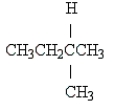
A) dodecane
B) methylpentane
C) isopropane
D) n-pentane
E) methylbutane
A) dodecane
B) methylpentane
C) isopropane
D) n-pentane
E) methylbutane

Question
Question
Question
Question
Question
The compound below is the carbon skeleton (minus any hydrogen atoms) of 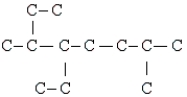 I.a C12H26
II.a substituted octane
III.a compound with 3 tertiary carbons
IV.a compound with 3 secondary carbons
V.a compound with 2 isopropyl groups
A) II, IV, V
B) II, III, IV
C) I, II, III, IV
D) III, IV, V
E) I, II, III
I.a C12H26II.a substituted octane
III.a compound with 3 tertiary carbons
IV.a compound with 3 secondary carbons
V.a compound with 2 isopropyl groups
A) II, IV, V
B) II, III, IV
C) I, II, III, IV
D) III, IV, V
E) I, II, III
Question
Question
Question
Name the following: 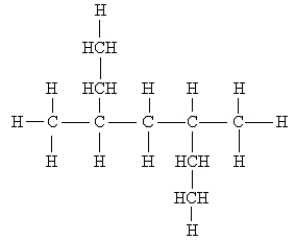
A) 3,5-dimethylheptane
B) secondary ethylpentane
C) 2,4-diethylpentane
D) 2,3-dimethyl-2,3-diethylpropane
E) none of these
A) 3,5-dimethylheptane
B) secondary ethylpentane
C) 2,4-diethylpentane
D) 2,3-dimethyl-2,3-diethylpropane
E) none of these
Question
Question
Question
Question
Question
Question
Question
Name the following: 
A) 2,2,5,7,8,8-hexamethyl-3,3-dipropylnonane
B) isonanane
C) 6-propyl-2,6-di-t-butylnonane
D) 2,2,3,5-tetramethyl-7-propyl-7-t-butyldecane
E) none of these
A) 2,2,5,7,8,8-hexamethyl-3,3-dipropylnonane
B) isonanane
C) 6-propyl-2,6-di-t-butylnonane
D) 2,2,3,5-tetramethyl-7-propyl-7-t-butyldecane
E) none of these
Question
Name the following: 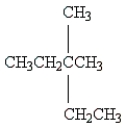
A) 2,2-diethylpropane
B) 2-methyl-2-ethylbutane
C) n-heptane
D) 3,3-dimethylpentane
A) 2,2-diethylpropane
B) 2-methyl-2-ethylbutane
C) n-heptane
D) 3,3-dimethylpentane
Question
Question
Question
What is the compound whose carbon skeleton (minus any hydrogen atoms) appears below? 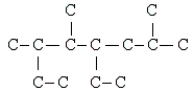
A) 2,4-diethyl-3,6-dimethylheptane
B) 5-ethyl-3,4,6-trimethyloctane
C) 1,4-diethyl-3,6-dimethyl-tridecane
D) 2,5-dimethyl-4,6-diethylheptane
E) 4-ethyl-2,5,6-trimethyloctane
A) 2,4-diethyl-3,6-dimethylheptane
B) 5-ethyl-3,4,6-trimethyloctane
C) 1,4-diethyl-3,6-dimethyl-tridecane
D) 2,5-dimethyl-4,6-diethylheptane
E) 4-ethyl-2,5,6-trimethyloctane
Question
Question
Question
Question
Which of the following compounds can exhibit geometric isomerism?
A)
B)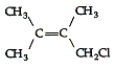
C)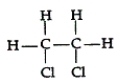
D)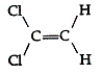
E)
A)
B)
C)
D)
E)
Question
Question
Name the following: 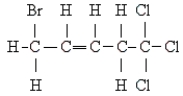
A) 1,1,1-trichloro-5-bromo-3-pentyne
B) 1,1,1-trichloro-5-bromo-3-pentene
C) 5,5,5-trichloro-1-bromo-2-pentene
D) 1,1,1-trichloro-5-bromo-2-pentene
E) none of these
A) 1,1,1-trichloro-5-bromo-3-pentyne
B) 1,1,1-trichloro-5-bromo-3-pentene
C) 5,5,5-trichloro-1-bromo-2-pentene
D) 1,1,1-trichloro-5-bromo-2-pentene
E) none of these
Question
Consider the following four compounds: 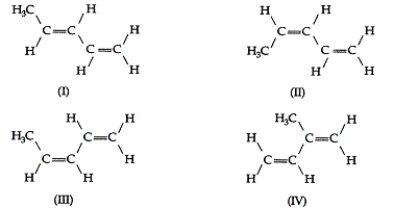 Which of these compounds would have the same physical properties (melting point, boiling point, density, and so on)?
A) I and IV
B) I and II
C) I and III
D) III and IV
E) II and III
Which of these compounds would have the same physical properties (melting point, boiling point, density, and so on)?A) I and IV
B) I and II
C) I and III
D) III and IV
E) II and III
Question
Name the following: 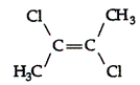
A) 2,3-dichloro-1-methyl-propene
B) 2,3-dichloro-trans-2-butene
C) 2,3-dichloro-cis-2-butene
D) 2-chloro-3-chloro-cis-2-butene
E) 1-chloro-1-methyl-2-chloro-propene
A) 2,3-dichloro-1-methyl-propene
B) 2,3-dichloro-trans-2-butene
C) 2,3-dichloro-cis-2-butene
D) 2-chloro-3-chloro-cis-2-butene
E) 1-chloro-1-methyl-2-chloro-propene
Question
Question
Question
Question
Question
Question
Question
Question
Question
Question
Question
Name the following: 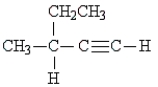
A) 1-hexyne
B) 2-ethyl-3-butyne
C) 3-methyl-1-pentyne
D) 2-ethynyl butane
E) 3-methyl-4-pentyne
A) 1-hexyne
B) 2-ethyl-3-butyne
C) 3-methyl-1-pentyne
D) 2-ethynyl butane
E) 3-methyl-4-pentyne
Question
Question
Question
Refer to the following structures. Which of the statements below is true of them? 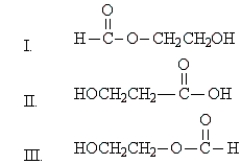
A) I and II have different molecular formulas.
B) II and III are stereoisomers of each other.
C) I and III are the same compound.
D) I and III are structural isomers of each other.
E) II and III are different conformations of the same compound.
A) I and II have different molecular formulas.
B) II and III are stereoisomers of each other.
C) I and III are the same compound.
D) I and III are structural isomers of each other.
E) II and III are different conformations of the same compound.
Question
Classify the following molecule: 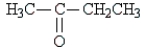
A) aldehyde
B) carbonyl
C) acid
D) ketone
E) amine
A) aldehyde
B) carbonyl
C) acid
D) ketone
E) amine
Question
Name the following: 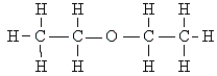
A) acetone
B) diethyl ether
C) diethylketone
D) butyraldehyde
E) none of these
A) acetone
B) diethyl ether
C) diethylketone
D) butyraldehyde
E) none of these
Question
Classify the following molecule: 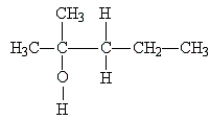
A) primary alcohol
B) tertiary alcohol
C) ether
D) secondary alcohol
E) phenol
A) primary alcohol
B) tertiary alcohol
C) ether
D) secondary alcohol
E) phenol
Question
Identify the type of organic compound shown: 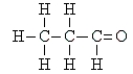
A) amine
B) ester
C) ketone
D) aldehyde
E) none of these
A) amine
B) ester
C) ketone
D) aldehyde
E) none of these
Question
Question
Which structure represents an optically active aldehyde?
A)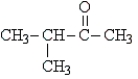
B)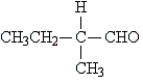
C)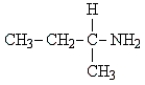
D)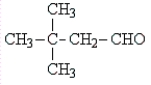
E)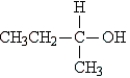
A)
B)
C)
D)
E)
Question
Name the following: 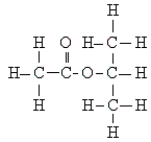
A) ethyl propanoate
B) n-propyl acetate
C) isopropyl formate
D) isopropyl acetate
E) none of these
A) ethyl propanoate
B) n-propyl acetate
C) isopropyl formate
D) isopropyl acetate
E) none of these
Question
Question
Identify the secondary amine.
A)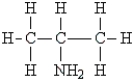
B) CH3NH2
C) (CH3)3N
D) (CH3)2 NH
E) NH3
A)
B) CH3NH2
C) (CH3)3N
D) (CH3)2 NH
E) NH3
Question
Question
Question
Question
Question
Name the following: 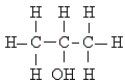
A) methyl alcohol
B) butanol
C) ethyl alcohol
D) propyl alcohol
E) isopropyl alcohol
A) methyl alcohol
B) butanol
C) ethyl alcohol
D) propyl alcohol
E) isopropyl alcohol
Question
Classify the following molecule: 
A) amine
B) acid
C) ketone
D) aldehyde
E) carbonyl
A) amine
B) acid
C) ketone
D) aldehyde
E) carbonyl
Question
Name the following: 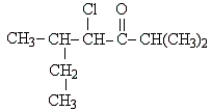
A) 3-methyl-4-chloro-1-isopropylpentanone
B) 4-chloro-2,5-dimethyl-3-heptanone
C) 2-chloro-3-ethyl-1-isopropylbutanone
D) 2-butyl,chloro,isobutanoyl methane
E) isopropyl-chloro,methylbutyl ketone
A) 3-methyl-4-chloro-1-isopropylpentanone
B) 4-chloro-2,5-dimethyl-3-heptanone
C) 2-chloro-3-ethyl-1-isopropylbutanone
D) 2-butyl,chloro,isobutanoyl methane
E) isopropyl-chloro,methylbutyl ketone
Question
Classify the following molecule: 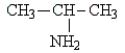
A) tertiary amine
B) secondary amine
C) primary amine
D) amino acid
E) peptide
A) tertiary amine
B) secondary amine
C) primary amine
D) amino acid
E) peptide
Question
Identify the type of organic compound shown: 
A) aldehyde
B) amine
C) ketone
D) ester
E) none of these
A) aldehyde
B) amine
C) ketone
D) ester
E) none of these
Question
Question
Question
Question
Question
Question
Question
Question
Question
Question
Question
Question
Question
Which of the following molecules exhibits chirality?
A) CH3OH
B) CH2Cl2
C) CH3CH2OCH3
D)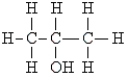
E) CH3CH2CClFOH
A) CH3OH
B) CH2Cl2
C) CH3CH2OCH3
D)
E) CH3CH2CClFOH
Question
Question
Question
Question
Pick the optically active molecule among the following:
A)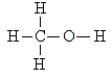
B)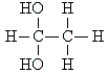
C)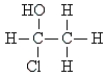
D)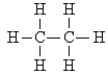
E) none of these
A)
B)
C)
D)
E) none of these
Question
Question
Question
When C4H8 is treated with water and H2SO4, a tertiary alcohol is produced. Which of the following structures could represent C4H8 in this reaction?
A) CH3CH2CH = CH2
B) CH3CH = CHCH3
C)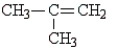
D) CH3CH2CH2CH3
E) none of these
A) CH3CH2CH = CH2
B) CH3CH = CHCH3
C)
D) CH3CH2CH2CH3
E) none of these

Unlock Deck
Sign up to unlock the cards in this deck!
Unlock Deck
Unlock Deck
1/123

Play

Full screen (f)
Deck 21: Organic and Biochemical Molecules
1
Name the following:
A) dodecane
B) methylpentane
C) isopropane
D) n-pentane
E) methylbutane
A) dodecane
B) methylpentane
C) isopropane
D) n-pentane
E) methylbutane
methylbutane
2
Isomers have
A) different molecular formulas and different structures.
B) the same molecular formula and the same structure.
C) the same molecular formula but different structures.
D) different molecular formulas but the same structure.
E) none of these
A) different molecular formulas and different structures.
B) the same molecular formula and the same structure.
C) the same molecular formula but different structures.
D) different molecular formulas but the same structure.
E) none of these
the same molecular formula but different structures.
3
A student gave a molecule the following name:
2-ethyl-3-methyl-5-butylhexane
However, his TA pointed out that although the molecule could be correctly drawn from this name, the name violates the systematic rules. What is the correct (IUPAC) name for the molecule?
A) 5,7,8-trimethyldecane
B) 3,4-dimethyl-6-butylheptane
C) 1,2-diethyl-3,6,7-trimethylnonane
D) 3,4,6-trimethyldecane
E) 2-butyl-4,5-dimethylheptane
2-ethyl-3-methyl-5-butylhexane
However, his TA pointed out that although the molecule could be correctly drawn from this name, the name violates the systematic rules. What is the correct (IUPAC) name for the molecule?
A) 5,7,8-trimethyldecane
B) 3,4-dimethyl-6-butylheptane
C) 1,2-diethyl-3,6,7-trimethylnonane
D) 3,4,6-trimethyldecane
E) 2-butyl-4,5-dimethylheptane
3,4,6-trimethyldecane
4
A student gave a molecule the following name:
3-methyl-4-isopropylpentane
However, the teacher pointed out that although the molecule could be correctly drawn from this name, the name violates the IUPAC rules. What is the correct (IUPAC) name for the molecule?
A) 4-isopropyl-3-methylpentane
B) 2-isopropyl-3-methylpentane
C) 3,4-dimethylheptane
D) 2,3,4-trimethylhexane
E) 1,1,2,3-tetramethylpentane
3-methyl-4-isopropylpentane
However, the teacher pointed out that although the molecule could be correctly drawn from this name, the name violates the IUPAC rules. What is the correct (IUPAC) name for the molecule?
A) 4-isopropyl-3-methylpentane
B) 2-isopropyl-3-methylpentane
C) 3,4-dimethylheptane
D) 2,3,4-trimethylhexane
E) 1,1,2,3-tetramethylpentane
Unlock Deck
Unlock for access to all 123 flashcards in this deck.
Unlock Deck
k this deck
5
Which of the following has the lowest boiling point?
A) ethane
B) methane
C) propane
D) butane
E) All of these have the same boiling point.
A) ethane
B) methane
C) propane
D) butane
E) All of these have the same boiling point.
Unlock Deck
Unlock for access to all 123 flashcards in this deck.
Unlock Deck
k this deck
6
The compound below is the carbon skeleton (minus any hydrogen atoms) of I.a C12H26
II.a substituted octane
III.a compound with 3 tertiary carbons
IV.a compound with 3 secondary carbons
V.a compound with 2 isopropyl groups
A) II, IV, V
B) II, III, IV
C) I, II, III, IV
D) III, IV, V
E) I, II, III
I.a C12H26II.a substituted octane
III.a compound with 3 tertiary carbons
IV.a compound with 3 secondary carbons
V.a compound with 2 isopropyl groups
A) II, IV, V
B) II, III, IV
C) I, II, III, IV
D) III, IV, V
E) I, II, III
Unlock Deck
Unlock for access to all 123 flashcards in this deck.
Unlock Deck
k this deck
7
In lecture, the professor named a molecule 2-ethyl-4-tertiary-butylpentane. An alert student pointed out that although the correct structure could be drawn from this name, the name did not follow systematic rules. What is the correct systematic name for the molecule?
A) 3,5,6,6-tetramethylheptane
B) 2-ethyl-4,5,5-trimethylhexane
C) undecane
D) 2,2,3,5-tetramethylheptane
E) 2-t-butyl-5-methylhexane
A) 3,5,6,6-tetramethylheptane
B) 2-ethyl-4,5,5-trimethylhexane
C) undecane
D) 2,2,3,5-tetramethylheptane
E) 2-t-butyl-5-methylhexane
Unlock Deck
Unlock for access to all 123 flashcards in this deck.
Unlock Deck
k this deck
8
Combustion reactions are substitution reactions with oxygen.
Unlock Deck
Unlock for access to all 123 flashcards in this deck.
Unlock Deck
k this deck
9
Name the following:
A) 3,5-dimethylheptane
B) secondary ethylpentane
C) 2,4-diethylpentane
D) 2,3-dimethyl-2,3-diethylpropane
E) none of these
A) 3,5-dimethylheptane
B) secondary ethylpentane
C) 2,4-diethylpentane
D) 2,3-dimethyl-2,3-diethylpropane
E) none of these
Unlock Deck
Unlock for access to all 123 flashcards in this deck.
Unlock Deck
k this deck
10
Which of the following names is a correct one?
A) 3,5-dichloropentane
B) 2-bromo-1-chloro-4,4-dimethylnonane
C) cis-1,3-dimethylpropane
D) 1,1-dimethyl-2,2-diethylbutane
E) 1-chloro-2,4-methyl-3-propylcyclohexane
A) 3,5-dichloropentane
B) 2-bromo-1-chloro-4,4-dimethylnonane
C) cis-1,3-dimethylpropane
D) 1,1-dimethyl-2,2-diethylbutane
E) 1-chloro-2,4-methyl-3-propylcyclohexane
Unlock Deck
Unlock for access to all 123 flashcards in this deck.
Unlock Deck
k this deck
11
1-Propene undergoes hydrogenation. The product of this is
A) methane.
B) ethane.
C) 2-propane.
D) propane.
E) none of these
A) methane.
B) ethane.
C) 2-propane.
D) propane.
E) none of these
Unlock Deck
Unlock for access to all 123 flashcards in this deck.
Unlock Deck
k this deck
12
How many isomers are there with the formula C3H4? Include both structural and geometric isomers.
A) 5
B) 2
C) 6
D) 3
E) 4
A) 5
B) 2
C) 6
D) 3
E) 4
Unlock Deck
Unlock for access to all 123 flashcards in this deck.
Unlock Deck
k this deck
13
How many isomers of C4H10 are there?
A) 5
B) 6
C) 2
D) 3
E) 4
A) 5
B) 6
C) 2
D) 3
E) 4
Unlock Deck
Unlock for access to all 123 flashcards in this deck.
Unlock Deck
k this deck
14
How many structural isomers does ethane have?
A) 1
B) 5
C) 3
D) 2
E) 4
A) 1
B) 5
C) 3
D) 2
E) 4
Unlock Deck
Unlock for access to all 123 flashcards in this deck.
Unlock Deck
k this deck
15
Which of the following is not a structural isomer of 1-pentene?
A) 2-methyl-2-butene
B) 1-methyl-cyclobutene
C) 2-pentene
D) cyclopentane
E) 3-methyl-1-butene
A) 2-methyl-2-butene
B) 1-methyl-cyclobutene
C) 2-pentene
D) cyclopentane
E) 3-methyl-1-butene
Unlock Deck
Unlock for access to all 123 flashcards in this deck.
Unlock Deck
k this deck
16
Name the following:
A) 2,2,5,7,8,8-hexamethyl-3,3-dipropylnonane
B) isonanane
C) 6-propyl-2,6-di-t-butylnonane
D) 2,2,3,5-tetramethyl-7-propyl-7-t-butyldecane
E) none of these
A) 2,2,5,7,8,8-hexamethyl-3,3-dipropylnonane
B) isonanane
C) 6-propyl-2,6-di-t-butylnonane
D) 2,2,3,5-tetramethyl-7-propyl-7-t-butyldecane
E) none of these
Unlock Deck
Unlock for access to all 123 flashcards in this deck.
Unlock Deck
k this deck
17
Name the following:
A) 2,2-diethylpropane
B) 2-methyl-2-ethylbutane
C) n-heptane
D) 3,3-dimethylpentane
A) 2,2-diethylpropane
B) 2-methyl-2-ethylbutane
C) n-heptane
D) 3,3-dimethylpentane
Unlock Deck
Unlock for access to all 123 flashcards in this deck.
Unlock Deck
k this deck
18
The product of ethane undergoing dehydrogenation is called
A) ethene.
B) propene.
C) propane.
D) methene.
E) none of these
A) ethene.
B) propene.
C) propane.
D) methene.
E) none of these
Unlock Deck
Unlock for access to all 123 flashcards in this deck.
Unlock Deck
k this deck
19
Which of the following, upon reacting with oxygen, would form the greatest amount of carbon dioxide?
A) n-pentane
B) isopentane
C) neopentane
D) Two of these would form equal amounts.
E) All of these would form equal amounts.
A) n-pentane
B) isopentane
C) neopentane
D) Two of these would form equal amounts.
E) All of these would form equal amounts.
Unlock Deck
Unlock for access to all 123 flashcards in this deck.
Unlock Deck
k this deck
20
What is the compound whose carbon skeleton (minus any hydrogen atoms) appears below?
A) 2,4-diethyl-3,6-dimethylheptane
B) 5-ethyl-3,4,6-trimethyloctane
C) 1,4-diethyl-3,6-dimethyl-tridecane
D) 2,5-dimethyl-4,6-diethylheptane
E) 4-ethyl-2,5,6-trimethyloctane
A) 2,4-diethyl-3,6-dimethylheptane
B) 5-ethyl-3,4,6-trimethyloctane
C) 1,4-diethyl-3,6-dimethyl-tridecane
D) 2,5-dimethyl-4,6-diethylheptane
E) 4-ethyl-2,5,6-trimethyloctane
Unlock Deck
Unlock for access to all 123 flashcards in this deck.
Unlock Deck
k this deck
21
Which of the following often have useful solvent properties?
A) esters only
B) ketones only
C) alcohols only
D) amines only
E) All of these have useful solvent properties.
A) esters only
B) ketones only
C) alcohols only
D) amines only
E) All of these have useful solvent properties.
Unlock Deck
Unlock for access to all 123 flashcards in this deck.
Unlock Deck
k this deck
22
Which of the following types of compounds lacks an sp2-hybridized carbon center?
A) ketones
B) aldehydes
C) alkenes
D) alcohols
E) benzene
A) ketones
B) aldehydes
C) alkenes
D) alcohols
E) benzene
Unlock Deck
Unlock for access to all 123 flashcards in this deck.
Unlock Deck
k this deck
23
Which of the following is an incorrect name?
A) ethene
B) propyne
C) trans-1,2-dichloroethene
D) 1,1-dibromobutane
E) cis-1,1-difluoropropane
A) ethene
B) propyne
C) trans-1,2-dichloroethene
D) 1,1-dibromobutane
E) cis-1,1-difluoropropane
Unlock Deck
Unlock for access to all 123 flashcards in this deck.
Unlock Deck
k this deck
24
Which of the following compounds can exhibit geometric isomerism?
A)
B)
C)
D)
E)
A)
B)
C)
D)
E)
Unlock Deck
Unlock for access to all 123 flashcards in this deck.
Unlock Deck
k this deck
25
How many different possible tetramethylbenzenes exist?
A) 6
B) 2
C) 5
D) 3
E) 4
A) 6
B) 2
C) 5
D) 3
E) 4
Unlock Deck
Unlock for access to all 123 flashcards in this deck.
Unlock Deck
k this deck
26
Name the following:
A) 1,1,1-trichloro-5-bromo-3-pentyne
B) 1,1,1-trichloro-5-bromo-3-pentene
C) 5,5,5-trichloro-1-bromo-2-pentene
D) 1,1,1-trichloro-5-bromo-2-pentene
E) none of these
A) 1,1,1-trichloro-5-bromo-3-pentyne
B) 1,1,1-trichloro-5-bromo-3-pentene
C) 5,5,5-trichloro-1-bromo-2-pentene
D) 1,1,1-trichloro-5-bromo-2-pentene
E) none of these
Unlock Deck
Unlock for access to all 123 flashcards in this deck.
Unlock Deck
k this deck
27
Consider the following four compounds: Which of these compounds would have the same physical properties (melting point, boiling point, density, and so on)?
A) I and IV
B) I and II
C) I and III
D) III and IV
E) II and III
Which of these compounds would have the same physical properties (melting point, boiling point, density, and so on)?A) I and IV
B) I and II
C) I and III
D) III and IV
E) II and III
Unlock Deck
Unlock for access to all 123 flashcards in this deck.
Unlock Deck
k this deck
28
Name the following:
A) 2,3-dichloro-1-methyl-propene
B) 2,3-dichloro-trans-2-butene
C) 2,3-dichloro-cis-2-butene
D) 2-chloro-3-chloro-cis-2-butene
E) 1-chloro-1-methyl-2-chloro-propene
A) 2,3-dichloro-1-methyl-propene
B) 2,3-dichloro-trans-2-butene
C) 2,3-dichloro-cis-2-butene
D) 2-chloro-3-chloro-cis-2-butene
E) 1-chloro-1-methyl-2-chloro-propene
Unlock Deck
Unlock for access to all 123 flashcards in this deck.
Unlock Deck
k this deck
29
The common name for 2-propanol is
A) n-propyl alcohol.
B) methanol.
C) ethanol.
D) isopropyl alcohol.
E) none of these
A) n-propyl alcohol.
B) methanol.
C) ethanol.
D) isopropyl alcohol.
E) none of these
Unlock Deck
Unlock for access to all 123 flashcards in this deck.
Unlock Deck
k this deck
30
Consider the molecule trans-2-butene. Which statement is true?
A) There is free rotation around every bond in the molecule.
B) Cis-2-butene is its structural isomer.
C) Carbon #2 exhibits sp2 hybridization.
D) The molecule has two π bonds.
E) none of these
A) There is free rotation around every bond in the molecule.
B) Cis-2-butene is its structural isomer.
C) Carbon #2 exhibits sp2 hybridization.
D) The molecule has two π bonds.
E) none of these
Unlock Deck
Unlock for access to all 123 flashcards in this deck.
Unlock Deck
k this deck
31
In which of the following lists do all members have a C=O bond?
A) secondary alcohol, ketone, aldehyde
B) ester, aldehyde, secondary alcohol, ketone
C) ester, aldehyde, ketone
D) any alcohol, ether, ester
E) carboxylic acid, ether, tertiary alcohol
A) secondary alcohol, ketone, aldehyde
B) ester, aldehyde, secondary alcohol, ketone
C) ester, aldehyde, ketone
D) any alcohol, ether, ester
E) carboxylic acid, ether, tertiary alcohol
Unlock Deck
Unlock for access to all 123 flashcards in this deck.
Unlock Deck
k this deck
32
Which of the following have a -C-NH2 functional group?
A) esters
B) alcohols
C) aldehydes
D) amines
E) ethers
A) esters
B) alcohols
C) aldehydes
D) amines
E) ethers
Unlock Deck
Unlock for access to all 123 flashcards in this deck.
Unlock Deck
k this deck
33
Which of the following is known as rubbing alcohol?
A) isopropanol
B) methanol
C) ethanol
D) propanol
E) none of these
A) isopropanol
B) methanol
C) ethanol
D) propanol
E) none of these
Unlock Deck
Unlock for access to all 123 flashcards in this deck.
Unlock Deck
k this deck
34
Which of the following is known as wood alcohol?
A) methanol
B) isopropanol
C) ethanol
D) propanol
E) none of these
A) methanol
B) isopropanol
C) ethanol
D) propanol
E) none of these
Unlock Deck
Unlock for access to all 123 flashcards in this deck.
Unlock Deck
k this deck
35
How many of the following molecules exist?
I.methene
II.isoethane
III.isopropyne
IV.neobutane
A) 2
B) 1
C) 4
D) 3
E) 0
I.methene
II.isoethane
III.isopropyne
IV.neobutane
A) 2
B) 1
C) 4
D) 3
E) 0
Unlock Deck
Unlock for access to all 123 flashcards in this deck.
Unlock Deck
k this deck
36
H2CCHCH2N(CH3)2 is
A) an alkyne and a tertiary amine.
B) an alkyne and a secondary amine.
C) an alkene and a primary amine.
D) an alkene and a tertiary amine.
E) none of these
A) an alkyne and a tertiary amine.
B) an alkyne and a secondary amine.
C) an alkene and a primary amine.
D) an alkene and a tertiary amine.
E) none of these
Unlock Deck
Unlock for access to all 123 flashcards in this deck.
Unlock Deck
k this deck
37
For which of the following compound(s) are cis and trans isomers possible?
A) difluoroethyne
B) 2,3-dichloro-2-butene
C) 3,4-diethyl-3-hexene
D) ortho-chloroanaline
E) 4,4-dimethylcyclohexanol
A) difluoroethyne
B) 2,3-dichloro-2-butene
C) 3,4-diethyl-3-hexene
D) ortho-chloroanaline
E) 4,4-dimethylcyclohexanol
Unlock Deck
Unlock for access to all 123 flashcards in this deck.
Unlock Deck
k this deck
38
How many structural and geometric isomers are there of chloropropene?
A) 2
B) 3
C) more than 5
D) 5
E) 4
A) 2
B) 3
C) more than 5
D) 5
E) 4
Unlock Deck
Unlock for access to all 123 flashcards in this deck.
Unlock Deck
k this deck
39
Name the following:
A) 1-hexyne
B) 2-ethyl-3-butyne
C) 3-methyl-1-pentyne
D) 2-ethynyl butane
E) 3-methyl-4-pentyne
A) 1-hexyne
B) 2-ethyl-3-butyne
C) 3-methyl-1-pentyne
D) 2-ethynyl butane
E) 3-methyl-4-pentyne
Unlock Deck
Unlock for access to all 123 flashcards in this deck.
Unlock Deck
k this deck
40
The oxidation of secondary alcohols results in
A) secondary alcohols.
B) aldehydes.
C) ketones.
D) esters.
E) ethers.
A) secondary alcohols.
B) aldehydes.
C) ketones.
D) esters.
E) ethers.
Unlock Deck
Unlock for access to all 123 flashcards in this deck.
Unlock Deck
k this deck
41
Which of the following will yield a carboxylic acid upon oxidation?
A) a ketone
B) a cycloalkane
C) an aldehyde
D) tertiary alcohol
E) a secondary alcohol
A) a ketone
B) a cycloalkane
C) an aldehyde
D) tertiary alcohol
E) a secondary alcohol
Unlock Deck
Unlock for access to all 123 flashcards in this deck.
Unlock Deck
k this deck
42
Refer to the following structures. Which of the statements below is true of them?
A) I and II have different molecular formulas.
B) II and III are stereoisomers of each other.
C) I and III are the same compound.
D) I and III are structural isomers of each other.
E) II and III are different conformations of the same compound.
A) I and II have different molecular formulas.
B) II and III are stereoisomers of each other.
C) I and III are the same compound.
D) I and III are structural isomers of each other.
E) II and III are different conformations of the same compound.
Unlock Deck
Unlock for access to all 123 flashcards in this deck.
Unlock Deck
k this deck
43
Classify the following molecule:
A) aldehyde
B) carbonyl
C) acid
D) ketone
E) amine
A) aldehyde
B) carbonyl
C) acid
D) ketone
E) amine
Unlock Deck
Unlock for access to all 123 flashcards in this deck.
Unlock Deck
k this deck
44
Name the following:
A) acetone
B) diethyl ether
C) diethylketone
D) butyraldehyde
E) none of these
A) acetone
B) diethyl ether
C) diethylketone
D) butyraldehyde
E) none of these
Unlock Deck
Unlock for access to all 123 flashcards in this deck.
Unlock Deck
k this deck
45
Classify the following molecule:
A) primary alcohol
B) tertiary alcohol
C) ether
D) secondary alcohol
E) phenol
A) primary alcohol
B) tertiary alcohol
C) ether
D) secondary alcohol
E) phenol
Unlock Deck
Unlock for access to all 123 flashcards in this deck.
Unlock Deck
k this deck
46
Identify the type of organic compound shown:
A) amine
B) ester
C) ketone
D) aldehyde
E) none of these
A) amine
B) ester
C) ketone
D) aldehyde
E) none of these
Unlock Deck
Unlock for access to all 123 flashcards in this deck.
Unlock Deck
k this deck
47
Oxidation of 2-methyl-1-butanol could yield
I.2-methyl-1-butanone
II.2-methylbutanal
III.2-methylbutanoic acid
A) II only
B) II and III
C) I and III
D) I only
E) III only
I.2-methyl-1-butanone
II.2-methylbutanal
III.2-methylbutanoic acid
A) II only
B) II and III
C) I and III
D) I only
E) III only
Unlock Deck
Unlock for access to all 123 flashcards in this deck.
Unlock Deck
k this deck
48
Which structure represents an optically active aldehyde?
A)
B)
C)
D)
E)
A)
B)
C)
D)
E)
Unlock Deck
Unlock for access to all 123 flashcards in this deck.
Unlock Deck
k this deck
49
Name the following:
A) ethyl propanoate
B) n-propyl acetate
C) isopropyl formate
D) isopropyl acetate
E) none of these
A) ethyl propanoate
B) n-propyl acetate
C) isopropyl formate
D) isopropyl acetate
E) none of these
Unlock Deck
Unlock for access to all 123 flashcards in this deck.
Unlock Deck
k this deck
50
Which of the following is found in beverages such as wine?
A) propanol
B) isopropanol
C) ethanol
D) methanol
E) none of these
A) propanol
B) isopropanol
C) ethanol
D) methanol
E) none of these
Unlock Deck
Unlock for access to all 123 flashcards in this deck.
Unlock Deck
k this deck
51
Identify the secondary amine.
A)
B) CH3NH2
C) (CH3)3N
D) (CH3)2 NH
E) NH3
A)
B) CH3NH2
C) (CH3)3N
D) (CH3)2 NH
E) NH3
Unlock Deck
Unlock for access to all 123 flashcards in this deck.
Unlock Deck
k this deck
52
When the following organic compound is oxidized, what is the major organic product?
(CH3CH2)2CHOH + KMnO4
A) 3-pentanone
B) 3-pentanal
C) 3-pentanoic acid
D) diethylether
E) 3-pentanol
(CH3CH2)2CHOH + KMnO4
A) 3-pentanone
B) 3-pentanal
C) 3-pentanoic acid
D) diethylether
E) 3-pentanol
Unlock Deck
Unlock for access to all 123 flashcards in this deck.
Unlock Deck
k this deck
53
Which of the following becomes more soluble in water upon the addition of NaOH?
A) an alkane
B) an aromatic hydrocarbon
C) an amine
D) a carboxylic acid
E) an amide
A) an alkane
B) an aromatic hydrocarbon
C) an amine
D) a carboxylic acid
E) an amide
Unlock Deck
Unlock for access to all 123 flashcards in this deck.
Unlock Deck
k this deck
54
If you were to heat pentanoic acid and 2-butanol with an acid catalyst, which of the following would you be most likely discover in your flask?
A) an alkane
B) a ketone
C) an ester
D) an amine
E) an aldehyde
A) an alkane
B) a ketone
C) an ester
D) an amine
E) an aldehyde
Unlock Deck
Unlock for access to all 123 flashcards in this deck.
Unlock Deck
k this deck
55
Identify the type of organic compound shown:
(CH3)2CHOH
A) carboxylic acid
B) ether
C) secondary alcohol
D) tertiary alcohol
E) primary amine
(CH3)2CHOH
A) carboxylic acid
B) ether
C) secondary alcohol
D) tertiary alcohol
E) primary amine
Unlock Deck
Unlock for access to all 123 flashcards in this deck.
Unlock Deck
k this deck
56
Name the following:
A) methyl alcohol
B) butanol
C) ethyl alcohol
D) propyl alcohol
E) isopropyl alcohol
A) methyl alcohol
B) butanol
C) ethyl alcohol
D) propyl alcohol
E) isopropyl alcohol
Unlock Deck
Unlock for access to all 123 flashcards in this deck.
Unlock Deck
k this deck
57
Classify the following molecule:
A) amine
B) acid
C) ketone
D) aldehyde
E) carbonyl
A) amine
B) acid
C) ketone
D) aldehyde
E) carbonyl
Unlock Deck
Unlock for access to all 123 flashcards in this deck.
Unlock Deck
k this deck
58
Name the following:
A) 3-methyl-4-chloro-1-isopropylpentanone
B) 4-chloro-2,5-dimethyl-3-heptanone
C) 2-chloro-3-ethyl-1-isopropylbutanone
D) 2-butyl,chloro,isobutanoyl methane
E) isopropyl-chloro,methylbutyl ketone
A) 3-methyl-4-chloro-1-isopropylpentanone
B) 4-chloro-2,5-dimethyl-3-heptanone
C) 2-chloro-3-ethyl-1-isopropylbutanone
D) 2-butyl,chloro,isobutanoyl methane
E) isopropyl-chloro,methylbutyl ketone
Unlock Deck
Unlock for access to all 123 flashcards in this deck.
Unlock Deck
k this deck
59
Classify the following molecule:
A) tertiary amine
B) secondary amine
C) primary amine
D) amino acid
E) peptide
A) tertiary amine
B) secondary amine
C) primary amine
D) amino acid
E) peptide
Unlock Deck
Unlock for access to all 123 flashcards in this deck.
Unlock Deck
k this deck
60
Identify the type of organic compound shown:
A) aldehyde
B) amine
C) ketone
D) ester
E) none of these
A) aldehyde
B) amine
C) ketone
D) ester
E) none of these
Unlock Deck
Unlock for access to all 123 flashcards in this deck.
Unlock Deck
k this deck
61
The condensation product of two amino acids is a(n)
A) ester.
B) peptide.
C) alcohol.
D) ketone.
E) ether.
A) ester.
B) peptide.
C) alcohol.
D) ketone.
E) ether.
Unlock Deck
Unlock for access to all 123 flashcards in this deck.
Unlock Deck
k this deck
62
An example of a secondary structure of a protein is
A) a peptide linkage.
B) a pleated sheet.
C) serine.
D) an alpha amino acid.
E) none of these
A) a peptide linkage.
B) a pleated sheet.
C) serine.
D) an alpha amino acid.
E) none of these
Unlock Deck
Unlock for access to all 123 flashcards in this deck.
Unlock Deck
k this deck
63
Teflon is an example of a
A) copolymer.
B) homopolymer.
C) dimer.
D) two of these
E) none of these
A) copolymer.
B) homopolymer.
C) dimer.
D) two of these
E) none of these
Unlock Deck
Unlock for access to all 123 flashcards in this deck.
Unlock Deck
k this deck
64
Which of the following is the best description of a protein?
A) a chain of amino acids formed by condensation polymerization
B) an alternating chain of amino acids and nucleic acids
C) two antiparallel chains of nucleic acids connected by hydrogen bonding
D) a chain of amino acids connected by ester bonds
E) a chain of nucleotides connected by phosphodiester bonds
A) a chain of amino acids formed by condensation polymerization
B) an alternating chain of amino acids and nucleic acids
C) two antiparallel chains of nucleic acids connected by hydrogen bonding
D) a chain of amino acids connected by ester bonds
E) a chain of nucleotides connected by phosphodiester bonds
Unlock Deck
Unlock for access to all 123 flashcards in this deck.
Unlock Deck
k this deck
65
Aspirin is formed via a(n) __________ reaction.
A) combustion
B) hydrogenation
C) condensation
D) substitution
E) addition
A) combustion
B) hydrogenation
C) condensation
D) substitution
E) addition
Unlock Deck
Unlock for access to all 123 flashcards in this deck.
Unlock Deck
k this deck
66
The overall shape of a protein is maintained by
A) hydrogen bonding.
B) ionic bonds.
C) dipole-dipole bonding.
D) covalent bonds.
E) all of these
A) hydrogen bonding.
B) ionic bonds.
C) dipole-dipole bonding.
D) covalent bonds.
E) all of these
Unlock Deck
Unlock for access to all 123 flashcards in this deck.
Unlock Deck
k this deck
67
Oxidation of a primary alcohol results in a(n) __________, and oxidation of a secondary alcohol results in a(n) _________.
A) ester, ether
B) ketone, aldehyde
C) amine, carboxylic acid
D) carboxylic acid, amine
E) aldehyde, ketone
A) ester, ether
B) ketone, aldehyde
C) amine, carboxylic acid
D) carboxylic acid, amine
E) aldehyde, ketone
Unlock Deck
Unlock for access to all 123 flashcards in this deck.
Unlock Deck
k this deck
68
Which of the following yields a primary alcohol upon reduction?
A) a ketone
B) an amine
C) an alkene
D) an aldehyde
E) an ether
A) a ketone
B) an amine
C) an alkene
D) an aldehyde
E) an ether
Unlock Deck
Unlock for access to all 123 flashcards in this deck.
Unlock Deck
k this deck
69
The boiling point of methanol is much higher than that of ethane. This is primarily due to
A) the significant molecular size difference between methanol and ethane.
B) the difference between the molar mass of methanol and that of ethane.
C) the carbon-oxygen double bond in the methanol.
D) the hydrogen bonding in methanol.
E) none of these
A) the significant molecular size difference between methanol and ethane.
B) the difference between the molar mass of methanol and that of ethane.
C) the carbon-oxygen double bond in the methanol.
D) the hydrogen bonding in methanol.
E) none of these
Unlock Deck
Unlock for access to all 123 flashcards in this deck.
Unlock Deck
k this deck
70
The analysis of a protein for its amino acid content is valuable in determining the protein's
A) quaternary structure.
B) secondary structure.
C) primary structure.
D) tertiary structure.
A) quaternary structure.
B) secondary structure.
C) primary structure.
D) tertiary structure.
Unlock Deck
Unlock for access to all 123 flashcards in this deck.
Unlock Deck
k this deck
71
The structures of proteins are partially determined by the order of various amino acids in the macromolecule. This level of structural determination is known as
A) tertiary structure.
B) secondary structure.
C) the order of bases.
D) quaternary structure.
E) primary structure.
A) tertiary structure.
B) secondary structure.
C) the order of bases.
D) quaternary structure.
E) primary structure.
Unlock Deck
Unlock for access to all 123 flashcards in this deck.
Unlock Deck
k this deck
72
The alpha helix of a protein is held in a coiled conformation partly because of
A) hydrogen bonding.
B) double bonding.
C) active sites.
D) optical activity.
A) hydrogen bonding.
B) double bonding.
C) active sites.
D) optical activity.
Unlock Deck
Unlock for access to all 123 flashcards in this deck.
Unlock Deck
k this deck
73
Which of the following molecules exhibits chirality?
A) CH3OH
B) CH2Cl2
C) CH3CH2OCH3
D)
E) CH3CH2CClFOH
A) CH3OH
B) CH2Cl2
C) CH3CH2OCH3
D)
E) CH3CH2CClFOH
Unlock Deck
Unlock for access to all 123 flashcards in this deck.
Unlock Deck
k this deck
74
Which of the following is optically active (that is, chiral)?
A) 3-chloropentane
B) 1-bromopentane
C) 2-chloropentane
D) dichloromethane
E) dimethylamine
A) 3-chloropentane
B) 1-bromopentane
C) 2-chloropentane
D) dichloromethane
E) dimethylamine
Unlock Deck
Unlock for access to all 123 flashcards in this deck.
Unlock Deck
k this deck
75
A polypeptide is
A) an addition polymer of amino acids.
B) a part of nucleic acids.
C) a polymer of sugar molecules.
D) a condensation polymer of amino acids.
E) none of these
A) an addition polymer of amino acids.
B) a part of nucleic acids.
C) a polymer of sugar molecules.
D) a condensation polymer of amino acids.
E) none of these
Unlock Deck
Unlock for access to all 123 flashcards in this deck.
Unlock Deck
k this deck
76
Hydrogen bonding between -C=O groups and NH- groups in the backbone of a protein determines the
A) tertiary structure.
B) secondary structure.
C) quaternary structure.
D) primary structure.
E) all of these
A) tertiary structure.
B) secondary structure.
C) quaternary structure.
D) primary structure.
E) all of these
Unlock Deck
Unlock for access to all 123 flashcards in this deck.
Unlock Deck
k this deck
77
Pick the optically active molecule among the following:
A)
B)
C)
D)
E) none of these
A)
B)
C)
D)
E) none of these
Unlock Deck
Unlock for access to all 123 flashcards in this deck.
Unlock Deck
k this deck
78
No atoms are lost from starting material in making which kind of polymer?
A) vulcanized polymer
B) addition polymer
C) condensation polymer
D) branched polymer
E) polyester polymer
A) vulcanized polymer
B) addition polymer
C) condensation polymer
D) branched polymer
E) polyester polymer
Unlock Deck
Unlock for access to all 123 flashcards in this deck.
Unlock Deck
k this deck
79
A protein is
A) a polysaccharide.
B) a polymer of amino acid units.
C) a saturated ester of glycerol.
D) one of the units composing a nucleic acid.
E) an aromatic hydrocarbon with a fused ring structure.
A) a polysaccharide.
B) a polymer of amino acid units.
C) a saturated ester of glycerol.
D) one of the units composing a nucleic acid.
E) an aromatic hydrocarbon with a fused ring structure.
Unlock Deck
Unlock for access to all 123 flashcards in this deck.
Unlock Deck
k this deck
80
When C4H8 is treated with water and H2SO4, a tertiary alcohol is produced. Which of the following structures could represent C4H8 in this reaction?
A) CH3CH2CH = CH2
B) CH3CH = CHCH3
C)
D) CH3CH2CH2CH3
E) none of these
A) CH3CH2CH = CH2
B) CH3CH = CHCH3
C)
D) CH3CH2CH2CH3
E) none of these
Unlock Deck
Unlock for access to all 123 flashcards in this deck.
Unlock Deck
k this deck
Unlock Deck
Unlock for access to all 123 flashcards in this deck.






