







 Chat with AI

Deck 19: Shorelines: Changing Landscapes Where Land Meets Sea
Full screen (f)

Question

Question
Question
Figure 19.4 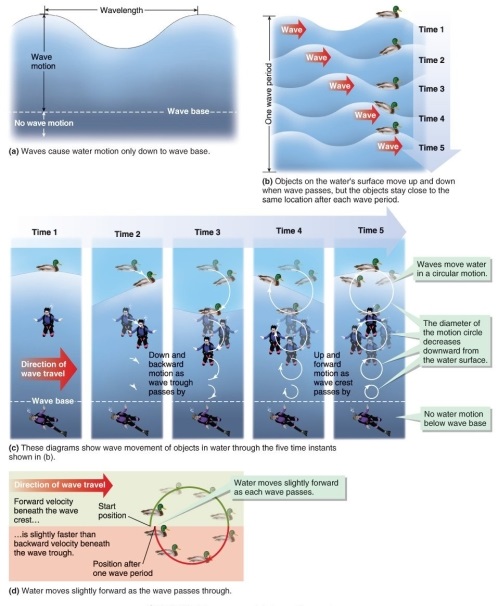
Refer to Figure 19.4. Which of the following conclusions cannot be made from the given information?
A) A duck on water will move slightly forward with each wave that passes.
B) A duck will move up and down as waves move beneath it.
C) The distance that a wave moves an object back and forth as it passes increases as the object gets closer to the bottom of the wave.
D) Wave motion does not move water below the wave base.
Refer to Figure 19.4. Which of the following conclusions cannot be made from the given information?
A) A duck on water will move slightly forward with each wave that passes.
B) A duck will move up and down as waves move beneath it.
C) The distance that a wave moves an object back and forth as it passes increases as the object gets closer to the bottom of the wave.
D) Wave motion does not move water below the wave base.
Question
Question
Question
Question
Question
Question
Question
Question
Question
Question
Question
Question
Question
Question
Question
Question
Question
Question
Question
Question
Question
Question
Question
Question
Question
Question
Question
Question
Question
Question
Question
Question
Question
Question
Question
Question
Figure 19.42 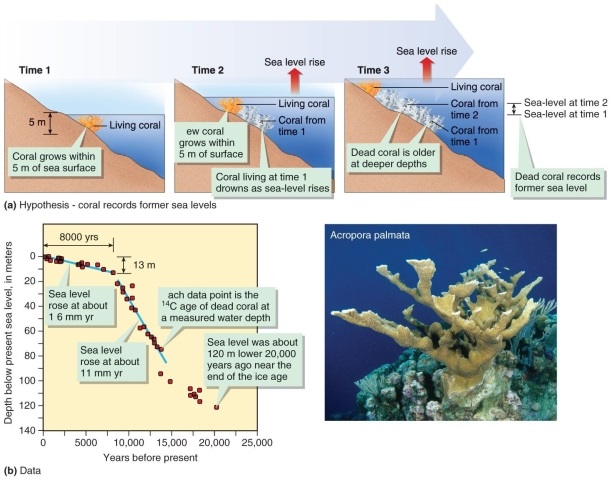
According to Figure 19.42, a drowned coral reef in the Caribbean that is under 70 meters of seawater is
A) about 7 million years old.
B) about 10 million years old.
C) about 12 million years old.
D) about 20 million years old.
According to Figure 19.42, a drowned coral reef in the Caribbean that is under 70 meters of seawater is
A) about 7 million years old.
B) about 10 million years old.
C) about 12 million years old.
D) about 20 million years old.
Question
Question
Question
Question
Question
Question
Question
Question
Question
Question
Question
Question
Question
Question
Question
Question
Question
Question
Question
Question
Question
Question
Question
Question
Figure 19.25 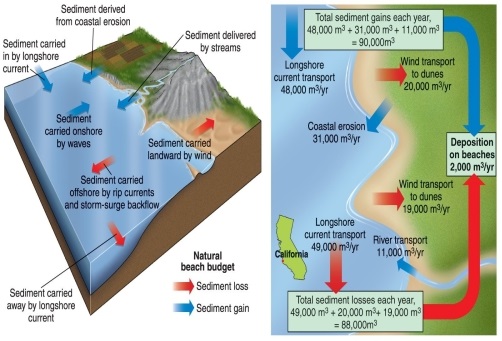
According to Figure 19.25, the largest volume of sediment removed from this section of beach in central California comes from
A) longshore current.
B) wind transport.
C) coastal erosion.
D) river transport.
According to Figure 19.25, the largest volume of sediment removed from this section of beach in central California comes from
A) longshore current.
B) wind transport.
C) coastal erosion.
D) river transport.
Question
Question
Question
Question
Question
Question
Question
Question
Question
Question
Question
Question
Question
Question
Figure 19.25
According to Figure 19.25, the largest volume of sediment delivered to this section of beach in central California comes from
A) longshore current.
B) wind transport.
C) coastal erosion.
D) river transport.
According to Figure 19.25, the largest volume of sediment delivered to this section of beach in central California comes from
A) longshore current.
B) wind transport.
C) coastal erosion.
D) river transport.
Question
Question
Question

Unlock Deck
Sign up to unlock the cards in this deck!
Unlock Deck
Unlock Deck
1/84

Play

Full screen (f)
Deck 19: Shorelines: Changing Landscapes Where Land Meets Sea
1
Over time, shorelines
A) vary by minor features but maintain the same basic outline.
B) tend to retreat landward by erosion.
C) tend to increase seaward due to sediment deposition.
D) may move seaward or landward.
A) vary by minor features but maintain the same basic outline.
B) tend to retreat landward by erosion.
C) tend to increase seaward due to sediment deposition.
D) may move seaward or landward.
D
2
A swimmer caught in a rip current should
A) swim out to sea to escape it.
B) swim along the shore to escape it.
C) swim straight back to shore to escape it.
D) float along in the current until it loses energy and is easier to escape.
A) swim out to sea to escape it.
B) swim along the shore to escape it.
C) swim straight back to shore to escape it.
D) float along in the current until it loses energy and is easier to escape.
B
3
Figure 19.4
Refer to Figure 19.4. Which of the following conclusions cannot be made from the given information?
A) A duck on water will move slightly forward with each wave that passes.
B) A duck will move up and down as waves move beneath it.
C) The distance that a wave moves an object back and forth as it passes increases as the object gets closer to the bottom of the wave.
D) Wave motion does not move water below the wave base.
Refer to Figure 19.4. Which of the following conclusions cannot be made from the given information?
A) A duck on water will move slightly forward with each wave that passes.
B) A duck will move up and down as waves move beneath it.
C) The distance that a wave moves an object back and forth as it passes increases as the object gets closer to the bottom of the wave.
D) Wave motion does not move water below the wave base.
C
4
Humans build walls perpendicular to the shoreline called
A) spits.
B) baymouth bars.
C) groins.
D) berms.
A) spits.
B) baymouth bars.
C) groins.
D) berms.
Unlock Deck
Unlock for access to all 84 flashcards in this deck.
Unlock Deck
k this deck
5
Which factor does not affect wave height?
A) local depth of the ocean
B) velocity of wind
C) duration of wind
D) direction of wind
A) local depth of the ocean
B) velocity of wind
C) duration of wind
D) direction of wind
Unlock Deck
Unlock for access to all 84 flashcards in this deck.
Unlock Deck
k this deck
6
Which is not a characteristic of a tsunami?
A) One giant wave is followed almost immediately by an even larger one.
B) The water floods far onto land for an extended period of time.
C) Tsunami develop suddenly and without warning.
D) Tsunami have extremely tall wave heights.
A) One giant wave is followed almost immediately by an even larger one.
B) The water floods far onto land for an extended period of time.
C) Tsunami develop suddenly and without warning.
D) Tsunami have extremely tall wave heights.
Unlock Deck
Unlock for access to all 84 flashcards in this deck.
Unlock Deck
k this deck
7
Ripples in sand caused by elliptical wave motion tend to
A) slope toward the shore.
B) slope away from the shore more steeply than toward the shore.
C) slope irregularly depending on the current.
D) slope equally away from the shore and toward the shore.
A) slope toward the shore.
B) slope away from the shore more steeply than toward the shore.
C) slope irregularly depending on the current.
D) slope equally away from the shore and toward the shore.
Unlock Deck
Unlock for access to all 84 flashcards in this deck.
Unlock Deck
k this deck
8
The boundary between the steep part and the flat part of a beach is called
A) a berm.
B) a beach face.
C) a berm crest.
D) a wave-cut platform.
A) a berm.
B) a beach face.
C) a berm crest.
D) a wave-cut platform.
Unlock Deck
Unlock for access to all 84 flashcards in this deck.
Unlock Deck
k this deck
9
Irregularities in coastal outlines are least affected by
A) joints.
B) bedding planes.
C) rock strength.
D) age of rock.
A) joints.
B) bedding planes.
C) rock strength.
D) age of rock.
Unlock Deck
Unlock for access to all 84 flashcards in this deck.
Unlock Deck
k this deck
10
Evaluate the following statement. "Beaches are often found at headlands."
A) This statement is true.
B) This statement is probably true but incomplete; beaches are found on all sorts of shoreline features.
C) This statement is probably false; beaches are more often deposited in bays.
D) This statement is false; beaches are only deposited on long, straight stretches of coast.
A) This statement is true.
B) This statement is probably true but incomplete; beaches are found on all sorts of shoreline features.
C) This statement is probably false; beaches are more often deposited in bays.
D) This statement is false; beaches are only deposited on long, straight stretches of coast.
Unlock Deck
Unlock for access to all 84 flashcards in this deck.
Unlock Deck
k this deck
11
What is beach drift?
A) movement of a beach outline due to erosion and deposition
B) movement of a beach outline due to longshore currents
C) wood and debris that drift up onto the beach during storms
D) movement of beach sediment due to swash and backwash
A) movement of a beach outline due to erosion and deposition
B) movement of a beach outline due to longshore currents
C) wood and debris that drift up onto the beach during storms
D) movement of beach sediment due to swash and backwash
Unlock Deck
Unlock for access to all 84 flashcards in this deck.
Unlock Deck
k this deck
12
Which feature is most likely to be exposed only at low tide?
A) a sea arch
B) a wave-cut platform
C) a sea cave
D) a sea stack
A) a sea arch
B) a wave-cut platform
C) a sea cave
D) a sea stack
Unlock Deck
Unlock for access to all 84 flashcards in this deck.
Unlock Deck
k this deck
13
Which type of energy is least involved with waves crashing on a beach and retreating back to sea?
A) frictional energy
B) mechanical energy
C) gravitational energy
D) sound energy
A) frictional energy
B) mechanical energy
C) gravitational energy
D) sound energy
Unlock Deck
Unlock for access to all 84 flashcards in this deck.
Unlock Deck
k this deck
14
Which is not a change that waves experience as the sea becomes shallower?
A) wave velocity increases
B) wave height increases
C) crests become narrower than troughs
D) wavelength decreases
A) wave velocity increases
B) wave height increases
C) crests become narrower than troughs
D) wavelength decreases
Unlock Deck
Unlock for access to all 84 flashcards in this deck.
Unlock Deck
k this deck
15
Evaluate this statement. "Victims of the Indian Ocean tsunami on December 26, 2004, might have been saved if they realized that an extremely low water level at the shore was the trough of a huge wave."
A) This statement is true.
B) This statement is false. Tsunamis have very long wavelengths but relatively short wave heights.
C) This statement is partially true. There is a low water level before a tsunami hits, but it is caused by the rolling movement of the wave, not a wave trough.
D) This statement is false. Victims would not have had time to run before the wave hit.
A) This statement is true.
B) This statement is false. Tsunamis have very long wavelengths but relatively short wave heights.
C) This statement is partially true. There is a low water level before a tsunami hits, but it is caused by the rolling movement of the wave, not a wave trough.
D) This statement is false. Victims would not have had time to run before the wave hit.
Unlock Deck
Unlock for access to all 84 flashcards in this deck.
Unlock Deck
k this deck
16
Which factor is not affected by a strong wind that blows for an extended time over deep water?
A) wave height
B) wave position
C) wavelength
D) wave period
A) wave height
B) wave position
C) wavelength
D) wave period
Unlock Deck
Unlock for access to all 84 flashcards in this deck.
Unlock Deck
k this deck
17
A hook shape may form on a spit because of
A) rip currents.
B) wave refraction.
C) wave deflection.
D) erosion.
A) rip currents.
B) wave refraction.
C) wave deflection.
D) erosion.
Unlock Deck
Unlock for access to all 84 flashcards in this deck.
Unlock Deck
k this deck
18
If the following sand grain minerals were mixed together, which one would get deposited on a beach most often because of its density?
A) basalt
B) calcite
C) quartz
D) feldspar
A) basalt
B) calcite
C) quartz
D) feldspar
Unlock Deck
Unlock for access to all 84 flashcards in this deck.
Unlock Deck
k this deck
19
A ________ is described as the elapsed time between the passage of successive wave troughs past a stationary point.
A) wave drop
B) wavelength
C) wave period
D) wave height
A) wave drop
B) wavelength
C) wave period
D) wave height
Unlock Deck
Unlock for access to all 84 flashcards in this deck.
Unlock Deck
k this deck
20
Which statement about tsunami is false?
A) Tsunami are almost impossible to detect in the deep ocean.
B) Tsunami move faster as they approach shore.
C) Tsunami increase in height as they approach the shore.
D) Tsunami cannot be caused by wind.
A) Tsunami are almost impossible to detect in the deep ocean.
B) Tsunami move faster as they approach shore.
C) Tsunami increase in height as they approach the shore.
D) Tsunami cannot be caused by wind.
Unlock Deck
Unlock for access to all 84 flashcards in this deck.
Unlock Deck
k this deck
21
Measurements of corals in the Caribbean to determine sea level rise and fall are hampered by
A) difficulties with carbon-dating methods due to the way that corals incorporate carbon into their shells.
B) a lack of knowledge about how much tectonic uplift and subsidence have occurred.
C) difficulties in finding all remaining corals buried in sediment.
D) changes in the sea due to local weather conditions.
A) difficulties with carbon-dating methods due to the way that corals incorporate carbon into their shells.
B) a lack of knowledge about how much tectonic uplift and subsidence have occurred.
C) difficulties in finding all remaining corals buried in sediment.
D) changes in the sea due to local weather conditions.
Unlock Deck
Unlock for access to all 84 flashcards in this deck.
Unlock Deck
k this deck
22
How are wave processes in the Great Lakes different from wave processes in the ocean?
A) They have a shorter wavelength.
B) They have a shorter wave height.
C) They are more frequent.
D) They are not different.
A) They have a shorter wavelength.
B) They have a shorter wave height.
C) They are more frequent.
D) They are not different.
Unlock Deck
Unlock for access to all 84 flashcards in this deck.
Unlock Deck
k this deck
23
Which of the following is not a possible product of tides?
A) electricity
B) clastic sediment
C) chemical sediment
D) tidal channels
A) electricity
B) clastic sediment
C) chemical sediment
D) tidal channels
Unlock Deck
Unlock for access to all 84 flashcards in this deck.
Unlock Deck
k this deck
24
Spring tides occur when
A) the Moon's gravitational attraction is perpendicular to the Sun.
B) Earth, the Moon, and the Sun are all aligned.
C) the Moon and the Sun exert forces on Earth at a 45° angle.
D) the Moon and the Sun exert forces on Earth at a 60° angle.
A) the Moon's gravitational attraction is perpendicular to the Sun.
B) Earth, the Moon, and the Sun are all aligned.
C) the Moon and the Sun exert forces on Earth at a 45° angle.
D) the Moon and the Sun exert forces on Earth at a 60° angle.
Unlock Deck
Unlock for access to all 84 flashcards in this deck.
Unlock Deck
k this deck
25
What caused holes in marble Roman columns 6 meters above sea level?
A) salt-water corrosion
B) physical weathering
C) clams
D) chemical weathering
A) salt-water corrosion
B) physical weathering
C) clams
D) chemical weathering
Unlock Deck
Unlock for access to all 84 flashcards in this deck.
Unlock Deck
k this deck
26
At what location is the most wave energy expended?
A) tidal inlets
B) lagoons
C) barrier islands
D) bays
A) tidal inlets
B) lagoons
C) barrier islands
D) bays
Unlock Deck
Unlock for access to all 84 flashcards in this deck.
Unlock Deck
k this deck
27
The tide-gage record in New York City shows that the sea level over the last 100 years has
A) dropped by an average of 1.1 centimeters per year.
B) risen by an average of 1.1 centimeters per year.
C) dropped by an average of 3 millimeters per year.
D) risen by an average of 3 millimeters per year.
A) dropped by an average of 1.1 centimeters per year.
B) risen by an average of 1.1 centimeters per year.
C) dropped by an average of 3 millimeters per year.
D) risen by an average of 3 millimeters per year.
Unlock Deck
Unlock for access to all 84 flashcards in this deck.
Unlock Deck
k this deck
28
Which of the following is not considered a loss to the sediment budget for a shoreline?
A) Sediment is carried farther along the shore by longshore currents.
B) Sediment is eroded from local sea cliffs and headlands.
C) Sand is blown off the beach on to adjacent coastal sand dunes.
D) Sediment is eroded by waves and carried offshore by rip currents.
A) Sediment is carried farther along the shore by longshore currents.
B) Sediment is eroded from local sea cliffs and headlands.
C) Sand is blown off the beach on to adjacent coastal sand dunes.
D) Sediment is eroded by waves and carried offshore by rip currents.
Unlock Deck
Unlock for access to all 84 flashcards in this deck.
Unlock Deck
k this deck
29
Tides are principally caused by
A) friction.
B) Earth's revolution of the Sun.
C) gravity.
D) velocity.
A) friction.
B) Earth's revolution of the Sun.
C) gravity.
D) velocity.
Unlock Deck
Unlock for access to all 84 flashcards in this deck.
Unlock Deck
k this deck
30
How many people worldwide live on land that is less than one meter above sea level?
A) 1 billion
B) 900 million
C) 100 million
D) 50 million
A) 1 billion
B) 900 million
C) 100 million
D) 50 million
Unlock Deck
Unlock for access to all 84 flashcards in this deck.
Unlock Deck
k this deck
31
During the last ice age about 21,000 years ago, the ice would have taken up a volume equal to what depth of the oceans?
A) 5-10 meters
B) 40-55 meters
C) 70-82 meters
D) 100-120 meters
A) 5-10 meters
B) 40-55 meters
C) 70-82 meters
D) 100-120 meters
Unlock Deck
Unlock for access to all 84 flashcards in this deck.
Unlock Deck
k this deck
32
What was the cause of modern-day confusion over the location of the ancient city of Troy?
A) shoreline uplift
B) shoreline subsidence
C) sedimentation of an estuary
D) erosion and widening of an estuary
A) shoreline uplift
B) shoreline subsidence
C) sedimentation of an estuary
D) erosion and widening of an estuary
Unlock Deck
Unlock for access to all 84 flashcards in this deck.
Unlock Deck
k this deck
33
Which is not a cause of rising and falling shorelines?
A) creation of seafloor at mid-ocean ridges
B) local uplift of crust
C) melting of continental glacial ice
D) earthquakes along the San Andreas fault
A) creation of seafloor at mid-ocean ridges
B) local uplift of crust
C) melting of continental glacial ice
D) earthquakes along the San Andreas fault
Unlock Deck
Unlock for access to all 84 flashcards in this deck.
Unlock Deck
k this deck
34
Sediment is removed from the beach budget in the United States by dams for power on rivers. How does this affect the coastline?
A) sedimentation becomes more severe
B) erosion becomes more severe
C) uplift becomes more severe
D) subsidence becomes more severe
A) sedimentation becomes more severe
B) erosion becomes more severe
C) uplift becomes more severe
D) subsidence becomes more severe
Unlock Deck
Unlock for access to all 84 flashcards in this deck.
Unlock Deck
k this deck
35
Sea levels at the New York tide gage have varied greatly from year to year because of
A) weather conditions.
B) rising and falling of local land forms.
C) melting and freezing of arctic ice.
D) changes in tides due to the gravity of other planets.
A) weather conditions.
B) rising and falling of local land forms.
C) melting and freezing of arctic ice.
D) changes in tides due to the gravity of other planets.
Unlock Deck
Unlock for access to all 84 flashcards in this deck.
Unlock Deck
k this deck
36
Which of the following is true of daily tides?
A) Each day has either a high tide or a low tide.
B) Each day has both a high tide and a low tide.
C) Each day has two high tides and two low tides.
D) Each day may have one or two of each type, depending on location.
A) Each day has either a high tide or a low tide.
B) Each day has both a high tide and a low tide.
C) Each day has two high tides and two low tides.
D) Each day may have one or two of each type, depending on location.
Unlock Deck
Unlock for access to all 84 flashcards in this deck.
Unlock Deck
k this deck
37
Evaluate the following statement. "Coastlines are straighter when they result from relative sea-level rise than when they result from relative sea-level fall."
A) This statement is true.
B) The statement is false. Sea-level fall results in straighter coastlines than sea-level rise.
C) The statement is sometimes true, but depends on the type of rock involved in each case.
D) The statement is sometimes true, but depends more on barrier islands than on the rise and fall of the sea.
A) This statement is true.
B) The statement is false. Sea-level fall results in straighter coastlines than sea-level rise.
C) The statement is sometimes true, but depends on the type of rock involved in each case.
D) The statement is sometimes true, but depends more on barrier islands than on the rise and fall of the sea.
Unlock Deck
Unlock for access to all 84 flashcards in this deck.
Unlock Deck
k this deck
38
The highest elevations on barrier islands are often
A) sand dunes.
B) sea stacks.
C) extinct volcanoes.
D) uplifted metamorphic rock.
A) sand dunes.
B) sea stacks.
C) extinct volcanoes.
D) uplifted metamorphic rock.
Unlock Deck
Unlock for access to all 84 flashcards in this deck.
Unlock Deck
k this deck
39
Figure 19.42
According to Figure 19.42, a drowned coral reef in the Caribbean that is under 70 meters of seawater is
A) about 7 million years old.
B) about 10 million years old.
C) about 12 million years old.
D) about 20 million years old.
According to Figure 19.42, a drowned coral reef in the Caribbean that is under 70 meters of seawater is
A) about 7 million years old.
B) about 10 million years old.
C) about 12 million years old.
D) about 20 million years old.
Unlock Deck
Unlock for access to all 84 flashcards in this deck.
Unlock Deck
k this deck
40
Neap tides occur when
A) the Moon's gravitational attraction is perpendicular to the Sun.
B) Earth, the Moon, and the Sun are all aligned.
C) the Moon and the Sun exert forces on Earth at a 45°angle.
D) the Moon and the Sun exert forces on Earth at a 60° angle.
A) the Moon's gravitational attraction is perpendicular to the Sun.
B) Earth, the Moon, and the Sun are all aligned.
C) the Moon and the Sun exert forces on Earth at a 45°angle.
D) the Moon and the Sun exert forces on Earth at a 60° angle.
Unlock Deck
Unlock for access to all 84 flashcards in this deck.
Unlock Deck
k this deck
41
Typical ocean waves have wave heights of ________ meters.
A) 0.01 to 0.5
B) 0.5 to 20
C) 20 to 50
D) 50 to 100
A) 0.01 to 0.5
B) 0.5 to 20
C) 20 to 50
D) 50 to 100
Unlock Deck
Unlock for access to all 84 flashcards in this deck.
Unlock Deck
k this deck
42
When waves continue into progressively shallower water all of the following occur except
A) wavelength decreases.
B) crests become narrower than troughs.
C) the forward wave velocity decreases.
D) wave height decreases.
A) wavelength decreases.
B) crests become narrower than troughs.
C) the forward wave velocity decreases.
D) wave height decreases.
Unlock Deck
Unlock for access to all 84 flashcards in this deck.
Unlock Deck
k this deck
43
Typical ocean waves have periods of ________ seconds.
A) 0.01 to 0.5
B) 0.5 to 5
C) 5 to 20
D) 20 to 100
A) 0.01 to 0.5
B) 0.5 to 5
C) 5 to 20
D) 20 to 100
Unlock Deck
Unlock for access to all 84 flashcards in this deck.
Unlock Deck
k this deck
44
A sea-level rise of 1 centimeter commonly causes
A) less than 1 meter of shoreline retreat.
B) less than 1 meter of shoreline sedimentation.
C) more than 1.5 meters of shoreline sedimentation.
D) more than 1.5 meters of shoreline retreat.
A) less than 1 meter of shoreline retreat.
B) less than 1 meter of shoreline sedimentation.
C) more than 1.5 meters of shoreline sedimentation.
D) more than 1.5 meters of shoreline retreat.
Unlock Deck
Unlock for access to all 84 flashcards in this deck.
Unlock Deck
k this deck
45
Typical ocean waves have wavelengths of ________ meters.
A) 0.01 to 0.5
B) 0.5 to 20
C) 10 to 200
D) 200 to 1000
A) 0.01 to 0.5
B) 0.5 to 20
C) 10 to 200
D) 200 to 1000
Unlock Deck
Unlock for access to all 84 flashcards in this deck.
Unlock Deck
k this deck
46
The vertical distance between adjacent wave crest and wave trough is called
A) wave height.
B) wavelength.
C) wave period.
D) wave base.
A) wave height.
B) wavelength.
C) wave period.
D) wave base.
Unlock Deck
Unlock for access to all 84 flashcards in this deck.
Unlock Deck
k this deck
47
When waves continue into progressively shallower water, elliptical wave motion near the seafloor produces
A) breakers.
B) ripples.
C) swash.
D) headlands.
A) breakers.
B) ripples.
C) swash.
D) headlands.
Unlock Deck
Unlock for access to all 84 flashcards in this deck.
Unlock Deck
k this deck
48
What method was used to replenish Miami beach in the 1970s?
A) New sea walls were built.
B) Sand was pumped back onto the beach.
C) Groins were built.
D) Dams were removed from nearby rivers.
A) New sea walls were built.
B) Sand was pumped back onto the beach.
C) Groins were built.
D) Dams were removed from nearby rivers.
Unlock Deck
Unlock for access to all 84 flashcards in this deck.
Unlock Deck
k this deck
49
The elapsed time between the passage of successive wave crests past a stationary point is called
A) wavelength.
B) wave base.
C) wave period.
D) wave height.
A) wavelength.
B) wave base.
C) wave period.
D) wave height.
Unlock Deck
Unlock for access to all 84 flashcards in this deck.
Unlock Deck
k this deck
50
"A rising sea temperature results in a higher sea level." Evaluate this statement.
A) It is false; more evaporation occurs at higher temperatures.
B) It is true; materials expand at higher temperatures.
C) It is true; the large quantity of glacier ice that melts when the sea temperature is higher.
D) It is false; when the sea temperature is higher, more water is returned to the continents.
A) It is false; more evaporation occurs at higher temperatures.
B) It is true; materials expand at higher temperatures.
C) It is true; the large quantity of glacier ice that melts when the sea temperature is higher.
D) It is false; when the sea temperature is higher, more water is returned to the continents.
Unlock Deck
Unlock for access to all 84 flashcards in this deck.
Unlock Deck
k this deck
51
Based on shoreline deposits from 125,000 years ago, scientists believe that the sea will ________ before the next ice age.
A) rise 5-6 meters
B) rise 10-12 meters
C) drop 1-2 meters
D) drop 10-12 meters
A) rise 5-6 meters
B) rise 10-12 meters
C) drop 1-2 meters
D) drop 10-12 meters
Unlock Deck
Unlock for access to all 84 flashcards in this deck.
Unlock Deck
k this deck
52
Which of the following events does not commonly occur at a delta?
A) Sea level rises higher than sedimentation builds all parts of the delta.
B) Sediment compacts over time.
C) Sediment isostatically depresses the crust.
D) Erosion deepens the delta into a bay.
A) Sea level rises higher than sedimentation builds all parts of the delta.
B) Sediment compacts over time.
C) Sediment isostatically depresses the crust.
D) Erosion deepens the delta into a bay.
Unlock Deck
Unlock for access to all 84 flashcards in this deck.
Unlock Deck
k this deck
53
When a wave reaches shore it piles a mass of water against the coast because water moves slowly
A) towards the poles.
B) towards the equator.
C) in the direction of wave movement.
D) away from the shoreline.
A) towards the poles.
B) towards the equator.
C) in the direction of wave movement.
D) away from the shoreline.
Unlock Deck
Unlock for access to all 84 flashcards in this deck.
Unlock Deck
k this deck
54
Which city has already subsided below sea level?
A) New York
B) Los Angeles
C) New Orleans
D) Miami
A) New York
B) Los Angeles
C) New Orleans
D) Miami
Unlock Deck
Unlock for access to all 84 flashcards in this deck.
Unlock Deck
k this deck
55
The distance between successive wave crests is called
A) wavelength.
B) wave base.
C) wave period.
D) wave height.
A) wavelength.
B) wave base.
C) wave period.
D) wave height.
Unlock Deck
Unlock for access to all 84 flashcards in this deck.
Unlock Deck
k this deck
56
Over the last 275 years, the relative sea-level rise in Venice has been
A) about 120 centimeters.
B) about 70 centimeters.
C) about 50 centimeters.
D) about 30 centimeters.
A) about 120 centimeters.
B) about 70 centimeters.
C) about 50 centimeters.
D) about 30 centimeters.
Unlock Deck
Unlock for access to all 84 flashcards in this deck.
Unlock Deck
k this deck
57
Which of the following is not an expected result of rising sea levels?
A) rising islands
B) flooding along inland stream banks
C) undrinkable ground water in wells in coastal areas
D) landward migration of barrier islands
A) rising islands
B) flooding along inland stream banks
C) undrinkable ground water in wells in coastal areas
D) landward migration of barrier islands
Unlock Deck
Unlock for access to all 84 flashcards in this deck.
Unlock Deck
k this deck
58
The depth below which there is no wave motion is called the
A) wavelength.
B) wave base.
C) wave period.
D) wave height.
A) wavelength.
B) wave base.
C) wave period.
D) wave height.
Unlock Deck
Unlock for access to all 84 flashcards in this deck.
Unlock Deck
k this deck
59
The depth below which there is no wave motion is
A) the same throughout the ocean.
B) close to the surface near the equator.
C) very deep near the poles.
D) equal to one-half the wavelength.
A) the same throughout the ocean.
B) close to the surface near the equator.
C) very deep near the poles.
D) equal to one-half the wavelength.
Unlock Deck
Unlock for access to all 84 flashcards in this deck.
Unlock Deck
k this deck
60
Order the steps that occurred to the estuary at Troy. 1 sea levels rose slowly 2 the estuary flooded and widened 3 sedimentation occurred 4 sea levels rose rapidly
A) 4, 2, 1, 3
B) 4, 3, 1, 2
C) 1, 2, 4, 3
D) 1, 3, 4, 2
A) 4, 2, 1, 3
B) 4, 3, 1, 2
C) 1, 2, 4, 3
D) 1, 3, 4, 2
Unlock Deck
Unlock for access to all 84 flashcards in this deck.
Unlock Deck
k this deck
61
The safest thing to do if you are caught in a rip current is to swim
A) parallel to the shore.
B) fight the current.
C) parallel to the current.
D) perpendicular to the longshore current.
A) parallel to the shore.
B) fight the current.
C) parallel to the current.
D) perpendicular to the longshore current.
Unlock Deck
Unlock for access to all 84 flashcards in this deck.
Unlock Deck
k this deck
62
Explain how a wave moves water.
Unlock Deck
Unlock for access to all 84 flashcards in this deck.
Unlock Deck
k this deck
63
Figure 19.25
According to Figure 19.25, the largest volume of sediment removed from this section of beach in central California comes from
A) longshore current.
B) wind transport.
C) coastal erosion.
D) river transport.
According to Figure 19.25, the largest volume of sediment removed from this section of beach in central California comes from
A) longshore current.
B) wind transport.
C) coastal erosion.
D) river transport.
Unlock Deck
Unlock for access to all 84 flashcards in this deck.
Unlock Deck
k this deck
64
Explain how waves move through a medium.
Unlock Deck
Unlock for access to all 84 flashcards in this deck.
Unlock Deck
k this deck
65
Judge the following sentence according to the criteria given below. Deltas are immune from the effects of sea-level rise because deltas are headlands that build into the sea by the deposition of river sediment.
A) The assertion and the reason are both correct, and the reason is valid.
B) The assertion and the reason are both correct, but the reason is invalid.
C) The assertion is correct but the reason is incorrect.
D) The assertion is incorrect but the reason is correct.
E) Both the assertion and the reason are incorrect.
A) The assertion and the reason are both correct, and the reason is valid.
B) The assertion and the reason are both correct, but the reason is invalid.
C) The assertion is correct but the reason is incorrect.
D) The assertion is incorrect but the reason is correct.
E) Both the assertion and the reason are incorrect.
Unlock Deck
Unlock for access to all 84 flashcards in this deck.
Unlock Deck
k this deck
66
A longshore current exists when
A) waves are perpendicular to the shoreline.
B) waves approach the shoreline at an angle.
C) waves are parallel to the shoreline.
D) the distance between wave crests increases.
A) waves are perpendicular to the shoreline.
B) waves approach the shoreline at an angle.
C) waves are parallel to the shoreline.
D) the distance between wave crests increases.
Unlock Deck
Unlock for access to all 84 flashcards in this deck.
Unlock Deck
k this deck
67
What is the difference between longshore currents and rip tide currents?
Unlock Deck
Unlock for access to all 84 flashcards in this deck.
Unlock Deck
k this deck
68
Humans benefit from the persistent rise and fall of tides because they can be used as a source of
A) fresh water.
B) coal.
C) electricity.
D) sediment.
A) fresh water.
B) coal.
C) electricity.
D) sediment.
Unlock Deck
Unlock for access to all 84 flashcards in this deck.
Unlock Deck
k this deck
69
Explain how longshore currents form. Explain how rip tide currents form.
Unlock Deck
Unlock for access to all 84 flashcards in this deck.
Unlock Deck
k this deck
70
What is a sea stack and how do they form?
Unlock Deck
Unlock for access to all 84 flashcards in this deck.
Unlock Deck
k this deck
71
Elongate sediment ridges that project from headlands in the direction of the longshore current are called
A) sea stacks.
B) berms.
C) spits.
D) groins.
A) sea stacks.
B) berms.
C) spits.
D) groins.
Unlock Deck
Unlock for access to all 84 flashcards in this deck.
Unlock Deck
k this deck
72
The difference between a groin and a jetty is that
A) a jetty is longer than a groin.
B) a groin is higher than a jetty.
C) a groin is perpendicular to the shoreline and a jetty is parallel to the shoreline.
D) a jetty is perpendicular to the shoreline and a groin is parallel to the shoreline.
A) a jetty is longer than a groin.
B) a groin is higher than a jetty.
C) a groin is perpendicular to the shoreline and a jetty is parallel to the shoreline.
D) a jetty is perpendicular to the shoreline and a groin is parallel to the shoreline.
Unlock Deck
Unlock for access to all 84 flashcards in this deck.
Unlock Deck
k this deck
73
Judge the following sentence according to the criteria given below. In barrier-island shorelines tidal currents are much stronger in tidal inlets between adjacent islands than on the nearby tidal flats because neap tides occur when the Moon's gravitational attraction is oriented perpendicular to that of the Sun.
A) The assertion and the reason are both correct, and the reason is valid.
B) The assertion and the reason are both correct, but the reason is invalid.
C) The assertion is correct but the reason is incorrect.
D) The assertion is incorrect but the reason is correct.
E) Both the assertion and the reason are incorrect.
A) The assertion and the reason are both correct, and the reason is valid.
B) The assertion and the reason are both correct, but the reason is invalid.
C) The assertion is correct but the reason is incorrect.
D) The assertion is incorrect but the reason is correct.
E) Both the assertion and the reason are incorrect.
Unlock Deck
Unlock for access to all 84 flashcards in this deck.
Unlock Deck
k this deck
74
The presence of sea shells on beaches indicates that
A) waves erode some beach sediment from shoreline rock and regolith.
B) streams deliver large volumes of sediment to the ocean.
C) waves erode sediment from the seafloor.
D) longshore currents carry sediment off the end of a headland.
A) waves erode some beach sediment from shoreline rock and regolith.
B) streams deliver large volumes of sediment to the ocean.
C) waves erode sediment from the seafloor.
D) longshore currents carry sediment off the end of a headland.
Unlock Deck
Unlock for access to all 84 flashcards in this deck.
Unlock Deck
k this deck
75
Name two ways that tsunami waves are different from regular waves.
Unlock Deck
Unlock for access to all 84 flashcards in this deck.
Unlock Deck
k this deck
76
Judge the following sentence according to the criteria given below. Wave refraction focuses erosion at headlands and favors deposition in adjacent bays along the shore because the velocity of water decreases as it moves upslope against the force of gravity.
A) The assertion is correct but the reason is incorrect.
B) The assertion is incorrect but the reason is correct.
C) The assertion and the reason are both correct, and the reason is valid.
D) The assertion and the reason are both correct, but the reason is invalid.
E) Both the assertion and the reason are incorrect.
A) The assertion is correct but the reason is incorrect.
B) The assertion is incorrect but the reason is correct.
C) The assertion and the reason are both correct, and the reason is valid.
D) The assertion and the reason are both correct, but the reason is invalid.
E) Both the assertion and the reason are incorrect.
Unlock Deck
Unlock for access to all 84 flashcards in this deck.
Unlock Deck
k this deck
77
Figure 19.25
According to Figure 19.25, the largest volume of sediment delivered to this section of beach in central California comes from
A) longshore current.
B) wind transport.
C) coastal erosion.
D) river transport.
According to Figure 19.25, the largest volume of sediment delivered to this section of beach in central California comes from
A) longshore current.
B) wind transport.
C) coastal erosion.
D) river transport.
Unlock Deck
Unlock for access to all 84 flashcards in this deck.
Unlock Deck
k this deck
78
Judge the following sentence according to the criteria given below. It is essential to know the rate of current sea-level rise because approximately 100 million people live around the world at locations less than 1 meter above sea level.
A) The assertion and the reason are both correct, and the reason is valid.
B) The assertion and the reason are both correct, but the reason is invalid.
C) The assertion is correct but the reason is incorrect.
D) The assertion is incorrect but the reason is correct.
E) Both the assertion and the reason are incorrect.
A) The assertion and the reason are both correct, and the reason is valid.
B) The assertion and the reason are both correct, but the reason is invalid.
C) The assertion is correct but the reason is incorrect.
D) The assertion is incorrect but the reason is correct.
E) Both the assertion and the reason are incorrect.
Unlock Deck
Unlock for access to all 84 flashcards in this deck.
Unlock Deck
k this deck
79
Judge the following sentence according to the criteria given below. The barren surface of the tidal flat exposed at low tide lacks vegetation because tidal flats form on the lagoon side of a barrier island.
A) The assertion and the reason are both correct, and the reason is valid.
B) The assertion and the reason are both correct, but the reason is invalid.
C) The assertion is correct but the reason is incorrect.
D) The assertion is incorrect but the reason is correct.
E) Both the assertion and the reason are incorrect.
A) The assertion and the reason are both correct, and the reason is valid.
B) The assertion and the reason are both correct, but the reason is invalid.
C) The assertion is correct but the reason is incorrect.
D) The assertion is incorrect but the reason is correct.
E) Both the assertion and the reason are incorrect.
Unlock Deck
Unlock for access to all 84 flashcards in this deck.
Unlock Deck
k this deck
80
Evidence that the entire thickness of the ocean water column is in motion during a tsunami includes
A) the short period.
B) the low velocities.
C) the low wave base.
D) the large wavelengths.
A) the short period.
B) the low velocities.
C) the low wave base.
D) the large wavelengths.
Unlock Deck
Unlock for access to all 84 flashcards in this deck.
Unlock Deck
k this deck
Unlock Deck
Unlock for access to all 84 flashcards in this deck.






