







 Chat with AI

Deck 2: The Uslabor Market
Full screen (f)

Question

Question
Question
Question
Suppose that the facts are as follows: 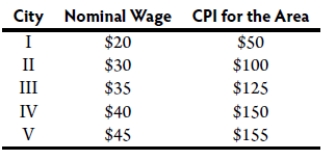 Which city pays the highest real wage?
A) I
B) II
C) III
D) IV
E) V
Which city pays the highest real wage?A) I
B) II
C) III
D) IV
E) V
Question
Question
Question
Question
Question
Question
Question
Question
Question
Question
Question
Question
Question
Question
Question
Question
Question
Question
Question
Question
Question

Unlock Deck
Sign up to unlock the cards in this deck!
Unlock Deck
Unlock Deck
1/25

Play

Full screen (f)
Deck 2: The Uslabor Market
1
Which of the following is a true statement about marginally attached workers?
A) The individual has looked for a job within the past year,but not within the past month.
B) A marginally attached worker is a subset of the group considered to be discouraged workers.
C) The reason marginally attached workers are not looking for work is always because they do not believe there is a job for them.
D) The individual would like a job but has not looked for a job in the past two years.
E) Marginally attached workers are considered part of the labor force.
A) The individual has looked for a job within the past year,but not within the past month.
B) A marginally attached worker is a subset of the group considered to be discouraged workers.
C) The reason marginally attached workers are not looking for work is always because they do not believe there is a job for them.
D) The individual would like a job but has not looked for a job in the past two years.
E) Marginally attached workers are considered part of the labor force.
A
2
Which of the following best represents the gross total earnings of an employee?
A) base salary.
B) base salary and overtime payments
C) base salary,production benefits,overtime,and cost of living allowances
D) base salary,production benefits,overtime,cost of living allowances,and shift differentials
E) base salary,production benefits,overtime,cost of living allowances,and shift differentials net of any tax deductions
A) base salary.
B) base salary and overtime payments
C) base salary,production benefits,overtime,and cost of living allowances
D) base salary,production benefits,overtime,cost of living allowances,and shift differentials
E) base salary,production benefits,overtime,cost of living allowances,and shift differentials net of any tax deductions
D
3
Which of the following is not a true statement about the Consumer Price Index (CPI)?
A) The CPI is based on a fixed bundle of goods.
B) The CPI is not adjusted spatially and has the same value for all urban areas.
C) The CPI is used to calculate cost of living adjustments.
D) The CPI overstates true changes in the cost of living,because it does not allow for substitution among goods.
E) The CPI does not allow for the inclusion of new goods.
A) The CPI is based on a fixed bundle of goods.
B) The CPI is not adjusted spatially and has the same value for all urban areas.
C) The CPI is used to calculate cost of living adjustments.
D) The CPI overstates true changes in the cost of living,because it does not allow for substitution among goods.
E) The CPI does not allow for the inclusion of new goods.
B
4
Suppose that the facts are as follows: Which city pays the highest real wage?
A) I
B) II
C) III
D) IV
E) V
Which city pays the highest real wage?A) I
B) II
C) III
D) IV
E) V
Unlock Deck
Unlock for access to all 25 flashcards in this deck.
Unlock Deck
k this deck
5
Which of the following individuals would be considered employed,according to the Bureau of Labor Statistics glossary?
A) a stay-at-home dad who works 40 hours a week taking care of his family
B) a mother who works 20 hours a week for her husband's business,but is never paid
C) an individual who was recently laid off and has not found another job yet
D) an elderly woman who retires from her job but still volunteers
E) a girl who is 15 working part time at a local grocery store
A) a stay-at-home dad who works 40 hours a week taking care of his family
B) a mother who works 20 hours a week for her husband's business,but is never paid
C) an individual who was recently laid off and has not found another job yet
D) an elderly woman who retires from her job but still volunteers
E) a girl who is 15 working part time at a local grocery store
Unlock Deck
Unlock for access to all 25 flashcards in this deck.
Unlock Deck
k this deck
6
What is the worker's real wage in 2002?
A) $20,488
B) $23,590
C) $35,000
D) $42,000
E) $70,000
A) $20,488
B) $23,590
C) $35,000
D) $42,000
E) $70,000
Unlock Deck
Unlock for access to all 25 flashcards in this deck.
Unlock Deck
k this deck
7
Which year did the worker have the highest real wages?
A) 1996
B) 1999
C) 2002
D) 2006
E) none of the above
A) 1996
B) 1999
C) 2002
D) 2006
E) none of the above
Unlock Deck
Unlock for access to all 25 flashcards in this deck.
Unlock Deck
k this deck
8
The straight time hourly wage equals
A) wages plus overtime plus holiday payments.
B) the hourly wage times hours worked.
C) the hourly wage times hours worked plus fringe benefits.
D) the hourly wage.
E) the hourly wage plus the hourly value of benefits for the worker.
A) wages plus overtime plus holiday payments.
B) the hourly wage times hours worked.
C) the hourly wage times hours worked plus fringe benefits.
D) the hourly wage.
E) the hourly wage plus the hourly value of benefits for the worker.
Unlock Deck
Unlock for access to all 25 flashcards in this deck.
Unlock Deck
k this deck
9
What is the labor force participation rate?
A) 2.4%
B) 72.7%
C) 74.5%
D) 78.4%
E) 88.9%
A) 2.4%
B) 72.7%
C) 74.5%
D) 78.4%
E) 88.9%
Unlock Deck
Unlock for access to all 25 flashcards in this deck.
Unlock Deck
k this deck
10
Over the past several decades,the nominal wage has while the real wage has.
A) increased,increased
B) increased,decreased
C) increased,remained the same
D) remained the same,increased
E) remained the same,remained the same
A) increased,increased
B) increased,decreased
C) increased,remained the same
D) remained the same,increased
E) remained the same,remained the same
Unlock Deck
Unlock for access to all 25 flashcards in this deck.
Unlock Deck
k this deck
11
What is the worker's nominal wage in 2002?
A) $20,488
B) $23,590
C) $35,000
D) $42,000
E) $70,000
A) $20,488
B) $23,590
C) $35,000
D) $42,000
E) $70,000
Unlock Deck
Unlock for access to all 25 flashcards in this deck.
Unlock Deck
k this deck
12
What is the employment-to-population rate?
A) 2.4%
B) 72.7%
C) 74.5%
D) 78.4%
E) 88.9%
A) 2.4%
B) 72.7%
C) 74.5%
D) 78.4%
E) 88.9%
Unlock Deck
Unlock for access to all 25 flashcards in this deck.
Unlock Deck
k this deck
13
Which of the following is a true statement about trends in the U.S.labor force between 1950 and 2000?
A) The male labor force participation rate has increased steadily.
B) The unemployment rate peaked during the Carter administration (1976-1980).
C) The female labor force participation rate has declined.
D) The increase in the labor force participation rate was caused by women joining the labor force.
E) The size of the labor force has not grown much over the past 50 years.
A) The male labor force participation rate has increased steadily.
B) The unemployment rate peaked during the Carter administration (1976-1980).
C) The female labor force participation rate has declined.
D) The increase in the labor force participation rate was caused by women joining the labor force.
E) The size of the labor force has not grown much over the past 50 years.
Unlock Deck
Unlock for access to all 25 flashcards in this deck.
Unlock Deck
k this deck
14
During 2008,the number of marginally attached workers,while the unemployment rate .
A) stayed the same,increased
B) increased,increased
C) decreased,increased
D) stayed the same,stayed the same
E) stayed the same,decreased
A) stayed the same,increased
B) increased,increased
C) decreased,increased
D) stayed the same,stayed the same
E) stayed the same,decreased
Unlock Deck
Unlock for access to all 25 flashcards in this deck.
Unlock Deck
k this deck
15
Which of the following individuals would be considered unemployed,according to the Bureau of Labor Statistics glossary?
A) a 15-year-old who is looking for an after school job
B) a mother that quits her job to take care of her children
C) a 22-year-old male,who is not in college,and takes a week off to go on Spring Break with his friends
D) a father who is laid off,is waiting to be recalled to his job,but is not looking for a new job
E) an individual who takes a few days off after coming down with the flu
A) a 15-year-old who is looking for an after school job
B) a mother that quits her job to take care of her children
C) a 22-year-old male,who is not in college,and takes a week off to go on Spring Break with his friends
D) a father who is laid off,is waiting to be recalled to his job,but is not looking for a new job
E) an individual who takes a few days off after coming down with the flu
Unlock Deck
Unlock for access to all 25 flashcards in this deck.
Unlock Deck
k this deck
16
Total compensation includes all of the following except
A) base salary.
B) overtime.
C) opportunity cost of an alternative job.
D) health care.
E) a company car.
A) base salary.
B) overtime.
C) opportunity cost of an alternative job.
D) health care.
E) a company car.
Unlock Deck
Unlock for access to all 25 flashcards in this deck.
Unlock Deck
k this deck
17
Which of the following groups are not part of the working population?
A) individuals over the age of 16 who can work but currently are not looking for a job
B) individuals over the age of 16 and currently working
C) individuals over the age of 16 and are in prison
D) individuals over the age of 16 who are not working but are looking for a job
E) both A and C
A) individuals over the age of 16 who can work but currently are not looking for a job
B) individuals over the age of 16 and currently working
C) individuals over the age of 16 and are in prison
D) individuals over the age of 16 who are not working but are looking for a job
E) both A and C
Unlock Deck
Unlock for access to all 25 flashcards in this deck.
Unlock Deck
k this deck
18
What is the unemployment rate?
A) 1.8%
B) 2.0%
C) 2.2%
D) 2.4%
E) 97.6%
A) 1.8%
B) 2.0%
C) 2.2%
D) 2.4%
E) 97.6%
Unlock Deck
Unlock for access to all 25 flashcards in this deck.
Unlock Deck
k this deck
19
The labor force is made up of
A) the entire working population.
B) the entire working population over the age of 16.
C) the entire working population over the age of 16 who currently have a job.
D) the entire working population over the age of 16 who are looking for a job or currently have a job.
E) the entire working population over the age of 16 and individuals in prison.
A) the entire working population.
B) the entire working population over the age of 16.
C) the entire working population over the age of 16 who currently have a job.
D) the entire working population over the age of 16 who are looking for a job or currently have a job.
E) the entire working population over the age of 16 and individuals in prison.
Unlock Deck
Unlock for access to all 25 flashcards in this deck.
Unlock Deck
k this deck
20
What is the employment rate?
A) 1.8%
B) 2.0%
C) 2.2%
D) 2.4%
E) 97.6%
A) 1.8%
B) 2.0%
C) 2.2%
D) 2.4%
E) 97.6%
Unlock Deck
Unlock for access to all 25 flashcards in this deck.
Unlock Deck
k this deck
21
What is the most commonly used normative criterion?
A) Pareto efficiency
B) fairness
C) equality
D) marginal productivity
E) rational choice
A) Pareto efficiency
B) fairness
C) equality
D) marginal productivity
E) rational choice
Unlock Deck
Unlock for access to all 25 flashcards in this deck.
Unlock Deck
k this deck
22
The working population is composed of two mutually exclusive groups
A) over 16 and under 16.
B) in the labor force and not in the labor force.
C) employed and unemployed.
D) in the labor force and unemployed.
E) under 16 and in the labor force.
A) over 16 and under 16.
B) in the labor force and not in the labor force.
C) employed and unemployed.
D) in the labor force and unemployed.
E) under 16 and in the labor force.
Unlock Deck
Unlock for access to all 25 flashcards in this deck.
Unlock Deck
k this deck
23
The structural transformation from 1950 to 2000 has caused total employment to in the agricultural sector and in the manufacturing sector.
A) decrease,increase
B) decrease,decrease
C) increase,increase
D) increase,decrease
E) decrease,remain the same
A) decrease,increase
B) decrease,decrease
C) increase,increase
D) increase,decrease
E) decrease,remain the same
Unlock Deck
Unlock for access to all 25 flashcards in this deck.
Unlock Deck
k this deck
24
The National Compensation Survey (NCS),published by the Bureau of Labor Statistics,is problematic.Which of the following is not one of the reasons it is problematic?
A) Rankings vary based on whether the hourly wage is used or the annual earnings.
B) The NCS is based on a sample,thus exposing it to sampling error.
C) The rankings are based on the median response,making it biased toward outliers.
D) Rankings are calculated using the mean wage,which biases the estimates.
E) The rankings vary because different occupations work a different number of hours.
A) Rankings vary based on whether the hourly wage is used or the annual earnings.
B) The NCS is based on a sample,thus exposing it to sampling error.
C) The rankings are based on the median response,making it biased toward outliers.
D) Rankings are calculated using the mean wage,which biases the estimates.
E) The rankings vary because different occupations work a different number of hours.
Unlock Deck
Unlock for access to all 25 flashcards in this deck.
Unlock Deck
k this deck
25
Which of the following groups are not considered to be out of the labor force?
A) students
B) stay-at-home parents
C) discouraged workers
D) marginally attached workers
E) unemployed workers
A) students
B) stay-at-home parents
C) discouraged workers
D) marginally attached workers
E) unemployed workers
Unlock Deck
Unlock for access to all 25 flashcards in this deck.
Unlock Deck
k this deck
Unlock Deck
Unlock for access to all 25 flashcards in this deck.






