







 Chat with AI

Deck 6: Childhood Communicable and Infectious Diseases
Full screen (f)

Question

Question
Question
Question
Question
Question
Question
Question
Question
Question
Question
Question
Question
Question
Question
Question
Question
Question
Question
Question
Question
Question
Question
Question
Question
Question
Question
A school nurse assesses a case of tinea capitis (ringworm) on a 6-year-old child. Which figure depicts the characteristic lesion of tinea capitis?
A)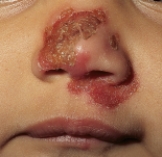
B)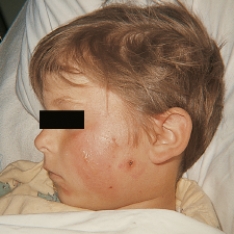
C)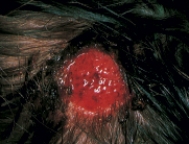
D)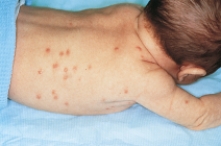
A)
B)
C)
D)
Question
A clinic nurse is assessing a child with erythema infectiosum (fifth disease). Which figure depicts the rash the nurse should expect to assess?
A)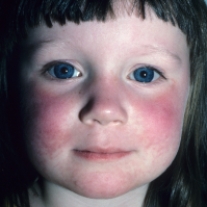
B)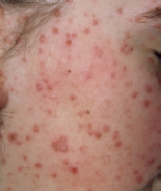
C)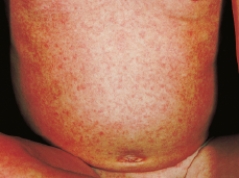
D)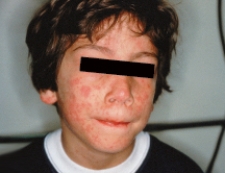
A)
B)
C)
D)
Question
Question
Question
Question
Question
Question
Question
Question
Question
Question
Question

Unlock Deck
Sign up to unlock the cards in this deck!
Unlock Deck
Unlock Deck
1/39

Play

Full screen (f)
Deck 6: Childhood Communicable and Infectious Diseases
1
Parents tell the nurse that their child keeps scratching the areas where he has poison ivy. The nurse's response should be based on which knowledge?
A) Poison ivy does not itch and needs further investigation.
B) Scratching the lesions will not cause a problem.
C) Scratching the lesions will cause the poison ivy to spread.
D) Scratching the lesions may cause them to become secondarily infected.
A) Poison ivy does not itch and needs further investigation.
B) Scratching the lesions will not cause a problem.
C) Scratching the lesions will cause the poison ivy to spread.
D) Scratching the lesions may cause them to become secondarily infected.
Scratching the lesions may cause them to become secondarily infected.
2
The nurse is talking to the parents of a child with pediculosis capitis. Which should the nurse include when explaining how to manage pediculosis capitis?
A) "You will need to cut the hair shorter if infestation and nits are severe."
B) "You can distinguish viable from nonviable nits, and remove all viable ones."
C) "You can wash all nits out of hair with a regular shampoo."
D) "You will need to remove nits with an extra-fine-tooth comb or tweezers."
A) "You will need to cut the hair shorter if infestation and nits are severe."
B) "You can distinguish viable from nonviable nits, and remove all viable ones."
C) "You can wash all nits out of hair with a regular shampoo."
D) "You will need to remove nits with an extra-fine-tooth comb or tweezers."
"You will need to remove nits with an extra-fine-tooth comb or tweezers."
3
Herpes zoster is caused by the varicella virus and has an affinity for:
A) sympathetic nerve fibers.
B) parasympathetic nerve fibers.
C) posterior root ganglia and posterior horn of the spinal cord.
D) lateral and dorsal columns of the spinal cord.
A) sympathetic nerve fibers.
B) parasympathetic nerve fibers.
C) posterior root ganglia and posterior horn of the spinal cord.
D) lateral and dorsal columns of the spinal cord.
posterior root ganglia and posterior horn of the spinal cord.
4
The nurse is taking care of a child with scabies. Which primary clinical manifestation should the nurse expect to assess with this disease?
A) Edema
B) Redness
C) Pruritus
D) Maceration
A) Edema
B) Redness
C) Pruritus
D) Maceration
Unlock Deck
Unlock for access to all 39 flashcards in this deck.
Unlock Deck
k this deck
5
Which is usually the only symptom of pediculosis capitis (head lice)?
A) Itching
B) Vesicles
C) Scalp rash
D) Localized inflammatory response
A) Itching
B) Vesicles
C) Scalp rash
D) Localized inflammatory response
Unlock Deck
Unlock for access to all 39 flashcards in this deck.
Unlock Deck
k this deck
6
The nurse is conducting a staff in-service on appearance of childhood skin conditions. Lymphangitis ("streaking") is frequently seen in which condition?
A) Cellulitis
B) Folliculitis
C) Impetigo contagiosa
D) Staphylococcal scalded skin
A) Cellulitis
B) Folliculitis
C) Impetigo contagiosa
D) Staphylococcal scalded skin
Unlock Deck
Unlock for access to all 39 flashcards in this deck.
Unlock Deck
k this deck
7
The nurse is taking care of a 2-year-old child with a macule skin lesion. Which clinical finding should the nurse expect to assess with this type of lesion?
A) Flat, nonpalpable, and irregularly shaped lesion that is greater than 1 cm in diameter
B) Heaped-up keratinized cells, flaky exfoliation, irregular, thick or thin, dry or oily, varied in size
C) Flat, brown mole less than 1 cm in diameter
D) Elevated, flat-topped, firm, rough, superficial papule greater than 1 cm in diameter
A) Flat, nonpalpable, and irregularly shaped lesion that is greater than 1 cm in diameter
B) Heaped-up keratinized cells, flaky exfoliation, irregular, thick or thin, dry or oily, varied in size
C) Flat, brown mole less than 1 cm in diameter
D) Elevated, flat-topped, firm, rough, superficial papule greater than 1 cm in diameter
Unlock Deck
Unlock for access to all 39 flashcards in this deck.
Unlock Deck
k this deck
8
The nurse should implement which prescribed treatment for a child with warts?
A) Vaccination
B) Local destruction
C) Corticosteroids
D) Specific antibiotic therapy
A) Vaccination
B) Local destruction
C) Corticosteroids
D) Specific antibiotic therapy
Unlock Deck
Unlock for access to all 39 flashcards in this deck.
Unlock Deck
k this deck
9
The nurse is teaching nursing students about childhood skin lesions. Which is an elevated, circumscribed skin lesion that is less than 1 cm in diameter and filled with serous fluid?
A) Cyst
B) Papule
C) Pustule
D) Vesicle
A) Cyst
B) Papule
C) Pustule
D) Vesicle
Unlock Deck
Unlock for access to all 39 flashcards in this deck.
Unlock Deck
k this deck
10
Which bite causes Rocky Mountain spotted fever?
A) Flea
B) Tick
C) Mosquito
D) Mouse or rat
A) Flea
B) Tick
C) Mosquito
D) Mouse or rat
Unlock Deck
Unlock for access to all 39 flashcards in this deck.
Unlock Deck
k this deck
11
The nurse should expect to assess which causative agent in a child with warts?
A) Bacteria
B) Fungus
C) Parasite
D) Virus
A) Bacteria
B) Fungus
C) Parasite
D) Virus
Unlock Deck
Unlock for access to all 39 flashcards in this deck.
Unlock Deck
k this deck
12
The nurse is taking care of a 7-year-old child with herpes simplex virus (type 1 or 2). Which prescribed medication should the nurse expect to be included in the treatment plan?
A) Corticosteroids
B) Oral griseofulvin
C) Oral antiviral agent
D) Topical and/or systemic antibiotic
A) Corticosteroids
B) Oral griseofulvin
C) Oral antiviral agent
D) Topical and/or systemic antibiotic
Unlock Deck
Unlock for access to all 39 flashcards in this deck.
Unlock Deck
k this deck
13
The nurse is caring for a school-age child with a tinea capitis (ringworm) infection. What should the nurse expect the therapeutic management of this child to include?
A) Administering oral griseofulvin
B) Administering topical or oral antibiotics
C) Applying topical sulfonamides
D) Applying Burow solution compresses to affected area
A) Administering oral griseofulvin
B) Administering topical or oral antibiotics
C) Applying topical sulfonamides
D) Applying Burow solution compresses to affected area
Unlock Deck
Unlock for access to all 39 flashcards in this deck.
Unlock Deck
k this deck
14
Which nursing consideration is important when caring for a child with impetigo contagiosa?
A) Apply topical corticosteroids to decrease inflammation.
B) Carefully remove dressings so as not to dislodge undermined skin, crusts, and debris.
C) Carefully wash hands and maintain cleanliness when caring for an infected child.
D) Examine child under a Wood lamp for possible spread of lesions.
A) Apply topical corticosteroids to decrease inflammation.
B) Carefully remove dressings so as not to dislodge undermined skin, crusts, and debris.
C) Carefully wash hands and maintain cleanliness when caring for an infected child.
D) Examine child under a Wood lamp for possible spread of lesions.
Unlock Deck
Unlock for access to all 39 flashcards in this deck.
Unlock Deck
k this deck
15
What causes tinea capitis (ringworm)?
A) Virus
B) Fungus
C) Allergic reaction
D) Bacterial infection
A) Virus
B) Fungus
C) Allergic reaction
D) Bacterial infection
Unlock Deck
Unlock for access to all 39 flashcards in this deck.
Unlock Deck
k this deck
16
What is cellulitis often caused by?
A) Herpes zoster
B) Candida albicans
C) Human papillomavirus
D) Streptococcus or Staphylococcus organisms
A) Herpes zoster
B) Candida albicans
C) Human papillomavirus
D) Streptococcus or Staphylococcus organisms
Unlock Deck
Unlock for access to all 39 flashcards in this deck.
Unlock Deck
k this deck
17
The nurse is caring for a 5-year-old child with impetigo contagiosa. The parents ask the nurse what will happen to their child's skin after the infection has subsided and healed. Which answer should the nurse give?
A) There will be no scarring.
B) There may be some pigmented spots.
C) It is likely there will be some slightly depressed scars.
D) There will be some atrophic white scars.
A) There will be no scarring.
B) There may be some pigmented spots.
C) It is likely there will be some slightly depressed scars.
D) There will be some atrophic white scars.
Unlock Deck
Unlock for access to all 39 flashcards in this deck.
Unlock Deck
k this deck
18
The nurse is taking care of a 7-year-old child with a skin rash called a papule. Which clinical finding should the nurse expect to assess with this type of skin rash?
A) A lesion that is elevated, palpable, firm, and circumscribed; less than 1 cm in diameter
B) A lesion that is elevated, flat-topped, firm, rough, and superficial; greater than 1 cm in diameter
C) An elevated lesion, firm, circumscribed, palpable; 1 to 2 cm in diameter
D) An elevated lesion, circumscribed, filled with serous fluid; less than 1 cm in diameter
A) A lesion that is elevated, palpable, firm, and circumscribed; less than 1 cm in diameter
B) A lesion that is elevated, flat-topped, firm, rough, and superficial; greater than 1 cm in diameter
C) An elevated lesion, firm, circumscribed, palpable; 1 to 2 cm in diameter
D) An elevated lesion, circumscribed, filled with serous fluid; less than 1 cm in diameter
Unlock Deck
Unlock for access to all 39 flashcards in this deck.
Unlock Deck
k this deck
19
Which term best describes the identification of the distribution and causes of disease, injury, or illness?
A) Nursing process
B) Epidemiologic process
C) Community-based statistics
D) Mortality and morbidity statistics
A) Nursing process
B) Epidemiologic process
C) Community-based statistics
D) Mortality and morbidity statistics
Unlock Deck
Unlock for access to all 39 flashcards in this deck.
Unlock Deck
k this deck
20
The school nurse is conducting a class for school-age children on Lyme disease. Which is characteristic of Lyme disease?
A) Difficult to prevent
B) Treated with oral antibiotics in stages 1, 2, and 3
C) Caused by a spirochete that enters the skin through a tick bite
D) Common in geographic areas where the soil contains the mycotic spores that cause the disease
A) Difficult to prevent
B) Treated with oral antibiotics in stages 1, 2, and 3
C) Caused by a spirochete that enters the skin through a tick bite
D) Common in geographic areas where the soil contains the mycotic spores that cause the disease
Unlock Deck
Unlock for access to all 39 flashcards in this deck.
Unlock Deck
k this deck
21
A mother tells the nurse that she does not want her infant immunized because of the discomfort associated with injections. What should the nurse explain?
A) This cannot be prevented.
B) Infants do not feel pain as adults do.
C) This is not a good reason for refusing immunizations.
D) A topical anesthetic, EMLA, can be applied before injections are given.
A) This cannot be prevented.
B) Infants do not feel pain as adults do.
C) This is not a good reason for refusing immunizations.
D) A topical anesthetic, EMLA, can be applied before injections are given.
Unlock Deck
Unlock for access to all 39 flashcards in this deck.
Unlock Deck
k this deck
22
A nurse is admitting a child to the hospital with a diagnosis of giardiasis. Which medication should the nurse expect to be prescribed?
A) Metronidazole (Flagyl)
B) Amoxicillin clavulanate (Augmentin)
C) Clarithromycin (Biaxin)
D) Prednisone (Orapred)
A) Metronidazole (Flagyl)
B) Amoxicillin clavulanate (Augmentin)
C) Clarithromycin (Biaxin)
D) Prednisone (Orapred)
Unlock Deck
Unlock for access to all 39 flashcards in this deck.
Unlock Deck
k this deck
23
The nurse is examining 12-month-old Amy, who was brought to the clinic for persistent diaper rash. The nurse finds perianal inflammation with satellite lesions that cross the inguinal folds. What is most likely the cause of the diaper rash?
A) Impetigo
B) Candida albicans
C) Urine and feces
D) Infrequent diapering
A) Impetigo
B) Candida albicans
C) Urine and feces
D) Infrequent diapering
Unlock Deck
Unlock for access to all 39 flashcards in this deck.
Unlock Deck
k this deck
24
A nurse is preparing to administer routine immunizations to a 4-month-old infant. The infant is currently up to date on all previously recommended immunizations. Which immunizations will the nurse prepare to administer? (Select all that apply.)
A) Measles, mumps, and rubella (MMR)
B) Rotavirus (RV)
C) Diphtheria, tetanus, pertussis (DTaP)
D) Varicella
E) Haemophilus influenzae type b (HIB)
F) Inactivated poliovirus (IPV)
A) Measles, mumps, and rubella (MMR)
B) Rotavirus (RV)
C) Diphtheria, tetanus, pertussis (DTaP)
D) Varicella
E) Haemophilus influenzae type b (HIB)
F) Inactivated poliovirus (IPV)
Unlock Deck
Unlock for access to all 39 flashcards in this deck.
Unlock Deck
k this deck
25
The single parent of a 3-year-old child who has just been diagnosed with chickenpox tells the nurse that she cannot afford to stay home with the child and miss work. The parent asks the nurse if some medication will shorten the course of the illness. Which is the most appropriate nursing intervention?
A) Reassure the parent that it is not necessary to stay home with the child.
B) Explain that no medication will shorten the course of the illness.
C) Explain the advantages of the medication acyclovir (Zovirax) to treat chickenpox.
D) Explain the advantages of the medication VCZ immune globulin (VariZIG) to treat chickenpox.
A) Reassure the parent that it is not necessary to stay home with the child.
B) Explain that no medication will shorten the course of the illness.
C) Explain the advantages of the medication acyclovir (Zovirax) to treat chickenpox.
D) Explain the advantages of the medication VCZ immune globulin (VariZIG) to treat chickenpox.
Unlock Deck
Unlock for access to all 39 flashcards in this deck.
Unlock Deck
k this deck
26
A parent reports to the nurse that her child has inflamed conjunctivae of both eyes with purulent drainage and crusting of the eyelids, especially on awakening. These manifestations suggest:
A) viral conjunctivitis.
B) allergic conjunctivitis.
C) bacterial conjunctivitis.
D) conjunctivitis caused by foreign body.
A) viral conjunctivitis.
B) allergic conjunctivitis.
C) bacterial conjunctivitis.
D) conjunctivitis caused by foreign body.
Unlock Deck
Unlock for access to all 39 flashcards in this deck.
Unlock Deck
k this deck
27
A school nurse assesses a case of tinea capitis (ringworm) on a 6-year-old child. Which figure depicts the characteristic lesion of tinea capitis?
A)
B)
C)
D)
A)
B)
C)
D)
Unlock Deck
Unlock for access to all 39 flashcards in this deck.
Unlock Deck
k this deck
28
A clinic nurse is assessing a child with erythema infectiosum (fifth disease). Which figure depicts the rash the nurse should expect to assess?
A)
B)
C)
D)
A)
B)
C)
D)
Unlock Deck
Unlock for access to all 39 flashcards in this deck.
Unlock Deck
k this deck
29
Which is an important nursing consideration when caring for a child with herpetic gingivostomatitis (HGS)?
A) Apply topical anesthetics before eating.
B) Drink from a cup, not a straw.
C) Wait to brush teeth until lesions are sufficiently healed.
D) Explain to parents how this is sexually transmitted.
A) Apply topical anesthetics before eating.
B) Drink from a cup, not a straw.
C) Wait to brush teeth until lesions are sufficiently healed.
D) Explain to parents how this is sexually transmitted.
Unlock Deck
Unlock for access to all 39 flashcards in this deck.
Unlock Deck
k this deck
30
Acyclovir (Zovirax) is given to children with chickenpox to:
A) minimize scarring.
B) decrease the number of lesions.
C) prevent aplastic anemia.
D) prevent spread of the disease.
A) minimize scarring.
B) decrease the number of lesions.
C) prevent aplastic anemia.
D) prevent spread of the disease.
Unlock Deck
Unlock for access to all 39 flashcards in this deck.
Unlock Deck
k this deck
31
Which is the causative agent of scarlet fever?
A) Enteroviruses
B) Corynebacterium organisms
C) Scarlet fever virus
D) Group A b-hemolytic streptococci (GABHS)
A) Enteroviruses
B) Corynebacterium organisms
C) Scarlet fever virus
D) Group A b-hemolytic streptococci (GABHS)
Unlock Deck
Unlock for access to all 39 flashcards in this deck.
Unlock Deck
k this deck
32
Which may be given to high-risk children after exposure to chickenpox to prevent varicella?
A) Acyclovir (Zovirax)
B) Varicella globulin
C) Diphenhydramine hydrochloride (Benadryl)
D) VCZ immune globulin (VariZIG)
A) Acyclovir (Zovirax)
B) Varicella globulin
C) Diphenhydramine hydrochloride (Benadryl)
D) VCZ immune globulin (VariZIG)
Unlock Deck
Unlock for access to all 39 flashcards in this deck.
Unlock Deck
k this deck
33
A nurse is teaching parents about caring for their child with chickenpox. The nurse should let the parents know that the child is considered to be no longer contagious when which occurs?
A) When fever is absent
B) When lesions are crusted
C) 24 hours after lesions erupt
D) 8 days after onset of illness
A) When fever is absent
B) When lesions are crusted
C) 24 hours after lesions erupt
D) 8 days after onset of illness
Unlock Deck
Unlock for access to all 39 flashcards in this deck.
Unlock Deck
k this deck
34
A nurse is assessing a child and notes Koplik spots. In which of these communicable diseases are Koplik spots present?
A) Rubella
B) Measles (rubeola)
C) Chickenpox (varicella)
D) Exanthema subitum (roseola)
A) Rubella
B) Measles (rubeola)
C) Chickenpox (varicella)
D) Exanthema subitum (roseola)
Unlock Deck
Unlock for access to all 39 flashcards in this deck.
Unlock Deck
k this deck
35
Airborne isolation is required for a child who is hospitalized with:
A) mumps.
B) chickenpox.
C) exanthema subitum (roseola).
D) erythema infectiosum (fifth disease).
A) mumps.
B) chickenpox.
C) exanthema subitum (roseola).
D) erythema infectiosum (fifth disease).
Unlock Deck
Unlock for access to all 39 flashcards in this deck.
Unlock Deck
k this deck
36
The community health nurse is teaching parents about prevention of the spread and reoccurrence of pediculosis (head lice). Which should the nurse include in the teaching session? (Select all that apply.)
A) Dryclean nonwashable items.
B) Spray the environment with an insecticide.
C) Seal nonwashable items in a plastic bag for 5 days.
D) Boil combs and brushes for 10 minutes.
E) Discourage sharing of personal items.
A) Dryclean nonwashable items.
B) Spray the environment with an insecticide.
C) Seal nonwashable items in a plastic bag for 5 days.
D) Boil combs and brushes for 10 minutes.
E) Discourage sharing of personal items.
Unlock Deck
Unlock for access to all 39 flashcards in this deck.
Unlock Deck
k this deck
37
A parent has asked the nurse about how her child can be tested for pinworms. The nurse responds by stating that which is the most common test for diagnosing pinworms in a child?
A) Lower gastrointestinal (GI) series
B) Three stool specimens, at intervals of 4 days
C) Observation for presence of worms after child defecates
D) Laboratory examination of a fecal smear
A) Lower gastrointestinal (GI) series
B) Three stool specimens, at intervals of 4 days
C) Observation for presence of worms after child defecates
D) Laboratory examination of a fecal smear
Unlock Deck
Unlock for access to all 39 flashcards in this deck.
Unlock Deck
k this deck
38
Vitamin A supplementation may be recommended for the young child who has which disease?
A) Mumps
B) Rubella
C) Measles (rubeola)
D) Erythema infectiosum
A) Mumps
B) Rubella
C) Measles (rubeola)
D) Erythema infectiosum
Unlock Deck
Unlock for access to all 39 flashcards in this deck.
Unlock Deck
k this deck
39
Which is a common childhood communicable disease that may cause severe defects in the fetus when it occurs in its congenital form?
A) Erythema infectiosum
B) Roseola
C) Rubeola
D) Rubella
A) Erythema infectiosum
B) Roseola
C) Rubeola
D) Rubella
Unlock Deck
Unlock for access to all 39 flashcards in this deck.
Unlock Deck
k this deck
Unlock Deck
Unlock for access to all 39 flashcards in this deck.






