







 Chat with AI

Deck 1: Life: Chemical, Cellular, and Evolutionary Foundations
Full screen (f)

Question

Question
Question
Question
Question
Question
Question
Question
Question
Question
Question
Question
Question
Question
Question
Question
Question
Question
Question
Question
Question
Question
Question
Question
Question
Question
Question
Question
Question
Question
Question
Question
Question
Question
Question
Question
Question
Question
Question
Question
Question
Question
Question
Question
Question
Question
Question
Question
Question
Question
Question
Question
Question
Question
Question
Question
Question
Question
Question
Question
Question
Question
Question
Question
Question
Question
Question
Question
Question
Question
Question
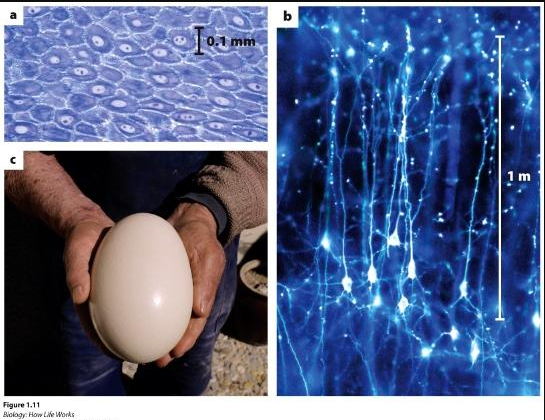
-The ostrich egg shown in Figure 1.11 is composed of approximately how many cells?
A)1
B)100
C)10,000
D)1,000,000
E)100,000,000
Question
Question
Question
Question
Question
Question
Question
Question
Question

Unlock Deck
Sign up to unlock the cards in this deck!
Unlock Deck
Unlock Deck
1/161

Play

Full screen (f)
Deck 1: Life: Chemical, Cellular, and Evolutionary Foundations
1
Many salmon return to the place where they were born to lay eggs. You hypothesize that they use visual cues to find their way back. To test your hypothesis, you blind salmon and then examine whether or not they are able to return to their birthplace. You find that they are unable to find their way back. From this experiment, you:
A)have proved your hypothesis.
B)have rejected your hypothesis.
C)supported your hypothesis.
D)can't determine whether your hypothesis is supported or not.
E)developed a theory about the role of vision in salmon navigation.
A)have proved your hypothesis.
B)have rejected your hypothesis.
C)supported your hypothesis.
D)can't determine whether your hypothesis is supported or not.
E)developed a theory about the role of vision in salmon navigation.
C
2
Which of the following scientists tested the hypothesis that microorganisms can arise by spontaneous generation?
A)Elena and Lenski
B)Redi
C)Pasteur
D)Darwin
E)Alvarez
A)Elena and Lenski
B)Redi
C)Pasteur
D)Darwin
E)Alvarez
C
3
Evidence for the extinction of the dinosaurs approximately 65 million years ago comes from meteorites containing:
A)iridium.
B)palladium.
C)carbon.
D)silicon.
E)plutonium.
A)iridium.
B)palladium.
C)carbon.
D)silicon.
E)plutonium.
A
4
An explanation supported by a large body of observations and experimentation is referred to as a(n):
A)prediction.
B)theory.
C)hypothesis.
D)supposition.
E)investigation.
A)prediction.
B)theory.
C)hypothesis.
D)supposition.
E)investigation.
Unlock Deck
Unlock for access to all 161 flashcards in this deck.
Unlock Deck
k this deck
5
A tentative explanation based on observation is referred to as a hypothesis.
Unlock Deck
Unlock for access to all 161 flashcards in this deck.
Unlock Deck
k this deck
6
Let's say you feel very strongly that cigarette smoke does not increase the probability of getting cancer, and you base your view on something you read on the Internet. This is a good example of a(n):
A)observation
B)hypothesis.
C)theory.
D)experiment.
E)None of the other answer options is correct.
A)observation
B)hypothesis.
C)theory.
D)experiment.
E)None of the other answer options is correct.
Unlock Deck
Unlock for access to all 161 flashcards in this deck.
Unlock Deck
k this deck
7
Asking and answering questions about the world in an unbiased manner is referred to as:
A)experimentation.
B)hypothesizing.
C)theorizing.
D)observation.
A)experimentation.
B)hypothesizing.
C)theorizing.
D)observation.
Unlock Deck
Unlock for access to all 161 flashcards in this deck.
Unlock Deck
k this deck
8
How many experiments have been conducted worldwide to test Darwin's initial hypothesis regarding natural selection?
A)1
B)50
C)100
D)500
E)thousands
A)1
B)50
C)100
D)500
E)thousands
Unlock Deck
Unlock for access to all 161 flashcards in this deck.
Unlock Deck
k this deck
9
A hypothesis is considered a theory when the:
A)results of a single experiment support the hypothesis.
B)hypothesis has been revised many times.
C)results of several experiments do not support the hypothesis.
D)results of several experiments support the hypothesis.
A)results of a single experiment support the hypothesis.
B)hypothesis has been revised many times.
C)results of several experiments do not support the hypothesis.
D)results of several experiments support the hypothesis.
Unlock Deck
Unlock for access to all 161 flashcards in this deck.
Unlock Deck
k this deck
10
Observations allow scientists to draw tentative explanations called hypotheses.
Unlock Deck
Unlock for access to all 161 flashcards in this deck.
Unlock Deck
k this deck
11
A controlled way of asking and answering unbiased questions about the world is called a(n) _____.
Unlock Deck
Unlock for access to all 161 flashcards in this deck.
Unlock Deck
k this deck
12
What is a hypothesis?
A)the same thing as an unproven theory
B)a tentative explanation that can be tested by experiments
C)a verifiable observation
D)an experiment that leads to a prediction
E)None of the other answer options is correct.
A)the same thing as an unproven theory
B)a tentative explanation that can be tested by experiments
C)a verifiable observation
D)an experiment that leads to a prediction
E)None of the other answer options is correct.
Unlock Deck
Unlock for access to all 161 flashcards in this deck.
Unlock Deck
k this deck
13
In the 1600s, Francesco Redi demonstrated that living organisms come from other living organisms. However, it would be inaccurate to say that Redi supported his hypothesis because:
A)his experiment only investigated a single kind of meat.
B)his experiment was done so long ago.
C)his experiment was based on observations.
D)his experiment only investigated a single organism.
E)his experiment didn't have the proper controls.
A)his experiment only investigated a single kind of meat.
B)his experiment was done so long ago.
C)his experiment was based on observations.
D)his experiment only investigated a single organism.
E)his experiment didn't have the proper controls.
Unlock Deck
Unlock for access to all 161 flashcards in this deck.
Unlock Deck
k this deck
14
Hypotheses can only be tested by doing experiments.
Unlock Deck
Unlock for access to all 161 flashcards in this deck.
Unlock Deck
k this deck
15
Which one of the following is NOT part of the scientific method?
A)experimentation
B)observation
C)prediction
D)assumption
E)hypothesis
A)experimentation
B)observation
C)prediction
D)assumption
E)hypothesis
Unlock Deck
Unlock for access to all 161 flashcards in this deck.
Unlock Deck
k this deck
16
When carrying out a controlled experiment, it is important to:
A)change multiple variables at once to see the full effect of the variables.
B)subject different groups to different conditions.
C)change only one variable at a time.
D)All of these choices are correct.
A)change multiple variables at once to see the full effect of the variables.
B)subject different groups to different conditions.
C)change only one variable at a time.
D)All of these choices are correct.
Unlock Deck
Unlock for access to all 161 flashcards in this deck.
Unlock Deck
k this deck
17
Which of the following CORRECTLY reflects the process of science?
A)Observation hypothesis formulation question experiment prediction
B)Observation question hypothesis formulation experiment support or refute hypothesis
C)Observation question hypothesis formulation experiment prove or disprove hypothesis
D)Observation question experiment hypothesis formulation prove or disprove hypothesis
E)Observation question experiment hypothesis formulation support or refute hypothesis
A)Observation hypothesis formulation question experiment prediction
B)Observation question hypothesis formulation experiment support or refute hypothesis
C)Observation question hypothesis formulation experiment prove or disprove hypothesis
D)Observation question experiment hypothesis formulation prove or disprove hypothesis
E)Observation question experiment hypothesis formulation support or refute hypothesis
Unlock Deck
Unlock for access to all 161 flashcards in this deck.
Unlock Deck
k this deck
18
The feature of an experiment that is changed from one treatment to the next is referred to as a(n):
A)variable.
B)control.
C)test group.
D)observation.
A)variable.
B)control.
C)test group.
D)observation.
Unlock Deck
Unlock for access to all 161 flashcards in this deck.
Unlock Deck
k this deck
19
Which one of the following is NOT a way in which biology is typically approached?
A)biomechanics
B)physiology
C)astrology
D)cognition
E)behavior
A)biomechanics
B)physiology
C)astrology
D)cognition
E)behavior
Unlock Deck
Unlock for access to all 161 flashcards in this deck.
Unlock Deck
k this deck
20
In some experiments, several identical groups are set up, keeping conditions similar among them. In the _____ group, a change is deliberately introduced. In the _____ group, this change is not introduced. In this way, the researcher can determine if the change has an effect.
A)control; test
B)test; control
C)null; variable
D)variable; null
A)control; test
B)test; control
C)null; variable
D)variable; null
Unlock Deck
Unlock for access to all 161 flashcards in this deck.
Unlock Deck
k this deck
21
Which one of the following is a primary component of BOTH living organisms and the Earth's crust?
A)silicon
B)hydrogen
C)oxygen
D)carbon
E)nitrogen
A)silicon
B)hydrogen
C)oxygen
D)carbon
E)nitrogen
Unlock Deck
Unlock for access to all 161 flashcards in this deck.
Unlock Deck
k this deck
22
A boy observes a robin outside of his window. He notices the robin repeatedly cocks its head to one side before pecking the ground. The boy suspects that when the robin cocks its head it is actually listening for worms or insects underground. How could the boy test his hypothesis about robins and worms?
A)He could count how many times a single robin catches a worm after it cocks its head and pecks the ground.
B)He could catch a robin and place it in an enclosure without worms or insects, and observe whether the robin still cocks its head.
C)He could observe several robins, and see if they all exhibit the same head-cocking and worm-catching behavior.
D)All of these experiments would test the boy's hypothesis.
A)He could count how many times a single robin catches a worm after it cocks its head and pecks the ground.
B)He could catch a robin and place it in an enclosure without worms or insects, and observe whether the robin still cocks its head.
C)He could observe several robins, and see if they all exhibit the same head-cocking and worm-catching behavior.
D)All of these experiments would test the boy's hypothesis.
Unlock Deck
Unlock for access to all 161 flashcards in this deck.
Unlock Deck
k this deck
23
A boy observes a robin outside of his window. He notices the robin repeatedly cocks its head to one side before pecking the ground. The boy suspects that when the robin cocks its head it is actually listening for worms or insects underground. If the boy notes that a single robin routinely catches a worm after cocking its head, would this observation prove his hypothesis to be correct?
A)No, as this is only a single observation.
B)Yes, and no further experiments are needed.
C)Yes, but further experiments are needed.
D)No, as this would prove the boy's hypothesis is incorrect.
E)No, this observation would only support the boy's hypothesis, but not prove it.
A)No, as this is only a single observation.
B)Yes, and no further experiments are needed.
C)Yes, but further experiments are needed.
D)No, as this would prove the boy's hypothesis is incorrect.
E)No, this observation would only support the boy's hypothesis, but not prove it.
Unlock Deck
Unlock for access to all 161 flashcards in this deck.
Unlock Deck
k this deck
24
A boy observes a robin outside of his window. He notices the robin repeatedly cocks its head to one side before pecking the ground. The boy suspects that when the robin cocks its head it is actually listening for worms or insects underground. His explanation of the bird's behavior is an example of:
A)a hypothesis.
B)an observation.
C)an experiment.
D)a theory.
E)both a hypothesis and a theory.
A)a hypothesis.
B)an observation.
C)an experiment.
D)a theory.
E)both a hypothesis and a theory.
Unlock Deck
Unlock for access to all 161 flashcards in this deck.
Unlock Deck
k this deck
25
Theories typically rely on a single hypothesis tested several times; theories do not take into consideration multiple hypotheses.
Unlock Deck
Unlock for access to all 161 flashcards in this deck.
Unlock Deck
k this deck
26
When small molecules are linked together to form larger molecules, the increase in entropy typically comes from:
A)light.
B)heat.
C)work.
D)gas.
E)enzymes.
A)light.
B)heat.
C)work.
D)gas.
E)enzymes.
Unlock Deck
Unlock for access to all 161 flashcards in this deck.
Unlock Deck
k this deck
27
Which is an example of the second law of thermodynamics?
A)setting up dominos in a row
B)knocking over a house of cards
C)touching a hot stove
D)applying the brakes in your car
A)setting up dominos in a row
B)knocking over a house of cards
C)touching a hot stove
D)applying the brakes in your car
Unlock Deck
Unlock for access to all 161 flashcards in this deck.
Unlock Deck
k this deck
28
When you eat a hamburger, some of the energy in the food is converted to ATP that your cells can use to do all kinds of work, some of the energy is stored for later use, and some of the energy is dissipated as heat. The amount of energy before and after eating the hamburger is the same. This illustrates the:
A)first law of thermodynamics.
B)second law of thermodynamics.
C)theory.
D)the theory of evolution.
E)central dogma.
A)first law of thermodynamics.
B)second law of thermodynamics.
C)theory.
D)the theory of evolution.
E)central dogma.
Unlock Deck
Unlock for access to all 161 flashcards in this deck.
Unlock Deck
k this deck
29
In the scientific method, hypotheses lead MOST directly to:
A)predictions.
B)theories.
C)experiments.
D)observations.
E)conclusions.
A)predictions.
B)theories.
C)experiments.
D)observations.
E)conclusions.
Unlock Deck
Unlock for access to all 161 flashcards in this deck.
Unlock Deck
k this deck
30
The first law of thermodynamics states that the degree of disorder in the universe tends to increase.
Unlock Deck
Unlock for access to all 161 flashcards in this deck.
Unlock Deck
k this deck
31
The strongest evidence that a meteor impact is responsible for dinosaurs becoming extinct is provided by:
A)the detection of high levels of radioactivity in the fossilized remains of dinosaurs from the time period corresponding to the extinction.
B)the presence of significant levels of iridium in the rock layers corresponding to the time of dinosaur extinction.
C)contamination of fossils from that time period with fragments of rock that penetrated the skeletons of many dinosaurs.
D)high levels of particulate matter in the lungs of dinosaur specimens perfectly preserved in ice.
E)None of the evidence presented supports a meteor impact being responsible for the extinction of the dinosaurs.
A)the detection of high levels of radioactivity in the fossilized remains of dinosaurs from the time period corresponding to the extinction.
B)the presence of significant levels of iridium in the rock layers corresponding to the time of dinosaur extinction.
C)contamination of fossils from that time period with fragments of rock that penetrated the skeletons of many dinosaurs.
D)high levels of particulate matter in the lungs of dinosaur specimens perfectly preserved in ice.
E)None of the evidence presented supports a meteor impact being responsible for the extinction of the dinosaurs.
Unlock Deck
Unlock for access to all 161 flashcards in this deck.
Unlock Deck
k this deck
32
A single experiment or observation can _____ a hypothesis.
A)reject
B)support
C)prove
D)reject or support
E)reject or prove
A)reject
B)support
C)prove
D)reject or support
E)reject or prove
Unlock Deck
Unlock for access to all 161 flashcards in this deck.
Unlock Deck
k this deck
33
Which one of the following statements about hypotheses is INCORRECT?
A)Hypotheses make predictions about observations not yet made.
B)A collection of related hypotheses that endures repeated testing is called a theory.
C)Hypotheses can be tested by experiments or by making additional observations.
D)Hypotheses that provide reasonable explanations do not need to be tested.
E)All of the above statements about hypotheses are correct.
A)Hypotheses make predictions about observations not yet made.
B)A collection of related hypotheses that endures repeated testing is called a theory.
C)Hypotheses can be tested by experiments or by making additional observations.
D)Hypotheses that provide reasonable explanations do not need to be tested.
E)All of the above statements about hypotheses are correct.
Unlock Deck
Unlock for access to all 161 flashcards in this deck.
Unlock Deck
k this deck
34
In the context of the scientific method, the words theory and hypothesis can be used interchangeably.
Unlock Deck
Unlock for access to all 161 flashcards in this deck.
Unlock Deck
k this deck
35
When you eat a hamburger, some of the energy in the food is converted to ATP that your cells can use to do all kinds of work, some of the energy is stored for later use, and some of the energy is dissipated as heat. You can only make use of a portion of the energy available in the hamburger because the rest is lost as heat. This is a consequence of the:
A)first law of thermodynamics.
B)second law of thermodynamics.
C)cell theory.
D)theory of evolution.
E)central dogma.
A)first law of thermodynamics.
B)second law of thermodynamics.
C)cell theory.
D)theory of evolution.
E)central dogma.
Unlock Deck
Unlock for access to all 161 flashcards in this deck.
Unlock Deck
k this deck
36
All organisms use which of the following molecules to carry out metabolic reactions?
A)glucose
B)DNA
C)ATP
D)RNA
E)None of the other answer options is correct.
A)glucose
B)DNA
C)ATP
D)RNA
E)None of the other answer options is correct.
Unlock Deck
Unlock for access to all 161 flashcards in this deck.
Unlock Deck
k this deck
37
A general explanation of the world supported by a large body of experiments and observations is called a(n) _____.
Unlock Deck
Unlock for access to all 161 flashcards in this deck.
Unlock Deck
k this deck
38
Which one of the following is characteristic of all living organisms and all nonliving material?
A)the capacity to evolve
B)the ability to reproduce
C)complexity, with spatial organization of several levels
D)the ability to change in response to the environment
E)subject to the basic laws of chemistry and physics
A)the capacity to evolve
B)the ability to reproduce
C)complexity, with spatial organization of several levels
D)the ability to change in response to the environment
E)subject to the basic laws of chemistry and physics
Unlock Deck
Unlock for access to all 161 flashcards in this deck.
Unlock Deck
k this deck
39
The crater believed to be the site of the meteor impact that caused the extinction of the dinosaurs is on the coast of:
A)Alaska.
B)Kenya.
C)Mexico.
D)India.
E)China.
A)Alaska.
B)Kenya.
C)Mexico.
D)India.
E)China.
Unlock Deck
Unlock for access to all 161 flashcards in this deck.
Unlock Deck
k this deck
40
Which is an example of the first law of thermodynamics?
A)melting ice in your hand
B)making a house of playing cards
C)a dead battery
D)placing marbles in a row
A)melting ice in your hand
B)making a house of playing cards
C)a dead battery
D)placing marbles in a row
Unlock Deck
Unlock for access to all 161 flashcards in this deck.
Unlock Deck
k this deck
41
Imagine that a researcher claimed to have created a genetically modified plant that produces twice as much energy as it harnesses from its environment. How could this be possible?
A)The researcher has inserted a mutation into the plant's genome that causes twice the amount of ATP to be produced.
B)This is not possible because such a plant would violate the second law of thermodynamics.
C)The researcher has found a way to decrease the overall entropy of the plant.
D)The researcher has inserted genes into the plant's genome that increase the amount of work the plant is capable of performing.
E)The researcher has likely doubled the amount of DNA present in the plant's genome.
A)The researcher has inserted a mutation into the plant's genome that causes twice the amount of ATP to be produced.
B)This is not possible because such a plant would violate the second law of thermodynamics.
C)The researcher has found a way to decrease the overall entropy of the plant.
D)The researcher has inserted genes into the plant's genome that increase the amount of work the plant is capable of performing.
E)The researcher has likely doubled the amount of DNA present in the plant's genome.
Unlock Deck
Unlock for access to all 161 flashcards in this deck.
Unlock Deck
k this deck
42
As you will learn in a later chapter (Chapter 25), a trophic pyramid depicts the transfer of energy between different organisms (i.e., plants, herbivores, and carnivores). Based on the first and second laws of thermodynamics, which of the following is likely TRUE of a trophic pyramid?
A)An herbivore gains more energy from eating plants compared to a carnivore eating meat.
B)A carnivore gains more energy from eating meat compared to an herbivore eating plants.
C)Plants harness more energy from the sun compared to an herbivore eating plants.
D)An herbivore gains more energy from eating plants compared to the amount plants harness from the sun.
E)Plants harness more energy from the sun compared to an herbivore eating plants, and an herbivore gains more energy from eating plants compared to a carnivore eating meat.
A)An herbivore gains more energy from eating plants compared to a carnivore eating meat.
B)A carnivore gains more energy from eating meat compared to an herbivore eating plants.
C)Plants harness more energy from the sun compared to an herbivore eating plants.
D)An herbivore gains more energy from eating plants compared to the amount plants harness from the sun.
E)Plants harness more energy from the sun compared to an herbivore eating plants, and an herbivore gains more energy from eating plants compared to a carnivore eating meat.
Unlock Deck
Unlock for access to all 161 flashcards in this deck.
Unlock Deck
k this deck
43
Living systems differ from nonliving systems in that energy not used to do work is lost as heat, reducing the total amount of energy in the universe.
Unlock Deck
Unlock for access to all 161 flashcards in this deck.
Unlock Deck
k this deck
44
If you were to compare the entropy of a dog to that of a bucket of water, which of the following statement would be TRUE?
A)The entropy of the dog would be greater.
B)The entropy of the bucket of water would be greater.
C)The entropy of the bucket of water and the entropy of the dog would be equal.
A)The entropy of the dog would be greater.
B)The entropy of the bucket of water would be greater.
C)The entropy of the bucket of water and the entropy of the dog would be equal.
Unlock Deck
Unlock for access to all 161 flashcards in this deck.
Unlock Deck
k this deck
45
Based on the characteristics of living organisms, which of the following things would NOT be considered "alive"?
A)a spayed cat, which is unable to reproduce
B)a plant, which is unable to move when the weather changes
C)a bacterium, which is a relatively "simple" organism
D)plants and bacteria
E)None of the other answer options is correct.
A)a spayed cat, which is unable to reproduce
B)a plant, which is unable to move when the weather changes
C)a bacterium, which is a relatively "simple" organism
D)plants and bacteria
E)None of the other answer options is correct.
Unlock Deck
Unlock for access to all 161 flashcards in this deck.
Unlock Deck
k this deck
46
Entropy can be thought of as the amount of _____ in a system.
Unlock Deck
Unlock for access to all 161 flashcards in this deck.
Unlock Deck
k this deck
47
Which of the following statements regarding "nonliving" matter is TRUE?
A)Nonliving matter would contain the same amount of silicon as living matter.
B)Nonliving matter is composed of unique elements never found in living organisms.
C)Nonliving matter can change over time (i.e., rocks can weather), and thus can evolve.
D)Nonliving matter contains a high percentage of carbon.
E)None of the statements regarding nonliving matter is true.
A)Nonliving matter would contain the same amount of silicon as living matter.
B)Nonliving matter is composed of unique elements never found in living organisms.
C)Nonliving matter can change over time (i.e., rocks can weather), and thus can evolve.
D)Nonliving matter contains a high percentage of carbon.
E)None of the statements regarding nonliving matter is true.
Unlock Deck
Unlock for access to all 161 flashcards in this deck.
Unlock Deck
k this deck
48
When we say that the cell is the fundamental unit of life, we mean that:
A)all living things are made up of one or more cells.
B)the smallest entity that can be considered living is a cell.
C)a single cell can carry out all life processes.
D)life doesn't exist in the absence of cells.
E)All of the answer options are correct.
A)all living things are made up of one or more cells.
B)the smallest entity that can be considered living is a cell.
C)a single cell can carry out all life processes.
D)life doesn't exist in the absence of cells.
E)All of the answer options are correct.
Unlock Deck
Unlock for access to all 161 flashcards in this deck.
Unlock Deck
k this deck
49
Which of the following statements is TRUE regarding Louis Pasteur?
A)His work demonstrated that life can arise spontaneously, without the input of other organisms.
B)His work demonstrated that maggots are produced by flies (i.e., higher organisms do not arise spontaneously); however, it did not address microbial life.
C)His work using broth and swan-neck flasks demonstrated that microbes are produced by other microbes.
D)His work did not support the findings of Francesco Redi, who believed that life could arise spontaneously.
A)His work demonstrated that life can arise spontaneously, without the input of other organisms.
B)His work demonstrated that maggots are produced by flies (i.e., higher organisms do not arise spontaneously); however, it did not address microbial life.
C)His work using broth and swan-neck flasks demonstrated that microbes are produced by other microbes.
D)His work did not support the findings of Francesco Redi, who believed that life could arise spontaneously.
Unlock Deck
Unlock for access to all 161 flashcards in this deck.
Unlock Deck
k this deck
50
Which one of the following statements about the laws of thermodynamics is INCORRECT?
A)Highly organized living organisms like animal cells are exceptions to the second law of thermodynamics.
B)The addition of energy increases the disorder of a system.
C)In order to comply with the first law of thermodynamics, the conversion of energy from one form to another in biological reactions is 100 percent efficient.
D)All of these statements about the laws of thermodynamics are incorrect.
A)Highly organized living organisms like animal cells are exceptions to the second law of thermodynamics.
B)The addition of energy increases the disorder of a system.
C)In order to comply with the first law of thermodynamics, the conversion of energy from one form to another in biological reactions is 100 percent efficient.
D)All of these statements about the laws of thermodynamics are incorrect.
Unlock Deck
Unlock for access to all 161 flashcards in this deck.
Unlock Deck
k this deck
51
Which of the following events was the deadliest in terms of the proportion of the Earth's total population that it affected?
A)World War I
B)the volcanic eruption at Pompeii
C)the bubonic plague
D)the sinking of the Titanic
E)the Trojan War
A)World War I
B)the volcanic eruption at Pompeii
C)the bubonic plague
D)the sinking of the Titanic
E)the Trojan War
Unlock Deck
Unlock for access to all 161 flashcards in this deck.
Unlock Deck
k this deck
52
In Pasteur's experiment showing that living organisms arise from other living organisms, which one of the following statements MOST accurately describes Pasteur's hypothesis?
A)Straight-neck flasks allow for more contamination than swan-neck flasks.
B)Sterilization of broth kills microbes.
C)If microbes arise from nonliving matter, they should appear spontaneously in sterile broth.
D)Microbes should be capable of growing equally well in sterile broth contained in both straight-neck and swan-neck flasks.
E)The first cells must have come from chemical reactions occurring in early Earth.
A)Straight-neck flasks allow for more contamination than swan-neck flasks.
B)Sterilization of broth kills microbes.
C)If microbes arise from nonliving matter, they should appear spontaneously in sterile broth.
D)Microbes should be capable of growing equally well in sterile broth contained in both straight-neck and swan-neck flasks.
E)The first cells must have come from chemical reactions occurring in early Earth.
Unlock Deck
Unlock for access to all 161 flashcards in this deck.
Unlock Deck
k this deck
53
Compared to nonliving things, living organisms are characterized by which of the following?
A)Living organisms are made up of elements not found in nonliving things.
B)Living organisms are not subject to the laws of physics.
C)Living organisms are not subject to the laws of chemistry.
D)Living organisms have the capacity to evolve.
A)Living organisms are made up of elements not found in nonliving things.
B)Living organisms are not subject to the laws of physics.
C)Living organisms are not subject to the laws of chemistry.
D)Living organisms have the capacity to evolve.
Unlock Deck
Unlock for access to all 161 flashcards in this deck.
Unlock Deck
k this deck
54
The metabolic pathway that harvests energy molecules from glucose is highly conserved across many different organisms. This observation suggests that in each of these organisms, the pathway:
A)obeys the law of the conservation of energy.
B)is subject to the first law of thermodynamics.
C)is subject to the second law of thermodynamics.
D)is very different from each other.
E)is the same, or very similar, to each other.
A)obeys the law of the conservation of energy.
B)is subject to the first law of thermodynamics.
C)is subject to the second law of thermodynamics.
D)is very different from each other.
E)is the same, or very similar, to each other.
Unlock Deck
Unlock for access to all 161 flashcards in this deck.
Unlock Deck
k this deck
55
Because water is so abundant on Earth, oxygen and hydrogen make up a majority of the known matter of the universe.
Unlock Deck
Unlock for access to all 161 flashcards in this deck.
Unlock Deck
k this deck
56
Given the high degree of "order" living organisms demonstrate, the second law of thermodynamics can never be applied to life.
Unlock Deck
Unlock for access to all 161 flashcards in this deck.
Unlock Deck
k this deck
57
The energy before a chemical reaction and the energy after a chemical reaction is the same. This is an example of:
A)the first law of thermodynamics.
B)the second law of thermodynamics.
C)evolution by natural selection.
D)the scientific method.
A)the first law of thermodynamics.
B)the second law of thermodynamics.
C)evolution by natural selection.
D)the scientific method.
Unlock Deck
Unlock for access to all 161 flashcards in this deck.
Unlock Deck
k this deck
58
Imagine that an owl acquires energy by eating a mouse. What happens to this energy?
A)The owl uses a portion of this energy to fly.
B)The owl uses a portion of this energy to catch additional prey.
C)Some of this energy is released as heat.
D)All of these choices are correct.
A)The owl uses a portion of this energy to fly.
B)The owl uses a portion of this energy to catch additional prey.
C)Some of this energy is released as heat.
D)All of these choices are correct.
Unlock Deck
Unlock for access to all 161 flashcards in this deck.
Unlock Deck
k this deck
59
The three main groups, or domains, of organisms are:
A)animals, plants, and fungi.
B)animals, plants, and bacteria.
C)bacteria, archaea, and eukaryotes.
D)bacteria, archaea, and prokaryotes.
E)animals, plants, and protists.
A)animals, plants, and fungi.
B)animals, plants, and bacteria.
C)bacteria, archaea, and eukaryotes.
D)bacteria, archaea, and prokaryotes.
E)animals, plants, and protists.
Unlock Deck
Unlock for access to all 161 flashcards in this deck.
Unlock Deck
k this deck
60
Which one of the following elements is found in nonliving systems but not found in more than trace amounts in living systems?
A)calcium
B)carbon
C)hydrogen
D)oxygen
E)silicon
A)calcium
B)carbon
C)hydrogen
D)oxygen
E)silicon
Unlock Deck
Unlock for access to all 161 flashcards in this deck.
Unlock Deck
k this deck
61
A major difference between eukaryotic cells and prokaryotic cells is that:
A)eukaryotic cells have a nucleus and prokaryotic cells do not.
B)prokaryotic cells have a nucleus and eukaryotic cells do not.
C)neither eukaryotic cells nor prokaryotic cells have a nucleus.
D)both eukaryotic cells and prokaryotic cells have a nucleus.
A)eukaryotic cells have a nucleus and prokaryotic cells do not.
B)prokaryotic cells have a nucleus and eukaryotic cells do not.
C)neither eukaryotic cells nor prokaryotic cells have a nucleus.
D)both eukaryotic cells and prokaryotic cells have a nucleus.
Unlock Deck
Unlock for access to all 161 flashcards in this deck.
Unlock Deck
k this deck
62
Organisms that possess a nucleus are called prokaryotes; organisms that do not possess a nucleus are called eukaryotes.
Unlock Deck
Unlock for access to all 161 flashcards in this deck.
Unlock Deck
k this deck
63
The first cells were:
A)eukaryotes.
B)prokaryotes.
C)multicellular forms.
D)viruses.
E)None of the other answer options is correct.
A)eukaryotes.
B)prokaryotes.
C)multicellular forms.
D)viruses.
E)None of the other answer options is correct.
Unlock Deck
Unlock for access to all 161 flashcards in this deck.
Unlock Deck
k this deck
64
You have discovered a new species of prokaryote in a deep-sea thermal vent. Without any further characterization, which one of the following statements could you make about this species with a high degree of certainty?
A)These organisms store their genetic information in a compartment called a nucleus.
B)Information in DNA is translated into RNA and then transcribed into protein.
C)The organisms are from the domain Archaea.
D)Information in RNA is transcribed into DNA and then translated into protein.
E)None of the statements can be made with certainty.
A)These organisms store their genetic information in a compartment called a nucleus.
B)Information in DNA is translated into RNA and then transcribed into protein.
C)The organisms are from the domain Archaea.
D)Information in RNA is transcribed into DNA and then translated into protein.
E)None of the statements can be made with certainty.
Unlock Deck
Unlock for access to all 161 flashcards in this deck.
Unlock Deck
k this deck
65
A mutation in _____ results in a change in _____ that sometimes produces a(n) _____ with altered structure and function.
A)RNA; DNA; protein
B)DNA; RNA; protein
C)protein; DNA; RNA
D)protein; RNA; DNA
E)RNA; protein; DNA
A)RNA; DNA; protein
B)DNA; RNA; protein
C)protein; DNA; RNA
D)protein; RNA; DNA
E)RNA; protein; DNA
Unlock Deck
Unlock for access to all 161 flashcards in this deck.
Unlock Deck
k this deck
66
Which one of the following represents the flow of information as described by the central dogma of molecular biology?
A)Information in DNA is transcribed into RNA and then translated into protein.
B)Information in DNA is translated into RNA and then transcribed into protein.
C)Information in protein is translated into RNA and then stored as DNA.
D)Information in RNA is transcribed into DNA and then translated into protein.
E)Information in DNA is directly translated into protein.
A)Information in DNA is transcribed into RNA and then translated into protein.
B)Information in DNA is translated into RNA and then transcribed into protein.
C)Information in protein is translated into RNA and then stored as DNA.
D)Information in RNA is transcribed into DNA and then translated into protein.
E)Information in DNA is directly translated into protein.
Unlock Deck
Unlock for access to all 161 flashcards in this deck.
Unlock Deck
k this deck
67
In which of the following domains do the cells store their genetic information in a nucleus?
A)Eukarya and Archaea
B)Eukarya
C)Archaea and Bacteria
D)Archaea
E)Bacteria and Eukarya
A)Eukarya and Archaea
B)Eukarya
C)Archaea and Bacteria
D)Archaea
E)Bacteria and Eukarya
Unlock Deck
Unlock for access to all 161 flashcards in this deck.
Unlock Deck
k this deck
68
You have learned that mutations can occur in DNA sequences. Are all mutations deadly?
A)Yes, all mutations are deadly.
B)No, all mutations are benign.
C)No, some mutations can be beneficial.
D)No, mutations in DNA have no effect on cellular processes.
E)Yes, all mutations in DNA disrupt the central dogma.
A)Yes, all mutations are deadly.
B)No, all mutations are benign.
C)No, some mutations can be beneficial.
D)No, mutations in DNA have no effect on cellular processes.
E)Yes, all mutations in DNA disrupt the central dogma.
Unlock Deck
Unlock for access to all 161 flashcards in this deck.
Unlock Deck
k this deck
69
Which of the following types of organisms are based on cellular life?
A)bacteria
B)yeast
C)plants
D)animals
E)All living organisms are based on cells.
A)bacteria
B)yeast
C)plants
D)animals
E)All living organisms are based on cells.
Unlock Deck
Unlock for access to all 161 flashcards in this deck.
Unlock Deck
k this deck
70
Organisms from all classifications of life are composed of cells.
Unlock Deck
Unlock for access to all 161 flashcards in this deck.
Unlock Deck
k this deck
71
-The ostrich egg shown in Figure 1.11 is composed of approximately how many cells?
A)1
B)100
C)10,000
D)1,000,000
E)100,000,000
Unlock Deck
Unlock for access to all 161 flashcards in this deck.
Unlock Deck
k this deck
72
Which one of the following entities does NOT possess the ability to synthesize its own proteins?
A)a human cell
B)a virus
C)a bacterial cell
D)a viral particle and a bacterial cell
E)a human cell, a virus, and a bacterial cell
A)a human cell
B)a virus
C)a bacterial cell
D)a viral particle and a bacterial cell
E)a human cell, a virus, and a bacterial cell
Unlock Deck
Unlock for access to all 161 flashcards in this deck.
Unlock Deck
k this deck
73
There are many different types of bacteria known to be able to grow in a human host, and they are all disease-causing organisms.
Unlock Deck
Unlock for access to all 161 flashcards in this deck.
Unlock Deck
k this deck
74
The chemical reactions required to sustain life are collectively referred to as a cell's _____.
Unlock Deck
Unlock for access to all 161 flashcards in this deck.
Unlock Deck
k this deck
75
All of the chemical reactions in a cell that are required to sustain life are referred to as _____.
Unlock Deck
Unlock for access to all 161 flashcards in this deck.
Unlock Deck
k this deck
76
Which of the following is the BEST description of mutations?
A)They arise in order to benefit an organism.
B)They arise in order to harm an organism.
C)They do not affect an organism.
D)They occur randomly.
E)All of the answer options are correct.
A)They arise in order to benefit an organism.
B)They arise in order to harm an organism.
C)They do not affect an organism.
D)They occur randomly.
E)All of the answer options are correct.
Unlock Deck
Unlock for access to all 161 flashcards in this deck.
Unlock Deck
k this deck
77
Prokaryotic cells found in extreme, harsh environments often belong to the domain _____.
Unlock Deck
Unlock for access to all 161 flashcards in this deck.
Unlock Deck
k this deck
78
At some point in their life cycle, all cells have a _____, whereas not all cells have a(n) _____.
A)plasma membrane; nuclear membrane
B)nucleus; cytoplasm
C)plasma membrane; RNA or DNA
D)nucleus; nuclear membrane
E)nucleus; plasma membrane
A)plasma membrane; nuclear membrane
B)nucleus; cytoplasm
C)plasma membrane; RNA or DNA
D)nucleus; nuclear membrane
E)nucleus; plasma membrane
Unlock Deck
Unlock for access to all 161 flashcards in this deck.
Unlock Deck
k this deck
79
A retrovirus hijacks a cell's machinery to turn its RNA into DNA, which is then inserted into the cell's genome so viral proteins can be made. Does this virus follow the central dogma?
A)yes
B)no
A)yes
B)no
Unlock Deck
Unlock for access to all 161 flashcards in this deck.
Unlock Deck
k this deck
80
The language of nucleic acids is converted to the language of amino acids during the process known as _____.
Unlock Deck
Unlock for access to all 161 flashcards in this deck.
Unlock Deck
k this deck
Unlock Deck
Unlock for access to all 161 flashcards in this deck.






