







 Chat with AI

Deck 17: The Evolution of Plant and Fungal Diversity
Full screen (f)

Question

Question
Question
Question
Question
Which part of this figure represents the anther? 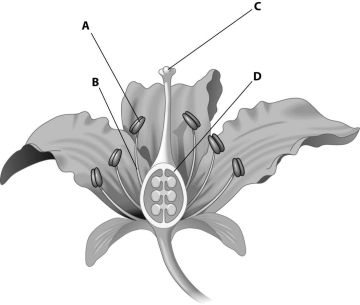
A)structure A
B)structure B
C)structure C
D)structure D
A)structure A
B)structure B
C)structure C
D)structure D
Question
Question
Question
Question
Question
Question
Question
Question
Question
Question
Question
Question
Question
Question
Question
Question
Question
Question
Question
Question
Question
Question
Question
Question
Question
Question
Question
Question
Question
Question
Question
Question
Question
Question
Question
Question
Question
Question
Question
Question
Question
Question
Question
Question
Question
Question
According to this figure,at what time in the evolutionary history of plants did vascular systems likely first evolve? 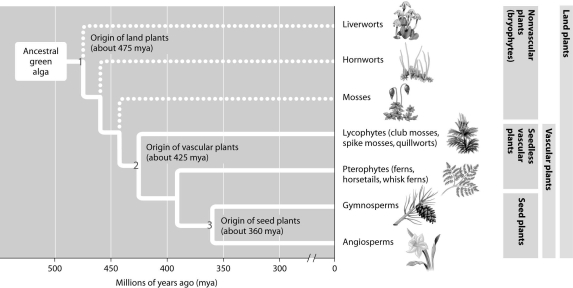
A)460 mya
B)360 mya
C)475 mya
D)425 mya
A)460 mya
B)360 mya
C)475 mya
D)425 mya
Question
Question
Question
Question
Question
Question
Question
Question
Question
Question
Question
Question

Unlock Deck
Sign up to unlock the cards in this deck!
Unlock Deck
Unlock Deck
1/63

Play

Full screen (f)
Deck 17: The Evolution of Plant and Fungal Diversity
1
Threadlike fungal filaments are called
A)mycelia.
B)mold.
C)hyphae.
D)root hairs.
A)mycelia.
B)mold.
C)hyphae.
D)root hairs.
C
2
In a moss,most of the plants that we see are ,while in a fern the most dominant stage is the .
A)gametophytes ...gametophyte
B)sporophytes ...gametophyte
C)sporophytes ...sporophyte
D)gametophytes ...sporophyte
A)gametophytes ...gametophyte
B)sporophytes ...gametophyte
C)sporophytes ...sporophyte
D)gametophytes ...sporophyte
D
3
In angiosperms,pollen grains develop in the and are trapped by the _ .
A)anther ...stigma
B)anther ...ovary
C)stigma ...anther
D)carpel ...stamen
A)anther ...stigma
B)anther ...ovary
C)stigma ...anther
D)carpel ...stamen
A
4
A growth- producing region of cell division,known as a(n),is found near the tips of stems and roots.
A)lignin
B)sporangium
C)cuticle
D)apical meristem
A)lignin
B)sporangium
C)cuticle
D)apical meristem
Unlock Deck
Unlock for access to all 63 flashcards in this deck.
Unlock Deck
k this deck
5
Which part of this figure represents the anther?
A)structure A
B)structure B
C)structure C
D)structure D
A)structure A
B)structure B
C)structure C
D)structure D
Unlock Deck
Unlock for access to all 63 flashcards in this deck.
Unlock Deck
k this deck
6
The majority of plant species today are
A)bryophytes.
B)angiosperms.
C)gymnosperms.
D)seedless vascular plants.
A)bryophytes.
B)angiosperms.
C)gymnosperms.
D)seedless vascular plants.
Unlock Deck
Unlock for access to all 63 flashcards in this deck.
Unlock Deck
k this deck
7
An experimental forest ecosystem is enclosed in a sealed greenhouse.The entire ecosystem,including the air and soil,is treated with an extremely potent fungicide that kills all fungal life stages including spores.What will probably happen next?
A)Tree growth will increase because the dead fungi will act as a fertilizer.
B)A few animals will go extinct due to loss of their fungal food sources,but otherwise the forest will be largely unchanged.
C)Dead organic matter will accumulate on the forest floor; plant growth will decline because of a lack of nutrients and the loss of mycorrhizal partners.
D)Plants will enjoy a long- term increase in growth and survival because of the removal of fungal pathogens.
A)Tree growth will increase because the dead fungi will act as a fertilizer.
B)A few animals will go extinct due to loss of their fungal food sources,but otherwise the forest will be largely unchanged.
C)Dead organic matter will accumulate on the forest floor; plant growth will decline because of a lack of nutrients and the loss of mycorrhizal partners.
D)Plants will enjoy a long- term increase in growth and survival because of the removal of fungal pathogens.
Unlock Deck
Unlock for access to all 63 flashcards in this deck.
Unlock Deck
k this deck
8
Most familiar types of mushrooms,along with puffballs and shelf fungi,are
A)basidiomycetes (club fungi).
B)zygomycetes (zygote fungi).
C)ascomycetes (sac fungi).
D)chytrids.
A)basidiomycetes (club fungi).
B)zygomycetes (zygote fungi).
C)ascomycetes (sac fungi).
D)chytrids.
Unlock Deck
Unlock for access to all 63 flashcards in this deck.
Unlock Deck
k this deck
9
Fungi are found associated with the earliest plant fossils.Fungi may have helped plants become terrestrial by
A)stocking the soil with organic matter.
B)killing the bacterial enemies of plants.
C)providing simple organic compounds in return for sugars.
D)forming mycorrhizal associations with plants and by decomposing organic matter.
A)stocking the soil with organic matter.
B)killing the bacterial enemies of plants.
C)providing simple organic compounds in return for sugars.
D)forming mycorrhizal associations with plants and by decomposing organic matter.
Unlock Deck
Unlock for access to all 63 flashcards in this deck.
Unlock Deck
k this deck
10
Which of the following occurs in a mushroom,that is,in the reproductive structure of a basidiomycete?
A)Diploid nuclei form,undergo meiosis,and produce haploid spores.
B)Spores germinate and form a haploid mycelium.
C)Heterokaryotic cells separate to re- create the original haploid hyphae.
D)Hyphae of two different mating types fuse.
A)Diploid nuclei form,undergo meiosis,and produce haploid spores.
B)Spores germinate and form a haploid mycelium.
C)Heterokaryotic cells separate to re- create the original haploid hyphae.
D)Hyphae of two different mating types fuse.
Unlock Deck
Unlock for access to all 63 flashcards in this deck.
Unlock Deck
k this deck
11
About 90% of plants have mycorrhizae linking them to
A)ascomycetes (sac fungi).
B)chytrids.
C)glomeromycetes.
D)basidiomycetes (club fungi).
A)ascomycetes (sac fungi).
B)chytrids.
C)glomeromycetes.
D)basidiomycetes (club fungi).
Unlock Deck
Unlock for access to all 63 flashcards in this deck.
Unlock Deck
k this deck
12
About 95% of all modern plant species
A)have no gametophyte.
B)have a dominant sporophyte in their life cycle.
C)have flagellated sperm.
D)have a gametophyte adapted to house a sporophyte stage.
A)have no gametophyte.
B)have a dominant sporophyte in their life cycle.
C)have flagellated sperm.
D)have a gametophyte adapted to house a sporophyte stage.
Unlock Deck
Unlock for access to all 63 flashcards in this deck.
Unlock Deck
k this deck
13
Gas exchange in most land plants occurs through structures called
A)spiracles.
B)stomata.
C)cuticles.
D)gas pores.
A)spiracles.
B)stomata.
C)cuticles.
D)gas pores.
Unlock Deck
Unlock for access to all 63 flashcards in this deck.
Unlock Deck
k this deck
14
The last common ancestor of animals and fungi was probably ,like the spores of fungi.
A)flagellated ...chytrid
B)multicellular ...chytrid
C)flagellated ...mold
D)nonflagellated ...yeast
A)flagellated ...chytrid
B)multicellular ...chytrid
C)flagellated ...mold
D)nonflagellated ...yeast
Unlock Deck
Unlock for access to all 63 flashcards in this deck.
Unlock Deck
k this deck
15
Which of the following organisms has a dominant sporophyte generation and a free- living gametophyte generation?
A)moss
B)conifer
C)fern
D)mushroom
A)moss
B)conifer
C)fern
D)mushroom
Unlock Deck
Unlock for access to all 63 flashcards in this deck.
Unlock Deck
k this deck
16
In all plants,the zygote and earliest stages of the developing embryo are
A)enclosed within a pollen grain.
B)attached to and nourished by the parent plant.
C)able to disperse in a tough- walled spore.
D)enclosed within a seed.
A)enclosed within a pollen grain.
B)attached to and nourished by the parent plant.
C)able to disperse in a tough- walled spore.
D)enclosed within a seed.
Unlock Deck
Unlock for access to all 63 flashcards in this deck.
Unlock Deck
k this deck
17
The type of life cycle seen in plants is called
A)haplodiploidy.
B)sporophytic regeneration.
C)alternation of generations.
D)gametophyte production.
A)haplodiploidy.
B)sporophytic regeneration.
C)alternation of generations.
D)gametophyte production.
Unlock Deck
Unlock for access to all 63 flashcards in this deck.
Unlock Deck
k this deck
18
The loss of plant biodiversity,including the wild relatives of crop species,is harmful because these wild relatives
A)are often tastier than existing crops.
B)feed most of the world's population.
C)may be suitable for domestication and regional production.
D)are a source of genetic diversity that could be used to modify or bolster existing crops.
A)are often tastier than existing crops.
B)feed most of the world's population.
C)may be suitable for domestication and regional production.
D)are a source of genetic diversity that could be used to modify or bolster existing crops.
Unlock Deck
Unlock for access to all 63 flashcards in this deck.
Unlock Deck
k this deck
19
Which of the following structures is an essential part of most fungal reproductive systems?
A)seeds
B)cellulose
C)spores
D)gametangia
A)seeds
B)cellulose
C)spores
D)gametangia
Unlock Deck
Unlock for access to all 63 flashcards in this deck.
Unlock Deck
k this deck
20
The main causes for the loss of plant biodiversity include
A)plant diseases and clearcutting of forests to create farmland.
B)herbivory,logging,and air pollution.
C)plant diseases and herbivory.
D)clearcutting of forests to create farmland and logging.
A)plant diseases and clearcutting of forests to create farmland.
B)herbivory,logging,and air pollution.
C)plant diseases and herbivory.
D)clearcutting of forests to create farmland and logging.
Unlock Deck
Unlock for access to all 63 flashcards in this deck.
Unlock Deck
k this deck
21
Which of the following statements regarding fungi is false?
A)The distinctive flavor of certain cheeses is due to fungi.
B)The first antibiotic discovered came from a fungus.
C)Fungi are important decomposers in ecosystems.
D)Fungi can only break down plant material.
A)The distinctive flavor of certain cheeses is due to fungi.
B)The first antibiotic discovered came from a fungus.
C)Fungi are important decomposers in ecosystems.
D)Fungi can only break down plant material.
Unlock Deck
Unlock for access to all 63 flashcards in this deck.
Unlock Deck
k this deck
22
Heterotrophic eukaryotes that digest their food externally and absorb the small molecules are referred to as
A)fungi.
B)multicellular algae.
C)plants.
D)bacteria.
A)fungi.
B)multicellular algae.
C)plants.
D)bacteria.
Unlock Deck
Unlock for access to all 63 flashcards in this deck.
Unlock Deck
k this deck
23
What kind of entity is a lichen?
A)an association between a multicellular protist related to the brown algae and a bacterium
B)an association between a fungus and a brown alga
C)an association between a fungus and cyanobacteria or green algae
D)an association between a bryophyte and a fungus
A)an association between a multicellular protist related to the brown algae and a bacterium
B)an association between a fungus and a brown alga
C)an association between a fungus and cyanobacteria or green algae
D)an association between a bryophyte and a fungus
Unlock Deck
Unlock for access to all 63 flashcards in this deck.
Unlock Deck
k this deck
24
Gangrene,hallucinations,temporary insanity,and even death can result when humans consume grain infested with
A)corn smut.
B)chytrids.
C)ergots.
D)coccidioidomycosis.
A)corn smut.
B)chytrids.
C)ergots.
D)coccidioidomycosis.
Unlock Deck
Unlock for access to all 63 flashcards in this deck.
Unlock Deck
k this deck
25
Some of the unique adaptations of angiosperms include their beneficial relationships with and their relatively _.
A)animals ...large sporophyte
B)animals ...well- developed vascular system
C)fungi ...well- developed vascular system
D)animals ...rapid fertilization and seed production
A)animals ...large sporophyte
B)animals ...well- developed vascular system
C)fungi ...well- developed vascular system
D)animals ...rapid fertilization and seed production
Unlock Deck
Unlock for access to all 63 flashcards in this deck.
Unlock Deck
k this deck
26
In plants,the vascular tissue made of dead cells that transport water and minerals from the roots is called
A)phloem.
B)transport tissue.
C)meristem.
D)xylem.
A)phloem.
B)transport tissue.
C)meristem.
D)xylem.
Unlock Deck
Unlock for access to all 63 flashcards in this deck.
Unlock Deck
k this deck
27
Ferns and mosses are similar because both
A)have dominant sporophytes.
B)produce drought- resistant seeds.
C)have flagellated sperm.
D)have sporophytes that produce diploid spores.
A)have dominant sporophytes.
B)produce drought- resistant seeds.
C)have flagellated sperm.
D)have sporophytes that produce diploid spores.
Unlock Deck
Unlock for access to all 63 flashcards in this deck.
Unlock Deck
k this deck
28
Which of the following represents the male gametophyte of a conifer?
A)tree
B)sperm
C)pollen grain
D)pollen cone
A)tree
B)sperm
C)pollen grain
D)pollen cone
Unlock Deck
Unlock for access to all 63 flashcards in this deck.
Unlock Deck
k this deck
29
The incomplete decay of dead plants during the Carboniferous period led to
A)the formation of coal.
B)the formation of tropical swamps.
C)the thinning of the ozone layer.
D)global warming.
A)the formation of coal.
B)the formation of tropical swamps.
C)the thinning of the ozone layer.
D)global warming.
Unlock Deck
Unlock for access to all 63 flashcards in this deck.
Unlock Deck
k this deck
30
The angiosperm plant we see represents the generation,and the flower produces .
A)gametophyte ...sporophytes
B)gametophyte ...bryophytes
C)sporophyte ...bryophytes
D)sporophyte ...gametophytes
A)gametophyte ...sporophytes
B)gametophyte ...bryophytes
C)sporophyte ...bryophytes
D)sporophyte ...gametophytes
Unlock Deck
Unlock for access to all 63 flashcards in this deck.
Unlock Deck
k this deck
31
In plants,the vascular tissue that consists of living cells that distribute sugars throughout the plant is called
A)xylem.
B)meristem.
C)transport tissue.
D)phloem.
A)xylem.
B)meristem.
C)transport tissue.
D)phloem.
Unlock Deck
Unlock for access to all 63 flashcards in this deck.
Unlock Deck
k this deck
32
Corn,peppers,tomatoes,and cucumbers all contain seeds and are derived from the ovary of a flowering plant.Therefore,in botanical terms,they are _.
A)fruits.
B)seeds.
C)vegetables.
D)sporophytes.
A)fruits.
B)seeds.
C)vegetables.
D)sporophytes.
Unlock Deck
Unlock for access to all 63 flashcards in this deck.
Unlock Deck
k this deck
33
Corn,rice,wheat,fleshy fruits such as apples and berries,and many spices are all produced by
A)ferns.
B)gymnosperms.
C)seedless plants.
D)angiosperms.
A)ferns.
B)gymnosperms.
C)seedless plants.
D)angiosperms.
Unlock Deck
Unlock for access to all 63 flashcards in this deck.
Unlock Deck
k this deck
34
Which type of reproduction is typical in molds?
A)asexual reproduction through budding
B)sexual reproduction through fusion of two haploid parent mycelia and subsequent production of haploid spores
C)sexual reproduction through mating of two diploid parent mycelia
D)asexual reproduction through the production of spores
A)asexual reproduction through budding
B)sexual reproduction through fusion of two haploid parent mycelia and subsequent production of haploid spores
C)sexual reproduction through mating of two diploid parent mycelia
D)asexual reproduction through the production of spores
Unlock Deck
Unlock for access to all 63 flashcards in this deck.
Unlock Deck
k this deck
35
During the Carboniferous period,photosynthesis in immense swamp forests removed from the atmosphere,which produced a drier,cooler global climate and promoted the success of .
A)oxygen ...ferns
B)carbon dioxide ...seed plants
C)carbon dioxide ...lycophytes
D)oxygen ...seed plants
A)oxygen ...ferns
B)carbon dioxide ...seed plants
C)carbon dioxide ...lycophytes
D)oxygen ...seed plants
Unlock Deck
Unlock for access to all 63 flashcards in this deck.
Unlock Deck
k this deck
36
The ancestors of land plants were probably that lived in .
A)cyanobacteria ...moist soil crust communities
B)green algae similar to charophytes ...the open ocean
C)green algae similar to charophytes ...coastal marshes or lake fringes
D)cyanobacteria ...coastal marshes or lake fringes
A)cyanobacteria ...moist soil crust communities
B)green algae similar to charophytes ...the open ocean
C)green algae similar to charophytes ...coastal marshes or lake fringes
D)cyanobacteria ...coastal marshes or lake fringes
Unlock Deck
Unlock for access to all 63 flashcards in this deck.
Unlock Deck
k this deck
37
Which of the following characteristics tends to limit bryophytes and seedless vascular plants to habitats that are relatively moist?
A)presence of flagellated sperm
B)presence of lignified vascular tissues
C)presence of free- living,independent zygotes and early embryos
D)absence of cuticle
A)presence of flagellated sperm
B)presence of lignified vascular tissues
C)presence of free- living,independent zygotes and early embryos
D)absence of cuticle
Unlock Deck
Unlock for access to all 63 flashcards in this deck.
Unlock Deck
k this deck
38
Mosses belong to the group of plants known as the
A)bryophytes.
B)angiosperms.
C)vascular plants.
D)gymnosperms.
A)bryophytes.
B)angiosperms.
C)vascular plants.
D)gymnosperms.
Unlock Deck
Unlock for access to all 63 flashcards in this deck.
Unlock Deck
k this deck
39
Red maples and other wind- pollinated plants invest relatively little in producing ,but must invest a great deal in producing to achieve good pollination rates.
A)floral scents ...showy petals
B)showy or scented flowers ...massive amounts of pollen
C)seeds ...massive amounts of pollen
D)pollen ...showy or scented flowers
A)floral scents ...showy petals
B)showy or scented flowers ...massive amounts of pollen
C)seeds ...massive amounts of pollen
D)pollen ...showy or scented flowers
Unlock Deck
Unlock for access to all 63 flashcards in this deck.
Unlock Deck
k this deck
40
Which structure is found in angiosperms but not gymnosperms?
A)spores
B)seeds
C)ovule
D)fruit
A)spores
B)seeds
C)ovule
D)fruit
Unlock Deck
Unlock for access to all 63 flashcards in this deck.
Unlock Deck
k this deck
41
A cocklebur is dispersed by ,whereas most fleshy,edible fruits are eaten by animals that .
A)wind ...fully digest the fruits,including the seeds,which are killed
B)hitching rides on animals ...fully digest the fruits,including the seeds,which are killed
C)hitching rides on animals ...defecate the intact seeds
D)water currents ...defecate the intact seeds
A)wind ...fully digest the fruits,including the seeds,which are killed
B)hitching rides on animals ...fully digest the fruits,including the seeds,which are killed
C)hitching rides on animals ...defecate the intact seeds
D)water currents ...defecate the intact seeds
Unlock Deck
Unlock for access to all 63 flashcards in this deck.
Unlock Deck
k this deck
42
The represents the sporophyte generation of a conifer,and the produces gametophytes.
A)cone ...tree
B)tree ...pollen
C)seed ...tree
D)tree ...cone
A)cone ...tree
B)tree ...pollen
C)seed ...tree
D)tree ...cone
Unlock Deck
Unlock for access to all 63 flashcards in this deck.
Unlock Deck
k this deck
43
Plants dependent on nocturnal pollinators typically have flowers that
A)are large,light- colored,and highly scented.
B)are located close to the ground and smell of rotting flesh.
C)are small.
D)absorb UV light.
A)are large,light- colored,and highly scented.
B)are located close to the ground and smell of rotting flesh.
C)are small.
D)absorb UV light.
Unlock Deck
Unlock for access to all 63 flashcards in this deck.
Unlock Deck
k this deck
44
Which of the following options correctly represents the most likely sequence of the evolution of plants,from earliest to most recent?
A)bryophytes,gymnosperms,seedless vascular plants,angiosperms
B)bryophytes,seedless vascular plants,angiosperms,gymnosperms
C)seedless vascular plants,bryophytes,angiosperms,gymnosperms
D)bryophytes,seedless vascular plants,gymnosperms,angiosperms
A)bryophytes,gymnosperms,seedless vascular plants,angiosperms
B)bryophytes,seedless vascular plants,angiosperms,gymnosperms
C)seedless vascular plants,bryophytes,angiosperms,gymnosperms
D)bryophytes,seedless vascular plants,gymnosperms,angiosperms
Unlock Deck
Unlock for access to all 63 flashcards in this deck.
Unlock Deck
k this deck
45
Two characteristics shared by gymnosperms and angiosperms that are absent from earlier plant groups and represent key adaptations to life on dry land are
A)a vascular system and lignin.
B)flowers and fruits.
C)flagellated sperm and gametangia.
D)pollen and seeds.
A)a vascular system and lignin.
B)flowers and fruits.
C)flagellated sperm and gametangia.
D)pollen and seeds.
Unlock Deck
Unlock for access to all 63 flashcards in this deck.
Unlock Deck
k this deck
46
Which of the following statements correctly describes the alternation of generations in a plant life cycle?
A)Diploid sporophytes that produce gametes by meiosis alternate with haploid sporophytes that produce gametes by mitosis.
B)Diploid sporophytes that produce spores by meiosis alternate with haploid gametophytes that produce gametes by mitosis.
C)Diploid gametophytes that produce spores by mitosis alternate with haploid sporophytes that produce gametes by meiosis.
D)Diploid gametophytes that produce gametes by meiosis alternate with haploid sporophytes that produce spores by mitosis.
A)Diploid sporophytes that produce gametes by meiosis alternate with haploid sporophytes that produce gametes by mitosis.
B)Diploid sporophytes that produce spores by meiosis alternate with haploid gametophytes that produce gametes by mitosis.
C)Diploid gametophytes that produce spores by mitosis alternate with haploid sporophytes that produce gametes by meiosis.
D)Diploid gametophytes that produce gametes by meiosis alternate with haploid sporophytes that produce spores by mitosis.
Unlock Deck
Unlock for access to all 63 flashcards in this deck.
Unlock Deck
k this deck
47
The is the protective chamber that houses the ovule and later matures to become the fruit.
A)sepals
B)carpel
C)stigma
D)ovary
A)sepals
B)carpel
C)stigma
D)ovary
Unlock Deck
Unlock for access to all 63 flashcards in this deck.
Unlock Deck
k this deck
48
Which of the following statements regarding ferns is true?
A)Ferns produce pollen.
B)Ferns do not have lignified cell walls.
C)Ferns have well- developed vascular tissue,roots,and stems.
D)Ferns produce seeds.
A)Ferns produce pollen.
B)Ferns do not have lignified cell walls.
C)Ferns have well- developed vascular tissue,roots,and stems.
D)Ferns produce seeds.
Unlock Deck
Unlock for access to all 63 flashcards in this deck.
Unlock Deck
k this deck
49
Most zygomycetes and ascomycetes reproduce _ when conditions are .
A)sexually ...constantly moist and food is abundant
B)asexually ...harsh,as in the fall of the year
C)asexually ...favorable,as in the spring of the year
D)sexually ...favorable,as in the spring of the year
A)sexually ...constantly moist and food is abundant
B)asexually ...harsh,as in the fall of the year
C)asexually ...favorable,as in the spring of the year
D)sexually ...favorable,as in the spring of the year
Unlock Deck
Unlock for access to all 63 flashcards in this deck.
Unlock Deck
k this deck
50
Many flower traits are specifically attractive to a certain type of pollinator.For example,the scent of rotting flesh is attractive to certain flies and beetles,but not to most other pollinators.What adaptive purpose is served by this kind of "niche marketing" of flowers to specific pollinators?
A)This targeting is done because the wrong kind of pollinator might eat all the pollen instead of delivering it to another flower.
B)This adaptation reduces pollinator traffic so that flowers have a chance to develop their pollen fully before it is spread.
C)This adaptation works to reduce pollinator traffic at a flower.Therefore flowers do not have to produce as much nectar to feed big crowds of pollinators.
D)This adaptation helps to assure that pollen will be delivered to another flower of the same species.If less specialized pollinators are used,the odds are greater that pollen will wind up on the stigma of a different species.
A)This targeting is done because the wrong kind of pollinator might eat all the pollen instead of delivering it to another flower.
B)This adaptation reduces pollinator traffic so that flowers have a chance to develop their pollen fully before it is spread.
C)This adaptation works to reduce pollinator traffic at a flower.Therefore flowers do not have to produce as much nectar to feed big crowds of pollinators.
D)This adaptation helps to assure that pollen will be delivered to another flower of the same species.If less specialized pollinators are used,the odds are greater that pollen will wind up on the stigma of a different species.
Unlock Deck
Unlock for access to all 63 flashcards in this deck.
Unlock Deck
k this deck
51
According to this figure,at what time in the evolutionary history of plants did vascular systems likely first evolve?
A)460 mya
B)360 mya
C)475 mya
D)425 mya
A)460 mya
B)360 mya
C)475 mya
D)425 mya
Unlock Deck
Unlock for access to all 63 flashcards in this deck.
Unlock Deck
k this deck
52
The intimate,mutually beneficial association formed between a fungus and the root of a plant is called a(n)
A)ingrowth.
B)mycelium.
C)hypha.
D)mycorrhiza.
A)ingrowth.
B)mycelium.
C)hypha.
D)mycorrhiza.
Unlock Deck
Unlock for access to all 63 flashcards in this deck.
Unlock Deck
k this deck
53
One of the factors that help animal- pollinated flowering plants transfer pollen to plants of the same species is
A)pollinators are able to rapidly extract nectar from any species of flower,regardless of the pollinators' past or recent experience with a given flower type.
B)most pollinators broadly use many different types of flowers.
C)each species of pollinator typically visits flowers of one and only one plant species.
D)many pollinators have limited learning capacities and are most successful at obtaining food if they continue to visit the same type of flower after learning how to extract its nectar.
A)pollinators are able to rapidly extract nectar from any species of flower,regardless of the pollinators' past or recent experience with a given flower type.
B)most pollinators broadly use many different types of flowers.
C)each species of pollinator typically visits flowers of one and only one plant species.
D)many pollinators have limited learning capacities and are most successful at obtaining food if they continue to visit the same type of flower after learning how to extract its nectar.
Unlock Deck
Unlock for access to all 63 flashcards in this deck.
Unlock Deck
k this deck
54
Fungal diseases common in _ include and _.
A)animals ...smuts ...chytrids
B)plants ...smuts ...rusts
C)plants ...ringworm ...coccidioidomycosis
D)humans ...rusts ...vaginal yeast
A)animals ...smuts ...chytrids
B)plants ...smuts ...rusts
C)plants ...ringworm ...coccidioidomycosis
D)humans ...rusts ...vaginal yeast
Unlock Deck
Unlock for access to all 63 flashcards in this deck.
Unlock Deck
k this deck
55
Which part of the life cycle does a pollen grain represent?
A)a sperm cell
B)a spore
C)a male gametophyte
D)a male sporophyte
A)a sperm cell
B)a spore
C)a male gametophyte
D)a male sporophyte
Unlock Deck
Unlock for access to all 63 flashcards in this deck.
Unlock Deck
k this deck
56
Fungi contact and absorb food through the ,a branching network of .
A)hyphae ...mycelia
B)mycorrhiza ...mushrooms
C)mushroom ...hyphae
D)mycelium ...hyphae
A)hyphae ...mycelia
B)mycorrhiza ...mushrooms
C)mushroom ...hyphae
D)mycelium ...hyphae
Unlock Deck
Unlock for access to all 63 flashcards in this deck.
Unlock Deck
k this deck
57
The ripened ovary of a flower,which is adapted to disperse seeds,is called a(n)
A)fruit.
B)casing.
C)sporangium.
D)ovule.
A)fruit.
B)casing.
C)sporangium.
D)ovule.
Unlock Deck
Unlock for access to all 63 flashcards in this deck.
Unlock Deck
k this deck
58
Which of the following plants has a dominant sporophyte generation and a seed,but no fruit?
A)moss
B)tulip
C)pine tree
D)fern
A)moss
B)tulip
C)pine tree
D)fern
Unlock Deck
Unlock for access to all 63 flashcards in this deck.
Unlock Deck
k this deck
59
The dominant stage of the moss life cycle is the
A)sporophyte.
B)pollen.
C)gametophyte.
D)gametangium.
A)sporophyte.
B)pollen.
C)gametophyte.
D)gametangium.
Unlock Deck
Unlock for access to all 63 flashcards in this deck.
Unlock Deck
k this deck
60
You enjoy learning about history by traveling throughout North America studying gravestones.You notice that gravestones from 1900 and earlier usually host many types of lichens.But in one cemetery,lichens are entirely absent,even from old gravestones.Given what is known about lichens,the cemetery without lichens probably
A)is close to a source of air pollution.
B)gets a great deal of rain,which favors the growth of competing bacteria.
C)has an unusually dry climate.
D)is subject to extremely cold winter temperatures.
A)is close to a source of air pollution.
B)gets a great deal of rain,which favors the growth of competing bacteria.
C)has an unusually dry climate.
D)is subject to extremely cold winter temperatures.
Unlock Deck
Unlock for access to all 63 flashcards in this deck.
Unlock Deck
k this deck
61
To cross- fertilize flowers A and B,one would first remove flower A's immature and later transfer pollen from flower B to flower A's _ .
A)stigma ...style
B)stamens ...stigma
C)carpel ...ovule
D)anthers ...stamen
A)stigma ...style
B)stamens ...stigma
C)carpel ...ovule
D)anthers ...stamen
Unlock Deck
Unlock for access to all 63 flashcards in this deck.
Unlock Deck
k this deck
62
The heterokaryotic phase of a fungal life cycle is
A)a triploid stage formed by the fusion of a diploid nucleus with the haploid nucleus of a compatible hypha.
B)a stage in which hyphae contain two,genetically different,haploid nuclei.
C)a stage in which the hyphae contain only one type of haploid nucleus.
D)a stage in which hyphae contain two,genetically different,diploid nuclei.
A)a triploid stage formed by the fusion of a diploid nucleus with the haploid nucleus of a compatible hypha.
B)a stage in which hyphae contain two,genetically different,haploid nuclei.
C)a stage in which the hyphae contain only one type of haploid nucleus.
D)a stage in which hyphae contain two,genetically different,diploid nuclei.
Unlock Deck
Unlock for access to all 63 flashcards in this deck.
Unlock Deck
k this deck
63
Which of the following features would you expect to see in the flowers of wind- pollinated grasses?
A)petals with UV- absorbing "nectar guides"
B)very simple flowers that produce massive quantities of pollen
C)red flowers with long nectar tubes
D)very large,fragrant,white flowers
A)petals with UV- absorbing "nectar guides"
B)very simple flowers that produce massive quantities of pollen
C)red flowers with long nectar tubes
D)very large,fragrant,white flowers
Unlock Deck
Unlock for access to all 63 flashcards in this deck.
Unlock Deck
k this deck
Unlock Deck
Unlock for access to all 63 flashcards in this deck.






