







 Chat with AI

Deck 6: How Cells Harvest Chemical Energy
Full screen (f)

Question

Question
Question
Question
Question
Question
Question
Question
Question
Question
Question
Question
Question
Question
Question
Question
Question
Question
Question
Question
Question
Question
Question
Question
Question
Question
Question
Question
Question
Question
Question
Question
Question
Question
Question
Question
Question
Question
Which step of the citric acid cycle requires both NAD+ and ADP as reactants? 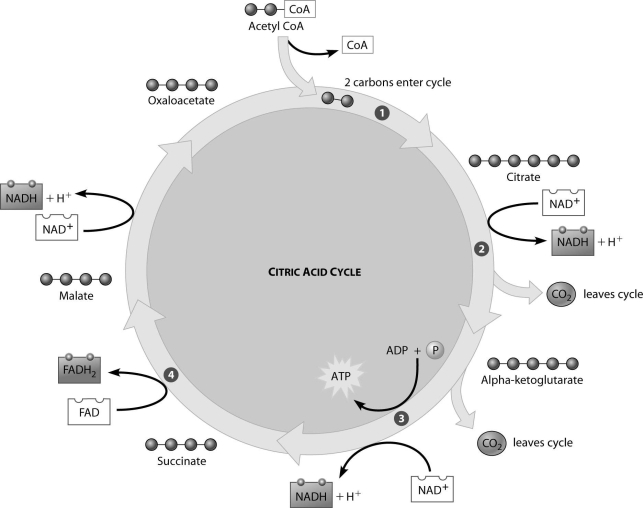
A)step 1
B)step 2
C)step 3
D)step 4
A)step 1
B)step 2
C)step 3
D)step 4
Question
Question
Question
Question
Question
Question
Question
Question
Question
Which H+ ion has just passed through the inner mitochondrial membrane by diffusion? 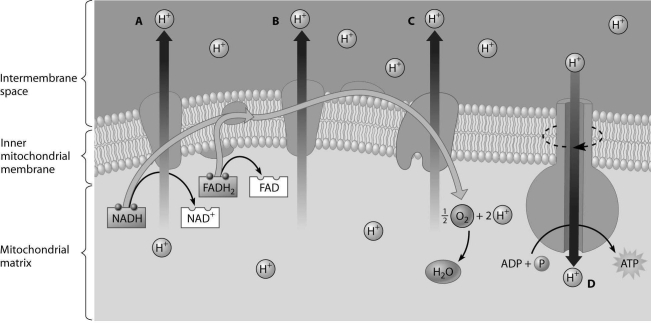
A)hydrogen ion A
B)hydrogen ion B
C)hydrogen ion C
D)hydrogen ion D
A)hydrogen ion A
B)hydrogen ion B
C)hydrogen ion C
D)hydrogen ion D
Question
Question
Question
Question
Question
Question
Question
Question
Question
Question
Question
Question
Question
Question
Question
Question
Question
Question
Question

Unlock Deck
Sign up to unlock the cards in this deck!
Unlock Deck
Unlock Deck
1/66

Play

Full screen (f)
Deck 6: How Cells Harvest Chemical Energy
1
The functioning of an electron transport chain is analogous to
A)a Slinky toy going down a flight of stairs.
B)a canoe going over a waterfall.
C)a person leaping from the top to the bottom of a flight of stairs in one jump.
D)a person climbing a flight of stairs one step at a time.
A)a Slinky toy going down a flight of stairs.
B)a canoe going over a waterfall.
C)a person leaping from the top to the bottom of a flight of stairs in one jump.
D)a person climbing a flight of stairs one step at a time.
A
2
A kilocalorie is defined as
A)the quantity of heat needed to raise the temperature of 1 kg of water by 1°C.
B)the quantity of food used to maintain normal bodily functions.
C)the quantity of food consumed during a given type of exercise.
D)the quantity of glucose needed to increase the body temperature by 1°C.
A)the quantity of heat needed to raise the temperature of 1 kg of water by 1°C.
B)the quantity of food used to maintain normal bodily functions.
C)the quantity of food consumed during a given type of exercise.
D)the quantity of glucose needed to increase the body temperature by 1°C.
A
3
If you were able to stop the process of cellular respiration after completing electron transport but prior to chemiosmosis,you would find the pH of a mitochondrion to be at its lowest
A)on the inner membrane.
B)in the mitochondrial matrix.
C)in the intermembrane space.
D)on the outer membrane.
A)on the inner membrane.
B)in the mitochondrial matrix.
C)in the intermembrane space.
D)on the outer membrane.
C
4
Which of the following statements regarding glycolysis is false?
A)Glycolysis is considered to be an ancient metabolic system because it is the most efficient metabolic pathway for ATP synthesis.
B)Glycolysis is considered to be an ancient metabolic process because it is not located in a membrane- bound organelle.
C)Glycolysis is considered to be an ancient metabolic process because it does not require oxygen.
D)Glycolysis is considered to be an ancient metabolic system because it occurs universally.
A)Glycolysis is considered to be an ancient metabolic system because it is the most efficient metabolic pathway for ATP synthesis.
B)Glycolysis is considered to be an ancient metabolic process because it is not located in a membrane- bound organelle.
C)Glycolysis is considered to be an ancient metabolic process because it does not require oxygen.
D)Glycolysis is considered to be an ancient metabolic system because it occurs universally.
Unlock Deck
Unlock for access to all 66 flashcards in this deck.
Unlock Deck
k this deck
5
When proteins are used as a source of energy for the body,the proteins
A)are hydrolyzed to their constituent amino acids; electrons are stripped from the amino acids and passed to the electron transport chain.
B)are hydrolyzed to glucose and converted to acetyl CoA,which enters the citric acid cycle.
C)are converted mainly into intermediates of glycolysis or the citric acid cycle.
D)are converted into glucose molecules,which are fed into glycolysis.
A)are hydrolyzed to their constituent amino acids; electrons are stripped from the amino acids and passed to the electron transport chain.
B)are hydrolyzed to glucose and converted to acetyl CoA,which enters the citric acid cycle.
C)are converted mainly into intermediates of glycolysis or the citric acid cycle.
D)are converted into glucose molecules,which are fed into glycolysis.
Unlock Deck
Unlock for access to all 66 flashcards in this deck.
Unlock Deck
k this deck
6
The function of coenzyme A in the citric acid cycle is most like
A)a frog that turns into a prince.
B)a limousine driver dropping off a couple at the school prom.
C)a kid jumping up and down on a trampoline.
D)throwing a baited hook into a lake and catching a fish.
A)a frog that turns into a prince.
B)a limousine driver dropping off a couple at the school prom.
C)a kid jumping up and down on a trampoline.
D)throwing a baited hook into a lake and catching a fish.
Unlock Deck
Unlock for access to all 66 flashcards in this deck.
Unlock Deck
k this deck
7
If ATP accumulates in a cell
A)the cell receives a signal that there is a need for more energy.
B)the rate of cellular respiration does not change.
C)feedback inhibition speeds up cellular respiration.
D)feedback inhibition slows down cellular respiration.
A)the cell receives a signal that there is a need for more energy.
B)the rate of cellular respiration does not change.
C)feedback inhibition speeds up cellular respiration.
D)feedback inhibition slows down cellular respiration.
Unlock Deck
Unlock for access to all 66 flashcards in this deck.
Unlock Deck
k this deck
8
Rotenone is a poison commonly added to insecticides.Insects exposed to rotenone will die because
A)they will no longer be able to absorb water and will become dehydrated.
B)they will no longer be able to perform anaerobic respiration.
C)they will no longer be able to produce adequate amounts of ATP.
D)high levels of fermentation products will build up in their bodies.
A)they will no longer be able to absorb water and will become dehydrated.
B)they will no longer be able to perform anaerobic respiration.
C)they will no longer be able to produce adequate amounts of ATP.
D)high levels of fermentation products will build up in their bodies.
Unlock Deck
Unlock for access to all 66 flashcards in this deck.
Unlock Deck
k this deck
9
Yeasts can produce ATP by either fermentation or oxidative phosphorylation; thus,they are
A)facultative aerobes.
B)strict aerobes.
C)strict anaerobes.
D)facultative anaerobes.
A)facultative aerobes.
B)strict aerobes.
C)strict anaerobes.
D)facultative anaerobes.
Unlock Deck
Unlock for access to all 66 flashcards in this deck.
Unlock Deck
k this deck
10
Which of the following statements about the energy yield of aerobic respiration is false?
A)Most of the ATP derived during aerobic respiration results from oxidative phosphorylation.
B)Oxidative phosphorylation resulting from 1 glucose molecule yields about 12 ATP molecules.
C)The total yield of ATP molecules per glucose molecule is about 32.
D)Less than 50% of the chemical energy available in glucose is converted to ATP energy.
A)Most of the ATP derived during aerobic respiration results from oxidative phosphorylation.
B)Oxidative phosphorylation resulting from 1 glucose molecule yields about 12 ATP molecules.
C)The total yield of ATP molecules per glucose molecule is about 32.
D)Less than 50% of the chemical energy available in glucose is converted to ATP energy.
Unlock Deck
Unlock for access to all 66 flashcards in this deck.
Unlock Deck
k this deck
11
A drug is tested in the laboratory and is found to create holes in both mitochondrial membranes.Scientists suspect that the drug will be harmful to human cells because it will inhibit
A)glycolysis.
B)oxidative phosphorylation.
C)the citric acid cycle.
D)the citric acid cycle and oxidative phosphorylation.
A)glycolysis.
B)oxidative phosphorylation.
C)the citric acid cycle.
D)the citric acid cycle and oxidative phosphorylation.
Unlock Deck
Unlock for access to all 66 flashcards in this deck.
Unlock Deck
k this deck
12
During redox reactions,
A)a substance that gains electrons is said to be oxidized.
B)electrons are lost from one substance and added to another substance.
C)the loss of electrons from one substance is called reduction.
D)protons from one molecule replace the electrons lost from another molecule.
A)a substance that gains electrons is said to be oxidized.
B)electrons are lost from one substance and added to another substance.
C)the loss of electrons from one substance is called reduction.
D)protons from one molecule replace the electrons lost from another molecule.
Unlock Deck
Unlock for access to all 66 flashcards in this deck.
Unlock Deck
k this deck
13
During which of the following phases of cellular respiration does substrate- level phosphorylation take place?
A)the citric acid cycle
B)oxidative phosphorylation
C)glycolysis and the citric acid cycle
D)glycolysis
A)the citric acid cycle
B)oxidative phosphorylation
C)glycolysis and the citric acid cycle
D)glycolysis
Unlock Deck
Unlock for access to all 66 flashcards in this deck.
Unlock Deck
k this deck
14
Which of the following statements about the energy yields from cellular respiration is true?
A)Cellular respiration is more efficient at harnessing energy from glucose than car engines are at harnessing energy from gasoline.
B)The heat produced during cellular respiration is only a tiny fraction of the chemical energy available in a glucose molecule.
C)Cellular respiration converts the kinetic energy of glucose into chemical energy.
D)Cellular respiration converts all of the energy in glucose into high- energy ATP bonds.
A)Cellular respiration is more efficient at harnessing energy from glucose than car engines are at harnessing energy from gasoline.
B)The heat produced during cellular respiration is only a tiny fraction of the chemical energy available in a glucose molecule.
C)Cellular respiration converts the kinetic energy of glucose into chemical energy.
D)Cellular respiration converts all of the energy in glucose into high- energy ATP bonds.
Unlock Deck
Unlock for access to all 66 flashcards in this deck.
Unlock Deck
k this deck
15
Humans use about of their daily calories to maintain brain cells and power other life- sustaining activities.
A)75%
B)50%
C)25%
D)90%
A)75%
B)50%
C)25%
D)90%
Unlock Deck
Unlock for access to all 66 flashcards in this deck.
Unlock Deck
k this deck
16
The conversion of CO2 and H2O into organic compounds using energy from light is called
A)photosynthesis.
B)fermentation.
C)cellular respiration.
D)glycolysis.
A)photosynthesis.
B)fermentation.
C)cellular respiration.
D)glycolysis.
Unlock Deck
Unlock for access to all 66 flashcards in this deck.
Unlock Deck
k this deck
17
How do cells capture the energy released by cellular respiration?
A)They store it in molecules of carbon dioxide.
B)They produce glucose.
C)The energy is coupled to oxygen.
D)They produce ATP.
A)They store it in molecules of carbon dioxide.
B)They produce glucose.
C)The energy is coupled to oxygen.
D)They produce ATP.
Unlock Deck
Unlock for access to all 66 flashcards in this deck.
Unlock Deck
k this deck
18
Which of the following options lists the stages in cellular respiration in the correct order?
A)glycolysis,the citric acid cycle,and oxidative phosphorylation
B)the citric acid cycle,oxidative phosphorylation,and glycolysis
C)glycolysis,oxidative phosphorylation,and the citric acid cycle
D)oxidative phosphorylation,glycolysis,and the citric acid cycle
A)glycolysis,the citric acid cycle,and oxidative phosphorylation
B)the citric acid cycle,oxidative phosphorylation,and glycolysis
C)glycolysis,oxidative phosphorylation,and the citric acid cycle
D)oxidative phosphorylation,glycolysis,and the citric acid cycle
Unlock Deck
Unlock for access to all 66 flashcards in this deck.
Unlock Deck
k this deck
19
Some friends are trying to make wine in their basement.They've added yeast to a sweet grape juice mixture and have allowed the yeast to grow.After several days they find that sugar levels in the grape juice have dropped,but there's no alcohol in the mixture.The most likely explanation is that
A)the mixture needs more sugar,because yeast need a lot of energy before they can begin to produce alcohol.
B)the mixture needs more oxygen,because yeast need oxygen to break down sugar and get enough energy to produce alcohol.
C)the mixture needs less oxygen,because yeast only produce alcohol in the absence of oxygen.
D)the yeast used the alcohol as a carbon source.
A)the mixture needs more sugar,because yeast need a lot of energy before they can begin to produce alcohol.
B)the mixture needs more oxygen,because yeast need oxygen to break down sugar and get enough energy to produce alcohol.
C)the mixture needs less oxygen,because yeast only produce alcohol in the absence of oxygen.
D)the yeast used the alcohol as a carbon source.
Unlock Deck
Unlock for access to all 66 flashcards in this deck.
Unlock Deck
k this deck
20
The processes of photosynthesis and cellular respiration are complementary.During these energy conversions,some energy is
A)used to create light.
B)destroyed when the chemical bonds of glucose are made.
C)lost in the form of heat.
D)saved in the chemical bonds of water,CO2 and O2.
A)used to create light.
B)destroyed when the chemical bonds of glucose are made.
C)lost in the form of heat.
D)saved in the chemical bonds of water,CO2 and O2.
Unlock Deck
Unlock for access to all 66 flashcards in this deck.
Unlock Deck
k this deck
21
A mutant protist is found in which some mitochondria lack an inner mitochondrial membrane.Which of the following pathways would be completely disrupted in these mitochondria?
A)biosynthesis
B)glycolysis
C)oxidative phosphorylation
D)alcoholic fermentation
A)biosynthesis
B)glycolysis
C)oxidative phosphorylation
D)alcoholic fermentation
Unlock Deck
Unlock for access to all 66 flashcards in this deck.
Unlock Deck
k this deck
22
A culture of bacteria growing aerobically is fed glucose containing radioactive carbon and is then examined.During the citric acid cycle,radioactivity would first appear in
A)oxaloacetic acid.
B)CoA.
C)citrate.
D)NADH.
A)oxaloacetic acid.
B)CoA.
C)citrate.
D)NADH.
Unlock Deck
Unlock for access to all 66 flashcards in this deck.
Unlock Deck
k this deck
23
During cellular respiration,electrons move through a series of electron carrier molecules.Which of the following statements about this process is true?
A)Molecular oxygen is eventually oxidized by the electrons to form water.
B)The electrons release large amounts of energy each time they are transferred from one carrier to another.
C)Molecular oxygen is reduced when it accepts electrons and forms water.
D)The electrons move from carriers that have more affinity for them to carriers that have less affinity for them.
A)Molecular oxygen is eventually oxidized by the electrons to form water.
B)The electrons release large amounts of energy each time they are transferred from one carrier to another.
C)Molecular oxygen is reduced when it accepts electrons and forms water.
D)The electrons move from carriers that have more affinity for them to carriers that have less affinity for them.
Unlock Deck
Unlock for access to all 66 flashcards in this deck.
Unlock Deck
k this deck
24
The enzymes of the citric acid cycle are located in the
A)outer mitochondrial membrane.
B)matrix and inner mitochondrial membrane.
C)nucleus.
D)cytoplasm.
A)outer mitochondrial membrane.
B)matrix and inner mitochondrial membrane.
C)nucleus.
D)cytoplasm.
Unlock Deck
Unlock for access to all 66 flashcards in this deck.
Unlock Deck
k this deck
25
Respiration _ _,and cellular respiration _.
A)uses glucose ...produces glucose
B)produces glucose ...produces oxygen
C)produces ATP ...is gas exchange
D)is gas exchange ...produces ATP
A)uses glucose ...produces glucose
B)produces glucose ...produces oxygen
C)produces ATP ...is gas exchange
D)is gas exchange ...produces ATP
Unlock Deck
Unlock for access to all 66 flashcards in this deck.
Unlock Deck
k this deck
26
During cellular respiration,the energy in glucose
A)is carried by electrons.
B)is released all at once.
C)becomes stored in molecules of ammonia.
D)is used to manufacture glucose.
A)is carried by electrons.
B)is released all at once.
C)becomes stored in molecules of ammonia.
D)is used to manufacture glucose.
Unlock Deck
Unlock for access to all 66 flashcards in this deck.
Unlock Deck
k this deck
27
The overall equation for the cellular respiration of glucose is
A)C6H12O6 + energy -6 CO2+ 6 H2O + 6 O2.
B)5 CO2 + 6 H2O -C5H12O6 + 6 O2 + energy.
C)C6H12O6 + 6 O2 -6 CO2 + 6 H2O + energy.
D)C5H12O6 + 6 O2 -5 CO2 + 6 H2O + energy.
A)C6H12O6 + energy -6 CO2+ 6 H2O + 6 O2.
B)5 CO2 + 6 H2O -C5H12O6 + 6 O2 + energy.
C)C6H12O6 + 6 O2 -6 CO2 + 6 H2O + energy.
D)C5H12O6 + 6 O2 -5 CO2 + 6 H2O + energy.
Unlock Deck
Unlock for access to all 66 flashcards in this deck.
Unlock Deck
k this deck
28
The label on the box of breakfast cereal lists one serving as containing "200 Calories" per serving.How many calories are actually in one serving?
A)200,000
B)20
C)2,000,000
D)2,000
A)200,000
B)20
C)2,000,000
D)2,000
Unlock Deck
Unlock for access to all 66 flashcards in this deck.
Unlock Deck
k this deck
29
The mitochondrial cristae are an adaptation that
A)carefully encloses the DNA housed within the mitochondrial matrix.
B)increases the space for more copies of the electron transport chain and ATP synthase complexes.
C)helps mitochondria divide during times of greatest cellular respiration.
D)permits the expansion of mitochondria as oxygen accumulates in the mitochondrial matrix.
A)carefully encloses the DNA housed within the mitochondrial matrix.
B)increases the space for more copies of the electron transport chain and ATP synthase complexes.
C)helps mitochondria divide during times of greatest cellular respiration.
D)permits the expansion of mitochondria as oxygen accumulates in the mitochondrial matrix.
Unlock Deck
Unlock for access to all 66 flashcards in this deck.
Unlock Deck
k this deck
30
The end products of the citric acid cycle include all of the following except
A)CO2.
B)FADH2.
C)pyruvate.
D)ATP.
A)CO2.
B)FADH2.
C)pyruvate.
D)ATP.
Unlock Deck
Unlock for access to all 66 flashcards in this deck.
Unlock Deck
k this deck
31
During cellular respiration,NADH
A)is reduced to form NAD+.
B)delivers its electron load to the first electron carrier molecule.
C)is the final electron acceptor.
D)is chemically converted into ATP.
A)is reduced to form NAD+.
B)delivers its electron load to the first electron carrier molecule.
C)is the final electron acceptor.
D)is chemically converted into ATP.
Unlock Deck
Unlock for access to all 66 flashcards in this deck.
Unlock Deck
k this deck
32
The end products of glycolysis include
A)citric acid.
B)O2.
C)acetyl CoA.
D)NADH.
A)citric acid.
B)O2.
C)acetyl CoA.
D)NADH.
Unlock Deck
Unlock for access to all 66 flashcards in this deck.
Unlock Deck
k this deck
33
If you consume 1 g of each of the following,which will yield the most ATP?
A)fat
B)protein
C)starch
D)glucose
A)fat
B)protein
C)starch
D)glucose
Unlock Deck
Unlock for access to all 66 flashcards in this deck.
Unlock Deck
k this deck
34
When did the level of oxygen in Earth's atmosphere become high enough to sustain aerobic respiration?
A)1.0 billion years ago
B)3.5 billion years ago
C)1.5 billion years ago
D)2.7 billion years ago
A)1.0 billion years ago
B)3.5 billion years ago
C)1.5 billion years ago
D)2.7 billion years ago
Unlock Deck
Unlock for access to all 66 flashcards in this deck.
Unlock Deck
k this deck
35
Which of the following processes produces the most ATP per molecule of glucose oxidized?
A)alcoholic fermentation
B)lactic acid fermentation
C)aerobic respiration
D)All produce approximately the same amount of ATP per molecule of glucose.
A)alcoholic fermentation
B)lactic acid fermentation
C)aerobic respiration
D)All produce approximately the same amount of ATP per molecule of glucose.
Unlock Deck
Unlock for access to all 66 flashcards in this deck.
Unlock Deck
k this deck
36
In biological systems,an important enzyme involved in the regulation of redox reactions is
A)oxygen.
B)ATP.
C)glucose.
D)dehydrogenase.
A)oxygen.
B)ATP.
C)glucose.
D)dehydrogenase.
Unlock Deck
Unlock for access to all 66 flashcards in this deck.
Unlock Deck
k this deck
37
At the end of the citric acid cycle,most of the energy remaining from the original glucose is stored in
A)NADH.
B)ATP.
C)CO2.
D)pyruvate.
A)NADH.
B)ATP.
C)CO2.
D)pyruvate.
Unlock Deck
Unlock for access to all 66 flashcards in this deck.
Unlock Deck
k this deck
38
Which step of the citric acid cycle requires both NAD+ and ADP as reactants?
A)step 1
B)step 2
C)step 3
D)step 4
A)step 1
B)step 2
C)step 3
D)step 4
Unlock Deck
Unlock for access to all 66 flashcards in this deck.
Unlock Deck
k this deck
39
In fermentation,is .
A)NAD+ ...oxidized
B)NADH ...oxidized
C)NADH ...reduced
D)ethanol ...oxidized
A)NAD+ ...oxidized
B)NADH ...oxidized
C)NADH ...reduced
D)ethanol ...oxidized
Unlock Deck
Unlock for access to all 66 flashcards in this deck.
Unlock Deck
k this deck
40
Which of the following statements about the inner mitochondrial membrane is false?
A)Electron carriers are found in the inner mitochondrial membrane.
B)A gradient of H+ exists across the inner mitochondrial membrane.
C)ATP synthase is found in the inner mitochondrial membrane.
D)The inner mitochondrial membrane plays a role in the production of pyruvate.
A)Electron carriers are found in the inner mitochondrial membrane.
B)A gradient of H+ exists across the inner mitochondrial membrane.
C)ATP synthase is found in the inner mitochondrial membrane.
D)The inner mitochondrial membrane plays a role in the production of pyruvate.
Unlock Deck
Unlock for access to all 66 flashcards in this deck.
Unlock Deck
k this deck
41
A culture of bacteria growing aerobically is fed glucose containing radioactive carbon and is then examined.As the bacteria metabolize the glucose,radioactivity will appear first in
A)carbon dioxide.
B)pyruvate.
C)ATP.
D)glucose- 6- phosphate.
A)carbon dioxide.
B)pyruvate.
C)ATP.
D)glucose- 6- phosphate.
Unlock Deck
Unlock for access to all 66 flashcards in this deck.
Unlock Deck
k this deck
42
Which of the following statements regarding cellular respiration is false?
A)Cellular respiration releases heat.
B)Cellular respiration produces carbon dioxide.
C)Cellular respiration produces water.
D)Cellular respiration is a single chemical reaction with just one step.
A)Cellular respiration releases heat.
B)Cellular respiration produces carbon dioxide.
C)Cellular respiration produces water.
D)Cellular respiration is a single chemical reaction with just one step.
Unlock Deck
Unlock for access to all 66 flashcards in this deck.
Unlock Deck
k this deck
43
When an organism such as a yeast lives by fermentation,it converts the pyruvate from glycolysis into a different compound,such as alcohol.Why doesn't it secrete the pyruvate directly?
A)The conversion is needed to regenerate the molecules needed for glycolysis.
B)A buildup of pyruvate in the surrounding environment would be too toxic.
C)The conversion yields one NADH per pyruvate molecule.
D)The conversion yields 32 ATP per pyruvate molecule.
A)The conversion is needed to regenerate the molecules needed for glycolysis.
B)A buildup of pyruvate in the surrounding environment would be too toxic.
C)The conversion yields one NADH per pyruvate molecule.
D)The conversion yields 32 ATP per pyruvate molecule.
Unlock Deck
Unlock for access to all 66 flashcards in this deck.
Unlock Deck
k this deck
44
By- products of cellular respiration include
A)NADH and ATP.
B)oxygen and heat.
C)FADH2 and NADH.
D)carbon dioxide and water.
A)NADH and ATP.
B)oxygen and heat.
C)FADH2 and NADH.
D)carbon dioxide and water.
Unlock Deck
Unlock for access to all 66 flashcards in this deck.
Unlock Deck
k this deck
45
How many molecules of NADH are produced during glycolysis?
A)6
B)4
C)2
D)8
A)6
B)4
C)2
D)8
Unlock Deck
Unlock for access to all 66 flashcards in this deck.
Unlock Deck
k this deck
46
To obtain energy from starch and glycogen,the body must begin by
A)removing one glucose at a time with a condensation reaction.
B)converting both starch and glycogen to fatty acids.
C)hydrolyzing both starch and glycogen to glucose.
D)hydrolyzing the starch to glucose and the glycogen to amino acids.
A)removing one glucose at a time with a condensation reaction.
B)converting both starch and glycogen to fatty acids.
C)hydrolyzing both starch and glycogen to glucose.
D)hydrolyzing the starch to glucose and the glycogen to amino acids.
Unlock Deck
Unlock for access to all 66 flashcards in this deck.
Unlock Deck
k this deck
47
Which H+ ion has just passed through the inner mitochondrial membrane by diffusion?
A)hydrogen ion A
B)hydrogen ion B
C)hydrogen ion C
D)hydrogen ion D
A)hydrogen ion A
B)hydrogen ion B
C)hydrogen ion C
D)hydrogen ion D
Unlock Deck
Unlock for access to all 66 flashcards in this deck.
Unlock Deck
k this deck
48
Which of the following statements regarding photosynthesis and cellular respiration is true?
A)Cellular respiration occurs in mitochondria and in chloroplasts.
B)Photosynthesis occurs in mitochondria,and cellular respiration occurs in chloroplasts.
C)Photosynthesis occurs in mitochondria and in chloroplasts.
D)Photosynthesis occurs in chloroplasts,and cellular respiration occurs in mitochondria.
A)Cellular respiration occurs in mitochondria and in chloroplasts.
B)Photosynthesis occurs in mitochondria,and cellular respiration occurs in chloroplasts.
C)Photosynthesis occurs in mitochondria and in chloroplasts.
D)Photosynthesis occurs in chloroplasts,and cellular respiration occurs in mitochondria.
Unlock Deck
Unlock for access to all 66 flashcards in this deck.
Unlock Deck
k this deck
49
Cyanide differs from dinitrophenol in that
A)cyanide inhibits the production of ATP by inhibiting ATP synthase,while dinitrophenol causes mitochondrial membranes to become less permeable to H+ ions.
B)cyanide makes the membrane of mitochondria leaky to H+ ions and prevents a concentration gradient from building up,while dinitrophenol blocks the passage of electrons through electron carriers.
C)cyanide is highly toxic to human cells,while dinitrophenol is nontoxic.
D)cyanide is an electron transport blocker,while dinitrophenol makes the membrane of the mitochondrion leaky to H+ ions.
A)cyanide inhibits the production of ATP by inhibiting ATP synthase,while dinitrophenol causes mitochondrial membranes to become less permeable to H+ ions.
B)cyanide makes the membrane of mitochondria leaky to H+ ions and prevents a concentration gradient from building up,while dinitrophenol blocks the passage of electrons through electron carriers.
C)cyanide is highly toxic to human cells,while dinitrophenol is nontoxic.
D)cyanide is an electron transport blocker,while dinitrophenol makes the membrane of the mitochondrion leaky to H+ ions.
Unlock Deck
Unlock for access to all 66 flashcards in this deck.
Unlock Deck
k this deck
50
The energy yield from the complete aerobic breakdown of a single molecule of glucose
A)can vary depending on whether NADH passes its electrons to NAD+ or FAD.
B)is always 32 ATP.
C)increases as the supply of oxygen increases.
D)is less than the yield from anaerobic respiration.
A)can vary depending on whether NADH passes its electrons to NAD+ or FAD.
B)is always 32 ATP.
C)increases as the supply of oxygen increases.
D)is less than the yield from anaerobic respiration.
Unlock Deck
Unlock for access to all 66 flashcards in this deck.
Unlock Deck
k this deck
51
After glycolysis but before the citric acid cycle,
A)pyruvate is oxidized.
B)glucose is split,producing two molecules of pyruvate.
C)a carbon atom is added to pyruvate to make a four- carbon compound.
D)coenzyme A is cleaved off pyruvate.
A)pyruvate is oxidized.
B)glucose is split,producing two molecules of pyruvate.
C)a carbon atom is added to pyruvate to make a four- carbon compound.
D)coenzyme A is cleaved off pyruvate.
Unlock Deck
Unlock for access to all 66 flashcards in this deck.
Unlock Deck
k this deck
52
When a cell uses fatty acid for aerobic respiration,it first hydrolyzes fats to
A)fatty acids and sugars.
B)glycerol and amino acids.
C)glycerol and fatty acids.
D)sugars and glycerol.
A)fatty acids and sugars.
B)glycerol and amino acids.
C)glycerol and fatty acids.
D)sugars and glycerol.
Unlock Deck
Unlock for access to all 66 flashcards in this deck.
Unlock Deck
k this deck
53
Which of the following statements regarding the chemical grooming of pyruvate is false?
A)Each pyruvate loses a carbon atom,which is released as CO2.
B)Two pyruvate molecules together contain less chemical energy than was found in the original glucose molecule.
C)Two molecules of pyruvate are each converted into two- carbon molecules joined to a coenzyme A molecule.
D)Each pyruvate molecule has a CO2 added and then joins with an NADH.
A)Each pyruvate loses a carbon atom,which is released as CO2.
B)Two pyruvate molecules together contain less chemical energy than was found in the original glucose molecule.
C)Two molecules of pyruvate are each converted into two- carbon molecules joined to a coenzyme A molecule.
D)Each pyruvate molecule has a CO2 added and then joins with an NADH.
Unlock Deck
Unlock for access to all 66 flashcards in this deck.
Unlock Deck
k this deck
54
Oxidation is the _ ,and reduction is the _.
A)gain of protons ...loss of protons
B)gain of oxygen ...loss of oxygen
C)gain of electrons ...loss of electrons
D)loss of electrons ...gain of electrons
A)gain of protons ...loss of protons
B)gain of oxygen ...loss of oxygen
C)gain of electrons ...loss of electrons
D)loss of electrons ...gain of electrons
Unlock Deck
Unlock for access to all 66 flashcards in this deck.
Unlock Deck
k this deck
55
Which of the following are products of cellular respiration?
A)energy to make ATP and carbon dioxide
B)oxygen and carbon dioxide
C)oxygen and glucose
D)oxygen and energy to make ATP
A)energy to make ATP and carbon dioxide
B)oxygen and carbon dioxide
C)oxygen and glucose
D)oxygen and energy to make ATP
Unlock Deck
Unlock for access to all 66 flashcards in this deck.
Unlock Deck
k this deck
56
Bacteria that are unable to survive in the presence of oxygen are called
A)facultative anaerobes.
B)obligate anaerobes.
C)aerotolerant anaerobes.
D)obligate aerobes.
A)facultative anaerobes.
B)obligate anaerobes.
C)aerotolerant anaerobes.
D)obligate aerobes.
Unlock Deck
Unlock for access to all 66 flashcards in this deck.
Unlock Deck
k this deck
57
Humans use the calories they obtain from as their source of energy.
A)sunlight
B)water
C)food
D)minerals
A)sunlight
B)water
C)food
D)minerals
Unlock Deck
Unlock for access to all 66 flashcards in this deck.
Unlock Deck
k this deck
58
Which of the following is a result of glycolysis?
A)a net loss of two ATPs per glucose molecule
B)conversion of glucose to two three- carbon compounds
C)conversion of NADH to NAD+
D)production of CO2
A)a net loss of two ATPs per glucose molecule
B)conversion of glucose to two three- carbon compounds
C)conversion of NADH to NAD+
D)production of CO2
Unlock Deck
Unlock for access to all 66 flashcards in this deck.
Unlock Deck
k this deck
59
Which of the following metabolic pathways is common in aerobic and anaerobic metabolism?
A)oxidative phosphorylation
B)electron transport chain
C)the citric acid cycle
D)glycolysis
A)oxidative phosphorylation
B)electron transport chain
C)the citric acid cycle
D)glycolysis
Unlock Deck
Unlock for access to all 66 flashcards in this deck.
Unlock Deck
k this deck
60
Which of the following organisms can make organic molecules from water and carbon dioxide?
A)bear
B)mushroom
C)crayfish
D)wheat
A)bear
B)mushroom
C)crayfish
D)wheat
Unlock Deck
Unlock for access to all 66 flashcards in this deck.
Unlock Deck
k this deck
61
Which of the following statements regarding food is false?
A)Food provides the raw materials for biosynthetic pathways that consume ATP.
B)Food provides the raw materials for biosynthetic pathways that can produce molecules that are not actually present in the original food.
C)Food provides the raw materials for biosynthetic pathways that make molecules for cellular repair and growth.
D)Food provides the raw materials for biosynthetic pathways that can produce sugar by a process that is the exact opposite of glycolysis.
A)Food provides the raw materials for biosynthetic pathways that consume ATP.
B)Food provides the raw materials for biosynthetic pathways that can produce molecules that are not actually present in the original food.
C)Food provides the raw materials for biosynthetic pathways that make molecules for cellular repair and growth.
D)Food provides the raw materials for biosynthetic pathways that can produce sugar by a process that is the exact opposite of glycolysis.
Unlock Deck
Unlock for access to all 66 flashcards in this deck.
Unlock Deck
k this deck
62
A child is born with a rare disease in which mitochondria are missing from skeletal muscle cells.However,the muscles still function.Physicians find that
A)the muscles contain large amounts of carbon dioxide following even mild physical exercise.
B)the muscles contain large amounts of lactate following even mild physical exercise.
C)the muscle cells cannot split glucose to pyruvate.
D)the muscles require extremely high levels of oxygen to function.
A)the muscles contain large amounts of carbon dioxide following even mild physical exercise.
B)the muscles contain large amounts of lactate following even mild physical exercise.
C)the muscle cells cannot split glucose to pyruvate.
D)the muscles require extremely high levels of oxygen to function.
Unlock Deck
Unlock for access to all 66 flashcards in this deck.
Unlock Deck
k this deck
63
During chemiosmosis,
A)energy is released as H+ ions move freely across mitochondrial membranes.
B)a concentration gradient is generated when large numbers of H+ ions are passively transported from the matrix of the mitochondrion to the mitochondrion's intermembrane space.
C)H+ ions serve as the final electron acceptor.
D)ATP is synthesized when H+ ions move through a channel in ATP synthase.
A)energy is released as H+ ions move freely across mitochondrial membranes.
B)a concentration gradient is generated when large numbers of H+ ions are passively transported from the matrix of the mitochondrion to the mitochondrion's intermembrane space.
C)H+ ions serve as the final electron acceptor.
D)ATP is synthesized when H+ ions move through a channel in ATP synthase.
Unlock Deck
Unlock for access to all 66 flashcards in this deck.
Unlock Deck
k this deck
64
As a result of glycolysis there is a net gain of ATPs.
A)0
B)36
C)2
D)1
A)0
B)36
C)2
D)1
Unlock Deck
Unlock for access to all 66 flashcards in this deck.
Unlock Deck
k this deck
65
In yeast cells,
A)lactic acid is produced during glycolysis.
B)alcohol is produced during the citric acid cycle.
C)alcohol is produced after glycolysis.
D)lactic acid is produced during anaerobic respiration.
A)lactic acid is produced during glycolysis.
B)alcohol is produced during the citric acid cycle.
C)alcohol is produced after glycolysis.
D)lactic acid is produced during anaerobic respiration.
Unlock Deck
Unlock for access to all 66 flashcards in this deck.
Unlock Deck
k this deck
66
In the electron transport chain,the final electron acceptor is
A)an oxygen atom.
B)ADP.
C)a molecule of water.
D)a molecule of carbon dioxide.
A)an oxygen atom.
B)ADP.
C)a molecule of water.
D)a molecule of carbon dioxide.
Unlock Deck
Unlock for access to all 66 flashcards in this deck.
Unlock Deck
k this deck
Unlock Deck
Unlock for access to all 66 flashcards in this deck.






