







 Chat with AI

Deck 50: Caring for the Patient With Musculoskeletal Trauma and Surgical Procedures
Full screen (f)

Question

Question
Question
Question
Question
Question
Question
Question
Question
Question
Question
Question
Question
Question
Question
Question
Question
Question
Question
Question
Question
The patient has a fracture of the right tibia and fibula. The orthopedic surgeon decides to surgically correct the fractures with the type of device pictured in the figure. What type of device is being used? 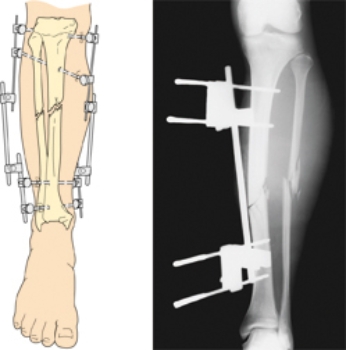
A) External fixation device
B) Internal fixation device
C) Buck's traction
D) External wiring
A) External fixation device
B) Internal fixation device
C) Buck's traction
D) External wiring
Question
Question
Question
Question
Question
Question
Question
Question
Question
Question
Question
Question
Question
Question
The nurse is changing a patient's stump dressing. How would the nurse document this dressing technique? 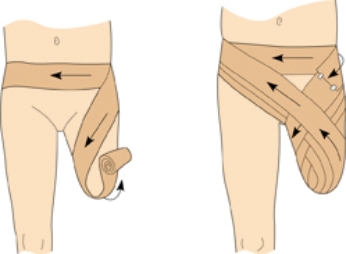
A) Figure-of-eight bandage
B) Binder wrapping
C) Splinting
D) Bivalving
A) Figure-of-eight bandage
B) Binder wrapping
C) Splinting
D) Bivalving

Unlock Deck
Sign up to unlock the cards in this deck!
Unlock Deck
Unlock Deck
1/35

Play

Full screen (f)
Deck 50: Caring for the Patient With Musculoskeletal Trauma and Surgical Procedures
1
Which statement by an adolescent patient recovering from a sprain would indicate the need for further instruction by the nurse regarding care at home?
A) "I should put a heating pad on my leg as soon as I get home."
B) "I should avoid weight bearing on this leg for a couple days."
C) "I should make sure to keep the Ace bandage on my leg."
D) "I should prop this leg up when I'm sitting in a chair."
A) "I should put a heating pad on my leg as soon as I get home."
B) "I should avoid weight bearing on this leg for a couple days."
C) "I should make sure to keep the Ace bandage on my leg."
D) "I should prop this leg up when I'm sitting in a chair."
"I should put a heating pad on my leg as soon as I get home."
2
A patient with carpal tunnel syndrome is being treated conservatively. Which information would the nurse provide?
A) "Your wrist will be casted for the first 3 weeks, followed by a protective splint for the next 6 to 8 weeks."
B) "Exercise your wrist for complete rotation and ROM every 4 hours while awake."
C) "Wear a brace or wrist splint at night and during activities that aggravate the symptoms."
D) "Wear an external hinge splint to support the wrist for several months."
A) "Your wrist will be casted for the first 3 weeks, followed by a protective splint for the next 6 to 8 weeks."
B) "Exercise your wrist for complete rotation and ROM every 4 hours while awake."
C) "Wear a brace or wrist splint at night and during activities that aggravate the symptoms."
D) "Wear an external hinge splint to support the wrist for several months."
"Wear a brace or wrist splint at night and during activities that aggravate the symptoms."
3
The nurse explains to a patient who is having a cast removed that the remodeling phase of fracture healing involves which changes? Note: Credit will be given only if all correct choices and no incorrect choices are selected.
Standard Text: Select all that apply.
A) Creation of the cartilage collar at the fracture sight
B) Application of stress and weight to the affected bone
C) Granulation of new bone tissue to form the connective bridge
D) Resorption of excess new bone at the site of the callus
E) Strengthening of the new bone at the site of the fracture
Standard Text: Select all that apply.
A) Creation of the cartilage collar at the fracture sight
B) Application of stress and weight to the affected bone
C) Granulation of new bone tissue to form the connective bridge
D) Resorption of excess new bone at the site of the callus
E) Strengthening of the new bone at the site of the fracture
Application of stress and weight to the affected bone
Resorption of excess new bone at the site of the callus
Strengthening of the new bone at the site of the fracture
Resorption of excess new bone at the site of the callus
Strengthening of the new bone at the site of the fracture
4
A patient wearing a long leg cast has assessment findings of compartment syndrome in the extremity. The nurse demonstrates understanding of the complication and its specific treatment by gathering which equipment?
A) Pillows to elevate the leg
B) A percussion hammer
C) Buck's traction equipment
D) Ace bandages
A) Pillows to elevate the leg
B) A percussion hammer
C) Buck's traction equipment
D) Ace bandages
Unlock Deck
Unlock for access to all 35 flashcards in this deck.
Unlock Deck
k this deck
5
The nurse is caring for a patient whose fractured left femur was surgically managed with intramedullary I-M) rodding. The nurse would explain which benefits of this type of fixation? Note: Credit will be given only if all correct choices and no incorrect choices are selected.
Standard Text: Select all that apply.
A) It results in only minimal skin scarring.
B) It does not interfere with range of motion.
C) It facilitates direct visualization of the fracture.
D) It reduces the risk of a postsurgical fat embolus.
E) It allows for early weight bearing.
Standard Text: Select all that apply.
A) It results in only minimal skin scarring.
B) It does not interfere with range of motion.
C) It facilitates direct visualization of the fracture.
D) It reduces the risk of a postsurgical fat embolus.
E) It allows for early weight bearing.
Unlock Deck
Unlock for access to all 35 flashcards in this deck.
Unlock Deck
k this deck
6
The nurse would immediately report to the surgeon which finding in a patient who had a total knee replacement within the last 24 hours?
A) Diminished sensations in both legs and feet
B) Motor strength of 4 in the unaffected leg
C) Capillary refill time of 5 seconds in the toes of the surgical leg
D) Slight pallor and skin coolness bilaterally
A) Diminished sensations in both legs and feet
B) Motor strength of 4 in the unaffected leg
C) Capillary refill time of 5 seconds in the toes of the surgical leg
D) Slight pallor and skin coolness bilaterally
Unlock Deck
Unlock for access to all 35 flashcards in this deck.
Unlock Deck
k this deck
7
Assessment of a patient postarthroplasty reveals tachypnea, air hunger, hypoxia, O2 sat of 86%, declining mental status, and petechiae. What is the nurse's priority action?
A) Apply oxygen at 3 to 4 liters /minute.
B) Call a code for potential cardiac arrest.
C) Prepare the patient for immediate intubation and mechanical ventilation with PEEP.
D) Raise the head of the bed HOB) and encourage coughing every hour.
A) Apply oxygen at 3 to 4 liters /minute.
B) Call a code for potential cardiac arrest.
C) Prepare the patient for immediate intubation and mechanical ventilation with PEEP.
D) Raise the head of the bed HOB) and encourage coughing every hour.
Unlock Deck
Unlock for access to all 35 flashcards in this deck.
Unlock Deck
k this deck
8
A patient experienced a cerebral spinal fluid leak after spinal surgery. The leak has just been treated with a blood patch. What is the nurse's priority action?
A) Administering a bolus of IV fluids
B) Positioning the patient on the left side
C) Initiating strict isolation procedures
D) Keeping the patient flat in bed for 2 hours
A) Administering a bolus of IV fluids
B) Positioning the patient on the left side
C) Initiating strict isolation procedures
D) Keeping the patient flat in bed for 2 hours
Unlock Deck
Unlock for access to all 35 flashcards in this deck.
Unlock Deck
k this deck
9
A patient is admitted after traumatic amputation of the left leg just below the knee. This crushing injury occurred at work while the patient was taking a smoking break. The nurse provides care based on which knowledge? Note: Credit will be given only if all correct choices and no incorrect choices are selected.
Standard Text: Select all that apply.
A) Crushing injuries are usually suitable for reattachment of the limb.
B) The patient's report of pain in the area of the amputated foot is real.
C) Smoking is a significant risk factor for impaired healing of reattached limbs.
D) The recovery period for a limb reattachment would be similar to that for a surgical amputation.
E) Nerve regeneration to a reattached lower limb usually results in poor function.
Standard Text: Select all that apply.
A) Crushing injuries are usually suitable for reattachment of the limb.
B) The patient's report of pain in the area of the amputated foot is real.
C) Smoking is a significant risk factor for impaired healing of reattached limbs.
D) The recovery period for a limb reattachment would be similar to that for a surgical amputation.
E) Nerve regeneration to a reattached lower limb usually results in poor function.
Unlock Deck
Unlock for access to all 35 flashcards in this deck.
Unlock Deck
k this deck
10
Following hip replacement surgery, which patient statement would the nurse evaluate as indicating additional teaching is necessary?
A) "I will sit down in a chair to reach items below waist height."
B) "I will use a shower chair and raised toilet seat when performing hygiene."
C) "My husband has removed our loose carpets and has cleared out our walkway."
D) "My daughter bought me a 'reacher' to access things on the floor."
A) "I will sit down in a chair to reach items below waist height."
B) "I will use a shower chair and raised toilet seat when performing hygiene."
C) "My husband has removed our loose carpets and has cleared out our walkway."
D) "My daughter bought me a 'reacher' to access things on the floor."
Unlock Deck
Unlock for access to all 35 flashcards in this deck.
Unlock Deck
k this deck
11
The nurse would recognize the need for additional teaching in a patient after posterior hip replacement when observing which activity?
A) The patient uses an abductor pillow while in bed.
B) The patient uses a regular-height toilet seat.
C) The patient keeps the affected leg and foot turned upright while in bed.
D) The patient keeps the operative leg straight when getting out of bed and uses the arms to push up out of bed.
A) The patient uses an abductor pillow while in bed.
B) The patient uses a regular-height toilet seat.
C) The patient keeps the affected leg and foot turned upright while in bed.
D) The patient keeps the operative leg straight when getting out of bed and uses the arms to push up out of bed.
Unlock Deck
Unlock for access to all 35 flashcards in this deck.
Unlock Deck
k this deck
12
The nurse is caring for a patient who has a grade II open fracture of the humerus. The nurse plans care for this patient based on which understanding? Note: Credit will be given only if all correct choices and no incorrect choices are selected.
Standard Text: Select all that apply.
A) Some crushing of the bone has occurred.
B) Major vascular reconstruction will be required.
C) There is a moderately high risk for developing an infection.
D) The patient has an "inside-out" fracture.
E) An inspection and debridement I&D) procedure will be required.
Standard Text: Select all that apply.
A) Some crushing of the bone has occurred.
B) Major vascular reconstruction will be required.
C) There is a moderately high risk for developing an infection.
D) The patient has an "inside-out" fracture.
E) An inspection and debridement I&D) procedure will be required.
Unlock Deck
Unlock for access to all 35 flashcards in this deck.
Unlock Deck
k this deck
13
A patient has a dislocated hip as the result of a fall. The nurse recognizes which primary reason to quickly return the femoral head to its normal position?
A) To preserve blood flow to the head of the femur
B) To avoid damage to nerves in the affected area
C) To minimize the damage to affected ligaments
D) To eliminate the severe pain the patient is experiencing
A) To preserve blood flow to the head of the femur
B) To avoid damage to nerves in the affected area
C) To minimize the damage to affected ligaments
D) To eliminate the severe pain the patient is experiencing
Unlock Deck
Unlock for access to all 35 flashcards in this deck.
Unlock Deck
k this deck
14
Which findings would indicate possible compromise of ulnar nerve integrity following surgical repair of a patient's elbow?
A) Edema in the forearm that is rated 3+
B) Pain radiating from the wrist to the middle finger
C) Inability to make the "OK" sign by bringing the thumb to the fourth or fifth finger
D) Slight flexion limitation less than 15 degrees) during passive ROM
A) Edema in the forearm that is rated 3+
B) Pain radiating from the wrist to the middle finger
C) Inability to make the "OK" sign by bringing the thumb to the fourth or fifth finger
D) Slight flexion limitation less than 15 degrees) during passive ROM
Unlock Deck
Unlock for access to all 35 flashcards in this deck.
Unlock Deck
k this deck
15
A patient who has been casted for a fracture of the left ulna asks the nurse when the cast will come off. The nurse's response is based on the knowledge that the cast will be removed when which physiologic parameter has been met?
A) The remodeling phase of the bone healing process has been completed, allowing for application of mechanical stress.
B) A cartilage collar can be clearly felt at the site of the original break.
C) A specific amount of time has passed, predetermined by the severity of the break.
D) The X-ray of the fractured bone shows that the ends are well joined.
A) The remodeling phase of the bone healing process has been completed, allowing for application of mechanical stress.
B) A cartilage collar can be clearly felt at the site of the original break.
C) A specific amount of time has passed, predetermined by the severity of the break.
D) The X-ray of the fractured bone shows that the ends are well joined.
Unlock Deck
Unlock for access to all 35 flashcards in this deck.
Unlock Deck
k this deck
16
A committee of musculoskeletal care nurses has been meeting to formulate policy changes regarding the proper method for providing pin site care. Based on current research findings, the nurses come to which conclusion?
A) The critical period for infection control measures is up to 48 hours out from pin insertion.
B) Pins located in areas of considerable soft tissue are at lowest risk for infection.
C) Chlorhexidine 2 mg/mL solution is the cleanser of choice.
D) Hydrogen peroxide is an acceptable skin cleanser.
A) The critical period for infection control measures is up to 48 hours out from pin insertion.
B) Pins located in areas of considerable soft tissue are at lowest risk for infection.
C) Chlorhexidine 2 mg/mL solution is the cleanser of choice.
D) Hydrogen peroxide is an acceptable skin cleanser.
Unlock Deck
Unlock for access to all 35 flashcards in this deck.
Unlock Deck
k this deck
17
A patient has had hip replacement surgery. What is the nurse's best plan to address this patient's ambulation needs?
A) Keep both bed rails up at all times so the patient will not attempt ambulation without assistance.
B) Teach the patient how to use a walker.
C) Have the patient practice log-rolling to the side of the bed before getting up.
D) Have the patient use a wheelchair until the hip is completely healed.
A) Keep both bed rails up at all times so the patient will not attempt ambulation without assistance.
B) Teach the patient how to use a walker.
C) Have the patient practice log-rolling to the side of the bed before getting up.
D) Have the patient use a wheelchair until the hip is completely healed.
Unlock Deck
Unlock for access to all 35 flashcards in this deck.
Unlock Deck
k this deck
18
Which nursing intervention would be included in pain management of a patient after orthopedic surgery?
A) Administering pain medications only when the patient is awake
B) Anticipatory pain management prior to therapy
C) Assessing vital signs to evaluate the degree of pain
D) Encourage the patient to lengthen the time intervals between pain medication doses.
A) Administering pain medications only when the patient is awake
B) Anticipatory pain management prior to therapy
C) Assessing vital signs to evaluate the degree of pain
D) Encourage the patient to lengthen the time intervals between pain medication doses.
Unlock Deck
Unlock for access to all 35 flashcards in this deck.
Unlock Deck
k this deck
19
The nurse is planning care for a patient who had an above-the-knee amputation 2 days ago. Which position should the nurse include in this patient's plan of care?
A) Sims' position as tolerated
B) Flat in bed
C) High Fowler's position with the stump elevated
D) Sitting in a chair while awake
A) Sims' position as tolerated
B) Flat in bed
C) High Fowler's position with the stump elevated
D) Sitting in a chair while awake
Unlock Deck
Unlock for access to all 35 flashcards in this deck.
Unlock Deck
k this deck
20
The nurse cannot palpate a patient's pedal pulse following an open reduction internal fixation ORIF) procedure for a fractured tibia. Which action is the priority intervention?
A) Check the lower extremity for pallor.
B) Notify the surgeon of the problem.
C) Assess the patient's pain rating.
D) Use a Doppler to find the pedal pulse.
A) Check the lower extremity for pallor.
B) Notify the surgeon of the problem.
C) Assess the patient's pain rating.
D) Use a Doppler to find the pedal pulse.
Unlock Deck
Unlock for access to all 35 flashcards in this deck.
Unlock Deck
k this deck
21
The patient has a fracture of the right tibia and fibula. The orthopedic surgeon decides to surgically correct the fractures with the type of device pictured in the figure. What type of device is being used?
A) External fixation device
B) Internal fixation device
C) Buck's traction
D) External wiring
A) External fixation device
B) Internal fixation device
C) Buck's traction
D) External wiring
Unlock Deck
Unlock for access to all 35 flashcards in this deck.
Unlock Deck
k this deck
22
Which assessment data would the nurse interpret as indicating a patient could be experiencing a fat embolus? Note: Credit will be given only if all correct choices and no incorrect choices are selected.
Standard Text: Select all that apply.
A) Pulse oximetry 86%
B) Petechiae on the chest and upper arms
C) Shortness of breath and chest pain
D) Respiratory rate 32
E) Skin hot, dry, and flushed
Standard Text: Select all that apply.
A) Pulse oximetry 86%
B) Petechiae on the chest and upper arms
C) Shortness of breath and chest pain
D) Respiratory rate 32
E) Skin hot, dry, and flushed
Unlock Deck
Unlock for access to all 35 flashcards in this deck.
Unlock Deck
k this deck
23
A patient is diagnosed with a sprained right ankle. The nurse instructs the patient on which common treatment of sprains?
A) Application of a long leg cast
B) Opioid pain medication
C) Heat, rest, compression, and elevation
D) Rest, ice, compression, and elevation
A) Application of a long leg cast
B) Opioid pain medication
C) Heat, rest, compression, and elevation
D) Rest, ice, compression, and elevation
Unlock Deck
Unlock for access to all 35 flashcards in this deck.
Unlock Deck
k this deck
24
The nurse is aware that which occupations could put a patient at risk for carpal tunnel syndrome? Note: Credit will be given only if all correct choices and no incorrect choices are selected.
Standard Text: Select all that apply.
A) Wheat farmer
B) Store cashier
C) Barber
D) Computer data input specialist
E) Carpenter
Standard Text: Select all that apply.
A) Wheat farmer
B) Store cashier
C) Barber
D) Computer data input specialist
E) Carpenter
Unlock Deck
Unlock for access to all 35 flashcards in this deck.
Unlock Deck
k this deck
25
A patient is diagnosed with a compound fracture and is scheduled for immediate surgery. Which nursing diagnosis would have the highest priority in the immediate postoperative period?
A) Impaired Transfer Ability
B) Risk for Post-Trauma Syndrome
C) Risk for Infection
D) Risk for Falls
A) Impaired Transfer Ability
B) Risk for Post-Trauma Syndrome
C) Risk for Infection
D) Risk for Falls
Unlock Deck
Unlock for access to all 35 flashcards in this deck.
Unlock Deck
k this deck
26
The nurse is observing a patient learning to use crutches. Which observation would prompt the nurse to reinforce teaching about crutch walking?
A) The axillary crutches have been sized so they do not touch the patient's axilla.
B) The patient using axillary crutches places the weight on the palms of the hands when walking.
C) The cuff of the patient's forearm crutch fits just above the elbow.
D) The patient places only part of the weight on forearm crutches.
A) The axillary crutches have been sized so they do not touch the patient's axilla.
B) The patient using axillary crutches places the weight on the palms of the hands when walking.
C) The cuff of the patient's forearm crutch fits just above the elbow.
D) The patient places only part of the weight on forearm crutches.
Unlock Deck
Unlock for access to all 35 flashcards in this deck.
Unlock Deck
k this deck
27
A patient recovering from a fractured hip is at risk for developing deep vein thrombosis DVT). The nurse monitors for which findings that would indicate DVT is occurring?
A) Positive Homans' sign
B) Decreased urine output
C) Confusion
D) Tachypnea
A) Positive Homans' sign
B) Decreased urine output
C) Confusion
D) Tachypnea
Unlock Deck
Unlock for access to all 35 flashcards in this deck.
Unlock Deck
k this deck
28
The nurse would be most alert for assessment findings of osteomyelitis in which patients? Note: Credit will be given only if all correct choices and no incorrect choices are selected.
Standard Text: Select all that apply.
A) The patient with a compound fracture
B) A patient who required open reduction of a fractured ankle
C) A patient who has a spiral fracture
D) A patient whose fractured radius was repaired with an external fixator device
E) A patient who has a torn anterior cruciate ligament
Standard Text: Select all that apply.
A) The patient with a compound fracture
B) A patient who required open reduction of a fractured ankle
C) A patient who has a spiral fracture
D) A patient whose fractured radius was repaired with an external fixator device
E) A patient who has a torn anterior cruciate ligament
Unlock Deck
Unlock for access to all 35 flashcards in this deck.
Unlock Deck
k this deck
29
A patient has a minor orthopedic injury to the arm. The nurse would suspect the development of complex regional pain syndrome CRPS) based on which assessment findings?
A) The patient complains of widespread pain and has limited joint mobility.
B) The patient has a fever and a rash over the injured area.
C) The patient complains of vague abdominal pain with diarrhea.
D) The patient's fingers are cyanotic.
A) The patient complains of widespread pain and has limited joint mobility.
B) The patient has a fever and a rash over the injured area.
C) The patient complains of vague abdominal pain with diarrhea.
D) The patient's fingers are cyanotic.
Unlock Deck
Unlock for access to all 35 flashcards in this deck.
Unlock Deck
k this deck
30
The nurse is teaching older adults about the risks for musculoskeletal trauma. Which strategies should the nurse include? Note: Credit will be given only if all correct choices and no incorrect choices are selected.
Standard Text: Select all that apply.
A) Avoid falls at home by not using throw rugs.
B) Maintain good nutrition.
C) Be screened for osteoporosis.
D) Avoid crowds.
E) Use assistive devices as necessary.
Standard Text: Select all that apply.
A) Avoid falls at home by not using throw rugs.
B) Maintain good nutrition.
C) Be screened for osteoporosis.
D) Avoid crowds.
E) Use assistive devices as necessary.
Unlock Deck
Unlock for access to all 35 flashcards in this deck.
Unlock Deck
k this deck
31
The nurse has identified the diagnosis Acute Pain for a patient recovering from an above-the-knee amputation. Which nursing interventions would be beneficial for this patient? Note: Credit will be given only if all correct choices and no incorrect choices are selected.
Standard Text: Select all that apply.
A) Administer analgesics before pain reaches a higher level.
B) Support the injured area when moving the patient.
C) Elevate the stump on three pillows.
D) Encourage deep breathing and relaxation exercise.
E) Reposition the patient every 8 hours.
Standard Text: Select all that apply.
A) Administer analgesics before pain reaches a higher level.
B) Support the injured area when moving the patient.
C) Elevate the stump on three pillows.
D) Encourage deep breathing and relaxation exercise.
E) Reposition the patient every 8 hours.
Unlock Deck
Unlock for access to all 35 flashcards in this deck.
Unlock Deck
k this deck
32
The nurse should assess a patient with a long leg cast for which signs that would indicate compromised circulation? Note: Credit will be given only if all correct choices and no incorrect choices are selected.
Standard Text: Select all that apply.
A) Swelling of the toes
B) Drainage on the cast
C) Elevated temperature
D) Foul odor
E) A tight cast
Standard Text: Select all that apply.
A) Swelling of the toes
B) Drainage on the cast
C) Elevated temperature
D) Foul odor
E) A tight cast
Unlock Deck
Unlock for access to all 35 flashcards in this deck.
Unlock Deck
k this deck
33
Which home care instructions would the nurse provide a patient whose ulnar fracture was treated with an external fixator device?
A) "Notify your health care provider if the pin sites become painful."
B) "Adjust the tension on the pins if they feel too tight."
C) "You may resume tub bathing after your pins have been in place for 5 days."
D) "Try to avoid using the affected arm."
A) "Notify your health care provider if the pin sites become painful."
B) "Adjust the tension on the pins if they feel too tight."
C) "You may resume tub bathing after your pins have been in place for 5 days."
D) "Try to avoid using the affected arm."
Unlock Deck
Unlock for access to all 35 flashcards in this deck.
Unlock Deck
k this deck
34
The patient is diagnosed with an oblique fracture of the left femur. The nurse understands that the process of bone healing occurs in phases. Place in order the phases of the bone healing process. Standard Text: Click and drag the options below to move them up or down.
Choice
A) Reparative phase Choice
B) Initial injury fracture) Choice
C) Inflammatory phase Choice
D) Remodeling phase
Choice
A) Reparative phase Choice
B) Initial injury fracture) Choice
C) Inflammatory phase Choice
D) Remodeling phase
Unlock Deck
Unlock for access to all 35 flashcards in this deck.
Unlock Deck
k this deck
35
The nurse is changing a patient's stump dressing. How would the nurse document this dressing technique?
A) Figure-of-eight bandage
B) Binder wrapping
C) Splinting
D) Bivalving
A) Figure-of-eight bandage
B) Binder wrapping
C) Splinting
D) Bivalving
Unlock Deck
Unlock for access to all 35 flashcards in this deck.
Unlock Deck
k this deck
Unlock Deck
Unlock for access to all 35 flashcards in this deck.






