







 Chat with AI

Deck 51: Caring for the Patient With Arthritis and Connective Tissue Disorders
Full screen (f)

Question

Question
Question
Question
Question
Question
Question
Question
Question
Question
Question
Question
Question
Question
Question
Question
Question
Question
Question
The patient presents with contracture deformities of the hand and complains of severe pain. What musculoskeletal disorder does this patient manifest? 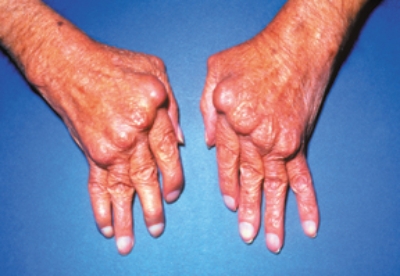
A) Rheumatoid arthritis
B) Osteomyelitis
C) Osteoporosis
D) Ankylosing spondylitis
A) Rheumatoid arthritis
B) Osteomyelitis
C) Osteoporosis
D) Ankylosing spondylitis
Question
Question
Question
Question
Question
Question
Question
Question
Question
Question
Question
Question
Question
Question
Question
Question

Unlock Deck
Sign up to unlock the cards in this deck!
Unlock Deck
Unlock Deck
1/35

Play

Full screen (f)
Deck 51: Caring for the Patient With Arthritis and Connective Tissue Disorders
1
Diagnostic procedures are being performed on a female patient who may have systemic lupus erythematosus SLE). Which findings would the nurse evaluate as supporting this diagnosis? Note: Credit will be given only if all correct choices and no incorrect choices are selected.
Standard Text: Select all that apply.
A) Elevated LE prep
B) Hematuria
C) Negative anti-SM antibody
D) C3 complement protein of 94 mg/dL
E) Sodium 138
Standard Text: Select all that apply.
A) Elevated LE prep
B) Hematuria
C) Negative anti-SM antibody
D) C3 complement protein of 94 mg/dL
E) Sodium 138
Elevated LE prep
Hematuria
Hematuria
2
A patient is experiencing symptoms typical of gout in the right foot. The nurse would prepare the patient for which diagnostic examinations? Note: Credit will be given only if all correct choices and no incorrect choices are selected.
Standard Text: Select all that apply.
A) MRI of the affected foot
B) Joint aspiration
C) Serum uric acid level
D) CT of the affected foot
E) X-ray of the affected foot
Standard Text: Select all that apply.
A) MRI of the affected foot
B) Joint aspiration
C) Serum uric acid level
D) CT of the affected foot
E) X-ray of the affected foot
Joint aspiration
Serum uric acid level
X-ray of the affected foot
Serum uric acid level
X-ray of the affected foot
3
The nurse is discussing the symptomology of osteoarthritis OA) with a patient. The nurse would describe which common initial symptom of the disease?
A) A fine red rash on the elbow that is constant
B) Painful stiffness in the joints of the fingers
C) Popping sensation in the wrist joint when typing
D) Knee pain when the leg is at rest
A) A fine red rash on the elbow that is constant
B) Painful stiffness in the joints of the fingers
C) Popping sensation in the wrist joint when typing
D) Knee pain when the leg is at rest
Painful stiffness in the joints of the fingers
4
A patient diagnosed with gout is concerned that the small "lumps" on his ear and big toe will become lodged in his blood, resulting in a blood clot. Which explanation by the nurse is most accurate?
A) "Clots will not develop if you take your antigout medicine."
B) "Unfortunately, this is a common complication associated with gout."
C) "You will need to talk with the physician during your next visit."
D) "These 'lumps' do not cause clots."
A) "Clots will not develop if you take your antigout medicine."
B) "Unfortunately, this is a common complication associated with gout."
C) "You will need to talk with the physician during your next visit."
D) "These 'lumps' do not cause clots."
Unlock Deck
Unlock for access to all 35 flashcards in this deck.
Unlock Deck
k this deck
5
A patient diagnosed with scleroderma reports heartburn. Which instructions would the nurse provide for treatment of this symptom? Note: Credit will be given only if all correct choices and no incorrect choices are selected.
Standard Text: Select all that apply.
A) Drink only decaffeinated beverages.
B) Use the nicotine patches as prescribed.
C) Increase fiber in the diet.
D) Elevate the head of the bed to 30 degrees.
E) Take omeprazole Prilosec) as prescribed.
Standard Text: Select all that apply.
A) Drink only decaffeinated beverages.
B) Use the nicotine patches as prescribed.
C) Increase fiber in the diet.
D) Elevate the head of the bed to 30 degrees.
E) Take omeprazole Prilosec) as prescribed.
Unlock Deck
Unlock for access to all 35 flashcards in this deck.
Unlock Deck
k this deck
6
The nurse has completed a health assessment, physical examination, and interview with a patient. Which assessment data would support a diagnosis of reactive arthritis? Note: Credit will be given only if all correct choices and no incorrect choices are selected.
Standard Text: Select all that apply.
A) The conjunctiva of the right eye is reddened, with a thin, watery drainage.
B) The patient reports increased urine output.
C) The patient reports having "food poisoning" 12 days ago.
D) The patient reports pain in both knees.
E) The patient's right ankle is swollen only on the medial side.
Standard Text: Select all that apply.
A) The conjunctiva of the right eye is reddened, with a thin, watery drainage.
B) The patient reports increased urine output.
C) The patient reports having "food poisoning" 12 days ago.
D) The patient reports pain in both knees.
E) The patient's right ankle is swollen only on the medial side.
Unlock Deck
Unlock for access to all 35 flashcards in this deck.
Unlock Deck
k this deck
7
A butterfly rash on the face is characteristic of which inflammatory connective tissue disease?
A) Rheumatoid arthritis
B) Systemic lupus erythematosus SLE) 3.
A) Rheumatoid arthritis
B) Systemic lupus erythematosus SLE) 3.
Unlock Deck
Unlock for access to all 35 flashcards in this deck.
Unlock Deck
k this deck
8
A patient diagnosed with gouty arthritis is prescribed the drug colchicine to reduce symptoms. Which medication education should the nurse provide?
A) There is a possibility of orthostatic hypotension.
B) A diet with fewer restrictions on purine ingestion may be adopted.
C) The pain will diminish, but the joint will remain swollen and red.
D) Vomiting and/or diarrhea are common side effects of this medication.
A) There is a possibility of orthostatic hypotension.
B) A diet with fewer restrictions on purine ingestion may be adopted.
C) The pain will diminish, but the joint will remain swollen and red.
D) Vomiting and/or diarrhea are common side effects of this medication.
Unlock Deck
Unlock for access to all 35 flashcards in this deck.
Unlock Deck
k this deck
9
A patient has been admitted for treatment of early-stage Lyme disease. The nurse would assess for which findings usually associated with this stage of the illness? Note: Credit will be given only if all correct choices and no incorrect choices are selected.
Standard Text: Select all that apply.
A) Stiff neck
B) Forgetfulness
C) "Bull's-eye" rash
D) Painful urination
E) Poor motor balance
Standard Text: Select all that apply.
A) Stiff neck
B) Forgetfulness
C) "Bull's-eye" rash
D) Painful urination
E) Poor motor balance
Unlock Deck
Unlock for access to all 35 flashcards in this deck.
Unlock Deck
k this deck
10
The nurse is providing dietary education for a patient recently diagnosed with a form of arthritis. The patient is encouraged to avoid alcohol, organ meats, and dried peas, beans, and peanuts. These recommendations are appropriate for patients with which specific diagnosis?
A) Rheumatoid arthritis
B) Reactive arthritis
C) Osteoarthritis
D) Gouty arthritis
A) Rheumatoid arthritis
B) Reactive arthritis
C) Osteoarthritis
D) Gouty arthritis
Unlock Deck
Unlock for access to all 35 flashcards in this deck.
Unlock Deck
k this deck
11
The nurse is preparing a flyer on rheumatoid arthritis RA) for distribution during a community health fair. Which information should the nurse include? Note: Credit will be given only if all correct choices and no incorrect choices are selected.
Standard Text: Select all that apply.
A) Rheumatoid arthritis typically affects weight-bearing joints.
B) Onset generally occurs between 20 and 40 years of age.
C) Rheumatoid arthritis is the most common form of arthritis.
D) Women are more likely to be affected than men.
E) Rheumatoid arthritis appears to have a genetic component.
Standard Text: Select all that apply.
A) Rheumatoid arthritis typically affects weight-bearing joints.
B) Onset generally occurs between 20 and 40 years of age.
C) Rheumatoid arthritis is the most common form of arthritis.
D) Women are more likely to be affected than men.
E) Rheumatoid arthritis appears to have a genetic component.
Unlock Deck
Unlock for access to all 35 flashcards in this deck.
Unlock Deck
k this deck
12
Impaired physical mobility is a major nursing diagnosis for patients with osteoarthritis OA). Which intervention would be most effective in addressing this patient's limitation?
A) Assessing the patient's range of motion of affected joints in order to plan and implement appropriate interventions
B) Encouraging the patient to assume responsibility for personal self-care needs in order to remain physically active
C) Encouraging consistently high activity levels in order to minimize the development of associated emotional and self-esteem problems
D) Assessing and managing the patient's need for narcotic analgesics in order to minimize the impact of pain on personal activities of daily living
A) Assessing the patient's range of motion of affected joints in order to plan and implement appropriate interventions
B) Encouraging the patient to assume responsibility for personal self-care needs in order to remain physically active
C) Encouraging consistently high activity levels in order to minimize the development of associated emotional and self-esteem problems
D) Assessing and managing the patient's need for narcotic analgesics in order to minimize the impact of pain on personal activities of daily living
Unlock Deck
Unlock for access to all 35 flashcards in this deck.
Unlock Deck
k this deck
13
The nurse is preparing for a community education session on autoimmune disorders. The nurse should review information about which diseases? Note: Credit will be given only if all correct choices and no incorrect choices are selected.
Standard Text: Select all that apply.
A) Scleroderma
B) Rheumatoid arthritis RA)
C) Gouty arthritis
D) Systemic lupus erythematosus SLE)
E) Reactive arthritis
Standard Text: Select all that apply.
A) Scleroderma
B) Rheumatoid arthritis RA)
C) Gouty arthritis
D) Systemic lupus erythematosus SLE)
E) Reactive arthritis
Unlock Deck
Unlock for access to all 35 flashcards in this deck.
Unlock Deck
k this deck
14
A patient diagnosed with rheumatoid arthritis RA) is reluctant to start some recommended therapies. The nurse tells the patient that early intervention is crucial for long-term health. What rationales would the nurse provide for this statement? Note: Credit will be given only if all correct choices and no incorrect choices are selected.
Standard Text: Select all that apply.
A) Early intervention is instrumental in bringing about long-term remission of symptoms.
B) Beginning treatment early can help control pain generated by the disorder.
C) If the disease is not treated, tissue and joint damage can be extreme.
D) Early and aggressive exercise will help keep joints mobile.
E) If treatment is started early, joint deformity can be avoided.
Standard Text: Select all that apply.
A) Early intervention is instrumental in bringing about long-term remission of symptoms.
B) Beginning treatment early can help control pain generated by the disorder.
C) If the disease is not treated, tissue and joint damage can be extreme.
D) Early and aggressive exercise will help keep joints mobile.
E) If treatment is started early, joint deformity can be avoided.
Unlock Deck
Unlock for access to all 35 flashcards in this deck.
Unlock Deck
k this deck
15
A patient is newly diagnosed with osteoarthritis. List the nursing diagnoses for this patient in the order of their priority. Standard Text: Click and drag the options below to move them up or down.
Choice
A) Imbalanced Nutrition: Less than Body Requirements related to inadequate intake of calcium Choice
B) Risk for Injury related to effects of change in bone structure secondary to osteoarthritis Choice
C) Acute Pain of the Lower Spine related to vertebral compression Choice
D) Deficient Knowledge related to osteoarthritis and treatment to prevent further damage
Choice
A) Imbalanced Nutrition: Less than Body Requirements related to inadequate intake of calcium Choice
B) Risk for Injury related to effects of change in bone structure secondary to osteoarthritis Choice
C) Acute Pain of the Lower Spine related to vertebral compression Choice
D) Deficient Knowledge related to osteoarthritis and treatment to prevent further damage
Unlock Deck
Unlock for access to all 35 flashcards in this deck.
Unlock Deck
k this deck
16
A patient is receiving a series of diagnostic tests to confirm the diagnosis of osteoarthritis OA). The nurse would interpret which results as supporting the diagnosis of OA? Note: Credit will be given only if all correct choices and no incorrect choices are selected.
Standard Text: Select all that apply.
A) Presence of antinuclear antibodies in blood
B) Asymmetrical joint cartilage loss seen on X-ray
C) Increased erythrocyte sedimentation rate ESR) in blood
D) Bone spurs visible on computed tomography CT)
E) Increased bone density in Dexa scan
Standard Text: Select all that apply.
A) Presence of antinuclear antibodies in blood
B) Asymmetrical joint cartilage loss seen on X-ray
C) Increased erythrocyte sedimentation rate ESR) in blood
D) Bone spurs visible on computed tomography CT)
E) Increased bone density in Dexa scan
Unlock Deck
Unlock for access to all 35 flashcards in this deck.
Unlock Deck
k this deck
17
The patient has experienced an exacerbation of gout resulting in foot pain. Which nursing intervention would aid in promoting comfort?
A) Providing passive range-of-motion exercises
B) Wrapping the extremity in an elastic bandage
C) Encouraging liberal fluid intake
D) Elevating the extremity
A) Providing passive range-of-motion exercises
B) Wrapping the extremity in an elastic bandage
C) Encouraging liberal fluid intake
D) Elevating the extremity
Unlock Deck
Unlock for access to all 35 flashcards in this deck.
Unlock Deck
k this deck
18
The nurse is preparing discharge medication instructions for a patient who has been prescribed allopurinol Aloprim). Which information should the nurse include? Note: Credit will be given only if all correct choices and no incorrect choices are selected.
Standard Text: Select all that apply.
A) Adverse reactions to the medication include sore throat, bruising, and fever.
B) Keep scheduled appointments for the monitoring of prothrombin time.
C) Increase fluid intake while taking this medication.
D) Take the medication as prescribed, following meals.
E) Maintain current weight with the inclusion of calorie-dense foods.
Standard Text: Select all that apply.
A) Adverse reactions to the medication include sore throat, bruising, and fever.
B) Keep scheduled appointments for the monitoring of prothrombin time.
C) Increase fluid intake while taking this medication.
D) Take the medication as prescribed, following meals.
E) Maintain current weight with the inclusion of calorie-dense foods.
Unlock Deck
Unlock for access to all 35 flashcards in this deck.
Unlock Deck
k this deck
19
The patient presents with contracture deformities of the hand and complains of severe pain. What musculoskeletal disorder does this patient manifest?
A) Rheumatoid arthritis
B) Osteomyelitis
C) Osteoporosis
D) Ankylosing spondylitis
A) Rheumatoid arthritis
B) Osteomyelitis
C) Osteoporosis
D) Ankylosing spondylitis
Unlock Deck
Unlock for access to all 35 flashcards in this deck.
Unlock Deck
k this deck
20
A patient with a history of rheumatoid arthritis reports mobility impairment as a result of hip and knee joint stiffness. Which intervention should the nurse include in an education session to address this problem? Note: Credit will be given only if all correct choices and no incorrect choices are selected.
Standard Text: Select all that apply.
A) Encouraging frequent periods of rest for the affected hip and knee joints
B) Educating the patient's family to perform passive range-of-motion exercises of the affected joints
C) Instructing the patient in the proper technique for active range of motion of the affected joints
D) Discussing the use of relaxation techniques when affected joints are most painful
E) Suggesting the application of ice to the affected joints to minimize pain
Standard Text: Select all that apply.
A) Encouraging frequent periods of rest for the affected hip and knee joints
B) Educating the patient's family to perform passive range-of-motion exercises of the affected joints
C) Instructing the patient in the proper technique for active range of motion of the affected joints
D) Discussing the use of relaxation techniques when affected joints are most painful
E) Suggesting the application of ice to the affected joints to minimize pain
Unlock Deck
Unlock for access to all 35 flashcards in this deck.
Unlock Deck
k this deck
21
The nurse has been providing care to a patient with scleroderma for a number of years. As the patient's disease progresses, the nurse monitors for CREST symptomology. For which finding is the nurse assessing?
A) Recurrence of tophi on the ears or fingers
B) Shiny skin over the involved joints.
C) Development of telangiectasia
D) Extremities that are always cool to the touch
A) Recurrence of tophi on the ears or fingers
B) Shiny skin over the involved joints.
C) Development of telangiectasia
D) Extremities that are always cool to the touch
Unlock Deck
Unlock for access to all 35 flashcards in this deck.
Unlock Deck
k this deck
22
A patient reports using aspirin for years to control severe arthritis pain "because acetaminophen and NSAIDs just don't work well for me." The nurse would advise the patient of which sign of aspirin toxicity?
A) Seeing halos around lights
B) Intermittent red, itchy skin rash
C) Ringing in the ears
D) Ankle edema
A) Seeing halos around lights
B) Intermittent red, itchy skin rash
C) Ringing in the ears
D) Ankle edema
Unlock Deck
Unlock for access to all 35 flashcards in this deck.
Unlock Deck
k this deck
23
A patient says, "My physician thinks I may have psoriatic arthritis, but there is nothing wrong with my skin." How should the nurse respond?
A) "You must have a subclinical case of psoriasis."
B) "You will probably develop skin eruptions in a few years."
C) "Not all people with psoriatic arthritis also have psoriasis."
D) "There are other arthritis conditions that have similar laboratory values, so additional testing will be likely."
A) "You must have a subclinical case of psoriasis."
B) "You will probably develop skin eruptions in a few years."
C) "Not all people with psoriatic arthritis also have psoriasis."
D) "There are other arthritis conditions that have similar laboratory values, so additional testing will be likely."
Unlock Deck
Unlock for access to all 35 flashcards in this deck.
Unlock Deck
k this deck
24
A patient diagnosed with reactive arthritis says, "I know this condition came from an infection. Can I give it to my family?" How should the nurse respond?
A) "You will be contagious until you have been on the prescribed antibiotics for 3 to 4 days."
B) "If your family was going to catch this, they probably already have."
C) "Your arthritis was caused by an infection that you might be able to pass on to your family, but you cannot give them arthritis."
D) "The kind of infection that causes this arthritis is not communicable."
A) "You will be contagious until you have been on the prescribed antibiotics for 3 to 4 days."
B) "If your family was going to catch this, they probably already have."
C) "Your arthritis was caused by an infection that you might be able to pass on to your family, but you cannot give them arthritis."
D) "The kind of infection that causes this arthritis is not communicable."
Unlock Deck
Unlock for access to all 35 flashcards in this deck.
Unlock Deck
k this deck
25
The nurse would evaluate that a patient with systemic lupus erythematosus understands dietary teaching when the patient selects which food for breakfast?
A) Orange juice
B) Sausage, gravy, and biscuits
C) A doughnut
D) Toast
A) Orange juice
B) Sausage, gravy, and biscuits
C) A doughnut
D) Toast
Unlock Deck
Unlock for access to all 35 flashcards in this deck.
Unlock Deck
k this deck
26
A patient diagnosed with systemic lupus erythematosus exhibits a facial rash. What instruction should the nurse provide regarding skin care? Note: Credit will be given only if all correct choices and no incorrect choices are selected.
Standard Text: Select all that apply.
A) Avoid being out of doors during the hours of greatest sun intensity.
B) Use sunscreen if sun exposure is possible.
C) Apply hydrocortisone cream 1% to the rash 4 to 6 times per day.
D) Wash the rash with antibacterial soap three times a day.
E) Swim in a chlorinated pool for relief of burning.
Standard Text: Select all that apply.
A) Avoid being out of doors during the hours of greatest sun intensity.
B) Use sunscreen if sun exposure is possible.
C) Apply hydrocortisone cream 1% to the rash 4 to 6 times per day.
D) Wash the rash with antibacterial soap three times a day.
E) Swim in a chlorinated pool for relief of burning.
Unlock Deck
Unlock for access to all 35 flashcards in this deck.
Unlock Deck
k this deck
27
A woman calls the emergency department and says, "I just found a tick crawling on my son. What can I do to keep him from getting Lyme disease?" How should the nurse respond?
A) "Bring him in so that we can give him a prescription for amoxicillin."
B) "The tick can transmit the disease only if it bit your child."
C) "He needs an injection of gamma globulin."
D) "Unless the tick is bigger than a pencil eraser, there is no reason to be alarmed."
A) "Bring him in so that we can give him a prescription for amoxicillin."
B) "The tick can transmit the disease only if it bit your child."
C) "He needs an injection of gamma globulin."
D) "Unless the tick is bigger than a pencil eraser, there is no reason to be alarmed."
Unlock Deck
Unlock for access to all 35 flashcards in this deck.
Unlock Deck
k this deck
28
A patient diagnosed with scleroderma has been prescribed methotrexate Rheumatrex). Which medication teaching should the nurse provide? Note: Credit will be given only if all correct choices and no incorrect choices are selected.
Standard Text: Select all that apply.
A) Use sunblock when outside.
B) Avoid caffeine.
C) Avoid citrus juices.
D) Do not take aspirin with this drug.
E) Do not use any over-the-counter medication without first checking with the health care provider.
Standard Text: Select all that apply.
A) Use sunblock when outside.
B) Avoid caffeine.
C) Avoid citrus juices.
D) Do not take aspirin with this drug.
E) Do not use any over-the-counter medication without first checking with the health care provider.
Unlock Deck
Unlock for access to all 35 flashcards in this deck.
Unlock Deck
k this deck
29
A 20-year-old male patient is scheduled for an echocardiogram. The patient says, "I don't understand why this test is necessary when I came in for back and hip pain." The nurse considers which information before responding?
A) Cardiac pain often refers to the back.
B) Ankylosing spondylitis also affects the heart.
C) The patient likely has septic arthritis, which can be caused by congenital heart disorders.
D) Young males often develop back pain as a sign of dissecting aortic aneurysm.
A) Cardiac pain often refers to the back.
B) Ankylosing spondylitis also affects the heart.
C) The patient likely has septic arthritis, which can be caused by congenital heart disorders.
D) Young males often develop back pain as a sign of dissecting aortic aneurysm.
Unlock Deck
Unlock for access to all 35 flashcards in this deck.
Unlock Deck
k this deck
30
A patient diagnosed with rheumatoid arthritis is prescribed hydroxychloroquine Plaquenil). What medication information should the nurse provide?
A) "Come back to the clinic after you have taken the medication for 2 full days so we can draw a blood level."
B) "Take this first thing in the morning and do not eat for at least 45 minutes."
C) "You may notice that your hair becomes lighter while taking this medication."
D) "Constipation is a frequent side effect of this medication."
A) "Come back to the clinic after you have taken the medication for 2 full days so we can draw a blood level."
B) "Take this first thing in the morning and do not eat for at least 45 minutes."
C) "You may notice that your hair becomes lighter while taking this medication."
D) "Constipation is a frequent side effect of this medication."
Unlock Deck
Unlock for access to all 35 flashcards in this deck.
Unlock Deck
k this deck
31
A patient with Sjögren's syndrome is scheduled to be seen in the clinic this afternoon. The nurse would anticipate treating which symptom?
A) Dry eyes
B) Muscle pain in the back
C) Pulmonary congestion
D) Rhinorrhea
A) Dry eyes
B) Muscle pain in the back
C) Pulmonary congestion
D) Rhinorrhea
Unlock Deck
Unlock for access to all 35 flashcards in this deck.
Unlock Deck
k this deck
32
A patient with rheumatoid arthritis is prescribed infliximab Remicade). Which nursing diagnosis does the nurse include as priority in the patient's plan of care?
A) Risk for Ineffective Tissue Perfusion
B) Risk for Infection
C) Disturbed Body Image
D) Anxiety
A) Risk for Ineffective Tissue Perfusion
B) Risk for Infection
C) Disturbed Body Image
D) Anxiety
Unlock Deck
Unlock for access to all 35 flashcards in this deck.
Unlock Deck
k this deck
33
The nurse has chosen these nursing diagnoses for a patient who has systemic lupus erythematosus. Which NDX would be assigned the highest priority?
A) Skin Integrity: Impaired
B) Activity Intolerance
C) Anxiety
D) Fluid Volume Excess
A) Skin Integrity: Impaired
B) Activity Intolerance
C) Anxiety
D) Fluid Volume Excess
Unlock Deck
Unlock for access to all 35 flashcards in this deck.
Unlock Deck
k this deck
34
A 59 year-old female is being evaluated for presence of a connective tissue disease. The erythrocyte sedimentation rate ESR) result is reported as 26 mm/hour. How would the nurse evaluate this result?
A) The ESR is very low, indicating that the patient has an autoimmune disorder rather than a connective tissue disorder.
B) This is a normal finding, so no connective tissue disease is present.
C) The ESR is high, so inflammatory disease is present.
D) The ESR is normal and other testing is indicated.
A) The ESR is very low, indicating that the patient has an autoimmune disorder rather than a connective tissue disorder.
B) This is a normal finding, so no connective tissue disease is present.
C) The ESR is high, so inflammatory disease is present.
D) The ESR is normal and other testing is indicated.
Unlock Deck
Unlock for access to all 35 flashcards in this deck.
Unlock Deck
k this deck
35
The nurse is monitoring a patient diagnosed with scleroderma for the development of sclerodactyly. Which area would the nurse assess?
A) The posterior neck
B) The knees
C) The chest wall
D) The fingers
A) The posterior neck
B) The knees
C) The chest wall
D) The fingers
Unlock Deck
Unlock for access to all 35 flashcards in this deck.
Unlock Deck
k this deck
Unlock Deck
Unlock for access to all 35 flashcards in this deck.






