







 Chat with AI

Deck 39: Caring for the Patient With Renal and Urinary Disorders
Full screen (f)

Question

Question
Question
Question
Question
Question
Question
Question
Question
Question
Question
Question
Question
The nurse reviews a patient's data and recognizes the symptoms as being compatible with which diagnosis? 
A) Pyelonephritis
B) Nephrolithiasis
C) Hydronephrosis
D) Cystitis
A) Pyelonephritis
B) Nephrolithiasis
C) Hydronephrosis
D) Cystitis
Question
Question
The nurse would contact the health care provider with concerns that this patient is demonstrating which complication of urinary calculi? 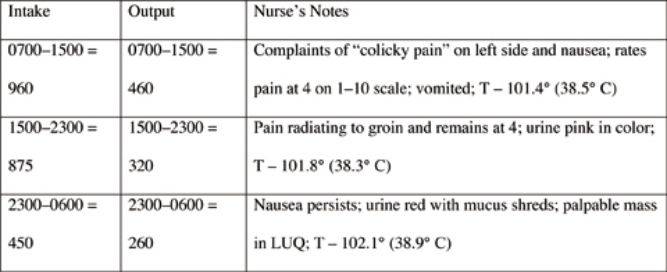
A) Hydronephrosis
B) Infection
C) Renal colic
D) Ureteral tumor
A) Hydronephrosis
B) Infection
C) Renal colic
D) Ureteral tumor
Question
Question
Question
Question
Question
Question
Question
Question
Question
Question
Question
The nurse assesses the arm of a patient with an arteriovenous fistula for the presence of which finding? 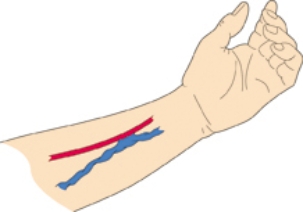
A) A bruit upon auscultation
B) A thrill upon auscultation
C) A bruit upon palpation
D) A thrill upon inspection
A) A bruit upon auscultation
B) A thrill upon auscultation
C) A bruit upon palpation
D) A thrill upon inspection
Question
Question
Question
Question
Question
Question
Question
Question
Question

Unlock Deck
Sign up to unlock the cards in this deck!
Unlock Deck
Unlock Deck
1/35

Play

Full screen (f)
Deck 39: Caring for the Patient With Renal and Urinary Disorders
1
A patient is diagnosed with hypertension caused by polycystic kidney disease. Which intervention might be helpful to control this patient's blood pressure and slow the progression of renal failure?
A) Administration of ACE inhibitors
B) Kidney transplant
C) Hemodialysis
D) Peritoneal dialysis
A) Administration of ACE inhibitors
B) Kidney transplant
C) Hemodialysis
D) Peritoneal dialysis
Administration of ACE inhibitors
2
A patient diagnosed with a symptomatic urinary tract infection UTI) is prescribed phenazopyridine Pyridium). Which medication education should the nurse provide?
A) "This medication will make your urine orange or red."
B) "This medication will kill the bacteria in your urine."
C) "Take this medication until the prescription is finished."
D) "Don't worry if your skin turns a yellowish color."
A) "This medication will make your urine orange or red."
B) "This medication will kill the bacteria in your urine."
C) "Take this medication until the prescription is finished."
D) "Don't worry if your skin turns a yellowish color."
"This medication will make your urine orange or red."
3
A female patient asks the nurse about ways to prevent recurrent cystitis. What is an appropriate nursing response?
A) "Void before and as soon as possible after sexual intercourse."
B) "Clean the perineal area from back to front."
C) "Soak in a bathtub at least once a week."
D) "Wear clean, nylon underpants."
A) "Void before and as soon as possible after sexual intercourse."
B) "Clean the perineal area from back to front."
C) "Soak in a bathtub at least once a week."
D) "Wear clean, nylon underpants."
"Void before and as soon as possible after sexual intercourse."
4
A patient had a renal stent removed. Which intervention is the priority of care for this patient?
A) Monitor urine output.
B) Encourage ambulation.
C) Ensure an adequate protein intake.
D) Monitor blood pressure.
A) Monitor urine output.
B) Encourage ambulation.
C) Ensure an adequate protein intake.
D) Monitor blood pressure.
Unlock Deck
Unlock for access to all 35 flashcards in this deck.
Unlock Deck
k this deck
5
A female patient is admitted with an overdistended bladder. Which diagnostic test can be done to confirm the diagnosis of urine retention?
A) Bladder scan
B) Renal scan
C) Intravenous pyelography IVP)
D) MRI
A) Bladder scan
B) Renal scan
C) Intravenous pyelography IVP)
D) MRI
Unlock Deck
Unlock for access to all 35 flashcards in this deck.
Unlock Deck
k this deck
6
Which statement by a patient with uric acid stones indicates that the nurse's instruction about ways to prevent lithiasis was effective?
A) "I should avoid organ meats and sardines in my diet."
B) "I will increase purine-rich foods in my diet."
C) "The goal is to drink enough water that my urine is yellow."
D) "I will have to make my urine more acidic by eating cheese, cranberries, grapes, and tomatoes."
A) "I should avoid organ meats and sardines in my diet."
B) "I will increase purine-rich foods in my diet."
C) "The goal is to drink enough water that my urine is yellow."
D) "I will have to make my urine more acidic by eating cheese, cranberries, grapes, and tomatoes."
Unlock Deck
Unlock for access to all 35 flashcards in this deck.
Unlock Deck
k this deck
7
A male patient with a urinary stoma says, "I looked at it while you were out of the room. It's not so bad." How should the nurse evaluate this statement?
A) The patient is making progress with coping.
B) The patient is in denial.
C) The patient has not grieved for his body image.
D) The patient is angry.
A) The patient is making progress with coping.
B) The patient is in denial.
C) The patient has not grieved for his body image.
D) The patient is angry.
Unlock Deck
Unlock for access to all 35 flashcards in this deck.
Unlock Deck
k this deck
8
The nurse is giving discharge instructions to a patient diagnosed with pyelonephritis. Which statement by the patient would indicate that learning has occurred?
A) "Pyelonephritis is an infection of the kidney."
B) "Pyelonephritis is an inflammation of the bladder."
C) "Pyelonephritis is an infection of the lower urinary tract."
D) "Pyelonephritis is a blockage in the tube from the kidney to the bladder."
A) "Pyelonephritis is an infection of the kidney."
B) "Pyelonephritis is an inflammation of the bladder."
C) "Pyelonephritis is an infection of the lower urinary tract."
D) "Pyelonephritis is a blockage in the tube from the kidney to the bladder."
Unlock Deck
Unlock for access to all 35 flashcards in this deck.
Unlock Deck
k this deck
9
A patient is participating in bladder retraining activities. Which toileting activities can reduce episodes of incontinence? Note: Credit will be given only if all correct choices and no incorrect choices are selected.
Standard Text: Select all that apply.
A) Scheduled toileting
B) Kegel exercises
C) Intermittent straight catheterization
D) External catheter placement at bedtime
E) Use of adult incontinence protection devices
Standard Text: Select all that apply.
A) Scheduled toileting
B) Kegel exercises
C) Intermittent straight catheterization
D) External catheter placement at bedtime
E) Use of adult incontinence protection devices
Unlock Deck
Unlock for access to all 35 flashcards in this deck.
Unlock Deck
k this deck
10
A male patient is admitted for removal of a bladder papilloma. Which assessment finding would the nurse evaluate as having increased the patient's risk of this disorder?
A) History of cigarette smoking
B) Low daily fluid intake
C) Weak pedal pulses
D) Decreased appetite level
A) History of cigarette smoking
B) Low daily fluid intake
C) Weak pedal pulses
D) Decreased appetite level
Unlock Deck
Unlock for access to all 35 flashcards in this deck.
Unlock Deck
k this deck
11
A patient who is recovering from spinal surgery had "an accident" while attempting to reach the bathroom to void. Which type of incontinence is this patient most likely experiencing?
A) Functional
B) Urge
C) Stress
D) Overflow
A) Functional
B) Urge
C) Stress
D) Overflow
Unlock Deck
Unlock for access to all 35 flashcards in this deck.
Unlock Deck
k this deck
12
An elderly patient is admitted to the hospital with cardiac complications associated with diabetes. What should be of concern to the nurse regarding this patient's medications?
A) The type and amount of medications in relation to the patient's renal function
B) Whether the patient is taking the prescribed dosages
C) Which vitamins and supplements the patient is taking
D) The cost of the patient's medications
A) The type and amount of medications in relation to the patient's renal function
B) Whether the patient is taking the prescribed dosages
C) Which vitamins and supplements the patient is taking
D) The cost of the patient's medications
Unlock Deck
Unlock for access to all 35 flashcards in this deck.
Unlock Deck
k this deck
13
The nurse reviews a patient's data and recognizes the symptoms as being compatible with which diagnosis?
A) Pyelonephritis
B) Nephrolithiasis
C) Hydronephrosis
D) Cystitis
A) Pyelonephritis
B) Nephrolithiasis
C) Hydronephrosis
D) Cystitis
Unlock Deck
Unlock for access to all 35 flashcards in this deck.
Unlock Deck
k this deck
14
A patient is being instructed on how to perform Kegel exercises. What should be included in these instructions? Note: Credit will be given only if all correct choices and no incorrect choices are selected.
Standard Text: Select all that apply.
A) While voiding, stop the flow of urine and hold for a few minutes.
B) Tighten the identified muscles for 2 to 3 seconds.
C) Take a deep breath and hold while performing the exercise.
D) Tighten the stomach muscles while performing Kegel exercises.
E) Improvement may take several weeks.
Standard Text: Select all that apply.
A) While voiding, stop the flow of urine and hold for a few minutes.
B) Tighten the identified muscles for 2 to 3 seconds.
C) Take a deep breath and hold while performing the exercise.
D) Tighten the stomach muscles while performing Kegel exercises.
E) Improvement may take several weeks.
Unlock Deck
Unlock for access to all 35 flashcards in this deck.
Unlock Deck
k this deck
15
The nurse would contact the health care provider with concerns that this patient is demonstrating which complication of urinary calculi?
A) Hydronephrosis
B) Infection
C) Renal colic
D) Ureteral tumor
A) Hydronephrosis
B) Infection
C) Renal colic
D) Ureteral tumor
Unlock Deck
Unlock for access to all 35 flashcards in this deck.
Unlock Deck
k this deck
16
A patient with a history of renal calculi has been instructed to acidify his urine. The nurse would suggest intake of which foods or fluids? Note: Credit will be given only if all correct choices and no incorrect choices are selected.
Standard Text: Select all that apply.
A) Orange juice
B) Cranberries
C) Chocolate
D) Dairy products
E) Water
Standard Text: Select all that apply.
A) Orange juice
B) Cranberries
C) Chocolate
D) Dairy products
E) Water
Unlock Deck
Unlock for access to all 35 flashcards in this deck.
Unlock Deck
k this deck
17
An 80-year-old female patient says to the nurse, "I can't hold my water very well so I don't leave the house much." Which nursing response is appropriate?
A) "There may be some ways to help you hold your water better."
B) "I understand."
C) "I guess it's hard getting older."
D) "I wish there was something we could do to help you."
A) "There may be some ways to help you hold your water better."
B) "I understand."
C) "I guess it's hard getting older."
D) "I wish there was something we could do to help you."
Unlock Deck
Unlock for access to all 35 flashcards in this deck.
Unlock Deck
k this deck
18
Which age-related change contributes to the increased incidence of urinary tract infections UTIs) among older adult females?
A) Thinning of vaginal mucosa
B) Enhanced immune response
C) Reduced risk of urinary stasis
D) Reduced focus on personal cleanliness
A) Thinning of vaginal mucosa
B) Enhanced immune response
C) Reduced risk of urinary stasis
D) Reduced focus on personal cleanliness
Unlock Deck
Unlock for access to all 35 flashcards in this deck.
Unlock Deck
k this deck
19
A patient has been admitted with a possible kidney stone. The nurse would expect the patient's pain to radiate from which area?
A) The middle of the back, between the scapulas
B) Very low in the center of the back
C) The area where the ribs and spine come together
D) The middle of the abdomen, just above the umbilicus 5.
A) The middle of the back, between the scapulas
B) Very low in the center of the back
C) The area where the ribs and spine come together
D) The middle of the abdomen, just above the umbilicus 5.
Unlock Deck
Unlock for access to all 35 flashcards in this deck.
Unlock Deck
k this deck
20
A male patient comes to the emergency department with symptoms of renal colic. The nurse realizes that this patient most likely has a calculus that is obstructing which structure?
A) Ureter
B) Bladder
C) Renal pelvis
D) Urethra
A) Ureter
B) Bladder
C) Renal pelvis
D) Urethra
Unlock Deck
Unlock for access to all 35 flashcards in this deck.
Unlock Deck
k this deck
21
The patient is scheduled for a peritoneal dialysis catheter insertion. Which information will the nurse provide prior to this procedure?
A) "The insertion site will be just below your sternum."
B) "You will be able to care for this catheter at home."
C) "Since you are having this procedure, you will not need a kidney transplant."
D) "Hemodialysis can be performed through this catheter if necessary." 5.
A) "The insertion site will be just below your sternum."
B) "You will be able to care for this catheter at home."
C) "Since you are having this procedure, you will not need a kidney transplant."
D) "Hemodialysis can be performed through this catheter if necessary." 5.
Unlock Deck
Unlock for access to all 35 flashcards in this deck.
Unlock Deck
k this deck
22
A patient has been admitted for treatment of nephrotic syndrome. Which assessment findings would the nurse anticipate? Note: Credit will be given only if all correct choices and no incorrect choices are selected.
Standard Text: Select all that apply.
A) Protein in the urine
B) Increased serum protein
C) Edema around the eyes
D) Ascites
E) Edema in the feet.
Standard Text: Select all that apply.
A) Protein in the urine
B) Increased serum protein
C) Edema around the eyes
D) Ascites
E) Edema in the feet.
Unlock Deck
Unlock for access to all 35 flashcards in this deck.
Unlock Deck
k this deck
23
A patient who received a kidney transplant 7 years ago is seen for increasing blood pressure and proteinuria. The nurse conducts additional assessment for which complication?
A) Chronic kidney rejection
B) Acute kidney rejection
C) Renal artery stenosis
D) Pyelonephritis
A) Chronic kidney rejection
B) Acute kidney rejection
C) Renal artery stenosis
D) Pyelonephritis
Unlock Deck
Unlock for access to all 35 flashcards in this deck.
Unlock Deck
k this deck
24
Three weeks after being treated for strep throat, a patient comes into the clinic with signs of acute glomerulonephritis. Which symptom will the nurse most likely find upon assessment of this patient?
A) Periorbital edema
B) Hunger
C) Polyuria
D) Anuria
A) Periorbital edema
B) Hunger
C) Polyuria
D) Anuria
Unlock Deck
Unlock for access to all 35 flashcards in this deck.
Unlock Deck
k this deck
25
The nurse is planning the care of a patient with chronic glomerulonephritis. What should be the goal of treatment for this patient?
A) Maintaining renal function
B) Achieving maximum independence
C) Returning to work as soon as possible
D) Successful lifestyle adaptation
A) Maintaining renal function
B) Achieving maximum independence
C) Returning to work as soon as possible
D) Successful lifestyle adaptation
Unlock Deck
Unlock for access to all 35 flashcards in this deck.
Unlock Deck
k this deck
26
The nurse assesses the arm of a patient with an arteriovenous fistula for the presence of which finding?
A) A bruit upon auscultation
B) A thrill upon auscultation
C) A bruit upon palpation
D) A thrill upon inspection
A) A bruit upon auscultation
B) A thrill upon auscultation
C) A bruit upon palpation
D) A thrill upon inspection
Unlock Deck
Unlock for access to all 35 flashcards in this deck.
Unlock Deck
k this deck
27
A patient is scheduled to have an arteriovenous AV) fistula created for hemodialysis. Which education should the nurse provide regarding this fistula? Note: Credit will be given only if all correct choices and no incorrect choices are selected.
Standard Text: Select all that apply.
A) The opposite arm should be used for blood pressure readings.
B) A functioning fistula has a palpable pulse and bruit.
C) The health care provider should be contacted if the hand is cool and painful.
D) The fistula can be used immediately after its creation.
E) Venipunctures should be performed on the arm with the fistula.
Standard Text: Select all that apply.
A) The opposite arm should be used for blood pressure readings.
B) A functioning fistula has a palpable pulse and bruit.
C) The health care provider should be contacted if the hand is cool and painful.
D) The fistula can be used immediately after its creation.
E) Venipunctures should be performed on the arm with the fistula.
Unlock Deck
Unlock for access to all 35 flashcards in this deck.
Unlock Deck
k this deck
28
A patient with chronic kidney disease is diagnosed with hypertension. The nurse understands that this patient's blood pressure needs to be controlled for which reason?
A) Treating hypertension can slow the decline of kidney function.
B) Hypertension must be controlled for any other treatment for kidney disease to be effective.
C) The medications used to treat hypertension also reverse physical changes associated with chronic kidney failure.
D) Everyone should have low-normal blood pressure.
A) Treating hypertension can slow the decline of kidney function.
B) Hypertension must be controlled for any other treatment for kidney disease to be effective.
C) The medications used to treat hypertension also reverse physical changes associated with chronic kidney failure.
D) Everyone should have low-normal blood pressure.
Unlock Deck
Unlock for access to all 35 flashcards in this deck.
Unlock Deck
k this deck
29
The nurse is caring for a patient receiving peritoneal dialysis. After completing the exchange and draining the dialysate, the nurse observes the dialysate is cloudy. How should the nurse evaluate this finding?
A) A sign of infection
B) A sign of vascular access occlusion
C) The normal appearance of dialysate
D) A sign of possible bowel perforation
A) A sign of infection
B) A sign of vascular access occlusion
C) The normal appearance of dialysate
D) A sign of possible bowel perforation
Unlock Deck
Unlock for access to all 35 flashcards in this deck.
Unlock Deck
k this deck
30
The nurse, administering epoetin alfa Epogen) to a patient on dialysis, explains that the medication will help replace which function of the kidney?
A) Treats the anemia seen in chronic renal failure patients on dialysis
B) Combats the effects of dialysis on bone marrow
C) Promotes elimination of nephrotoxic drugs from the body
D) Enhances absorption of iron and folate in the intestinal tract
A) Treats the anemia seen in chronic renal failure patients on dialysis
B) Combats the effects of dialysis on bone marrow
C) Promotes elimination of nephrotoxic drugs from the body
D) Enhances absorption of iron and folate in the intestinal tract
Unlock Deck
Unlock for access to all 35 flashcards in this deck.
Unlock Deck
k this deck
31
A patient has been diagnosed with renal cancer. The nurse would assess for which risk factors in the patient's history? Note: Credit will be given only if all correct choices and no incorrect choices are selected.
Standard Text: Select all that apply.
A) Obesity
B) Under age 35
C) Cigarette smoking
D) Infertility
E) Exposure to asbestos or benzene
Standard Text: Select all that apply.
A) Obesity
B) Under age 35
C) Cigarette smoking
D) Infertility
E) Exposure to asbestos or benzene
Unlock Deck
Unlock for access to all 35 flashcards in this deck.
Unlock Deck
k this deck
32
Which intervention would be appropriate for a patient in renal failure with the diagnosis of Imbalanced Nutrition: Less than Body Requirements?
A) Provide mouth care before meals.
B) Maximize the protein content of meals and snacks.
C) Provide antiemetics after meals.
D) Weigh once per week.
A) Provide mouth care before meals.
B) Maximize the protein content of meals and snacks.
C) Provide antiemetics after meals.
D) Weigh once per week.
Unlock Deck
Unlock for access to all 35 flashcards in this deck.
Unlock Deck
k this deck
33
A patient is admitted with signs of chronic renal failure. Which finding would alert the nurse to possible metabolic acidosis?
A) Kussmaul's respirations
B) Low urine output
C) Muscle cramps
D) Diarrhea
A) Kussmaul's respirations
B) Low urine output
C) Muscle cramps
D) Diarrhea
Unlock Deck
Unlock for access to all 35 flashcards in this deck.
Unlock Deck
k this deck
34
Which intervention would be appropriate for a patient with Fluid Volume Excess related to chronic glomerulonephritis?
A) Weigh daily on the same scale.
B) Document energy level.
C) Schedule activities to conserve energy.
D) Assess for signs of infection.
A) Weigh daily on the same scale.
B) Document energy level.
C) Schedule activities to conserve energy.
D) Assess for signs of infection.
Unlock Deck
Unlock for access to all 35 flashcards in this deck.
Unlock Deck
k this deck
35
A patient is diagnosed with postrenal acute renal failure. Which finding is associated with this type of renal failure?
A) An enlarged prostate
B) Hypovolemia
C) Sepsis
D) Drug toxicity
A) An enlarged prostate
B) Hypovolemia
C) Sepsis
D) Drug toxicity
Unlock Deck
Unlock for access to all 35 flashcards in this deck.
Unlock Deck
k this deck
Unlock Deck
Unlock for access to all 35 flashcards in this deck.






