







 Chat with AI

Deck 30: Car-Ing for the Patient With Dysrhythmias
Full screen (f)

Question

Question
Question
Question
Question
Question
Question
Question
Question
Question
Question
Question
Question
Question
Question
Question
Question
Question
Identify the ECG rhythm. 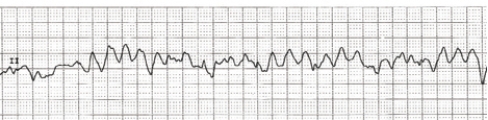
A) Ventricular fibrillation
B) Atrial flutter
C) Sinus tachycardia
D) Ventricular tachycardia
A) Ventricular fibrillation
B) Atrial flutter
C) Sinus tachycardia
D) Ventricular tachycardia
Question
Question
Question
Question
Question
Question
Question
Question
Question
Question
Question
Question
Question
Question
Question
Question
Question

Unlock Deck
Sign up to unlock the cards in this deck!
Unlock Deck
Unlock Deck
1/35

Play

Full screen (f)
Deck 30: Car-Ing for the Patient With Dysrhythmias
1
The nurse is performing cardiopulmonary resuscitation CPR) on a patient who is in cardiac arrest. An automatic external defibrillator AED) is available. Which activity will allow the nurse to assess the patient's cardiac rhythm?
A) Apply adhesive patch electrodes to the chest and move away from the patient.
B) Apply standard electrocardiograph monitoring leads to the patient and observe the rhythm.
C) Hold the defibrillator paddles directly against the patient's chest.
D) Connect electrocardiograph electrodes to a telephone monitoring device and wait until the rhythm is analyzed.
A) Apply adhesive patch electrodes to the chest and move away from the patient.
B) Apply standard electrocardiograph monitoring leads to the patient and observe the rhythm.
C) Hold the defibrillator paddles directly against the patient's chest.
D) Connect electrocardiograph electrodes to a telephone monitoring device and wait until the rhythm is analyzed.
Apply adhesive patch electrodes to the chest and move away from the patient.
2
A patient is in sinus tachycardia. Which nursing interventions are appropriate? Note: Credit will be given only if all correct choices and no incorrect choices are selected.
Standard Text: Select all that apply.
A) Observe the patient for effects on cardiac function.
B) Administer two tablets of acetaminophen Tylenol) per physician prescription if the temperature is elevated.
C) Administer normal saline 0.9% IV at the prescribed rate of 200 mL per hour if hypovolemia is suspected as the cause.
D) Give pain medications as prescribed if pain is present.
E) Give atropine per physician prescription to slow the heart rate.
Standard Text: Select all that apply.
A) Observe the patient for effects on cardiac function.
B) Administer two tablets of acetaminophen Tylenol) per physician prescription if the temperature is elevated.
C) Administer normal saline 0.9% IV at the prescribed rate of 200 mL per hour if hypovolemia is suspected as the cause.
D) Give pain medications as prescribed if pain is present.
E) Give atropine per physician prescription to slow the heart rate.
Observe the patient for effects on cardiac function.
Administer two tablets of acetaminophen Tylenol) per physician prescription if the temperature is elevated.
Administer normal saline 0.9% IV at the prescribed rate of 200 mL per hour if hypovolemia is suspected as the cause.
Give pain medications as prescribed if pain is present.
Administer two tablets of acetaminophen Tylenol) per physician prescription if the temperature is elevated.
Administer normal saline 0.9% IV at the prescribed rate of 200 mL per hour if hypovolemia is suspected as the cause.
Give pain medications as prescribed if pain is present.
3
Sinus bradycardia rate 56 beats per minute) is identified in a sleeping patient on telemetry. Which is the priority nursing action?
A) Assess the patient's tolerance of the rhythm.
B) Call the physician and report this dysrhythmia.
C) Check the medication administration record and see if there is a PRN medication that will improve this rhythm.
D) Call for an immediate 12-lead electrocardiogram ECG).
A) Assess the patient's tolerance of the rhythm.
B) Call the physician and report this dysrhythmia.
C) Check the medication administration record and see if there is a PRN medication that will improve this rhythm.
D) Call for an immediate 12-lead electrocardiogram ECG).
Assess the patient's tolerance of the rhythm.
4
The nurse is caring for a patient whose atria do not contract correctly. The nurse would expect this dysfunction to be apparent in which part of the ECG complex?
A) The P wave
B) The U wave
C) The QRS
D) The T wave
A) The P wave
B) The U wave
C) The QRS
D) The T wave
Unlock Deck
Unlock for access to all 35 flashcards in this deck.
Unlock Deck
k this deck
5
The nurse is teaching a class for technicians who will watch cardiac monitors. How would the nurse describe the normal lead II appearance of the T wave of the ECG complex? Note: Credit will be given only if all correct choices and no incorrect choices are selected.
Standard Text: Select all that apply.
A) The T wave is a smooth rounded deflection.
B) The T wave is a negative deflection.
C) The T wave follows the QRS.
D) One T wave should be present in each complex.
E) The end of the T wave should occur 0.20 to 0.25 seconds after its preceding complex begins.
Standard Text: Select all that apply.
A) The T wave is a smooth rounded deflection.
B) The T wave is a negative deflection.
C) The T wave follows the QRS.
D) One T wave should be present in each complex.
E) The end of the T wave should occur 0.20 to 0.25 seconds after its preceding complex begins.
Unlock Deck
Unlock for access to all 35 flashcards in this deck.
Unlock Deck
k this deck
6
A patient's electrocardiogram reveals occasional premature ventricular contractions PVCs). The nurse manager evaluates that the newly licensed nurse understands the implications of this finding when the nurse makes which statement?
A) "PVCs are insignificant in people with no history of heart disease."
B) "PVCs typically have no pattern."
C) "The frequency of PVCs is not associated with specific events."
D) "The incidence of PVCs has no relevance to the patient having had a myocardial infarction."
A) "PVCs are insignificant in people with no history of heart disease."
B) "PVCs typically have no pattern."
C) "The frequency of PVCs is not associated with specific events."
D) "The incidence of PVCs has no relevance to the patient having had a myocardial infarction."
Unlock Deck
Unlock for access to all 35 flashcards in this deck.
Unlock Deck
k this deck
7
The nurse reviews an ECG tracing and determines that it is not a high-quality tracing. Which factors can negatively influence an ECG tracing? Note: Credit will be given only if all correct choices and no incorrect choices are selected.
Standard Text: Select all that apply.
A) Patient movement during recording
B) Dense chest hair
C) Incorrect positioning of leads
D) Presence of an IV infusion pump
E) Electrodes in firm contact with the skin
Standard Text: Select all that apply.
A) Patient movement during recording
B) Dense chest hair
C) Incorrect positioning of leads
D) Presence of an IV infusion pump
E) Electrodes in firm contact with the skin
Unlock Deck
Unlock for access to all 35 flashcards in this deck.
Unlock Deck
k this deck
8
The nurse is caring for a patient who develops atrial fibrillation with a heart rate above 100 beats per minute. Place the nursing actions in sequence from the highest priority to the lowest priority. Standard Text: Click and drag the options below to move them up or down.
Choice
A) Assess the patient for comfort level and vital signs. Choice
B) Check the patency of an intermittent IV. Choice
C) Check the patient's chart for lab results from today's tests. Choice
D) Call the physician to report the dysrhythmia.
Choice
A) Assess the patient for comfort level and vital signs. Choice
B) Check the patency of an intermittent IV. Choice
C) Check the patient's chart for lab results from today's tests. Choice
D) Call the physician to report the dysrhythmia.
Unlock Deck
Unlock for access to all 35 flashcards in this deck.
Unlock Deck
k this deck
9
Which statement would the nurse use to describe the Q wave of an electrocardiogram tracing?
A) Rounded and upright and follows the QRS complex
B) Rounded and upright and precedes the QRS complex
C) Negative deflection following the R wave
D) First negative deflection after the P wave
A) Rounded and upright and follows the QRS complex
B) Rounded and upright and precedes the QRS complex
C) Negative deflection following the R wave
D) First negative deflection after the P wave
Unlock Deck
Unlock for access to all 35 flashcards in this deck.
Unlock Deck
k this deck
10
The patient's ECG shows the following characteristics: PR interval 0.08, QRS 0.08, and isoelectric ST segment. The nurse realizes that these characteristics indicate which condition?
A) Faster-than-normal conduction from the SA node to the ventricles, normal conduction through the ventricles, and normal ST segment
B) Faster-than-normal conduction from the SA node to the ventricles, faster-than-normal conduction through the ventricles. and normal ST segment
C) Normal conduction from the SA node to the ventricles, normal conduction through the ventricles, and normal ST segment
D) Normal conduction from the SA node to the ventricles, normal conduction through the ventricles, and abnormal ST segment
A) Faster-than-normal conduction from the SA node to the ventricles, normal conduction through the ventricles, and normal ST segment
B) Faster-than-normal conduction from the SA node to the ventricles, faster-than-normal conduction through the ventricles. and normal ST segment
C) Normal conduction from the SA node to the ventricles, normal conduction through the ventricles, and normal ST segment
D) Normal conduction from the SA node to the ventricles, normal conduction through the ventricles, and abnormal ST segment
Unlock Deck
Unlock for access to all 35 flashcards in this deck.
Unlock Deck
k this deck
11
The nurse is reviewing an electrocardiogram ECG) rhythm strip. The P waves and QRS complexes are regular. The PR interval is 0.16 second, and QRS complexes measure 0.06 second. The overall heart rate is 64 beats/minute. What is the correct interpretation based on these characteristics?
A) Normal sinus rhythm
B) Sick sinus syndrome
C) Sinus bradycardia
D) First-degree heart block
A) Normal sinus rhythm
B) Sick sinus syndrome
C) Sinus bradycardia
D) First-degree heart block
Unlock Deck
Unlock for access to all 35 flashcards in this deck.
Unlock Deck
k this deck
12
If the PR interval is abnormal, the nurse would assess for conditions affecting the timing of impulse transmission from which parts of the cardiac conduction system?
A) SA node to the ventricles
B) Bundle of His to the ventricles
C) AV node to the ventricles
D) Purkinje fibers to the ventricles
A) SA node to the ventricles
B) Bundle of His to the ventricles
C) AV node to the ventricles
D) Purkinje fibers to the ventricles
Unlock Deck
Unlock for access to all 35 flashcards in this deck.
Unlock Deck
k this deck
13
A patient received an implantable cardioverter-defibrillator ICD). The nurse would include which instruction during discharge teaching for this patient?
A) "If a family member is in direct contact with you when the ICD discharges, he or she may experience a shock or tingling sensation."
B) "You can activate the ICD whenever you feel a change in your heart rhythm."
C) "The batteries of the ICD won't need to be replaced if the ICD never shocks the heart."
D) "There should be no discomfort if the ICD discharges. You probably won't notice it."
A) "If a family member is in direct contact with you when the ICD discharges, he or she may experience a shock or tingling sensation."
B) "You can activate the ICD whenever you feel a change in your heart rhythm."
C) "The batteries of the ICD won't need to be replaced if the ICD never shocks the heart."
D) "There should be no discomfort if the ICD discharges. You probably won't notice it."
Unlock Deck
Unlock for access to all 35 flashcards in this deck.
Unlock Deck
k this deck
14
A patient is having elective synchronized cardioversion. Place the steps of the procedure in the correct order. Standard Text: Click and drag the options below to move them up or down.
Choice
A) Verify patency of IV access. Choice
B) Administer sedative per physician prescription. Choice
C) Set cardioverter to "synchronize" mode. Choice
D) Charge the cardioverter to the selected energy level. Choice
E) Ensure that personnel are not in physical contact with the bed or patient.
Choice
A) Verify patency of IV access. Choice
B) Administer sedative per physician prescription. Choice
C) Set cardioverter to "synchronize" mode. Choice
D) Charge the cardioverter to the selected energy level. Choice
E) Ensure that personnel are not in physical contact with the bed or patient.
Unlock Deck
Unlock for access to all 35 flashcards in this deck.
Unlock Deck
k this deck
15
A patient is in the critical care area with ventricular tachycardia. The nurse realizes that the patient will require which action? Note: Credit will be given only if all correct choices and no incorrect choices are selected.
Standard Text: Select all that apply.
A) Immediate assessment and probable emergency intervention
B) Cardioversion, if the ventricular tachycardia is sustained and symptomatic
C) Probable drug intervention
D) Close observation for 1 hour prior to calling the physician
E) Defibrillation to convert the rhythm in the awake patient
Standard Text: Select all that apply.
A) Immediate assessment and probable emergency intervention
B) Cardioversion, if the ventricular tachycardia is sustained and symptomatic
C) Probable drug intervention
D) Close observation for 1 hour prior to calling the physician
E) Defibrillation to convert the rhythm in the awake patient
Unlock Deck
Unlock for access to all 35 flashcards in this deck.
Unlock Deck
k this deck
16
Loss of capture has occurred in a patient with a temporary pacemaker. Which nursing actions are required? Note: Credit will be given only if all correct choices and no incorrect choices are selected.
Standard Text: Select all that apply.
A) Prepare for cardiac resynchronization therapy CRT).
B) Assess the patient to determine response to the pacemaker loss of capture.
C) Document the event by printing the ECG strip and placing it on the patient's record.
D) Ask the patient to ambulate to increase cardiac output.
E) Administer nitroglycerin sublingual one dose stat according to physician prescription.
Standard Text: Select all that apply.
A) Prepare for cardiac resynchronization therapy CRT).
B) Assess the patient to determine response to the pacemaker loss of capture.
C) Document the event by printing the ECG strip and placing it on the patient's record.
D) Ask the patient to ambulate to increase cardiac output.
E) Administer nitroglycerin sublingual one dose stat according to physician prescription.
Unlock Deck
Unlock for access to all 35 flashcards in this deck.
Unlock Deck
k this deck
17
After a myocardial infarction, a patient has slowing of atrial contraction. The nurse would anticipate seeing the most evidence of this dysfunction in which part of the electrocardiogram tracing?
A) T wave configuration
B) QRS complex
C) QT interval
D) PR interval
A) T wave configuration
B) QRS complex
C) QT interval
D) PR interval
Unlock Deck
Unlock for access to all 35 flashcards in this deck.
Unlock Deck
k this deck
18
Identify the ECG rhythm.
A) Ventricular fibrillation
B) Atrial flutter
C) Sinus tachycardia
D) Ventricular tachycardia
A) Ventricular fibrillation
B) Atrial flutter
C) Sinus tachycardia
D) Ventricular tachycardia
Unlock Deck
Unlock for access to all 35 flashcards in this deck.
Unlock Deck
k this deck
19
Which is the priority nursing intervention for a patient with a junctional escape rhythm?
A) Assess the patient for symptoms associated with this rhythm.
B) Contact the physician immediately for emergency orders.
C) Eliminate caffeine from the diet.
D) Prepare for a pacemaker insertion.
A) Assess the patient for symptoms associated with this rhythm.
B) Contact the physician immediately for emergency orders.
C) Eliminate caffeine from the diet.
D) Prepare for a pacemaker insertion.
Unlock Deck
Unlock for access to all 35 flashcards in this deck.
Unlock Deck
k this deck
20
The nurse is notified by the cardiac monitoring technician that a patient on continuous cardiac monitoring is having frequent alarms. When the nurse enters the patient's room, the patient is in no apparent distress, sitting in the chair and eating. Which are appropriate nursing interventions? Note: Credit will be given only if all correct choices and no incorrect choices are selected.
Standard Text: Select all that apply.
A) Confirm that lead wires are properly connected.
B) Assess the placement of electrodes.
C) Remove and reapply new electrodes if nonadherent.
D) Assess skin sites and move an electrode if the skin appears irritated.
E) Call for assistance.
Standard Text: Select all that apply.
A) Confirm that lead wires are properly connected.
B) Assess the placement of electrodes.
C) Remove and reapply new electrodes if nonadherent.
D) Assess skin sites and move an electrode if the skin appears irritated.
E) Call for assistance.
Unlock Deck
Unlock for access to all 35 flashcards in this deck.
Unlock Deck
k this deck
21
The nurse count 3.5 large squares between two R waves on the patient's cardiac monitor tracing. The nurse calculates the patient's heart rate as _______ beats per minute. Round to the nearest whole beat.)
Unlock Deck
Unlock for access to all 35 flashcards in this deck.
Unlock Deck
k this deck
22
The nurse analyzing a patient's electrocardiogram tracing would suspect atrial fibrillation if it displayed which characteristics? Note: Credit will be given only if all correct choices and no incorrect choices are selected.
Standard Text: Select all that apply.
A) The atrial rate can be calculated by counting the P waves in 6 seconds and multiplying by 10.
B) P waves are replaced by "f waves," or atrial quivering.
C) The PR intervals are measurable.
D) The ventricular rhythm is irregular.
E) The QT interval cannot be measured because the T waves are buried in the "f" waves.
Standard Text: Select all that apply.
A) The atrial rate can be calculated by counting the P waves in 6 seconds and multiplying by 10.
B) P waves are replaced by "f waves," or atrial quivering.
C) The PR intervals are measurable.
D) The ventricular rhythm is irregular.
E) The QT interval cannot be measured because the T waves are buried in the "f" waves.
Unlock Deck
Unlock for access to all 35 flashcards in this deck.
Unlock Deck
k this deck
23
The nurse is analyzing a cardiac monitor tracing. To accurately figure interval times, the nurse counts the smallest squares and multiplies by ________ seconds).
Unlock Deck
Unlock for access to all 35 flashcards in this deck.
Unlock Deck
k this deck
24
The telemetry technician reports that a patient is having occasional premature atrial contractions PACs). Which characteristics would the nurse expect when reviewing the patient's rhythm strip? Note: Credit will be given only if all correct choices and no incorrect choices are selected.
Standard Text: Select all that apply.
A) Retrograde P waves
B) P wave early in the rhythm
C) Irregularity in the rhythm
D) Insignificant change in heart rate
E) A compensatory pause
Standard Text: Select all that apply.
A) Retrograde P waves
B) P wave early in the rhythm
C) Irregularity in the rhythm
D) Insignificant change in heart rate
E) A compensatory pause
Unlock Deck
Unlock for access to all 35 flashcards in this deck.
Unlock Deck
k this deck
25
A patient is having occasional premature ventricular contractions PVCs). Which finding would require immediate nursing action?
A) There are no P waves in the PVCs.
B) The heart rate is irregular.
C) A PVC occurs at the top of the T wave.
D) Two PVCs occur in one minute.
A) There are no P waves in the PVCs.
B) The heart rate is irregular.
C) A PVC occurs at the top of the T wave.
D) Two PVCs occur in one minute.
Unlock Deck
Unlock for access to all 35 flashcards in this deck.
Unlock Deck
k this deck
26
While admitting a patient to the emergency department, the nurse observes the cardiac monitor and identifies the following rhythm: one inverted P wave for every QRS complex and a regular heart rate of 46 beats per minute. How would the nurse interpret this rhythm?
A) Junctional escape rhythm
B) Mobitz II heart block
C) Normal sinus rhythm
D) Complete heart block
A) Junctional escape rhythm
B) Mobitz II heart block
C) Normal sinus rhythm
D) Complete heart block
Unlock Deck
Unlock for access to all 35 flashcards in this deck.
Unlock Deck
k this deck
27
How would the nurse differentiate between premature atrial contractions PACs) and premature junctional contractions PJCs) on the patient's cardiac monitor tracing?
A) The beat in question is early in the rhythm.
B) A PJC has an inverted P wave.
C) The QRS looks essentially normal.
D) The heart rate is 60.
A) The beat in question is early in the rhythm.
B) A PJC has an inverted P wave.
C) The QRS looks essentially normal.
D) The heart rate is 60.
Unlock Deck
Unlock for access to all 35 flashcards in this deck.
Unlock Deck
k this deck
28
The nurse obtains an ECG monitor strip and makes the following analysis: no apparent P waves, ventricular rate 152 beats per minute and regular, and narrow QRS complex 0.08). How would the nurse interpret this rhythm?
A) Ventricular fibrillation
B) Sinus tachycardia
C) Atrial fibrillation
D) Supraventricular tachycardia
A) Ventricular fibrillation
B) Sinus tachycardia
C) Atrial fibrillation
D) Supraventricular tachycardia
Unlock Deck
Unlock for access to all 35 flashcards in this deck.
Unlock Deck
k this deck
29
The nurse is told in report that a patient's PR interval is within normal limits. What would the nurse anticipate as a result?
A) The PR interval will be between 0.06 and 0.12 second.
B) The PR interval will extend 8.5 to 11 small boxes on the ECG paper.
C) The PR interval will be between 0.34 and 0.43 second.
D) The PR interval will be between 0.12 and 0.20 second.
A) The PR interval will be between 0.06 and 0.12 second.
B) The PR interval will extend 8.5 to 11 small boxes on the ECG paper.
C) The PR interval will be between 0.34 and 0.43 second.
D) The PR interval will be between 0.12 and 0.20 second.
Unlock Deck
Unlock for access to all 35 flashcards in this deck.
Unlock Deck
k this deck
30
How would the nurse differentiate between the two types of second-degree heart block?
A) Assess the QT interval.
B) Assess the ventricular rate.
C) Assess PR intervals.
D) Assess the configuration of the P wave.
A) Assess the QT interval.
B) Assess the ventricular rate.
C) Assess PR intervals.
D) Assess the configuration of the P wave.
Unlock Deck
Unlock for access to all 35 flashcards in this deck.
Unlock Deck
k this deck
31
The nurse observes sinus bradycardia on a patient's cardiac monitor. Which data set indicates the patient is in need of treatment for this rhythm?
A) The patient is light-headed and complaining of chest discomfort.
B) The patient's respiratory rate is 16, blood pressure is 114/70, and the patient is pain-free.
C) The patient is alert, oriented X3, and blood pressure is 120/60, with no other complaints.
D) The patient's heart rate is 50 and blood pressure is 110/62, with no other complaints.
A) The patient is light-headed and complaining of chest discomfort.
B) The patient's respiratory rate is 16, blood pressure is 114/70, and the patient is pain-free.
C) The patient is alert, oriented X3, and blood pressure is 120/60, with no other complaints.
D) The patient's heart rate is 50 and blood pressure is 110/62, with no other complaints.
Unlock Deck
Unlock for access to all 35 flashcards in this deck.
Unlock Deck
k this deck
32
The patient is experiencing frequent premature ventricular contractions PVCs). The nurse plans this patient's care based on which understanding of the clinical significance of PVCs? Note: Credit will be given only if all correct choices and no incorrect choices are selected.
Standard Text: Select all that apply.
A) PVCs show that the rhythm is regular.
B) PVCs can be a life-threatening cardiac rhythm.
C) PVCs could become the dominant pacemaker.
D) PVCs are neither significant nor dangerous.
E) PVCs can indicate myocardial ischemia and injury.
Standard Text: Select all that apply.
A) PVCs show that the rhythm is regular.
B) PVCs can be a life-threatening cardiac rhythm.
C) PVCs could become the dominant pacemaker.
D) PVCs are neither significant nor dangerous.
E) PVCs can indicate myocardial ischemia and injury.
Unlock Deck
Unlock for access to all 35 flashcards in this deck.
Unlock Deck
k this deck
33
The nurse admits a patient into the emergency department who complains of light-headedness and nausea. During the assessment, the nurse determines that the radial pulse is 42 and regular, the QRS complex is within normal limits, and there is no measurable PR interval because there is no consistent relationship between the P waves and the QRS complexes. How would the nurse interpret this dysrhythmia?
A) Third-degree AV heart block
B) Sinus bradycardia
C) Supraventricular tachycardia
D) Sinus arrest
A) Third-degree AV heart block
B) Sinus bradycardia
C) Supraventricular tachycardia
D) Sinus arrest
Unlock Deck
Unlock for access to all 35 flashcards in this deck.
Unlock Deck
k this deck
34
Which ECG findings would the nurse expect in a patient who has both a first-degree heart block and a bundle branch block?
A) An ST segment elevation and a QT interval of < 0.44 second
B) An ST segment elevation and an inverted T wave
C) A PR interval of 0.24 second and a QRS complex width of 0.16 second
D) A QT interval of > 0.44 second and a PR interval of 0.16 second
A) An ST segment elevation and a QT interval of < 0.44 second
B) An ST segment elevation and an inverted T wave
C) A PR interval of 0.24 second and a QRS complex width of 0.16 second
D) A QT interval of > 0.44 second and a PR interval of 0.16 second
Unlock Deck
Unlock for access to all 35 flashcards in this deck.
Unlock Deck
k this deck
35
A nurse analyzing a patient's cardiac monitor tracing counts 12 large squares between two events. The nurse calculates the time interval between these events at _______ seconds).
Unlock Deck
Unlock for access to all 35 flashcards in this deck.
Unlock Deck
k this deck
Unlock Deck
Unlock for access to all 35 flashcards in this deck.






