







 Chat with AI

Deck 4: Organic Compounds: Cycloalkanes and Their Stereochemistry
Full screen (f)

Question
Provide the proper IUPAC name for the compound below. 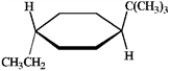

Question
For each disubstituted cyclohexane below, draw its ring-flip isomer. Circle the most stable conformation and label the substituent groups as axial or equatorial.
Draw and label: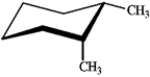
Draw and label:
Question
Question
Which of the following structures represents trans-1,3-dimethylcyclohexane?
A)
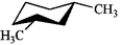
B)

C)

D)
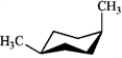
A)
B)
C)
D)
Question
Question
Refer to the structure below to answer the following question(s). 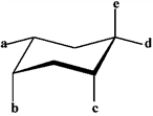
Refer to instructions. Which of the labeled groups is trans to b?
Refer to instructions. Which of the labeled groups is trans to b?
Question
Question
Refer to the structure below to answer the following question(s).
Refer to instructions. Which of the labeled groups in the structure are equatorial?
Refer to instructions. Which of the labeled groups in the structure are equatorial?
Question
Question
Refer to the structure below to answer the following question(s).
Refer to instructions. Which groups have a 1,3-diaxial interaction with each other?
Refer to instructions. Which groups have a 1,3-diaxial interaction with each other?
Question
Question
Question
Question
For each disubstituted cyclohexane below, draw its ring-flip isomer. Circle the most stable conformation and label the substituent groups as axial or equatorial.
Draw and label: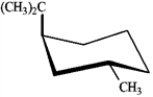
Draw and label:
Question
Label each pair of compounds below as:
Label: and
and 
Label:
and Question
For each pair of molecules below, circle the most stable. 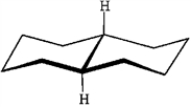 and
and 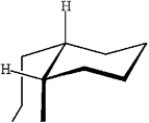
and Question
Question
Question
Label each pair of compounds below as:
Label: and
and 
A)identical
B)stereoisomers
C)constitutional isomers
D)identical, but differing in conformation
Where stereoisomers are present, label the isomers as cis and trans.
Label:
and A)identical
B)stereoisomers
C)constitutional isomers
D)identical, but differing in conformation
Where stereoisomers are present, label the isomers as cis and trans.
Question
Question
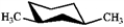
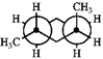
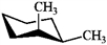
Which one of the following structures represents a different compound from the other three?
A)
B)

C)
D)

A)
B)
C)
D)
Question
Question
(−)-Menthol is responsible for the characteristic flavor and taste of peppermint. The structure of (−)-menthol is shown below. Use this information to answer the following question. 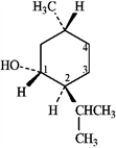
Refer to instructions. On the chair template provided below, draw the two chair conformations that are in equilibrium for (−)-menthol.
Refer to instructions. On the chair template provided below, draw the two chair conformations that are in equilibrium for (−)-menthol.
Question
Which one of the following structures represents a different compound from the other three?
A)
B)

C)
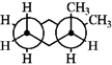
D)

A)
B)
C)
D)
Question
Which of the following is the most stable conformation of cis-1-isopropyl-3-methylcyclohexane?
A)
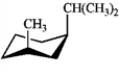
B)
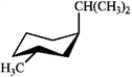
C)
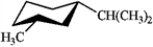
D)
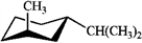
A)
B)
C)
D)
Question
Which of the following is the most stable conformation of trans-1-ethyl-3-methylcyclohexane?
A)
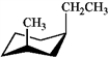
B)
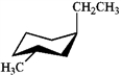
C)
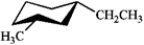
D)
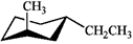
A)
B)
C)
D)
Question
D-Pinitol is an interesting hexahydroxycyclohexane, whose structure is shown below. 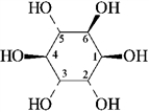 On the templates provided, draw the two chair conformations that are in equilibrium for D-pinitol. Circle the most stable conformation.
On the templates provided, draw the two chair conformations that are in equilibrium for D-pinitol. Circle the most stable conformation. Question
Question
Which of the following structures represents trans-1,2-dimethylcyclohexane?
A)

B)
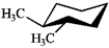
C)

D)

A)
B)
C)
D)

Unlock Deck
Sign up to unlock the cards in this deck!
Unlock Deck
Unlock Deck
1/29

Play

Full screen (f)
Deck 4: Organic Compounds: Cycloalkanes and Their Stereochemistry
1
Provide the proper IUPAC name for the compound below.
trans-1-tert-butyl-4-ethylcyclohexane or trans-1-(1,1-dimethylethyl)-4-ethylcyclohexane
2
For each disubstituted cyclohexane below, draw its ring-flip isomer. Circle the most stable conformation and label the substituent groups as axial or equatorial.
Draw and label:
Draw and label:
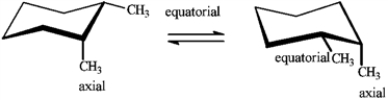 conformations are of equal stability
 3
Which of the following cycloalkanes has the most ring strain?
A) cyclopropane
B) cyclobutane
C) cyclopentane
D) cyclohexane
A) cyclopropane
B) cyclobutane
C) cyclopentane
D) cyclohexane
cyclopropane
4
Which of the following structures represents trans-1,3-dimethylcyclohexane?
A)
B)
C)
D)
A)
B)
C)
D)
Unlock Deck
Unlock for access to all 29 flashcards in this deck.
Unlock Deck
k this deck
5
Substitution of which of the following groups on a cycloalkane would result in the greatest amount of steric strain?
A) bromo
B) ethyl
C) isopropyl
D) hydroxyl
A) bromo
B) ethyl
C) isopropyl
D) hydroxyl
Unlock Deck
Unlock for access to all 29 flashcards in this deck.
Unlock Deck
k this deck
6
Refer to the structure below to answer the following question(s).
Refer to instructions. Which of the labeled groups is trans to b?
Refer to instructions. Which of the labeled groups is trans to b?
Unlock Deck
Unlock for access to all 29 flashcards in this deck.
Unlock Deck
k this deck
7
If the 1,3-diaxial strain for an ethyl group is 4.0 kJ/mol, what is the energy difference between the axial and equatorial conformations of ethylcyclohexane?
A) 2.0 kJ/mol
B) 4.0 kJ/mol
C) 8.0 kJ/mol
D) 16.0 kJ/mol
E) Cannot be determined from the 1,3-diaxial strain
A) 2.0 kJ/mol
B) 4.0 kJ/mol
C) 8.0 kJ/mol
D) 16.0 kJ/mol
E) Cannot be determined from the 1,3-diaxial strain
Unlock Deck
Unlock for access to all 29 flashcards in this deck.
Unlock Deck
k this deck
8
Refer to the structure below to answer the following question(s).
Refer to instructions. Which of the labeled groups in the structure are equatorial?
Refer to instructions. Which of the labeled groups in the structure are equatorial?
Unlock Deck
Unlock for access to all 29 flashcards in this deck.
Unlock Deck
k this deck
9
If cyclohexane were planar, how much torsional strain would be present in the planar molecule? Assume that the energy cost for each H↔H eclipsing interaction is 4.0 kcal/mol.
A) 12.0 kJ/mol
B) 24.0 kJ/mol
C) 36.0 kJ/mol
D) 48.0 kJ/mol
E) 64.0 kJ/mol
A) 12.0 kJ/mol
B) 24.0 kJ/mol
C) 36.0 kJ/mol
D) 48.0 kJ/mol
E) 64.0 kJ/mol
Unlock Deck
Unlock for access to all 29 flashcards in this deck.
Unlock Deck
k this deck
10
Refer to the structure below to answer the following question(s).
Refer to instructions. Which groups have a 1,3-diaxial interaction with each other?
Refer to instructions. Which groups have a 1,3-diaxial interaction with each other?
Unlock Deck
Unlock for access to all 29 flashcards in this deck.
Unlock Deck
k this deck
11
In which of the following compounds would the carbon−carbon bond angle diverge the greatest from 109°?
A) cyclodecane
B) cyclooctane
C) cyclopentane
D) cyclopropane
A) cyclodecane
B) cyclooctane
C) cyclopentane
D) cyclopropane
Unlock Deck
Unlock for access to all 29 flashcards in this deck.
Unlock Deck
k this deck
12
In cycloheptane, which of the following factors contributes the least to the stability of the ring conformation?
A) torsional strain
B) angle strain
C) steric strain
D) all of these contribute to an approximately equal degree
A) torsional strain
B) angle strain
C) steric strain
D) all of these contribute to an approximately equal degree
Unlock Deck
Unlock for access to all 29 flashcards in this deck.
Unlock Deck
k this deck
13
What is the energy difference between the two chair conformations of the following compound that is due to steric strain? cis-1-bromo-4-isopropylcyclohexane
Assume the following 1,3-diaxial strains.
Br: 1.0 kJ/mol
CH(CH3)2: 4.6 kJ/mol
A) 7.2 kJ/mol
B) 5.6 kJ/mol
C) 9.2 kJ/mol
D) 11.2 kJ/mol
Assume the following 1,3-diaxial strains.
Br: 1.0 kJ/mol
CH(CH3)2: 4.6 kJ/mol
A) 7.2 kJ/mol
B) 5.6 kJ/mol
C) 9.2 kJ/mol
D) 11.2 kJ/mol
Unlock Deck
Unlock for access to all 29 flashcards in this deck.
Unlock Deck
k this deck
14
For each disubstituted cyclohexane below, draw its ring-flip isomer. Circle the most stable conformation and label the substituent groups as axial or equatorial.
Draw and label:
Draw and label:
Unlock Deck
Unlock for access to all 29 flashcards in this deck.
Unlock Deck
k this deck
15
Label each pair of compounds below as:
Label: and
Label:
and Unlock Deck
Unlock for access to all 29 flashcards in this deck.
Unlock Deck
k this deck
16
For each pair of molecules below, circle the most stable. and
and Unlock Deck
Unlock for access to all 29 flashcards in this deck.
Unlock Deck
k this deck
17
Which of the following cycloalkanes would be the most similar to its open chain counterpart?
A) cyclodecane
B) cyclooctane
C) cyclopentane
D) cyclopropane
A) cyclodecane
B) cyclooctane
C) cyclopentane
D) cyclopropane
Unlock Deck
Unlock for access to all 29 flashcards in this deck.
Unlock Deck
k this deck
18
The following is an incorrect name according to IUPAC nomenclature rules. Correct it such that it is a proper IUPAC name.
3-methylhexylcyclopentane
3-methylhexylcyclopentane
Unlock Deck
Unlock for access to all 29 flashcards in this deck.
Unlock Deck
k this deck
19
Label each pair of compounds below as:
Label: and
A)identical
B)stereoisomers
C)constitutional isomers
D)identical, but differing in conformation
Where stereoisomers are present, label the isomers as cis and trans.
Label:
and A)identical
B)stereoisomers
C)constitutional isomers
D)identical, but differing in conformation
Where stereoisomers are present, label the isomers as cis and trans.
Unlock Deck
Unlock for access to all 29 flashcards in this deck.
Unlock Deck
k this deck
20
Draw and name the seven constitutional isomers for cycloalkane, C6H12.
Unlock Deck
Unlock for access to all 29 flashcards in this deck.
Unlock Deck
k this deck
21
Which one of the following structures represents a different compound from the other three?
A)
B)
C)
D)
A)
B)
C)
D)
Unlock Deck
Unlock for access to all 29 flashcards in this deck.
Unlock Deck
k this deck
22
Which of the following compounds can adopt a chair conformation in which there are no axial methyl groups?
A) 1,1-dimethylcyclohexane
B) cis-1,2-dimethylcyclohexane
C) trans-1,2-dimethylcyclohexane
D) trans-1,3-dimethylcyclohexane
A) 1,1-dimethylcyclohexane
B) cis-1,2-dimethylcyclohexane
C) trans-1,2-dimethylcyclohexane
D) trans-1,3-dimethylcyclohexane
Unlock Deck
Unlock for access to all 29 flashcards in this deck.
Unlock Deck
k this deck
23
(−)-Menthol is responsible for the characteristic flavor and taste of peppermint. The structure of (−)-menthol is shown below. Use this information to answer the following question.
Refer to instructions. On the chair template provided below, draw the two chair conformations that are in equilibrium for (−)-menthol.
Refer to instructions. On the chair template provided below, draw the two chair conformations that are in equilibrium for (−)-menthol.
Unlock Deck
Unlock for access to all 29 flashcards in this deck.
Unlock Deck
k this deck
24
Which one of the following structures represents a different compound from the other three?
A)
B)
C)
D)
A)
B)
C)
D)
Unlock Deck
Unlock for access to all 29 flashcards in this deck.
Unlock Deck
k this deck
25
Which of the following is the most stable conformation of cis-1-isopropyl-3-methylcyclohexane?
A)
B)
C)
D)
A)
B)
C)
D)
Unlock Deck
Unlock for access to all 29 flashcards in this deck.
Unlock Deck
k this deck
26
Which of the following is the most stable conformation of trans-1-ethyl-3-methylcyclohexane?
A)
B)
C)
D)
A)
B)
C)
D)
Unlock Deck
Unlock for access to all 29 flashcards in this deck.
Unlock Deck
k this deck
27
D-Pinitol is an interesting hexahydroxycyclohexane, whose structure is shown below. On the templates provided, draw the two chair conformations that are in equilibrium for D-pinitol. Circle the most stable conformation.
On the templates provided, draw the two chair conformations that are in equilibrium for D-pinitol. Circle the most stable conformation. Unlock Deck
Unlock for access to all 29 flashcards in this deck.
Unlock Deck
k this deck
28
Which of the following statements is not true regarding the conformation of substituted cyclohexanes?
A) ring flip of substituted cyclohexanes flips the axial and equatorial positions of substituents
B) substituted cyclohexanes are destabilized by 1,3-diaxial interactions
C) the twist-boat conformation of cyclohexane is more stable than the chair conformation
D) the relative amount of two conformations of substituted cyclohexanes can be determined from the difference in strain energy
A) ring flip of substituted cyclohexanes flips the axial and equatorial positions of substituents
B) substituted cyclohexanes are destabilized by 1,3-diaxial interactions
C) the twist-boat conformation of cyclohexane is more stable than the chair conformation
D) the relative amount of two conformations of substituted cyclohexanes can be determined from the difference in strain energy
Unlock Deck
Unlock for access to all 29 flashcards in this deck.
Unlock Deck
k this deck
29
Which of the following structures represents trans-1,2-dimethylcyclohexane?
A)
B)
C)
D)
A)
B)
C)
D)
Unlock Deck
Unlock for access to all 29 flashcards in this deck.
Unlock Deck
k this deck
Unlock Deck
Unlock for access to all 29 flashcards in this deck.






