







 Chat with AI


Zoology 10th Edition by Stephen Miller,John Harley
Edition 10ISBN: 978-0077837273Zoology 10th Edition by Stephen Miller,John Harley
Edition 10ISBN: 978-0077837273 Exercise 15
Trilobites were a dominant form of life 600 to 345 mya and are now known only from fossils. Their bodies had three longitudinal sections and three tagmata: head, thorax, and pygidium. Their biramous appendages were probably used in crawling, digging, and swimming.
What aspect of trilobite structure inspired their subphylum name?
FIGURE 14.6 Trilobite Structure. The trilobite body had three longitudinal sections (thus, the subphylum name). It was also divided into three tagmata. A head, or cephalon, bore a pair of antennae and eyes. The trunk, or thorax, bore appendages for swimming or walking. A series of posterior segments formed the pygidium, or tail. Cheirusus ingricus sp. is shown here.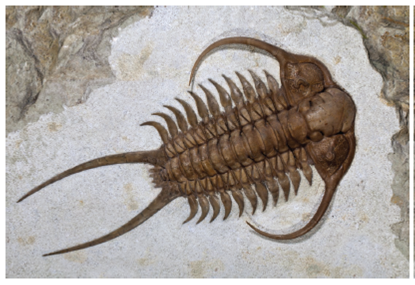
What aspect of trilobite structure inspired their subphylum name?
FIGURE 14.6 Trilobite Structure. The trilobite body had three longitudinal sections (thus, the subphylum name). It was also divided into three tagmata. A head, or cephalon, bore a pair of antennae and eyes. The trunk, or thorax, bore appendages for swimming or walking. A series of posterior segments formed the pygidium, or tail. Cheirusus ingricus sp. is shown here.
Explanation Verified
Verified
The division of the body of a ...

Zoology 10th Edition by Stephen Miller,John Harley

Why don’t you like this exercise?
Other Minimum 8 character and maximum 255 character
Character 255






