







 Chat with AI


Microbiology: A Systems Approach 4th Edition by Marjorie Kelly Cowan
Edition 4ISBN: 978-0073402437Microbiology: A Systems Approach 4th Edition by Marjorie Kelly Cowan
Edition 4ISBN: 978-0073402437 Exercise 29
Tuberculosis Outbreak Among the Homeless in Florida
During the period 2004 to 2012, Florida experienced the worst outbreak of tuberculosis (TB) seen by the Centers for Disease Control and Prevention (CDC) in 20 years. The outbreak included at least 99 cases and 13 deaths, mainly among homeless people living in Duval County. According to reports, the outbreak was traced in part to a homeless man with schizophrenia who complained of a cough in 2008. He visited numerous facilities seeking treatment and was housed in homeless shelters, mental hospitals, and prisons before he was diagnosed with tuberculosis. The patient infected at least 17 other individuals during the intervening 4 years.
When the CDC became involved in tracking the TB outbreak in Florida, it found that all of the cases could be traced to homeless shelters. TB has a relatively low prevalence in the U.S. population, but there are still significant numbers of cases among homeless people. CDC officials found that this single individual had infected 88% of his contacts in the facilities in which he was housed.
Interestingly, at the same time this outbreak investigation was taking place, the Florida legislature voted to shut down the Holley State Tuberculosis Hospital in a cost-saving move. Patients were moved to Miami's Jackson Memorial Hospital, but 18 Holley patients were released to the community to be cared for by their own doctors.
How is tuberculosis transmitted in a population
Why are homeless people at risk for contracting tuberculosis
Tuberculosis is caused by Mycobacterium tuberculosis, an aerobic, acid-fast bacillus that is very slow growing. It can take up to 6 weeks for bacterial colonies to form when specimens are cultured on artificial laboratory media. Transmission of tuberculosis occurs through droplets of respiratory mucus expelled through coughing. Particles can remain viable for up to 8 months on surfaces or in aerosolized dust.
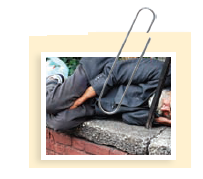
Homeless people are at risk for contracting TB for a number of reasons. First, they have limited access to appropriate health care. A persistent cough may be attributed to a cold or pneumonia, and many doctors have never seen a case of TB and may misdiagnose it as something less serious. Second, homeless people visit overcrowded homeless shelters or mental health facilities where many individuals sleep in a large, open areas, increasing their chances of becoming infected through aerosolized droplets. Finally, treatment of TB requires several months of antibiotic therapy that must be taken on a strict schedule. Because of their transient lifestyle, homeless people may not complete their treatment schedule or may take antibiotics sporadically. Such noncompliance increases the chances of promoting the growth of multidrug-resistant strains of the pathogen. Homeless people rarely have the means to pay for antibiotic treatment. Treating a nonresistant strain of M. tuberculosis costs about $500, but the cost of treating a drug-resistant strain is approximately $275,000 per patient.
The Florida outbreak was not the first TB outbreak among homeless people. In Kane County, Illinois, there was an outbreak of 25 cases between 2007 and 2011, all tied to a single homeless shelter. Other outbreaks in New York City; King County, Washington; and Portland, Maine, have been reported in the last decade.
How are strains of resistant or nonresistant M. tuberculosis identified
What precautions should be taken in homeless shelters, mental health facilities, and jails to prevent transmission of TB
During the period 2004 to 2012, Florida experienced the worst outbreak of tuberculosis (TB) seen by the Centers for Disease Control and Prevention (CDC) in 20 years. The outbreak included at least 99 cases and 13 deaths, mainly among homeless people living in Duval County. According to reports, the outbreak was traced in part to a homeless man with schizophrenia who complained of a cough in 2008. He visited numerous facilities seeking treatment and was housed in homeless shelters, mental hospitals, and prisons before he was diagnosed with tuberculosis. The patient infected at least 17 other individuals during the intervening 4 years.
When the CDC became involved in tracking the TB outbreak in Florida, it found that all of the cases could be traced to homeless shelters. TB has a relatively low prevalence in the U.S. population, but there are still significant numbers of cases among homeless people. CDC officials found that this single individual had infected 88% of his contacts in the facilities in which he was housed.
Interestingly, at the same time this outbreak investigation was taking place, the Florida legislature voted to shut down the Holley State Tuberculosis Hospital in a cost-saving move. Patients were moved to Miami's Jackson Memorial Hospital, but 18 Holley patients were released to the community to be cared for by their own doctors.
How is tuberculosis transmitted in a population
Why are homeless people at risk for contracting tuberculosis
Tuberculosis is caused by Mycobacterium tuberculosis, an aerobic, acid-fast bacillus that is very slow growing. It can take up to 6 weeks for bacterial colonies to form when specimens are cultured on artificial laboratory media. Transmission of tuberculosis occurs through droplets of respiratory mucus expelled through coughing. Particles can remain viable for up to 8 months on surfaces or in aerosolized dust.
Homeless people are at risk for contracting TB for a number of reasons. First, they have limited access to appropriate health care. A persistent cough may be attributed to a cold or pneumonia, and many doctors have never seen a case of TB and may misdiagnose it as something less serious. Second, homeless people visit overcrowded homeless shelters or mental health facilities where many individuals sleep in a large, open areas, increasing their chances of becoming infected through aerosolized droplets. Finally, treatment of TB requires several months of antibiotic therapy that must be taken on a strict schedule. Because of their transient lifestyle, homeless people may not complete their treatment schedule or may take antibiotics sporadically. Such noncompliance increases the chances of promoting the growth of multidrug-resistant strains of the pathogen. Homeless people rarely have the means to pay for antibiotic treatment. Treating a nonresistant strain of M. tuberculosis costs about $500, but the cost of treating a drug-resistant strain is approximately $275,000 per patient.
The Florida outbreak was not the first TB outbreak among homeless people. In Kane County, Illinois, there was an outbreak of 25 cases between 2007 and 2011, all tied to a single homeless shelter. Other outbreaks in New York City; King County, Washington; and Portland, Maine, have been reported in the last decade.
How are strains of resistant or nonresistant M. tuberculosis identified
What precautions should be taken in homeless shelters, mental health facilities, and jails to prevent transmission of TB
Explanation Verified
Verified
Tuberculosis is a bacterium that can be ...

Microbiology: A Systems Approach 4th Edition by Marjorie Kelly Cowan

Why don’t you like this exercise?
Other Minimum 8 character and maximum 255 character
Character 255






