







 Chat with AI


Human Heredity 11th Edition by Michael Cummings
Edition 11ISBN: 978-1305251052Human Heredity 11th Edition by Michael Cummings
Edition 11ISBN: 978-1305251052 Exercise 25
Hypothetical metabolic disease in which protein E is not produced. Lack of protein E causes intellectual disability in humans. Protein E's function is not known, but it is found in all cells of the body. Skin cells from eight individuals who cannot produce protein E were taken and grown in culture. The defect in each of the individuals is the result of a single recessive mutation. Each individual is homozygous for her or his mutation. The cells from one individual were grown with the cells from another individual in all possible combinations of the two. After a few weeks of growth, the mixed cultures were assayed for the presence of protein E. The results are given in the following table. A plus sign means that the two cell types produced protein E when grown together (but not separately); a minus sign means that the two cell types still could not produce protein E. 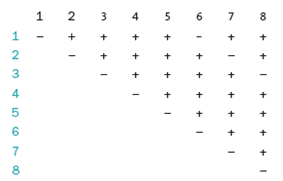
A) Which individuals seem to have the same defect in protein-E production?
B) If individual 2 married individual 3, would their children be able to make protein E?
C) If individual 1 married individual 6, would their children be able to make protein E?
A) Which individuals seem to have the same defect in protein-E production?
B) If individual 2 married individual 3, would their children be able to make protein E?
C) If individual 1 married individual 6, would their children be able to make protein E?
Explanation Verified
Verified
Null mutation refers to mutation, which ...

Human Heredity 11th Edition by Michael Cummings

Why don’t you like this exercise?
Other Minimum 8 character and maximum 255 character
Character 255






