







 Chat with AI


Clinical Laboratory Hematology 3rd Edition by Shirlyn McKenzie, Lynne Williams
Edition 3ISBN: 978-0133076011Clinical Laboratory Hematology 3rd Edition by Shirlyn McKenzie, Lynne Williams
Edition 3ISBN: 978-0133076011 Exercise 29
George, a 50-year-old male, visited his doctor when he noted that the whites of his eyes appeared yellow and that he had dark urine. His CBC revealed a hemoglobin of 31 g/L (3.1 g/dL).
Given this clinical description, consider what laboratory tests should be ordered to assist in diagnosis.
George's only complaint was dark urine and the yellow color of his eyes. His CBC results were hemoglobin 31 g/L (3.1 g/dL), hematocrit 0.08 L/L (8%), RBC count
RDW 21.6, reticulocyte count 22%. Calculate the erythrocyte indices.
George's RBC count is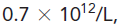
and his reticulocyte count is 22%.
Calculate his absolute reticulocyte count. Is this count increased, decreased, or normal?
Given this clinical description, consider what laboratory tests should be ordered to assist in diagnosis.
George's only complaint was dark urine and the yellow color of his eyes. His CBC results were hemoglobin 31 g/L (3.1 g/dL), hematocrit 0.08 L/L (8%), RBC count
RDW 21.6, reticulocyte count 22%. Calculate the erythrocyte indices.
George's RBC count is
and his reticulocyte count is 22%.
Calculate his absolute reticulocyte count. Is this count increased, decreased, or normal?
Explanation Verified
Verified
In the given case, a patient, George, co...

Clinical Laboratory Hematology 3rd Edition by Shirlyn McKenzie, Lynne Williams

Why don’t you like this exercise?
Other Minimum 8 character and maximum 255 character
Character 255






