







 Chat with AI


Clinical Laboratory Hematology 3rd Edition by Shirlyn McKenzie, Lynne Williams
Edition 3ISBN: 978-0133076011Clinical Laboratory Hematology 3rd Edition by Shirlyn McKenzie, Lynne Williams
Edition 3ISBN: 978-0133076011 Exercise 12
The patient, Henry, is a 20-year-old African American male who was in the process of being assigned to West Africa for a 12-month period with the Peace Corps. Because of the high prevalence of malaria in the area, he was started on antimalarial prophylaxis (primaquine) 3 days prior to his flight to Africa. Twenty-four hours after starting the medication, he developed fever, chills, and general malaise. He subsequently reported to the emergency department and was admitted to the hospital for observation and additional testing.
The physical exam revealed a normal appearing, wellnourished adult male in no acute distress. His family history was noncontributory, and he had no known drug allergies. Laboratory analysis yielded the following: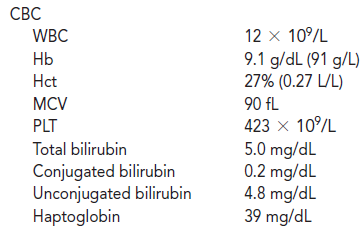
Based on the clinical history and these laboratory results, consider what could have precipitated this patient's condition.
Because of the low hemoglobin, Henry was transfused with 2 units of packed red cells. Examination of the peripheral blood smear was remarkable for occasional spherocytes and bite cells. This blood smear finding, presentation of anemia, and onset of illness coinciding with the initiation of primaquine suggested shortened RBC life span due to oxidative damage.
What test should be considered after finding bite cells on a blood smear?
The physical exam revealed a normal appearing, wellnourished adult male in no acute distress. His family history was noncontributory, and he had no known drug allergies. Laboratory analysis yielded the following:
Based on the clinical history and these laboratory results, consider what could have precipitated this patient's condition.
Because of the low hemoglobin, Henry was transfused with 2 units of packed red cells. Examination of the peripheral blood smear was remarkable for occasional spherocytes and bite cells. This blood smear finding, presentation of anemia, and onset of illness coinciding with the initiation of primaquine suggested shortened RBC life span due to oxidative damage.
What test should be considered after finding bite cells on a blood smear?
Explanation Verified
Verified
An African American of age 20 years, Hen...

Clinical Laboratory Hematology 3rd Edition by Shirlyn McKenzie, Lynne Williams

Why don’t you like this exercise?
Other Minimum 8 character and maximum 255 character
Character 255






