







 Chat with AI

Concepts of Biology 1st Edition by Samantha Fowler, Rebecca Roush, James Wise,OpenStax
Edition 1ISBN: 978-1938168116Concepts of Biology 1st Edition by Samantha Fowler, Rebecca Roush, James Wise,OpenStax
Edition 1ISBN: 978-1938168116 Exercise 1
Figure 1.8 Which of the following statements is false?
A. Tissues exist within organs which exist within organ systems.
B. Communities exist within populations which exist within ecosystems.
C. Organelles exist within cells which exist within tissues.
D. Communities exist within ecosystems which exist in the biosphere.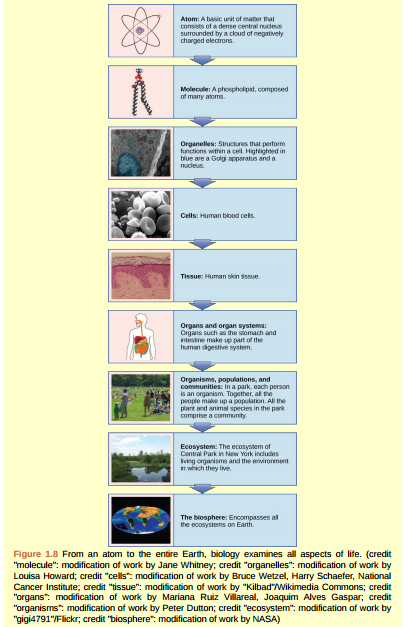
A. Tissues exist within organs which exist within organ systems.
B. Communities exist within populations which exist within ecosystems.
C. Organelles exist within cells which exist within tissues.
D. Communities exist within ecosystems which exist in the biosphere.
Explanation Verified
Verified
Biological organization is the placing of an organism according to its complexity with each level becoming more complex than the prior level. The Biological organization is as follows: 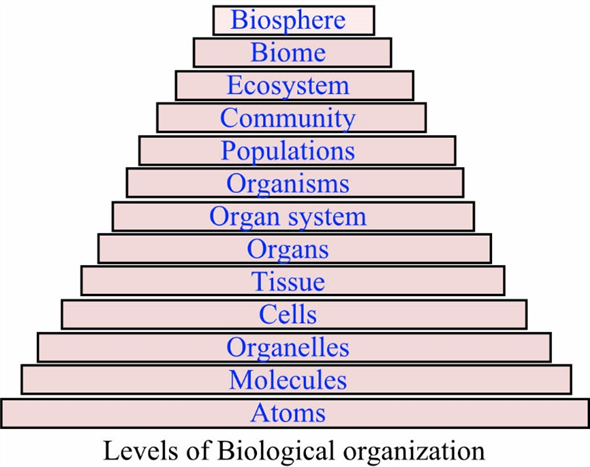
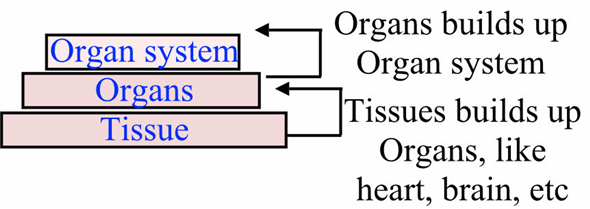
 The organ which is within the organ system is composed of tissues. The tissues form an aggregation to form the organs of all the organisms. Therefore, tissues fall within the organs as they are more complex than them. The organs which are formed by the tissues will make the organ system. The organ system is composed of many organs that perform a different function. So, the option (A) is a true statement.
  Therefore, the option (A) is incorrect.
  A cell can be defined as a basic biological, functional and structural unit of life. A typical eukaryotic cell has several types of organelles. The organelles are the membrane-bound structures present in a cell and suspended in the cytoplasm. Organelles are parts of cells like organs are to the body, so the suffix - elle being a "diminutive." Examples of cellular organelles include mitochondria, smooth endoplasmic reticulum, rough endoplasmic reticulum, nucleus, vacuoles, vesicles, Golgi apparatus and cell membrane. Picture of a eukaryotic cell with several organelles is as follows:
 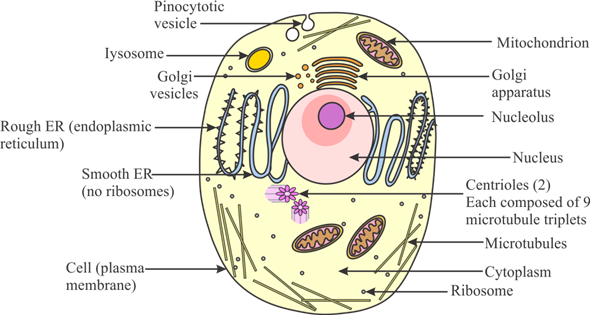 So, many organelles and a nucleus form a cell and a group of cells called a tissue. So, the option (C) is a true statement.
Therefore, the option (C) is incorrect. An aggregation of many communities forms an ecosystem while many ecosystems form a biosphere which is the most complex in biological organization. So, the option (D) is a true statement.
 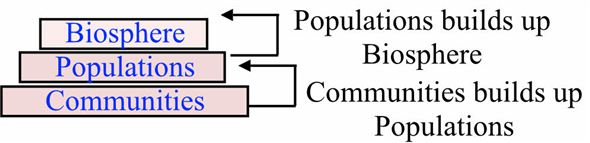 Therefore, the option (D) is incorrect.
  Communities are composed of many interacting populations living together. Communities do not exist within the population as they are more complex than population. The ecosystem is composed of many communities within which many populations persist. This statement B does not follow the biological organization which states that with each level the complexity should be more than the prior level. So, the option (B) is a true statement.
Therefore, the option is correct.
The organ which is within the organ system is composed of tissues. The tissues form an aggregation to form the organs of all the organisms. Therefore, tissues fall within the organs as they are more complex than them. The organs which are formed by the tissues will make the organ system. The organ system is composed of many organs that perform a different function. So, the option (A) is a true statement. Therefore, the option (A) is incorrect. A cell can be defined as a basic biological, functional and structural unit of life. A typical eukaryotic cell has several types of organelles. The organelles are the membrane-bound structures present in a cell and suspended in the cytoplasm. Organelles are parts of cells like organs are to the body, so the suffix - elle being a "diminutive." Examples of cellular organelles include mitochondria, smooth endoplasmic reticulum, rough endoplasmic reticulum, nucleus, vacuoles, vesicles, Golgi apparatus and cell membrane. Picture of a eukaryotic cell with several organelles is as follows: So, many organelles and a nucleus form a cell and a group of cells called a tissue. So, the option (C) is a true statement. Therefore, the option (C) is incorrect.
An aggregation of many communities forms an ecosystem while many ecosystems form a biosphere which is the most complex in biological organization. So, the option (D) is a true statement. Therefore, the option (D) is incorrect. Communities are composed of many interacting populations living together. Communities do not exist within the population as they are more complex than population. The ecosystem is composed of many communities within which many populations persist. This statement B does not follow the biological organization which states that with each level the complexity should be more than the prior level. So, the option (B) is a true statement.Therefore, the option
is correct.
Concepts of Biology 1st Edition by Samantha Fowler, Rebecca Roush, James Wise,OpenStax

Why don’t you like this exercise?
Other Minimum 8 character and maximum 255 character
Character 255






