







 Chat with AI


Biology 1st Edition by Jung Choi, Jean DeSaix, Yael Avissar, Vladimir Jurukovski, Robert Wise,Connie Rye, OpenStax
Edition 1ISBN: 978-1938168093Biology 1st Edition by Jung Choi, Jean DeSaix, Yael Avissar, Vladimir Jurukovski, Robert Wise,Connie Rye, OpenStax
Edition 1ISBN: 978-1938168093 Exercise 17
Figure 24.13 Which of the following statements is true?
A) A dikaryotic ascus that forms in the ascocarp undergoes karyogamy, meiosis, and mitosis to form eight ascospores.
B) A diploid ascus that forms in the ascocarp undergoes karyogamy, meiosis, and mitosis to form eight ascospores.
C) A haploid zygote that forms in the ascocarp undergoes karyogamy, meiosis, and mitosis to form eight ascospores.
D) A dikaryotic ascus that forms in the ascocarp undergoes plasmogamy, meiosis, and mitosis to form eight ascospores.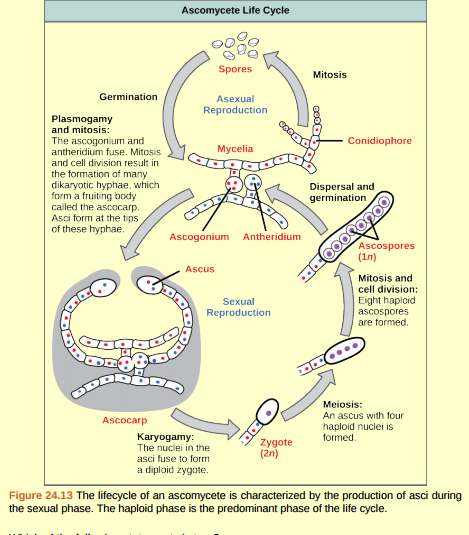
A) A dikaryotic ascus that forms in the ascocarp undergoes karyogamy, meiosis, and mitosis to form eight ascospores.
B) A diploid ascus that forms in the ascocarp undergoes karyogamy, meiosis, and mitosis to form eight ascospores.
C) A haploid zygote that forms in the ascocarp undergoes karyogamy, meiosis, and mitosis to form eight ascospores.
D) A dikaryotic ascus that forms in the ascocarp undergoes plasmogamy, meiosis, and mitosis to form eight ascospores.
Explanation Verified
Verified
A dikaryon is a unique feature of many f...

Biology 1st Edition by Jung Choi, Jean DeSaix, Yael Avissar, Vladimir Jurukovski, Robert Wise,Connie Rye, OpenStax

Why don’t you like this exercise?
Other Minimum 8 character and maximum 255 character
Character 255






