







 Chat with AI


Zoology 9th Edition by Stephen Miller
Edition 9ISBN: 978-0073524177Zoology 9th Edition by Stephen Miller
Edition 9ISBN: 978-0073524177 Exercise 4
Consider the age pyramid shown in figure 6.13. Next, think about the discussion of human population growth on pages 101-103. What would the age pyramids of high-fertility, intermediate-fertility, and low-fertility countries look like? What age-structure problems will need to be overcome in societies with low fertility rates?
Figure 6.13
Human Age Pyramids from 1990. ( a ) In developed countries, the age structure is rectangular because mortality in all age classes is relatively low. In this example the widening of the pyramid in the 25 to 50 age range is because of the ?baby boom? that occurred between 1945 and 1965. ( b ) In developing countries, a greater proportion of the population is in the prereproductive age classes. High mortality compensates for high birthrates, and the pyramid is triangular. As technologies reduce infant mortality and prolong the life span of the elderly, populations increase rapidly.
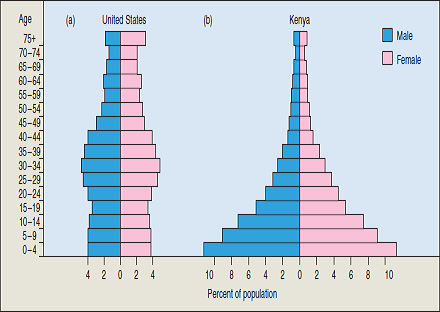
Figure 6.13
Human Age Pyramids from 1990. ( a ) In developed countries, the age structure is rectangular because mortality in all age classes is relatively low. In this example the widening of the pyramid in the 25 to 50 age range is because of the ?baby boom? that occurred between 1945 and 1965. ( b ) In developing countries, a greater proportion of the population is in the prereproductive age classes. High mortality compensates for high birthrates, and the pyramid is triangular. As technologies reduce infant mortality and prolong the life span of the elderly, populations increase rapidly.
Explanation Verified
Verified
High fertility age pyramids would resemb...

Zoology 9th Edition by Stephen Miller

Why don’t you like this exercise?
Other Minimum 8 character and maximum 255 character
Character 255






