







 Chat with AI


Basic Econometrics 5th Edition by Damodar Gujarati,Dawn Porter
Edition 5ISBN: 978-0073375779Basic Econometrics 5th Edition by Damodar Gujarati,Dawn Porter
Edition 5ISBN: 978-0073375779 Exercise 5
Consider the Cobb-Douglas production function 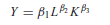
where Y = output, L = labor input, and K = capital input. Dividing (1) through by K, we get
Taking the natural log of (2) and adding the error term, we obtain
Where 0= In 1
a. Suppose you had data to run the regression (3). How would you test the hypothesis that there are constant returns to scale, i.e., ( 2 + 3 ) = 1
b. If there are constant returns to scale, how would you interpret regression (3)
c. Does it make any difference whether we divide (1) by L rather than by K
where Y = output, L = labor input, and K = capital input. Dividing (1) through by K, we get
Taking the natural log of (2) and adding the error term, we obtain
Where 0= In 1
a. Suppose you had data to run the regression (3). How would you test the hypothesis that there are constant returns to scale, i.e., ( 2 + 3 ) = 1
b. If there are constant returns to scale, how would you interpret regression (3)
c. Does it make any difference whether we divide (1) by L rather than by K
Explanation Verified
Verified
The given information is as follows:
Th...

Basic Econometrics 5th Edition by Damodar Gujarati,Dawn Porter

Why don’t you like this exercise?
Other Minimum 8 character and maximum 255 character
Character 255






