







 Chat with AI


Labor Economics 5th Edition by George Borjas
Edition 5ISBN: 978-0073511368Labor Economics 5th Edition by George Borjas
Edition 5ISBN: 978-0073511368 Exercise 9
In 1999, 4,860 TANF recipients were asked how many hours they worked in the previous week. In 2000, 4,392 of these recipients were again subject to the same TANF rules and were again asked their hours of work during the previous week. The remaining 468 individuals were randomly assigned to a "Negative Income Tax" (NIT) experiment that gave out financial incentives for welfare recipients to work and were subject to its rules. Like the other group, they were asked about their hours of work during the previous week. The data from the experiment are contained in the table below.
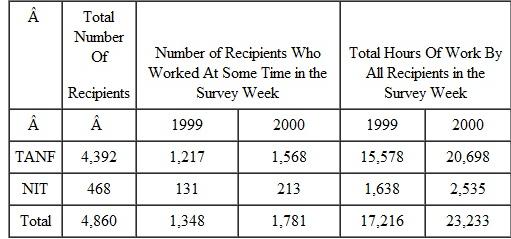 (a) What effect did the NIT experiment have on the employment rate of public assistance recipients Develop a standard difference-in-differences table to support your answer.
(b) What effect did the NIT experiment have on the weekly hours worked of public assistance recipients who worked positive hours during the survey week Develop a standard difference-in-differences table to support your answer.
(a) What effect did the NIT experiment have on the employment rate of public assistance recipients Develop a standard difference-in-differences table to support your answer. (b) What effect did the NIT experiment have on the weekly hours worked of public assistance recipients who worked positive hours during the survey week Develop a standard difference-in-differences table to support your answer.
Explanation Verified
Verified
The data for two years are given when wo...

Labor Economics 5th Edition by George Borjas

Why don’t you like this exercise?
Other Minimum 8 character and maximum 255 character
Character 255






