







 Chat with AI


Labor Economics 5th Edition by George Borjas
Edition 5ISBN: 978-0073511368Labor Economics 5th Edition by George Borjas
Edition 5ISBN: 978-0073511368 Exercise 19
Figure 10-3 demonstrates some of the trade-offs involved when deciding to join a union.
a. Provide a graph that shows how the presence of union dues affects the decision to join a union. (Assume all workers pay a flat rate for dues.) Show on your graph how the presence of union dues may lead the worker to be less inclined to join the union.
b. Suppose in addition to higher wages the union negotiates a 10 percent employer contribution to a defined contribution pension plan. Provide a graph that incorporates this retirement benefit into the decision of whether to join a union. Show on your graph how additional fringe benefits such as a retirement plan may cause the worker to be more inclined to join the union.
Reference Figure 10-3
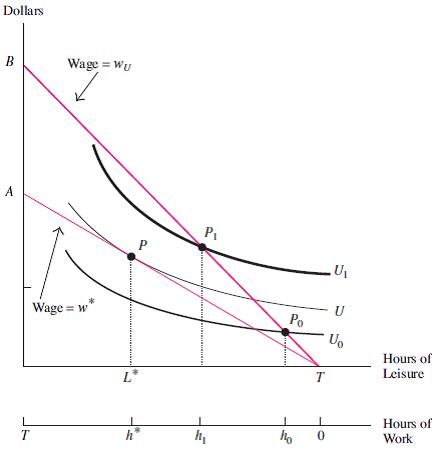
a. Provide a graph that shows how the presence of union dues affects the decision to join a union. (Assume all workers pay a flat rate for dues.) Show on your graph how the presence of union dues may lead the worker to be less inclined to join the union.
b. Suppose in addition to higher wages the union negotiates a 10 percent employer contribution to a defined contribution pension plan. Provide a graph that incorporates this retirement benefit into the decision of whether to join a union. Show on your graph how additional fringe benefits such as a retirement plan may cause the worker to be more inclined to join the union.
Reference Figure 10-3
Explanation Verified
Verified
a. If workers pay a flat hourly rate in ...

Labor Economics 5th Edition by George Borjas

Why don’t you like this exercise?
Other Minimum 8 character and maximum 255 character
Character 255






