







 Chat with AI


Marketing 4th Edition by Dhruv Grewal,Michael Levy
Edition 4ISBN: 978-0077861025Marketing 4th Edition by Dhruv Grewal,Michael Levy
Edition 4ISBN: 978-0077861025 Exercise 2
THE YOGURT WARS: PINKBERRY VS. RED MANGO
For two decades prior to the turn of the twenty-first century, frozen yogurt was a popular treat. Then production dropped 45 percent, sales slumped, and the frozen yogurt craze seemed to be at an end. In 2005 however, scientific evidence emerged regarding the health benefits of yogurt, and frozen yogurt rocketed to a new popularity because customers-primarily women-had a healthy, "guiltfree" alternative to ice cream.
Pinkberry, which opened that year in California, attracted such large crowds that parking fines for customers hit $175,000 in the first month. Its rival Red Mango, founded in South Korea in 2002, began serving customers on U.S. soil in Los Angeles in 2007. Since then, the two chains have battled for the largest serving of the lucrative frozen yogurt market, with new challengers popping up on virtually every street corner. In this midst of this increasing competition, both Pinkberry and Red Mango must look for new ways to create value for their customers.
SWIRLY GOODNESS AT PINKBERRY
Pinkberry's first shop was immediately profitable. The company grew quickly in the Los Angeles area and, within a matter of months, had expanded into New York City. That first year, the trendy yogurt shops gained an important friend and supporter: Howard Schultz, CEO of Starbucks. With his history of success maintaining the Starbucks brand during periods of explosive growth, Schultz was a valuable advisor. Pinkberry has opened stores in 20 U.S. states, as well as numerous and farflung countries such as the U.K., Russia, Morocco, and the United Arab Emirates.
The most promising new markets may be abroad. The company has stores in 13 foreign countries, with plans to open even more stores overseas. Foreign stores differ from U.S. outlets, in that both flavors and toppings reflect local preferences. Customers in the Middle East have options for dates and pistachios; Asian customers can enjoy green-tea flavored yogurt.
Even while creating value for customers in overseas markets, Pinkberry is holding on to its brand image, which includes a modern store design and a visually appealing product that also conveys a sense of play. This feeling of playfulness, accomplished by giving the yogurt a personality and a seasonally appropriate wardrobe that includes shredded coconut earmuffs, is intended to remind customers of childhood summers. The brand's tagline, "Swirly Goodness," also helps convey Pinkberry's unique combination of creativity, taste, and healthfulness. Pinkberry further distinguishes itself with endorsements from celebrity athletes, musicians, and fashion designers and by relying on another signature Schultz touch: customer interaction with the product through individual customization, together with interactions among customers and staff. Product "groupies" bond with one another through an interactive website, Twitter, and Facebook.
RED MANGO -TREAT YOURSELF WELL
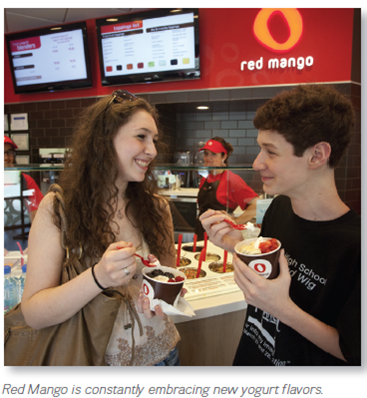
Red Mango expanded from one store to 60 in the United States during its first two years and soon thereafter moved its headquarters to Dallas. The company's fiveyear plan includes aggressive growth, including many new store openings in the same cities targeted by Pinkberry. In 2012, Red Mango Inc. is expanding into Mexico and a number of other countries in the Americas. Like its chief rival, Red Mango offers a limited number of unusual flavors with fresh fruit toppings and yogurt containing probiotics to aid digestion. The tagline, "Treat Yourself Well," suggests both the yogurt's nutritional benefits and a sense of indulgence. Store designs are bright, colorful, and inviting.
So how does Red Mango distinguish itself from Pinkberry and create value for customers Red Mango Inc. founder Dan Kim claims his product has a creamier taste than that of its chief rival, and the chain has introduced new flavors, as well as smoothies, teas, and chocolates (iced and artisan hot) to help create a distinct brand. The company added fresh fruit parfaits and "spoonable smoothies," which take frozen yogurt from healthy treat option to nutritious meal choice. Red Mango is also experimenting with the "do-it-yourself" movement, giving customers the opportunity to create their own combinations of flavors and toppings from an expanded array of offerings.
To help build customer loyalty and a sense of community, Red Mango has launched a loyalty program. Members earn Mango points with every qualified purchase, ultimately earning coupons redeemable for free and discounted products. They also receive event information and special promotions.
SUSTAINING VALUE IN A CHANGING MARKET
Even as these companies compete and try to grow successfully, they must be aware of changes in the market that could undermine their efforts. Stores that have traditionally sold ice cream, such as Cold Stone Creamery, are adding frozen yogurt to their menus. Established chains like TCBY are adding tart yogurt, the signature taste of both Pinkberry and Red Mango, to their traditional offerings. And just as fast-food chains jumped on the coffee bandwagon with lattes and frozen coffee drinks, more traditional stores are now ramping up their frozen yogurt options. Meanwhile, consumer tastes can change-frozen yogurt shops in the northeastern United States, for example, may notice store traffic drop significantly as the weather turns cold. These are just a few of the challenges marketers face as they strive to bring value to customers and companies.
Questions
What is Pinkberry doing to add value for international customers
For two decades prior to the turn of the twenty-first century, frozen yogurt was a popular treat. Then production dropped 45 percent, sales slumped, and the frozen yogurt craze seemed to be at an end. In 2005 however, scientific evidence emerged regarding the health benefits of yogurt, and frozen yogurt rocketed to a new popularity because customers-primarily women-had a healthy, "guiltfree" alternative to ice cream.
Pinkberry, which opened that year in California, attracted such large crowds that parking fines for customers hit $175,000 in the first month. Its rival Red Mango, founded in South Korea in 2002, began serving customers on U.S. soil in Los Angeles in 2007. Since then, the two chains have battled for the largest serving of the lucrative frozen yogurt market, with new challengers popping up on virtually every street corner. In this midst of this increasing competition, both Pinkberry and Red Mango must look for new ways to create value for their customers.
SWIRLY GOODNESS AT PINKBERRY
Pinkberry's first shop was immediately profitable. The company grew quickly in the Los Angeles area and, within a matter of months, had expanded into New York City. That first year, the trendy yogurt shops gained an important friend and supporter: Howard Schultz, CEO of Starbucks. With his history of success maintaining the Starbucks brand during periods of explosive growth, Schultz was a valuable advisor. Pinkberry has opened stores in 20 U.S. states, as well as numerous and farflung countries such as the U.K., Russia, Morocco, and the United Arab Emirates.
The most promising new markets may be abroad. The company has stores in 13 foreign countries, with plans to open even more stores overseas. Foreign stores differ from U.S. outlets, in that both flavors and toppings reflect local preferences. Customers in the Middle East have options for dates and pistachios; Asian customers can enjoy green-tea flavored yogurt.
Even while creating value for customers in overseas markets, Pinkberry is holding on to its brand image, which includes a modern store design and a visually appealing product that also conveys a sense of play. This feeling of playfulness, accomplished by giving the yogurt a personality and a seasonally appropriate wardrobe that includes shredded coconut earmuffs, is intended to remind customers of childhood summers. The brand's tagline, "Swirly Goodness," also helps convey Pinkberry's unique combination of creativity, taste, and healthfulness. Pinkberry further distinguishes itself with endorsements from celebrity athletes, musicians, and fashion designers and by relying on another signature Schultz touch: customer interaction with the product through individual customization, together with interactions among customers and staff. Product "groupies" bond with one another through an interactive website, Twitter, and Facebook.
RED MANGO -TREAT YOURSELF WELL
Red Mango expanded from one store to 60 in the United States during its first two years and soon thereafter moved its headquarters to Dallas. The company's fiveyear plan includes aggressive growth, including many new store openings in the same cities targeted by Pinkberry. In 2012, Red Mango Inc. is expanding into Mexico and a number of other countries in the Americas. Like its chief rival, Red Mango offers a limited number of unusual flavors with fresh fruit toppings and yogurt containing probiotics to aid digestion. The tagline, "Treat Yourself Well," suggests both the yogurt's nutritional benefits and a sense of indulgence. Store designs are bright, colorful, and inviting.
So how does Red Mango distinguish itself from Pinkberry and create value for customers Red Mango Inc. founder Dan Kim claims his product has a creamier taste than that of its chief rival, and the chain has introduced new flavors, as well as smoothies, teas, and chocolates (iced and artisan hot) to help create a distinct brand. The company added fresh fruit parfaits and "spoonable smoothies," which take frozen yogurt from healthy treat option to nutritious meal choice. Red Mango is also experimenting with the "do-it-yourself" movement, giving customers the opportunity to create their own combinations of flavors and toppings from an expanded array of offerings.
To help build customer loyalty and a sense of community, Red Mango has launched a loyalty program. Members earn Mango points with every qualified purchase, ultimately earning coupons redeemable for free and discounted products. They also receive event information and special promotions.
SUSTAINING VALUE IN A CHANGING MARKET
Even as these companies compete and try to grow successfully, they must be aware of changes in the market that could undermine their efforts. Stores that have traditionally sold ice cream, such as Cold Stone Creamery, are adding frozen yogurt to their menus. Established chains like TCBY are adding tart yogurt, the signature taste of both Pinkberry and Red Mango, to their traditional offerings. And just as fast-food chains jumped on the coffee bandwagon with lattes and frozen coffee drinks, more traditional stores are now ramping up their frozen yogurt options. Meanwhile, consumer tastes can change-frozen yogurt shops in the northeastern United States, for example, may notice store traffic drop significantly as the weather turns cold. These are just a few of the challenges marketers face as they strive to bring value to customers and companies.
Questions
What is Pinkberry doing to add value for international customers
Explanation Verified
Verified
Case study - PB and RM Frozen Yogurt Company
The following are the various initiatives started by PB Company to add value for abroad customers:
• PB Company has designed its store in a modern style to attract the overseas customers, which helped PB to hold its brand image in the global market.
• PB Company made endorsements of the product from various celebrities, musicians, and fashion designers of all over the world that boosted the promotion of the products.
• PB Company added value for international customers by designing a visually appealing product which expresses a sense of play.
• PB Company provided various flavors and toppings of the yogurt of local preference to attract the overseas customers. For example, it provides dates and pistachio toppings for Middle East countries and green tea flavor in its yogurt for Asian country customers.
The following are the various initiatives started by PB Company to add value for abroad customers:
• PB Company has designed its store in a modern style to attract the overseas customers, which helped PB to hold its brand image in the global market.
• PB Company made endorsements of the product from various celebrities, musicians, and fashion designers of all over the world that boosted the promotion of the products.
• PB Company added value for international customers by designing a visually appealing product which expresses a sense of play.
• PB Company provided various flavors and toppings of the yogurt of local preference to attract the overseas customers. For example, it provides dates and pistachio toppings for Middle East countries and green tea flavor in its yogurt for Asian country customers.

Marketing 4th Edition by Dhruv Grewal,Michael Levy

Why don’t you like this exercise?
Other Minimum 8 character and maximum 255 character
Character 255






